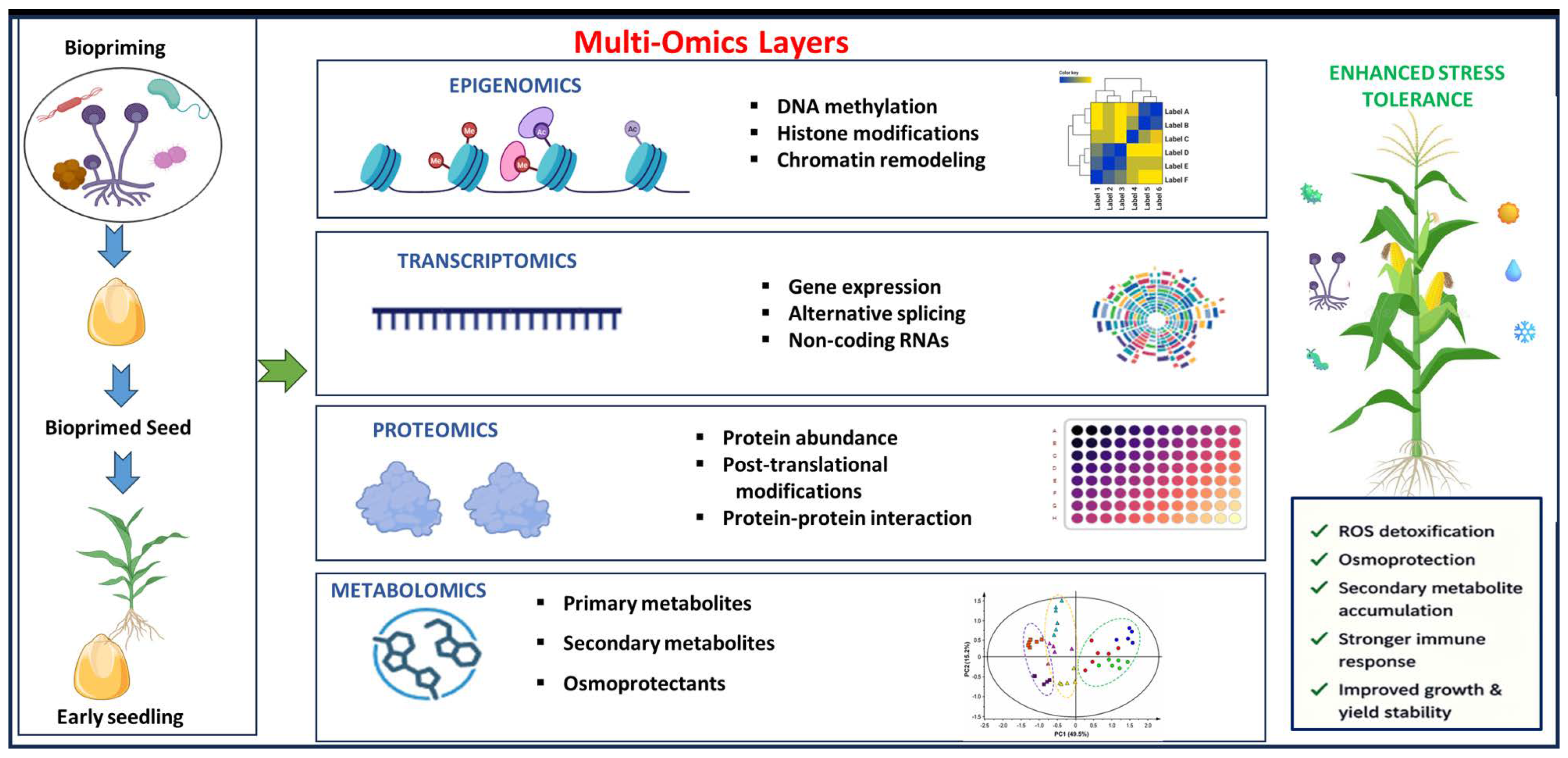
Seed Biopriming for Climate Stress Resilience: Molecular, Physiological, and Epigenetic Mechanisms

 ,
,  , and
, and 
Abstract
1. Introduction: The Seed as an Integrative Biological System
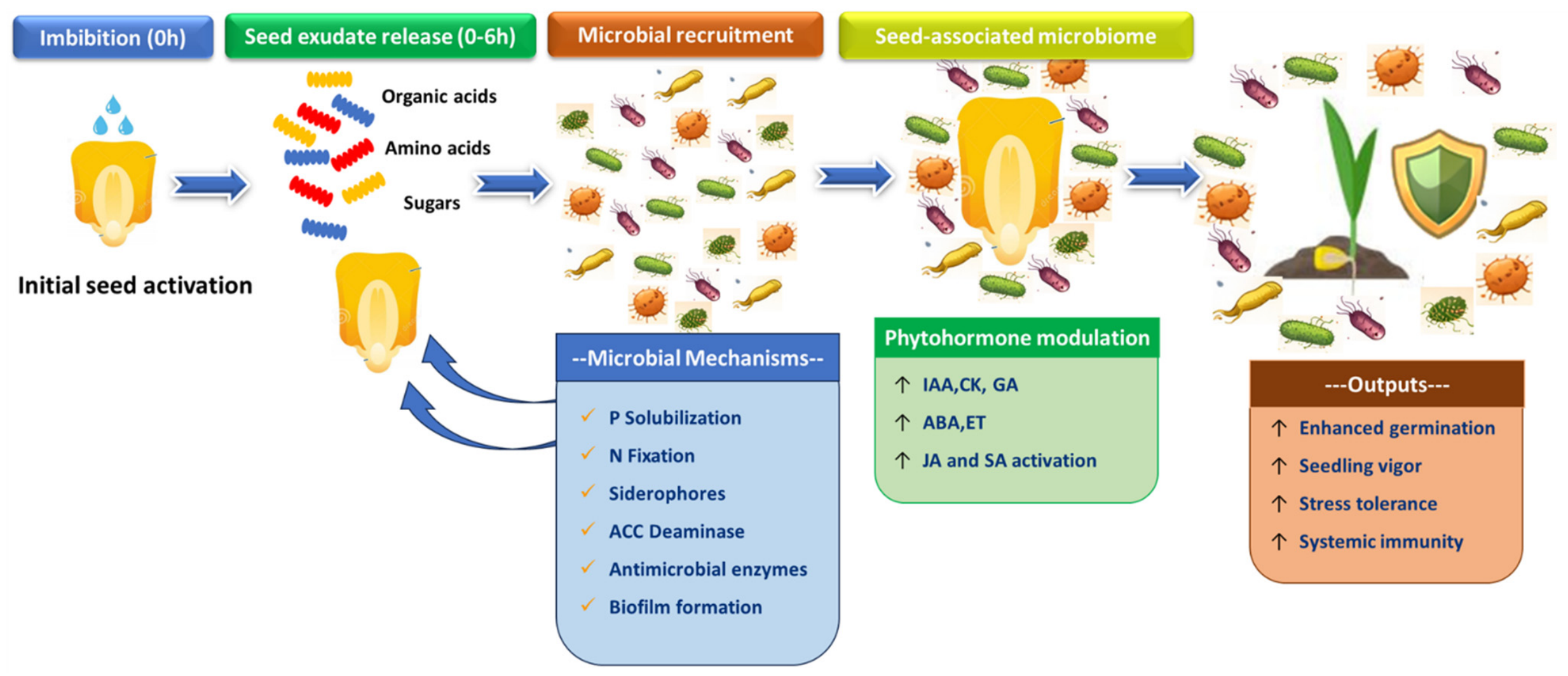
2. The “Zero Hour” Molecular Dialog
2.1. The Spermosphere as an Early Signaling Arena
2.2. Beneficial Microorganisms and Their Mechanistic Contributions
2.3. Phytohormonal Pre-Shunting by Seed-Colonizing Microorganisms
2.4. ROS and RNS Operate as Key Regulatory Nodes
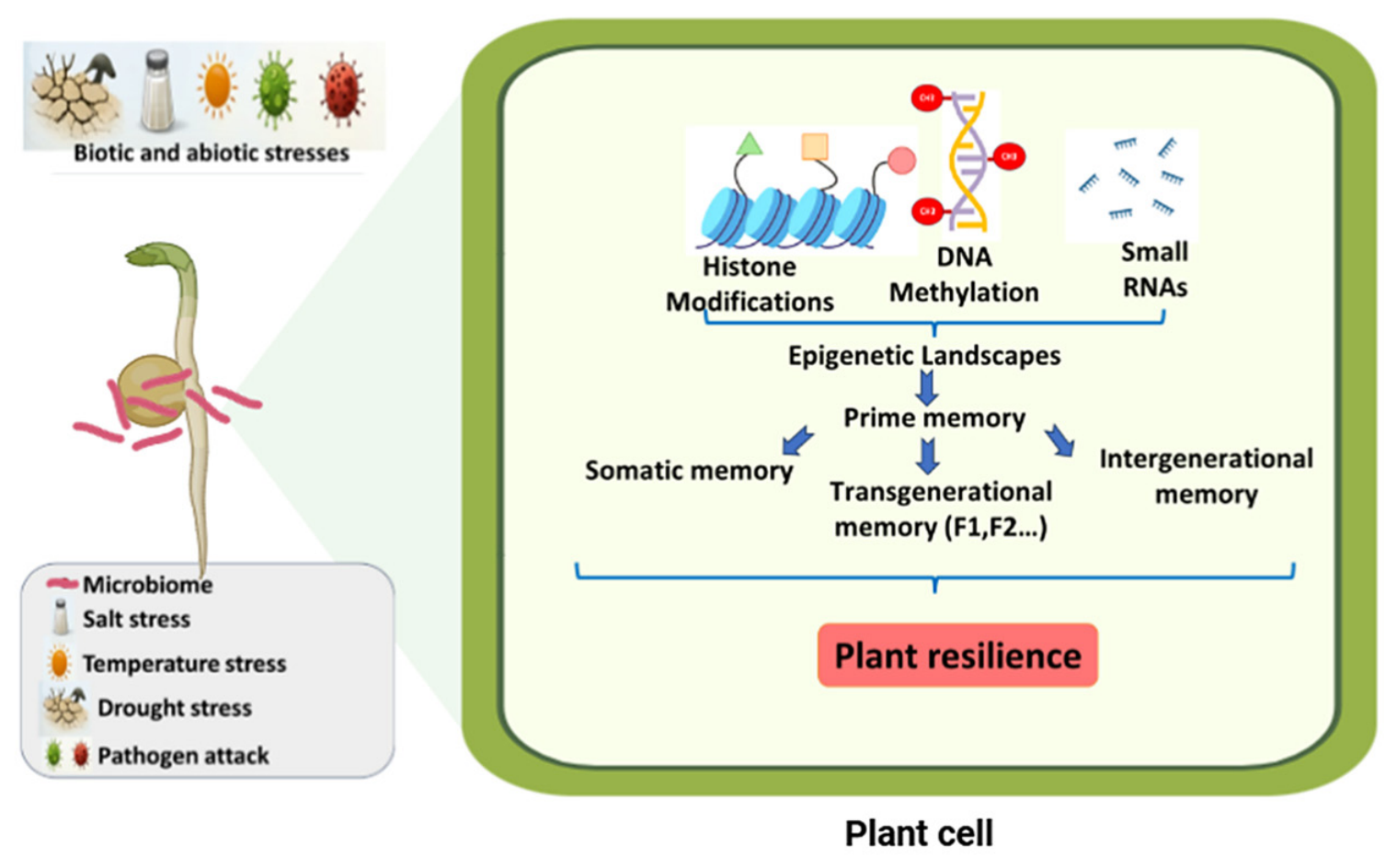
3. Epigenetic Mechanisms Underlying Stress Resilience
3.1. Chromatin Remodeling and DNA Methylation
3.2. Small RNA-Mediated Cross-Kingdom Regulation
3.3. Transcriptomic Evidence for Persistent Priming Memory
3.4. Intergenerational and Transgenerational Priming Memory
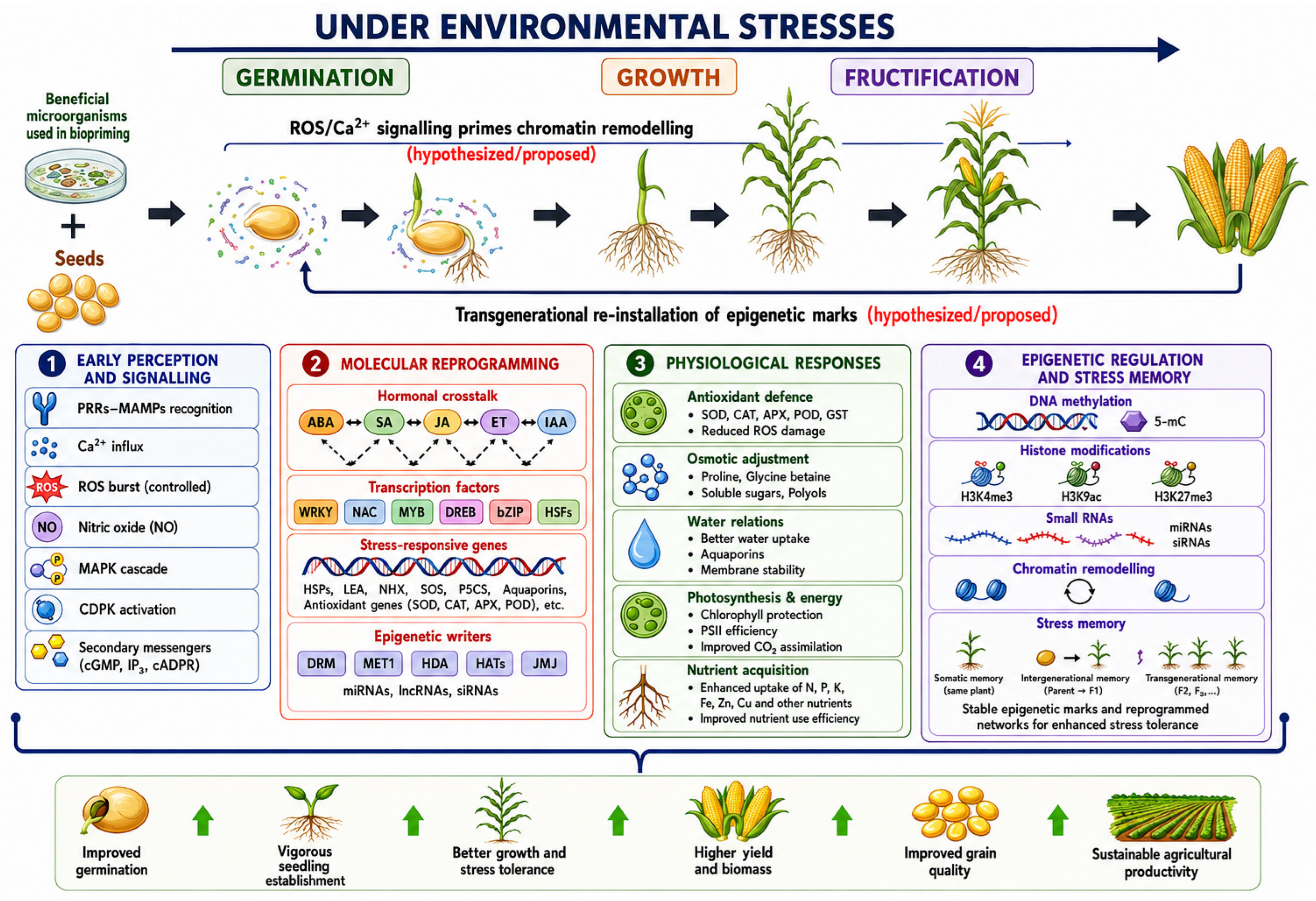
3.5. An Integrated Hypothetical Model of Biopriming-Induced Pathways
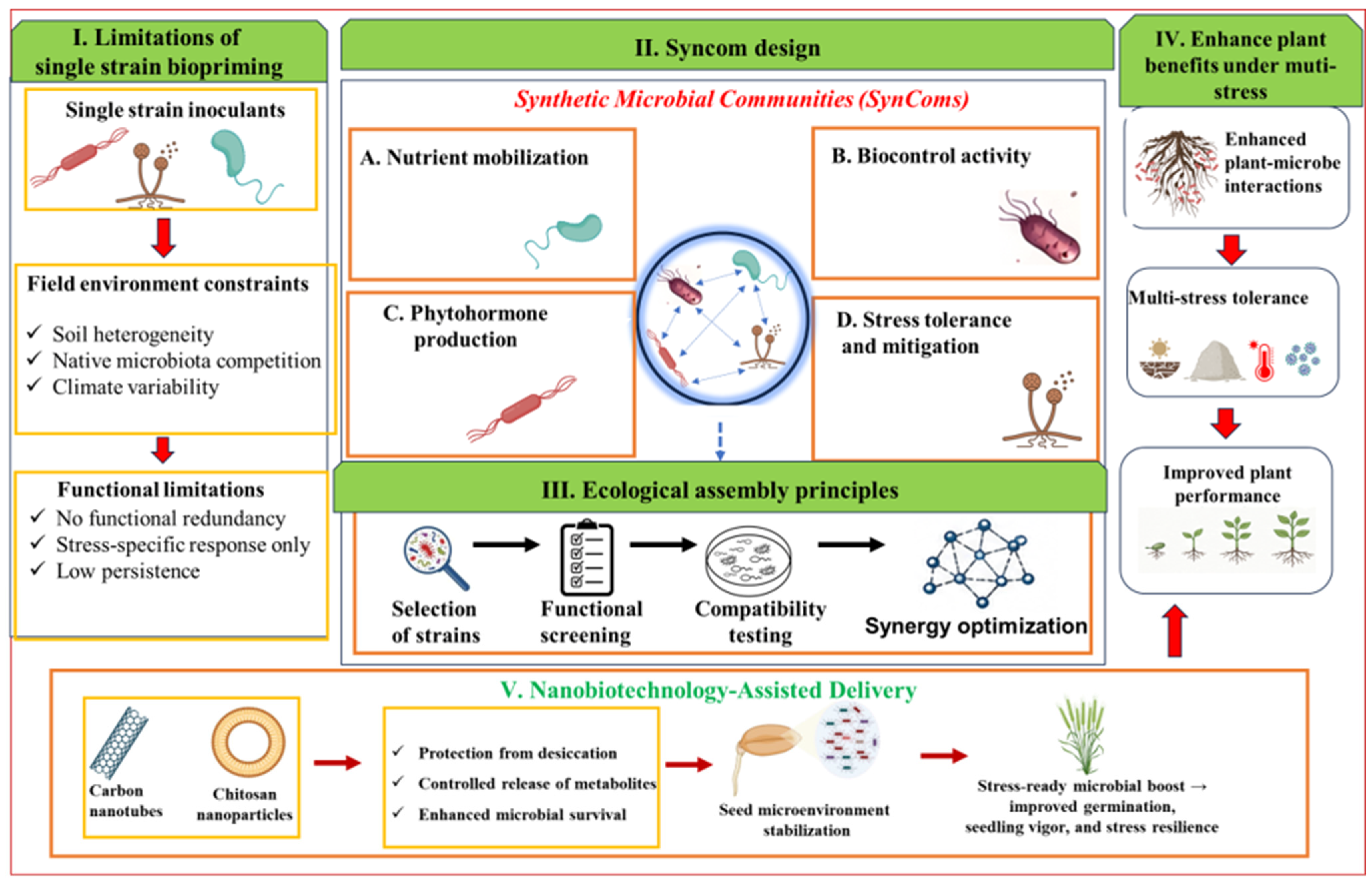
4. From Single Strains to Synthetic Communities
4.1. Limitations of Monoculture-Based Biopriming
4.2. Rational Design and Ecological Principles of SynComs
4.3. Nanobiotechnology for SynCom Stabilization
5. Multi-Omics Integration of Metabolic Reprogramming
5.1. Metabolomics and Primary Metabolic Reprogramming
5.2. Proteomic Signatures of Biopriming
5.3. Towards Multi-Omics Integration
6. Translational Challenges and Critical Bottlenecks
6.1. Laboratory-to-Field Translation Gap
6.2. Formulation, Viability, and Storage
6.3. Regulatory and Biosafety Considerations
7. Future Horizons: Precision Biopriming
7.1. AI and Machine Learning Integration
7.2. Synthetic Biology and Microbiome Engineering
7.3. Climate-Adaptive Seed Formulations
8. Conclusions
Author Contributions
Funding
Data Availability Statement
Acknowledgments
Conflicts of Interest
References
- Kermode, A.R. Regulatory Mechanisms in the Transition from Seed Development to Germination: Interactions Between the Embryo and the Seed Environment. In Seed Development and Germination; Routledge: Boca Raton, FL, USA, 2018; pp. 273–332. [Google Scholar] [CrossRef]
- Boesewinkel, F.D.; Bouman, F. The Seed: Structure and Function. In Seed Development and Germination; Routledge: Boca Raton, FL, USA, 2018; pp. 1–24. [Google Scholar] [CrossRef]
- Xu, H.; Wang, F.; Damari, R.N.; Chen, X.; Lin, Z. Molecular mechanisms underlying the signal perception and transduction during seed germination. Mol. Breed. 2024, 44, 65. [Google Scholar] [CrossRef] [PubMed]
- Seale, M.; Nakayama, N. From passive to informed: Mechanical mechanisms of seed dispersal. New Phytol. 2020, 225, 653–658. [Google Scholar] [CrossRef] [PubMed]
- Jatana, B.S.; Grover, S.; Ram, H.; Baath, G.S. Seed priming: Molecular and physiological mechanisms underlying biotic and abiotic stress tolerance. Agronomy 2024, 14, 2901. [Google Scholar] [CrossRef]
- Janah, I.; Elhasnaoui, A.; Abouloifa, H.; Ait-El-Mokhtar, M.; Ben Laouane, R. Hormonal priming to increase germination of Stevia rebaudiana Bertoni seeds in saline environments. Int. J. Plant Biol. 2025, 16, 2. [Google Scholar] [CrossRef]
- Janah, I.; Elhasnaoui, A.; Ben Laouane, R.; Ait-El-Mokhtar, M.; Anli, M. Exploring seed priming as a strategy for enhancing abiotic stress tolerance in cereal crops. Stresses 2025, 5, 39. [Google Scholar] [CrossRef]
- Ashraf, M.; Foolad, M.R. Pre-sowing seed treatment—A shotgun approach to improve germination, plant growth, and crop yield under saline and non-saline conditions. Adv. Agron. 2005, 88, 223–271. [Google Scholar] [CrossRef]
- Zulfiqar, F. Effect of seed priming on horticultural crops. Sci. Hortic. 2021, 286, 110197. [Google Scholar] [CrossRef]
- Rhaman, M.S.; Rauf, F.; Tania, S.S.; Khatun, M. Seed priming methods: Application in field crops and future perspectives. Asian J. Res. Crop Sci. 2020, 5, 8–19. [Google Scholar] [CrossRef]
- Paul, S.; Roychoudhury, A. Seed priming with spermine and spermidine regulates the expression of diverse groups of abiotic stress-responsive genes during salinity stress in the seedlings of indica rice varieties. Plant Gene 2017, 11, 124–132. [Google Scholar] [CrossRef]
- Chen, S.; Liu, H.; Yangzong, Z.; Gardea-Torresdey, J.L.; White, J.C.; Zhao, L. Seed priming with reactive oxygen species-generating nanoparticles enhances maize tolerance to multiple abiotic stresses. Environ. Sci. Technol. 2023, 57, 19932–19941. [Google Scholar] [CrossRef] [PubMed]
- Yadav, N.; Bora, S.; Devi, B.; Upadhyay, C.; Singh, P. Nanoparticle-mediated defense priming: A review of strategies for enhancing plant resilience against biotic and abiotic stresses. Plant Physiol. Biochem. 2024, 210, 108796. [Google Scholar] [CrossRef] [PubMed]
- Ali, K.; Mubasher, H.M.; Sher, A.; Sattar, A.; Manaf, A. Seed priming for abiotic stress tolerance. In Climate-Resilient Agriculture; Springer: Cham, Switzerland, 2023; Volume 2, pp. 641–665. [Google Scholar] [CrossRef]
- Jisha, K.C.; Vijayakumari, K.; Puthur, J.T. Seed priming for abiotic stress tolerance: An overview. Acta Physiol. Plant. 2013, 35, 1381–1396. [Google Scholar] [CrossRef]
- Nair, A.U.; Bhukya, D.P.N.; Sunkar, R.; Chavali, S.; Allu, A.D. Molecular basis of priming-induced acquired tolerance to multiple abiotic stresses in plants. J. Exp. Bot. 2022, 73, 4249–4264. [Google Scholar] [CrossRef] [PubMed]
- Mulla, S.; Ahmed, R.; Singh, K.K.; Singh, S.K.; Deshmukh, N.; Inamdar, F.K. Climate change effect on climate parameters like temperature, rainfall and water resources sectors in India. In Climate Change and Water Security; Springer: Cham, Switzerland, 2023; pp. 9–59. [Google Scholar] [CrossRef]
- Khan, A.R.; Ghosh, U.K.; Hossain, S.; Mahmud, A.; Rahman, M.; Biswas, J.C. Agricultural abiotic stresses in the tropical and subtropical agroecosystem. In Climate Change and Soil-Water-Plant Nexus: Agriculture and Environment; Springer: Singapore, 2024; pp. 489–522. [Google Scholar] [CrossRef]
- Shil, S.; Ashwath, M.N.; Das, S.; Vats, P.; Raj, A.K.; Dash, U.; Bhardwaj, A. Seed biopriming: A sustainable solution for enhancing seed vigor and crop productivity. In Advances in Seed Quality Evaluation and Improvement; Springer: Singapore, 2025; pp. 127–168. [Google Scholar] [CrossRef]
- Cardarelli, M.; Woo, S.L.; Rouphael, Y.; Colla, G. Seed treatments with microorganisms can have a biostimulant effect by influencing germination and seedling growth of crops. Plants 2022, 11, 259. [Google Scholar] [CrossRef] [PubMed]
- Srivastava, S.; Tyagi, R.; Sharma, S. Seed biopriming as a promising approach for stress tolerance and enhancement of crop productivity: A review. J. Sci. Food Agric. 2024, 104, 2355–2372. [Google Scholar] [CrossRef] [PubMed]
- Mitra, D.; Mondal, R.; Khoshru, B.; Shadangi, S.; Das Mohapatra, P.K.; Panneerselvam, P. Rhizobacteria-mediated seed biopriming triggers resistance and plant growth for sustainable crop production. Curr. Res. Microb. Sci. 2021, 2, 100071. [Google Scholar] [CrossRef] [PubMed]
- Yang, P.; Lu, L.; Condrich, A.; Muni, G.A.; Scranton, S.; Xu, S.; Xia, Y.; Huang, S. Innovative approaches for engineering the seed microbiome to enhance crop performance. Seeds 2025, 4, 24. [Google Scholar] [CrossRef]
- Qu, Z.; Zhao, H.; Zhang, H.; Wang, Q.; Yao, Y.; Cheng, J.; Lin, Y.; Xie, J.; Fu, Y.; Jiang, D. Bio-priming with a hypovirulent phytopathogenic fungus enhances the connection and strength of microbial interaction networks in rapeseed. npj Biofilms Microbiomes 2020, 6, 57. [Google Scholar] [CrossRef] [PubMed]
- Subašić, M.; Selović, A.; Dahija, S.; Demir, A.; Samardžić, J.; Bonomo, A.; Rigano, G.; Giosa, D.; Karalija, E. Biopriming-induced transcriptomic memory enhances cadmium tolerance in the Cd hyperaccumulator Silene sendtneri. Plants 2026, 15, 257. [Google Scholar] [CrossRef] [PubMed]
- Fiodor, A.; Ajijah, N.; Dziewit, L.; Pranaw, K. Biopriming of seed with plant growth-promoting bacteria for improved germination and seedling growth. Front. Microbiol. 2023, 14, 1142966. [Google Scholar] [CrossRef] [PubMed]
- Upretee, P.; Bandara, M.S.; Tanino, K.K. The role of seed characteristics on water uptake preceding germination. Seeds 2024, 3, 38. [Google Scholar] [CrossRef]
- Olofintila, O.E.; Noel, Z.A. Soybean and cotton spermosphere soil microbiome shows dominance of soilborne copiotrophs. Microbiol. Spectr. 2023, 11, e00377-23. [Google Scholar] [CrossRef] [PubMed]
- Johnston-Monje, D.; Vergara, L.I.; Lopez-Mejia, J.; White, J.F. Plant microbiomes as contributors to agricultural terroir. Front. Agron. 2023, 5, 1216520. [Google Scholar] [CrossRef]
- Joubert, O.; Arnault, G.; Barret, M.; Simonin, M. Sowing success: Ecological insights into seedling microbial colonisation for robust plant microbiota engineering. Trends Plant Sci. 2025, 30, 181–194. [Google Scholar] [CrossRef] [PubMed]
- Hazra, A.; Das, S. The molecular and metabolic events behind different germination stages of rice seeds: A metabolomics perspective. J. Sci. Food Agric. 2024, 104, 185. [Google Scholar] [CrossRef]
- Nelson, E.B. The seed microbiome: Origins, interactions, and impacts. Plant Soil 2018, 422, 7–34. [Google Scholar] [CrossRef]
- Martins, S.J.; Medeiros, F.H.V.; Lakshmanan, V.; Bais, H.P. Impact of seed exudates on growth and biofilm formation of Bacillus amyloliquefaciens ALB629 in common bean. Front. Microbiol. 2018, 8, 2631. [Google Scholar] [CrossRef] [PubMed]
- Pal, G.; Kumar, K.; Verma, A.; Verma, S.K. Seed-inhabiting bacterial endophytes of maize promote seedling establishment and provide protection against fungal disease. Microbiol. Res. 2022, 255, 126926. [Google Scholar] [CrossRef] [PubMed]
- Mohamed, N.G.; Mokhtar, A.; Khaled, Y.; Mohamed, N.; Mahmoud, A. Seed biopriming with Bacillus nematocida enhances drought tolerance in maize via regulation of stress-responsive genes. Sci. Rep. 2025, 15, 29329. [Google Scholar] [CrossRef] [PubMed]
- Hadj Brahim, A.; Ben Ali, M.; Daoud, L.; Jlidi, M.; Akremi, I.; Hmani, H.; Feto, N.A.; Ben Ali, M. Biopriming of durum wheat seeds with endophytic diazotrophic bacteria enhances tolerance to Fusarium head blight and salinity. Microorganisms 2022, 10, 970. [Google Scholar] [CrossRef] [PubMed]
- Yassin, M.A.; George, N.; Shabaan, L.; Gouda, Y. Biopriming of maize with its endophyte Aspergillus fumigatus reinforces resistance to salinity stress and improves physiological traits. BMC Plant Biol. 2024, 24, 5871. [Google Scholar] [CrossRef] [PubMed]
- Tiwari, P.; Adil, M.; Park, K.I. Biopriming with endophytes improves plant resilience toward climate-smart agriculture. World J. Microbiol. Biotechnol. 2025, 41, 485. [Google Scholar] [CrossRef] [PubMed]
- Timofeeva, A.M.; Galyamova, M.R.; Sedykh, S.E. Plant growth-promoting rhizobacteria: Nitrogen fixation, phosphate solubilization, siderophore production and other biological activities. Plants 2023, 12, 4074. [Google Scholar] [CrossRef] [PubMed]
- Rawat, L.; Bisht, T.S.; Kukreti, A. Potential of seed biopriming with Trichoderma in ameliorating salinity stress and providing resistance against leaf blast disease in finger millet (Eleusine coracana L.). Indian Phytopathol. 2022, 75, 147–164. [Google Scholar] [CrossRef]
- Mustafa, S.; Kabir, S.; Shabbir, U.; Batool, R. Plant growth-promoting rhizobacteria in sustainable agriculture: From theoretical to pragmatic approach. Symbiosis 2019, 78, 115–123. [Google Scholar] [CrossRef]
- Berg, G.; Kusstatscher, P.; Abdelfattah, A.; Cernava, T.; Smalla, K. Microbiome modulation: Toward a better understanding of plant microbiome response to microbial inoculants. Front. Microbiol. 2021, 12, 650610. [Google Scholar] [CrossRef] [PubMed]
- Tripathi, A.N.; Meena, B.R.; Pandey, K.K.; Singh, J. Microbial bioagents in agriculture: Current status and prospects. In New Frontiers in Stress Management for Durable Agriculture; Springer: Singapore, 2020; pp. 331–368. [Google Scholar] [CrossRef]
- Bahrani, A.; Pourreza, J.; Joo, M.H. Response of winter wheat to co-inoculation with Azotobacter and arbuscular mycorrhizal fungi (AMF) under different sources of nitrogen fertilizer. Am.-Eurasian J. Agric. Environ. Sci. 2010, 8, 95–103. [Google Scholar]
- Rozier, C.; Erban, A.; Kopka, J.; Hamzaoui, J.; Legendre, L.; Lemoine, D.; Czarnes, S.; Bertrand, C.; Nesme, X. Biopriming of maize germination by the plant growth-promoting rhizobacterium Azospirillum lipoferum CRT1. J. Plant Physiol. 2019, 237, 111–119. [Google Scholar] [CrossRef] [PubMed]
- Abbasi, A.; Mehri, S.; Solimanzadeh, H.; Alipour, S. Growth, yield, and photosynthetic dry matter remobilization response of barley to plant growth-promoting rhizobacteria (PGPR) and nitrogen. Philipp. Agric. Sci. 2023, 106, 4. [Google Scholar]
- Mahdi, I.; Fahsi, N.; Hafidi, M.; Allaoui, A.; Biskri, L. Plant growth enhancement using rhizospheric halotolerant phosphate-solubilizing bacterium Bacillus licheniformis QA1 and Enterobacter asburiae QF11 isolated from Chenopodium quinoa. Microorganisms 2020, 8, 948. [Google Scholar] [CrossRef] [PubMed]
- Sarić-Krsmanović, M.; Božić, D.; Radivojević, L.; Gajić-Umiljendić, J.; Šantrić, L.; Vrbničanin, S. Effects of plant growth-promoting rhizobacteria (PGPR) and cover crops on seed germination and early establishment of field dodder (Cuscuta campestris Yunck.). Pestic. Fitomed. 2017, 32, 105–111. [Google Scholar] [CrossRef]
- Hasanović, M.; Durmić-Pašić, A.; Karalija, E. Enhancing nickel stress tolerance in Micro-Tom tomatoes through biopriming with Paraburkholderia phytofirmans PsJN: Insights into growth and physiological responses. Front. Microbiol. 2025, 16, 1561924. [Google Scholar] [CrossRef] [PubMed]
- Roslan, M.A.M.; Zulkifli, N.N.; Sobri, Z.M.; Zuan, A.T.K.; Cheak, S.C.; Abdul Rahman, N.A. Seed biopriming with P- and K-solubilizing Enterobacter hormaechei sp. improves the early vegetative growth and the P and K uptake of okra (Abelmoschus esculentus) seedlings. PLoS ONE 2020, 15, e0232860. [Google Scholar] [CrossRef] [PubMed]
- Villani, A.; Tommasi, F.; Paciolla, C. The arbuscular mycorrhizal fungus Glomus viscosum improves tolerance to Verticillium wilt in artichoke by modulating the antioxidant defense system. Cells 2021, 10, 1944. [Google Scholar] [CrossRef] [PubMed]
- Timofeeva, A.M.; Galyamova, M.R.; Sedykh, S.E. How do plant growth-promoting bacteria use plant hormones to regulate stress reactions? Plants 2024, 13, 2371. [Google Scholar] [CrossRef] [PubMed]
- Tripathi, R.; Aravind, T.; Kumar, S.; Keswani, C.; Singh, S.P.; Tewari, R.; Tewari, A.K.; Singh, K.P.; Minkina, T. Microbial phytohormones: The potential orchestrators of plant growth and defense. Discov. Plants 2025, 2, 33. [Google Scholar] [CrossRef]
- Aloo, B.N.; Dessureault-Rompré, J.; Tripathi, V.; Nyongesa, B.O.; Were, B.A. Signaling and crosstalk of rhizobacterial and plant hormones that mediate abiotic stress tolerance in plants. Front. Microbiol. 2023, 14, 1171104. [Google Scholar] [CrossRef] [PubMed]
- Curá, J.A.; Franz, D.R.; Filosofía, J.E.; Balestrasse, K.B.; Burgueño, L.E. Inoculation with Azospirillum sp. and Herbaspirillum sp. increases maize tolerance to drought stress. Microorganisms 2017, 5, 41. [Google Scholar] [CrossRef] [PubMed]
- Vardharajula, S.; Ali, S.Z.; Grover, M.; Reddy, G.; Bandi, V. Drought-tolerant plant growth-promoting Bacillus spp.: Effects on growth, osmolytes and antioxidant status of maize under drought stress. J. Plant Interact. 2011, 6, 1–14. [Google Scholar] [CrossRef]
- Kang, S.M.; Radhakrishnan, R.; Khan, A.L.; Kim, M.J.; Park, J.M.; Kim, B.R.; Lee, I.J. Integrated phytohormone production by the plant growth-promoting rhizobacterium Bacillus tequilensis SSB07 induces thermotolerance in soybean. J. Plant Interact. 2019, 14, 416–423. [Google Scholar] [CrossRef]
- Romão, I.R.; Gomes, J.C.; Silva, D.; Vilchez, J.I. The seed microbiota from an application perspective: An underexplored frontier in plant–microbe interactions. Crop Health 2025, 3, 51. [Google Scholar] [CrossRef] [PubMed]
- Saghafi, D.; Ghorbanpour, M.; Lajayer, B.A. Efficiency of Rhizobium strains as plant growth-promoting rhizobacteria on morphophysiological properties of Brassica napus L. under salinity stress. J. Soil Sci. Plant Nutr. 2018, 18, 253–268. [Google Scholar] [CrossRef]
- Ji, J.; Yuan, D.; Jin, C.; Wang, G.; Li, X.; Guan, C. Enhancement of growth and salt tolerance of rice seedlings (Oryza sativa L.) by regulating ethylene production with a novel halotolerant PGPR strain Glutamicibacter sp. YD01 containing ACC deaminase activity. Acta Physiol. Plant. 2020, 42, 59. [Google Scholar] [CrossRef]
- Haque, M.M.; Biswas, M.S.; Mosharaf, M.K.; Haque, M.A.; Islam, M.S.; Nahar, K.; Uddin, M.K.; Khatun, M.T.; Islam, M.T.; Islam, M.M. Halotolerant biofilm-producing rhizobacteria mitigate seawater-induced salt stress and promote growth of tomato. Sci. Rep. 2022, 12, 5599. [Google Scholar]
- Yasmin, H.; Naeem, S.; Bakhtawar, M.; Jabeen, Z.; Nosheen, A.; Naz, R.; Keyani, R.; Mumtaz, S.; Hassan, M.N. Halotolerant rhizobacteria Pseudomonas pseudoalcaligenes and Bacillus subtilis mediate systemic tolerance in hydroponically grown soybean (Glycine max L.) against salinity stress. PLoS ONE 2020, 15, e0231348. [Google Scholar] [CrossRef] [PubMed]
- Šírová, J.; Sedlářová, M.; Piterková, J.; Luhová, L.; Petřivalský, M. The role of nitric oxide in the germination of plant seeds and pollen. Plant Sci. 2011, 181, 560–572. [Google Scholar] [CrossRef] [PubMed]
- Xu, W.; Miao, Y.; Kong, J.; Lindsey, K.; Zhang, X.; Min, L. ROS signaling and its involvement in abiotic stress with emphasis on heat stress-driven anther sterility in plants. Crop Environ. 2024, 3, 100002. [Google Scholar] [CrossRef]
- El-Maarouf-Bouteau, H.; Bailly, C. Oxidative signaling in seed germination and dormancy. Plant Signal. Behav. 2008, 3, 175–182. [Google Scholar] [CrossRef] [PubMed]
- Thiruvengadam, R.; Venkidasamy, B.; Easwaran, M.; Chi, H.Y.; Thiruvengadam, M.; Kim, S.H. Dynamic interplay of reactive oxygen and nitrogen species (ROS and RNS) in plant resilience: Unveiling the signaling pathways and metabolic responses to biotic and abiotic stresses. Planta 2024, 260, 81. [Google Scholar] [CrossRef] [PubMed]
- Johnson, R.; Puthur, J.T. Seed priming as a cost-effective technique for developing plants with cross-tolerance to salinity stress. Plant Physiol. Biochem. 2021, 162, 247–257. [Google Scholar] [CrossRef] [PubMed]
- Ali, M.; Kaderbek, T.; Khan, M.A.; Skalicky, M.; Brestic, M.; Elsabagh, M.; El Sabagh, A. Biosynthesis and multifaceted roles of reactive species in plant defense mechanisms during environmental cues. Plant Stress 2025, 18, 101102. [Google Scholar] [CrossRef]
- Khan, M.; Ali, S.; Al Azzawi, T.N.I.; Saqib, S.; Ullah, F.; Ayaz, A.; Zaman, W. The key roles of ROS and RNS as signaling molecules in plant–microbe interactions. Antioxidants 2023, 12, 268. [Google Scholar] [CrossRef] [PubMed]
- El-Mougy, N.S.; Abdel-Kader, M.M. Long-term activity of bio-priming seed treatment for biological control of faba bean root rot pathogens. Australas. Plant Pathol. 2008, 37, 464–471. [Google Scholar] [CrossRef]
- Singh, P.; Vaishnav, A.; Liu, H.; Xiong, C.; Singh, H.B.; Singh, B.K. Seed biopriming for sustainable agriculture and ecosystem restoration. Microb. Biotechnol. 2023, 17, 14322. [Google Scholar] [CrossRef] [PubMed]
- Pinedo, I.; Ledger, T.; Greve, M.; Poupin, M.J. Burkholderia phytofirmans PsJN induces long-term metabolic and transcriptional changes involved in Arabidopsis thaliana salt tolerance. Front. Plant Sci. 2015, 6, 466. [Google Scholar] [CrossRef] [PubMed]
- Cecere, G. Small RNAs in epigenetic inheritance: From mechanisms to trait transmission. FEBS Lett. 2021, 595, 3185–3200. [Google Scholar] [CrossRef] [PubMed]
- Wagh, S.G.; Patil, A.M.; Patil, G.B.; Mankar, S.P.; Rastogi, K.; Nishiguchi, M. Small RNA and epigenetic control of plant immunity. DNA 2025, 5, 47. [Google Scholar] [CrossRef]
- Bharadwaj, R.; Noceda, C.; Mohanapriya, G.; Kumar, S.R.; Thiers, K.L.L.; Costa, J.H.; Kumari, A.; Grosskinsky, D.K.; Neumann, G.; Arnholdt-Schmitt, B. Adaptive reprogramming during early seed germination requires temporarily enhanced fermentation: A critical role for alternative oxidase regulation that concerns also microbiota effectiveness. Front. Plant Sci. 2021, 12, 686274. [Google Scholar] [CrossRef] [PubMed]
- Lephatsi, M.M.; Meyer, V.; Piater, L.A.; Dubery, I.A.; Tugizimana, F. Plant responses to abiotic stresses and rhizobacterial biostimulants: Metabolomics and epigenetics perspectives. Metabolites 2021, 11, 457. [Google Scholar] [CrossRef] [PubMed]
- Gagné-Bourque, F.; Mayer, B.F.; Charron, J.-B.; Vali, H.; Bertrand, A.; Jabaji, S. Accelerated growth rate and increased drought stress resilience of the model grass Brachypodium distachyon colonized by Bacillus subtilis B26. PLoS ONE 2015, 10, e0130456. [Google Scholar] [CrossRef] [PubMed]
- Louis, N.; Dhankher, O.P.; Puthur, J.T. Seed priming can enhance and retain stress tolerance in ensuing generations by inducing epigenetic changes and transgenerational memory. Physiol. Plant. 2023, 175, e13881. [Google Scholar] [CrossRef] [PubMed]
- Chopra, S.; Sharma, S.G.; Kaur, S.; Kumar, V.; Guleria, P. Understanding the microRNA-mediated regulation of plant–microbe interaction and its role in abiotic and biotic stress tolerance in plants. Physiol. Mol. Plant Pathol. 2025, 131, 102565. [Google Scholar] [CrossRef]
- Liu, J.; Lu, Y.; Chen, X.; Liu, X.; Gu, Y.; Li, F. The silent conversation: How small RNAs shape plant–microbe relationships. Int. J. Mol. Sci. 2025, 26, 2631. [Google Scholar] [CrossRef] [PubMed]
- Dzinyela, R.; Alhassan, A.R.; Kiani-Pouya, A.; Rasouli, F.; Yang, L.; Movahedi, A. Role of small RNAs in plant stress response and their potential to improve crops. Crop Pasture Sci. 2023, 74, 385–401. [Google Scholar] [CrossRef]
- Ravet, A.; Zervudacki, J.; Singla-Rastogi, M.; Charvin, M.; Thiebeauld, O.; Perez-Quintero, A.L.; Courgeon, L.; Candat, A.; Lebeau, L.; Fortunato, A.E.; et al. Vesicular and non-vesicular extracellular small RNAs direct gene silencing in a plant-interacting bacterium. Nat. Commun. 2025, 16, 3533. [Google Scholar] [CrossRef] [PubMed]
- Wang, W.; Zhang, F.; Cui, J.; Chen, D.; Liu, Z.; Hou, J.; Zhang, R.; Liu, T. Identification of microRNA-like RNAs from Trichoderma asperellum DQ-1 during its interaction with tomato roots using bioinformatic analysis and high-throughput sequencing. PLoS ONE 2021, 16, e0254808. [Google Scholar] [CrossRef] [PubMed]
- Crisp, P.A.; Ganguly, D.; Eichten, S.R.; Borevitz, J.O.; Pogson, B.J. Reconsidering plant memory: Intersections between stress recovery, RNA turnover, and epigenetics. Sci. Adv. 2016, 2, e1501340. [Google Scholar] [CrossRef] [PubMed]
- De Palma, M.; Grillo, S.; Massarelli, I.; Costa, A.; Baloglu, M.C.; Vitiello, A.; Lorito, M.; Woo, S.L.; Scala, F.; Ercolano, M.R.; et al. Transcriptome reprogramming, epigenetic modifications and alternative splicing orchestrate the tomato root response to the beneficial fungus Trichoderma harzianum. Hortic. Res. 2019, 6, 79. [Google Scholar] [CrossRef] [PubMed]
- Tiwari, M.; Devi, B.; Sinha, S.; Yadav, N.; Singh, P. Intergenerational priming by Trichoderma alleviates drought stress in barley. Environ. Exp. Bot. 2024, 223, 105772. [Google Scholar] [CrossRef]
- Kapazoglou, A.; Drosou, V.; Argiriou, A.; Tsaftaris, A.S. The study of a barley epigenetic regulator, HvDME, in seed development and under drought stress. BMC Plant Biol. 2013, 13, 172. [Google Scholar] [CrossRef] [PubMed]
- Zhu, H.; Xie, W.; Xu, D.; Miki, D.; Tang, K.; Huang, C.-F.; Zhu, J.-K. DNA demethylase ROS1 negatively regulates the imprinting of DOGL4 and seed dormancy in Arabidopsis thaliana. Proc. Natl. Acad. Sci. USA 2018, 115, E9962–E9970. [Google Scholar] [CrossRef] [PubMed]
- Kim, J.S.; Lim, J.Y.; Shin, H.; Kim, B.G.; Yoo, S.D.; Kim, W.T.; Huh, J.H. ROS1-dependent DNA demethylation is required for ABA-inducible NIC3 expression. Plant Physiol. 2019, 179, 1810–1821. [Google Scholar] [CrossRef] [PubMed]
- Villagómez-Aranda, A.L.; García-Ortega, L.F.; Torres-Pacheco, I.; Guevara-González, R.G. Whole-genome DNA methylation analysis in hydrogen peroxide overproducing transgenic tobacco resistant to biotic and abiotic stresses. Plants 2021, 10, 178. [Google Scholar] [CrossRef] [PubMed]
- Kadota, Y.; Shirasu, K.; Zipfel, C. Regulation of the NADPH oxidase RBOHD during plant immunity. Plant Cell Physiol. 2015, 56, 1472–1480. [Google Scholar] [CrossRef] [PubMed]
- Kang, W.; Zhu, X.; Wang, Y.; Chen, L.; Duan, Y. Transcriptomic and metabolomic analyses reveal that bacteria promote plant defense during infection of soybean cyst nematode in soybean. BMC Plant Biol. 2018, 18, 86. [Google Scholar] [CrossRef] [PubMed]
- Aydinoglu, F.; Kahriman, T.Y.; Balci, H. Seed bio-priming enhanced salt stress tolerance of Zea mays L. seedlings by regulating the antioxidant system and miRNA expression. 3 Biotech 2023, 13, 378. [Google Scholar]
- Panchal, K.; Sudhir, A.; Prajapati, A.S. Engineering the plant microbiome: Synthetic community approaches to enhance crop protection. Front. Plant Sci. 2026, 16, 1705289. [Google Scholar] [CrossRef] [PubMed]
- Sammauria, R.; Kumawat, S.; Kumawat, P.; Singh, J.; Jatwa, T.K. Microbial inoculants: Potential tools for sustainability of agricultural production systems. Arch. Microbiol. 2020, 202, 677–693. [Google Scholar] [CrossRef] [PubMed]
- Tariq, A.; Guo, S.; Farhat, F.; Shen, X. Engineering synthetic microbial communities: Diversity and applications in soil for plant resilience. Agronomy 2025, 15, 513. [Google Scholar] [CrossRef]
- Jan, S.; Ashraf Bhat, M.; Kumar, A.; Altaf Wani, M.; Ahmad Bhat, F.; Kanth, R.H.; Shikari, A.B.; Bano, H.; Manzoor, T.; Altaf, H.; et al. Plants response to different abiotic stresses. J. Crop Health 2025, 77, 139. [Google Scholar] [CrossRef]
- Akram, W.; Waqar, S.; Hanif, S.; Anjum, T.; Aftab, Z.E.H.; Li, G.; Saleem, M.; Umer, M. Comparative effect of seed coating and biopriming of Bacillus aryabhattai Z-48 on seedling growth, growth promotion, and suppression of Fusarium wilt disease of tomato plants. Microorganisms 2024, 12, 792. [Google Scholar] [CrossRef] [PubMed]
- Shukla, N.; Awasthi, R.P.; Rawat, L.; Kumar, J. Seed biopriming with drought-tolerant isolates of Trichoderma harzianum promotes growth and drought tolerance in Triticum aestivum. Ann. Appl. Biol. 2015, 166, 171–182. [Google Scholar] [CrossRef]
- Martins, S.J.; Pasche, J.; Silva, H.A.O.; Selten, G.; Savastano, N.; Abreu, L.M.; Bais, H.P.; Garrett, K.A.; Kraisitudomsook, N.; Pieterse, C.M.; et al. The use of synthetic microbial communities to improve plant health. Phytopathology 2023, 113, 1205–1218. [Google Scholar] [CrossRef] [PubMed]
- Wang, Z.; Wang, S.; He, Q.; Yang, X.; Zhao, B.; Zhang, H.; Deng, Y. Ecological design of high-performance synthetic microbial communities: From theoretical foundations to functional optimization. ISME Commun. 2025, 5, ycaf133. [Google Scholar] [CrossRef] [PubMed]
- Kaur, S.; Egidi, E.; Qiu, Z.; Macdonald, C.A.; Verma, J.P.; Trivedi, P.; Wang, J.; Liu, H.; Singh, B.K. Synthetic community improves crop performance and alters rhizosphere microbial communities. J. Sustain. Agric. Environ. 2022, 1, 118–131. [Google Scholar] [CrossRef]
- Yin, C.; Hagerty, C.H.; Paulitz, T.C. Synthetic microbial consortia derived from rhizosphere soil protect wheat against a soilborne fungal pathogen. Front. Microbiol. 2022, 13, 908981. [Google Scholar] [CrossRef] [PubMed]
- Flores-Duarte, N.J.; Navarro-Torre, S.; Mateos-Naranjo, E.; Redondo-Gómez, S.; Pajuelo, E.; Rodríguez-Llorente, I.D. Nodule synthetic bacterial community as legume biofertilizer under abiotic stress in estuarine soils. Plants 2023, 12, 2083. [Google Scholar] [CrossRef] [PubMed]
- Sulastri, S.; Rahmawati, R.S.; Roswanjaya, Y.P.; Romadhona, E.I.; Maretta, D.; Sukmadi, R.B.; Asiani, N.; Cindra Irawati, A.F.; Saryanah, N.A. Root colonization by synthetic bacterial communities improves below- and above-ground traits in maize under combined abiotic stress. Ecol. Front. 2026, 46, 100080. [Google Scholar] [CrossRef]
- Khan, M.Y.; Nadeem, S.M.; Sohaib, M.; Waqas, M.R.; Alotaibi, F.; Ali, L.; Zahir, Z.A.; Al-Barakah, F.N. Potential of plant growth-promoting bacterial consortium for improving the growth and yield of wheat under saline conditions. Front. Microbiol. 2022, 13, 958522. [Google Scholar] [CrossRef] [PubMed]
- Sathya, A.; Rehman, V.; Srinivas, V.; Kudapa, H.; Gopalakrishnan, S. Efficacy of two different microbial consortia on salinity tolerance in chickpea: An in planta evaluation of biochemical, histochemical, and genomic responses. 3 Biotech 2024, 14, 448. [Google Scholar] [CrossRef] [PubMed]
- Alghamdy, A.; Rawat, A.; Parween, S.; Nagarajan, A.P.; Saad, M.M.; Hirt, H. Mangrove endophytes shorten the life cycle of rice while enhancing yield and salt tolerance. bioRxiv 2024. [Google Scholar] [CrossRef]
- Yadav, A.; Chen, M.; Acharya, S.M.; Kim, G.; Yang, Y.; Zhao, T.Z.; Tsang, E.; Chakraborty, R. A stable 15-member bacterial SynCom promotes Brachypodium growth under drought stress. Front. Microbiol. 2025, 16, 1649750. [Google Scholar] [CrossRef] [PubMed]
- Herath Dissanayakalage, S.S.; Kaur, J.; Li, T.; Dimech, A.M.; Sawbridge, T.I. Seed-derived synthetic microbial communities (SynComs) from Medicago wild relatives modulate early plant microbiome assembly and phenotypic traits in lucerne (Medicago sativa L.). Microorganisms 2025, 13, 2114. [Google Scholar] [CrossRef] [PubMed]
- Zeyad, M.T.; Tiwari, P.; Ansari, W.A.; Kumar, S.C.; Kumar, M.; Chakdar, H.; Srivastava, A.K.; Singh, U.B.; Saxena, A.K. Bio-priming with a consortium of Streptomyces araujoniae strains modulates defense responses in chickpea against Fusarium wilt. Front. Microbiol. 2022, 13, 998546. [Google Scholar] [CrossRef] [PubMed]
- Zaman, W.; Khalil, A.A.K.; Amin, A.; Ali, S. Nanofabrication techniques for enhancing plant–microbe interactions in sustainable agriculture. Nanomaterials 2025, 15, 1086. [Google Scholar] [CrossRef] [PubMed]
- Chen, J.; Zeng, X.; Yang, W.; Xie, H.; Ashraf, U.; Mo, Z.; Liu, J.; Li, G.; Li, W. Seed priming with multiwall carbon nanotubes (MWCNTs) modulates seed germination and early growth of maize under cadmium (Cd) toxicity. J. Soil Sci. Plant Nutr. 2021, 21, 1793–1805. [Google Scholar] [CrossRef]
- Soni, A.T.; Rookes, J.E.; Arya, S.S. Chitosan nanoparticles as seed priming agents to alleviate salinity stress in rice (Oryza sativa L.) seedlings. Polysaccharides 2023, 4, 129–141. [Google Scholar] [CrossRef]
- Behl, K.; Jaiswal, P.; Pabbi, S. Recent advances in microbial and nanoformulations for effective delivery and agricultural sustainability. Biocatal. Agric. Biotechnol. 2024, 58, 103180. [Google Scholar] [CrossRef]
- Wang, X.; He, M.; Wang, X.; Liu, S.; Luo, L.; Zeng, Q.; Wu, Y.; Zeng, Y.; Yang, Z.; Sheng, G.; et al. Emerging nanochitosan for sustainable agriculture. Int. J. Mol. Sci. 2024, 25, 12261. [Google Scholar] [CrossRef] [PubMed]
- Sarver, E.; González-Morelo, K.J.; Christensen, K.G.; Lefevers, H.M.; Corbin, K.R. Phyllosphere synthetic microbial communities: A new frontier in plant protection. BMC Plant Biol. 2025, 25, 6935. [Google Scholar] [CrossRef] [PubMed]
- Thirumurugan, N.K.; Velu, G.; Murugaiyan, S.; Maduraimuthu, D.; Ponnuraj, S.; Sharmila, D.J.; Subramanian, K.S. Nano-biofertilizers: Utilizing nanopolymers as coating matrix—A comprehensive review. Environ. Res. Commun. 2025, 7, ad94a8. [Google Scholar] [CrossRef] [PubMed]
- Panichikkal, J.; Krishnankutty, R.E. Chitosan and gold nanoparticles supplementation for augmentation of indole-3-acetic acid production by rhizospheric Pseudomonas aeruginosa and plant growth enhancement. Curr. Microbiol. 2022, 79, 211. [Google Scholar] [CrossRef] [PubMed]
- Ravichandran, M.; Samiappan, S.C.; Rangaraj, S.; Murugan, K.; Al-Dhabi, N.A.; Karuppiah, P. Nanoemulsion formulations with plant growth-promoting rhizobacteria for sustainable agriculture. In Bio-Based Nanoemulsions for Agri-Food Applications; Elsevier: Amsterdam, The Netherlands, 2022; pp. 207–223. [Google Scholar] [CrossRef]
- Karunakaran, A.; Fathima, Y.; Singh, P.; Beniwal, R.; Singh, J.; Ramakrishna, W. Next-generation biofertilizers: Nanoparticle-coated plant growth-promoting bacteria biofertilizers for enhancing nutrient uptake and wheat growth. Agriculture 2024, 14, 517. [Google Scholar] [CrossRef]
- Abdulraheem, M.I.; Naz, I.; Pérez-Alvarez, M.; Hu, J.; Cadenas-Pliego, G.; Fawole, O.A. Nanoparticle-induced cross-tolerance: A review of mechanisms for concurrent biotic and abiotic stress mitigation in crops. Plants 2026, 15, 1334. [Google Scholar] [CrossRef] [PubMed]
- Singh, K.; Malla, M.A.; Kumar, A.; Yadav, S. Toxicological concerns of nanomaterials in agroecosystems: Risk, fate, and analytical and regulatory assessment. Environ. Qual. Manag. 2025, 35, e70136. [Google Scholar] [CrossRef]
- Nikitha, J.; Alagu, M. Post-genomic era in crop breeding. In Plant Breeding 2050; Springer Nature: Singapore, 2025; pp. 317–358. [Google Scholar] [CrossRef]
- Xu, Y.; Fu, X. Reprogramming of plant central metabolism in response to abiotic stresses: A metabolomics view. Int. J. Mol. Sci. 2022, 23, 5716. [Google Scholar] [CrossRef] [PubMed]
- Dettmer, K.; Aronov, P.A.; Hammock, B.D. Mass spectrometry-based metabolomics. Mass Spectrom. Rev. 2007, 26, 51–78. [Google Scholar] [CrossRef] [PubMed]
- Mashabela, M.D.; Tugizimana, F.; Steenkamp, P.A.; Piater, L.A.; Dubery, I.A.; Mhlongo, M.I. Untargeted metabolite profiling to elucidate rhizosphere and leaf metabolome changes of wheat cultivars (Triticum aestivum L.) treated with the plant growth-promoting rhizobacteria Paenibacillus alvei (T22) and Bacillus subtilis. Front. Microbiol. 2022, 13, 971836. [Google Scholar] [CrossRef] [PubMed]
- Rawat, L.; Singh, Y.; Shukla, N.; Kumar, J. Alleviation of the adverse effects of salinity stress in wheat (Triticum aestivum L.) by seed biopriming with salinity-tolerant isolates of Trichoderma harzianum. Plant Soil 2011, 347, 387–400. [Google Scholar] [CrossRef]
- Chakraborti, S.; Bera, K.; Sadhukhan, S.; Dutta, P. Bio-priming of seeds: Plant stress management and its underlying cellular, biochemical, and molecular mechanisms. Plant Stress 2022, 3, 100052. [Google Scholar] [CrossRef]
- Abideen, Z.; Cardinale, M.; Zulfiqar, F.; Koyro, H.W.; Rasool, S.G.; Hessini, K.; Darbali, W.; Zhao, F.; Siddique, K.H. Seed endophyte bacteria enhance drought stress tolerance in Hordeum vulgare by regulating physiological characteristics, antioxidant capacity, and mineral uptake. Front. Plant Sci. 2022, 13, 980046. [Google Scholar] [CrossRef] [PubMed]
- Ali, B.; Wang, X.; Saleem, M.H.; Sumaira; Hafeez, A.; Afridi, M.S.; Khan, S.; Zaib-Un-Nisa; Ullah, I.; Amaral Júnior, A.T.d.; et al. PGPR-mediated salt tolerance in maize by modulating plant physiology, antioxidant defense, compatible solute accumulation, and biosurfactant-producing genes. Plants 2022, 11, 345. [Google Scholar] [CrossRef] [PubMed]
- Mahmoud, A.M.; Khalaf, M.H.; Reyad, A.M.; Korany, S.M.; Alsherif, E.A.; Shaghaleh, H.; Alhaj Hamoud, Y.; Sheteiwy, M.S.; El-Keblawy, A.; Ulhassan, Z. Sustainable enhancement of basil quality and resilience through biopriming with Pseudomonas JP0825. BMC Plant Biol. 2025, 25, 82. [Google Scholar] [CrossRef] [PubMed]
- Mona, S.A.; Hashem, A.; Abd_Allah, E.F.; Alqarawi, A.A.; Soliman, D.W.K.; Wirth, S.; Egamberdieva, D. Increased drought resistance following Trichoderma harzianum treatment correlates with enhanced secondary metabolite and proline accumulation. J. Integr. Agric. 2017, 16, 1751–1757. [Google Scholar] [CrossRef]
- Khaledi, N.; Dehshiri, A.; Hassani, F. Effects of seed biopriming with Trichoderma harzianum on secondary metabolite production in cumin (Cuminum cyminum L.). Iran. J. Med. Aromat. Plants Res. 2021, 37, 513–529. [Google Scholar] [CrossRef]
- Liu, K.; Deng, F.; Zeng, F.; Chen, Z.H.; Qin, Y.; Chen, G. Plant growth-promoting rhizobacteria improve drought tolerance of crops: A review. Plant Growth Regul. 2025, 105, 567–581. [Google Scholar] [CrossRef]
- Zhang, H.; Murzello, C.; Sun, Y.; Kim, M.S.; Xie, X.; Jeter, R.M.; Zak, J.C.; Dowd, S.E.; Paré, P.W. Choline and osmotic stress tolerance induced in Arabidopsis by the soil bacterium Bacillus subtilis GB03. Mol. Plant-Microbe Interact. 2010, 23, 1097–1104. [Google Scholar] [CrossRef] [PubMed]
- Bhaskaran, M.; Kokila, M.; Jagadeeshselvam, N.; Rahman, H.; Senthil, N. Proteomic analysis of growth-promoting effects of biopriming in rice. Int. J. Curr. Microbiol. Appl. Sci. 2017, 6, 5471–5475. [Google Scholar] [CrossRef]
- Puranik, S.; Mekali, J.; Damodaram, K.J.P. Seed biopriming from basics to omics: Relieving plants from biotic stress through the microbial way. J. Basic Microbiol. 2025, 65, e70083. [Google Scholar] [CrossRef] [PubMed]
- Tong, Z.; Tao, Z.; Li, F.; He, J.; Qin, S. Multi-omics integration reveals temporal partitioning between metabolic priming and proliferative expansion in PGPR-treated cherry plants. Int. J. Mol. Sci. 2026, 27, 2297. [Google Scholar] [CrossRef] [PubMed]
- Hillebrand, H.; Gurevitch, J. Meta-analysis results are unlikely to be biased by differences in variance and replication between ecological laboratory and field studies. Oikos 2014, 123, 794–799. [Google Scholar] [CrossRef]
- Calisi, R.M.; Bentley, G.E. Lab and field experiments: Are they the same animal? Horm. Behav. 2009, 56, 1–10. [Google Scholar] [CrossRef] [PubMed]
- Ben-Jabeur, M.; Kthiri, Z.; Djébali, N.; Karmous, C.; Hamada, W. A case study of seed biopriming and chemical priming: Seed coating with two types of bioactive compounds improves the physiological state of germinating seeds in cereals. Cereal Res. Commun. 2023, 51, 125–133. [Google Scholar] [CrossRef]
- Andersen, S.; Harrison, G.W.; Lau, M.I.; Rutström, E.E. Preference heterogeneity in experiments: Comparing the field and laboratory. J. Econ. Behav. Organ. 2010, 73, 209–224. [Google Scholar] [CrossRef]
- Prasad, S.R.; Kamble, U.R.; Sripathy, K.V.; Bhaskar, K.U.; Singh, D.P. Seed bio-priming for biotic and abiotic stress management. In Microbial Inoculants in Sustainable Agricultural Productivity; Singh, D.P., Singh, H.B., Prabha, R., Eds.; Springer: New Delhi, India, 2016; Volume 1, pp. 211–228. [Google Scholar] [CrossRef]
- Monajjem, S.; Soltani, E.; Zainali, E.; Esfahani, M.; Ghaderi-Far, F.; Chaleshtori, M.H.; Rezaei, A. Seed priming improves enzymatic and biochemical performances of rice during seed germination under low and high temperatures. Rice Sci. 2023, 30, 335–347. [Google Scholar] [CrossRef]
- Wang, W.; He, A.; Peng, S.; Huang, J.; Cui, K.; Nie, L. The effect of storage condition and duration on the deterioration of primed rice seeds. Front. Plant Sci. 2018, 9, 172. [Google Scholar] [CrossRef] [PubMed]
- Gong, M.; Zheng, M.; Li, X.; Li, Y.; Qiao, Z.; Ren, Y.; Lv, G. A microbial microencapsulation design of seed coating technology to boost wheat seed performance in saline soil. Chem. Biol. Technol. Agric. 2025, 12, 97. [Google Scholar]
- Rakshit, A.; Singh, H.B. Advances in Seed Priming; Springer: Singapore, 2018. [Google Scholar] [CrossRef]
- Bore, E.K.; Ishikawa, E.; Libron, J.A.M.A.; Goto, K.; Odama, E.; Nakao, Y.; Yabuta, S.; Sakagami, J.I. Primed seeds of NERICA 4 stored for long periods under high temperature and humidity conditions maintain germination rates. Appl. Sci. 2023, 13, 2869. [Google Scholar] [CrossRef]
- Mhada, M.; Zvinavashe, A.T.; Hazzoumi, Z.; Zeroual, Y.; Marelli, B.; Kouisni, L. Bioformulation of silk-based coating to preserve and deliver Rhizobium tropici to Phaseolus vulgaris under saline environments. Front. Plant Sci. 2021, 12, 700273. [Google Scholar] [CrossRef] [PubMed]
- Chin, J.M.; Lim, Y.Y.; Ting, A.S.Y. Biopolymers for biopriming of Brassica rapa seeds: A study on coating efficacy, bioagent viability and seed germination. J. Saudi Soc. Agric. Sci. 2021, 20, 198–207. [Google Scholar] [CrossRef]
- Batool, R.; Umer, M.J.; Shabbir, M.Z.; Wang, Y.; Ahmed, M.A.; Guo, J.; Iqbal, M.; Ali, S.; Wang, Z. Seed myco-priming improves crop yield and herbivory-induced defenses in maize by coordinating antioxidants and the jasmonic acid pathway. BMC Plant Biol. 2022, 22, 554. [Google Scholar]
- Suarez-Estrella, F.; Jurado, M.M.; Lopez-Gonzalez, J.A.; Toribio, A.; Martinez-Gallardo, M.R.; Estrella-Gonzalez, M.J.; Lopez, M.J. Seed priming by application of Microbacterium spp. strains for control of Botrytis cinerea and growth promotion of lettuce plants. Sci. Hortic. 2023, 313, 111901. [Google Scholar] [CrossRef]
- Khatun, M.; Prasanna, R.; Bhardwaj, A.; Makur, S.; Lal, S.K.; Basu, S.; Kumar, P.R. Developing microbial seed coating for enhancing seed vigour and prolonging storability in chickpea. S. Afr. J. Bot. 2024, 172, 289–301. [Google Scholar] [CrossRef]
- Mitchener, B.; King, J.; Peters, C.; Peereboom, A.; Dobrowolska-Haywood, M.; Steinbrecher, T.; Leubner-Metzger, G. Seed biopriming and long-term air-dry storage effects on Pseudomonas fluorescens viability and Brassica napus germination. Seed Sci. Res. 2025, 35, 60–77. [Google Scholar] [CrossRef]
- Patel, R.K. Biopriming of seeds with microbial consortia to enhance germination and early growth performance under saline stress conditions. Int. J. Plant Pathol. Microbiol. 2025, 5, 23–29. [Google Scholar] [CrossRef]
- Sokra, I.; Somaly, S.; Meta, H. CRISPR–Cas9-based genome editing in microbial biotechnology: Advances in metabolic engineering, fermentation systems, and industrial applications. J. Agric. Technol. 2026, 2, 154–166. [Google Scholar] [CrossRef]
- dos Reis, G.A.; Martínez-Burgos, W.J.; Pozzan, R.; Pastrana Puche, Y.; Ocán-Torres, D.; de Queiroz Fonseca Mota, P.; Rodrigues, C.; Lima Serra, J.; Scapini, T.; Karp, S.G.; et al. Comprehensive review of microbial inoculants: Agricultural applications, technology trends in patents, and regulatory frameworks. Sustainability 2024, 16, 8720. [Google Scholar] [CrossRef]
- Ahmad, A.; Munawar, N.; Khan, Z.; Qusmani, A.T.; Khan, S.H.; Jamil, A.; Ashraf, S.; Ghouri, M.Z.; Aslam, S.; Mubarik, M.S.; et al. An outlook on global regulatory landscape for genome-edited crops. Int. J. Mol. Sci. 2021, 22, 11753. [Google Scholar] [CrossRef] [PubMed]
- Dima, O.; Custers, R.; De Veirman, L.; Inzé, D. EU legal proposal for genome-edited crops hints at a science-based approach. Trends Plant Sci. 2023, 28, 1350–1353. [Google Scholar] [CrossRef] [PubMed]
- Mmbando, G.S. The legal aspect of the current use of genetically modified organisms in Kenya, Tanzania, and Uganda. GM Crops Food 2023, 14, 1–12. [Google Scholar] [CrossRef] [PubMed]
- Jarrar, H.; El-Keblawy, A.; Albawab, M.; Ghenai, C.; Sheteiwy, M. Seed priming as a promising technique for sustainable restoration of drylands. Restor. Ecol. 2024, 32, e14182. [Google Scholar] [CrossRef]
- Liakos, K.G.; Busato, P.; Moshou, D.; Pearson, S.; Bochtis, D. Machine Learning in Agriculture: A Review. Sensors 2018, 18, 2674. [Google Scholar] [CrossRef] [PubMed]
- van Klompenburg, T.; Kassahun, A.; Catal, C. Crop Yield Prediction Using Machine Learning: A Systematic Literature Review. Comput. Electron. Agric. 2020, 177, 105709. [Google Scholar] [CrossRef]
- Papoutsoglou, G.; Tarazona, S.; Lopes, M.B.; Klammsteiner, T.; Ibrahimi, E.; Eckenberger, J.; Novielli, P.; Tonda, A.; Simeon, A.; Shigdel, R.; et al. Machine learning approaches in microbiome research: Challenges and best practices. Front. Microbiol. 2023, 14, 1261889. [Google Scholar] [CrossRef] [PubMed]
- Ghanbari, M.; Nasrabadi, M. An integrated artificial intelligence and nano-biostimulant seed coating system enhances seed germination and seedling growth under drought stress. Res. Sq. 2026. [Google Scholar] [CrossRef] [PubMed]
- Fouad, N.; Elzayat, E.M.; Amr, D.; El-Khishin, D.A.; Radwan, K.H.; Youssef, A.; Khalaf, A.A.; Ahmed, H.A.; Radwan, E.H.; Tawkaz, S.; et al. Rhizosphere microbiome engineering for climate-smart agriculture: From synthetic consortia to precision decision support. Microorganisms 2026, 14, 1138. [Google Scholar] [CrossRef] [PubMed]
- Volke, D.C.; Orsi, E.; Nikel, P.I. Emergent CRISPR–Cas-based technologies for engineering non-model bacteria. Curr. Opin. Microbiol. 2023, 75, 102353. [Google Scholar] [CrossRef] [PubMed]
- Shahid, M.; Singh, U.B.; Khan, M.S.; Singh, P.; Kumar, R.; Singh, R.N.; Kumar, A.; Singh, H.V. Bacterial ACC deaminase: Insights into enzymology, biochemistry, genetics, and potential role in amelioration of environmental stress in crop plants. Front. Microbiol. 2023, 14, 1132770. [Google Scholar] [CrossRef] [PubMed]
- Puja, H.; Mislin, G.L.A.; Rigouin, C. Engineering siderophore biosynthesis and regulation pathways to increase diversity and availability. Biomolecules 2023, 13, 959. [Google Scholar] [CrossRef] [PubMed]



| Genus/Species | Crop | Reported Effect | Efficacy | Ref. |
|---|---|---|---|---|
| Azotobacter chroococcum ± AMF | Winter wheat | Increased spikes per m2, kernel weight, and grain yield, and enhanced grain protein content by 13% compared with the non-inoculated control | Effective | [44] |
| Azospirillum lipoferum CRT1 | Maize | Hastened radicle emergence (6–8 h), increased bacterial colonization, altered primary metabolism, and improved photosynthetic yield and root surface area | Cultivar-dependent | [45] |
| Azotobacter chroococcum + Azospirillum lipoferum | Barley | Improved growth, yield, and photosynthetic dry matter remobilization compared to non-inoculated controls | Effective | [46] |
| Bacillus licheniformis/Enterobacter asburiae | Quinoa | Improved germination, seedling growth, salinity tolerance, chlorophyll index, and P/K uptake, and reduced Na+ accumulation | Highly effective | [47] |
| Bacillus spp., B. megatherium, Azotobacter chroococcum, Pseudomonas fluorescens | Field dodder | Variable effects on germination depending on the strain (stimulatory or inhibitory) | Species-dependent | [48] |
| Paraburkholderia phytofirmans PsJN | Micro-Tom Tomato | Improved fruit yield, Ni stress tolerance, and chlorophyll a and total chlorophyll content, stabilized proline levels, and modulated antioxidant enzyme activity, particularly under severe Ni stress | Effective | [49] |
| Enterobacter hormaechei | Okra | Improved germination parameters, seedling vigor index, plant growth, P and K uptake, leaf surface area, SPAD chlorophyll index, and IAA and siderophore production | Highly effective | [50] |
| AMF (Glomus viscosum) | Artichoke | Enhanced antioxidant defense against Verticillium dahliae: increased APX, MDHAR, and SOD activities, higher ascorbate and glutathione content, reduced lipid peroxidation and H2O2 levels | Effective (mitigates pathogenicity, alleviates oxidative stress) | [51] |
| SynCom/Microbial Composition | Crop | Stress | Observed Plant Response | Inoculation Method | Validation Environment | Ref. |
|---|---|---|---|---|---|---|
| PGPR consortium: Ensifer adhaerens BK-30, Pseudomonas fluorescens SN5, Bacillus megaterium SN15 | Wheat (T. aestivum) | Salinity | Increased growth, yield, and stress tolerance | Jar trial + pot trial | Laboratory/greenhouse | [106] |
| Two-member SynCom: Chryseobacterium indologenes ICKM4 and Stenotrophomonas maltophilia ICKM15 | Chickpea (C. arietinum) | Salinity | Improved biochemical, histochemical, and genomic stress responses | In planta evaluation (pot trial) | Laboratory/greenhouse | [107] |
| Mangrove endophyte SynCom: Isoptericola sp. AK164 and Tritonibacter mobilis AK171 | Rice (O. sativa) | Salinity | Shortened life cycle and enhanced yield and salt tolerance | Individual-strain inoculation and SynCom combination, hydroponic and soil conditions | Laboratory | [108] |
| Stable 15-member bacterial SynCom from stiff brome | Brachypodium distachyon | Drought | Improved growth and physiological performance under water deficit | Seed priming | Greenhouse | [109] |
| Seed-borne SynCom from Medicago laciniata and M. littoralis (Pantoea agglomerans, P. allii, Pseudomonas graminis DSM) | Alfalfa (M. sativa) | Drought | Enhanced germination, seedling establishment, and early growth; host microbiome restructuring | Seed priming | Greenhouse | [110] |
| Streptomyces araujoniae consortium (TN11 + TN19) | Chickpea (C. arietinum) | Fusarium wilt | Improved antioxidant defense, proline levels, and electrolyte homeostasis; strong antifungal metabolites (valinomycin, dinactin, erucamide) | Seed priming | Greenhouse | [111] |
| Plant Species | Biopriming Feature | Experimental Outcomes | Translation Bottlenecks | Ref. |
|---|---|---|---|---|
| Phaseolus vulgaris | Rhizobium tropici + silk coating solution (+trehalose) | Improved germination and seedling growth under salinity; higher root density than freshly bioprimed seeds; stabilization of physiological traits | High concentrations of priming agents may leach after irrigation; coating formulation is dependent on stress conditions | [150] |
| Brassica rapa | Trichoderma asperellum in sodium alginate biopolymer | High spore viability; sodium alginate showed superior carrier performance compared with alternative polymer | Excessive spore loading inhibited radicle elongation; compatibility between carrier and seed species requires further validation | [151] |
| Zea mays | Beauveria bassiana-T. asperellum consortium | Enhanced antioxidant enzyme activity, hormone signaling, and defense-related gene expression against Ostrinia furnacalis | Downregulation of photosynthesis-related genes and reduced chlorophyll content; field-scale dose optimization remains necessary | [152] |
| NERICA 4 (Oryza sativa and O. glaberrima) | Hydro priming + priming liquid | Seed vigor maintained for up to 90 days of storage | Seed vigor and viability declined after 120 days owing to accelerated metabolic activity | [149] |
| Lactuca sativa | Microbacterium spp. (29 strains screened) | Three strains increased radicle biomass by approximately 45% in vitro | Strong strain specificity; effects mainly associated with volatile compounds | [153] |
| Cicer arietinum | Cyanobacterial consortium coating | Germination and vigor maintained for up to six months of storage | Progressive decline during prolonged storage; validation under multi-location field conditions is still needed | [154] |
| Brassica napus | Pseudomonas fluorescens dry biopriming | Kimchi paste markedly improved bacterial shelf-life; hydropriming enhanced germination uniformity | Biopriming alone reduced germination uniformity; response depended on salt concentration during priming | [155] |
| Multiple crops | Four-PGPR SynCom: Azospirillum brasilense, Azotobacter chroococcum, P. fluorescens, B. subtilis | Increased germination by 23% and significantly improved seedling vigor under saline conditions (14 dS m−1) | Functional interactions among consortium members require mechanistic investigation | [156] |
Disclaimer/Publisher’s Note: The statements, opinions and data contained in all publications are solely those of the individual author(s) and contributor(s) and not of MDPI and/or the editor(s). MDPI and/or the editor(s) disclaim responsibility for any injury to people or property resulting from any ideas, methods, instructions or products referred to in the content. |
© 2026 by the authors. Licensee MDPI, Basel, Switzerland. This article is an open access article distributed under the terms and conditions of the Creative Commons Attribution (CC BY) license.
Share and Cite
Janah, I.; Soussani, F.-E.; Akensous, F.-Z.; Ait-El-Mokhtar, M.; Ben-Laouane, R.; Meddich, A.; Baslam, M. Seed Biopriming for Climate Stress Resilience: Molecular, Physiological, and Epigenetic Mechanisms. Int. J. Mol. Sci. 2026, 27, 7022. https://doi.org/10.3390/ijms27157022
Janah I, Soussani F-E, Akensous F-Z, Ait-El-Mokhtar M, Ben-Laouane R, Meddich A, Baslam M. Seed Biopriming for Climate Stress Resilience: Molecular, Physiological, and Epigenetic Mechanisms. International Journal of Molecular Sciences. 2026; 27(15):7022. https://doi.org/10.3390/ijms27157022
Chicago/Turabian StyleJanah, Iman, Fatima-Ezzahra Soussani, Fatima-Zahra Akensous, Mohamed Ait-El-Mokhtar, Raja Ben-Laouane, Abdelilah Meddich, and Marouane Baslam. 2026. "Seed Biopriming for Climate Stress Resilience: Molecular, Physiological, and Epigenetic Mechanisms" International Journal of Molecular Sciences 27, no. 15: 7022. https://doi.org/10.3390/ijms27157022
APA StyleJanah, I., Soussani, F.-E., Akensous, F.-Z., Ait-El-Mokhtar, M., Ben-Laouane, R., Meddich, A., & Baslam, M. (2026). Seed Biopriming for Climate Stress Resilience: Molecular, Physiological, and Epigenetic Mechanisms. International Journal of Molecular Sciences, 27(15), 7022. https://doi.org/10.3390/ijms27157022