HAX1 Promotes Hepatocellular Carcinoma Progression by Inhibiting Ferroptosis Through Modulation of Iron Homeostasis and the GSH/GPX4 Pathway
Abstract
1. Introduction
2. Results
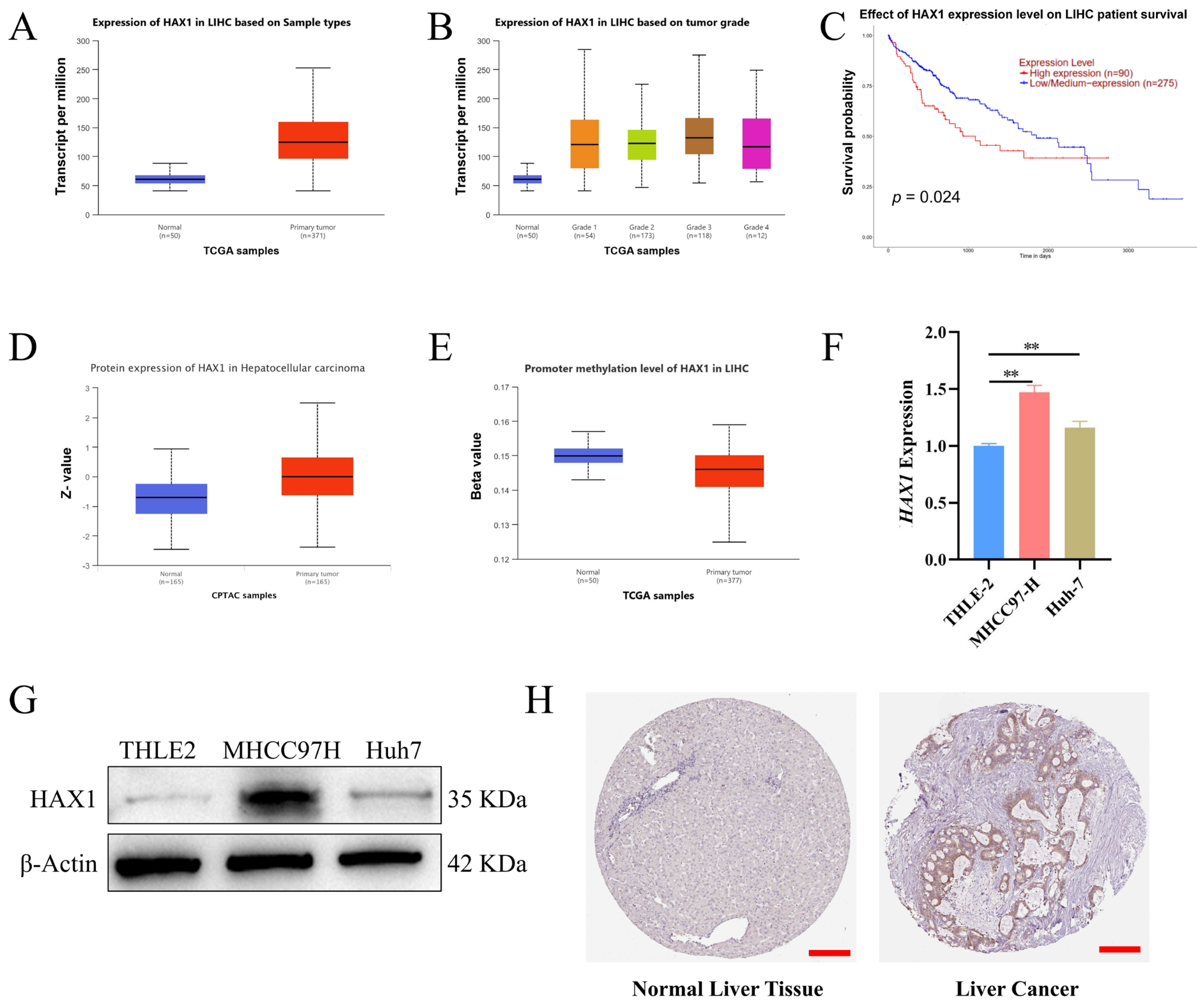
2.1. HAX1 Overexpressed in HCC and Correlates with a Poor Prognosis
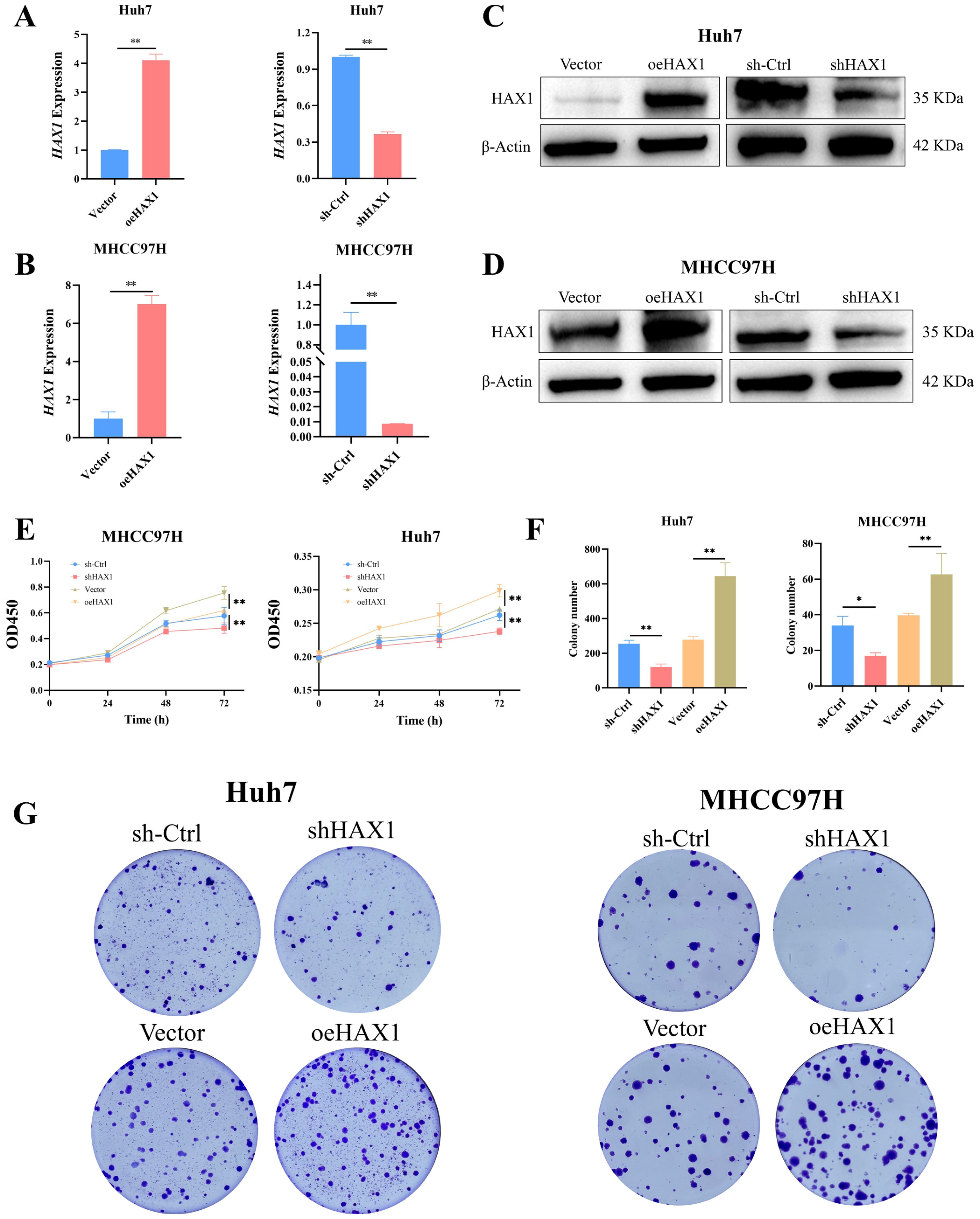
2.2. HAX1 Increased the Proliferation and Migration of HCC Cells
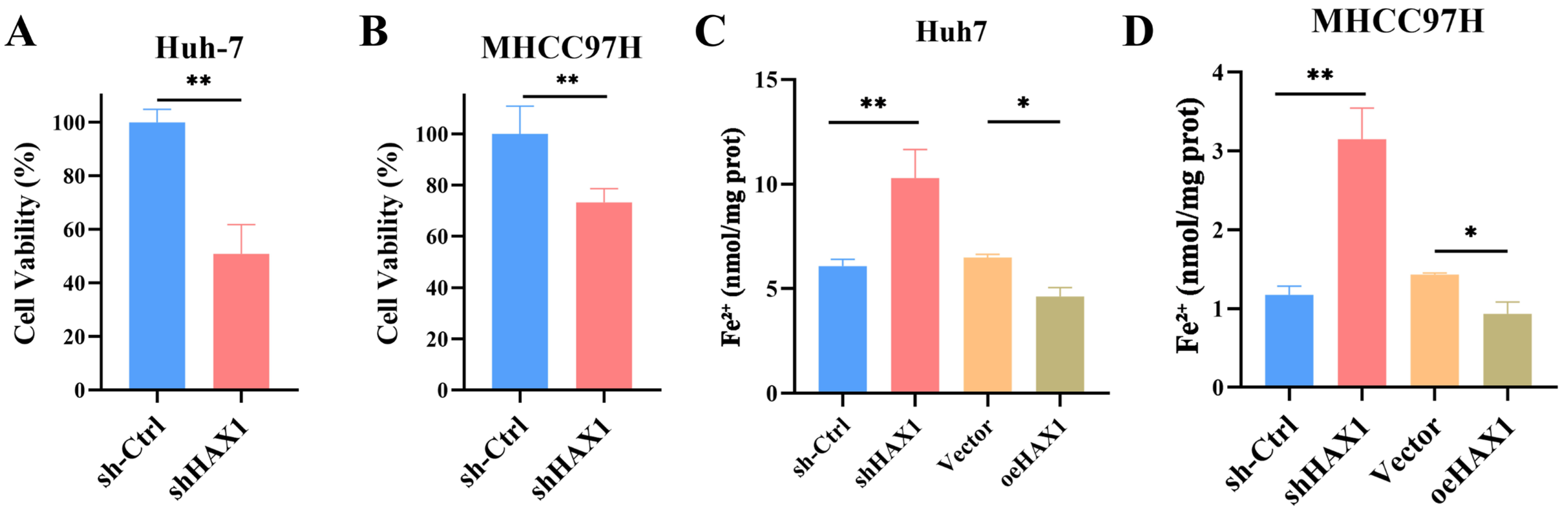
2.3. HAX1 Knockdown Sensitizes HCC Cells to IKE-Induced Ferroptosis and Triggers Iron Overload
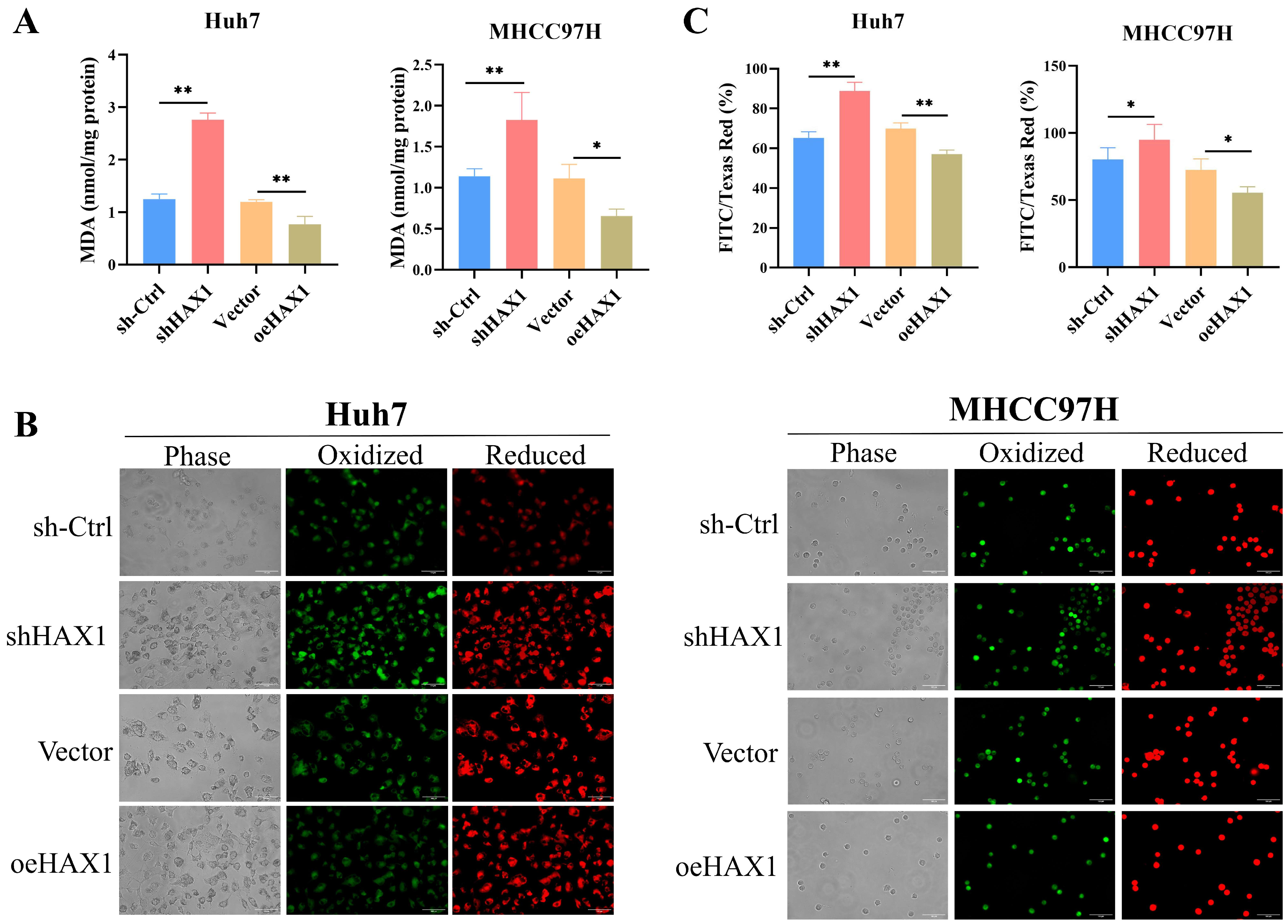
2.4. Silencing HAX1 Leads to the Accumulation of Lipid ROS in HCC Cells
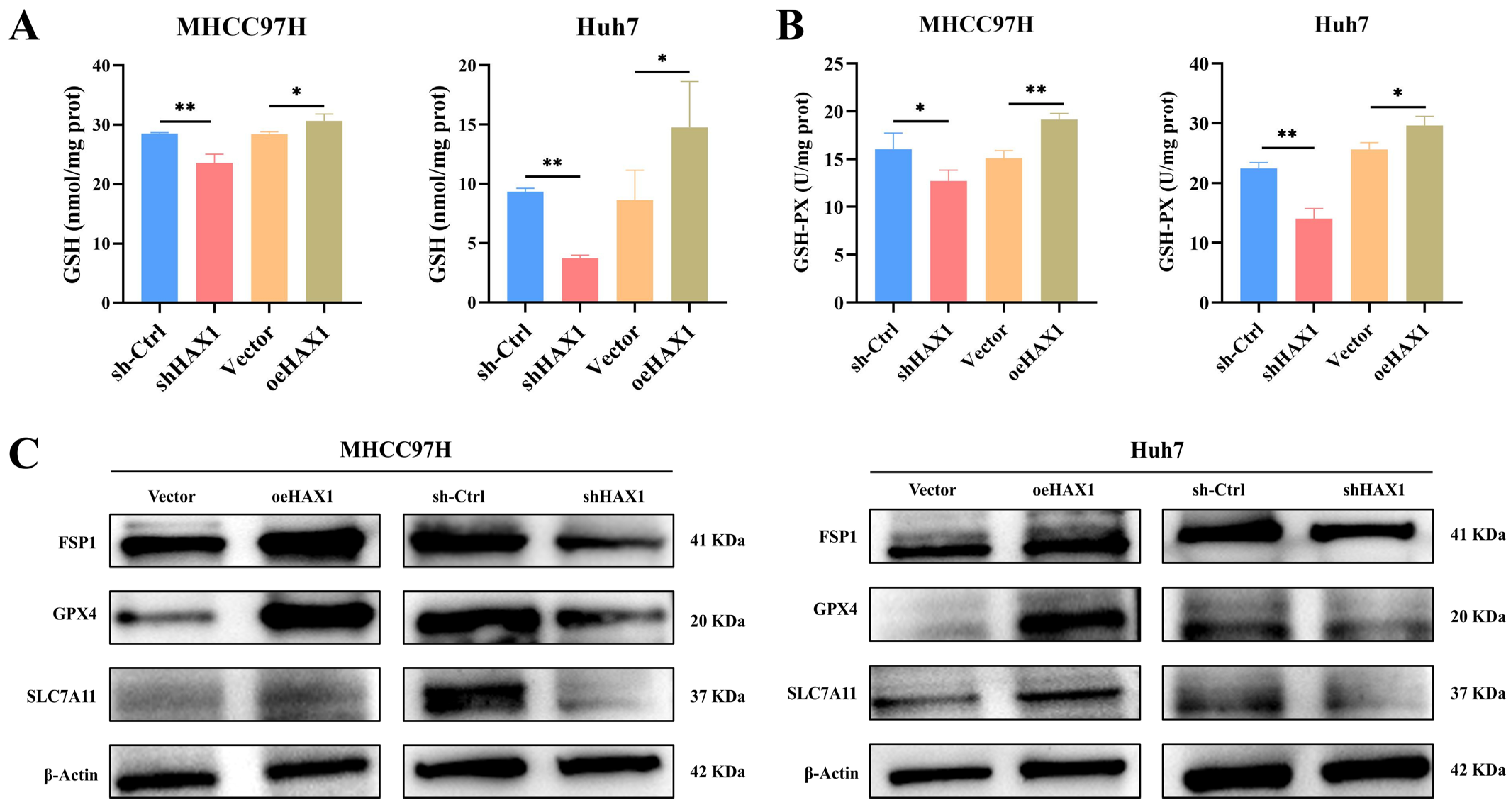
2.5. HAX1 Regulates the GSH/GPX4 Antioxidant Pathway to Inhibit Ferroptosis
3. Discussion
4. Materials and Methods
4.1. Cell Line and Culture
4.2. Plasmid Constructions and Transfection
4.3. Cell Counting Kit-8 Assay
4.4. Colony Formation Assay
4.5. Wound-Healing Assay
4.6. Reverse-Transcription Quantitative PCR (RT-qPCR)
4.7. Western Blot
4.8. Assessment of Glutathione Homeostasis
4.9. Measurement of Lipid Peroxides
4.10. Intracellular Iron Levels
4.11. Statistical Analysis
5. Conclusions
Supplementary Materials
Author Contributions
Funding
Institutional Review Board Statement
Informed Consent Statement
Data Availability Statement
Conflicts of Interest
References
- Ganesan, P.; Kulik, L.M. Hepatocellular Carcinoma: New Developments. Clin. Liver Dis. 2023, 27, 85–102. [Google Scholar] [CrossRef] [PubMed]
- Saqib, H.W.; Khan, M.I.; Hayat, T.; Haider, S.S.E.; Shah, M.I.; Nabi, R.; Wijdan, S.A.; Bashir, R.; Khan, T. Safety and Efficacy of Radiotherapy Plus Immunotherapy in Advanced Hepatocellular Carcinoma: A Systematic Review and Meta-Analysis. Asia-Pac. J. Clin. Oncol. 2026. [Google Scholar] [CrossRef] [PubMed]
- Remitha, N.P.S.I.; Sasmana, I.G.A.P.; Kusuma, I.K.W.A.; Mamangdean, C.T.; Supadmanaba, I.G.P.; Sindhughosa, D.A.; Mariadi, I.K. A Network Meta-Analysis Comparing the Efficacy of Lenvatinib, Atezolizumab plus Bevacizumab, and Sorafenib in the Treatment of Unresectable Hepatocellular Carcinoma. Asian Pac. J. Cancer Prev. 2026, 27, 1377–1388. [Google Scholar] [CrossRef] [PubMed]
- Dixon, S.J.; Olzmann, J.A. The cell biology of ferroptosis. Nat. Rev. Mol. Cell Biol. 2024, 25, 424–442. [Google Scholar] [CrossRef] [PubMed]
- Zhou, Q.; Meng, Y.; Li, D.; Yao, L.; Le, J.; Liu, Y.; Sun, Y.; Zeng, F.; Chen, X.; Deng, G. Ferroptosis in cancer: From molecular mechanisms to therapeutic strategies. Signal Transduct. Target. Ther. 2024, 9, 55. [Google Scholar] [CrossRef] [PubMed]
- Tang, B.; Zhu, J.; Wang, Y.; Chen, W.; Fang, S.; Mao, W.; Xu, Z.; Yang, Y.; Weng, Q.; Zhao, Z.; et al. Targeted xCT-mediated Ferroptosis and Protumoral Polarization of Macrophages Is Effective against HCC and Enhances the Efficacy of the Anti-PD-1/L1 Response. Adv. Sci. 2023, 10, e2203973. [Google Scholar] [CrossRef] [PubMed]
- Zheng, Y.; Wang, Y.; Lu, Z.; Wan, J.; Jiang, L.; Song, D.; Wei, C.; Gao, C.; Shi, G.; Zhou, J.; et al. PGAM1 Inhibition Promotes HCC Ferroptosis and Synergizes with Anti-PD-1 Immunotherapy. Adv. Sci. 2023, 10, e2301928. [Google Scholar] [CrossRef] [PubMed]
- Wang, J.; Xiu, M.; Wang, J.; Gao, Y.; Li, Y. METTL16-SENP3-LTF axis confers ferroptosis resistance and facilitates tumorigenesis in hepatocellular carcinoma. J. Hematol. Oncol. 2024, 17, 78. [Google Scholar] [CrossRef] [PubMed]
- He, F.; Zhang, P.; Liu, J.; Wang, R.; Kaufman, R.J.; Yaden, B.C.; Karin, M. ATF4 suppresses hepatocarcinogenesis by inducing SLC7A11 (xCT) to block stress-related ferroptosis. J. Hepatol. 2023, 79, 362–377. [Google Scholar] [CrossRef] [PubMed]
- Liang, Z.; Zhong, Y.; Meng, L.; Chen, Y.; Liu, Y.; Wu, A.; Li, X.; Wang, M. HAX1 enhances the survival and metastasis of non-small cell lung cancer through the AKT/mTOR and MDM2/p53 signaling pathway. Thorac. Cancer 2020, 11, 3155–3167. [Google Scholar] [CrossRef] [PubMed]
- Trebinska-Stryjewska, A.; Szafron, L.; Rembiszewska, A.; Wakula, M.; Tabor, S.; Sienkiewicz, R.; Owczarek, J.; Balcerak, A.; Felisiak-Golabek, A.; Grzybowska, E.A. Cytoplasmic HAX1 Is an Independent Risk Factor for Breast Cancer Metastasis. J. Oncol. 2019, 2019, 6375025. [Google Scholar] [CrossRef] [PubMed]
- Lin, J.; Wang, Y.; Lin, Z. HAX1 maintains the glioma progression in hypoxia through promoting mitochondrial fission. J. Cell. Mol. Med. 2021, 25, 11170–11184. [Google Scholar] [CrossRef] [PubMed]
- Yue, H.; Shi, G.; Tang, J.; Li, X.; Bai, L. HAX1 inhibits apoptosis and promotes maturation of neutrophils. Cell Commun. Signal. 2025, 23, 349. [Google Scholar] [CrossRef] [PubMed]
- Hu, Y.; Feng, Y.; Ma, P.; Wang, F.; Huang, H.; Guo, Y.; Li, P.; Mao, Q.; Xue, W. HAX-1 promotes the migration and invasion of hepatocellular carcinoma cells through the induction of epithelial-mesenchymal transition via the NF-κB pathway. Exp. Cell Res. 2019, 381, 66–76. [Google Scholar] [CrossRef] [PubMed]
- Wang, Y.; Huo, X.; Cao, Z.; Xu, H.; Zhu, J.; Qian, L.; Fu, H.; Xu, B. HAX-1 is overexpressed in hepatocellular carcinoma and promotes cell proliferation. Int. J. Clin. Exp. Pathol. 2015, 8, 8099–8106. [Google Scholar] [PubMed]
- Zhang, W.; Liu, Y.; Liao, Y.; Zhu, C.; Zou, Z. GPX4, ferroptosis, and diseases. Biomed. Pharmacother. 2024, 174, 116512. [Google Scholar] [CrossRef] [PubMed]
- Li, D.; Zhang, M.; Liu, J.; Li, Z.; Ni, B. Potential therapies for HCC involving targeting the ferroptosis pathway. Am. J. Cancer Res. 2024, 14, 1446–1465. [Google Scholar] [CrossRef] [PubMed]
- Simmen, T. Hax-1: A regulator of calcium signaling and apoptosis progression with multiple roles in human disease. Expert Opin. Ther. Targets 2011, 15, 741–751. [Google Scholar] [CrossRef] [PubMed]
- Lu, X.; Xue, P.; Fu, L.; Zhang, J.; Jiang, J.; Guo, X.; Bao, G.; Xu, G.; Sun, Y.; Chen, J.; et al. HAX1 is associated with neuronal apoptosis and astrocyte proliferation after spinal cord injury. Tissue Cell 2018, 54, 1–9. [Google Scholar] [CrossRef] [PubMed]
- Dong, Q.; Li, D.; Zhao, H.; Zhang, X.; Liu, Y.; Hu, Y.; Yao, Y.; Zhu, L.; Wang, G.; Liu, H.; et al. Anti-apoptotic HAX-1 suppresses cell apoptosis by promoting c-Abl kinase-involved ROS clearance. Cell Death Dis. 2022, 13, 298. [Google Scholar] [CrossRef] [PubMed]
- Lam, C.K.; Zhao, W.; Liu, G.; Cai, W.; Gardner, G.; Adly, G.; Kranias, E.G. HAX-1 regulates cyclophilin-D levels and mitochondria permeability transition pore in the heart. Proc. Natl. Acad. Sci. USA 2015, 112, E6466–E6475. [Google Scholar] [CrossRef] [PubMed]
- Alogaili, F.; Chinnarasu, S.; Jaeschke, A.; Kranias, E.G.; Hui, D.Y. Hepatic HAX-1 inactivation prevents metabolic diseases by enhancing mitochondrial activity and bile salt export. J. Biol. Chem. 2020, 295, 4631–4646. [Google Scholar] [CrossRef] [PubMed]
- Ding, S.; Wu, X.; Li, G.; Han, M.; Zhuang, Y.; Xu, T. Efficient transposition of the piggyBac (PB) transposon in mammalian cells and mice. Cell 2005, 122, 473–483. [Google Scholar] [CrossRef] [PubMed]
- Xie, D.; Zhou, J.; Guo, Y.; Wan, G.; Lu, F.; Guo, Y.; Yi, S.; Liu, Z. miR-135a-5p exerts tumor-suppressive effects in 769P renal carcinoma cells through the TFAP2A/KRT8 signaling axis. Vitro Cell. Dev. Biol.–Anim. 2026. [Google Scholar] [CrossRef] [PubMed]
- Rao, X.; Huang, X.; Zhou, Z.; Lin, X. An improvement of the 2ˆ(-delta delta CT) method for quantitative real-time polymerase chain reaction data analysis. Biostat. Bioinform. Biomath. 2013, 3, 71–85. [Google Scholar]


Disclaimer/Publisher’s Note: The statements, opinions and data contained in all publications are solely those of the individual author(s) and contributor(s) and not of MDPI and/or the editor(s). MDPI and/or the editor(s) disclaim responsibility for any injury to people or property resulting from any ideas, methods, instructions or products referred to in the content. |
© 2026 by the authors. Licensee MDPI, Basel, Switzerland. This article is an open access article distributed under the terms and conditions of the Creative Commons Attribution (CC BY) license.
Share and Cite
Guo, Y.; Zhou, Y.; Wu, J.; Zhou, J.; Zhu, M.; Xie, D.; Yi, S.; Liu, Z. HAX1 Promotes Hepatocellular Carcinoma Progression by Inhibiting Ferroptosis Through Modulation of Iron Homeostasis and the GSH/GPX4 Pathway. Int. J. Mol. Sci. 2026, 27, 5935. https://doi.org/10.3390/ijms27135935
Guo Y, Zhou Y, Wu J, Zhou J, Zhu M, Xie D, Yi S, Liu Z. HAX1 Promotes Hepatocellular Carcinoma Progression by Inhibiting Ferroptosis Through Modulation of Iron Homeostasis and the GSH/GPX4 Pathway. International Journal of Molecular Sciences. 2026; 27(13):5935. https://doi.org/10.3390/ijms27135935
Chicago/Turabian StyleGuo, Yueyue, Yuting Zhou, Jing Wu, Jizhe Zhou, Miaomiao Zhu, Delong Xie, Sangui Yi, and Zongling Liu. 2026. "HAX1 Promotes Hepatocellular Carcinoma Progression by Inhibiting Ferroptosis Through Modulation of Iron Homeostasis and the GSH/GPX4 Pathway" International Journal of Molecular Sciences 27, no. 13: 5935. https://doi.org/10.3390/ijms27135935
APA StyleGuo, Y., Zhou, Y., Wu, J., Zhou, J., Zhu, M., Xie, D., Yi, S., & Liu, Z. (2026). HAX1 Promotes Hepatocellular Carcinoma Progression by Inhibiting Ferroptosis Through Modulation of Iron Homeostasis and the GSH/GPX4 Pathway. International Journal of Molecular Sciences, 27(13), 5935. https://doi.org/10.3390/ijms27135935