Review

Microalgae-Mediated Nanotechnology for Sustainable Agriculture: Applications, Advances, and Future Prospects


1
College of Life Science, Yantai University, Yantai 264006, China
2
College of Biological Sciences and Technology, University of Jinan, Jinan 250022, China
3
Laboratory of Coastal Biology and Biological Resource Utilization, Yantai Institute of Coastal Zone Research, Chinese Academy of Sciences, Yantai 264003, China
*
Authors to whom correspondence should be addressed.
These authors contributed equally to this work.
Int. J. Mol. Sci. 2026, 27(13), 5875; https://doi.org/10.3390/ijms27135875
Submission received: 26 May 2026 / Revised: 12 June 2026 / Accepted: 26 June 2026 / Published: 30 June 2026
(This article belongs to the Section Molecular Nanoscience)

Abstract

The overreliance on chemical pesticides has caused severe environmental contamination, health risks, and increasing pest and pathogen resistance, creating an urgent need for greener and more efficient alternatives in sustainable agriculture. Microalgae-mediated green nano-synthesis has emerged as a promising strategy because of its environmental compatibility, cost-effectiveness, and multifunctional potential. This review critically summarizes recent advances in microalgae-derived nanomaterials for agricultural applications. First, we discuss the biochemical basis of nanoparticle biosynthesis, highlighting the roles of microalgal polysaccharides, proteins, photosynthetic pigments, extracellular polymeric substances, and secondary metabolites as reducing, capping, and stabilizing agents. We then summarize intracellular and extracellular synthesis pathways, advanced synthesis strategies, and key reaction parameters, including temperature, pH, and metal precursor concentration, which regulate nanoparticle size, morphology, stability, and yield. Subsequently, major microalgae-derived nanomaterials, including gold, silver, selenium, zinc oxide, bimetallic, and other functional nanoparticles, are discussed in relation to their agricultural applications. These nanomaterials show potential in bacterial, fungal, and viral disease control, biofilm disruption, plant growth promotion, yield enhancement, and abiotic stress mitigation. Their agronomic effects are associated with multiple mechanisms, including reactive oxygen species generation, pathogen membrane disruption, inhibition of biofilm formation, enhanced nutrient bioavailability, antioxidant regulation, and activation of plant systemic resistance. In addition, this review evaluates the phytotoxicity, biocompatibility, soil microbial impacts, and environmental safety of microalgae-derived nanomaterials, emphasizing that green synthesis does not automatically guarantee biosafety. Finally, we discuss their integration into circular agriculture through CO2 capture and wastewater-derived metal recovery, while highlighting remaining challenges in scale-up, quality control, economic feasibility, regulatory classification, and public acceptance. Overall, microalgae-mediated nanotechnology offers a promising platform for developing safer, more efficient, and circular agricultural inputs.

1. Introduction

Global population growth continues to place unprecedented pressure on food security, with estimates indicating that agricultural production needs to increase by at least 50% by 2050 to meet projected demands [1]. Chemical pesticides have played a crucial role in modern agriculture over the past decades in maintaining crop yields and protecting against pests and diseases [1,2]. However, their extensive use has resulted in significant environmental and public health challenges. Current estimates suggest that approximately 2 million people worldwide experience pesticide poisoning each year, with approximately 22,000 fatalities [2]. Even more alarming is that over 90% of the applied pesticides fail to reach their target pests and instead contaminate the surrounding environment (e.g., soil, water bodies, and atmosphere) through processes such as runoff, leaching, and atmospheric drift. This environmental contamination by pesticides significantly harms non-target organisms such as pollinating and beneficial insects and aquatic species [2,3]. Moreover, pesticide residues can enter and accumulate in food chains, posing long-term health risks to humans and contributing to chronic diseases such as cancer and neurological disorders [2,4]. In major agricultural river basins such as the Yellow River in China, the excessive use of pesticides and fertilizers has led to widespread non-point source pollution [5]. This not only degrades water quality and ecosystem health but also threatens the long-term sustainability of agricultural systems.
In addition to direct toxicity, the overuse of chemical pesticides has also exacerbated the problem of resistance in insect pests and plant pathogens. Repeated pesticide exposure allows resistant pests to survive and reproduce, driving the evolution of various resistance mechanisms and weakening the performance of traditional chemical pesticides [4,6,7]. Molecular diagnostic studies have shown that key pesticide resistance mutations such as G119S and L1014F are now widespread in global pest populations [8,9]. Even in regions practicing organic agriculture, the repeated use of naturally sourced pesticides can impose selection pressure on non-target aquatic organisms, fostering genetic adaptations within those populations [10]. Collectively, these challenges highlight the growing limitations of traditional pesticide-based agriculture and underscore the vital need for innovative and sustainable solutions.
In response to the growing challenges posed by traditional pesticides, researchers increasingly advocate shifting from static and input-driven control strategies to dynamic, nature-based defense systems [11]. The emergence of nanotechnology has brought revolutionary hope for achieving this goal. Nano-pesticides, due to their nanoscale properties, can improve the delivery, stability, and specificity of active ingredients, thereby enhancing efficacy while reducing application rates [1,12]. Despite these advantages, conventional nano-synthesis methods (physical and chemical methods) are energy-intensive and require the use of highly toxic chemicals, which may pose new environmental risks [12].
In this context, green nanotechnology has been gaining immense attention as a sustainable alternative that utilizes biological systems such as plants [13,14,15] and microorganisms to synthesize nanomaterials [16,17]. This method is environmentally friendly and cost-effective, avoiding the introduction of toxic chemical reagents and demonstrating significant ecological compatibility [12,18]. In particular, plant-derived green nano-pesticides have demonstrated excellent insecticidal and fungicidal activities, highlighting their potential in crop protection [14,16]. Additionally, bio-based intelligent nano-delivery systems synthesized from agricultural and forestry waste, such as lignin and cellulose, have demonstrated precise and controlled release of pesticides while simultaneously promoting the valorization of agricultural waste, marking an important step toward closed-loop nanoscale agriculture [19].
Among the various green synthesis systems, microalgae, being unicellular photosynthetic organisms, are emerging as highly efficient “biological factories” for nanomaterial production [3,20]. Microalgae exhibit unparalleled fast growth rates, low cultivation costs, and strong environmental adaptability, and can be mass cultivated in various water bodies, including wastewater [20,21]. More importantly, microalgal cells contain various bioactive molecules such as polysaccharides, proteins, and pigments, which can function as natural reducing and stabilizing agents. These biomolecules can effectively reduce metal ions into nanoparticles while simultaneously preventing their aggregation through inherent capping and stabilization effects [22,23].
Microalgae have been successfully used to synthesize various metal and metal-oxide nanoparticles such as gold (Au), silver (Ag), copper (Cu), zinc (ZnO), iron (Fe3O4), and palladium (Pd), all of which exhibit notable bioactivity. For instance, AgNPs and AuNPs synthesized by microalgae have demonstrated broad-spectrum antibacterial and antifungal properties [20,24,25,26]. Additionally, nitrogen-fixing cyanobacteria serve not only as a direct natural biofertilizer but can also be combined with nanotechnology to enhance plant nutrition by improving stress resistance and environmental restoration [27,28,29]. Importantly, microalgae-mediated nano-synthesis can be directly combined with wastewater treatment for the simultaneous removal of heavy metals (such as Cr, Pb, and Cd) and degradation of organic pollutants, while converting accumulated metals into valuable nanomaterials, representing an ideal synergy between green synthesis and environmental remediation [3,20,30,31].
Although microalgae-based nanotechnology has immense potential for agricultural applications, current research is still in its infancy and lacks a comprehensive, systematic evaluation. The evaluation of individual microalgae-derived nanomaterials against specific pests has been prioritized in current research, thereby providing only a narrow perspective on their broader agricultural potential [16]. In contrast, there is a lack of discussion on the comprehensive potential of microalgae as a multifunctional nano-biological factory, including their underlying biosynthetic mechanisms, broader roles in pest management and crop health promotion, and their contributions to environmental remediation [12,32].
Therefore, this review provides an integrated and critical overview of microalgae-mediated nanotechnology for sustainable agriculture. We first discuss the biochemical basis of nanoparticle formation in microalgae, focusing on polysaccharides, proteins, photosynthetic pigments, extracellular polymeric substances, and secondary metabolites that participate in metal-ion reduction, nucleation, capping, and stabilization. We then summarize intracellular and extracellular synthesis pathways, advanced synthesis strategies, and key reaction parameters that determine nanoparticle physicochemical properties. Subsequently, we compare major categories of microalgae-derived nanomaterials, including gold, silver, selenium, zinc oxide, bimetallic, and other functional nanoparticles, and evaluate their applications in crop protection, plant growth promotion, and stress mitigation. Particular attention is given to the mechanisms underlying their agronomic advantages, including antimicrobial activity, biofilm disruption, improved nutrient bioavailability, antioxidant regulation, and activation of plant defense responses. Finally, we discuss environmental safety, soil microbial impacts, circular agriculture integration, scale-up challenges, regulatory gaps, and future development directions. By linking microalgal biotechnology, green nanomaterial synthesis, and sustainable agricultural applications, this review aims to clarify the current state of the field and identify key priorities for future research and translation.

2. Microalgal Diversity and Biochemical Richness

Microalgae, due to their rich biochemical components and distinct metabolic pathways, are regarded as ideal biological nano-factories [23,33,34]. The process of nanoparticle biosynthesis in microalgae involves a coordinated sequence of reduction, nucleation, and stabilization steps driven by intracellular and extracellular biomolecules. Gaining an in-depth understanding of these mechanisms is essential for controlling nanoparticle properties such as size, morphology, and surface chemistry, as well as optimizing their performance in sustainable agriculture applications such as nano-pesticides and nano-fertilizers [35,36,37].

2.1. Polysaccharides

Polysaccharides play a crucial dual role during microalgae-mediated nanoparticle synthesis. Due to their abundant functional groups, such as hydroxyl and aldehyde groups, microalgal polysaccharides can effectively reduce metal ions to the atomic state by donating electrons [38,39,40,41]. Simultaneously, polysaccharides can rapidly adsorb onto the surface of newly formed nanoparticles, forming a coating layer, which effectively prevents particle agglomeration through the spatial steric hindrance effect, thereby ensuring colloidal stability [36,42,43]. For example, soluble polysaccharides extracted from Chlorella vulgaris were successfully used to synthesize and stabilize AgNPs [44]. Different microalgal polysaccharides, owing to variation in their molecular composition, functional group density, and molecular weight, can mediate the synthesis of diverse nanoparticles and strongly influence their size, morphology, and stability. In general, sulfated polysaccharides have been shown to often exhibit strong metal-binding and reducing capabilities, while cyanobacterial cell-wall polysaccharides display exceptionally high affinities for metal adsorption and reduction for the production of various nanoparticles when compared to other microorganisms [23,45,46,47].

2.2. Proteins

Apart from polysaccharides, proteins and enzymes also play an indispensable role in nanoparticle synthesis. Protein molecules are made up of amino acid residues that contain hydroxyl, carboxyl, and amine groups, which chelate metal ions, allow electron transfer, and promote metal ion reduction [25,48]. Enzymatic activities can further elevate this process, particularly through redox-active proteins involved in cellular metabolism. For example, oxidoreductases such as ATP synthase and superoxide dismutase have been observed to directly participate in the biological synthesis and stabilization of AgNPs in Chlamydomonas reinhardtii [49,50].
Studies have shown that protein-depleted algal extracts consistently show altered synthesis rates and particle size and size distribution of nanoparticles, indicating that intracellular proteins are essential regulators in the biological synthesis process of NPs [49]. Notably, even extremely low concentrations of specific protein fractions have been reported to efficiently drive nanoparticle formation, as illustrated by the synthesis of ultrasmall CuO nanoparticles (2 nm) from protein components isolated from Macrocystis pyrifera with extremely low overall protein content (0.72 μg) [51].

2.3. Pigments

Photosynthetic pigments also play an active and mechanistically important role in microalgae-mediated nanoparticle biosynthesis. Pigment-protein complexes such as phycocyanin, phycobilins, chlorophylls, and carotenoids possess strong redox potential and can participate directly in metal-ion reduction, particularly under light irradiation. Phycocyanin and C-phycobilin from cyanobacteria can directly reduce metal salts to form AgNPs and CdS nanoparticles [23,52,53]. The involvement of photosynthetic pigments is closely linked to light-driven electron transfer processes. Light energy can excite these pigment molecules, causing them to generate high-energy electrons, which are then used to reduce metal ions [23,54]. In green algal cells, pigments such as chlorophyll a and β-carotene can not only serve as a direct electron source themselves but can also transfer electrons through molecules such as NADH, thereby enhancing enzymatic reduction pathways and enabling the efficient synthesis of nanoparticles such as AuNPs [55]. Nanoparticle formation is accompanied by a marked decrease in chlorophyll content and fluorescence intensity, indicating the consumption of photosynthetically generated electrons during the reduction process [56]. Collectively, these findings underscore the role of photosynthetic pigments as dynamic electron sources rather than passive cellular components.

2.4. Extracellular Polymeric Substances (EPS)

Extracellular polymeric substances (EPS) are critical mediators of microalgae-derived nanoparticle synthesis and stabilization. Carbohydrate-rich EPS from microalgae such as Graesiella emersonii and Chlorella sp. can act simultaneously as reducing and capping agents, enabling one-step formation of stable silver and gold nanoparticles [57,58,59]. The presence of EPS is essential for maintaining colloidal stability, as its removal leads to rapid nanoparticle aggregation, whereas EPS-containing systems yield particles with controlled size and morphology [60,61]. Moreover, EPS composition strongly influences nanoparticle quality; protein-enriched EPS from Arthrospira platensis produces AgNPs with improved monodispersity and more uniform surface passivation, underscoring the pivotal role of EPS chemistry in microalgae-mediated nano-synthesis [62].

2.5. Secondary Metabolites

Various other metabolites have been successfully shown to participate in the reduction, stabilization, and termination stages of nano-synthesis. For instance, various fatty acid esters (e.g., methyl palmitate and methyl oleate) and hydrocarbons were detected from the extract of the novel microalgae Coelastrellia aeroterrestrica, which have been proposed to act primarily as terminating agents during the biosynthesis of AgNPs [63]. Other studies on microalgae (e.g., Isochrysis sp. and Desmodesmus abundans) have also clearly demonstrated synergistic involvement of fatty acid esters, together with proteins, nucleic acids, amino acids, and carbohydrates, in enhancing the biological reduction and stabilization of silver nanoparticles, with lipid-derived compounds contributing to surface capping and termination, while nitrogen- and oxygen-containing biomolecules provide the primary reducing functionality [64,65].
As summarized in Table 1, most biomolecules found in microalgae, such as polysaccharides, proteins, and pigments, through their abundant functional groups (-OH, -COOH, and -NH2), can either work individually or in synergy for the synthesis of nanoparticles. These groups mediate the reduction in metal ions to their elemental forms and subsequently serve as natural end-capping agents, coating the nanoparticle surface to enhance colloidal stability and prevent agglomeration [25,33,66]. Among these components, carotenoids, due to their excellent electron donor properties, successfully synthesized multi-dispersed spherical and triangular AuNPs within 24 h. Protein extracts also display notable reducing potential, although their activity appears temperature-dependent, suggesting the involvement of enzyme-mediated processes. In contrast, polysaccharide extracts demonstrated species-specific behavior in which cyanobacterial polysaccharides could effectively reduce gold ions, while the polysaccharide from green algae could not do so [67,68]. Thus, differences between algal species also affect how nanoparticles are formed, making it possible to control and tailor nanoparticle properties through the targeted selection of algal species or specific cellular fractions.

3. Green Synthesis Pathways for Microalgae-Mediated Nanomaterials

3.1. Intracellular vs. Extracellular Synthesis Pathways

According to the location of nanoparticle formation, microalgae-mediated synthesis occurs via two fundamentally distinct pathways, namely intracellular and extracellular synthesis [34,74,75]. Intracellular synthesis occurs within living algal cells. This process begins with the passive adsorption or active transport of metal ions into the cells [76,77]. Once inside the cells, the metal ions are reduced to atoms by inherent reducing agents produced during the microalgal cellular metabolic process (e.g., NADPH generated during photosynthesis) [78,79]. Subsequently, these atoms undergo nucleation and growth, eventually forming nanoparticles within the cells. Nanoparticle formation is spatially regulated within the cell and closely linked to metabolically active regions. For example, transmission electron microscopy and fluorescence-based analyses have revealed that metallic nanoparticles predominantly localize near the cell membrane, organelle-rich regions, or intracellular storage sites of microalgae cells, suggesting the involvement of membrane-associated enzymes, redox-active pigments, and intracellular electron transport processes [80]. Moreover, changes in pigment composition and the preferential formation of nanoparticles near sites for ATP synthesis and energy-intensive cellular zones (e.g., flagella) further support the role of oxidoreductases and photosynthetically derived reducing equivalents in driving intracellular metal reduction [49,56]. However, the primary limitation of intracellular synthesis lies in downstream processing challenges. Efficient recovery of intracellular nanoparticles typically requires cell-disruption techniques, such as mechanical or chemical treatments, which increase process complexity and cost and may also promote nanoparticle aggregation or contamination [34,81].
Extracellular synthesis mainly relies on metabolites secreted by microalgae into the surrounding environment or based on the active groups on the cell wall surface to mediate metal ion reduction and nanoparticle stabilization [76,82]. This process can be carried out in two ways: using cell-free filtrates or complete algal biomass. In cell-free systems, the filtrates, which are rich in extracellular polymeric substances (EPS) or extracted biochemical molecules, including polysaccharides, proteins, and enzymes, directly interact with the metal precursor solutions to reduce metal ions and simultaneously stabilize the resulting nanoparticles [83]. When using whole algal biomass, the negatively charged cell wall (rich in functional groups such as hydroxyl and carboxyl) first adsorbs positively charged metal ions through electrostatic interaction. Subsequently, enzymes or other related biomolecules are employed on the cell wall for reduction, forming nanoparticles that may adhere to the cell surface or be released into the culture medium [84]. Different extracts and variations in extraction methods, culture conditions, and biomass pretreatment have been shown to significantly influence nanoparticle size, stability, and dispersity, highlighting the importance of biochemical composition and processing strategies. For example, the boiled extract of Desmodesmus sp. was found to synthesize smaller (3–6 nm) and more stable nanoparticles of AgNPs when compared to the crude extract [80]. Notably, the successful use of extracts from defatted Nannochloropsis oculata residual biomass for synthesizing AgNPs and nano-zero-valent iron (nZVIO) underscores the potential of extracellular synthesis for integrating nanoparticle production into biorefinery frameworks [85].
In addition, further comparative studies of intracellular and extracellular synthesis pathways indicate clear trade-offs between reaction kinetics and process practicality. Extracellular synthesis has been reported to be much slower (7–10 days) than intracellular methods but does offer significant advantages in downstream processing due to simplified recovery and purification steps [67]. In addition, nanoparticle synthesis efficiency and the preference for intracellular or extracellular pathways are strongly governed by culture physiological conditions. Variations in factors such as CO2 availability can markedly alter metabolic fluxes and biomolecule distribution, thereby shifting the dominant synthesis route. Overall, extracellular synthesis is preferred due to its operational simplicity, no need for cell disruption, ease of downstream purification, and large-scale production, thereby offering greater translational potential for sustainable nanomaterial production [34,86]. Figure 1 provides a detailed description of the environmental factors affecting microalgal growth and the pathway of microalgae-based extracellular synthesis of nanoparticles.

3.2. Advanced Strategies for Microalgae-Mediated Nanomaterial Synthesis and Characterization

To produce nanomaterials with specific sizes, morphologies, and functional properties to meet the diverse demands in sustainable agriculture for promoting plant growth, disease prevention, and alleviating adverse environmental stresses, researchers have developed various synthesis strategies. Precise control over cultivation and reaction conditions, coupled with systematic physicochemical and biological characterization, enables a deeper understanding of nanoparticle formation mechanisms and facilitates the rational optimization of their performance in sustainable agricultural applications [23,87,88].

3.2.1. Aqueous Extract/Supernatant-Mediated Synthesis

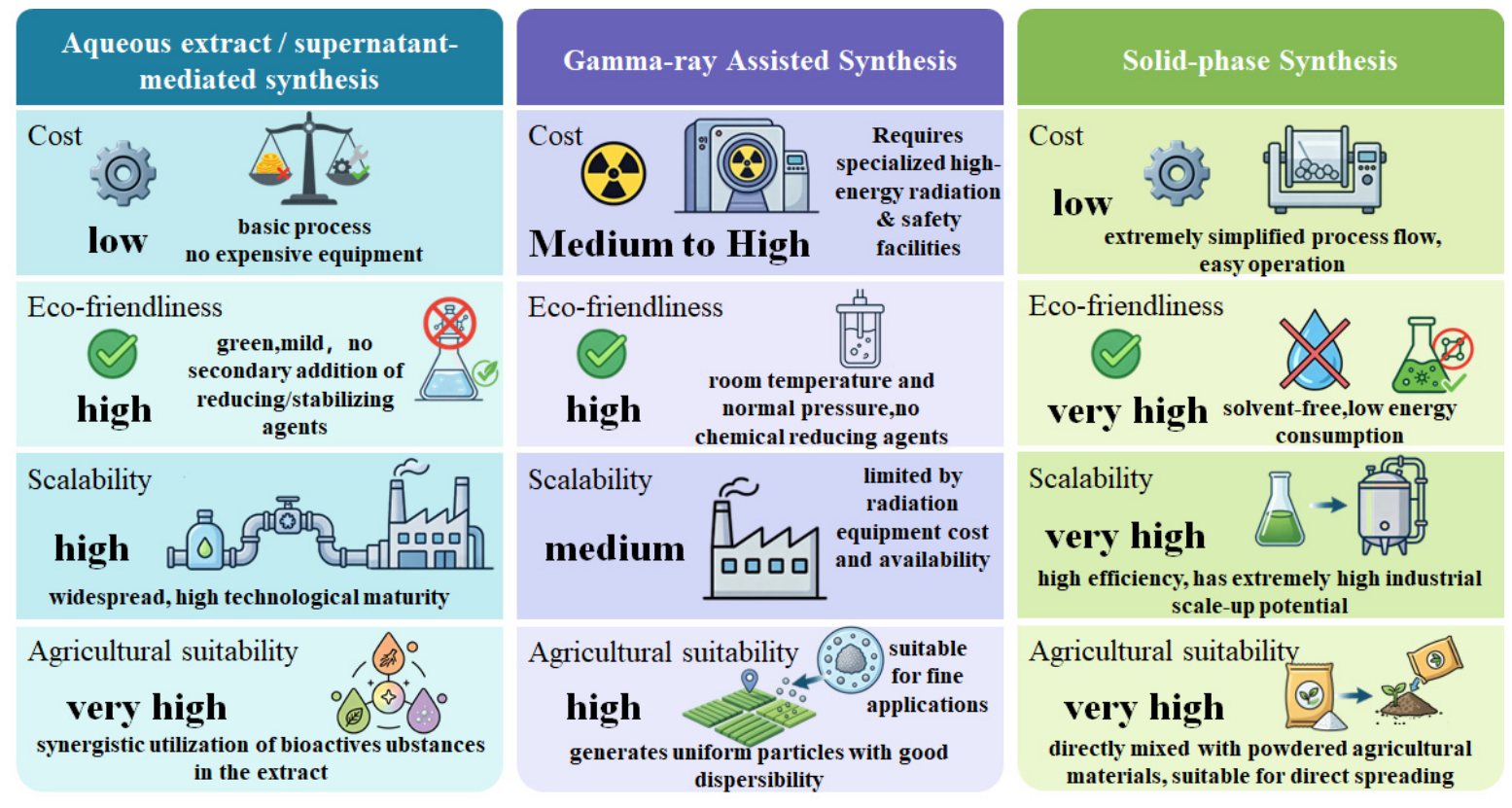
Synthesis mediated by standard aqueous extracts or cell-free supernatants represents the most fundamental and widely adopted method for the synthesis of nanomaterials by microalgae (Figure 1). This method usually involves harvesting microalgae biomass followed by drying and grinding, after which aqueous extracts are produced through disruptive methods such as heating or ultrasonic-assisted extraction. Alternatively, cell-free supernatants can be directly collected from culture media. In both cases, the resulting solutions are rich in bioactive molecules such as proteins, polysaccharides, polyphenols, pigments, and other metabolites that can work together as reducing agents and stabilizers to convert metal ions into nanoparticles and maintain their colloidal stability. Multiple studies have reported that biomolecules can effectively mediate the synthesis of a wide range of metal and metal oxide nanoparticles, including gold, silver, iron oxide, zinc oxide, and magnesium oxide [89,90]. The resulting nanoparticles often exhibit controlled size distributions, diverse morphologies, and high dispersity, and they frequently display enhanced functional properties, such as catalytic, antimicrobial, or photocatalytic activities.
Cyanobacteria (blue-green algae) also represent valuable biological resources for green nanoparticle synthesis. For example, silver nanoparticles synthesized from the extract of Spirulina platensis have been shown to exhibit physicochemical characteristics and antibacterial activity comparable to those of chemically synthesized counterparts, while offering superior stability and biocompatibility [91]. By regulating the pH value, gold nanoparticles of different morphologies (spherical, triangular, hexagonal) and even nanorods can be synthesized using blue-green algae [92]. Overall, aqueous extract- or supernatant-mediated synthesis is a simple and mild approach; however, its efficiency is significantly affected by factors such as the algal species, extraction conditions, and pH, temperature, and reactant concentration in the reaction system [57,87,93].

3.2.2. Gamma-Ray Assisted Synthesis

Gamma-ray-assisted synthesis is an advanced green strategy that utilizes high-energy radiation to trigger reduction reactions. Compared with the standard wet chemical method, gamma radiation can uniformly generate reducing species (such as hydrated electrons) at normal temperature and pressure, enabling a rapid and controllable reduction process without the need for additional reducing agents or high-temperature conditions. Studies have shown that using polysaccharides extracted from Spirulina platensis as a stabilizing agent, silver nanoparticles with an average particle size of 25.25 nm, spherical shape, and good dispersion were successfully prepared under 10.0 kGy of gamma radiation [94]. This method not only improves the synthesis efficiency but also effectively regulates the particle size distribution of nanoparticles by controlling the radiation dose, providing a green and efficient approach for large-scale production of uniform and stable nanomaterials.

3.2.3. Solid-Phase Synthesis

For industrial applications, solid-phase synthesis has attracted increasing attention due to its solvent-free operation, high efficiency, and environmental compatibility. This method synthesizes nanoparticles by mechanically grinding and mixing microalgae powder with metal precursors and activators (such as NaOH) together to enable direct solid–solid reactions that lead to nanoparticle formation. Studies have confirmed that by grinding Spirulina powder with silver nitrate solid in the presence of NaOH, silver nanoparticles with a particle size of approximately 19.9 nm and good dispersion can be synthesized in one step [95]. The proteins in Spirulina (such as the hydroxyl groups of amino acids) simultaneously act as reducing agents and stabilizers during this process. This technology significantly simplifies the production process, reduces costs, and avoids secondary wastewater generation, demonstrating extremely high potential for industrial large-scale production.
Figure 2 outlines all three green synthesis routes for microalgae-mediated nanoparticle production discussed above, including aqueous extract-based bio-reduction, gamma-ray-assisted radiolytic reduction, and solvent-free solid-state synthesis. These approaches utilize microalgal biomass in different forms and enable tunable control over nanoparticle size, morphology, and stability.

3.3. Influence of Reaction Conditions on Nano-Synthesis

3.3.1. Temperature

Temperature has also been shown to significantly affect the growth and metabolism of microalgae. Temperature stress can shift cellular resource allocation, often reducing overall biomass productivity while promoting the accumulation of specific metabolites, such as lipids. A study on Nannochloropsis oculata showed that heat stress (35 °C) reduced biomass productivity but enhanced lipid accumulation compared with the optimal temperature (25 °C). Notably, the lipid-extracted residual biomass was subsequently used to synthesize AgNPs and nano-zero-valent iron (nZVI), which exhibited high efficiency in removing heavy metals (Pb2+ and Cd2+) [85]. These results indicate that temperature-induced metabolic shifts can improve the functional value of post-extraction algal residues for nanomaterial synthesis and environmental remediation.
Apart from cell growth and metabolism, temperature also plays a significant role in reaction kinetics during nanoparticle synthesis by regulating metal-ion reduction rates, nucleation frequency, and particle growth. In general, an increase in temperature accelerates the reduction in metal ions and increases the nucleation rate, which results in the formation of smaller nanoparticles at higher yield [96,97]. However, temperature also plays a critical role in determining nanoparticle morphology and stability, as excessive thermal energy can alter growth pathways or promote particle aggregation [57]. Furthermore, excessively high temperatures have also been shown to denature or decrease the activity of biological reducing agents (such as enzymes) that can disrupt capping interactions or induce agglomeration of nanoparticles [75,98].

3.3.2. pH

Solution pH is also a key factor influencing the size and morphology of nanoparticles. Generally, an alkaline environment is conducive to the formation of monodisperse, small-sized nanoparticles, while an acidic environment tends to promote slower reduction kinetics and produce anisotropic, larger-sized particles [75,99]. For example, in the study using Haematococcus pluvialis CFS to synthesize AgNPs, it was found that pH 11 was the most effective synthesis condition, and a strong reaction could be triggered within 15 min, while the reaction under acidic conditions was inhibited [57]. This is because a high pH value is beneficial for the deprotonation of functional groups on the cell surface and biological molecules, thereby enhancing their electrostatic adsorption and reduction ability for metal ions [3]. Studies have shown that when the pH value increases from 4 to 10, the size distribution of AgNPs synthesized by Parachlorella kessleri narrows from 20 to 60 nm to around 15 nm [100]. Spectroscopic analyses further indicate that pH not only controls reaction efficiency but also directly influences nanoparticle optical responses, reflecting changes in particle size and aggregation state [33,46,65].

3.3.3. Metal Precursors

Within an optimal range, increasing precursor concentration enhances nanoparticle yield; however, excessive concentrations can promote particle growth, broaden size distribution, and induce agglomeration due to insufficient capping capacity [34,101]. In whole-cell systems, both precursor concentration and the ratio of algal biomass to metal ions critically influence synthesis efficiency and product stability, as cellular adsorption and reduction capacities must be balanced against metal ion loading [102]. Therefore, in order to achieve efficient and controllable synthesis, it is necessary to optimize the ratio of microalgae biomass to the precursor salt [103].

4. Diversity of Microalgae-Derived Nanomaterials for Agriculture

In the context of sustainable agricultural applications, microalgae-derived nanomaterials encompass a diverse range of compositions, including gold, silver, selenium, zinc oxide, and various composite nanostructures. The physicochemical properties and application potential of these nanomaterials vary widely depending on the core metal composition, the microalgal species employed, and the specific synthesis conditions. This inherent biological and process-level tunability offers significant opportunities to design nanomaterials with tailored characteristics for targeted agricultural functions [104].

4.1. Gold Nanoparticles

The biological synthesis of gold nanoparticles (AuNPs) is primarily driven by the reduction of Au3+ ions by redox-active biomolecules present in microalgal extracts, including proteins, polysaccharides, pigments, and associated metabolites [105]. These molecules donate electrons to gold ions, initiating nanoparticle nucleation, while simultaneously adsorbing onto the nascent particle surface to provide stabilization. AuNPs have demonstrated significant potential for various applications in the agricultural field due to their unique physical and chemical properties, good biocompatibility, and low toxicity. The benefits include promoting crop growth, providing antioxidant defense, and exhibiting antifungal activity [106,107]. Studies have shown that wheat treated with AuNPs derived from cyanobacteria (Spirulina platensis) can significantly increase its yield and nutritional value [107]. Additionally, bio-stabilized colloidal AuNPs produced by Chlorella species have been reported to enhance plant antioxidant capacity and catalytic activity. AuNPs synthesized from red algae (Gelidiella acerosa) have shown significant metabolic enzyme inhibition and antioxidant activity, indicating their ability to regulate redox-related pathways [108]. These effects are thought to be associated with the interaction of AuNPs with photosynthetic pigments, including chlorophyll, which may facilitate improved redox balance and metabolic efficiency in plants [109]. Also, these findings indicate that AuNPs can directly inhibit pathogens as well as enhance the plant’s own resistance by regulating the plant’s antioxidant system.

4.2. Silver Nanoparticles

Silver nanoparticles (AgNPs) are extensively studied and technically mature nanomaterials produced by microalgae. Their primary value in the agricultural field lies in their broad-spectrum and highly efficient antibacterial activity against plant pathogens [20,22]. AgNPs synthesized by microalgae typically exhibit high colloidal stability and enhanced biocompatibility due to natural biomolecular capping, which reduces phytotoxicity and environmental risk [110]. Numerous studies have demonstrated that AgNPs synthesized from different microalgal and cyanobacterial species effectively inhibit both Gram-positive and Gram-negative pathogens, often showing superior performance compared with conventional antibiotics or silver salts [106,111,112,113]. Beyond in vitro antibacterial efficacy, microalgae-based AgNPs have also been successfully applied in agricultural contexts, such as seed coating and seed pre-treatment, where they significantly suppress soil-borne and seed-borne diseases while, in some cases, simultaneously promoting early plant growth [113,114]. The antibacterial effectiveness of these AgNPs is attributed to their small size, high surface reactivity, and biomolecule-derived surface functionalization, which together enhance their interaction with microbial cells. Microscopic analyses indicate that AgNPs disrupt bacterial cell wall integrity, induce membrane damage, and cause leakage of intracellular contents, ultimately leading to cell death [94]. In addition, the natural biomolecular capping provided by microalgae not only improves nanoparticle stability and dispersibility but also contributes to enhanced antimicrobial potency at relatively low dosages.

4.3. Selenium Nanoparticles

Selenium (Se) is an essential trace element for both humans and animals, and selenium nanoparticles (SeNPs) have attracted increasing attention in agricultural research as innovative bio-stimulants and plant protection agents, owing to their relatively low toxicity, high bioavailability, and enhanced biological activity compared with conventional selenium salts [115,116]. Recent studies have also shown that SeNPs can serve as effective antioxidants and fertilizer additives, promoting plant growth and alleviating oxidative stress [117]. Foliar spraying of SeNPs has been shown to significantly enhance crop yield and nutritional value. Long-term field trials have demonstrated that spraying SeNPs at different growth stages of wheat not only significantly increased wheat yield and the selenium content in seeds (up to 32 times) but also improved the contents of starch and soluble sugars in seeds [118]. Beyond selenium biofortification, SeNPs have been reported to improve physiological performance and fruit quality parameters in horticultural crops even under non-stress conditions, indicating their role as growth-promoting bio-stimulants [119,120]. In addition, SeNPs synthesized from the extract of Spirulina platensis (SP-SeNPs) also consistently displayed strong antioxidant properties, including free-radical scavenging activity against multiple reactive oxygen species [121,122]. These properties endow SeNPs with great potential for alleviating both biotic and abiotic stresses in plants. Foliar application of SeNPs has been shown to strengthen antioxidant defense systems of plants by reducing oxidative stress markers while increasing photosynthetic pigments, phenolic compounds, and free-radical scavenging capacity, thereby alleviating damage caused by salinity [123]. These benefits are largely attributed to selenium’s role as a functional component of antioxidant enzymes, which enhances reactive oxygen species (ROS) detoxification and protects cellular integrity [124].

4.4. Zinc Oxide and Manganese-Zinc Dual-Metal Nanomaterials

Zinc oxide nanoparticles (ZnONPs) synthesized using microalgal biomass (e.g., Chlorella) benefit from intrinsic biomolecules such as proteins and polysaccharides that can effectively stabilize and improve their biological compatibility [125]. The biosynthesized ZnONPs from various algal and cyanobacterial sources can be tailored to different shapes and sizes and are found to consistently exhibit strong antimicrobial and antioxidant activities, underscoring their multifunctional role in plant protection and stress mitigation [125,126]. Biologically synthesized ZnONPs exhibit strong antimicrobial activity, supporting their relevance for both agricultural and agri-food applications [127]. In crop systems, low-dose ZnONP treatments have been shown to significantly improve seed germination and seedling vigor, likely by enhancing zinc bioavailability and stimulating early metabolic activity. However, elevated concentrations can induce phytotoxic effects, underscoring a narrow optimal dosage window [128].
Bimetallic nanomaterials typically exhibit superior synergistic effects compared to single-metal nanomaterials. A recent innovative study successfully synthesized zinc oxide-manganese bimetallic nanoparticles (ZnO-MnNPs) using a mixed extract of Spirulina and Chlorella sp., demonstrating excellent colloidal stability and monodispersity [129]. Preliminary in vitro antifungal tests indicate that ZnO-MnNPs have measurable inhibitory activity against tomato pathogenic fungi such as Sclerotinia sclerotiorum and Fusarium equiseti. Although the effect is relatively mild, their high stability and biocompatibility suggest their potential as sustainable antifungal agents in agricultural practices [129]. In parallel, other algae-mediated bimetallic systems, such as Cu–Fe nano-composites synthesized using Chlorella, have shown effectiveness in photocatalytic pollutant degradation, underscoring the broader potential of microalgae-derived bimetallic nanomaterials in both crop protection and environmental remediation [130].

4.5. Other Nanomaterials

In addition to the major classes of nanomaterials discussed above, microalgae can also be employed to synthesize a range of other functional nanomaterials with emerging agricultural applications. Copper-based nanoparticles (CuONPs) biosynthesized using Chlamydomonas sp. have been proven to possess antibacterial and antiviral activities, highlighting their potential for crop disease management [131]. Similarly, algal systems, including Chlorella vulgaris, have been used to produce AgCl nanoparticles with strong antimicrobial properties [132]. Iron-based (α-Fe2O3) nanoparticles represent another important category. Biogenic α-Fe2O3 nanoparticles have been shown to enhance seed germination, early seedling growth, and photosynthetic performance by modulating reactive oxygen species and chlorophyll synthesis in cereal crops such as rice and maize [133]. Under field conditions, spraying low concentrations (10 mg/L) of α-Fe2O3 nanoparticles on the leaf surface significantly increased the chlorophyll content and yield of rice and corn [133]. In addition, magnetic iron oxide nanoparticles (Fe3O4) synthesized from brown algae, including Sargassum muticum and Padina pavonica, have demonstrated effectiveness in heavy-metal adsorption and show potential as carriers for targeted delivery systems [47,134]. In addition to metal nanoparticles, microalgae and cyanobacteria have been employed to produce semiconductor nanomaterials such as cadmium sulfide (CdS) quantum dots. CdS quantum dots biosynthesized using hemoglobin-like proteins from cyanobacteria (Phormidium tenue) exhibit strong fluorescence properties, enabling their use as bioimaging probes and sensors. These optically active nanomaterials show promise for applications in plant cell imaging, pathogen detection, and biosensing, thereby extending the utility of microalgae-mediated nanomaterials beyond crop protection into agricultural diagnostics and monitoring [53].

5. Applications in Crop Protection and Growth Promotion

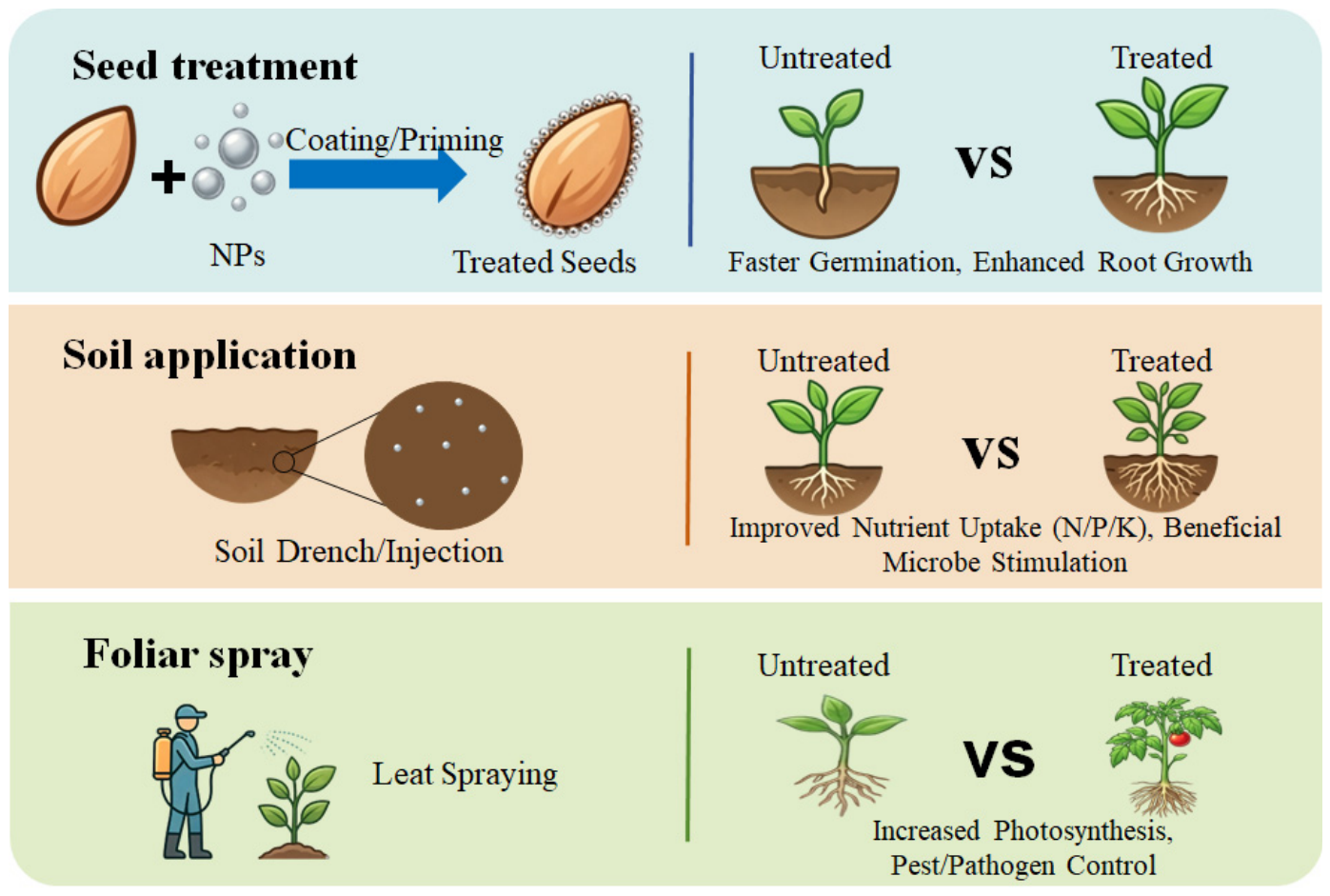
Nanoparticles synthesized by microalgae have shown great potential in sustainable agriculture. They can not only be used as green pesticides to prevent plant diseases but also as nano-fertilizers and biological stimulants to promote crop growth and enhance the crop’s tolerance to non-biological stress (Figure 3). Their mechanisms of action are diverse, encompassing antimicrobial activity, improved nutrient-use efficiency, and modulation of plant physiological and antioxidant responses that allow for a broad spectrum of applications in agriculture.

5.1. Major Agronomic Advantages

5.1.1. Control of Bacterial Diseases

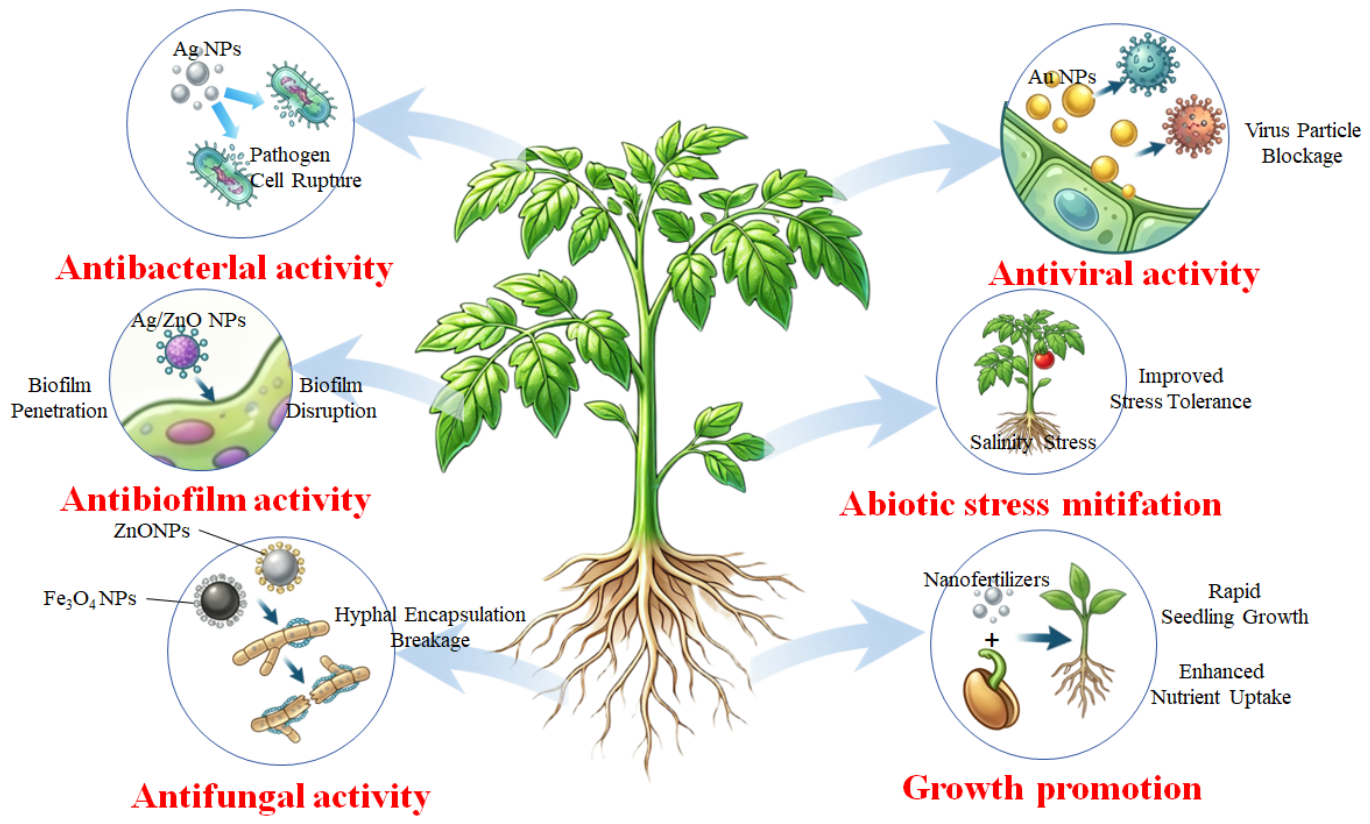
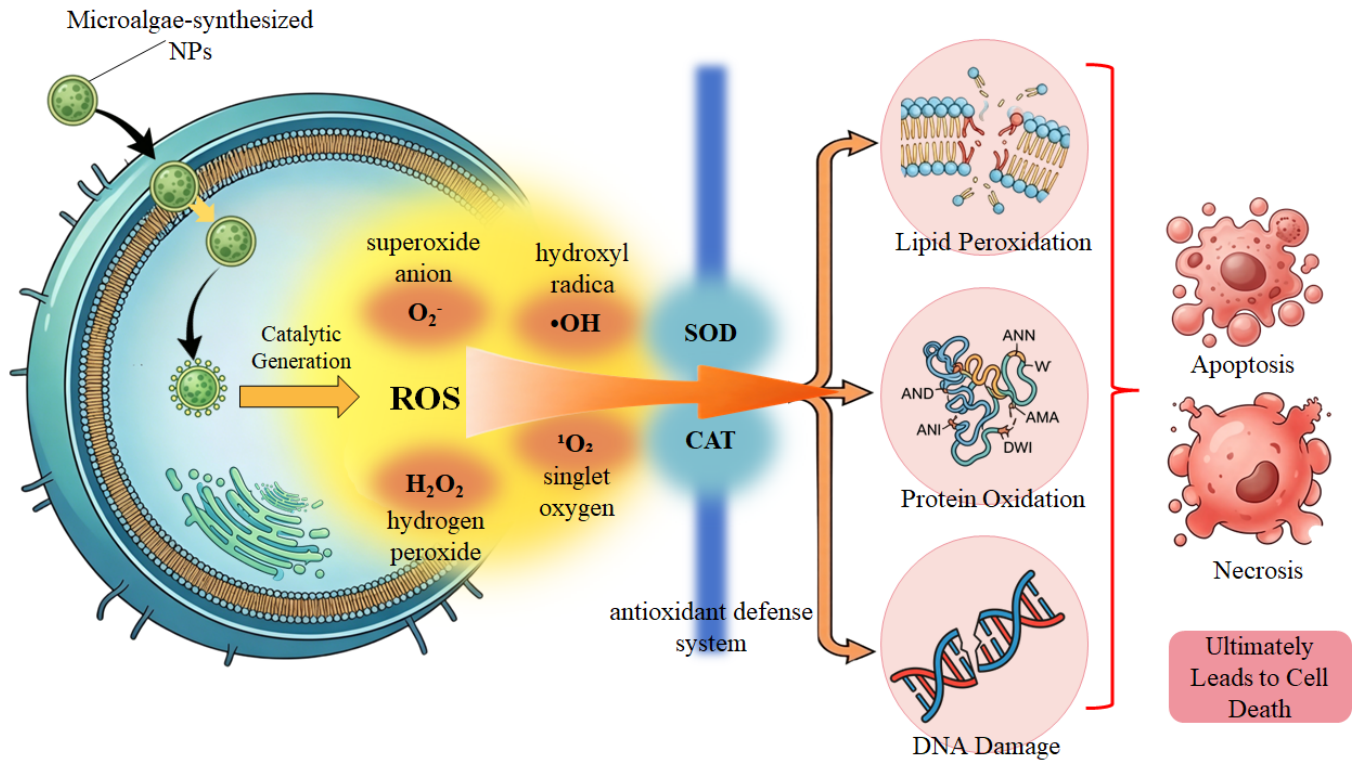
Microalgae-derived nanoparticles exhibit significant inhibitory effects on various plant pathogenic bacteria, highlighting their potential for crop disease management. Notably, green-synthesized silver nanoparticles exhibit high antimicrobial potency at low dosages, outperforming both metal salts and algal extracts alone [94]. Scanning electron microscopy (SEM) analysis indicates that these nanoparticles interact directly with bacterial cell surfaces, disrupting membrane integrity and inducing cellular leakage, which ultimately leads to pathogen inactivation [94]. In addition, antibacterial effectiveness is strongly size-dependent, with smaller nanoparticles exhibiting greater inhibitory activity against both Gram-positive and Gram-negative phytopathogens [135]. Figure 4 illustrates the antibacterial mechanism of green-synthesized AgNPs, showing their attachment to Gram-negative bacterial membranes, intracellular penetration, and induction of reactive oxygen species, which cause oxidative damage to cellular components and ultimately lead to bacterial cell death.

5.1.2. Control of Fungal Diseases

Microalgae-mediated nanoparticles have shown considerable potential for suppressing major fungal pathogens responsible for crop diseases. These nanomaterials act through a combination of direct antifungal activity and induction of host plant defense responses, offering a sustainable alternative to conventional fungicides. In the case of Fusarium wilt, one of the most destructive soil-borne diseases affecting tomato, nanoparticle-based treatments have demonstrated strong protective effects [136]. Apart from organic nanoparticles, microalgae-derived metal and metalloid nanoparticles have also exhibited antifungal efficacy. Iron oxide (Fe3O4) nanoparticles synthesized by Chlorella K01 species showed significant inhibitory activity against various Fusarium species [137]. Similarly, selenium nanoparticles (SeNPs) extracted from the extract of the cyanobacteria Desmonostoc alborizicum demonstrated antifungal activity against various fungi, with Fusarium oxysporum among the most sensitive species tested [138].
In addition, the combination of microalgal extracts with complementary functional materials offers an effective strategy to enhance antifungal performance through synergistic interactions. For example, a chitosan–magnesium–algal nano-composite synthesized using Ulva fasciata extract, chitosan, and magnesium nanoparticles exhibited markedly higher in vitro antifungal activity against Macrophomina phaseolina than either the algal extract or magnesium nanoparticles alone, accompanied by pronounced morphological deformation of fungal hyphae [139]. Pot experiments further demonstrated that seed treatment with this nano-composite significantly reduced bean rot severity across multiple growing seasons, confirming its efficacy under near-field conditions [139].

5.1.3. Control of Viral Disease

Microalgae-mediated nanoparticles have also shown emerging potential in the management of plant viral diseases. Gold nanoparticles synthesized using algal systems have demonstrated antiviral activity in model studies, indicating their ability to interfere with viral infection processes [131]. In agricultural contexts, both silver and gold nanoparticles derived from brown algal polysaccharides have exhibited significant inhibitory effects against tobacco mosaic virus (TMV) under in vitro conditions [140].
Table 2 provides a comparative overview of the antibacterial activity of microalgae-derived nanoparticles against major agricultural pathogens, summarizing nanoparticle types, target bacteria, and key antimicrobial mechanisms, including ROS generation, membrane disruption, and metabolic interference.

5.2. Mechanisms Underlying Agronomic Advantages

5.2.1. Disruption of Biofilm Formation

Biofilm formation is a critical virulence strategy employed by many plant pathogenic bacteria, contributing to enhanced survival, persistence on plant surfaces, and resistance to conventional antimicrobial treatments. Nanoparticles derived from microalgae can effectively destroy biofilms, offering an effective approach to suppress pathogen virulence rather than solely targeting cells directly. For instance, ZnONPs synthesized from the cyanobacteria Nostoc sp. EA03 have demonstrated anti-biofilm activity against Escherichia coli, Staphylococcus aureus, and Pseudomonas aeruginosa [144]. These nanoparticles are believed to interfere with extracellular polymeric substances, impair cell–cell adhesion, and damage microbial cell membranes, thereby reducing biofilm integrity and pathogenic potential.

5.2.2. Plant Growth Promotion and Yield Enhancement

Microalgae-derived nanoparticles exhibit considerable potential as nano-fertilizers and bio-stimulants that enhance early plant development and overall growth performance. Numerous studies demonstrate that nanoparticle treatments derived from microalgae can significantly improve seed germination, seedling vigor, and photosynthetic capacity across a range of crop species. Iron- and zinc-based nanoparticles, in particular, have been shown to stimulate germination, root and shoot elongation, chlorophyll accumulation, and biomass production when applied at low and optimized concentrations [135,143,145,146]. These effects are attributed to improved micronutrient bioavailability, enhanced chlorophyll biosynthesis, and stimulation of key physiological and metabolic processes during early growth stages.
On the other hand, silver-and magnesium-based nanoparticles synthesized have shown growth-promoting properties, including increased plant height, root development, leaf expansion, and yield-related traits. For example, treating wheat and bean seeds with AgNPs synthesized from the soluble polysaccharides of Chlorella vulgaris increased plant height, root length, and leaf area by approximately 23%, 30%, and 60%, respectively [44]. Field-based studies have demonstrated that microalgae-derived nano-fertilizers can significantly enhance crop productivity and nutritional quality. For example, a nano-iron biological fertilizer formulated from spindle-shaped iron nanoparticles biosynthesized using Spirulina biomass markedly increased rice yield and grain iron content, outperforming conventional N/P/K fertilization strategies [147]. Similarly, foliar application of Scenedesmus obliquus extracts and their corresponding ZnO nanoparticles substantially improved tomato fruit yield and quality attributes [148].

5.2.3. Abiotic Stress Mitigation

The nanoparticles derived from microalgae can also improve crop resilience to increasingly severe abiotic stresses. Under high saline conditions, treatments based on Arthrospira have been shown to enhance plant salt tolerance by promoting the accumulation of compatible solutes, maintaining ionic homeostasis (K+/Na+ balance), strengthening antioxidant capacity through increased reactive oxygen species (ROS) scavenging, and upregulating genes associated with photosynthesis and hormone signaling. These coordinated physiological and molecular responses collectively improve seed germination and seedling establishment under salt stress [149]. Similarly, foliar application of silver nanoparticles biosynthesized from Spirulina extracts has been reported to alleviate oxidative damage and stimulate growth in salt-stressed pearl millet seedlings [150]. In addition, the application of nanomaterials such as SiNPs and ZnONPs can activate the antioxidant defense system of crops and accumulate osmotic regulatory substances, thereby enhancing their tolerance to drought stress [3]. Similarly, Fe3O4NPs and SiO2NPs have also been found to help improve the tolerance of crops to heavy metal (such as cadmium and lead) stress by reducing heavy metal absorption, promoting chelation, and compartmentalization to alleviate their toxic effects [3].

5.2.4. Induction of Plant Immunity

Beyond their direct effects of agronomic advantages, microalgae-derived nanoparticles can also act as inducers to activate the plant’s own immune defense system, namely induced systemic resistance (ISR) and systemic acquired resistance (SAR) [37,151]. This mechanism involves the activation of a series of signaling pathways within the plant that ultimately leads to the upregulation of key defense genes. The salicylic acid (SA) pathway is the key mediator of SAR, which induces the expression of pathogenesis-related (PR) genes and enhances resistance to biotrophic pathogens [37]. In contrast, ISR is mainly associated with the jasmonic acid (JA) and ethylene (ET) signaling pathways, which are commonly activated during defense against necrotrophic pathogens and herbivorous insects [37].
Treatment with microalgae-based nanoparticles has been shown to significantly enhance the expression of defense-related genes in various crops, such as tomatoes. For instance, treatment with Ag/chitosan nano-complex (Ag/CHI NCsw) was also seen to enhance the expression of several defense-related genes in tomatoes, such as chitinase, glutathione-S-transferase (GST), PAL1, and defensin, thereby enhancing the resistance to the pathogen Rhizoctonia solani [151]. Additionally, AuNPs synthesized by Cladosporium cladosporioides have also been proven to activate the plant’s defense response, further supporting the role of biologically derived nanoparticles as immune-priming agents that strengthen plant resistance through transcriptional regulation of defense pathways [29]. The proteins encoded by these activated defense genes have multiple functions: PR1 is a key marker of SAR [151]; chitinase can hydrolyze the main component of fungal cell walls, chitin [29,151]; and PAL is a key enzyme in the phenylpropanoid metabolic pathway and is involved in the synthesis of antibacterial compounds such as lignin, coumarin, and phytoalexin, while LOX is involved in the synthesis of jasmonic acid [15].
Figure 5 summarizes the multifunctional roles of microalgae-derived nanoparticles in sustainable agriculture, highlighting their antibacterial, antifungal, antiviral, and antibiofilm activities, as well as their function as nano-fertilizers and bio-stimulants that enhance nutrient uptake, stress tolerance, and overall crop productivity.

6. Environmental Impact, Safety, and Circular Economy

As microalgae-mediated nanotechnology continues to show expanding potential in agricultural applications, increasing attention must be directed toward its environmental fate, biosafety, and life-cycle sustainability. Key considerations include the behavior and persistence of these nanomaterials in soil and plant systems, their potential impacts on non-target organisms and beneficial microorganisms, and their long-term ecological consequences.

6.1. Plant Toxicity and Biocompatibility

Plant toxicity and biocompatibility are critical determinants governing the safe and effective application of nanomaterials in agricultural systems. Compared with traditional chemical synthesis methods, green-synthesized nanoparticles, especially those synthesized by microalgae, typically exhibit lower toxicity and higher biocompatibility due to the presence of active molecules such as proteins, polysaccharides, and other organic compounds on their surfaces. The core advantage of green synthesis lies in the elimination of toxic chemical reagents commonly used in conventional fabrication processes. Traditional chemical synthesis methods often involve toxic reducing agents and stabilizers such as sodium borohydride (NaBH4), which are intrinsically toxic and whose residual by-products can significantly increase the environmental and biological risks associated with nanomaterials [35]. In contrast, microalgae-mediated synthesis exploits natural biological molecules such as proteins, polysaccharides, polyphenols, terpenoids, and pigments that simultaneously act as both reducing agents and stabilizing (end-capping) ligands [20,22]. These natural biological molecules are layered on the surface of the nanoparticles, forming a “biological cap”, which not only provides good colloidal stability to the particles but, more importantly, significantly improves the interface compatibility of the nanoparticles, thereby reducing their direct toxicity to plants and non-target organisms [31].
Beyond reduced chemical toxicity, microalgae-mediated nanoparticles consistently demonstrate high levels of biocompatibility, further supporting their safe deployment in biological systems. Studies using living algal platforms have shown that biosynthesized nanoparticles can coexist with viable cells without disrupting cellular integrity, highlighting favorable nano–bio interactions [152]. Additionally, natural products extracted from microalgae have been demonstrated to reduce nanoparticle-induced oxidative stress when used as surface modifiers or encapsulating agents, effectively attenuating excessive reactive oxygen species generation and moderating nanoparticle reactivity [153].
However, green synthesis should not be viewed as a universal solution for eliminating nanotoxicity. The biological effects of nanoparticles are fundamentally governed by their own physicochemical properties, such as particle size, morphology, surface charge, composition, and applied concentration, which ultimately determine their interactions with living systems. Some studies have shown that nanoparticles synthesized by microalgae can exhibit toxic effects when applied beyond optimal thresholds [154]. For example, at high concentrations or prolonged exposure durations, metal nanoparticles and their released ions (e.g., Ag+, Zn2+) may inhibit microbial growth, disrupt cellular metabolism, and induce cell death in sensitive organisms [76,146]. Additionally, certain metal oxide nanoparticles, such as CuONPs, can be internalized by microalgae cells (such as Chlamydomonas reinhardtii) at low concentrations, damaging the photosynthetic system and inducing excessive ROS production, leading to oxidative stress [155,156]. These outcomes clearly show that the environmental safety of microalgae-derived nanoparticles cannot be taken for granted solely based on green synthesis. Instead, precise dosage optimization, formulation control, and comprehensive ecotoxicological assessments across multiple trophic levels are essential prerequisites for their responsible deployment in agricultural systems.

6.2. Effects on Soil Microbial Communities

When nanomaterials enter agricultural soils through methods such as solid fertilization application and irrigation, their potential impact on soil and environmental microorganisms cannot be ignored. Soil microbiotas play fundamental roles in nutrient cycling, organic matter decomposition, soil structure formation, and plant health. While the antimicrobial properties of nanomaterials underpin many of their agricultural benefits, these same properties raise concerns regarding potential unintended effects on non-target beneficial microorganisms. Disruption of key microbial populations could alter soil ecological balance, affect nutrient availability, and compromise long-term soil fertility.
Nanoparticles such as AgNPs and ZnONPs are well documented for their strong antibacterial activity against a wide range of microorganisms [157]. Nevertheless, once introduced into agricultural soils, these nanomaterials may exert non-selective effects, inhibiting or eliminating beneficial microorganisms essential for soil health and crop productivity. These may include nitrogen-fixing bacteria, phosphate-solubilizing bacteria, and plant-promoting rhizosphere bacteria (PGPR), all of which play key roles in nutrient cycling and plant development. For instance, studies have shown that AgNPs and ZnONPs have inhibitory effects on the growth of nitrogen-fixing bacteria, suggesting that they may have a detrimental impact on nitrogen-fixing microorganisms in the soil [158,159]. Such disruptions could ultimately impair soil fertility and destabilize microbial community structure. Therefore, in agricultural applications, it is necessary to assess their long-term and cumulative impacts on key functional microbial groups to ensure that antimicrobial benefits do not compromise soil ecological functions and sustainability.
However, soil microorganisms are not merely passive recipients of nanoparticle exposure and may exhibit adaptive or protective responses. Several studies have demonstrated that certain microorganisms can develop defense mechanisms against nanoparticles. For instance, some bacteria can form physical barriers by secreting extracellular polymers (EPS) that limit direct nanoparticle–cell membrane interactions and thereby reduce their toxicity [154,160]. Building on this, strategies such as immobilizing metal oxide nanoparticles (e.g., ZrO2) onto inert matrices have been shown to markedly reduce their toxicity to microorganisms, offering valuable insights for the design of safer nano-enabled agricultural inputs [161].

6.3. Carbon Sequestration and Circular Agriculture

Microalgae-mediated nanotechnology offers significant opportunities for integration within circular agricultural systems, particularly in the context of carbon sequestration and resource recycling. Owing to their rapid growth rates, high photosynthetic efficiency, and effective nutrient assimilation, microalgae serve as sustainable biological platforms capable of capturing CO2 and converting wastewater into value-added nanomaterials and agricultural inputs.
Microalgae-based nano-synthesis also offers an innovative strategy for treating agricultural and industrial wastewater while simultaneously recovering high-value metals from it. Some industrial wastewater is rich in heavy metals (such as Cu2+), which can serve as feedstock for the synthesis of metal nanoparticles by microalgae [50]. Chlamydomonas reinhardtii has been shown to convert Cu2+ ions into CuNPs while treating copper-containing wastewater [162]. This process combines the bioremediation of harmful pollutants with the green manufacturing of high-value nanomaterials, perfectly embodying the concept of a circular economy. Similarly, microalgae-based treatment of brewery wastewater has been reported to improve water quality while producing algal biomass that can subsequently be valorized for the synthesis of iron nanoparticles (FeNPs), enabling hierarchical resource utilization across multiple processing stages [163].
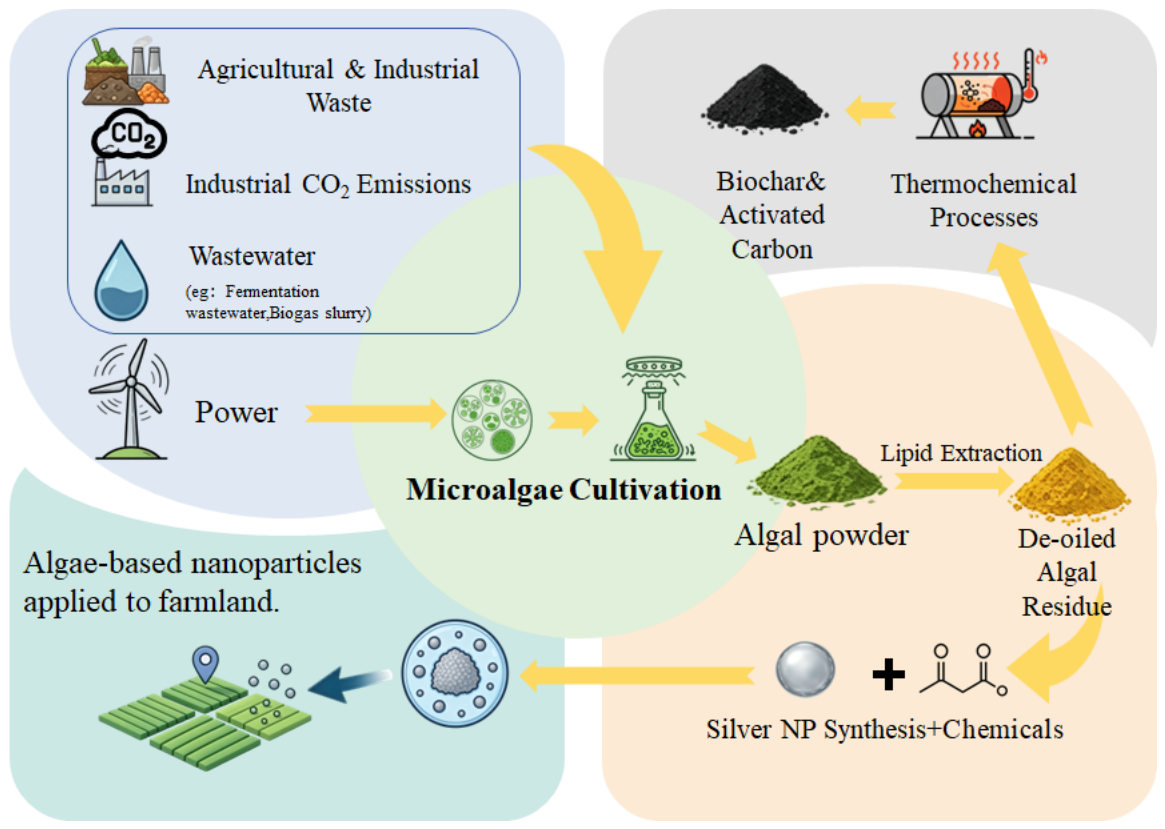
In the microalgal biorefinery process, after the extraction of lipids from microalgal biomass to produce biodiesel, large quantities of defatted algal residue are generated as a by-product. This residual biomass is rich in organic substances such as proteins and carbohydrates, making it a valuable feedstock for subsequent valorization such as the production of bioenergy or bio-based chemicals. For instance, defatted algal biomass and its extracts have been successfully employed for the green synthesis of nanomaterials; silver nanoparticles biosynthesized from lipid-extracted Acutodesmus dimorphus exhibited strong antioxidant activity [101]. Figure 6 illustrates a closed-loop nano-agriculture system in which microalgae capture industrial CO2 and remediate heavy-metal-contaminated runoff. The harvested biomass is used to biosynthesize metal nanoparticles (e.g., Ag, ZnO, CuO) for sustainable crop production, while residual algal material is converted into biochar and bio-based products for soil improvement, enabling efficient resource recovery and circular agricultural sustainability.

7. Challenges, Regulatory Issues, and Public Acceptance

7.1. Technical and Scale-Up Challenges

Although microalgae-mediated nanotechnology has shown great potential in sustainable agriculture, its transition from laboratory research to practical field application still faces multiple bottlenecks [164,165]. Firstly, the efficient production and stable supply of microalgae biomass are the primary constraints. Currently, when microalgae cultivation is scaled up from laboratory scale to industrial production, changes in key operational parameters such as light, temperature, and CO2 distribution can significantly hamper biomass productivity and cause fluctuations in cellular metabolic profiles. These instabilities can markedly affect both the yield and compositional consistency of the harvested biomass, thereby compromising the uniformity, reproducibility, and continuity of feedstocks required for nanoparticle synthesis [166,167]. Secondly, the large-scale synthesis and quality control of microalgae-based nanomaterials remain insufficiently developed. While microalgae-mediated “green synthesis” offers clear environmental advantages, nanoparticle formation is highly sensitive to multiple biological and process parameters, including algal species selection, extract composition and concentration, incubation time, pH, and temperature. Variations in these factors can lead to significant batch-to-batch differences in nanoparticle size, morphology, surface chemistry, and functionality, making reproducibility and standardization particularly challenging at scale [37,168].

7.2. Economic Feasibility

Economic feasibility remains a major barrier to large-scale deployment. When compared with chemically synthesized nanomaterials, microalgae-based nanomaterials have relatively lower yields and more complex separation and purification processes, further increasing production costs. Currently, the production cost of microalgal biomass, particularly commercially cultivated strains such as Spirulina, is substantially higher than that of conventional agricultural inputs, limiting its competitiveness for broadacre applications [166]. Finally, the stability, persistence, and interaction mechanisms of microalgae-based nanomaterials in complex field environments, as well as their interactions with soil components (such as organic matter and clay minerals), are still unclear, making their performance in practical applications difficult to predict [164].

7.3. Public Acceptance and Regulatory Gaps

For microalgae-mediated nanotechnology to transition effectively into agricultural practice, two critical non-technical barriers must be addressed: regulatory approval and public acceptance [169]. From a regulatory perspective, there is currently a lack of clear, harmonized frameworks governing the oversight of microalgae-derived nanomaterials at the international level. The existing regulatory framework mostly targets traditional chemicals or single-component nanomaterials and is therefore poorly suited to complex products that simultaneously exhibit biological functionality and nanoscale properties. In the EU, the European Food Safety Authority (EFSA) guidance requires nano-specific characterization and risk assessment for food/feed-chain applications, including pesticides, while the regulation on the registration, evaluation, authorization and restriction of chemicals (REACH) introduces nanoform-specific data requirements and Regulation (EU) 2019/1009 governs EU fertilizing products and plant nutrition-efficiency products. FAO/WHO also emphasized risk assessment, life-cycle considerations, and stakeholder communication for nanotechnologies used in agriculture, including agrochemicals [170,171,172]. This creates ambiguity in the classification and assessment of microalgae-derived nanomaterials, particularly for products such as nano-bio-stimulants or nano-pesticides. Key regulatory challenges include defining whether these products should be governed under biopesticide, nano-pesticide, or fertilizer regulations and establishing appropriate methodologies to evaluate their environmental persistence, residue behavior, and potential transmission through the food chain [164,169]. In terms of public acceptance, limited understanding of nanotechnology and its perceived risks may result in societal resistance like that previously encountered with genetically modified organisms. Acceptance of microalgae-derived products as food or feed inputs already varies across regions and cultural contexts, and the introduction of nanoscale terminology may further heighten uncertainty and public concern [166,169]. Additionally, whether microalgae nanomaterials will have negative ecological effects on non-target organisms (such as pollinating insects and soil microbial communities) after field application is also a focus of concern for the public and the scientific community [37,164]. Therefore, establishing a transparent and scientific risk communication mechanism and ethical norms is crucial for enhancing the acceptance of all sectors of society.

8. Future Perspectives and Conclusions

Microalgae-mediated nanotechnology is poised to evolve toward greater functional specificity, intelligence, and precision. In the field of intelligent delivery systems, constructing drug-loading systems that respond to environmental signals based on the unique biological structures of microalgae (such as the mesoporous shell walls of diatoms) is an important breakthrough. Recent studies have successfully developed silicified soil microcarriers with dual pH and enzyme response characteristics, enabling the controlled release of pesticides in the midgut environment of small whiteflies (pH > 9). This targeted release strategy significantly reduces pesticide toxicity to non-target organisms while maintaining high pest control efficiency, and surface functionalization further enhances leaf adhesion and wash-off resistance, thereby lowering chemical residues [164]. This paradigm demonstrates that using the natural structures of microalgae to construct “on-demand release” intelligent delivery systems has great potential for improving pesticide utilization and reducing environmental risks [164,173]. This emerging paradigm demonstrates that leveraging the intrinsic biological architectures of microalgae to construct on-demand, stimuli-responsive delivery systems holds considerable promise for enhancing pesticide-use efficiency while minimizing environmental risks [165,174].
In conclusion, microalgae-mediated nanotechnology represents a promising intersection of photosynthetic biotechnology, green nanomaterial synthesis, and sustainable crop management. Microalgae can function not only as biological reducing and stabilizing platforms for nanoparticle production but also as renewable feedstocks that connect carbon capture, wastewater remediation, biomass valorization, and agricultural input development. Current evidence indicates that microalgae-derived nanomaterials have broad potential as bio-nanopesticides, nano-fertilizers, bio-stimulants, and stress-mitigation agents. However, their practical deployment requires a shift from proof-of-concept studies toward mechanism-guided material design, standardized physicochemical characterization, reproducible synthesis protocols, dose–response evaluation, long-term field validation, and life-cycle safety assessment. Future research should place greater emphasis on crop-specific formulations, environmentally responsive delivery systems, safety-by-design strategies, and harmonized regulatory frameworks. With these advances, microalgae-mediated nanotechnology could contribute to reducing agrochemical dependence, improving nutrient-use efficiency, enhancing crop resilience, and promoting circular agricultural production systems.

Author Contributions

Conceptualization: Y.X., Z.S. and H.C.; Formal analysis: Y.X. and Z.Y.; Investigation: Y.X. and Z.Y.; Funding acquisition: Z.S., L.S. and H.C.; Supervision: H.C.; Writing—original draft preparation: Y.X., S.G. and L.S.; Writing—review and editing: Z.S. and H.C. All authors have read and agreed to the published version of the manuscript.

Funding

The authors gratefully acknowledge the financial support from the National Natural Science Foundation of China (Grant Nos. 32570449 and 42476123), the Joint Funds of the National Natural Science Foundation of China and Shandong Province (Grant No. U23A20146), the International Partnership Program of the Chinese Academy of Sciences for Grand Challenges (Grant No. 324GJHZ2023029GC), the Science and Technology Major Project of Yantai City (Grant No. 2024ZDCX026), and the Municipal Institute of Science and Technology Innovation Cooperation Project jointly supported by the Changchun Branch of the Chinese Academy of Sciences and the Changchun Science and Technology Bureau (Grant No. 24SH15).

Institutional Review Board Statement

Not applicable.

Informed Consent Statement

Not applicable.

Data Availability Statement

No new data were created or analyzed in this study.

Conflicts of Interest

The authors declare no conflicts of interest.

References

  1. Zainab, R.; Hasnain, M.; Ali, F.; Abideen, Z.; Siddiqui, Z.S.; Jamil, F.; Hussain, M.; Park, Y.K. Prospects and challenges of nanopesticides in advancing pest management for sustainable agricultural and environmental service. Environ. Res. 2024, 261, 119722. [Google Scholar] [CrossRef] [PubMed]
  2. Pathak, V.M.; Verma, V.K.; Rawat, B.S.; Kaur, B.; Babu, N.; Sharma, A.; Dewali, S.; Yadav, M.; Kumari, R.; Singh, S.; et al. Current status of pesticide effects on environment, human health and it’s eco-friendly management as bioremediation: A comprehensive review. Front. Microbiol. 2022, 13, 962619. [Google Scholar] [CrossRef] [PubMed]
  3. Khan, F.; Shahid, A.; Zhu, H.; Wang, N.; Javed, M.R.; Ahmad, N.; Xu, J.; Alam, M.A.; Mehmood, M.A. Prospects of algae-based green synthesis of nanoparticles for environmental applications. Chemosphere 2022, 293, 133571. [Google Scholar] [CrossRef] [PubMed]
  4. Agathokleous, E.; Sonne, C.; Benelli, G.; Calabrese, E.J.; Guedes, R.N.C. Low-dose chemical stimulation and pest resistance threaten global crop production. Sci. Total Environ. 2023, 878, 162989. [Google Scholar] [CrossRef] [PubMed]
  5. Khan, H.S.; Mathavan, B.; Khan, S.U.; Li, S.; Dabiah, A.T.; Muddassir, M.; Rasheed, S.; Hua, L. Balancing productivity and sustainability: Evaluating harmful agricultural practices and regulatory responses on climate resilience in the Yellow River Basin, China. Front. Sustain. Food Syst. 2025, 9, 1669386. [Google Scholar] [CrossRef]
  6. Hu, Z. What Socio-Economic and Political Factors Lead to Global Pesticide Dependence? A Critical Review from a Social Science Perspective. Int. J. Environ. Res. Public Health 2020, 17, 8119. [Google Scholar] [CrossRef] [PubMed]
  7. Khan, M.A.; Masood, A.; Ali, K.; Farid, N.; Bashir, A.; Dar, M.S. Green synthesis of silver, starch, and zinc oxide mediated nanoparticles with probiotics and plant extracts, their characterization and anti-bacterial activity. Microb. Pathog. 2024, 196, 107012. [Google Scholar] [CrossRef] [PubMed]
  8. Chen, Y.; Nguyen, D.T.; Herron, G.A. Molecular diagnostics of insecticide resistance in Australian Tetranychus urticae Koch (Acari: Tetranychidae) quarantine intercepts. Austral Entomol. 2023, 63, 109–118. [Google Scholar] [CrossRef]
  9. Nguyen, D.T.; Chen, Y.; Herron, G.A. Preliminary characterisation of known pesticide resistance alleles in Spodoptera frugiperda (Lepidoptera: Noctuidae) in its invasive Australian range. Austral Entomol. 2021, 60, 782–790. [Google Scholar] [CrossRef]
  10. Almeida, R.A.; Lemmens, P.; De Meester, L.; Brans, K.I. Differential local genetic adaptation to pesticide use in organic and conventional agriculture in an aquatic non-target species. Proc. R. Soc. B Biol. Sci. 2021, 288, 20211903. [Google Scholar] [CrossRef]
  11. Wyckhuys, K.A.G.; Wang, X.-W.; Elkahky, M. Transitioning towards dynamic, nature-based crop defenses. J. Biosci. 2024, 49, 99. [Google Scholar] [CrossRef]
  12. Sharma, V.; Thakur, S. Green nano-pesticides from plant sources: Synthesis, mechanisms, environmental impacts, and prospects for sustainable agriculture. Pestic. Biochem. Physiol. 2025, 213, 106543. [Google Scholar] [CrossRef] [PubMed]
  13. Singh, P.; Kim, Y.J.; Zhang, D.; Yang, D.C. Biological Synthesis of Nanoparticles from Plants and Microorganisms. Trends Biotechnol. 2016, 34, 588–599. [Google Scholar] [CrossRef] [PubMed]
  14. Iravani, S. Green synthesis of metal nanoparticles using plants. Green. Chem. 2011, 13, 2638–2650. [Google Scholar] [CrossRef]
  15. Ettadili, F.E.; Aghris, S.; Laghrib, F.; Farahi, A.; Saqrane, S.; Bakasse, M.; Lahrich, S.; El Mhammedi, M.A. Recent advances in the nanoparticles synthesis using plant extract: Applications and future recommendations. J. Mol. Struct. 2022, 1248, 131538. [Google Scholar] [CrossRef]
  16. Mardani-Talaee, M.; Razmjou, J. Leveraging green synthesis of ZnO-NPs for improved potato resistance against Phthorimaea operculella. J. Stored Prod. Res. 2026, 116, 102916. [Google Scholar] [CrossRef]
  17. Salunke, B.K.; Sawant, S.S.; Lee, S.I.; Kim, B.S. Microorganisms as efficient biosystem for the synthesis of metal nanoparticles: Current scenario and future possibilities. World J. Microbiol. Biotechnol. 2016, 32, 88. [Google Scholar] [CrossRef] [PubMed]
  18. Dousari, A.S.; Hosseininasab, S.S.; Akbarizadeh, M.R.; Naderifar, M.; Satarzadeh, N. Mentha pulegium as a source of green synthesis of nanoparticles with antibacterial, antifungal, anticancer, and antioxidant applications. Sci. Hortic. 2023, 320, 112215. [Google Scholar] [CrossRef]
  19. Wang, B.; Wang, F.-Y.; Liu, Y.; Jia, Z.-X.; Zhang, X.-Y.; Liu, H.-T.; Wang, W.-S.; Cui, X.-J.; Luo, F.-X. Closed-Loop Nanoagriculture: Lignocellulose-Derived Dual-Gated Nanovehicles Synchronizing Pest Management with Agricultural Waste Valorization. ACS Sustain. Chem. Eng. 2025, 13, 12276–12286. [Google Scholar] [CrossRef]
  20. Mukherjee, A.; Sarkar, D.; Sasmal, S. A Review of Green Synthesis of Metal Nanoparticles Using Algae. Front. Microbiol. 2021, 12, 693899. [Google Scholar] [CrossRef] [PubMed]
  21. Jeevanandam, J.; Kiew, S.F.; Boakye-Ansah, S.; Lau, S.Y.; Barhoum, A.; Danquah, M.K.; Rodrigues, J. Green approaches for the synthesis of metal and metal oxide nanoparticles using microbial and plant extracts. Nanoscale 2022, 14, 2534–2571. [Google Scholar] [CrossRef] [PubMed]
  22. Khanna, P.; Kaur, A.; Goyal, D. Algae-based metallic nanoparticles: Synthesis, characterization and applications. J. Microbiol. Methods 2019, 163, 105656. [Google Scholar] [CrossRef] [PubMed]
  23. Pandey, S.; Rai, L.C.; Dubey, S.K. Cyanobacteria: Miniature factories for green synthesis of metallic nanomaterials: A review. Biometals 2022, 35, 653–674. [Google Scholar] [CrossRef] [PubMed]
  24. Begum, S.J.P.; Pratibha, S.; Rawat, J.M.; Venugopal, D.; Sahu, P.; Gowda, A.; Qureshi, K.A.; Jaremko, M. Recent Advances in Green Synthesis, Characterization, and Applications of Bioactive Metallic Nanoparticles. Pharmaceuticals 2022, 15, 455. [Google Scholar] [CrossRef] [PubMed]
  25. Chaudhary, R.; Nawaz, K.; Khan, A.K.; Hano, C.; Abbasi, B.H.; Anjum, S. An Overview of the Algae-Mediated Biosynthesis of Nanoparticles and Their Biomedical Applications. Biomolecules 2020, 10, 1498. [Google Scholar] [CrossRef] [PubMed]
  26. Paul, A.; Roychoudhury, A. Go green to protect plants: Repurposing the antimicrobial activity of biosynthesized silver nanoparticles to combat phytopathogens. Nanotechnol. Environ. Eng. 2021, 10, 6. [Google Scholar] [CrossRef]
  27. Nawaz, T.; Gu, L.; Fahad, S.; Saud, S.; Bleakley, B.; Zhou, R. Exploring Sustainable Agriculture with Nitrogen-Fixing Cyanobacteria and Nanotechnology. Molecules 2024, 29, 2534. [Google Scholar] [CrossRef] [PubMed]
  28. Singh, P.; Kim, Y.J.; Wang, C.; Mathiyalagan, R.; Yang, D.C. Microbial synthesis of Flower-shaped gold nanoparticles. Artif. Cells Nanomed. Biotechnol. 2016, 44, 1469–1474. [Google Scholar] [CrossRef] [PubMed]
  29. Nitnavare, R.; Bhattacharya, J.; Thongmee, S.; Ghosh, S. Photosynthetic microbes in nanobiotechnology: Applications and perspectives. Sci. Total Environ. 2022, 841, 156457. [Google Scholar] [CrossRef] [PubMed]
  30. Subramaniyam, V.; Subashchandrabose, S.R.; Thavamani, P.; Megharaj, M.; Chen, Z.; Naidu, R. Chlorococcum sp. MM11—A novel phyco-nanofactory for the synthesis of iron nanoparticles. J. Appl. Phycol. 2015, 27, 1861–1869. [Google Scholar] [CrossRef]
  31. Uzair, B.; Liaqat, A.; Iqbal, H.; Menaa, B.; Razzaq, A.; Thiripuranathar, G.; Fatima Rana, N.; Menaa, F. Green and Cost-Effective Synthesis of Metallic Nanoparticles by Algae: Safe Methods for Translational Medicine. Bioengineering 2020, 7, 129. [Google Scholar] [CrossRef] [PubMed]
  32. Meys, E.L.; Mineau, P.; Werts, P.; Nelson, S.G.A.; Larson, A.; Hutchison, W.D.; Carley, D. Assessment of insecticide risk quantification methods: Introducing the Pesticide Risk Tool and its improvements over the Environmental Impact Quotient. J. Integr. Pest. Manag. 2024, 15, 9. [Google Scholar] [CrossRef]
  33. Do, J.M.; Hong, J.W.; Yoon, H.S. Microalgae-mediated green synthesis of silver nanoparticles: A sustainable approach using extracellular polymeric substances from Graesiella emersonii KNUA204. Front. Microbiol. 2025, 16, 1589285. [Google Scholar] [CrossRef] [PubMed]
  34. Hamida, R.S.; Ali, M.A.; Redhwan, A.; Bin-Meferij, M.M. Cyanobacteria A Promising Platform in Green Nanotechnology A Review on Nanoparticles Fabrication and Their Prospective Applications. Int. J. Nanomed. 2020, 15, 6033–6066. [Google Scholar] [CrossRef] [PubMed]
  35. Chan, S.S.; Low, S.S.; Chew, K.W.; Ling, T.C.; Rinklebe, J.; Juan, J.C.; Ng, E.P.; Show, P.L. Prospects and environmental sustainability of phyconanotechnology: A review on algae-mediated metal nanoparticles synthesis and mechanism. Env. Res. 2022, 212, 113140. [Google Scholar] [CrossRef] [PubMed]
  36. Lakkakula, J.; Kalra, P.; Mungaji, H.; Suprasanna, P.; Kadam, U. Microalgae-Derived Metal Nanostructures: Biosynthesis, Characterization, and Applications. Chem. Biodivers. 2026, 23, 14. [Google Scholar] [CrossRef] [PubMed]
  37. Codreanu, S.; Cepoi, L.; Rudi, L.; Chiriac, T. Photosynthetic Microorganisms and Biogenic Synthesis of Nanomaterials for Sustainable Agriculture. Nanomaterials 2025, 15, 990. [Google Scholar] [CrossRef] [PubMed]
  38. Wen, J.; Gao, F.; Liu, H.; Wang, J.; Xiong, T.; Yi, H.; Zhou, Y.; Yu, Q.; Zhao, S.; Tang, X. Metallic nanoparticles synthesized by algae: Synthetic route, action mechanism, and the environmental catalytic applications. J. Environ. Chem. Eng. 2024, 12, 111742. [Google Scholar] [CrossRef]
  39. Tian, J.; Zhang, Y.; Yang, L.; Wang, L.; Ling, G.; Zhang, P. Composite Hydrogel Based on Green Chlorella Polysaccharide–Selenium Nanoparticles for Simultaneous Wound Treatment and pH Monitoring. ACS Appl. Polym. Mater. 2025, 7, 11091–11104. [Google Scholar] [CrossRef]
  40. Parveen, A.; Rawat, J.; Bisht, B.; Jaiswal, K.K.; Jaffer Peer, S.B.; Pandey, S.; Gautam, P.; Vlaskin, M.S.; Kumar, V. Algal nanobionics and a nanobiohybrid system of biosynthesized ZnO-NPs to augment the cellular accumulation of biomolecules and its effect on microalgae. New J. Chem. 2025, 49, 6380–6395. [Google Scholar] [CrossRef]
  41. Mandal, A.K.; Parida, S.; Behera, A.K.; Mandal, S.G.; Nito, A.; Quarta, A.; Ragusa, A.; Jena, M. Phyco-fabrication of iron oxide nanoparticles using Chlorella vulgaris: Antibacterial potential and antioxidant activity. J. Appl. Phycol. 2026, 38, 303–314. [Google Scholar] [CrossRef]
  42. Navarro Gallón, S.M.; Alpaslan, E.; Wang, M.; Larese-Casanova, P.; Londoño, M.E.; Atehortúa, L.; Pavón, J.J.; Webster, T.J. Characterization and study of the antibacterial mechanisms of silver nanoparticles prepared with microalgal exopolysaccharides. Mater. Sci. Eng. C 2019, 99, 685–695. [Google Scholar] [CrossRef] [PubMed]
  43. Sidorowicz, A.; Fais, G.; Casula, M.; Borselli, M.; Giannaccare, G.; Locci, A.M.; Lai, N.; Orru, R.; Cao, G.; Concas, A. Nanoparticles from Microalgae and Their Biomedical Applications. Mar. Drugs 2023, 21, 352. [Google Scholar] [CrossRef] [PubMed]
  44. El-Naggar, N.E.-A.; Hussein, M.H.; Shaaban-Dessuuki, S.A.; Dalal, S.R. Production, extraction and characterization of Chlorella vulgaris soluble polysaccharides and their applications in AgNPs biosynthesis and biostimulation of plant growth. Sci. Rep. 2020, 10, 3011. [Google Scholar] [CrossRef] [PubMed]
  45. Al-Badwy, A.H.; Khalil, A.M.; Bashal, A.H.; Kebeish, R. Polysaccharides from Spirulina platensis (PSP): Promising biostimulants for the green synthesis of silver nanoparticles and their potential application in the treatment of cancer tumors. Microb. Cell Factories 2023, 22, 247. [Google Scholar] [CrossRef] [PubMed]
  46. de Aragão, A.P.; de Oliveira, T.M.; Quelemes, P.V.; Perfeito, M.L.G.; Araújo, M.C.; Santiago, J.d.A.S.; Cardoso, V.S.; Quaresma, P.; de Souza de Almeida Leite, J.R.; da Silva, D.A. Green synthesis of silver nanoparticles using the seaweed Gracilaria birdiae and their antibacterial activity. Arab. J. Chem. 2019, 12, 4182–4188. [Google Scholar] [CrossRef]
  47. Mahdavi, M.; Namvar, F.; Ahmad, M.B.; Mohamad, R. Green biosynthesis and characterization of magnetic iron oxide (Fe3O4) nanoparticles using seaweed (Sargassum muticum) aqueous extract. Molecules 2013, 18, 5954–5964. [Google Scholar] [CrossRef] [PubMed]
  48. Behera, M.; Behera, P.R.; Sethi, G.; Pradhan, B.; Adarsh, V.; Alkilayh, O.A.; Samantaray, D.P.; Singh, L. Cyanobacterial Silver Nanoparticles and Their Potential Utility-Recent Progress and Prospects: A Review. J. Basic. Microbiol. 2024, 64, e2400256. [Google Scholar] [CrossRef] [PubMed]
  49. Barwal, I.; Ranjan, P.; Kateriya, S.; Yadav, S.C. Cellular oxido-reductive proteins of Chlamydomonas reinhardtii control the biosynthesis of silver nanoparticles. J. Nanobiotechnol. 2011, 9, 56. [Google Scholar] [CrossRef] [PubMed]
  50. Li, S.N.; Wang, R.; Ho, S.H. Algae-mediated biosystems for metallic nanoparticle production: From synthetic mechanisms to aquatic environmental applications. J. Hazard. Mater. 2021, 420, 126625. [Google Scholar] [CrossRef] [PubMed]
  51. Araya-Castro, K.; Chao, T.-C.; Durán-Vinet, B.; Cisternas, C.; Ciudad, G.; Rubilar, O. Green Synthesis of Copper Oxide Nanoparticles Using Protein Fractions from an Aqueous Extract of Brown Algae Macrocystis pyrifera. Processes 2020, 9, 78. [Google Scholar] [CrossRef]
  52. Tahiliani, S.; Lukhmana, N.; Chhangani, S.; Purohit, S.D.; Sauraj; Priyadarshi, R. Algae and cyanobacteria-mediated biosynthesis of metal/metal oxide nanoparticles and their potential applications in food packaging. Algal Res. 2025, 90, 104124. [Google Scholar] [CrossRef]
  53. MubarakAli, D.; Gopinath, V.; Rameshbabu, N.; Thajuddin, N. Synthesis and characterization of CdS nanoparticles using C-phycoerythrin from the marine cyanobacteria. Mater. Lett. 2012, 74, 8–11. [Google Scholar] [CrossRef]
  54. Arteaga-Castrejón, A.; Agarwal, V.; Khandual, S. Microalgae as a potential natural source for the green synthesis of nanoparticles. Chem. Commun. 2024, 60, 3874–3890. [Google Scholar] [CrossRef] [PubMed]
  55. Lahr, R.H.; Vikesland, P.J. Surface-Enhanced Raman Spectroscopy (SERS) Cellular Imaging of Intracellulary Biosynthesized Gold Nanoparticles. ACS Sustain. Chem. Eng. 2014, 2, 1599–1608. [Google Scholar] [CrossRef]
  56. Dağlıoğlu, Y.; Yılmaz Öztürk, B. A novel intracellular synthesis of silver nanoparticles using Desmodesmus sp. (Scenedesmaceae): Different methods of pigment change. Rend. Lincei. Sci. Fis. E Nat. 2019, 30, 611–621. [Google Scholar] [CrossRef]
  57. Savvidou, M.G.; Kontari, E.; Kalantzi, S.; Mamma, D. Green Synthesis of Silver Nanoparticles Using the Cell-Free Supernatant of Haematococcus pluvialis Culture. Materials 2024, 17, 187. [Google Scholar]
  58. Pathak, J.; Rajneesh; Ahmed, H.; Singh, D.K.; Pandey, A.; Singh, S.P.; Sinha, R.P. Chapter 12—Recent Developments in Green Synthesis of Metal Nanoparticles Utilizing Cyanobacterial Cell Factories. In Nanomaterials in Plants, Algae and Microorganisms; Tripathi, D.K., Ahmad, P., Sharma, S., Chauhan, D.K., Dubey, N.K., Eds.; Academic Press: Cambridge, MA, USA, 2019; pp. 237–265. [Google Scholar]
  59. Bahrulolum, H.; Nooraei, S.; Javanshir, N.; Tarrahimofrad, H.; Mirbagheri, V.S.; Easton, A.J.; Ahmadian, G. Green synthesis of metal nanoparticles using microorganisms and their application in the agrifood sector. J. Nanobiotechnol. 2021, 19, 86. [Google Scholar] [CrossRef] [PubMed]
  60. Rahman, A.; Kumar, S.; Bafana, A.; Lin, J.; Dahoumane, S.; Jeffryes, C. A Mechanistic View of the Light-Induced Synthesis of Silver Nanoparticles Using Extracellular Polymeric Substances of Chlamydomonas reinhardtii. Molecules 2019, 24, 3506. [Google Scholar] [CrossRef] [PubMed]
  61. Dahoumane, S.A.; Yéprémian, C.; Djédiat, C.; Couté, A.; Fiévet, F.; Coradin, T.; Brayner, R. A global approach of the mechanism involved in the biosynthesis of gold colloids using micro-algae. J. Nanoparticle. Res. 2014, 16, 2607. [Google Scholar] [CrossRef]
  62. Hamouda, R.A.; Hussein, M.H.; Elhadary, A.M.A.; Abuelmagd, M.A. Extruded polysaccharide/protein matrix from Arthrospira platensis cultures mediated silver nanoparticles biosynthesis and capping. Appl. Nanosci. 2020, 10, 3839–3855. [Google Scholar] [CrossRef]
  63. Hamida, R.S.; Ali, M.A.; Almohawes, Z.N.; Alahdal, H.; Momenah, M.A.; Bin-Meferij, M.M. Green Synthesis of Hexagonal Silver Nanoparticles Using a Novel Microalgae Coelastrella aeroterrestrica Strain BA_Chlo4 and Resulting Anticancer, Antibacterial, and Antioxidant Activities. Pharmaceutics 2022, 14, 2002. [Google Scholar] [CrossRef] [PubMed]
  64. Gnanakani, S.P.E.; Amireddy, K.; Dhanaraju, M.D. Characterization and Biofabrication of Silver Nanoparticles Utilizing Isochrysis Extract along with its in vitro Antibacterial and Antioxidant Applications. Indian. J. Pharm. Educ. Res. 2023, 57, 449–458. [Google Scholar] [CrossRef]
  65. Mora-Godínez, S.; Contreras-Torres, F.F.; Pacheco, A. Characterization of Silver Nanoparticle Systems from Microalgae Acclimated to Different CO2 Atmospheres. ACS Omega 2023, 8, 21969–21982. [Google Scholar] [CrossRef] [PubMed]
  66. Shankar, P.D.; Shobana, S.; Karuppusamy, I.; Pugazhendhi, A.; Ramkumar, V.S.; Arvindnarayan, S.; Kumar, G. A review on the biosynthesis of metallic nanoparticles (gold and silver) using bio-components of microalgae: Formation mechanism and applications. Enzym. Microb. Technol. 2016, 95, 28–44. [Google Scholar] [CrossRef] [PubMed]
  67. Roychoudhury, P.; Bhattacharya, A.; Dasgupta, A.; Pal, R. Biogenic synthesis of gold nanoparticle using fractioned cellular components from eukaryotic algae and cyanobacteria. Phycol. Res. 2016, 64, 133–140. [Google Scholar] [CrossRef]
  68. Mandhata, C.P.; Sahoo, C.R.; Mahanta, C.S.; Padhy, R.N. Isolation, biosynthesis and antimicrobial activity of gold nanoparticles produced with extracts of Anabaena spiroides. Bioprocess Biosyst. Eng. 2021, 44, 1617–1626. [Google Scholar] [CrossRef] [PubMed]
  69. Sarker, A.; Kim, D.; Jeong, W.-T. Environmental Fate and Sustainable Management of Pesticides in Soils: A Critical Review Focusing on Sustainable Agriculture. Sustainability 2024, 16, 10741. [Google Scholar] [CrossRef]
  70. Tudi, M.; Daniel Ruan, H.; Wang, L.; Lyu, J.; Sadler, R.; Connell, D.; Chu, C.; Phung, D.T. Agriculture Development, Pesticide Application and Its Impact on the Environment. Int. J. Environ. Res. Public Health 2021, 18, 1112. [Google Scholar] [CrossRef] [PubMed]
  71. SANTE/2020/12830, rev1; Guidance Document on Pesticide Analytical Methods for Risk Assessment and Post-Approval Control and Monitoring Purposes. The Health and Safety Executive: London, UK, 2021.
  72. Baran, N.; Rosenbom, A.E.; Kozel, R.; Lapworth, D. Pesticides and their metabolites in European groundwater: Comparing regulations and approaches to monitoring in France, Denmark, England and Switzerland. Sci. Total Environ. 2022, 842, 156696. [Google Scholar] [CrossRef] [PubMed]
  73. Grasso, G.; Zane, D.; Dragone, R. Microbial Nanotechnology: Challenges and Prospects for Green Biocatalytic Synthesis of Nanoscale Materials for Sensoristic and Biomedical Applications. Nanomaterials 2019, 10, 11. [Google Scholar] [CrossRef] [PubMed]
  74. Sutradhar, M.; Sharma, R.K.; Dey, G.; Sukul, U.; Das, K.; Taharia, M.; Lin, P.Y.; Ali, S.; Wang, C.W.; Chen, C.Y. Freshwater microalgae-mediated engineered nanoparticles: Sustainable approach for heavy metals remediation. Bioresour. Technol. 2025, 434, 132761. [Google Scholar] [CrossRef] [PubMed]
  75. Hamida, R.S.; Abdelmeguid, N.E.; Ali, M.A.; Bin-Meferij, M.M.; Khalil, M.I. Synthesis of Silver Nanoparticles Using a Novel Cyanobacteria Desertifilum sp. extract: Their Antibacterial and Cytotoxicity Effects. Int. J. Nanomed. 2020, 15, 49–63. [Google Scholar] [CrossRef] [PubMed]
  76. Lengke, M.F.; Fleet, M.E.; Southam, G. Biosynthesis of silver nanoparticles by filamentous cyanobacteria from a silver(I) nitrate complex. Langmuir 2007, 23, 2694–2699. [Google Scholar] [CrossRef] [PubMed]
  77. Focsan, M.; Ardelean, I.I.; Craciun, C.; Astilean, S. Interplay between gold nanoparticle biosynthesis and metabolic activity of cyanobacterium Synechocystis sp. PCC 6803. Nanotechnology 2011, 22, 485101. [Google Scholar] [CrossRef] [PubMed]
  78. Chakraborty, N.; Banerjee, A.; Lahiri, S.; Panda, A.; Ghosh, A.N.; Pal, R. Biorecovery of gold using cyanobacteria and an eukaryotic alga with special reference to nanogold formation—A novel phenomenon. J. Appl. Phycol. 2009, 21, 145–152. [Google Scholar] [CrossRef]
  79. Rösken, L.M.; Cappel, F.; Körsten, S.; Fischer, C.B.; Schönleber, A.; van Smaalen, S.; Geimer, S.; Beresko, C.; Ankerhold, G.; Wehner, S. Time-dependent growth of crystalline Au(0)-nanoparticles in cyanobacteria as self-reproducing bioreactors: 2. Anabaena cylindrica. Beilstein J. Nanotechnol. 2016, 7, 312–327. [Google Scholar] [CrossRef] [PubMed]
  80. Yilmaz, B. Intracellular and extracellular green synthesis of silver nanoparticles using Desmodesmus sp.: Their Antibacterial and antifungal effects. Caryologia 2019, 72, 29–43. [Google Scholar] [CrossRef]
  81. Jacob, J.M.; Ravindran, R.; Narayanan, M.; Samuel, S.M.; Pugazhendhi, A.; Kumar, G. Microalgae: A prospective low cost green alternative for nanoparticle synthesis. Curr. Opin. Environ. Sci. Health 2021, 20, 100163. [Google Scholar] [CrossRef]
  82. Patel, V.; Berthold, D.; Puranik, P.; Gantar, M. Screening of cyanobacteria and microalgae for their ability to synthesize silver nanoparticles with antibacterial activity. Biotechnol. Rep. 2015, 5, 112–119. [Google Scholar] [CrossRef] [PubMed]
  83. Morsy, F.M.; Nafady, N.A.; Abd-Alla, M.H.; El-Hady, D.A. Green Synthesis of Silver Nanoparticles by Water Soluble Fraction of the Extracellular Polysaccharides/Matrix of the Cyanobacterium Nostoc Commune and its Application as a Potent Fungal Surface Sterilizing Agent of Seed Crops. J. Microbiol. Res. 2014, 2, 36–43. [Google Scholar] [CrossRef]
  84. Jena, J. Biosynthesis and characterization of silver nanoparticles using microalga Chlorococcum humicola and its antibacterial activity. Int. J. Nanomater. Biostruct. 2013, 3, 1–8. [Google Scholar]
  85. Gárate-Osuna, A.J.; Valdez-Ortiz, A.; Abo Markeb, A.; Font, X.; Barrena, R.; Franco-Nava, M.A.; Santos-Ballardo, D.U. Potential microalgae biorefinery cascade: Effect of temperature in Nannochloropsis oculata biomass for biofuels and nanoparticles green-synthesis for heavy metals remediation. Biomass Convers. Biorefin. 2025, 15, 21297–21310. [Google Scholar] [CrossRef]
  86. Sharma, A.; Sharma, S.; Sharma, K.; Chetri, S.P.K.; Vashishtha, A.; Singh, P.; Kumar, R.; Rathi, B.; Agrawal, V. Algae as crucial organisms in advancing nanotechnology: A systematic review. J. Appl. Phycol. 2016, 28, 1759–1774. [Google Scholar] [CrossRef]
  87. Shah, S.T.; Sari, I.P.; Yanto, D.H.Y.; Chowdhury, Z.Z.; Bashir, M.N.; Badruddin, I.A.; Hussien, M.; Lee, J.S. Nature’s nanofactories: Biogenic synthesis of metal nanoparticles for sustainable technologies. Green. Chem. Lett. Rev. 2025, 18, 2448171. [Google Scholar] [CrossRef]
  88. Mandal, D.; Bolander, M.E.; Mukhopadhyay, D.; Sarkar, G.; Mukherjee, P. The use of microorganisms for the formation of metal nanoparticles and their application. Appl. Microbiol. Biotechnol. 2006, 69, 485–492. [Google Scholar] [CrossRef] [PubMed]
  89. Rao, M.D.; Gautam, P. Synthesis and characterization of ZnO nanoflowers using Chlamydomonas reinhardtii: A green approach. Environ. Prog. Sustain. Energy 2016, 35, 1020–1026. [Google Scholar] [CrossRef]
  90. Fouda, A.; Eid, A.M.; Abdel-Rahman, M.A.; El-Belely, E.F.; Awad, M.A.; Hassan, S.E.; Al-Faifi, Z.E.; Hamza, M.F. Enhanced Antimicrobial, Cytotoxicity, Larvicidal, and Repellence Activities of Brown Algae, Cystoseira crinita-Mediated Green Synthesis of Magnesium Oxide Nanoparticles. Front. Bioeng. Biotechnol. 2022, 10, 849921. [Google Scholar] [CrossRef] [PubMed]
  91. Harutyunyan, A.; Gabrielyan, L.; Aghajanyan, A.; Gevorgyan, S.; Schubert, R.; Betzel, C.; Kujawski, W.; Gabrielyan, L. Comparative Study of Physicochemical Properties and Antibacterial Potential of Cyanobacteria Spirulina platensis-Derived and Chemically Synthesized Silver Nanoparticles. ACS Omega 2024, 9, 29410–29421. [Google Scholar] [CrossRef] [PubMed]
  92. Suganya, K.U.; Govindaraju, K.; Kumar, V.G.; Dhas, T.S.; Karthick, V.; Singaravelu, G.; Elanchezhiyan, M. Blue green alga mediated synthesis of gold nanoparticles and its antibacterial efficacy against Gram positive organisms. Mater. Sci. Eng. C 2015, 47, 351–356. [Google Scholar] [CrossRef] [PubMed]
  93. Castro, L.; Blázquez, M.L.; Muñoz, J.A.; González, F.; Ballester, A. Biological synthesis of metallic nanoparticles using algae. IET Nanobiotechnol. 2013, 7, 109–116. [Google Scholar] [CrossRef] [PubMed]
  94. Attia, M.S.; El-Sayyad, G.S.; Saleh, S.S.; Balabel, N.M.; El-Batal, A.I. Spirulina platensis-Polysaccharides Promoted Green Silver Nanoparticles Production Using Gamma Radiation to Suppress the Expansion of Pear Fire Blight-Producing Erwinia amylovora. J. Clust. Sci. 2019, 30, 919–935. [Google Scholar] [CrossRef]
  95. Abdelgawad, A.M.; Shaban, E.; Elsherbiny, D.A.; El-Sherbiny, R.A.; Farouk, H.; El-Sayed, I.E.-T. Acquiring Sustainable Coloration and Antimicrobial Properties to Natural Fabrics via Spirulina Algae/Silver Nanocomposite. Fibers Polym. 2025, 26, 1223–1236. [Google Scholar] [CrossRef]
  96. Acharya, D.; Satapathy, S.; Thathapudi, J.; Somu, P.; Mishra, G. Biogenic synthesis of silver nanoparticles using marine algae Cladophora glomerata and evaluation of apoptotic effects in human colon cancer cells. Mater. Technol. 2020, 37, 569–580. [Google Scholar] [CrossRef]
  97. Lengke, M.F.; Fleet, M.E.; Southam, G. Synthesis of palladium nanoparticles by reaction of filamentous cyanobacterial biomass with a palladium(II) chloride complex. Langmuir 2007, 23, 8982–8987. [Google Scholar] [CrossRef] [PubMed]
  98. Subba Rao, Y.; Kotakadi, V.S.; Prasad, T.N.; Reddy, A.V.; Sai Gopal, D.V. Green synthesis and spectral characterization of silver nanoparticles from Lakshmi tulasi (Ocimum sanctum) leaf extract. Spectrochim. Acta A Mol. Biomol. Spectrosc. 2013, 103, 156–159. [Google Scholar] [CrossRef] [PubMed]
  99. Singh, G.; Babele, P.K.; Shahi, S.K.; Sinha, R.P.; Tyagi, M.B.; Kumar, A. Green synthesis of silver nanoparticles using cell extracts of Anabaena doliolum and screening of its antibacterial and antitumor activity. J. Microbiol. Biotechnol. 2014, 24, 1354–1367. [Google Scholar] [CrossRef] [PubMed]
  100. Fahim, M.; Shahzaib, A.; Nishat, N.; Jahan, A.; Bhat, T.A.; Inam, A. Green synthesis of silver nanoparticles: A comprehensive review of methods, influencing factors, and applications. JCIS Open 2024, 16, 100125. [Google Scholar] [CrossRef]
  101. Chokshi, K.; Pancha, I.; Ghosh, T.; Paliwal, C.; Maurya, R.; Ghosh, A.; Mishra, S. Green synthesis, characterization and antioxidant potential of silver nanoparticles biosynthesized from de-oiled biomass of thermotolerant oleaginous microalgae Acutodesmus dimorphus. RSC Adv. 2016, 6, 72269–72274. [Google Scholar] [CrossRef]
  102. Saadattalab, Z.; Zarei, M.; Mohammadsaleh, F.; Abdi, G. A biogenic extracellular synthesis of Ag nanoparticles using live Chaetoceros sp. diatom and application as optical ammonia sensor in solution. Biomass Convers. Biorefin. 2024, 14, 7373–7385. [Google Scholar] [CrossRef]
  103. Mehra, V.; Kumar, S.; Tamang, A.M.; Chandraker, S.K. Green Synthesis of Gold Nanoparticles (AuNPs) by Using Plant Extract and Their Biological Application: A Review. BioNanoScience 2024, 15, 18. [Google Scholar] [CrossRef]
  104. Oliveira, M.F.; Moraes, L.C.; Figueredo, C.C. Metal Nanoparticles Produced Using Autotrophs and Their Bioproducts: A Comparative Overview between Photosynthesizing Taxonomic Groups. ACS Omega 2025, 10, 13763–13779. [Google Scholar] [CrossRef] [PubMed]
  105. Khan, A.U.; Khan, M.; Malik, N.; Cho, M.H.; Khan, M.M. Recent progress of algae and blue-green algae-assisted synthesis of gold nanoparticles for various applications. Bioprocess Biosyst. Eng. 2018, 421, 1–15. [Google Scholar]
  106. Alabdallah, N.M. Do gold nanoparticles consistently benefit crop plants under both non-stressed and abiotic stress conditions? Nanotechnol. Rev. 2025, 14, 20250153. [Google Scholar] [CrossRef]
  107. Kumar, V.; Guleria, P.; Kumar, V.; Yadav, S.K. Gold nanoparticle exposure induces growth and yield enhancement in Arabidopsis thaliana. Sci. Total Environ. 2013, 461–462, 462–468. [Google Scholar] [CrossRef] [PubMed]
  108. Senthilkumar, P.; Surendran, L.; Sudhagar, B.; Ranjith Santhosh Kumar, D.S. Facile green synthesis of gold nanoparticles from marine algae Gelidiella acerosa and evaluation of its biological Potential. SN Appl. Sci. 2019, 1, 284. [Google Scholar] [CrossRef]
  109. Zayadi, R.A.; Abu Bakar, F. Comparative study on stability, antioxidant and catalytic activities of bio-stabilized colloidal gold nanoparticles using microalgae and cyanobacteria. J. Environ. Chem. Eng. 2020, 8, 103843. [Google Scholar] [CrossRef]
  110. Gurunathan, S.; Raman, J.; Malek, S.N.A.; John, P.A.; Vikineswary, S. Green synthesis of silver nanoparticles using Ganoderma neo-japonicum Imazeki: A potential cytotoxic agent against breast cancer cells. Int. J. Nanomed. 2013, 8, 4399–4413. [Google Scholar] [CrossRef] [PubMed]
  111. Aboelfetoh, E.; El-Shenody, R.; Ghobara, M. Eco-friendly synthesis of silver nanoparticles using green algae (Caulerpa serrulata): Reaction optimization, catalytic and antibacterial activities. Environ. Monit. Assess. 2017, 189, 349. [Google Scholar] [CrossRef] [PubMed]
  112. Kumar, L.; Mohan, L.; Anand, R.; Bharadvaja, N. Chlorella minutissima-assisted silver nanoparticles synthesis and evaluation of its antibacterial activity. Syst. Microbiol. Biomanuf. 2024, 4, 230–239. [Google Scholar] [CrossRef] [PubMed]
  113. Jena, J.; Pradhan, N.; Nayak, R.; Dash, B.; Sukla, L.; Panda, P.; Mishra, B. Microalga Scenedesmus sp.: A Potential Low-Cost Green Machine for Silver Nanoparticle Synthesis. J. Microbiol. Biotechnol. 2014, 24, 522–533. [Google Scholar] [CrossRef] [PubMed]
  114. Spagnoletti, F.N.; Spedalieri, C.; Kronberg, F.; Giacometti, R. Extracellular biosynthesis of bactericidal Ag/AgCl nanoparticles for crop protection using the fungus Macrophomina phaseolina. J. Environ. Manag. 2019, 231, 457–466. [Google Scholar] [CrossRef] [PubMed]
  115. Song, J.; Yu, S.; Yang, R.; Xiao, J.; Liu, J. Opportunities for the use of selenium nanoparticles in agriculture. NanoImpact 2023, 31, 100478. [Google Scholar] [CrossRef] [PubMed]
  116. Zohra, E.; Ikram, M.; Omar, A.A.; Hussain, M.; Satti, S.H.; Raja, N.I.; Mashwani, Z.-U.-R.; Ehsan, M. Potential applications of biogenic selenium nanoparticles in alleviating biotic and abiotic stresses in plants: A comprehensive insight on the mechanistic approach and future perspectives. Green. Process. Synth. 2021, 10, 456–475. [Google Scholar] [CrossRef]
  117. Tendenedzai, J.T.; Chirwa, E.M.N.; Brink, H.G. Harnessing selenium nanoparticles (SeNPs) for enhancing growth and germination, and mitigating oxidative stress in Pisum sativum L. Sci. Rep. 2023, 13, 20379. [Google Scholar] [CrossRef] [PubMed]
  118. Wang, X.; Hussain, B.; Xin, X.; Zou, T.; Huang, X.; Cheng, L.; Wu, Z.; Yang, Y.; Li, Y.; He, Z.; et al. Fate and Physiological Effects of Foliar Selenium Nanoparticles in Wheat. ACS Nano 2025, 19, 21792–21806. [Google Scholar] [CrossRef] [PubMed]
  119. Huang, S.; Qin, H.; Jiang, D.; Lu, J.; Zhu, Z.; Huang, X. Bio-nano selenium fertilizer improves the yield, quality, and organic selenium content in rice. J. Food Compos. Anal. 2024, 132, 106348. [Google Scholar] [CrossRef]
  120. Reyes-Pérez, J.J.; Rivas-García, T.; Llerena-Ramos, L.T.; Ramos-Remache, R.A.; Vásquez Cortez, L.H.; Preciado-Rangel, P.; Martínez-Camacho, R.A. Selenium Nanoparticles Improve Morpho-Physiological and Fruit Quality Parameters of Tomato. Horticulturae 2025, 11, 876. [Google Scholar] [CrossRef]
  121. Yassein, A.S.; Elamary, R.B.; Alwaleed, E.A. Biogenesis, characterization, and applications of Spirulina selenium nanoparticles. Microb. Cell Factories 2025, 24, 39. [Google Scholar] [CrossRef] [PubMed]
  122. ElSaied, B.E.F.; Diab, A.M.; Tayel, A.A.; Alghuthaymi, M.A.; Moussa, S.H. Potent antibacterial action of phycosynthesized selenium nanoparticles using Spirulina platensis extract. Green. Process. Synth. 2021, 10, 49–60. [Google Scholar] [CrossRef]
  123. Kanber, S.; Yildiztekin, M.; Firat Baran, M. Eco-Friendly Synthesis of Selenium Nanoparticles via Sternbergia candida: Enhancing Antioxidant Defense and Mitigating Salt Stress in Pepper (Capsicum annuum L.) Plants. ChemistryOpen 2025, 14, e202400341. [Google Scholar] [PubMed]
  124. Rotruck, J.T.; Pope, A.L.; Ganther, H.E.; Swanson, A.B.; Hafeman, D.G.; Hoekstra, W.G. Selenium: Biochemical role as a component of glutathione peroxidase. Science 1973, 179, 588–590. [Google Scholar] [CrossRef] [PubMed]
  125. Guerra Gómez, P.I.; Almeyda, M.D.; Díaz, M.L.; Scodelaro Bilbao, P.G.; Lassalle, V.L. Synthesis and characterization of nanobiomaterials based on Chlorella homosphaera and zinc oxide nanoparticles. Algal Res. 2026, 94, 104550. [Google Scholar] [CrossRef]
  126. Ebadi, M.; Zolfaghari, M.R.; Aghaei, S.S.; Zargar, M.; Shafiei, M.; Zahiri, H.S.; Noghabi, K.A. A bio-inspired strategy for the synthesis of zinc oxide nanoparticles (ZnO NPs) using the cell extract of cyanobacterium Nostoc sp. EA03: From biological function to toxicity evaluation. RSC Adv. 2019, 9, 23508–23525. [Google Scholar] [PubMed]
  127. Sharma, P.; Aggarwal, N.; Kumar, N. Green synthesis of ZnO nanorods using Cassia fistula flower extract: Characterization and antibacterial activity. Discov. Mater. 2025, 5, 161. [Google Scholar] [CrossRef]
  128. Sarkhosh, S.; Kahrizi, D.; Darvishi, E.; Tourang, M.; Haghighi-Mood, S.; Vahedi, P.; Ercisli, S.; Prasad, R. Effect of Zinc Oxide Nanoparticles (ZnO-NPs) on Seed Germination Characteristics in Two Brassicaceae Family Species: Camelina sativa and Brassica napus L. J. Nanomater. 2022, 15, 1892759. [Google Scholar] [CrossRef]
  129. Aldahasi, R.M.; Aabed, K.; Alghamdi, S.S.; Mohammed, A.E. Employing algal extract for the fabrication of bimetallic nanoparticles: A powerful solution against tomato pathogenic fungi. AIP Adv. 2025, 15, 015136. [Google Scholar] [CrossRef]
  130. Sathasivam, K.; Yanmaz, E.; Vijayakumar, N. Green synthesis approach of nanoparticle CuFe2O4 with the assistance of chlorella green microalgae biomass extract. Biomass Convers. Biorefin. 2025, 15, 25901–25908. [Google Scholar] [CrossRef]
  131. El-Sheekh, M.M.; Shabaan, M.T.; Hassan, L.; Morsi, H.H. Antiviral activity of algae biosynthesized silver and gold nanoparticles against Herps Simplex (HSV-1) virus in vitro using cell-line culture technique. Int. J. Env. Health Res. 2022, 32, 616–627. [Google Scholar] [CrossRef] [PubMed]
  132. da Silva Ferreira, V.; ConzFerreira, M.E.; Lima, L.M.; Frases, S.; de Souza, W.; Sant’Anna, C. Green production of microalgae-based silver chloride nanoparticles with antimicrobial activity against pathogenic bacteria. Enzym. Microb. Technol. 2017, 97, 114–121. [Google Scholar] [CrossRef] [PubMed]
  133. Prerna, D.I.; Govindaraju, K.; Tamilselvan, S.; Kannan, M.; Vasantharaja, R.; Chaturvedi, S.; Shkolnik, D. Influence of nanoscale micro-nutrient alpha-Fe(2)O(3) on seed germination, seedling growth, translocation, physiological effects and yield of rice (Oryza sativa) and maize (Zea mays). Plant Physiol. Biochem. 2021, 162, 564–580. [Google Scholar] [CrossRef] [PubMed]
  134. El-Kassas, H.Y.; Aly-Eldeen, M.A.; Gharib, S.M. Green synthesis of iron oxide (Fe3O4) nanoparticles using two selected brown seaweeds: Characterization and application for lead bioremediation. Acta Oceanol. Sin. 2016, 35, 89–98. [Google Scholar] [CrossRef]
  135. Aldayel, M.F.; El Semary, N.; Adams, D.G. Differential Antimicrobial Effect of Three-Sized Biogenic Silver Nanoparticles as Broad-Spectrum Antibacterial Agents against Plant Pathogens. Antibiotics 2023, 12, 1114. [Google Scholar] [PubMed]
  136. Shoala, T.; El-Garhy, H.A.S.; Messiha, N.A.S.; El-Abeid, S.E. The efficacy of nanoparticles on soil microbial biodiversity and the prevention of Fusarium wilt disease (Fusarium oxysporum f.sp. lycopersici). BMC Microbiol. 2025, 25, 305. [Google Scholar] [CrossRef] [PubMed]
  137. Win, T.T.; Khan, S.; Bo, B.; Zada, S.; Fu, P. Green synthesis and characterization of Fe3O4 nanoparticles using Chlorella-K01 extract for potential enhancement of plant growth stimulating and antifungal activity. Sci. Rep. 2021, 11, 21996. [Google Scholar] [CrossRef] [PubMed]
  138. Nowruzi, B.; Jalil, B.S.; Metcalf, J.S. Antifungal screening of selenium nanoparticles biosynthesized by microcystin-producing Desmonostoc alborizicum. BMC Biotechnol. 2023, 23, 41. [Google Scholar] [CrossRef] [PubMed]
  139. Ahmed, A.Y.; Khafagi, E.Y.; Fouad, M.S. Biosynthesis of Algae based nanoparticles and their potential effect against Charcoal rot disease in common bean (Phaseolus vulgaris L.). Eur. J. Plant Pathol. 2025, 173, 255–276. [Google Scholar] [CrossRef]
  140. El Gamal, A.A. Biological importance of marine algae. Saudi Pharm. J. 2010, 18, 1–25. [Google Scholar] [CrossRef] [PubMed]
  141. Shakibaie, M.; Forootanfar, H.; Mollazadeh-Moghaddam, K.; Bagherzadeh, Z.; Nafissi-Varcheh, N.; Shahverdi, A.R.; Faramarzi, M.A. Green synthesis of gold nanoparticles by the marine microalga Tetraselmis suecica. Biotechnol. Appl. Biochem. 2010, 57, 71–75. [Google Scholar] [CrossRef] [PubMed]
  142. Aslam, F.; Minhas, L.A.; Kaleem, M.; Jabeen, A.; Akram, A.; Malik, H.A.; Farooqi, H.M.U.; Amin, M.W.; Mumtaz, A.S. Sustainable Synthesis of Cobalt Oxide Nanoparticles (Co3O4-NPs) Using Extract of Nodosilinea nodulosa: Characterization and Potential Biological Applications. BioNanoScience 2024, 14, 4764–4778. [Google Scholar] [CrossRef]
  143. Rajeshkumar, S.; Malarkodi, C.; Gnanajobitha, G.; Paulkumar, K.; Vanaja, M.; Kannan, C.; Annadurai, G. Seaweed-mediated synthesis of gold nanoparticles using Turbinaria conoides and its characterization. J. Nanostruct. Chem. 2013, 3, 44. [Google Scholar] [CrossRef]
  144. Ebadi, M.; Zolfaghari, M.R.; Aghaei, S.S.; Zargar, M.; Noghabi, K.A. Desertifilum sp. EAZ03 cell extract as a novel natural source for the biosynthesis of zinc oxide nanoparticles and antibacterial, anticancer and antibiofilm characteristics of synthesized zinc oxide nanoparticles. J. Appl. Microbiol. 2022, 132, 221–236. [Google Scholar] [CrossRef] [PubMed]
  145. Zada, S.; Ahmad, A.; Khan, S.; Yu, X.; Chang, K.; Iqbal, A.; Ahmad, A.; Ullah, S.; Raza, M.; Khan, A.; et al. Biogenic synthesis of silver nanoparticles using extracts of Leptolyngbya JSC-1 that induce apoptosis in HeLa cell line and exterminate pathogenic bacteria. Artif. Cells Nanomed. Biotechnol. 2018, 46, S471–S480. [Google Scholar] [CrossRef] [PubMed]
  146. Oukarroum, A.; Halimi, I.; Siaj, M. Cellular Responses of Chlorococcum sp. Algae Exposed to Zinc Oxide Nanoparticles by Using Flow Cytometry. Water Air Soil. Pollut. 2018, 230, 1. [Google Scholar] [CrossRef]
  147. Mondal, A.; Dey, I.; Mukherjee, A.; Ismail, A.; Satpati, G.G.; Banerjee, S.; Paul, S.; Paul, S.; Pal, R. Spirulina biomass loaded with iron nanoparticles: A novel biofertilizer for the growth and enrichment of iron content in rice plants. Biocatal. Agric. Biotechnol. 2024, 61, 103387. [Google Scholar] [CrossRef]
  148. Abo El-Kasem, S.; Tony, E.; Darwesh, O.; Matter, I. Effect of Scenedesmus obliquus extract and its biosynthesized zinc oxide nanoparticles as foliar application on growth and yield of tomato grown in late summer seasons. SVU-Int. J. Agric. Sci. 2024, 6, 45–65. [Google Scholar] [CrossRef]
  149. Xu, Q.; Zhu, T.; Zhao, R.; Zhao, Y.; Duan, Y.; Liu, X.; Luan, G.; Hu, R.; Tang, S.; Ma, X.; et al. Arthrospira promotes plant growth and soil properties under high salinity environments. Front. Plant Sci. 2023, 14, 1293958. [Google Scholar] [CrossRef] [PubMed]
  150. Ullah, Z.; Haq, S.I.U.; Ullah, A.; Asghar, M.A.; Seleiman, M.F.; Saleem, K.; Zeng, F.; Sama, N.U.; Kamran, K.; Ahmad, S. Effect of green synthesized silver nanoparticles on growth and physiological responses of pearl millet under salinity stress. Environ. Dev. Sustain. 2025, 27, 625–644. [Google Scholar] [CrossRef]
  151. Al-Surhanee, A.A.; Afzal, M.; Bouqellah, N.A.; Ouf, S.A.; Muhammad, S.; Jan, M.; Kaleem, S.; Hashem, M.; Alamri, S.; Abdel Latef, A.A.H.; et al. The Antifungal Activity of Ag/CHI NPs against Rhizoctonia solani Linked with Tomato Plant Health. Plants 2021, 10, 2283. [Google Scholar] [CrossRef] [PubMed]
  152. Sicard, C.; Brayner, R.; Margueritat, J.; Hémadi, M.; Couté, A.; Yéprémian, C.; Djediat, C.; Aubard, J.; Fiévet, F.; Livage, J.; et al. Nano-gold biosynthesis by silica-encapsulated micro-algae: A “living” bio-hybrid material. J. Mater. Chem. 2010, 20, 9342–9347. [Google Scholar] [CrossRef]
  153. Singh, G.; Babele, P.K.; Kumar, A.; Srivastava, A.; Sinha, R.P.; Tyagi, M.B. Synthesis of ZnO nanoparticles using the cell extract of the cyanobacterium, Anabaena strain L31 and its conjugation with UV-B absorbing compound shinorine. J. Photochem. Photobiol. B Biol. 2014, 138, 55–62. [Google Scholar] [CrossRef] [PubMed]
  154. Chen, F.; Xiao, Z.; Yue, L.; Wang, J.; Feng, Y.; Zhu, X.; Wang, Z.; Xing, B. Algae response to engineered nanoparticles: Current understanding, mechanisms and implications. Environ. Sci. Nano 2019, 6, 1026–1042. [Google Scholar] [CrossRef]
  155. Che, X.; Ding, R.; Li, Y.; Zhang, Z.; Gao, H.; Wang, W. Mechanism of long-term toxicity of CuO NPs to microalgae. Nanotoxicology 2018, 12, 923–939. [Google Scholar] [CrossRef] [PubMed]
  156. Melegari, S.P.; Perreault, F.; Costa, R.H.R.; Popovic, R.; Matias, W.G. Evaluation of toxicity and oxidative stress induced by copper oxide nanoparticles in the green alga Chlamydomonas reinhardtii. Aquat. Toxicol. 2013, 142–143, 431–440. [Google Scholar] [CrossRef]
  157. Azam, A.; Ahmed, A.S.; Oves, M.; Khan, M.S.; Habib, S.S.; Memic, A. Antimicrobial activity of metal oxide nanoparticles against Gram-positive and Gram-negative bacteria: A comparative study. Int. J. Nanomed. 2012, 7, 6003–6009. [Google Scholar] [CrossRef] [PubMed]
  158. Cherchi, C.; Gu, A.Z. Impact of titanium dioxide nanomaterials on nitrogen fixation rate and intracellular nitrogen storage in Anabaena variabilis. Environ. Sci. Technol. 2010, 44, 8302–8307. [Google Scholar] [CrossRef] [PubMed]
  159. Brayner, R.; Barberousse, H.; Hemadi, M.; Djedjat, C.; Yéprémian, C.; Coradin, T.; Livage, J.; Fiévet, F.; Couté, A. Cyanobacteria as bioreactors for the synthesis of Au, Ag, Pd, and Pt nanoparticles via an enzyme-mediated route. J. Nanosci. Nanotechnol. 2007, 7, 2696–2708. [Google Scholar] [CrossRef] [PubMed]
  160. Taylor, N.S.; Merrifield, R.; Williams, T.D.; Chipman, J.K.; Lead, J.R.; Viant, M.R. Molecular toxicity of cerium oxide nanoparticles to the freshwater alga Chlamydomonas reinhardtii is associated with supra-environmental exposure concentrations. Nanotoxicology 2016, 10, 32–41. [Google Scholar] [CrossRef] [PubMed]
  161. Fu, M.; Liang, J.; Wang, S.; Geng, C.; Zhang, W.; Wu, T. The Response of Microalgae Chlorella sp. to Free and Immobilized ZrO2 and Mg(OH)2 Nanoparticles: Perspective from the Growth Characteristics. Environ. Eng. Sci. 2020, 37, 429–438. [Google Scholar] [CrossRef]
  162. Žvab, U.; Kukulin, D.S.; Fanetti, M.; Valant, M. Bioremediation of copper polluted wastewater-like nutrient media and simultaneous synthesis of stable copper nanoparticles by a viable green alga. J. Water Process Eng. 2021, 42, 102123. [Google Scholar] [CrossRef]
  163. Subramaniyam, V.; Subashchandrabose, S.R.; Ganeshkumar, V.; Thavamani, P.; Chen, Z.; Naidu, R.; Megharaj, M. Cultivation of Chlorella on brewery wastewater and nano-particle biosynthesis by its biomass. Bioresour. Technol. 2016, 211, 698–703. [Google Scholar] [CrossRef] [PubMed]
  164. Tanaka, T.; Akasaka, K.; Yasui, R.; Shinohara, N.; Yoshino, T.; Nojima, D.; Mochizuki, M.; Ohata, T.; Kamachi, F.; Sawai, T. Electroosmotic Flow-Based Nanoinjection Technique Using a Nanopipette for Green Microalgae. Mar. Biotechnol. 2025, 27, 108. [Google Scholar] [CrossRef] [PubMed]
  165. Nayak, S.; Behera, B.; Newmei, K.; S., M.S.; Kumar, V.; Lalnunmawii, E.; Senthil Kumar, N.; Das, B.; Rathinavel, L. Algae-based nanoparticles for enhancing sustainable applications in integrated food-water ecosystem. J. Environ. Manag. 2025, 392, 126777. [Google Scholar] [CrossRef] [PubMed]
  166. Girotto, F.; Scapini, A. Microalgal biomass in the European food industry: Navigating regulation, technological innovation, and consumer acceptance. Algal Res. 2025, 91, 104288. [Google Scholar] [CrossRef]
  167. Ennaceri, H.; Mkpuma, V.O.; Amo-Duodu, G.; Menkiti, M.; Ishika, T.; Vadiveloo, A.; Moheimani, N.R. Microalgae as sustainable bio-factories for nanoparticle biosynthesis: Progress and challenges. Bioresour. Technol. Rep. 2025, 30, 102089. [Google Scholar] [CrossRef]
  168. Sumathi, Y.; Dong, C.-D.; Singhania, R.R.; Chen, C.-W.; Gurunathan, B.; Patel, A.K. Advancements in Nano-Enhanced microalgae bioprocessing. Bioresour. Technol. 2024, 401, 130749. [Google Scholar] [CrossRef] [PubMed]
  169. Schneider, A.T.; Machado, R.L.S.; Dutra, D.A.; Machado, E.F.; Dias, R.R.; Deprá, M.C.; Zepka, L.Q.; Jacob-Lopes, E. Microalgae biotechnology and its role in sustainable and healthy food design. Front. Bioeng. Biotechnol. 2025, 13, 1716473. [Google Scholar] [CrossRef] [PubMed]
  170. Committee, E.S.; More, S.; Bampidis, V.; Benford, D.; Bragard, C.; Halldorsson, T.; Hernández-Jerez, A.; Bennekou, S.H.; Koutsoumanis, K.; Lambré, C.; et al. Guidance on technical requirements for regulated food and feed product applications to establish the presence of small particles including nanoparticles. EFSA J. 2021, 19, e06769. [Google Scholar] [CrossRef] [PubMed]
  171. Kah, M.; Beulke, S.; Tiede, K.; Hofmann, T. Nanopesticides: State of Knowledge, Environmental Fate, and Exposure Modeling. Crit. Rev. Environ. Sci. Technol. 2013, 43, 1823–1867. [Google Scholar] [CrossRef]
  172. Zulfiqar, F.; Navarro, M.; Ashraf, M.; Akram, N.A.; Munné-Bosch, S. Nanofertilizer use for sustainable agriculture: Advantages and limitations. Plant Sci. 2019, 289, 110270. [Google Scholar] [CrossRef] [PubMed]
  173. Patnaik, R.; Kumar Bagchi, S.; Rawat, I.; Bux, F. Nanotechnology for the enhancement of algal cultivation and bioprocessing: Bridging gaps and unlocking potential. Bioresour. Technol. 2024, 406, 131025. [Google Scholar] [CrossRef] [PubMed]
  174. Hamed, R.; Jodeh, S.; Alkowni, R. Nano bio fertilizer capsules for sustainable agriculture. Sci. Rep. 2024, 14, 13646. [Google Scholar] [CrossRef] [PubMed]
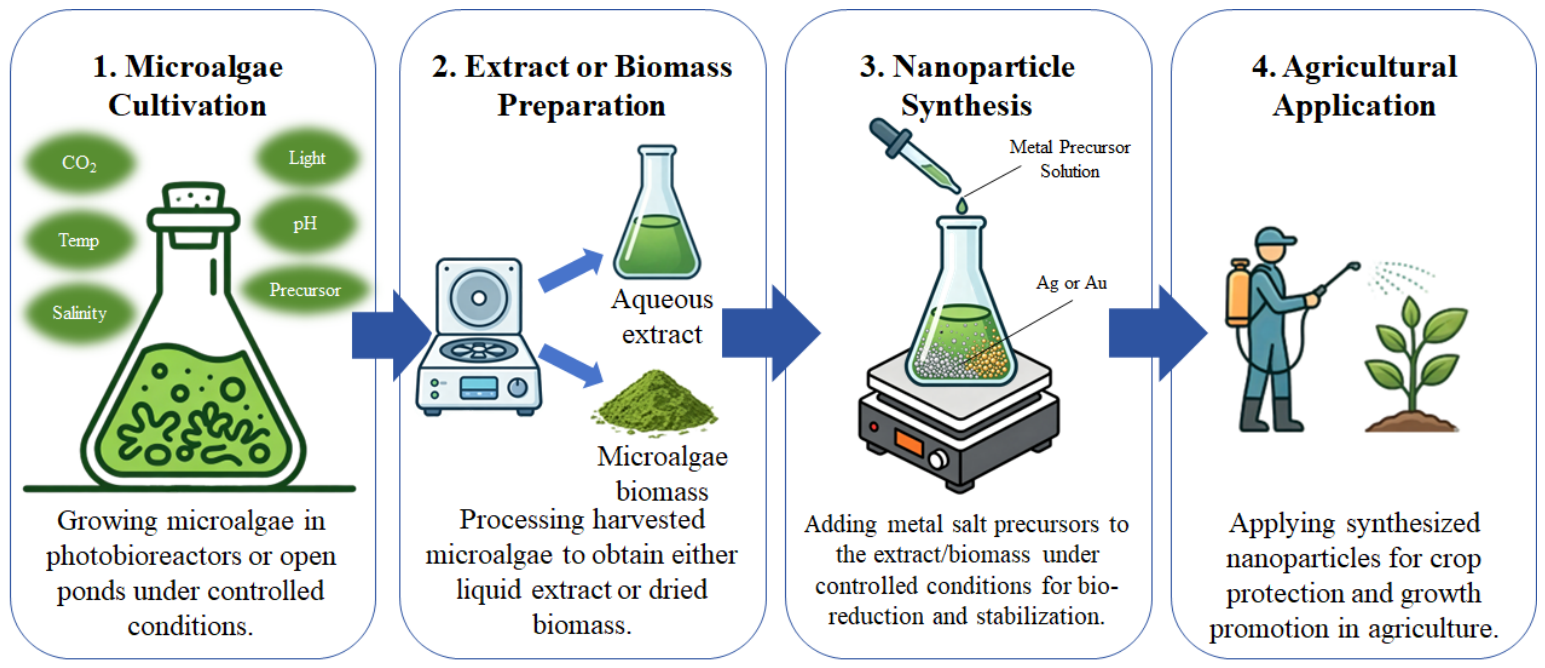
Figure 1. Schematic diagram illustrating the key stages involved in microalgae-mediated green synthesis of nanoparticles.
Ijms 27 05875 g001
Figure 2. Comparative analysis of three nanomaterial green synthesis technologies.
Ijms 27 05875 g002
Figure 3. Three major agricultural delivery routes of nanoparticles and their agronomic advantages.
Ijms 27 05875 g003
Figure 4. Proposed antibacterial mechanism of green-synthesized nanoparticles against Gram-negative bacteria.
Ijms 27 05875 g004
Figure 5. Multifunctional Roles of Microalgae-Mediated Nanotechnology in Sustainable Agriculture.
Ijms 27 05875 g005
Figure 6. Conceptual model of a circular nano-agriculture system based on microalgae-mediated nanotechnology.
Ijms 27 05875 g006
Table 1. Bioactive substances involved in microalgae-mediated nanoparticle synthesis and their primary functions.
Bioactive SubstancePrimary Function in Nanoparticle SynthesisMicroalgal SpeciesReference
PolysaccharideAct as reducing agents and stabilizers through abundant functional groups (e.g., hydroxyl, aldehyde, and carboxyl), facilitating metal-ion reduction and steric stabilization of nanoparticlesChlorella vulgaris[69]
Graesiella emersonii[1]
Spirulina platensis[70]
Proteins and EnzymesChelate metal ions; catalyze reduction reactions (e.g., nitrate reductase and oxidoreductases); form capping layers that enhance nanoparticle stabilityChlamydomonas reinhardtii[12,16]
Macrocyclus pyrifera[71]
Arthrospira platensis[14]
Sprulina sp.[11,72]
Photosynthetic pigmentsProvide high-energy electrons (reduced by light excitation) to restore metal ions. Some pigments themselves possess reducing capabilities.Phormidium tenue[15]
Fatty acids and their estersFunction mainly as terminating and capping agents, contributing to surface passivation, hydrophobic stabilization, and prevention of aggregationCoelastrellia aeroterrestrica[27]
Isochrysis sp.[24]
Extracellular Polymers (EPS)Provide both reducing functional groups and a protective coating layer; play a dominant role in colloidal stabilization and long-term dispersion stabilityChlamydomonas reinhardtii[73]
Arthrospira platensis[20]
Chlorella sp.[73]
Table 2. Comparative summary of the antibacterial activity and mechanisms of action of microalgae-derived nanoparticles against major agricultural pathogens.
Pathogen CategoryTarget PathogenAssociated DiseaseMicroalgae SourceNanoparticle TypeAntimicrobial ActivityPrimary Mode of ActionReferences
BacteriaErwinia amylovoraFire blightArthrospira platensisAgNPsInhibition zone
diameter: 17.0 mm; MIC: 0.625 μg/mL
Physical damage: Cell-surface adhesion and penetration leading to membrane rupture and leakage of intracellular contents[94]
BacteriaErwinia pyrifoliaeFire blightCyanothece sp.AgNPsBroad-spectrum antibacterial activityPhysical damage: Size-dependent membrane penetration; smaller particles show higher antibacterial efficacy[135]
BacteriaXanthomonas citriCitrus bacterial cankerCyanothece sp.AgNPsBroad-spectrum antibacterial activityPhysical damage: Physical disruption of bacterial membranes; enhanced penetration by small nanoparticles[135]
FungiFusarium oxysporumFusarium wilt diseaseChlorella K01Fe3O4NPsInhibit the growth of fungiMembrane damage and/or indirect induction of plant defense responses[137]
FungiFusarium oxysporumFusarium wilt diseaseDesmonostoc alborizicumSeNPsMIC: 10.33 μg/mL (at 10 μg/mL)ROS generation, lipid peroxidation, DNA damage, and membrane penetration[138]
FungiAlternaria alternataBlack spotDesmonostoc alborizicumSeNPsMIC: 7.66 μg/mL (most sensitive)Enhanced oxidative stress leading to structural and genomic damage[137]
FungiPythium ultimumBotrytis infectionDesmonostoc alborizicumSeNPsMIC: 11.33 μg/mL (the most resistant)ROS-mediated membrane and cellular damage[141]
FungiRhizoctonia solaniDamping offChlorella K01Fe3O4NPsZOI: ~10–25 mmIron-mediated surface reactivity and disruption of fungal cell wall integrity[137]
FungiPhythium sp.Botrytis infectionChlorella K01Fe3O4NPsZOI: ~10–25 mmCell wall and membrane damage via iron-associated surface activity integrity of the fungal cell wall/membrane.[141]
FungiMacrophomina phaseolinaBark rot diseaseUlva fasciataCH-Mg-alg nano-compositeIn vitro inhibition rate: 88.9%; Disease severity reduction: 56.4% → 23.8%Synergistic interaction of chitosan and MgNPs causing hyphal deformation and membrane damage[139]
FungiAspergillus flavusMycotoxin diseaseNodosilinea nodulosaCo3O4NPsZOI: 5 mm (200 μg/mL)ROS production resulting in oxidative cellular damage[142]
FungiFusarium oxysporumFusarium wilt diseaseNodosilinea nodulosaCo3O4NPsZOI: 7 mm (200 μg/mL)Oxidative stress-induced membrane disruption[142]
OomycetesPhytophthora infestansTomato late blightEucheuma sp.AgNPsInhibit the growth of oomycetesMembrane damage via physical and chemical nanoparticle interactions[143]
VirusTobacco mosaic virus (TMV)Mosaic diseaseFucoidan
(brown algae)
AgNPs/AuNPsSignificantly inhibit the virus in vitroCapsid interaction and blockage of viral entry or intracellular decoy mechanisms[140]
Disclaimer/Publisher’s Note: The statements, opinions and data contained in all publications are solely those of the individual author(s) and contributor(s) and not of MDPI and/or the editor(s). MDPI and/or the editor(s) disclaim responsibility for any injury to people or property resulting from any ideas, methods, instructions or products referred to in the content.