The Therapeutic Effect of Tapinarof on In Vitro Cutaneous Lupus-like Keratinocyte Model

 ,
,
Abstract
1. Introduction
2. Results
2.1. Tapinarof Did Not Affect the Viability of Keratinocytes
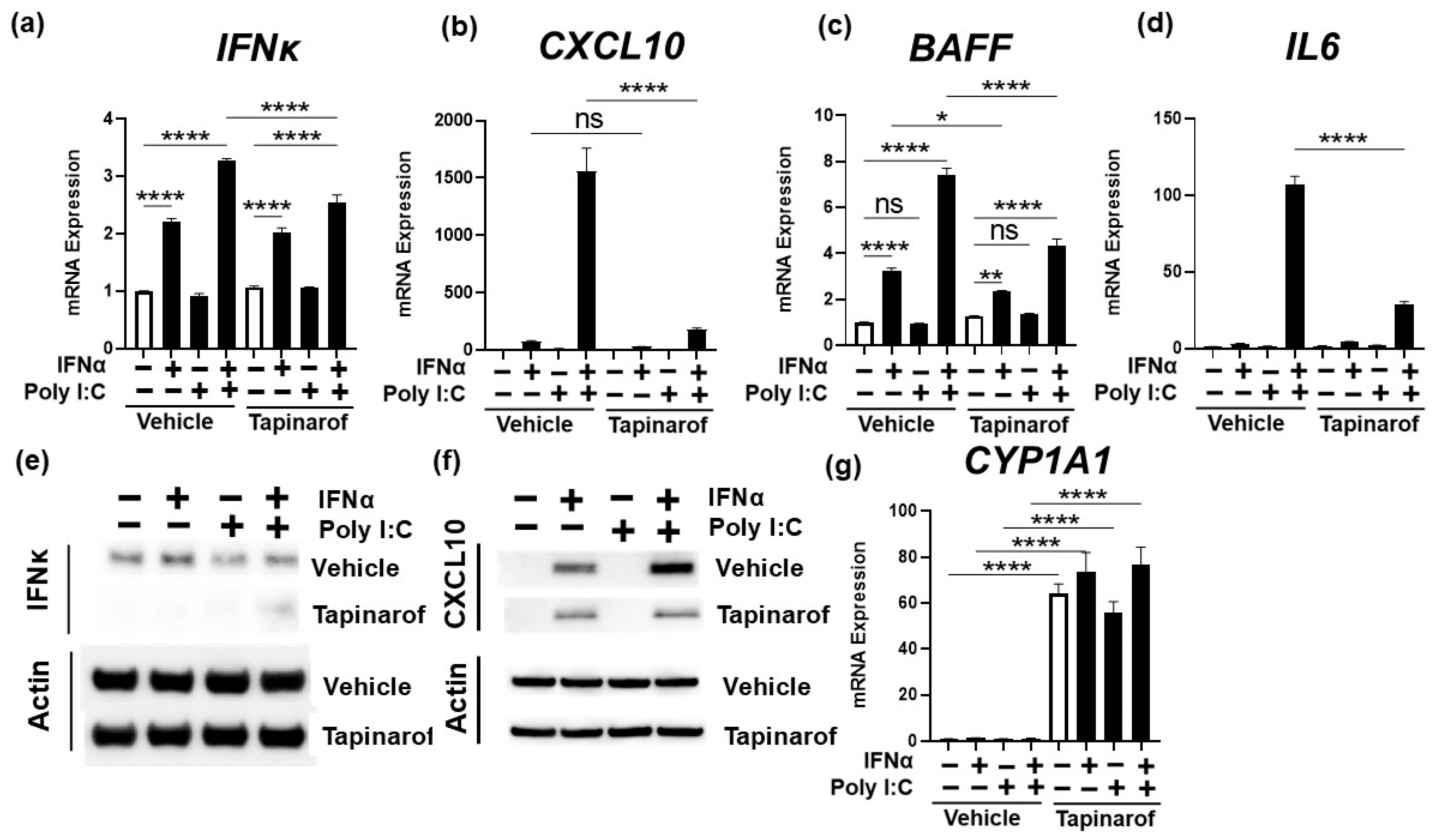
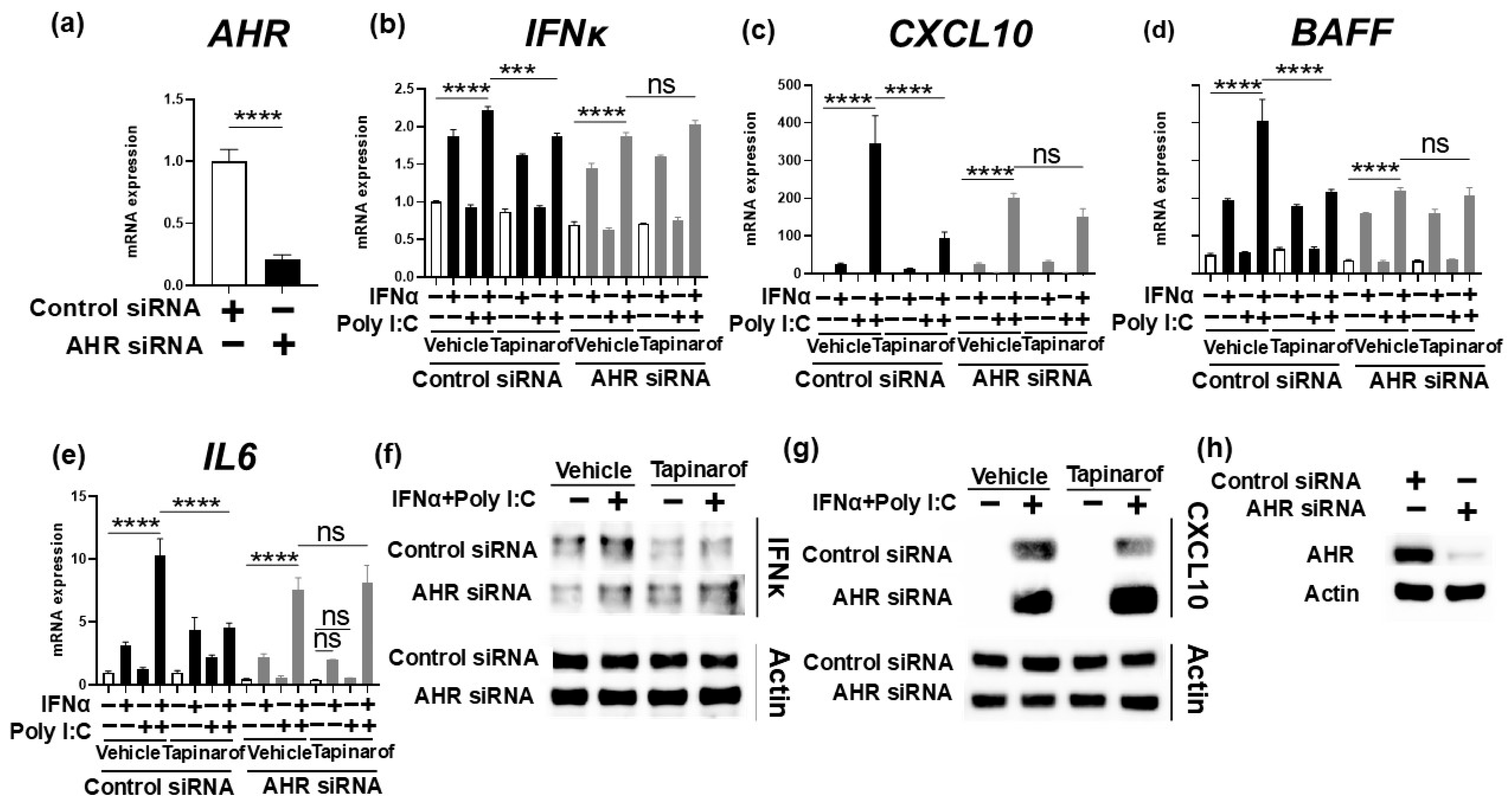
2.2. Tapinarof Suppressed the Expression of IFNκ, CXCL10, IL6, and BAFF in a CLE-like Keratinocyte Model In Vitro Under Conditions That Induced AHR Expression
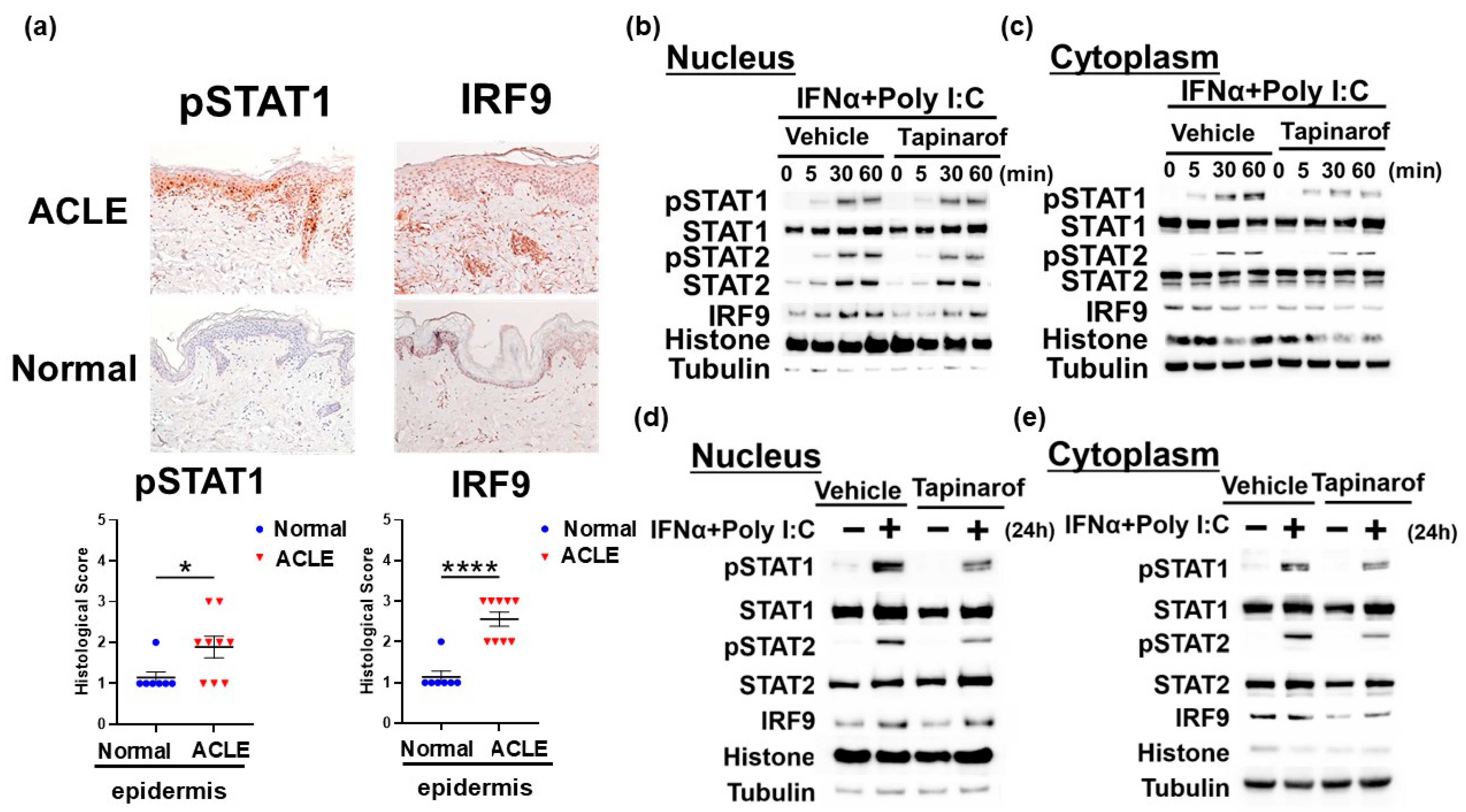
2.3. IRF9 and pSTAT1 Expression Was Elevated in the Skin of ACLE Patients
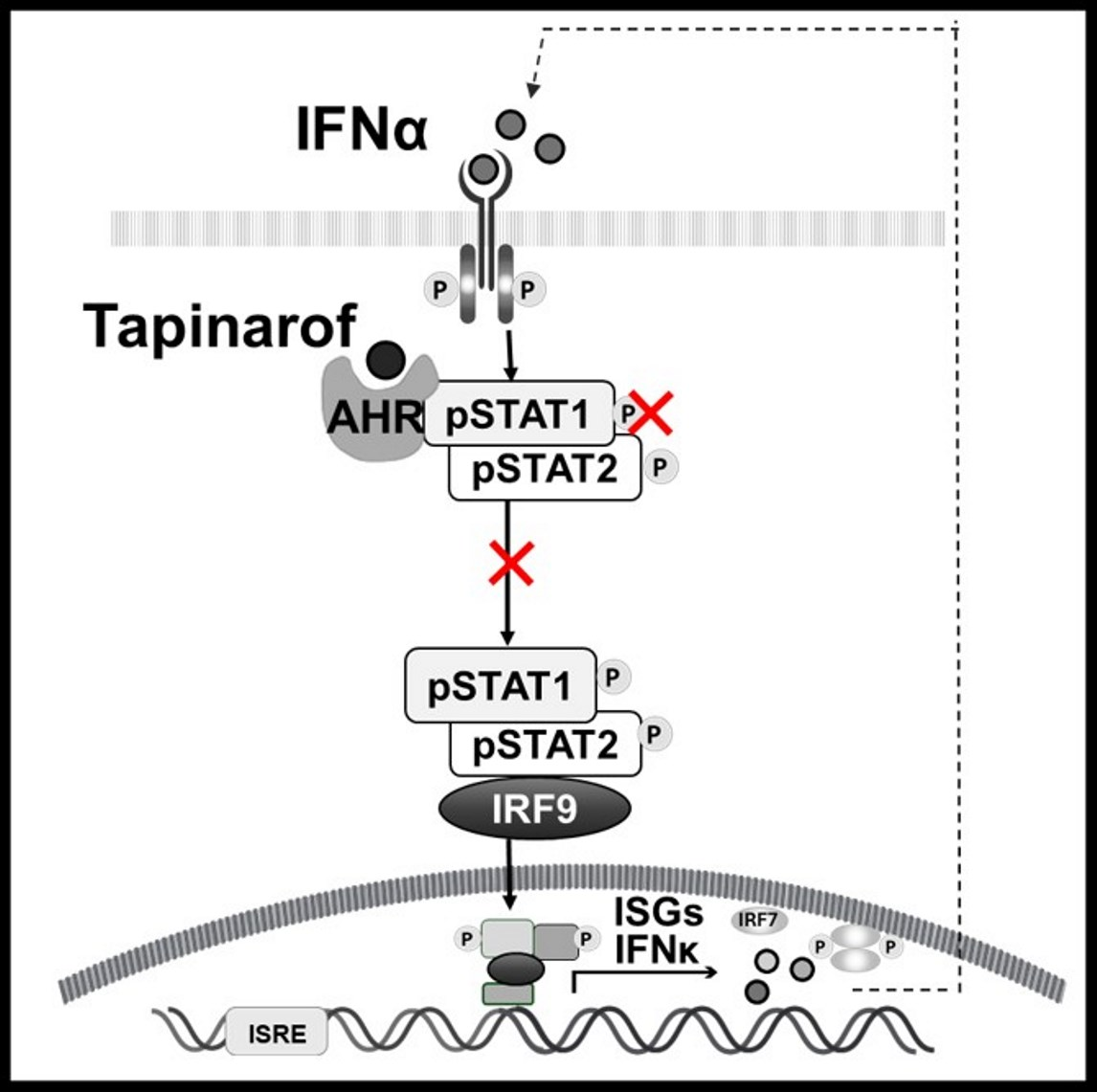
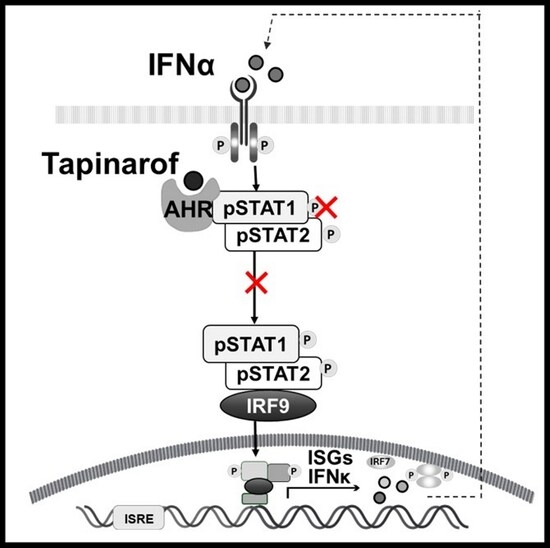
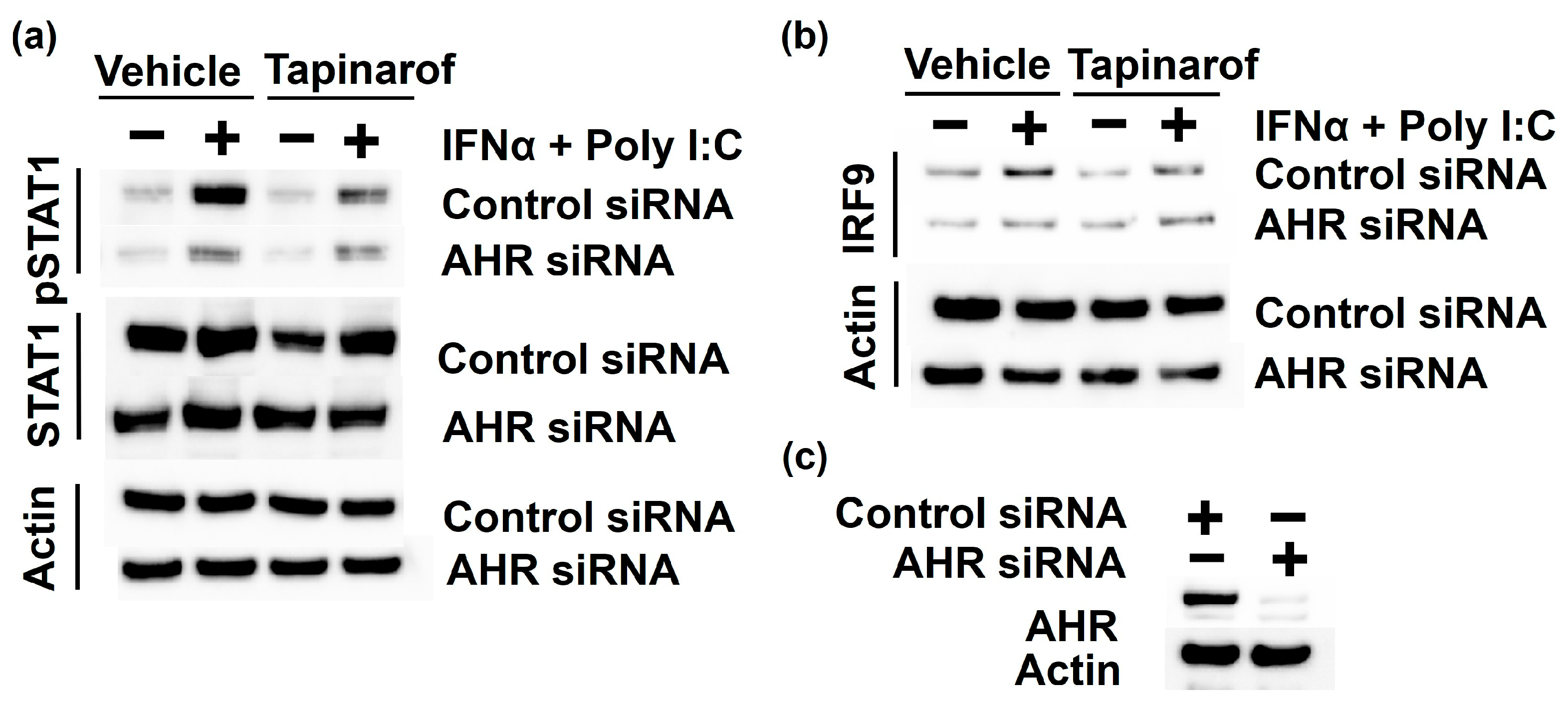
2.4. IFNα and Poly I:C Increased the Expression of IFNκ via pSTAT1-pSTAT2-IRF9 in Human Keratinocytes, and Tapinarof Suppressed the Expression of pSTAT1, pSTAT2, and IRF9 via AHR
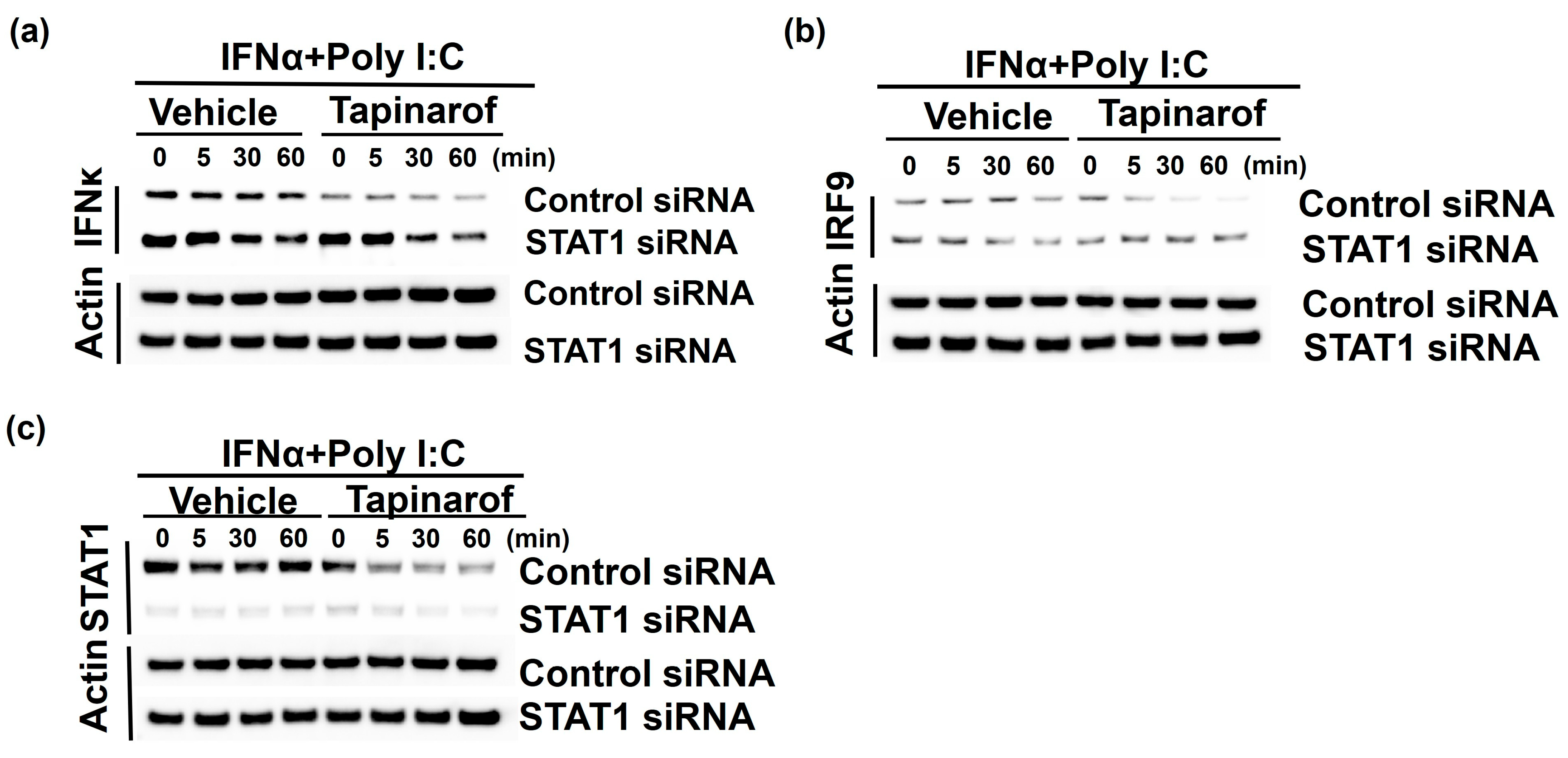
2.5. Tapinarof Suppressed the Expression of IRF9 and IFNκ via STAT1 in Human Keratinocytes
3. Discussion
4. Materials and Methods
4.1. Cell Viability Assay
4.2. Reagents
4.3. Cell Culture
4.4. In Vitro CLE Model Using NHEKs
4.5. Quantitative Reverse-Transcription PCR (qRT-PCR)
4.6. Western Blotting
4.7. Immunohistochemistry
4.8. Statistical Analysis
Supplementary Materials
Author Contributions
Funding
Institutional Review Board Statement
Informed Consent Statement
Data Availability Statement
Conflicts of Interest
Correction Statement
Abbreviations
| NHEK | Normal human epidermal keratinocyte |
| CLE | Cutaneous lupus erythematosus |
| SLE | Systemic lupus erythematosus |
| IFN | Interferon |
| AHR | Aryl hydrocarbon receptor |
| BAFF | B-cell activating factor |
| TAMA | Therapeutic AHR-modulating agent |
| DLE | Discoid lupus erythematosus |
| IRF9 | Interferon regulatory factor 9 |
| ISG | Interferon-stimulated gene |
| ACLE | Acute CLE |
| ISRE | Interferon-stimulated response element |
| ISGF3 | Interferon-stimulated gene factor 3 |
References
- Wenzel, J. Cutaneous lupus erythematosus: New insights into pathogenesis and therapeutic strategies. Nat. Rev. Rheumatol. 2019, 15, 519–532. [Google Scholar] [CrossRef] [PubMed]
- Vale, E.C.S.D.; Garcia, L.C. Cutaneous lupus erythematosus: A review of etiopathogenic, clinical, diagnostic and therapeutic aspects. An. Bras. Dermatol. 2023, 98, 355–372. [Google Scholar] [CrossRef] [PubMed]
- Niebel, D.; de Vos, L.; Fetter, T.; Brägelmann, C.; Wenzel, J. Cutaneous lupus erythematosus: An update on pathogenesis and future therapeutic directions. Am. J. Clin. Dermatol. 2023, 4, 521–540. [Google Scholar] [CrossRef] [PubMed]
- Kawato, Y.; Fukahori, H.; Nakamura, K.; Kubo, K.; Hiramitsu, M.; Morokata, T. Development of a novel Poly(I:C)-induced murine model with accelerated lupus nephritis and examination of the therapeutic effects of mycophenolate mofetil and a cathepsin S inhibitor. Eur. J. Pharmacol. 2023, 938, 175440. [Google Scholar] [CrossRef] [PubMed]
- Kuba-Fuyuno, Y.; Kido-Nakahara, M.; Tsuji, G.; Sakai, S.; Nakahara, T. Proposal of a cutaneous lupus erythematosus-like keratinocyte model in vitro under local conditions using interferon-alpha and Poly I:C and its use in examining the therapeutic effects of tyrosine kinase 2 inhibitor. J. Dermatol. 2024, 51, 1031–1033. [Google Scholar] [CrossRef] [PubMed]
- Wu, J.; Pang, T.; Lin, Z.; Zhao, M.; Jin, H. The key player in the pathogenesis of environmental influence of systemic lupus erythematosus: Aryl hydrocarbon receptor. Front. Immunol. 2022, 13, 965941. [Google Scholar] [CrossRef] [PubMed]
- Tsuji, G.; Yamamura, K.; Kawamura, K.; Kido-Nakahara, M.; Ito, T.; Nakahara, T. Regulatory mechanism of the IL-33-IL-37 axis via aryl hydrocarbon receptor in atopic dermatitis and psoriasis. Int. J. Mol. Sci. 2023, 24, 14633. [Google Scholar] [CrossRef] [PubMed]
- Lebwohl, M.G.; Stein Gold, L.; Strober, B.; Papp, K.A.; Armstrong, A.W.; Bagel, J.; Kircik, L.; Ehst, B.; Hong, H.C.; Soung, J.; et al. Phase 3 trials of tapinarof cream for plaque psoriasis. N. Engl. J. Med. 2021, 385, 2219–2229. [Google Scholar] [CrossRef] [PubMed]
- Zhang, Y.; Pan, Y.; Zhang, P.; Wang, F.; Han, Y.; Li, K.; Jiang, W.; Wang, J.; Luan, Y.; Xin, Q. AhR agonist tapinarof ameliorates lupus autoimmunity by suppressing Tfh cell differentiation via regulation of the JAK2-STAT3 signaling pathway. Immun. Inflamm. Dis. 2023, 11, e903. [Google Scholar] [CrossRef] [PubMed]
- Garg, K.S.; Tjahjono, L. Successful treatment of discoid lupus erythematosus with tapinarof 1% cream monotherapy. JAAD Case Rep. 2024, 54, 1–2. [Google Scholar] [CrossRef] [PubMed]
- Vu, Y.H.; Hashimoto-Hachiya, A.; Takemura, M.; Yumine, A.; Mitamura, Y.; Nakahara, T.; Furue, M.; Tsuji, G. IL-24 negatively regulates keratinocyte differentiation induced by tapinarof, an aryl hydrocarbon receptor modulator: Implication in the treatment of atopic dermatitis. Int. J. Mol. Sci. 2020, 21, 9412. [Google Scholar] [CrossRef] [PubMed]
- Hile, G.A.; Gudjonsson, J.E.; Kahlenberg, J.M. The influence of interferon on healthy and diseased skin. Cytokine 2020, 132, 154605. [Google Scholar] [CrossRef] [PubMed]
- Platanitis, E.; Demiroz, D.; Schneller, A.; Fischer, K.; Capelle, C.; Hart, M.; Gossenreiter, T.; Müller, M.; Novatchkova, M.; Decker, T. A molecular switch from STAT2-IRF9 to ISGF3 underlies interferon-induced gene transcription. Nat. Commun. 2019, 10, 2921. [Google Scholar] [CrossRef]
- Sarkar, M.; Hile, G.; Tsoi, L.; Xing, X.; Liu, J.; Liang, Y.; Berthier, C.; Swindell, W.; Patrick, M.; Shuai, S.; et al. Photosensitivity and type I IFN responses in cutaneous lupus are driven by epidermal derived interferon kappa. Ann. Rheum. Dis. 2018, 77, 1653–1664. [Google Scholar] [CrossRef] [PubMed]
- Psarras, A.; Alase, A.; Antanaviciute, A.; Carr, I.M.; Md Yusof, M.Y.; Wittmann, M.; Emery, P.; Tsokos, G.C.; Vital, E.M. Functionally impaired plasmacytoid dendritic cells and non-haematopoietic sources of type I interferon characterize human autoimmunity. Nat. Commun. 2020, 11, 6149. [Google Scholar] [CrossRef] [PubMed]
- Esser, C.; Bargen, I.; Weighardt, H.; Haarmann-Stemmann, T.; Krutmann, J. Functions of the aryl hydrocarbon receptor in the skin. Semin. Immunopathol. 2013, 35, 677–691. [Google Scholar] [CrossRef] [PubMed]
- Esser, C.; Rannug, A. The aryl hydrocarbon receptor in barrier organ physiology, immunology, and toxicology. Pharmacol. Rev. 2015, 67, 259–279. [Google Scholar] [CrossRef] [PubMed]
- Law, C.; Wacleche, V.S.; Cao, Y.; Pillai, A.; Sowerby, J.; Hancock, B.; Horisberger, A.; Bracero, S.; Skidanova, V.; Li, Z.; et al. Interferon subverts an AHR-JUN axis to promote CXCL13+ T cells in lupus. Nature 2024, 631, 857–866, Correction in Nature 2024, 632, E6. [Google Scholar] [CrossRef] [PubMed]
- Hanlon, N.; Gillan, N.; Neil, J.; Seidler, K. The role of the aryl hydrocarbon receptor (AhR) in modulating intestinal ILC3s to optimise gut pathogen resistance in lupus and benefits of nutritional AhR ligands. Clin. Nutr. 2024, 43, 1199–1215. [Google Scholar] [CrossRef] [PubMed]
- Flammer, J.R.; Dobrovolna, J.; Kennedy, M.A.; Chinenov, Y.; Glass, C.K.; Ivashkiv, L.B.; Rogatsky, I. The type I interferon signaling pathway is a target for glucocorticoid inhibition. Mol. Cell. Biol. 2010, 30, 4564–4574. [Google Scholar] [CrossRef] [PubMed]
- Deng, Y.; Zheng, Y.; Li, D.; Hong, Q.; Zhang, M.; Li, Q.; Fu, B.; Wu, L.; Wang, X.; Shen, W.; et al. Expression characteristics of interferon-stimulated genes and possible regulatory mechanisms in lupus patients using transcriptomics analyses. EBioMedicine 2021, 70, 103477. [Google Scholar] [CrossRef] [PubMed]
- Kimura, A.; Naka, T.; Nohara, K.; Fujii-Kuriyama, Y.; Kishimoto, T. Aryl hydrocarbon receptor regulates Stat1 activation and participates in the development of Th17 cells. Proc. Natl. Acad. Sci. USA 2008, 105, 9721–9726. [Google Scholar] [CrossRef] [PubMed]
- Kimura, A.; Naka, T.; Nakahama, T.; Chinen, I.; Masuda, K.; Nohara, K.; Fujii-Kuriyama, Y.; Kishimoto, T. Aryl hydrocarbon receptor in combination with Stat1 regulates LPS-induced inflammatory responses. J. Exp. Med. 2009, 206, 2027–2035. [Google Scholar] [CrossRef] [PubMed]
- Ma, J.; Chen, J.; Wang, H.; Lu, D.; Liang, K. AhR regulates VEGF expression by promoting STAT1 transcriptional activity, thereby affecting endothelial angiogenesis in acute limb ischemia. Chem. Biol. Interact. 2023, 369, 110253. [Google Scholar] [CrossRef] [PubMed]
- Liu, X.; Yang, M.; Xu, P.; Du, M.; Li, S.; Shi, J.; Li, Q.; Yuan, J.; Pang, Y. Kynurenine-AhR reduces T-cell infiltration and induces a delayed T-cell immune response by suppressing the STAT1-CXCL9/CXCL10 axis in tuberculosis. Cell. Mol. Immunol. 2024, 21, 1426–1440. [Google Scholar] [CrossRef] [PubMed]



Disclaimer/Publisher’s Note: The statements, opinions and data contained in all publications are solely those of the individual author(s) and contributor(s) and not of MDPI and/or the editor(s). MDPI and/or the editor(s) disclaim responsibility for any injury to people or property resulting from any ideas, methods, instructions or products referred to in the content. |
© 2026 by the authors. Licensee MDPI, Basel, Switzerland. This article is an open access article distributed under the terms and conditions of the Creative Commons Attribution (CC BY) license.
Share and Cite
Kuba-Fuyuno, Y.; Tsuji, G.; Kido-Nakahara, M.; Yamamura, K.; Sakai, S.; Nakahara, T. The Therapeutic Effect of Tapinarof on In Vitro Cutaneous Lupus-like Keratinocyte Model. Int. J. Mol. Sci. 2026, 27, 5828. https://doi.org/10.3390/ijms27135828
Kuba-Fuyuno Y, Tsuji G, Kido-Nakahara M, Yamamura K, Sakai S, Nakahara T. The Therapeutic Effect of Tapinarof on In Vitro Cutaneous Lupus-like Keratinocyte Model. International Journal of Molecular Sciences. 2026; 27(13):5828. https://doi.org/10.3390/ijms27135828
Chicago/Turabian StyleKuba-Fuyuno, Yoko, Gaku Tsuji, Makiko Kido-Nakahara, Kazuhiko Yamamura, Sawako Sakai, and Takeshi Nakahara. 2026. "The Therapeutic Effect of Tapinarof on In Vitro Cutaneous Lupus-like Keratinocyte Model" International Journal of Molecular Sciences 27, no. 13: 5828. https://doi.org/10.3390/ijms27135828
APA StyleKuba-Fuyuno, Y., Tsuji, G., Kido-Nakahara, M., Yamamura, K., Sakai, S., & Nakahara, T. (2026). The Therapeutic Effect of Tapinarof on In Vitro Cutaneous Lupus-like Keratinocyte Model. International Journal of Molecular Sciences, 27(13), 5828. https://doi.org/10.3390/ijms27135828