Loss of ASMT Function in Arabidopsis Affects Hormone Pathways and the Ability to Withstand Drought Stress
 , , , , and
Abstract
1. Introduction
2. Results
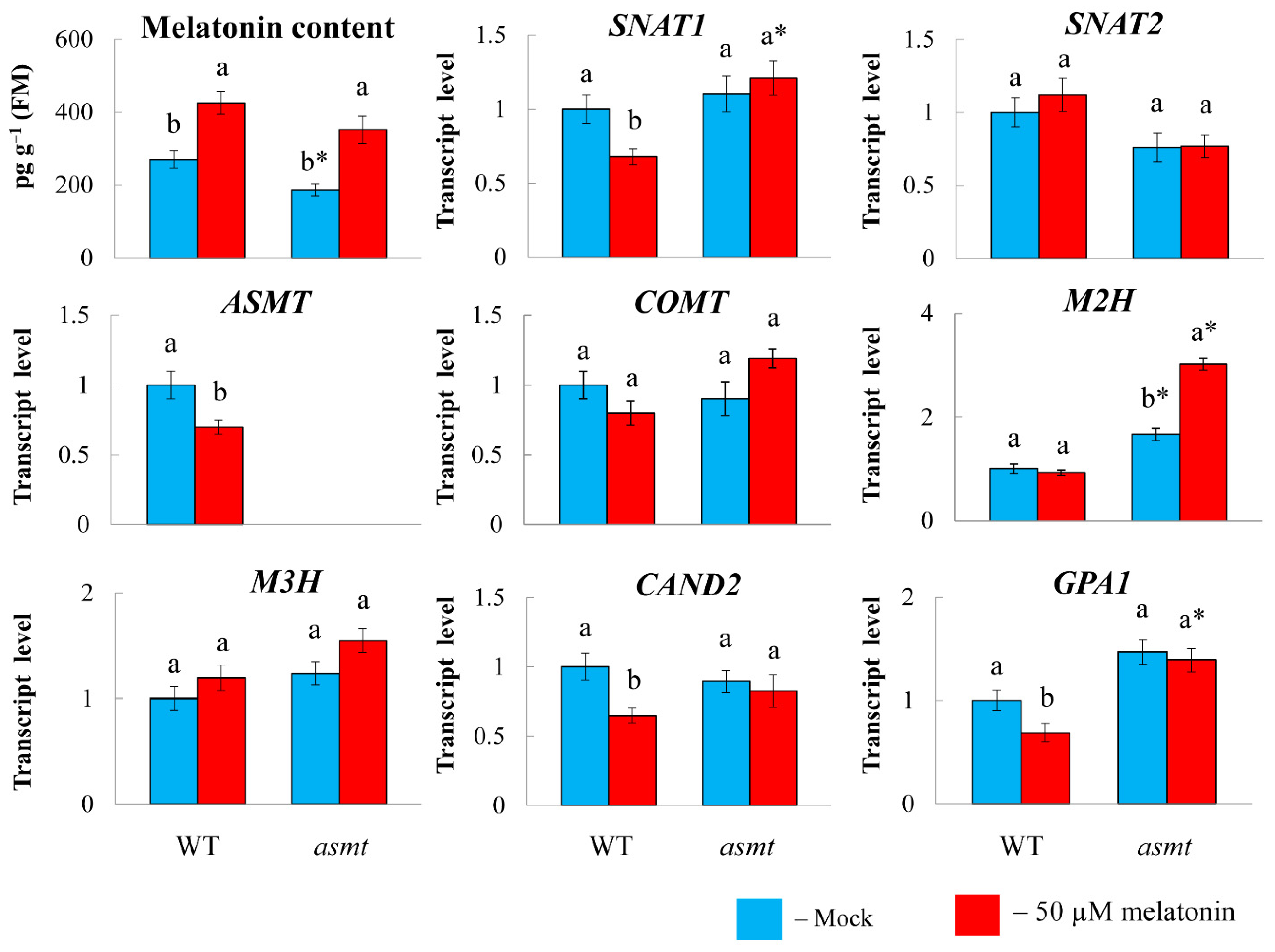
2.1. Phenotype of the asmt-KO Arabidopsis Mutant
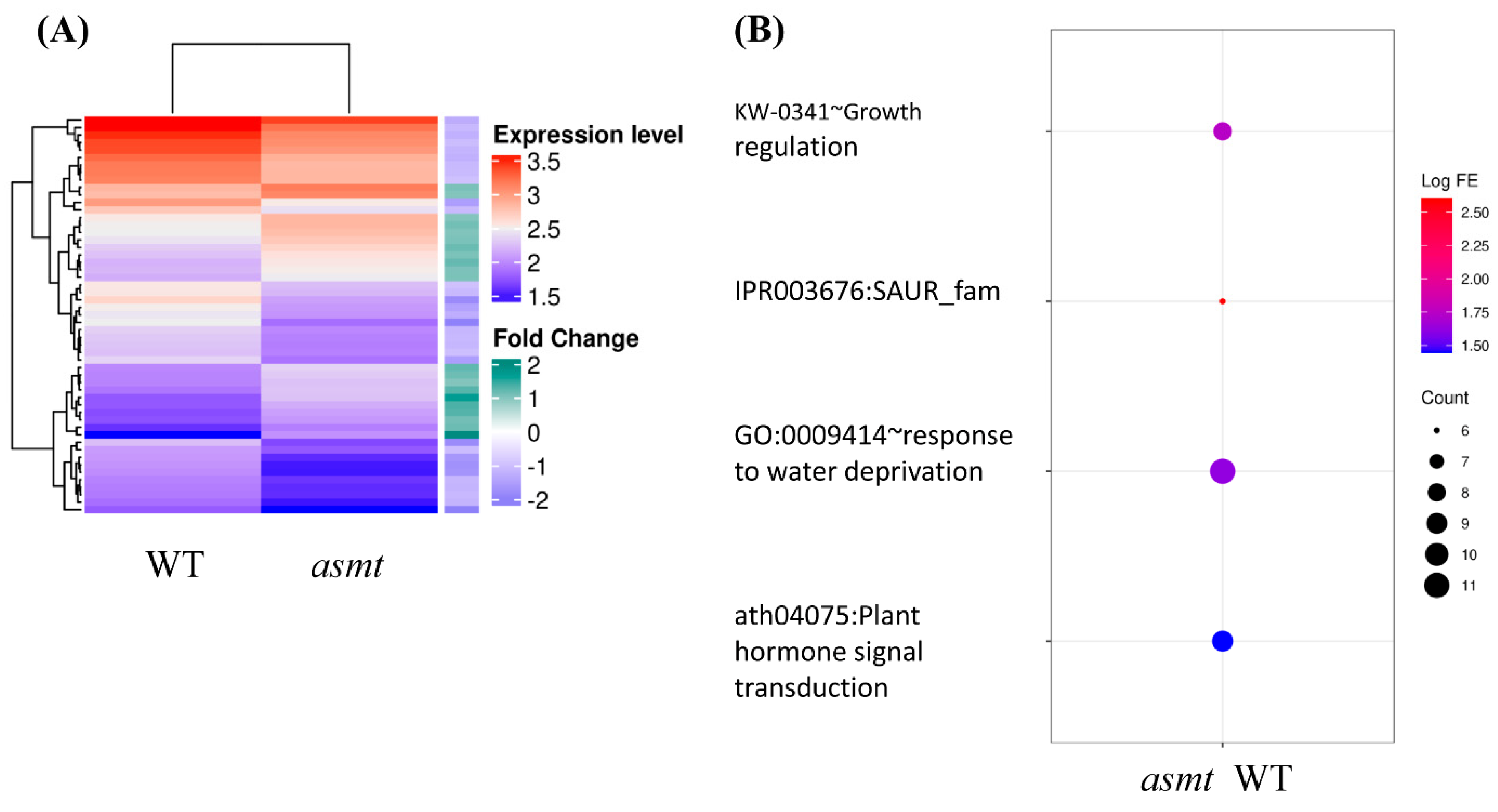
2.2. Asmt Mutation Alters the Expression of Hormone- and Stress-Responsive Genes
2.3. Identification of Cis-Regulatory Elements in the ASMT Promoter
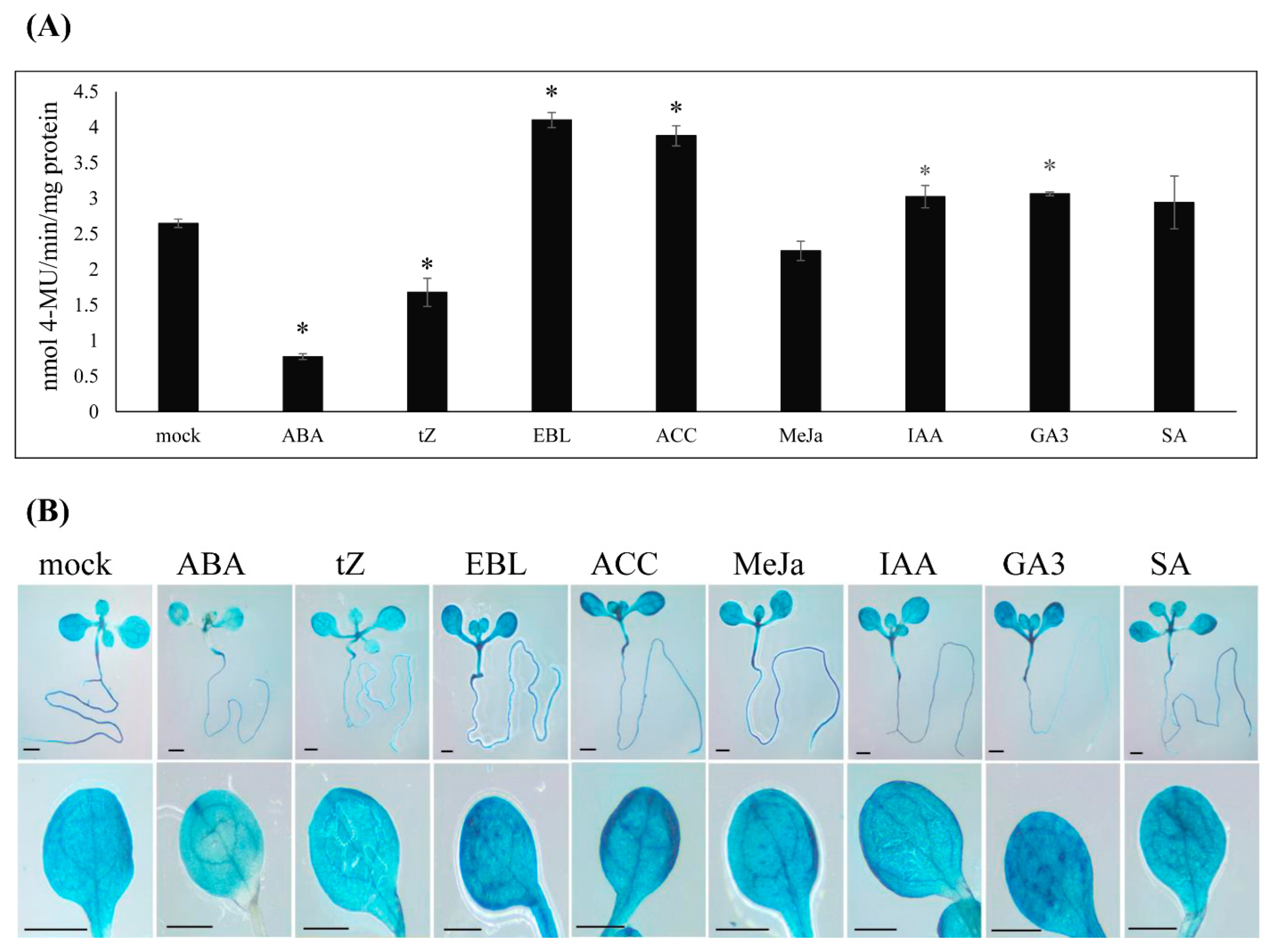
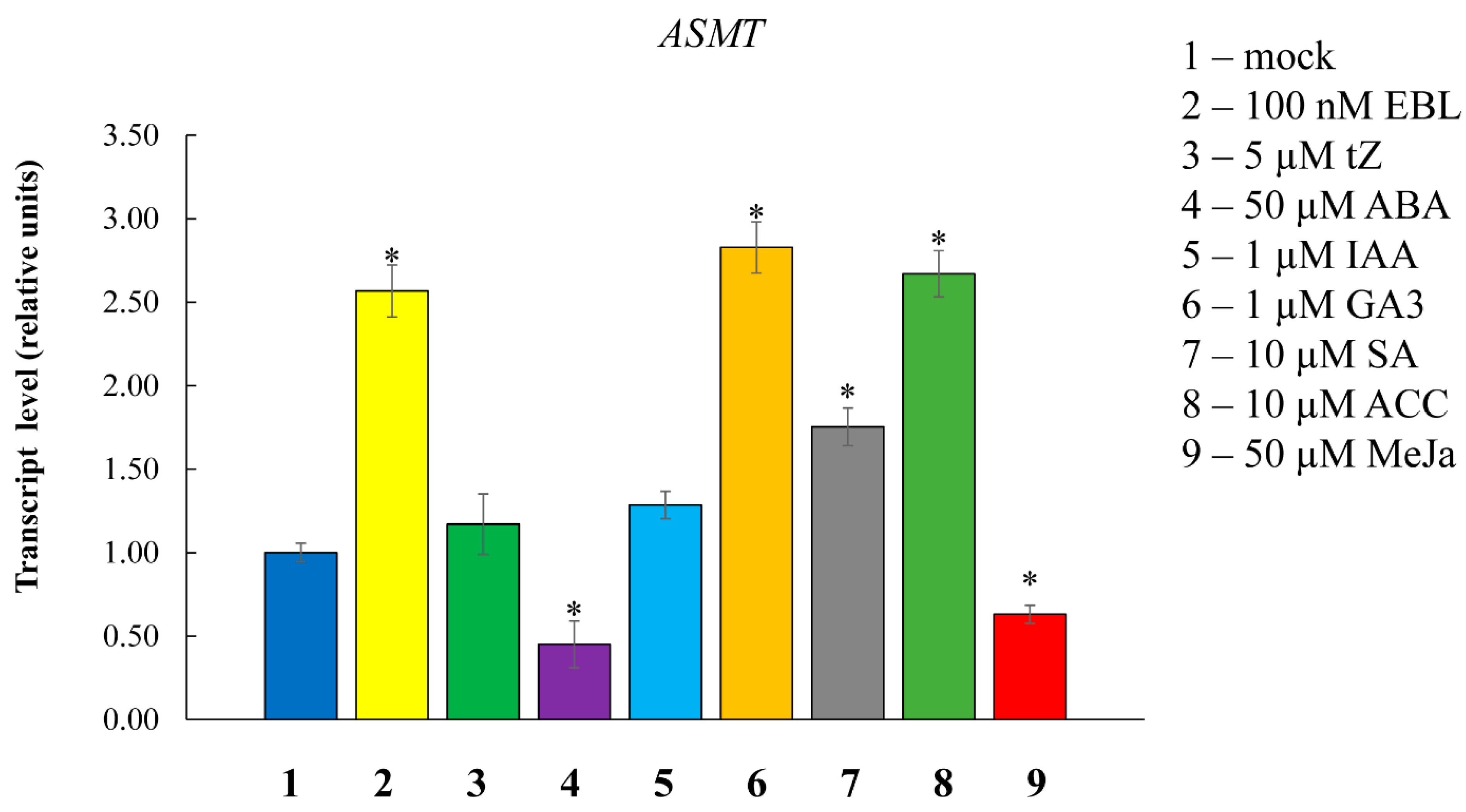
2.4. Plant Hormones Regulate the Expression of ASMT and GUS Activity in the ASMT::GUS Transgenic Line
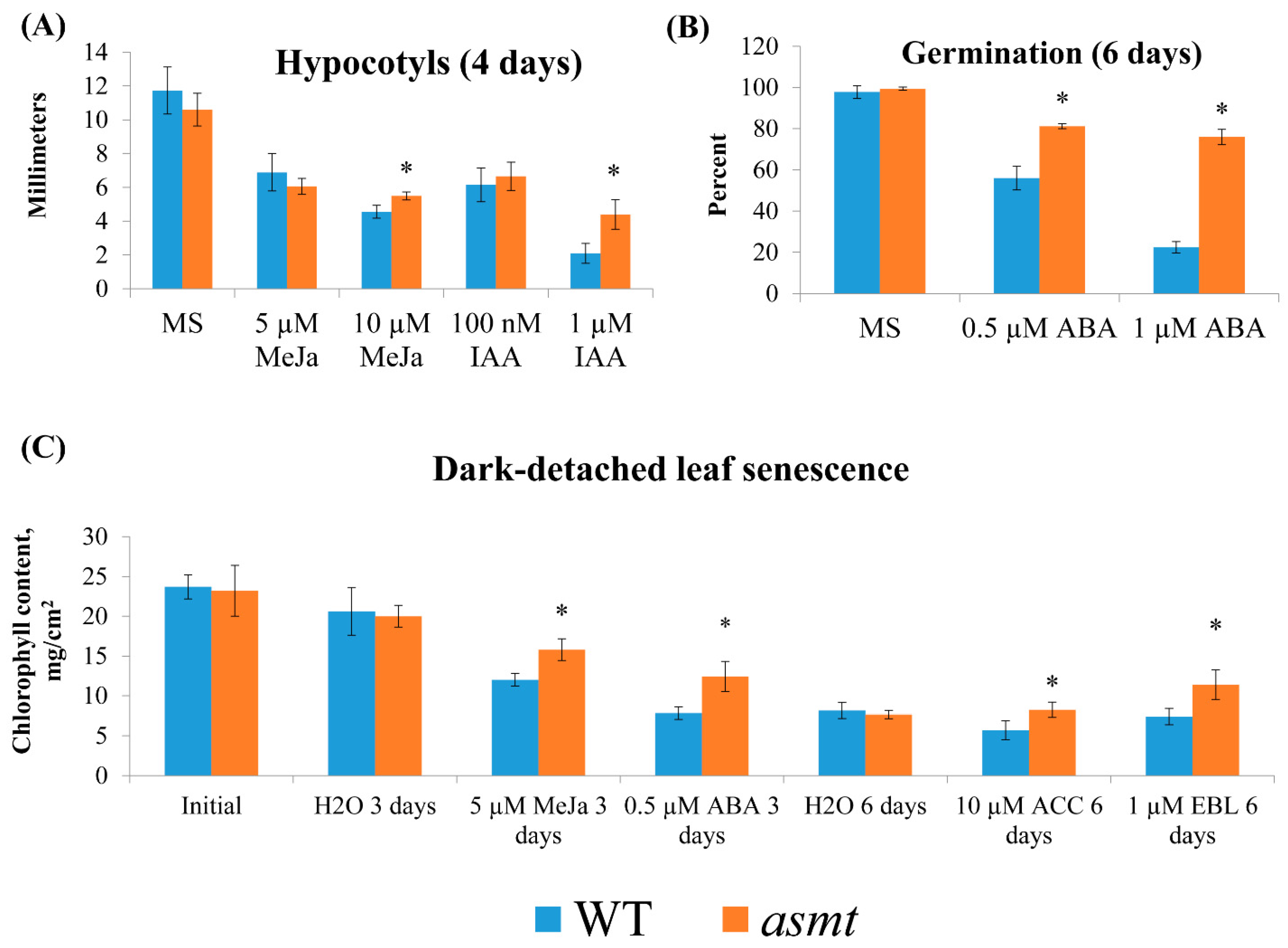
2.5. Modified Responses of the Asmt Mutant to Hormone Treatment
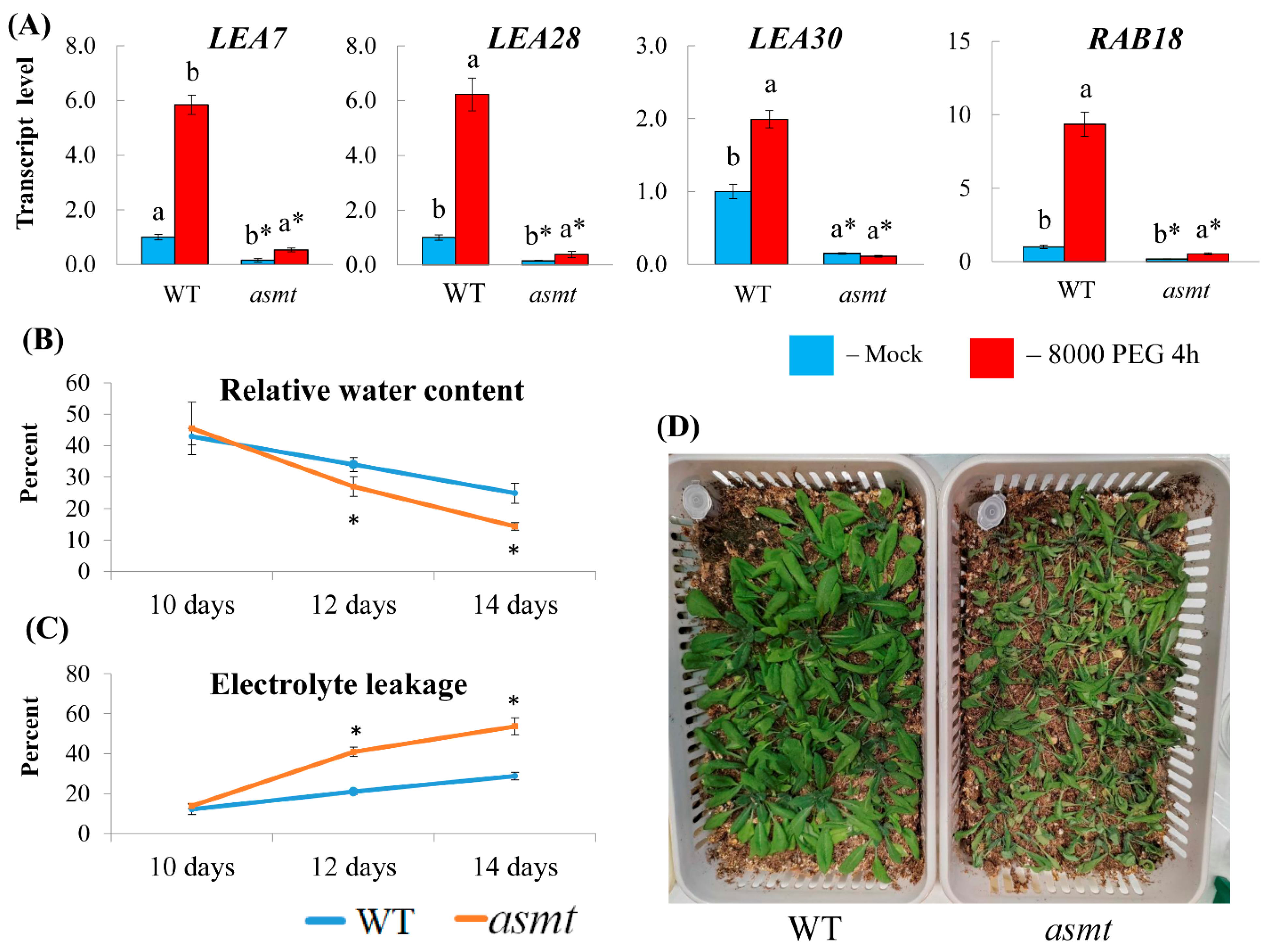
2.6. Physiological and Transcriptional Responses to Drought Are Impaired in the asmt Mutant
3. Discussion
4. Materials and Methods
4.1. Plant Material, Growth Conditions and Treatments
4.2. Hormone Sensitivity Assays
4.3. Stress Tolerance Tests
4.4. MT Measurement
4.5. Generation of ASMT pro::GUS-Transformed Arabidopsis Plants and Analysis of GUS Activity
4.5.1. Construction of the ASMT Promoter::GUS Reporter Gene Fusion and Agrobacterium Transformation
4.5.2. Histochemical Staining of GUS
4.5.3. Fluorometric Assay of GUS Activity
4.6. RNA Extraction and qRT-PCR
4.7. RNA Sequencing (RNA-Seq)
4.8. Statistical Data Analyses
5. Conclusions
Supplementary Materials
Author Contributions
Funding
Institutional Review Board Statement
Informed Consent Statement
Data Availability Statement
Conflicts of Interest
References
- Back, K.; Tan, D.X.; Reiter, R.J. Melatonin biosynthesis in plants: Multiple pathways catalyze tryptophan to melatonin in the cytoplasm or chloroplasts. J. Pineal Res. 2016, 61, 426–437. [Google Scholar] [CrossRef] [PubMed]
- Back, K. Melatonin metabolism, signaling and possible roles in plants. Plant J. 2021, 105, 376–391. [Google Scholar] [CrossRef] [PubMed]
- Chen, Q.; Chen, Y.; Li, X.; Zhang, L.; Rengel, Z. Phytomelatonin: Biosynthesis, Signaling, and Functions. Annu. Rev. Plant Biol. 2025, 76, 171–195. [Google Scholar] [CrossRef] [PubMed]
- Liu, W.; Zhao, D.; Zheng, C.; Chen, C.; Peng, X.; Cheng, Y.; Wan, H. Genomic analysis of the ASMT gene family in Solanum lycopersicum. Molecules 2017, 22, 1984. [Google Scholar] [CrossRef] [PubMed]
- Zhou, W.; Wang, Y.; Li, B.; Petijová, L.; Hu, S.; Zhang, Q.; Niu, J.; Wang, D.; Wang, S.; Dong, Y.; et al. Whole-genome sequence data of Hypericum perforatum and functional characterization of melatonin biosynthesis by N-acetylserotonin O-methyltransferase. J. Pineal Res. 2021, 70, e12709. [Google Scholar] [CrossRef] [PubMed]
- Pan, L.; Zheng, J.; Liu, J.; Guo, J.; Liu, F.; Liu, L.; Wan, H. Analysis of the ASMT gene family in pepper (Capsicum annuum L.): Identification, phylogeny, and expression profiles. Int. J. Genom. 2019, 2019, 7241096. [Google Scholar] [CrossRef] [PubMed]
- Wang, H.; Song, C.; Fang, S.; Wang, Z.; Song, S.; Jiao, J.; Wang, M.; Zheng, X.; Bai, T. Genome-wide identification and expression analysis of the ASMT gene family reveals their role in abiotic stress tolerance in apple. Sci. Hortic. 2022, 293, 110683. [Google Scholar] [CrossRef]
- Ma, K.; Xu, R.; Zhao, Y.; Han, L.; Xu, Y.; Li, L.; Wang, J.; Li, N. Walnut N-Acetylserotonin Methyltransferase Gene Family Genome-Wide Identification and Diverse Functions Characterization During Flower Bud Development. Front. Plant Sci. 2022, 13, 861043. [Google Scholar] [CrossRef] [PubMed]
- Xu, F.; Liu, W.; Wang, H.; Alam, P.; Zheng, W.; Faizan, M. Genome Identification of the Tea Plant (Camellia sinensis) ASMT Gene Family and Its Expression Analysis under Abiotic Stress. Genes 2023, 14, 409. [Google Scholar] [CrossRef] [PubMed]
- Bhowal, B.; Bhattacharjee, A.; Goswami, K.; Sanan-Mishra, N.; Singla-Pareek, S.L.; Kaur, C.; Sopory, S. Serotonin and melatonin Biosynthesis in Plants: Genome-Wide Identification of the Genes and Their Expression Reveal a Conserved Role in Stress and Development. Int. J. Mol. Sci. 2021, 22, 11034. [Google Scholar] [CrossRef] [PubMed]
- Byeon, Y.; Lee, H.J.; Lee, H.Y.; Back, K. Cloning and functional characterization of the Arabidopsis N-acetylserotonin O-methyltransferase responsible for melatonin synthesis. J. Pineal Res. 2016, 60, 65–73. [Google Scholar] [CrossRef] [PubMed]
- Lv, Y.; Pan, J.; Wang, H.; Reiter, R.J.; Li, X.; Mou, Z.; Zhang, J.; Yao, Z.; Zhao, D.; Yu, D. Melatonin inhibits seed germination by crosstalk with abscisic acid, gibberellin, and auxin in Arabidopsis. J. Pineal Res. 2021, 70, e12736. [Google Scholar] [CrossRef] [PubMed]
- Bychkov, I.; Kudryakova, N.; Pojidaeva, E.S.; Doroshenko, A.; Shitikova, V.; Kusnetsov, V. ABA and MT: Players on the Same Field? Int. J. Mol. Sci. 2024, 25, 12266. [Google Scholar] [CrossRef] [PubMed]
- Su, M.; Huang, G.; Zhang, Q.; Wang, X.; Li, C.; Tao, Y.; Zhang, S.; Lai, J.; Yang, C.; Wang, Y. The LEA protein, ABR, is regulated by ABI5 and involved in dark-induced leaf senescence in Arabidopsis thaliana. Plant Sci. 2016, 247, 93–103. [Google Scholar] [CrossRef] [PubMed]
- Yuan, H.; Liu, D. Functional disruption of the pentatricopeptide protein SLG1 affects mitochondrial RNA editing, plant development, and responses to abiotic stresses in Arabidopsis. Plant J. 2012, 70, 432–444. [Google Scholar] [CrossRef] [PubMed]
- Ryu, M.Y.; Cho, S.K.; Kim, W.T. The Arabidopsis C3H2C3-type RING E3 ubiquitin ligase AtAIRP1 is a positive regulator of an abscisic acid-dependent response to drought stress. Plant Physiol. 2010, 154, 1983–1997. [Google Scholar] [CrossRef] [PubMed]
- Rutowicz, K.; Puzio, M.; Halibart-Puzio, J.; Lirski, M.; Kotliński, M.; Kroteń, M.A.; Knizewski, L.; Lange, B.; Muszewska, A.; Śniegowska-Świerk, K.; et al. A Specialized Histone H1 Variant Is Required for Adaptive Responses to Complex Abiotic Stress and Related DNA Methylation in Arabidopsis. Plant Physiol. 2015, 169, 2080–2101. [Google Scholar] [CrossRef] [PubMed]
- Mewis, I.; Khan, M.A.M.; Glawischnig, E.; Schreiner, M.; Ulrichs, C. Water Stress and Aphid Feeding Differentially Influence Metabolite Composition in Arabidopsis thaliana (L.). PLoS ONE 2012, 7, e48661. [Google Scholar] [CrossRef] [PubMed]
- Bhaskara, G.B.; Nguyen, T.T.; Verslues, P.E. Unique drought resistance functions of the highly ABA-induced clade A protein phosphatase 2Cs. Plant Physiol. 2012, 160, 379–395, Erratum in Plant Physiol. 2018, 178, 1423. [Google Scholar] [CrossRef] [PubMed]
- Kim, W.; Lee, Y.; Park, J.; Lee, N.; Choi, G. HONSU, a protein phosphatase 2C, regulates seed dormancy by inhibiting ABA signaling in Arabidopsis. Plant Cell Physiol. 2013, 54, 555–572. [Google Scholar] [CrossRef] [PubMed]
- Pape, S.; Thurow, C.; Gatz, C. The Arabidopsis PR-1 promoter contains multiple integration sites for the coactivator NPR1 and the repressor SNI1. Plant Physiol. 2010, 154, 1805–1818. [Google Scholar] [CrossRef] [PubMed]
- Seo, P.J.; Lee, A.-K.; Xiang, F.; Park, C.-M. Molecular and Functional Profiling of Arabidopsis Pathogenesis-Related Genes: Insights into Their Roles in Salt Response of Seed Germination. Plant Cell Physiol. 2008, 49, 334–344. [Google Scholar] [CrossRef] [PubMed]
- Liu, W.X.; Zhang, F.C.; Zhang, W.Z.; Song, L.F.; Wu, W.H.; Chen, Y.F. Arabidopsis Di19 functions as a transcription factor and modulates PR1, PR2, and PR5 expression in response to drought stress. Mol. Plant 2013, 6, 1487–1502. [Google Scholar] [CrossRef] [PubMed]
- Hernández-Sánchez, E.; Maruri-López, I.; Molphe-Balch, E.P.; Becerra-Flora, A.; Jaimes-Miranda, F.; Jiménez-Bremont, J.F. In vivo evidence for homo- and heterodimeric interactions of Arabidopsis thaliana dehydrins AtCOR47, AtERD10, and AtRAB18. Biochem. Biophys. Res. Commun. 2019, 510, 545–550. [Google Scholar] [CrossRef] [PubMed]
- Olvera-Carrillo, Y.; Campos, F.; Reyes, J.L.; Garciarrubio, A.; Covarrubias, A.A. Functional analysis of the group 4 late embryogenesis abundant proteins reveals their relevance in the adaptive response during water deficit in Arabidopsis. Plant Physiol. 2010, 154, 373–390. [Google Scholar] [CrossRef] [PubMed]
- Nishiyama, R.; Watanabe, Y.; Fujita, Y.; Le, D.T.; Kojima, M.; Werner, T.; Vankova, R.; Yamaguchi-Shinozaki, K.; Shinozaki, K.; Kakimoto, T.; et al. Analysis of cytokinin mutants and regulation of cytokinin metabolic genes reveals important regulatory roles of cytokinins in drought, salt and abscisic acid responses, and abscisic acid biosynthesis. Plant Cell 2011, 23, 2169–2183. [Google Scholar] [CrossRef] [PubMed]
- Behr, M.; Neutelings, G.; El Jaziri, M.; Baucher, M. You Want it Sweeter: How Glycosylation Affects Plant Response to Oxidative Stress. Front. Plant Sci. 2020, 11, 571399. [Google Scholar] [CrossRef] [PubMed]
- Hõrak, H. How to achieve immune balance and harmony: Glycosyltransferase UGT76B1 inactivates N-hydroxy-pipecolic acid to suppress defense responses. Plant Cell 2021, 33, 453–454. [Google Scholar] [CrossRef] [PubMed]
- Fu, J.; Wu, Y.; Miao, Y.; Xu, Y.; Zhao, E.; Wang, J.; Sun, H.; Liu, Q.; Xue, Y.; Xu, Y.; et al. Improved cold tolerance in Elymus nutans by exogenous application of melatonin may involve ABA-dependent and ABA-independent pathways. Sci. Rep. 2017, 7, 39865. [Google Scholar] [CrossRef] [PubMed]
- Dong, Z.; Yu, Y.; Li, S.; Wang, J.; Tang, S.; Huang, R. Abscisic Acid Antagonizes Ethylene Production through the ABI4-Mediated Transcriptional Repression of ACS4 and ACS8 in Arabidopsis. Mol. Plant 2016, 9, 126–135. [Google Scholar] [CrossRef] [PubMed]
- Goto, D.B.; Naito, S. AtMRD1 and AtMRU1, two novel genes with altered mRNA levels in the methionine over-accumulating mto1-1 mutant of Arabidopsis thaliana. Plant Cell Physiol. 2002, 43, 923–931. [Google Scholar] [CrossRef] [PubMed][Green Version]
- Zhang, B.; Liu, H.; Ding, X.; Qiu, J.; Zhang, M.; Chu, Z. Arabidopsis thaliana ACS8 plays a crucial role in the early biosynthesis of ethylene elicited by Cu2+ ions. J. Cell Sci. 2018, 131, jcs202424. [Google Scholar] [CrossRef] [PubMed]
- Iglesias, M.J.; Terrile, M.C.; Casalongué, C.A. Auxin and salicylic acid signalings counteract the regulation of adaptive responses to stress. Plant Signal Behav. 2011, 6, 452–454. [Google Scholar] [CrossRef] [PubMed]
- Popova, A.V.; Hundertmark, M.; Seckler, R.; Hincha, D.K. Structural transitions in the intrinsically disordered plant dehydration stress protein LEA7 upon drying are modulated by the presence of membranes. Biochim. Biophys. Acta 2011, 1808, 1879–1887. [Google Scholar] [CrossRef] [PubMed]
- Liang, Y.; Kang, K.; Gan, L.; Ning, S.; Xiong, J.; Song, S.; Xi, L.; Lai, S.; Yin, Y.; Gu, J.; et al. Drought-responsive genes, late embryogenesis abundant group3 (LEA3) and vicinal oxygen chelate, function in lipid accumulation in Brassica napus and Arabidopsis mainly via enhancing photosynthetic efficiency and reducing ROS. Plant Biotechnol. J. 2019, 17, 2123–2142. [Google Scholar] [CrossRef] [PubMed]
- Punta, M.; Coggill, P.C.; Eberhardt, R.Y.; Mistry, J.; Tate, J.; Boursnell, C.; Pang, N.; Forslund, K.; Ceric, G.; Clements, J.; et al. The Pfam protein families database. Nucleic Acids Res. 2012, 40, D290–D301. [Google Scholar] [CrossRef] [PubMed]
- Candat, A.; Paszkiewicz, G.; Neveu, M.; Gautier, R.; Logan, D.C.; Avelange-Macherel, M.H.; Macherel, D. The ubiquitous distribution of late embryogenesis abundant proteins across cell compartments in Arabidopsis offers tailored protection against abiotic stress. Plant Cell 2014, 26, 3148–3166. [Google Scholar] [CrossRef] [PubMed]
- Wang, L.F.; Lu, K.K.; Li, T.T.; Zhang, Y.; Guo, J.X.; Song, R.F.; Liu, W.C. Maize PHYTOMT RECEPTOR1 functions in plant tolerance to osmotic and drought stress. J. Exp. Bot. 2022, 73, 5961–5973. [Google Scholar] [CrossRef] [PubMed]
- Chen, Q.; Dai, H.; Kou, J.; Chen, Y.; Liu, X.; Huang, W.; Wang, X.; Chen, Q.; Liao, H.; Pu, X. Interaction between HPCA1 and melatonin signaling components modulates stomatal closure and drought tolerance in Arabidopsis thaliana. Plant Physiol. Biochem. 2025, 229, 110422. [Google Scholar] [CrossRef] [PubMed]
- Zhao, C.; Guo, H.; Wang, J.; Wang, Y.; Zhang, R. Melatonin Enhances Drought Tolerance by Regulating Leaf Stomatal Behavior, Carbon and Nitrogen Metabolism, and Related Gene Expression in Maize Plants. Front. Plant Sci. 2021, 12, 779382. [Google Scholar] [CrossRef] [PubMed]
- Samanta, S.; Roychoudhury, A. Crosstalk of melatonin with major phytohormones and growth regulators in mediating abiotic stress tolerance in plants. S. Afr. J. Bot. 2023, 163, 201–216. [Google Scholar] [CrossRef]
- Lee, H.Y.; Back, K. Melatonin induction and its role in high light stress tolerance in Arabidopsis thaliana. J. Pineal. Res. 2018, 65, E12504. [Google Scholar] [CrossRef] [PubMed]
- Lichtenthaler, H.K. Chlorophylls and carotenoids: Pigments of photosynthetic biomembranes. Methods Enzymol. 1987, 148, 350–382. [Google Scholar] [CrossRef]
- Heath, L.R.; Packer, L. Photoperoxidation in isolated chloroplasts: I. Kinetics and stoichiometry of fatty acid peroxidation. Arch. Biochem. Biophys. 1968, 125, 189–198. [Google Scholar] [CrossRef] [PubMed]
- Bates, L.S.; Waldren, R.P.; Teare, I.D. Rapid determination of free proline for water-stress studies. Plant Soil 1973, 39, 205–207. [Google Scholar] [CrossRef]
- Brand-Williams, W.; Cuvelier, M.E.; Berset, C.L.W.T. Use of a Free Radical Method to Evaluate Antioxidant Activity. LWT-Food Sci. Technol. 1995, 28, 25–30. [Google Scholar] [CrossRef]
- Kumar, G.N.M.; Knowles, N.R. Changes in lipid peroxidation and lipolytic and free-radical scavenging enzyme activities during aging and sprouting of potato (Solanum tuberosum L.) seed-tubers. Plant Physiol. 1993, 102, 115–124. [Google Scholar] [CrossRef] [PubMed]
- Giannopolitis, C.N.; Ries, S.K. Superoxide dismutases: I. Occurrence in higher plants. Plant Physiol. 1977, 59, 309–314. [Google Scholar] [CrossRef] [PubMed]
- Shevyakova, N.I.; Stetsenko, A.; Meshcheryakov, A.B.; Kuznetsov, V.V. The activity of the peroxidase system in the course of stress-induced CAM development. Russ. J. Plant Physiol. 2002, 49, 598–604. [Google Scholar] [CrossRef]
- Holsters, M.; de Waele, D.; Depicker, A.; Messens, E.; van Montagu, M.; Schell, J. Transfection and transformation of Agrobacterium tumefaciens. Mol. Gen. Genet. 1978, 163, 181–187. [Google Scholar] [CrossRef] [PubMed]
- Clough, S.J.; Bent, A.F. Floral dip: A simplified method for Agrobacterium-mediated transformation of Arabidopsis thaliana. Plant J. 1998, 16, 735–743. [Google Scholar] [CrossRef] [PubMed]
- Harrison, S.J.; Mott, E.K.; Parsley, K.; Aspinall, S.; Gray, J.C.; Cottage, A. A rapid and robust method of identifying transformed Arabidopsis thaliana seedlings following floral dip transformation. Plant Methods 2006, 2, 19. [Google Scholar] [CrossRef] [PubMed]
- Bychkov, I.A.; Pojidaeva, E.S.; Doroshenko, A.S.; Khripach, V.A.; Kudryakova, N.V.; Kusnetsov, V.V. Phytohormones as Regulators of Mitochondrial Gene Expression in Arabidopsis thaliana. Int. J. Mol. Sci. 2023, 24, 16924. [Google Scholar] [CrossRef] [PubMed]
- Bolger, A.M.; Lohse, M.; Usadel, B. Trimmomatic: A flexible trimmer for Illumina sequence data. Bioinformatics 2014, 30, 2114–2120. [Google Scholar] [CrossRef] [PubMed]
- Dobin, A.; Davis, C.A.; Schlesinger, F.; Drenkow, J.; Zaleski, C.; Jha, S.; Batut, P.; Chaisson, M.; Gingeras, T.R. STAR: Ultrafast universal RNA-seq aligner. Bioinformatics 2013, 29, 15–21. [Google Scholar] [CrossRef] [PubMed]
- Love, M.I.; Huber, W.; Anders, S. Moderated estimation of fold change and dispersion for RNA-seq data with DESeq2. Genome Biol. 2014, 15, 550. [Google Scholar] [CrossRef] [PubMed]
- Huang, D.W.; Sherman, B.T.; Lempicki, R.A. Systematic and integrative analysis of large gene lists using DAVID Bioinformatics Resources. Nat. Protoc. 2009, 4, 44–57. [Google Scholar] [CrossRef] [PubMed]
- Sherman, B.T.; Hao, M.; Qiu, J.; Jiao, X.; Baseler, M.W.; Lane, H.C.; Imamichi, T.; Chang, W. DAVID: A web server for functional enrichment analysis and functional annotation of gene lists (2021 update). Nucleic Acids Res. 2022, 50, W216–W221. [Google Scholar] [CrossRef] [PubMed]



| Treatment | WT | asmt |
|---|---|---|
| Total antioxidant capacity, relative units | ||
| Mock | 17.5 ± 0.89 b | 15.3 ± 1.13 b |
| 50 µM MT | 20.1 ± 0.71 a | 26.8 ± 2.517 a* |
| H2 O2, mM g−1 (FM) | ||
| Mock | 0.613 ± 0.025 a | 0.669 ± 0.020 a* |
| 50 µM MT | 0.511 ± 0.019 b | 0.606 ± 0.017 b* |
| SOD activity, relative units | ||
| Mock | 0.154 ± 0.009 a | 0.176 ± 0.008 a* |
| 50 µM MT | 0.145 ± 0.008 a | 0.159 ± 0.007 b |
| POD activity, relative units | ||
| Mock | 0.141 ± 0.013 a | 0.168 ± 0.012 a |
| 50 µM MT | 0.144 ± 0.011 a | 0.152 ± 0.013 a |
| Proline content, mM g−1 (FM) | ||
| Mock | 0.732 ± 0.022 a | 0.588 ± 0.019 a* |
| 50 µM MT | 0.642 ± 0.012 b | 0.604 ± 0.012 a* |
| TBARs, µM g−1 (FM) | ||
| Mock | 2.851 ± 0.185 a | 2.704 ± 0.096 a |
| 50 µM MT | 2.871 ± 0.243 a | 2.604 ± 0.129 a |
| Electrolyte leakage, percentage | ||
| Mock | 20.4 ± 1.1 a | 20.7 ± 1.6 a |
| 50 µM MT | 21.1 ± 2.0 a | 20.2 ± 3.3 a |
| Treatment | WT | asmt |
|---|---|---|
| NCED3, transcript level (relative units) | ||
| Mock | 1.000 ± 0.058 a | 0.436 ± 0.031 a* |
| 50 µM ABA | 0.219 ± 0.015 b | 0.218 ± 0.019 b |
| ACS8, transcript level (relative units) | ||
| Mock | 1.000 ± 0.034 a | 2.338 ± 0.159 a* |
| 10 µM ACC | 0.788 ± 0.054 a | 0.566 ± 0.035 b |
| PR1, transcript level (relative units) | ||
| Mock | 1.000 ± 0.084 b | 0.523 ± 0.049 b* |
| 10 µM SA | 11.880 ± 1.571 a | 3.142 ± 0.552 a* |
| NATA1, transcript level (relative units) | ||
| Mock | 1.000 ± 0.099 b | 0.631 ± 0.059 b* |
| 1 µM IAA | 254.200 ± 22.010 a | 528.700 ± 55.140 a* |
| RAP2.6, transcript level (relative units) | ||
| Mock | 1.000 ± 0.055 c | 1.182 ± 0.101 c* |
| 50 µM ABA | 13.902 ± 1.095 b | 10.110 ± 0.574 b |
| 50 µM MeJa | 26.480 ± 1.675 a | 17.010 ± 1.467 a* |
| SAUR21, transcript level (relative units) | ||
| Mock | 1.000 ± 0.112 a | 0.498 ± 0.043 b* |
| 50 µM MeJa | 0.909 ± 0.067 a | 1.041 ± 0.092 a |
| ERF14, transcript level (relative units) | ||
| Mock | 1.000 ± 0.035 a | 0.307 ± 0.021 b* |
| 10 µM ACC | 0.750 ± 0.033 b | 0.663 ± 0.066 a |
| HAI2, transcript level (relative units) | ||
| Mock | 1.000 ± 0.094 a | 0.494 ± 0.045 b* |
| 1 µM GA3 | 0.709 ± 0.069 b | 1.283 ± 0.115 a* |
Disclaimer/Publisher’s Note: The statements, opinions and data contained in all publications are solely those of the individual author(s) and contributor(s) and not of MDPI and/or the editor(s). MDPI and/or the editor(s) disclaim responsibility for any injury to people or property resulting from any ideas, methods, instructions or products referred to in the content. |
© 2026 by the authors. Licensee MDPI, Basel, Switzerland. This article is an open access article distributed under the terms and conditions of the Creative Commons Attribution (CC BY) license.
Share and Cite
Shitikova, V.V.; Bychkov, I.A.; Klepikova, A.V.; Lifanova, A.S.; Kudryakova, N.V.; Pojidaeva, E.S.; Kusnetsov, V.V. Loss of ASMT Function in Arabidopsis Affects Hormone Pathways and the Ability to Withstand Drought Stress. Int. J. Mol. Sci. 2026, 27, 5737. https://doi.org/10.3390/ijms27135737
Shitikova VV, Bychkov IA, Klepikova AV, Lifanova AS, Kudryakova NV, Pojidaeva ES, Kusnetsov VV. Loss of ASMT Function in Arabidopsis Affects Hormone Pathways and the Ability to Withstand Drought Stress. International Journal of Molecular Sciences. 2026; 27(13):5737. https://doi.org/10.3390/ijms27135737
Chicago/Turabian StyleShitikova, Victoria V., Ivan A. Bychkov, Anna V. Klepikova, Anna S. Lifanova, Natalia V. Kudryakova, Elena S. Pojidaeva, and Victor V. Kusnetsov. 2026. "Loss of ASMT Function in Arabidopsis Affects Hormone Pathways and the Ability to Withstand Drought Stress" International Journal of Molecular Sciences 27, no. 13: 5737. https://doi.org/10.3390/ijms27135737
APA StyleShitikova, V. V., Bychkov, I. A., Klepikova, A. V., Lifanova, A. S., Kudryakova, N. V., Pojidaeva, E. S., & Kusnetsov, V. V. (2026). Loss of ASMT Function in Arabidopsis Affects Hormone Pathways and the Ability to Withstand Drought Stress. International Journal of Molecular Sciences, 27(13), 5737. https://doi.org/10.3390/ijms27135737