The AGE–RAGE–DIAPH1 Axis in Type 2 Diabetes and Metabolic Dysfunction: From Carbonyl Stress to Diabetic Myocardial and Neuronal Injury

Abstract
1. Introduction
1.1. Scope of the Review and Hierarchy of Evidence
1.2. Literature Search Strategy
2. Formation of AGE Ligands and RAGE–DIAPH1 Signaling in Metabolic Dysfunction
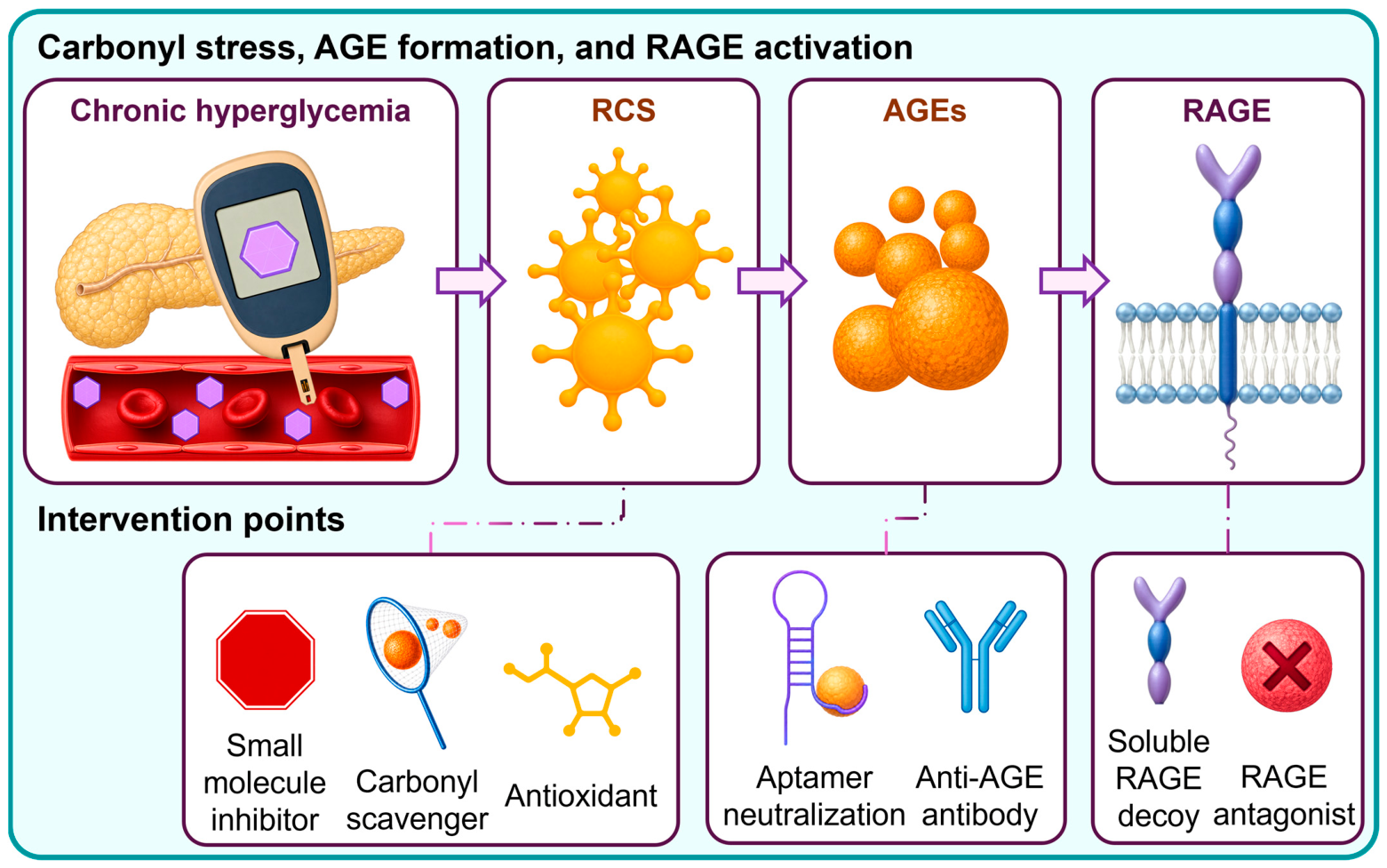
2.1. Dicarbonyl Generation and AGE Formation
2.2. Ligand Accumulation and RAGE Activation in Metabolic Dysfunction
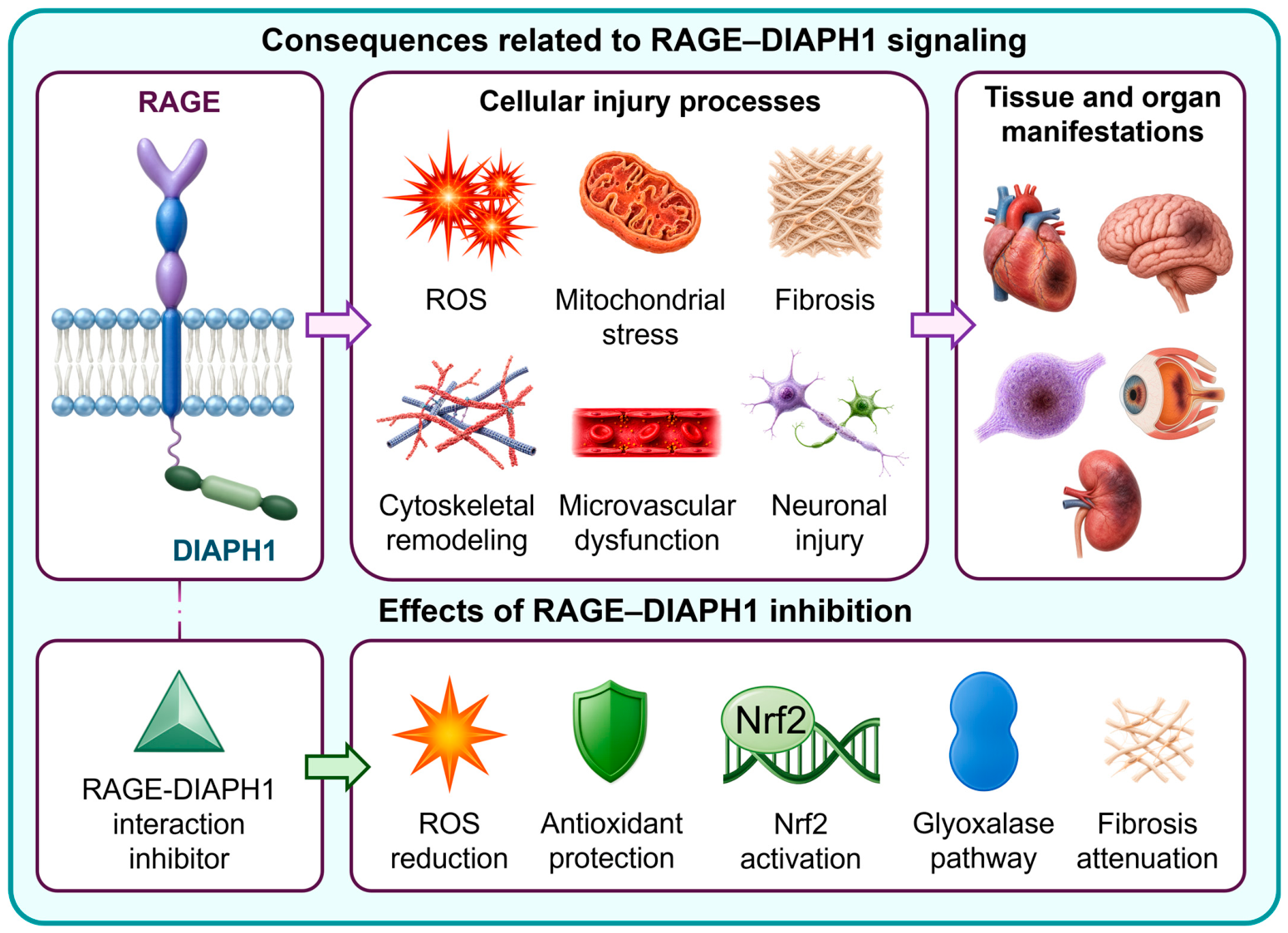
2.3. DIAPH1 as an Intracellular Effector of RAGE Signaling Relevant to Neurocardiac Injury
2.4. Cellular Effects of AGE–RAGE Signaling and Signal Propagation Mediated by DIAPH1
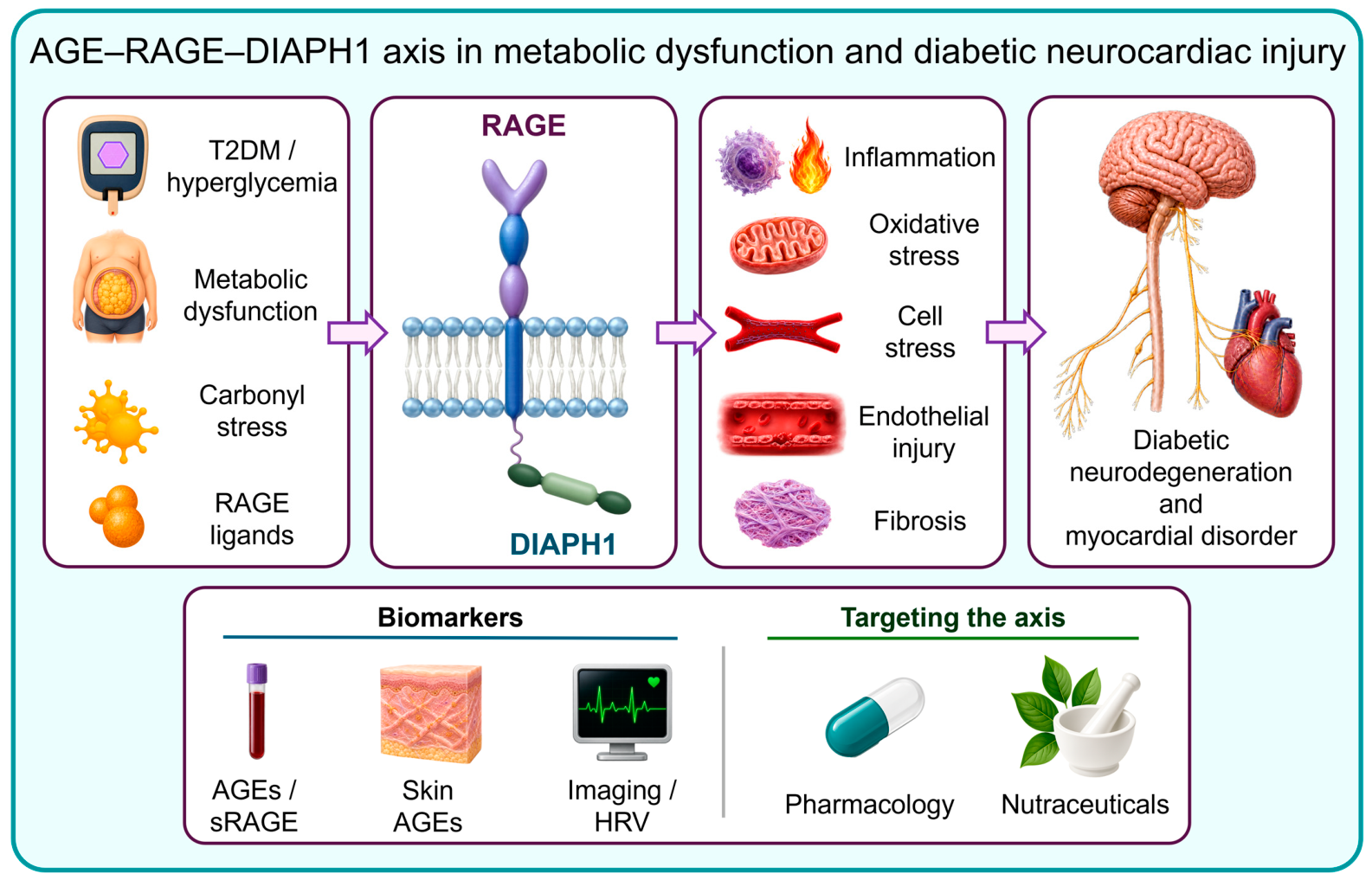
3. Neurocardiac Manifestations and Biomarkers of AGE–RAGE–DIAPH1 Signaling in T2DM
3.1. Myocardial, Microvascular, and Autonomic Consequences in T2DM
3.2. Biomarkers Related to AGE–RAGE–DIAPH1 Signaling in T2DM
4. Pharmacological Modulation of the AGE–RAGE–DIAPH1 Axis
5. Natural Compounds and Nutraceuticals Targeting AGE–RAGE and Associated Pathways
6. Translational Gaps and Future Directions
7. Conclusions
Author Contributions
Funding
Data Availability Statement
Acknowledgments
Conflicts of Interest
Abbreviations
| AGE | advanced glycation end-product |
| AGEs | advanced glycation end-products |
| CAN | cardiovascular autonomic neuropathy |
| CML | Nε-carboxymethyllysine |
| CRP | C-reactive protein |
| DIAPH1 | diaphanous-related formin 1 |
| EGCG | epigallocatechin gallate |
| FMNL1 | formin-like protein 1 |
| GLP-1 | glucagon-like peptide-1 |
| GPX-4 | glutathione peroxidase 4 |
| GSK3β | glycogen synthase kinase 3 beta |
| HMGB1 | high-mobility group box 1 |
| HO-1 | heme oxygenase 1 |
| HRV | heart rate variability |
| hs-cTnT | high-sensitivity cardiac troponin T |
| IL-6 | interleukin-6 |
| MGO | methylglyoxal |
| NF-κB | nuclear factor kappa B |
| NO | nitric oxide |
| Nrf2 | nuclear factor erythroid 2-related factor 2 |
| NT-proBNP | N-terminal pro-B-type natriuretic peptide |
| RAGE | receptor for advanced glycation end-products |
| ROS | reactive oxygen species |
| STZ | streptozotocin |
| T2DM | type 2 diabetes mellitus |
| TGF-β | transforming growth factor beta |
| VEGF | vascular endothelial growth factor |
References
- Rohm, T.V.; Meier, D.T.; Olefsky, J.M.; Donath, M.Y. Inflammation in Obesity, Diabetes, and Related Disorders. Immunity 2022, 55, 31–55. [Google Scholar] [CrossRef] [PubMed]
- Donath, M.Y.; Drucker, D.J. Obesity, Diabetes, and Inflammation: Pathophysiology and Clinical Implications. Immunity 2025, 58, 2373–2382. [Google Scholar] [CrossRef]
- Weisberg, S.P.; McCann, D.; Desai, M.; Rosenbaum, M.; Leibel, R.L.; Ferrante, A.W. Obesity Is Associated with Macrophage Accumulation in Adipose Tissue. J. Clin. Investig. 2003, 112, 1796–1808. [Google Scholar] [CrossRef] [PubMed]
- Hotamisligil, G.S.; Shargill, N.S.; Spiegelman, B.M. Adipose Expression of Tumor Necrosis Factor-α: Direct Role in Obesity-Linked Insulin Resistance. Science 1993, 259, 87–91. [Google Scholar] [CrossRef] [PubMed]
- Zhao, L.; Yuan, J.; Yang, Q.; Ma, J.; Yang, F.; Zou, Y.; Liu, K.; Liu, F. Diabetes and Its Complications: Molecular Mechanisms, Prevention and Treatment. Signal Transduct. Target. Ther. 2026, 11, 22. [Google Scholar] [CrossRef]
- Hori, O.; Brett, J.; Slattery, T.; Cao, R.; Zhang, J.; Chen, J.X.; Nagashima, M.; Lundh, E.R.; Vijay, S.; Nitecki, D.; et al. The Receptor for Advanced Glycation End Products (RAGE) Is a Cellular Binding Site for Amphoterin. J. Biol. Chem. 1995, 270, 25752–25761. [Google Scholar] [CrossRef]
- Hofmann, M.A.; Drury, S.; Fu, C.; Qu, W.; Taguchi, A.; Lu, Y.; Avila, C.; Kambham, N.; Bierhaus, A.; Nawroth, P.; et al. RAGE Mediates a Novel Proinflammatory Axis. Cell 1999, 97, 889–901. [Google Scholar] [CrossRef]
- Wautier, M.-P.; Chappey, O.; Corda, S.; Stern, D.M.; Schmidt, A.M.; Wautier, J.-L. Activation of NADPH Oxidase by AGE Links Oxidant Stress to Altered Gene Expression via RAGE. Am. J. Physiol.-Endocrinol. Metab. 2001, 280, E685–E694. [Google Scholar] [CrossRef]
- Yao, D.; Brownlee, M. Hyperglycemia-Induced Reactive Oxygen Species Increase Expression of the Receptor for Advanced Glycation End Products (RAGE) and RAGE Ligands. Diabetes 2010, 59, 249–255. [Google Scholar] [CrossRef]
- Hudson, B.I.; Kalea, A.Z.; del Mar Arriero, M.; Harja, E.; Boulanger, E.; D’Agati, V.; Schmidt, A.M. Interaction of the RAGE Cytoplasmic Domain with Diaphanous-1 Is Required for Ligand-Stimulated Cellular Migration through Activation of Rac1 and Cdc42. J. Biol. Chem. 2008, 283, 34457–34468. [Google Scholar] [CrossRef]
- Ramasamy, R.; Shekhtman, A.; Schmidt, A.M. RAGE/DIAPH1 Axis and Cardiometabolic Disease: From Nascent Discoveries to Therapeutic Potential. Arterioscler. Thromb. Vasc. Biol. 2024, 44, 1497–1501. [Google Scholar] [CrossRef]
- Manigrasso, M.B.; Rabbani, P.; Egaña-Gorroño, L.; Quadri, N.; Frye, L.; Zhou, B.; Reverdatto, S.; Ramirez, L.S.; Dansereau, S.; Pan, J.; et al. Small-Molecule Antagonism of the Interaction of the RAGE Cytoplasmic Domain with DIAPH1 Reduces Diabetic Complications in Mice. Sci. Transl. Med. 2021, 13, eabf7084. [Google Scholar] [CrossRef]
- Seferović, P.M.; Paulus, W.J.; Rosano, G.; Polovina, M.; Petrie, M.C.; Jhund, P.S.; Tschöpe, C.; Sattar, N.; Piepoli, M.; Papp, Z.; et al. Diabetic Myocardial Disorder. A Clinical Consensus Statement of the Heart Failure Association of the ESC and the ESC Working Group on Myocardial & Pericardial Diseases. Eur. J. Heart Fail. 2024, 26, 1893–1903. [Google Scholar] [CrossRef] [PubMed]
- Gao, X.; Zhang, H.; Schmidt, A.M.; Zhang, C. AGE/RAGE Produces Endothelial Dysfunction in Coronary Arterioles in Type 2 Diabetic Mice. Am. J. Physiol.-Heart Circ. Physiol. 2008, 295, H491–H498. [Google Scholar] [CrossRef] [PubMed]
- Pop-Busui, R.; Evans, G.W.; Gerstein, H.C.; Fonseca, V.; Fleg, J.L.; Hoogwerf, B.J.; Genuth, S.; Grimm, R.H.; Corson, M.A.; Prineas, R. Effects of Cardiac Autonomic Dysfunction on Mortality Risk in the Action to Control Cardiovascular Risk in Diabetes (ACCORD) Trial. Diabetes Care 2010, 33, 1578–1584. [Google Scholar] [CrossRef]
- Spallone, V.; Ziegler, D.; Freeman, R.; Bernardi, L.; Frontoni, S.; Pop-Busui, R.; Stevens, M.; Kempler, P.; Hilsted, J.; Tesfaye, S.; et al. Cardiovascular Autonomic Neuropathy in Diabetes: Clinical Impact, Assessment, Diagnosis, and Management. Diabetes Metab. Res. Rev. 2011, 27, 639–653. [Google Scholar] [CrossRef]
- Pop-Busui, R.; Boulton, A.J.M.; Feldman, E.L.; Bril, V.; Freeman, R.; Malik, R.A.; Sosenko, J.M.; Ziegler, D. Diabetic Neuropathy: A Position Statement by the American Diabetes Association. Diabetes Care 2017, 40, 136–154. [Google Scholar] [CrossRef]
- Eleftheriadou, A.; Spallone, V.; Tahrani, A.A.; Alam, U. Cardiovascular Autonomic Neuropathy in Diabetes: An Update with a Focus on Management. Diabetologia 2024, 67, 2611–2625. [Google Scholar] [CrossRef]
- Wang, N.; Zhang, J. Recent Advances in the Study of Diabetic Cardiac Autonomic Neuropathy. Rev. Cardiovasc. Med. 2026, 27, 45579. [Google Scholar] [CrossRef]
- Otero, M.G.; Henao-Romero, N.; Krysak, T.M.; Vu-Lu, M.T.; Morales, O.O.M.; Momeni, Z.; Yamamoto, Y.; Falzone, T.L.; Campanucci, V.A. Hyperglycemia-Induced Mitochondrial Abnormalities in Autonomic Neurons via the RAGE Axis. Sci. Rep. 2025, 15, 25231. [Google Scholar] [CrossRef] [PubMed]
- Rabbani, N.; Thornalley, P.J. Methylglyoxal, Glyoxalase 1 and the Dicarbonyl Proteome. Amino Acids 2012, 42, 1133–1142. [Google Scholar] [CrossRef]
- Schalkwijk, C.G.; Stehouwer, C.D.A. Methylglyoxal, a Highly Reactive Dicarbonyl Compound, in Diabetes, Its Vascular Complications, and Other Age-Related Diseases. Physiol. Rev. 2020, 100, 407–461. [Google Scholar] [CrossRef]
- Rabbani, N. Methylglyoxal and Glyoxalase 1—A Metabolic Stress Pathway-Linking Hyperglycemia to the Unfolded Protein Response and Vascular Complications of Diabetes. Clin. Sci. 2022, 136, 819–824. [Google Scholar] [CrossRef]
- Yao, D.; Taguchi, T.; Matsumura, T.; Pestell, R.; Edelstein, D.; Giardino, I.; Suske, G.; Rabbani, N.; Thornalley, P.J.; Sarthy, V.P.; et al. High Glucose Increases Angiopoietin-2 Transcription in Microvascular Endothelial Cells through Methylglyoxal Modification of MSin3A. J. Biol. Chem. 2007, 282, 31038–31045. [Google Scholar] [CrossRef]
- Kong, X.; Ma, M.; Huang, K.; Qin, L.; Zhang, H.; Yang, Z.; Li, X.; Su, Q. Increased Plasma Levels of the Methylglyoxal in Patients with Newly Diagnosed Type 2 Diabetes 2. J. Diabetes 2014, 6, 535–540. [Google Scholar] [CrossRef]
- Hanssen, N.M.J.; Westerink, J.; Scheijen, J.L.J.M.; van der Graaf, Y.; Stehouwer, C.D.A.; Schalkwijk, C.G.; Algra, A.; van der Graaf, Y.; Grobbee, R.D.E.; Rutten, G.E.H.M.; et al. Higher Plasma Methylglyoxal Levels Are Associated with Incident Cardiovascular Disease and Mortality in Individuals With Type 2 Diabetes. Diabetes Care 2018, 41, 1689–1695. [Google Scholar] [CrossRef]
- Rabbani, N.; Thornalley, P.J. Advanced Glycation End Products in the Pathogenesis of Chronic Kidney Disease. Kidney Int. 2018, 93, 803–813. [Google Scholar] [CrossRef] [PubMed]
- Schnider, S.L.; Kohn, R.R. Effects of Age and Diabetes Mellitus on the Solubility and Nonenzymatic Glucosylation of Human Skin Collagen. J. Clin. Investig. 1981, 67, 1630–1635. [Google Scholar] [CrossRef] [PubMed]
- Monnier, V.M.; Bautista, O.; Kenny, D.; Sell, D.R.; Fogarty, J.; Dahms, W.; Cleary, P.A.; Lachin, J.; Genuth, S. Skin Collagen Glycation, Glycoxidation, and Crosslinking Are Lower in Subjects with Long-Term Intensive versus Conventional Therapy of Type 1 Diabetes: Relevance of Glycated Collagen Products versus HbA1c as Markers of Diabetic Complications. DCCT Skin Collagen Ancillary Study Group. Diabetes Control and Complications Trial. Diabetes 1999, 48, 870–880. [Google Scholar] [CrossRef]
- Duran-Jimenez, B.; Dobler, D.; Moffatt, S.; Rabbani, N.; Streuli, C.H.; Thornalley, P.J.; Tomlinson, D.R.; Gardiner, N.J. Advanced Glycation End Products in Extracellular Matrix Proteins Contribute to the Failure of Sensory Nerve Regeneration in Diabetes. Diabetes 2009, 58, 2893–2903. [Google Scholar] [CrossRef] [PubMed]
- Chen, Y.; Qiao, F.; Zhao, Y.; Wang, Y.; Liu, G. HMGB1 Is Activated in Type 2 Diabetes Mellitus Patients and in Mesangial Cells in Response to High Glucose. Int. J. Clin. Exp. Pathol. 2015, 8, 6683–6691. [Google Scholar]
- Zhang, J.; Zhang, L.; Zhang, S.; Yu, Q.; Xiong, F.; Huang, K.; Wang, C.-Y.; Yang, P. HMGB1, an Innate Alarmin, Plays a Critical Role in Chronic Inflammation of Adipose Tissue in Obesity. Mol. Cell. Endocrinol. 2017, 454, 103–111. [Google Scholar] [CrossRef] [PubMed]
- Catalán, V.; Gómez-Ambrosi, J.; Rodríguez, A.; Ramírez, B.; Rotellar, F.; Valentí, V.; Silva, C.; Gil, M.J.; Fernández-Real, J.M.; Salvador, J.; et al. Increased Levels of Calprotectin in Obesity Are Related to Macrophage Content: Impact on Inflammation and Effect of Weight Loss. Mol. Med. 2011, 17, 1157–1167. [Google Scholar] [CrossRef] [PubMed]
- Yamaoka, M.; Maeda, N.; Nakamura, S.; Mori, T.; Inoue, K.; Matsuda, K.; Sekimoto, R.; Kashine, S.; Nakagawa, Y.; Tsushima, Y.; et al. Gene Expression Levels of S100 Protein Family in Blood Cells Are Associated with Insulin Resistance and Inflammation (Peripheral Blood S100 MRNAs and Metabolic Syndrome). Biochem. Biophys. Res. Commun. 2013, 433, 450–455. [Google Scholar] [CrossRef]
- Feng, Z.; Du, Z.; Shu, X.; Zhu, L.; Wu, J.; Gao, Q.; Wang, L.; Chen, N.; Li, Y.; Luo, M.; et al. Role of RAGE in Obesity-Induced Adipose Tissue Inflammation and Insulin Resistance. Cell Death Discov. 2021, 7, 305. [Google Scholar] [CrossRef]
- Kislinger, T.; Fu, C.; Huber, B.; Qu, W.; Taguchi, A.; Du Yan, S.; Hofmann, M.; Yan, S.F.; Pischetsrieder, M.; Stern, D.; et al. N ε-(Carboxymethyl)Lysine Adducts of Proteins Are Ligands for Receptor for Advanced Glycation End Products That Activate Cell Signaling Pathways and Modulate Gene Expression. J. Biol. Chem. 1999, 274, 31740–31749. [Google Scholar] [CrossRef]
- Basta, G.; Lazzerini, G.; Massaro, M.; Simoncini, T.; Tanganelli, P.; Fu, C.; Kislinger, T.; Stern, D.M.; Schmidt, A.M.; De Caterina, R. Advanced Glycation End Products Activate Endothelium Through Signal-Transduction Receptor RAGE. Circulation 2002, 105, 816–822. [Google Scholar] [CrossRef]
- Bierhaus, A.; Schiekofer, S.; Schwaninger, M.; Andrassy, M.; Humpert, P.M.; Chen, J.; Hong, M.; Luther, T.; Henle, T.; Klöting, I.; et al. Diabetes-Associated Sustained Activation of the Transcription Factor Nuclear Factor-ΚB. Diabetes 2001, 50, 2792–2808. [Google Scholar] [CrossRef]
- Ding, Y.; Kantarci, A.; Hasturk, H.; Trackman, P.C.; Malabanan, A.; Van Dyke, T.E. Activation of RAGE Induces Elevated O2− Generation by Mononuclear Phagocytes in Diabetes. J. Leukoc. Biol. 2007, 81, 520–527. [Google Scholar] [CrossRef] [PubMed]
- Vincent, A.M.; Perrone, L.; Sullivan, K.A.; Backus, C.; Sastry, A.M.; Lastoskie, C.; Feldman, E.L. Receptor for Advanced Glycation End Products Activation Injures Primary Sensory Neurons via Oxidative Stress. Endocrinology 2007, 148, 548–558. [Google Scholar] [CrossRef]
- Lam, D.; Momeni, Z.; Theaker, M.; Jagadeeshan, S.; Yamamoto, Y.; Ianowski, J.P.; Campanucci, V.A. RAGE-Dependent Potentiation of TRPV1 Currents in Sensory Neurons Exposed to High Glucose. PLoS ONE 2018, 13, e0193312. [Google Scholar] [CrossRef] [PubMed]
- Toth, C.; Schmidt, A.M.; Tuor, U.I.; Francis, G.; Foniok, T.; Brussee, V.; Kaur, J.; Yan, S.F.; Martinez, J.A.; Barber, P.A.; et al. Diabetes, Leukoencephalopathy and Rage. Neurobiol. Dis. 2006, 23, 445–461. [Google Scholar] [CrossRef]
- Bucciarelli, L.G.; Ananthakrishnan, R.; Hwang, Y.C.; Kaneko, M.; Song, F.; Sell, D.R.; Strauch, C.; Monnier, V.M.; Yan, S.F.; Schmidt, A.M.; et al. RAGE and Modulation of Ischemic Injury in the Diabetic Myocardium. Diabetes 2008, 57, 1941–1951. [Google Scholar] [CrossRef]
- Yu, L.; Zhao, Y.; Xu, S.; Ding, F.; Jin, C.; Fu, G.; Weng, S. Advanced Glycation End Product (AGE)-AGE Receptor (RAGE) System Upregulated Connexin43 Expression in Rat Cardiomyocytes via PKC and Erk MAPK Pathways. Int. J. Mol. Sci. 2013, 14, 2242–2257. [Google Scholar] [CrossRef]
- Burr, S.D.; Harmon, M.B.; Stewart, J.A., Jr. The Impact of Diabetic Conditions and AGE/RAGE Signaling on Cardiac Fibroblast Migration. Front. Cell Dev. Biol. 2020, 8, 519096. [Google Scholar] [CrossRef]
- Ramasamy, R.; Shekhtman, A.; Schmidt, A.M. The RAGE/DIAPH1 Signaling Axis & Implications for the Pathogenesis of Diabetic Complications. Int. J. Mol. Sci. 2022, 23, 4579. [Google Scholar] [CrossRef] [PubMed]
- Watanabe, N.; Madaule, P.; Reid, T.; Ishizaki, T.; Watanabe, G.; Kakizuka, A.; Saito, Y.; Nakao, K.; Jockusch, B.M.; Narumiya, S. P140mDia, a Mammalian Homolog of Drosophila Diaphanous, Is a Target Protein for Rho Small GTPase and Is a Ligand for Profilin. EMBO J. 1997, 16, 3044–3056. [Google Scholar] [CrossRef] [PubMed]
- Krebs, A.; Rothkegel, M.; Klar, M.; Jockusch, B.M. Characterization of Functional Domains of MDia1, a Link between the Small GTPase Rho and the Actin Cytoskeleton. J. Cell Sci. 2001, 114, 3663–3672. [Google Scholar] [CrossRef]
- Li, F.; Higgs, H.N. The Mouse Formin MDia1 Is a Potent Actin Nucleation Factor Regulated by Autoinhibition. Curr. Biol. 2003, 13, 1335–1340. [Google Scholar] [CrossRef]
- Lammers, M.; Rose, R.; Scrima, A.; Wittinghofer, A. The Regulation of MDia1 by Autoinhibition and Its Release by Rho•GTP. EMBO J. 2005, 24, 4176–4187. [Google Scholar] [CrossRef]
- Otomo, T.; Otomo, C.; Tomchick, D.R.; Machius, M.; Rosen, M.K. Structural Basis of Rho GTPase-Mediated Activation of the Formin MDia1. Mol. Cell 2005, 18, 273–281. [Google Scholar] [CrossRef] [PubMed]
- Tominaga, T.; Sahai, E.; Chardin, P.; McCormick, F.; Courtneidge, S.A.; Alberts, A.S. Diaphanous-Related Formins Bridge Rho GTPase and Src Tyrosine Kinase Signaling. Mol. Cell 2000, 5, 13–25. [Google Scholar] [CrossRef]
- Copeland, J.W.; Treisman, R. The Diaphanous-Related Formin MDia1 Controls Serum Response Factor Activity through Its Effects on Actin Polymerization. Mol. Biol. Cell 2002, 13, 4088–4099. [Google Scholar] [CrossRef]
- Palazzo, A.F.; Cook, T.A.; Alberts, A.S.; Gundersen, G.G. MDia Mediates Rho-Regulated Formation and Orientation of Stable Microtubules. Nat. Cell Biol. 2001, 3, 723–729. [Google Scholar] [CrossRef]
- Wen, Y.; Eng, C.H.; Schmoranzer, J.; Cabrera-Poch, N.; Morris, E.J.S.; Chen, M.; Wallar, B.J.; Alberts, A.S.; Gundersen, G.G. EB1 and APC Bind to MDia to Stabilize Microtubules Downstream of Rho and Promote Cell Migration. Nat. Cell Biol. 2004, 6, 820–830. [Google Scholar] [CrossRef]
- Yamana, N.; Arakawa, Y.; Nishino, T.; Kurokawa, K.; Tanji, M.; Itoh, R.E.; Monypenny, J.; Ishizaki, T.; Bito, H.; Nozaki, K.; et al. The Rho-MDia1 Pathway Regulates Cell Polarity and Focal Adhesion Turnover in Migrating Cells through Mobilizing Apc and c-Src. Mol. Cell. Biol. 2006, 26, 6844–6858. [Google Scholar] [CrossRef]
- Zilberman, Y.; Alieva, N.O.; Miserey-Lenkei, S.; Lichtenstein, A.; Kam, Z.; Sabanay, H.; Bershadsky, A. Involvement of the Rho–MDia1 Pathway in the Regulation of Golgi Complex Architecture and Dynamics. Mol. Biol. Cell 2011, 22, 2900–2911. [Google Scholar] [CrossRef]
- Lewkowicz, E.; Herit, F.; Le Clainche, C.; Bourdoncle, P.; Perez, F.; Niedergang, F. The Microtubule-Binding Protein CLIP-170 Coordinates MDia1 and Actin Reorganization during CR3-Mediated Phagocytosis. J. Cell Biol. 2008, 183, 1287–1298. [Google Scholar] [CrossRef]
- Shi, Y.; Zhang, J.; Mullin, M.; Dong, B.; Alberts, A.S.; Siminovitch, K.A. The MDial Formin Is Required for Neutrophil Polarization, Migration, and Activation of the LARG/RhoA/ROCK Signaling Axis during Chemotaxis. J. Immunol. 2009, 182, 3837–3845. [Google Scholar] [CrossRef] [PubMed]
- Tanizaki, H.; Egawa, G.; Inaba, K.; Honda, T.; Nakajima, S.; Moniaga, C.S.; Otsuka, A.; Ishizaki, T.; Tomura, M.; Watanabe, T.; et al. Rho-MDia1 Pathway Is Required for Adhesion, Migration, and T-Cell Stimulation in Dendritic Cells. Blood 2010, 116, 5875–5884. [Google Scholar] [CrossRef] [PubMed]
- Dong, B.; Zhang, S.S.; Gao, W.; Su, H.; Chen, J.; Jin, F.; Bhargava, A.; Chen, X.; Jorgensen, L.; Alberts, A.S.; et al. Mammalian Diaphanous-Related Formin 1 Regulates GSK3β-Dependent Microtubule Dynamics Required for T Cell Migratory Polarization. PLoS ONE 2013, 8, e80500. [Google Scholar] [CrossRef][Green Version]
- Sigler, A.L.; Thompson, S.B.; Ellwood-Digel, L.; Kandasamy, A.; Michaels, M.J.; Thumkeo, D.; Narumiya, S.; Del Alamo, J.C.; Jacobelli, J. FMNL1 and MDia1 Promote Efficient T Cell Migration through Complex Environments via Distinct Mechanisms. Front. Immunol. 2024, 15, 1467415. [Google Scholar] [CrossRef]
- Mei, Y.; Feng, G.; Rahimi, N.; Zhao, B.; Zhang, J.; Cao, L.; Yang, J.; Gao, J.; Chen, Y.; Sumagin, R.; et al. Loss of MDia1 Causes Neutropenia via Attenuated CD11b Endocytosis and Increased Neutrophil Adhesion to the Endothelium. Blood Adv. 2017, 1, 1650–1656. [Google Scholar] [CrossRef] [PubMed]
- Manigrasso, M.B.; Pan, J.; Rai, V.; Zhang, J.; Reverdatto, S.; Quadri, N.; DeVita, R.J.; Ramasamy, R.; Shekhtman, A.; Schmidt, A.M. Small Molecule Inhibition of Ligand-Stimulated RAGE-DIAPH1 Signal Transduction. Sci. Rep. 2016, 6, 22450. [Google Scholar] [CrossRef] [PubMed]
- Zhu, Q.; Smith, E.A. Diaphanous-1 Affects the Nanoscale Clustering and Lateral Diffusion of Receptor for Advanced Glycation Endproducts (RAGE). Biochim. Biophys. Acta (BBA)-Biomembr. 2019, 1861, 43–49. [Google Scholar] [CrossRef]
- Theophall, G.G.; Manigrasso, M.B.; Nazarian, P.; Premo, A.; Reverdatto, S.; Yepuri, G.; Burz, D.S.; Vanegas, S.M.; Mangar, K.; Zhao, Y.; et al. RAGE-Mediated Activation of the Formin DIAPH1 and Human Macrophage Inflammation Are Inhibited by a Small Molecule Antagonist. Cell Chem. Biol. 2025, 32, 1221–1234.e8. [Google Scholar] [CrossRef]
- Touré, F.; Fritz, G.; Li, Q.; Rai, V.; Daffu, G.; Zou, Y.S.; Rosario, R.; Ramasamy, R.; Alberts, A.S.; Yan, S.F.; et al. Formin MDia1 Mediates Vascular Remodeling via Integration of Oxidative and Signal Transduction Pathways. Circ. Res. 2012, 110, 1279–1293. [Google Scholar] [CrossRef]
- O’Shea, K.M.; Ananthakrishnan, R.; Li, Q.; Quadri, N.; Thiagarajan, D.; Sreejit, G.; Wang, L.; Zirpoli, H.; Aranda, J.F.; Alberts, A.S.; et al. The Formin, DIAPH1, Is a Key Modulator of Myocardial Ischemia/Reperfusion Injury. eBioMedicine 2017, 26, 165–174. [Google Scholar] [CrossRef] [PubMed]
- Yepuri, G.; Ramirez, L.M.; Theophall, G.G.; Reverdatto, S.V.; Quadri, N.; Hasan, S.N.; Bu, L.; Thiagarajan, D.; Wilson, R.; Díez, R.L.; et al. DIAPH1-MFN2 Interaction Regulates Mitochondria-SR/ER Contact and Modulates Ischemic/Hypoxic Stress. Nat. Commun. 2023, 14, 6900. [Google Scholar] [CrossRef]
- Thallas-Bonke, V.; Thorpe, S.R.; Coughlan, M.T.; Fukami, K.; Yap, F.Y.T.; Sourris, K.C.; Penfold, S.A.; Bach, L.A.; Cooper, M.E.; Forbes, J.M. Inhibition of NADPH Oxidase Prevents Advanced Glycation End Product–Mediated Damage in Diabetic Nephropathy Through a Protein Kinase C-α–Dependent Pathway. Diabetes 2008, 57, 460–469. [Google Scholar] [CrossRef]
- Bucala, R.; Tracey, K.J.; Cerami, A. Advanced Glycosylation Products Quench Nitric Oxide and Mediate Defective Endothelium-Dependent Vasodilatation in Experimental Diabetes. J. Clin. Investig. 1991, 87, 432–438. [Google Scholar] [CrossRef]
- Ren, X.; Ren, L.; Wei, Q.; Shao, H.; Chen, L.; Liu, N. Advanced Glycation End-Products Decreases Expression of Endothelial Nitric Oxide Synthase through Oxidative Stress in Human Coronary Artery Endothelial Cells. Cardiovasc. Diabetol. 2017, 16, 52. [Google Scholar] [CrossRef] [PubMed]
- Bierhaus, A.; Illmer, T.; Kasper, M.; Luther, T.; Quehenberger, P.; Tritschler, H.; Wahl, P.; Ziegler, R.; Müller, M.; Nawroth, P.P. Advanced Glycation End Product (AGE)–Mediated Induction of Tissue Factor in Cultured Endothelial Cells Is Dependent on RAGE. Circulation 1997, 96, 2262–2271. [Google Scholar] [CrossRef]
- Matsui, T.; Nakamura, N.; Ojima, A.; Nishino, Y.; Yamagishi, S.-I. Sulforaphane Reduces Advanced Glycation End Products (AGEs)-Induced Inflammation in Endothelial Cells and Rat Aorta. Nutr. Metab. Cardiovasc. Dis. 2016, 26, 797–807. [Google Scholar] [CrossRef]
- Chen, J.; Jing, J.; Yu, S.; Song, M.; Tan, H.; Cui, B.; Huang, L. Advanced Glycation Endproducts Induce Apoptosis of Endothelial Progenitor Cells by Activating Receptor RAGE and NADPH Oxidase/JNK Signaling Axis. Am. J. Transl. Res. 2016, 8, 2169–2178. [Google Scholar] [PubMed]
- Yamagishi, S.; Nakamura, K.; Matsui, T.; Inagaki, Y.; Takenaka, K.; Jinnouchi, Y.; Yoshida, Y.; Matsuura, T.; Narama, I.; Motomiya, Y.; et al. Pigment Epithelium-Derived Factor Inhibits Advanced Glycation End Product-Induced Retinal Vascular Hyperpermeability by Blocking Reactive Oxygen Species-Mediated Vascular Endothelial Growth Factor Expression. J. Biol. Chem. 2006, 281, 20213–20220. [Google Scholar] [CrossRef]
- Hirose, A.; Tanikawa, T.; Mori, H.; Okada, Y.; Tanaka, Y. Advanced Glycation End Products Increase Endothelial Permeability through the RAGE/Rho Signaling Pathway. FEBS Lett. 2010, 584, 61–66. [Google Scholar] [CrossRef]
- Weng, J.; Chen, Z.; Li, J.; He, Q.; Chen, D.; Yang, L.; Su, H.; Huang, J.; Yu, S.; Huang, Q.; et al. Advanced Glycation End Products Induce Endothelial Hyperpermeability via Β-catenin Phosphorylation and Subsequent Up-regulation of ADAM10. J. Cell. Mol. Med. 2021, 25, 7746–7759. [Google Scholar] [CrossRef]
- Wang, J.; Liu, H.; Chen, B.; Li, Q.; Huang, X.; Wang, L.; Guo, X.; Huang, Q. RhoA/ROCK-Dependent Moesin Phosphorylation Regulates AGE-Induced Endothelial Cellular Response. Cardiovasc. Diabetol. 2012, 11, 7. [Google Scholar] [CrossRef] [PubMed]
- Li, B.; Huang, X.; Wei, J.; Huang, H.; Liu, Z.; Hu, J.; Zhang, Q.; Chen, Y.; Cui, Y.; Chen, Z.; et al. Role of Moesin and Its Phosphorylation in VE-Cadherin Expression and Distribution in Endothelial Adherens Junctions. Cell. Signal. 2022, 100, 110466. [Google Scholar] [CrossRef]
- Zhou, X.; Weng, J.; Xu, J.; Xu, Q.; Wang, W.; Zhang, W.; Huang, Q.; Guo, X. Mdia1 Is Crucial for Advanced Glycation End Product-Induced Endothelial Hyperpermeability. Cell. Physiol. Biochem. 2018, 45, 1717–1730. [Google Scholar] [CrossRef]
- Niiya, Y.; Abumiya, T.; Yamagishi, S.; Takino, J.; Takeuchi, M. Advanced Glycation End Products Increase Permeability of Brain Microvascular Endothelial Cells through Reactive Oxygen Species–Induced Vascular Endothelial Growth Factor Expression. J. Stroke Cerebrovasc. Dis. 2012, 21, 293–298. [Google Scholar] [CrossRef]
- Dobi, A.; Rosanaly, S.; Devin, A.; Baret, P.; Meilhac, O.; Harry, G.J.; d’Hellencourt, C.L.; Rondeau, P. Advanced Glycation End-Products Disrupt Brain Microvascular Endothelial Cell Barrier: The Role of Mitochondria and Oxidative Stress. Microvasc. Res. 2021, 133, 104098. [Google Scholar] [CrossRef]
- Shimizu, F.; Sano, Y.; Haruki, H.; Kanda, T. Advanced Glycation End-Products Induce Basement Membrane Hypertrophy in Endoneurial Microvessels and Disrupt the Blood–Nerve Barrier by Stimulating the Release of TGF-β and Vascular Endothelial Growth Factor (VEGF) by Pericytes. Diabetologia 2011, 54, 1517–1526. [Google Scholar] [CrossRef]
- Chung, A.C.K.; Zhang, H.; Kong, Y.-Z.; Tan, J.-J.; Huang, X.R.; Kopp, J.B.; Lan, H.Y. Advanced Glycation End-Products Induce Tubular CTGF via TGF-β–Independent Smad3 Signaling. J. Am. Soc. Nephrol. 2010, 21, 249–260. [Google Scholar] [CrossRef]
- Zhou, G.; Li, C.; Cai, L. Advanced Glycation End-Products Induce Connective Tissue Growth Factor-Mediated Renal Fibrosis Predominantly through Transforming Growth Factor β-Independent Pathway. Am. J. Pathol. 2004, 165, 2033–2043. [Google Scholar] [CrossRef]
- Zhao, L.-M.; Zhang, W.; Wang, L.-P.; Li, G.-R.; Deng, X.-L. Advanced Glycation End Products Promote Proliferation of Cardiac Fibroblasts by Upregulation of KCa3.1 Channels. Pflug. Arch. 2012, 464, 613–621. [Google Scholar] [CrossRef]
- Liang, B.; Zhou, Z.; Yang, Z.; Liu, J.; Zhang, L.; He, J.; Li, H.; Huang, Y.; Yang, Q.; Xian, S.; et al. AGEs–RAGE Axis Mediates Myocardial Fibrosis via Activation of Cardiac Fibroblasts Induced by Autophagy in Heart Failure. Exp. Physiol. 2022, 107, 879–891. [Google Scholar] [CrossRef]
- Zhang, L.; He, J.; Wang, J.; Liu, J.; Chen, Z.; Deng, B.; Wei, L.; Wu, H.; Liang, B.; Li, H.; et al. Knockout RAGE Alleviates Cardiac Fibrosis through Repressing Endothelial-to-Mesenchymal Transition (EndMT) Mediated by Autophagy. Cell Death Dis. 2021, 12, 470. [Google Scholar] [CrossRef] [PubMed]
- Nghiem, T.P.; Tran, H.M.; Nguyen, D.N.Q.; Dao, L.T.; Tran, C.C.; Vo, T.M. Subclinical Myocardial Dysfunction in Type 2 Diabetes Mellitus: Insights from Left Ventricular Diastolic Function and Global Longitudinal Strain Assessment. Med. Sci. 2025, 13, 237. [Google Scholar] [CrossRef] [PubMed]
- Bojer, A.S.; Sørensen, M.H.; Madsen, S.H.; Broadbent, D.A.; Plein, S.; Gæde, P.; Madsen, P.L. The Independent Association of Myocardial Extracellular Volume and Myocardial Blood Flow with Cardiac Diastolic Function in Patients with Type 2 Diabetes: A Prospective Cross-Sectional Cohort Study. Cardiovasc. Diabetol. 2023, 22, 78. [Google Scholar] [CrossRef]
- Kawata, T.; Daimon, M.; Miyazaki, S.; Ichikawa, R.; Maruyama, M.; Chiang, S.-J.; Ito, C.; Sato, F.; Watada, H.; Daida, H. Coronary Microvascular Function Is Independently Associated with Left Ventricular Filling Pressure in Patients with Type 2 Diabetes Mellitus. Cardiovasc. Diabetol. 2015, 14, 98. [Google Scholar] [CrossRef]
- Niewiara, Ł.; Kleczyński, P.; Guzik, B.; Szolc, P.; Baran, J.; Podolec, J.; Diachyshyn, M.; Żmudka, K.; Legutko, J. Impaired Coronary Flow Reserve in Patients with Poor Type 2 Diabetes Control: Preliminary Results from Prospective Microvascular Dysfunction Registry. Cardiol. J. 2024, 31, 185–192. [Google Scholar] [CrossRef]
- Hou, X.; Hu, Z.; Xu, H.; Xu, J.; Zhang, S.; Zhong, Y.; He, X.; Wang, N. Advanced Glycation Endproducts Trigger Autophagy in Cadiomyocyte Via RAGE/PI3K/AKT/MTOR Pathway. Cardiovasc. Diabetol. 2014, 13, 78. [Google Scholar] [CrossRef]
- Hegab, Z.; Mohamed, T.M.A.; Stafford, N.; Mamas, M.; Cartwright, E.J.; Oceandy, D. Advanced Glycation End Products Reduce the Calcium Transient in Cardiomyocytes by Increasing Production of Reactive Oxygen Species and Nitric Oxide. FEBS Open Bio 2017, 7, 1672–1685. [Google Scholar] [CrossRef]
- Bidasee, K.R.; Zhang, Y.; Shao, C.H.; Wang, M.; Patel, K.P.; Dincer, U.D.; Besch, H.R. Diabetes Increases Formation of Advanced Glycation End Products on Sarco(Endo)Plasmic Reticulum Ca2+-ATPase. Diabetes 2004, 53, 463–473. [Google Scholar] [CrossRef] [PubMed]
- Yang, Y.-C.; Tsai, C.-Y.; Chen, C.-L.; Kuo, C.-H.; Hou, C.-W.; Cheng, S.-Y.; Aneja, R.; Huang, C.-Y.; Kuo, W.-W. Pkcδ Activation Is Involved in ROS-Mediated Mitochondrial Dysfunction and Apoptosis in Cardiomyocytes Exposed to Advanced Glycation End Products (Ages). Aging Dis. 2018, 9, 647. [Google Scholar] [CrossRef]
- Lin, K.; Ng, S.; Paul, C.R.; Chen, H.; Zeng, R.; Liu, J.; Padma, V.V.; Huang, C.; Kuo, W. MicroRNA-210 Repression Facilitates Advanced Glycation End-product (AGE)-induced Cardiac Mitochondrial Dysfunction and Apoptosis via JNK Activation. J. Cell. Biochem. 2021, 122, 1873–1885. [Google Scholar] [CrossRef]
- Papadaki, M.; Kampaengsri, T.; Barrick, S.K.; Campbell, S.G.; von Lewinski, D.; Rainer, P.P.; Harris, S.P.; Greenberg, M.J.; Kirk, J.A. Myofilament Glycation in Diabetes Reduces Contractility by Inhibiting Tropomyosin Movement, Is Rescued by CMyBPC Domains. J. Mol. Cell. Cardiol. 2022, 162, 1–9. [Google Scholar] [CrossRef]
- Bhuyan, A.; Baro, A.; Sarma, D.; Choudhury, B. A Study of Cardiac Autonomic Neuropathy in Patients with Type 2 Diabetes Mellitus: A Northeast India Experience. Indian J. Endocrinol. Metab. 2019, 23, 246. [Google Scholar] [CrossRef]
- Sacre, J.W.; Franjic, B.; Jellis, C.L.; Jenkins, C.; Coombes, J.S.; Marwick, T.H. Association of Cardiac Autonomic Neuropathy with Subclinical Myocardial Dysfunction in Type 2 Diabetes. JACC Cardiovasc. Imaging 2010, 3, 1207–1215. [Google Scholar] [CrossRef] [PubMed]
- Dinh, W.; Füth, R.; Lankisch, M.; Bansemir, L.; Nickl, W.; Scheffold, T.; Bufe, A.; Krahn, T.; Ziegler, D. Cardiovascular Autonomic Neuropathy Contributes to Left Ventricular Diastolic Dysfunction in Subjects with Type 2 Diabetes and Impaired Glucose Tolerance Undergoing Coronary Angiography. Diabet. Med. 2011, 28, 311–318. [Google Scholar] [CrossRef]
- Park, S.-Y.; Kim, Y.-A.; Hong, Y.-H.; Moon, M.-K.; Koo, B.-K.; Kim, T.W. Up-Regulation of the Receptor for Advanced Glycation End Products in the Skin Biopsy Specimens of Patients with Severe Diabetic Neuropathy. J. Clin. Neurol. 2014, 10, 334. [Google Scholar] [CrossRef] [PubMed]
- Chandna, A.R.; Nair, M.; Chang, C.; Pennington, P.R.; Yamamoto, Y.; Mousseau, D.D.; Campanucci, V.A. RAGE Mediates the Inactivation of NAChRs in Sympathetic Neurons under High Glucose Conditions. Eur. J. Neurosci. 2015, 41, 341–351. [Google Scholar] [CrossRef]
- Rao, W.; Hussain, M.; Naseem, N.; Siddiqui, W.A. The Intricacies of Advanced Glycation End Products (AGEs) in Diabetic Neuropathy. 3 Biotech 2026, 16, 24. [Google Scholar] [CrossRef]
- Chapouly, C.; Yao, Q.; Vandierdonck, S.; Larrieu-Lahargue, F.; Mariani, J.N.; Gadeau, A.-P.; Renault, M.-A. Impaired Hedgehog Signalling-Induced Endothelial Dysfunction Is Sufficient to Induce Neuropathy: Implication in Diabetes. Cardiovasc. Res. 2016, 109, 217–227. [Google Scholar] [CrossRef] [PubMed]
- Sabbatinelli, J.; Castiglione, S.; Macrì, F.; Giuliani, A.; Ramini, D.; Vinci, M.C.; Tortato, E.; Bonfigli, A.R.; Olivieri, F.; Raucci, A. Circulating Levels of AGEs and Soluble RAGE Isoforms Are Associated with All-Cause Mortality and Development of Cardiovascular Complications in Type 2 Diabetes: A Retrospective Cohort Study. Cardiovasc. Diabetol. 2022, 21, 95. [Google Scholar] [CrossRef]
- Villegas-Rodríguez, M.E.; Uribarri, J.; Solorio-Meza, S.E.; Fajardo-Araujo, M.E.; Cai, W.; Torres-Graciano, S.; Rangel-Salazar, R.; Wrobel, K.; Garay-Sevilla, M.E. The AGE-RAGE Axis and Its Relationship to Markers of Cardiovascular Disease in Newly Diagnosed Diabetic Patients. PLoS ONE 2016, 11, e0159175. [Google Scholar] [CrossRef]
- Koshino, A.; Schechter, M.; Sen, T.; Vart, P.; Neuen, B.L.; Neal, B.; Arnott, C.; Perkovic, V.; Ridker, P.M.; Tuttle, K.R.; et al. Interleukin-6 and Cardiovascular and Kidney Outcomes in Patients with Type 2 Diabetes: New Insights From CANVAS. Diabetes Care 2022, 45, 2644–2652. [Google Scholar] [CrossRef]
- Remmelzwaal, S.; Yeung, S.M.H.; Blom, M.T.; de Borst, M.H.; Elders, P.J.M.; Beulens, J.W.J. Increased Interleukin-6 Is Associated with Higher Risk of Heart Failure in People with Type 2 Diabetes. ESC Heart Fail. 2024, 11, 2442–2446. [Google Scholar] [CrossRef]
- Cardoso, C.R.L.; Leite, N.C.; Salles, G.F. Prognostic Importance of C-Reactive Protein in High Cardiovascular Risk Patients with Type 2 Diabetes Mellitus: The Rio de Janeiro Type 2 Diabetes Cohort Study. J. Am. Heart Assoc. 2016, 5, e004554. [Google Scholar] [CrossRef] [PubMed]
- Gedebjerg, A.; Bjerre, M.; Kjaergaard, A.D.; Nielsen, J.S.; Rungby, J.; Brandslund, I.; Maeng, M.; Beck-Nielsen, H.; Vaag, A.; Sørensen, H.T.; et al. CRP, C-Peptide, and Risk of First-Time Cardiovascular Events and Mortality in Early Type 2 Diabetes: A Danish Cohort Study. Diabetes Care 2023, 46, 1037–1045. [Google Scholar] [CrossRef] [PubMed]
- Ziegler, D.; Buchholz, S.; Sohr, C.; Nourooz-Zadeh, J.; Roden, M. Oxidative Stress Predicts Progression of Peripheral and Cardiac Autonomic Nerve Dysfunction over 6 Years in Diabetic Patients. Acta Diabetol. 2015, 52, 65–72. [Google Scholar] [CrossRef]
- Cournot, M.; Burillo, E.; Saulnier, P.; Planesse, C.; Gand, E.; Rehman, M.; Ragot, S.; Rondeau, P.; Catan, A.; Gonthier, M.; et al. Circulating Concentrations of Redox Biomarkers Do Not Improve the Prediction of Adverse Cardiovascular Events in Patients With Type 2 Diabetes Mellitus. J. Am. Heart Assoc. 2018, 7, e007397. [Google Scholar] [CrossRef]
- Malachias, M.V.B.; Jhund, P.S.; Claggett, B.L.; Wijkman, M.O.; Bentley-Lewis, R.; Chaturvedi, N.; Desai, A.S.; Haffner, S.M.; Parving, H.; Prescott, M.F.; et al. NT-proBNP by Itself Predicts Death and Cardiovascular Events in High-Risk Patients with Type 2 Diabetes Mellitus. J. Am. Heart Assoc. 2020, 9, e017462. [Google Scholar] [CrossRef]
- Ohkuma, T.; Jun, M.; Woodward, M.; Zoungas, S.; Cooper, M.E.; Grobbee, D.E.; Hamet, P.; Mancia, G.; Williams, B.; Welsh, P.; et al. Cardiac Stress and Inflammatory Markers as Predictors of Heart Failure in Patients with Type 2 Diabetes: The ADVANCE Trial. Diabetes Care 2017, 40, 1203–1209. [Google Scholar] [CrossRef]
- Bluro, I.M.; Nardi, M.A.; De Miguel, R.; Fernández, M.; Rolando, J.Y.; Abraham Fóscolo, M.M.; Denaday, L.R.; Candenas, N.; Cagide, A.M.; Pizarro, R.; et al. Distribution and Prognostic Value of High-Sensitive Troponin T Measurement in Patients with Type 2 Diabetes without Cardiovascular Disease. Endocrinol. Diabetes Nutr. 2021, 68, 321–328. [Google Scholar] [CrossRef]
- Zelniker, T.A.; Wiviott, S.D.; Mosenzon, O.; Goodrich, E.L.; Jarolim, P.; Cahn, A.; Bhatt, D.L.; Leiter, L.A.; McGuire, D.K.; Wilding, J.; et al. Association of Cardiac Biomarkers with Major Adverse Cardiovascular Events in High-Risk Patients with Diabetes. JAMA Cardiol. 2023, 8, 503. [Google Scholar] [CrossRef]
- Cao, Y.; Zeng, W.; Cui, Y.; Kong, X.; Wang, M.; Yu, J.; Zhang, S.; Song, J.; Yan, X.; Greiser, A.; et al. Increased Myocardial Extracellular Volume Assessed by Cardiovascular Magnetic Resonance T1 Mapping and Its Determinants in Type 2 Diabetes Mellitus Patients with Normal Myocardial Systolic Strain. Cardiovasc. Diabetol. 2018, 17, 7. [Google Scholar] [CrossRef]
- Dennis, M.; Howpage, S.; McGill, M.; Dutta, S.; Koay, Y.; Nguyen-Lal, L.; Lal, S.; Wu, T.; Ugander, M.; Wang, A.; et al. Myocardial Fibrosis in Type 2 Diabetes Is Associated with Functional and Metabolomic Parameters. Int. J. Cardiol. 2022, 363, 179–184. [Google Scholar] [CrossRef] [PubMed]
- Coopmans, C.; Zhou, T.L.; Henry, R.M.A.; Heijman, J.; Schaper, N.C.; Koster, A.; Schram, M.T.; van der Kallen, C.J.H.; Wesselius, A.; den Engelsman, R.J.A.; et al. Both Prediabetes and Type 2 Diabetes Are Associated with Lower Heart Rate Variability: The Maastricht Study. Diabetes Care 2020, 43, 1126–1133. [Google Scholar] [CrossRef]
- Papachristou, S.; Pafili, K.; Trypsianis, G.; Papazoglou, D.; Vadikolias, Κ.; Papanas, N. Skin Advanced Glycation End Products as a Screening Tool of Neuropathy in Type 2 Diabetes Mellitus. J. Diabetes Complicat. 2022, 36, 108356. [Google Scholar] [CrossRef]
- Papachristou, S.; Pafili, K.; Trypsianis, G.; Papazoglou, D.; Vadikolias, Κ.; Papanas, N. Correlation Between Skin Advanced Glycation End Products and Cardiac Autonomic Neuropathy Among Subjects with Type 2 Diabetes Mellitus. Exp. Clin. Endocrinol. Diabetes 2022, 130, 767–772. [Google Scholar] [CrossRef]
- Fang, Y.; Dai, W.; Cao, Y. Study on the Correlation of Skin Advanced Glycation End Products with Diabetic Cardiovascular Autonomic Neuropathy. Diabetes Metab. Syndr. Obes. 2025, 18, 335–343. [Google Scholar] [CrossRef] [PubMed]
- Boersma, H.E.; van Waateringe, R.P.; van der Klauw, M.M.; Graaff, R.; Paterson, A.D.; Smit, A.J.; Wolffenbuttel, B.H.R. Skin Autofluorescence Predicts New Cardiovascular Disease and Mortality in People with Type 2 Diabetes. BMC Endocr. Disord. 2021, 21, 14. [Google Scholar] [CrossRef] [PubMed]
- Jin, Q.; Lau, E.S.H.; Luk, A.O.Y.; Ozaki, R.; Chow, E.Y.K.; Cheng, F.; So, T.; Yeung, T.; Loo, K.; Lim, C.K.P.; et al. Skin Autofluorescence Is Associated with Higher Risk of Cardiovascular Events in Chinese Adults with Type 2 Diabetes: A Prospective Cohort Study from the Hong Kong Diabetes Biobank. J. Diabetes Complicat. 2021, 35, 108015. [Google Scholar] [CrossRef]
- Rai, V.; Maldonado, A.Y.; Burz, D.S.; Reverdatto, S.; Schmidt, A.M.; Shekhtman, A. Signal Transduction in Receptor for Advanced Glycation End Products (RAGE). J. Biol. Chem. 2012, 287, 5133–5144. [Google Scholar] [CrossRef]
- Bolton, W.K.; Cattran, D.C.; Williams, M.E.; Adler, S.G.; Appel, G.B.; Cartwright, K.; Foiles, P.G.; Freedman, B.I.; Raskin, P.; Ratner, R.E.; et al. Randomized Trial of an Inhibitor of Formation of Advanced Glycation End Products in Diabetic Nephropathy. Am. J. Nephrol. 2004, 24, 32–40. [Google Scholar] [CrossRef]
- Williams, M.E.; Bolton, W.K.; Khalifah, R.G.; Degenhardt, T.P.; Schotzinger, R.J.; McGill, J.B. Effects of Pyridoxamine in Combined Phase 2 Studies of Patients with Type 1 and Type 2 Diabetes and Overt Nephropathy. Am. J. Nephrol. 2007, 27, 605–614. [Google Scholar] [CrossRef]
- Lewis, E.J.; Greene, T.; Spitalewiz, S.; Blumenthal, S.; Berl, T.; Hunsicker, L.G.; Pohl, M.A.; Rohde, R.D.; Raz, I.; Yerushalmy, Y.; et al. Pyridorin in Type 2 Diabetic Nephropathy. J. Am. Soc. Nephrol. 2012, 23, 131–136. [Google Scholar] [CrossRef]
- Van den Eynde, M.D.G.; Houben, A.J.H.M.; Scheijen, J.L.J.M.; Linkens, A.M.A.; Niessen, P.M.; Simons, N.; Hanssen, N.M.J.; Kusters, Y.H.A.M.; Eussen, S.J.M.P.; Miyata, T.; et al. Pyridoxamine Reduces Methylglyoxal and Markers of Glycation and Endothelial Dysfunction, but Does Not Improve Insulin Sensitivity or Vascular Function in Abdominally Obese Individuals: A Randomized Double-blind Placebo-controlled Trial. Diabetes Obes. Metab. 2023, 25, 1280–1291. [Google Scholar] [CrossRef]
- Stirban, A.; Negrean, M.; Stratmann, B.; Gawlowski, T.; Horstmann, T.; Götting, C.; Kleesiek, K.; Mueller-Roesel, M.; Koschinsky, T.; Uribarri, J.; et al. Benfotiamine Prevents Macro- and Microvascular Endothelial Dysfunction and Oxidative Stress Following a Meal Rich in Advanced Glycation End Products in Individuals with Type 2 Diabetes. Diabetes Care 2006, 29, 2064–2071. [Google Scholar] [CrossRef]
- Ziegler, D.; Sipola, G.; Strom, A.; Strassburger, K.; Jander, L.; Herder, C.; Knebel, B.; Reule, C.; Jaghutriz, B.A.; Moreira Tupac Yupanqui, A.C.; et al. Effects of Benfotiamine Treatment over 12 Months on Morphometric, Neurophysiological and Clinical Measures in Type 2 Diabetes Patients with Symptomatic Polyneuropathy: A Randomized, Placebo-Controlled, Double-Blind Clinical Trial (BOND Study). BMJ Open Diabetes Res. Care 2026, 14, e005773. [Google Scholar] [CrossRef]
- Kaida, Y.; Fukami, K.; Matsui, T.; Higashimoto, Y.; Nishino, Y.; Obara, N.; Nakayama, Y.; Ando, R.; Toyonaga, M.; Ueda, S.; et al. DNA Aptamer Raised Against AGEs Blocks the Progression of Experimental Diabetic Nephropathy. Diabetes 2013, 62, 3241–3250. [Google Scholar] [CrossRef]
- Maeda, S.; Matsui, T.; Ojima, A.; Suematsu, M.; Kaseda, K.; Higashimoto, Y.; Yamakawa, R.; Yamagishi, S. DNA Aptamer Raised against Advanced Glycation End Products Prevents Abnormalities in Electroretinograms of Experimental Diabetic Retinopathy. Ophthalmic Res. 2015, 54, 175–180. [Google Scholar] [CrossRef] [PubMed]
- Matsui, T.; Higashimoto, Y.; Nishino, Y.; Nakamura, N.; Fukami, K.; Yamagishi, S. RAGE-Aptamer Blocks the Development and Progression of Experimental Diabetic Nephropathy. Diabetes 2017, 66, 1683–1695. [Google Scholar] [CrossRef]
- Sotokawauchi, A.; Matsui, T.; Higashimoto, Y.; Nishino, Y.; Koga, Y.; Yagi, M.; Yamagishi, S. DNA Aptamer Raised against Receptor for Advanced Glycation End Products Suppresses Renal Tubular Damage and Improves Insulin Resistance in Diabetic Mice. Diab. Vasc. Dis. Res. 2021, 18, 1479164121990533. [Google Scholar] [CrossRef]
- Park, L.; Raman, K.G.; Lee, K.J.; Lu, Y.; Ferran, L.J.; Chow, W.S.; Stern, D.; Schmidt, A.M. Suppression of Accelerated Diabetic Atherosclerosis by the Soluble Receptor for Advanced Glycation Endproducts. Nat. Med. 1998, 4, 1025–1031. [Google Scholar] [CrossRef]
- Soro-Paavonen, A.; Watson, A.M.D.; Li, J.; Paavonen, K.; Koitka, A.; Calkin, A.C.; Barit, D.; Coughlan, M.T.; Drew, B.G.; Lancaster, G.I.; et al. Receptor for Advanced Glycation End Products (RAGE) Deficiency Attenuates the Development of Atherosclerosis in Diabetes. Diabetes 2008, 57, 2461–2469. [Google Scholar] [CrossRef]
- Myint, K.-M.; Yamamoto, Y.; Doi, T.; Kato, I.; Harashima, A.; Yonekura, H.; Watanabe, T.; Shinohara, H.; Takeuchi, M.; Tsuneyama, K.; et al. RAGE Control of Diabetic Nephropathy in a Mouse Model. Diabetes 2006, 55, 2510–2522. [Google Scholar] [CrossRef] [PubMed]
- Li, G.; Tang, J.; Du, Y.; Lee, C.A.; Kern, T.S. Beneficial Effects of a Novel RAGE Inhibitor on Early Diabetic Retinopathy and Tactile Allodynia. Mol. Vis. 2011, 17, 3156–3165. [Google Scholar]
- Azegami, T.; Nakayama, T.; Hayashi, K.; Hishikawa, A.; Yoshimoto, N.; Nakamichi, R.; Itoh, H. Vaccination Against Receptor for Advanced Glycation End Products Attenuates the Progression of Diabetic Kidney Disease. Diabetes 2021, 70, 2147–2158. [Google Scholar] [CrossRef]
- Sourris, K.C.; Morley, A.L.; Koitka, A.; Samuel, P.; Coughlan, M.T.; Penfold, S.A.; Thomas, M.C.; Bierhaus, A.; Nawroth, P.P.; Yamamoto, H.; et al. Receptor for AGEs (RAGE) Blockade May Exert Its Renoprotective Effects in Patients with Diabetic Nephropathy via Induction of the Angiotensin II Type 2 (AT2) Receptor. Diabetologia 2010, 53, 2442–2451. [Google Scholar] [CrossRef]
- Goova, M.T.; Li, J.; Kislinger, T.; Qu, W.; Lu, Y.; Bucciarelli, L.G.; Nowygrod, S.; Wolf, B.M.; Caliste, X.; Yan, S.F.; et al. Blockade of Receptor for Advanced Glycation End-Products Restores Effective Wound Healing in Diabetic Mice. Am. J. Pathol. 2001, 159, 513–525. [Google Scholar] [CrossRef]
- Johnson, J.M.; Takebe, Y.; Zhang, G.; Ober, R.; McLuckie, A.; Niedt, G.W.; Johnson, L.L. Blocking RAGE Improves Wound Healing in Diabetic Pigs. Int. Wound J. 2023, 20, 678–686. [Google Scholar] [CrossRef]
- Ma, S.; Nakamura, Y.; Hisaoka-Nakashima, K.; Morioka, N. Blockade of Receptor for Advanced Glycation End-Products with Azeliragon Ameliorates Streptozotocin-Induced Diabetic Neuropathy. Neurochem. Int. 2023, 163, 105470. [Google Scholar] [CrossRef]
- Oliveira, A.L.; Medeiros, M.L.; Campos, A.T.P.; Cesar, C.L.; Mónica, F.Z.; Antunes, E. The RAGE Inhibitor TTP488 (Azeliragon) Improves Diabetic Bladder Dysfunction in Leptin-Deficient Obese Mice. Antioxidants 2025, 14, 793. [Google Scholar] [CrossRef] [PubMed]
- Sourris, K.C.; Ding, Y.; Maxwell, S.S.; Al-sharea, A.; Kantharidis, P.; Mohan, M.; Rosado, C.J.; Penfold, S.A.; Haase, C.; Xu, Y.; et al. Glucagon-like Peptide-1 Receptor Signaling Modifies the Extent of Diabetic Kidney Disease through Dampening the Receptor for Advanced Glycation End Products–Induced Inflammation. Kidney Int. 2024, 105, 132–149. [Google Scholar] [CrossRef] [PubMed]
- Wilson, R.A.; Arivazhagan, L.; Ruiz, H.H.; Zhou, B.; Qian, K.; Manigrasso, M.B.; Bernadin, R.; Mangar, K.; Shekhtman, A.; Li, H.; et al. Pharmacological Antagonism of Receptor for Advanced Glycation End Products Signaling Promotes Thermogenesis, Healthful Body Mass and Composition, and Metabolism in Mice. Obesity 2023, 31, 1825–1843. [Google Scholar] [CrossRef]
- Gao, L.; Wu, S.; Hu, B.; Zhang, Q.; Wu, Y.; Li, H.; Qian, Y.; Huang, C.; Wen, X.; Li, H.; et al. Targeting the RAGE–RIPK1 Binding Site Attenuates Diabetes-Associated Cognitive Deficits. J. Neuroinflamm. 2025, 22, 162. [Google Scholar] [CrossRef]
- Xu, H.; Hao, S.; Sun, H.; Dong, X.; Lin, Y.; Lou, H.; Zhao, L.; Tang, P.; Dou, Z.; Han, J.; et al. THBru Attenuates Diabetic Cardiomyopathy by Inhibiting RAGE-Dependent Inflammation. Acta Pharmacol. Sin. 2024, 45, 2107–2118, Correction in Acta Pharmacol. Sin. 2025, 46, 1795–1796. [Google Scholar] [CrossRef]
- Liu, W.; Ma, H.; Frost, L.; Yuan, T.; Dain, J.A.; Seeram, N.P. Pomegranate Phenolics Inhibit Formation of Advanced Glycation Endproducts by Scavenging Reactive Carbonyl Species. Food Funct. 2014, 5, 2996–3004. [Google Scholar] [CrossRef]
- Khazaei, M.; Karimi, J.; Sheikh, N.; Goodarzi, M.T.; Saidijam, M.; Khodadadi, I.; Moridi, H. Effects of Resveratrol on Receptor for Advanced Glycation End Products (RAGE) Expression and Oxidative Stress in the Liver of Rats with Type 2 Diabetes. Phytother. Res. 2016, 30, 66–71. [Google Scholar] [CrossRef]
- Sohrab, G.; Angoorani, P.; Tohidi, M.; Tabibi, H.; Kimiagar, M.; Nasrollahzadeh, J. Pomegranate (Punicagranatum) Juice Decreases Lipid Peroxidation, but Has No Effect on Plasma Advanced Glycated End-Products in Adults with Type 2 Diabetes: A Randomized Double-Blind Clinical Trial. Food Nutr. Res. 2015, 59, 28551. [Google Scholar] [CrossRef] [PubMed]
- Kim, J.; Jeong, I.-H.; Kim, C.-S.; Lee, Y.M.; Kim, J.M.; Kim, J.S. Chlorogenic Acid Inhibits the Formation of Advanced Glycation End Products and Associated Protein Cross-Linking. Arch. Pharm. Res. 2011, 34, 495–500. [Google Scholar] [CrossRef]
- Elosta, A.; Slevin, M.; Rahman, K.; Ahmed, N. Aged Garlic Has More Potent Antiglycation and Antioxidant Properties Compared to Fresh Garlic Extract in Vitro. Sci. Rep. 2017, 7, 39613. [Google Scholar] [CrossRef] [PubMed]
- Losso, J.N.; Bawadi, H.A.; Chintalapati, M. Inhibition of the Formation of Advanced Glycation End Products by Thymoquinone. Food Chem. 2011, 128, 55–61. [Google Scholar] [CrossRef] [PubMed]
- Chen, Y.-T.; Lin, Y.-Y.; Pan, M.-H.; Ho, C.-T.; Hung, W.-L. Inhibitory Effects of Rooibos (Aspalathus Linearis) against Reactive Carbonyl Species and Advanced Glycation End Product Formation in a Glucose-Bovine Serum Albumin Model and Cookies. Food Chem. X 2022, 16, 100515. [Google Scholar] [CrossRef]
- Bednarska, K.; Fecka, I. Aspalathin and Other Rooibos Flavonoids Trapped α-Dicarbonyls and Inhibited Formation of Advanced Glycation End Products In Vitro. Int. J. Mol. Sci. 2022, 23, 14738. [Google Scholar] [CrossRef]
- Huang, S.-M.; Chang, Y.-H.; Chao, Y.-C.; Lin, J.-A.; Wu, C.-H.; Lai, C.-Y.; Chan, K.-C.; Tseng, S.-T.; Yen, G.-C. EGCG-Rich Green Tea Extract Stimulates SRAGE Secretion to Inhibit S100A12-RAGE Axis through ADAM10-Mediated Ectodomain Shedding of Extracellular RAGE in Type 2 Diabetes. Mol. Nutr. Food Res. 2013, 57, 2264–2268. [Google Scholar] [CrossRef]
- Sattarinezhad, A.; Roozbeh, J.; Shirazi Yeganeh, B.; Omrani, G.R.; Shams, M. Resveratrol Reduces Albuminuria in Diabetic Nephropathy: A Randomized Double-Blind Placebo-Controlled Clinical Trial. Diabetes Metab. 2019, 45, 53–59. [Google Scholar] [CrossRef] [PubMed]
- Rabbani, N.; Xue, M.; Weickert, M.O.; Thornalley, P.J. Reversal of Insulin Resistance in Overweight and Obese Subjects by Trans-Resveratrol and Hesperetin Combination—Link to Dysglycemia, Blood Pressure, Dyslipidemia, and Low-Grade Inflammation. Nutrients 2021, 13, 2374. [Google Scholar] [CrossRef]
- Chen, Y.-J.; Kong, L.; Tang, Z.-Z.; Zhang, Y.-M.; Liu, Y.; Wang, T.-Y.; Liu, Y.-W. Hesperetin Ameliorates Diabetic Nephropathy in Rats by Activating Nrf2/ARE/Glyoxalase 1 Pathway. Biomed. Pharmacother. 2019, 111, 1166–1175. [Google Scholar] [CrossRef]
- Quan, H.Y.; Kim, D.Y.; Chung, S.H. Korean Red Ginseng Extract Alleviates Advanced Glycation End Product-Mediated Renal Injury. J. Ginseng Res. 2013, 37, 187–193. [Google Scholar] [CrossRef] [PubMed]
- Kim, H.Y.; Kang, K.S.; Yamabe, N.; Nagai, R.; Yokozawa, T. Protective Effect of Heat-Processed American Ginseng against Diabetic Renal Damage in Rats. J. Agric. Food Chem. 2007, 55, 8491–8497. [Google Scholar] [CrossRef] [PubMed]
- Jiang, Y.; Li, X.; Geng, J.; Chen, Y.; Tang, B.; Kang, P. Quercetin Ameliorates Diabetic Kidney Injury in Rats by Inhibiting the HMGB1/RAGE/NF-ΚB Signaling Pathway. J. South. Med. Univ. 2024, 44, 1769–1775. [Google Scholar] [CrossRef]
- Bartosova, L.; Horvath, C.; Galis, P.; Ferenczyova, K.; Kalocayova, B.; Szobi, A.; Duris-Adameova, A.; Bartekova, M.; Rajtik, T. Quercetin Alleviates Diastolic Dysfunction and Suppresses Adverse Pro-Hypertrophic Signaling in Diabetic Rats. Front. Endocrinol. 2022, 13, 1029750. [Google Scholar] [CrossRef]
- Xie, T.; Chen, X.; Chen, W.; Huang, S.; Peng, X.; Tian, L.; Wu, X.; Huang, Y. Curcumin Is a Potential Adjuvant to Alleviates Diabetic Retinal Injury via Reducing Oxidative Stress and Maintaining Nrf2 Pathway Homeostasis. Front. Pharmacol. 2021, 12, 796565. [Google Scholar] [CrossRef]
- Tzeng, T.-F.; Liou, S.-S.; Tzeng, Y.-C.; Liu, I.-M. Zerumbone, a Phytochemical of Subtropical Ginger, Protects against Hyperglycemia-Induced Retinal Damage in Experimental Diabetic Rats. Nutrients 2016, 8, 449. [Google Scholar] [CrossRef]
- Nonaka, K.; Bando, M.; Sakamoto, E.; Inagaki, Y.; Naruishi, K.; Yumoto, H.; Kido, J. 6-Shogaol Inhibits Advanced Glycation End-Products-Induced IL-6 and ICAM-1 Expression by Regulating Oxidative Responses in Human Gingival Fibroblasts. Molecules 2019, 24, 3705. [Google Scholar] [CrossRef]
- Min, Q.; Bai, Y.; Zhang, Y.; Yu, W.; Zhang, M.; Liu, D.; Diao, T.; Lv, W. Hawthorn Leaf Flavonoids Protect against Diabetes-Induced Cardiomyopathy in Rats via PKC- α Signaling Pathway. Evid.-Based Complement. Altern. Med. 2017, 2017, 2071952. [Google Scholar] [CrossRef]
- Qiu, Y.-Y.; Tang, L.-Q.; Wei, W. Berberine Exerts Renoprotective Effects by Regulating the AGEs-RAGE Signaling Pathway in Mesangial Cells during Diabetic Nephropathy. Mol. Cell. Endocrinol. 2017, 443, 89–105. [Google Scholar] [CrossRef]
- Wang, N.; Wang, L.; Zhang, C.; Tan, H.; Zhang, Y.; Feng, Y. Berberine Suppresses Advanced Glycation End Products-associated Diabetic Retinopathy in Hyperglycemic Mice. Clin. Transl. Med. 2021, 11, e569. [Google Scholar] [CrossRef]
- Fatima, N.; Khan, M.I.; Jawed, H.; Qureshi, U.; Ul-Haq, Z.; Hafizur, R.M.; Shah, T.A.; Dauelbait, M.; Bin Jardan, Y.A.; Shazly, G.A. Cinnamaldehyde Ameliorates Diabetes-Induced Biochemical Impairments and AGEs Macromolecules in a Pre-Clinical Model of Diabetic Nephropathy. BMC Pharmacol. Toxicol. 2024, 25, 85. [Google Scholar] [CrossRef]
- Maeda, S.; Matsui, T.; Ojima, A.; Takeuchi, M.; Yamagishi, S. Sulforaphane Inhibits Advanced Glycation End Product–Induced Pericyte Damage by Reducing Expression of Receptor for Advanced Glycation End Products. Nutr. Res. 2014, 34, 807–813. [Google Scholar] [CrossRef]
- Matsui, T.; Sakaguchi, T.; Higashimoto, Y.; Nishino, Y.; Sotokawauchi, A.; Koga, Y.; Yamagishi, S. Sulforaphane Inhibits Cardiac Fibrosis Induced by Advanced Glycation End Product-Receptor Axis through Its Anti-Oxidative Property. Acta Diabetol. 2025, 62, 1569–1572. [Google Scholar] [CrossRef]
- Wang, P.; Wang, Z.; Jin, X.; Zhang, M.; Shen, M.; Li, D. Oral Sulforaphane Intervention Protects Against Diabetic Cardiomyopathy in Db/Db Mice: Focus on Cardiac Lipotoxicity and Substrate Metabolism. Antioxidants 2025, 14, 603. [Google Scholar] [CrossRef]
- Mihailović, M.; Arambašić Jovanović, J.; Uskoković, A.; Grdović, N.; Dinić, S.; Vidović, S.; Poznanović, G.; Mujić, I.; Vidaković, M. Protective Effects of the Mushroom Lactarius Deterrimus Extract on Systemic Oxidative Stress and Pancreatic Islets in Streptozotocin-Induced Diabetic Rats. J. Diabetes Res. 2015, 2015, 576726, Correction in J. Diabetes Res. 2017, 2017, 1638645. [Google Scholar] [CrossRef] [PubMed]
- Jovanović, J.A.; Mihailović, M.; Uskoković, A.S.; Grdović, N.; Dinić, S.; Poznanović, G.; Mujić, I.; Vidaković, M. Evaluation of the Antioxidant and Antiglycation Effects of Lactarius Deterrimus and Castanea Sativa Extracts on Hepatorenal Injury in Streptozotocin-Induced Diabetic Rats. Front. Pharmacol. 2017, 8, 292437. [Google Scholar] [CrossRef] [PubMed]
- Zheng, R.; Zhang, W.; Song, J.; Zhong, Y.; Zhu, R. Cordycepin from Cordyceps Militaris Ameliorates Diabetic Nephropathy via the MiR-193b-5p/MCL-1 Axis. Chin. Med. 2023, 18, 134. [Google Scholar] [CrossRef] [PubMed]
- Wu, B.; Wang, J.; Yan, X.; Jin, G.; Wang, Q. Cordycepin Ameliorates Diabetic Nephropathy Injury by Activating the SLC7A11/GPX4 Pathway. J. Diabetes Investig. 2025, 16, 992–1000. [Google Scholar] [CrossRef] [PubMed]
- Hassan, H.M.; Mahran, Y.F.; Ghanim, A.M.H. Ganoderma Lucidum Ameliorates the Diabetic Nephropathy via Down-Regulatory Effect on TGFβ-1 and TLR-4/NFκB Signalling Pathways. J. Pharm. Pharmacol. 2021, 73, 1250–1261. [Google Scholar] [CrossRef] [PubMed]



| Domain | Evidence Rating | Main Interpretation |
|---|---|---|
| AGE formation and carbonyl stress in diabetes | ★★★★★ | Strong biochemical, experimental, and clinical support |
| AGE–RAGE signaling in endothelial dysfunction and barrier failure | ★★★★ | Strong experimental support with clear relevance to vascular complications |
| AGE–RAGE signaling in myocardial and neuronal injury | ★★★ | Supported by experimental cardiac, sensory neuron, and autonomic neuron studies; causal human validation remains incomplete |
| RAGE signaling in autonomic neuronal vulnerability and CAN-relevant mechanisms | ★★★ | Emerging evidence, including autonomic neuron models; direct clinical validation in CAN remains incomplete |
| DIAPH1 as an intracellular effector of RAGE signaling | ★★★★ | Strong mechanistic evidence for RAGE–DIAPH1 coupling, receptor organization, and inflammatory signaling |
| DIAPH1 in diabetic myocardial and neuronal injury | ★ | Direct human tissue evidence remains limited or absent; currently a mechanistic hypothesis requiring validation |
| RAGE–DIAPH1 antagonism as a therapeutic strategy | ★★★ | Promising preclinical and translational evidence; no clinical validation in diabetic myocardial or neuronal complications |
| Biomarkers and translational readouts of AGE–RAGE–DIAPH1 signaling | ★★★ | AGE adducts, soluble RAGE isoforms, and skin AGE measures are informative, but no clinically validated DIAPH1-specific biomarker is available |
| Natural compounds and nutraceutical approaches | ★★ | Mostly in vitro and animal evidence for AGE formation or RAGE-related pathways; no convincing direct evidence for DIAPH1 targeting |
| Biomarker/ Readout | Biological Compartment | Association with Phenotype | Translational Relevance |
|---|---|---|---|
| Circulating AGE/RAGE markers | |||
| Circulating AGEs [107] | Plasma | Mortality, cardiovascular complications | Systemic glycation burden |
| Circulating methylglyoxal [25,26] | Plasma | Cardiovascular events and mortality | Dicarbonyl stress marker |
| CML-modified proteins [27,36] | Plasma, extracellular matrix proteins | RAGE activation and inflammatory signaling | Mechanistic AGE marker |
| Soluble RAGE isoforms [107] | Plasma | Cardiovascular outcomes | Soluble RAGE compartment |
| AGEs/cRAGE ratio [107] | Plasma | Mortality and complications | Integrated ligand–receptor balance |
| Skin AGE readouts | |||
| Skin AGEs [122,124] | Skin | Neuropathy and CAN | Non-invasive screening |
| Skin autofluorescence [125,126] | Skin | Cardiovascular events and mortality | Long-term AGE burden |
| Tissue RAGE and DIAPH1-related readouts | |||
| RAGE expression in diabetic neuropathy [103] | Skin biopsy specimens | Severity of diabetic neuropathy | Local RAGE activation |
| RAGE in sympathetic/autonomic neurons [20,104] | Adult sympathetic neurons; superior cervical ganglion neurons | Oxidative stress, mitochondrial abnormalities | Neural mechanistic readout |
| RAGE–DIAPH1 interaction/DIAPH1 activation [10,12,66] | Experimental cells; human macrophages; diabetic mouse models | Intracellular RAGE signal propagation | Most axis-specific readout |
| Agent/Strategy | Proposed Mechanism | Main Reported Effects | Evidence Context |
|---|---|---|---|
| Inhibitors of AGE formation | |||
| Pimagedine [128] | Inhibits AGE formation by limiting the generation of advanced glycation end-products. | Slower decline in GFR, reduced proteinuria, safety concerns. | Type 1 diabetic nephropathy (RCT) |
| Pyridoxamine [129,130] | Limits AGE formation and dicarbonyl stress by scavenging reactive carbonyl species. | Reduced creatinine rise in early disease, no effect in advanced disease. | Diabetic nephropathy (clinical trials) |
| Benfotiamine [132,133] | Modulates AGE formation and oxidative pathways by enhancing transketolase activity and reducing glycation intermediates. | Improved endothelial dysfunction in the short term; no long-term neuropathy benefit. | T2DM (clinical) |
| Ligand neutralization and decoy approaches | |||
| AGE aptamer [134,135] | Neutralizes AGE ligands and prevents their interaction with RAGE and related receptors | Reduced nephropathy progression, retinal dysfunction | Animal models (preclinical) |
| RAGE aptamer [136,137] | Blocks ligand binding at the RAGE receptor | Reduced renal injury, improved insulin resistance | Diabetic mice (preclinical) |
| Soluble RAGE [138,139] | Acts as a soluble decoy receptor that competes with membrane RAGE for ligand binding | Reduced vascular injury and atherosclerosis | Diabetic atherosclerosis models (preclinical) |
| RAGE vaccination [142] | Induces antibodies against RAGE, thereby reducing receptor-mediated signaling | Attenuated diabetic kidney disease | Animal model (preclinical) |
| Direct RAGE antagonism | |||
| Azeliragon/TTP488 [146,147] | Antagonizes the RAGE receptor through small-molecule inhibition | Improved neural and bladder function without glycemic effect | Diabetic neuropathy, bladder dysfunction models (preclinical) |
| Low molecular weight heparin [140] | Binds RAGE and interferes with receptor-mediated signaling | Reduced albuminuria and renal injury | Diabetic mice (preclinical) |
| Intracellular signaling inhibition | |||
| RAGE–DIAPH1 antagonists [12,66] | Disrupt intracellular RAGE signal propagation by inhibiting the RAGE–DIAPH1 interaction | Reduced inflammation, improved wound healing, reduced diabetic complications | Animal models, human macrophages (preclinical/translational) |
| ctRAGE–RIPK1 peptide [150] | Blocks intracellular RAGE signaling by interfering with interactions between the RAGE cytoplasmic tail and signaling partners | Reduced neuroinflammation and cognitive impairment | Diabetic mice (preclinical) |
| Indirect modulators of RAGE signaling | |||
| Liraglutide [148] | Indirectly modulates RAGE signaling by reducing RAGE expression and inflammatory activation | Reduced renal injury and inflammation | Diabetic kidney disease models (preclinical) |
| THBru [151] | Suppresses RAGE-associated inflammatory signaling in diabetic cardiac injury | Improved cardiac structure and function | Diabetic myocardial disorder (preclinical) |
| Agent | Proposed Mechanism | Main Reported Effects | Evidence Context |
|---|---|---|---|
| Carbonyl scavengers and AGE formation inhibitors | |||
| Pomegranate phenolics [152,154] | Limit dicarbonyl stress and AGE formation by scavenging reactive carbonyl species | Reduced AGE formation and lipid peroxidation | In vitro assays; adults with T2DM (preclinical/clinical) |
| Rooibos flavonoids [158,159] | Reduce methylglyoxal availability through methylglyoxal trapping and inhibition of AGE formation | Reduced methylglyoxal reactivity and AGE formation | In vitro glycation models (preclinical) |
| Modulators of RAGE expression and signaling | |||
| Green tea extracts rich in EGCG [160] | Promote soluble RAGE release and reduce S100A12–RAGE signaling | Increased soluble RAGE and reduced S100A12–RAGE signaling | Cellular model; T2DM clinical material/setting (preclinical/clinical) |
| Resveratrol [153,161] | Reduces tissue RAGE expression and oxidative stress under diabetic conditions | Reduced RAGE expression, oxidative stress, and albuminuria | Diabetic rats; diabetic nephropathy trial (preclinical/clinical) |
| Hesperetin [163] | Modulates the AGE–RAGE axis by activating Nrf2, antioxidant response pathways, and glyoxalase 1 | Improved inflammatory, metabolic, and renal injury markers | Diabetic rats; overweight/obese subjects (preclinical/clinical) |
| Sulforaphane [74,177] | Suppresses RAGE expression, oxidative stress, and inflammatory activation; also limits cardiac fibrosis associated with AGE–RAGE signaling | Reduced inflammation, oxidative stress, fibrosis, and cardiac dysfunction | Endothelial cells, rat aorta, cardiac fibrosis and db/db mouse models; T2DM clinical biomarker studies (preclinical/clinical) |
| Berberine [172,173] | Regulates AGE–RAGE signaling and suppresses AGE formation under hyperglycemic conditions | Reduced glycation, inflammation, renal injury, and retinal injury | Mesangial cells and diabetic mouse models (preclinical) |
| Organ-protective compounds with partial AGE–RAGE linkage | |||
| Quercetin [166,167] | Suppresses HMGB1–RAGE–NF-κB signaling and inflammatory activation | Reduced inflammation, fibrosis, and diastolic dysfunction | Diabetic rat models of renal and cardiac injury (preclinical) |
| Curcumin [168] | Reduces oxidative stress and inflammatory injury with transcriptomic linkage to the AGE–RAGE pathway | Reduced oxidative stress and retinal injury | Diabetic retinal injury model (preclinical) |
| Ginger compounds [169,170] | Suppress AGE–RAGE–NF-κB signaling and oxidative inflammatory responses induced by AGEs | Reduced retinal inflammation, angiogenesis, IL-6 expression, ICAM-1 expression, and oxidative responses | Diabetic rat retina and human cell models (preclinical) |
Disclaimer/Publisher’s Note: The statements, opinions and data contained in all publications are solely those of the individual author(s) and contributor(s) and not of MDPI and/or the editor(s). MDPI and/or the editor(s) disclaim responsibility for any injury to people or property resulting from any ideas, methods, instructions or products referred to in the content. |
© 2026 by the authors. Licensee MDPI, Basel, Switzerland. This article is an open access article distributed under the terms and conditions of the Creative Commons Attribution (CC BY) license.
Share and Cite
Kordas, B.; Juranek, J. The AGE–RAGE–DIAPH1 Axis in Type 2 Diabetes and Metabolic Dysfunction: From Carbonyl Stress to Diabetic Myocardial and Neuronal Injury. Int. J. Mol. Sci. 2026, 27, 5305. https://doi.org/10.3390/ijms27125305
Kordas B, Juranek J. The AGE–RAGE–DIAPH1 Axis in Type 2 Diabetes and Metabolic Dysfunction: From Carbonyl Stress to Diabetic Myocardial and Neuronal Injury. International Journal of Molecular Sciences. 2026; 27(12):5305. https://doi.org/10.3390/ijms27125305
Chicago/Turabian StyleKordas, Bernard, and Judyta Juranek. 2026. "The AGE–RAGE–DIAPH1 Axis in Type 2 Diabetes and Metabolic Dysfunction: From Carbonyl Stress to Diabetic Myocardial and Neuronal Injury" International Journal of Molecular Sciences 27, no. 12: 5305. https://doi.org/10.3390/ijms27125305
APA StyleKordas, B., & Juranek, J. (2026). The AGE–RAGE–DIAPH1 Axis in Type 2 Diabetes and Metabolic Dysfunction: From Carbonyl Stress to Diabetic Myocardial and Neuronal Injury. International Journal of Molecular Sciences, 27(12), 5305. https://doi.org/10.3390/ijms27125305