In Vivo ORF Overexpression Screening Identifies CCN4 as a Regulator of Glioblastoma Growth Validated Across Multiple Models


Abstract
1. Introduction
2. Results
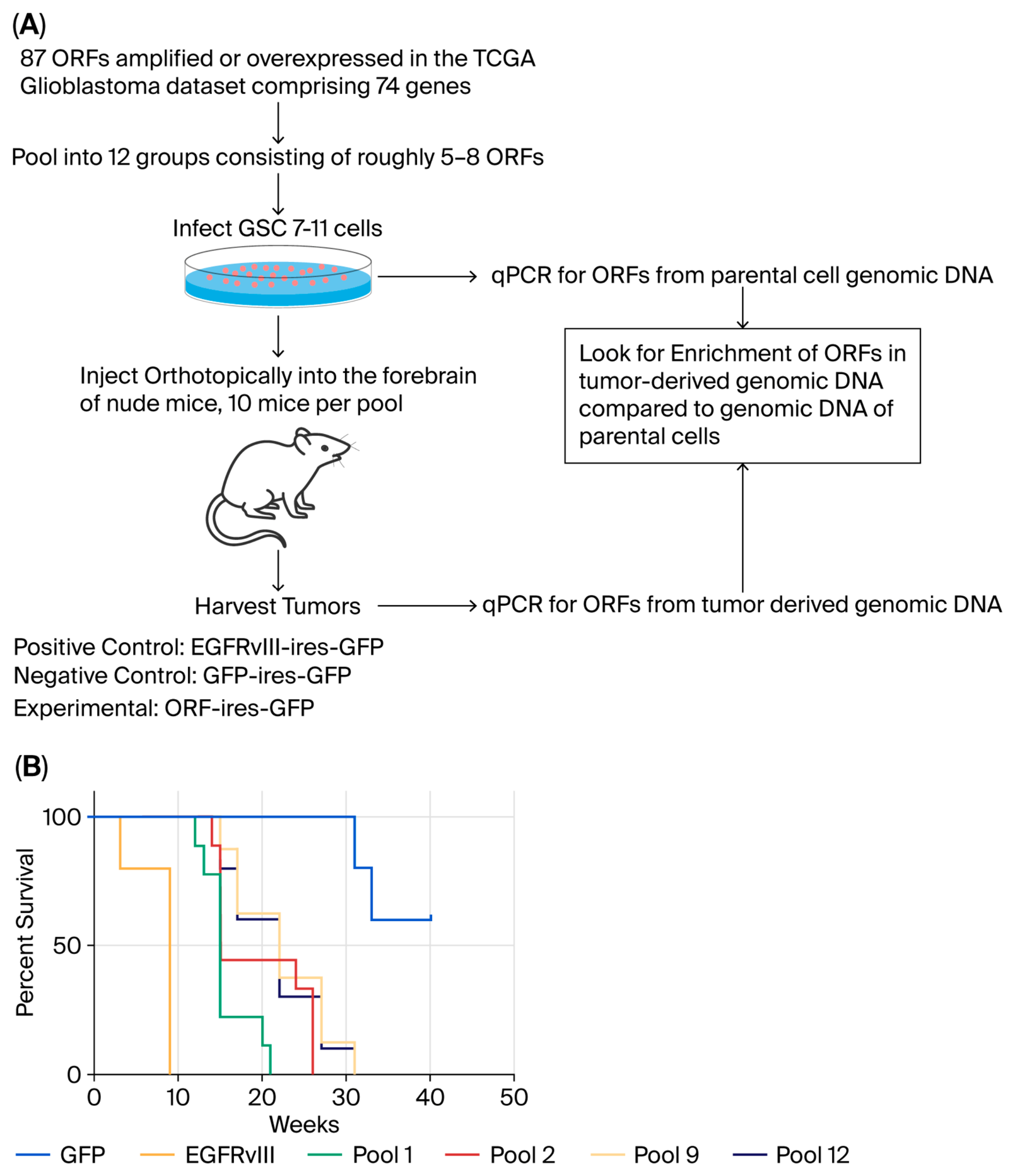
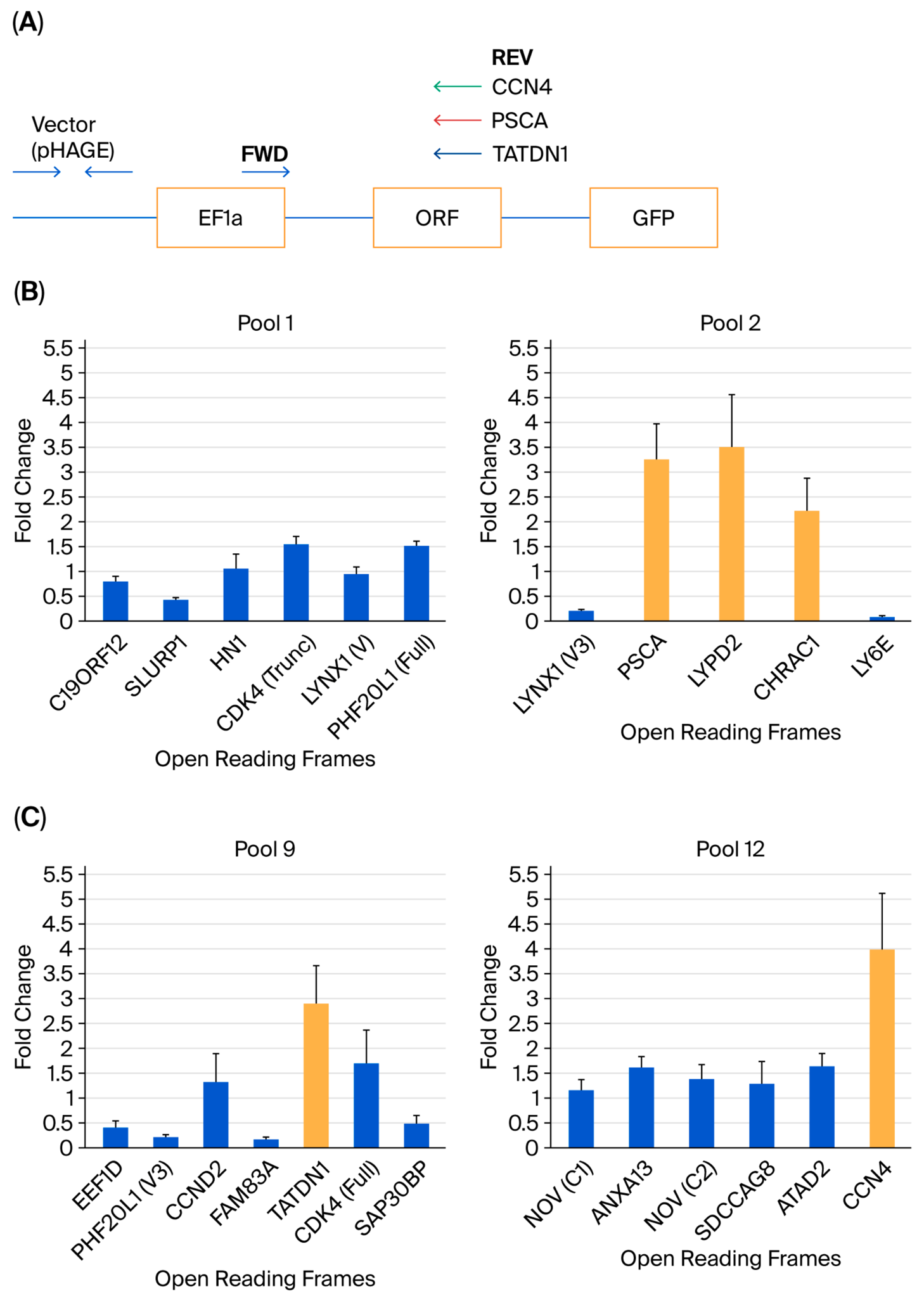
2.1. In Vivo Context-Specific Gain-of-Function Overexpression Screen
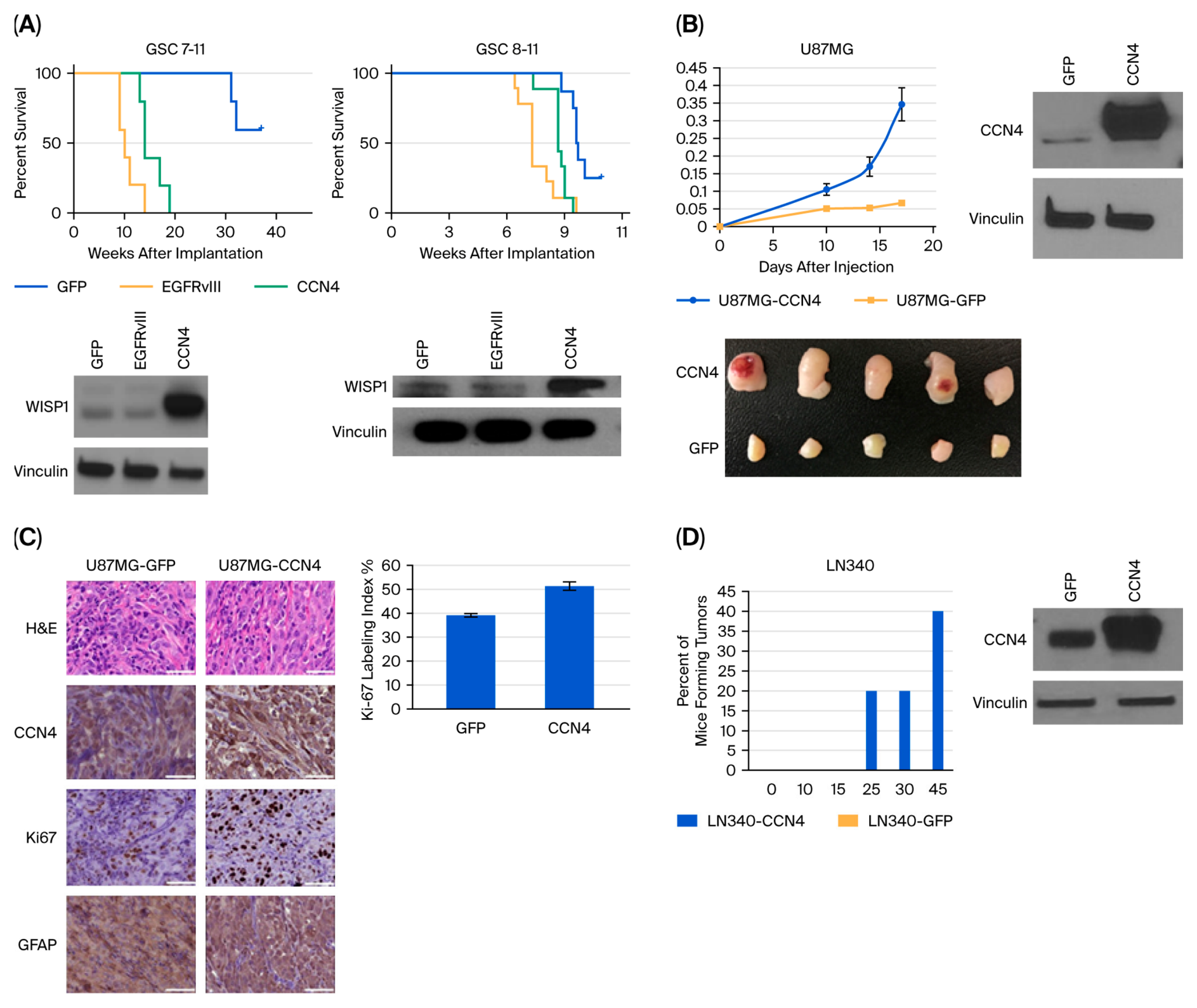
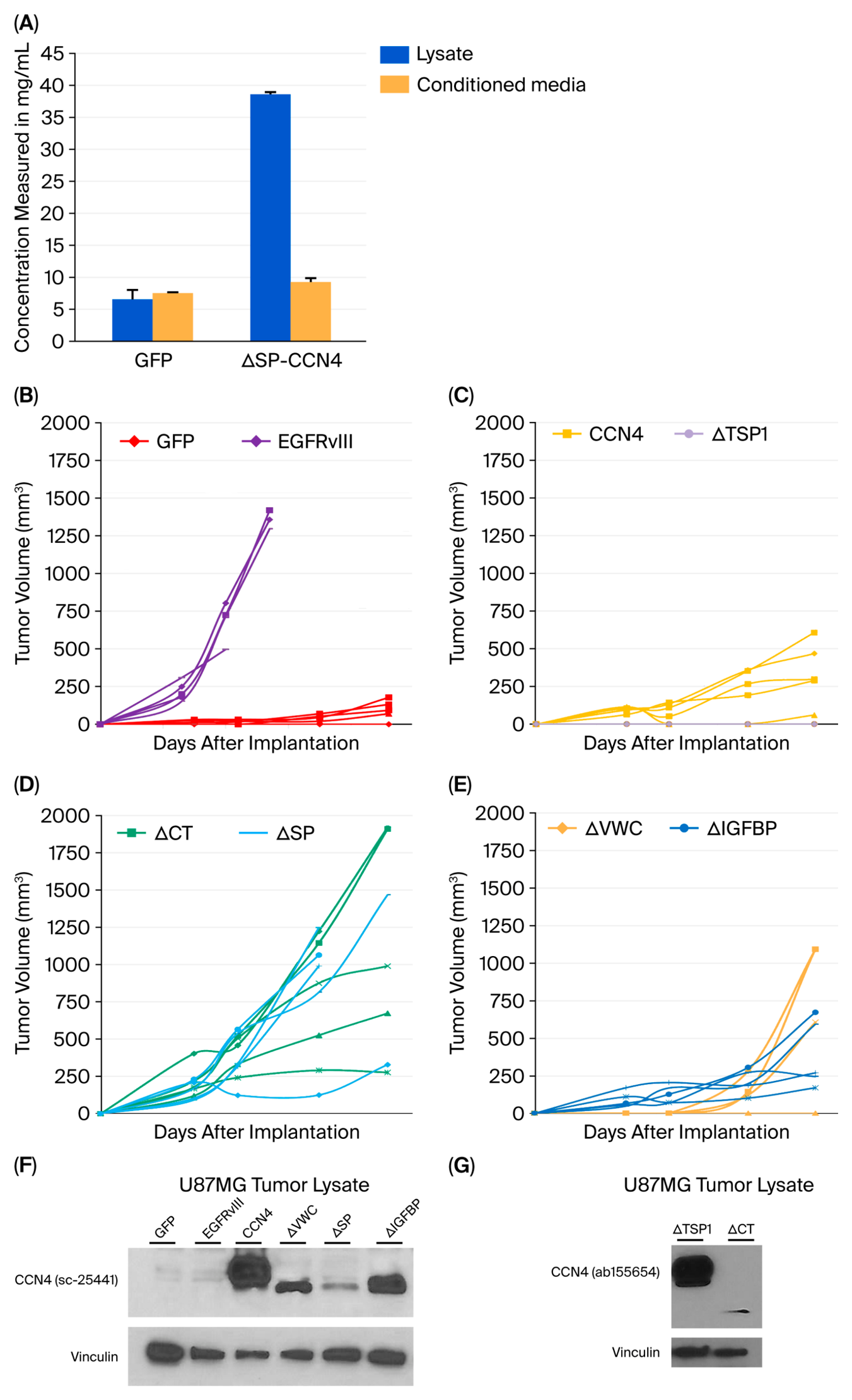
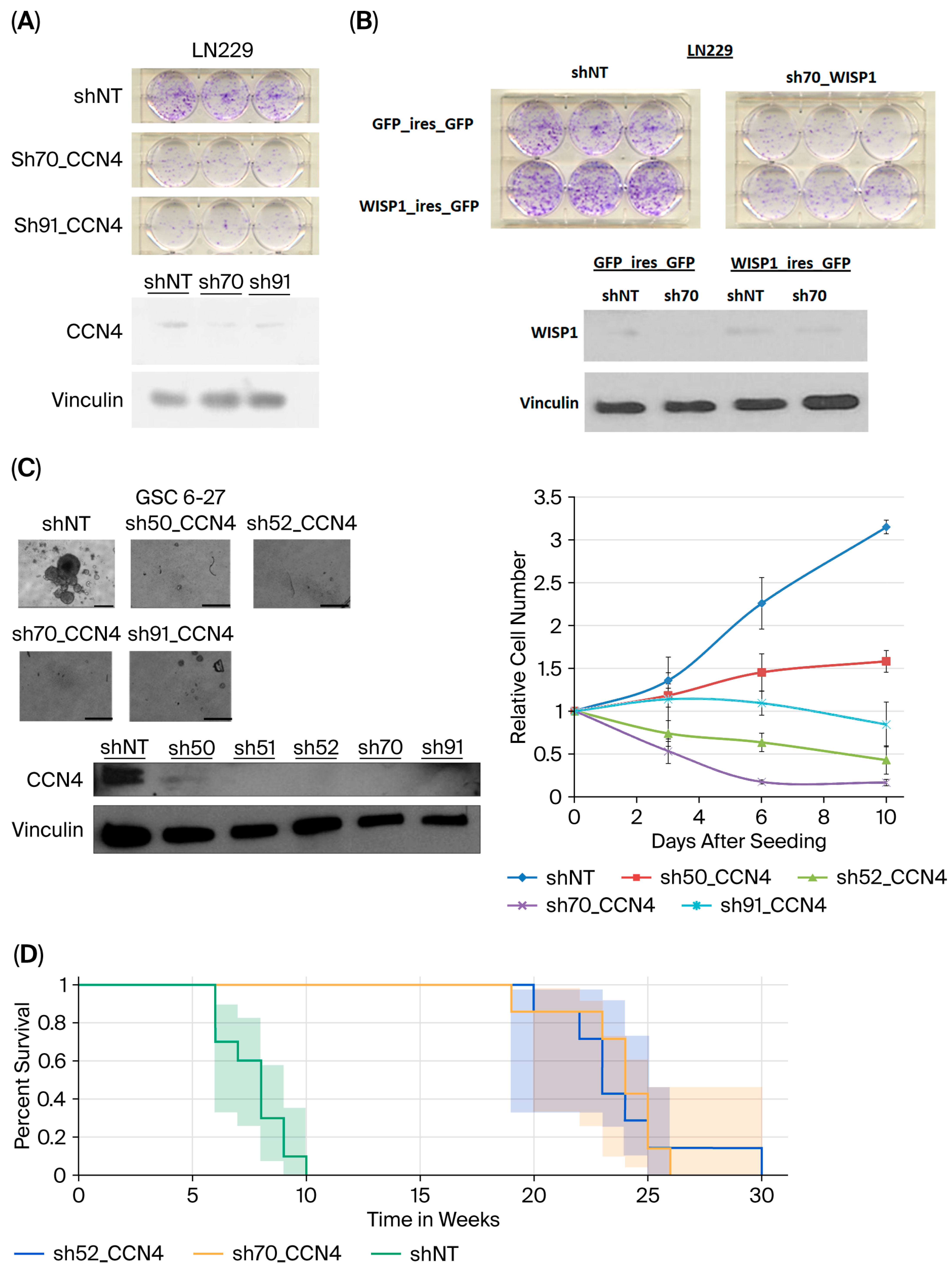
2.2. CCN4 Drives Tumor Growth in GBM
3. Discussion
4. Materials and Methods
4.1. Study Design
4.2. Cell Culture
4.3. In Vitro Assays
4.4. Immunoblot and Human Phospho-Kinase Array
4.5. Plasmids
4.6. Screen
4.7. Transduction
4.8. Lentivirus Production
4.9. Immunohistochemistry
4.10. Animal Studies
4.11. Validation
4.12. Structural Functional Analysis
4.13. ELISA
4.14. Genomic DNA Extraction and qPCR
4.15. Computational Analysis
4.16. Statistical Analysis
Supplementary Materials
Funding
Institutional Review Board Statement
Informed Consent Statement
Data Availability Statement
Acknowledgments
Conflicts of Interest
References
- Polivka, J., Jr.; Polivka, J.; Holubec, L.; Kubikova, T.; Priban, V.; Hes, O.; Pivovarcikova, K.; Treskova, I. Advances in Experimental Targeted Therapy and Immunotherapy for Patients with Glioblastoma Multiforme. Anticancer Res. 2017, 37, 21–33. [Google Scholar] [CrossRef]
- Dolecek, T.A.; Propp, J.M.; Stroup, N.E.; Kruchko, C. CBTRUS statistical report: Primary brain and central nervous system tumors diagnosed in the United States in 2005–2009. Neuro Oncol. 2012, 14, v1–v49. [Google Scholar]
- Louis, D.N.; Ohgaki, H.; Wiestler, O.D.; Cavenee, W.K.; Burger, P.C.; Jouvet, A.; Scheithauer, B.W.; Kleihues, P. The 2007 WHO classification of tumours of the central nervous system. Acta Neuropathol. 2007, 114, 97–109. [Google Scholar] [CrossRef]
- Ostrom, Q.T.; Gittleman, H.; Liao, P.; Rouse, C.; Chen, Y.; Dowling, J.; Wolinsky, Y.; Kruchko, C.; Barnholtz-Sloan, J. CBTRUS statistical report: Primary brain and central nervous system tumors diagnosed in the United States in 2007–2011. Neuro Oncol. 2014, 16, iv1–iv63. [Google Scholar] [CrossRef] [PubMed]
- Polivka, J., Jr.; Polivka, J.; Rohan, V.; Topolcan, O.; Ferda, J. New molecularly targeted therapies for glioblastoma multiforme. Anticancer Res. 2012, 32, 2935–2946. [Google Scholar]
- Furnari, F.B.; Fenton, T.; Bachoo, R.M.; Mukasa, A.; Stommel, J.M.; Stegh, A.; Hahn, W.C.; Ligon, K.L.; Louis, D.N.; Brennan, C.; et al. Malignant astrocytic glioma: Genetics, biology, and paths to treatment. Genes Dev. 2007, 21, 2683–2710. [Google Scholar] [CrossRef] [PubMed]
- Krex, D.; Klink, B.; Hartmann, C.; von Deimling, A.; Pietsch, T.; Simon, M.; Sabel, M.; Steinbach, J.P.; Heese, O.; Reifenberger, G.; et al. Long-term survival with glioblastoma multiforme. Brain J. Neurol. 2007, 130, 2596–2606. [Google Scholar] [CrossRef]
- The Cancer Genome Atlas Research Network. Comprehensive genomic characterization defines human glioblastoma genes and core pathways. Nature 2008, 455, 1061–1068, Erratum in Nature 2013, 494, 506. [Google Scholar] [CrossRef] [PubMed]
- Brennan, C.W.; Verhaak, R.G.; McKenna, A.; Campos, B.; Noushmehr, H.; Salama, S.R.; Zheng, S.; Chakravarty, D.; Sanborn, J.Z.; Berman, S.H.; et al. The Somatic Genomic Landscape of Glioblastoma. Cell 2013, 155, 462–477. [Google Scholar] [CrossRef]
- Bhat, K.P.L.; Balasubramaniyan, V.; Vaillant, B.; Ezhilarasan, R.; Hummelink, K.; Hollingsworth, F.; Wani, K.; Heathcock, L.; James, J.D.; Goodman, L.D.; et al. Mesenchymal differentiation mediated by NF-κB promotes radiation resistance in glioblastoma. Cancer Cell 2013, 3, 331–346. [Google Scholar]
- Singh, K.; Oladipupo, S.S. An overview of CCN4 (WISP1) role in human diseases. J. Transl. Med. 2024, 22, 601. [Google Scholar] [CrossRef] [PubMed]
- Jing, D.; Zhang, Q.; Yu, H.; Zhao, Y.; Shen, L. Identification of WISP1 as a novel oncogene in glioblastoma. Int. J. Oncol. 2017, 51, 1261–1270. [Google Scholar] [CrossRef] [PubMed]
- Tao, W.; Chu, C.; Zhou, W.; Huang, Z.; Zhai, K.; Fang, X.; Huang, Q.; Zhang, A.; Wang, X.; Yu, X.; et al. Dual Role of WISP1 in maintaining glioma stem cells and tumor-supportive macrophages in glioblastoma. Nat. Commun. 2020, 11, 3015. [Google Scholar] [CrossRef] [PubMed]
- Thomas, J.G.; Kerrigan, B.C.P.; Hossain, A.; Gumin, J.; Shinojima, N.; Nwajei, F.; Ezhilarasan, R.; Love, P.; Sulman, E.P.; Lang, F.F. Ionizing radiation augments glioma tropism of mesenchymal stem cells. J. Neurosurg. 2017, 128, 287–295. [Google Scholar]
- Nathanson, D.A.; Gini, B.; Mottahedeh, J.; Visnyei, K.; Koga, T.; Gomez, G.; Eskin, A.; Hwang, K.; Wang, J.; Masui, K.; et al. Targeted therapy resistance mediated by dynamic regulation of extrachromosomal mutant EGFR DNA. Science 2014, 343, 72–76. [Google Scholar] [CrossRef]
- Zhao, Z.; Zhang, K.N.; Wang, Q.; Li, G.; Zeng, F.; Zhang, Y.; Wu, F.; Chai, R.; Wang, Z.; Zhang, C.; et al. Chinese Glioma Genome Atlas (CGGA): A Comprehensive Resource with Functional Genomic Data from Chinese Glioma Patients. Genom. Proteom. Bioinform. 2021, 19, 1–12. [Google Scholar] [CrossRef]
- Zhao, W.; Gao, D.; Ning, L.; Jiang, Y.; Li, Z.; Huang, B.; Chen, A.; Wang, C.; Liu, Y. Prodigiosin inhibits the proliferation of glioblastoma by regulating the KIAA1524/PP2A signaling pathway. Sci. Rep. 2022, 12, 18527. [Google Scholar]
- Chu, F.; Wu, P.; Mu, M.; Hu, S.; Niu, C. MGCG regulates glioblastoma tumorigenicity via hnRNPK/ATG2A and promotes autophagy. Cell Death Dis. 2023, 14, 443. [Google Scholar]
- Wu, C.; Shen, Y.; Shi, L.; Zhang, J.; Guo, T.; Zhou, L.; Wang, W.; Zhang, X.; Yu, R.; Liu, X. UBA1 inhibition contributes radiosensitization of glioblastoma cells via blocking DNA damage repair. Front. Pharmacol. 2023, 14, 1073929. [Google Scholar] [CrossRef]
- Nivison, M.P.; Meier, K.E. The role of CCN4/WISP-1 in the cancerous phenotype. Cancer Manag. Res. 2018, 10, 2893–2903. [Google Scholar] [CrossRef]
- Zhigang, Z.; Wenlv, S. Prostate stem cell antigen (PSCA) expression in human prostate cancer tissues and its potential role in prostate carcinogenesis and progression of prostate cancer. World J. Surg. Oncol. 2004, 10, 2–13. [Google Scholar] [CrossRef] [PubMed]
- Russ, E.; Bhuvaneshwar, K.; Wang, G.; Jin, B.; Gage, M.M.; Madhavan, S.; Gusev, Y.; Upadhyay, G. High mRNA expression of LY6 gene family is associated with overall survival outcome in pancreatic ductal adenocarcinoma. Oncotarget 2021, 12, 145–159. [Google Scholar] [CrossRef] [PubMed]
- Wang, M.; Li, S.; Guo, W.; Wang, L.; Huang, J.; Zhuo, J.; Lai, B.; Liao, C.; Ge, T.; Nie, Y.; et al. CHRAC1 promotes human lung cancer growth through regulating YAP transcriptional activity. Carcinogenesis 2022, 43, 264–276. [Google Scholar] [CrossRef] [PubMed]
- Niu, Z.; Zhang, X.; Li, W.; Ming, Z.; Zhong, Y.; Hou, Y.; Zhang, Y.; Meng, X.; Wang, W.; Deng, W.; et al. The role and potential mechanisms of LncRNA-TATDN1 on metastasis and invasion of non-small cell lung cancer. Oncotarget 2016, 7, 18219–18228. [Google Scholar]
- Raja, E.; Morikawa, M.; Nishida, J.; Tanabe, R.; Takahashi, K.; Seeherman, H.J.; Saito, N.; Todo, T.; Miyazono, K. Tyrosine kinase Eph receptor A6 sensitizes glioma-initiating cells towards bone morphogenetic protein-induced apoptosis. Cancer Sci. 2019, 110, 3486–3496. [Google Scholar] [CrossRef]
- Franco Nitta, C.; Green, E.W.; Jhamba, E.D.; Keth, J.M.; Ortiz-Caraveo, I.; Grattan, R.M.; Schodt, D.J.; Gibson, A.C.; Rajput, A.; Lidke, K.A.; et al. EGFR transactivates RON to drive oncogenic crosstalk. eLife 2021, 10, 63678. [Google Scholar] [CrossRef]
- Chow, R.D.; Guzman, C.D.; Wang, G.; Schmidt, F.; Youngblood, M.W.; Ye, L.; Errami, Y.; Dong, M.B.; Martinez, M.A.; Zhang, S.; et al. AAV-mediated direct in vivo CRISPR screen identifies functional suppressors in glioblastoma. Nat. Neurosci. 2017, 20, 1329–1341. [Google Scholar] [CrossRef]
- Quayle, S.N.; Chheda, M.G.; Shukla, S.A.; Wiedemeyer, R.; Tamayo, P.; Dewan, R.W.; Zhuang, L.; Huang-Hobbs, E.; Haidar, S.; Xiao, Y.; et al. Integrative functional genomics identifies RINT1 as a novel GBM oncogene. Neuro Oncol. 2012, 14, 1325–1331. [Google Scholar] [CrossRef]
- Puca, F.; Yu, F.; Bartolacci, C.; Pettazzoni, P.; Carugo, A.; Huang-Hobbs, E.; Liu, J.; Zanca, C.; Carbone, F.; Del Poggetto, E.; et al. Medium-Chain Acyl-CoA Dehydrogenase Protects Mitochondria from Lipid Peroxidation in Glioblastoma. Cancer Discov. 2021, 11, 2904–2923. [Google Scholar]
- Noorani, I.; de la Rosa, J.; Choi, Y.H.; Strong, A.; Ponstingl, H.; Vijayabaskar, M.S.; Lee, J.; Lee, E.; Richard-Londt, A.; Friedrich, M.; et al. Correction to: PiggyBac mutagenesis and exome sequencing identify genetic driver landscapes and potential therapeutic targets of EGFR-mutant gliomas. Genome Biol. 2020, 21, 206. [Google Scholar] [CrossRef]
- Weishaupt, H.; Čančer, M.; Rosén, G.; Holmberg, K.O.; Häggqvist, S.; Bunikis, I.; Jiang, Y.; Sreedharan, S.; Gyllensten, U.; Becher, O.J.; et al. Novel cancer gene discovery using a forward genetic screen in RCAS-PDGFB-driven gliomas. Neuro Oncol. 2023, 25, 97–107, Erratum in Neuro Oncol. 2023, 25, 810. https://doi.org/10.1093/neuonc/noac267. [Google Scholar]
- MacLeod, G.; Bozek, D.A.; Rajakulendran, N.; Monteiro, V.; Ahmadi, M.; Steinhart, Z.; Kushida, M.M.; Yu, H.; Coutinho, F.J.; Cavalli, F.M.G.; et al. Genome-Wide CRISPR-Cas9 Screens Expose Genetic Vulnerabilities and Mechanisms of Temozolomide Sensitivity in Glioblastoma Stem Cells. Cell Rep. 2019, 16, 971–986. [Google Scholar]
- Li, X.; Zhang, W.; Fang, Y.; Sun, T.; Chen, J.; Tian, R. Large-scale CRISPRi screens link metabolic stress to glioblastoma chemoresistance. J. Transl. Med. 2025, 23, 289. [Google Scholar] [CrossRef]
- Savage, N.; Danis, E.; Chokshi, C.R.; Custers, S.; Shaikh, M.V.; Miletic, P.; Venugopal, C.; Brown, K.R.; Vibhakar, R.; Moffat, J.; et al. CRISPR screen reveals SOX2 as a critical regulator of CD133 and cellular stress response in glioblastoma. Sci. Rep. 2025, 15, 36228. [Google Scholar] [CrossRef]
- Gilbert, L.A.; Horlbeck, M.A.; Adamson, B.; Villalta, J.E.; Chen, Y.; Whitehead, E.H.; Guimaraes, C.; Panning, B.; Ploegh, H.L.; Bassik, M.C.; et al. Genome-Scale CRISPR-Mediated Control of Gene Repression and Activation. Cell 2014, 23, 647–661. [Google Scholar]
- Chen, L.; Stuart, L.; Ohsumi, T.K.; Burgess, S.; Varshney, G.K.; Dastur, A.; Borowsky, M.; Benes, C.; Lacy-Hulbert, A.; Schmidt, E.V. Transposon activation mutagenesis as a screening tool for identifying resistance to cancer therapeutics. BMC Cancer 2013, 13, 93. [Google Scholar] [CrossRef] [PubMed]
- Tang, Y.; Garson, K.; Li, L.; Vanderhyden, B.C. Optimization of lentiviral vector production using polyethylenimine-mediated transfection. Oncol. Lett. 2015, 1, 55–62. [Google Scholar] [CrossRef]
- Nakamizo, A.; Marini, F.; Amano, T.; Khan, A.; Studeny, M.; Gumin, J.; Chen, J.; Hentschel, S.; Vecil, G.; Dembinski, J.; et al. Human bone marrow-derived mesenchymal stem cells in the treatment of gliomas. Cancer Res. 2005, 65, 3307–3318. [Google Scholar]
- Lal, S.; Lacroix, M.; Tofilon, P.; Fuller, G.N.; Sawaya, R.; Lang, F.F. An implantable guide-screw system for brain tumor studies in small animals. J. Neurosurg. 2000, 92, 326–333. [Google Scholar] [CrossRef]
- Ramakrishnan, V.; Xu, B.; Akers, J.; Nguyen, T.; Ma, J.; Dhawan, S.; Ning, J.; Mao, Y.; Hua, W.; Kokkoli, E.; et al. Radiation-induced extracellular vesicle (EV) release of miR-603 promotes IGF1-mediated stem cell state in glioblastomas. eBioMedicine 2020, 55, 102736. [Google Scholar]
- Allen, M.; Bjerke, M.; Edlund, H.; Nelander, S.; Westermark, B. Origin of the U87MG glioma cell line: Good news and bad news. Sci. Transl. Med. 2016, 8, 354. [Google Scholar] [CrossRef] [PubMed]




| Target | Vendor and Catalog Number | Application |
|---|---|---|
| CCN4 | Santa Cruz Biotechnology sc-25441 | WB, IHC |
| CCN4 | Abcam ab155654 | WB |
| CCN4 | R&D Systems 1627-WS | ELISA, WB |
| Vinculin | Cell Signalling Technology 4650S | WB |
| GFAP | Abcam ab7260 | IHC |
| Ki67 | Abcam ab15580 | IHC |
| shRNA | Vector Backbone | shRNA Target | Vendor | Catalog Number |
|---|---|---|---|---|
| sh70 | pLKO | CCN4 | Sigma | TRCN0000373970 |
| sh91 | pLKO | CCN4 | Sigma | TRCN0000373891 |
| sh50 | pLKO | CCN4 | Sigma | TRCN0000033350 |
| sh51 | pLKO | CCN4 | Sigma | TRCN0000033351 |
| sh52 | pLKO | CCN4 | Sigma | TRCN0000033352 |
| shNT | pLKO | scrambled (negative control) | Addgene | Plasmid #1864 |
Disclaimer/Publisher’s Note: The statements, opinions and data contained in all publications are solely those of the individual author(s) and contributor(s) and not of MDPI and/or the editor(s). MDPI and/or the editor(s) disclaim responsibility for any injury to people or property resulting from any ideas, methods, instructions or products referred to in the content. |
© 2026 by the author. Licensee MDPI, Basel, Switzerland. This article is an open access article distributed under the terms and conditions of the Creative Commons Attribution (CC BY) license.
Share and Cite
Dasgupta, P. In Vivo ORF Overexpression Screening Identifies CCN4 as a Regulator of Glioblastoma Growth Validated Across Multiple Models. Int. J. Mol. Sci. 2026, 27, 5227. https://doi.org/10.3390/ijms27125227
Dasgupta P. In Vivo ORF Overexpression Screening Identifies CCN4 as a Regulator of Glioblastoma Growth Validated Across Multiple Models. International Journal of Molecular Sciences. 2026; 27(12):5227. https://doi.org/10.3390/ijms27125227
Chicago/Turabian StyleDasgupta, Pushan. 2026. "In Vivo ORF Overexpression Screening Identifies CCN4 as a Regulator of Glioblastoma Growth Validated Across Multiple Models" International Journal of Molecular Sciences 27, no. 12: 5227. https://doi.org/10.3390/ijms27125227
APA StyleDasgupta, P. (2026). In Vivo ORF Overexpression Screening Identifies CCN4 as a Regulator of Glioblastoma Growth Validated Across Multiple Models. International Journal of Molecular Sciences, 27(12), 5227. https://doi.org/10.3390/ijms27125227