Article

Genome-Wide Identification and Expression Analysis of the U-Box E3 Ubiquitin Ligase Gene Family Related to Monoterpene Indole Alkaloids Biosynthesis in Uncaria rhynchophylla


1
Yuelushan Laboratory, College of Horticulture, Hunan Agricultural University, Changsha 410128, China
2
Biotechnology Research Center, Xiangxi Academy of Agricultural Sciences, Jishou 416099, China
3
Guangxi Academy of Agricultural Sciences, Nanning 530007, China
4
Commonwealth Scientific and Industrial Research Organisation (CSIRO) Agriculture and Food, Canberra, ACT 2601, Australia
5
State Key Laboratory of Tree Genetics and Breeding, Research Institute of Forestry, Chinese Academy of Forestry, Beijing 100091, China
6
State Key Laboratory for Quality Ensurance and Sustainable Use of Dao-di Herbs, Beijing 100700, China
*
Authors to whom correspondence should be addressed.
These authors contributed equally to this work.
Int. J. Mol. Sci. 2026, 27(12), 5198; https://doi.org/10.3390/ijms27125198
Submission received: 7 May 2026 / Revised: 2 June 2026 / Accepted: 4 June 2026 / Published: 9 June 2026
(This article belongs to the Section Molecular Plant Sciences)

Abstract

Plant U-box E3 ubiquitin ligases (PUBs) are involved in various biological processes in response to abiotic stress. Recent studies have shown that E3 ubiquitin ligases can regulate the production of important compounds in medicinal plants by targeted degradation of transcription factors. Abscisic acid (ABA), a plant stress response hormone, can cause changes in the content of the medically important monoterpene indole alkaloids (MIAs) in U. rhynchophylla. In this study, we explored the relationship between UrPUB gene expression and MIA content. ABA was applied to tissue-cultured seedlings of U. rhynchophylla, resulting in consistent changes in the content of four MIAs. Seventy-three UrPUB genes were identified and bioinformatically characterized from the genome sequence of U. rhynchophylla. The expression levels of transcription factors involved in regulating the biosynthesis pathway of MIAs and UrPUB genes with higher RNA transcript levels in the roots were determined. Co-expression association analysis revealed that UrPUB17, UrPUB40, UrPUB41, UrPUB44 and UrPUB55 negatively correlate with UrGATA8 and UrWRKY37 under ABA stimulation. Based solely on these correlation data, we hypothesize that these UrPUBs might regulate MIA biosynthesis via ubiquitination of UrGATA8 and UrWRKY37, but direct evidence (protein interaction, ubiquitination, degradation, or genetic manipulation) is lacking. This study identified the UrPUB gene family in the U. rhynchophylla genome and proposes this ubiquitination model as a testable hypothesis, not a demonstrated mechanism. These findings provide new insights into the biological function of the PUB family in response to ABA.

1. Introduction

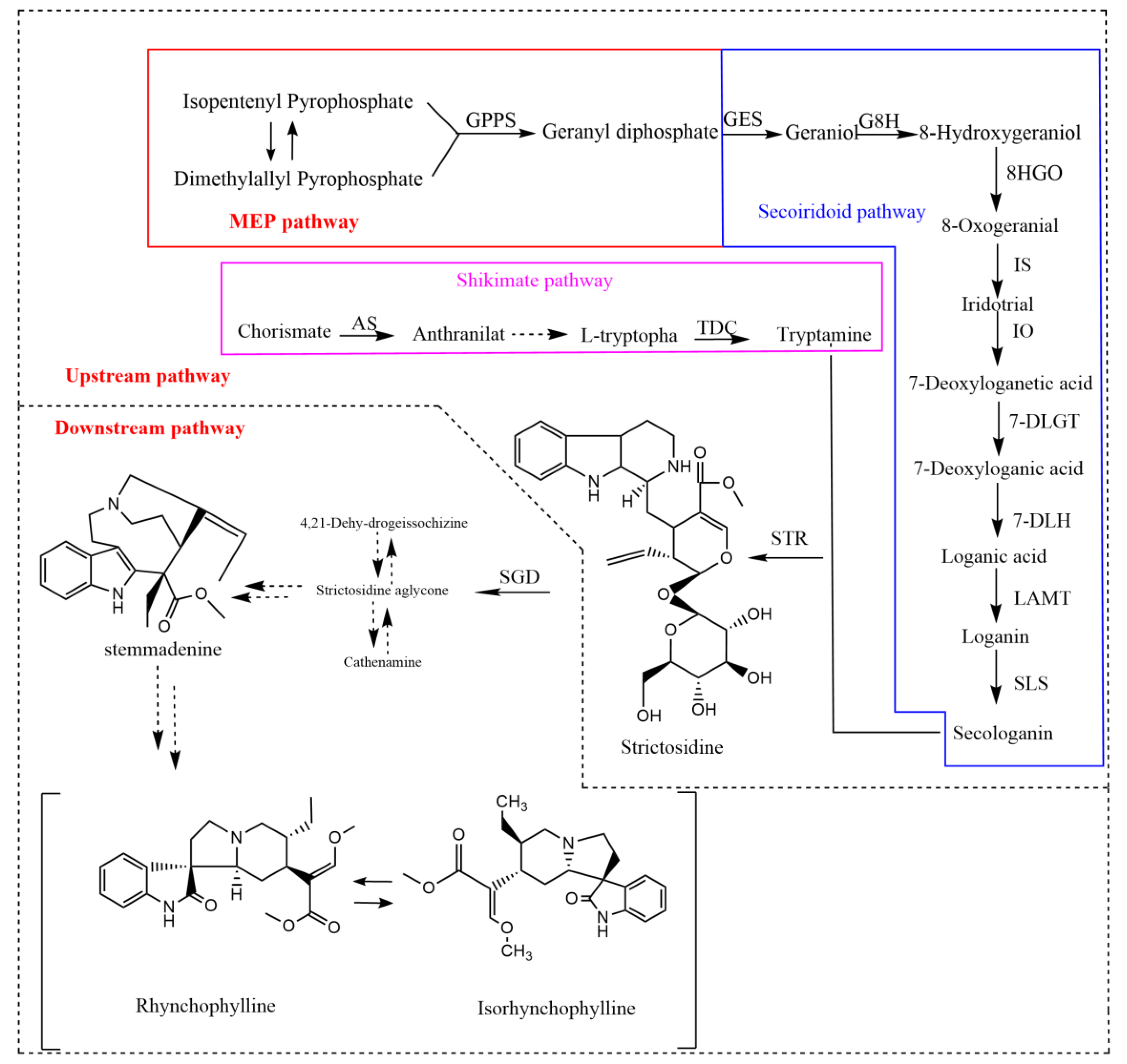
Uncaria rhynchophylla is a traditional Chinese medicine that has a long history of use for its heat-clearing, antihypertensive, and anticonvulsant properties [1]. Modern research indicates that the main active constituents in U. rhynchophylla have neuroprotective, hypotensive, and antidepressant effects. The major active medically important components are mainly monoterpenoid indole alkaloids (MIAs) [2,3,4]. The biosynthesis pathway of MIAs in U. rhynchophylla is similar to that in Catharanthus roseus, which serves as a model plant for studying MIAs as it has been more extensively investigated. The biosynthesis of MIAs follows a complex pathway, involving at least 30 coordinated enzymatic reaction steps, leading to the production of at least 35 known intermediates [5]. The known portion of the MIAs biosynthesis pathway is shown in Figure 1. The pathway can be divided into an upstream pathway and a downstream pathway. The upstream pathway includes the iridoid and tryptamine pathways. The secologanin produced by the upstream pathway and tryptamine are catalyzed by strictosidine synthase to produce strictosidine, which is then hydrolyzed by strictosidine β-D-glucosidase (SGD) to generate strictosidine aglycone for subsequent reactions [6]. In the pathway of U. rhynchophylla, UrTDC and UrSTR have been verified to possess corresponding catalytic functions through prokaryotic expression in vitro [7,8]. The biosynthesis pathways of secondary metabolites in medicinal plants are often regulated by certain transcription factors [9], and regulation of the biosynthesis of MIAs in U. rhynchophylla is also thought to be controlled by various transcription factors. The expression levels of UrGATA7 and UrGATA8 in U. rhynchophylla tissue culture seedlings under different light treatments are significantly correlated with the changes in pathway gene expression, suggesting their potential involvement in the regulation of alkaloid biosynthesis in U. rhynchophylla [10]. Yeast one-hybrid experiments and dual-luciferase assays have demonstrated that UrbHLH1 can bind to the promoters of UrG10H and Ur10HGO to regulate the biosynthesis of MIAs [11], and UrWRKY37 has also been shown to potentially regulate the biosynthesis of MIAs by binding to the promoter of UrTDC [12]. UrTCP4 might interact with the promoters of UrLAMT and Ur7-DLH [13]. When exploring the biosynthetic mechanisms of secondary metabolites in medicinal plants, it is necessary to consider both transcription factors and enzyme genes involved in the biosynthetic pathway.
The ubiquitin/26S proteasome system (UPS) pathway is one of the mechanisms involved in post-translational regulation of gene expression [14,15] and is capable of recognizing specific proteins and directing their degradation [16]. The UPS comprises enzymes that act in a concerted catalytic process, including ubiquitin (Ub), ubiquitin-activating enzyme (E1), ubiquitin-conjugating enzyme (E2), ubiquitin ligase (E3), the 26S proteasome (26S), and deubiquitinases (DUB) [17,18]. Ubiquitin is named after a protein that is ubiquitously present in eukaryotes, typically containing 76 conserved amino acids, including two glycines at the C-terminus. Ubiquitin is attached to substrates through a three-step enzymatic cascade, involving E1 activation of Ub, E2 binding of Ub, and E3 recognition of the substrate [19]. The E3 ubiquitin ligase family is the largest among the three enzymes that catalyze the ubiquitination cascade and exhibits the greatest diversity. It is a family of proteins capable of recognizing modified target proteins and is the determinant of ubiquitination specificity [20]. Previous research has proposed classifications of ubiquitin ligases, and four families (HECT, RING, U-box, and cullin) are generally classified based on the functional domains they possess [21,22].
U-box proteins contain a 70-amino-acid U-box domain and are single proteins that are widely distributed in yeast, plants, and animals [23,24,25]. U-box proteins participate in many cellular processes, such as self-incompatibility and pseudo-self-incompatibility, plant hormone responses, and both abiotic and biotic stresses [26,27,28]. For instance, AtPUB19 negatively regulates ABA and drought responses in A. thaliana [29]. OsPUB67 participates in abiotic stress responses and the regulation of transcription-related genes in rice in an ABA-dependent manner, mediating a multifaceted and complex drought stress tolerance mechanism [30]. Overexpression of TaPUB15-D can enhance salt tolerance in transgenic rice [31]. Although PUBs have been identified in many plants, and there are numerous reports on the effects of biotic and abiotic stresses on protein levels, few studies have reported the impact and mechanisms of PUBs on secondary metabolites in medicinal plants.
Plants possess defensive strategies when subjected to stress, and the rapid accumulation of ABA is one method of responding to stress. ABA is an important plant hormone that guides seed maturation and controls seed dormancy to ensure seeds germinate under favorable growth conditions [32]. During seedling growth and plant maturation, the accumulation of ABA can protect plants from damage due to drought, salinity, and pathogens [33,34]. There are also studies reporting that ABA treatment and environmental factors can affect changes in plant secondary metabolites [35,36,37]. Therefore, studying the expression of PUB, pathway genes, and related transcription factors in U. rhynchophylla tissue culture seedlings treated with ABA will help to more comprehensively understand the accumulation patterns and mechanisms of secondary metabolites in U. rhynchophylla.
The UrPUB genes with high transcript level values in the roots of U. rhynchophylla were selected, and their expression was analyzed using qRT-PCR. At the same time, high-performance liquid chromatography (HPLC) was used to measure the content changes of four MIAs, and association analyses were performed between the content of MIAs and pathway genes, pathway genes and transcription factors, and transcription factors and UrPUBs to infer the potential regulatory mechanisms of UrPUB involvement in the biosynthesis of MIAs in U. rhynchophylla.

2. Results

2.1. Identification of UrPUB Family Genes in U. rhynchophylla

To identify the UrPUB genes, after initially screening the candidate genes, 73 UrPUBs were ultimately identified by checking the integrity of their domains. They were named UrPUB1~UrPUB73 based on their positions on the chromosome (Table S1). The molecular weight range of the 73 UrPUB proteins ranged between 23.5 (UrPUB62) and 209 kDa (UrPUB21), and the predicted amino acid content was between 207 (UrPUB62) and 1873 (UrPUB21). The theoretical isoelectric points of the 73 UrPUB proteins ranged from 5.01 (UrPUB2) to 9.38 (UrPUB35), and 41 of them were predicted to be acidic proteins with a theoretical isoelectric point between 5.01 and 6.89. There were 22 UrPUB proteins with a theoretical isoelectric point between 8.08 and 9.38 and therefore designated as alkaline proteins. In addition, 10 UrPUB proteins were predicted as electrically neutral, with a theoretical isoelectric point range between 7.01 and 7.92. The predicted subcellular localization indicated that most UrPUB proteins are located in the nucleus, whereas UrPUB25 is predicted to be located in the cytoplasm, and UrPUB66 and UrPUB73 were predicted to be located in both the cytoplasm and nucleus (Table S2).

2.2. Phylogenetic Relationship of PUB Proteins in U. rhynchophylla and A. thaliana

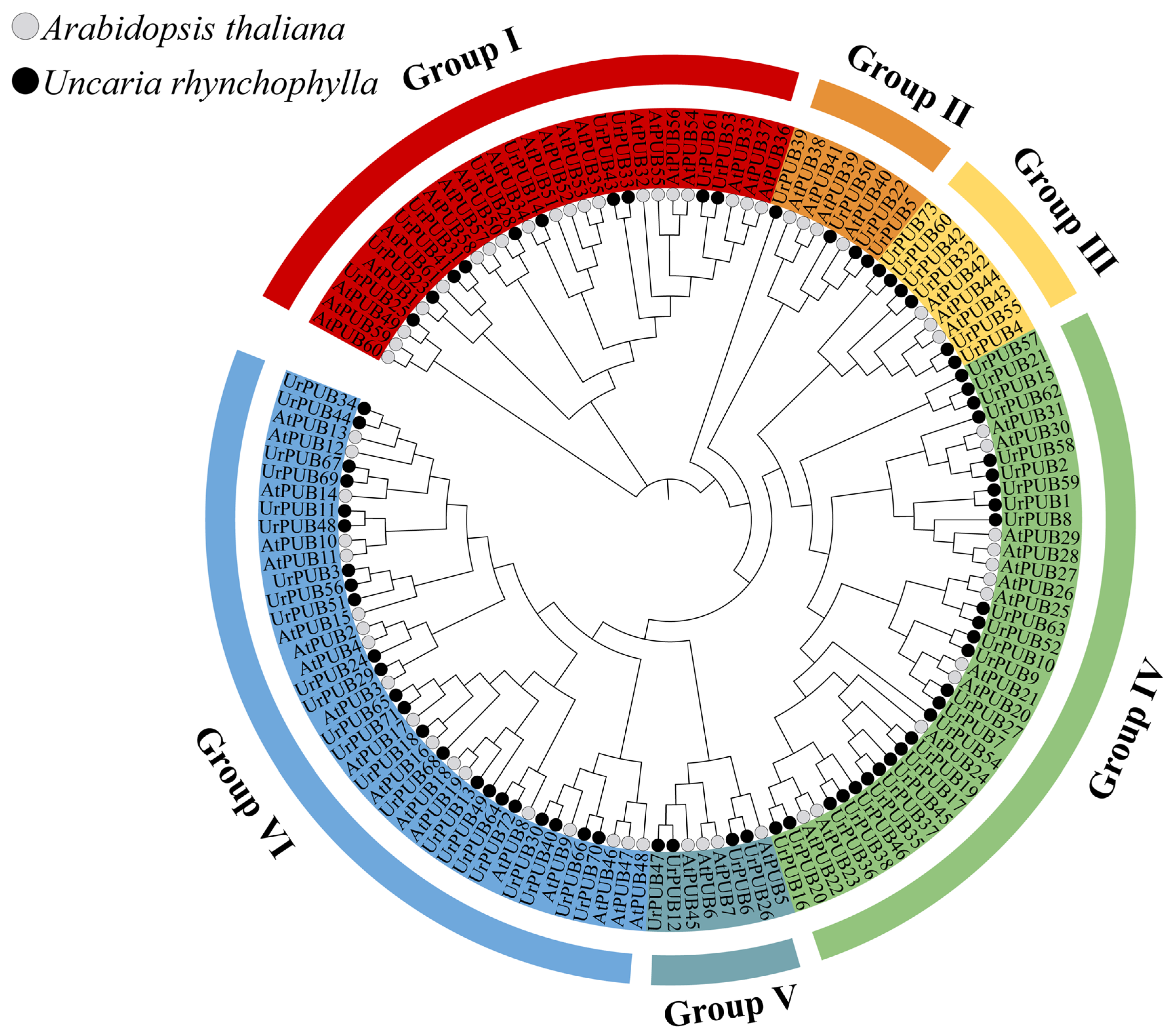
In order to investigate the evolutionary relationship of PUBs in U. rhynchophylla, a neighbor-joining (NJ) phylogenetic tree was constructed using the PUB protein sequences from A. thaliana and U. rhynchophylla (73 members from U. rhynchophylla, 61 members from A. thaliana) (Figure 2). They were divided into six subgroups; in group I, there were 20 AtPUBs and 10 UrPUBs. In this group, the protein sequences of UrPUB14, UrPUB 28, UrPUB 33, UrPUB 43, UrPUB 53, and UrPUB 61 all contain protein kinase domains, while UrPUB31 and 41 contain tetratrico peptide repeats (TPRs), and the remaining two UrPUBs contained only a U-box domain. Group II had the same number of AtPUBs and UrPUBs (four). The sequences of UrPUB5, UrPUB 22, and UrPUB 50 contain armadillo (ARM) repetitions. Group III contained three AtPUBs and six UrPUBs, among which UrPUB73 and UrPUB60 contained ARM repetitions. Group IV contained 12 AtPUBs and 26 UrPUBs, among which UrPUB15, UrPUB21, and UrPUB57 contained Trp Asp (WD) repeat profiles and Trp Asp (WD) repeat circular profiles; the remaining UrPUBs in this group had only a U-box domain. Group V had four members each from A. thaliana and U. rhynchophylla, and these proteins only contained the U-box domain. Group VI included 18 AtPUBs and 23 UrPUBs. In this group, except for UrPUB30, UrPUB40, UrPUB66, and UrPUB70, which only had U-box domains, all other UrPUBs contain different numbers of ARM repetitions.
The number of PUB genes identified in U. rhynchophylla is higher than that in A. thaliana. Although in group I, UrPUBs had much fewer genes than A. thaliana. The number of UrPUBs in groups II and V was the same as the number of AtPUBs, but there was gene expansion of UrPUBs in group III, IV and VI, as A. thaliana had fewer members than U. rhynchophylla.

2.3. Gene Structure and Motif Analysis of UrPUB Genes

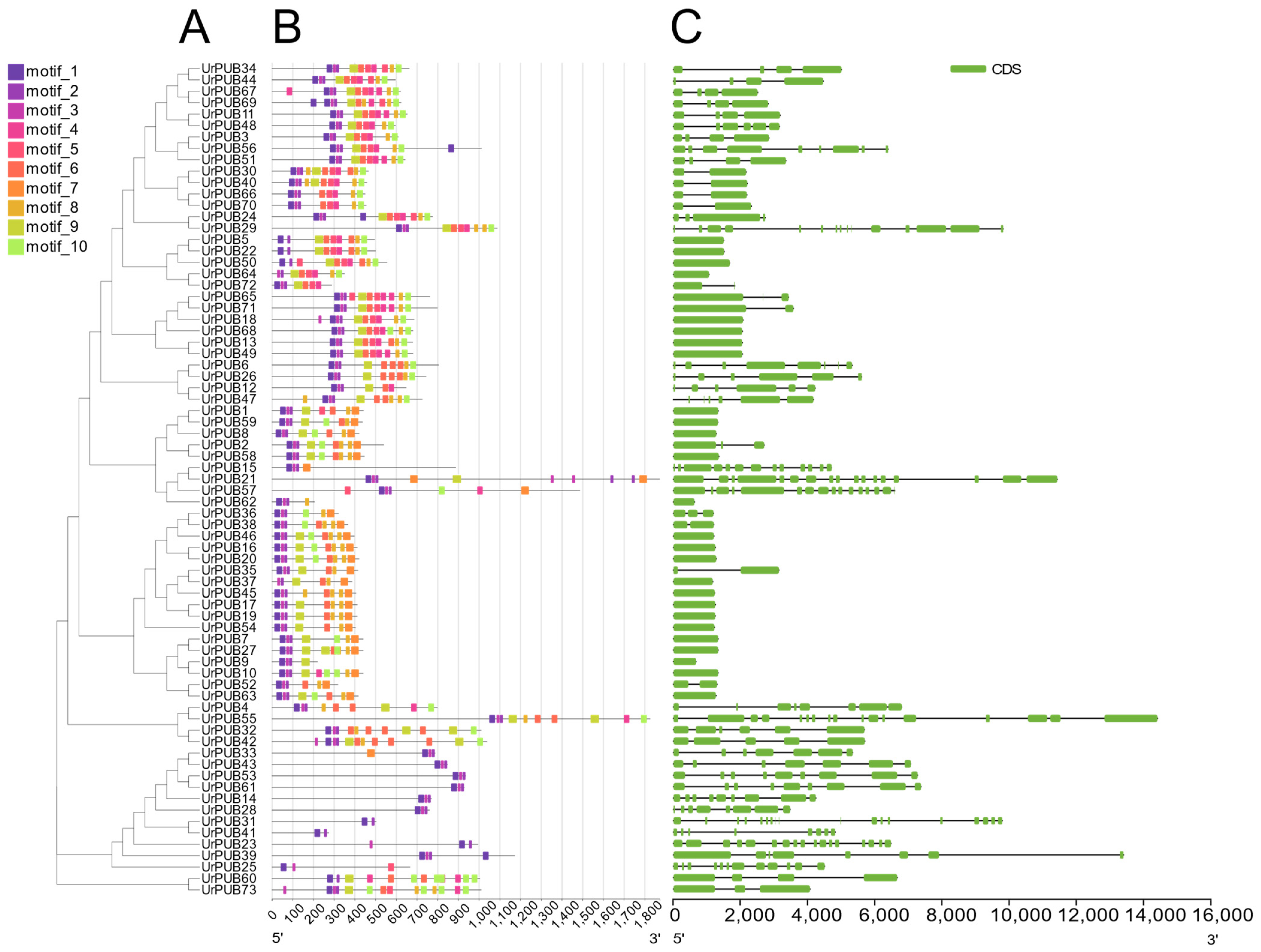
All 73 identified UrPUB protein sequences were uploaded to the MEME website for online analysis to determine conserved motifs [38,39], and ten conserved motifs were identified (Figure 3). The number of motifs contained in these protein sequences was variable, with UrPUB73 containing up to 14 conserved motifs, while UrPUB31 and UrPUB34 had only two motifs. Among these conserved motifs, motif1, motif2, and motif8 have the highest occurrence, appearing 74 times in different sequences; motif7 has the lowest occurrence, appearing only 26 times in all sequences. All UrPUBs contain at least two of the motifs, motif1, motif2, and motif3, with most UrPUBs containing all three motifs, which typically occurred together. There are 54 sequences that start with the order motif1, motif3, motif2, indicating the significant role of these three motifs in UrPUBs. Thirty-four sequences end with motif10, twenty-four sequences end with motif7, and motif8 usually appears adjacent to either motif7 or motif10 at the end of the sequence. Some sequences contain the same motifs; UrPUB34 and UrPUB44 share the same motifs, as do UrPUB3, UrPUB48, and UrPUB56; UrPUB66 and UrPUB70; UrPUB5 and UrPUB22; UrPUB6 and UrPUB26; UrPUB2, UrPUB58, UrPUB16, UrPUB20, and UrPUB46; and UrPUB43, UrPUB53, UrPUB61, UrPUB14, and UrPUB28.
By comparing the coding sequences and genomic DNA sequences of UrPUBs, the structure of UrPUB genes can be analyzed. The gene structures of UrPUBs are diverse, with intron numbers ranging from 1 to 17. UrPUB31 had the most introns at 17, while there are 26 UrPUBs without any introns. UrPUB14 and UrPUB61 not only share the same motifs but also have similar patterns of intron and exon distribution; however, the introns of UrPUB14 are longer.

2.4. Chromosome Localization and Collinearity Analysis of UrPUBs

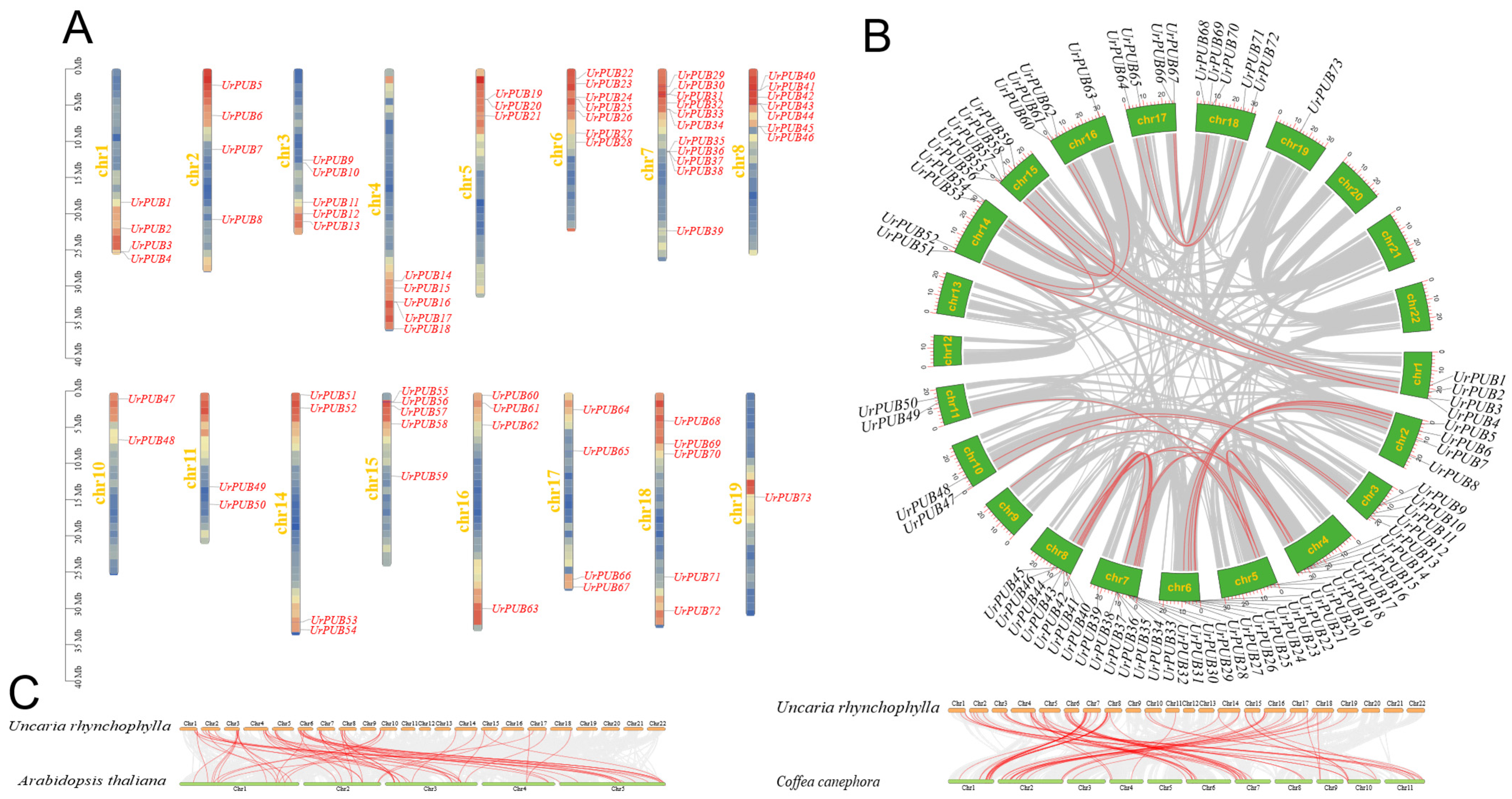
U. rhynchophylla has a total of 22 chromosomes, but only 16 of them contain UrPUBs (absent from chr9, chr12, chr13, chr20, chr21, and chr22). On the 16 chromosomes with UrPUBs, they are unevenly distributed, with a maximum of 11 UrPUBs on chr 7 but only one on chr19 (UrPUB73) (Figure 4A). This uneven distribution of 73 UrPUB genes could indicate their functional diversity in performing different biological processes. The intraspecific collinearity analysis showed that there are no tandem duplicated gene pairs and only segmental duplication gene pairs in UrPUBs, with a total of 75 collinear gene pairs involving 58 UrPUBs. There were 59 collinear gene pairs between U. rhynchophylla and A. thaliana, involving 37 UrPUBs, and 69 gene pairs between U. rhynchophylla and C. canephora, involving 63 UrPUBs. Segmental duplication events are likely the primary cause for the expansion of the UrPUBs gene family (Figure 4B,C). Ka/Ks analysis of all segmental duplicate pairs revealed that all analyzable pairs had Ka/Ks < 1, indicating purifying selection. The remaining pairs showed saturated synonymous substitution (Ks not calculable), consistent with their ancient origin. Detailed values are provided in Supplementary Table S3.

2.5. Prediction of Cis-Acting Elements in Promoter Regions and Gene Ontology Analysis

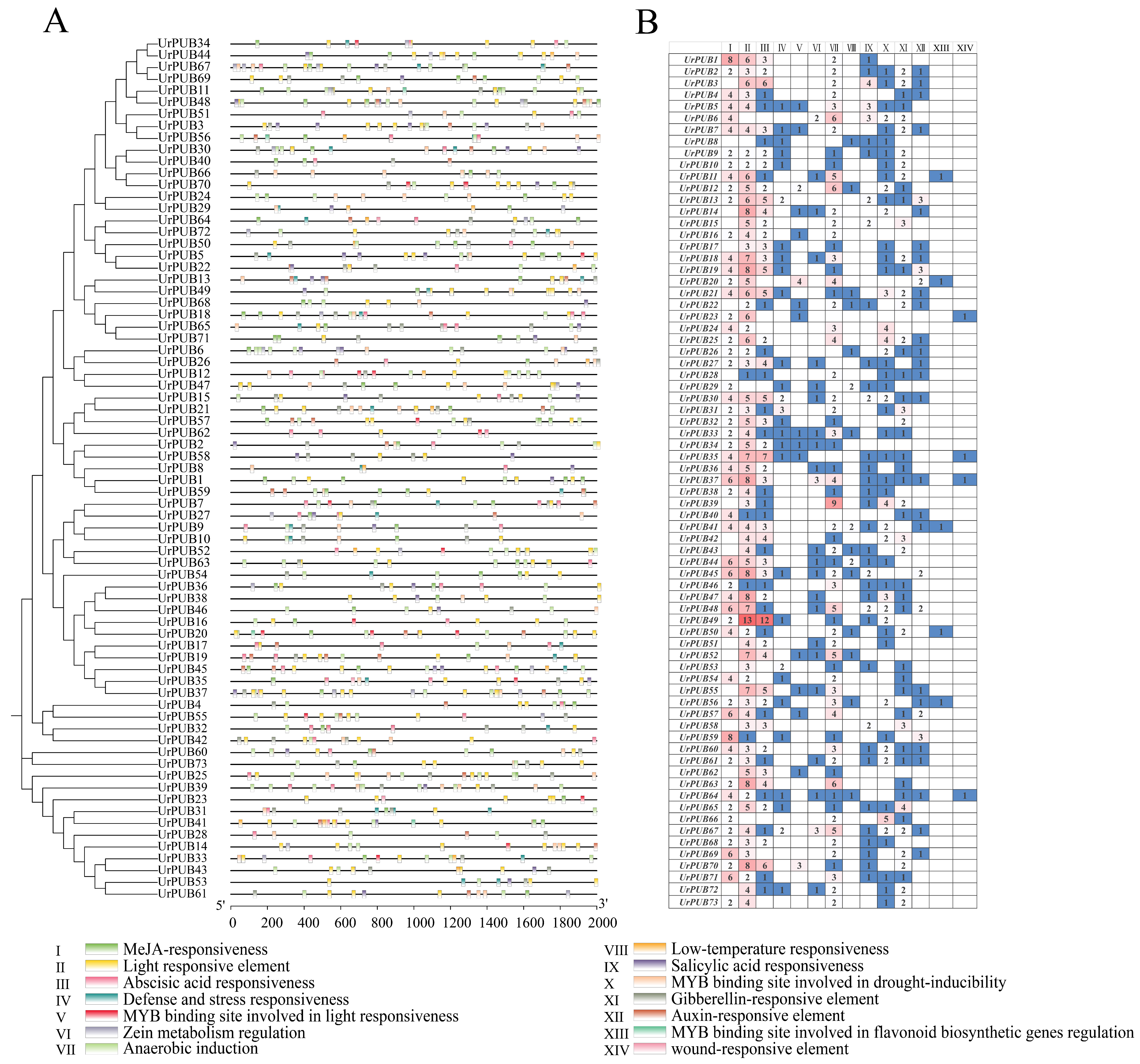
In order to gain further insight into the function of UrPUBs, DNA sequences were extracted from the 2000 bp promoter regions of the UrPUB genes and submitted to PlantCARE for the identification of cis-acting elements. Fourteen types of cis-acting elements related to stress, hormones, plant growth, and development were identified within the promoter regions of the 73 UrPUB genes. As shown in Figure 5A,B, UrPUB genes are predicted to have a variety of biological functions, and several common hormone-related cis-acting elements were found in the promoter regions of the UrPUB genes, including ABA, salicylic acid (SA), gibberellin (GA), auxin, and methyl jasmonate (Me-JA). The ABA responsiveness element was found 162 times in total within the promoter regions of 62 UrPUB genes, indicating that most UrPUB genes are likely to be sensitive to ABA responses. Furthermore, 190 Me-JA-responsiveness elements were identified within the promoter regions of 57 UrPUB genes, and 309 light-responsive elements were found in the promoter regions of 69 UrPUB genes, indicating that these UrPUB genes may be extensively involved in the processes by which U. rhynchophylla responds to a variety of abiotic stresses. Flavonoids can help plants cope with abiotic stresses through multiple pathways [40,41], and many studies have shown that R2R3MYB is widely involved in the regulation of flavonoid biosynthesis [42,43]. Therefore, when counting cis-acting elements, MYB binding sites were also considered. There were 79 MYB binding sites involved in drought-inducibility in the promoter region of 50 UrPUB genes, five MYB binding sites involved in the regulation of flavonoid biosynthetic genes in the promoter region of five UrPUB genes, and 22 MYB binding sites involved in light responsiveness in the promoter region of 16 UrPUB genes. It should be noted that these in silico predictions do not prove actual responsiveness; they serve as a starting point for future functional studies.
To gain a deeper understanding of the biological function of the UrPUB genes, GO annotation was conducted (Figure S1). The results show that 185 GO terms covering biological processes (167), cellular components (four) and molecular functions (14) were notably enriched. Notably, molecular functions were diverse and included key activities such as ubiquitin protein ligase activity, ubiquitin–protein transferase activity, catalytic activity, transferase activity, receptor serine/threonine kinase binding, etc. The biological processes involved mainly include the response to the nitrogen compound, the macromolecule metabolic process, post-translational protein modification, protein modification by small protein conjugation, etc. These UrPUBs are only annotated as potentially involved in the composition of cyclosol, cycloplasm, nucleus, and plasma membrane.

2.6. HPLC Quantification of MIAs in the Roots of U. rhynchophylla at Various Time Points Following ABA Treatment

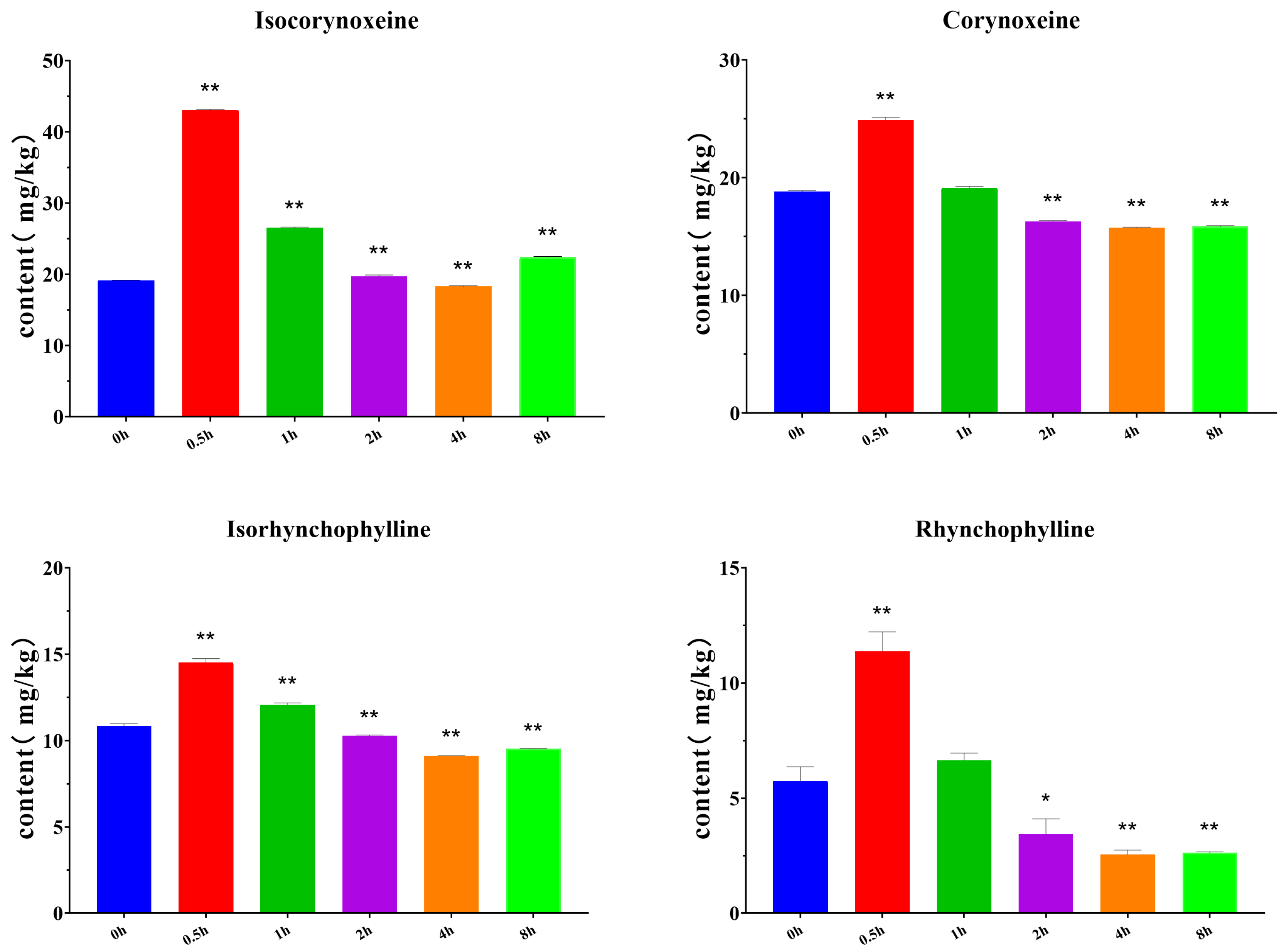
The content of MIAs in the roots of U. rhynchophylla was determined at six time points after ABA treatment. As shown in Figure 6, the content variation trends of Isocorynoxeine, Corynoxeine, Isorhynchophylline, and Rhynchophylline were basically consistent, all showing a trend of rising first and then falling. The accumulation of the four MIAs reached a peak at 0.5 h and then gradually decreased and stabilized after ABA treatment.

2.7. Expression Analysis of UrPUB Genes Under ABA Stress Treatment

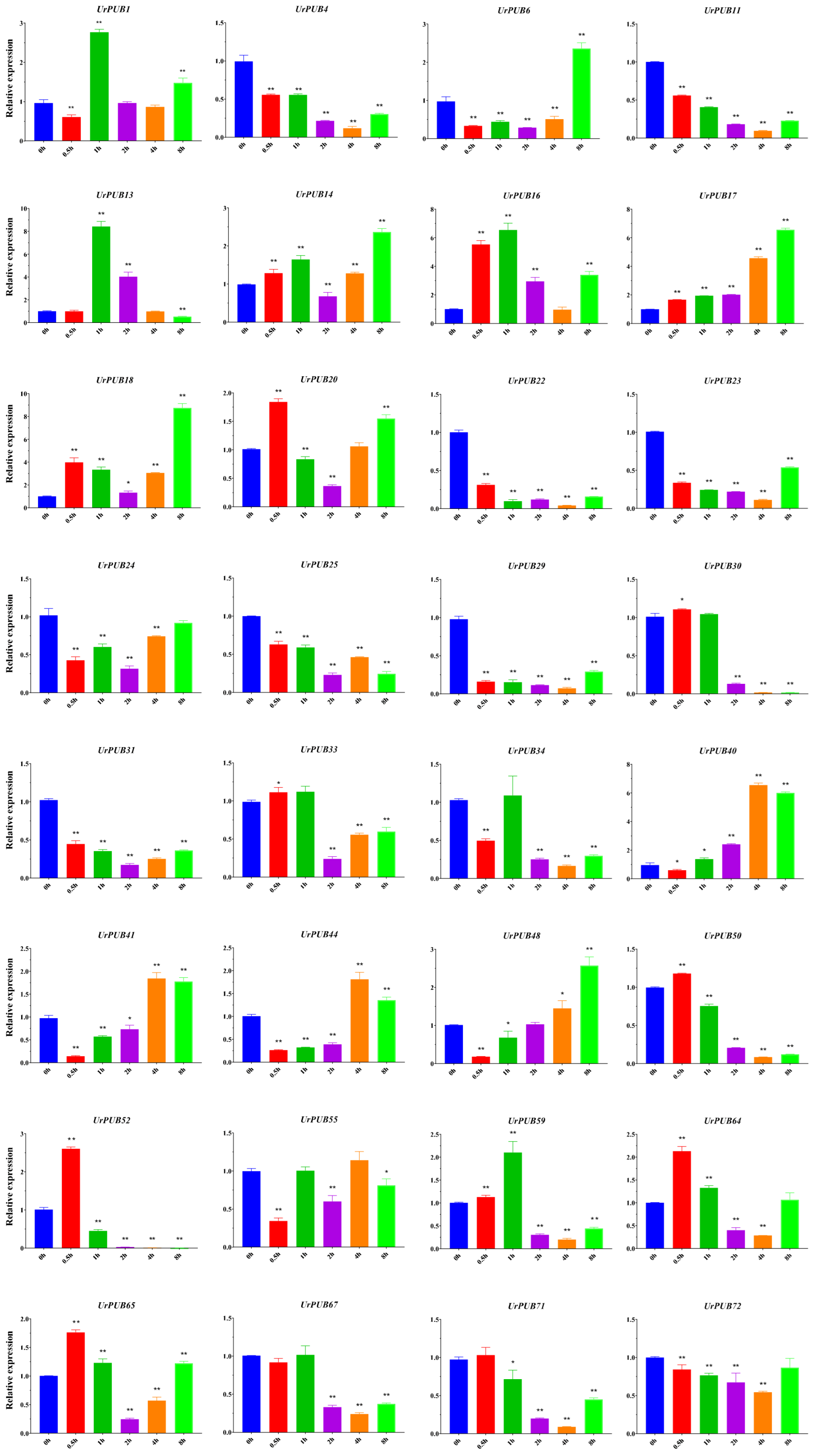
In order to investigate the changes in the expression levels of UrPUB genes and key enzyme genes under ABA treatment, qRT-PCR was used to measure the relative expression levels of UrPUBs in U. rhynchophylla at six time points (0 h, 0.5 h, 1 h, 2 h, 4 h, 8 h) after ABA treatment. The results shown in Figure 7 indicate a decreasing trend for UrPUB4, UrPUB11, UrPUB22, UrPUB25, UrPUB29, UrPUB30, UrPUB31, and UrPUB67. Only UrPUB17 and UrPUB40 showed an increasing trend. UrPUB13, UrPUB50, UrPUB52, and UrPUB59 exhibited an initial increase followed by a decrease. UrPUB6, UrPUB23, UrPUB24, UrPUB33, UrPUB41, UrPUB44, UrPUB48, UrPUB71, and UrPUB72 showed an initial decrease followed by an increase. UrPUB1 and UrPUB34 demonstrated an initial decrease, then an increase, and finally another decrease. UrPUB14, UrPUB16, UrPUB18, UrPUB20, UrPUB64, and UrPUB65 exhibited an initial increase, then a decrease, and finally another increase. UrPUB55 initially decreased after ABA treatment and then recovered, and under the continuous stimulation of ABA, it was in a process of continuous reduction and recovery. UrPUB genes with consistent trends may have similar functions in response to ABA stimulation.

2.8. Analysis of the Expression of Transcription Factors That May Be Involved in Regulating Pathway Genes After ABA Treatment

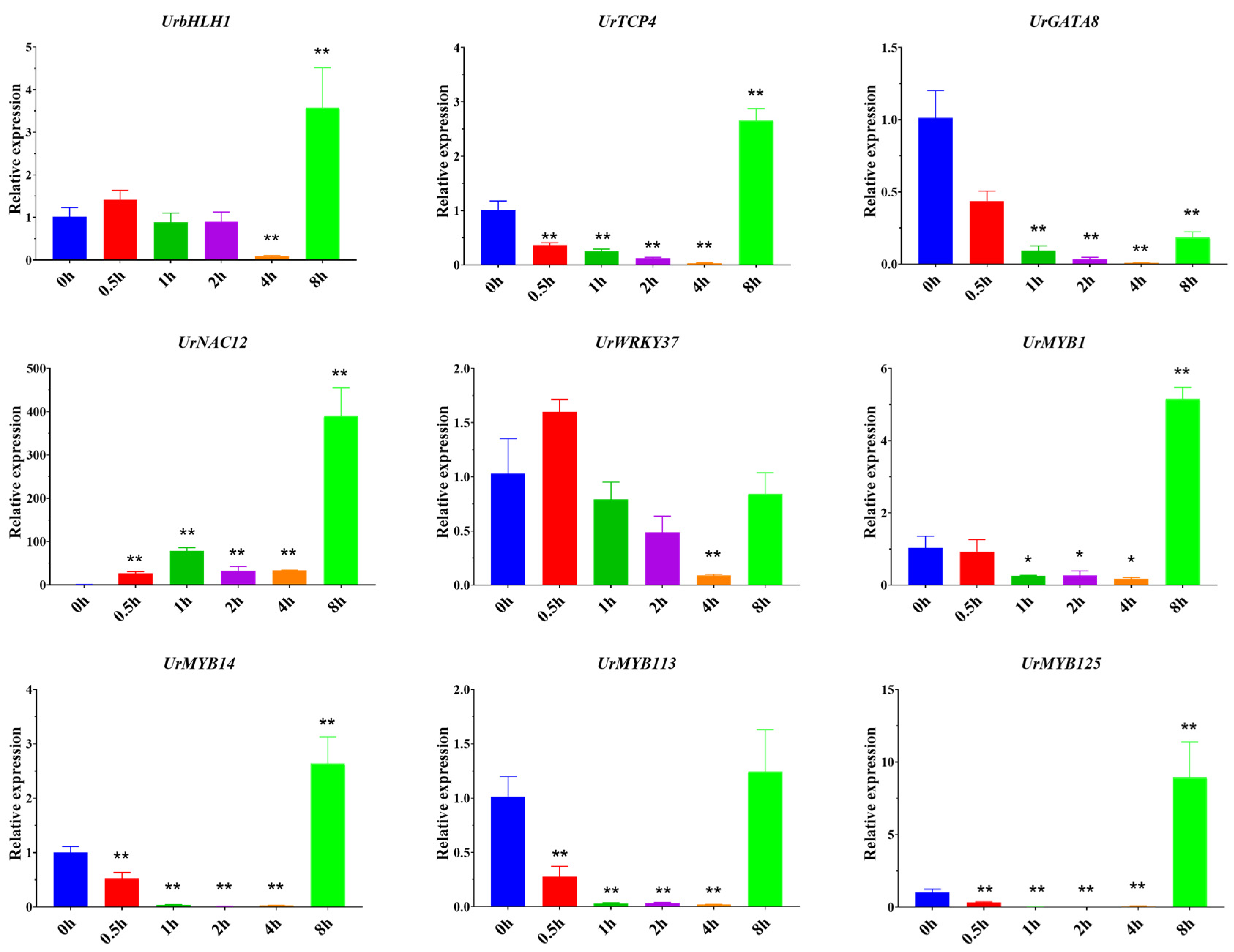
As shown in Figure 8, a total of nine transcription factors were selected. UrbHLH1, UrWRKY37, UrTCP4 and UrGATA8 have been reported to possibly participate in the regulation of MIAs biosynthesis [10,11,12,13]. UrNAC12, UrMYB1, UrMYB14, UrMYB113, and UrMYB125 are potential transcription factors that may be involved in regulating the biosynthesis of MIAs in U. rhynchophylla, as identified through multi-omics co-expression correlation analysis by our research group (not yet published). The relative expression levels of these nine transcription factors were measured in the roots of U. rhynchophylla at six time points after ABA treatment. The expression levels of UrTCP4, UrMYB1, UrMYB14, UrMYB113, and UrMYB125 showed a trend of a slow decrease from 0 h to 4 h followed by a sharp increase at 8 h, while UrGATA8 initially decreased sharply before slightly rising at 8 h. The expression trends of all UrMYB genes were consistent. UrbHLH1 and UrWRKY37 exhibited a trend of initial increase followed by a decrease, while the expression level of UrNAC12 first increased, then decreased, and finally rose sharply.

2.9. Co-Expression Correlation Analysis

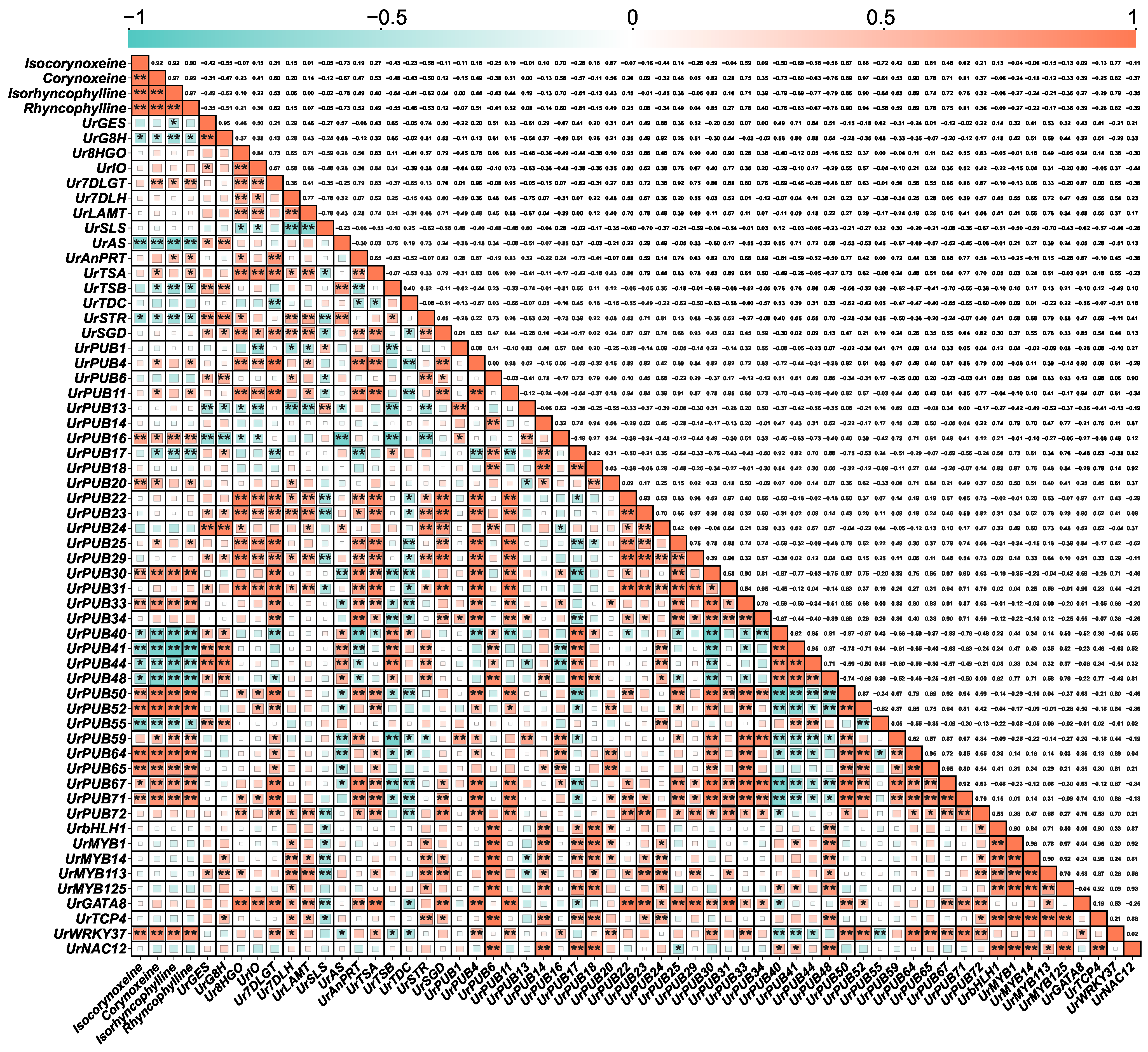
In previous studies, the changes in expression levels of 15 pathway genes in the roots of U. rhynchophylla after ABA treatment at different time points were examined, and thus, this data can be directly used for our co-expression correlation analysis [44]. In Figure 9, UrAS and UrSTR are significantly negatively correlated with changes in four MIA contents, while Ur7DLGT is significantly positively correlated with four MIA contents. UrMYB125, UrMYB1, UrTCP4, and UrMYB14 are all significantly positively correlated with UrSTR and Ur7DLH. UrTCP4 and UrMYB14 are also significantly positively correlated with UrLAMT, UrSGD, and UrG8H. UrWRKY37 is significantly positively correlated with Ur7DLH and Ur7DLGT, while it shows a significant negative correlation with UrTSB and UrAS. UrGATA8 exhibits a significant positive correlation with the expression levels of UrLAMT, Ur7DLH, UrSGD, UrTSA, Ur8HGO, UrIO, UrAnPRT, and Ur7DLGT, but displays a significant negative correlation with UrSLS and UrTDC. The expression trend of UrSLS is solely negatively correlated with transcription factors, showing a significant negative correlation with UrMYB1, UrbHLH1, UrTCP4, UrMYB14, UrMYB113, and UrGATA8. In the correlation analysis between transcription factors and UrPUB genes, UrWRKY37 is significantly positively correlated with UrPUB64, UrPUB65, UrPUB20, UrPUB72, UrPUB71, UrPUB33, UrPUB50, UrPUB30, UrPUB67, UrPUB52, UrPUB11, and UrPUB4 and negatively correlated with UrPUB40, UrPUB41, UrPUB44, and UrPUB55. UrGATA8 is negatively correlated with UrPUB17 and UrPUB40, UrNAC12 is negatively correlated with UrPUB25, and UrPUB13 is negatively correlated with UrMYB14 and UrMYB113. UrPUB6, 18, and UrPUB14 are significantly positively correlated with UrTCP4, UrMYB14, UrbHLH1, UrMYB125, and UrMYB1.

3. Discussion

U-box E3 ubiquitin ligases play a significant role in plant response to abiotic stress, and U. rhynchophylla produces important pharmacological medicinal products that are known to be responsive to abiotic stress. To understand the potential function of PUBs in U. rhynchophylla and its potential role in MIA biosynthesis, it is important to first identify and bioinformatically characterize all the PUBs in its genome. The Pfam database was utilized for HMMER analysis of the U. rhynchophylla genome, and 73 UrPUB genes were identified. The number of PUB genes in U. rhynchophylla is higher than that found in potato (66) [45] and Sorghum bicolor L. (68) [46] but lower than that in banana (91) [47] and maize (85) [48].
Phylogenetic analysis divided the UrPUBs into six groups, with the phylogenetic tree showing some resemblance to the groupings found in banana [47]. All of these UrPUBs possessed at least one U-box domain, and additionally, there were ARM domains, protein kinase domains, Trp-Asp (WD40) repeats and TPRs. Twenty-one UrPUB proteins contained varying numbers of ARM repeats. Six UrPUB proteins contained a protein kinase domain, all of which were classified into the first group on the phylogenetic tree. Two UrPUB proteins contained TPRs, structurally similar to AtCHIP [49], suggesting that these proteins may be involved in signal transduction through phosphorylation and affect protein degradation in chloroplasts [50,51]. Three UrPUB proteins contained Trp-Asp (WD40) repeats, potentially involved in transcriptional regulation and signal transduction [52,53]. These different structures might lead to distinct biological functions of UrPUB proteins. The prevalence of ARM domains is noteworthy, aligning with findings from other studies, and this domain likely plays a crucial role in facilitating interactions with substrates, leading to their ubiquitination [54,55]. Analysis of the gene structures revealed that some UrPUB genes lack introns, while the majority contain several introns, which can protect the coding sequences from mutations. Additionally, the presence of genes without introns also reflects the integrity of the UrPUB genes structure. Among the motifs identified from all UrPUB genes, motifs 1, 2, and 3 exhibited high conservation. Analyzing the UrPUB gene structure and motifs aids in understanding their evolutionary history and functions.
Previous research has shown that PUB genes are capable of responding to ABA signaling [56]. The cis-acting elements in the promoter regions of UrPUB genes were analyzed to predict their potential biological functions. There were a total of 162 ABREs (ABA-responsive elements), with UrPUB49 containing the highest number, which suggests a potential role in ABA signaling transduction. The promoter regions of the UrPUB genes contain numerous cis-acting elements, including not only ABREs but also a variety of other hormone response elements such as salicylic-acid-responsive elements, MeJA-responsive elements, gibberellin-responsive elements, and auxin-responsive elements. Notably, there are 190 MeJA-responsive elements, raising the possibility that UrPUB genes could respond to hormones other than ABA, such as salicylic acid, MeJA, gibberellin, and auxin. Previous studies have shown that MYB transcription factors are extensively involved in the gene regulation of plant responses to abiotic stresses. For instance, overexpression of CgMYB1 from Chenopodium glaucum in A. thaliana enhances tolerance to salt and cold stress [57]. The overexpression of the Betula platyphylla MYB transcription factor gene BplMYB46 can influence abiotic stress tolerance [58], and the overexpression of the Zea mays MYB transcription factor ZmMYB3R improves drought and salt resistance in transgenic plants [59]. Therefore, MYB binding sites were analyzed and found to be distributed across many UrPUB genes. These UrPUBs may act in concert with MYB transcription factors to respond to biotic and abiotic stresses. Hence, it is likely that UrPUB genes play a crucial role in various biological processes during the growth and development of U. rhynchophylla.
ABA can induce changes in the content of secondary metabolites within plants. In Salvia miltiorrhiza, SmbZIP1 expression in hairy roots responds to ABA stimulation and regulates the expression of biosynthetic genes such as SmC4H1, thereby controlling the biosynthesis of tanshinones and salvianolic acids [60]. Out of the 73 UrPUB genes, 62 (85%) contain 162 ABREs, and these ABREs are commonly distributed in other species; for example, in S. miltiorrhiza, 53 out of 60 SmPUB genes have ABREs [61]. In the plant hormone response cis-acting elements of ZmPUB genes, 73% have ABREs [48]. Therefore, we investigated how UrPUB genes respond to ABA. Initially, HPLC was used to measure the content changes of four major MIAs in U. rhynchophylla after ABA treatment. It was found that ABA can significantly affect the accumulation of MIAs in U. rhynchophylla (Figure 7), with four MIAs exhibiting highly similar patterns of content change, peaking at 0.5 h after ABA treatment and then gradually decreasing. The content of MIAs in U. rhynchophylla is also regulated by transcription factors. UrGATA8, UrbHLH1, UrWRKY37, and UrTCP4 may all be involved in regulating the biosynthesis of MIAs in U. rhynchophylla. Existing studies suggest that E3 ubiquitin ligase might regulate the content of secondary metabolites in plants by degrading specific transcription factors. The RING3-type E3 ubiquitin ligase mediates the degradation of AsWRKY44, promoting the biosynthesis of sesquiterpenes induced by injury in Aquilaria sinensis [62,63].
To understand whether a regulatory mechanism exists in U. rhynchophylla that involves ubiquitin ligase-mediated degradation of transcription factor proteins, qRT-PCR was employed to analyze the expression of UrPUB genes with transcripts per million (TPM) values greater than 10 in roots (the complete TPM values for all 73 UrPUB genes in roots, with the 32 genes having TPM > 10 clearly indicated, have been provided as Supplementary Table S4), as well as the expression of the known U. rhynchophylla transcription factors after ABA treatment. By integrating the changes in expression levels of pathway genes in U. rhynchophylla following ABA treatment, a correlation analysis was performed between the metabolite content and pathway genes, pathway genes and transcription factors, and transcription factors with UrPUB genes. Initially, a co-expression correlation analysis was performed between the MIA content and pathway genes. Since pathway genes are involved in the biosynthesis of MIAs, the focus was placed on those that showed a positive correlation with alkaloid content. It was observed that Ur7DLGT had a strong positive correlation with alkaloid content, leading to a focus on these two pathway genes in subsequent investigations. Considering that transcription factors regulate pathway genes, potential transcription factors that might respond to ABA signals and regulate the biosynthesis of MIAs could also be deduced by analyzing the correlation between them. In the correlation analysis, UrWRKY37 and UrGATA8 displayed significant positive correlations with Ur7DLGT. Therefore, it is hypothesized that UrWRKY37 and UrGATA8 could potentially respond to ABA stimuli and affect the biosynthesis of MIAs. Previous studies have indicated that PUB proteins can regulate the biosynthesis of plant hormones such as ABA and ethylene, and ubiquitinate transcription factors to indirectly control fruit ripening and coloration. AtPUB18, AtPUB19, and AtPUB44 have been identified as capable of directly interrupting ABA biosynthesis in A. thaliana [64]. In apple, the ubiquitin E3 ligase MdPUB29 ubiquitinates MdbHLH3 to regulate ethylene biosynthesis [65]. An attempt was made to understand whether UrPUB proteins might possess similar indirect regulatory mechanisms. Consequently, a correlation analysis was conducted between UrPUB genes and the mentioned transcription factors. Since PUB proteins do not regulate transcription but rather ubiquitinate proteins to facilitate their degradation, focus was placed on UrPUB genes that were negatively correlated with UrGATA8 and UrWRKY37. The correlation analysis revealed that UrPUB17 and UrPUB40 were significantly negatively correlated with UrGATA8, while UrPUB40, UrPUB44, UrPUB44, and UrPUB55 showed significant negative correlations with UrWRKY37. It is tempting to speculate that these negative correlations reflect ubiquitination and degradation of the TFs by UrPUBs, but we emphasize that such gene–expression-level correlations are inherently indirect and cannot establish causality. Alternative explanations are equally plausible: for example, these TFs might repress UrPUB transcription, or UrPUBs and TFs might be antagonistically regulated by an unknown common upstream signal; moreover, a negative correlation does not distinguish whether a TF is a substrate of the PUB or instead acts as a regulator of PUB expression. Therefore, the proposed ubiquitination model remains a hypothesis without direct supporting evidence. The gene expression correlations reported here should be viewed as hypothesis-generating observations only, not as evidence for physical interaction, ubiquitination, or degradation. Future studies measuring TF protein stability (e.g., cycloheximide chase assays) and direct ubiquitination status (e.g., ubiquitination assays followed by immunoblotting), as well as protein–protein interaction assays (e.g., Co-IP or pull-down) and proteasome inhibitor (MG132) experiments, are required to test whether these TFs are genuine substrates of UrPUBs. Additionally, a limitation of our experimental design is the absence of a solvent-treated mock time-course. Thus, we cannot rule out non-ABA factors (e.g., culture duration, handling, circadian rhythms) contributing to the observed changes. Our results should be interpreted as changes detected after ABA treatment, not as strictly ABA-specific, and future mock time-course studies are needed.

4. Materials and Methods

4.1. Plant Material and ABA Treatment

The U. rhynchophylla plant materials used in this study were identified by Professor Wei Shugen and collected from the College of Horticulture, Hunan Agricultural University, Changsha City, Hunan Province. The method for obtaining U. rhynchophylla tissue culture seedlings is consistent with that mentioned in previous studies [12]. ABA treatment was administered to U. rhynchophylla tissue culture seedlings with uniform growth, with sampling conducted at 0 h, 0.5 h, 1 h, 2 h, 4 h, and 8 h post-treatment. ABA was added to 1/2 MS liquid medium to a final concentration of 100 μM. The root system of each U. rhynchophylla tissue culture seedling was evenly divided into two parts. One part was dried to a constant weight and then ground into powder for the detection of MIA content, while the other part was immediately frozen using liquid nitrogen and stored in an −80 °C freezer for RNA extraction and cDNA synthesis.

4.2. UrPUB Genes Search and Identification

In order to identify PUB genes in the U. rhynchophylla genome, a search was conducted in the U. rhynchophylla genome database [66]. A search was conducted in the Pfam database based on the U-box domain (PF04564). The HMMER program can be used to identify potential members of the PUB gene family in U. rhynchophylla. All sequences obtained were submitted to the SMART (http://smart.embl.de/, accessed on 26 February 2025) website to confirm the U-box domain [67,68]. The integrity of the domains was confirmed using the NCBI CDD (https://www.ncbi.nlm.nih.gov/Structure/bwrpsb/bwrpsb.cgi, accessed on 25 March 2025) and Expasy (https://prosite.expasy.org/ accessed on 25 March 2025) websites [69]. The physicochemical properties of UrPUB proteins, including the number of amino acids, relative molecular weight, theoretical isoelectric point, and instability index, were predicted using Expasy (https://web.expasy.org/protparam/, accessed on 26 March 2025). Subcellular localization was predicted using Ploc2 (http://www.csbio.sjtu.edu.cn/bioinf/Cell-PLoc-2/, accessed on 3 April 2025) [70].

4.3. Multiple Sequence Alignment and Phylogenetic Tree Construction

The PUB gene sequences of A. thaliana were obtained from the TAIR database (https://www.arabidopsis.org/, accessed on 11 April 2025). The ClustalW software (version 2.1) was used to compare 73 UrPUB protein sequences with 61 AtPUB protein sequences. In MEGA software (version 11.0.13), the neighbor-joining method was employed to construct the phylogenetic tree, with bootstrapping repeated 1000 times.

4.4. Analysis of Conserved Motifs and Gene Structure

Conserved motif analysis of UrPUB amino acid sequences was conducted using the MEME online tool (https://meme-suite.org/meme/doc/meme.html, accessed on 13 April 2025), with the number of conserved motifs set to 10. The TBtools software (version 2.210) was used to extract exon and intron information corresponding to UrPUB genes from the U. rhynchophylla genome for gene structure analysis [71]. The conservation of motifs and gene structures were ultimately visualized using TBtools software.

4.5. Chromosomal Location, Gene Duplication, and Synteny Analysis

The chromosomal location information of UrPUBs was extracted from the genome using TBtools software, and the intraspecific synteny within U. rhynchophylla, the synteny between U. rhynchophylla and A. thaliana, and the synteny between U. rhynchophylla and C. canephora were analyzed. The visualization of these results was completed in TBtools software. Based on the results of the synteny analysis, segmental duplication and tandem duplication events involving UrPUB genes could be identified.

4.6. Promoter cis-Element Analysis and Gene Ontology Analysis

The method for obtaining the 2000 bp sequence upstream of the promoter of UrPUB genes was consistent with previous studies. The promoter sequences were uploaded to the PlantCare website (http://bioinformatics.psb.ugent.be/webtools/plantcare/html/, accessed on 16 April 2025) to predict cis-acting elements [72,73]. The raw data was filtered and processed to select candidate cis-acting elements for statistical analysis. Based on the GO annotation results in the genome database, the GO annotation results and cis-acting element diagrams of UrPUB genes were visualized using TBtools. Quantitative statistics and visualization were completed in GraphPad Prism 9.0 software.

4.7. Determination of Four MIAs in the Roots of U. rhynchophylla by HPLC

Dried root powder of U. rhynchophylla tissue-cultured seedlings was sieved through a 60-mesh screen. A 0.1 g aliquot was extracted with 1 mL of 80% (v/v) HPLC-grade methanol in an ultrasonic bath at 50 °C for 60 min. The extract was centrifuged at 12,000 rpm for 5 min, and the supernatant was filtered through a 0.22 μm membrane.
Chromatographic separation used a reversed-phase column (GL-Sciences GL-C18, 250 mm × 4.6 mm, 5 μm, Tokyo, Japan). Mobile phase A: 0.2% ammonia water; mobile phase B: acetonitrile. Gradient elution: 0–40 min, 28–55% B; 40–60 min, 55–63% B; 60–60 min, 63–28% B; 60–70 min, 28–28% B. Detection wavelength: 254 nm; column temperature: 30 °C; flow rate: 1.0 mL/min; injection volume: 20 μL.
Standard solutions and calibration curves: stock solutions (0.5 mg/mL in 80% methanol) of rhynchophylline, isorhynchophylline, corynoxeine, and isocorynoxeine were prepared. A seven-point calibration curve was generated by serial two-fold dilution of the mixed stock solution. Figure S2 shows the calibration curves for the four alkaloids, with the regression equations, concentration ranges, and correlation coefficients (all R2 > 0.99). The MIA content in each sample was calculated using the respective standard curve and expressed as mg per kilogram dry weight. The method of liquid chromatography was consistent with that of previous studies [10].

4.8. RNA Extraction, cDNA Synthesis, and qRT-PCR

Total RNA was extracted using the SteadyPure Plant RNA extraction Kit (Accurate Biology, Hunan, China). The integrity of the RNA was assessed by electrophoresis on a 1% agarose gel. The concentration of the extracted RNA was measured using Micro Drop (BIO-DL, Shanghai, China). For reverse transcription, 1 µg of the extracted RNA was used to synthesize cDNA according to the EvoM-MLV RT Mix Kit (Accurate Biology, Hunan, China). qRT-PCR primers for UrPUB genes were designed using Beacon Designer 7.0 software, and the primers used in this study are shown in Table S5. Reactions were performed in a 96-well plate in an ABI7300 (Applied Biosystems, Foster City, CA, USA). UrSAM was used as the reference gene in this study [74,75]. The reaction protocol and system were consistent with those of previous studies. For each of the six time points (0, 0.5, 1, 2, 4, 8 h), three independent biological replicates were analyzed. Technical triplicates were averaged per biological replicate. Correlation analyses were performed using these 18 independent data points (6 time points × 3 replicates). The obtained Ct values were used to calculate the relative expression levels using the 2−ΔΔCT method. Statistical tests were performed using GraphPad Prism 9.0 software. For each time point, unpaired two-tailed Student’s t-tests were used to compare relative expression levels with the 0 h control. Differences with p < 0.05 were considered statistically significant. Correlation analysis between MIA content and gene expression levels was conducted on the chiplot website (https://www.chiplot.online/, accessed on 31 October 2025).

5. Conclusions

This study identified 73 UrPUB genes in the genome of U. rhynchophylla. Following ABA treatment, the contents of four MIAs showed consistent temporal changes. Based on co-expression analysis, UrPUB17, UrPUB40, UrPUB41, UrPUB44, and UrPUB55 emerged as candidate regulators that may be involved in MIA biosynthesis under ABA stimulation, possibly through ubiquitination of UrGATA8 and UrWRKY37. However, this proposed model remains a hypothesis that requires experimental validation (e.g., protein–protein interaction and ubiquitination assays). These results provide new insights into the potential biological functions of PUB genes under ABA stimulation and offer testable hypotheses for future research.

Supplementary Materials

The following supporting information can be downloaded at: https://www.mdpi.com/article/10.3390/ijms27125198/s1.

Author Contributions

Q.T. and R.W. initiated the project, helped to conceive the study, revised the manuscript, and participated in the design and coordination. Y.Z. and D.M. conceived the study, participated in experiments, and drafted the manuscript and data analysis. I.W.W. and D.Q. participated in data analysis and manuscript revision. Y.S., X.H., H.Y. and X.L. participated in experiments and data analysis. L.Z. also participated in the cultivation of plant experimental materials. All authors have read and agreed to the published version of the manuscript.

Funding

This work was supported by the Project by the Ability Establishment of Sustainable Use for Valuable Chinese Medicine Resources of Key Project at Central Government Level (2060302-2505-03), the National Natural Science Foundation of China (81860678), the Hunan Agricultural University for Supporting Young Interdisciplinary Scholars (No.2024XKJC02), the Project of Hunan Natural Science Foundation (2022JJ30305), the Key Scientific Research Fund of Hunan Provincial Education Department (21A0138), and the Hunan Provincial Key Laboratory for Synthetic Biology of Traditional Chinese Medicine (No: HCSW2023-01).

Institutional Review Board Statement

Not applicable.

Informed Consent Statement

Not applicable.

Data Availability Statement

The 73 UrPUB sequences and the relevant transcription factor sequences used in this study are provided in the Supplementary Materials. The genome of U. rhynchophylla discussed in this study is currently under investigation and cannot be disclosed at this time. For any requests, please contact the corresponding authors.

Conflicts of Interest

The authors declare no conflicts of interest.

References

  1. Chinese Pharmacopoeia Commission. Pharmacopoeia of the People’s Republic of China 2020; China Pharmaceutical Science and Technology Press: Beijing, China, 2022. [Google Scholar]
  2. Zhang, C.; Xue, Z.; Zhu, L.; Zhou, J.; Zhuo, L.; Zhang, J.; Zhang, X.; Liu, W.; Han, L.; Liao, W. Rhynchophylline alleviates neuroinflammation and regulates metabolic disorders in a mouse model of Parkinson’s disease. Food Funct. 2023, 14, 3208–3219. [Google Scholar] [CrossRef]
  3. Zhu, X.; Hou, Q.; Zhang, L.; Wang, D.; Tian, Z.; Liu, Y.; Wang, Y.; Li, Y.; Jiang, H. Isorhynchophylline improves lipid metabolism disorder by mediating a circadian rhythm gene Bmal1 in spontaneously hypertensive rat. Phytother. Res. 2023, 37, 5991–6005. [Google Scholar] [CrossRef]
  4. Liu, E.Y.; Yang, C.L.; Tsai, J.C.; Cheng, H.Y.; Peng, W.H. Antidepressive mechanisms of rhynchophylline in mice with chronic unpredictable stress-induced depression. J. Ethnopharmacol. 2023, 309, 116302. [Google Scholar] [CrossRef]
  5. Pan, Q.; Mustafa, N.R.; Tang, K.; Choi, Y.H.; Verpoorte, R. Monoterpenoid indole alkaloids biosynthesis and its regulation in Catharanthus roseus: A literature review from genes to metabolites. Phytochem. Rev. 2016, 15, 221–250. [Google Scholar] [CrossRef]
  6. Guo, Q.; Ma, X.; Wei, S.; Qiu, D.; Wilson, I.W.; Wu, P.; Tang, Q.; Liu, L.; Dong, S.; Zu, W. De novo transcriptome sequencing and digital gene expression analysis predict biosynthetic pathway of rhynchophylline and isorhynchophylline from Uncaria rhynchophylla, a non-model plant with potent anti-alzheimer’s properties. BMC Genom. 2014, 15, 676. [Google Scholar] [CrossRef]
  7. Jiang, C.-X.; Yu, J.-X.; Fei, X.; Pan, X.-J.; Zhu, N.-N.; Lin, C.-L.; Zhou, D.; Zhu, H.-R.; Qi, Y.; Wu, Z.-G. Gene coexpression networks allow the discovery of two strictosidine synthases underlying monoterpene indole alkaloid biosynthesis in Uncaria rhynchophylla. Int. J. Biol. Macromol. 2023, 226, 1360–1373. [Google Scholar] [CrossRef]
  8. Guo, E.; Yuan, M.; Xu, L.; Ren, Q.; Wang, Z.; Li, Z.; Wu, Z.; Liu, W.; Zhao, Y.; Feng, F.; et al. Identification of three key enzymes involved in the biosynthesis of tetracyclic oxindole alkaloids in Uncaria rhynchophylla. Bioorg. Chem. 2023, 136, 106545. [Google Scholar] [CrossRef]
  9. Gantet, P.; Memelink, J. Transcription factors: Tools to engineer the production of pharmacologically active plant metabolites. Trends Pharmacol. Sci. 2002, 23, 563–569. [Google Scholar] [CrossRef] [PubMed]
  10. Shao, Y.; Zhou, Y.; Yang, L.; Mu, D.; Wilson, I.W.; Zhang, Y.; Zhu, L.; Liu, X.; Luo, L.; He, J.; et al. Genome-wide identification of GATA transcription factor family and the effect of different light quality on the accumulation of terpenoid indole alkaloids in Uncaria rhynchophylla. Plant Mol. Biol. 2024, 114, 15. [Google Scholar] [CrossRef] [PubMed]
  11. Shao, Y.; Mu, D.; Pan, L.; Lu, Z.; Zhou, Y.; Zhao, H.; Wilson, I.W.; Lu, Y.; Zhu, L.; Zhang, Y.; et al. Genome-wide identification of Uncaria rhynchophylla bHLH transcription factors and in-vitro validation of UrbHLH1 through interaction with terpenoid indole alkaloid synthesis pathway members. Curr. Plant Biol. 2024, 38, 100330. [Google Scholar] [CrossRef]
  12. Shao, Y.; Mu, D.; Pan, L.; Wilson, I.W.; Zheng, Y.; Zhu, L.; Lu, Z.; Wan, L.; Fu, J.; Wei, S.; et al. Optimization of Isolation and Transformation of Protoplasts from Uncaria rhynchophylla and Its Application to Transient Gene Expression Analysis. Int. J. Mol. Sci. 2023, 24, 3633. [Google Scholar] [CrossRef]
  13. Liu, X.; Shao, Y.; Mu, D.; Zhou, Y.; He, J.; Zhao, H.; Wilson, I.W.; Zhang, Y.; Zhu, L.; Qiu, D.; et al. Genome-wide identification of TCP transcription factors and functional role of UrTCP4 in regulating terpenoid indole alkaloids biosynthesis in Uncaria rhynchophylla. Curr. Plant Biol. 2024, 40, 100406. [Google Scholar] [CrossRef]
  14. Wang, Z.; Tian, X.; Zhao, Q.; Liu, Z.; Li, X.; Ren, Y.; Tang, J.; Fang, J.; Xu, Q.; Bu, Q. The E3 Ligase DROUGHT HYPERSENSITIVE Negatively Regulates Cuticular Wax Biosynthesis by Promoting the Degradation of Transcription Factor ROC4 in Rice. Plant Cell 2018, 30, 228–244. [Google Scholar] [CrossRef] [PubMed]
  15. Xu, F.Q.; Xue, H.W. The ubiquitin-proteasome system in plant responses to environments. Plant Cell Environ. 2019, 42, 2931–2944. [Google Scholar] [CrossRef] [PubMed]
  16. Vandereyken, K.; Van Leene, J.; De Coninck, B.; Cammue, B.P.A. Hub Protein Controversy: Taking a Closer Look at Plant Stress Response Hubs. Front. Plant Sci. 2018, 9, 694. [Google Scholar] [CrossRef] [PubMed]
  17. Hershko, A.; Ciechanover, A.; Varshavsky, A. The ubiquitin system. Nat. Med. 2000, 6, 1073–1081. [Google Scholar] [CrossRef]
  18. March, E.; Farrona, S. Plant Deubiquitinases and Their Role in the Control of Gene Expression Through Modification of Histones. Front. Plant Sci. 2017, 8, 2274. [Google Scholar] [CrossRef]
  19. Swatek, K.N.; Komander, D. Ubiquitin modifications. Cell Res. 2016, 26, 399–422. [Google Scholar] [CrossRef]
  20. Serrano, I.; Campos, L.; Rivas, S. Roles of E3 Ubiquitin-Ligases in Nuclear Protein Homeostasis during Plant Stress Responses. Front. Plant Sci. 2018, 9, 139. [Google Scholar] [CrossRef]
  21. Buetow, L.; Huang, D.T. Structural insights into the catalysis and regulation of E3 ubiquitin ligases. Nat. Rev. Mol. Cell Biol. 2016, 17, 626–642. [Google Scholar] [CrossRef]
  22. Yang, Q.; Zhao, J.; Chen, D.; Wang, Y. E3 ubiquitin ligases: Styles; structures; functions. Mol. Biomed. 2021, 2, 23. [Google Scholar] [CrossRef]
  23. Ohi, M.D.; Vander Kooi, C.W.; Rosenberg, J.A.; Chazin, W.J.; Gould, K.L. Structural insights into the U-box, a domain associated with multi-ubiquitination. Nat. Struct. Biol. 2003, 10, 250–255. [Google Scholar] [CrossRef]
  24. Zeng, L.R.; Vega-Sánchez, M.E.; Zhu, T.; Wang, G.L. Ubiquitination-mediated protein degradation and modification: An emerging theme in plant-microbe interactions. Cell Res. 2006, 16, 413–426. [Google Scholar] [CrossRef]
  25. Mao, X.; Yu, C.; Li, L.; Wang, M.; Yang, L.; Zhang, Y.; Zhang, Y.; Wang, J.; Li, C.; Reynolds, M.P.; et al. How Many Faces Does the Plant U-Box E3 Ligase Have? Int. J. Mol. Sci. 2022, 23, 2285. [Google Scholar] [CrossRef]
  26. Wu, Y.; Wang, W.; Li, Q.; Zhang, G.; Zhao, X.; Li, G.; Li, Y.; Wang, Y.; Wang, W. The wheat E3 ligase TaPUB26 is a negative regulator in response to salt stress in transgenic Brachypodium distachyon. Plant Sci. 2020, 294, 110441. [Google Scholar] [CrossRef] [PubMed]
  27. Wang, W.; Wang, W.; Wu, Y.; Li, Q.; Zhang, G.; Shi, R.; Yang, J.; Wang, Y.; Wang, W. The involvement of wheat U-box E3 ubiquitin ligase TaPUB1 in salt stress tolerance. J. Integr. Plant Biol. 2020, 62, 631–651, Erratum in J. Integr. Plant Biol. 2025, 67, 3231. https://doi.org/10.1111/jipb.70034. [Google Scholar] [CrossRef] [PubMed]
  28. Wang, J.; Liu, S.; Liu, H.; Chen, K.; Zhang, P. PnSAG1, an E3 ubiquitin ligase of the Antarctic moss Pohlia nutans, enhanced sensitivity to salt stress and ABA. Plant Physiol. Biochem. 2019, 141, 343–352. [Google Scholar] [CrossRef] [PubMed]
  29. Liu, Y.C.; Wu, Y.R.; Huang, X.H.; Sun, J.; Xie, Q. AtPUB19; a U-box E3 ubiquitin ligase, negatively regulates abscisic acid and drought responses in Arabidopsis thaliana. Mol. Plant 2011, 4, 938–946. [Google Scholar] [CrossRef]
  30. Qin, Q.; Wang, Y.; Huang, L.; Du, F.; Zhao, X.; Li, Z.; Wang, W.; Fu, B. A U-box E3 ubiquitin ligase OsPUB67 is positively involved in drought tolerance in rice. Plant Mol. Biol. 2020, 102, 89–107. [Google Scholar] [CrossRef]
  31. Li, Q.; Li, B.; Wang, J.; Chang, X.; Mao, X.; Jing, R. TaPUB15, a U-Box E3 ubiquitin ligase gene from wheat, enhances salt tolerance in rice. Food Energy Secur. 2021, 10, e250. [Google Scholar] [CrossRef]
  32. Nakashima, K.; Yamaguchi-Shinozaki, K. ABA signaling in stress-response and seed development. Plant Cell Rep. 2013, 32, 959–970. [Google Scholar] [CrossRef]
  33. Lopez-Molina, L.; Mongrand, S.; Chua, N.H. A postgermination developmental arrest checkpoint is mediated by abscisic acid and requires the ABI5 transcription factor in Arabidopsis. Proc. Natl. Acad. Sci. USA 2001, 98, 4782–4787. [Google Scholar] [CrossRef]
  34. Finkelstein, R.R.; Gampala, S.S.; Rock, C.D. Abscisic acid signaling in seeds and seedlings. Plant Cell 2002, 14, S15–S45. [Google Scholar] [CrossRef]
  35. Murcia, G.; Fontana, A.; Pontin, M.; Baraldi, R.; Bertazza, G.; Piccoli, P.N. ABA and GA(3) regulate the synthesis of primary and secondary metabolites related to alleviation from biotic and abiotic stresses in grapevine. Phytochemistry 2017, 135, 34–52. [Google Scholar] [CrossRef] [PubMed]
  36. Isah, T. Stress and defense responses in plant secondary metabolites production. Biol. Res. 2019, 52, 39. [Google Scholar] [CrossRef]
  37. Yang, L.; Wen, K.S.; Ruan, X.; Zhao, Y.X.; Wei, F.; Wang, Q. Response of Plant Secondary Metabolites to Environmental Factors. Molecules 2018, 23, 762. [Google Scholar] [CrossRef]
  38. Bailey, T.L.; Johnson, J.; Grant, C.E.; Noble, W.S. The MEME Suite. Nucleic Acids Res. 2015, 43, W39–W49. [Google Scholar] [CrossRef]
  39. Bailey, T.L.; Elkan, C. Fitting a mixture model by expectation maximization to discover motifs in biopolymers. Proc. Int. Conf. Intell. Syst. Mol. Biol. 1994, 2, 28–36. [Google Scholar]
  40. Falcone Ferreyra, M.L.; Rius, S.P.; Casati, P. Flavonoids: Biosynthesis, biological functions, and biotechnological applications. Front. Plant Sci. 2012, 3, 222. [Google Scholar] [CrossRef] [PubMed]
  41. Liu, W.; Feng, Y.; Yu, S.; Fan, Z.; Li, X.; Li, J.; Yin, H. The Flavonoid Biosynthesis Network in Plants. Int. J. Mol. Sci. 2021, 22, 12824. [Google Scholar] [CrossRef]
  42. Cominelli, E.; Galbiati, M.; Vavasseur, A.; Conti, L.; Sala, T.; Vuylsteke, M.; Leonhardt, N.; Dellaporta, S.L.; Tonelli, C. A guard-cell-specific MYB transcription factor regulates stomatal movements and plant drought tolerance. Curr. Biol. 2005, 15, 1196–1200. [Google Scholar] [CrossRef]
  43. Zhang, W.; Xu, F.; Cheng, S.; Liao, Y. Characterization and functional analysis of a MYB gene (GbMYBFL) related to flavonoid accumulation in Ginkgo biloba. Genes Genom. 2018, 40, 49–61. [Google Scholar] [CrossRef] [PubMed]
  44. Shao, Y.; Mu, D.; Zhou, Y.; Liu, X.; Huang, X.; Wilson, I.W.; Qi, Y.; Lu, Y.; Zhu, L.; Zhang, Y.; et al. Genome-Wide Mining of CULLIN E3 Ubiquitin Ligase Genes from Uncaria rhynchophylla. Plants 2024, 13, 532. [Google Scholar] [CrossRef]
  45. Tang, X.; Ghimire, S.; Liu, W.; Fu, X.; Zhang, H.; Sun, F.; Zhang, N.; Si, H. Genome-wide identification of U-box genes and protein ubiquitination under PEG-induced drought stress in potato. Physiol. Plant. 2022, 174, e13475. [Google Scholar] [CrossRef]
  46. Cui, J.; Ren, G.; Bai, Y.; Gao, Y.; Yang, P.; Chang, J. Genome-wide identification and expression analysis of the U-box E3 ubiquitin ligase gene family related to salt tolerance in sorghum (Sorghum bicolor L.). Front. Plant. Sci. 2023, 14, 1141617. [Google Scholar] [CrossRef] [PubMed]
  47. Hu, H.; Dong, C.; Sun, D.; Hu, Y.; Xie, J. Genome-Wide Identification and Analysis of U-Box E3 Ubiquitin-Protein Ligase Gene Family in Banana. Int. J. Mol. Sci. 2018, 19, 3874. [Google Scholar] [CrossRef]
  48. Liu, Y.; Li, C.; Qin, A.; Deng, W.; Chen, R.; Yu, H.; Wang, Y.; Song, J.; Zeng, L. Genome-wide identification and transcriptome profiling expression analysis of the U-box E3 ubiquitin ligase gene family related to abiotic stress in maize (Zea mays L.). BMC Genom. 2024, 25, 132. [Google Scholar] [CrossRef]
  49. Yan, J.; Wang, J.; Li, Q.; Hwang, J.R.; Patterson, C.; Zhang, H. AtCHIP; a U-box-containing E3 ubiquitin ligase, plays a critical role in temperature stress tolerance in Arabidopsis. Plant Physiol. 2003, 132, 861–869. [Google Scholar] [CrossRef] [PubMed]
  50. Luo, J.; Shen, G.; Yan, J.; He, C.; Zhang, H. AtCHIP functions as an E3 ubiquitin ligase of protein phosphatase 2A subunits and alters plant response to abscisic acid treatment. Plant J. 2006, 46, 649–657. [Google Scholar] [CrossRef]
  51. Shen, G.; Yan, J.; Pasapula, V.; Luo, J.; He, C.; Clarke, A.K.; Zhang, H. The chloroplast protease subunit ClpP4 is a substrate of the E3 ligase AtCHIP and plays an important role in chloroplast function. Plant J. 2007, 49, 228–237. [Google Scholar] [CrossRef]
  52. Villamil, M.A.; Liang, Q.; Zhuang, Z. The WD40-repeat protein-containing deubiquitinase complex: Catalysis, regulation, and potential for therapeutic intervention. Cell Biochem. Biophys. 2013, 67, 111–126. [Google Scholar] [CrossRef] [PubMed]
  53. Jain, B.P.; Pandey, S. WD40 Repeat Proteins: Signalling Scaffold with Diverse Functions. Protein J. 2018, 37, 391–406. [Google Scholar] [CrossRef]
  54. Samuel, M.A.; Salt, J.N.; Shiu, S.H.; Goring, D.R. Multifunctional arm repeat domains in plants. Int. Rev. Cytol. 2006, 253, 1–26. [Google Scholar] [CrossRef]
  55. Tewari, R.; Bailes, E.; Bunting, K.A.; Coates, J.C. Armadillo-repeat protein functions: Questions for little creatures. Trends Cell Biol. 2010, 20, 470–481. [Google Scholar] [CrossRef] [PubMed]
  56. Kong, L.; Cheng, J.; Zhu, Y.; Ding, Y.; Meng, J.; Chen, Z.; Xie, Q.; Guo, Y.; Li, J.; Yang, S.; et al. Degradation of the ABA co-receptor ABI1 by PUB12/13 U-box E3 ligases. Nat. Commun. 2015, 6, 8630. [Google Scholar] [CrossRef]
  57. Zhou, Z.; Wei, X.; Lan, H. CgMYB1, an R2R3-MYB transcription factor, can alleviate abiotic stress in an annual halophyte Chenopodium glaucum. Plant Physiol. Biochem. 2023, 196, 484–496. [Google Scholar] [CrossRef]
  58. Guo, H.; Wang, Y.; Wang, L.; Hu, P.; Wang, Y.; Jia, Y.; Zhang, C.; Zhang, Y.; Zhang, Y.; Wang, C.; et al. Expression of the MYB transcription factor gene BplMYB46 affects abiotic stress tolerance and secondary cell wall deposition in Betula platyphylla. Plant Biotechnol. J. 2017, 15, 107–121. [Google Scholar] [CrossRef]
  59. Wu, J.; Jiang, Y.; Liang, Y.; Chen, L.; Chen, W.; Cheng, B. Expression of the maize MYB transcription factor ZmMYB3R enhances drought and salt stress tolerance in transgenic plants. Plant Physiol. Biochem. 2019, 137, 179–188. [Google Scholar] [CrossRef]
  60. Deng, C.; Shi, M.; Fu, R.; Zhang, Y.; Wang, Q.; Zhou, Y.; Wang, Y.; Ma, X.; Kai, G. ABA-responsive transcription factor bZIP1 is involved in modulating biosynthesis of phenolic acids and tanshinones in Salvia miltiorrhiza. J. Exp. Bot. 2020, 71, 5948–5962. [Google Scholar] [CrossRef] [PubMed]
  61. Chen, C.; Wang, C.; Li, J.; Gao, X.; Huang, Q.; Gong, Y.; Hao, X.; Maoz, I.; Kai, G.; Zhou, W. Genome-Wide Analysis of U-box E3 Ubiquitin Ligase Family in Response to ABA Treatment in Salvia miltiorrhiza. Front. Plant Sci. 2022, 13, 829447. [Google Scholar] [CrossRef]
  62. Sun, P.W.; Xu, Y.H.; Yu, C.C.; Lv, F.F.; Tang, X.L.; Gao, Z.H.; Zhang, Z.; Wang, H.; Liu, Y.; Wei, J.H. WRKY44 represses expression of the wound-induced sesquiterpene biosynthetic gene ASS1 in Aquilaria sinensis. J. Exp. Bot. 2020, 71, 1128–1138. [Google Scholar] [CrossRef]
  63. Yu, C.-C.; Sun, P.-W.; Rong, M.; Gao, Z.-H.; Liu, Y.; Xiao, M.-J.; Jiang, J.-M.; Xu, Y.-H.; Wei, J.-H. E3 ubiquitin ligase RING3 mediates AsWRKY44 degradation to promote wound-induced sesquiterpene biosynthesis in Aquilaria sinensis. Ind. Crops Prod. 2023, 191, 115908. [Google Scholar] [CrossRef]
  64. Seo, D.H.; Ryu, M.Y.; Jammes, F.; Hwang, J.H.; Turek, M.; Kang, B.G.; Kwak, J.M.; Kim, W.T. Roles of four Arabidopsis U-box E3 ubiquitin ligases in negative regulation of abscisic acid-mediated drought stress responses. Plant Physiol. 2012, 160, 556–568. [Google Scholar] [CrossRef]
  65. Hu, D.G.; Yu, J.Q.; Han, P.L.; Xie, X.B.; Sun, C.H.; Zhang, Q.Y.; Wang, J.H.; Hao, Y.J. The regulatory module MdPUB29-MdbHLH3 connects ethylene biosynthesis with fruit quality in apple. New Phytol. 2019, 221, 1966–1982. [Google Scholar] [CrossRef]
  66. Mu, D.; Wan, L.; Shao, Y.; Pan, L.; Liu, X.; Wilson, I.W.; Qing, Z.; Zhou, Y.; Lu, Y.; He, Y.; et al. The genome of the medicinal plant Uncaria rhynchophylla provides new insights into monoterpenoid indole alkaloid metabolism and its molecular regulatory mechanism. Mol. Hortic. 2026, 6, 9. [Google Scholar] [CrossRef]
  67. Letunic, I.; Bork, P. 20 years of the SMART protein domain annotation resource. Nucleic Acids Res. 2018, 46, D493–D496. [Google Scholar] [CrossRef] [PubMed]
  68. Letunic, I.; Khedkar, S.; Bork, P. SMART: Recent updates, new developments and status in 2020. Nucleic Acids Res. 2021, 49, D458–D460. [Google Scholar] [CrossRef]
  69. Wang, J.; Chitsaz, F.; Derbyshire, M.K.; Gonzales, N.R.; Gwadz, M.; Lu, S.; Marchler, G.H.; Song, J.S.; Thanki, N.; Yamashita, R.A.; et al. The conserved domain database in 2023. Nucleic Acids Res. 2023, 51, D384–D388. [Google Scholar] [CrossRef]
  70. Chou, K.C.; Shen, H.B. Cell-PLoc: A package of Web servers for predicting subcellular localization of proteins in various organisms. Nat. Protoc. 2008, 3, 153–162. [Google Scholar] [CrossRef]
  71. Chen, C.; Wu, Y.; Li, J.; Wang, X.; Zeng, Z.; Xu, J.; Liu, Y.; Feng, J.; Chen, H.; He, Y.; et al. TBtools-II: A “one for all, all for one” bioinformatics platform for biological big-data mining. Mol. Plant 2023, 16, 1733–1742. [Google Scholar] [CrossRef]
  72. Lescot, M.; Déhais, P.; Thijs, G.; Marchal, K.; Moreau, Y.; Van de Peer, Y.; Rouzé, P.; Rombauts, S. PlantCARE, a database of plant cis-acting regulatory elements and a portal to tools for in silico analysis of promoter sequences. Nucleic Acids Res. 2002, 30, 325–327. [Google Scholar] [CrossRef] [PubMed]
  73. Rombauts, S.; Déhais, P.; Van Montagu, M.; Rouzé, P. PlantCARE, a plant cis-acting regulatory element database. Nucleic Acids Res. 1999, 27, 295–296. [Google Scholar] [CrossRef]
  74. Mu, D.; Shao, Y.; He, J.; Zhu, L.; Qiu, D.; Wilson, I.W.; Zhang, Y.; Pan, L.; Zhou, Y.; Lu, Y.; et al. Evaluation of Reference Genes for Normalizing RT-qPCR and Analysis of the Expression Patterns of WRKY1 Transcription Factor and Rhynchophylline Biosynthesis-Related Genes in Uncaria rhynchophylla. Int. J. Mol. Sci. 2023, 24, 16330. [Google Scholar] [CrossRef] [PubMed]
  75. Yu, X.; Wang, X.; Li, X.; Jia, N.; Shangguan, L.; Qiang, W.; Zhang, M. Screening and Stability Evaluation of Reference Genes in Uncaria rhynchophylla qRT-PCR Analysis. J. Agric. Biotechnol. 2021, 29, 599–609. (In Chinese) [Google Scholar]
Figure 1. The known portion of the MIA biosynthesis pathway. The solid line represents a confirmed chemical reaction, and the dashed line represents a hypothetical reaction.
Ijms 27 05198 g001
Figure 2. Evolutionary relationship analysis of the PUB protein family in U. rhynchophylla and A. thaliana. Phylogenetic tree of the PUB gene family in U. rhynchophylla and A. thaliana. Multiple sequence alignments for PUB domain sequences of 73 UrPUBs and 61 AtPUBs were conducted via MEGA 7.0. The phylogenetic tree was established using the neighbor-joining method with MEGA7.0 software, employing a 1000-bootstrap value. The PUB genes were categorized into six distinct groups (Group I–Group VI), each identified by a unique color. Black circles represent UrPUBs, gray circles represent AtPUBs.
Ijms 27 05198 g002
Figure 3. The conserved motifs and gene structure analysis of the UrPUB gene family. (A) A neighbor-joining (NJ) phylogenetic tree of 73 UrPUB genes was constructed by Mega 7.0 with 1000 bootstraps. (B) Distribution of 10 motifs in all of the UrPUBs. A total of 10 motifs were predicated and named motif 1–10. (C) The gene structure of 73 UrPUB genes.
Ijms 27 05198 g003
Figure 4. The chromosomal location and collinearity relationship of UrPUBs. (A) UrPUBs are marked on chromosomes. The scale bar on the left indicates the length of U. rhynchophylla chromosomes (Mb). (B) The chromosomal location and collinearity relationship of UrPUB genes in U. rhynchophylla. Chromosomes 1–22 are represented by green boxes. Gray lines in the background indicate all U. rhynchophylla genome synteny blocks. The red lines represent the gene pairs of segmental duplication. (C) Syntenic relationship of PUB genes among U. rhynchophylla, A. thaliana, and C. canephora. Identified collinear UrPUBs are connected by red lines.
Ijms 27 05198 g004
Figure 5. The cis-acting elements draft of the putative promoters of 73 UrPUB genes. (A) The distribution pattern of 14 cis-acting elements of the putative promoters of UrPUB genes. Different elements are represented by boxes of different colors. (B) Statistical chart of cis-acting elements in the promoter regions of 73 UrPUB genes. The closer to blue, the fewer cis-acting elements; the closer to red, the more cis-acting elements.
Ijms 27 05198 g005
Figure 6. Corynoxeine, Isocorynoxeine, Isorhynchophylline, and Rhynchophylline accumulation in U. rhynchophylla roots after ABA treatment for 0 h, 0.5 h, 1 h, 2 h, 4 h, and 8 h. The data are shown as the mean ± SD from three independent biological replicates (n = 3). * represents p < 0.05, and ** represents p < 0.01.
Ijms 27 05198 g006
Figure 7. Expression analysis of 32 selected UrPUB genes in U. rhynchophylla roots after ABA treatment for 0 h, 0.5 h, 1 h, 2 h, 4 h, 8 h. The final results are expressed as mean + standard deviation from three biological replicates (n = 3). * p < 0.05, ** p < 0.01.
Ijms 27 05198 g007
Figure 8. Expression analysis of nine selected transcription factors in U. rhynchophylla roots after ABA treatment for 0 h, 0.5 h, 1 h, 2 h, 4 h, 8 h. The final results are expressed as mean + standard deviation from three biological replicates (n = 3). * represents p < 0.05, and ** represents p < 0.01.
Ijms 27 05198 g008
Figure 9. Co-expression correlation analysis was performed to relate the content of MIAs with the relative expression levels of UrPUB genes. The heatmap displays Spearman’s rank correlation coefficients of expression levels between genes. In the upper right part of the figure, the numerical values of the correlation coefficients are displayed, whereas in the lower left part, the area size of the rectangles and the intensity of the color represent the absolute value of the correlation coefficient, with red indicating a positive correlation and green indicating a negative correlation. Asterisks denote statistically significant correlations after Benjamini–Hochberg correction for multiple testing: “*” FDR < 0.05, “**” FDR < 0.01. A total of 1770 pairwise comparisons were performed (60 variables: 4 MIA contents, 15 pathway genes, 32 UrPUB genes, and nine transcription factors). The expression data used for correlation were derived from three independent biological replicates per time point.
Ijms 27 05198 g009
Disclaimer/Publisher’s Note: The statements, opinions and data contained in all publications are solely those of the individual author(s) and contributor(s) and not of MDPI and/or the editor(s). MDPI and/or the editor(s) disclaim responsibility for any injury to people or property resulting from any ideas, methods, instructions or products referred to in the content.