1. Introduction
Sensors and biosensors have become essential analytical tools in modern biomarker detection, enabling rapid, selective, and point-of-care diagnostics across clinical, environmental, and wearable applications. To provide the analytical context, the term “sensor” refers to a device that converts a physicochemical change caused by the presence of a target analyte into a measurable signal, without necessarily relying on a biological recognition element [
1]. In contrast, biosensors incorporate biomolecules such as enzymes, antibodies, nucleic acids, peptides, cells, or biomimetic receptors as the selective recognition interface. In the present review, the term “sensors” therefore includes chemical and physicochemical transducers used for biomarker detection, such as ion-selective, electrochemical, optical, and plasmonic platforms, whereas “biosensors” specifically refers to systems in which molecular recognition is mediated by biologically derived or bioinspired elements [
2,
3]. This direct coupling between the biorecognition layer and the physicochemical transducer is what gives biosensors their high selectivity, but it also makes them particularly vulnerable to interfacial instability and matrix-induced signal distortion.
Recent advances in electrochemical, optical, plasmonic, and microfluidic sensors and biosensors have enabled the sensitive detection of clinically relevant biomarkers, including proteins, nucleic acids and metabolites, in complex biofluids such as serum, plasma, urine, saliva, sweat, and interstitial fluid [
4,
5]. These developments are especially important for point-of-care (POC) diagnostics and continuous health monitoring, where fast response, low sample volume, and device portability are critical. However, despite remarkable improvements in sensitivity and transduction strategies, the translation of biosensors from proof-of-concept experiments in buffered media to reliable operation in real biological samples remains a major unresolved challenge.
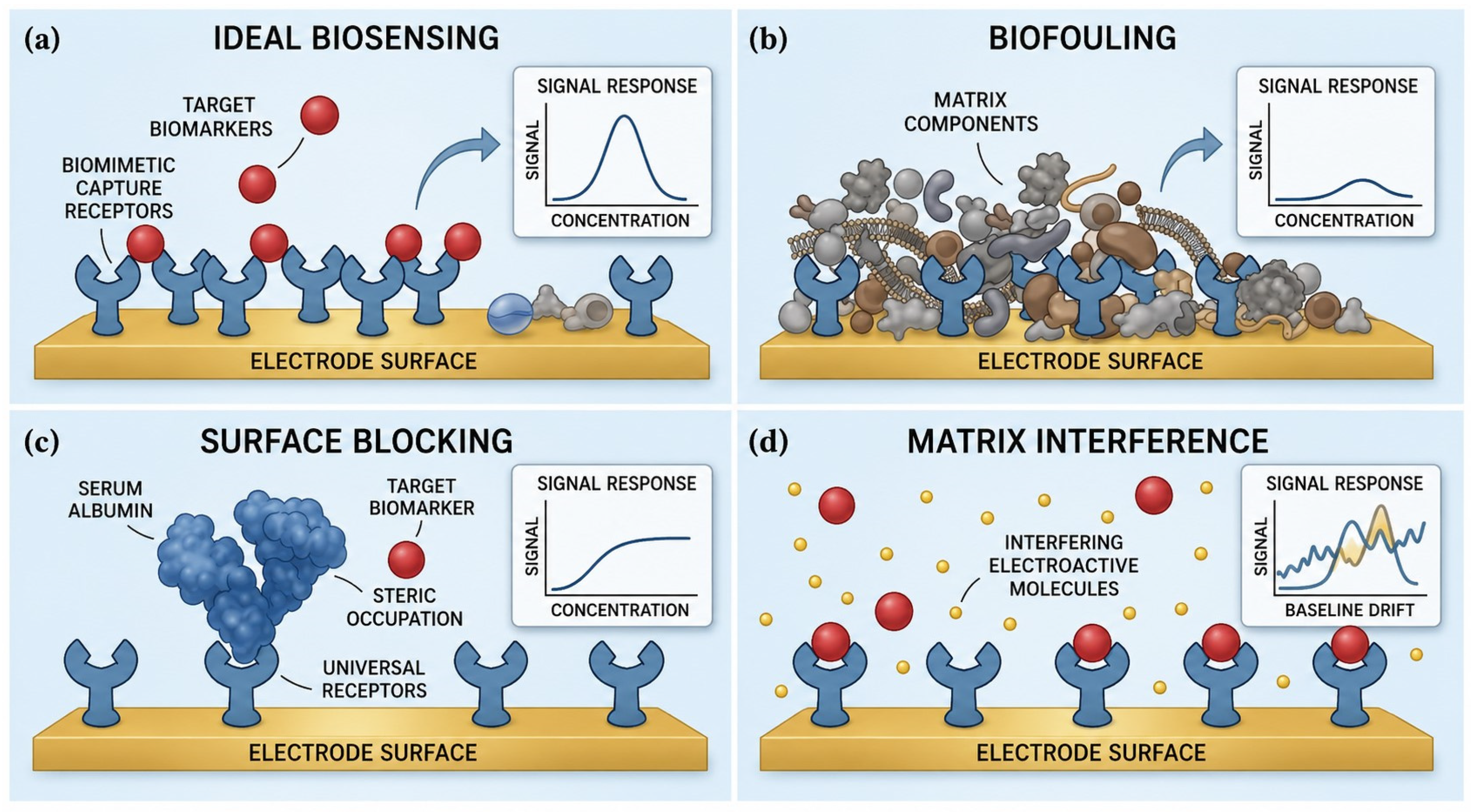
One of the most persistent limitations is the combined effect of surface fouling, receptor blocking, and matrix-derived signal interference, which frequently causes signal drift, sensitivity loss, poor reproducibility, and false-positive or false-negative responses [
6]. In real biological matrices, the sensor surface is continuously exposed to proteins, lipids, salts, metabolites, cellular debris, and other competing species that can adsorb onto the transducer or biorecognition layer. These interactions may block active recognition sites, alter local charge distribution, hinder mass transport, or generate parasitic signals, ultimately reducing analytical reliability. Such effects are particularly problematic in biomarker detection, where target analytes are often present at trace concentrations and small signal distortions may lead to clinically misleading conclusions.
Importantly, fouling and matrix interference are often treated as separate analytical problems, although in practical sensing and biosensing systems they are strongly interconnected. Surface fouling may originate from protein adsorption, oxidation-product deposition, membrane pore blockage, biofilm formation, or irreversible passivation of electroactive interfaces, while matrix interference additionally includes electroactive interferents, ionic strength fluctuations, pH changes, viscosity effects, and nonspecific refractive index shifts in optical systems [
7]. Together, these processes affect receptor accessibility, charge transfer kinetics, transducer response, and baseline stability, thereby compromising both short-term analytical performance and long-term operational robustness.
Although many previous reviews have focused on antifouling materials, passivation layers, and low-fouling coatings, these topics are often discussed mainly from a surface chemistry perspective. In practical biomarker sensing, however, signal deterioration rarely results from surface adsorption alone. Instead, analytical failure usually emerges from the combined action of fouling, incomplete surface blocking, matrix interference, drift, and sensor aging, especially in serum, blood, sweat, and other complex biological fluids.
This review treats these effects as interconnected mechanisms rather than isolated problems. We show how protein adsorption, membrane clogging, nonspecific binding, ionic strength changes, pH fluctuations, viscosity effects, and electroactive interferents lead to specific failure modes across electrochemical, potentiometric, optical, SPR, capacitive, and wearable biosensors. We then connect these mechanisms with practical prevention strategies, including hydration-driven antifouling materials, blocking workflows based on BSA, mercaptohexanol and ethanolamine, regeneration protocols, microfluidic pre-treatment, and AI-assisted drift correction. The review also extends this issue to ion-selective potentiometric sensors, where signal deterioration originates from ion competition, membrane co-extraction, and water-layer formation, and where prevention relies on ionophore selection, lipophilic ionic additives, and hydrophobic solid-contact engineering. By combining molecular mechanisms with platform-specific examples and validated prevention strategies, this review provides a practical guide for designing more robust sensors and biosensors for reliable biomarker detection in real biological samples.
3. Matrix Interferences in Biological Samples
While
Section 2 explained the molecular and physicochemical causes of interface instability, the real analytical impact becomes clearer when we look at individual components of biological samples. In practical biomarker detection, the sensor signal depends not only on recognition of the target molecule, but also on the presence of highly abundant endogenous species that can cause nonspecific adsorption, electrochemical cross-talk, baseline drift, or slower mass transport [
20,
21]. These effects are especially important in serum, plasma, whole blood, saliva, urine, sweat, and interstitial fluid, where sample composition can vary significantly between patients, disease states, and even sample collection or storage conditions.
To provide a practical approach for sensor and biosensor design, this section discusses the major classes of biological interferents responsible for analytical failure, including proteins, lipids, lipoproteins, electroactive metabolites, electrolyte fluctuations, rheological changes, and preanalytical artifacts.
3.1. Proteins and Lipids Interferents
Among all biological matrices, serum and plasma present some of the most challenging environments for biomarker sensing, primarily due to their extremely high content of proteins and amphiphilic lipid carriers [
19,
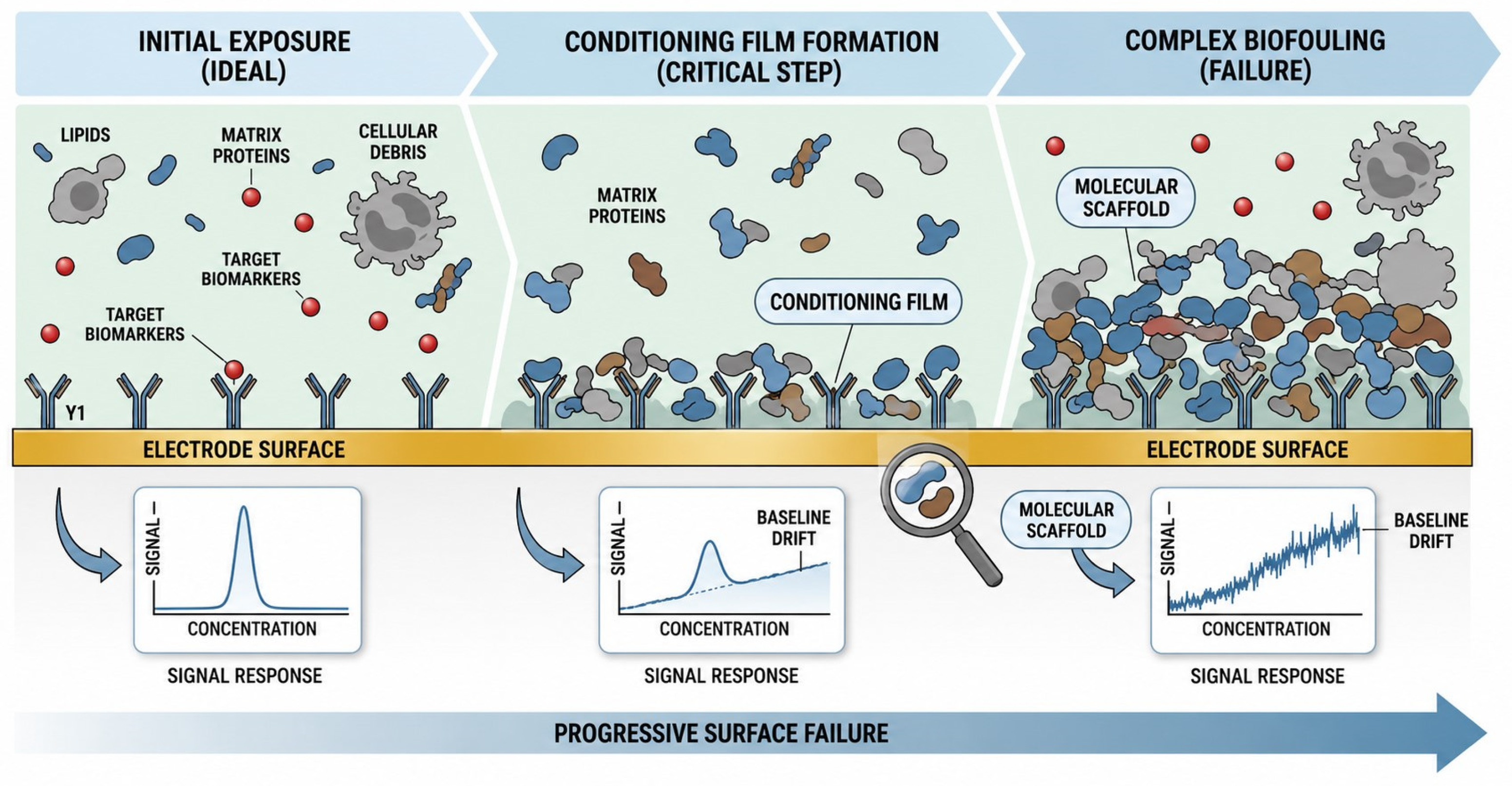
20]. Albumin, immunoglobulins, fibrinogen, transferrin, and complement proteins are typically present at concentrations many orders of magnitude higher than target biomarkers, making nonspecific adsorption statistically favored even on highly selective sensing interfaces. As a result, these macromolecules rapidly form a surface conditioning layer that modifies the local charge distribution, hydration structure, and receptor accessibility.
Albumin is particularly important because of its abundance, conformational flexibility, and strong tendency to adsorb onto metallic, carbonaceous, and polymeric interfaces [
21]. Once adsorbed, it may mask biorecognition elements, alter electron transfer pathways, and create steric barriers that reduce analyte diffusion toward the sensing surface. In potentiometric sensors, protein adsorption may additionally perturb the local ion activity profile at the membrane boundary, leading to unstable phase-boundary potentials and signal drift.
Lipids and lipoproteins introduce a second level of complexity. Low-density lipoproteins (LDL), high-density lipoproteins (HDL), triglyceride-rich particles, and membrane fragments possess both hydrophobic and charged domains, which facilitate strong interaction with nanostructured and plasmonic surfaces [
19]. Their adsorption can substantially alter local dielectric properties and interfacial refractive index, making them particularly problematic in SPR, LSPR, and label-free optical biosensors. In electrochemical systems, amphiphilic lipid layers may partially passivate the electrode surface and slow down charge-transfer kinetics.
Importantly, serum proteins and lipoproteins rarely act independently. Instead, they frequently co-adsorb into a mixed biomolecular corona-like layer, where proteins stabilize lipid-rich aggregates and lipoproteins enhance secondary protein retention. This cooperative interfacial restructuring significantly increases the risk of false-positive binding, baseline elevation, and long-term regeneration failure [
19,
21]. Such effects are especially pronounced in repeated-use biosensors and in continuous sensing systems exposed to flowing biological fluids.
3.2. Small-Molecule Interferents
Beyond macromolecular fouling caused by proteins and lipoproteins, biological fluids contain a wide range of low-molecular-weight electroactive species that significantly distort electrochemical biosensor responses. These compounds are particularly problematic because they are often present at relatively high and fluctuating concentrations and may exhibit redox potentials overlapping with those of target analytes. As a result, they can generate false-positive signals, baseline elevation, and reduced analytical specificity, especially in amperometric and voltammetric sensing platforms [
22,
23].
Among the most studied interferents are uric acid and ascorbic acid, which are both abundant in serum and interstitial fluid. Uric acid is an end product of purine metabolism, while ascorbic acid (vitamin C) is a key antioxidant present in many physiological fluids. Both compounds are readily oxidizable at commonly used electrode materials, including carbon-based and metal-modified surfaces. Their simultaneous oxidation can lead to overlapping voltammetric peaks, making it difficult to resolve target-specific signals without additional separation strategies or selective surface modifications [
22].
A related and highly relevant issue is glucose cross-talk, which is particularly critical in the context of diabetes monitoring and continuous glucose sensing. In non-enzymatic glucose sensors, oxidation currents attributed to glucose may be significantly affected by coexisting electroactive species, especially uric acid, ascorbic acid, and acetaminophen metabolites. Even in enzymatic glucose biosensors, interference may arise indirectly through changes in local oxygen concentration, pH shifts caused by metabolic activity, or electrode surface fouling that alters enzyme accessibility and electron transfer efficiency [
23]. These effects can result in signal drift and calibration instability during long-term operation.
Importantly, the impact of small-molecule interferents is strongly dependent on the electrode material, surface functionalization, and applied potential window. Nanostructured materials may enhance sensitivity but simultaneously increase the density of active sites where nonspecific oxidation can occur. Similarly, catalytic surfaces designed to improve electron transfer may unintentionally lower selectivity by facilitating the oxidation of multiple species at similar potentials.
In addition to direct electrochemical cross-reactivity, these small molecules can also influence interfacial charge distribution and double-layer structure, thereby indirectly affecting potentiometric and impedimetric measurements. Changes in local ionic composition and redox balance may shift baseline stability, especially in low-buffer-capacity environments such as sweat or interstitial fluid.
3.3. Electrolytes, pH Variation, and Ionic Strength Effects
Beyond macromolecular and electroactive molecular interferents, the electrolyte composition of biological samples can also significantly distort sensor responses. Variations in the concentration of major ions such as Na
+, K
+, Cl
−, Ca
2+, Mg
2+, phosphate, bicarbonate, and ammonium directly influence the physicochemical environment at the sensor interface, often leading to substantial baseline shifts and reduced selectivity [
24]. These effects are especially pronounced in potentiometric and ion-selective sensing systems, where the analytical signal is inherently governed by phase-boundary equilibria and local ion activity rather than total concentration.
In serum and plasma, physiological ionic strengths are typically high, causing strong electrostatic screening and compression of the electrical double layer. This may suppress charge-based recognition events, reduce sensitivity in field-effect and potentiometric biosensors, and introduce deviations from ideal Nernstian behavior. In wearable biofluids such as sweat and interstitial fluid, ionic strength may fluctuate dynamically with hydration status, perspiration rate, and metabolic activity, making stable calibration even more difficult.
pH variation introduces an additional layer of complexity. Changes in proton concentration can alter the protonation state of membrane components, receptor ligands, surface functional groups, and biorecognition elements. As a consequence, the affinity of ionophores, aptamers, peptides, antibodies, and enzyme-based recognition layers may shift significantly even when the target biomarker concentration remains constant. In potentiometric systems, local pH fluctuations can directly perturb the membrane potential, while in enzymatic biosensors, pH changes may modify catalytic turnover and product generation rates.
Electrolyte-induced perturbations are also critically linked to reference electrode instability and junction potential artifacts. Differences between calibration buffers and real biological matrices may create liquid-junction potentials, especially when the chloride concentration, protein content, or viscosity differs substantially between solutions. These hidden potential offsets are a frequent source of poor reproducibility and sample-to-sample variability in clinical measurements.
Biological fluids such as serum and plasma contain a high concentration of dissolved ions (e.g., Na
+, Cl
−), which strongly influence how electrical signals behave near sensor surfaces. When a charged molecule binds to a receptor on an electrochemical or field-based biosensor, it generates an electrical perturbation that can, in principle, be detected. However, in high-salt environments, surrounding ions rapidly redistribute and shield these charge effects, a phenomenon known as Debye screening [
25]. As a result, the electrical influence of a binding event decays very quickly with distance from the surface, and only events occurring extremely close to the sensor interface can be effectively detected. This strong attenuation of electrostatic interactions in physiological media reduces the effective sensing range of charge-sensitive biosensors and is a key limitation for aptasensors, immunosensors, and potentiometric devices operating in undiluted biological samples.
To summarize, electrolyte composition, pH fluctuations, and ionic strength effects act as fundamental matrix-dependent modulators of sensor response, influencing ion activity, surface charge distribution, receptor conformation, and electrostatic sensing range. These effects are particularly critical in miniaturized and wearable platforms, where even small changes in local sample composition may propagate into substantial analytical drift.
3.4. Viscosity, Diffusion Limitations, and Hemolysis Artifacts
Beyond chemical interferents, the physical properties and preanalytical quality of biological samples can also distort sensor performance. Increased sample viscosity slows analyte diffusion toward the sensing interface, prolongs equilibration, and may lead to underestimated biomarker levels, particularly in microfluidic, SPR, impedimetric, wearable, and ion-selective sensors, where transport can become rate-limiting [
26,
27]. This effect is especially relevant in protein-rich serum, mucus-containing saliva, wound exudates, and paper-based systems, where altered rheology changes diffusion distance, capillary flow, and membrane hydration.
Another important source of error is hemolysis, which releases hemoglobin, intracellular ions, enzymes, membrane fragments, and redox-active metabolites into serum or plasma [
28]. These components can distort electrochemical, optical, and ion-selective readouts through background absorbance, oxidation currents, nonspecific adsorption, or false elevation of ions such as K
+.
Together, viscosity-related diffusion limits and hemolysis represent practical matrix artifacts that are especially critical in miniaturized and rapid-response biosensors.
5. Prevention Strategies
Because failure mechanisms differ across sensing platforms, prevention strategies must target the specific physicochemical source of signal distortion rather than only the final analytical artifact alone [
40,
41]. No single solution is universally effective, as matrix-induced errors may arise from nonspecific adsorption, oxidation-product deposition, electrolyte screening, transport limitations, regeneration failure, or baseline drift. For this reason, robust sensor design increasingly relies on multilayered approaches that combine surface chemistry, interface engineering, device architecture, sample pre-treatment, and data-driven correction.
At the materials level, common strategies include hydration-based antifouling coatings, zwitterionic and hydrogel interfaces, selective membranes, and nanoporous barriers that reduce protein and lipid adsorption while maintaining analyte transport [
40,
41]. At the device level, improved membrane composition, stable solid contacts, regenerable surfaces, and microfluidic sample control help minimize long-term drift and matrix burden [
41,
42]. When physical fouling prevention is not sufficient, informatic tools such as baseline tracking, adaptive calibration, and machine-learning-assisted drift correction provide an additional layer of robustness [
40].
The following subsections discuss these prevention strategies in detail, moving from surface-level antifouling approaches to device-level stabilization and data-driven compensation methods.
5.1. Surface Antifouling Materials and Hydrated Interfaces
5.1.1. General Principles of Hydration-Based Antifouling
Recent studies show that hydration-driven interfaces, particularly PEGylated layers, zwitterionic peptides, and conductive hydrogels, can substantially improve analytical reliability in serum and other protein-rich media by suppressing nonspecific adsorption while preserving target accessibility [
43,
44,
45,
46,
47,
48].
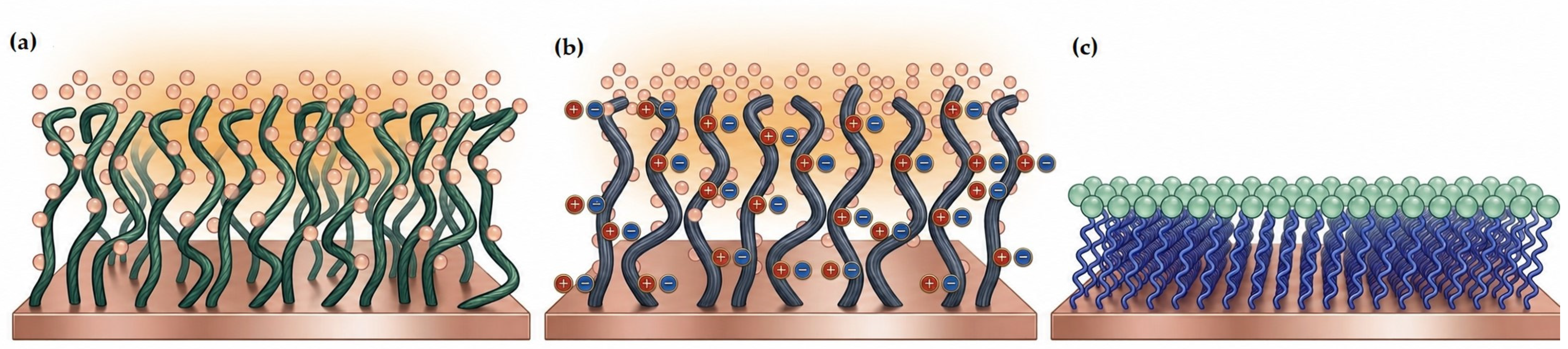
The role of surface hydration and chain flexibility in antifouling performance is illustrated in
Figure 3, comparing hydrophilic polymers, zwitterionic coatings, and self-assembled monolayers.
Figure 3 summarizes the main hydration-based antifouling surface architectures used to protect sensing interfaces. As shown, hydrophilic polymer brushes such as PEG create a diffuse hydration shell through flexible surface-grafted chains, generating steric and water-mediated repulsion against proteins and other foulants. In contrast, zwitterionic polymer brushes (e.g., polySBMA) produce a more localized and strongly bound hydration layer through balanced positive and negative charges, which is particularly effective in resisting nonspecific adsorption from complex biofluids. Self-assembled monolayers (SAMs) represent a thinner and more ordered alternative, where densely packed molecular layers provide steric exclusion and limit the access of larger biomolecules to the transducer surface. Together, these architectures illustrate how controlling interfacial hydration and steric accessibility can significantly improve antifouling performance while maintaining analyte transport to the sensing layer.
Hydration-based antifouling materials include both surface-grafted polymer brushes and bulk hydrogel networks, which differ in architecture but share the ability to resist nonspecific adsorption through steric and water-mediated repulsion [
50]. While polymer brushes provide an excellent 2D anti-fouling interface, 3D hydrogel matrices offer a versatile architecture for enhancing the ionic and mechanical performance of sensors and biosensors.
5.1.2. Hydrogel and Peptide-Based Antifouling Matrices
One of the strongest examples of hydrogel application is the zwitterionic peptide hydrogel electrochemical biosensor for prostate-specific antigen (PSA) reported by Du et al. [
43]. In this system, a self-assembled zwitterionic peptide hydrogel (CFEFKFC) was integrated with a PEDOT/AuNP electrochemical platform for PSA detection in human serum. The hydrogel created a highly hydrated antifouling layer that effectively prevented nonspecific adsorption of proteins and cells, enabling reliable sensing in real serum with a linear response range from 0.1 ng mL
−1 to 100 ng mL
−1 and a LOD of 5.6 pg mL
−1.
The developed HER2 biosensor exhibited a linear detection range from 0.1 ng mL
−1 to 1.0 μg mL
−1 with a detection limit of 45 pg mL
−1 in human serum. Wang et al. developed an antifouling peptide hydrogel-based electrochemical biosensor for HER2 detection in human serum, where the peptide hydrogel served as both the antifouling interface and antibody-supporting scaffold [
44]. The highly hydrated 3D matrix suppressed serum protein adsorption while preserving diffusion of the HER2 target toward the sensing interface, illustrating how hydrogel porosity and water retention can decouple antifouling from mass transport limitations.
One of the strategies is PEG-assisted hydration shielding. Yang et al. demonstrated this concept in an electrochemical HER2 biosensor for complex biological media, where PEG was combined with a designed recognizing peptide on PEDOT/AuNP electrodes [
45]. The dual antifouling design significantly improved signal quality in serum-containing samples, enabling HER2 detection over a wide linear range from 1.0 pg mL
−1 to 1.0 μg mL
−1 with an ultralow detection limit of 0.44 pg mL
−1.
The PEG concept was pushed further by Shi et al., who reported a super-antifouling electrochemical biosensor for human Immunoglobulin G (IgG) detection in complex biofluids based on a PEGylated multifunctional peptide [
46]. Here, PEG was not only used as a hydration-promoting layer but also integrated directly into the multifunctional recognition peptide architecture. The system achieved a wide linear detection range from 1 pg mL
−1 to 500 ng mL
−1 together with a sub-pg mL
−1 detection limit in serum.
Another highly relevant practical direction is the use of low-fouling α/β-peptide interfaces with enhanced enzymatic stability. Zhao et al. showed that α/β-peptide-based electrochemical biosensors maintain reliable biomarker detection in human serum, overcoming one of the key limitations of classical peptide antifouling layers [
47].
Most recently, conductive hydrogel architectures have emerged as an especially powerful class of multifunctional antifouling interfaces. A double-conductive hydrogel electrochemical biosensor by Geng et al. demonstrated that hydrogels can provide simultaneous antifouling protection, charge transport, and signal amplification in complex serum media [
48].
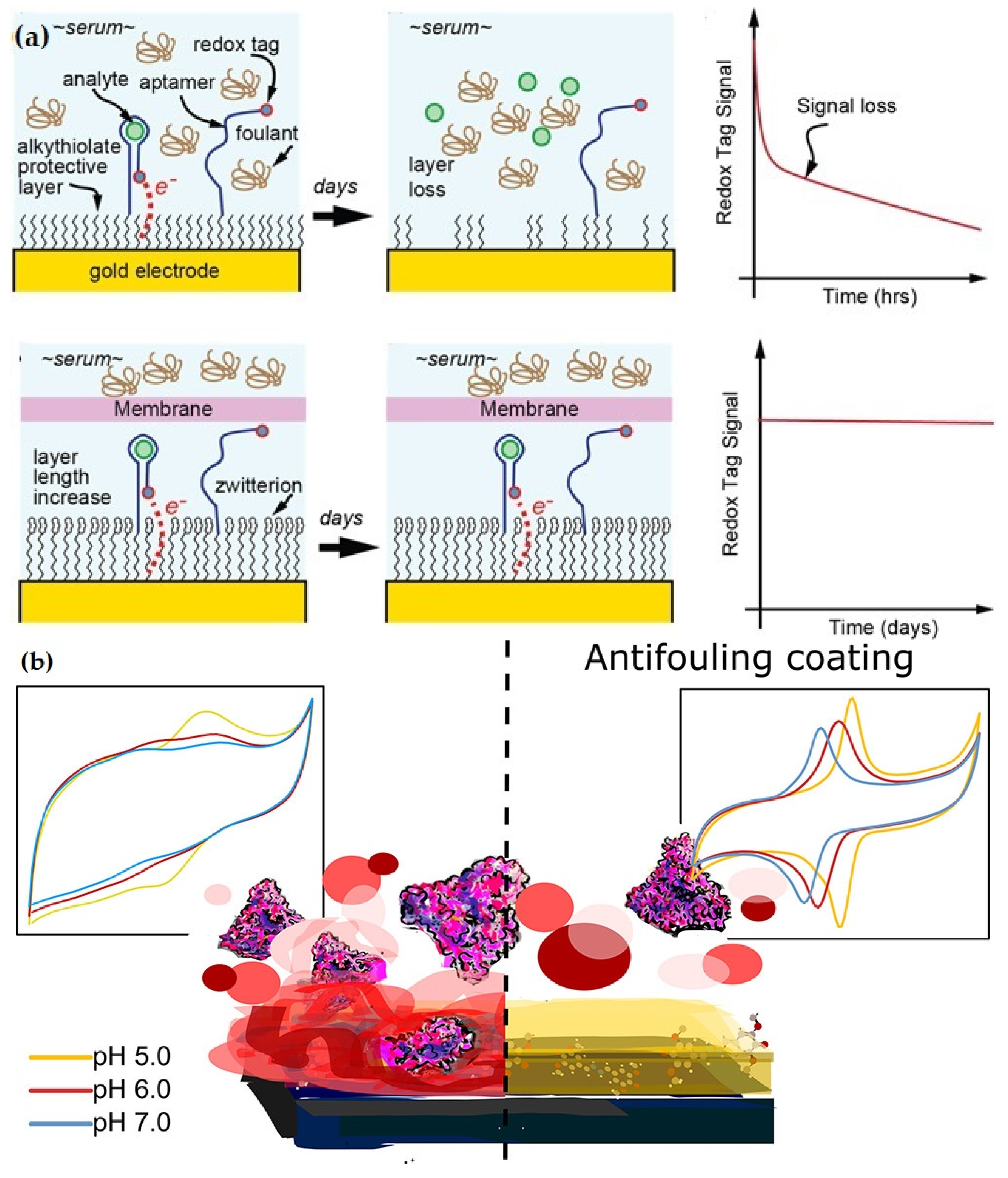
The long-term analytical consequences of biofluid-induced fouling, together with the stabilizing effect of protective membranes and zwitterionic antifouling monolayers, are illustrated schematically in
Figure 4a. The effect of antifouling surface coatings on electrochemical signal stability is also illustrated schematically in
Figure 4b, highlighting the suppression of nonspecific adsorption and preservation of redox activity across varying pH conditions.
Unlike passive polymer brushes, conductive hydrogels allow the interface to remain electrochemically active while minimizing nonspecific protein deposition, making them highly promising for wearable and continuous biomarker sensing. These real-world examples show that the most successful antifouling strategies are no longer simple blocking coatings, but rather multifunctional hydrated interfaces that integrate fouling resistance, bioreceptor stabilization, conductivity, and selective mass transport.
5.1.3. Polymer Brushes, Zwitterions, and SAMs
Another highly effective hydration-based antifouling strategy involves surface-grafted polymer brushes, in which densely tethered polymer chains extend from the sensor surface to create a steric and strongly hydrated barrier against nonspecific adsorption. Unlike bulk hydrogels, polymer brushes form ultrathin nanometer-scale coatings that preserve direct transducer coupling while still resisting protein, lipid, and bacterial adhesion. Particularly important examples include oligo(ethylene glycol) methacrylate (OEGMA) and carboxybetaine-based brushes, which have shown excellent resistance to fouling from complex biological fluids including plasma, saliva, urine, and serum. Rodríguez-Emmenegger and co-workers demonstrated that such brushes maintain low nonspecific adsorption even after biofunctionalization, making them highly attractive for SPR, electrochemical, and BioFET biosensors operating in real biological matrices [
51,
52,
53]. In addition to suppressing protein adsorption, polymer brushes can reduce bacterial attachment and delay early biofilm formation, which is especially relevant for wearable and long-term implanted sensing interfaces.
Beyond generic surface chemistries, these principles are increasingly translated into sensor-specific protective coatings tailored to the failure pathways of individual transduction platforms.
5.1.4. Electrosynthesized Permselective Polymer Coatings
Electrosynthesized permselective polymer films represent another important strategy for preventing matrix interference in electrochemical biosensors operating in complex biological and food-related samples. Unlike hydration-based antifouling interfaces, these coatings primarily function through electrostatic and size-exclusion mechanisms that selectively suppress the access of electroactive interferents while preserving analyte transport to the transducer surface. Particularly important examples include overoxidized polypyrrole and related electropolymerized non-conducting films, which can act as highly stable permselective barriers against compounds such as ascorbic acid, uric acid, dopamine, and other redox-active interferents commonly present in biological matrices [
54,
55,
56].
A representative example was reported by Ciriello and Guerrieri, who developed an amperometric choline oxidase biosensor based on an overoxidized polypyrrole film deposited on a platinum electrode for phospholipase D activity analysis [
54]. The overoxidized polymer layer exhibited strong rejection properties toward interfering electroactive compounds while preserving choline transport and hydrogen peroxide detection. The system demonstrated good analytical stability together with practical applicability in complex matrices. Related studies further demonstrated that electrosynthesized permselective polymer architectures can be integrated with enzyme immobilization and dual-electrode biosensing strategies to improve selectivity and suppress signal cross-talk in biological samples [
55,
56]. Unlike passive blocking layers, these electrochemically generated coatings combine permselective transport control with direct integration into the transducer fabrication process, making them particularly attractive for miniaturized amperometric biosensors and point-of-care analytical platforms.
In addition to hydration-driven antifouling, electrostatic and permselective coatings represent another important strategy for preserving sensor performance in complex biological matrices. A classic example is Nafion, a negatively charged sulfonated fluoropolymer widely used to suppress interference from anionic species such as ascorbate, urate, and negatively charged proteins while maintaining permeability toward selected analytes and redox mediators. Due to its combined ion-exchange and permselective properties, Nafion has been extensively applied in electrochemical biosensors to reduce matrix-induced signal distortion and improve operational stability in serum and physiological fluids [
57].
Conducting polymer systems such as PEDOT:PSS additionally provide mixed ionic-electronic conductivity together with enhanced interfacial stability and reduced nonspecific adsorption. In biosensing applications, PEDOT:PSS coatings help preserve transducer sensitivity by stabilizing charge transfer at the biointerface while maintaining compatibility with hydrated antifouling architectures. These electrostatic and conductive polymer interfaces are particularly valuable in wearable and continuous sensing systems, where long-term exposure to protein-rich media can otherwise rapidly deteriorate signal quality [
58].
5.1.5. Transducer-Specific Protective Coatings for ISE
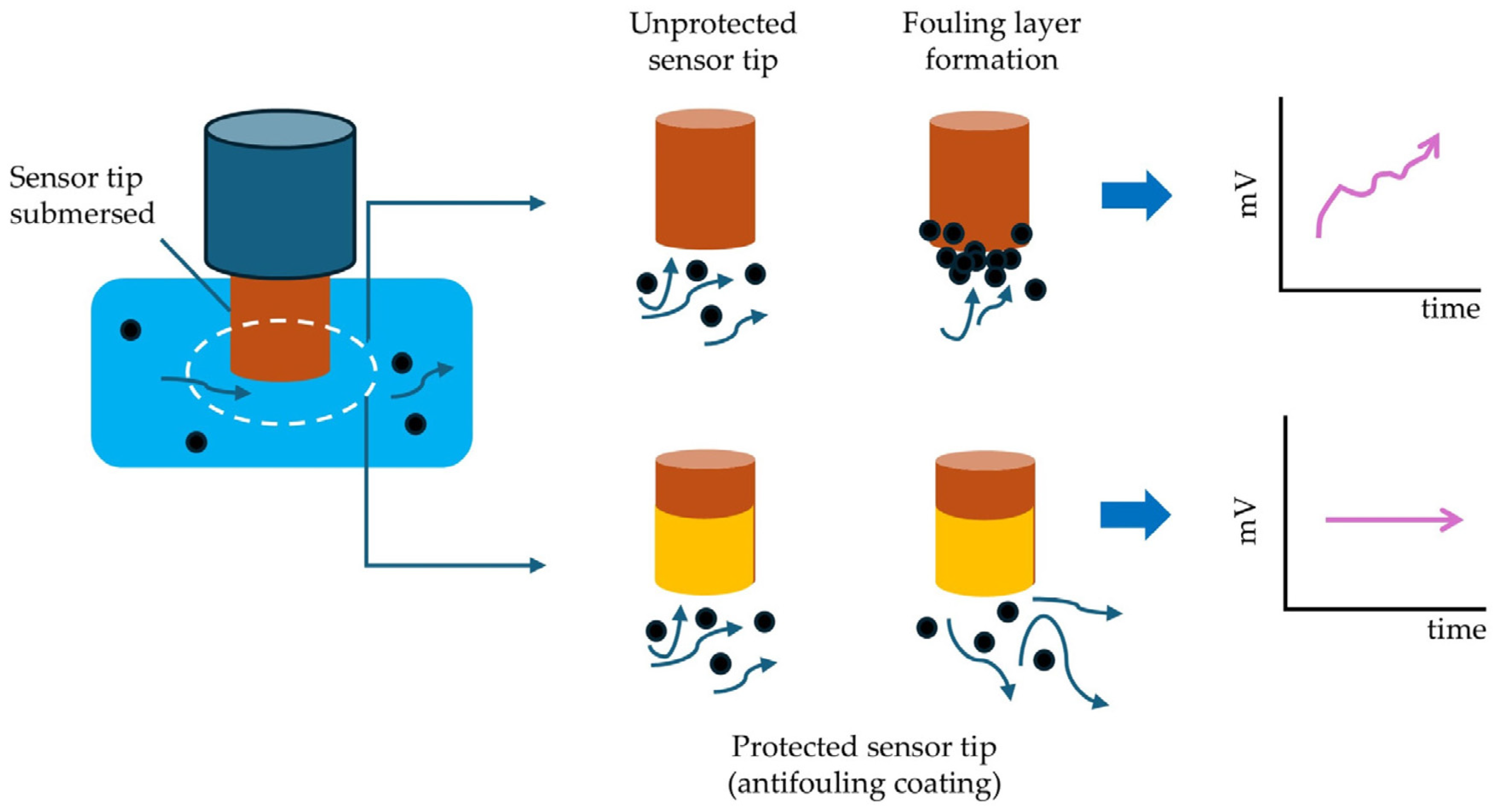
A practical example of antifouling coating design is found in ion-selective electrodes (ISEs) used for long-term monitoring. In these systems, external fouling of the exposed membrane tip may become a major source of drift during continuous operation in biological and environmental samples. Adsorption of proteins, lipids, biofilm precursors, and particulate matter creates an additional diffusion and hydration barrier that gradually alters local ion exchange, leading to progressive potential drift and delayed stabilization [
59]. Recent ISE-focused studies show that protective hydrophilic or low-adhesion coatings, including silicone hydrogels, fluoropolymer foul-release layers, zwitterionic polymer coatings, and TiO
2-based superhydrophilic surfaces, can strongly suppress fouling-layer formation and preserve a stable millivolt response over time compared with unprotected membranes (
Figure 5). This strategy is particularly relevant for wearable, epidermal, and long-term immersed ISEs.
Although nanostructured and porous interfaces significantly enhance analytical sensitivity by increasing electroactive surface area and receptor loading, excessive roughness and nanoscale porosity may also promote trapping of proteins, lipids, extracellular vesicles, and biomolecular aggregates within the interfacial architecture. In complex biological matrices, this may lead to accelerated irreversible fouling, restricted mass transport, and progressive signal instability. Importantly, the current literature does not define a universal roughness threshold at which sensitivity gains consistently outweigh fouling risks, as this balance depends strongly on nanostructure geometry, wettability, pore accessibility, and sample composition. Consequently, optimal nanointerface design increasingly focuses on balancing surface-area enhancement with controlled mass transport and antifouling accessibility.
5.2. Surface Blocking After Bioreceptor Immobilization
While antifouling materials reduce nonspecific adsorption at the design level, most biosensors based on specific molecular recognition still require additional surface passivation to block remaining active sites, exposed regions of the transducer, and gaps between immobilized sensing molecules. This is especially important in gold self-assembled monolayer (SAM) electrochemical sensors, aptasensors, and immunosensors based on 1-ethyl-3-(3-dimethylaminopropyl)carbodiimide (EDC) and N-hydroxysuccinimide (NHS) coupling chemistry, where incomplete surface blocking or insufficient gap filling can lead to false-positive signals in serum and whole blood [
60].
One of the most established post-immobilization strategies is ethanolamine quenching of residual NHS esters, especially after EDC/NHS coupling on carboxyl-terminated SAMs or polymeric biointerfaces. This step chemically deactivates unreacted activated esters that would otherwise bind proteins or serum interferents nonspecifically. In practical sensor fabrication, ethanolamine therefore acts as a reactive-site terminator, stabilizing the electrochemical or SPR baseline before exposure to complex media [
60].
A second mechanistically distinct strategy is MCH (6-mercapto-1-hexanol) backfilling, which is especially important in gold-based DNA and aptamer biosensors. After immobilization of thiolated probes, MCH is routinely introduced to occupy uncovered gold domains, improve monolayer packing density, optimize probe orientation, and reduce direct adsorption of proteins or electroactive species [
61,
62]. This structural ordering effect is essential for minimizing charge-transfer leakage and signal variability in label-free electrochemical systems.
At the protein level, BSA remains the most widely used universal blocking agent in immunosensors and biosensors for serum analysis. By adsorbing onto residual exposed surface regions, BSA suppresses nonspecific attachment of serum proteins, lipoproteins, and extracellular vesicles that would otherwise generate background current, false refractive-index shifts, or impedance drift.
An example of BSA-based post-functionalization blocking in a real biomarker assay is the electrochemical immunosensor for carcinoembryonic antigen (CEA) in human serum [
63]. After immobilization of the anti-CEA recognition layer on a biomaterial-modified glassy carbon electrode, the authors optimized the BSA blocking step (60 min) to suppress nonspecific adsorption from serum proteins and stabilize the ferri/ferrocyanide charge-transfer response. Importantly, the analytical performance strongly depended on this passivation stage, demonstrating that BSA remains indispensable even in modern nanostructured biomaterial interfaces.
Another example comes from a miRNA-21 electrochemical biosensor, where the authors used a combined MCH + BSA blocking workflow after immobilization of the DNA hairpin probe [
64]. The MCH backfilled uncovered gold sites within the SAM, while BSA suppressed nonspecific macromolecular adsorption. Electrochemical impedance spectroscopy showed a further increase in charge-transfer resistance immediately after this dual blocking step, directly confirming successful passivation of residual surface defects.
A particularly valuable extension of classical blocking chemistry is the use of BSA-derived structural passivation layers, such as crosslinked BSA hydrogels, where the blocking reagent simultaneously acts as a low-fouling scaffold [
65].
Mechanistically, post-functionalization blocking therefore fulfills three complementary and synergistic roles:
chemical deactivation of reactive groups (ethanolamine);
defect filling and SAM ordering (MCH);
suppression of nonspecific protein adsorption (BSA).
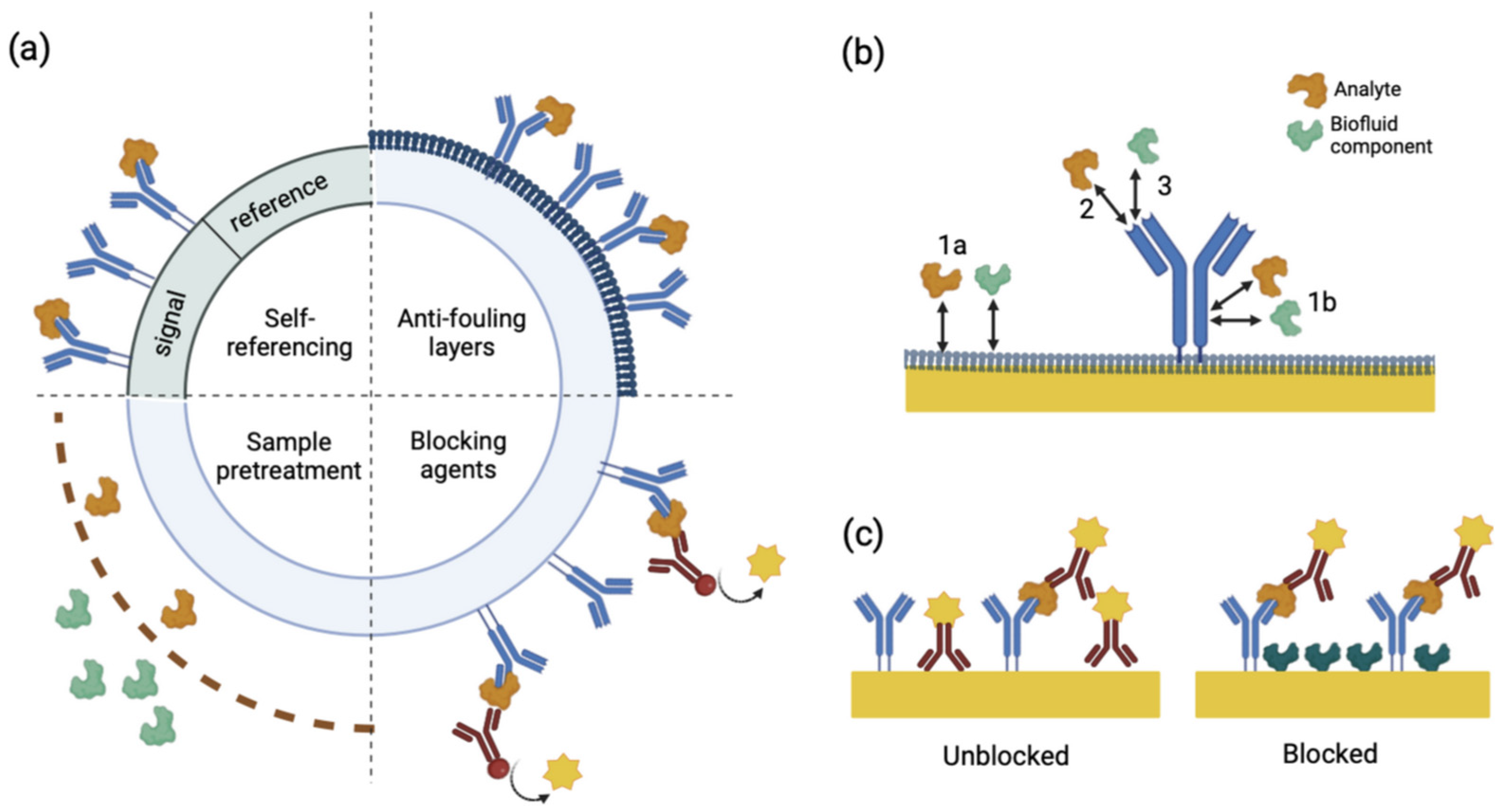
The principal nonspecific binding pathways addressed by post-functionalization passivation strategies are schematically summarized in
Figure 6, including direct adsorption to the transducer surface, interaction with the capture probe, and interference at the recognition site, together with the suppressive role of blocking agents.
Overall, interface passivation after receptor immobilization remains a critical second line of defence against fouling and matrix interference, complementing intrinsic antifouling materials by eliminating residual chemical and structural defects that would otherwise propagate into false-positive signals.
5.3. Ion-Selective Membrane Engineering
In ion-selective electrodes (ISEs), interference from competing ions is primarily caused through membrane-level selectivity engineering rather than post-measurement correction. Unlike affinity biosensors, where fouling and blocking dominate, potentiometric failure in ISEs often arises from co-extraction of interfering ions, unstable membrane phase-boundary potentials, water-layer formation, and insufficient ion discrimination [
66]. The most effective prevention strategies therefore involve the rational selection of ionophores, lipophilic ionic additives, and membrane polarity, which together determine selectivity coefficients, detection limits, and long-term drift behavior.
The most classic and widely used practical example is the valinomycin-based potassium-selective membrane, where the high geometric complementarity of the ionophore cavity strongly favors K
+ over Na
+ and other alkali ions. However, selectivity and detection limit are further improved by introducing lipophilic ionic salts such as Potassium tetrakis(4-chlorophenyl)borate (KTpClPB) or Potassium tetrakis[3,5-bis(trifluoromethyl)phenyl]borate (KTFPB), which stabilize membrane selectivity and suppress interference-driven transmembrane ion fluxes. A foundational study by Telting-Diaz and Bakker demonstrated that tetraphenylborate-type ion exchangers directly influence lower detection limits and interference control, particularly in ultratrace analysis, by limiting undesired exchange of interfering ions at the sample side [
67].
A highly practical modern example is a potassium-selective conductometric membrane sensor for sweat analysis, where a crown-ether-type potassium ionophore (K-III/BME-44) was combined with KTpClPB in a PVC membrane deposited on interdigitated gold electrodes [
68]. The authors systematically showed that increasing the lipophilic salt fraction from 5 to 14 wt% reduced membrane noise, broadened the dynamic range, and improved interference suppression, although with a moderate trade-off in slope sensitivity. Most importantly, the optimized membrane matched the physiological sweat K
+ range (1.75–16.75 mM), providing a direct real-world example of how lipophilic salts are used to manage matrix-derived ionic cross-talk in wearable ISEs. The optimized membrane composition additionally reduced membrane noise and broadened the dynamic sensing range compared with lower lipophilic salt contents. Another strong mechanistic example comes from impedance-based potassium ISEs containing valinomycin and ionic sites, where systematic variation in ionophore concentration and lipophilic borate sites was used to tune selectivity and response stability. The study showed that both the ionophore-to-site ratio and membrane thickness influence the degree of interference suppression, confirming that selectivity is not determined by the ionophore alone but by the whole membrane architecture. This concept extends beyond potassium sensing. In solid-contact coulometric ISEs for divalent cations, membranes containing calcium ionophore IV or lead ionophore IV together with KTpClPB/KTFPB were shown to improve sensitivity and reduce interference through optimized ion-exchange equilibria and stabilized charge transduction. These examples are particularly relevant for serum and environmental monitoring, where divalent ion competition is a major analytical challenge.
Recent studies have described the phenomenon of Donnan breakdown, which represents a key limiting factor for the upper detection range of ion-selective electrodes in complex real-world sample matrices [
69]. They demonstrated that at high sample concentrations, the permselectivity of the ISE membrane can be overwhelmed. Importantly, no universal concentration threshold for Donnan breakdown exists, as the onset of permselectivity loss depends strongly on membrane composition, ionophore/additive ratios, membrane thickness, and the ionic composition of the sample matrix. This failure occurs when the Donnan exclusion barrier is breached, allowing interfering anions (e.g., Cl
− from the sample) to co-extract with cations into the organic phase, thereby disrupting the stable phase-boundary potential. Their findings emphasize that precise optimization of lipophilic salt concentration is necessary to not only achieve low detection limits but also to maintain signal stability in challenging, high-salinity biofluids such as sweat and undiluted serum.
To ensure the long-term reliability of sensors in complex environments, advanced characterization techniques are increasingly integrated into the sensor operation. Electrochemical impedance spectroscopy (EIS) has been demonstrated as a powerful diagnostic tool capable of evaluating the functionality of polymer membrane-based ion-selective electrodes (ISEs) without the need for frequent classical calibrations. By analyzing impedance characteristics, it is possible to distinguish between various types of membrane degradation, such as physical damage, biofouling, or the leaching of active components like ionophores and ionic sites. Specifically, physical damage to the membrane surface can be identified by the appearance of additional semicircles in Nyquist plots and a decrease in Warburg impedance, indicating new low-resistance pathways for ion diffusion. Furthermore, the initiation and growth of a biofilm (glycocalyx) can be monitored via EIS, as the biofilm acts as an additional diffusion layer that alters the bulk membrane resistance and interfacial charge-transfer processes [
70,
71]. Implementing such electronic self-diagnostics allows for the detection of critical performance thresholds, ensuring that only analytically acceptable data are reported during remote or continuous monitoring.
5.4. Solid-Contact Layers in ISEs
A complementary strategy to reduce interferences is the introduction of a solid-contact layer between the ion-selective membrane and the transducer in ion-selective electrodes (ISEs).
A critical long-term instability mechanism in ion-selective electrodes (ISEs) is the formation of an aqueous water layer at the interface between the ion-selective membrane and the underlying transducer surface. This film forms as a result of water uptake and transport through the membrane and acts as an uncontrolled ion reservoir, promoting slow ion exchange, potential drift, memory effects, and increased sensitivity to changes in sample composition [
30,
72]. The composition of the water layer may further change upon modification of the sample solution, due to the penetration of interfering ions into the layer, which contributes to additional potential instability.
The risk of water-layer formation is particularly high when hydrophilic solid-contact transducer material layers are used. To prevent this effect, effective strategies involve the introduction of hydrophobic intermediate layers, such as carbon nanomaterials or hydrophobic redox-active solid contacts. These materials reduce interfacial wetting and prevent water accumulation at the interface [
30,
72,
73]. In practical sensor design, combining hydrophobic transducer surfaces with membrane matrices characterized by low water uptake significantly improves baseline stability and long-term potentiometric performance in complex samples such as serum, sweat, and environmental matrices.
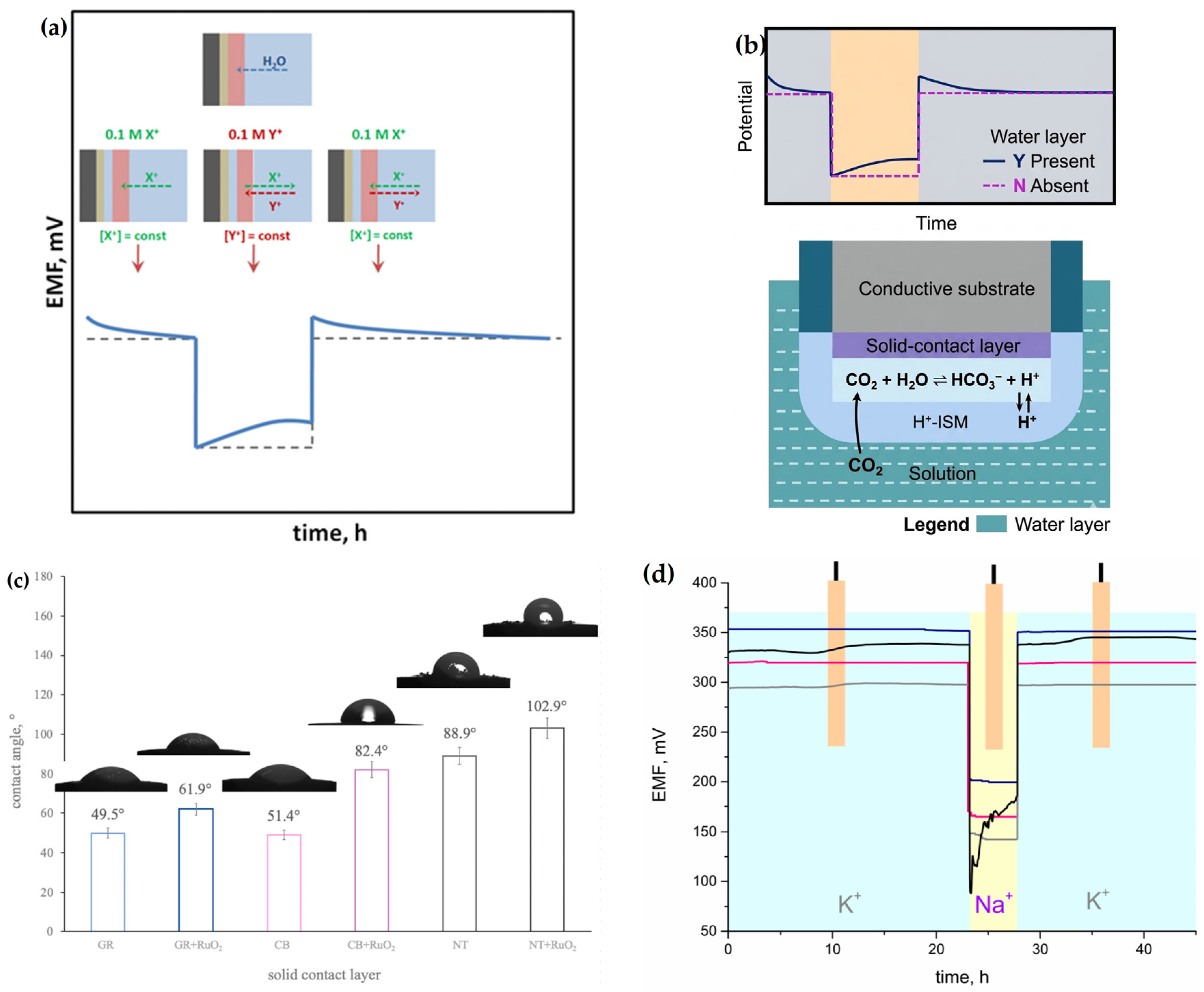
The tendency of SC-ISEs to form a water layer is commonly evaluated using water-layer tests, typically following the procedure proposed by Fibbioli et al. [
72,
74]. These tests involve sequential immersion of the electrode in high-concentration solutions of the primary ion and an interfering ion (main ion → interfering ion → main ion), while monitoring potential changes, as presented in
Figure 7a. Electrodes prone to water-layer formation exhibit noticeable potential drift during solution changes, caused by ion exchange within the trapped aqueous layer. In contrast, electrodes without a water layer show stable potentials after equilibration in the interfering ion solution and rapidly return to their initial potential upon re-exposure to the primary ion solution, indicating good stability and absence of interfacial water accumulation (see
Figure 7b).
Lenar et al. demonstrated the beneficial effect of hydrophobic layers by employing multi-walled carbon nanotubes (MWCNTs), graphene (GR), carbon black (CB) and ruthenium dioxide–carbon nanomaterials (RuO
2-CM) composite materials as a solid contact in ion-selective electrodes (
Figure 7c). Results, obtained during the potentiometric water layer test, showed that the transition from a primary ion solution to an interfering ion solution resulted in a remarkably stable potential without the characteristic “drift” associated with water accumulation. As seen in the provided potentiometric plots, the absence of a water film at the hydrophobic carbon nanomaterial/membrane interface ensures that the potential remains constant even when the sample matrix changes significantly.
5.5. Regeneration, Self-Cleaning, and Reusable Sensor Interfaces
Beyond passive antifouling and post-functionalization blocking, long-term biosensing increasingly requires active regeneration of the sensing interface after target capture or fouling accumulation. Regeneration strategies aim to restore the original analytical performance by removing bound analytes, fouling layers, or exhausted receptor coatings while preserving the structural and functional integrity of the transducer [
78,
79,
80]. This concept is particularly important in continuous monitoring, organ-on-chip systems, wearable sensors, and SPR platforms, where single-use interfaces are incompatible with prolonged operation.
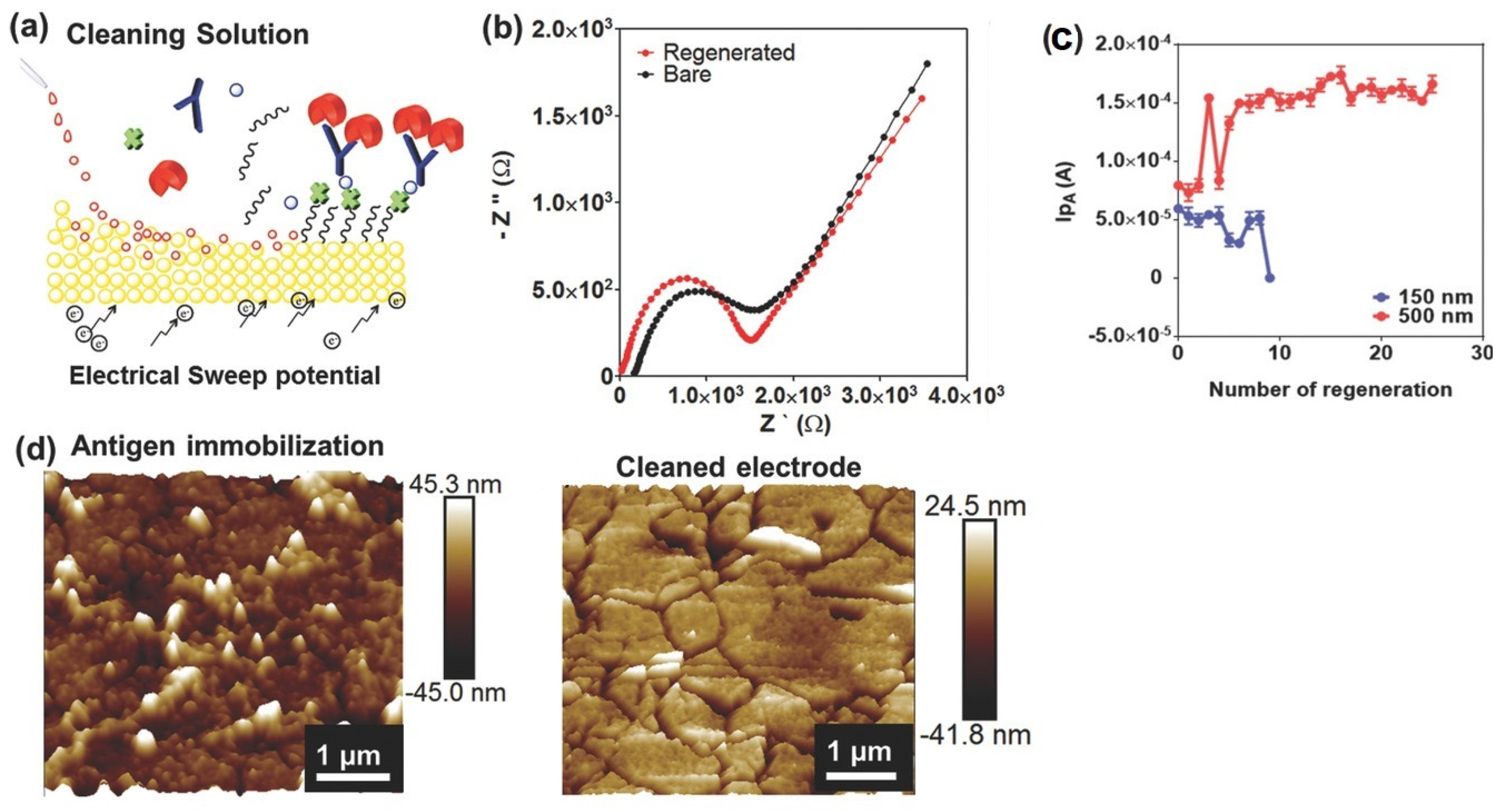
An example of electrochemical re-functionalization after use was demonstrated by label-free regenerative electrochemical microfluidic biosensors for continual monitoring of cell secretomes, targeting creatine kinase-MB (CK-MB) in organ-on-chip culture media (
Figure 8) [
81]. The system integrated a microfluidic EIS biosensor with automated two-step regeneration using cyclic voltammetric cleaning in H
2SO
4 followed by K
3Fe(CN)
6 treatment, enabling removal of the complete SAM–bioreceptor architecture from gold microelectrodes. The cleaned interface was then re-functionalized in-line, allowing repeated biomarker measurements over multiple cycles.
In optical biosensors, chemical regeneration of affinity interfaces remains one of the most established approaches. In SPR systems, regeneration is typically achieved using low-pH glycine buffers, high-salt eluents, surfactants, or chaotropic solutions, which dissociate antigen–antibody or aptamer–target complexes without stripping the immobilized ligand [
78]. Recent clinical SPR reviews highlight regeneration as a critical requirement for translating SPR into routine diagnostics, especially for repeated biomarker measurements in serum and plasma [
78]. In practice, this is particularly important for microfluidic SPR chips, where regeneration efficiency directly determines throughput, cost per assay, and baseline reproducibility. A highly modern direction involves regeneration through receptor-level design, particularly in aptamer and nucleic acid biosensors. Jia et al. summarized multiple examples where chemical, thermal, or pH-induced conformational resetting of aptamers restores target-free receptor states without replacing the sensing surface [
79]. These strategies are especially attractive because regeneration occurs at the level of the recognition event itself, rather than by rebuilding the entire sensor architecture. Such approaches are promising for cytokine, nucleic acid, and metabolite biosensors in sweat, saliva, and interstitial fluid.
Another important strategy is electric-field-driven or electrochemical self-cleaning, particularly for MIP and electroactive biosensors. In these systems, the application of potential pulses, cyclic voltammetry, or controlled over-oxidation can desorb electroactive foulants, release captured analytes, or re-open imprinted cavities [
80,
81]. Representative examples include wearable laser-engraved graphene MIP sensors for amino acids and cortisol, where electrical stimulation enabled repeated regeneration cycles without external washing steps. This approach is especially promising for wearable devices because it supports in situ cleaning during continuous biofluid exposure.
From a broader design perspective, regeneration strategies can be grouped into three major categories:
surface stripping and re-functionalization (electrochemical microchips);
target dissociation with preserved receptors (SPR, aptamers);
stimuli-responsive self-cleaning interfaces (electric, pH, thermal, light).
Each strategy offers a different balance between regeneration efficiency, transducer preservation, and cycle lifetime.
To address the challenges of signal degradation in wearable sweat diagnostics, Hou et al. [
82] recently developed a hierarchical sensing platform that integrates passive antifouling with active self-cleaning capabilities for the continuous monitoring of uric acid (UA). The architecture consists of a dual-layer interface: a top TiO
2/PVDF nanofiltration membrane and a bottom rGO/polypeptide hydrogel sensing layer. The TiO
2/PVDF membrane serves as a physical barrier that selectively excludes large-scale contaminants such as shed skin keratinocytes while maintaining a superhydrophilic surface to repel sebaceous oils. To address smaller molecular interferents, the underlying zwitterionic hydrogel creates a dense hydration shell that prevents the non-specific adsorption of proteins and bacteria. This in situ regeneration strategy allows the sensor to recover its initial sensitivity and surface cleanliness without requiring manual intervention, providing a robust model for the development of long-term, reusable wearable interfaces in complex biological fluids.
Despite their significant promise for long-term biosensing, stimuli-responsive and actively regenerated interfaces also raise important biocompatibility considerations for future in vivo and implantable applications. Electrically stimulated self-cleaning systems, conductive polymers, and responsive hydrogel architectures may potentially induce local inflammatory responses, cytotoxicity, or tissue irritation depending on their composition, degradation products, and operational conditions. In addition, repeated electrochemical stimulation or oxidative cleaning procedures may affect long-term tissue compatibility and interfacial stability in subdermal environments. Consequently, future development of self-cleaning biosensors will require careful optimization of material biocompatibility, degradation behavior, and stimulation parameters before clinical implantation can be safely achieved [
83].
5.6. Sample Pre-Treatment and Microfluidics
A highly effective way to mitigate fouling and matrix interference is to reduce the complexity of the sample before it contacts the sensing interface. Unlike surface-level antifouling approaches, microfluidic pre-treatment acts upstream by removing cells, large proteins, lipids, vesicles, and viscosity-related interferents that would otherwise destabilize the transducer response. This strategy is particularly important for whole blood, plasma-rich protein assays, and continuous sensing workflows, where direct exposure of the sensing interface to untreated samples often leads to rapid blocking, hemolysis artifacts, and poor reproducibility [
84,
85,
86,
87].
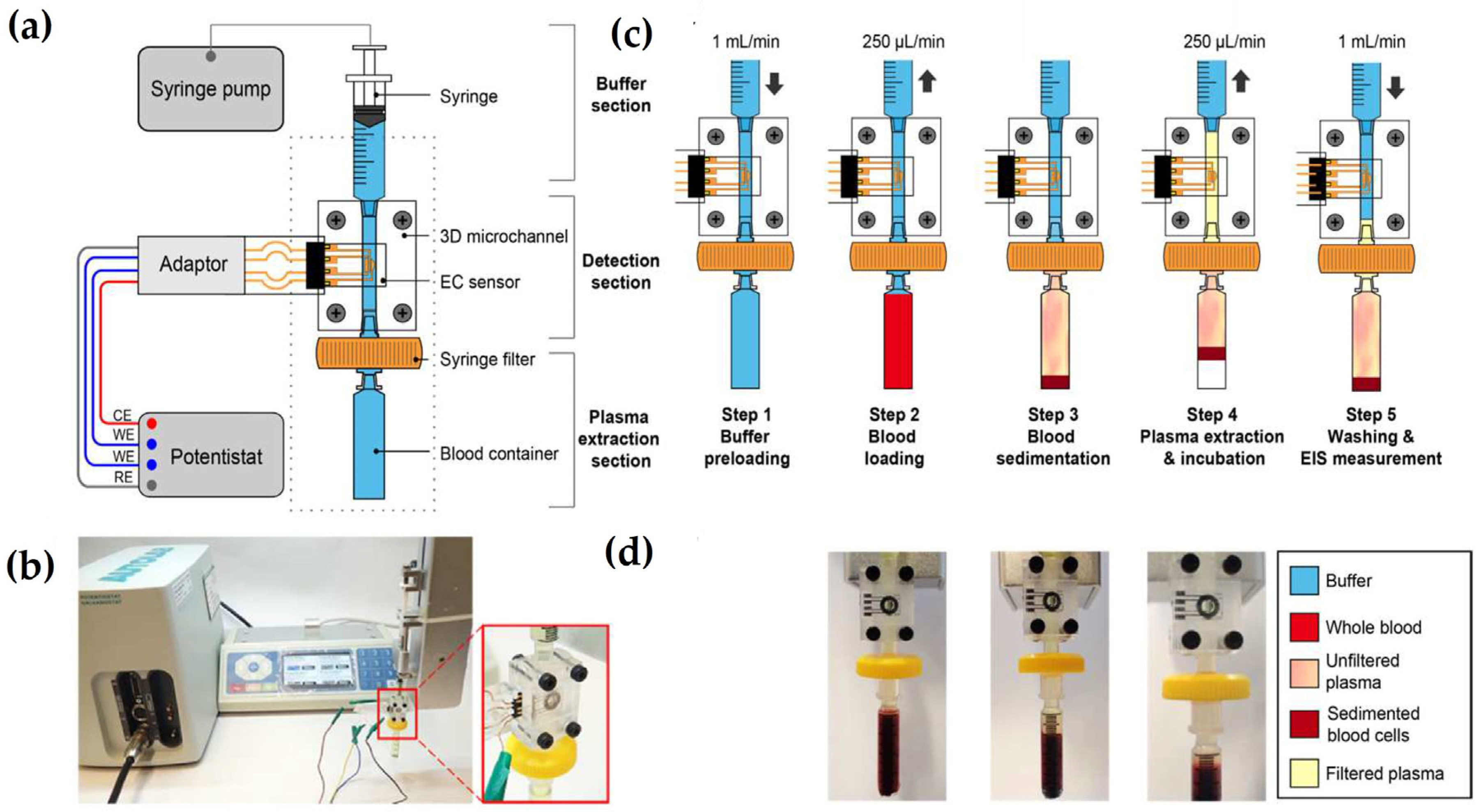
A notable example is the platform developed by Lai et al. [
84], which utilizes a sedimentation-based microfluidic design to extract plasma from whole blood without the need for external centrifugation. As illustrated in
Figure 9, the device guides the sample through a sequential protocol, including buffer preloading, gravitational sedimentation of blood cells, and subsequent plasma incubation, before performing in situ electrochemical impedance spectroscopy (EIS). This integration not only reduces the total analysis time but also minimizes the matrix interference of cellular components, demonstrating the potential for ‘sample-to-answer’ systems in point-of-care diagnostics.
A second highly relevant strategy is paper-based microfluidic blood plasma separation (µPAD) integrated with downstream biomarker analysis. Burgos-Flórez et al. developed a microfluidic paper-based blood plasma separation device for S100B detection, a clinically relevant traumatic brain injury biomarker, using whole blood as the starting matrix [
85]. The device generated approximately 50 µL of plasma from 300 µL of blood within 3.5 min, allowing downstream immunodetection while minimizing cellular interference and hemolysis-derived artifacts. This work is particularly valuable because it shows that low-cost passive filtration can function as a true antifouling pre-treatment step in POC diagnostics.
More advanced fluidic control strategies use sample-to-answer microchips with integrated plasma separation and dilution modules. In a strong Lab on a Chip example, Kikkeri et al. integrated a commercial Vivid membrane for blood-to-plasma separation at the front-end of an electrochemical biosensor system, using IL-6 as a model biomarker [
87]. Importantly, the authors did not stop at cell removal; they also optimized dilution ratios to minimize plasma matrix effects, directly addressing viscosity, protein concentration, and nonspecific adsorption. This makes the study an excellent example of how filtration and controlled dilution jointly mitigate both fouling and bulk-matrix distortions.
5.7. Data Correction and Drift Compensation
Despite significant advances in antifouling materials, interface engineering, and microfluidic pre-treatment, complete elimination of fouling and matrix interference remains unrealistic in complex biological environments. As a result, increasing attention has been directed toward algorithmic and data-driven strategies that compensate for signal distortion at the level of data processing rather than interface design [
88,
89]. These approaches are particularly valuable in continuous monitoring systems, wearable devices, and multiplexed biosensors, where baseline drift, noise, and matrix variability cannot be fully controlled physically.
One of the most widely implemented approaches is baseline drift correction using signal processing and calibration models. For example, in continuous electrochemical sensing platforms, adaptive baseline tracking and filtering algorithms have been used to compensate for slow signal drift caused by protein adsorption, electrode aging, and electrolyte fluctuations [
88]. Such methods are especially important in wearable sensors operating in sweat or interstitial fluid, where hydration changes and ionic strength variations continuously perturb the signal.
Machine learning (ML) approaches further extend this concept by enabling pattern recognition in complex, multidimensional sensor outputs. In a notable example, Zhang et al. developed a machine-learning-assisted electrochemical sensing system capable of distinguishing target signals from interfering species in complex biofluids, improving analytical accuracy without modifying the sensing interface itself [
90]. Similar approaches using neural networks and regression models have been applied to multi-analyte sensor arrays to separate overlapping signals from species such as ascorbic acid, uric acid, and glucose.
In optical biosensing, particularly SPR, reference channel subtraction and real-time signal normalization algorithms are routinely used to compensate for bulk refractive index fluctuations and nonspecific adsorption [
89]. Advanced implementations combine dual-channel referencing, temperature compensation, and flow-rate normalization, allowing reliable biomarker detection even under dynamically changing sample conditions. These strategies are essential because optical systems are inherently sensitive to bulk matrix variations that cannot be fully eliminated by surface chemistry alone.
A more advanced concept is the use of digital twins for biosensing systems. A digital twin is a real-time computational model that runs in parallel with the physical sensor. It simulates mass transport, interfacial reactions, and environmental effects such as pH and temperature. By continuously comparing simulated and experimental signals, digital twins can distinguish true analyte changes from drift caused by fouling or sensor aging, enabling real-time correction and predictive calibration [
91].
To facilitate practical translation of the discussed prevention concepts into sensor design workflows, the major antifouling, blocking, regeneration, pre-treatment, and algorithmic compensation strategies are comparatively summarized in
Table 3.
6. Future Perspectives
Despite significant advances in antifouling strategies, interface engineering, and data-driven correction methods, matrix effects and fouling-related signal instability remain one of the principal barriers to the long-term reliability of sensors and biosensors in real biological environments. Future developments are therefore expected to move beyond static antifouling coatings toward dynamic, adaptive, and self-regulating sensing interfaces capable of responding to complex and evolving biological matrices [
21,
41].
A major emerging direction is the development of self-cleaning and self-regenerating interfaces, which aim to actively remove or reorganize adsorbed foulants without external intervention. These systems include stimuli-responsive polymers, electrochemically switchable surfaces, and photoactive coatings capable of triggering localized desorption of proteins and biomolecular aggregates. Such approaches are particularly promising for continuous and wearable biosensors, where long-term exposure to sweat, interstitial fluid, or serum-like environments leads to progressive fouling and baseline drift [
41].
Closely related are smart regenerable sensing surfaces, which combine antifouling functionality with reversible binding architectures. These systems are designed to maintain analytical performance over multiple measurement cycles through controlled disruption of nonspecific adsorption layers while preserving the integrity of biorecognition elements. In optical and electrochemical platforms, regeneration is increasingly being integrated at the material design level rather than treated as an external post-processing step.
Another rapidly growing research direction involves anti-biofilm and anti-fouling molecular design, inspired by natural non-fouling surfaces and biological defense mechanisms. Zwitterionic chemistries, highly hydrated polymer networks, peptide-mimetic coatings, and biomolecular crowding-resistant architectures are being explored to suppress both initial protein adsorption and subsequent biofilm formation. These strategies are particularly relevant for implanted and epidermal biosensors, where long-term exposure to biological fluids promotes progressive microbial and protein accumulation.
In parallel, data-driven approaches are expected to play an increasingly central role in mitigating matrix-induced signal distortion. Machine learning models for drift prediction, adaptive baseline correction, and real-time artifact classification are emerging as powerful tools for compensating for unavoidable interfacial instability. These approaches enable sensors to operate under non-ideal conditions by distinguishing true analyte signals from fouling- or matrix-induced variability [
21].
A particularly promising concept is the development of digital twins for sensor systems, in which a computational replica of the sensor interface continuously simulates expected performance under varying biological and environmental conditions. Such models can incorporate fouling kinetics, mass transport limitations, and electrochemical or optical response dynamics to predict sensor aging and guide real-time calibration strategies. This paradigm may enable predictive maintenance of biosensing devices in clinical and wearable applications.
Finally, future biomarker sensing platforms are likely to rely on hybrid multimodal confirmation systems, integrating electrochemical, optical, mechanical, or thermal transduction within a single analytical platform. By cross-validating signals from independent sensing modalities, these systems can significantly reduce false-positive and false-negative rates arising from matrix interference. Such multimodal architectures are particularly attractive for point-of-care diagnostics, where robustness and reliability are more critical than single-mode sensitivity.
7. Conclusions
The performance of sensors and biosensors in biological samples is fundamentally limited by the combined effects of fouling, surface blocking, and matrix interference. These processes are strongly interconnected and collectively lead to signal drift, reduced sensitivity, and poor analytical reliability, particularly in complex media such as serum or whole blood.
This review emphasizes that sensor failure originates at the interface, where nonspecific adsorption, electroactive species, and physicochemical fluctuations alter both recognition and signal transduction. Because these effects occur simultaneously, effective prevention cannot rely on a single strategy. Instead, robust sensing requires an integrated approach combining antifouling materials, surface passivation, transducer-specific optimization, and sample pre-treatment.
In addition, data-driven methods such as drift correction and machine learning are becoming increasingly important for compensating residual matrix effects. Future progress will depend on the development of adaptive and self-regenerating interfaces, as well as the integration of microfluidics and intelligent data processing.
Overall, improving sensor reliability in real biological environments requires a coordinated strategy that links surface chemistry, device engineering, and computational analysis.