Function and Mechanism of ZcucOBP14 in Regulating Olfactory Recognition and Insecticide Susceptibility in Zeugodacus cucurbitae

 , ,
, , 
Abstract
1. Introduction
2. Results
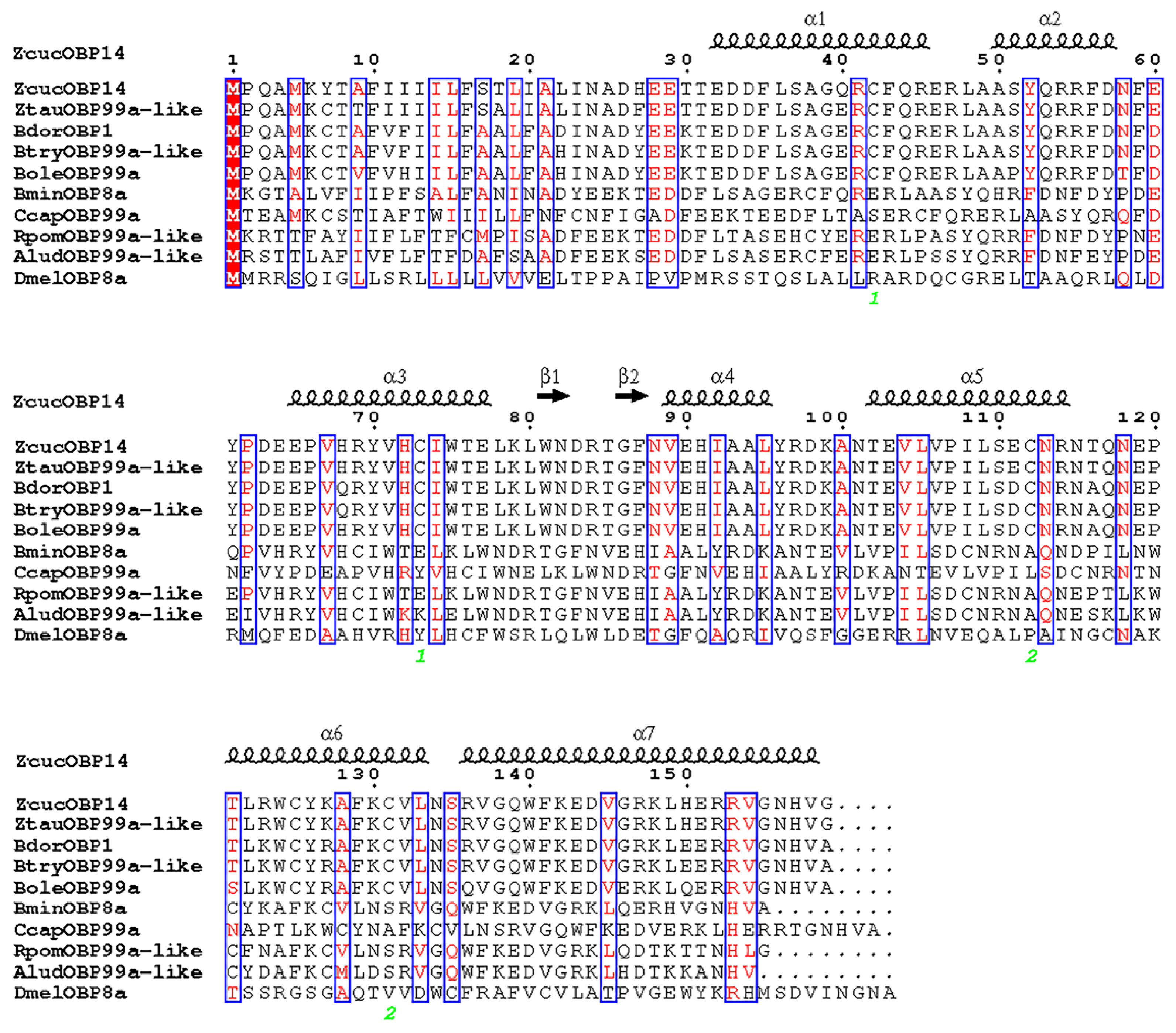
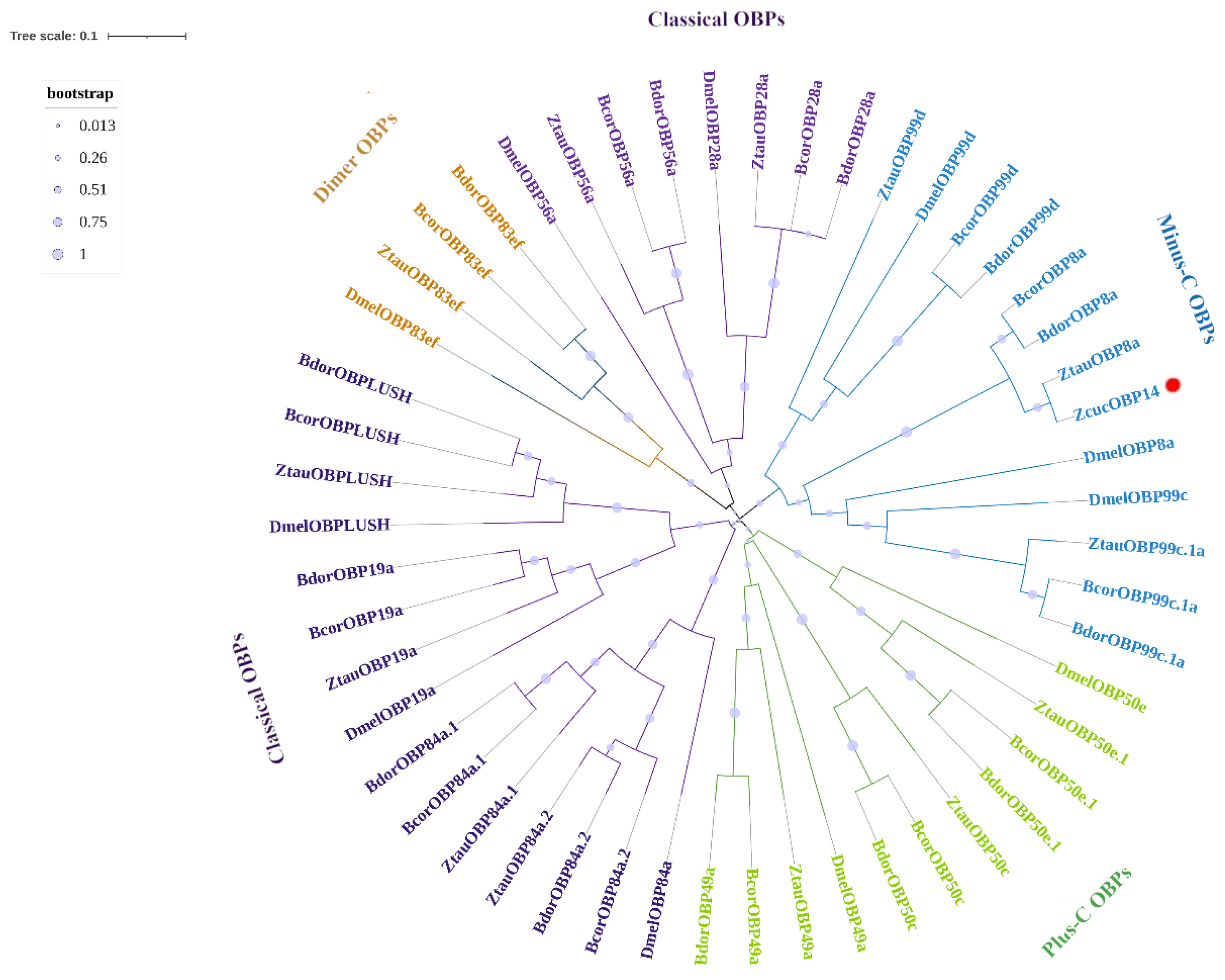
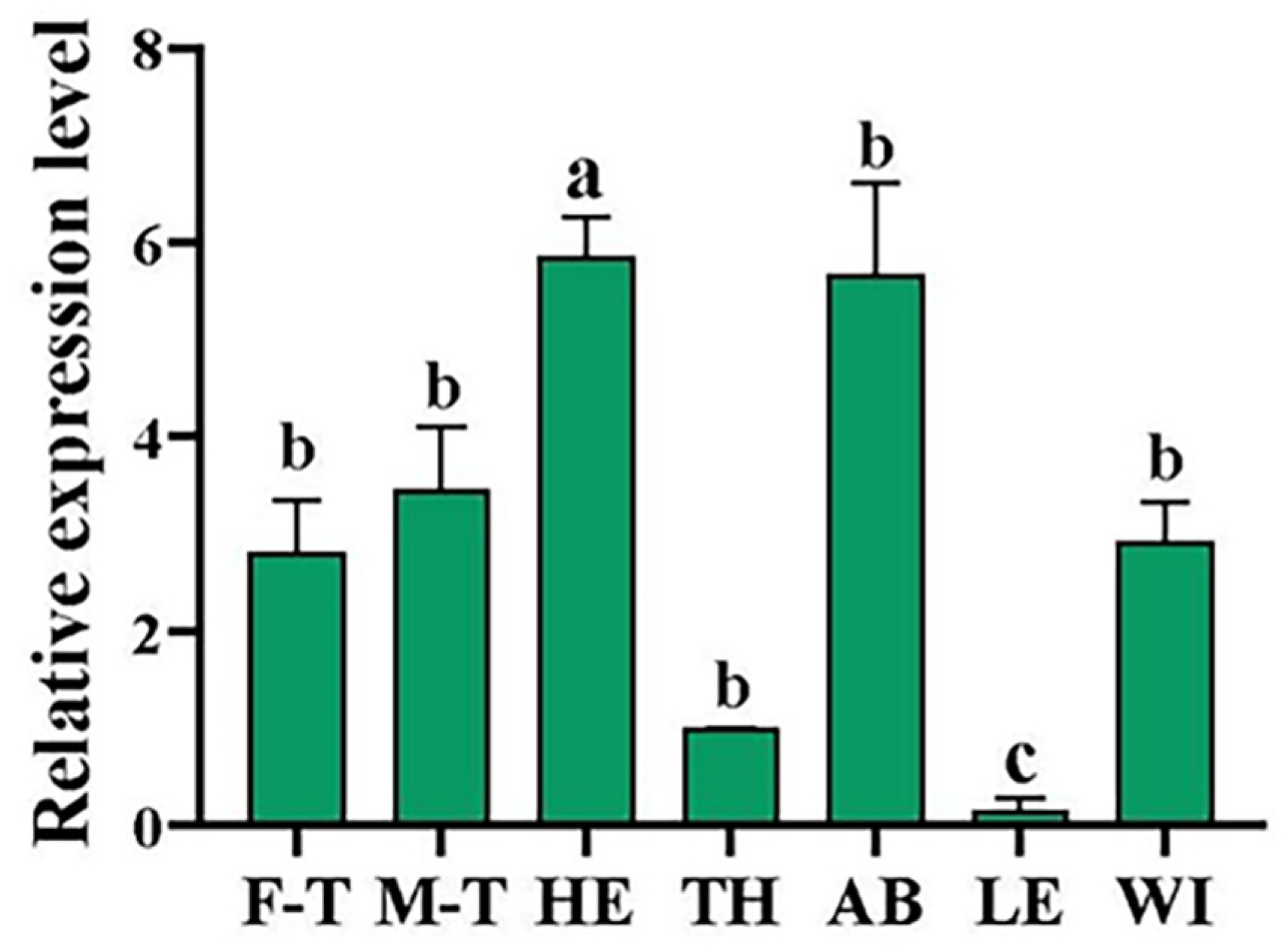
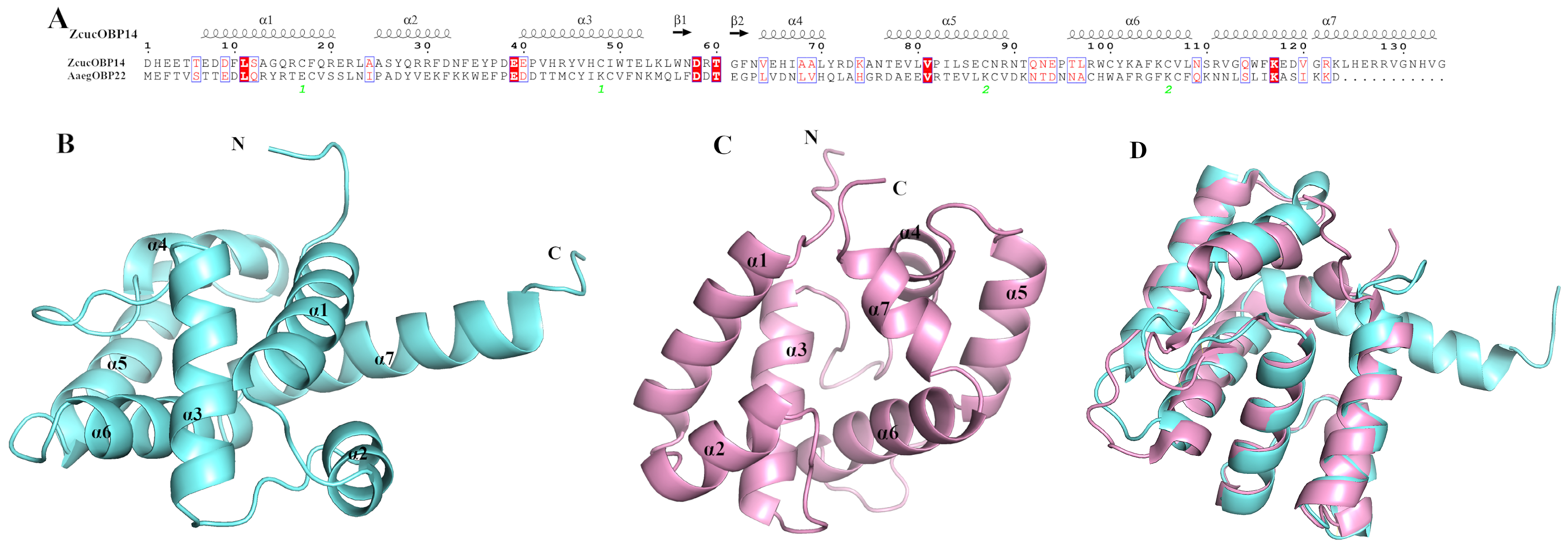
2.1. Sequence Analysis and Expression Profiles of ZcucOBP14
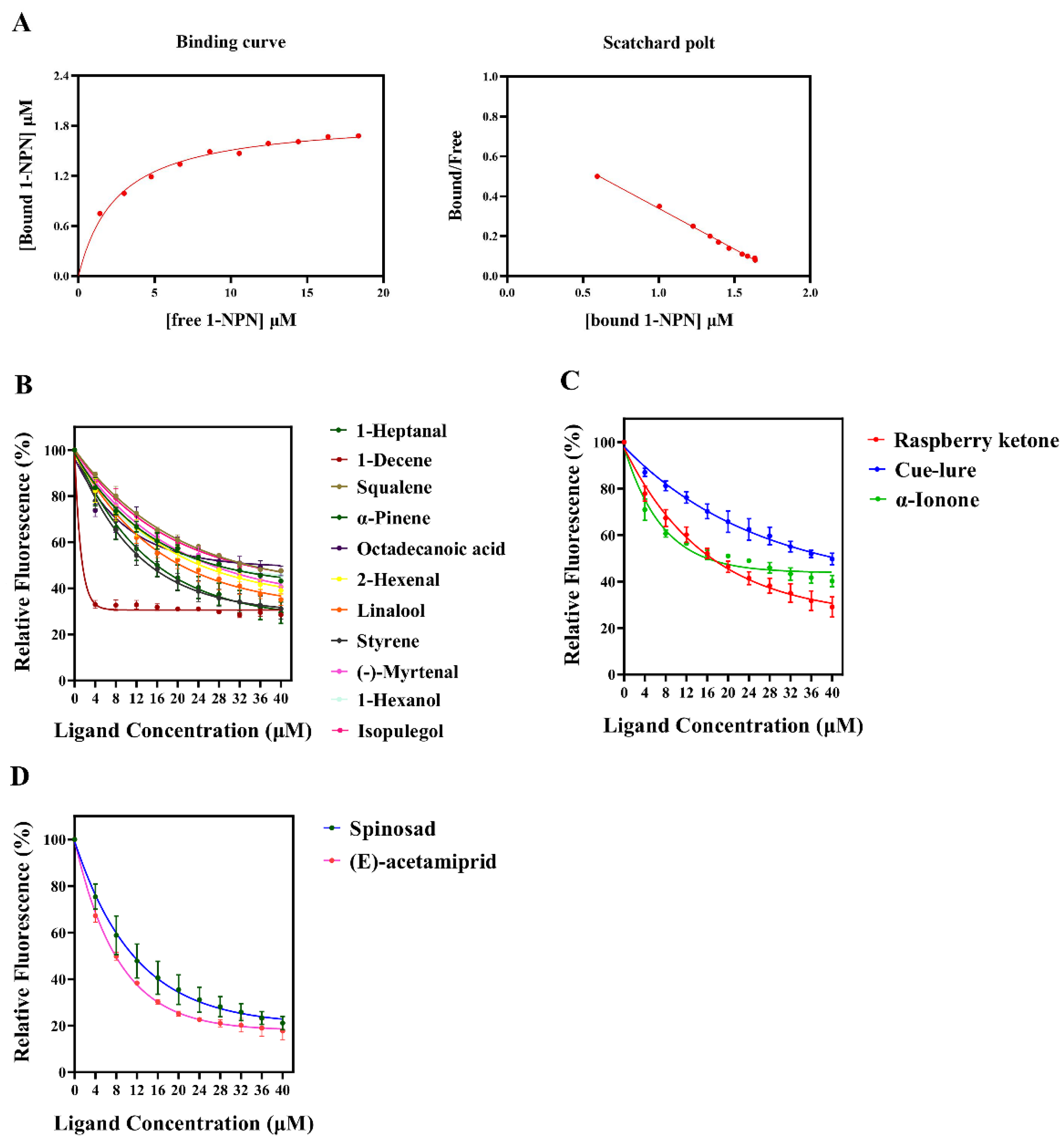
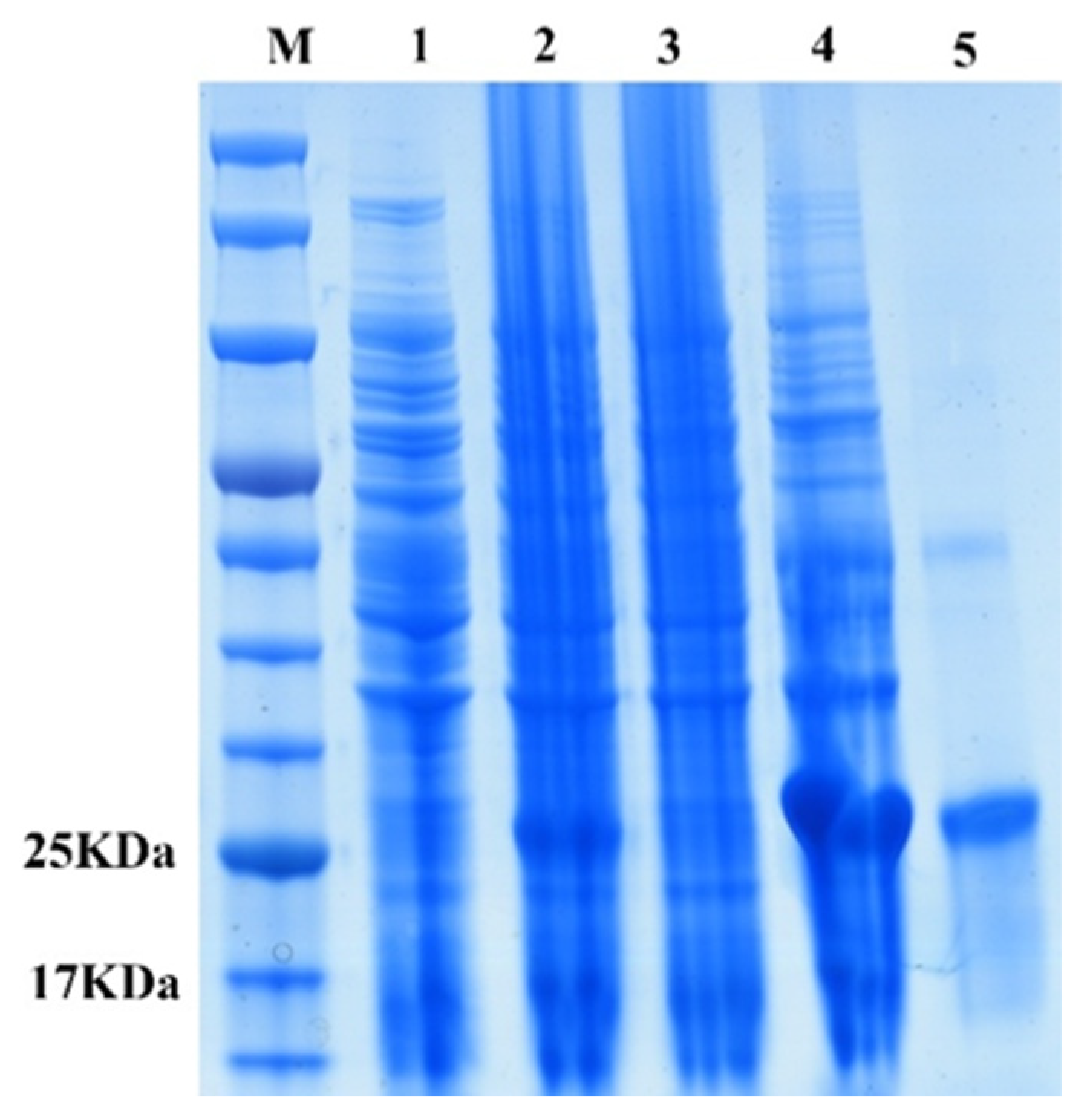
2.2. Binding Characteristics of Recombinant ZcucOBP14
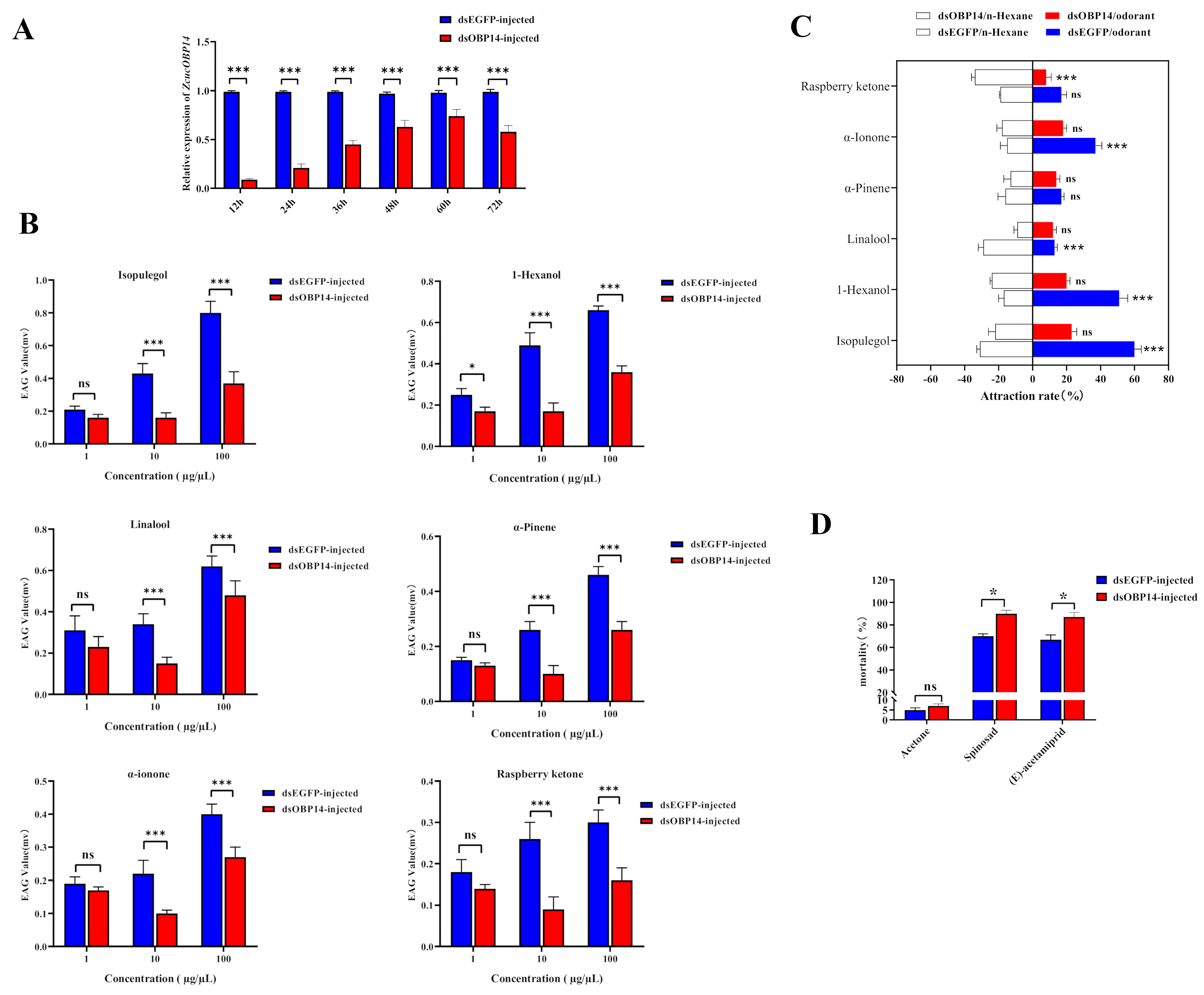
2.3. RNAi Assessment of ZcucOBP14
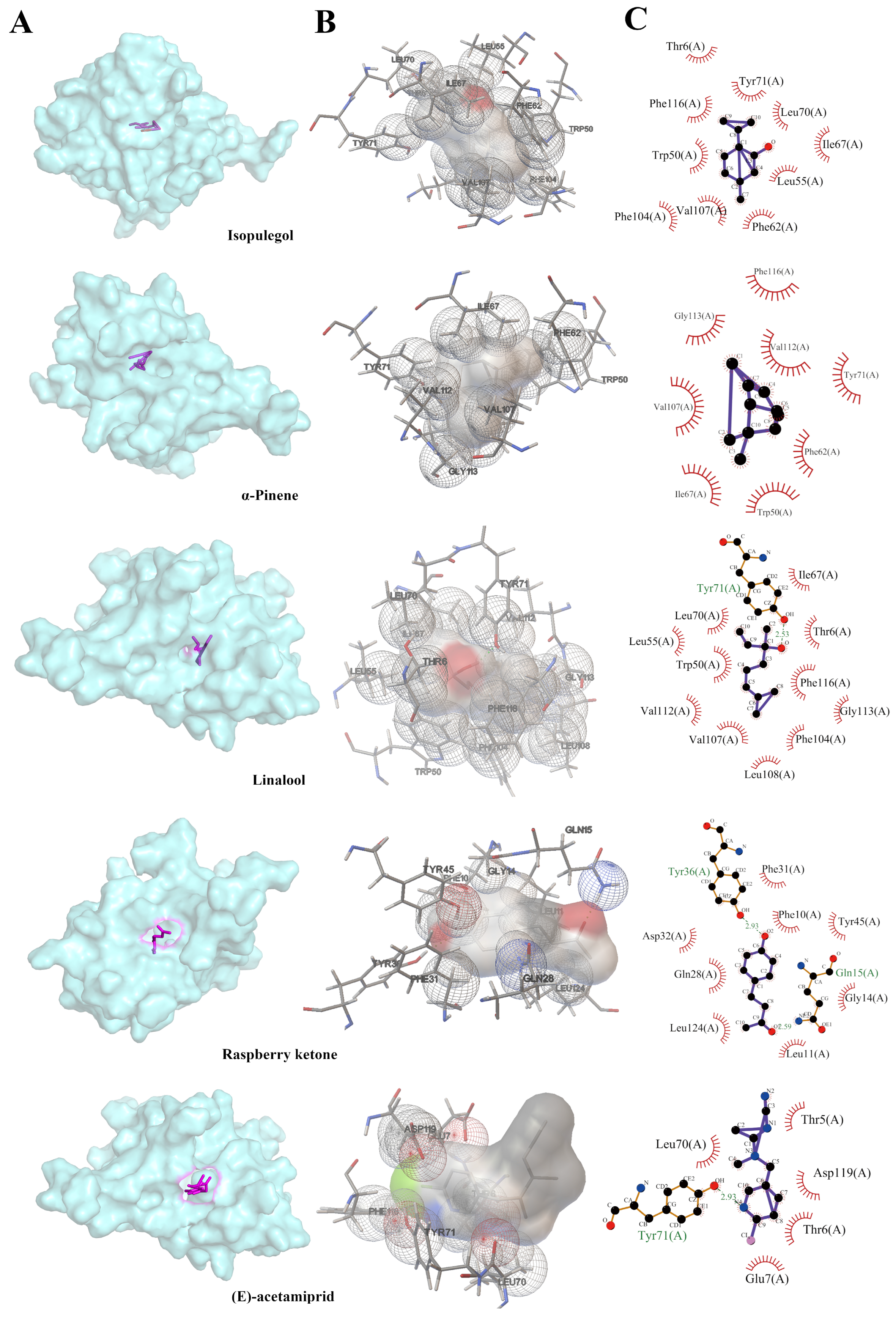
2.4. Homology Modeling and Molecular Docking
3. Discussion
4. Materials and Methods
4.1. Insects
4.2. RNA Extraction, cDNA Synthesis, and Gene Cloning
4.3. Sequence Analysis
4.4. Tissue-Specific Expression Profiling of ZcucOBP14
4.5. Expression and Purification of Recombinant ZcucOBP14
4.6. Fluorescence Binding Assay
4.7. Gene Silencing by RNAi
4.8. Electroantennography and Behavioral Assays
4.9. Insect Bioassay
4.10. Homology Modeling and Molecular Docking
4.11. Data Analysis
5. Conclusions
Supplementary Materials
Author Contributions
Funding
Institutional Review Board Statement
Informed Consent Statement
Data Availability Statement
Acknowledgments
Conflicts of Interest
References
- Leal, W.S. Odorant Reception in Insects: Functional and Evolutionary Perspectives. Annu. Rev. Entomol. 2026, 71, 275–297. [Google Scholar] [CrossRef] [Scilit] [PubMed]
- Wang, Y.; Qiu, L.; Wang, B.; Guan, Z.; Dong, Z.; Zhang, J.; Cao, S.; Yang, L.; Wang, B.; Gong, Z.; et al. Structural Basis for Odorant Recognition of the Insect Odorant Receptor OR-Orco Heterocomplex. Science 2024, 384, 1453–1460. [Google Scholar] [CrossRef] [Scilit]
- Li, L.; Wu, L.; Xu, Y.; Liu, F.; Zhao, H. Three Odorant-Binding Proteins of Small Hive Beetles, Aethina tumida, Participate in the Response of Bee Colony Volatiles. Int. J. Biol. Macromol. 2024, 278, 134905. [Google Scholar] [CrossRef] [Scilit] [PubMed]
- Zhu, Z.; Li, H.; Zhu, W.; Du, S.; Yang, Z.; Ren, J.; Xu, Z.; Duan, H. Targeting Two Odorant-Binding Proteins in Acyrthosiphon pisum: Discovery of Novel Jasmone Derivatives as Aphid Repellents. J. Agric. Food Chem. 2025, 73, 11998–12013. [Google Scholar] [CrossRef] [Scilit]
- Ma, B.; Chang, H.; Guo, M.; Ai, D.; Wang, J.; Chen, R.; Liu, X.; Ren, B.; Hansson, B.S.; Wang, G. Yeast-Derived Volatiles Orchestrate an Insect-Yeast Mutualism with Oriental Armyworm Moths. Nat. Commun. 2025, 16, 1479. [Google Scholar] [CrossRef] [Scilit]
- Wang, B.; Dong, W.; Li, H.; D’Onofrio, C.; Bai, P.; Chen, R.; Yang, L.; Wu, J.; Wang, X.; Wang, B.; et al. Molecular Basis of (E)-β-Farnesene-Mediated Aphid Location in the Predator Eupeodes corollae. Curr. Biol. 2022, 32, 951–962.e7. [Google Scholar] [CrossRef] [Scilit]
- Wu, Z.; Ye, J.; Qian, J.; Purba, E.; Zhang, Q.; Zhang, L.; Mang, D. Identification and Expression Profile of Chemosensory Receptor Genes in Aromia bungii (Faldermann) Antennal Transcriptome. Insects 2022, 13, 96. [Google Scholar] [CrossRef] [Scilit] [PubMed]
- Yu, H.; Nong, X.; Huang, W.; Bhanumas, C.; Deng, X.; Ding, Y.; Liu, W. Odorant-Binding and Chemosensory Proteins in Fig Wasps: Evolutionary Insights From Comparative Studies. J. Mol. Evol. 2024, 92, 42–60. [Google Scholar] [CrossRef] [Scilit]
- Leal, W.S. Odorant Reception in Insects: Roles of Receptors, Binding Proteins, and Degrading Enzymes. Annu. Rev. Entomol. 2013, 58, 373–391. [Google Scholar] [CrossRef] [Scilit]
- Xu, H.; Yan, K.; Ding, Y.; Lv, Y.; Li, J.; Yang, F.; Chen, X.; Gao, X.; Pan, Y.; Shang, Q. Chemosensory Proteins Are Associated with Thiamethoxam and Spirotetramat Tolerance in Aphis gossypii Glover. Int. J. Mol. Sci. 2022, 23, 2356. [Google Scholar] [CrossRef] [Scilit]
- Wang, Q.; Shentu, X.; Yu, X.; Liu, Y. Insect Odorant-Binding Proteins (OBPs) and Chemosensory Proteins (CSPs): Mechanisms and Research Perspectives in Mediating Insecticide Resistance. Biology 2025, 14, 1452. [Google Scholar] [CrossRef] [Scilit]
- Jia, C.; Mohamed, A.; Cattaneo, A.M.; Huang, X.; Keyhani, N.O.; Gu, M.; Zang, L.; Zhang, W. Odorant-Binding Proteins and Chemosensory Proteins in Spodoptera frugiperda: From Genome-Wide Identification and Developmental Stage-Related Expression Analysis to the Perception of Host Plant Odors, Sex Pheromones, and Insecticides. Int. J. Mol. Sci. 2023, 24, 5595. [Google Scholar] [CrossRef] [Scilit]
- Tsouri, A.; Douris, V. The Role of Chemosensory Proteins in Insecticide Resistance: A Review. Insects 2025, 16, 496. [Google Scholar] [CrossRef] [Scilit] [PubMed]
- Yue, Y.; Ma, C.; Zhang, Y.; Ma, W.-H.; Wang, J.-J.; Tian, Z.-Y.; Chen, G.-M.; Li, R.-W.; Li, J.-H.; Yang, J.-F.; et al. Functional Analysis of Ophraella Communa Lesage OcomOBP11 in Recognition of Ambrosia artemisiifolia L. Volatiles. Pestic. Biochem. Physiol. 2025, 210, 106392. [Google Scholar] [CrossRef] [Scilit] [PubMed]
- Vogt, R.G.; Riddiford, L.M. Pheromone Binding and Inactivation by Moth Antennae. Nature 1981, 293, 161–163. [Google Scholar] [CrossRef] [Scilit]
- Li, Y.; Song, W.; Wang, S.; Miao, W.; Liu, Z.; Wu, F.; Wang, J.; Sheng, S. Binding Characteristics and Structural Dynamics of Two General Odorant-Binding Proteins with Plant Volatiles in the Olfactory Recognition of Glyphodes pyloalis. Insect Biochem. Mol. Biol. 2024, 173, 104177. [Google Scholar] [CrossRef] [Scilit] [PubMed]
- Ullah, R.M.K.; Waris, M.I.; Qureshi, S.R.; Rasool, F.; Duan, S.-G.; Zaka, S.M.; Atiq, M.N.; Wang, M.-Q. Silencing of an Odorant Binding Protein (SaveOBP10) Involved in the Behavioural Shift of the Wheat Aphid Sitobion avenae (Fabricius). Insect Mol. Biol. 2022, 31, 568–584. [Google Scholar] [CrossRef] [Scilit]
- Sun, J.S.; Larter, N.K.; Chahda, J.S.; Rioux, D.; Gumaste, A.; Carlson, J.R. Humidity Response Depends on the Small Soluble Protein Obp59a in Drosophila. eLife 2018, 7, e39249. [Google Scholar] [CrossRef] [Scilit]
- Yi, S.-C.; Chen, X.-H.; Wu, Y.-H.; Wu, J.; Wang, J.-Q.; Wang, M.-Q. Identification of Odorant-Binding Proteins and Functional Analysis of Antenna-Specific BhorOBP28 in Batocera horsfieldi (Hope). Pest Manag. Sci. 2024, 80, 4055–4068. [Google Scholar] [CrossRef] [Scilit]
- Yi, S.-C.; Wu, J.; Wang, J.-Q.; Chen, X.-H.; Wang, M.-Q. Binding Characterization of Odorant-Binding Protein BhorOBP29 in Batocera horsfieldi (Hope) with Host-Plant Volatiles. Int. J. Biol. Macromol. 2024, 278, 134811. [Google Scholar] [CrossRef] [Scilit]
- Luo, Y.; Chen, X.; Xu, S.; Li, B.; Luo, K.; Li, G. Functional Role of Odorant-Binding Proteins in Response to Sex Pheromone Component Z8-14:Ac in Grapholita molesta (Busck). Insects 2024, 15, 918. [Google Scholar] [CrossRef] [Scilit]
- Qin, J.-H.; Wang, C.-Q.; Li, K.-B.; Cao, Y.-Z.; Peng, Y.; Feng, H.-L.; Yin, J. Molecular Characterization of Sex Pheromone Binding Proteins from Holotrichia oblita (Coleoptera: Scarabaeida). Int. J. Biol. Macromol. 2021, 193, 8–18. [Google Scholar] [CrossRef] [Scilit]
- Zhao, R.; Wang, H.-H.; Wang, Z.; Xiao, X.; Yin, X.-H.; Hu, S.-Y.; Miao, H.-N.; Zhang, Y.-J.; Liang, P.; Gu, S.-H. Omics Analysis of Odorant-Binding Proteins and Cuticle-Enriched SfruOBP18 Confers Multi-Insecticide Tolerance in Spodoptera frugiperda. J. Agric. Food Chem. 2024, 72, 22532–22544. [Google Scholar] [CrossRef] [Scilit]
- Rihani, K.; Ferveur, J.-F.; Briand, L. The 40-Year Mystery of Insect Odorant-Binding Proteins. Biomolecules 2021, 11, 509. [Google Scholar] [CrossRef] [Scilit]
- Xiao, S.; Sun, J.S.; Carlson, J.R. Robust Olfactory Responses in the Absence of Odorant Binding Proteins. eLife 2019, 8, e51040. [Google Scholar] [CrossRef] [Scilit]
- Chen, X.; Lei, Y.; Liang, C.; Lei, Q.; Wang, J.; Jiang, H. Odorant Binding Protein Expressed in Legs Enhances Malathion Tolerance in Bactrocera dorsalis (Hendel). J. Agric. Food Chem. 2024, 72, 4376–4383. [Google Scholar] [CrossRef] [Scilit]
- Delclos, P.J.; Adhikari, K.; Mai, A.B.; Hassan, O.; Oderhowho, A.A.; Sriskantharajah, V.; Trinh, T.; Meisel, R. Trans Regulation of an Odorant Binding Protein by a Proto-Y Chromosome Affects Male Courtship in House Fly. eLife 2024, 13, e90349. [Google Scholar] [CrossRef] [Scilit] [PubMed]
- Zhang, W.; Chen, X.; Tian, J.; Schal, C.; Mohamed, A.; Zang, L.-S.; Xia, Y.; Keyhani, N.O. An Odorant-Binding Protein Functions in Fire Ant Social Immunity Interfacing with Innate Immunity. Open Biol. 2025, 15, 240254. [Google Scholar] [CrossRef] [Scilit] [PubMed]
- Liu, X.; Lin, X.; Li, J.; Li, F.; Cao, F.; Yan, R. A Novel Solid Artificial Diet for Zeugodacus cucurbitae (Diptera: Tephritidae) Larvae with Fitness Parameters Assessed by Two-Sex Life Table. J. Insect Sci. Online 2020, 20, 21. [Google Scholar] [CrossRef] [Scilit] [PubMed]
- Dhillon, M.K.; Singh, R.; Naresh, J.S.; Sharma, H.C. The Melon Fruit Fly, Bactrocera cucurbitae: A Review of Its Biology and Management. J. Insect Sci. 2005, 5, 40. [Google Scholar] [CrossRef] [Scilit]
- Shivaramu, S.; Parepally, S.K.; Chakravarthy, A.K.; Pagadala Damodaram, K.J.; Kempraj, V. Ridge Gourd Volatiles Are Attractive to Gravid Female Melon Fly, Zeugodacus cucurbitae (Coquillett) (Diptera: Tephritidae). J. Appl. Entomol. 2022, 146, 539–546. [Google Scholar] [CrossRef] [Scilit]
- Piñero, J.C.; Souder, S.K.; Cha, D.H.; Collignon, R.M.; Vargas, R.I. Age-Dependent Response of Female Melon Fly, Zeugodacus cucurbitae (Diptera: Tephritidae), to Volatiles Emitted from Damaged Host Fruits. J. Asia-Pac. Entomol. 2021, 24, 759–763. [Google Scholar] [CrossRef] [Scilit]
- Piñero, J.C.; Souder, S.K.; Vargas, R.I. Synergistic and Additive Interactions among Components of Food-Based Baits Underlie Female Fruit Fly Attraction. Entomol. Exp. Appl. 2020, 168, 339–348. [Google Scholar] [CrossRef] [Scilit]
- Wang, J.J.; Ma, C.; Tian, Z.Y.; Zhou, Y.P.; Yang, J.F.; Gao, X.; Chen, H.S.; Ma, W.H.; Zhou, Z.S. Electroantennographic and Behavioral Responses of the Melon Fly, Zeugodacus cucurbitae (Coquillett), to Volatile Compounds of Ridge Gourd, Luffa acutangular L. J. Chem. Ecol. 2024, 50, 1036–1045. [Google Scholar] [CrossRef] [Scilit]
- Shamshir, R.A.; Wee, S.-L. Comparative Responses of Two Major Cucurbit Pests, Zeugodacus cucurbitae and Zeugodacus tau to Phenylbutanoid Male Lures. J. Chem. Ecol. 2024, 50, 947–954. [Google Scholar] [CrossRef] [Scilit]
- Wang, J.J.; Ma, C.; Yue, Y.; Yang, J.; Chen, L.X.; Wang, Y.T.; Zhao, C.C.; Gao, X.; Chen, H.S.; Ma, W.H.; et al. Identification of Candidate Chemosensory Genes in Bactrocera cucurbitae Based on Antennal Transcriptome Analysis. Front. Physiol. 2024, 15, 1354530. [Google Scholar] [CrossRef] [Scilit]
- Antony, B.; Johny, J.; Aldosari, S.A. Silencing the Odorant Binding Protein RferOBP1768 Reduces the Strong Preference of Palm Weevil for the Major Aggregation Pheromone Compound Ferrugineol. Front. Physiol. 2018, 9, 252. [Google Scholar] [CrossRef] [Scilit]
- Zhang, J.; Mao, K.; Ren, Z.; Jin, R.; Zhang, Y.; Cai, T.; He, S.; Li, J.; Wan, H. Odorant Binding Protein 3 Is Associated with Nitenpyram and Sulfoxaflor Resistance in Nilaparvata lugens. Int. J. Biol. Macromol. 2022, 209, 1352–1358. [Google Scholar] [CrossRef] [Scilit]
- Liu, L.; Li, Y.; Yang, H.; Wang, F.; Huang, Q. Molecular Characterization of a Minus-C Odorant-Binding Protein from Cyrtotrachelus buqueti (Coleoptera: Curculionidae). Front. Physiol. 2025, 16, 1586738. [Google Scholar] [CrossRef] [Scilit] [PubMed]
- Liu, X.-Q.; Jiang, H.-B.; Liu, Y.; Fan, J.-Y.; Ma, Y.-J.; Yuan, C.-Y.; Lou, B.-H.; Wang, J.-J. Odorant Binding Protein 2 Reduces Imidacloprid Susceptibility of Diaphorina citri. Pestic. Biochem. Physiol. 2020, 168, 104642. [Google Scholar] [CrossRef] [Scilit] [PubMed]
- Fan, X.-B.; Mo, B.-T.; Li, G.-C.; Huang, L.-Q.; Guo, H.; Gong, X.-L.; Wang, C.-Z. Mutagenesis of the Odorant Receptor Co-Receptor (Orco) Reveals Severe Olfactory Defects in the Crop Pest Moth Helicoverpa armigera. BMC Biol. 2022, 20, 214. [Google Scholar] [CrossRef] [Scilit] [PubMed]
- Ren, S.; Liu, Y.; Chen, X.; Luo, K.; Zhao, J.; Li, G.; Li, B. Functional Divergence of Two General Odorant-Binding Proteins to Sex Pheromones and Host Plant Volatiles in Adoxophyes orana (Lepidoptera: Tortricidae). Insects 2025, 16, 880. [Google Scholar] [CrossRef] [Scilit] [PubMed]
- Liu, X.; Bai, Y.; Qi, Y.; Liu, B.; Zhao, Y.; Wu, Y.; Yang, J.; Wang, Y.; Xie, S. Transcriptome Characterization and Identification of Chemosensory Genes in the Egg Parasitoid Anastatus orientalis, Along with Molecular Cloning, Sequence Analysis, and Prokaryotic Expression of the Odorant Binding Protein 8 (AoOBP8) from A. orientalis. Insects 2025, 16, 1117. [Google Scholar] [CrossRef] [Scilit]
- Deng, M.; Xu, X.; Huang, X.; Xiao, T.; Wang, W.; Li, J.; Zhao, X.; Pan, B.; Jiang, Y.; He, Z.; et al. Mechanistic Exploration of Odorant Binding Protein-Mediated Chlorpyrifos Resistance in Nilaparvata lugens: Insights from Insecticide Sequestration and Transcriptional Regulation. Int. J. Biol. Macromol. 2025, 284, 138108. [Google Scholar] [CrossRef] [Scilit]
- Yuan, T.; Mang, D.; Purba, E.R.; Ye, J.; Qian, J.; Rao, F.; Wang, H.; Wu, Z.; Zhang, W.; Zheng, Y.; et al. Identification and Functional Analysis of Odorant Binding Proteins in Apriona germari (Hope). J. Agric. Food Chem. 2024, 72, 17248–17259. [Google Scholar] [CrossRef] [Scilit]
- Hu, P.; Hao, E.; Yang, Z.; Qiu, Z.; Fu, H.; Lu, J.; He, Z.; Huang, Y. EsigGOBP1: The Key Protein Binding Alpha-Phellandrene in Endoclita signifer Larvae. Int. J. Mol. Sci. 2022, 23, 9269. [Google Scholar] [CrossRef] [Scilit]
- Njuguna, P.K.; Murungi, L.K.; Fombong, A.; Teal, P.E.A.; Beck, J.J.; Torto, B. Cucumber and Tomato Volatiles: Influence on Attraction in the Melon Fly Zeugodacus cucurbitate (Diptera: Tephritidae). J. Agric. Food Chem. 2018, 66, 8504–8513. [Google Scholar] [CrossRef] [Scilit] [PubMed]
- Akter, H.; Pérez, J.; Park, S.J. Raspberry Ketone Supplements Provided to Immature Male Queensland Fruit Fly, Bactrocera tryoni (Froggatt), Increase the Amount of Volatiles in Rectal Glands. Chemoecology 2021, 31, 89–99. [Google Scholar] [CrossRef] [Scilit]
- Shikano, I.; Gutierrez-Coarite, R.; Streit, C.; Perez, E.; Fujitani, E.; Mau, R.F.L. Field Tests of Three Alternative Insecticides with Protein Bait for the Development of an Insecticide Rotation Program to Control Melon Flies, Zeugodacus cucurbitae (Coquillett) (Diptera: Tephritidae). Insects 2022, 13, 629. [Google Scholar] [CrossRef] [Scilit]
- Hsu, J.; Chou, M.; Mau, R.F.; Maeda, C.; Shikano, I.; Manoukis, N.C.; Vargas, R.I. Spinosad Resistance in Field Populations of Melon Fly, Zeugodacus cucurbitae (Coquillett), in Hawaii. Pest Manag. Sci. 2021, 77, 5439–5444. [Google Scholar] [CrossRef] [Scilit]
- Wang, T.; Lv, H.; Zheng, C.; Yang, C.; Huang, Y.; Li, X.; Li, J.; Ma, K. Overexpression of Multiple Odorant Binding and Chemosensory Protein Genes Contributed to Multi-Insecticide Resistance in Aphis gossypii Glover. Ecotoxicol. Environ. Saf. 2025, 305, 119210. [Google Scholar] [CrossRef] [Scilit]
- Abendroth, J.A.; Moural, T.W.; Cruse, C.; Hernandez, J.A.; Wolfin, M.S.; Baker, T.C.; Alyokhin, A.; Zhu, F. Pleiotropic Function of Antenna-Specific Odorant-Binding Protein Links Xenobiotic Adaptation and Olfaction in Leptinotarsa decemlineata. Insects 2025, 16, 1259. [Google Scholar] [CrossRef] [Scilit] [PubMed]
- Li, X.; Hu, F.; Li, R.; Peng, D.; Gao, P.; Rao, F.; Li, Y.; Liu, D. The Pleiotropic Odorant Binding Protein CaspOBP12 Involved in Perception of Ceutorhynchus asper for Plant Volatiles and Pesticides. Pestic. Biochem. Physiol. 2025, 214, 106578. [Google Scholar] [CrossRef] [Scilit]
- Lin, L.; Deng, M.; Lin, L.; Lin, W.; Li, Z.; Lu, K. Functional and Structural Characterization of OBP7 Reveals a Sequestration-Based Chlorpyrifos Resistance Mechanism in Nilaparvata lugens. Pestic. Biochem. Physiol. 2026, 219, 107033. [Google Scholar] [CrossRef] [Scilit]
- Duan, S.-G.; Mao, L.; Sun, S.-F.; Chen, R.-D.; Taha Abdelkhalek, S.; Wang, M.-Q. Key Site Residues of Cnaphalocrocis medinalis Odorant-Binding Protein 13 CmedOBP13 Involved in Interacting with Rice Plant Volatiles. Int. J. Biol. Macromol. 2025, 290, 139007. [Google Scholar] [CrossRef] [Scilit]
- Del Mármol, J.; Yedlin, M.A.; Ruta, V. The Structural Basis of Odorant Recognition in Insect Olfactory Receptors. Nature 2021, 597, 126–131. [Google Scholar] [CrossRef] [Scilit] [PubMed]
- Xiang, D.; Abdelnabby, H.; Wang, M.-Q. Predicted Structure of Odorant-Binding Protein 12 from Monochamus alternatus (Hope) Suggests a Mechanism of Flexible Odorant-Binding. Int. J. Biol. Macromol. 2023, 243, 125152. [Google Scholar] [CrossRef] [Scilit]
- Zhai, X.-D.; Zhang, S.-Y.; Chen, D.; Li, W.-J.; Wang, J.-J.; Wei, D. Comparative Multi-Tissue Analyses Identify Testis-Specific Serine/Threonine Protein Kinase (TSSK) Genes Involved in Male Fertility in the Melon Fly Zeugodacus cucurbitae. Pest Manag. Sci. 2023, 79, 2040–2049. [Google Scholar] [CrossRef] [Scilit]
- Shan, S.; Song, X.; Khashaveh, A.; Wang, S.-N.; Lu, Z.-Y.; Hussain Dhiloo, K.; Li, R.-J.; Zhang, Y.-J. A Female-Biased Odorant Receptor Tuned to the Lepidopteran Sex Pheromone in Parasitoid Microplitis Mediator Guiding Habitat of Host Insects. J. Adv. Res. 2023, 43, 1–12. [Google Scholar] [CrossRef] [PubMed]
- Li, R.; Tian, Z.; Yang, J.; Gao, X.; Chen, H.; Wang, Y.; Zhou, Z. Emamectin Benzoate-Induced Stress Significantly Affects the Gut Microbiome of Adult Zeugodacus cucurbitae. Ecotoxicol. Environ. Saf. 2024, 287, 117312. [Google Scholar] [CrossRef] [Scilit]





| Ligands | Average Binding Energy (Kcal/mol) | Key Amino Acid Residues | |
|---|---|---|---|
| Polar | Nonpolar | ||
| Isopulegol | −4.44 | Thr6, Tyr71 | Phe116, Leu70, Trp50, Ile67, Leu55, Phe104, Val107, Phe62 |
| α-Pinene | −4.28 | Tyr71, Gly113 | Phe116, Val112, Phe62, Trp50, Ile67, Val107 |
| Linalool | −3.58 | Thr6, Tyr71, Gly113 | Ile67, Phe116, Phe104, Leu108, Val107, Val112, Trp50, Leu55, Leu70 |
| Raspberry ketone | −3.32 | Tyr36, Tyr45, Glu15, Gly14, Gln28, Asp32 | Phe31, Phe10, Leu11, Leu124 |
| (E)-acetamiprid | −3.04 | Thr5, Thr6, Tyr71, Glu7, Asp119 | Leu70 |
Disclaimer/Publisher’s Note: The statements, opinions and data contained in all publications are solely those of the individual author(s) and contributor(s) and not of MDPI and/or the editor(s). MDPI and/or the editor(s) disclaim responsibility for any injury to people or property resulting from any ideas, methods, instructions or products referred to in the content. |
© 2026 by the authors. Licensee MDPI, Basel, Switzerland. This article is an open access article distributed under the terms and conditions of the Creative Commons Attribution (CC BY) license.
Share and Cite
Wang, J.; Yue, Y.; Ma, C.; Tian, Z.; Zhang, Y.; Chen, H.; Ma, W.; Zhou, Z. Function and Mechanism of ZcucOBP14 in Regulating Olfactory Recognition and Insecticide Susceptibility in Zeugodacus cucurbitae. Int. J. Mol. Sci. 2026, 27, 5158. https://doi.org/10.3390/ijms27125158
Wang J, Yue Y, Ma C, Tian Z, Zhang Y, Chen H, Ma W, Zhou Z. Function and Mechanism of ZcucOBP14 in Regulating Olfactory Recognition and Insecticide Susceptibility in Zeugodacus cucurbitae. International Journal of Molecular Sciences. 2026; 27(12):5158. https://doi.org/10.3390/ijms27125158
Chicago/Turabian StyleWang, Jingjing, Yang Yue, Chao Ma, Zhenya Tian, Yan Zhang, Hongsong Chen, Weihua Ma, and Zhongshi Zhou. 2026. "Function and Mechanism of ZcucOBP14 in Regulating Olfactory Recognition and Insecticide Susceptibility in Zeugodacus cucurbitae" International Journal of Molecular Sciences 27, no. 12: 5158. https://doi.org/10.3390/ijms27125158
APA StyleWang, J., Yue, Y., Ma, C., Tian, Z., Zhang, Y., Chen, H., Ma, W., & Zhou, Z. (2026). Function and Mechanism of ZcucOBP14 in Regulating Olfactory Recognition and Insecticide Susceptibility in Zeugodacus cucurbitae. International Journal of Molecular Sciences, 27(12), 5158. https://doi.org/10.3390/ijms27125158