Ginsenoside Rh2 Regulates PI3K/AKT Signaling, Metabolic Pathways, and the Gut Microbiota for Coronary Heart Disease Therapy

 , ,
, ,
Abstract
1. Introduction
2. Results
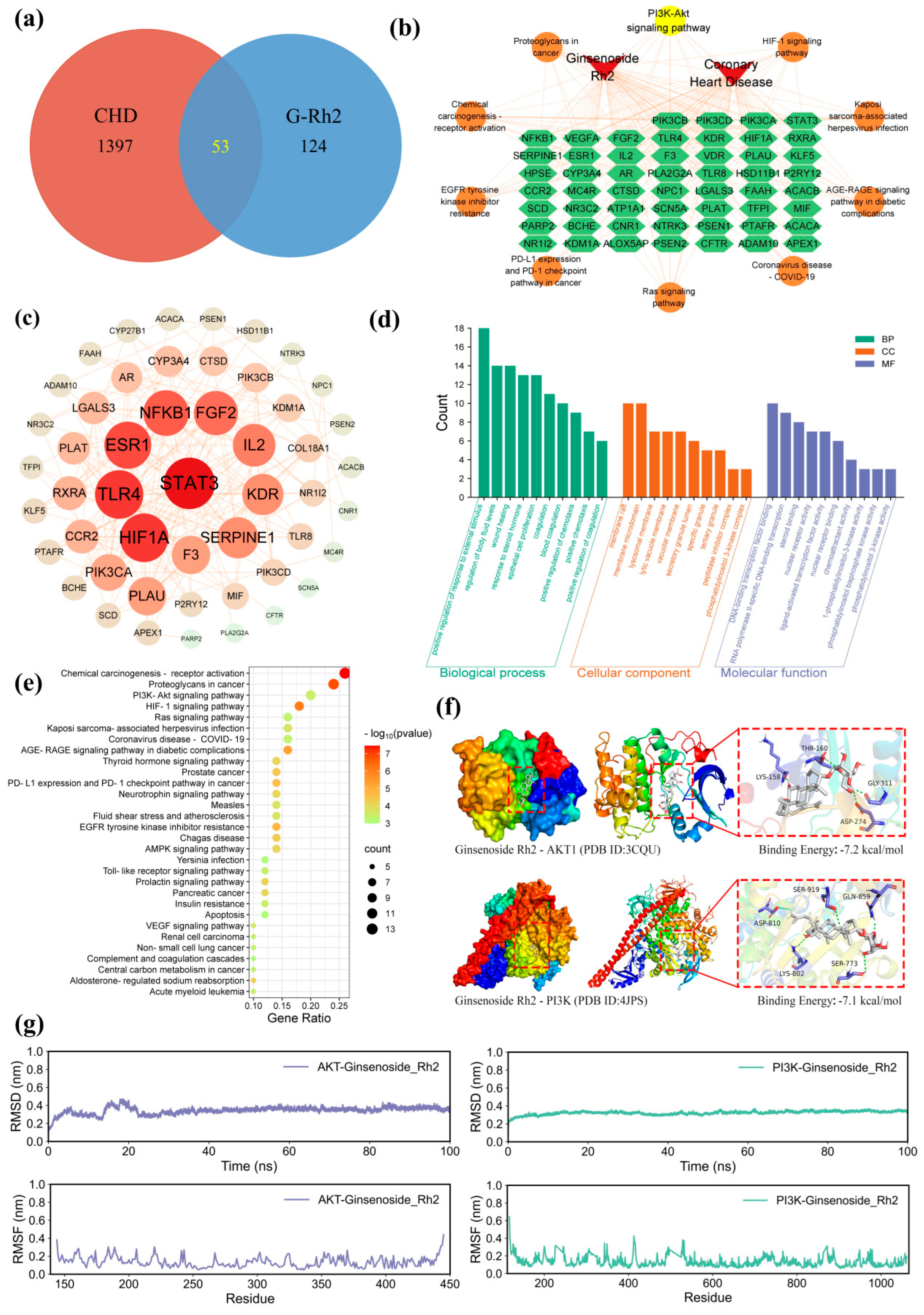
2.1. Network Pharmacology and Molecular Docking
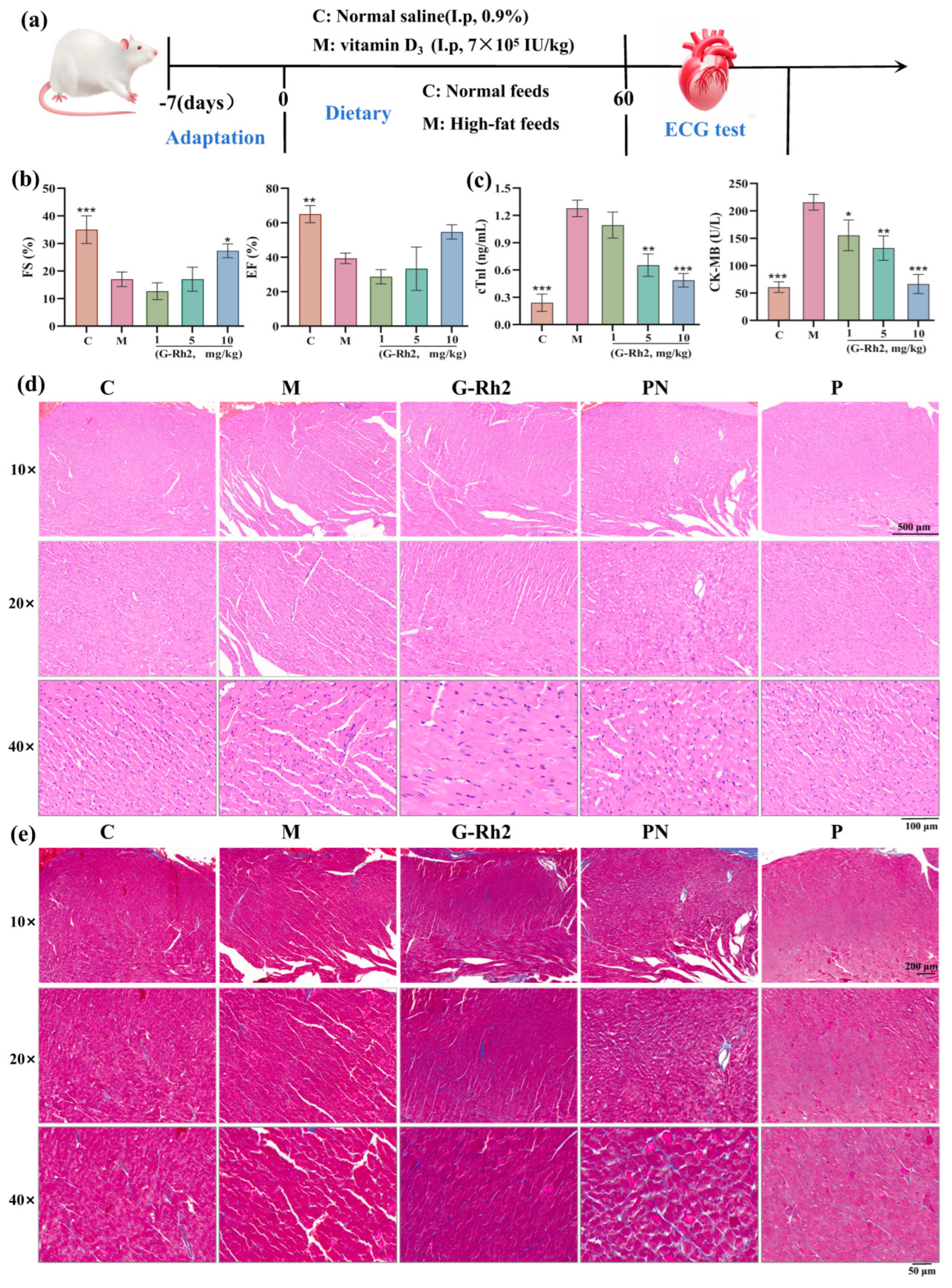
2.2. G-Rh2 Attenuates Myocardial Injury and Fibrosis in CHD
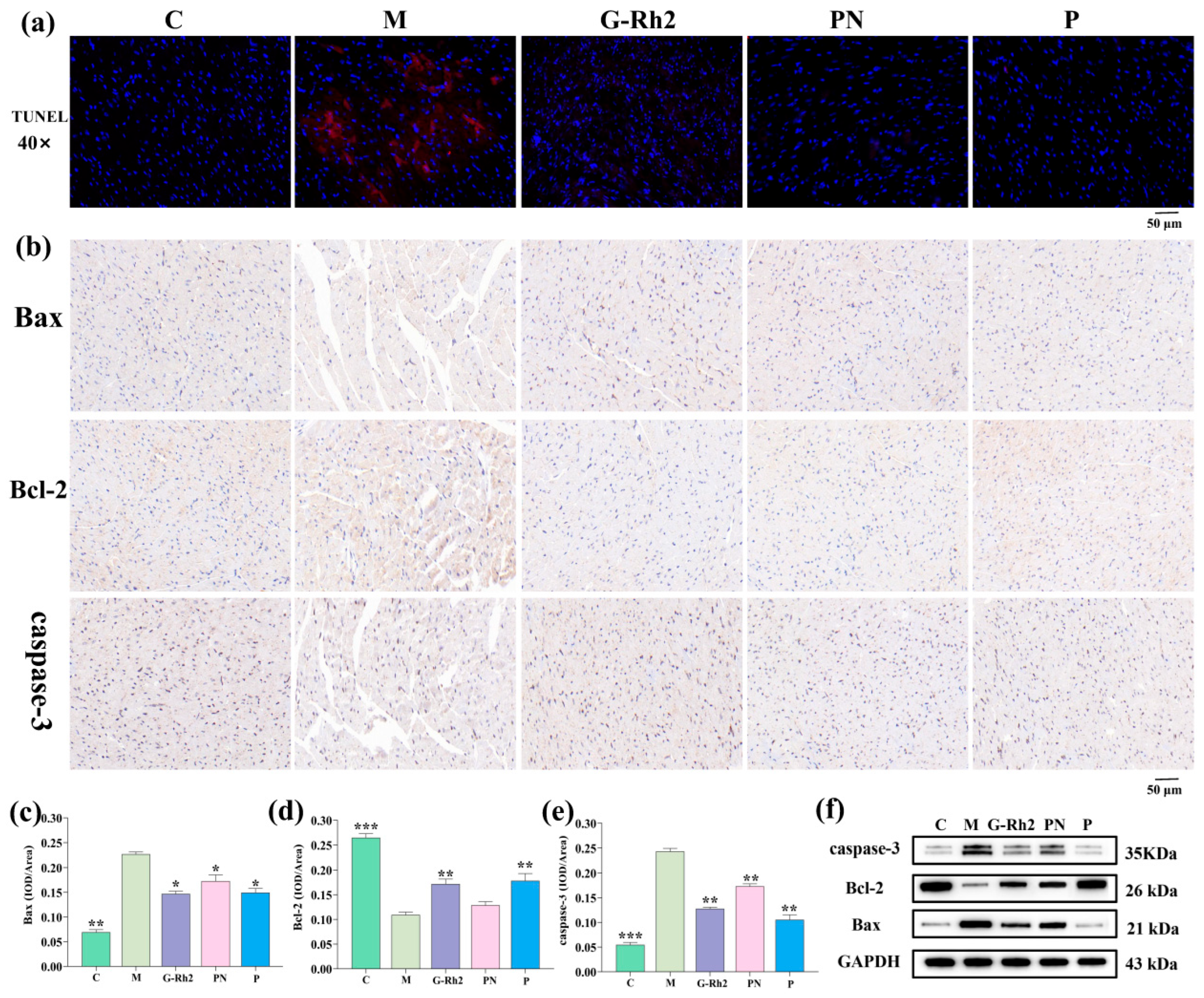
2.3. G-Rh2 Attenuates Cardiomyocyte Apoptosis in CHD
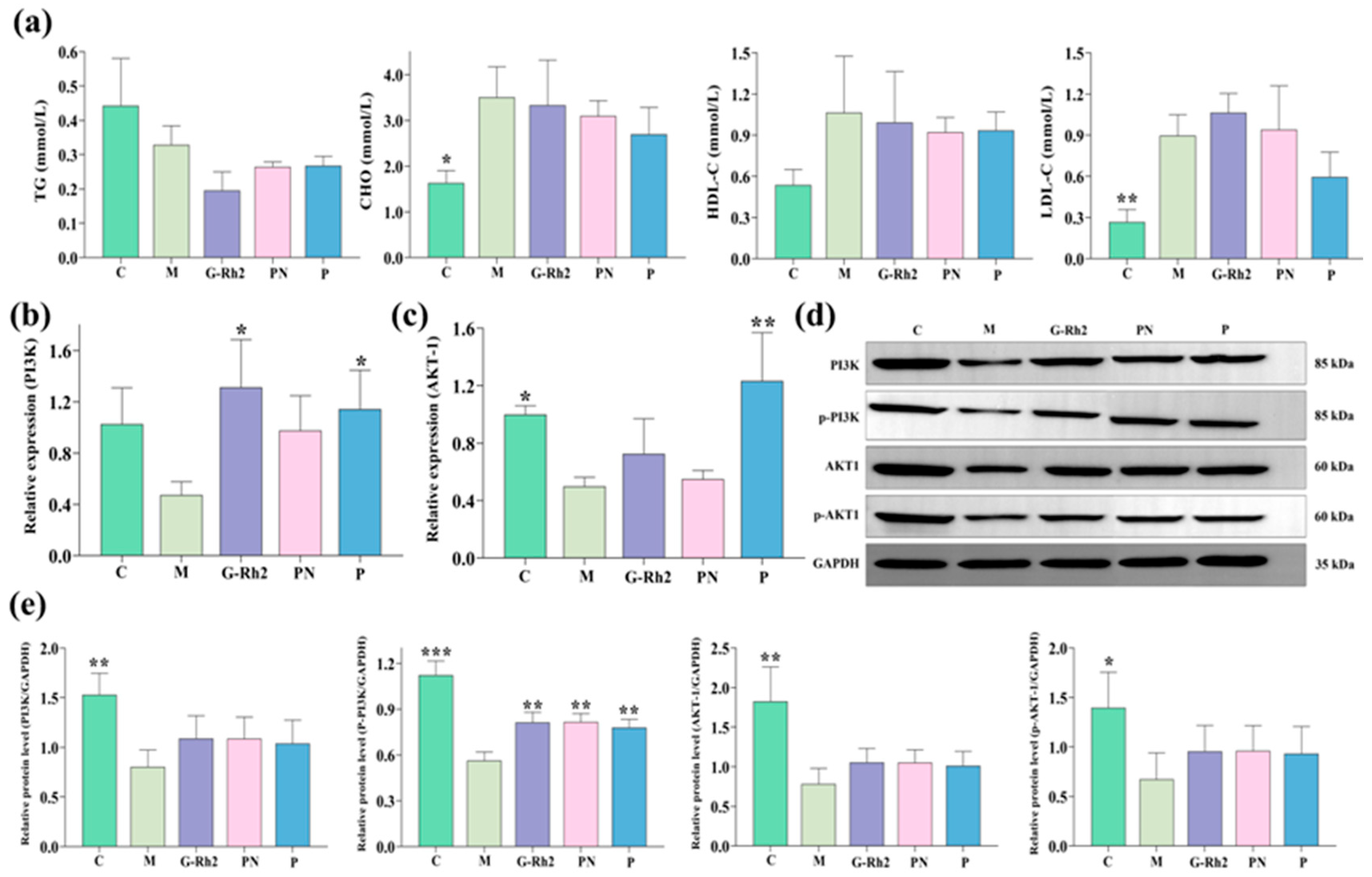
2.4. G-Rh2 Protects Against CHD Through Lipokine Modulation and PI3K/AKT Activation
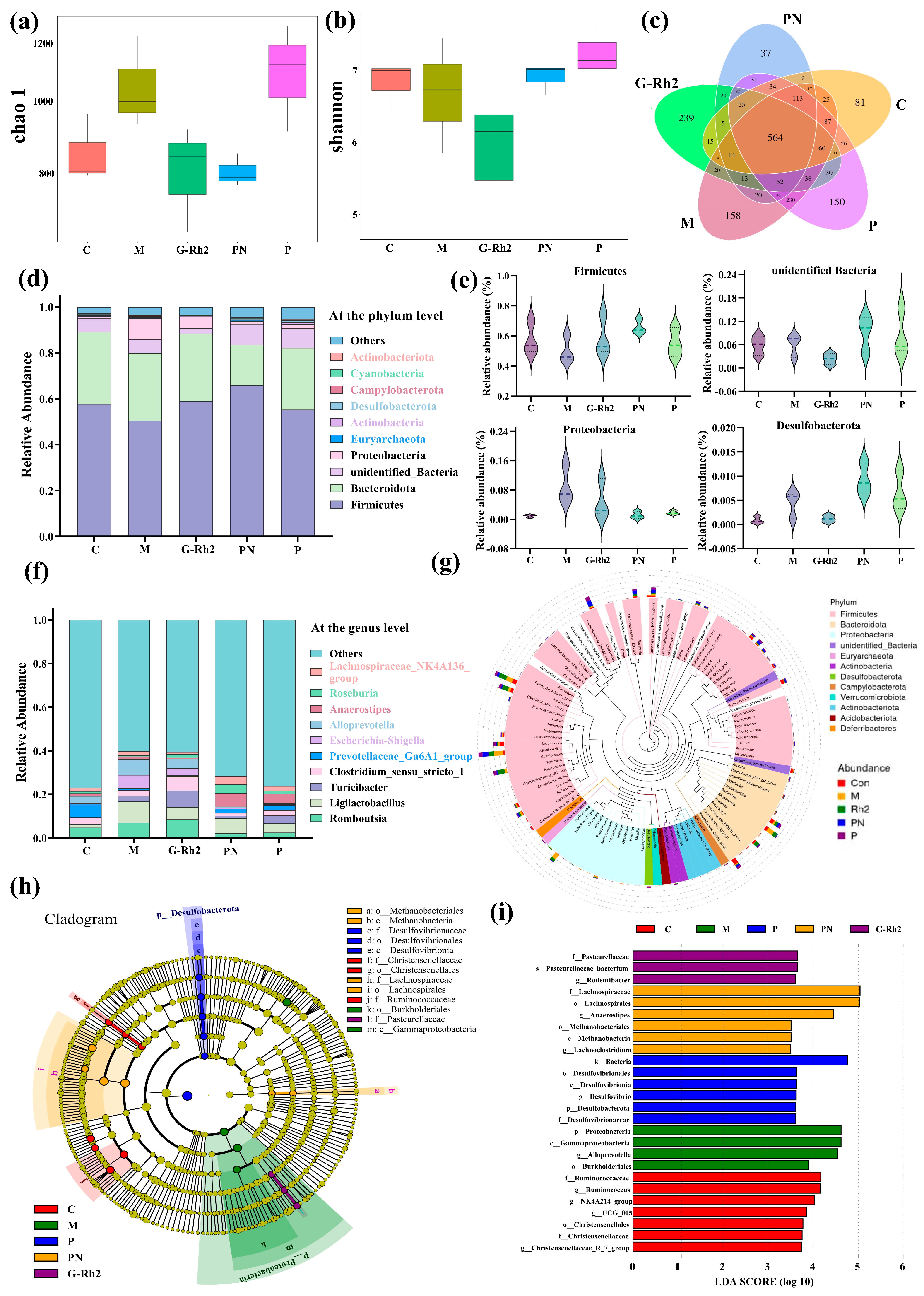
2.5. Analysis of Gut Microbiota Composition and Diversity Based on 16S rRNA Sequencing
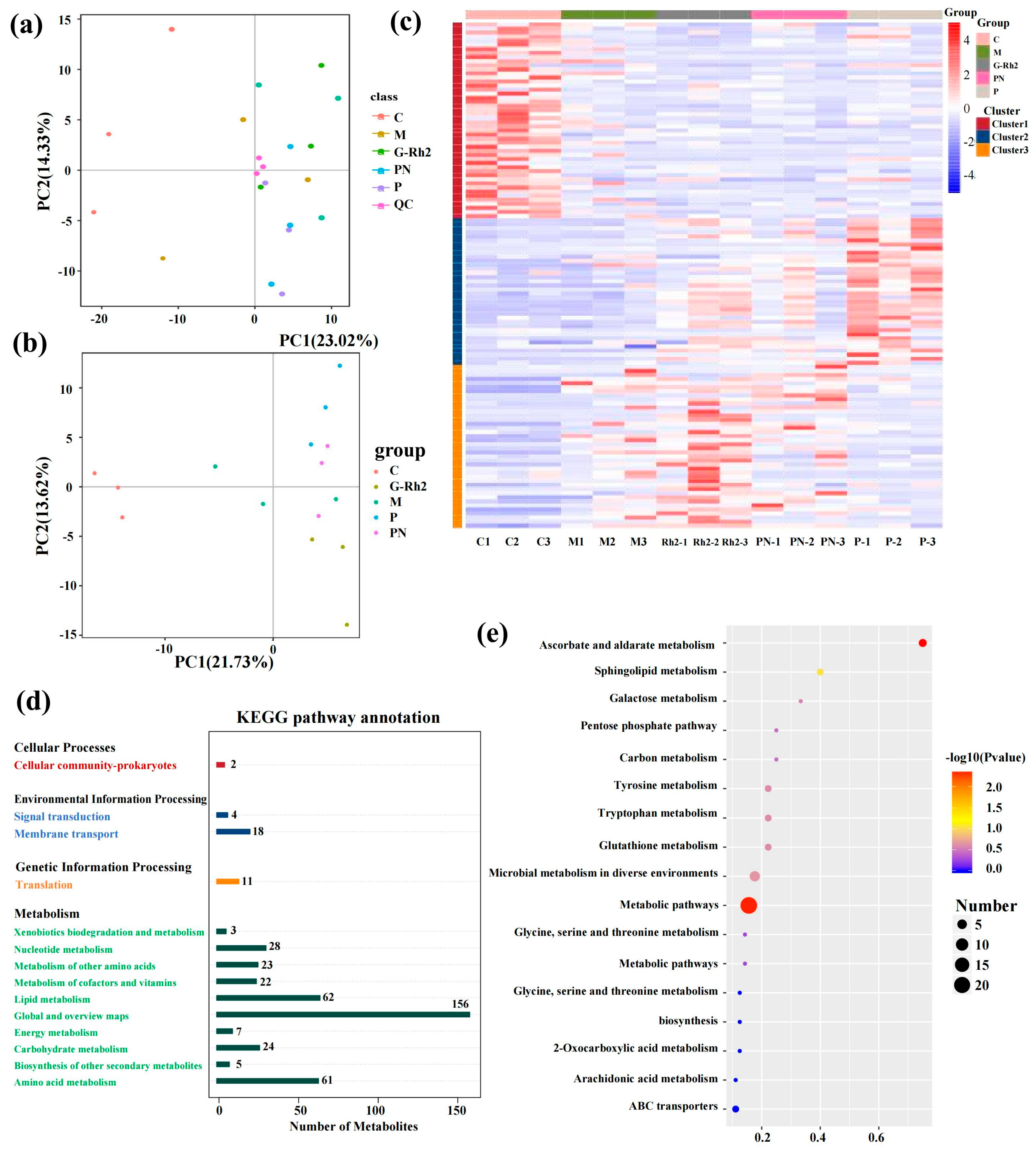
2.6. Metabolomics Analysis Reveals the Regulatory Role of G-Rh2 in the Metabolic Network of CHD
3. Discussion
4. Materials and Methods
4.1. Materials and Reagents
4.2. Network Pharmacology Analysis and Molecular Docking
4.2.1. Network Pharmacology Analysis
4.2.2. Molecular Docking Validation
4.2.3. Molecular Dynamics Simulation
4.3. Animal Experiments
4.3.1. Experimental Animals
4.3.2. Establishing the CHD Model and Sample Collection
4.3.3. Hematoxylin-Eosin (H&E) and Masson Staining
4.3.4. Detection of Serum Lipid Factor Levels
4.3.5. TUNEL Staining and Immunohistochemical Analysis
4.4. RT-qPCR and Western Blotting Analysis
4.5. Gut Microbiome Analysis
4.6. Metabolomics Analysis
4.7. Statistical Analysis
5. Conclusions
Supplementary Materials
Author Contributions
Funding
Institutional Review Board Statement
Informed Consent Statement
Data Availability Statement
Conflicts of Interest
Abbreviations
| AKT | Protein Kinase B |
| BCA | Bicinchoninic Acid Assay |
| BP | Biological Processes |
| BSA | Bovine Serum Albumin |
| CABG | Coronary Artery Bypass Grafting |
| CC | Cellular Components |
| cDNA | Complementary DNA |
| CHD | Coronary Heart Disease |
| CHO | Cholesterol |
| CK-MB | Creatine Kinase-MB |
| cTnI | Cardiac Troponin I |
| Cyt-c | Cytochrome c |
| ECG | Electrocardiogram |
| EF | Ejection Fraction |
| F/B | Firmicutes/Bacteroidetes |
| FC | Fold Change |
| FS | Fractional Shortening |
| GAPDH | Glyceraldehyde-3-Phosphate Dehydrogenase |
| G-Rh2 | Ginsenoside Rh2 |
| H&E | Hematoxylin-Eosin |
| HDL | High-Density Lipoprotein |
| HFD | High-Fat Diet |
| HRP | Horseradish Peroxidase |
| KEGG | Kyoto Encyclopedia of Genes and Genomes |
| LDL | Low-Density Lipoprotein |
| MF | Molecular Functions |
| NADPH | Nicotinamide Adenine Dinucleotide Phosphate |
| OPLS-DA | Orthogonal Partial Least Squares Discriminant Analysis |
| PCA | Principal Component Analysis |
| PCI | Percutaneous Coronary Intervention |
| PI3K | Phosphatidylinositol-3-Kinase |
| PLS-DA | Partial Least Squares Discriminant Analysis |
| PN | Panax notoginseng |
| PPI | Protein–Protein Interaction |
| PPP | Pentose Phosphate Pathway |
| QC | Quality Control |
| RIPA | Radio Immunoprecipitation Assay Lysis Buffer |
| ROS | Reactive Oxygen Species |
| RT-qPCR | Quantitative Reverse Transcription Polymerase Chain Reaction |
| TG | Triglyceride |
References
- Dai, L.; Zhang, Y.; Jiang, Y.; Chen, K. Panax notoginseng preparation plus aspirin versus aspirin alone on platelet aggregation and coagulation in patients with coronary heart disease or ischemic stroke: A meta-analysis of randomized controlled trials. Front. Pharmacol. 2022, 13, 1015048. [Google Scholar] [CrossRef]
- Xu, Y.; Hu, H.Y.; Li, Y.; Cen, R.; Yao, C.Z.; Ma, W.H.; Huang, M.H.; Yin, Y.H.; Gao, H.Z.; Liu, Y.M.; et al. Effects of huoxin formula on the arterial functions of patients with coronary heart disease. Pharm. Biol. 2019, 57, 13–20. [Google Scholar] [CrossRef] [PubMed]
- Zhao, Y.; Zheng, G.; Yang, S.; Liu, S.; Wu, Y.; Miao, Y.; Liang, Z.; Hua, Y.; Zhang, J.; Shi, J.; et al. The plant extract PNS mitigates atherosclerosis via promoting Nrf2-mediated inhibition of ferroptosis through reducing USP2-mediated Keap1 deubiquitination. Br. J. Pharmacol. 2024, 181, 4822–4844. [Google Scholar] [CrossRef] [PubMed]
- Mao, X.; Xu, H.; Li, S.; Su, J.; Li, W.; Guo, Q.; Wang, P.; Guo, R.; Xiao, X.; Zhang, Y.; et al. Exploring pharmacological mechanisms of Xueshuan-Xinmai-Ning tablets acting on coronary heart disease based on drug target-disease gene interaction network. Phytomedicine 2019, 54, 159–168. [Google Scholar] [CrossRef]
- Chi, L.; Zhang, J.; Kong, Q.; Xiao, W.; Liang, L.; Chen, X. Early Results of Coronary Endarterectomy Combined with Coronary Artery Bypass Grafting in Patients with Diffused Coronary Artery Disease. Chin. Med. J. 2015, 128, 1460–1464. [Google Scholar] [CrossRef] [PubMed]
- Sutton, N.R.; Bates, E.R. Balancing the Benefits, Risks, and Costs of Chronic Total Occlusion Percutaneous Coronary Intervention. Circ. Cardiovasc. Interv. 2019, 12, 3. [Google Scholar] [CrossRef]
- Ji, H.; Guo, W.; Yan, Z.; Li, D.; Lu, C. Influence of drug treatment on glucocorticoid receptor levels in patients with coronary heart disease. Chin. Med. J. 2010, 123, 1685–1689. [Google Scholar] [CrossRef]
- Crosier, R.; Austin, P.C.; Ko, D.T.; Lawler, P.R.; Stukel, T.A.; Farkouh, M.E.; Wang, X.; Spertus, J.A.; Ross, H.J.; Lee, D.S. Intensity of Guideline-Directed Medical Therapy for Coronary Heart Disease and Ischemic Heart Failure Outcomes. Am. J. Med. 2021, 134, 672–681.E4. [Google Scholar] [CrossRef]
- Pop, G.; Farcaș, A.; Butucă, A.; Morgovan, C.; Arseniu, A.M.; Pumnea, M.; Teodoru, M.; Gligor, F.G. Post-Marketing Surveillance of Statins—A Descriptive Analysis of Psychiatric Adverse Reactions in EudraVigilance. Pharmaceuticals 2022, 15, 1536. [Google Scholar] [CrossRef]
- Nguyen, D.; D’Andrea, M.; Joule, D.; Kulwin, J.; Rojas, C.; Zhou, W. Barriers to Antiplatelet and Statin Adherence Following Major Vascular Intervention. Ann. Vasc. Surg. 2024, 106, 360–368. [Google Scholar] [CrossRef]
- Wang, X.; Wang, T.; Wang, Y.; Li, X.; Chen, Q.; Wang, Y.; Zhang, X.; Wang, H.; Zhao, H.; Mou, Y.; et al. Research progress on classical traditional Chinese medicine Taohong Siwu decoction in the treatment of coronary heart disease. Biomed. Pharmacother. 2022, 152, 113249. [Google Scholar] [CrossRef]
- Zhang, J.; Meng, H.; Zhang, Y.; Zhang, X.; Shao, M.; Li, C.; Tu, P. The Therapeutical Effect of Chinese Medicine for the Treatment of Atherosclerotic Coronary Heart Disease. Curr. Pharm. Des. 2018, 23, 5086–5096. [Google Scholar] [CrossRef]
- Cao, L.; Ni, H.; Gong, X.; Zang, Z.; Chang, H. Chinese Herbal Medicines for Coronary Heart Disease: Clinical Evidence, Pharmacological Mechanisms, and the Interaction with Gut Microbiota. Drugs 2024, 84, 179–202. [Google Scholar] [CrossRef]
- Li, Q.; Yuan, M.; Li, X.; Li, J.; Xu, M.; Wei, D.; Wu, D.; Wan, J.; Mei, S.; Cui, T.; et al. New dammarane-type triterpenoid saponins from Panax notoginseng saponins. J. Ginseng Res. 2020, 44, 673–679. [Google Scholar] [CrossRef]
- Han, S.X.; Chen, Y.; Zhang, Q.; Han, B.; Ge, Y.M.; Xiang, Y.H.; Liao, F.L.; You, Y. Anti-platelet adhesive effect and mechanisms of Xueshuantong capsules under flow conditions. Zhongguo Zhong Yao Za Zhi 2017, 42, 341–346. [Google Scholar] [CrossRef]
- Jia, C.L.; Xiong, M.Q.; Wang, P.W.; Cui, J.G.; Du, X.Y.; Yang, Q.B.; Wang, W.J.; Chen, Y.; Zhang, T. Notoginsenoside R1 Attenuates Atherosclerotic Lesions in ApoE Deficient Mouse Model. PLoS ONE 2014, 9, e99849. [Google Scholar] [CrossRef] [PubMed]
- Ji, W.; Gong, B.Q. Hypolipidemic effects and mechanisms of Panax notoginseng on lipid profile in hyperlipidemic rats. J. Ethnopharmacol. 2007, 113, 318–324. [Google Scholar] [CrossRef]
- Duan, L.; Xiong, X.; Hu, J.; Liu, Y.; Li, J.; Wang, J. Panax notoginseng Saponins for Treating Coronary Artery Disease: A Functional and Mechanistic Overview. Front. Pharmacol. 2017, 8, 702. [Google Scholar] [CrossRef] [PubMed]
- Jia, M.; Liang, X.; Fu, G.; Jin, X.; Lu, Y.; Liao, X.; Zhang, Y. Expert consensus on clinical application of Lixuwang Xuesaitong Soft Capsules. Zhongguo Zhong Yao Za Zhi 2023, 48, 5668–5674. [Google Scholar] [CrossRef]
- Yang, L.; Chen, J.J.; Teo, B.S.X.; Zhang, J.; Jiang, M.Q. Research Progress on the Antitumor Molecular Mechanism of Ginsenoside Rh2. Am. J. Chin. Med. 2024, 52, 217–230. [Google Scholar] [CrossRef] [PubMed]
- Huang, G.; Zheng, X.; Mai, Z.; Yang, Z.; Lin, X.; Li, J. Potential Mechanism of Panax notoginseng for Coronary Heart Disease Based on the Network Pharmacology. China Pharm. 2019, 30, 1959–1963. [Google Scholar] [CrossRef]
- Zhao, D.; Liu, J.; Wang, M.; Zhang, X.; Zhou, M. Epidemiology of cardiovascular disease in China: Current features and implications. Nat. Rev. Cardiol. 2019, 16, 203–212. [Google Scholar] [CrossRef]
- Fanari, Z.; Weiss, S.A.; Zhang, W.; Sonnad, S.S.; Weintraub, W.S. Comparison of percutaneous coronary intervention with drug eluting stents versus coronary artery bypass grafting in patients with multivessel coronary artery disease: Meta-analysis of six randomized controlled trials. Cardiovasc. Revascularization Med. Incl. Mol. Interv. 2015, 16, 70–77. [Google Scholar] [CrossRef]
- Xu, W.Q.; Lyu, W.; Duan, C.C.; Ma, F.M.; Li, X.L.; Li, D. Preparation and bioactivity of the rare ginsenosides Rg3 and Rh2: An updated review. Fitoterapia 2023, 167, 105514. [Google Scholar] [CrossRef] [PubMed]
- Ding, X.; Xu, Y.; Wang, Y.; Xie, L.; Liang, S.; Li, D.; Wang, Y.; Wang, J.; Zhan, X. Carboxymethyl konjac glucomannan-chitosan complex nanogels stabilized double emulsions incorporated into alginate hydrogel beads for the encapsulation, protection and delivery of probiotics. Carbohydr. Polym. 2022, 289, 119438. [Google Scholar] [CrossRef]
- Lo, S.H.; Hsu, C.T.; Niu, H.S.; Niu, C.S.; Cheng, J.T.; Chen, Z.C. Ginsenoside Rh2 Improves Cardiac Fibrosis via PPARδ-STAT3 Signaling in Type 1-Like Diabetic Rats. Int. J. Mol. Sci. 2017, 18, 1364. [Google Scholar] [CrossRef]
- Tai, H.; Tong, Y.; Yu, R.; Yu, Y.; Yao, S.; Li, L.; Liu, Y.; Cui, X.; Kuang, J.; Meng, X.; et al. A possible new activator of PI3K-Huayu Qutan Recipe alleviates mitochondrial apoptosis in obesity rats with acute myocardial infarction. J. Cell. Mol. Med. 2022, 26, 3423–3445. [Google Scholar] [CrossRef] [PubMed]
- Wang, B.; Xu, A. Aryl hydrocarbon receptor pathway participates in myocardial ischemia reperfusion injury by regulating mitochondrial apoptosis. Med. Hypotheses 2019, 123, 2–5. [Google Scholar] [CrossRef]
- Ding, H.Y.; Han, R.; Chen, X.S.; Fang, W.R.; Liu, M.; Wang, X.M.; Wei, Q.; Kodithuwakku, N.D.; Li, Y.M. Clematichinenoside (AR) Attenuates Hypoxia/Reoxygenation-Induced H9c2 Cardiomyocyte Apoptosis via a Mitochondria-Mediated Signaling Pathway. Molecules 2016, 21, 683. [Google Scholar] [CrossRef]
- Wei, L.; Chen, Y.; Wu, M.; Ma, P.; Wang, H.; Jiang, Y.; Aschner, M.; Zhou, J.; Lu, G.; Zhao, L.; et al. MEK1 inhibition ameliorates mitochondrial-dependent apoptosis induced by deltamethrin in mouse hippocampal neuron HT22 cells. Toxicol. Vitr. 2025, 106, 106047. [Google Scholar] [CrossRef] [PubMed]
- Zhang, B.G.; Xu, D.M.; Shao, L.; Liang, H.R.; Li, J.L.; Huang, C.H. Toxicity mechanism of patulin on 293 T cells and correlation analysis of Caspase family. Toxicol. Res. 2022, 11, 758–764. [Google Scholar] [CrossRef]
- Kotlyarov, S. Involvement of Lipids and Lipid Mediators in Inflammation and Atherogenesis. Curr. Med. Chem. 2024, 32, 2971–2991. [Google Scholar] [CrossRef]
- Sacks, F.M.; Tonkin, A.M.; Craven, T.; Pfeffer, M.A.; Shepherd, J.; Keech, A.; Furberg, C.D.; Braunwald, E. Coronary heart disease in patients with low LDL-cholesterol-Benefit of pravastatin in diabetics and enhanced role for HDL-cholesterol and triglycerides as risk factors. Circulation 2002, 105, 1424–1428. [Google Scholar] [CrossRef]
- Zhu, B.; Zhang, W.; Lu, Y.; Hu, S.; Gao, R.; Sun, Z.; Chen, X.; Ma, J.; Guo, S.; Du, S.; et al. Network pharmacology-based identification of protective mechanism of Panax Notoginseng Saponins on aspirin induced gastrointestinal injury. Biomed. Pharmacother. 2018, 105, 159–166. [Google Scholar] [CrossRef]
- Ghafouri-Fard, S.; Sasi, A.K.; Hussen, B.M.; Shoorei, H.; Siddiq, A.; Taheri, M.; Ayatollahi, S.A. Interplay between PI3K/AKT pathway and heart disorders. Mol. Biol. Rep. 2022, 49, 9767–9781. [Google Scholar] [CrossRef] [PubMed]
- Zhang, Q.; Wang, L.; Wang, S.; Cheng, H.; Xu, L.; Pei, G.; Wang, Y.; Fu, C.; Jiang, Y.; He, C.; et al. Signaling pathways and targeted therapy for myocardial infarction. Signal Transduct. Target. Ther. 2022, 7, 78. [Google Scholar] [CrossRef] [PubMed]
- Aoyagi, T.; Matsui, T. Phosphoinositide-3 Kinase Signaling in Cardiac Hypertrophy and Heart Failure. Curr. Pharm. Des. 2011, 17, 1818–1824. [Google Scholar] [CrossRef]
- Mao, Q.; Guo, F.; Liang, X.; Wu, Y.; Lu, Y. Aloperine Activates the PI3K/Akt Pathway and Protects Against Coronary Microembolisation-Induced Myocardial Injury in Rats. Pharmacology 2019, 104, 90–97. [Google Scholar] [CrossRef] [PubMed]
- Chen, K.; Guan, Y.; Wu, S.; Quan, D.; Yang, D.; Wu, H.; Lv, L.; Zhang, G. Salvianolic acid D: A potent molecule that protects against heart failure induced by hypertension via Ras signalling pathway and PI3K/Akt signalling pathway. Heliyon 2023, 9, e12337. [Google Scholar] [CrossRef]
- Zhuang, X.; Xiong, L.; Li, L.; Li, M.; Chen, M. Alterations of gut microbiota in patients with irritable bowel syndrome: A systematic review and meta-analysis. J. Gastroenterol. Hepatol. 2017, 32, 28–38. [Google Scholar] [CrossRef]
- Caesar, R. The impact of novel probiotics isolated from the human gut on the gut microbiota and health. Diabetes Obes. Metab. 2024, 27, 3–14. [Google Scholar] [CrossRef]
- Senthong, V.; Wang, Z.; Li, X.S.; Fan, Y.; Wu, Y.; Tang, W.H.W.; Hazen, S.L. Intestinal Microbiota-Generated Metabolite Trimethylamine-N-Oxide and 5-Year Mortality Risk in Stable Coronary Artery Disease: The Contributory Role of Intestinal Microbiota in a COURAGE-Like Patient Cohort. J. Am. Heart Assoc. 2016, 5, 6. [Google Scholar] [CrossRef] [PubMed]
- Song, X.; Sun, X.; Oh, S.F.; Wu, M.; Zhang, Y.; Zheng, W.; Geva-Zatorsky, N.; Jupp, R.; Mathis, D.; Benoist, C.; et al. Microbial bile acid metabolites modulate gut RORγ+regulatory T cell homeostasis. Nature 2020, 577, 410–415. [Google Scholar] [CrossRef]
- Russo, M.; Guida, F.; Paparo, L.; Trinchese, G.; Aitoro, R.; Avagliano, C.; Fiordelisi, A.; Napolitano, F.; Mercurio, V.; Sala, V.; et al. The novel butyrate derivative phenylalanine-butyramide protects from doxorubicin-induced cardiotoxicity. Eur. J. Heart Fail. 2019, 21, 519–528. [Google Scholar] [CrossRef]
- Tang, G.; Du, Y.; Guan, H.; Jia, J.; Zhu, N.; Shi, Y.; Rong, S.; Yuan, W. Butyrate ameliorates skeletal muscle atrophy in diabetic nephropathy by enhancing gut barrier function and FFA2-mediated PI3K/Akt/mTOR signals. Br. J. Pharmacol. 2022, 179, 159–178. [Google Scholar] [CrossRef] [PubMed]
- Luo, M.; Du, Y.; Liu, X.; Zhang, S.; Zhu, W.; Liu, K.; Ren, X.; Zhang, N. Fecal microbiota transplantation alleviates cirrhotic portal hypertension in rats via butyrate-mediated HDAC3 inhibition and PI3K/Akt/eNOS signaling regulation. Eur. J. Pharmacol. 2025, 1002, 177781. [Google Scholar] [CrossRef]
- Saw, G.; Krishna, K.; Gupta, N.; Soong, T.W.; Mallilankaraman, K.; Sajikumar, S.; Dheen, S.T. Epigenetic regulation of microglial phosphatidylinositol 3-kinase pathway involved in long-term potentiation and synaptic plasticity in rats. Glia 2020, 68, 656–669. [Google Scholar] [CrossRef] [PubMed]
- Tao, T.; He, T.; Mao, H.; Wu, X.; Liu, X. Non-Targeted Metabolomic Profiling of Coronary Heart Disease Patients With Taohong Siwu Decoction Treatment. Front. Pharmacol. 2020, 11, 651. [Google Scholar] [CrossRef]
- Yurista, S.R.; Chen, S.; Welsh, A.; Tang, W.H.W.; Nguyen, C.T. Targeting Myocardial Substrate Metabolism in the Failing Heart: Ready for Prime Time? Curr. Heart Fail. Rep. 2022, 19, 180–190. [Google Scholar] [CrossRef]
- Fan, Y.; Li, Y.; Chen, Y.; Zhao, Y.; Liu, L.; Li, J.; Wang, S.; Alolga, R.N.; Yin, Y.; Wang, X.; et al. Comprehensive Metabolomic Characterization of Coronary Artery Diseases. J. Am. Coll. Cardiol. 2016, 68, 1281–1293. [Google Scholar] [CrossRef]
- Zhao, L.; Wan, L.; Qiu, X.; Li, R.; Liu, S.; Wang, D. A Metabonomics Profiling Study on Phlegm Syndrome and Blood-Stasis Syndrome in Coronary Heart Disease Patients Using Liquid Chromatography/Quadrupole Time-of-Flight Mass Spectrometry. Evid. Based Complement. Altern. Med. Ecam 2014, 2014, 385102. [Google Scholar] [CrossRef]
- Ou, W.; Liang, Y.; Qing, Y.; Wu, W.; Xie, M.; Zhang, Y.; Zhang, Y.; Ji, L.; Yu, H.; Li, T. Hypoxic acclimation improves cardiac redox homeostasis and protects heart against ischemia-reperfusion injury through upregulation of O-GlcNAcylation. Redox Biol. 2021, 43, 101994. [Google Scholar] [CrossRef] [PubMed]
- Endo, J.; Sano, M.; Katayama, T.; Hishiki, T.; Shinmura, K.; Morizane, S.; Matsuhashi, T.; Katsumata, Y.; Zhang, Y.; Ito, H.; et al. Metabolic remodeling induced by mitochondrial aldehyde stress stimulates tolerance to oxidative stress in the heart. Circ. Res. 2009, 105, 1118–1127. [Google Scholar] [CrossRef]
- Chao, S.P.; Cheng, W.L.; Yi, W.; Cai, H.H.; Deng, K.; Cao, J.L.; Zeng, Z.; Wang, H.; Wu, X. N-Acetylcysteine Alleviates Phenylephrine-Induced Cardiomyocyte Dysfunction via Engaging PI3K/AKT Signaling Pathway. Am. J. Hypertens. 2024, 37, 230–238. [Google Scholar] [CrossRef] [PubMed]
- Lin, P.; Tian, X.H.; Yi, Y.S.; Jiang, W.S.; Zhou, Y.J.; Cheng, W.J. Luteolin-induced protection of H2O2-induced apoptosis in PC12 cells and the associated pathway. Mol. Med. Rep. 2015, 12, 7699–7704. [Google Scholar] [CrossRef]
- Yang, H.; Chen, D.; Wu, Y.; Zhou, H.; Diao, W.; Liu, G.; Li, Q. A feedback loop of PPP and PI3K/AKT signal pathway drives regorafenib-resistance in HCC. Cancer Metab. 2023, 11, 27. [Google Scholar] [CrossRef]
- Song, N.; Zhang, X.; Yin, H.; Zhang, L.; Li, C.; Li, J.; Li, Y.; Wu, J. Combining Experimental Validation and Network Pharmacology to Reveal the Action Mechanism of Panax Notoginseng-Radix Salviae on Atherosclerosis. J. Inflamm. Res. 2025, 18, 4929–4945. [Google Scholar] [CrossRef]
- Wang, Z.; Xie, X.; Wang, M.; Ding, M.; Gu, S.; Xing, X.; Sun, X. Analysis of common and characteristic actions of Panax ginseng and Panax notoginseng in wound healing based on network pharmacology and meta-analysis. J. Ginseng Res. 2023, 47, 493–505. [Google Scholar] [CrossRef] [PubMed]
- Zhao, L.P.; Wang, L.; Zhang, D.M.; Chen, Y.Q.; Jin, F.L. Puerarin alleviates coronary heart disease via suppressing inflammation in a rat model. Gene 2021, 771, 145354. [Google Scholar] [CrossRef]


Disclaimer/Publisher’s Note: The statements, opinions and data contained in all publications are solely those of the individual author(s) and contributor(s) and not of MDPI and/or the editor(s). MDPI and/or the editor(s) disclaim responsibility for any injury to people or property resulting from any ideas, methods, instructions or products referred to in the content. |
© 2026 by the authors. Licensee MDPI, Basel, Switzerland. This article is an open access article distributed under the terms and conditions of the Creative Commons Attribution (CC BY) license.
Share and Cite
Chen, Z.; Wang, H.; Yang, Y.; Cui, X.; Wang, C.; Liu, Y. Ginsenoside Rh2 Regulates PI3K/AKT Signaling, Metabolic Pathways, and the Gut Microbiota for Coronary Heart Disease Therapy. Int. J. Mol. Sci. 2026, 27, 5133. https://doi.org/10.3390/ijms27115133
Chen Z, Wang H, Yang Y, Cui X, Wang C, Liu Y. Ginsenoside Rh2 Regulates PI3K/AKT Signaling, Metabolic Pathways, and the Gut Microbiota for Coronary Heart Disease Therapy. International Journal of Molecular Sciences. 2026; 27(11):5133. https://doi.org/10.3390/ijms27115133
Chicago/Turabian StyleChen, Zhuowen, Hanye Wang, Ye Yang, Xiuming Cui, Chengxiao Wang, and Yuan Liu. 2026. "Ginsenoside Rh2 Regulates PI3K/AKT Signaling, Metabolic Pathways, and the Gut Microbiota for Coronary Heart Disease Therapy" International Journal of Molecular Sciences 27, no. 11: 5133. https://doi.org/10.3390/ijms27115133
APA StyleChen, Z., Wang, H., Yang, Y., Cui, X., Wang, C., & Liu, Y. (2026). Ginsenoside Rh2 Regulates PI3K/AKT Signaling, Metabolic Pathways, and the Gut Microbiota for Coronary Heart Disease Therapy. International Journal of Molecular Sciences, 27(11), 5133. https://doi.org/10.3390/ijms27115133