Adenosine A2A Receptor Contributes to Bidirectional Remodeling of Microglial Inflammatory Responses During Methamphetamine Exposure

 and
and
Abstract
1. Introduction
2. Results
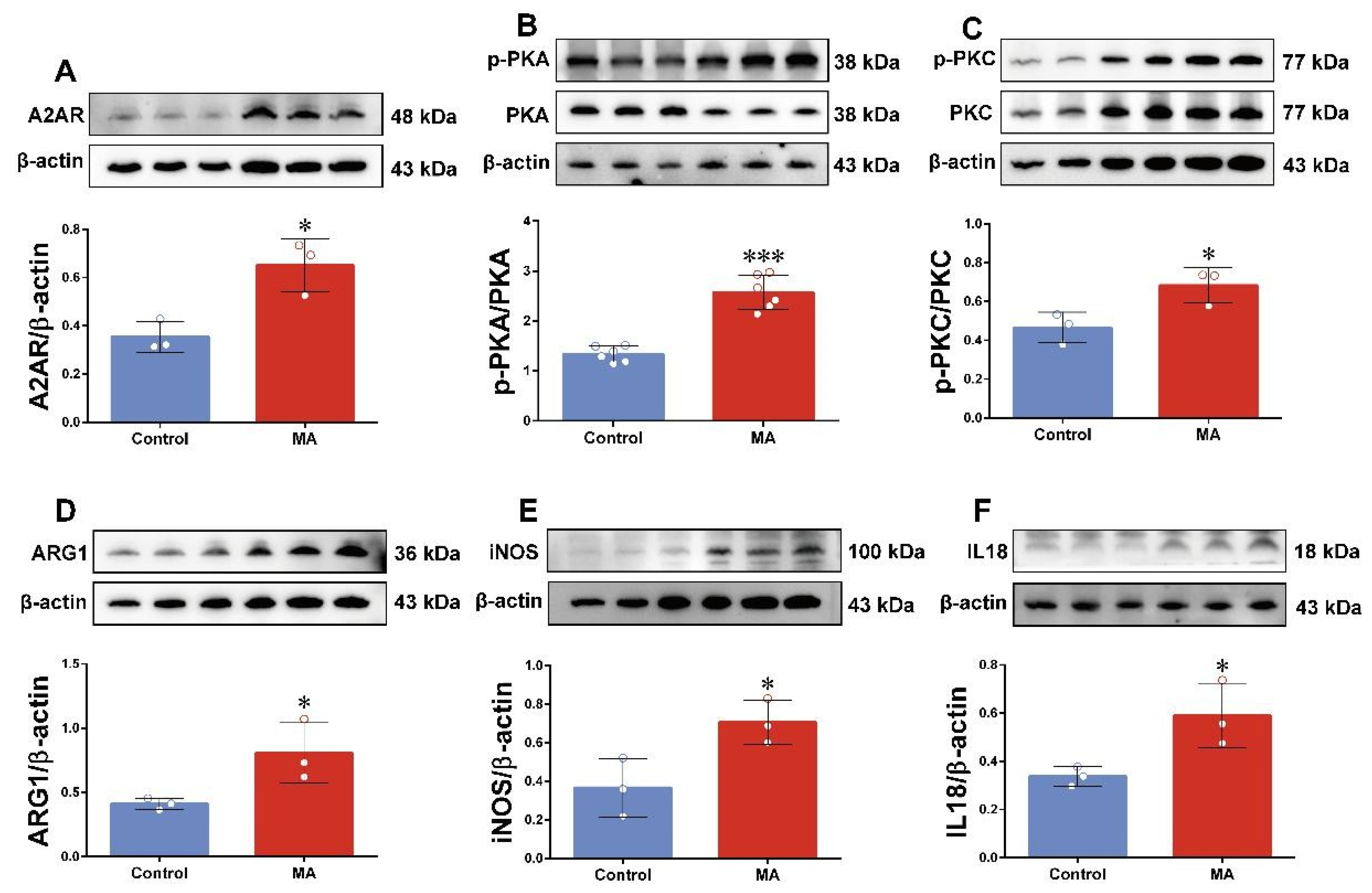
2.1. MA Increases A2AR Expression in Human Striatum, Accompanied by Abnormal Expression of Inflammation-Related Molecules
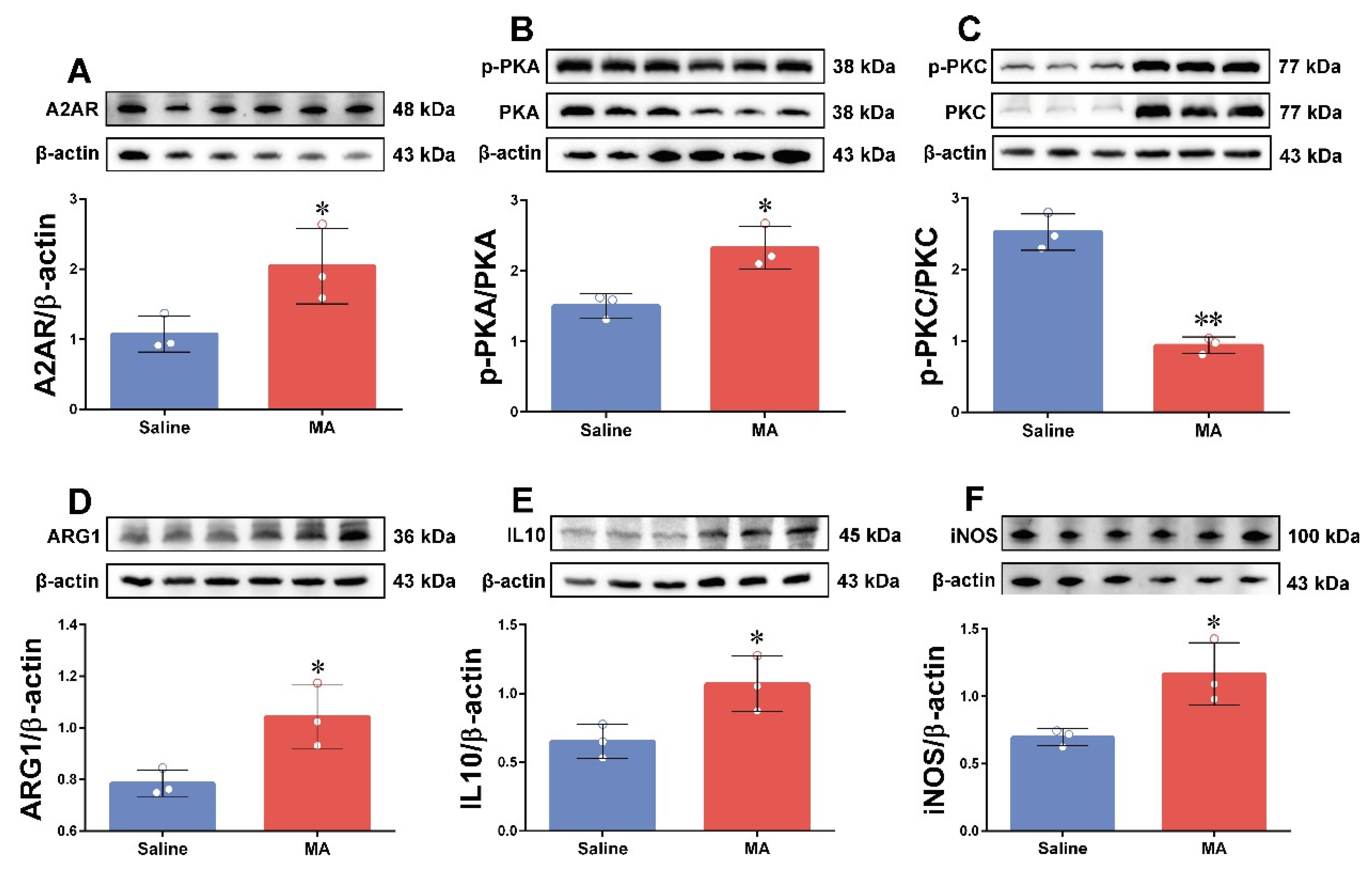
2.2. MA Exposure Increases A2AR Expression and Elicits Inflammation-Related Responses in Mouse Striatum
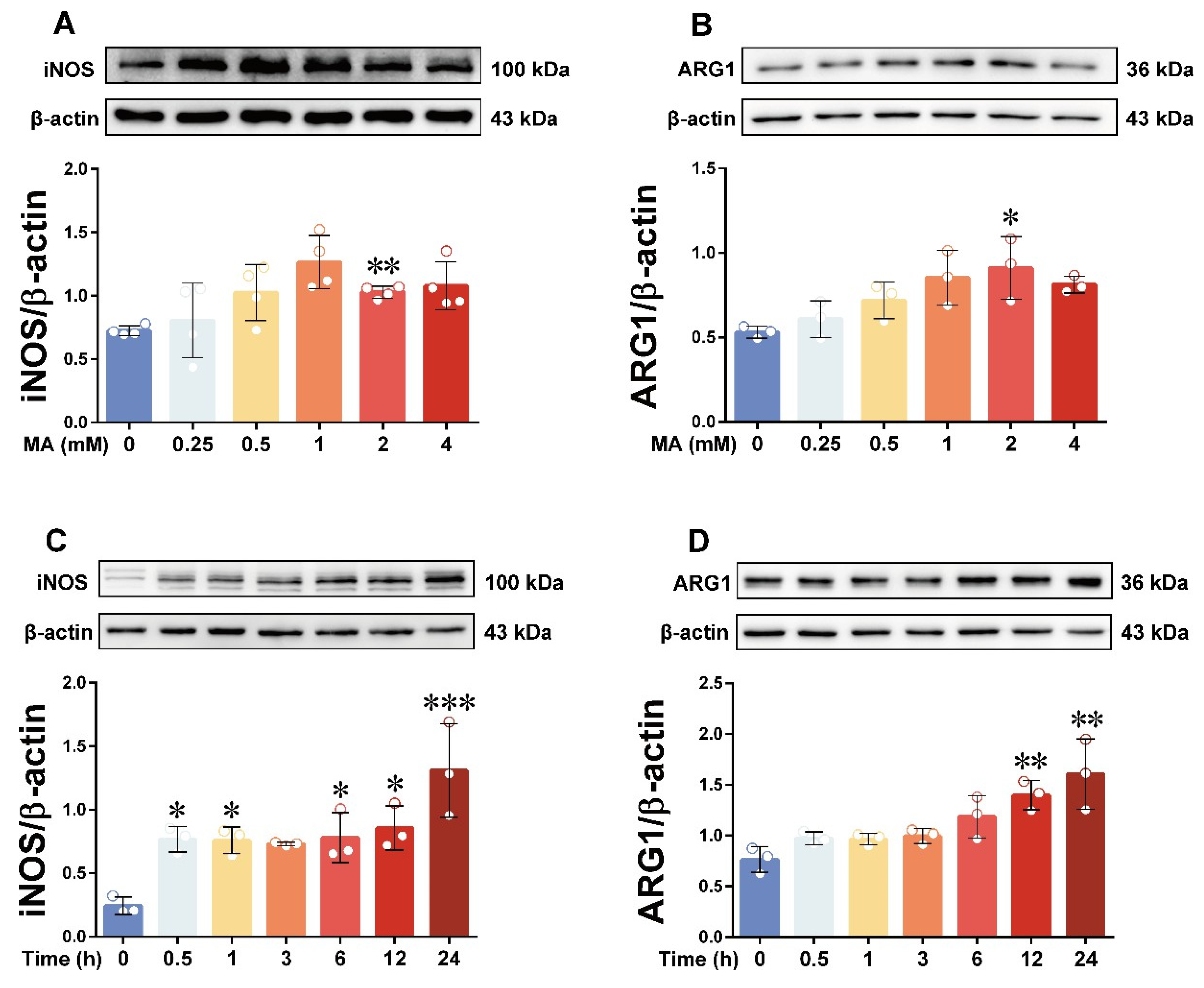
2.3. MA Induces Inflammation-Related Phenotypic Remodeling and Alters A2AR Expression in HMC3 Cells in a Time- and Dose-Dependent Manner
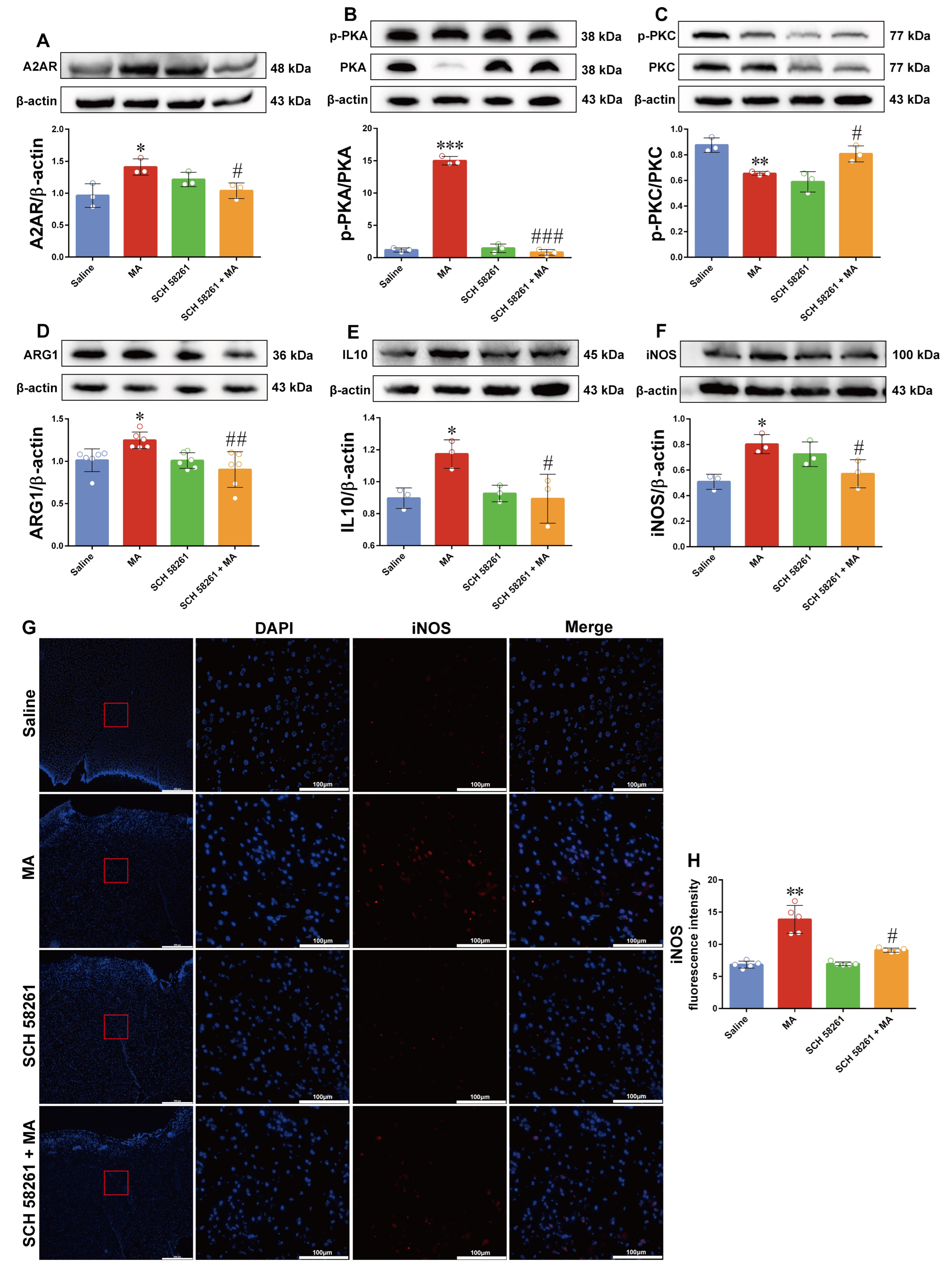
2.4. A2AR Inhibition Attenuates Inflammatory Responses and Modulates PKA/PKC Signaling in the Striatum of MA-Exposed Mice
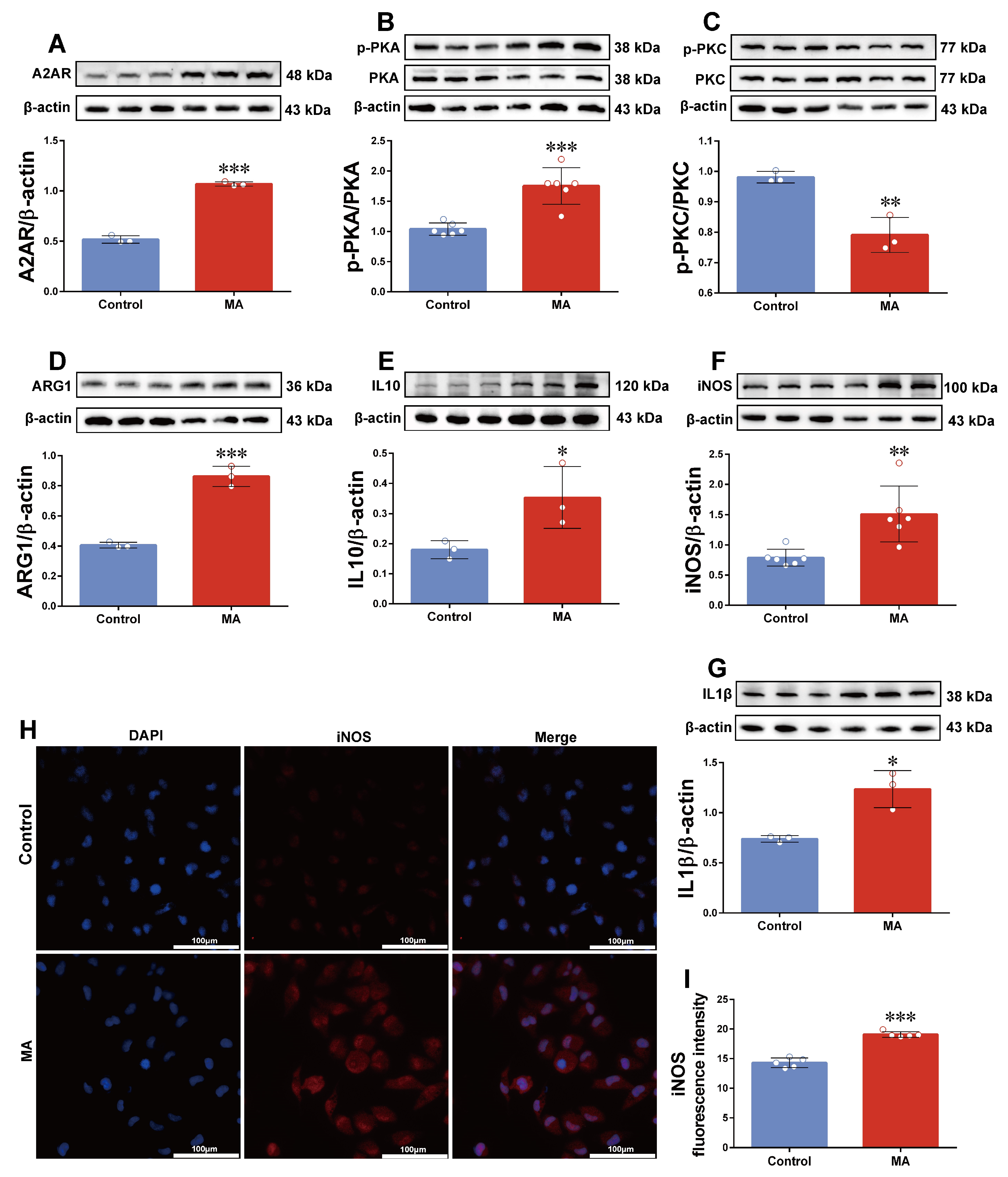
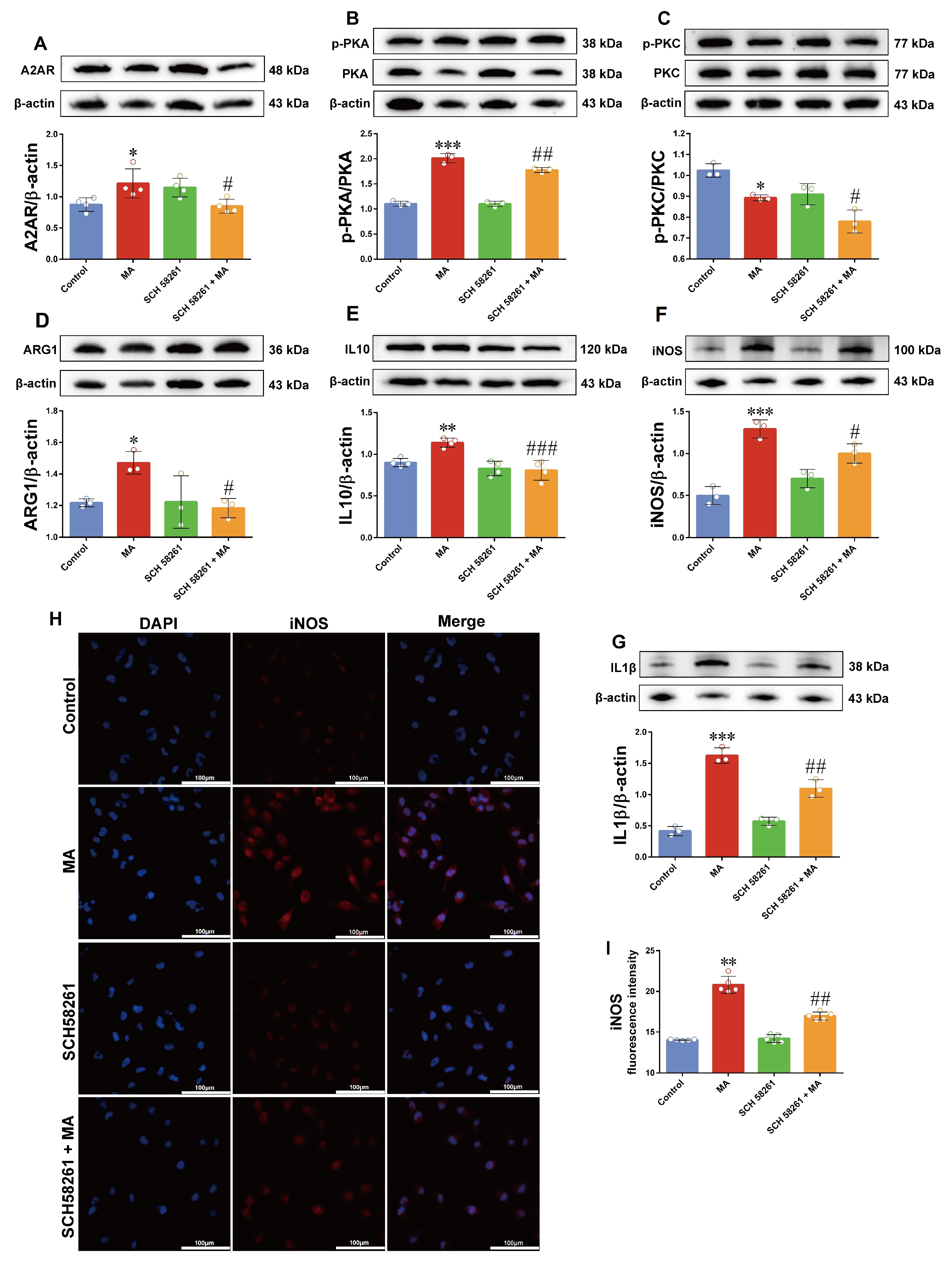
2.5. A2AR Inhibition Attenuates MA-Induced Inflammatory Responses and Modulates PKA/PKC Signaling in HMC3 Cells
3. Discussion
4. Materials and Methods
4.1. Drugs
4.2. Animals
4.3. Cell Culture
4.4. Human Brain Tissue Samples
4.5. Western Blotting
4.6. Immunofluorescence Staining
4.7. Statistical Analysis
5. Conclusions
Author Contributions
Funding
Institutional Review Board Statement
Informed Consent Statement
Data Availability Statement
Conflicts of Interest
References
- Jayanthi, S.; Daiwile, A.P.; Cadet, J.L. Neurotoxicity of methamphetamine: Main effects and mechanisms. Exp. Neurol. 2021, 344, 113795. [Google Scholar] [CrossRef]
- Shaerzadeh, F.; Streit, W.J.; Heysieattalab, S.; Khoshbouei, H. Methamphetamine neurotoxicity, microglia, and neuroinflammation. J. Neuroinflamm. 2018, 15, 341. [Google Scholar] [CrossRef] [PubMed]
- Shi, S.; Chen, T.; Zhao, M. The Crosstalk Between Neurons and Glia in Methamphetamine-Induced Neuroinflammation. Neurochem. Res. 2022, 47, 872–884. [Google Scholar] [CrossRef]
- Prinz, M.; Jung, S.; Priller, J. Microglia Biology: One Century of Evolving Concepts. Cell 2019, 179, 292–311. [Google Scholar] [CrossRef]
- Yang, T.; Zang, S.; Wang, Y.; Zhu, Y.; Jiang, L.; Chen, X.; Zhang, X.; Cheng, J.; Gao, R.; Xiao, H.; et al. Methamphetamine induced neuroinflammation in mouse brain and microglial cell line BV2: Roles of the TLR4/TRIF/Peli1 signaling axis. Toxicol. Lett. 2020, 333, 150–158. [Google Scholar] [CrossRef]
- Tang, Y.; Le, W. Differential Roles of M1 and M2 Microglia in Neurodegenerative Diseases. Mol. Neurobiol. 2016, 53, 1181–1194. [Google Scholar] [CrossRef] [PubMed]
- Cui, W.; Sun, C.; Ma, Y.; Wang, S.; Wang, X.; Zhang, Y. Inhibition of TLR4 Induces M2 Microglial Polarization and Provides Neuroprotection via the NLRP3 Inflammasome in Alzheimer’s Disease. Front. Neurosci. 2020, 14, 444. [Google Scholar] [CrossRef]
- Rodrigues, F.D.S.; Newton, W.R.; Tassinari, I.D.; da Cunha Xavier, F.H.; Marx, A.; de Fraga, L.S.; Wright, K.; Guedes, R.P.; Bambini, V., Jr. Cannabidiol prevents LPS-induced inflammation by inhibiting the NLRP3 inflammasome and iNOS activity in BV2 microglia cells via CB2 receptors and PPARγ. Neurochem. Int. 2024, 177, 105769. [Google Scholar] [CrossRef] [PubMed]
- Xie, L.; Liu, Y.; Zhang, N.; Li, C.; Sandhu, A.F.; Williams, G., III; Shen, Y.; Li, H.; Wu, Q.; Yu, S. Electroacupuncture Improves M2 Microglia Polarization and Glia Anti-inflammation of Hippocampus in Alzheimer’s Disease. Front. Neurosci. 2021, 15, 689629. [Google Scholar] [CrossRef]
- Milne, G.R.; Palmer, T.M. Anti-inflammatory and immunosuppressive effects of the A2A adenosine receptor. Sci. World J. 2011, 11, 320–339. [Google Scholar] [CrossRef]
- Xia, Y.; He, F.; Moukeila Yacouba, M.B.; Zhou, H.; Li, J.; Xiong, Y.; Zhang, J.; Li, H.; Wang, Y.; Ke, J. Adenosine A2a Receptor Regulates Autophagy Flux and Apoptosis to Alleviate Ischemia-Reperfusion Injury via the cAMP/PKA Signaling Pathway. Front. Cardiovasc. Med. 2022, 9, 755619. [Google Scholar] [CrossRef]
- Gomes, C.V.; Kaster, M.P.; TOMé, A.R.; Agostinho, P.M.; Cunha, R.A. Adenosine receptors and brain diseases: Neuroprotection and neurodegeneration. Biochim. Biophys. Acta 2011, 1808, 1380–1399. [Google Scholar] [CrossRef]
- Mecha, M.; Feliú, A.; Iñigo, P.M.; Mestre, L.; Carrillo-Salinas, F.J.; Guaza, C. Cannabidiol provides long-lasting protection against the deleterious effects of inflammation in a viral model of multiple sclerosis: A role for A2A receptors. Neurobiol. Dis. 2013, 59, 141–150. [Google Scholar] [CrossRef]
- Yuan, J.; Chen, L.; Wang, J.; Xia, S.; Huang, J.; Zhou, L.; Feng, C.; Hu, X.; Zhou, Z.; Ran, H. Adenosine A2A Receptor Suppressed Astrocyte-Mediated Inflammation Through the Inhibition of STAT3/YKL-40 Axis in Mice With Chronic Cerebral Hypoperfusion-induced White Matter Lesions. Front. Immunol. 2022, 13, 841290. [Google Scholar]
- Cassada, D.C.; Tribble, C.G.; Long, S.M.; Laubach, V.E.; Kaza, A.K.; Linden, J.; Nguyen, B.N.; Rieger, J.M.; Fiser, S.M.; Kron, I.L.; et al. Adenosine A2A analogue ATL-146e reduces systemic tumor necrosing factor-alpha and spinal cord capillary platelet-endothelial cell adhesion molecule-1 expression after spinal cord ischemia. J. Vasc. Surg. 2002, 35, 994–998. [Google Scholar] [CrossRef]
- Brothers, H.M.; Marchalant, Y.; Wenk, G.L. Caffeine attenuates lipopolysaccharide-induced neuroinflammation. Neurosci. Lett. 2010, 480, 97–100. [Google Scholar] [CrossRef]
- Marcoli, M.; Bonfanti, A.; Roccatagliata, P.; Chiaramonte, G.; Ongini, E.; Raiteri, M.; Maura, G. Glutamate efflux from human cerebrocortical slices during ischemia: Vesicular-like mode of glutamate release and sensitivity to A(2A) adenosine receptor blockade. Neuropharmacology 2004, 47, 884–891. [Google Scholar] [CrossRef] [PubMed]
- Bachtell, R.K.; Larson, T.A.; Winkler, M.C. Adenosine receptor stimulation inhibits methamphetamine-associated cue seeking. J. Psychopharmacol. 2023, 37, 192–203. [Google Scholar] [CrossRef] [PubMed]
- Furlong, T.M.; Supit, A.S.; Corbit, L.H.; Killcross, S.; Balleine, B.W. Pulling habits out of rats: Adenosine 2A receptor antagonism in dorsomedial striatum rescues meth-amphetamine-induced deficits in goal-directed action. Addict. Biol. 2017, 22, 172–183. [Google Scholar] [CrossRef]
- Sekine, Y.; Ouchi, Y.; Sugihara, G.; Takei, N.; Yoshikawa, E.; Nakamura, K.; Iwata, Y.; Tsuchiya, K.J.; Suda, S.; Suzuki, K.; et al. Methamphetamine causes microglial activation in the brains of human abusers. J. Neurosci. 2008, 28, 5756–5761. [Google Scholar] [CrossRef]
- Peng, Y.; Yang, G.; Wang, S.; Lin, W.; Zhu, L.; Dong, W.; Shen, B.; Nie, Q.; Hong, S.; Li, L. Triggering Receptor Expressed on Myeloid Cells 2 Deficiency Exacerbates Methamphetamine-Induced Activation of Microglia and Neuroinflammation. Int. J. Toxicol. 2024, 43, 165–176. [Google Scholar] [CrossRef] [PubMed]
- Karati, D.; Mukherjee, S.; Roy, S. Molecular and Structural Insight into Adenosine A(2A) Receptor in Neurodegenerative Disorders: A Significant Target for Efficient Treatment Approach. Mol. Neurobiol. 2023, 60, 5987–6000. [Google Scholar] [CrossRef]
- Liu, Y.J.; Chen, J.; Li, X.; Zhou, X.; Hu, Y.M.; Chu, S.F.; Peng, Y.; Chen, N.H. Research progress on adenosine in central nervous system diseases. CNS Neurosci. Ther. 2019, 25, 899–910. [Google Scholar] [CrossRef]
- Prasad, K.; De Vries, E.F.J.; Van Der Meiden, E.; Moraga-Amaro, R.; Vazquez-Matias, D.A.; Barazzuol, L.; Dierckx, R.A.J.O.; van Waarde, A. Effects of the adenosine A(2A) receptor antagonist KW6002 on the dopaminergic system, motor performance, and neuroinflammation in a rat model of Parkinson’s disease. Neuropharmacology 2024, 247, 109862. [Google Scholar] [CrossRef]
- Chen, P.Z.; He, W.J.; Zhu, Z.R.; E, G.J.; Xu, G.; Chen, D.W.; Gao, Y.Q. Adenosine A(2A) receptor involves in neuroinflammation-mediated cognitive decline through activating microglia under acute hypobaric hypoxia. Behav. Brain Res. 2018, 347, 99–107. [Google Scholar] [CrossRef]
- Orr, A.G.; Orr, A.L.; Li, X.J.; Gross, R.E.; Traynelis, S.F. Adenosine A(2A) receptor mediates microglial process retraction. Nat. Neurosci. 2009, 12, 872–878. [Google Scholar] [CrossRef] [PubMed]
- Dai, S.S.; Zhou, Y.G. Adenosine 2A receptor: A crucial neuromodulator with bidirectional effect in neuroinflammation and brain injury. Rev. Neurosci. 2011, 22, 231–239. [Google Scholar] [CrossRef]
- Ingwersen, J.; Wingerath, B.; Graf, J.; Lepka, K.; Hofrichter, M.; Schröter, F.; Wedekind, F.; Bauer, A.; Schrader, J.; Hartung, H.P.; et al. Dual roles of the adenosine A2a receptor in autoimmune neuroinflammation. J. Neuroinflamm. 2016, 13, 48. [Google Scholar] [CrossRef] [PubMed]
- Xu, E.; Liu, J.; Liu, H.; Wang, X.; Xiong, H. Role of microglia in methamphetamine-induced neurotoxicity. Int. J. Physiol. Pathophysiol. Pharmacol. 2017, 9, 84–100. [Google Scholar]
- Yang, H.; Wang, Y.; Liu, S.; Zhang, S.; Chen, Y.; Ding, J.; Chen, S.; Zhu, F.; Xia, B.; Luo, P.; et al. Polysaccharide alleviates neurodegeneration and behavioral deficit by enhancing mitochondrial autophagy in chronic methamphetamine mice. Neurotoxicology 2025, 107, 53–61. [Google Scholar] [CrossRef]
- Shen, B.; Yang, G.; Lv, M.; Wu, Z.; Zhang, Y.; Cao, Y.; Shu, J.; Dong, W.; Hou, Z.; Jing, D.; et al. Cannabidiol attenuates methamphetamine-induced oxidative neurotoxicity via regulating transient receptor potential vanilloid type 1. Phytomedicine 2025, 145, 157015. [Google Scholar] [CrossRef]
- Wang, F.; Liu, H.; Ke, Y.; Huang, X.; Chen, S.; Zhuang, D.; Zhou, Y.; Wu, M.; Wang, Y.; Lai, M.; et al. Ibudilast-Mediated Suppression of Neuronal TLR4 in the Prefrontal Cortex Mitigates Methamphetamine-Induced Neuroinflammation and Addictive Behaviours. Addict. Biol. 2025, 30, e70033. [Google Scholar] [CrossRef]
- Fermi, V.; Warta, R.; Wöllner, A.; Lotsch, C.; Jassowicz, L.; Rapp, C.; Knoll, M.; Jungwirth, G.; Jungk, C.; Dao Trong, P.; et al. Effective Reprogramming of Patient-Derived M2-Polarized Glioblastoma-Associated Microglia/Macrophages by Treatment with GW2580. Clin. Cancer Res. 2023, 29, 4685–4697. [Google Scholar] [CrossRef] [PubMed]
- Liu, L.; Tang, J.; Liang, X.; Li, Y.; Zhu, P.; Zhou, M.; Qin, L.; Deng, Y.; Li, J.; Wang, Y.; et al. Running exercise alleviates hippocampal neuroinflammation and shifts the balance of microglial M1/M2 polarization through adiponectin/AdipoR1 pathway activation in mice exposed to chronic unpredictable stress. Mol. Psychiatry 2024, 29, 2031–2042. [Google Scholar] [CrossRef]
- Long, Y.; Li, X.Q.; Deng, J.; Ye, Q.B.; Li, D.; Ma, Y.; Wu, Y.Y.; Hu, Y.; He, X.F.; Wen, J.; et al. Modulating the polarization phenotype of microglia—A valuable strategy for central nervous system diseases. Ageing Res. Rev. 2024, 93, 102160. [Google Scholar] [CrossRef]
- Ouyang, X.; Ghani, A.; Malik, A.; Wilder, T.; Colegio, O.R.; Flavell, R.A.; Cronstein, B.N.; Mehal, W.Z. Adenosine is required for sustained inflammasome activation via the A2A receptor and the HIF-1α pathway. Nat. Commun. 2013, 4, 2909. [Google Scholar] [CrossRef]
- Zhao, W.; Ma, L.; Cai, C.; Gong, X. Caffeine Inhibits NLRP3 Inflammasome Activation by Suppressing MAPK/NF-κB and A2aR Signaling in LPS-Induced THP-1 Macrophages. Int. J. Biol. Sci. 2019, 15, 1571–1581. [Google Scholar] [CrossRef]
- Du, H.; Tan, Y.; Li, C.H.; Zhao, Y.; Li, P.; Ning, Y.L.; Gao, R.B.; Wang, B.; Peng, Y.; Tan, S.W.; et al. High glutamate concentration reverses the inhibitory effect of microglial adenosine 2A receptor on NLRP3 inflammasome assembly and activation. Neurosci. Lett. 2022, 769, 136431. [Google Scholar] [CrossRef] [PubMed]
- Raskovalova, T.; Lokshin, A.; Huang, X.; Jackson, E.K.; Gorelik, E. Adenosine-mediated inhibition of cytotoxic activity and cytokine production by IL-2/NKp46-activated NK cells: Involvement of protein kinase A isozyme I (PKA I). Immunol. Res. 2006, 36, 91–99. [Google Scholar] [CrossRef] [PubMed]
- Fiebich, B.L.; Biber, K.; Lieb, K.; Van Calker, D.; Berger, M.; Bauer, J.; Gebicke-Haerter, P.J. Cyclooxygenase-2 expression in rat microglia is induced by adenosine A2a-receptors. Glia 1996, 18, 152–160. [Google Scholar] [CrossRef]
- Heese, K.; Fiebich, B.L.; Bauer, J.; Otten, U. Nerve growth factor (NGF) expression in rat microglia is induced by adenosine A2a-receptors. Neurosci. Lett. 1997, 231, 83–86. [Google Scholar] [CrossRef]
- Minnone, G.; De Benedetti, F.; Bracci-Laudiero, L. NGF and Its Receptors in the Regulation of Inflammatory Response. Int. J. Mol. Sci. 2017, 18, 1028. [Google Scholar] [CrossRef]
- Liu, W.; Li, Q.; Fang, W.; Cai, L.; Wang, Z.; Kou, B.; Zhou, C.; Zhou, Y.; Yao, Z.; Wei, M.; et al. A(2A)R regulate inflammation through PKA/NF-κB signaling pathways in intervertebral disc degeneration. Eur. J. Med. Res. 2024, 29, 433. [Google Scholar] [CrossRef] [PubMed]
- Fu, S.Y.; Xiong, R.P.; Peng, Y.; Zhang, Z.H.; Chen, X.; Zhao, Y.; Ning, Y.L.; Yang, N.; Zhou, Y.G.; Li, P. PKC Mediates LPS-Induced IL-1β Expression and Participates in the Pro-inflammatory Effect of A(2A)R Under High Glutamate Concentrations in Mouse Microglia. Neurochem. Res. 2019, 44, 2755–2764. [Google Scholar] [CrossRef] [PubMed]
- Loram, L.C.; Taylor, F.R.; Strand, K.A.; Harrison, J.A.; Rzasalynn, R.; Sholar, P.; Rieger, J.; Maier, S.F.; Watkins, L.R. Intrathecal injection of adenosine 2A receptor agonists reversed neuropathic allodynia through protein kinase (PK)A/PKC signaling. Brain Behav. Immun. 2013, 33, 112–122. [Google Scholar] [CrossRef]


Disclaimer/Publisher’s Note: The statements, opinions and data contained in all publications are solely those of the individual author(s) and contributor(s) and not of MDPI and/or the editor(s). MDPI and/or the editor(s) disclaim responsibility for any injury to people or property resulting from any ideas, methods, instructions or products referred to in the content. |
© 2026 by the authors. Licensee MDPI, Basel, Switzerland. This article is an open access article distributed under the terms and conditions of the Creative Commons Attribution (CC BY) license.
Share and Cite
Hou, Z.; Zhang, X.; Yang, G.; Shen, B.; Dong, W.; Jing, D.; Hong, S.; Li, L. Adenosine A2A Receptor Contributes to Bidirectional Remodeling of Microglial Inflammatory Responses During Methamphetamine Exposure. Int. J. Mol. Sci. 2026, 27, 5072. https://doi.org/10.3390/ijms27115072
Hou Z, Zhang X, Yang G, Shen B, Dong W, Jing D, Hong S, Li L. Adenosine A2A Receptor Contributes to Bidirectional Remodeling of Microglial Inflammatory Responses During Methamphetamine Exposure. International Journal of Molecular Sciences. 2026; 27(11):5072. https://doi.org/10.3390/ijms27115072
Chicago/Turabian StyleHou, Zhenping, Xinjie Zhang, Genmeng Yang, Baoyu Shen, Wenjuan Dong, Di Jing, Shijun Hong, and Lihua Li. 2026. "Adenosine A2A Receptor Contributes to Bidirectional Remodeling of Microglial Inflammatory Responses During Methamphetamine Exposure" International Journal of Molecular Sciences 27, no. 11: 5072. https://doi.org/10.3390/ijms27115072
APA StyleHou, Z., Zhang, X., Yang, G., Shen, B., Dong, W., Jing, D., Hong, S., & Li, L. (2026). Adenosine A2A Receptor Contributes to Bidirectional Remodeling of Microglial Inflammatory Responses During Methamphetamine Exposure. International Journal of Molecular Sciences, 27(11), 5072. https://doi.org/10.3390/ijms27115072