Contradictory Effects on Hepatocytes in ASMD


Abstract
1. Introduction
2. Evidence of Hepatocyte Involvement in Patients
3. Hepatoprotective Effects of ASMD in Models
4. The Role of Acid Sphingomyelinase in Lysosomal Repair
5. ASMD Effects on Autophagy in Hepatocytes
6. Hepatocellular Nitric Oxide Synthase Activity in ASMD
7. Lysosphingomyelin-509
8. Conclusions
Author Contributions
Funding
Institutional Review Board Statement
Informed Consent Statement
Data Availability Statement
Acknowledgments
Conflicts of Interest
Abbreviations
| ASMD | Acid sphingomyelinase deficiency |
| HDL | High-density lipoprotein |
| CNS | Central nervous system |
| lyso-SM-509 | Lysosphingomyelin-509 |
| PPCS | N-Palmitoyl-O-phosphocholineserine |
| CAD | Coronary artery disease |
| LCAT | Lecithin-cholesterol acyltransferase |
| SR-BI | Scavenger receptor class B, type I |
| LDL | Low-density lipoprotein |
| apoB | Apolipoprotein B |
| PCSK9 | Proprotein convertase subtilisin/kexin type 9 |
| LDLR | Low-density lipoprotein receptor |
| apoE | Apolipoprotein E |
| LPL | Lipoprotein lipase |
| ASM | Acid sphingomyelinase |
| PKB | Protein kinase B |
| SphK | Sphingosine kinase |
| S1P | Sphingosine-1-phosphate |
| AMPK | Adenosine monophosphate-activated protein kinase |
| GLUT2 | Glucose transporter 2 |
| FIASMA | Functional inhibitors of acid sphingomyelinase |
| TNF-α | Tumor necrosis factor alpha |
| ELAV | Embryonic lethal abnormal vision |
| ER | Endoplasmic reticulum |
| ESCRT | Endosomal sorting complexes required for transport |
| PITT | Phosphoinositide-initiated membrane tethering and lipid transport |
| TECPR1 | Tectonin beta-propeller repeat containing 1 |
| ATG | Autophagy-related |
| LC3B | Microtubule-associated protein 1 light chain 3 beta |
| ATG16L1 | Autophagy-related 16 like 1 |
| LLOMe | L-Leucyl-L-Leucine methyl ester |
| Hsp70 | Heat shock protein 70 |
| BMP | Bis(monoacylglycero)phosphate |
| PI3P | Phosphatidylinositol 3-phosphate |
| SQSTM1 | Sequestosome-1 |
| LC3B-II | Lipidated, membrane-bound form of Microtubule-associated protein 1 light chain 3 beta |
| TRPML1 | Transient receptor potential mucolipin 1 |
| TfR1 | Transferrin receptor 1 |
| mTORC1 | Mammalian target of rapamycin complex 1 |
| TFEB | Transcription factor EB |
| TPC | Two-pore channels |
| NAADP | Nicotinic acid adenine dinucleotide phosphate |
| SM | Sphingomyelin |
| eNOS | Endothelial nitric oxide synthase |
| S1PR | Sphingosine-1-phosphate receptor |
| NOS | Nitric oxide synthase |
| iNOS | Inducible nitric oxide synthase |
| cGMP | Cyclic guanosine monophosphate |
| MSCs | Mesenchymal stem cells |
| NOTCH1 | Neurogenic locus notch homolog protein 1 |
| NAFLD | Non-alcoholic fatty liver disease |
| NO | Nitric oxide |
| NPC | Niemann–Pick disease type C |
| lyso-SM | Lysosphingomyelin |
| CDG | Congenital disorders of glycosylation |
| PMM2 | Phosphomannomutase 2 |
| ALG1 | Chitobiosyldiphosphodolichol beta-mannosyltransferase |
| ALG8 | Alpha-1,3-glucosyltransferase |
| ATP6AP1 | Adenosine triphosphatase H+ transporting accessory protein 1 |
| CID | Compound identification |
| NF-κB | Nuclear factor kappa-light-chain-enhancer of activated B cells |
| BODIPY | boron–dipyrromethene |
References
- El-mezayen, M.; Tawfik, A.M.; Hadhoud, A.M.; Gerges, V.M.; Afify, M.H. Exploring the Boundaries of Niemann-Pick Disease Type A/B: A Report of a Case and Review of Literature. Mol. Cell. Pediatr. 2025, 12, 18. [Google Scholar] [CrossRef] [PubMed]
- Geberhiwot, T.; Wasserstein, M.; Wanninayake, S.; Bolton, S.C.; Dardis, A.; Lehman, A.; Lidove, O.; Dawson, C.; Giugliani, R.; Imrie, J.; et al. Consensus Clinical Management Guidelines for Acid Sphingomyelinase Deficiency (Niemann–Pick Disease Types A, B and A/B). Orphanet J. Rare Dis. 2023, 18, 85. [Google Scholar] [CrossRef]
- Cox, G.F.; Clarke, L.A.; Giugliani, R.; McGovern, M.M. Burden of Illness in Acid Sphingomyelinase Deficiency: A Retrospective Chart Review of 100 Patients. In JIMD Reports; Morava, E., Baumgartner, M., Patterson, M., Rahman, S., Zschocke, J., Peters, V., Eds.; JIMD Reports; Springer: Berlin/Heidelberg, Germany, 2018; Volume 41, pp. 119–129. [Google Scholar]
- Brady, R.O.; Kanfer, J.N.; Mock, M.B.; Fredrickson, D.S. The Metabolism of Sphingomyelin. II. Evidence of an Enzymatic Deficiency in Niemann-Pick Diseae. Proc. Natl. Acad. Sci. USA 1966, 55, 366–369. [Google Scholar] [CrossRef]
- Kingma, S.D.K.; Bodamer, O.A.; Wijburg, F.A. Epidemiology and Diagnosis of Lysosomal Storage Disorders; Challenges of Screening. Best Pract. Res. Clin. Endocrinol. Metab. 2015, 29, 145–157. [Google Scholar] [CrossRef]
- AlSayed, M.; Al-Jasmi, F.; Omran, T.B.; Al-Murshedi, F.; Sunbul, R.; Al-Hashmi, N.; Al-Enazi, T. The Landscape of Acid Sphingomyelinase Deficiency in a New Therapeutic Era: Insights from Experts in the Gulf Region. J. Biochem. Clin. Genet. 2023, 6, 41–56. [Google Scholar] [CrossRef]
- Sako, S.; Oishi, K.; Ida, H.; Imagawa, E. Allele Frequency of Pathogenic Variants Causing Acid Sphingomyelinase Deficiency and Gaucher Disease in the General Japanese Population. Hum. Genome Var. 2024, 11, 24. [Google Scholar] [CrossRef]
- Levran, O.; Desnick, R.J.; Schuchman, E.H. Niemann-Pick Disease: A Frequent Missense Mutation in the Acid Sphingomyelinase Gene of Ashkenazi Jewish Type A and B Patients. Proc. Natl. Acad. Sci. USA 1991, 88, 3748–3752. [Google Scholar] [CrossRef]
- Levran, O.; Desnick, R.; Schuchman, E. Identification and Expression of a Common Missense Mutation (L302P) in the Acid Sphingomyelinase Gene of Ashkenazi Jewish Type A Niemann-Pick Disease Patients. Blood 1992, 80, 2081–2087. [Google Scholar] [CrossRef][Green Version]
- Gluck, I.; Zeigler, M.; Bargal, R.; Schiff, E.; Bach, G. Niemann Pick Disease Type A in Israeli Arabs: 677delT, a Common Novel Single Mutation. Hum. Mutat. 1998, 12, 136. [Google Scholar] [CrossRef]
- Zahedi Abghari, F.; Bayat, F.; Razipour, M.; Karimipoor, M.; Taghavi-Basmenj, M.; Zeinali, S.; Davoudi-Dehaghani, E. Characterization of Niemann-Pick Diseases Genes Mutation Spectrum in Iran and Identification of a Novel Mutation in SMPD1 Gene. Med. J. Islam. Repub. Iran 2019, 33, 126. [Google Scholar] [CrossRef]
- McGovern, M.M.; Avetisyan, R.; Sanson, B.-J.; Lidove, O. Disease Manifestations and Burden of Illness in Patients with Acid Sphingomyelinase Deficiency (ASMD). Orphanet J. Rare Dis. 2017, 12, 41. [Google Scholar] [CrossRef]
- Pokrzywinski, R.; Hareendran, A.; Nalysnyk, L.; Cowie, S.; Crowe, J.; Hopkin, J.; Joshi, D.; Pulikottil-Jacob, R. Impact and Burden of Acid Sphingomyelinase Deficiency from a Patient and Caregiver Perspective. Sci. Rep. 2021, 11, 20972. [Google Scholar] [CrossRef]
- Giugliani, R.; Siqueira, A.C.M.D.; Martins, A.M.; Marcondes, B.F.; Souza, C.F.M.D.; Dain Gandelman Horovitz, D.; Leão, E.K.E.; Gusto, G.; Carvalho, G.D.S.; Artigalás, O.; et al. A Retrospective Chart Review Study on the Burden of Illness of Acid Sphingomyelinase Deficiency in Brazil. J. Clin. Med. 2026, 15, 589. [Google Scholar] [CrossRef]
- Lipiński, P.; Kuchar, L.; Zakharova, E.Y.; Baydakova, G.V.; Ługowska, A.; Tylki-Szymańska, A. Chronic Visceral Acid Sphingomyelinase Deficiency (Niemann-Pick Disease Type B) in 16 Polish Patients: Long-Term Follow-Up. Orphanet J. Rare Dis. 2019, 14, 55. [Google Scholar] [CrossRef]
- Mauhin, W.; Borie, R.; Dalbies, F.; Douillard, C.; Guffon, N.; Lavigne, C.; Lidove, O.; Brassier, A. Acid Sphingomyelinase Deficiency: Sharing Experience of Disease Monitoring and Severity in France. J. Clin. Med. 2022, 11, 920. [Google Scholar] [CrossRef]
- Hashemian, S.; Eshraghi, P.; Dilaver, N.; Galehdari, H.; Shalbafan, B.; Vakili, R.; Ghaemi, N.; Ahangari, N.; Rezazadeh Varaghchi, J.; Zeighami, J.; et al. Niemann-Pick Diseases: The Largest Iranian Cohort with Genetic Analysis. Iran. J. Child Neurol. 2019, 13, 155–162. [Google Scholar] [PubMed]
- Qureshi, K.; Abdulmajeed, Z.G.; Saleem, S.; Tariq, J.; Iqbal, M. Niemann-Pick Disease Type A: A Rare Disease With a Fatal Outcome. Cureus 2022, 14, e21955. [Google Scholar] [CrossRef] [PubMed]
- Zhurkova, N.V.; Vashakmadze, N.V.; Surkov, A.N.; Turti, T.V.; Bogdanova, K.V.; Kotalevskaya, Y.Y.; Zakharova, E.Y.; Namazova-Baranova, L.S. Niemann-Pick Disease, Type A: Clinical Case of 5 Months Old Patient. Vopr. Sovr. Pediatr. 2024, 23, 188–196. [Google Scholar] [CrossRef]
- Simões, R.G.; Maia, H. Niemann-Pick Type B in Adulthood. BMJ Case Rep. 2015, 2015, bcr2014208286. [Google Scholar] [CrossRef] [PubMed]
- Schuchman, E.H.; Desnick, R.J. Types A and B Niemann-Pick Disease. Mol. Genet. Metab. 2017, 120, 27–33. [Google Scholar] [CrossRef]
- Schuchman, E.H.; Wasserstein, M.P. Types A and B Niemann-Pick Disease. Best Pract. Res. Clin. Endocrinol. Metab. 2015, 29, 237–247. [Google Scholar] [CrossRef]
- Blümlein, U.; Mengel, E.; Amraoui, Y. Acid Sphingomyelinase Deficiency: The Clinical Spectrum of 2 Patients Who Carry the Q294K Mutation and Diagnostic Challenges. Mol. Genet. Metab. Rep. 2022, 32, 100900. [Google Scholar] [CrossRef]
- Mengel, E.; Muschol, N.; Weinhold, N.; Ziagaki, A.; Neugebauer, J.; Antoni, B.; Langer, L.; Gasparic, M.; Guillonneau, S.; Fournier, M.; et al. A Retrospective Study of Morbidity and Mortality of Chronic Acid Sphingomyelinase Deficiency in Germany. Orphanet J. Rare Dis. 2024, 19, 161. [Google Scholar] [CrossRef]
- Pulikottil-Jacob, R.; Dehipawala, S.; Smith, B.; Athavale, A.; Gusto, G.; Chandak, A.; Khachatryan, A.; Banon, T.; Fournier, M.; Guillonneau, S.; et al. Survival of Patients with Chronic Acid Sphingomyelinase Deficiency (ASMD) in the United States: A Retrospective Chart Review Study. Mol. Genet. Metab. Rep. 2024, 38, 101040. [Google Scholar] [CrossRef] [PubMed]
- Cassiman, D.; Packman, S.; Bembi, B.; Turkia, H.B.; Al-Sayed, M.; Schiff, M.; Imrie, J.; Mabe, P.; Takahashi, T.; Mengel, K.E.; et al. Cause of Death in Patients with Chronic Visceral and Chronic Neurovisceral Acid Sphingomyelinase Deficiency (Niemann-Pick Disease Type B and B Variant): Literature Review and Report of New Cases. Mol. Genet. Metab. 2016, 118, 206–213, Correction in Mol. Genet. Metab. 2018, 125, 360. [Google Scholar] [CrossRef]
- Mistry, P.K.; Cassiman, D.; Jones, S.A.; Lachmann, R.; Lukina, E.; Prada, C.E.; Wasserstein, M.P.; Thurberg, B.L.; Foster, M.C.; Patel, R.M.; et al. Acid Sphingomyelinase Deficiency and Gaucher Disease: Underdiagnosed and Often Treatable Causes of Hepatomegaly, Splenomegaly, and Low HDL Cholesterol in Lean Individuals. Hepatol. Commun. 2025, 9, e0621. [Google Scholar] [CrossRef]
- Münzer, P.; Borst, O.; Walker, B.; Schmid, E.; Feijge, M.A.H.; Cosemans, J.M.E.M.; Chatterjee, M.; Schmidt, E.-M.; Schmidt, S.; Towhid, S.T.; et al. Acid Sphingomyelinase Regulates Platelet Cell Membrane Scrambling, Secretion, and Thrombus Formation. Arter. Thromb. Vasc. Biol. 2014, 34, 61–71. [Google Scholar] [CrossRef]
- Mengel, E.; Scarpa, M.; Guffon, N.; Jones, S.A.; Goriya, V.; Msihid, J.; Dyevre, V.; Rodriguez, C.; Gasparic, M.; Nalysnyk, L.; et al. Natural History of Acid Sphingomyelinase Deficiency among European Patients during Childhood and Adolescence: A Retrospective Observational Study. Eur. J. Med. Genet. 2024, 70, 104954. [Google Scholar] [CrossRef] [PubMed]
- Cassiman, D.; Libbrecht, L.; Meersseman, W.; Wilmer, A. Case Report of Gastrointestinal Bleeding in an Adult with Chronic Visceral Acid Sphingomyelinase Deficiency. Case Rep. Gastrointest. Med. 2019, 2019, 9613457. [Google Scholar] [CrossRef]
- Lidove, O.; Sedel, F.; Charlotte, F.; Froissart, R.; Vanier, M.T. Cirrhosis and Liver Failure: Expanding Phenotype of Acid Sphingomyelinase-Deficient Niemann-Pick Disease in Adulthood. JIMD Rep. 2015, 15, 117–121. [Google Scholar] [CrossRef] [PubMed]
- McGovern, M.M.; Lippa, N.; Bagiella, E.; Schuchman, E.H.; Desnick, R.J.; Wasserstein, M.P. Morbidity and Mortality in Type B Niemann-Pick Disease. Genet. Med. 2013, 15, 618–623. [Google Scholar] [CrossRef] [PubMed]
- Wasserstein, M.; Dionisi-Vici, C.; Giugliani, R.; Hwu, W.-L.; Lidove, O.; Lukacs, Z.; Mengel, E.; Mistry, P.K.; Schuchman, E.H.; McGovern, M. Recommendations for Clinical Monitoring of Patients with Acid Sphingomyelinase Deficiency (ASMD). Mol. Genet. Metab. 2019, 126, 98–105. [Google Scholar] [CrossRef]
- Poczobutt, J.M.; Mikosz, A.M.; Poirier, C.; Beatman, E.L.; Serban, K.A.; Gally, F.; Cao, D.; McCubbrey, A.L.; Cornell, C.F.; Schweitzer, K.S.; et al. Altered Macrophage Function Associated with Crystalline Lung Inflammation in Acid Sphingomyelinase Deficiency. Am. J. Respir. Cell Mol. Biol. 2021, 64, 629–640. [Google Scholar] [CrossRef] [PubMed]
- Sechi, A.; Vit, A.; Avellini, C.; Dardis, A.; Pellegrin, A.; Scarpa, M.; Bembi, B. Focal Hepatic Lesions in Acid Sphingomyelinase Deficiency: Differential Diagnosis between Foamy Macrophages Aggregates and Malignancy. Mol. Genet. Metab. Rep. 2021, 29, 100808. [Google Scholar] [CrossRef]
- Thurberg, B.L. Autopsy Pathology of Infantile Neurovisceral ASMD (Niemann-Pick Disease Type A): Clinicopathologic Correlations of a Case Report. Mol. Genet. Metab. Rep. 2020, 24, 100626. [Google Scholar] [CrossRef]
- Girard, S.; Pettazzoni, M.; Froissart, R.; Pagan, C.; Boyer, T.; Dulucq, S.; Gonçalves Monteiro, V.; Lechevalier, N.; Loosveld, M.; Lours, C.; et al. How to Diagnose Acid Sphingomyelinase Deficiency (ASMD) and Niemann–Pick Disease Type C from Bone Marrow and Peripheral Blood Smears. HemaSphere 2024, 8, e70042. [Google Scholar] [CrossRef] [PubMed]
- Lipiński, P.; Tylki-Szymańska, A. The Liver and Lysosomal Storage Diseases: From Pathophysiology to Clinical Presentation, Diagnostics, and Treatment. Diagnostics 2024, 14, 1299. [Google Scholar] [CrossRef]
- Nguyen-Lefebvre, A.T.; Horuzsko, A. Kupffer Cell Metabolism and Function. J. Enzym. Metab. 2015, 1, 101. [Google Scholar]
- Thurberg, B.L.; Wasserstein, M.P.; Schiano, T.; O’Brien, F.; Richards, S.; Cox, G.F.; McGovern, M.M. Liver and Skin Histopathology in Adults With Acid Sphingomyelinase Deficiency (Niemann-Pick Disease Type B). Am. J. Surg. Pathol. 2012, 36, 1234–1246. [Google Scholar] [CrossRef]
- Ngoenmak, T.; Somran, J.; Foonoi, M.; Srisingh, K.; Singpan, N.; Tim-Aroon, T. Case Report of a Novel Variant in SMPD1 of Niemann-Pick Disease Type A with a Liver Histology from Thailand. Glob. Pediatr. 2024, 7, 100096. [Google Scholar] [CrossRef]
- Gomez-Mariano, G.; Perez-Luz, S.; Ramos-Del Saz, S.; Matamala, N.; Hernandez-SanMiguel, E.; Fernandez-Prieto, M.; Gil-Martin, S.; Justo, I.; Marcacuzco, A.; Martinez-Delgado, B. Acid Sphingomyelinase Deficiency Type B Patient-Derived Liver Organoids Reveals Altered Lysosomal Gene Expression and Lipid Homeostasis. Int. J. Mol. Sci. 2023, 24, 12645. [Google Scholar] [CrossRef] [PubMed]
- Ghauharali-van Der Vlugt, K.; Langeveld, M.; Poppema, A.; Kuiper, S.; Hollak, C.E.M.; Aerts, J.M.; Groener, J.E.M. Prominent Increase in Plasma Ganglioside GM3 Is Associated with Clinical Manifestations of Type I Gaucher Disease. Clin. Chim. Acta 2008, 389, 109–113. [Google Scholar] [CrossRef]
- Suomi, W.D.; Agranoff, B.W. Lipids of the Spleen in Gaucher’s Disease. J. Lipid Res. 1965, 6, 211–219. [Google Scholar] [CrossRef] [PubMed]
- Sun, Y.; Liou, B.; Ran, H.; Skelton, M.R.; Williams, M.T.; Vorhees, C.V.; Kitatani, K.; Hannun, Y.A.; Witte, D.P.; Xu, Y.-H.; et al. Neuronopathic Gaucher Disease in the Mouse: Viable Combined Selective Saposin C Deficiency and Mutant Glucocerebrosidase (V394L) Mice with Glucosylsphingosine and Glucosylceramide Accumulation and Progressive Neurological Deficits. Hum. Mol. Genet. 2010, 19, 1088–1097. [Google Scholar] [CrossRef]
- Lake, A.; Fuller, M. Sphingolipids in Gaucher Disease: A Systematic Review. Orphanet J. Rare Dis. 2025, 20, 565. [Google Scholar] [CrossRef] [PubMed]
- Cabrera-Reyes, F.; Parra-Ruiz, C.; Yuseff, M.I.; Zanlungo, S. Alterations in Lysosome Homeostasis in Lipid-Related Disorders: Impact on Metabolic Tissues and Immune Cells. Front. Cell Dev. Biol. 2021, 9, 790568. [Google Scholar] [CrossRef]
- Abed Rabbo, M.; Khodour, Y.; Kaguni, L.S.; Stiban, J. Sphingolipid Lysosomal Storage Diseases: From Bench to Bedside. Lipids Health Dis. 2021, 20, 44. [Google Scholar] [CrossRef]
- Platt, F.M. The Expanding Boundaries of Sphingolipid Lysosomal Storage Diseases; Insights from Niemann-Pick Disease Type C. Biochem. Soc. Trans. 2023, 51, 1777–1787. [Google Scholar] [CrossRef] [PubMed]
- Thakkar, H.; Vincent, V.; Chaurasia, B. Ceramide Signaling in Immunity: A Molecular Perspective. Lipids Health Dis. 2025, 24, 225. [Google Scholar] [CrossRef]
- Castoldi, A.; Monteiro, L.B.; van Teijlingen Bakker, N.; Sanin, D.E.; Rana, N.; Corrado, M.; Cameron, A.M.; Hässler, F.; Matsushita, M.; Caputa, G.; et al. Triacylglycerol Synthesis Enhances Macrophage Inflammatory Function. Nat. Commun. 2020, 11, 4107. [Google Scholar] [CrossRef]
- Kaminskas Fernandes Isern, C.; Chen, Y.; Touboul, R.; Frank, B.; Hu, S.; Chang, C.L. Exploring the Synergistic Action of Medium-Chain Triglycerides and Omega-3 Fatty Acids to Enhance Cellular Uptake and Anti-Inflammatory Responses. Nutrients 2025, 17, 1889. [Google Scholar] [CrossRef]
- Treede, I.; Braun, A.; Sparla, R.; Kühnel, M.; Giese, T.; Turner, J.R.; Anes, E.; Kulaksiz, H.; Füllekrug, J.; Stremmel, W.; et al. Anti-Inflammatory Effects of Phosphatidylcholine. J. Biol. Chem. 2007, 282, 27155–27164. [Google Scholar] [CrossRef]
- Nascimento, E.B.M.; Mannerås-Holm, L.; Chibalin, A.V.; Björnholm, M.; Zierath, J.R. Diacylglycerol Kinase α Deficiency Alters Inflammation Markers in Adipose Tissue in Response to a High-Fat Diet. J. Lipid Res. 2018, 59, 273–282. [Google Scholar] [CrossRef] [PubMed]
- Wang, Y.-F.; Lee, G.-L.; Huang, Y.-H.; Kuo, C.-C. Sn-1,2-Diacylglycerols Protect against Lethal Endotoxemia by Controlling Systemic Inflammation. Immunobiology 2016, 221, 1309–1318. [Google Scholar] [CrossRef]
- Wilkerson, J.L.; Ghosh, S.; Bagdas, D.; Mason, B.L.; Crowe, M.S.; Hsu, K.L.; Wise, L.E.; Kinsey, S.G.; Damaj, M.I.; Cravatt, B.F.; et al. Diacylglycerol Lipase β Inhibition Reverses Nociceptive Behaviour in Mouse Models of Inflammatory and Neuropathic Pain. Br. J. Pharmacol. 2016, 173, 1678–1692. [Google Scholar] [CrossRef]
- Wan, M.; Hua, X.; Su, J.; Thiagarajan, D.; Frostegård, A.G.; Haeggström, J.Z.; Frostegård, J. Oxidized but Not Native Cardiolipin Has Pro-Inflammatory Effects, Which Are Inhibited by Annexin A5. Atherosclerosis 2014, 235, 592–598. [Google Scholar] [CrossRef]
- Chai, Z.; Zhou, Y.; Hossain, S.; Huynh, K.; Hajimirzaei, S.; Zhang, Y.; Qi, J.; Zhang, G.; Li, Z.; Wei, Y. Cardiolipin’s Multifaceted Role in Immune Response: A Focus on Interacting Proteins. Front. Immunol. 2025, 16, 1680326. [Google Scholar] [CrossRef]
- Hung, N.D.; Kim, M.R.; Sok, D.-E. 2-Polyunsaturated Acyl Lysophosphatidylethanolamine Attenuates Inflammatory Response in Zymosan A-Induced Peritonitis in Mice. Lipids 2011, 46, 893–906. [Google Scholar] [CrossRef]
- Park, S.-J.; Im, D.-S. 2-Arachidonyl-Lysophosphatidylethanolamine Induces Anti-Inflammatory Effects on Macrophages and in Carrageenan-Induced Paw Edema. Int. J. Mol. Sci. 2021, 22, 4865. [Google Scholar] [CrossRef]
- Tsukahara, T.; Hara, H.; Haniu, H.; Matsuda, Y. The Combined Effects of Lysophospholipids against Lipopolysaccharide-Induced Inflammation and Oxidative Stress in Microglial Cells. J. Oleo Sci. 2021, 70, 947–954. [Google Scholar] [CrossRef]
- Huang, X.; Kanoh, H.; Ueno, J.; Ishikawa, U.; Nitta, T.; Takamatsu, M.; Shimoyama, A.; Taniguchi, M.; Hanashima, S.; Inamori, K.-I.; et al. Modulation Function of Sphingomyelin Molecular Species in TLR4 Signaling and Cell Death. Cell Rep. 2025, 44, 116568. [Google Scholar] [CrossRef]
- Norris, G.; Porter, C.; Jiang, C.; Blesso, C. Dietary Milk Sphingomyelin Reduces Systemic Inflammation in Diet-Induced Obese Mice and Inhibits LPS Activity in Macrophages. Beverages 2017, 3, 37. [Google Scholar] [CrossRef]
- Jiang, C.; Cheong, L.-Z.; Zhang, X.; Ali, A.H.; Jin, Q.; Wei, W.; Wang, X. Dietary Sphingomyelin Metabolism and Roles in Gut Health and Cognitive Development. Adv. Nutr. 2022, 13, 474–491. [Google Scholar] [CrossRef]
- Choudhury, R.P.; Lee, J.M.; Greaves, D.R. Mechanisms of Disease: Macrophage-Derived Foam Cells Emerging as Therapeutic Targets in Atherosclerosis. Nat. Clin. Pract. Cardiovasc. Med. 2005, 2, 309–315. [Google Scholar] [CrossRef]
- Bauer, R.; Brüne, B.; Schmid, T. Cholesterol Metabolism in the Regulation of Inflammatory Responses. Front. Pharmacol. 2023, 14, 1121819. [Google Scholar] [CrossRef]
- Maekawa, M.; Jinnoh, I.; Matsumoto, Y.; Narita, A.; Mashima, R.; Takahashi, H.; Iwahori, A.; Saigusa, D.; Fujii, K.; Abe, A.; et al. Structural Determination of Lysosphingomyelin-509 and Discovery of Novel Class Lipids from Patients with Niemann-Pick Disease Type C. Int. J. Mol. Sci. 2019, 20, 5018. [Google Scholar] [CrossRef] [PubMed]
- Spiewak, J.; Doykov, I.; Papandreou, A.; Hällqvist, J.; Mills, P.; Clayton, P.T.; Gissen, P.; Mills, K.; Heywood, W.E. New Perspectives in Dried Blood Spot Biomarkers for Lysosomal Storage Diseases. Int. J. Mol. Sci. 2023, 24, 10177. [Google Scholar] [CrossRef]
- Kubaski, F.; Burlina, A.; Pereira, D.; Silva, C.; Herbst, Z.M.; Trapp, F.B.; Michelin-Tirelli, K.; Lopes, F.F.; Burin, M.G.; Brusius-Facchin, A.C.; et al. Quantification of Lysosphingomyelin and Lysosphingomyelin-509 for the Screening of Acid Sphingomyelinase Deficiency. Orphanet J. Rare Dis. 2022, 17, 407. [Google Scholar] [CrossRef] [PubMed]
- Kuchar, L.; Sikora, J.; Gulinello, M.E.; Poupetova, H.; Lugowska, A.; Malinova, V.; Jahnova, H.; Asfaw, B.; Ledvinova, J. Quantitation of Plasmatic Lysosphingomyelin and Lysosphingomyelin-509 for Differential Screening of Niemann-Pick A/B and C Diseases. Anal. Biochem. 2017, 525, 73–77. [Google Scholar] [CrossRef]
- Deodato, F.; Boenzi, S.; Taurisano, R.; Semeraro, M.; Sacchetti, E.; Carrozzo, R.; Dionisi-Vici, C. The Impact of Biomarkers Analysis in the Diagnosis of Niemann-Pick C Disease and Acid Sphingomyelinase Deficiency. Clin. Chim. Acta 2018, 486, 387–394. [Google Scholar] [CrossRef]
- Maines, E.; Franceschi, R.; Rizzardi, C.; Deodato, F.; Piccoli, G.; Gragnaniello, V.; Burlina, A.; Soffiati, M. Atherogenic Lipid Profile in Patients with Niemann-Pick Disease Type B: What Treatment Strategies? J. Clin. Lipidol. 2022, 16, 143–154. [Google Scholar] [CrossRef] [PubMed]
- Jiang, X.C.; Paultre, F.; Pearson, T.A.; Reed, R.G.; Francis, C.K.; Lin, M.; Berglund, L.; Tall, A.R. Plasma Sphingomyelin Level as a Risk Factor for Coronary Artery Disease. Arter. Thromb. Vasc. Biol. 2000, 20, 2614–2618. [Google Scholar] [CrossRef] [PubMed]
- Schlitt, A.; Blankenberg, S.; Yan, D.; von Gizycki, H.; Buerke, M.; Werdan, K.; Bickel, C.; Lackner, K.J.; Meyer, J.; Rupprecht, H.J.; et al. Further Evaluation of Plasma Sphingomyelin Levels as a Risk Factor for Coronary Artery Disease. Nutr. Metab. 2006, 3, 5. [Google Scholar] [CrossRef] [PubMed]
- Yeboah, J.; McNamara, C.; Jiang, X.-C.; Tabas, I.; Herrington, D.M.; Burke, G.L.; Shea, S. Association of Plasma Sphingomyelin Levels and Incident Coronary Heart Disease Events in an Adult Population: Multi-Ethnic Study of Atherosclerosis. Arter. Thromb. Vasc. Biol. 2010, 30, 628–633. [Google Scholar] [CrossRef]
- Eskes, E.C.B.; van Dussen, L.; Brands, M.M.M.G.; Vaz, F.M.; Aerts, J.M.F.G.; van Kuilenburg, A.B.P.; Sjouke, B.; Hollak, C.E.M. Natural Disease Course of Chronic Visceral Acid Sphingomyelinase Deficiency in Adults: A First Step toward Treatment Criteria. J. Inherit. Metab. Dis. 2025, 48, e12789. [Google Scholar] [CrossRef]
- Wang, Y.-T.; Moura, A.K.; Zuo, R.; Roudbari, K.; Hu, J.Z.; Khan, S.A.; Wang, Z.; Shentu, Y.; Wang, M.; Li, P.-L.; et al. Cardiovascular Dysfunction and Altered Lysosomal Signaling in a Murine Model of Acid Sphingomyelinase Deficiency. J. Mol. Med. 2025, 103, 599–617. [Google Scholar] [CrossRef]
- Lee, C.Y.; Lesimple, A.; Denis, M.; Vincent, J.; Larsen, Å.; Mamer, O.; Krimbou, L.; Genest, J.; Marcil, M. Increased Sphingomyelin Content Impairs HDL Biogenesis and Maturation in Human Niemann-Pick Disease Type B. J. Lipid Res. 2006, 47, 622–632. [Google Scholar] [CrossRef]
- Lee, C.Y.; Krimbou, L.; Vincent, J.; Bernard, C.; Larramée, P.; Genest, J.; Marcil, M. Compound Heterozygosity at the Sphingomyelin Phosphodiesterase-1 (SMPD1) Gene Is Associated with Low HDL Cholesterol. Hum. Genet. 2003, 112, 552–562. [Google Scholar] [CrossRef]
- Yancey, P.G.; De La Llera-Moya, M.; Swarnakar, S.; Monzo, P.; Klein, S.M.; Connelly, M.A.; Johnson, W.J.; Williams, D.L.; Rothblat, G.H. High Density Lipoprotein Phospholipid Composition Is a Major Determinant of the Bi-Directional Flux and Net Movement of Cellular Free Cholesterol Mediated by Scavenger Receptor BI. J. Biol. Chem. 2000, 275, 36596–36604. [Google Scholar] [CrossRef]
- Leventhal, A.R.; Chen, W.; Tall, A.R.; Tabas, I. Acid Sphingomyelinase-Deficient Macrophages Have Defective Cholesterol Trafficking and Efflux. J. Biol. Chem. 2001, 276, 44976–44983. [Google Scholar] [CrossRef]
- Grasko, Y.; Hooper, A.J.; Burnett, J.R.; Watts, G.F. A Novel Missense SMPD1 Gene Mutation, T460P, and Clinical Findings in a Patient with Niemann-Pick Disease Type B Presenting to a Lipid Disorders Clinic. Ann. Clin. Biochem. 2014, 51, 615–618. [Google Scholar] [CrossRef] [PubMed]
- Garside, B.; Ho, J.H.; Kwok, S.; Liu, Y.; Dhage, S.; Donn, R.; Iqbal, Z.; Jones, S.A.; Soran, H. Changes in PCSK 9 and Apolipoprotein B100 in Niemann-Pick Disease after Enzyme Replacement Therapy with Olipudase Alfa. Orphanet J. Rare Dis. 2021, 16, 107. [Google Scholar] [CrossRef] [PubMed]
- Morita, S.; Okuhira, K.; Tsuchimoto, N.; Vertut-Doï, A.; Saito, H.; Nakano, M.; Handa, T. Effects of Sphingomyelin on Apolipoprotein E- and Lipoprotein Lipase-Mediated Cell Uptake of Lipid Particles. Biochim. Biophys. Acta 2003, 1631, 169–176. [Google Scholar] [CrossRef]
- Arimoto, I.; Saito, H.; Kawashima, Y.; Miyajima, K.; Handa, T. Effects of Sphingomyelin and Cholesterol on Lipoprotein Lipase-Mediated Lipolysis in Lipid Emulsions. J. Lipid Res. 1998, 39, 143–151. [Google Scholar] [CrossRef]
- Osawa, Y.; Seki, E.; Kodama, Y.; Suetsugu, A.; Miura, K.; Adachi, M.; Ito, H.; Shiratori, Y.; Banno, Y.; Olefsky, J.M.; et al. Acid Sphingomyelinase Regulates Glucose and Lipid Metabolism in Hepatocytes through AKT Activation and AMP-activated Protein Kinase Suppression. FASEB J. 2011, 25, 1133–1144. [Google Scholar] [CrossRef]
- Garcia-Ruiz, C.; Mato, J.M.; Vance, D.; Kaplowitz, N.; Fernández-Checa, J.C. Acid Sphingomyelinase-Ceramide System in Steatohepatitis: A Novel Target Regulating Multiple Pathways. J. Hepatol. 2015, 62, 219–233. [Google Scholar] [CrossRef]
- Beckmann, N.; Sharma, D.; Gulbins, E.; Becker, K.A.; Edelmann, B. Inhibition of Acid Sphingomyelinase by Tricyclic Antidepressants and Analogons. Front. Physiol. 2014, 5, 331. [Google Scholar] [CrossRef]
- Kornhuber, J.; Tripal, P.; Reichel, M.; Mühle, C.; Rhein, C.; Muehlbacher, M.; Groemer, T.W.; Gulbins, E. Functional Inhibitors of Acid Sphingomyelinase (FIASMAs): A Novel Pharmacological Group of Drugs with Broad Clinical Applications. Cell. Physiol. Biochem. 2010, 26, 9–20. [Google Scholar] [CrossRef]
- Fucho, R.; Martínez, L.; Baulies, A.; Torres, S.; Tarrats, N.; Fernandez, A.; Ribas, V.; Astudillo, A.M.; Balsinde, J.; Garcia-Rovés, P.; et al. ASMase Regulates Autophagy and Lysosomal Membrane Permeabilization and Its Inhibition Prevents Early Stage Non-Alcoholic Steatohepatitis. J. Hepatol. 2014, 61, 1126–1134. [Google Scholar] [CrossRef]
- Fernandez, A.; Matias, N.; Fucho, R.; Ribas, V.; Von Montfort, C.; Nuño, N.; Baulies, A.; Martinez, L.; Tarrats, N.; Mari, M.; et al. ASMase Is Required for Chronic Alcohol Induced Hepatic Endoplasmic Reticulum Stress and Mitochondrial Cholesterol Loading. J. Hepatol. 2013, 59, 805–813. [Google Scholar] [CrossRef] [PubMed]
- García-Ruiz, C.; Colell, A.; Marí, M.; Morales, A.; Calvo, M.; Enrich, C.; Fernández-Checa, J.C. Defective TNF-α–Mediated Hepatocellular Apoptosis and Liver Damage in Acidic Sphingomyelinase Knockout Mice. J. Clin. Investig. 2003, 111, 197–208. [Google Scholar] [CrossRef] [PubMed]
- Zhu, Q.; Lin, L.; Cheng, Q.; Xu, Q.; Zhang, J.; Tomlinson, S.; Jin, J.; Chen, X.; He, S. The Role of Acid Sphingomyelinase and Caspase 5 in Hypoxia-Induced HuR Cleavage and Subsequent Apoptosis in Hepatocytes. Biochim. Biophys. Acta (BBA) -Mol. Cell Biol. Lipids 2012, 1821, 1453–1461. [Google Scholar] [CrossRef]
- Moles, A.; Tarrats, N.; Morales, A.; Domínguez, M.; Bataller, R.; Caballería, J.; García-Ruiz, C.; Fernández-Checa, J.C.; Marí, M. Acidic Sphingomyelinase Controls Hepatic Stellate Cell Activation and in Vivo Liver Fibrogenesis. Am. J. Pathol. 2010, 177, 1214–1224. [Google Scholar] [CrossRef] [PubMed]
- Cockburn, C.L.; Green, R.S.; Damle, S.R.; Martin, R.K.; Ghahrai, N.N.; Colonne, P.M.; Fullerton, M.S.; Conrad, D.H.; Chalfant, C.E.; Voth, D.E.; et al. Functional Inhibition of Acid Sphingomyelinase Disrupts Infection by Intracellular Bacterial Pathogens. Life Sci. Alliance 2019, 2, e201800292. [Google Scholar] [CrossRef]
- Chung, H.-Y.; Witt, C.J.; Jbeily, N.; Hurtado-Oliveros, J.; Giszas, B.; Lupp, A.; Gräler, M.H.; Bruns, T.; Stallmach, A.; Gonnert, F.A.; et al. Acid Sphingomyelinase Inhibition Prevents Development of Sepsis Sequelae in the Murine Liver. Sci. Rep. 2017, 7, 12348. [Google Scholar] [CrossRef]
- Park, M.H.; Jin, H.K.; Choi, B.J.; Yoon, H.J.; Cheon, D.H.; Jung, S.; Kim, C.; Bae, J.-S. Plasma Acid Sphingomyelinase Activity in Sepsis: Diagnostic Utility and Association with Disease Severity. Crit. Care 2025, 29, 529. [Google Scholar] [CrossRef]
- Pu, J. Targeting the Lysosome: Mechanisms and Treatments for Nonalcoholic Fatty Liver Disease. J. Cell. Biochem. 2022, 123, 1624–1633. [Google Scholar] [CrossRef]
- Ding, X.; Zhang, C.; Chen, H.; Ren, M.; Liu, X. Cathepsins Trigger Cell Death and Regulate Radioresistance in Glioblastoma. Cells 2022, 11, 4108. [Google Scholar] [CrossRef]
- Henn, D.; Yang, X.; Li, M. Lysosomal Quality Control Review. Autophagy 2025, 21, 1413–1432. [Google Scholar] [CrossRef]
- Wang, F.; Gómez-Sintes, R.; Boya, P. Lysosomal Membrane Permeabilization and Cell Death. Traffic 2018, 19, 918–931. [Google Scholar] [CrossRef] [PubMed]
- Xun, J.; Tan, J.X. Lysosomal Repair in Health and Disease. J. Cell. Physiol. 2025, 240, e70044. [Google Scholar] [CrossRef]
- Yang, H.; Tan, J.X. Lysosomal Quality Control: Molecular Mechanisms and Therapeutic Implications. Trends Cell Biol. 2023, 33, 749–764. [Google Scholar] [CrossRef]
- Niekamp, P.; Scharte, F.; Sokoya, T.; Vittadello, L.; Kim, Y.; Deng, Y.; Südhoff, E.; Hilderink, A.; Imlau, M.; Clarke, C.J.; et al. Ca2+-Activated Sphingomyelin Scrambling and Turnover Mediate ESCRT-Independent Lysosomal Repair. Nat. Commun. 2022, 13, 1875. [Google Scholar] [CrossRef]
- Ellison, C.J.; Kukulski, W.; Boyle, K.B.; Munro, S.; Randow, F. Transbilayer Movement of Sphingomyelin Precedes Catastrophic Breakage of Enterobacteria-Containing Vacuoles. Curr. Biol. 2020, 30, 2974–2983.e6. [Google Scholar] [CrossRef]
- Corkery, D.P.; Wu, Y.-W. ATG12-ATG5-TECPR1: An Alternative E3-like Complex Utilized during the Cellular Response to Lysosomal Membrane Damage. Autophagy 2024, 20, 443–444. [Google Scholar] [CrossRef]
- Kaur, N.; de la Ballina, L.R.; Haukaas, H.S.; Torgersen, M.L.; Radulovic, M.; Munson, M.J.; Sabirsh, A.; Stenmark, H.; Simonsen, A.; Carlsson, S.R.; et al. TECPR1 Is Activated by Damage-Induced Sphingomyelin Exposure to Mediate Noncanonical Autophagy. EMBO J. 2023, 42, e113105. [Google Scholar] [CrossRef]
- Boyle, K.B.; Ellison, C.J.; Elliott, P.R.; Schuschnig, M.; Grimes, K.; Dionne, M.S.; Sasakawa, C.; Munro, S.; Martens, S.; Randow, F. TECPR1 Conjugates LC3 to Damaged Endomembranes upon Detection of Sphingomyelin Exposure. EMBO J. 2023, 42, e113012. [Google Scholar] [CrossRef]
- Gabandé-Rodríguez, E.; Boya, P.; Labrador, V.; Dotti, C.G.; Ledesma, M.D. High Sphingomyelin Levels Induce Lysosomal Damage and Autophagy Dysfunction in Niemann Pick Disease Type A. Cell Death Differ. 2014, 21, 864–875. [Google Scholar] [CrossRef]
- Trajkovic, K.; Hsu, C.; Chiantia, S.; Rajendran, L.; Wenzel, D.; Wieland, F.; Schwille, P.; Brügger, B.; Simons, M. Ceramide Triggers Budding of Exosome Vesicles into Multivesicular Endosomes. Science 2008, 319, 1244–1247. [Google Scholar] [CrossRef]
- Ebstrup, M.L.; Sønder, S.L.; Fogde, D.L.; Heitmann, A.S.B.; Dietrich, T.N.; Dias, C.; Jäättelä, M.; Maeda, K.; Nylandsted, J. Annexin A7 Mediates Lysosome Repair Independently of ESCRT-III. Front. Cell Dev. Biol. 2023, 11, 1211498. [Google Scholar] [CrossRef]
- Tam, C.; Idone, V.; Devlin, C.; Fernandes, M.C.; Flannery, A.; He, X.; Schuchman, E.; Tabas, I.; Andrews, N.W. Exocytosis of Acid Sphingomyelinase by Wounded Cells Promotes Endocytosis and Plasma Membrane Repair. J. Cell Biol. 2010, 189, 1027–1038. [Google Scholar] [CrossRef]
- Zhen, Y.; Radulovic, M.; Vietri, M.; Stenmark, H. Sealing Holes in Cellular Membranes. EMBO J. 2021, 40, e106922. [Google Scholar] [CrossRef]
- Zhang, R.; Vooijs, M.A.; Keulers, T.G. Key Mechanisms in Lysosome Stability, Degradation and Repair. Mol. Cell. Biol. 2025, 45, 212–224. [Google Scholar] [CrossRef]
- Kirkegaard, T.; Roth, A.G.; Petersen, N.H.T.; Mahalka, A.K.; Olsen, O.D.; Moilanen, I.; Zylicz, A.; Knudsen, J.; Sandhoff, K.; Arenz, C.; et al. Hsp70 Stabilizes Lysosomes and Reverts Niemann–Pick Disease-Associated Lysosomal Pathology. Nature 2010, 463, 549–553. [Google Scholar] [CrossRef]
- Nylandsted, J.; Gyrd-Hansen, M.; Danielewicz, A.; Fehrenbacher, N.; Lademann, U.; Høyer-Hansen, M.; Weber, E.; Multhoff, G.; Rohde, M.; Jäättelä, M. Heat Shock Protein 70 Promotes Cell Survival by Inhibiting Lysosomal Membrane Permeabilization. J. Exp. Med. 2004, 200, 425–435. [Google Scholar] [CrossRef]
- Kolter, T.; Sandhoff, K. Principles of Lysosomal Membrane Digestion: Stimulation of Sphingolipid Degradation by Sphingolipid Activator Proteins and Anionic Lysosomal Lipids. Annu. Rev. Cell Dev. Biol. 2005, 21, 81–103. [Google Scholar] [CrossRef]
- Holopainen, J.M.; Subramanian, M.; Kinnunen, P.K. Sphingomyelinase Induces Lipid Microdomain Formation in a Fluid Phosphatidylcholine/Sphingomyelin Membrane. Biochemistry 1998, 37, 17562–17570. [Google Scholar] [CrossRef]
- Utermöhlen, O.; Herz, J.; Schramm, M.; Krönke, M. Fusogenicity of Membranes: The Impact of Acid Sphingomyelinase on Innate Immune Responses. Immunobiology 2008, 213, 307–314. [Google Scholar] [CrossRef]
- Goñi, F.M.; Alonso, A. Sphingomyelinases: Enzymology and Membrane Activity. FEBS Lett. 2002, 531, 38–46. [Google Scholar] [CrossRef]
- Byrnes, K.; Blessinger, S.; Bailey, N.T.; Scaife, R.; Liu, G.; Khambu, B. Therapeutic Regulation of Autophagy in Hepatic Metabolism. Acta Pharm. Sin. B 2022, 12, 33–49. [Google Scholar] [CrossRef]
- Corcelle-Termeau, E.; Vindeløv, S.D.; Hämälistö, S.; Mograbi, B.; Keldsbo, A.; Bräsen, J.H.; Favaro, E.; Adam, D.; Szyniarowski, P.; Hofman, P.; et al. Excess Sphingomyelin Disturbs ATG9A Trafficking and Autophagosome Closure. Autophagy 2016, 12, 833–849. [Google Scholar] [CrossRef]
- Ueno, T.; Komatsu, M. Autophagy in the Liver: Functions in Health and Disease. Nat. Rev. Gastroenterol. Hepatol. 2017, 14, 170–184. [Google Scholar] [CrossRef]
- Chen, L.; Jiang, J.; Liu, M.; Chen, L. Glycophagy: Molecular Mechanisms, Regulatory Signals, and Disease Associations. Autophagy Rep. 2026, 5, 2595375. [Google Scholar] [CrossRef]
- Nähse, V.; Stenmark, H.; Schink, K.O. Omegasomes Control Formation, Expansion, and Closure of Autophagosomes. Bioessays 2024, 46, e2400038. [Google Scholar] [CrossRef]
- Li, X.; Xu, M.; Pitzer, A.L.; Xia, M.; Boini, K.M.; Li, P.-L.; Zhang, Y. Control of Autophagy Maturation by Acid Sphingomyelinase in Mouse Coronary Arterial Smooth Muscle Cells: Protective Role in Atherosclerosis. J. Mol. Med. 2014, 92, 473–485. [Google Scholar] [CrossRef]
- Seranova, E.; Connolly, K.J.; Zatyka, M.; Rosenstock, T.R.; Barrett, T.; Tuxworth, R.I.; Sarkar, S. Dysregulation of Autophagy as a Common Mechanism in Lysosomal Storage Diseases. Essays Biochem. 2017, 61, 733–749. [Google Scholar] [CrossRef]
- Canonico, B.; Cesarini, E.; Salucci, S.; Luchetti, F.; Falcieri, E.; Di Sario, G.; Palma, F.; Papa, S. Defective Autophagy, Mitochondrial Clearance and Lipophagy in Niemann-Pick Type B Lymphocytes. PLoS ONE 2016, 11, e0165780. [Google Scholar] [CrossRef]
- Mobini, M.; Radbakhsh, S.; Kubaski, F.; Eshraghi, P.; Vakili, S.; Vakili, R.; Khalili, M.; Varesvazirian, M.; Jamialahmadi, T.; Alamdaran, S.A.; et al. Impact of Intravenous Trehalose Administration in Patients with Niemann-Pick Disease Types A and B. J. Clin. Med. 2022, 11, 247. [Google Scholar] [CrossRef]
- Khoshakhlagh, M.; Hasanpour, M.; Iranshahi, M.; Asili, J.; Tasbandi, A.; Jamialahmadi, T.; Sahebkar, A.; Iranshahy, M. Metabolic Improvement in Patients with Acid Sphingomyelinase Deficiency Following Intravenous Trehalose Administration: An Untargeted Pharmacometabolomic Study. Orphanet J. Rare Dis. 2026, 21, 37. [Google Scholar] [CrossRef]
- Liu, E.A.; Lieberman, A.P. The Intersection of Lysosomal and Endoplasmic Reticulum Calcium with Autophagy Defects in Lysosomal Diseases. Neurosci. Lett. 2019, 697, 10–16. [Google Scholar] [CrossRef]
- Li, X.; Rydzewski, N.; Hider, A.; Zhang, X.; Yang, J.; Wang, W.; Gao, Q.; Cheng, X.; Xu, H. A Molecular Mechanism to Regulate Lysosome Motility for Lysosome Positioning and Tubulation. Nat. Cell Biol. 2016, 18, 404–417. [Google Scholar] [CrossRef]
- Medina, D.L.; Paola, S.D.; Peluso, I.; Armani, A.; Stefani, D.D.; Venditti, R.; Montefusco, S.; Scotto-Rosato, A.; Prezioso, C.; Settembre, C.; et al. Lysosomal Calcium Signaling Regulates Autophagy via Calcineurin and TFEB. Nat. Cell Biol. 2016, 17, 288–299. [Google Scholar] [CrossRef]
- Feijóo-Bandín, S.; García-Vence, M.; García-Rúa, V.; Roselló-Lletí, E.; Portolés, M.; Rivera, M.; González-Juanatey, J.R.; Lago, F. Two-Pore Channels (TPCs): Novel Voltage-Gated Ion Channels with Pleiotropic Functions. Channels 2017, 11, 20–33. [Google Scholar] [CrossRef]
- Shen, D.; Wang, X.; Li, X.; Zhang, X.; Yao, Z.; Dibble, S.; Dong, X.; Yu, T.; Lieberman, A.P.; Showalter, H.D.; et al. Lipid Storage Disorders Block Lysosomal Trafficking by Inhibiting a TRP Channel and Lysosomal Calcium Release. Nat. Commun. 2012, 3, 731. [Google Scholar] [CrossRef]
- Piccoli, E.; Nadai, M.; Caretta, C.M.; Bergonzini, V.; Del Vecchio, C.; Ha, H.R.; Bigler, L.; Dal Zoppo, D.; Faggin, E.; Pettenazzo, A.; et al. Amiodarone Impairs Trafficking through Late Endosomes Inducing a Niemann-Pick C-like Phenotype. Biochem. Pharmacol. 2011, 82, 1234–1249. [Google Scholar] [CrossRef]
- Li, G.; Li, P.-L. Lysosomal TRPML1 Channel: Implications in Cardiovascular and Kidney Diseases. Adv. Exp. Med. Biol. 2021, 1349, 275–301. [Google Scholar] [CrossRef]
- Farahani, A.; Farahani, A.; Kashfi, K.; Ghasemi, A. Inhibition of Hepatic Gluconeogenesis in Type 2 Diabetes by Metformin: Complementary Role of Nitric Oxide. Med. Gas. Res. 2025, 15, 507–519. [Google Scholar] [CrossRef]
- Li, X.; Jin, S.-J.; Su, J.; Li, X.-X.; Xu, M. Acid Sphingomyelinase Down-Regulation Alleviates Vascular Endothelial Insulin Resistance in Diabetic Rats. Basic Clin. Pharmacol. Toxicol. 2018, 123, 645–659. [Google Scholar] [CrossRef]
- Andrés, C.M.C.; Pérez de la Lastra, J.M.; Juan, C.A.; Plou, F.J.; Pérez-Lebeña, E. The Role of Reactive Species on Innate Immunity. Vaccines 2022, 10, 1735. [Google Scholar] [CrossRef]
- Król, M.; Kepinska, M. Human Nitric Oxide Synthase-Its Functions, Polymorphisms, and Inhibitors in the Context of Inflammation, Diabetes and Cardiovascular Diseases. Int. J. Mol. Sci. 2020, 22, 56. [Google Scholar] [CrossRef]
- Dixon, L.J.; Barnes, M.; Tang, H.; Pritchard, M.T.; Nagy, L.E. Kupffer Cells in the Liver. Compr. Physiol. 2013, 3, 785–797. [Google Scholar] [CrossRef]
- Wang, X.; Xu, Y.; Wang, Y.; Tang, X.; Zhou, X.; Lu, W.; Chen, W.; Li, L.; Zhou, L.; Ye, J. S-Nitrosylation of NOTCH1 Regulates Mesenchymal Stem Cells Differentiation Into Hepatocyte-Like Cells by Inhibiting Notch Signalling Pathway. J. Cell. Mol. Med. 2024, 28, e70274. [Google Scholar] [CrossRef]
- Jin, G.; Yao, X.; Liu, D.; Zhang, J.; Zhang, X.; Yang, Y.; Bi, Y.; Zhang, H.; Dong, G.; Tang, H.; et al. Inducible Nitric Oxide Synthase Accelerates Nonalcoholic Fatty Liver Disease Progression by Regulating Macrophage Autophagy. Immun. Inflamm. Dis. 2023, 11, e1114. [Google Scholar] [CrossRef] [PubMed]
- Qian, Q.; Zhang, Z.; Li, M.; Savage, K.; Cheng, D.; Rauckhorst, A.J.; Ankrum, J.A.; Taylor, E.B.; Ding, W.-X.; Xiao, Y.; et al. Hepatic Lysosomal iNOS Activity Impairs Autophagy in Obesity. Cell. Mol. Gastroenterol. Hepatol. 2019, 8, 95–110. [Google Scholar] [CrossRef]
- Qiao, Y.; Xiao, F.; Li, W.; Yu, M.; Du, P.; Fang, Z.; Sun, J. Hepatocellular HO-1 Mediated iNOS-Induced Hepatoprotection against Liver Ischemia Reperfusion Injury. Biochem. Biophys. Res. Commun. 2020, 521, 1095–1100. [Google Scholar] [CrossRef]
- Qiao, Y.; Zhang, X.; Zhao, G.; Liu, Z.; Yu, M.; Fang, Z.; Li, X. Hepatocellular iNOS Protects Liver from Ischemia/Reperfusion Injury through HSF1-Dependent Activation of HSP70. Biochem. Biophys. Res. Commun. 2019, 512, 882–888. [Google Scholar] [CrossRef]
- Roger, C.; Buch, C.; Muller, T.; Leemput, J.; Demizieux, L.; Passilly-Degrace, P.; Cinar, R.; Iyer, M.R.; Kunos, G.; Vergès, B.; et al. Simultaneous Inhibition of Peripheral CB1R and iNOS Mitigates Obesity-Related Dyslipidemia Through Distinct Mechanisms. Diabetes 2020, 69, 2120–2132. [Google Scholar] [CrossRef] [PubMed]
- Cunningham, R.P.; Sheldon, R.D.; Rector, R.S. The Emerging Role of Hepatocellular eNOS in Non-Alcoholic Fatty Liver Disease Development. Front. Physiol. 2020, 11, 767. [Google Scholar] [CrossRef]
- Sheldon, R.D.; Meers, G.M.; Morris, E.M.; Linden, M.A.; Cunningham, R.P.; Ibdah, J.A.; Thyfault, J.P.; Laughlin, M.H.; Rector, R.S. eNOS Deletion Impairs Mitochondrial Quality Control and Exacerbates Western Diet-Induced NASH. Am. J. Physiol. Endocrinol. Metab. 2019, 317, E605–E616. [Google Scholar] [CrossRef] [PubMed]
- Cunningham, R.P.; Moore, M.P.; Dashek, R.J.; Meers, G.M.; Jepkemoi, V.; Takahashi, T.; Vieira-Potter, V.J.; Kanaley, J.A.; Booth, F.W.; Rector, R.S. Hepatocyte-Specific eNOS Deletion Impairs Exercise-Induced Adaptations in Hepatic Mitochondrial Function and Autophagy. Obesity 2022, 30, 1066–1078. [Google Scholar] [CrossRef]
- Cunningham, R.P.; Moore, M.P.; Dashek, R.J.; Meers, G.M.; Takahashi, T.; Sheldon, R.D.; Wheeler, A.A.; Diaz-Arias, A.; Ibdah, J.A.; Parks, E.J.; et al. Critical Role for Hepatocyte-Specific eNOS in NAFLD and NASH. Diabetes 2021, 70, 2476–2491. [Google Scholar] [CrossRef]
- Qiao, Y.; Li, X.; Zhang, X.; Xiao, F.; Zhu, Y.; Fang, Z.; Sun, J. Hepatocellular iNOS Protects Liver from NASH through Nrf2-Dependent Activation of HO-1. Biochem. Biophys. Res. Commun. 2019, 514, 372–378. [Google Scholar] [CrossRef]
- Cyr, A.; Chambers, L.; Waltz, P.K.; Whelan, S.P.; Kohut, L.; Carchman, E.; Dyer, M.; Luciano, J.; Kautza, B.; Gomez, H.D.; et al. Endotoxin Engages Mitochondrial Quality Control via an iNOS-Reactive Oxygen Species Signaling Pathway in Hepatocytes. Oxid. Med. Cell. Longev. 2019, 2019, 4745067. [Google Scholar] [CrossRef]
- Liu, X.; Wu, J.; Zhu, C.; Liu, J.; Chen, X.; Zhuang, T.; Kuang, Y.; Wang, Y.; Hu, H.; Yu, P.; et al. Endothelial S1pr1 Regulates Pressure Overload-Induced Cardiac Remodelling through AKT-eNOS Pathway. J. Cell. Mol. Med. 2020, 24, 2013–2026. [Google Scholar] [CrossRef]
- Cantalupo, A.; Gargiulo, A.; Dautaj, E.; Liu, C.; Zhang, Y.; Hla, T.; Di Lorenzo, A. S1PR1 (Sphingosine-1-Phosphate Receptor 1) Signaling Regulates Blood Flow and Pressure. Hypertension 2017, 70, 426–434. [Google Scholar] [CrossRef]
- Tölle, M.; Klöckl, L.; Wiedon, A.; Zidek, W.; van der Giet, M.; Schuchardt, M. Regulation of Endothelial Nitric Oxide Synthase Activation in Endothelial Cells by S1P1 and S1P3. Biochem. Biophys. Res. Commun. 2016, 476, 627–634. [Google Scholar] [CrossRef]
- Jin, G.; Zhao, H.; Li, L.; Cao, Q.; Yan, H. Sphingosine-1-Phosphate Affects Myocardial Vascular Homeostasis by Regulating the Balance of Sphingosine-1-Phosphate Receptors in the Hearts of Diabetic Mice. J. Int. Med. Res. 2025, 53, 3000605251346591. [Google Scholar] [CrossRef]
- Falcone, S.; Perrotta, C.; De Palma, C.; Pisconti, A.; Sciorati, C.; Capobianco, A.; Rovere-Querini, P.; Manfredi, A.A.; Clementi, E. Activation of Acid Sphingomyelinase and Its Inhibition by the Nitric Oxide/Cyclic Guanosine 3′,5′-Monophosphate Pathway: Key Events in Escherichia Coli-Elicited Apoptosis of Dendritic Cells. J. Immunol. 2004, 173, 4452–4463. [Google Scholar] [CrossRef] [PubMed]
- Zhang, Q.-J.; Holland, W.L.; Wilson, L.; Tanner, J.M.; Kearns, D.; Cahoon, J.M.; Pettey, D.; Losee, J.; Duncan, B.; Gale, D.; et al. Ceramide Mediates Vascular Dysfunction in Diet-Induced Obesity by PP2A-Mediated Dephosphorylation of the eNOS-Akt Complex. Diabetes 2012, 61, 1848–1859. [Google Scholar] [CrossRef]
- Sidhu, R.; Mondjinou, Y.; Qian, M.; Song, H.; Kumar, A.B.; Hong, X.; Hsu, F.-F.; Dietzen, D.J.; Yanjanin, N.M.; Porter, F.D.; et al. N-Acyl-O-Phosphocholineserines: Structures of a Novel Class of Lipids That Are Biomarkers for Niemann-Pick C1 Disease. J. Lipid Res. 2019, 60, 1410–1424. [Google Scholar] [CrossRef]
- Jiang, X.; Ory, D.S. Advancing Diagnosis and Treatment of Niemann-Pick C Disease through Biomarker Discovery. Explor. Neuroprotective Ther. 2021, 1, 146–158. [Google Scholar] [CrossRef]
- Ferreira, E.A.; Oud, M.M.; van der Crabben, S.N.; Versloot, M.; Goorden, S.M.I.; van Karnebeek, C.D.M.; Kroon, J.; Langeveld, M. Inherited Dyslipidemic Splenomegaly: A Genetic Macrophage Storage Disorder Caused by Disruptive Apolipoprotein E (APOE) Variants. Genes 2025, 16, 289. [Google Scholar] [CrossRef]
- Starosta, R.T.; Vairo, F.P.E.; Dornelles, A.D.; Basgalupp, S.P.; Siebert, M.; Pedroso, M.L.A.; Cerski, C.T.S.; Álvares-da-Silva, M.R.; Schwartz, I.V.D. Liver Involvement in Patients with Gaucher Disease Types I and III. Mol. Genet. Metab. Rep. 2020, 22, 100564. [Google Scholar] [CrossRef]
- Lipiński, P.; Tylki-Szymańska, A. Congenital Disorders of Glycosylation: What Clinicians Need to Know? Front. Pediatr. 2021, 9, 715151. [Google Scholar] [CrossRef]
- Menkovic, I.; Boutin, M.; Alayoubi, A.; Mercier, F.E.; Rivard, G.-É.; Auray-Blais, C. Identification of a Reliable Biomarker Profile for the Diagnosis of Gaucher Disease Type 1 Patients Using a Mass Spectrometry-Based Metabolomic Approach. Int. J. Mol. Sci. 2020, 21, 7869. [Google Scholar] [CrossRef]
- Menkovic, I.; Boutin, M.; Alayoubi, A.; Curado, F.; Bauer, P.; Mercier, F.E.; Rivard, G.-É.; Auray-Blais, C. Quantitation of a Plasma Biomarker Profile for the Early Detection of Gaucher Disease Type 1 Patients. Bioanalysis 2022, 14, 223–240. [Google Scholar] [CrossRef]
- Dang Do, A.N.; Chang, I.J.; Jiang, X.; Wolfe, L.A.; Ng, B.G.; Lam, C.; Schnur, R.E.; Allis, K.; Hansikova, H.; Ondruskova, N.; et al. Elevated Oxysterol and N-Palmitoyl-O-Phosphocholineserine Levels in Congenital Disorders of Glycosylation. J. Inherit. Metab. Dis. 2023, 46, 326–334. [Google Scholar] [CrossRef]
- Sidhu, R.; Kell, P.; Dietzen, D.J.; Farhat, N.Y.; Do, A.N.D.; Porter, F.D.; Berry-Kravis, E.; Vite, C.H.; Reunert, J.; Marquardt, T.; et al. Application of N-Palmitoyl-O-Phosphocholineserine for Diagnosis and Assessment of Response to Treatment in Niemann-Pick Type C Disease. Mol. Genet. Metab. 2020, 129, 292–302. [Google Scholar] [CrossRef]
- Zhang, Q.; Pi, J.; Woods, C.G.; Jarabek, A.M.; Clewell, H.J.; Andersen, M.E. Hormesis and Adaptive Cellular Control Systems. Dose Response 2008, 6, 196–208. [Google Scholar] [CrossRef]
- Bauer, M.; Ermolaeva, M.; Singer, M.; Wetzker, R.; Soares, M.P. Hormesis as an Adaptive Response to Infection. Trends Mol. Med. 2024, 30, 633–641. [Google Scholar] [CrossRef]
- Nixon, G.F. Sphingolipids in Inflammation: Pathological Implications and Potential Therapeutic Targets. Br. J. Pharmacol. 2009, 158, 982–993. [Google Scholar] [CrossRef]
- Gomez-Larrauri, A.; Larrea-Sebal, A.; Martín, C.; Gomez-Muñoz, A. The Critical Roles of Bioactive Sphingolipids in Inflammation. J. Biol. Chem. 2025, 301, 110475. [Google Scholar] [CrossRef]
- Jenkins, R.W.; Canals, D.; Hannun, Y.A. Roles and Regulation of Secretory and Lysosomal Acid Sphingomyelinase. Cell. Signal. 2009, 21, 836–846. [Google Scholar] [CrossRef]
- Breiden, B.; Sandhoff, K. Acid Sphingomyelinase, a Lysosomal and Secretory Phospholipase C, Is Key for Cellular Phospholipid Catabolism. Int. J. Mol. Sci. 2021, 22, 9001. [Google Scholar] [CrossRef]
- Ahuja, M.; Park, S.; Shin, D.M.; Muallem, S. TRPML1 as Lysosomal Fusion Guard. Channels 2016, 10, 261–263. [Google Scholar] [CrossRef]
- Stancevic, B.; Kolesnick, R. Ceramide-Rich Platforms in Transmembrane Signaling. FEBS Lett. 2010, 584, 1728–1740. [Google Scholar] [CrossRef]
- Chitkara, S.; Li, M.; Gozali, N.; Kuzmin, A.; Pliss, A.; Prasad, P.; Sancak, Y.; Atilla-Gokcumen, G.E. ER-Localized Ceramide Accumulation Contributes to Replicative Senescence. Cell Chem. Biol. 2026, 33, 649–658.e5. [Google Scholar] [CrossRef]
- Longato, L.; Ripp, K.; Setshedi, M.; Dostalek, M.; Akhlaghi, F.; Branda, M.; Wands, J.R.; de la Monte, S.M. Insulin Resistance, Ceramide Accumulation, and Endoplasmic Reticulum Stress in Human Chronic Alcohol-Related Liver Disease. Oxid. Med. Cell. Longev. 2012, 2012, 479348. [Google Scholar] [CrossRef]
- Astudillo, A.M.; Balboa, M.A.; Balsinde, J. Compartmentalized Regulation of Lipid Signaling in Oxidative Stress and Inflammation: Plasmalogens, Oxidized Lipids and Ferroptosis as New Paradigms of Bioactive Lipid Research. Prog. Lipid Res. 2023, 89, 101207. [Google Scholar] [CrossRef]
- Grompe, M.; Strom, S. Mice with Human Livers. Gastroenterology 2013, 145, 1209–1214. [Google Scholar] [CrossRef]
- Polis, B.; Samson, A.O. Addressing the Discrepancies Between Animal Models and Human Alzheimer’s Disease Pathology: Implications for Translational Research. J. Alzheimers Dis. 2024, 98, 1199–1218. [Google Scholar] [CrossRef]
- Tsukamoto, H.; Machida, K.; Dynnyk, A.; Mkrtchyan, H. “Second Hit” Models of Alcoholic Liver Disease. Semin. Liver Dis. 2009, 29, 178–187. [Google Scholar] [CrossRef]
- Kishimoto, T.; Ishitsuka, R.; Kobayashi, T. Detectors for Evaluating the Cellular Landscape of Sphingomyelin- and Cholesterol-Rich Membrane Domains. Biochim. Biophys. Acta (BBA) -Mol. Cell Biol. Lipids 2016, 1861, 812–829. [Google Scholar] [CrossRef]



| ASMD Type | Severity | CNS Involvement | Life Expectancy | Key Clinical Manifestations |
|---|---|---|---|---|
| A | Most severe [18] | Present, very pronounced, rapid progression [18] | Greatly reduced (usually <2–3 years) [18] | Hepatosplenomegaly combined with rapid neurodegeneration [18] |
| B | Least severe [20] | Minimal to none [20] | Usually reduced, but live well into adulthood [20,24,25] | Hepatosplenomegaly, liver and lung pathology [20] |
| A/B | Variable severity [21,22] | Present, slow progression [21,22] | Reduced, depending on disease severity [21,22,24,25] | Hepatosplenomegaly, liver and lung pathology, slow neurodegeneration [21,22] |
| Lipid | Levels | Proposed Effect |
|---|---|---|
| Ceramide | Increased [42] | Pro-inflammatory [50] |
| Sphingomyelin | Increased [42] | Exhibits both pro- and anti-inflammatory effects [62,63,64] |
| Triacylglycerol | Increased [42] | Usually pro-inflammatory, can be anti-inflammatory under certain circumstances [51,52] |
| Cholesterol esters | Increased [42] | Pro-inflammatory (secondary effect) [65,66] |
| Lyso-phosphatidylethanolamine ether | Increased [42] | Anti-inflammatory [59,60,61] |
| Phosphatidylcholine | Decreased [42] | Anti-inflammatory [53] |
| Diacyglycerol | Decreased [42] | Intracellular localisation: usually pro-inflammatory Extracellular localisation: usually anti-inflammatory [54,55,56] |
| Cardiolipin | Decreased [42] | Oxidized form: pro-inflammatory Native form: anti-inflammatory [57,58] |
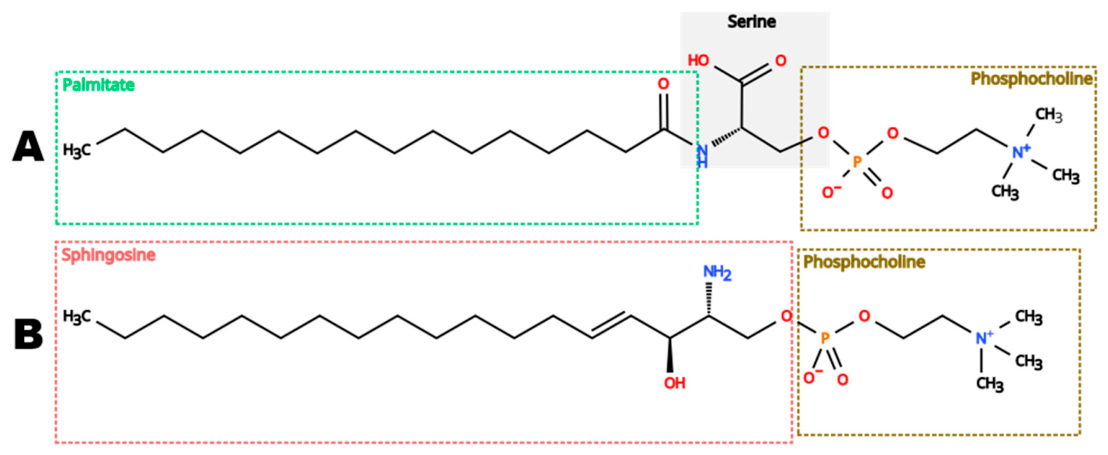
| Lysosphingomyelin-509 (N-palmitoyl-O-phosphocholine serine) | Increased [67,69,70,71] | Unknown [67,68] |
| Effects | Hepatocyte or Liver-Related Effects | Evidence |
|---|---|---|
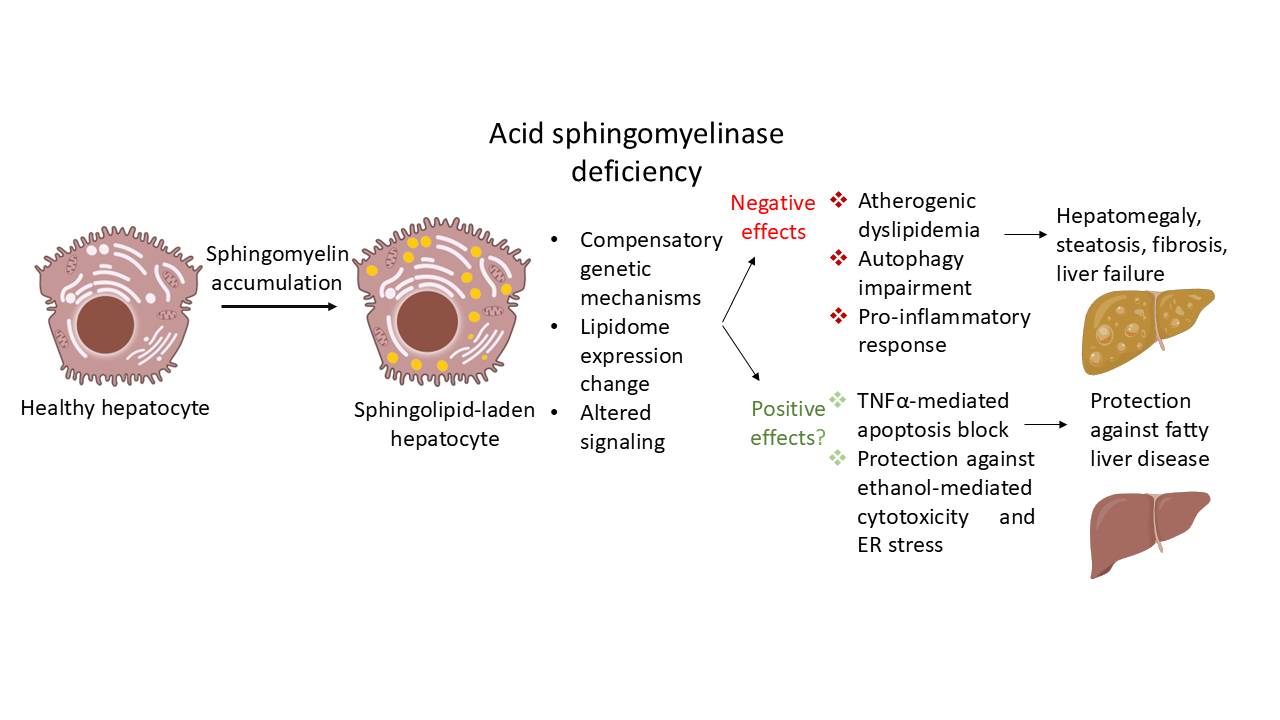
| Negative | Liver failure and dysfunction | Hepatomegaly, cirrhosis, high mortality from liver failure [26] |
| Impairment of autophagy | Accumulation of autophagosomes, ubiquitinated proteins, abnormal phagophores [122,126,128], disruption of lysosomal fusion [126] | |
| High atherogenic lipid profile | Multiple hypothetical targets, see in text [72] | |
| Defective lysosomal repair | Failure of ceramide generation on the external lysosomal membrane resulting in defective ASM-mediated alternative pathway of lysosomal repair [100,104,110] | |
| Positive | Resistance to steatosis | ASM knock-out [88,89] and ASM-inhibited mice are resistant to fatty liver disease induced by a high-fat diet [90] |
| Protection against cytotoxicity and ER stress | Inhibition of ASM in mice protects against ethanol-mediated cytotoxicity and ER stress [91] | |
| Block of apoptosis | ASMD blocks TNF-α-mediated apoptosis and necrosis in murine models [92] | |
| Hypothetically enhanced lysosomal repair (?) | Sphingomyelin causes SM-specific protein TECPR1 to form a complex with ATG12-ATG5 proteins, amplifying the lipidation of LC3B [107,108] | |
| Protection against insulin resistance | Sphingosine-1-phosphate promotes eNOS expression via S1PRs, leading to inhibition of gluconeogenesis and alleviation of insulin resistance [138,139] |
Disclaimer/Publisher’s Note: The statements, opinions and data contained in all publications are solely those of the individual author(s) and contributor(s) and not of MDPI and/or the editor(s). MDPI and/or the editor(s) disclaim responsibility for any injury to people or property resulting from any ideas, methods, instructions or products referred to in the content. |
© 2026 by the authors. Licensee MDPI, Basel, Switzerland. This article is an open access article distributed under the terms and conditions of the Creative Commons Attribution (CC BY) license.
Share and Cite
Sysoev, M.; Solovyov, D.; Shestopalov, A.; Kutsev, S. Contradictory Effects on Hepatocytes in ASMD. Int. J. Mol. Sci. 2026, 27, 5070. https://doi.org/10.3390/ijms27115070
Sysoev M, Solovyov D, Shestopalov A, Kutsev S. Contradictory Effects on Hepatocytes in ASMD. International Journal of Molecular Sciences. 2026; 27(11):5070. https://doi.org/10.3390/ijms27115070
Chicago/Turabian StyleSysoev, Maksim, Dmitri Solovyov, Aleksandr Shestopalov, and Sergey Kutsev. 2026. "Contradictory Effects on Hepatocytes in ASMD" International Journal of Molecular Sciences 27, no. 11: 5070. https://doi.org/10.3390/ijms27115070
APA StyleSysoev, M., Solovyov, D., Shestopalov, A., & Kutsev, S. (2026). Contradictory Effects on Hepatocytes in ASMD. International Journal of Molecular Sciences, 27(11), 5070. https://doi.org/10.3390/ijms27115070