Last Licensed Non-Classical Peptide Presenter HLA-F: Its Occurrence, Immunoediting Significance, and Possible Therapeutic Implications in Renal Cell Carcinoma

Abstract
1. Introduction
2. Results
2.1. Patients Cohorts
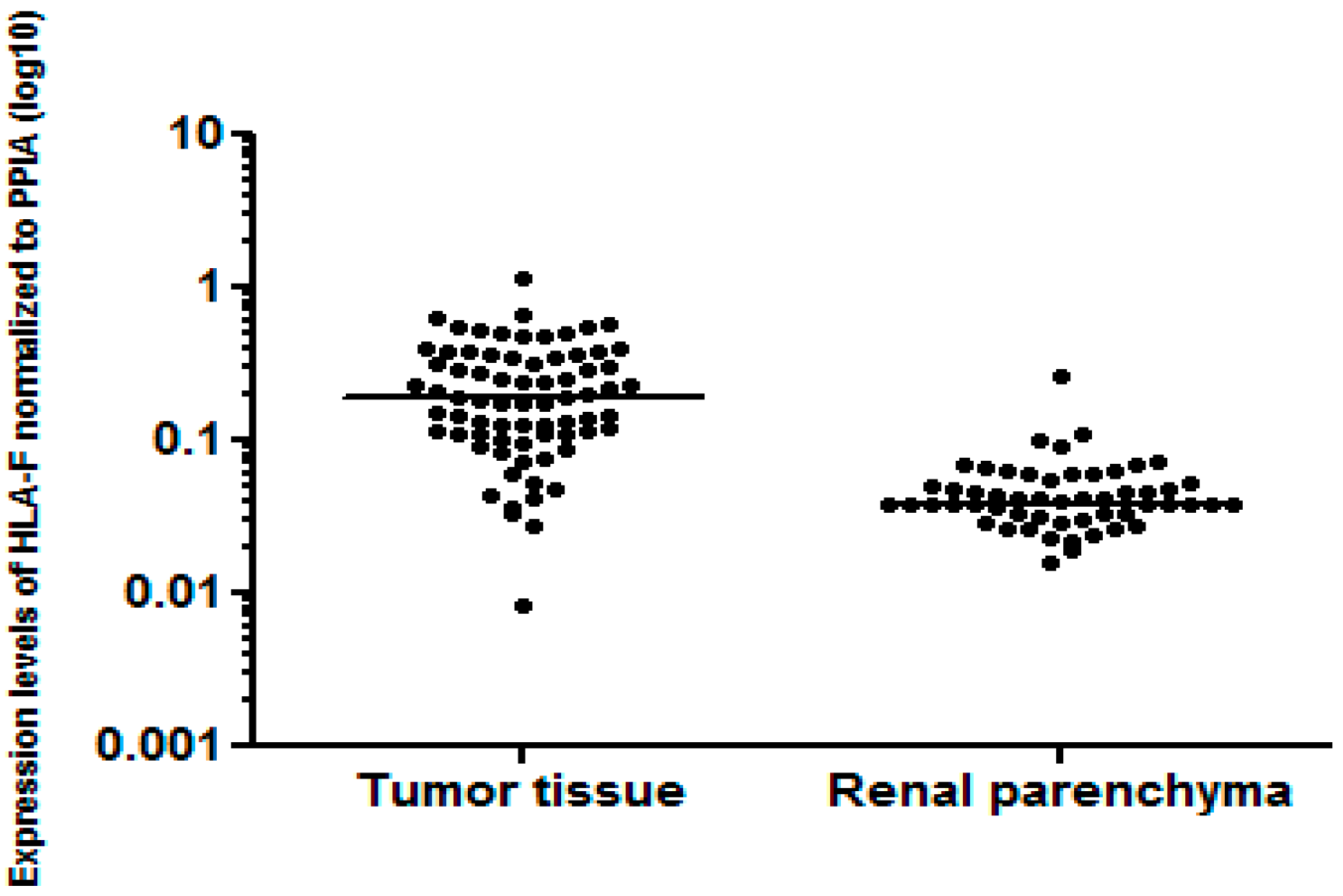
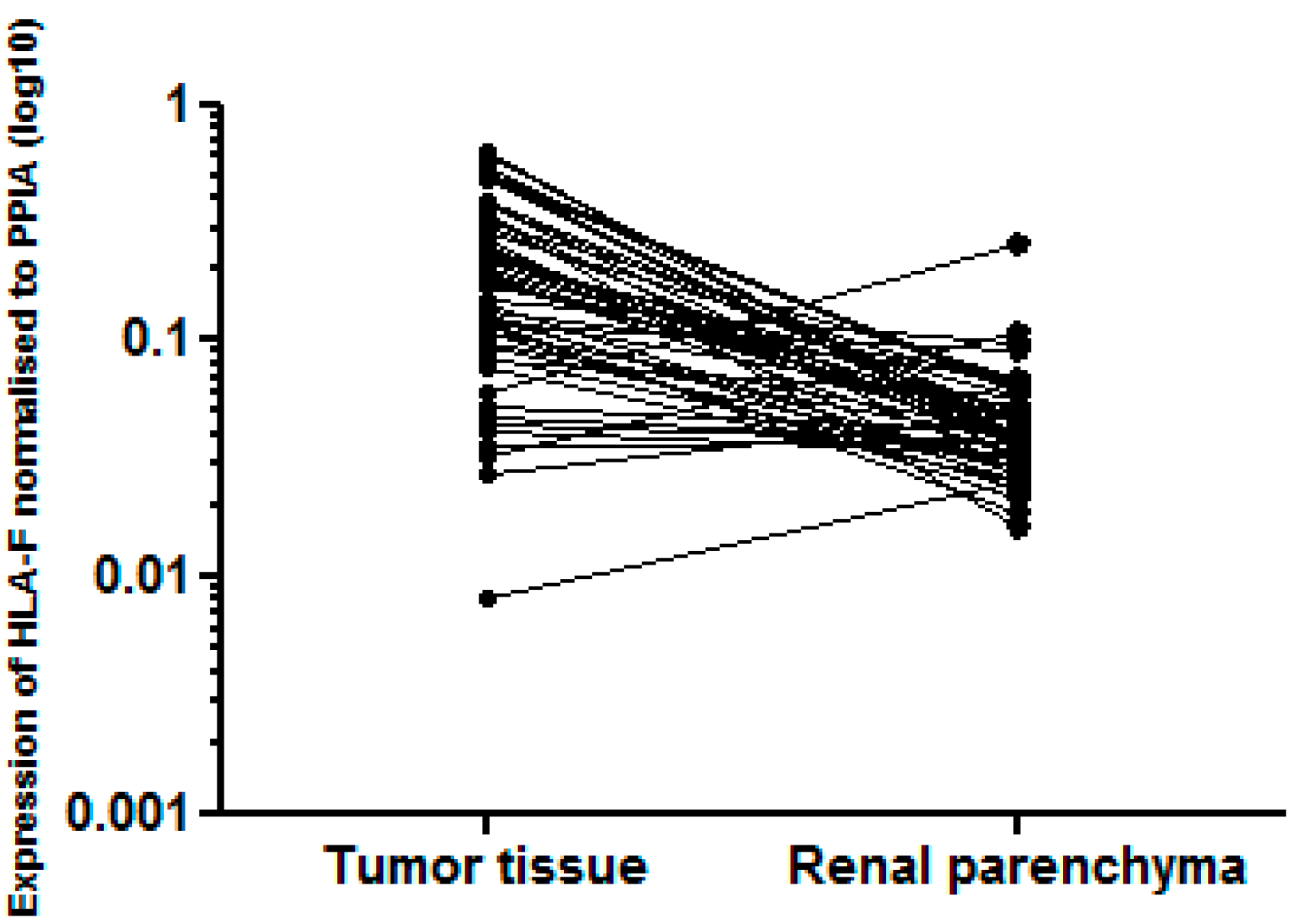
2.2. Differential Expression of HLA-F mRNA in RCC and Non-Neoplastic Renal Parenchyma
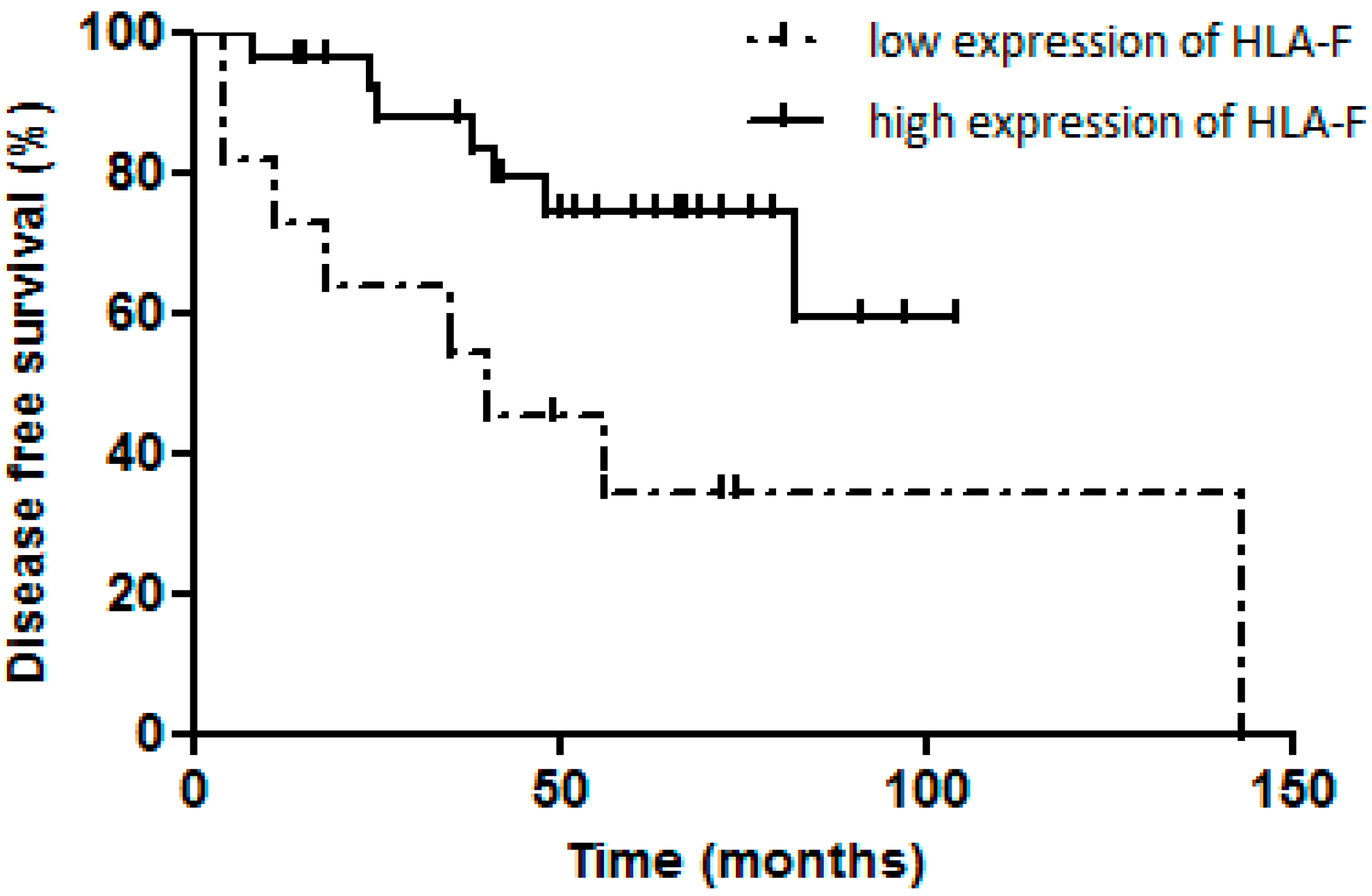
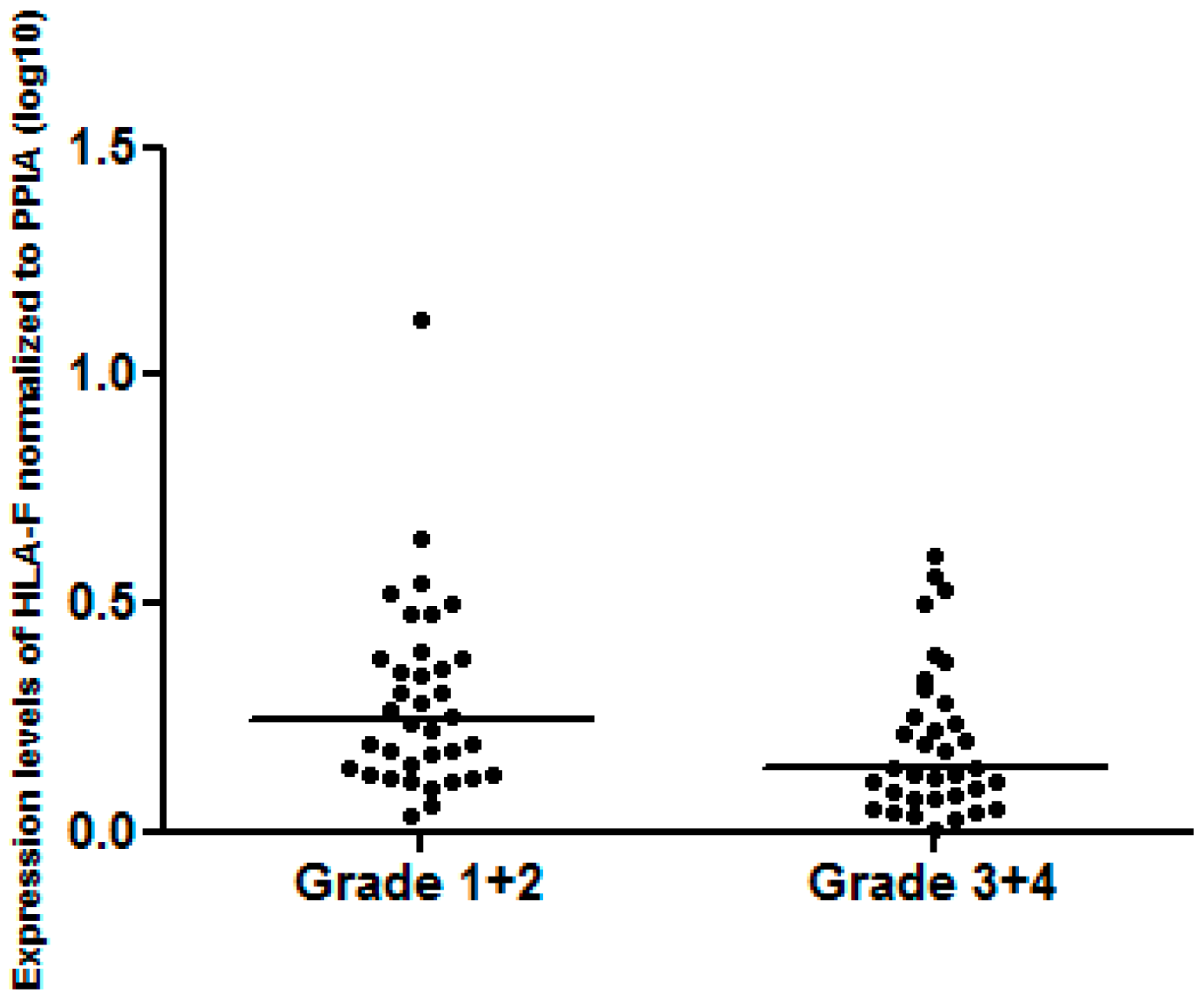
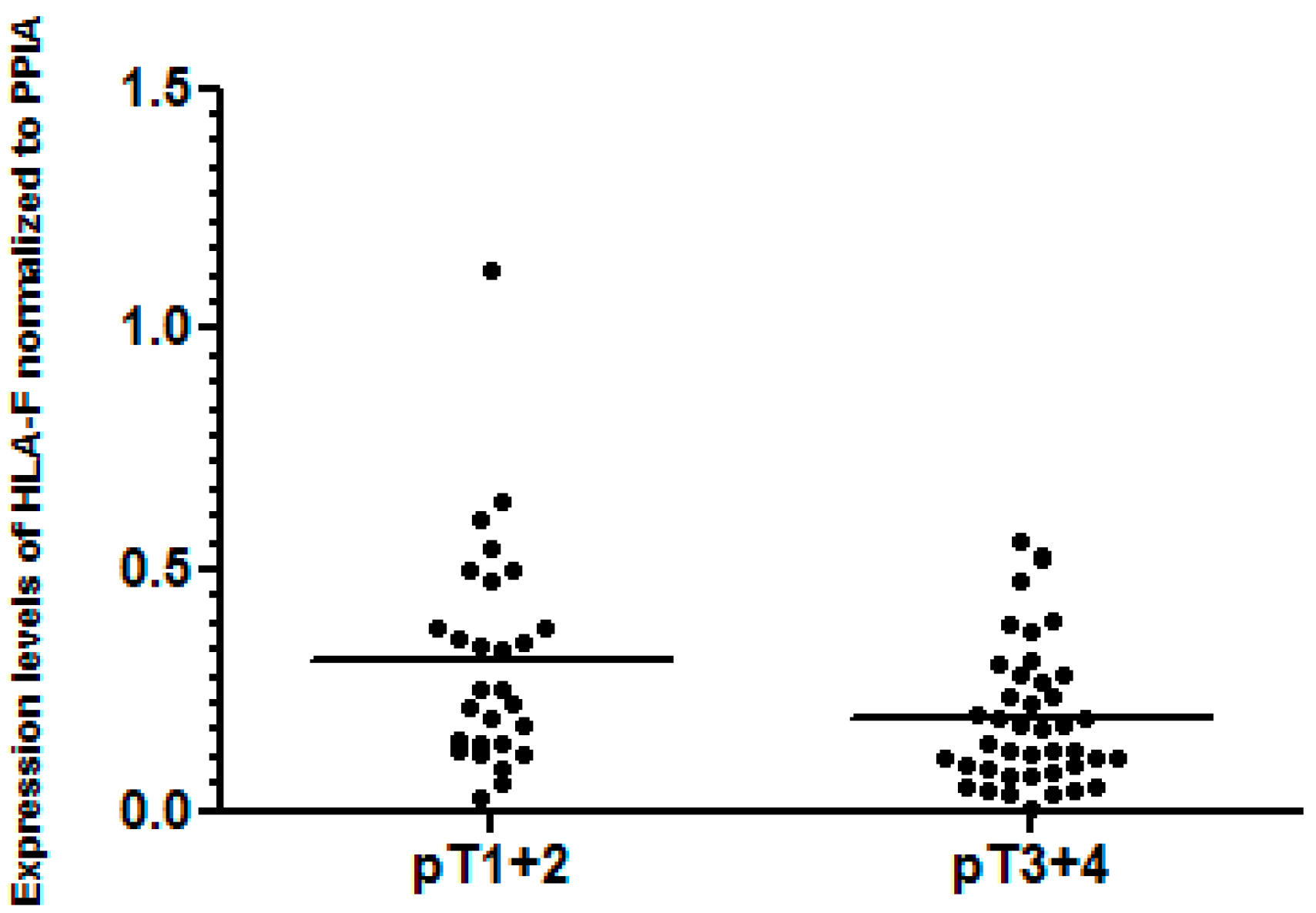
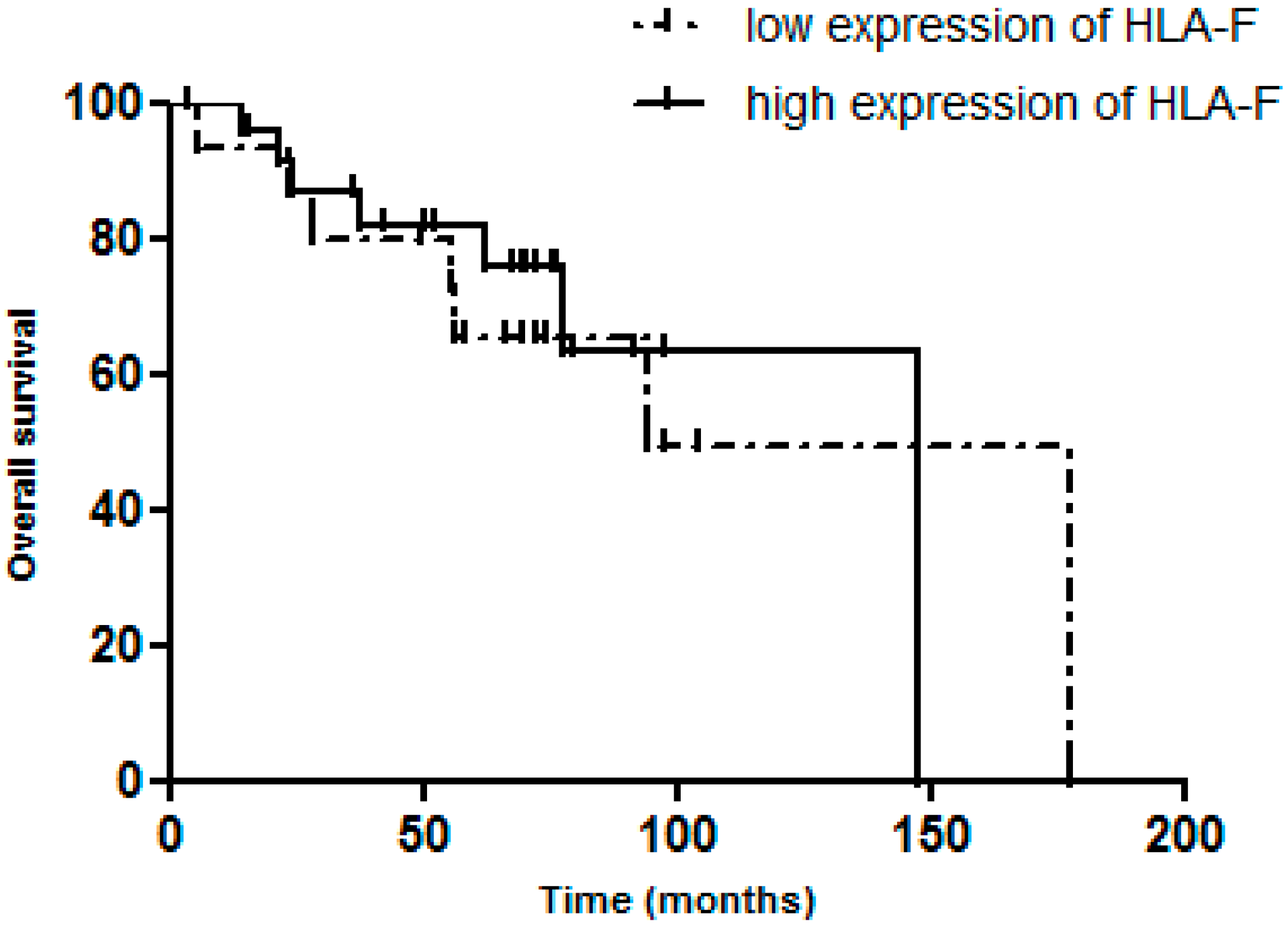
2.3. Prognostic Impact of HLA-F Expression
3. Discussion
4. Materials and Methods
4.1. Tissue Sample Preparation and RNA Purification
4.2. Reverse Transcription
4.3. Real-Time qPCR Analysis
4.4. Data Normalization and Statistical Analysis
4.5. Presence and Prognostic Impact of HLA-F
5. Conclusions
Supplementary Materials
Author Contributions
Funding
Institutional Review Board Statement
Informed Consent Statement
Data Availability Statement
Conflicts of Interest
Abbreviations
| HLA | Human leukocyte antigen |
| NK | Natural killer |
| OC | Open conformer |
| β2m | β2-Microglobulin |
| KIR | Killer immunoglobulin-like receptor |
| LILRB1 | Leukocyte immunoglobulin-like receptor B1 |
| ILT2 | Immunoglobulin-like transcript 2 |
| LILRB2 | Leukocyte immunoglobulin-like receptor B2 |
| ILT4 | Immunoglobulin-like transcript 4 |
| RCC | Renal cell carcinoma |
| mRNA | Messenger RNA |
| PPIA | Peptidylprolyl isomerase A |
References
- Shiina, T.; Hosomichi, K.; Inoko, H.; Kulski, J.K. The HLA genomic loci map: Expression, interaction, diversity and disease. J. Hum. Genet. 2009, 54, 15–39. [Google Scholar] [CrossRef]
- Paganini, J.; Faux, P.; Beley, S.; Picard, C.; Chiaroni, J.; Di Cristofaro, J. HLA-F transcriptional and protein differential expression according to its genetic polymorphisms. HLA 2023, 102, 578–589. [Google Scholar] [CrossRef] [PubMed]
- Grünen, N.; Hey, L.; Busch, Y.; Schäfer, M.; Doxiadis, I.; Schweizer, A.; Peter, W. HLA-F: A non-classical gene with growing interest. HLA 2026, 107, e70547. [Google Scholar] [CrossRef]
- Lin, A.; Yan, W.H. The emerging roles of human leukocyte antigen-F in immune modulation and viral infection. Front. Immunol. 2019, 10, 964. [Google Scholar] [CrossRef]
- Sabbatino, F.; Liguori, L.; Polcaro, G.; Salvato, I.; Caramori, G.; Salzano, F.A.; Casolaro, V.; Stellato, C.; Dal Col, J.; Pepe, S. Role of human leukocyte antigen system as a predictive biomarker for checkpoint-based immunotherapy in cancer patients. Int. J. Mol. Sci. 2020, 21, 7295. [Google Scholar] [CrossRef]
- Rashidi, S.; Vieira, C.; Tuteja, R.; Mansouri, R.; Ali-Hassanzadeh, M.; Muro, A.; Nguewa, P.; Manzano-Román, R. Immunomodulatory potential of non-classical HLA-G in infections including COVID-19 and parasitic diseases. Biomolecules 2022, 12, 257. [Google Scholar] [CrossRef]
- Aisagbonhi, O.; Morris, G.P. Human leukocyte antigens in pregnancy and preeclampsia. Front. Genet. 2022, 13, 884275. [Google Scholar] [CrossRef] [PubMed]
- Tersigni, C.; Meli, F.; Neri, C.; Iacoangeli, A.; Franco, R.; Lanzone, A.; Scambia, G.; Di Simone, N. Role of human leukocyte antigens at the feto-maternal interface in normal and pathological pregnancy: An update. Int. J. Mol. Sci. 2020, 21, 4756. [Google Scholar] [CrossRef]
- Lin, X.X.; Xie, Y.M.; Zhao, S.J.; Liu, C.Y.; Mor, G.; Liao, A.H. Human leukocyte antigens: The unique expression in trophoblasts and their crosstalk with local immune cells. Int. J. Biol. Sci. 2022, 18, 4043–4052. [Google Scholar] [CrossRef] [PubMed]
- Daza-Vamenta, R.; Glusman, G.; Rowen, L.; Guthrie, B.; Geraghty, D.E. Genetic divergence of the rhesus macaque major histocompatibility complex. Genome Res. 2004, 14, 1501–1515. [Google Scholar] [CrossRef]
- Sim, M.J.W.; Sun, P.D. HLA-F: A new kid licensed for peptide presentation. Immunity 2017, 46, 972–974. [Google Scholar] [CrossRef]
- Zhang, Y.; Xu, Y.; Wu, Q.; Fu, X.; Li, Y.; Li, A. Inhibitory leukocyte immunoglobulin-like receptors, subfamily B (LILRBs) in human diseases: Structure, roles, mechanisms, and clinical applications. Theranostics 2025, 15, 8222–8258. [Google Scholar] [CrossRef] [PubMed]
- Garcia-Beltran, W.F.; Hölzemer, A.; Martrus, G.; Chung, A.W.; Pacheco, Y.; Simoneau, C.R.; Rucevic, M.; Lamothe-Molina, P.A.; Pertel, T.; Kim, T.-E.; et al. Open conformers of HLA-F are high-affinity ligands of the activating NK-cell receptor KIR3DS1. Nat. Immunol. 2016, 17, 1067–1074. [Google Scholar] [CrossRef] [PubMed]
- Burian, A.; Wang, K.L.; Finton, K.A.K.; Lee, N.; Ishitani, A.; Strong, R.K.; Geraghty, D.E. HLA-F and MHC-I open conformers bind natural killer cell Ig-like receptor KIR3DS1. PLoS ONE 2016, 11, e0163297. [Google Scholar] [CrossRef] [PubMed]
- Dulberger, C.L.; McMurtrey, C.P.; Hölzemer, A.; Neu, K.E.; Liu, V.; Steinbach, A.M.; Garcia-Beltran, W.F.; Sulak, M.; Jabri, B.; Lynch, V.J.; et al. Human leukocyte antigen F presents peptides and regulates immunity through interactions with NK cell receptors. Immunity 2017, 46, 1018–1029.e7. [Google Scholar] [CrossRef]
- Ormandjieva, A.; Yordanov, S.; Stoyanov, H.; Deliverska, E.; Shivarov, V.; Ivanova, M. The role of non-classical and chain-related human leukocyte antigen polymorphisms in laryngeal squamous cell carcinoma. Mol. Biol. Rep. 2023, 50, 7245–7252. [Google Scholar] [CrossRef]
- Hrbac, T.; Kopkova, A.; Siegl, F.; Vecera, M.; Vybihal, V.; Hermanova, M.; Jancalek, R.; Hendrych, M.; Kazda, T.; Zemanova, Z.; et al. HLA-E and HLA-F are overexpressed in glioblastoma and HLA-E increased after exposure to ionizing radiation. Cancer Genom. Proteom. 2022, 19, 151–162. [Google Scholar] [CrossRef]
- Ormandjieva, A. Expression of the non-classical HLA-E, -F, -G molecules in the tumour microenvironment. Forum. Clin. Oncol. 2022, 13, 53–62. [Google Scholar] [CrossRef]
- Benitez Fuentes, J.D.; Bartolome Arcilla, J.; Lazaro Sanchez, A.D.; de Luna Aguilar, A.; Mohamed, K.M.; Guevara-Hoyer, K.; Ballestin Martinez, P.; Borregon Rivilla, M.; Ferrandez Arias, A.; Sánchez-Ramon, S.; et al. Association between human leukocyte antigen E expression and outcomes in solid tumors: A systematic review and meta-analysis. Front. Oncol. 2025, 15, 1525924. [Google Scholar] [CrossRef]
- Sætersmoen, M.; Kotchetkov, I.S.; Torralba-Raga, L.; Mansilla-Soto, J.; Sohlberg, E.; Krokeide, S.Z.; Hammer, Q.; Sadelain, M.; Malmberg, K.-J. Targeting HLA-E-overexpressing cancers with a NKG2A/C switch receptor. Med 2025, 6, 100521. [Google Scholar] [CrossRef]
- Wuerfel, F.M.; Huebner, H.; Häberle, L.; Gass, P.; Hein, A.; Jud, S.M.; Hack, C.C.; Wunderle, M.; Schulz-Wendtland, R.; Erber, R.; et al. HLA-G and HLA-F protein isoform expression in breast cancer patients receiving neoadjuvant treatment. Sci. Rep. 2020, 10, 15750. [Google Scholar] [CrossRef]
- Harada, A.; Ishigami, S.; Kijima, Y.; Nakajo, A.; Arigami, T.; Kurahara, H.; Kita, Y.; Yoshinaka, H.; Natsugoe, S. Clinical implication of human leukocyte antigen (HLA)-F expression in breast cancer. Pathol. Int. 2015, 65, 569–575. [Google Scholar] [CrossRef]
- Ishigami, S.; Arigami, T.; Okumura, H.; Uchikado, Y.; Kita, Y.; Kurahara, H.; Maemura, K.; Kijima, Y.; Ishihara, Y.; Sasaki, K.; et al. Human leukocyte antigen (HLA)-E and HLA-F expression in gastric cancer. Anticancer Res. 2015, 35, 2279–2285. [Google Scholar]
- Xu, Y.; Han, H.; Zhang, F.; Lv, S.; Li, Z.; Fang, Z. Lesion human leukocyte antigen-F expression is associated with a poor prognosis in patients with hepatocellular carcinoma. Oncol. Lett. 2015, 9, 300–304. [Google Scholar] [CrossRef]
- Zhang, J.G.; Zhang, X.; Lin, A.; Yan, W.H. Lesion HLA-F expression is irrelevant to prognosis for patients with gastric cancer. Hum. Immunol. 2013, 74, 828–832. [Google Scholar] [CrossRef] [PubMed]
- Pedersen, N.H.; Melsted, W.N.; Scheike, T.; Eriksen, J.O.; Reznitsky, F.M.; Bzorek, M.; Lænkholm, A.-V.; Hviid, T.V.F. Effect Modification between HLA-F and CD56 Markers Reveals Differences in Survival for Triple-Negative Breast Cancer Patients. Hum. Immunol. 2024, 85, 111152. [Google Scholar] [CrossRef]
- WHO Classification of Tumours Editorial Board. Urinary and Male Genital Tumours, 5th ed.; WHO Classification of Tumours; International Agency for Research on Cancer: Lyon, France, 2022; Volume 8, ISBN 978-92-832-4512-4. [Google Scholar]
- Zhang, X.; Lin, A.; Zhang, J.G.; Bao, W.G.; Xu, D.P.; Ruan, Y.Y.; Yan, W.H. Alteration of HLA-F and HLA I antigen expression in the tumor is associated with survival in patients with esophageal squamous cell carcinoma. Int. J. Cancer 2013, 132, 82–89. [Google Scholar] [CrossRef] [PubMed]
- Lin, A.; Zhang, X.; Ruan, Y.Y.; Wang, Q.; Zhou, W.J.; Yan, W.H. HLA-F expression is a prognostic factor in patients with non-small-cell lung cancer. Lung Cancer 2011, 74, 504–509. [Google Scholar] [CrossRef] [PubMed]
- Morandi, F.; Cangemi, G.; Barco, S.; Amoroso, L.; Giuliano, M.; Gigliotti, A.R.; Pistoia, V.; Corrias, M.V. Plasma levels of soluble HLA-E and HLA-F at diagnosis may predict overall survival of neuroblastoma patients. Biomed. Res. Int. 2013, 2013, 956878. [Google Scholar] [CrossRef]
- Gobin, S.J.; van den Elsen, P.J. Transcriptional Regulation of the MHC Class Ib Genes HLA-E, HLA-F, and HLA-G. Hum. Immunol. 2000, 61, 1102–1107. [Google Scholar] [CrossRef]





| Characteristic | N (%) or Range | Median |
|---|---|---|
| Age at diagnosis (years) | 35–82 | 63 |
| Gender | Male: 47 (64.4%) Female: 26 (35.6%) | - |
| Histology | ccRCC: 63 (86.3%) Papillary: 5 (6.8%) Chromophobe: 1 (1.4%) SAR: 1 (1.4%) URO: 1 (1.4%) Not specified: 2 (2.7%) | - |
| T category | 1: 20 (27.4%) 2: 8 (11.0%) 3: 40 (54.8%) 4: 2 (2.7%) Not specified: 3 (4.1%) | - |
| WHO/ISUP grade | 1: 8 (11.0%) 2: 28 (38.4%) 3: 23 (31.5%) 4: 12 (16.4%) Not specified: 2 (2.7%) | - |
| Disease-free survival (months) | Range: 3–143 Missing: 33 | 49.5 |
| Overall survival (months) | Range: 0–177 Missing: 1 | 24.5 |
| Metastasis | Yes: 36 (49.3%) No: 33 (45.2%) Missing: 4 (5.5%) | - |
| Non-Paired Samples | RCC (n = 73) | Adjacent Non-Tumor Renal Parenchyma (n = 54) | p-Value |
|---|---|---|---|
| 25th percentile | 0.1087 | 0.0320 | |
| 50th percentile (median) | 0.1892 | 0.0383 | <0.0001 |
| 75th percentile | 0.3484 | 0.0545 | |
| Paired samples | RCC (n = 54) | Adjacent Non-Tumor Renal Parenchyma (n = 54) | p-Value |
| 25th percentile | 0.0969 | 0.0320 | |
| 50th percentile (median) | 0.1773 | 0.0383 | <0.0001 |
| 75th percentile | 0.3484 | 0.0545 |
Disclaimer/Publisher’s Note: The statements, opinions and data contained in all publications are solely those of the individual author(s) and contributor(s) and not of MDPI and/or the editor(s). MDPI and/or the editor(s) disclaim responsibility for any injury to people or property resulting from any ideas, methods, instructions or products referred to in the content. |
© 2026 by the authors. Licensee MDPI, Basel, Switzerland. This article is an open access article distributed under the terms and conditions of the Creative Commons Attribution (CC BY) license.
Share and Cite
Janků, L.; Fedorko, M.; Kašík, M.; Macháčková, T.; Křen, L. Last Licensed Non-Classical Peptide Presenter HLA-F: Its Occurrence, Immunoediting Significance, and Possible Therapeutic Implications in Renal Cell Carcinoma. Int. J. Mol. Sci. 2026, 27, 5069. https://doi.org/10.3390/ijms27115069
Janků L, Fedorko M, Kašík M, Macháčková T, Křen L. Last Licensed Non-Classical Peptide Presenter HLA-F: Its Occurrence, Immunoediting Significance, and Possible Therapeutic Implications in Renal Cell Carcinoma. International Journal of Molecular Sciences. 2026; 27(11):5069. https://doi.org/10.3390/ijms27115069
Chicago/Turabian StyleJanků, Libuše, Michal Fedorko, Marek Kašík, Táňa Macháčková, and Leoš Křen. 2026. "Last Licensed Non-Classical Peptide Presenter HLA-F: Its Occurrence, Immunoediting Significance, and Possible Therapeutic Implications in Renal Cell Carcinoma" International Journal of Molecular Sciences 27, no. 11: 5069. https://doi.org/10.3390/ijms27115069
APA StyleJanků, L., Fedorko, M., Kašík, M., Macháčková, T., & Křen, L. (2026). Last Licensed Non-Classical Peptide Presenter HLA-F: Its Occurrence, Immunoediting Significance, and Possible Therapeutic Implications in Renal Cell Carcinoma. International Journal of Molecular Sciences, 27(11), 5069. https://doi.org/10.3390/ijms27115069