Article

PGPB Bacillus Megaterium AFI1 and Paenibacillus Nicotianae AFI2 Improve Nutrient Uptake and Stimulate Adaptation of Wheat Under Nickel Exposure


by
Veronika N. Pishchik
1,*,
Galina V. Mirskaya
2,
Polina S. Filippova
3,
Vitaliy E. Vertebny
2,
Victoria I. Dubovitskaya
2,
Dmitriy V. Kudryavtcev
1,
Olga A. Bortsova
1,
Yuriy V. Khomyakov
2,
Pavel Y. Kononchuk
2 and
Vladimir K. Chebotar
1,*
1
All-Russia Research Institute for Agricultural Microbiology, Podbelskogo hwy, 3, Pushkin, St. Petersburg 196608, Russia
2
Agrophysical Scientific Research Institute, Grazhdansky pr. 14, St. Petersburg 195220, Russia
3
St. Petersburg Federal Research Center of the Russian Academy of Sciences, North-West Center of Interdisciplinary Researches of Problems of Food Maintenance, Podbelskogo hwy, 7, Pushkin, St. Petersburg 196608, Russia
*
Authors to whom correspondence should be addressed.
Int. J. Mol. Sci. 2026, 27(11), 5041; https://doi.org/10.3390/ijms27115041
Submission received: 29 April 2026 / Revised: 19 May 2026 / Accepted: 27 May 2026 / Published: 2 June 2026

Abstract

Due to the increased anthropogenic load, crops are polluted with heavy metals, including nickel (Ni). This is a serious environmental problem, as Ni penetrates barrier-free into cereal crops and accumulates in the grains used by humans and animals for food. Wheat is one of the main staple crops, cultivated in many countries. This study suggested that plant growth promoting bacteria (PGPB) with varying enzymatic activities could help wheat plants to cope with Ni stress by reducing Ni toxicity and regulating the metal’s homeostasis. PGPB Bacillus megaterium AFI1 has a strong phosphate-solubilizing activity and produces siderophores, while Paenibacillus nicotianae AFI2 has nitrogen-fixing and silicate-solubilizing activities. Both strains produce indole and polysaccharides and have 1-aminocyclopropane-1-carboxylate (ACC) deaminase activity. PGPB under Ni exposure (100 mg/kg of soil) significantly increased grain yield (by 34–42%) and decreased (by 20–33%) Ni content in wheat grains. PGPB also decreased malondialdehyde (MDA) and H2O2 levels in wheat plants under Ni stress. The contents of iron (Fe), boron (B), nitrogen (N) and phosphorus (P) decreased significantly and potassium (K) and zinc (Zn) oppositely increased significantly in all plant organs under Ni exposure. The inoculation with AFI1 mainly increased P and Fe, and the inoculation with AFI2 increased N and silica (Si) in wheat grains under Ni stress. In our experiments, under nickel exposure PGPB Bacillus megaterium AFI1 and Paenibacillus nicotianae AFI2 increased antioxidant protection of plants by decreasing the level of stress ethylene and regulating the homeostasis of nutrients in wheat plants. These PGPB can be considered as promising candidates for the development of biologicals to be used for growing plants in soils with low levels of nickel contamination.

1. Introduction

Contamination of agricultural soils with heavy metals (HMs) poses a serious threat to food security and human health [1,2]. High concentrations of HMs in the soil contribute to the contamination of agricultural land [1]. It has a negative effect on the assimilation of elements from the soil by plants, inhibits plant growth and causes toxic symptoms, including wilting of plants [3,4,5]. Nickel (Ni) in high concentrations (20–60 mg/L) is a toxic element for agricultural plants and, due to barrier-free penetration, is able to accumulate in the generative organs of plants [6,7,8]. Ni in high concentrations causes ion imbalance and changes the mineral composition of plants, and also inhibits enzyme activity, disrupts mitochondrial function and provokes oxidative stress [9]. This leads to numerous metabolic disorders in the plants [10,11]. Ni interaction with functional groups of proteins leads to disruption of their functional activity [12].
PGPB have been successfully used in agriculture in many countries to increase crop yields and protect plants from various abiotic stresses [13], including as a method for reducing the toxicity of contaminated soils [14]. PGPB have the ability to bind toxic metals through mechanisms such as biosorption, bioaccumulation, and transformation, which reduce the negative impacts of HMs [15,16,17]. The functional groups of bacterial proteins bind HM ions. The interaction of HM ions with hydroxyl, carbonyl, and amino groups and with negatively charged phosphate and carboxyl groups of proteins was recently revealed using infrared analysis [12]. Reduction in HM toxicity to plants through the influence of microorganisms can be achieved by reducing metal uptake by plants [18,19], as well as by removing HM from nutrient media [20]. PGPB of the genus Bacillus are known to be resistant to high concentrations of Ni and can grow on a medium with a Ni concentration of 80 mg/L [21] and may be used in agriculture as bioinoculants for alleviating abiotic stresses [22]. For instance, recently a strain from the genus Paenibacillus has been described as a potential multi-stress-tolerant microbial inoculant [23].
It is known that PGPB, through various mechanisms of action, are capable of improving plant growth and quality under Ni stress. These mechanisms include phosphate-mobilizing and nitrogen-fixing activities, production of phytohormones, siderophores, ribonucleases, lipopeptides, polysaccharides and enzymes [24,25,26,27]. There is also evidence of enhanced mineral nutrition and an increase in the crude ash content under the influence of the inoculation with PGPB [28]. The improvement of mineral nutrition is achieved through bacterial enzymes and organic acids, which leads to the breakdown of rhizosphere substances through bacterial metabolism [29].
The complex system of interactions between PGPB and plants represents a set of factors through which PGPB positively influence plant growth and development. PGPB and bacterial associations have similar effects on growth performance, despite the fact that bacteria produce different metabolites and have different characteristics [24,30].
Wheat is one of the main cereal crops and its cultivation ensures food security worldwide [31]. The use of biologicals in growing wheat in various climatic conditions and stresses is relevant for agriculture in many countries. Some experiments have been conducted on the effects of PGPB on wheat plants under Ni stress at minimal toxic concentrations [11,32] and high concentrations of nickel ions [28,33].
It has been shown in field experiments that bacteria of the genus Azospirillum help wheat plants to cope with mild Ni stress (4 mg/kg of soil) [32]. PGPB Bacillus megaterium AFI1 and Paenibacillus nicotianae AFI2 stimulated wheat plants growing at minimal toxic concentrations of Ni ions under hydroponic conditions [11]. It was previously shown that the strain Bacillus subtilis BM2 decreased the Ni concentration in wheat grains by 6.2% when growing winter wheat in the presence of 870 mg/kg Ni in the soil [33]. However, the strains Pseudomonas fluorescens 20 and 21 and Pseudomonas putida 23 oppositely increased Ni content in wheat grains [28].
We hypothesized that PGPB strains Bacillus megaterium AFI1 and Paenibacillus nicotianae AFI2 could change Ni homeostasis in wheat plants under severe Ni stress (100 mg/kg of soil) and help wheat plants to overcome Ni stress. To confirm this hypothesis, we studied the effect of PGPB under Ni exposure on the wheat growth, antioxidant status, trace elements and macronutrients uptake and wheat organ nutrient distribution in vegetative experiments under controlled conditions. This paper highlights the PGPB influence on Ni homeostasis and nutrient uptake by wheat plants under severe Ni stress.

2. Results

2.1. Properties of Bacteria

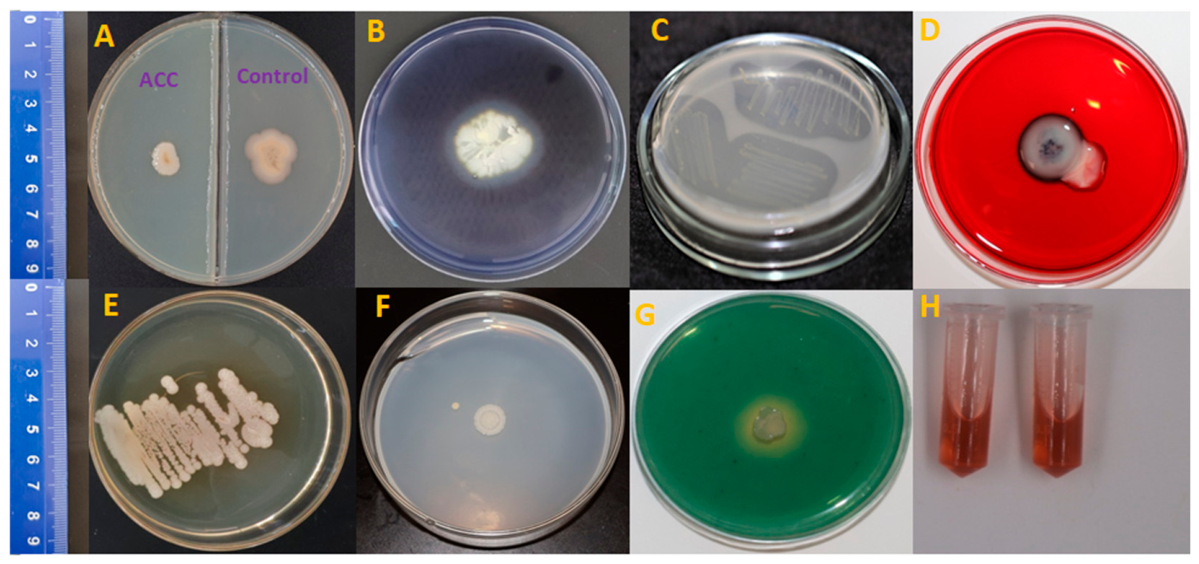
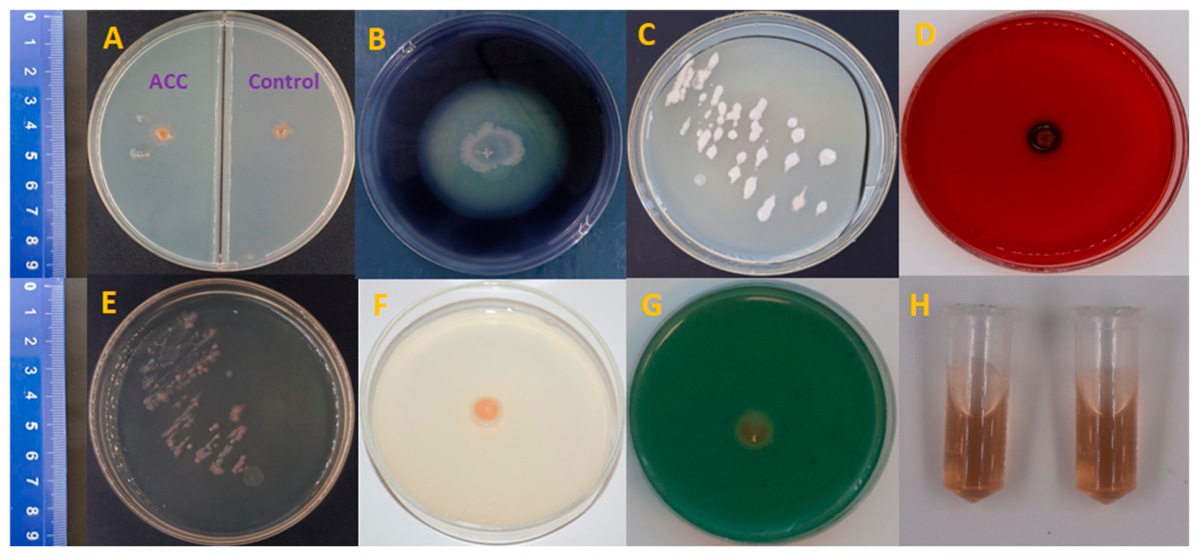
The PGPB strains AFI1 and AFI2 have ACC deaminase, amylolytic, proteolytic, and phosphate-mobilizing activities, and produce polysaccharides and indoles (Table 1).
Both strains were grown on LB medium, containing 100 mg/L Ni2+ (Figure 1 and Figure 2). The strain AFI1 produced siderophores (Figure 1) and possessed strong phosphate-solubilizing activity, and the strain AFI2 has nitrogen-fixing and silicate-solubilizing activity (Figure 2).
When studying the resistance of bacteria to different concentrations of Ni ions, it was found that both strains were able to grow on a liquid LB medium at the Ni concentration of 50 and 100 mg/L g/L (Figure S1).
The strain AFI1 absorbed 22% and 10% of Ni ions from the supernatant when grown on a medium with a concentration of 50 and 100 mg/L accordingly. The strain AFI2 absorbed only 10 and 2% Ni ions from the supernatant when grown on LB medium with similar concentrations.

2.2. The Effect of Ni and Bacteria on the Activity of Antioxidant Enzymes and the Content of MDA, Photosynthetic Pigments and Parameters of the Wheat Flag Leaf

The positive effect of PGPB on wheat plants under Ni exposure was expressed in the regulation of the homeostasis of trace elements and macronutrients, as well as in the increase in antioxidant protection. PGPB decreased malondialdehyde (MDA), H2O2 levels and antioxidant enzyme activities in the leaves of wheat plants at the shooting stage (Table 2). PGPB also increased the contents of chlorophylls (chls) and carotenoids (car) (Table 3). PGPB significantly decreased (1.3–1.7-fold) Ni content in wheat leaves under Ni exposure.
The effect of Ni stress was expressed in an increase in the activity of antioxidant enzymes: peroxidase (POX) and catalase (CAT) by 32 and 27% respectively (Table 2). The levels of MDA and H2O2 were increased by 31% and 60% respectively. The positive effect of the inoculation with PGPB was pronounced in a decrease in the level of MDA by 18–21%, and H2O2 by 47–54%. The activities of POX and CAT were also decreased by 7–41% and 4–7% respectively.
The contents of photosynthetic pigments in leaves were decreased under Ni exposure—by 21% (chl a), by 33% (chl b), and by 5% (car) (Table 3). PGPB reduced the toxic effect of Ni and increased the contents of chlorophylls, chl a by 37–53%, chl b by 39–52%, and car by 32–54%, depending on the inoculation options. Strain AFI2 as well as both strains together maximized the contents of chl and car.
The inoculation with PGPB significantly increased the growth parameters (length and width) of the wheat flag leaf under both control and Ni stress conditions, increasing the leaf surface area by 25–37% and by 15–24%, respectively (Table S1). Moreover, under the Ni exposure strain AFI1 maximum increased the flag leaf surface area.

2.3. Effect of PGPB on Wheat Plant Biomass and Ni Accumulation by Wheat Plants

PGPB AFI1 and AFI2 increased grain biomass by 25% and 45%, respectively, compared with the control (Table 4). Plant growth was decreased under Ni exposure. Grain yield was significantly reduced (by 34%) under Ni exposure. The inoculation with AFI1 and AFI2 strains under Ni exposure improved the biomass of plant roots. Strain AFI1 improved root biomass by 33%, and co-inoculation with both strains increased root biomass by 41%. Strain AFI2 greatly increased the biomass of the aboveground part of plants by 30% under Ni stress. Strain AFI1 greatly increased by 42% grain yield, and co-inoculation with both strains AFI1 and AFI2 increased by 47% grain yield under Ni exposure (Table 4).
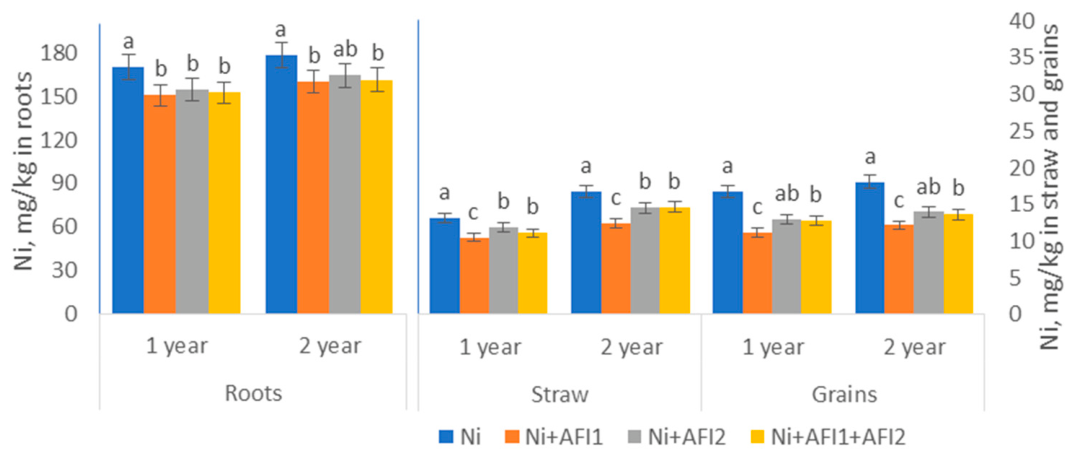
A study of Ni distribution in various parts of the wheat plant revealed that the Ni was accumulated mostly in the roots (162.6 mg/kg) after wheat ripening. Ni contents in the grains (18.3 mg/kg) and in the straw (14.4 mg/kg) were 11 and 9 times lower than those in the roots, respectively, on average over two years (Figure 3).
The average coefficient of bioaccumulation Ni CBA in wheat grains (Table S2) was higher than in the straw (Table S3) and was significantly reduced by bacterial inoculation. Ni CBA in wheat grains was decreased by the strain AFI1 1.5-fold, and by the strain AFI2 1.3-fold. The inoculation with PGPB also resulted in a significant 1.2–1.3-fold decrease in the average coefficient of translacation (CT) in wheat grains (Table S2).

2.4. Effect of Ni Stress and Bacterial Inoculation on Trace Element and Macronutrient Contents in Various Wheat Organs

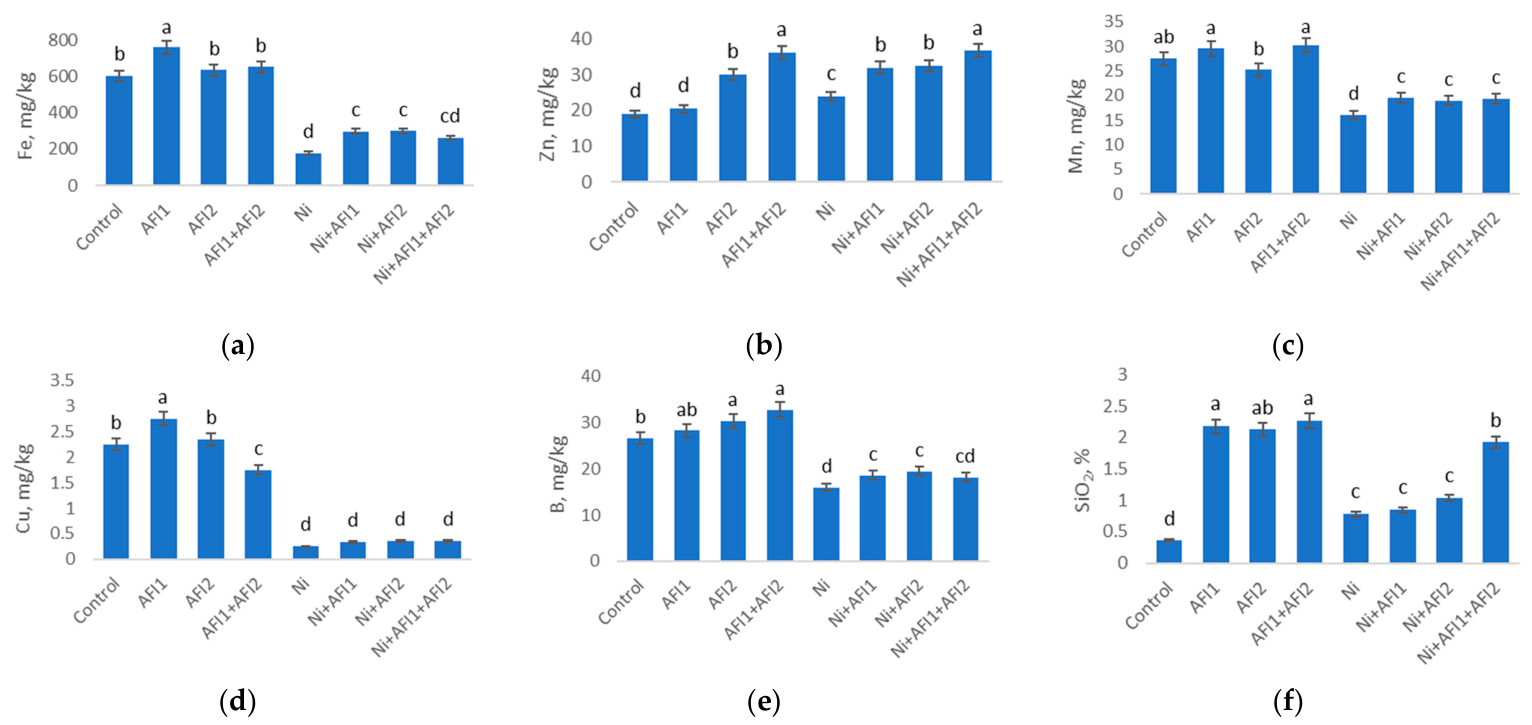
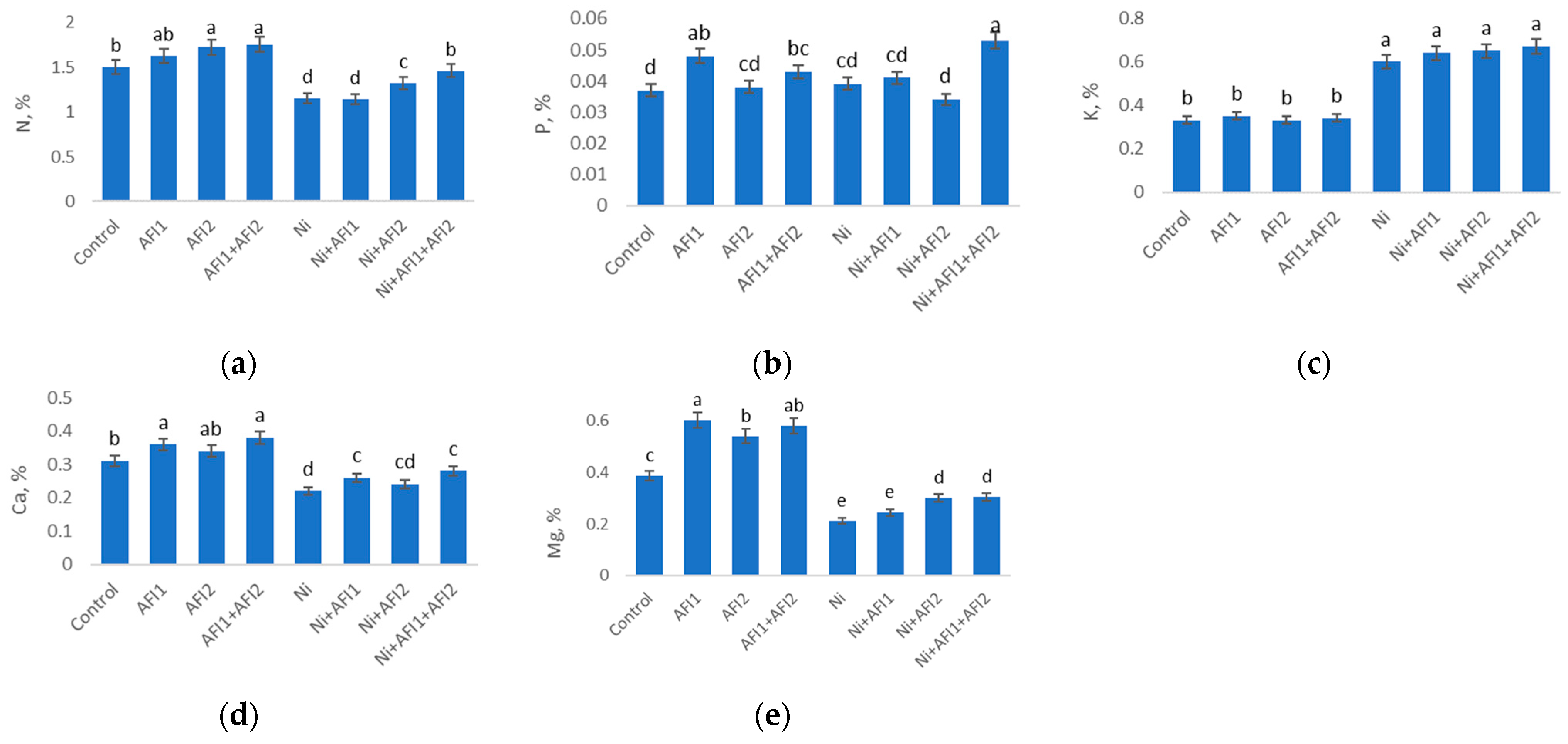
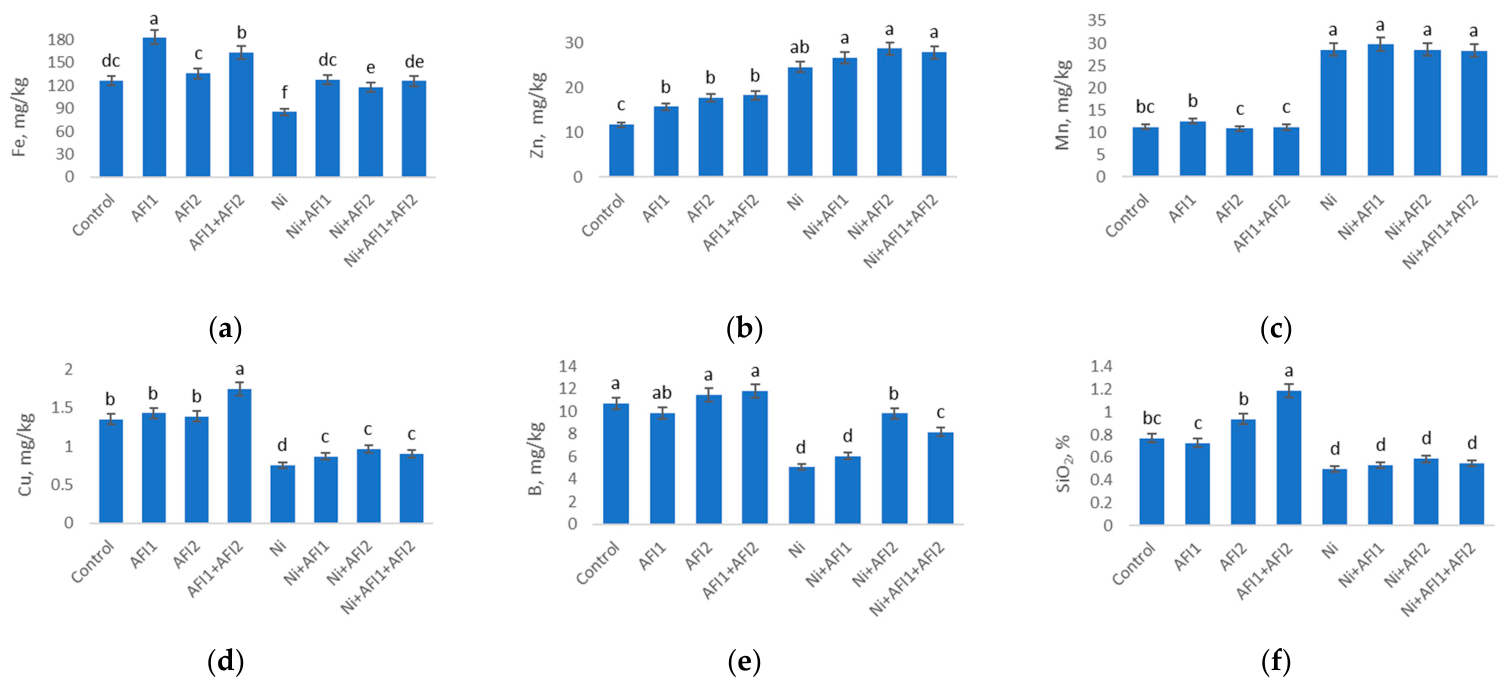
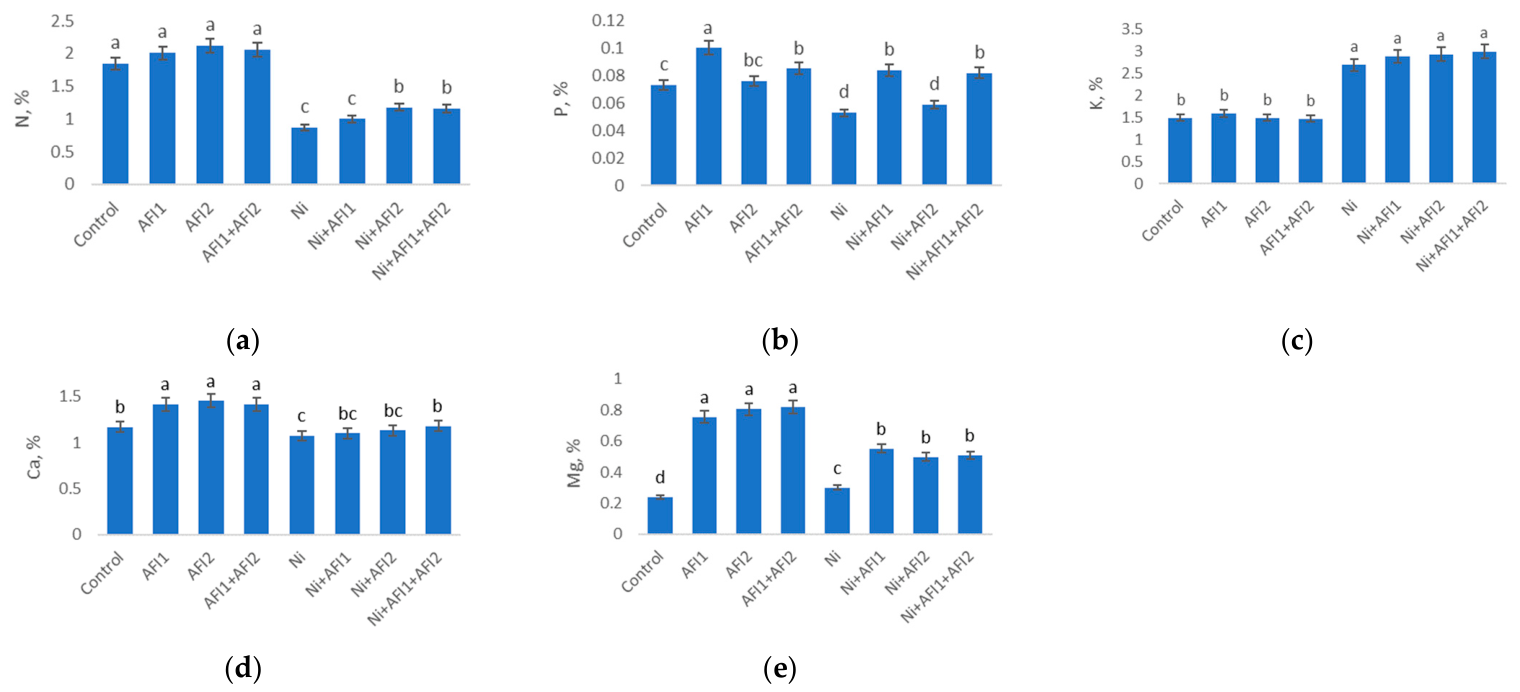
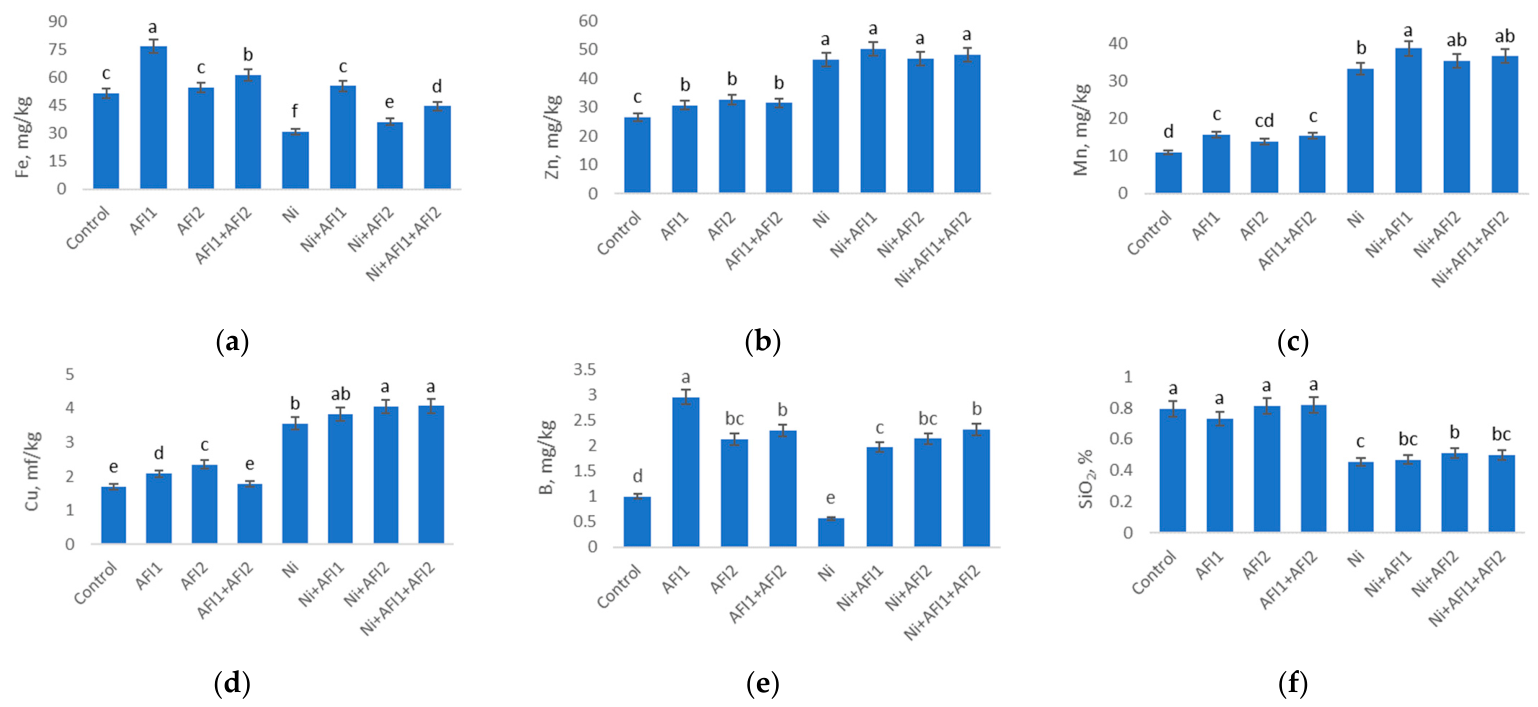
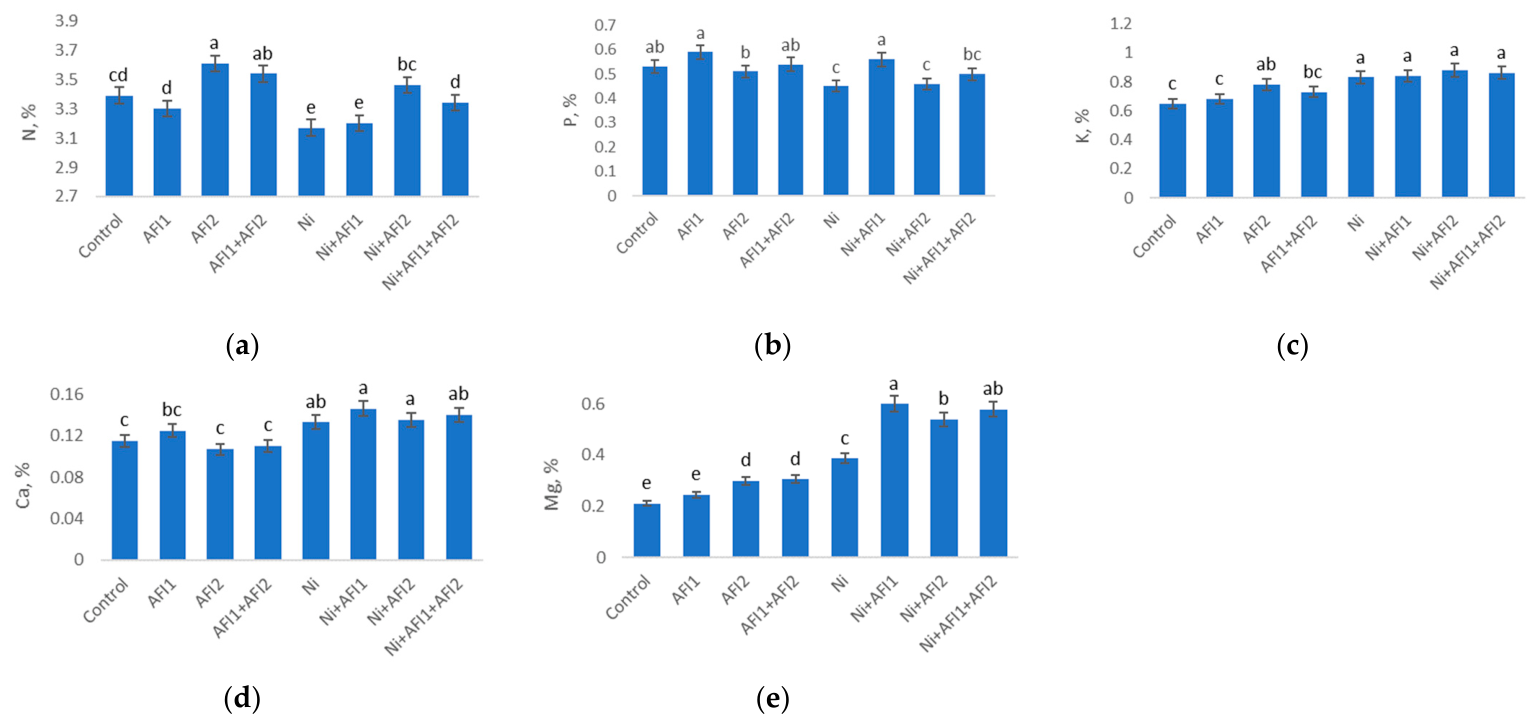
The addition of Ni to the soil caused changes in trace element and macronutrient contents in the straw, grains, and roots of wheat plants (Figure 4, Figure 5, Figure 6, Figure 7, Figure 8 and Figure 9). Specifically, maximum absorption of zinc (Zn) by roots was noted under Ni exposure (Figure 4b). The greatest impact of the Ni toxic dose was a significant decrease in copper (Cu), magnesium (Mg), and iron (Fe) contents in plant roots (Figure 4).
Mg and Fe contents were significantly reduced in wheat roots under Ni stress (by 43% and 71%, respectively) (Figure 4a and Figure 5e). In contrast, the inoculation with PGPB increased Mg (by 19–67%) and Fe contents in the roots (by 48–68%) compared with the control. Ni stress increased zinc (Zn) content in the roots by 26% (Figure 4b). The contents of manganese (Mn) and boron (B) in wheat roots decreased by 42 and 40% under Ni exposure. PGPB increased the contents of these elements by 14–22% compared with the control.
The negative effect of Ni stress was strongly evident, resulting in the reduction in copper (Cu) content in the roots of 89% (Figure 4d). AFI1 and AFI2 strains increased this value by 36–44%. Ni had similar effects on N, P, and Ca levels in the roots (Figure 5). The co-inoculation with PGPB maximized the levels of these elements. Potassium (K) content was increased significantly under Ni exposure. Bacterial inoculation promoted an increase in K content in the roots as well (Figure 5c).
Ni exposure reduced Si content in the straw by 35%, but the inoculation with the strain AFI2 increased Si content by 22% and the inoculation with both strains AFI1 and AFI2 by 18% (Figure 6f).
The inoculation with PGPB increased Mg content in wheat straw under Ni exposure by 66–84% as well as Cu by 16–28%, and N by 22–36% (Figure 6d and Figure 7a,e).
Bacteria significantly affected the accumulation of Mg in wheat straw, increasing the content of this element by three or more times. K content in the straw was 1.8-fold increased under Ni exposure. Bacteria also increased K by 7–12% under Ni exposure. Ca content in the straw decreased by 9% under Ni stress, and bacteria increased Ca by 3–10%. It was found that the Fe content was decreased by 33% under the influence of Ni, but PGPB AFI1 increased iron by 50%, AFI2 by 38%, and both strains together by 47% (Figure 6a).
Zn and Mn contents in wheat straw increased by 2.1 and 1.5 times under Ni exposure (Figure 6b,c). The effect of PGPB was significant for Zn, and nonsignificant for Mg. The B content in straw decreased significantly (by 53%) under Ni stress. Bacteria AFI2 increased the B content by 94%, and joint inoculation increased boron by 62% (Figure 6e).
Phosphorus decreased by 27% in the straw under Ni exposure. The inoculation with AFI1 and AFI2 strains increased P content by 59% and 11%, accordingly (Figure 7b). PGPB stimulated the accumulation of nitrogen in wheat straw (by 8–11%) in control conditions and under Ni exposure (by 10–15%). Thus, differences in the effect of PGPB on the content of P and B in wheat straw were expressed to a greater extent compared with the content of other elements (Figure S2).
The changes in the elemental composition of grains differed from those in the straw under Ni stress. Thus, the addition of Ni led to the accumulation of Zn, Cu and Mn in the grains by 0.8, 2.1 and 3.1 times more than the content of the corresponding elements in the control grains (Figure 8b–d).
The contents of Si, Fe, B, N, and P in wheat grains decreased under the influence of Ni (Figure 8). Si content in the grains decreased significantly (by 43%) under Ni stress; however, strain AFI2 increased Si content by 12% (Figure 8f). Mg content in the wheat grains was increased by 83% under Ni exposure (Figure 9e). PGPB also increased Mg content in the wheat grains (AFI1 by 56%, AFI2 by 40%).
Iron content was decreased by 40% under Ni exposure. The inoculation with AFI1 greatly increased the concentration of iron by 53%, with AFI2 by 12%, and with both strains by 30%. Zn and Mn contents increased significantly in the grains by three times, as well as in the straw under Ni exposure. PGPB contributed to an additional increase in the content of Zn and Mn by 6–16% (Figure 8a–c).
If a small outflow of Cu was observed in the straw during Ni stress, on the contrary, Cu was accumulated two times more in the grains (Figure 8d).The inoculation with PGPB slightly increased the concentration of Cu in the grains by 7–14%, and also increased the accumulation of B by 2–3 times. Strain AFI2 slightly increased N in grains (by 9%) under Ni stress (Figure 9a).
The main part of the phosphorus accumulated by plants is contained in wheat grains (Figure 9b). Phosphorus content in grains exceeds its content in straw by 5–10 times. The inoculation with PGPB under control conditions and Ni exposure did not affect P accumulation, with the exception of the variant with the inoculation with the AFI1 strain under Ni stress (increased by 24%). The effect of PGPB on the K content was mainly recorded in the straw, while minor changes were noted in grains. Also, very little Ca was contained in the grains, and it was mainly accumulated in the straw. AFI1 strain increased the Ca content in the grains by 10%. Differences were found in the effect of AFI1 and AFI2 strains on the content of elements against the background of Ni stress. This manifested in the content of such elements as N, P, Si, Fe, Zn, and Ca (Figures S2–S4).

2.5. Effect of Ni and PGPB on the Content of Water-Soluble (Mobile) Fractions of Elements at the End of the Experiments

Ni in a mobile form remained in high concentrations in the soil under Ni exposure at the end of experiments. In variants with PGPB inoculation, Ni (available to plants) significantly decreased by 11–18% (Table S4). The inoculation with PGPB contributed to the binding of Ni2+ and its transformation to insoluble forms inaccessible to the plants.
The inoculation with PGPB did not lead to a significant increase in the content of mobile phosphorus, with the exception of the inoculation with AFI1 strain under Ni stress. The contents of nitrate and ammonium nitrogen in the soil were increased by 95% and 33% respectively. The inoculation with PGPB had no significant effect on the content of nitrate and ammonium nitrogen. An increase in the potassium content available to plants by 28% was noted under Ni exposure. When PGPB were applied, K2O content was significantly decreased in the soil.

3. Discussion

During plant growth and development under abiotic stress (including Ni stress), a plant–microbe association is formed, comprising a variety of microorganisms attracted by the host plant to co-survive stress conditions [24]. This is confirmed by studies of microbial communities under stress. For example, the species diversity of the microbial community in the rhizosphere of plants under HM stress is dominated by microorganisms producing siderophores capable of binding HM ions [34]. When plants are inoculated with bacteria, an artificially created plant–bacteria association is formed. In such associations bacteria can migrate to various ecological niches of the plant to survive and protect their partner plant under the heavy metal stress [35].
Bacteria Bacillus megaterium AFI1 were found to be more tolerant to high Ni concentrations in liquid LB medium. Bacteria of the genus Bacillus are known to be tolerant to high Ni concentrations and can absorb Ni ions contributing to plant protection from Ni stress [11,21].
Improvement of plant mineral nutrition in the presence of PGPB occurs when micro- and macronutrients are converted into an accessible form due to changes in pH, enzymatic reactions and the production of acidic polysaccharides and organic and inorganic acids. Plants are known to increase the activity of antioxidant enzymes in response to stress caused by high concentrations of HMs [36,37,38,39]. This defense is activated at the transcriptional level, and enzymatic activity contributes to plant adaptation to Ni toxicity. Under Ni stress conditions in our experiments, the activities of POX and CAT enzymes were increased. Activation of POX and CAT under HM stress conditions leads to a reduction in the degree of oxidative damage to cells [36,37]. The strains AFI1 and AFI2 under Ni exposure decreased H2O2 production compared to the control level, indicating stress reduction in wheat plants. The accumulation of MDA, a marker of cell membrane damage, also decreased when PGPB were inoculated.
It should be noted that inoculation with PGPB can lead to various changes in the activity of antioxidant enzymes at different stages of wheat development. For example, strains AFI1 and AFI2 increased the POX activity of 14-day-old wheat plants cv. Leningradskaya 6 under mild Ni stress in hydroponic conditions [11]. Additionally, when winter wheat plants were inoculated with Bacillus subtilis BM2 bacteria under severe Ni stress, the activities of CAT, superoxide oxidase (SOD), and glutathione reductase (GR) were decreased [33]. Recently it has been shown that the strains Azospirillum picis B-2897T and Enterobacter ludwigii 11Uz increase CAT activity and decrease MDA content [32,40], and at an earlier stage of development, Ni accumulated primarily in wheat leaves. At the ripening stage, Ni accumulated primarily in the grains, which is consistent with previously obtained results [41].
According to studies using a high concentration gradient, the highest Ni translocation coefficients (CTs) were observed at concentrations of 50 and 100 mg/kg of soil [42]. The inoculation with AFI1 and AFI2 strains in our experiments led to a decrease in Ni, CBA and CT under Ni exposure.
The concentrations of photosynthetic pigments in plants decreased significantly under Ni stress (Table 2). In the experimental conditions, it was found that the concentrations of chlorophyll a in wheat plants were 21% lower than in the control, which could be caused by a decrease in the Mg concentration under the influence of nickel. Chl b turned out to be more sensitive to the effects of Ni, as its concentration decreased by 33%. It is known that Ni significantly reduces the levels of plastocyanin and ferredoxin in the thylakoid membrane, inhibits the activity of PS-II, and reduces the activity of key enzymes involved in the Calvin cycle [43]. The inoculation with bacteria under stress conditions led to a significant increase in the concentration of Mg and photosynthetic pigments in wheat plants. In addition, inoculation with bacteria contributed to an increase in the ratio of total chlorophyll to carotenoids, which is an indicator of the physiological state during plant adaptation to detect stress-dependent changes [44].
Ni in high concentrations inhibited wheat growth (Table 3), which is confirmed by other researchers [28,30]. The inhibition of plant growth under Ni stress is associated with a violation of transpiration and water balance [45,46], a decrease in the rate of cell division [47,48] and a violation of nutrient absorption [49,50].
Auxins produced by PGPB are able to increase plant root and shoot growth [51]. It is known that auxin acts on gene expression through a family of functionally distinct transcription factors, namely the DNA-binding auxin response factors (ARFs) [52]. Different ARFs regulate soluble sugars, promote root development and maintain chlorophyll content under the drought stress conditions, helping plants to adapt themselves to these stresses [52]. IAA biosynthesis by PGPB helps in successful root colonization, which leads to decreases in the drought stress in different plants [53]. It was shown that PGPB from the genera Azospirillum [51] and Enterobacter [40] have effects on wheat root systems and improve drought and Ni stress tolerance in wheat plants.
The strains AFI1 and AFI2 produced exopolysaccharides which have positive impacts on the plants under Ni stress. The multivariate analyses confirmed strong positive correlations among EPS applications, growth, and physiological traits under HM and salinity stress [54].
An imbalance in the absorption of macro-/micronutrients can seriously disrupt the systematic status of physiological processes leading to plant growth suppression [50,55]. A significant decrease in the content of macronutrients N, P, and Ca and trace elements Si, Fe, Cu, and B was observed under Ni stress. According to the literature data, Ni at a concentration of 0.08 mM contributed to a significant decrease in N, P, K, Ca, and Mg in green wheat seedlings [56].
Nickel accumulated maximally in wheat roots, where Mg, Mn, Fe, and Cu cations were replaced by Ni cations. In this study, it was found that Cu ions are maximally replaced by Ni, since its content decreased by nine times compared to the control. In our experiments, the cations’ exchange capacity in wheat roots decreased in the range Cu > Fe > Mg > Mn. It was found that under Ni stress conditions, N content in all organs of wheat plants decreased in the next row: the roots, the straw and the grains. When wheat plants were inoculated with the N-fixing AFI2 strain, the N content significantly increased in the grains under control and Ni stress conditions.
It is known that PGPB may convert the insoluble form of macronutrients (N, P, and K) into a soluble form through various mechanisms such as nitrogen fixation, phosphate solubilization, and metal cation chelation, increasing their availability to plants [30,57]. Under the influence of inoculation of spring wheat with Pseudomonas fluorescens and P. putida, the content of ash elements (K, Mg, Fe, Mn) in grains increased [28], which is consistent with our data. The treatment with the phosphorus-solubilizing strain AFI1 improves the content of phosphorus in wheat plants under Ni stress. The AFI1 strain increased the P content in the grains by 24%, while the AFI2 strain did not lead to changes in the phosphorus content. It was found that strain AFI possessed strong P-mobilizing activity (Table 1). The increase in P content will contribute to plant protection, since P is not only one of the main elements of plant nutrition, but also a stress regulator [58,59]. P optimizes plant growth; it increases stress resistance by increasing the production of antioxidants, osmolytes, and stabilizing membranes. The lack of P causes specific stress responses, such as changes in the root structure and metabolic shifts, which confirms the need for a balanced P content to increase plant resistance [59].
The addition of Ni salt to the soil significantly reduced the pH of the soil solution (Table S4), which led to a greater mobilization of phosphates compared to the control variant.
The maximum quantitative changes in the elemental composition under the influence of Ni stress occurred in the roots, which mainly accumulated potassium (Figure S2). K plays a dual role under Ni stress. Firstly, under the influence of K, the water-retaining capacity of plant protoplasm increases, which reduces their rate of wilting under nickel stress [60]. Secondly, when K accumulates in the roots, an electrochemical gradient is created that prevents the accumulation of excessive amounts of Ni ions [61]. It is known that K homeostasis plays an important role in plant response to abiotic stresses [62]. A strong accumulation of K was observed precisely in the wheat genotypes with pronounced adaptation to drought conditions [63]. K accumulated in chickpea plants more than other osmolytes (free amine nitrogen, proline, sugars) during drought [64]. Under Ni stress, wheat plants become dehydrated, and as a result, potassium accumulates, mainly in the roots and straw, as shown by the results of our experiments. The inoculation with PGPB under control conditions did not significantly change the K content in various organs of wheat Leningradskaya 6 with the exception of the effect of strain AFI2 inoculation on the increase in the K content in plant grains.
The increase in K concentration in the soil under Ni exposure at the end of the experiment, which we observed (Table S4), may be associated with osmotic stress of plants, which provoked potassium leakage [65].
Mg and Ca, on the contrary, were contained to a greater extent in the straw under Ni stress, preventing disorders in tissue structures. Ni stress led to a decrease in Ca accumulation in wheat grains. The inoculation with AFI1 and AFI2 bacteria had a positive effect on Ca accumulation in plant straw. Ca was significantly accumulated in the grains only after the inoculation with the AFI1 strain. It is known that Ca enhances photosynthesis and chlorophyll content and increases stomatal conductivity of plants, which counteracts the toxic effects of Ni [66].
Under control conditions, Si is contained in the aboveground mass of the plant in greater quantities than in the roots. Under Ni exposure, an increase in Si content in the roots and a decrease in straw and grains were noted (Figures S2–S4).
The grains were less susceptible to changes in the composition of the elements, but there was a tendency to decrease the contents of Si and N and to increase the Mg content under Ni stress (Figure S4). Silicate-solubilizing strain AFI2 significantly increased Si content in wheat grains. Such silicate-solubilizing bacteria are capable of destroying the structures of polysilicon minerals by synthesizing organic acids and converting silicon into the forms accessible to plants. The silicate-solubilizing bacterium Bacillus altitudinis SSB4 increased the growth of cereal crops and the silicon content in plants [67]. Bacteria from genus Paenibacillus were also found to be capable of solubilizing silicates [68,69]. Silicon is known to play a key role in strengthening cell walls, increasing stress resistance, and improving the absorption of other nutrients (nitrogen, phosphorus, and potassium) [70,71].
It was demonstrated in our experiments that Ni stress led to an increase in Mn accumulation, which is consistent with the results of other researchers [42]. Mn participates in photosynthesis (splitting of water, electron transfer), activation of enzymes (oxidation, phosphorylation) and synthesis of organic substances (proteins, sugars, vitamins) [72]. Zn also accumulated (by more than 1.5 times) in all organs of Leningradskaya 6 wheat, which is consistent with the results obtained earlier [28]. Zinc in physiological concentrations regulates metabolic pathways in plants, such as nitrogen metabolism, lipid metabolism, homeostasis of reactive oxygen species (ROS), photosynthesis, secondary metabolism, and mineral homeostasis [73]. In our experiments an accumulation of Zn and Mg was observed in the row: roots ˂ straw ˂ grains. The effect of Ni on B content was most pronounced in the roots and the straw, where it decreased compared to the control. The impact of microbial communities on the imbalance and competition between nickel and other microelements during their entry into the plant has not been sufficiently studied. It was surprising that under conditions of high nickel ion concentrations, Zn elements that compete with nickel also actively accumulate in wheat straw and grains, and bacteria increase their entry. Perhaps the accumulation Zn in wheat plants under Ni exposure can be explained as an additional mechanism of plant adaptation to stress.
It is known that Zn increases the activity of antioxidant enzymes and reduces the content of H2O2, which ultimately reduces the accumulation of MDA. Zn competes with Ni ions and reduces its toxicity by reducing the absorption and translocation of Ni by plants [74]. Differences in the accumulation of Zn under Ni stress may be due to wheat genotypes [74]. The increase in Zn uptake under Ni exposure is due to an increase in the activity of Zn transporters in response to Zn deficiency due to Zn substitution with Ni at the physiological binding sites [74].
The effect of Ni on the B content was most pronounced in the roots and in the straw, where it decreased compared to the control. B content is decreased in the grains by 43% under Ni exposure. B is known to help plants adapt to various abiotic stresses, such as drought, salinity, and HM stress [75]. B improves cell integrity, osmoprotection (e.g., proline synthesis), and the antioxidant system under stresses [75]. The inoculation with AFI1 and AFI2 strains significantly increased the concentration of B in wheat plants, which is consistent with a decrease in the level of MDA accumulation and an increase in the activity of antioxidant enzymes.
The concentration of Cu ions decreased as much as possible in the roots under Ni stress, but increased in the grains compared to the control. Cu mainly accumulated in the grains of wheat plants when the level of Ni contamination was below 200 mg/kg [42], which is consistent with our data. The inoculation with AFI1 and AFI2 strains under Ni stress contributed to the accumulation of Cu in plant roots by 36–44%.
Ni stress had the greatest effect on reducing the Fe content in the roots. Fe is an ion antagonist to Ni ion, since these ions compete for absorption by the plant and Fe decreases with excessive accumulation of Ni ions. Changes in Fe concentrations were less pronounced in the straw and the grains (Figures S3 and S4). Fe is a component of many vital enzymes, including cytochrome and ferredoxin in the electron transport chain, and is thus necessary to perform a wide range of biological functions. Fe is also involved in the synthesis of chlorophyll and the maintenance of the structure and function of chloroplasts in plants [76]. In our experiments, the inoculation with the AFI1 strain, which actively produces siderophores, led to a significant accumulation of Fe in all organs of wheat, both under control and under Ni stress. With an excess of Fe, PGPB can regulate the absorption and the transport of Fe, as well as increase ferritin expression to improve its storage [77]. The secretion of siderophores and the absorption of bound organic Fe are characteristic of many bacteria in the soil [78,79]. Bacteria of the genera Bacillus and Paenibacillus play an important role in providing plants with Fe or in overcoming its deficiency [80,81]. It has been found that Bacillus spp. bacteria associated with wheat are able not only to improve iron nutrition, but also to protect plants from stress at toxic Fe concentrations by increasing the expression of ferritin-encoding genes [77].
Phytohormones, which are produced by bacteria, may also be involved in plant defense against Ni stress [24]. In particular, abscisic acid plays a key role in enhancing tolerance to various abiotic stresses. It triggers signaling cascades that modulate the activity of K+ channels and transporters. Interestingly, many signaling pathways are common to the K+ and Cl/NO3− counter ions transport systems [82]. The inoculation with the AFI2 strain, which produces high amounts of abscisic acid, could help reduce osmotic stress caused by Ni exposure [11]. Studies have shown that both strains possess 1-aminocyclopropane-1-carboxylate (ACC) deaminase. It is known that bacteria expressing ACC deaminase counteract excess ethylene by breaking down ACC (the immediate precursor of ethylene) into ammonia and α-ketobutyrate, which serve as a source of nitrogen and carbon metabolism for bacteria [83]. α-ketobutyrate reduces ethylene formation in plants and thus mitigates the effects of stress [83]. In pot and model field experiments, it was shown that bacteria possessing ACC deaminase contributed to the adaptation of various plants to nickel stress, such as wheat [32,40], rice [84], and corn [85].
Ethylene biosynthesis occurs via the methionine cycle: the amino acid methionine is converted to S-adenosyl-L-methionine (SAM) by SAM synthetase, after that converting to 1-aminocyclopropane-1-carboxylic acid (ACC) by ACC synthase (ACS), and finally converting to gaseous ethylene by oxidation of ACC by ACC oxidase (ACO) [86,87]. Both ACS and ACO are encoded by multigene families with distinct spatial and stress-induced expression patterns, making them crucial control points for the environmental and hormonal regulation of ethylene production. Drought stress upregulates ACS7 and ACO2 in roots via ABA (abscisic acid)- and ROS (reactive oxygen species)-mediated signaling pathways. Exposure to heavy metals such as cadmium increases the abundance of ACS transcripts via MAPK (mitogen-activated protein kinase) cascades and oxidative signaling [88].
The bacteria-producing AAC deaminase (ACCD) protected plants from different stresses, including Ni stress [89]. ACCD alone may not be as effective in protecting plants from stress, because biologicals with various PGPB activities are more effective in plant stress tolerance [90,91]. It is possible that, in addition to ACC deaminase activity, there are other strategies by which the plant can suppress its ethylene signaling pathway in response to bacterial exposure under Ni stress, which probably rely on bacterial IAA production or other hormonal signals.
The process by which bacteria regulate plant homeostasis under HM stress is quite complex and manifests itself through their influence on the expression of various plant genes. For example, bacteria can regulate the expression of key genes responsible for metal transport and those involved in its metabolism [92,93].
The responses of wheat varieties with varying tolerance to nickel stress to inoculation under stress conditions remain poorly understood. Research on this area using genomics and transcriptomics methods is currently relevant.
There is currently a significant need for reliable and environmentally friendly agricultural management strategies under abiotic stresses. Taking into account concerns of increasing contamination in agricultural soils with HMs, particularly Ni, application of various PGPB that help plants adapt to new environmental conditions is a relevant strategy for monitoring and promoting sustainable agriculture. Furthermore, it is necessary to test the yield of plants growing under HM exposure to prevent them from entering the food chain at elevated levels. Biologicals that significantly reduce HM accumulation in plants can be used to grow plants in soils with low levels of HM contamination.
To generalize the obtained results, the study should be repeated using other varieties and nickel-sensitive wheat genotypes.
It should be noted that due to the poorly understood issue of the influence of temperature and humidity on plant–microbial relationships in field experiments, we cannot generalize the results obtained in model experiments under controlled conditions for the entire ecosystem. Therefore, these experiments must be repeated in the field on Ni-contaminated soils.
Further study of the effects of PGPB on plants in plant–bacteria associations under Ni stress, using genomics, proteomics, and metabolomics as priority areas, could reveal many mechanisms of systemic interactions and facilitate the development of next-generation biologicals.

4. Materials and Methods

4.1. Bacterial Properties

PGPB Bacillus megaterium AFI1: The sequences were submitted to the NCBI databases with accession numbers MZ468613 (1554 bp) for Bacillus megaterium AFI1 (the new species name for Priestia megaterium) and MZ468614 (1552 bp) for Paenibacillus nicotianae AFI2. Biochemical and physiological characteristics of these strains’ characteristics are given in the paper [11].
The strains Bacillus megaterium AFI1 and Paenibacillus nicotianae AFI2 were selected for vegetation experiments due to their ability to protect wheat plants from exposure to Ni2+ ions in minimal toxic concentrations [11]. The growth of bacteria on LB media (Sigma-Aldrich, St. Louis, MO, USA) containing various concentrations of Ni2+ (50 and 100) mg/L was studied. Ni2+ was added to the medium in the form of NiSO4 salt. The bacteria were added to the flasks with 50 mL LB medium and cultivated for 3 days (72 h) at 28 °C on Environmental Shaker Incubator ES 20/60 (Biosan, Riga, Latvia) at 180 rpm. Then, bacterial titer was determined, followed by centrifugal harvesting of supernatant. The centrifugation was carried out at 13,000 rpm on the Mini Spin Eppendorf centrifuge (Eppendorf SE, Gamburg, Germany). Ni content in supernatant and control variants (LB medium with addition of Ni2+ in 50 and 100 mg/L without bacterial inoculation) was determined by method of atomic absorption spectrometry (AA 240FS, Penang, Malaysia) with acetylene-air flame atomization.

4.1.1. ACC Deaminase

The ACC deaminase was studied according to the protocol described in the article [94]. Dworkin and Foster (DF) minimal salts growth medium contained in g/L: glucose, 2 g; gluconic acid, 2 g; citric acid, 2 g; KH2PO4, 4 g; Na2HPO4, 6 g; MgSO4 · H2O, 0.2 g. CaCl2, 200 mg; FeSO4·7H2O, 200 mg; H3BO3, 15 mg; ZnSO4 7H2O, 20 mg; Na2MoO4, 10 mg; KI, 10 mg; NaBr, 10 mg; MnCl2, 10 mg; COCl2, 5 mg; CuCl2, 5 mg; AlCl3, 2 mg; NiSO4, 2 mg supplemented with 3 mM ACC as the sole nitrogen source. Plates containing only DF minimal salts medium without ACC were used as the negative control and those with (NH4)2SO4 (0.2% w/v) were used as the positive control.

4.1.2. Siderophore Production

The efficient method for determining siderophore production in bacteria cultured on solid media was used to study siderophore production traits within microbial populations [95]. A measurement of 0.061 g of CAS (chromazurol S) was diluted in 50 mL of water, and 10 mL of Fe(III) was added (1 mmol FeCl3·6H2O, 10 mmol HCl). A measurement of 0.073 g of HDTMA (hexadecyltrimethyl ammonium) was diluted in 40 mL of water. Pour CAS with iron slowly while stirring to HDTMA. A measurement of 30.24 g of HEPES (4-(2-hydroxyethyl)-1-piperazineethanesulfonic acid) was dissolved in 750 mL of water and 100 mL of concentrated CAS medium was added. Add 10 mL of sterile 20% glucose solution. Pour the resulting CAS agar into Petri dishes. The studied strains were sown on CAS agar in the center of Petri dishes. PGPB were incubated for 7 days at 28 °C. The ability to produce siderophores was determined by the presence of a colored zone (yellow or pink) around colony growth.

4.1.3. Exopolysaccharides Assay

The Congo red agar assay was used to identify the presence of exopolysaccharides which are produced by the bacterial strain [96]. Assay plates were prepared by mixing in LB broth (25 g L−1), agar (20 g L−1), sucrose (10 g L−1), and Congo red (0.8 g L−1). All chemicals were well mixed and then autoclaved. Petri dishes with Congo red agar were inoculated with the strains studied. PGPRs grow for 5 days at 30 °C. The black colonies are visible against the red background, indicating the presence of polysaccharides [97].

4.1.4. Indole Production Activity

Indole production activity (IPA) was assigned used Salkowski reagent (Gordon et al., 1951) [98]. The studied bacteria were grown in 100 mL R2A medium (Thermo Fisher Scientific, Waltham, MA, USA) with 500 mg/L tryptophan for 72 h at 28 °C at 180 rpm. Bacterial cells were removed by centrifugation during 90 s at 13,500 on Eppendorf AG 5804 R (Hamburg, Germany) for 15 min at 5000 rpm and the supernatant fluid was subsequently filtered through a 0.22 µm membrane filter. Then, 1 mL Salkowski reagent (1 mL 0.5 M FeCl3 in 50 mL of 35% HClO4) was added to 0.5 mL of supernatant. After 30 min of storage in the dark, the absorbances of colored supernatants were measured on a spectrophotometer Biomate 160 (Thermo Scientific™, Madison, WI, USA), at 540 nm. The indole contents were calculated used IAA standard curve based on dilution series of authentic IAA (0.5; 1.0; 5.0; 50.0 µg/mL).

4.1.5. Phosphate-Solubilizing Activity

The ability of isolated bacteria to dissolve tricalcium phosphate was assayed on Pikovskaya medium as follows: glucose, 10 g; MnSO4·7H2O, 0.5 g; FeSO4·7H2O, 0.5 g; (NH4)2SO4, 0.5 g; NaCl, 0.2 g; KCl, 0.2 g; MgSO4·7H2O, 0.1 g; yeast extract, 0.5 g; 3.0 g of Ca3(PO4)2; and 20 g of agar in 1 L of distilled water (pH 7.2). The nutrient medium was poured into Petri dishes and tested strains were spread on Petri dishes. The Petri dishes were incubated at a temperature of 28 °C for 120–216 h. The phosphorus-solubilizing activity was judged as the appearance of clear zones around the growth area of a bacterial colony.

4.1.6. Si- and Zn-Solubilizing Activities

For the determination of Si- and Zn-solubilizing activities, the bacteria were sown in Petri dishes with the Bunt and Rovira agar medium, containing (g L−1): glucose,10; ammonium sulphate, 1; potassium chloride, 0.2; di-potassium hydrogen phosphate, 0.1; magnesium sulphate, 0.2; agar 15, and pH 7.0. ZnO and SiO2 were added to final concentrations of 0.1%. Clear zones from each isolate were considered as positive reactions.

4.1.7. Bacterial N-Fixing, Amylase, Protease, Lipase and Cellulase Activities

Nitrogen-fixing activity was assayed on the bacterial growth on nitrogen-free Ashby medium (sucrose—20.0 g, K2HP04, 0.2 g; MgSO4·7H2O, 0.2 g; NaCl, 0.2 g; K2SO4, 0.2 g; CaCO3, 5.0 g; agar, 18.0 g in 1 L of distilled water). The bacteria were incubated at a temperature of 28 °C for 48 h. Growth on the Ashby medium was assayed as positive test.
To study the amylase activity the medium of the following composition was used (peptone, 10 g; starch, 2.0 g; KH2PO4, 0.3 g; MgSO4 7H2O, 0.1 g; agar, 20g in 1 L of distilled water). The strains were inoculated into the center of the Petri dish by injection and Petri dishes were incubated for 5 days at a temperature of 28° C. The determination of amylase activity was done after adding the solution of potassium iodide to a Petri dish.
To study the protease activity, the following medium was used (casein, 20; glucose, 0.5; starch, 0.5; K2HPO4, 0.3; MgSO4 ·7H2O, 0.1; agar, 20 g/L of distilled water). The strains were inoculated into the center of a Petri dish by injection and incubated during 5 days at a temperature of 28° C. Then, 10% solution of trichloracetic acid was added to Petri dishes with grown strain. The protease activity of the strain was assessed by the hydrolysis zones of casein or their absence.
To study the lipase activity, a synthetic Seliber medium was used (g/L H2O: K2HPO4, 1; MgSO4 7H2O, 0.3; CaCl2, 0.3; (NH4)2HPO4, 1.5; NaCl, 0.3; agar—15; 1 mL of 1.6% aqueous solution of bromothymol blue in 1 L of distilled water). Then, 100 µL of sterile sunflower oil was distributed over the surface of the medium in a thin layer. The tested strains were inoculated into the center of a Petri dish by injection. After 5 days of cultivation at a temperature of 28 °C, hydrolytic digestion of the oil was noted by a change in the color of the indicator from blue to yellow.
Cellulase activity was assayed as the appearance of clear zones around the growth of a bacterium on Getchinson medium. The composition of the microbiological medium was as follows: (NaNO3, 2.5 g; K2HPO4, 1.0 g; MgSO4·7H2O, 0.3 g; NaCl, 0.1 g; CaCl2, 0.1 g; FeCl3, 0.01 g; yeast extract—0.1 g; microcrystalline cellulose—5.0 g; agar—20.0 g in 1 L of distilled water). Bacteria were incubated at a temperature of 28° C for 48 h. The estimation of cellulose activity was determined after adding a solution of potassium iodide to a Petri dish.

4.2. Plant Growth and Experimental Design

The object of the study was spring soft wheat (Triticum aestivum L.) cv. Leningradskaya 6 (resistant to high Ni2+ concentrations). The experimental scheme included variants with inoculation with bacterial strains B. megaterium AFI1, P. nicotianae AFI2 and both strains under Ni stress and also in control conditions. The experiments used sod-podzolic light loamy soil with the following parameters: C org, 1.8%; P2O5, 198 mg/kg; K2O, 112 mg/kg; N-NO3, 18.2 mg/kg and N-NH4, 34.6 mg/kg; pH (KCl), 6.34. The soil was characterized by the following granulometric composition of fractions, %: 1–0.25 mm, 2.6; 0.25–0.05 mm, 14.3; 0.05–0.01 mm, 45.6; 0.01–0.005 mm, 9.1; 0.005–0.001 mm, 12.0, <0.001 mm, 16.4. The density of the solid phase of the soil was 2.55 g/cm3.
The plants were grown in vegetative lighting installations with the following parameters: illumination with DNaZ-400 lamps (Reflax, Moscow, Russia), the illumination intensity 30–35 kLux, photoperiod of 16 h, temperatures 23–24 °C (day temperatures) and 19–20 °C (night temperatures), and air humidity 70–80%. For variants with Ni stress, the solution of NiCl2·6H2O (at the concentration of Ni2+ 100 mg/kg of soil) was added by stirring the soil. The moisture content of the soil was maintained at 60% of the total moisture capacity.
Wheat seeds were washed with tap water and distilled water after the surface sterilization in 70% ethanol for 2 min. Then, seeds were placed in Petri dishes for the germination in a thermostat at 26 °C for 48 h. The germinated seeds were planted in 4 liter pots (D = 20 cm, H = 18 cm) (5 plants per pot) with sod-podzolic light loamy soil. Wheat plants were inoculated with bacterial strains B. megaterium AFI1 and P. nicotianae AFI2 three times at the time of planting and at the wheat growth stages of Z 05 (germination), Z 21 (tillering) and Z 30–31 (stem elongation) according to [99]. A suspension of bacterial cells at the rate of 1 mL (108 CFU/mL) per seedling was applied to the soil surface around each plant at growth stage Z05. Control plants were inoculated with 1 mL sterilized growth bacterial medium LB. At stages Z 21 and Z 30–31, spraying was carried out with bacterial strains at a concentration of 105 CFU/mL. The control variant was sprayed with LB medium. Irrigation with water was carried out daily (to 65% soil water capacity). The experiment was conducted using a Randomized Complete Block Design (RCBD) with five treatments with three replicates. The experiment was carried out 2 times. Leaf sampling for biochemical analysis was collected at the stage of initial tube elongation (Z 30). The contents of chlorophylls (chl a and chl b), carotenoids (car), malondialdehyde (MDA), and hydrogen peroxide (H2O2), as well as the activities of catalase (CAT) and peroxidase (POX), were determined at initial tube elongation (Z 30) stage. The detection of ash elements in plant material was done after harvesting.
The plants were harvested at 80 days after sowing at stage Z 90. The roots were rinsed from the soil with tap water and then distilled water. The plants (straw together with grain) and roots after cutting the plants were dried at 70 °C to a constant weight and weighed.

4.3. Analysis of Plant Materials

4.3.1. Chlorophyll and Carotenoids Analysis in Plants

The determination of chlorophyll a (chl a), chlorophyll b (chl b), and carotenoids (car) concentrations was done as described previously [100].
The fresh leaves (0.2 g) were ground in a porcelain mortar with a small amount of acetone and sand. The ground mass was placed in the tubes containing 10 mL of 80% acetone for 24 h at 20 °C. The tubes with plant ground mass were centrifuged at 20,000× g for 20 min. Then, supernatant was transferred into a 50 mL volumetric flask and made up to the mark with acetone. The absorbance of the resulting supernatant was measured at 663, 645 and 470 nm using a spectrophotometer (Model Spekol 1500, Jena, Germany). The pigment concentrations in mg/dm3 were calculated using the following formulas [100]:
C chl a (mg/dm3) = (9.784 × OD662) − (0.99 × OD644)
C chl b (mg/dm3) = (21.426 × OD644) − (4.65 × OD662)
C car (mg/dm3) = (4.695 × OD440.5) − (0.268 (C chl a + C chl b)
To recalculate the pigments concentrations X in mg/g the following formula was used:
X = C × V/n × 1000
where C—pigment content (mg/dm3), V—extract volume in cm3, and n—sample weight in grams.

4.3.2. Malondialdehyde (MDA) Content

The malondialdehyde (MDA) content was measured using the method described in [101]. A measurement of 0.3 g of fresh leaves was homogenized and filtered. The reaction medium consists of 0.3 mL plants homogenate, 3 mL 1% H3PO4 and 1 mL 0.6% thiobarbituric acid (TBA) aqueous solution. The homogenate was put in a water bath at 95–100 °C for 60 min, after which the samples were cooled down. Then, 4 mL of n-butanol was added and centrifuged for 10 min at 10,000× g. The absorbance of butanol extract was measured at 532 nm and 600 nm using the spectrophotometer (Model Spekol 1500, Jena, Germany). The concentration of TBA-reactive products was expressed in MDA µM g−1 FW.

4.3.3. Catalase (CAT)

The CAT was measured using the method described in [102]. This method is based on the effect of CAT on hydrogen peroxide (H2O2) and the measurement of the ultraviolet absorption of H2O2 at 240 nm. The reaction mixture at a volume of 3 mL contained 0.1 M of sodium phosphate buffer (pH 7.0), 2 mM of H2O2 and 0.2 mL of enzyme extract. For the calculation of the activity, the extinction coefficient of 0.036 mM−1 cm−1 was employed. CAT activity was expressed in µM of H2O2 per mg−1 protein min−1.

4.3.4. POX Activity

Activity of POX in plants was determined as described previously [103].
A 200 mg weight of plant material is finely ground in a porcelain mortar with acetate buffer with pH 5.4 and transferred into a 50 cm3 measuring flask. After 10 min of infusion the extract is centrifuged at 4000 rpm. Two quartz cuvettes with a working length of 20 mm are filled with 2 cm3 of centrifugate and 2 cm3 of benzidine. The cuvettes in the photoelectric colorimeter are placed against the red filters (590 nm). At the beginning with the left drum set the galvanometer pointer to zero, then with the right drum move the galvanometer pointer to the leftmost position (D = 0.125 or 0.250). After that, 2 cm3 of water is poured into the control cuvette, and 2 cm3 of 0.3% hydrogen peroxide is poured into the measuring cuvette. When the first drop of hydrogen peroxide is added, the stopwatch is started. The galvanometer hand starts to deviate from the edge of the scale to the zero division. The stopwatch is stopped when the galvanometer hand reaches zero. From the reaction rate found, the POX activity (A) is calculated, using the following formulas.
A = D × a × b × c/f × t
  • D—optical density, equal to 0.125 or 0.250;
  • a—ratio of the amount of liquid taken for preparation of the extract to the mass of raw tissue, cm3/g;
  • b—degree of additional dilution of the extract after centrifugation;
  • c—degree of constant dilution of the extract in the reaction mixture in the cuvette;
  • f—layer thickness (2 cm);
  • t—time, s.
POX activity was expressed in units, each representing the absorbance value per second per g−1 FW.

4.3.5. Determination of Hydrogen Peroxide in Plants

To determine H2O2 in plants, leaf extraction was performed using chilled acetone, in a ratio 0.3 (g) of the sample with 1.5 mL of acetone 100%. The sample was centrifuged for 10 min (at 13,000 rpm). A measurement of 0.5 mL of centrifuge was stained with 0.5 mL of xylene orange reagent. Light absorption was measured on a spectrophotometer (PE-3000UF, Shanghai, China).

4.3.6. Detection of Ash Elements (K, P, Ca, Mg, Ni, Fe, Zn, Mn, SiO2, and B) in Plant Material

Ni and other element contents in wheat shoots and roots were determined by method of atomic absorption spectrometry (AA 240FS, Penang, Malaysia) with acetylene-air flame atomization. Dried 1 g samples of plant materials were burned in porcelain crucibles at 450 °C. The ash was dissolved in 2 cm3 of a 1:1 mixture of HCl and water with heating to boiling point. The solution was cooled and transferred with water to a 100 cm3 volumetric flask. The results were expressed as mg kg−1 of absolutely dry sample. Solutions of Ni salts of different concentrations were used to calibrate the atomic absorption spectrometer.

4.3.7. Detection of Nitrogen in Plant Material

Nitrogen content in the plant material was detected by the indophenolic method. The method is based on the formation of a blue colored compound (indophenol) during the reaction of ammonia with phenol and sodium hypochlorite in the presence of sodium nitroprusside. A measurement of 0.2 g of plant material was placed in a test tube and 2 mL sulfuric acid with selenium (1 g selenium per 200 mL concentrate sulfuric acid) was added. The tube was heated until the solution was discolored. A measurement of 1 mL of the solution is transferred by a dispenser into a dry conical flask with a capacity of 100 mL. Measurements of 45 mL of coloring reagent and 2.5 mL of hypochlorite working solution are added to the solution with a dispenser. After adding each reagent, the solution is mixed. The flask with the solution is left for 1 h to form a stable color. The absorbance was measured in 1 cm cuvette at a wavelength of 655 nm (PE-3000UF, Shanghai, China).

4.4. Soil Analysis

After growing the plants mobile fractions of nickel, phosphorus, potassium, exchangeable ammonium, nitrates and soil pH were determined.

4.4.1. Determination of Mobile Ni

To determine mobile nickel, 5 g of soil was poured into 50 mL of ammonium acetate buffer with a pH of 5.5, shaken for 30 min in a shaker (US-1350L, Wang Chai, China), filtered through a paper filter and spectrometered on an atomic absorption spectrophotometer (AA 240FS, Penang, Malaysia).

4.4.2. Determination of Mobile P and K in the Soil

After the end of the experiment, mobile phosphorus and potassium compounds in the soil were determined by the Kirsanov method in an extract of 0.2 M/L hydrochloric acid with a soil–solution ratio of 1:5 when mixed for 1 min. After filtration, 38 mL of antimony–molybdenum reagent in 5 M sulfuric acid was added to 2 mL of the extract and the corresponding calibration solutions. The reagent was prepared by mixing 200 mL of a 3% solution of ammonium molybdate, 100 mL of a 0.15% solution of potassium antimony, 500 mL of 5 M/L sulfuric acid and 200 mL of distilled water. Then, 1 g of ascorbic acid is added to 170 mL of the resulting mixture and the volume is adjusted to 1 L of distilled water. After 10 min, the absorbance of the solution was determined by spectrophotometry at a wavelength of 710 nm and 1 cm cuvette on a PE-3000UF spectrophotometer (China, Shanghai).
The potassium content in the extract was determined on a flame photometer (FPA–2–01, Sergiev Posad, Russia) using a light filter with maximum transmission in the range of 766–770 nm.

4.4.3. Determination of Exchangeable NH4

Exchangeable ammonium was determined by displacing it from the soil with a solution of potassium chloride (1 mol/L) at a soil–solution ratio of 1:2.5 and staining the extract with an indophenol reagent. The reagent was prepared by dissolving 56.7 g of sodium salicylate, 16.7 g of potassium–sodium tartaric acid, and 26.7 g of sodium hydroxide in 700 mL of water and boiling for 20 min. A measurement of 0.4 g of sodium nitroprusside was added to the cooled solution and, after its dissolution, the volume of the reagent is reduced to 1 liter. Before use, the reagent is diluted with distilled water in a ratio of 1:9 and 0.2% trilon EDTA-N was added to the solution. Then, 40 cm3 of the coloring reagent is added to 2 cm3 of the filtered extract (and calibration solutions). After that, 2 cm3 of 0.125% sodium hypochlorite was added. Then, the absorbance of the colored solutions was measured with 1 cm cuvette at a wavelength of 655 nm after 1 h (PE-3000UF, Shanghai, China).

4.4.4. Determination of N-NO3 and pH

Nitrates were determined in the extract using an ion-selective electrode (ECOM–NO3, Moscow, Russia) and the pH meter Ecotest-120 (Econix, Russia, Moscow) after extraction with a solution of potassium sulfate with a concentration of 1 M/L with a ratio of soil mass and solution volume of 1:2.5.
After growing the plants, the pH of the soil suspension was determined in 1 M KCl solution (soil solution ratio 1:2.5) using the Ecotest-120 pH meter ionomer (Econix, Russia, Moscow).

4.5. Statistical Analysis

The independent experiments were performed twice to assess the wheat growth parameters. We used three biological replicates, with 5 wheat plants per replicate (n = 15), to assess the biochemical parameters of plants (n = 3). The data were statistically evaluated using STATISTICA-11 and subjected to a two-way analysis of variance (ANOVA). The mean values are shown as error bars representing standard errors of the means in all the figures. The data are presented as average mean standard error (SEM). Duncan’s multiple range test was performed to determine significant differences between individual means. The differences between the means were determined at the level of significance (p < 0.95).

5. Conclusions

Ni at a high concentration (100 mg/kg) in the soil leads to an increase in the content of Ni and K in wheat plants cv. Leningradskaya 6. Ni reduces the content of individual elements of mineral nutrition, which affects the development of wheat plants. The contents of Si, Fe, B, N, and P in wheat grains decreased under Ni exposure. Bacillus megaterium AFI1 significantly reduced the Ni concentration in wheat grains due to partial binding of Ni ions by endogenous polysaccharides and siderophores. PGPB Bacillus megaterium AFI1 and Paenibacillus nicotianae AFI2 increased antioxidant protection of plants by decreasing the level of stress ethylene and regulating the homeostasis of nutrients in wheat plants. The phosphate-solubilizing strain AFI1 improved the content of P in wheat plants under Ni exposure. N-fixing and silicate-solubilizing strain Paenibacillus nicotianae AFI2 increased N and Si contents. Both strains helped wheat plants cope with Ni stress.

Supplementary Materials

The following supporting information can be downloaded at: https://www.mdpi.com/article/10.3390/ijms27115041/s1.

Author Contributions

Conceptualization, V.N.P. and G.V.M.; methodology, V.N.P., Y.V.K. and G.V.M.; software, G.V.M.; validation, V.K.C.; formal analysis, P.S.F., V.N.P. and G.V.M.; investigation, V.N.P., G.V.M., D.V.K.,V.I.D., V.E.V., O.A.B., P.Y.K. and Y.V.K.; resources, V.K.C. and Y.V.K.; data curation, V.N.P. and G.V.M.; writing—original draft preparation, P.S.F. and V.N.P.; writing—review and editing, V.N.P. and V.K.C.; visualization, P.S.F., G.V.M. and D.V.K.; supervision, V.N.P.; project administration, V.K.C.; funding acquisition, V.K.C. and V.N.P. All authors have read and agreed to the published version of the manuscript.

Funding

This work was supported by the Ministry of Science and Higher Education of the Russian Federation within the framework of the Agreement of 29 May 2025 No. 075-15 2025-472 on the provision of a grant in the form of a subsidy from the federal budget for the implementation of the following project: “Expansion of the fund and development of genomic research in the collection of microorganisms the Network Collection of Bioresources in the field of genetic technologies for agriculture (RCAM)”.

Institutional Review Board Statement

Not applicable.

Informed Consent Statement

Not applicable.

Data Availability Statement

The data presented in this study are available upon request from the corresponding authors.

Acknowledgments

The authors are grateful to Moiseev K.G. for the data provided on the granulometric composition of the soil.

Conflicts of Interest

The authors declare no conflicts of interest.

References

  1. Shakti, P.; Pandey, A.K. Chapter 2—Agricultural soil contamination due to industrial discharges: Challenges for public health protection and food security. In Bioremediation of Emerging Contaminants from Soils; Prasann Kumar, P., Srivastav, A.L., Chaudhary, V., van Hullebusch, E.D., Busquets, R., Eds.; Elsevier: Amsterdam, The Netherlands, 2024; pp. 21–42. [Google Scholar] [CrossRef]
  2. Lemessa, F.; Simane, B.; Seyoum, A.; Gebresenbet, G. Analysis of the concentration of heavy metals in soil, vegetables and water around the bole Lemi industry park, Ethiopia. Heliyon 2022, 8, e12429. Available online: https://www.cell.com/heliyon/fulltext/S2405-8440(22)03717-3 (accessed on 28 April 2026). [CrossRef]
  3. Khoshgoftarmanesh, A.H.; Bahmanziari, H. Stimulating and toxicity effects of nickel on growth, yield, and fruit quality of cucumber supplied with different nitrogen sources. J. Plant Nutr. Soil Sci. 2012, 175, 474–481. [Google Scholar] [CrossRef]
  4. Rizwan, M.; Imtiaz, M.; Dai, Z.; Mehmood, S.; Adeel, M.; Liu, J.; Tu, S. Nickel stressed responses of rice in Ni subcellular distribution, antioxidant production, and osmolyte accumulation. Environ. Sci. Pollut. Res. 2017, 24, 20587–20598. [Google Scholar] [CrossRef]
  5. Angulo-Bejarano, P.I.; Puente-Rivera, J.; Cruz-Ortega, R. Metal and metalloid toxicity in plants: An overview on molecular aspects. Plants 2021, 10, 635. [Google Scholar] [CrossRef] [PubMed]
  6. Matraszek, R.; Hawrylak-Nowak, B. Growth and mineral composition of nickel-stressed plants under conditions of supplementation with excessive amounts of calcium and iron. J. Toxicol. Environ. Health A 2010, 73, 1260–1273. [Google Scholar] [CrossRef] [PubMed]
  7. Amjad, M.; Raza, H.; Murtaza, B.; Abbas, G.; Imran, M.; Shahid, M.; Naeem, M.A.; Zakir, A.; Iqbal, M.M. Nickel Toxicity Induced Changes in Nutrient Dynamics and Antioxidant Profiling in Two Maize (Zea mays L.) Hybrids. Plants 2019, 9, 5. [Google Scholar] [CrossRef]
  8. Kumar, S.; Wang, M.; Liu, Y.; Fahad, S.; Qayyum, A.; Jadoon, S.A.; Chen, Y.; Zhu, G. Nickel toxicity alters growth patterns and induces oxidative stress response in sweet potato. Front. Plant Sci. 2022, 13, 1054924. [Google Scholar] [CrossRef] [PubMed]
  9. Hassan, M.U.; Chattha, M.U.; Khan, I.; Chattha, M.B.; Aamer, M.; Nawaz, M.; Ali, A.; Khan, M.A.U.; Khan, T.A. Nickel toxicity in plants: Reasons, toxic effects, tolerance mechanisms, and remediation possibilities—A review. Environ. Sci. Pollut. Res. 2019, 26, 12673–12688. [Google Scholar] [CrossRef]
  10. Skugoreva, S.G.; Ashihmina, T.Y.; Fokina, A.I.; Lyalina, E.I. Chemical grounds of toxic effect of heavy metals (review). Theor. Appl. Ecol. 2016, 1, 4–13. Available online: http://envjournal.ru/ari/v2016/v1/files/16101.pdf (accessed on 28 April 2026). (In Russian)
  11. Pishchik, V.N.; Filippova, P.S.; Mirskaya, G.V.; Khomyakov, Y.V.; Vertebny, V.E.; Dubovitskaya, V.I.; Ostankova, Y.V.; Semenov, A.V.; Chakrabarty, D.; Zuev, E.V.; et al. Epiphytic PGPB Bacillus megaterium AFI1 and Paenibacillus nicotianae AFI2 Improve Wheat Growth and Antioxidant Status under Ni Stress. Plants 2021, 10, 2334. [Google Scholar] [CrossRef]
  12. Garg, R.; Dang, S.; Gauba, P. Molecular Fingerprinting of Heavy Metal-resistant Bacteria through FTIR Analysis Under Heavy Metal Stress. J. Pure Appl. Microbiol. 2025, 19, 345–360. Available online: https://pdfs.semanticscholar.org/862f/e733ecaf72bbdb17a282ad558af71bbe1300.pdf (accessed on 28 April 2026). [CrossRef]
  13. Ghafoor, S.; Azeem, F.; Rasul, I.; Muzammil, S.; Zubair, M.; Nadeem, H.; Afzal, M.; Siddique, M.H. Microbial Alleviation of Plant Stresses: Mechanism and Challenges. In Molecular Dynamics of Plant Stress and Its Management; Shahid, M., Gaur, R., Eds.; Springer: Singapore, 2024. [Google Scholar] [CrossRef]
  14. Wróbel, M.; Śliwakowski, W.; Kowalczyk, P.; Kramkowski, K.; Dobrzyński, J. Bioremediation of Heavy Metals by the Genus Bacillus. Int. J. Environ. Res. Public Health 2023, 20, 4964. [Google Scholar] [CrossRef]
  15. Alotaibi, B.S.; Khan, M.; Shamim, S. Unraveling the Underlying Heavy Metal Detoxification Mechanisms of Bacillus Species. Microorganisms 2021, 9, 1628. [Google Scholar] [CrossRef] [PubMed]
  16. Pham, V.H.T.; Kim, J.; Chang, S.; Chung, W. Bacterial biosorbents, an efficient heavy metals green clean-up strategy: Prospects, challenges, and opportunities. Microorganisms 2022, 10, 610. [Google Scholar] [CrossRef] [PubMed]
  17. Shao, W.; Li, M.; Teng, Z.; Qiu, B.; Huo, Y.; Zhang, K. Effects of Pb (II) and Cr (VI) stress on phosphate-solubilizing bacteria (Bacillus sp. strain MRP-3): Oxidative stress and bioaccumulation potential. Int. J. Environ. Res. Public Health 2019, 16, 2172. [Google Scholar] [CrossRef]
  18. Vivas, A.; Biro, B.; Németh, T.; Barea, J.M.; Azcón, R. Nickel tolerant Brevibacillus brevis and arbuscular mycorrhizal fungus can reduce metal acquisition and nickel toxicity effects in plant growing in nickel supplemented soil. Soil Biol. Biochem. 2006, 38, 2694–2704. [Google Scholar] [CrossRef]
  19. Shahzad, A.; Aslam, U.; Ferdous, S.; Qin, M.; Siddique, A.; Billah, M.; Naeem, M.; Mahmood, Z.; Kayani, S. Combined effect of endophytic Bacillus mycoides and rock phosphate on the amelioration of heavy metal stress in wheat plants. BMC Plant Biol. 2024, 24, 125. [Google Scholar] [CrossRef]
  20. Atuchin, V.V.; Asyakina, L.K.; Serazetdinova, Y.R.; Frolova, A.S.; Velichkovich, N.S.; Prosekov, A.Y. Microorganisms for Bioremediation of Soils Contaminated with Heavy Metals. Microorganisms 2023, 11, 864. [Google Scholar] [CrossRef] [PubMed]
  21. Elbagory, M.; El-Nahrawy, S.; Omara, A.E. Synergistic Interaction between Symbiotic N2 Fixing Bacteria and Bacillus strains to Improve Growth, Physiological Parameters, Antioxidant Enzymes and Ni Accumulation in Faba Bean Plants (Vicia faba) under Nickel Stress. Plants 2022, 11, 1812. [Google Scholar] [CrossRef]
  22. Tsotetsi, T.; Nephali, L.; Malebe, M.; Tugizimana, F. Bacillus for Plant Growth Promotion and Stress Resilience: What Have We Learned? Plants 2022, 11, 2482. [Google Scholar] [CrossRef]
  23. Zhaksybek, Z.; Sattarova, A.; Akimbekova, A.; Shamukhan, A.; Rukavitsina, I.; Abeldenov, S.; Zhumakayev, A.R. Integrative Exploration of Paenibacillus sp. JSM-10 as a Potential Multi-Stress-Tolerant Microbial Inoculant for Sustainable Agriculture. Int. J. Mol. Sci. 2026, 27, 4062. [Google Scholar] [CrossRef]
  24. Pishchik, V.; Mirskaya, G.; Chizhevskaya, E.; Chebotar, V.; Chakrabarty, D. Nickel stress-tolerance in plant-bacterial associations. Peer J. 2021, 9, e12230. [Google Scholar] [CrossRef]
  25. Wang, C.; Hao, L.; Sun, X.; Yang, Y.; Yin, Q.; Li, M. Response mechanism of psychrotolerant Bacillus cereus D2 towards Ni (II) toxicity and involvement of amino acids in Ni (II) toxicity reduction. J. Hazard. Mater. 2022, 430, 128363. [Google Scholar] [CrossRef] [PubMed]
  26. Belhassan, M.; Farhat, A.; Abed, H.E.; Chaabeen, Z.; Bouzid, F.; Elleuch, A.; Fendri, I.; Khemakhem, B. Isolation and identification of a new Bacillus glycinifermentans strain from date palm rhizosphere and its effect on barley seeds under heavy metal stress. Braz. J. Microbiol. 2024, 55, 843–854. [Google Scholar] [CrossRef]
  27. Mao, X.; Ahmad, B.; Hussain, S.; Azeem, F.; Waseem, M.; Alhaj Hamoud, Y.; Shaghaleh, H.; Abeed, A.H.A.; Rizwan, M.; Yong, J.W.H. Microbial assisted alleviation of nickel toxicity in plants: A review. Ecotoxicol. Environ. Saf. 2025, 289, 117669. [Google Scholar] [CrossRef]
  28. Shabayev, V.P.; Ostroumov, V.E. Soil-Agrochemical Aspects of Remediation of Nickel-Contaminated Soil Using Growth-Promoting Rhizosphere Bacteria. Eurasian Soil Sc. 2023, 56, 198–209. [Google Scholar] [CrossRef]
  29. Jacoby, R.; Peukert, M.; Succurro, A.; Koprivova, A.; Kopriva, S. The Role of Soil Microorganisms in Plant Mineral Nutrition—Current Knowledge and Future Directions. Front. Plant Sci. 2017, 8, 1617. [Google Scholar] [CrossRef]
  30. Wang, J.; Li, R.; Zhang, H.; Wei, G.; Li, Z. Beneficial bacteria activate nutrients and promote wheat growth under conditions of reduced fertilizer application. BMC Microbiol. 2020, 20, 38. [Google Scholar] [CrossRef]
  31. Voučko, B.; Bartkiene, E.; Rakszegi, M.; Rocha, J.M.F. Editorial: Wheat: From nutrition to cultivation and technology. Front. Nutr. 2025, 12, 1563397. [Google Scholar] [CrossRef] [PubMed]
  32. Gureeva, M.V.; Kirillova, M.S.; Trandina, V.A.; Kryukova, V.A.; Eremina, A.A.; Alimova, A.A.; Grabovich, M.Y.; Gureev, A.P. Effect of Bacteria from the Genus Azospirillum on Oxidative Stress Levels in Wheat Triticum aestivum L. in the Presence of Copper, Nickel, and Lead. Microorganisms 2025, 13, 334. [Google Scholar] [CrossRef]
  33. Rizvi, A.; Ahmed, B.; Zaidi, A.; Khan, M.S. Heavy metal mediated phytotoxic impact on winter wheat: Oxidative stress and microbial management of toxicity by Bacillus subtilis BM2. RSC Adv. 2019, 9, 6125–6142. [Google Scholar] [CrossRef]
  34. Hesse, E.; O’Brien, S.; Tromas, N.; Bayer, F.; Luján, A.M.; van Veen, E.M.; Hodgson, D.J.; Buckling, A. Ecological selection of siderophore-producing microbial taxa in response to heavy metal contamination. Ecol. Lett. 2018, 21, 117–127. [Google Scholar] [CrossRef] [PubMed]
  35. Pishchik, V.N.; Vorobyev, N.I.; Chernyaeva, I.I.; Timopheeva, S.V.; Kozhemyakov, A.P.; Alexeev, Y.V.; Lukin, S.M. Experimental and mathematical simulation of plant growth promoting rhizobacteria and plant interaction under cadmium stress. Plant Soil 2002, 243, 173–186. [Google Scholar] [CrossRef]
  36. Pérez-Montaño, F.; Alías-Villegas, C.; Bellogín, R.A.; del Cerro, P.; Espuny, M.R.; Jiménez-Guerrero, I.; López-Baena, F.J.; Ollero, F.J.; Cubo, T. Plant growth promotion in cereal and leguminous agricultural important plants: From microorganism capacities to crop production. Microbiol. Res. 2014, 169, 325–336. [Google Scholar] [CrossRef] [PubMed]
  37. Kuramshina, Z.M.; Smirnova, Y.V.; Khairullin, R.M. Increasing Triticum aestivum tolerance to cadmium stress through endophytic strains of Bacillus subtilis. Russ. J. Plant. Physiol. 2016, 63, 636. [Google Scholar] [CrossRef]
  38. Hafez, E.M.; Omara, A.E.D.; Alhumaydhi, F.A.; El-Esawi, M.A. Minimizing hazard impacts of soil salinity and water stress on wheat plants by soil application of vermicompost and biochar. Physiol. Plant. 2021, 172, 587–602. [Google Scholar] [CrossRef]
  39. Elbagory, M.; Farrag, D.K.; Hashim, A.M.; Omara, A.E.-D. The Combined Effect of Pseudomonas stutzeri and Biochar on the Growth Dynamics and Tolerance of Lettuce Plants (Lactuca sativa) to Cadmium Stress. Horticulturae 2021, 7, 430. [Google Scholar] [CrossRef]
  40. Usmonkulova, A.A.; Kadirova, G.K.H.; Khusanov, T.S.; Shonakhunov, T.E.; Shukurov, N. Determination of local bacteria synthesizing ACC deaminase on plant growth indicators under nickel and cadmium stress conditions. SABRAO J. Breed. Genet. 2024, 56, 2033–2044. [Google Scholar] [CrossRef]
  41. Page, V.; Feller, U. Selective transport of Zinc, Manganese, Nickel, Cobalt and Cadmium in the Root System and Transfer to the Leaves in Young wheat Plants. Ann. Bot. 2005, 96, 425–434. [Google Scholar] [CrossRef]
  42. Wang, Y.; Wang, S.; Nan, Z.; Ma, J.; Zang, F.; Chen, Y.; Li, Y.; Zhang, Q. Effects of Ni stress on the uptake and translocation of Ni and other mineral nutrition elements in mature wheat grown in serozems from northwest of China. Environ. Sci. Pollut. Res. Int. 2015, 22, 19756–19763. [Google Scholar] [CrossRef]
  43. Zhang, H.; Li, G. Microbial Strategies for Enhancing Nickel Nanoparticle Detoxification in Plants to Mitigate Heavy Metal Stress. Phyton-Int. J. Exp. Bot. 2025, 94, 1367–1399. [Google Scholar] [CrossRef]
  44. Zhou, X.; Huang, W.; Zhang, J.; Kong, W.; Casa, R.; Huang, Y. A novel combined spectral index for estimating the ratio of carotenoid to chlorophyll content to monitor crop physiological and phenological status. Int. J. Appl. Earth Obs. Geoinf. 2019, 76, 128–142. [Google Scholar] [CrossRef]
  45. Llamas, A.; Ullrich, C.I.; Sanz, A. Ni2+ toxicity in rice: Effect on membrane functionality and plant water content. Plant Physiol. Biochem. 2008, 46, 905–910. [Google Scholar] [CrossRef]
  46. Gajewska, E.; Skłodowska, M. Differential biochemical responses of wheat shoots and roots to nickel stress: Antioxidative reactions and proline accumulation. Plant Growth Regul. 2008, 54, 179–188. [Google Scholar] [CrossRef]
  47. Seregin, I.; Kozhevnikova, A.D. Physiological role of nickel and its toxic effects on higher plants. Russ. J. Plant Physiol. 2006, 53, 257–277. [Google Scholar] [CrossRef]
  48. Demchenko, N.P.; Kalimova, I.B. Dynamics of growth, proliferation and differentiation of wheat root cells exposed to a high nickel concentration. Russ. J. Plant Physiol. 2008, 55, 787–798. [Google Scholar] [CrossRef]
  49. Ahmad, M.S.A.; Ashraf, M.; Hussain, M. Phytotoxic effects of nickel on yield and concentration of macro- and micro-nutrients in sunflower (Helianthus annuus L.) achenes. J. Hazard. Mater. 2011, 185, 1295–1303. [Google Scholar] [CrossRef] [PubMed]
  50. Siyar, S.; Sami, S.; Majeed, A. Heavy Metal Stress in Plants: Effects on Nutrients and Water Uptake. In Cellular and Molecular Phytotoxicity of Heavy Metals. Nanotechnology in the Life Sciences; Faisal, M., Saquib, Q., Alatar, A.A., Al-Khedhairy, A.A., Eds.; Springer: Cham, Switzerland, 2020. [Google Scholar] [CrossRef]
  51. Kasim, W.A.; Osman, M.E.H.; Omar, M.N.; Salama, S. Enhancement of drought tolerance in Triticum aestivum L. seedlings using Azospirillum brasilense NO40 and Stenotrophomonas maltophilia B11. Bull. Natl. Res. Cent. 2021, 45, 95. [Google Scholar] [CrossRef]
  52. Verma, S.; Negi, N.P.; Pareek, S.; Mudgal, G.; Kumar, D. Auxin response factors in plant adaptation to drought and salinity stress. Physiol. Plant. 2022, 174, e13714. [Google Scholar] [CrossRef]
  53. Ahmad, E.; Sharma, P.K.; Khan, M.S. IAA Biosynthesis in bacteria and its role in plant-microbe interaction for drought stress management. In Plant Stress Mitigators; Vaishnav, A., Arya, S., Choudhary, D.K., Eds.; Springer: Singapore, 2022; pp. 235–258. [Google Scholar] [CrossRef]
  54. Touzout, N.; Babaali, M.; Ainas, M.; Jamal, A.; Mihoub, A.; Ahmad, I.; Danish, S.; Saeed, M.F.; Székely, Á. Exopolysaccharides Enhance Wheat Tolerance to Combined Salinity and Nickel Stress by Modulating Growth and Antioxidant Defense. J. Plant Growth Regul. 2026, 45, 672–689. [Google Scholar] [CrossRef]
  55. Bilal, S.; Saad Jan, S.; Shahid, M.; Asaf, S.; Khan, A.L.; Lubna; Al-Rawahi, A.; Lee, I.-J.; Al-Harrasi, A. Novel Insights into Exogenous Phytohormones: Central Regulators in the Modulation of Physiological, Biochemical, and Molecular Responses in Rice under Metal(loid) Stress. Metabolites 2023, 13, 1036. [Google Scholar] [CrossRef]
  56. Matraszek, R.; Hawrylak-Nowak, B.; Chwil, S.; Chwil, M. Macronutrient composition of nickel-treated wheat under different sulfur concentrations in the nutrient solution. Environ. Sci. Pollut. Res. Int. 2016, 23, 5902–5914. [Google Scholar] [CrossRef]
  57. Kaur, T.; Devi, R.; Negi, R.; Kour, H.; Singh, S.; Khan, S.S.; Kumari, C.; Kour, D.; Chowdhury, S.; Kapoor, M.; et al. Macronutrients-availing microbiomes: Biodiversity, mechanisms, and biotechnological applications for agricultural sustainability. Folia Microbiol. 2025, 70, 293–319. [Google Scholar] [CrossRef]
  58. Khan, F.; Siddique, A.B.; Shabala, S.; Zhou, M.; Zhao, C. Phosphorus Plays Key Roles in Regulating Plants’ Physiological Responses to Abiotic Stresses. Plants 2023, 12, 2861. [Google Scholar] [CrossRef]
  59. Zeng, H.; Chen, F.; Zhu, Q.; Ali, S.; Du, J.; Zhu, Y.; Yi, K. The interplay between phosphorus nutrition and abiotic stresses in plants. J. Genet. Genom. 2025, 52, 1507–1523. [Google Scholar] [CrossRef]
  60. Wang, M.; Zheng, Q.; Shen, Q.; Guo, S. The Critical Role of Potassium in Plant Stress Response. Int. J. Mol. Sci. 2013, 14, 7370–7390. [Google Scholar] [CrossRef]
  61. Zhu, L.; Sun, Y.; Wang, R.; Zeng, J.; Li, J.; Huang, M.; Wang, M.; Shen, Q.; Guo, S. Applied potassium negates osmotic stress impacts on plant physiological processes: A meta-analysis. Hortic. Res. 2025, 12, 2. [Google Scholar] [CrossRef]
  62. Mostofa, M.G.; Rahman, M.M.; Ghosh, T.K.; Kabir, A.H.; Abdelrahman, M.; Rahman Khan, M.A.; Mochida, K.; Tran, L.P. Potassium in plant physiological adaptation to abiotic stresses. Plant Physiol. Biochem. 2022, 186, 279–289. [Google Scholar] [CrossRef]
  63. Damon, P.M.; Ma, Q.; Rengel, Z. Wheat genotypes differ in potassium accumulation and osmotic adjustment under drought stress. Crop Pasture Sci. 2011, 62, 550–555. [Google Scholar] [CrossRef]
  64. Moinuddin; Imas, P. Evaluation of potassium compared to other osmolytes in relation to osmotic adjustment and drought tolerance of chickpea under water deficit environments. J. Plant Nutr. 2007, 30, 517–535. [Google Scholar] [CrossRef]
  65. Demidchik, V.; Straltsova, D.; Sergey, S.; Medvedev, S.S.; Pozhvanov, G.A.; Sokolik, A.; Yurin, V. Stress-induced electrolyte leakage: The role of K+-permeable channels and involvement in programmed cell death and metabolic adjustment. J. Exp. Bot. 2014, 65, 1259–1270. [Google Scholar] [CrossRef] [PubMed]
  66. Aziz, H.; Sabir, M.; Ahmad, H.R.; Aziz, T.; Zia-ur-Rehman, M.; Hakeem, K.R.; Ozturk, M. Alleviating Effect of Calcium on Nickel Toxicity in Rice. CLEAN—Soil Air Water 2015, 43, 901–909. [Google Scholar] [CrossRef]
  67. Manimaran, G.; Duraisamy, S.; Rangasamy, A.; Subramanium, T.; Alagarsamy, S.; James, P.; Perumal, D.; Periakkaruppan, J. Optimization of culture conditions for the solubilization of silicate minerals by Bacillus spp. using response surface methodology. Silicon 2025, 17, 2525–2543. [Google Scholar] [CrossRef]
  68. Rajawat, M.V.S.; Singh, R.; Singh, D.; Yadav, A.N.; Singh, S.; Kumar, M.; Saxena, A.K. Spatial distribution and identification of bacteria in stressed environments capable to weather potassium aluminosilicate mineral. Braz. J. Microbiol. 2020, 51, 751–764. [Google Scholar] [CrossRef] [PubMed]
  69. Lv, Y.; Li, J.; Liu, X.; Chen, B.; Zhang, M.; Chen, Z.; Zhang, T.C. Screening of silicon-activating bacteria and the activation mechanism of silicon in electrolytic manganese residue. Environ. Res. 2021, 202, 111659. [Google Scholar] [CrossRef]
  70. Pavlovic, J.; Kostic, L.; Bosnic, P.; Kirkby, E.A.; Nikolic, M. Interactions of Silicon with Essential and Beneficial Elements in Plants. Front. Plant Sci. 2021, 12, 697592. [Google Scholar] [CrossRef]
  71. Verma, K.K.; Song, X.-P.; Liang, Q.; Huang, H.-R.; Bhatt, R.; Xu, L.; Chen, G.-L.; Li, Y.-R. Unlocking the role of silicon against biotic stress in plants. Front. Plant Sci. 2024, 15, 1430804. [Google Scholar] [CrossRef]
  72. Alejandro, S.; Höller, S.; Meier, B.; Peiter, E. Manganese in plants: From acquisition to subcellular allocation. Front. Plant Sci. 2020, 11, 300. [Google Scholar] [CrossRef]
  73. Kolesnikov, Y.; Kretynin, S.; Markhaichuk, V.; Filepova, R.; Dobrev, P.I.; Martinec, J.; Shablykin, O.; Schmülling, T.; Kravets, V. The Role of Zinc in Regulation of Plant Metabolism: What is Known to Date? J. Plant Growth Regul. 2026, 45, 1639–1660. [Google Scholar] [CrossRef]
  74. Dalir, N.; Tandy, S.; Gramlich, A.; Khoshgoftarmanesh, A.; Schulin, R. Effects of nickel on zinc uptake and translocation in two wheat cultivars differing in zinc efficiency. Environ. Exp. Bot. 2017, 134, 96–101. [Google Scholar] [CrossRef]
  75. Li, S.; Yan, L.; Venuste, M.; Xu, F.; Shi, L.; White, P.J.; Wang, X.; Ding, G. A critical review of plant adaptation to environmental boron stress: Uptake, utilization, and interplay with other abiotic and biotic factors. Chemosphere 2023, 338, 139474. [Google Scholar] [CrossRef]
  76. Rout, G.R.; Sahoo, S. Role of iron in plant growth and metabolism. Rev. Agric. Sci. 2015, 3, 1–24. Available online: https://www.jstage.jst.go.jp/article/ras/3/0/3_1/_pdf (accessed on 28 April 2026). [CrossRef]
  77. Sun, Z.; Liu, K.; Zhang, J.; Zhang, Y.; Xu, K.; Yu, D.; Wang, J.; Hu, L.; Chen, L.; Li, C. IAA producing Bacillus altitudinis alleviates iron stress in Triticum aestivum L. seedling by both bioleaching of iron and up-regulation of genes encoding ferritins. Plant Soil 2017, 419, 1–11. [Google Scholar] [CrossRef]
  78. Sarwar, S.; Khaliq, A.; Yousra, M.; Sultan, T.; Ahmad, N.; Khan, M.Z. Screening of Siderophore-Producing PGPRs Isolated from Groundnut (Arachis hypogaea L.) Rhizosphere and Their Influence on Iron Release in Soil. Commun. Soil Sci. Plant Anal. 2020, 51, 1680–1692. [Google Scholar] [CrossRef]
  79. He, X.; Xu, M.; Wei, Q.; Tang, M.; Guan, L.; Lou, L.; Xu, X.; Hu, Z.; Chen, Y.; Shen, Z.; et al. Promotion of growth and phytoextraction of cadmium and lead in Solanum nigrum L. mediated by plant-growth-promoting rhizobacteria. Ecotoxicol. Environ. Saf. 2020, 205, 111333. [Google Scholar] [CrossRef]
  80. Freitas, M.A.; Medeiros, F.H.; Carvalho, S.P.; Guilherme, L.R.; Teixeira, W.D.; Zhang, H.; Paré, P.W. Augmenting iron accumulation in cassava by the beneficial soil bacterium Bacillus subtilis (GBO3). Front. Plant Sci. 2015, 6, 596. [Google Scholar] [CrossRef]
  81. Verma, P.; Yadav, A.N.; Khannam, K.S.; Kumar, S.; Saxena, A.K.; Suman, A. Molecular diversity and multifarious plant growth promoting attributes of Bacilli associated with wheat (Triticum aestivum L.) rhizosphere from six diverse agro-ecological zones of India. J. Basic Microbiol. 2016, 56, 44–58. [Google Scholar] [CrossRef] [PubMed]
  82. Chérel, I.; Gaillard, I. The Complex Fine-Tuning of K+ Fluxes in Plants in Relation to Osmotic and Ionic Abiotic Stresses. Int. J. Mol. Sci. 2019, 20, 715. [Google Scholar] [CrossRef] [PubMed]
  83. Glick, B.R.; Nascimento, F.X. Pseudomonas 1-Aminocyclopropane-1-carboxylate (ACC) Deaminase and Its Role in Beneficial Plant-Microbe Interactions. Microorganisms 2021, 9, 2467. [Google Scholar] [CrossRef] [PubMed]
  84. Zhou, W.; Yang, J.; Qi, L.; Wang, G.; Guan, C.; Li, Q. The role of Ni-and Cd-resistant rhizobacteria in promoting the growth of rice seedlings and alleviating the combined phytotoxicity of Ni and Cd. Ecotoxicol. Environ. Saf. 2024, 285, 117138. [Google Scholar] [CrossRef]
  85. Mohamed, Z.A.; Purayil, G.P.; Aljar, F.K.; Alhosani, S.M.; Alblooshi, A.K.; Alnuaimi, S.T.; Alhemeiri, N.S.; Khaled, A.; El-Tarabily, K.A.; Abu Qamar, S.F. Rhizosphere-competent actinobacteria with ACC deaminase activity mitigate heavy metal stress in corn (Zea mays). Biol. Fertil. Soils 2025, 61, 1077–1095. [Google Scholar] [CrossRef]
  86. Ferrante, R.; Campagni, C.; Vettori, C.; Checcucci, A.; Garosi, C.; Paffetti, D. Meta-analysis of plant growth-promoting rhizobacteria interaction with host plants: Implications for drought stress response gene expression. Front. Plant Sci. 2024, 14, 1282553. [Google Scholar] [CrossRef]
  87. Khan, S.; Alvi, A.F.; Saify, S.; Iqbal, N.; Khan, N.A. The Ethylene Biosynthetic Enzymes, 1-Aminocyclopropane-1-Carboxylate (ACC) Synthase (ACS) and ACC Oxidase (ACO): The Less Explored Players in Abiotic Stress Tolerance. Biomolecules 2024, 14, 90. [Google Scholar] [CrossRef] [PubMed]
  88. Hewedy, O.A.; Ali, M.G.; El-Meihy, R.M.; Teiba, I.I.; de los Santos-Villalobos, S.; Rastogi, A.; Wu, H.; Hajiyev, A.M.; Zadneprovskaya, E.V.; Pashkovskiy, P.; et al. The dual role of ethylene in plant growth and abiotic stress: Mechanisms, regulation, and mitigation through ACC deaminase. Plant Sci. 2026, 362, 112858. [Google Scholar] [CrossRef] [PubMed]
  89. Gupta, A.; Rai, S.; Bano, A.; Sharma, S.; Kumar, M.; Binsuwaidan, R.; Suhail Khan, M.; Upadhyay, T.K.; Alshammari, N.; Saeed, M.; et al. ACC Deaminase Produced by PGPR Mitigates the Adverse Effect of Osmotic and Salinity Stresses in Pisum sativum through Modulating the Antioxidants Activities. Plants 2022, 11, 3419. [Google Scholar] [CrossRef]
  90. Gulati, A.; Thakur, R.; Vyas, P.; Sharma, A.; Dhar, H.; Pal, M.; Thakur, N.; Kaushal, K.; Chawla, A.; Sharma, K.C.; et al. Fostering climate-resilient agriculture with ACC-deaminase producing rhizobacterial biostimulants from the cold deserts of the Indian Himalayas. J. Environ. Manag. 2024, 371, 123075. [Google Scholar] [CrossRef]
  91. Thakur, R. ACC-deaminase producing microbial biostimulants for agriculture and climate resilience: Barriers and the way forward. Front. Plant Sci. 2026, 17, 1790494. [Google Scholar] [CrossRef] [PubMed]
  92. Jan, R.; Khan, M.A.; Asaf, S.; Lubna Lee, I.-J.; Kim, K.M. Metal resistant endophytic bacteria reduces cadmium, nickel toxicity, and enhances expression of metal stress related genes with improved growth of Oryza sativa, via regulating its antioxidant machinery and endogenous hormones. Plants 2019, 8, 363. [Google Scholar] [CrossRef]
  93. Manoj, S.R.; Karthik, C.; Kadirvelu, K.; Arulselvi, P.I.; Shanmugasundaram, T.; Bruno, B.; Rajkumar, M. Understanding the molecular mechanisms for the enhanced phytoremediation of heavy metals through plant growth promoting rhizobacteria: A review. J. Environ. Manag. 2020, 254, 109779. [Google Scholar] [CrossRef]
  94. Ali, S.Z.; Sandhya, V.; Venkateswar Rao, L. Isolation and characterization of drought-tolerant ACC deaminase and exopolysaccharide-producing fluorescent Pseudomonas sp. Ann. Microbiol. 2014, 64, 493–502. [Google Scholar] [CrossRef]
  95. Pérez-Miranda, S.; Cabirol, N.; George-Téllez, R.; Zamudio-Rivera, L.S.; Fernández, F.J. O-CAS, a fast and universal method for siderophore detection. J. Microbiol. Methods 2007, 70, 127–131. [Google Scholar] [CrossRef] [PubMed]
  96. Pishchik, V.N.; Chizhevskaya, E.P.; Chebotar, V.K.; Mirskaya, G.V.; Khomyakov, Y.V.; Vertebny, V.E.; Kononchuk, P.Y.; Kudryavtcev, D.V.; Bortsova, O.A.; Lapenko, N.G.; et al. PGPB Isolated from Drought-Tolerant Plants Help Wheat Plants to Overcome Osmotic Stress. Plants 2024, 13, 3381. [Google Scholar] [CrossRef]
  97. Shaffique, S.; Imran, M.; Kang, S.-M.; Khan, M.A.; Asaf, S.; Kim, W.-C.; Lee, I.-J. Seed Bio-priming of wheat with a novel bacterial strain to modulate drought stress in Daegu, South Korea. Front. Plant Sci. 2023, 14, 1118941. [Google Scholar] [CrossRef]
  98. Gordon, S.A.; Weber, R.P. Colorimetric estimation of indole acetic acid. Plant Physiol. 1951, 26, 192–195. [Google Scholar] [CrossRef] [PubMed]
  99. Zadoks, J.C.; Chang, T.T.; Konzak, C.F. A decimal code for the growth stages of cereals. Weed Res. 1974, 14, 415–421. [Google Scholar] [CrossRef]
  100. Wellburn, A.R. The spectral determination of chlorophylls a and b, as well as total carotenoids, using various solvents with spectrophotometers of different resolution. J. Plant Physiol. 1994, 144, 307–313. [Google Scholar] [CrossRef]
  101. Uchiyama, M.; Mihara, M. Determination of malonaldehyde precursor in tissues by thiobarbituric acid test. Anal. Biochem. 1978, 86, 287–297. [Google Scholar] [CrossRef]
  102. Aebi, H. Catalases. Methods Enzym. Anal. 1971, 3, 273–286. [Google Scholar]
  103. Ermakov, A.I.; Arasimovich, V.V.; Yarosh, N.P.; Peruansky, Y.V.; Lukovnikova, G.A.; Ikonnikova, M.I. Methods of Biochemical analysis of Plants, 3rd ed.; Agropromizdat: Leningrad, Russia, 1987; pp. 42–43. (In Russian) [Google Scholar]
Figure 1. Metabolic activity of Bacillus megaterium AFI1 bacterium. Notes: (A) ACC activity, (B) amylolytic activity, (C) phosphate-mobilizing activity, (D) exopolysaccharides activity, (E) growth on the LB medium with 100 mg/L Ni2+, (F) silicate-solubilizing activity, (G) siderophore-producing activity, (H) indole-producing activity.
Ijms 27 05041 g001
Figure 2. Metabolic activity of Paenibacillus nicotianae AFI2 bacterium. Notes: (A) ACC activity, (B) amylolytic activity, (C) phosphate-mobilizing activity, (D) exopolysaccharides activity, (E) growth on the LB medium with 100 mg/L Ni2+, (F) silicon-mobilizing activity, (G) siderophore-producing activity, (H) indole-producing activity.
Ijms 27 05041 g002
Figure 3. The effect of inoculation with AFI1 and AFI2 strains on Ni accumulation in various wheat organs under Ni stress. Notes: Ni: Non-inoculated wheat plants, growing under Ni stress (100 mg Ni2+ per 1 kg of soil). AFI1 and AFI2: Wheat plants inoculated with appropriate strains Bacillus megaterium AFI1 and Paenibacillus nicotianae AFI2. Bars with different letters are significantly different at p ≤ 0.05, as determined by Duncan’s multiple range test. Wheat plants cv. Leningradskaya 6 were grown under controlled conditions during two vegetation experiments (80 days).
Ijms 27 05041 g003
Figure 4. The effect of Ni exposure and inoculation with PGPB on the content of trace elements in wheat roots (in the ripeness stage). (a) Fe; (b) Zn; (c) Mn; (d) Cu; (e) B; (f) SiO2. Notes: Ni: Non-inoculated wheat plants, growing under Ni stress (100 mg Ni2+ per 1 kg of soil). AFI1 and AFI2: Wheat plants inoculated with appropriate strains Bacillus megaterium AFI1 and Paenibacillus nicotianae AFI2. Bars with different letters are significantly different at p ≤ 0.05, as determined by Duncan’s multiple range test. Wheat plants cv. Leningradskaya 6 were grown under controlled conditions during two vegetation experiments (80 days).
Ijms 27 05041 g004
Figure 5. The effect of Ni exposure and inoculation with PGPB on the content of macronutrients in wheat roots (in the ripeness stage): (a) N; (b) P; (c) K; (d) Ca; (e) Mg. Notes: Ni: Non-inoculated wheat plants, growing under Ni stress (100 mg Ni2+ per 1 kg of soil). AFI1 and AFI2: Wheat plants inoculated with appropriate strains Bacillus megaterium AFI1 and Paenibacillus nicotianae AFI2. Bars with different letters are significantly different at p ≤ 0.05, as determined by Duncan’s multiple range test. Wheat plants cv. Leningradskaya 6 were grown under controlled conditions during two vegetation experiments (80 days).
Ijms 27 05041 g005
Figure 6. The effect of Ni exposure and the inoculation with PGPB on the content of trace elements in wheat straw (in the ripeness phase): (a) (Fe); (b) Zn; (c) Mn; (d) Cu; (e) B; (f) SiO2. Notes: Ni: Non-inoculated wheat plants, growing under Ni stress (100 mg Ni2+ per 1 kg of soil). AFI1 and AFI2: Wheat plants inoculated with appropriate strains Bacillus megaterium AFI1 and Paenibacillus nicotianae AFI2. Bars with different letters are significantly different at p ≤ 0.05, as determined by Duncan’s multiple range test.
Ijms 27 05041 g006
Figure 7. The effect of Ni exposure and inoculation with PGPB on the content of macronutrients in wheat straw (in the ripeness stage): (a) N; (b) P; (c) K; (d) Ca; (e) Mg. Notes: Ni: Non-inoculated wheat plants, growing under Ni stress (100 mg Ni2+ per 1 kg of soil). AFI1 and AFI2: Wheat plants inoculated with appropriate strains Bacillus megaterium AFI1 and Paenibacillus nicotianae AFI2. Bars with different letters are significantly different at p ≤ 0.05, as determined by Duncan’s multiple range test. Wheat plants cv. Leningradskaya 6 were grown under controlled conditions during two vegetation experiments (80 days).
Ijms 27 05041 g007
Figure 8. The effect of Ni exposure and the inoculation with PGPB on the content of trace elements in wheat grain (in the full ripeness phase): (a) (Fe); (b) Zn; (c) Mn; (d) Cu; (e) SiO2; (f) B. Notes: Ni: Non-inoculated wheat plants, growing under Ni stress (100 mg Ni2+ per 1 kg of soil). AFI1 and AFI2: Wheat plants inoculated with appropriate strains Bacillus megaterium AFI1 and Paenibacillus nicotianae AFI2. Bars with different letters are significantly different at p ≤ 0.05, as determined by Duncan’s multiple range test.
Ijms 27 05041 g008
Figure 9. The effect of Ni exposure and inoculation with PGPB on the contents of macronutrients in wheat grain (in the full ripeness phase): (a) N; (b) P; (c) K; (d) Ca; (e) Mg. Notes: Ni: Non-inoculated wheat plants, growing under Ni stress (100 mg Ni2+ per 1 kg of soil). AFI1 and AFI2: Wheat plants inoculated with appropriate strains Bacillus megaterium AFI1 and Paenibacillus nicotianae AFI2. Bars with different letters are significantly different at p ≤ 0.05, as determined by Duncan’s multiple range test.
Ijms 27 05041 g009
Table 1. Metabolic activities of PGPB.
StrainACCAAPMPPLASASPIPPANAAPZS
B. megaterium AFI1+++++++++-+++++--+
P. nicotianae AFI2++-+++-+++--
Notes: ACC: ACC deaminase activity; AA: Amylolytic activity; PM: Phosphate-mobilizing activity; PP: Polysaccharides production; LA: Lypolytic activity; SA: Silicate-solubilizing activity; SP: Siderophore production; IP: Indole production; PA: Proteolytic activity; NA: Nitrogen-fixing activity; AP: Ammonium (NH4) production; ZS: Zinc-solubilizing activity; ++ strong activity, + medium and weak activity, - no activity.
Table 2. The effect of PGPB Bacillus megateriumAFI1 and Paenibacillus nicotianae AFI2 on the antioxidant activity of wheat cv. Leningradskaya 6 under Ni exposure.
VariantMDA, mcM/gPOX,
Units/g FW
CAT,
µM of H2O2 per mg−1 Protein min−1
Ni, mg/kgH2O2
mcM/g
Control3.84 ± 0.26 a45.9 ± 3.2 ab484.9 ± 15.2 b2.36 ± 0.18 a2.65 ± 0.18 a
AFI13.51 ± 0.22 ab50.6 ± 3.9 a549.4 ± 17.2 a0.53 ± 0.02 c2.46 ± 0.16 a
AFI23.74 ± 0.26 a51.3 ± 3.8 a542.7 ± 17.0 a1.81 ± 0.16 b2.07 ± 0.12 b
AFI1 + AFI23.24 ± 0.19 b52.0 ± 3.7 a534.4 ± 16.0 ab0.41 ± 0.02 d2.36 ± 0.16 ab
Ni5.03 ± 0.31 a60.4 ± 4.0 a616.8 ± 26.0 a52.18 ± 2.6 a4.25 ± 0.3 2 a
Ni + AFI14.03 ± 0.27 b56.0 ± 3.9 ab592.0 ± 22.0 ab30.66 ± 1.2 c2.16 ± 0.12 b
Ni + AFI24.12 ± 0.37 b56.5 ± 3.7 ab593.5 ± 20.8 ab40.98 ± 1.8 b1.95 ± 0.06 c
Ni + AFI1 + AFI24.00 ± 0.34 b54.6 ± 3.5 b571.1 ± 16.0 b38.85 ± 1.7 bc2.26 ± 0.14 b
Notes: Control: Non-inoculated wheat plants. Ni: The addition of 100 mg/kg Ni2+. AFI1 and AFI2: Wheat plants inoculated with appropriate strains Bacillus megaterium AFI1 and Paenibacillus nicotianae AFI2. Bars show ±SEM. Values in columns followed by different letters (a–d) are significantly different at the p ≤ 0.05, as determined by Duncan’s multiple range test.
Table 3. The effect of Ni and PGPB Bacillus megaterium AFI1 and Paenibacillus nicotianae AFI2 on the contents of photosynthetic pigments in the leaves of wheat cv. Leningradskaya 6.
VariantChl a,
mg/100 g
Chl b,
mg/100 g
Chl a + b,
mg/100 g
Car,
mg/100 g
Chl a/bChl a + b/Car
Control128.8 ± 6.4 c41.3 ± 2.4 ab170.1 ± 9.6 c34.8 ± 2.3 c3.124.89
AFI1125.3 ± 6.1 c35.6 ± 2.0 c160.9 ± 9.4 c40.1 ± 2.8 b3.524.01
AFI2141.1 ± 6.2 b40.2 ± 2.8 b181.3 ± 10.4 b39.9 ± 2.7 b3.514.29
AFI1 + AFI2159.1 ± 9.5 a46.0 ± 2.4 a205.1 ± 12.5 a50.3 ± 3.0 a3.464.08
Ni102.1 ± 7.1 c27.7 ± 1.8 b129.9 ± 6.3 c33.2 ± 2.1 c3.693.91
Ni + AFI1139.9 ± 7.8 b38.6 ± 2.1 ab178.6 ± 9.8 b43.8 ± 2.8 b3.624.08
Ni + AFI2154.2 ± 7.7 a42.1 ± 2.5 a196.3 ± 11.3 a48.4 ± 3.1 a3.664.06
Ni + AFI1 + AFI2156.6 ± 9.4 a41.4 ± 2.3 a198.1 ± 11.5 a51.1 ± 3.3 a3.783.88
Notes: Control: Non-inoculated wheat plants. Ni: The addition of 100 mg/kg Ni2+. AFI1 and AFI2: Wheat plants inoculated with appropriate strains Bacillus megaterium AFI1 and Paenibacillus nicotianae AFI2. Chl a—chlorophyll a, Chl b- chlorophyll b, Chl a + b—the sum of chl, car—carotenoids. Bars show ±SEM. Values in columns followed by different letters (a–c) are significantly different at the p ≤ 0.05, as determined by Duncan’s multiple range test.
Table 4. Effect of PGPB Bacillus megateriumAFI1 and Paenibacillus nicotianae AFI2 on the plant yield of wheat cv. Leningradskaya 6 (ripening stage) under Ni exposure.
VariantPlant Yield (Dry Matter), g/pot
GrainsStrawRoots
Control7.14 ± 0.37 c14.14 ± 0.67 bc1.96 ± 0.08 c
AFI18.96 ± 0.42 b16.72 ± 0.78 ab2.56 ± 0.11 ab
AFI210.35 ± 0.48 a18.85 ± 0.68 a2.34 ± 0.12 b
AFI1 + AFI29.38 ± 0.39 ab17.84 ± 0.92 a2.75 ± 0.09 a
Ni5.32 ± 0.22 d12.01 ± 0.54 d1.36 ± 0.05 d
Ni + AFI17.56 ± 0.37 c14.91 ± 0.48 bc1.81 ± 0.08 c
Ni + AFI27.28 ± 0.31 c15.22 ± 0.69 bc1.73 ± 0.09 c
Ni + AFI1 + AFI27.84 ± 0.47 c15.67 ± 0.77 b1.92 ± 0.09 c
Notes: Control: Non-inoculated wheat plants. Ni: The addition of 100 mg/kg Ni2+. AFI1 and AFI2: Wheat plants inoculated with appropriate strains Bacillus megaterium AFI1 and Paenibacillus nicotianae AFI2. Bars show ±SEM. Values in columns followed by different letters (a–d) are significantly different at the p ≤ 0.05, as determined by Duncan’s multiple range test.
Disclaimer/Publisher’s Note: The statements, opinions and data contained in all publications are solely those of the individual author(s) and contributor(s) and not of MDPI and/or the editor(s). MDPI and/or the editor(s) disclaim responsibility for any injury to people or property resulting from any ideas, methods, instructions or products referred to in the content.