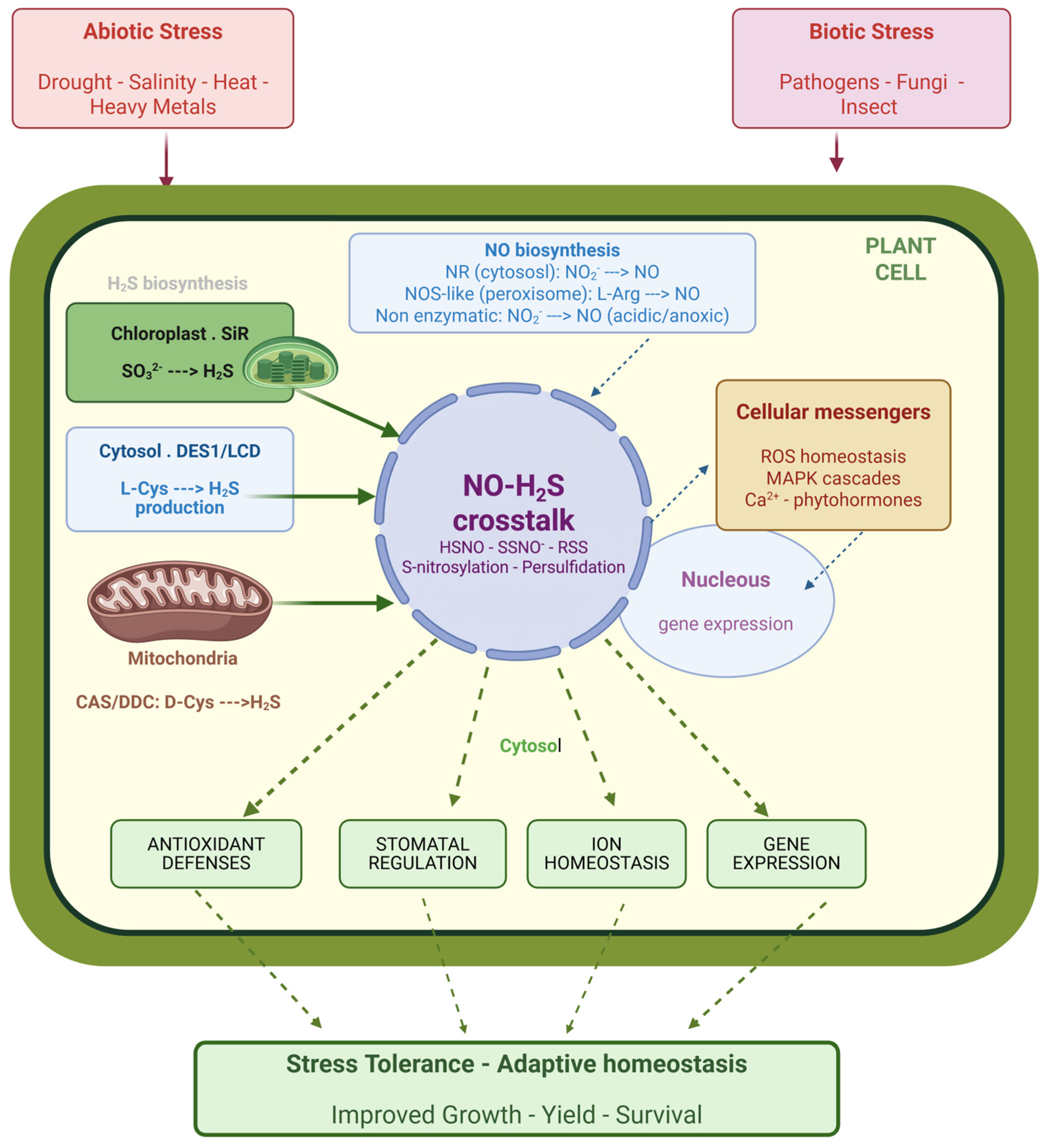
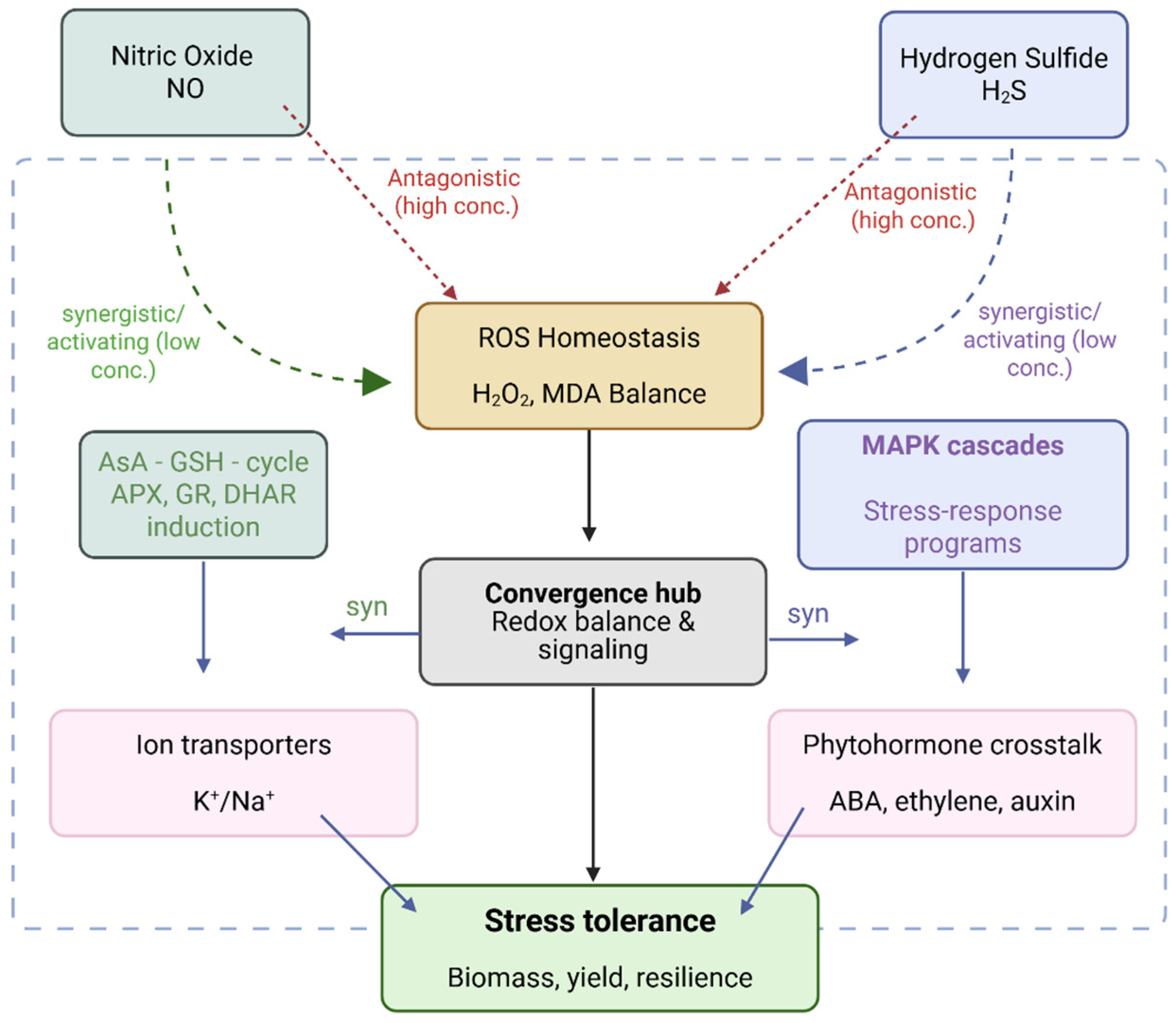
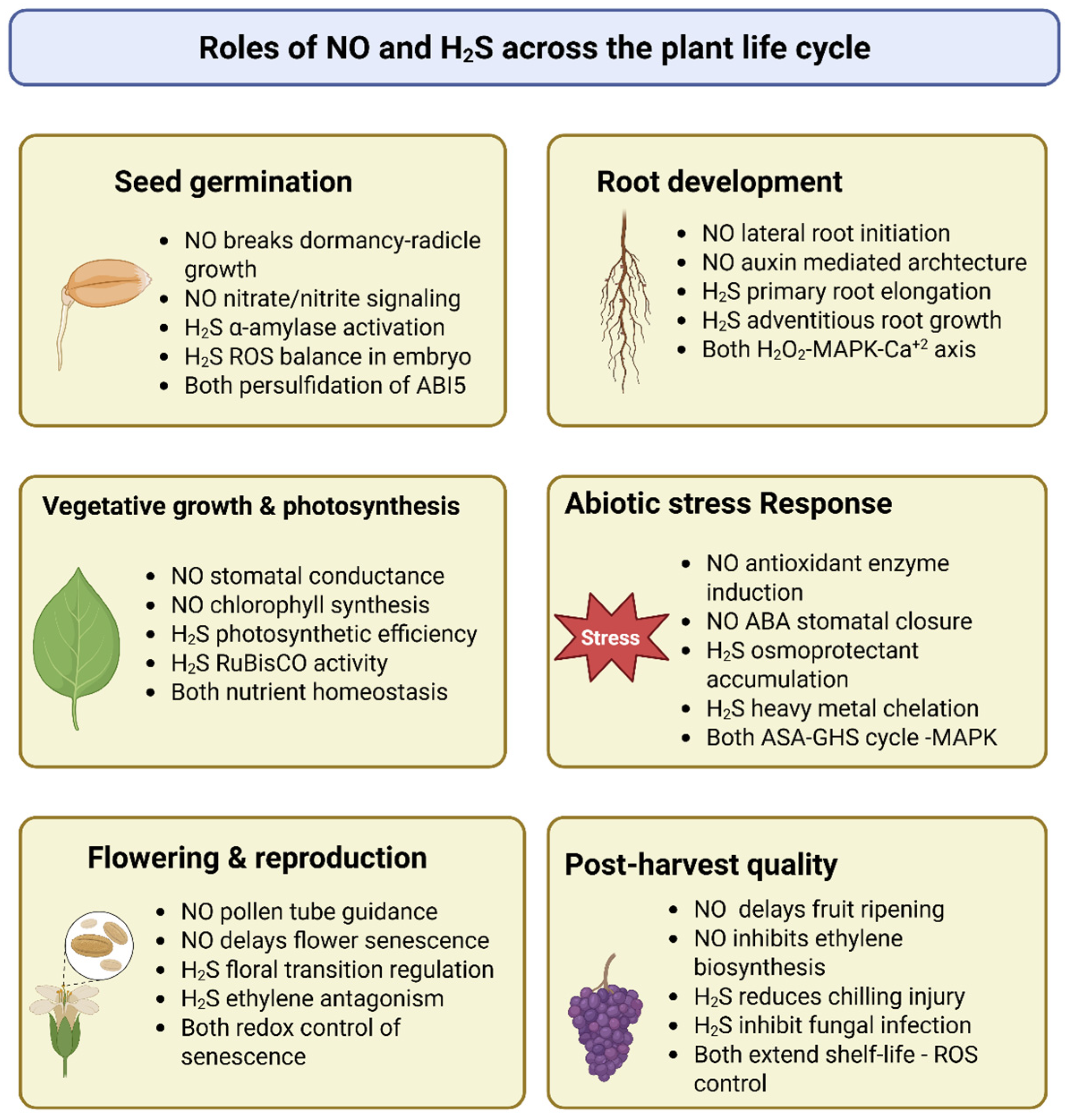
Nitric Oxide and Hydrogen Sulfide Crosstalk in Plants: Redox Regulation, Stress Adaptation, and Emerging Applications
 ,
,  ,
,  ,
, 
Abstract
1. Introduction
2. Interplay Between NO and H2S During Plant Development
2.1. Chemical and Molecular Basis of the NO–H2S Interaction
2.2. NO and H2S Across Plant Developmental Stages
3. Interplay Between NO and H2S During Abiotic and Biotic Stress Responses
4. The Use of NO and/or H2S Supplements in Agricultural Research
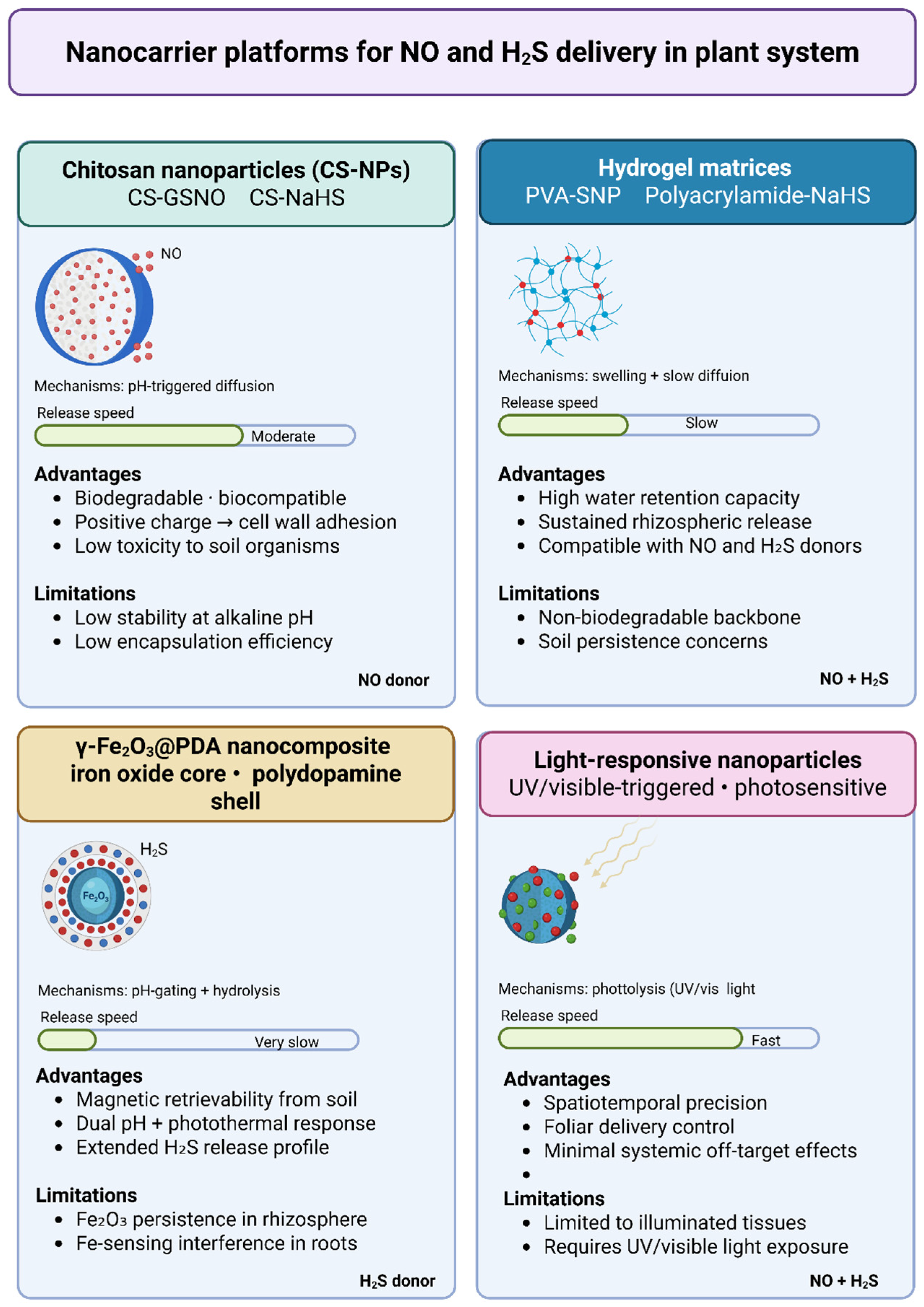
4.1. Nanomaterials for Gasotransmitter Delivery
Chemical Challenges of NO–H2S Co-Encapsulation
4.2. Agronomic Applications of NO and H2S Donors

| Supplement Type | Application/Release | Action | Ref. |
|---|---|---|---|
| Sodium nitroprusside (SNP) | Foliar application | Mitigates water stress · improves growth and productivity · increases chlorophyll content and photosynthetic rate · activates antioxidant system · reduces lipid peroxidation. | [41] |
| SNP · NaNO2 · NH4NO3 · NaNO3 · NO gas | NO release in acidic environment · direct NO donation | Improves physiological and biochemical performance under Cu stress · reduces Cu toxicity via antioxidant enzyme activation and ion regulation | [42] |
| GSNO encapsulated in chitosan nanoparticles (CS-GSNO) | Controlled release via chitosan polymer matrix degradation | Gradual NO release · promotes photosynthesis, stomatal conductance, and recovery of water potential after water stress · enhances antioxidant and photoprotective responses | [43,44] |
| S-nitrosoglutathione (GSNO) | Slow and controlled NO release via spontaneous or light/metal-catalyzed decomposition | Alleviates water deficit · increases biomass, photosynthesis, relative water content, and antioxidant enzyme activity | [45] |
| Photosensitive nanoparticles with NO donor | NO release under UV/visible light irradiation (light-responsive systems) | Localized NO release enhances the response to abiotic stresses such as salinity | [46] |
| SNP (Sodium nitroprusside) | Chemical decomposition in aqueous solution · acts as a redox signaler and transcriptional modulator. | Increases firmness by modulating lignin and cellulose synthesis · activates phenylpropanoid pathway genes · enhances symbiosis with arbuscular mycorrhizal fungi · reduces cadmium bioavailability in soil | [47,48] |
| NO gas (fumigation, 10 μL L−1) | Direct gas release in a controlled environment | Reduces chilling injury and decay · increases firmness and vitamin C content · improves membrane stability · preserves volatile compounds · upregulates LOX/ADH/HPL/AAT pathways | [49] |
| Supplement Type | Application/Release | Action | Ref. |
|---|---|---|---|
| NaHS · Na2S (sodium hydrosulfide · sodium sulfide) | Rapid release of H2S in aqueous solution | Enhances antioxidant activity and redox balance · mitigates abiotic stresses (salinity, drought, heavy metals) · improves photosynthesis and delays senescence · regulates ion balance · interacts with NO signaling | [18,50] |
| NaHS + SNP (coapplication) | Direct release of H2S and NO; synergistic interaction between both gasotransmitters | Reduction in salt stress damage · enhancement of antioxidant activity and plant growth | [51] |
| γ-Fe2O3@PDA-GYY4137 nanocomposite | Slow and sustained release of H2S via GYY4137 hydrolysis, encapsulated in polydopamine (PDA) and magnetic iron oxide (γ-Fe2O3) | Stimulates salt stress tolerance · enhances plant growth · increases antioxidant enzyme activity · boosts nitrogen assimilation | [52] |
| Di(t-butanol)dithiophosphate phenyl thylamine (fBDPA) encapsulated in polylactic acid (PLA) | H2S released via dithiophosphate hydrolysis and PLA degradation, enabling sustained localized delivery | Increased radish yield (up to 141%) · improved germination · stress protection · stimulated root growth · localized, safe, and effective delivery | [53] |
| Nanoscale sulfur (nano-S) | Microbial conversion of elemental sulfur (S0) into H2S in the rhizosphere by sulfur-reducing bacteria | Enhances plant tolerance to abiotic stresses (salinity, drought, heavy metals), increases antioxidant activity, and upregulates defense-related gene expression. | [40] |
4.3. Synergistic Actions and Crosstalk
4.3.1. Heat Stress
4.3.2. Drought Stress
4.3.3. Salinity Stress
4.3.4. Heavy Metal Stress
4.3.5. Application Strategies
4.3.6. Conflicting Evidence and Context-Dependent Outcomes
4.4. Toward Sustainable Gasotransmitter-Based Agriculture
5. Questions and Perspectives
- Some of the questions and perspectives the authors seek to highlight are:
- a.
- What are the integrated mechanisms of the gasotransmitters NO and H2S under real agronomic or field conditions in different soils, climates, and plant species?
- b.
- How can advanced delivery systems, e.g., nanotechnology-based carriers, increase the synergistic potential of NO–H2S crosstalk?
- c.
- What are the potential ecological impacts of using gasotransmitters NO and H2S with an advanced nanodelivery system in agricultural practices?
- On the other hand, other perspectives that the authors allow themselves to point out are as follows:
- d.
- How can omics technologies and genome editing tools advance our understanding of NO–H2S crosstalk in crops?
Author Contributions
Funding
Data Availability Statement
Conflicts of Interest
References
- Kolupaev, Y.E.; Karpets, Y.V.; Shkliarevskyi, M.A.; Yastreb, T.O.; Plohovska, S.H.; Yemets, A.I.; Blume, Y.B. Gasotransmitters in Plants: Mechanisms of Participation in Adaptive Responses. Open Agric. J. 2022, 16, 187433152207050. [Google Scholar] [CrossRef]
- Ashraf, M.A.; Akbar, A.; Askari, S.H.; Iqbal, M.; Rasheed, R.; Hussain, I. Recent advances in abiotic stress tolerance of plants through chemical priming: An overview. In Advances in Seed Priming; Springer: Singapore, 2018; pp. 51–79. [Google Scholar]
- Shan, C.; Wang, B.; Sun, H.; Gao, S.; Li, H. H2S induces NO in the regulation of AsA-GSH cycle in wheat seedlings by water stress. Protoplasma 2020, 257, 1487–1493. [Google Scholar] [CrossRef] [PubMed]
- Kaya, C.; Ugurlar, F.; Ashraf, M.; Alam, P.; Ahmad, P. Nitric oxide and hydrogen sulfide work together to improve tolerance to salinity stress in wheat plants by upraising the AsA-GSH cycle. Plant Physiol. Biochem. 2022, 194, 651–663. [Google Scholar] [CrossRef] [PubMed]
- Corpas, F.J. NO and H2S Contribute to Crop Resilience against Atmospheric Stressors. Int. J. Mol. Sci. 2024, 25, 3509. [Google Scholar] [CrossRef]
- Wang, W.; Ni, Z.J.; Thakur, K.; Cao, S.Q.; Wei, Z.J. Recent update on the mechanism of hydrogen sulfide improving the preservation of postharvest fruits and vegetables. Curr. Opin. Food Sci. 2022, 47, 100906. [Google Scholar] [CrossRef]
- Karthik Nayaka, V.S.; Sachin, A.J.; Anand, A.; Vijay Rakesh Reddy, S.; Nasim, A.; Shrivastava, D.C.; Siddiqui, M.W. Nitric Oxide: A Key Modulator of Postharvest Fruit and Vegetable Physiology. In Gasotransmitters Signaling in Plants Under Challenging Environment; Springer: Cham, Switzerland, 2023; pp. 175–191. [Google Scholar]
- Gularte, P.S.; Zanella, S.M.; Steffens, C.A.; Buss, M.; da Silva, J.C.; Coser, W.; Miqueloto, A.; Talamini do Amarante, C.V. Treatment of “Cripps Pink” apples with nitric oxide in a controlled atmosphere ultralow oxygen: Impacts on overall fruit quality and anaerobic compounds. Postharvest Biol. Technol. 2024, 208, 112635. [Google Scholar] [CrossRef]
- Corpas, F.J.; González-Gordo, S.; Cañas, A.; Palma, J.M. Nitric oxide and hydrogen sulfide in plants: Which comes first? J. Exp. Bot. 2019, 70, 4391–4404. [Google Scholar] [CrossRef] [PubMed]
- Mishra, S.; Chowdhary, A.A.; Bhau, B.S.; Srivastava, V. Hydrogen sulphide-mediated alleviation and its interplay with other signaling molecules during temperature stress. Plant Biol. 2022, 24, 569–575. [Google Scholar] [CrossRef]
- Beligni, M.V.; Lamattina, L. Nitric oxide in plants: The history is just beginning. Plant Cell Environ. 2001, 24, 267–278. [Google Scholar] [CrossRef]
- Palma, J.M.; Freschi, L.; Rodríguez-Ruiz, M.; González-Gordo, S.; Corpas, F.J. Nitric oxide in the physiology and quality of fleshy fruits. J. Exp. Bot. 2019, 70, 4405–4417. [Google Scholar] [CrossRef]
- Shang, J.X.; Li, X.; Li, C.; Zhao, L. The Role of Nitric Oxide in Plant Responses to Salt Stress. Int. J. Mol. Sci. 2022, 23, 6167. [Google Scholar] [CrossRef]
- Liu, X.; Deng, Z.; Cheng, H.; He, X.; Song, S. Nitrite, sodium nitroprusside, potassium ferricyanide and hydrogen peroxide release dormancy of Amaranthus retroflexus seeds in a nitric oxide-dependent manner. Plant Growth Regul. 2011, 64, 155–161. [Google Scholar] [CrossRef]
- Lozano-Juste, J.; León, J. Enhanced Abscisic Acid-Mediated Responses in nia1nia2noa1-2 Triple Mutant Impaired in NIA/NR- and AtNOA1-Dependent Nitric Oxide Biosynthesis in Arabidopsis. Plant Physiol. 2010, 152, 891–903. [Google Scholar] [CrossRef] [PubMed]
- Arc, E.; Galland, M.; Godin, B.; Cueff, G.; Rajjou, L. Nitric oxide implication in the control of seed dormancy and germination. Front. Plant Sci. 2013, 4, 346. [Google Scholar] [CrossRef]
- Muñoz-Vargas, M.A.; González-Gordo, S.; Palma, J.M.; Corpas, F.J. H2S in Horticultural Plants: Endogenous Detection by an Electrochemical Sensor, Emission by a Gas Detector, and Its Correlation with L-Cysteine Desulfhydrase (LCD) Activity. Int. J. Mol. Sci. 2022, 23, 5648. [Google Scholar] [CrossRef] [PubMed]
- Zulfiqar, F.; Hancock, J.T. Hydrogen sulfide in horticulture: Emerging roles in the era of climate change. Plant Physiol. Biochem. 2020, 155, 667–675. [Google Scholar] [CrossRef]
- Hasanuzzaman, M.; Raihan, M.R.H.; Masud, A.A.C.; Rahman, K.; Nowroz, F.; Rahman, M.; Nahar, K.; Fujita, M. Regulation of Reactive Oxygen Species and Antioxidant Defense in Plants under Salinity. Int. J. Mol. Sci. 2021, 22, 9326. [Google Scholar] [CrossRef]
- Riemenschneider, A.; Nikiforova, V.; Hoefgen, R.; De Kok, L.J.; Papenbrock, J. Impact of elevated H2S on metabolite levels, activity of enzymes and expression of genes involved in cysteine metabolism. Plant Physiol. Biochem. 2005, 43, 473–483. [Google Scholar] [CrossRef]
- Aroca, A.; Benito, J.M.; Gotor, C.; Romero, L.C. Persulfidation proteome reveals the regulation of protein function by hydrogen sulfide in diverse biological processes in Arabidopsis. J. Exp. Bot. 2017, 68, 4915–4927. [Google Scholar] [CrossRef]
- Scuffi, D.; Álvarez, C.; Laspina, N.; Gotor, C.; Lamattina, L.; García-Mata, C. Hydrogen sulfide generated by L-cysteine desulfhydrase acts upstream of nitric oxide to modulate abscisic acid-dependent stomatal closure. Plant Physiol. 2014, 166, 2065–2076. [Google Scholar] [CrossRef]
- Fotopoulos, V.; Christou, A.; Antoniou, C.; Manganaris, G.A. Hydrogen sulphide: A versatile tool for the regulation of growth and defense responses in horticultural crops. J. Hortic. Sci. Biotechnol. 2015, 90, 227–234. [Google Scholar] [CrossRef]
- Palma, J.M.; Mateos, R.M.; López-Jaramillo, J.; Rodríguez-Ruiz, M.; González-Gordo, S.; Lechuga-Sancho, A.M.; Corpas, F.J. Plant catalases as NO and H2S targets. Redox Biol. 2020, 34, 101525. [Google Scholar] [CrossRef]
- Corpas, F.J.; González-Gordo, S.; Rodríguez-Ruiz, M.; Muñoz-Vargas, M.A.; Palma, J.M. Nitric oxide and hydrogen sulfide share regulatory functions in higher plant events. Biocell 2021, 46, 1–5. [Google Scholar] [CrossRef]
- Liu, H.; Xue, S. Interplay between hydrogen sulfide and other signaling molecules in the regulation of guard cell signaling and abiotic/biotic stress response. Plant Commun. 2021, 2, 100179. [Google Scholar] [CrossRef] [PubMed]
- Corpas, F.J.; González-Gordo, S.; Muñoz-Vargas, M.A.; Rodríguez-Ruiz, M.; Palma, J.M. The Modus Operandi of Hydrogen Sulfide (H2S)-Dependent Protein Persulfidation in Higher Plants. Antioxidants 2021, 10, 1686. [Google Scholar] [CrossRef]
- Boutin, C.; Clément, C.; Rivoal, J. Post-Translational Modifications to Cysteine Residues in Plant Proteins and Their Impact on the Regulation of Metabolism and Signal Transduction. Int. J. Mol. Sci. 2024, 25, 9845. [Google Scholar] [CrossRef] [PubMed]
- Cortese-Krott, M.M.; Kuhnle, G.G.; Dyson, A.; Fernandez, B.O.; Grman, M.; DuMond, J.F.; Barrow, M.P.; McLeod, G.; Nakagawa, H.; Ondrias, K.; et al. Key bioactive reaction products of the NO/H2S interaction are S/N-hybrid species, polysulfides, and nitroxyl. Proc. Natl. Acad. Sci. USA 2015, 112, E4651–E4660. [Google Scholar] [CrossRef] [PubMed]
- Gu, Q.; Xiao, Q.; Chen, Z.; Han, Y. Crosstalk between Melatonin and Reactive Oxygen Species in Plant Abiotic Stress Responses: An Update. Int. J. Mol. Sci. 2022, 23, 5666. [Google Scholar] [CrossRef]
- Kaya, C.; Higgs, D.; Ashraf, M.; Alyemeni, M.N.; Ahmad, P. Integrative roles of nitric oxide and hydrogen sulfide in melatonin-induced tolerance of pepper (Capsicum annuum L.) plants to iron deficiency and salt stress alone or in combination. Physiol. Plant. 2020, 168, 256–277. [Google Scholar] [CrossRef]
- Neill, S.J.; Desikan, R.; Clarke, A.; Hancock, J.T. Nitric oxide is a novel component of abscisic acid signaling in stomatal guard cells. Plant Physiol. 2002, 128, 13–16. [Google Scholar] [CrossRef]
- Mishra, V.; Singh, P.; Tripathi, D.K.; Corpas, F.J.; Singh, V.P. Nitric oxide and hydrogen sulfide: An indispensable combination for plant functioning. Trends Plant Sci. 2021, 26, 1270–1285. [Google Scholar] [CrossRef]
- Mukherjee, S.; Corpas, F.J. H2O2, NO, and H2S networks during root development and signaling under physiological and challenging environments: Beneficial or toxic? Plant Cell Environ. 2023, 46, 688–717. [Google Scholar] [CrossRef]
- Chen, Z.; Huang, Y.; Yang, W.; Chang, G.; Li, P.; Wei, J.; Yuan, X.; Huang, J.; Hu, X. The hydrogen sulfide signal enhances seed germination tolerance to high temperatures by retaining nuclear COP1 for HY5 degradation. Plant Sci. 2019, 285, 75–82. [Google Scholar] [CrossRef]
- Gautam, H.; Fatma, M.; Sehar, Z.; Mir, I.R.; Khan, N.A. Hydrogen Sulfide, Ethylene, and Nitric Oxide Regulate Redox Homeostasis and Protect Photosynthetic Metabolism under High Temperature Stress in Rice Plants. Antioxidants 2022, 11, 1478. [Google Scholar] [CrossRef] [PubMed]
- Shivaraj, S.M.; Vats, S.; Bhat, J.A.; Dhakte, P.; Goyal, V.; Khatri, P.; Kumawat, S.; Singh, A.; Prasad, M.; Sonah, H.; et al. Nitric oxide and hydrogen sulfide crosstalk during heavy metal stress in plants. Physiol. Plant. 2020, 168, 437–455. [Google Scholar] [CrossRef]
- Iqbal, N.; Umar, S.; Khan, N.A.; Corpas, F.J. Nitric oxide and hydrogen sulfide coordinately reduce glucose sensitivity and decrease oxidative stress via ascorbate-glutathione cycle in heat-stressed wheat (Triticum aestivum L.) plants. Antioxidants 2021, 10, 108. [Google Scholar] [CrossRef] [PubMed]
- Kah, M.; Johnston, L.J.; Kookana, R.S.; Bruce, W.; Haase, A.; Ritz, V.; Dinglasan, J.; Doak, S.; Garelick, H.; Gubala, V. Comprehensive framework for human health risk assessment of nanopesticides. Nat. Nanotechnol. 2021, 16, 955–964. [Google Scholar] [CrossRef]
- Sun, Y.; Jiang, Y.; Li, Y.; Wang, Q.; Zhu, G.; Yi, T.; Wang, Q.; Wang, Y.; Dhankher, O.P.; Tan, Z.; et al. Unlocking the potential of nanoscale sulfur in sustainable agriculture. Chem. Sci. 2024, 15, 4709–4722. [Google Scholar] [CrossRef] [PubMed]
- Seymen, M.; Erçetin, M.; Yavuz, D.; Kıymacı, G.; Kayak, N.; Mutlu, A.; Kurtar, E.S. Agronomic and physio-biochemical responses to exogenous nitric oxide (NO) application in cauliflower under water stress conditions. Sci. Hortic. 2024, 331, 113116. [Google Scholar] [CrossRef]
- Rather, B.A.; Masood, A.; Qiao, F.; Jiang, X.; Zafar, M.M.; Cong, H.; Khan, N.A. The role of nitric oxide and nitrogen in mediating copper stress in Brassica juncea L. Plant Sci. 2025, 353, 112414. [Google Scholar] [CrossRef]
- Silveira, N.M.; Prataviera, P.J.C.; Pieretti, J.C.; Seabra, A.B.; Almeida, R.L.; Machado, E.C.; Ribeiro, R.V. Chitosan-encapsulated nitric oxide donors enhance physiological recovery of sugarcane plants after water deficit. Environ. Exp. Bot. 2021, 190, 104593. [Google Scholar] [CrossRef]
- Gomes, D.G.; Sousa, B.T.; Pieretti, J.C.; Pereira, R.H.; de Souza, W.R.; Oliveira, H.C.; Seabra, A.B. Nanoencapsulated nitric oxide donor triggers a dose-dependent effect on the responses of maize seedlings to high light stress. Plant Stress 2025, 15, 100711. [Google Scholar] [CrossRef]
- Tao, Z.; Zhou, Q.; Zheng, T.; Mo, F.; Ouyang, S. Iron oxide nanoparticles in the soil environment: Adsorption, transformation, and environmental risk. J. Hazard. Mater. 2023, 459, 132107. [Google Scholar] [CrossRef] [PubMed]
- Xu, X.; Shrestha, R.K.; Shu, J.; Cheng, H.; Wang, H.; Cui, H.; Ni, J.; Ni, C. Photocatalysis of nanoparticles mediates the re-sponse of plants toward nitric oxide in air. Plant Physiol. Biochem. 2025, 223, 109817. [Google Scholar] [CrossRef]
- Hu, L.; Zheng, Q.; Chen, Z.; Qin, Y.; Si, H.; Ji, J.; Li, Q.; Yang, Z.; Wu, Y. Preharvest treatment with gibberellin (GA3) and nitric oxide donor (SNP) enhances postharvest firmness of grape berries. Food Chem. Mol. Sci. 2025, 10, 100235. [Google Scholar] [CrossRef]
- Zare, L.; Ronaghi, A.; Ghasemi-Fasaei, R.; Zarei, M.; Sepehri, M. Sodium nitroprusside, a donor of nitric oxide, enhances arbuscular mycorrhizal fungi symbiosis with corn plant and mitigates Cd bioavailability in the rhizosphere. Rhizosphere 2024, 30, 100900. [Google Scholar] [CrossRef]
- Song, F.; Sun, Z.; Guo, H.; Chen, J.; Jin, X. Low temperature conditioning and nitric oxide treatment reduced chilling injury and altered fatty acid metabolism of flat peaches. Postharvest Biol. Technol. 2024, 218, 113191. [Google Scholar] [CrossRef]
- Yang, Z.; Wang, X.; Feng, J.; Zhu, S. Biological Functions of Hydrogen Sulfide in Plants. Int. J. Mol. Sci. 2022, 23, 15107. [Google Scholar] [CrossRef]
- Corpas, F.J.; Muñoz-Vargas, M.A.; González-Gordo, S.; Rodríguez-Ruiz, M.; Palma, J.M. Nitric Oxide (NO) and Hydrogen Sulfide (H2S): New Potential Biotechnological Tools for Postharvest Storage of Horticultural Crops. J. Plant Growth Regul. 2023, 44, 1203–1220. [Google Scholar] [CrossRef]
- Saurabh, K.; Prakash, V.; Dubey, A.K.; Ghosh, S.; Kumari, A.; Sundaram, P.K.; Jeet, P.; Sarkar, B.; Upadhyaya, A.; Das, A.; et al. Enhancing sustainability in agriculture with nanofertilizers. Discov. Appl. Sci. 2024, 6, 559. [Google Scholar] [CrossRef]
- Ranasinghe Arachchige, N.P.R.; Brown, E.M.; Bowden, N.B. Sustained Release of Hydrogen Sulfide from Di(t-butanol)dithiophosphate Phenethylamine Salt Encapsulated into Poly(lactic acid) Microparticles to Enhance the Growth of Radish Plants. ACS Agric. Sci. Technol. 2022, 2, 1052–1062. [Google Scholar] [CrossRef]
- Wu, G.; Li, S.; Dong, Y.; Bi, H.; Ai, X. Exogenous hydrogen sulfide improves chilling tolerance by regulating hydrogen peroxide production in cucumber seedlings. Hortic. Environ. Biotechnol. 2022, 63, 651–663. [Google Scholar] [CrossRef]
- Zhang, X.W.; Liu, F.J.; Zhai, J.; Li, F.D.; Bi, H.G.; Ai, X.Z. Auxin acts as a downstream signaling molecule involved in hydrogen sulfide-induced chilling tolerance in cucumber. Planta 2020, 251, 69. [Google Scholar] [CrossRef]
- Kaya, C.; Uğurlar, F.; Seth, C.S. Sodium nitroprusside modulates oxidative and nitrosative processes in Lycopersicum esculentum L. under drought stress. Plant Cell Rep. 2024, 43, 152. [Google Scholar] [CrossRef]
- Luo, S.; Liu, Z.; Wan, Z.; He, X.; Lv, J.; Yu, J.; Zhang, G. Foliar Spraying of NaHS Alleviates Cucumber Salt Stress by Maintaining N+/K+ Balance and Activating Salt Tolerance Signaling Pathways. Plants 2023, 12, 2450. [Google Scholar] [CrossRef]
- Rahman, A.; Alam, M.U.; Hossain, M.S.; Al Mahmud, J.; Nahar, K.; Fujita, M.; Hasanuzzaman, M. Exogenous Gallic Acid Confers Salt Tolerance in Rice Seedlings: Modulation of Ion Homeostasis, Osmoregulation, Antioxidant Defense, and Methylglyoxal Detoxification Systems. Agronomy 2023, 13, 16. [Google Scholar] [CrossRef]
- Yu, Y.; Fotopoulos, V.; Zhou, K.; Fernie, A.R. The role of gasotransmitter hydrogen sulfide in plant cadmium stress responses. Trends Plant Sci. 2025, 30, 35–53. [Google Scholar] [CrossRef] [PubMed]
- Mir, I.R.; Rather, B.A.; Masood, A.; Khan, N.A. Nitric Oxide- and Sulfur-Mediated Reversal of Cadmium-Inhibited Photosynthetic Performance Involves Hydrogen Sulfide and Regulation of Nitrogen, Sulfur, and Antioxidant Metabolism in Mustard. Stresses 2022, 2, 550–577. [Google Scholar] [CrossRef]
- Shan, C.J.; Jin, Y.Y.; Zhou, Y.; Li, H. Nitric oxide participates in the regulation of ascorbate-glutathione cycle and water physiological characteristics of Arabidopsis thaliana by NaHS. Photosynthetica 2020, 58, 80–86. [Google Scholar] [CrossRef]
- Da-Silva, C.J.; Mollica, D.C.F.; Vicente, M.H.; Peres, L.E.P.; Modolo, L.V. NO, hydrogen sulfide does not come first during tomato response to high salinity. Nitric Oxide 2018, 76, 164–173. [Google Scholar] [CrossRef]
- Philippot, L.; Chenu, C.; Kappler, A.; Rillig, M.C.; Fierer, N. The interplay between microbial communities and soil properties. Nat. Rev. Microbiol. 2024, 22, 226–239. [Google Scholar] [CrossRef]
- Mukherjee, S.; Corpas, F.J. Crosstalk among hydrogen sulfide (H2S), nitric oxide (NO) and carbon monoxide (CO) in root-system development and its rhizosphere interactions: A gaseous interactome. Plant Physiol. Biochem. 2020, 155, 800–814. [Google Scholar] [CrossRef]
- Keisham, M.; Jain, P.; Singh, N.; von Toerne, C.; Bhatla, S.C.; Lindermayr, C. Deciphering the nitric oxide, cyanide and iron-mediated actions of sodium nitroprusside in cotyledons of salt stressed sunflower seedlings. Nitric Oxide 2019, 88, 10–26. [Google Scholar] [CrossRef]
- Fuentes-Lara, L.O.; Medrano-Macías, J.; Pérez-Labrada, F.; Rivas-Martínez, E.N.; García-Enciso, E.L.; González-Morales, S.; Juárez-Maldonado, A.; Rincón-Sánchez, F.; Benavides-Mendoza, A. From elemental sulfur to hydrogen sulfide in agricultural soils and plants. Molecules 2019, 24, 2282. [Google Scholar] [CrossRef] [PubMed]
- Conrath, U.; Beckers, G.J.M.; Langenbach, C.J.G.; Jaskiewicz, M.R. Priming for enhanced defense. Annu. Rev. Phytopathol. 2015, 53, 97–119. [Google Scholar] [CrossRef] [PubMed]
- Chen, M.; Xu, T.; Song, L.; Sun, T.; Xu, Z.; Zhao, Y.; Du, P.; Xiong, L.; Yang, Z.; Jing, J.; et al. Nanotechnology based gas delivery system: A “green” strategy for cancer diagnosis and treatment. Theranostics 2024, 14, 5461–5491. [Google Scholar] [CrossRef] [PubMed]
- Easwaran, C.; Christopher, S.R.; Kumar, M.; Subramanian, M. Assessing the Biosafety of Chitosan-Based Nanohybrid Fertilizers: A Multitropic Toxicological Study for Sustainable Agriculture. J. Appl. Toxicol, 2025; in press.
- Atkinson, N.J.; Urwin, P.E. The interaction of plant biotic and abiotic stresses: From genes to the field. J. Exp. Bot. 2012, 63, 3523–3543. [Google Scholar] [CrossRef]
- Forrester, M.T.; Thompson, J.W.; Foster, M.W.; Nogueira, L.; Moseley, M.A.; Stamler, J.S. Proteomic analysis of S-nitrosylation and denitrosylation by resin-assisted capture. Nat. Biotechnol. 2009, 27, 557–559. [Google Scholar] [CrossRef]
- Aroca, A.; Serna, A.; Gotor, C.; Romero, L.C. S-sulfhydration: A cysteine post-translational modification in plant systems. Plant Physiol. 2015, 168, 334–342. [Google Scholar] [CrossRef]
- Zhu, H.; Li, C.; Gao, C. Applications of CRISPR–Cas in agriculture and plant biotechnology. Nat. Rev. Mol. Cell Biol. 2020, 21, 661–677. [Google Scholar] [CrossRef]
- Molla, K.A.; Sretenovic, S.; Bansal, K.C.; Qi, Y. Precise plant genome editing using base editors and prime editors. Nat. Plants 2021, 7, 1166–1187. [Google Scholar] [CrossRef]


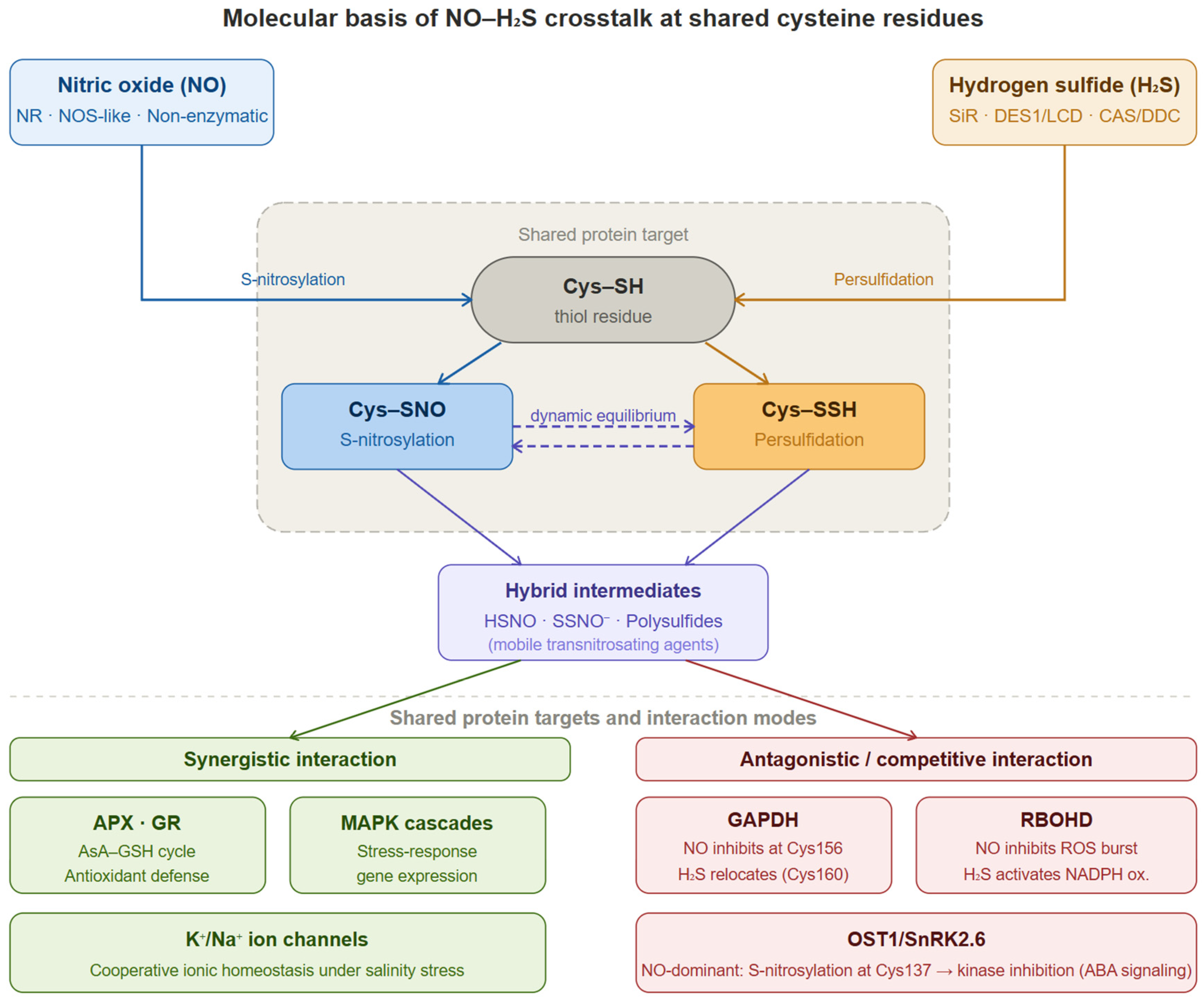
| Target/Pathway | NO Action (S-Nitrosylation) | H2S Action (Persulfidation) | Interaction Mode | Context | Ref. |
|---|---|---|---|---|---|
| GAPDH (GAPC1) | Inhibition at Cys156 → altered activity | Nuclear relocalization at Cys160 | Competitive—opposing functional outcomes on the same protein | Redox stress · carbon metabolism | [21] |
| RBOHD (NADPH oxidase) | S-nitrosylation at Cys890 → inhibition of ROS production | Persulfidation → activation of NADPH oxidase · promotes ROS | Antagonistic—opposing effects on ROS burst | Guard cell ABA signaling | [21,27] |
| OST1/SnRK2.6 | S-nitrosylation at Cys137 → kinase inhibition · fine-tunes ABA output | Candidate persulfidation target—functional outcome under investigation | NO-dominant in ABA response | Stomatal closure · ABA signaling | [21,32] |
| APX · GR (AsA–GSH cycle) | Upregulation of enzyme activity | Upregulation of enzyme activity | Synergistic—cooperative antioxidant defense | Oxidative stress · salinity · heat | [27] |
| MAPK cascades | Downstream activation → stress-response gene expression | Downstream activation → stress-response gene expression | Synergistic—convergent transcriptional output | Salinity · drought · heavy metals | [30] |
| K+/Na+ ion channels | Ion homeostasis regulation | Ion homeostasis regulation | Synergistic—cooperative ionic balance | Salinity stress | [28] |
| DES1 (H2S synthesis enzyme) | S-nitrosylation modulates DES1 activity → regulates endogenous H2S levels | Persulfidation activates DES1 → positive feedback on H2S production | Hierarchical—NO regulates H2S biosynthesis | Guard cell crosstalk | [21,32] |
Disclaimer/Publisher’s Note: The statements, opinions and data contained in all publications are solely those of the individual author(s) and contributor(s) and not of MDPI and/or the editor(s). MDPI and/or the editor(s) disclaim responsibility for any injury to people or property resulting from any ideas, methods, instructions or products referred to in the content. |
© 2026 by the authors. Licensee MDPI, Basel, Switzerland. This article is an open access article distributed under the terms and conditions of the Creative Commons Attribution (CC BY) license.
Share and Cite
dos Reis, R.A.; Seabra, A.B.; Aragão, C.B.; Halfeld, M.; Nunes, R.S.; Rodriguez, R.; Benavides-Mendoza, A.; Rubilar, O.; Tortella, G.R. Nitric Oxide and Hydrogen Sulfide Crosstalk in Plants: Redox Regulation, Stress Adaptation, and Emerging Applications. Int. J. Mol. Sci. 2026, 27, 4962. https://doi.org/10.3390/ijms27114962
dos Reis RA, Seabra AB, Aragão CB, Halfeld M, Nunes RS, Rodriguez R, Benavides-Mendoza A, Rubilar O, Tortella GR. Nitric Oxide and Hydrogen Sulfide Crosstalk in Plants: Redox Regulation, Stress Adaptation, and Emerging Applications. International Journal of Molecular Sciences. 2026; 27(11):4962. https://doi.org/10.3390/ijms27114962
Chicago/Turabian Styledos Reis, Roberta A., Amedea B. Seabra, Cecília Brilhante Aragão, Morgana Halfeld, Renan S. Nunes, Rodrigo Rodriguez, Adalberto Benavides-Mendoza, Olga Rubilar, and Gonzalo R. Tortella. 2026. "Nitric Oxide and Hydrogen Sulfide Crosstalk in Plants: Redox Regulation, Stress Adaptation, and Emerging Applications" International Journal of Molecular Sciences 27, no. 11: 4962. https://doi.org/10.3390/ijms27114962
APA Styledos Reis, R. A., Seabra, A. B., Aragão, C. B., Halfeld, M., Nunes, R. S., Rodriguez, R., Benavides-Mendoza, A., Rubilar, O., & Tortella, G. R. (2026). Nitric Oxide and Hydrogen Sulfide Crosstalk in Plants: Redox Regulation, Stress Adaptation, and Emerging Applications. International Journal of Molecular Sciences, 27(11), 4962. https://doi.org/10.3390/ijms27114962