The Hidden Link Between Intestinal Helminthiasis, Gut Microbiome Alterations, and Colorectal Cancer Risk: A Systematic Review
 , , , and
Abstract
1. Introduction
2. Methods
2.1. Literature Search Strategy
2.2. Study Selection, Quality of Studies, and Data Extraction
- Studies in the literature addressing helminth infections, the diversity of the gut microbiome, and CRC:
- Language: Only articles published in English were considered.
- Population: Research encompassing human participants of all age demographics.
- Study Design: Observational studies, clinical trials, cohort studies, cross-sectional studies, and case–control studies.
- Publication Period: January 2000 to March 2026.
- Publication Date: Studies in the literature published before January 2000.
- Language: Literature not published in English.
- Study Design: Systematic reviews, meta-analyses, editorials, conference abstracts, and animal studies.
- Relevance: Studies that do not specifically address the association between helminth infection, gut microbiome diversity, and CRC risk.
3. Results
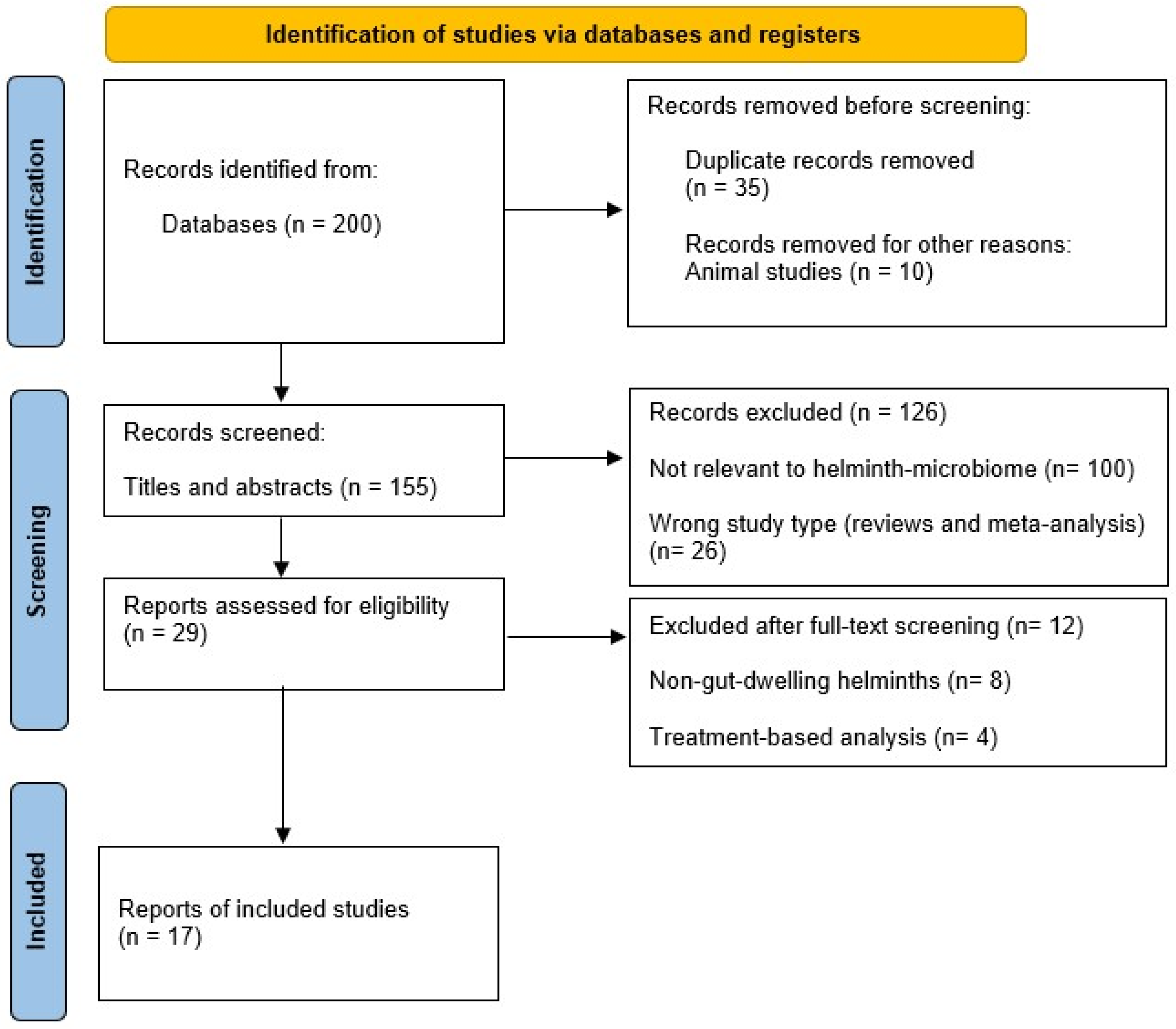
3.1. Study Selection
3.2. Study Characteristics
4. Discussion
4.1. Protective Impacts of Helminths on the Microbiome and CRC Risk
4.2. Harmful and Pro-Carcinogenic Impacts of Helminths
4.3. Context Dependence of Helminth–Microbiome Interactions
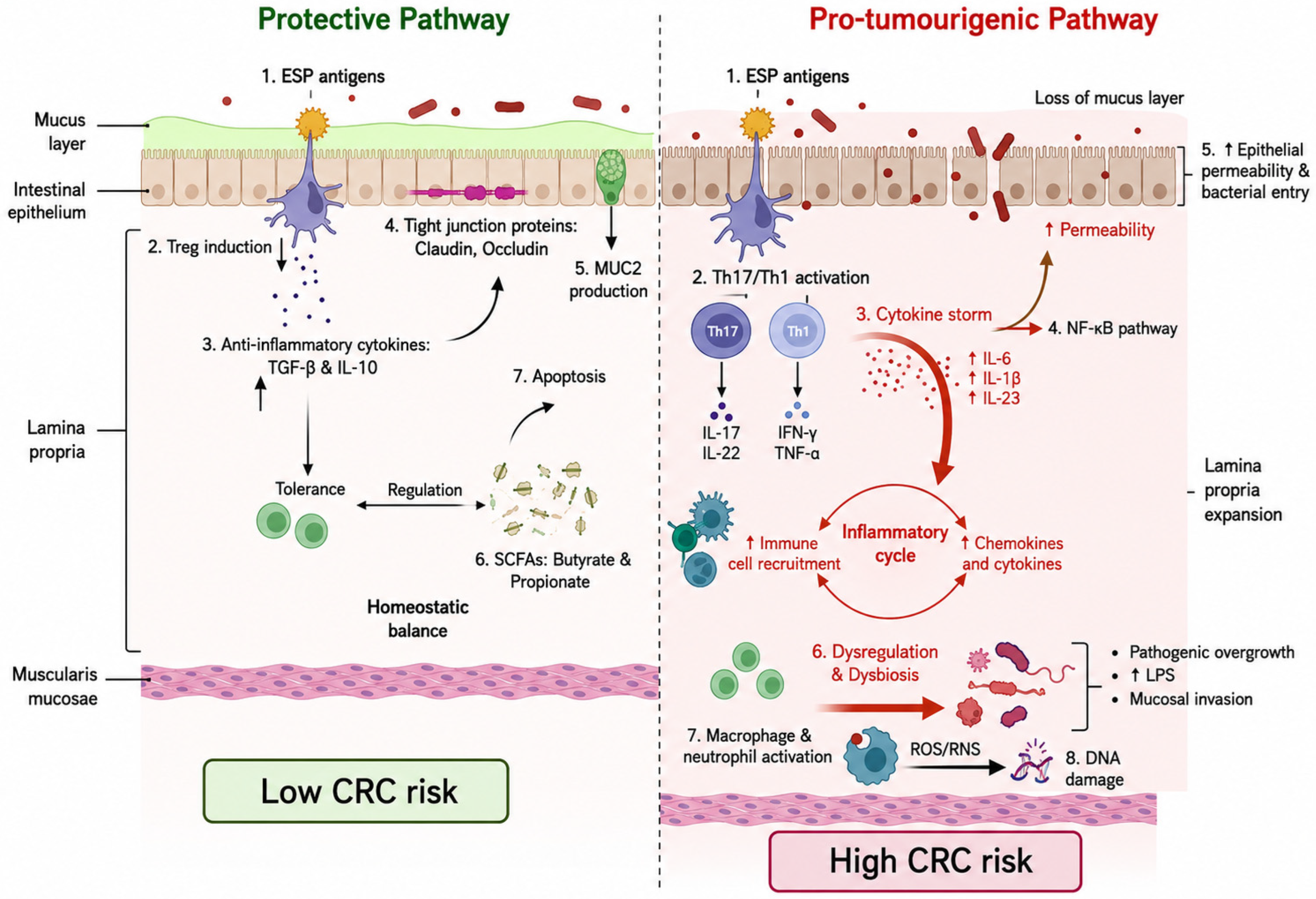
4.4. Synthesis and Implications for CRC
5. Limitations
6. Conclusions
Author Contributions
Funding
Institutional Review Board Statement
Informed Consent Statement
Data Availability Statement
Acknowledgments
Conflicts of Interest
Abbreviations
| 16S rRNA | 16S ribosomal ribonucleic acid |
| ADONIS | Permutational multivariate analysis of variance based on distance matrices |
| Akt | Protein kinase B |
| ANOSIM | Analysis of similarity |
| AUC | Area under the curve |
| BFT | Bacteroides fragilis toxin |
| CD4+ | Cluster of differentiation 4-positive |
| CD8+ | Cluster of differentiation 8-positive |
| CI | Confidence interval |
| CNS | Central nervous system |
| CRC | Colorectal cancer |
| DNA | Deoxyribonucleic acid |
| ESPs | Excretory-secretory products |
| ETBF | Enterotoxigenic Bacteroides fragilis |
| FDR | False discovery rate |
| GI | Gastrointestinal |
| GRADE | Grading of Recommendations, Assessment, Development and Evaluations |
| H− | Helminth-negative individuals |
| H+ | Individuals infected helminth |
| HDAC | Histone deacetylase |
| HR | Hazard ratio |
| Ht | Individuals treated for helminth individuals |
| IARC | International Agency for Research on Cancer |
| IBD | Inflammatory bowel disease |
| I-FABP | Intestinal fatty acid-binding protein |
| IFN-γ | Interferon-gamma |
| IL-10 | Interleukin-10 |
| IL-17 | Interleukin-17 |
| IL-1β | Interleukin-1 beta |
| IL20RB | Interleukin-20 receptor subunit beta |
| IL-22 | Interleukin-22 |
| IL-23 | Interleukin-23 |
| IL-5 | Interleukin-5 |
| IL-6 | Interleukin-6 |
| KEGG | Kyoto Encyclopaedia of Genes and Genomes |
| KOs | KEGG orthology terms |
| LMICs | Low- and middle-income countries |
| LPS | Lipopolysaccharide |
| M2-like macrophages | Alternatively activated macrophage-like phenotype |
| MS | Multiple sclerosis |
| MUC2 | Mucin 2 |
| N+ | Necator americanus-infected individuals |
| NF-κB | Nuclear factor kappa-light-chain-enhancer of activated B cells |
| NK | Natural killer |
| NOD2 | Nucleotide-binding oligomerisation domain-containing protein 2 |
| NTDs | Neglected tropical diseases |
| OR | Odds ratio |
| OTUs | Operational taxonomic units |
| PBO | Placebo |
| PCR | Polymerase chain reaction |
| PERMANOVA | Permutational multivariate analysis of variance |
| PHA | Phytohaemagglutinin |
| PI3K | Phosphoinositide 3-kinase |
| pks | Polyketide synthase |
| PRISMA | Preferred Reporting Items for Systematic Reviews and Meta-Analyses |
| qPCR | Quantitative polymerase chain reaction |
| RCT | Randomised controlled trial |
| RMS | Relapsing multiple sclerosis |
| RNS | Reactive nitrogen species |
| ROC | Receiver operating characteristic |
| ROS | Reactive oxygen species |
| S+ | Individuals with Strongyloides stercoralis |
| SCFAs | Short-chain fatty acids |
| STHs | Soil-transmitted helminths |
| TEER | Transepithelial electrical resistance |
| TGF-β | Transforming growth factor-beta |
| Th1 | T-helper type 1 |
| Th17 | T-helper type 17 |
| Th2 | T-helper type 2 |
| TLR2 | Toll-like receptor 2 |
| TLR4 | Toll-like receptor 4 |
| TNF-α | Tumour necrosis factor-alpha |
| Treg | Regulatory T cell |
| UniFrac | Unique fraction metric |
| ZO-1 | Zonula occludens-1 |
| α-diversity | Alpha diversity; a measure of species richness and evenness within individual samples |
| β-diversity | Beta diversity; a measure of compositional differences in microbial communities between samples |
References
- WHO. Soil-Transmitted Helminth Infections; WHO: Geneva, Switzerland, 2023. [Google Scholar]
- Chen, J.; Gong, Y.; Chen, Q.; Li, S.; Zhou, Y. Global burden of soil-transmitted helminth infections, 1990–2021. Infect. Dis. Poverty 2024, 13, 68–77. [Google Scholar] [CrossRef]
- Pullan, R.L.; Smith, J.L.; Jasrasaria, R.; Brooker, S.J. Global numbers of infection and disease burden of soil transmitted helminth infections in 2010. Parasites Vectors 2014, 7, 37. [Google Scholar] [CrossRef]
- Freeman, M.; Chard, A.; Nikolay, B.; Garn, J.; Okoyo, C.; Kihara, J.; Njenga, S.; Pullan, R.; Brooker, S.; Mwandawiro, C. Associations between school-and household-level water, sanitation and hygiene conditions and soil-transmitted helminth infection among Kenyan school children. Parasites Vectors 2015, 8, 412. [Google Scholar] [CrossRef]
- Walusimbi, B.; Lawson, M.A.; Nassuuna, J.; Kateete, D.P.; Webb, E.L.; Grencis, R.K.; Elliott, A.M. The effects of helminth infections on the human gut microbiome: A systematic review and meta-analysis. Front. Microbiomes 2023, 2, 1174034. [Google Scholar] [CrossRef]
- McDermott, J.R.; Bartram, R.E.; Knight, P.A.; Miller, H.R.; Garrod, D.R.; Grencis, R.K. Mast cells disrupt epithelial barrier function during enteric nematode infection. Proc. Natl. Acad. Sci. USA 2003, 100, 7761–7766. [Google Scholar] [CrossRef] [PubMed]
- McKay, D.M.; Shute, A.; Lopes, F. Helminths and intestinal barrier function. Tissue Barriers 2017, 5, e1283385. [Google Scholar] [CrossRef] [PubMed]
- Su, C.-w.; Cao, Y.; Kaplan, J.; Zhang, M.; Li, W.; Conroy, M.; Walker, W.A.; Shi, H.N. Duodenal helminth infection alters barrier function of the colonic epithelium via adaptive immune activation. Infect. Immun. 2011, 79, 2285–2294. [Google Scholar] [CrossRef] [PubMed]
- Zaiss, D.M.; Yang, L.; Shah, P.R.; Kobie, J.J.; Urban, J.F.; Mosmann, T.R. Amphiregulin, a TH2 cytokine enhancing resistance to nematodes. Science 2006, 314, 1746. [Google Scholar] [CrossRef]
- Llinás-Caballero, K.; Caraballo, L. Helminths and bacterial microbiota: The interactions of two of humans’ “old friends”. Int. J. Mol. Sci. 2022, 23, 13358. [Google Scholar] [CrossRef]
- Maizels, R.M.; McSorley, H.J. Regulation of the host immune system by helminth parasites. J. Allergy Clin. Immunol. 2016, 138, 666–675. [Google Scholar] [CrossRef]
- Su, C.; Su, L.; Li, Y.; Long, S.; Chang, J.; Zhang, W.; Walker, W.; Xavier, R.; Cherayil, B.; Shi, H. Helminth-induced alterations of the gut microbiota exacerbate bacterial colitis. Mucosal Immunol. 2018, 11, 144–157. [Google Scholar] [CrossRef]
- Yu, H.; Yang, R.; Li, M.; Li, D.; Xu, Y. The role of Treg cells in colorectal cancer and the immunotherapy targeting Treg cells. Front. Immunol. 2025, 16, 1574327. [Google Scholar] [CrossRef]
- Zhang, A.; Fan, T.; Liu, Y.; Yu, G.; Li, C.; Jiang, Z. Regulatory T cells in immune checkpoint blockade antitumor therapy. Mol. Cancer 2024, 23, 251. [Google Scholar] [CrossRef]
- Chen, Q.; Shen, M.; Yan, M.; Han, X.; Mu, S.; Li, Y.; Li, L.; Wang, Y.; Li, S.; Li, T. Targeting tumor-infiltrating CCR8+ regulatory T cells induces antitumor immunity through functional restoration of CD4+ Tconvs and CD8+ T cells in colorectal cancer. J. Transl. Med. 2024, 22, 709. [Google Scholar] [CrossRef]
- Hou, S.; Zhao, Y.; Chen, J.; Lin, Y.; Qi, X. Tumor-associated macrophages in colorectal cancer metastasis: Molecular insights and translational perspectives. J. Transl. Med. 2024, 22, 62. [Google Scholar] [CrossRef]
- Kim, H.-D.; Kim, S.Y.; Kim, J.; Kim, J.E.; Hong, Y.S.; Han, B.; Tak, E.; Ryu, Y.-M.; Kim, S.-Y.; Kim, T.W. Dynamic increase of M2 macrophages is associated with disease progression of colorectal cancers following cetuximab-based treatment. Sci. Rep. 2022, 12, 1678. [Google Scholar] [CrossRef]
- Zhang, W.; Wang, M.; Ji, C.; Liu, X.; Gu, B.; Dong, T. Macrophage polarization in the tumor microenvironment: Emerging roles and therapeutic potentials. Biomed. Pharmacother. 2024, 177, 116930. [Google Scholar] [CrossRef] [PubMed]
- Zaiss, M.M.; Rapin, A.; Lebon, L.; Dubey, L.K.; Mosconi, I.; Sarter, K.; Piersigilli, A.; Menin, L.; Walker, A.W.; Rougemont, J. The intestinal microbiota contributes to the ability of helminths to modulate allergic inflammation. Immunity 2015, 43, 998–1010. [Google Scholar] [CrossRef] [PubMed]
- Ramanan, D.; Bowcutt, R.; Lee, S.C.; Tang, M.S.; Kurtz, Z.D.; Ding, Y.; Honda, K.; Gause, W.C.; Blaser, M.J.; Bonneau, R.A. Helminth infection promotes colonization resistance via type 2 immunity. Science 2016, 352, 608–612. [Google Scholar] [CrossRef]
- IARC. IARC Marks Colorectal Cancer Awareness Month 2025. 2025. Available online: https://www.iarc.who.int/news-events/iarc-marks-colorectal-cancer-awareness-month-2025/ (accessed on 4 August 2025).
- WHO. Global Cancer Burden Growing, Amidst Mounting Need for Services. 2024. Available online: https://www.who.int/news/item/01-02-2024-global-cancer-burden-growing--amidst-mounting-need-for-services (accessed on 4 August 2025).
- Arnold, M.; Sierra, M.S.; Laversanne, M.; Soerjomataram, I.; Jemal, A.; Bray, F. Global patterns and trends in colorectal cancer incidence and mortality. Gut 2017, 66, 683–691. [Google Scholar] [CrossRef] [PubMed]
- Bultman, S.J. Interplay between diet, gut microbiota, epigenetic events, and colorectal cancer. Mol. Nutr. Food Res. 2017, 61, 1500902. [Google Scholar] [CrossRef]
- Lee, S.C.; Tang, M.S.; Easton, A.V.; Devlin, J.C.; Chua, L.L.; Cho, I.; Moy, F.M.; Khang, T.F.; Lim, Y.A.; Loke, P.n. Linking the effects of helminth infection, diet and the gut microbiota with human whole-blood signatures. PLoS Pathog. 2019, 15, e1008066. [Google Scholar] [CrossRef]
- Shi, J.; Shen, H.; Huang, H.; Zhan, L.; Chen, W.; Zhou, Z.; Lv, Y.; Xiong, K.; Jiang, Z.; Chen, Q. Gut microbiota characteristics of colorectal cancer patients in Hubei, China, and differences with cohorts from other Chinese regions. Front. Microbiol. 2024, 15, 1395514. [Google Scholar] [CrossRef]
- Wachsmannová, L.; Dulanská, S.; Karhánek, M.; Števurková, V.; Čierniková, S.; Repiská, V.; Styk, J.; Šoltys, K.; Trnka, M. Characterization of Gut Microbiota Composition in Colorectal Adenoma and Carcinoma Patients Compared to Healthy Controls. Bratisl. Med. J. 2025, 126, 1428–1437. [Google Scholar] [CrossRef]
- Wang, H.; Zhu, W.; Lei, J.; Liu, Z.; Cai, Y.; Wang, S.; Li, A. Gut microbiome differences and disease risk in colorectal cancer relatives and healthy individuals. Front. Cell. Infect. Microbiol. 2025, 15, 1573216. [Google Scholar] [CrossRef] [PubMed]
- Qin, Y.; Tong, X.; Mei, W.-J.; Cheng, Y.; Zou, Y.; Han, K.; Yu, J.; Jie, Z.; Zhang, T.; Zhu, S. Consistent signatures in the human gut microbiome of old-and young-onset colorectal cancer. Nat. Commun. 2024, 15, 3396. [Google Scholar] [CrossRef]
- Yang, Y.; Du, L.; Shi, D.; Kong, C.; Liu, J.; Liu, G.; Li, X.; Ma, Y. Dysbiosis of human gut microbiome in young-onset colorectal cancer. Nat. Commun. 2021, 12, 6757. [Google Scholar] [CrossRef] [PubMed]
- Clay, S.L.; Fonseca-Pereira, D.; Garrett, W.S. Colorectal cancer: The facts in the case of the microbiota. J. Clin. Investig. 2022, 132, e155101. [Google Scholar] [CrossRef] [PubMed]
- Sears, C.L.; Garrett, W.S. Microbes, microbiota, and colon cancer. Cell Host Microbe 2014, 15, 317–328. [Google Scholar] [CrossRef]
- Wong, S.H.; Yu, J. Gut microbiota in colorectal cancer: Mechanisms of action and clinical applications. Nat. Rev. Gastroenterol. Hepatol. 2019, 16, 690–704. [Google Scholar] [CrossRef]
- Piccinno, G.; Thompson, K.N.; Manghi, P.; Ghazi, A.R.; Thomas, A.M.; Blanco-Míguez, A.; Asnicar, F.; Mladenovic, K.; Pinto, F.; Armanini, F.; et al. Pooled analysis of 3,741 stool metagenomes from 18 cohorts for cross-stage and strain-level reproducible microbial biomarkers of colorectal cancer. Nat. Med. 2025, 31, 2416–2429. [Google Scholar] [CrossRef]
- Zepeda-Rivera, M.; Minot, S.S.; Bouzek, H.; Wu, H.; Blanco-Míguez, A.; Manghi, P.; Jones, D.S.; LaCourse, K.D.; Wu, Y.; McMahon, E.F. A distinct Fusobacterium nucleatum clade dominates the colorectal cancer niche. Nature 2024, 628, 424–432. [Google Scholar] [CrossRef]
- Jasemi, S.; Emaneini, M.; Fazeli, M.S.; Ahmadinejad, Z.; Nomanpour, B.; Sadeghpour Heravi, F.; Sechi, L.A.; Feizabadi, M.M. Toxigenic and non-toxigenic patterns I, II and III and biofilm-forming ability in Bacteroides fragilis strains isolated from patients diagnosed with colorectal cancer. Gut Pathog. 2020, 12, 28. [Google Scholar] [CrossRef]
- Pleguezuelos-Manzano, C.; Puschhof, J.; Rosendahl Huber, A.; van Hoeck, A.; Wood, H.M.; Nomburg, J.; Gurjao, C.; Manders, F.; Dalmasso, G.; Stege, P.B. Mutational signature in colorectal cancer caused by genotoxic pks+ E. coli. Nature 2020, 580, 269–273. [Google Scholar] [CrossRef]
- Zhang, L.; Deng, M.; Liu, J.; Zhang, J.; Wang, F.; Yu, W. The pathogenicity of vancomycin-resistant Enterococcus faecalis to colon cancer cells. BMC Infect. Dis. 2024, 24, 230. [Google Scholar] [CrossRef]
- Byrd, D.A.; Damerell, V.; Gomez Morales, M.F.; Hogue, S.R.; Lin, T.; Ose, J.; Himbert, C.; Ilozumba, M.N.; Kahlert, C.; Shibata, D. The gut microbiome is associated with disease-free survival in stage I–III colorectal cancer patients. Int. J. Cancer 2025, 157, 64–73. [Google Scholar] [CrossRef] [PubMed]
- Thomas, A.M.; Manghi, P.; Asnicar, F.; Pasolli, E.; Armanini, F.; Zolfo, M.; Beghini, F.; Manara, S.; Karcher, N.; Pozzi, C. Metagenomic analysis of colorectal cancer datasets identifies cross-cohort microbial diagnostic signatures and a link with choline degradation. Nat. Med. 2019, 25, 667–678, Correction in Nat. Med. 2019, 25, 1948. [Google Scholar] [CrossRef] [PubMed]
- Yu, J.; Feng, Q.; Wong, S.H.; Zhang, D.; yi Liang, Q.; Qin, Y.; Tang, L.; Zhao, H.; Stenvang, J.; Li, Y. Metagenomic analysis of faecal microbiome as a tool towards targeted non-invasive biomarkers for colorectal cancer. Gut 2017, 66, 70–78. [Google Scholar] [CrossRef] [PubMed]
- Zeller, G.; Tap, J.; Voigt, A.Y.; Sunagawa, S.; Kultima, J.R.; Costea, P.I.; Amiot, A.; Böhm, J.; Brunetti, F.; Habermann, N. Potential of fecal microbiota for early-stage detection of colorectal cancer. Mol. Syst. Biol. 2014, 10, 766. [Google Scholar] [CrossRef]
- Appiah-Twum, F.; Akorli, J.; Okyere, L.; Sagoe, K.; Osabutey, D.; Cappello, M.; Wilson, M.D. The effect of single dose albendazole (400 mg) treatment on the human gut microbiome of hookworm-infected Ghanaian individuals. Sci. Rep. 2023, 13, 11302. [Google Scholar] [CrossRef]
- Taye, B.; Mekonnen, Z.; Belanger, K.D.; Davenport, E.R. Gut-microbiome profiles among Soil-transmitted helminths (STHs) infected Ethiopian children enrolled in the school-based mass deworming program. PLoS Neglected Trop. Dis. 2024, 18, e0012485. [Google Scholar] [CrossRef]
- Nassuuna, J.; Sterk, J.; Walusimbi, B.; Natukunda, A.; Nkangi, R.; Amongin, R.; Zirimenya, L.; Webb, E.L.; Elliott, A.M.; Nkurunungi, G. Helminth driven gut inflammation and microbial translocation associate with altered vaccine responses in rural Uganda. npj Vaccines 2025, 10, 56. [Google Scholar] [CrossRef]
- Amaruddin, A.I.; Koopman, J.P.R.; Muhammad, M.; Lenaerts, K.; van Eijk, H.M.; Brienen, E.A.; Geelen, A.R.; van Lieshout, L.; Wahyuni, S.; Kuijper, E.J. Intestinal permeability before and after albendazole treatment in low and high socioeconomic status schoolchildren in Makassar, Indonesia. Sci. Rep. 2022, 12, 3394. [Google Scholar] [CrossRef]
- Li, H.; Shan, C.; Zhu, Y.; Yao, X.; Lin, L.; Zhang, X.; Qian, Y.; Wang, Y.; Xu, J.; Zhang, Y. Helminth-induced immune modulation in colorectal cancer: Exploring therapeutic applications. Front. Immunol. 2025, 16, 1484686. [Google Scholar] [CrossRef]
- Siti Farah Norasyikeen, S.O.; Ngui, R.; Syaza Zafirah, A.R.; Md Zoqratt, M.Z.H.; Eng, W.W.H.; Ayub, Q.; Amin Nordin, S.; Narcisse Mary Sither Joseph, V.; Musa, S.; Lim, Y.A.L. Study on intestinal parasitic infections and gut microbiota in cancer patients at a tertiary teaching hospital in Malaysia. Sci. Rep. 2024, 14, 13650. [Google Scholar] [CrossRef]
- Page, M.J.; McKenzie, J.E.; Bossuyt, P.M.; Boutron, I.; Hoffmann, T.C.; Mulrow, C.D.; Shamseer, L.; Tetzlaff, J.M.; Akl, E.A.; Brennan, S.E. The PRISMA 2020 statement: An updated guideline for reporting systematic reviews. BMJ 2021, 372, n71. [Google Scholar] [CrossRef] [PubMed]
- Guyatt, G.H.; Oxman, A.D.; Vist, G.E.; Kunz, R.; Falck-Ytter, Y.; Alonso-Coello, P.; Schünemann, H.J. GRADE: An emerging consensus on rating quality of evidence and strength of recommendations. BMJ 2008, 336, 924–926. [Google Scholar] [CrossRef]
- Ducarmon, Q.; Hoogerwerf, M.; Janse, J.; Geelen, A.; Koopman, J.; Zwittink, R.; Goeman, J.; Kuijper, E.; Roestenberg, M. Dynamics of the bacterial gut microbiota during controlled human infection with Necator americanus larvae. Gut Microbes 2020, 12, 1840764. [Google Scholar] [CrossRef] [PubMed]
- Gobert, G.N.; Atkinson, L.E.; Lokko, A.; Yoonuan, T.; Phuphisut, O.; Poodeepiyasawat, A.; Homsuwan, N.; Mousley, A.; Adisakwattana, P. Clinical helminth infections alter host gut and saliva microbiota. PLoS Neglected Trop. Dis. 2022, 16, e0010491. [Google Scholar] [CrossRef] [PubMed]
- Jenkins, T.P.; Pritchard, D.I.; Tanasescu, R.; Telford, G.; Papaiakovou, M.; Scotti, R.; Cortés, A.; Constantinescu, C.S.; Cantacessi, C. Experimental infection with the hookworm, Necator americanus, is associated with stable gut microbial diversity in human volunteers with relapsing multiple sclerosis. BMC Biol. 2021, 19, 74. [Google Scholar] [CrossRef]
- Klomkliew, P.; Sawaswong, V.; Chanchaem, P.; Nimsamer, P.; Adisakwattana, P.; Phuphisut, O.; Tipthara, P.; Tarning, J.; Payungporn, S.; Reamtong, O. Gut bacteriome and metabolome of Ascaris lumbricoides in patients. Sci. Rep. 2022, 12, 19524. [Google Scholar] [CrossRef] [PubMed]
- Lee, S.C.; Tang, M.S.; Lim, Y.A.; Choy, S.H.; Kurtz, Z.D.; Cox, L.M.; Gundra, U.M.; Cho, I.; Bonneau, R.; Blaser, M.J. Helminth colonization is associated with increased diversity of the gut microbiota. PLoS Neglected Trop. Dis. 2014, 8, e2880, Correction in PLoS Neglected Trop. Dis. 2021, 15, e0009325. [Google Scholar] [CrossRef]
- Martin, I.; Djuardi, Y.; Sartono, E.; Rosa, B.A.; Supali, T.; Mitreva, M.; Houwing-Duistermaat, J.J.; Yazdanbakhsh, M. Dynamic changes in human-gut microbiome in relation to a placebo-controlled anthelminthic trial in Indonesia. PLoS Neglected Trop. Dis. 2018, 12, e0006620. [Google Scholar] [CrossRef]
- Martin, I.; Kaisar, M.M.; Wiria, A.E.; Hamid, F.; Djuardi, Y.; Sartono, E.; Rosa, B.A.; Mitreva, M.; Supali, T.; Houwing-Duistermaat, J.J. The effect of gut microbiome composition on human immune responses: An exploration of interference by helminth infections. Front. Genet. 2019, 10, 1028. [Google Scholar] [CrossRef]
- Muslim, A.; Aazmi, S.; Er, Y.X.; Shahrizal, S.; Lim, Y.A.L. Ascaris lumbricoides harbors a distinct gut microbiota profile from its human host: Preliminary insights. Food Waterborne Parasitol. 2024, 34, e00223. [Google Scholar] [CrossRef]
- Nguélé, A.T.; Mozzicafreddo, M.; Chen, H.; Piersanti, A.; Salum, S.S.; Ali, S.M.; Zhang, J.; Miceli, C. Trichuris trichiura infection is associated with changes in gut microbiome composition and function among women of reproductive age from Pemba, Tanzania. Front. Trop. Dis. 2024, 5, 1276210. [Google Scholar] [CrossRef]
- Rosa, B.A.; Supali, T.; Gankpala, L.; Djuardi, Y.; Sartono, E.; Zhou, Y.; Fischer, K.; Martin, J.; Tyagi, R.; Bolay, F.K. Differential human gut microbiome assemblages during soil-transmitted helminth infections in Indonesia and Liberia. Microbiome 2018, 6, 33. [Google Scholar] [CrossRef]
- Tran, N.T.; Chaidee, A.; Surapinit, A.; Yingklang, M.; Roytrakul, S.; Charoenlappanit, S.; Pinlaor, P.; Hongsrichan, N.; Anutrakulchai, S.; Cha’on, U. Chronic Strongyloides stercoralis infection increases presence of the Ruminococcus torques group in the gut and alters the microbial proteome. Sci. Rep. 2023, 13, 4216. [Google Scholar] [CrossRef] [PubMed]
- Jenkins, T.P.; Rathnayaka, Y.; Perera, P.K.; Peachey, L.E.; Nolan, M.J.; Krause, L.; Rajakaruna, R.S.; Cantacessi, C. Infections by human gastrointestinal helminths are associated with changes in faecal microbiota diversity and composition. PLoS ONE 2017, 12, e0184719. [Google Scholar] [CrossRef] [PubMed]
- Cooper, P.; Walker, A.W.; Reyes, J.; Chico, M.; Salter, S.J.; Vaca, M.; Parkhill, J. Patent human infections with the whipworm, Trichuris trichiura, are not associated with alterations in the faecal microbiota. PLoS ONE 2013, 8, e76573. [Google Scholar] [CrossRef]
- Jenkins, T.P.; Formenti, F.; Castro, C.; Piubelli, C.; Perandin, F.; Buonfrate, D.; Otranto, D.; Griffin, J.L.; Krause, L.; Bisoffi, Z. A comprehensive analysis of the faecal microbiome and metabolome of Strongyloides stercoralis infected volunteers from a non-endemic area. Sci. Rep. 2018, 8, 15651, Correction in Sci. Rep. 2019, 9, 8571. [Google Scholar] [CrossRef]
- Tee, M.Z.; Er, Y.X.; Easton, A.V.; Yap, N.J.; Lee, I.L.; Devlin, J.; Chen, Z.; Ng, K.S.; Subramanian, P.; Angelova, A. Gut microbiome of helminth-infected indigenous Malaysians is context dependent. Microbiome 2022, 10, 214. [Google Scholar] [CrossRef] [PubMed]
- Dogra, S.K.; Doré, J.; Damak, S. Gut microbiota resilience: Definition, link to health and strategies for intervention. Front. Microbiol. 2020, 11, 572921. [Google Scholar] [CrossRef] [PubMed]
- Marchesi, J.R.; Dutilh, B.E.; Hall, N.; Peters, W.H.; Roelofs, R.; Boleij, A.; Tjalsma, H. Towards the human colorectal cancer microbiome. PLoS ONE 2011, 6, e20447. [Google Scholar] [CrossRef] [PubMed]
- Kang, J.; Sun, M.; Chang, Y.; Chen, H.; Zhang, J.; Liang, X.; Xiao, T. Butyrate ameliorates colorectal cancer through regulating intestinal microecological disorders. Anti-Cancer Drugs 2023, 34, 227–237. [Google Scholar]
- Kaźmierczak-Siedlecka, K.; Marano, L.; Merola, E.; Roviello, F.; Połom, K. Sodium butyrate in both prevention and supportive treatment of colorectal cancer. Front. Cell. Infect. Microbiol. 2022, 12, 1023806. [Google Scholar] [CrossRef]
- Parada Venegas, D.; De la Fuente, M.K.; Landskron, G.; González, M.J.; Quera, R.; Dijkstra, G.; Harmsen, H.J.; Faber, K.N.; Hermoso, M.A. Short chain fatty acids (SCFAs)-mediated gut epithelial and immune regulation and its relevance for inflammatory bowel diseases. Front. Immunol. 2019, 10, 277, Erratum in Front. Immunol. 2019, 10, 1486. [Google Scholar]
- Louis, P.; Flint, H.J. Formation of propionate and butyrate by the human colonic microbiota. Environ. Microbiol. 2017, 19, 29–41. [Google Scholar] [CrossRef]
- Singh, V.; Lee, G.; Son, H.; Koh, H.; Kim, E.S.; Unno, T.; Shin, J.-H. Butyrate producers, “The Sentinel of Gut”: Their intestinal significance with and beyond butyrate, and prospective use as microbial therapeutics. Front. Microbiol. 2023, 13, 1103836. [Google Scholar] [CrossRef]
- Nguyen, H.T.; Hongsrichan, N.; Intuyod, K.; Pinlaor, P.; Yingklang, M.; Chaidee, A.; Sengthong, C.; Pongking, T.; Dangtakot, R.; Banjong, D. Investigation of gut microbiota and short-chain fatty acids in Strongyloides stercoralis-infected patients in a rural community. Biosci. Microbiota Food Health 2022, 41, 121–129. [Google Scholar] [CrossRef]
- Yan, H.; Ajuwon, K.M. Butyrate modifies intestinal barrier function in IPEC-J2 cells through a selective upregulation of tight junction proteins and activation of the Akt signaling pathway. PLoS ONE 2017, 12, e0179586. [Google Scholar] [CrossRef]
- Hatayama, H.; Iwashita, J.; Kuwajima, A.; Abe, T. The short chain fatty acid, butyrate, stimulates MUC2 mucin production in the human colon cancer cell line, LS174T. Biochem. Biophys. Res. Commun. 2007, 356, 599–603. [Google Scholar] [CrossRef]
- Kaiko, G.E.; Ryu, S.H.; Koues, O.I.; Collins, P.L.; Solnica-Krezel, L.; Pearce, E.J.; Pearce, E.L.; Oltz, E.M.; Stappenbeck, T.S. The colonic crypt protects stem cells from microbiota-derived metabolites. Cell 2016, 165, 1708–1720. [Google Scholar] [CrossRef]
- Boleij, A.; van Gelder, M.M.; Swinkels, D.W.; Tjalsma, H. Clinical Importance of Streptococcus gallolyticus infection among colorectal cancer patients: Systematic review and meta-analysis. Clin. Infect. Dis. 2011, 53, 870–878. [Google Scholar] [CrossRef]
- Kumar, R.; Herold, J.L.; Schady, D.; Davis, J.; Kopetz, S.; Martinez-Moczygemba, M.; Murray, B.E.; Han, F.; Li, Y.; Callaway, E. Streptococcus gallolyticus subsp. gallolyticus promotes colorectal tumor development. PLoS Pathog. 2017, 13, e1006440. [Google Scholar] [CrossRef] [PubMed]
- Salim, O.E.; Hamid, H.K.; Mekki, S.O.; Suleiman, S.H.; Ibrahim, S.Z. Colorectal carcinoma associated with schistosomiasis: A possible causal relationship. World J. Surg. Oncol. 2010, 8, 68. [Google Scholar] [CrossRef] [PubMed]
- Wang, Z.; Du, Z.; Liu, Y.; Wang, W.; Liang, M.; Zhang, A.; Yang, J. Comparison of the clinicopathological features and prognoses of patients with schistosomal and nonschistosomal colorectal cancer. Oncol. Lett. 2020, 19, 2375–2383. [Google Scholar] [CrossRef] [PubMed]
- Afful, P.; Abotsi, G.K.; Adu-Gyamfi, C.O.; Benyem, G.; Katawa, G.; Kyei, S.; Arndts, K.; Ritter, M.; Asare, K.K. Schistosomiasis–Microbiota Interactions: A Systematic Review and Meta-Analysis. Pathogens 2024, 13, 906. [Google Scholar] [CrossRef]
- Abdulamir, A.S.; Hafidh, R.R.; Bakar, F.A. The association of Streptococcus bovis/gallolyticus with colorectal tumors: The nature and the underlying mechanisms of its etiological role. J. Exp. Clin. Cancer Res. 2011, 30, 11. [Google Scholar] [CrossRef]
- Kumar, R.; Taylor, J.C.; Jain, A.; Jung, S.Y.; Garza, V.; Xu, Y. Modulation of the extracellular matrix by Streptococcus gallolyticus subsp. gallolyticus and importance in cell proliferation. PLoS Pathog. 2022, 18, e1010894. [Google Scholar] [CrossRef]
- Huycke, M.M.; Abrams, V.; Moore, D.R. Enterococcus faecalis produces extracellular superoxide and hydrogen peroxide that damages colonic epithelial cell DNA. Carcinogenesis 2002, 23, 529–536. [Google Scholar] [CrossRef]
- Strickertsson, J.A.; Desler, C.; Martin-Bertelsen, T.; Machado, A.M.D.; Wadstrøm, T.; Winther, O.; Rasmussen, L.J.; Friis-Hansen, L. Enterococcus faecalis infection causes inflammation, intracellular oxphos-independent ROS production, and DNA damage in human gastric cancer cells. PLoS ONE 2013, 8, e63147. [Google Scholar] [CrossRef] [PubMed]
- Williamson, A.J.; Jacobson, R.; Van Praagh, J.; Gaines, S.; Koo, H.Y.; Lee, B.; Chan, W.-C.; Weichselbaum, R.; Alverdy, J.C.; Zaborina, O. Enterococcus faecalis promotes a migratory and invasive phenotype in colon cancer cells. Neoplasia 2022, 27, 100787. [Google Scholar] [CrossRef]
- Vogtmann, E.; Yano, Y.; Zouiouich, S.; Hua, X.; Wan, Y.; Purandare, V.; Li, S.; Dagnall, C.L.; Jones, K.; Hicks, B.D. The human oral microbiome and risk of colorectal cancer within three prospective cohort studies in the United States. Cancer 2025, 131, e35802. [Google Scholar] [CrossRef]
- Devlin, A.S.; Fischbach, M.A. A biosynthetic pathway for a prominent class of microbiota-derived bile acids. Nat. Chem. Biol. 2015, 11, 685–690. [Google Scholar] [CrossRef]
- Ridlon, J.M.; Kang, D.-J.; Hylemon, P.B. Bile salt biotransformations by human intestinal bacteria. J. Lipid Res. 2006, 47, 241–259. [Google Scholar] [CrossRef]
- Herath, M.; Hosie, S.; Bornstein, J.C.; Franks, A.E.; Hill-Yardin, E.L. The role of the gastrointestinal mucus system in intestinal homeostasis: Implications for neurological disorders. Front. Cell. Infect. Microbiol. 2020, 10, 248. [Google Scholar] [CrossRef]
- Png, C.W.; Lindén, S.K.; Gilshenan, K.S.; Zoetendal, E.G.; McSweeney, C.S.; Sly, L.I.; McGuckin, M.A.; Florin, T.H. Mucolytic bacteria with increased prevalence in IBD mucosa augmentin vitroutilization of mucin by other bacteria. Am. J. Gastroenterol. 2010, 105, 2420–2428. [Google Scholar] [CrossRef]
- Capaldo, C.T.; Powell, D.N.; Kalman, D. Layered defense: How mucus and tight junctions seal the intestinal barrier. J. Mol. Med. 2017, 95, 927–934. [Google Scholar] [CrossRef] [PubMed]
- Chelakkot, C.; Ghim, J.; Ryu, S.H. Mechanisms regulating intestinal barrier integrity and its pathological implications. Exp. Mol. Med. 2018, 50, 1–9. [Google Scholar] [CrossRef] [PubMed]
- Stolfi, C.; Maresca, C.; Monteleone, G.; Laudisi, F. Implication of intestinal barrier dysfunction in gut dysbiosis and diseases. Biomedicines 2022, 10, 289. [Google Scholar] [CrossRef]
- Wirbel, J.; Pyl, P.T.; Kartal, E.; Zych, K.; Kashani, A.; Milanese, A.; Fleck, J.S.; Voigt, A.Y.; Palleja, A.; Ponnudurai, R. Meta-analysis of fecal metagenomes reveals global microbial signatures that are specific for colorectal cancer. Nat. Med. 2019, 25, 679–689. [Google Scholar] [CrossRef] [PubMed]
- Louis, P.; Hold, G.L.; Flint, H.J. The gut microbiota, bacterial metabolites and colorectal cancer. Nat. Rev. Microbiol. 2014, 12, 661–672. [Google Scholar] [CrossRef] [PubMed]
- O’keefe, S.J. Diet, microorganisms and their metabolites, and colon cancer. Nat. Rev. Gastroenterol. Hepatol. 2016, 13, 691–706. [Google Scholar] [CrossRef]
- Ternes, D.; Karta, J.; Tsenkova, M.; Wilmes, P.; Haan, S.; Letellier, E. Microbiome in colorectal cancer: How to get from meta-omics to mechanism? Trends Microbiol. 2020, 28, 401–423. [Google Scholar] [CrossRef] [PubMed]



| Study | Country (Study Setting) | Study Design | Population/ Study Group | Sample Size (n) | Sample Type | Helminth Species | Microbiome Profiling Method |
|---|---|---|---|---|---|---|---|
| [51] | Netherlands | Experimental | Healthy adults, experimental Necator americanus infection | 20 | Stool | Necator americanus | 16S rRNA sequencing |
| [52] | Thailand | Cross-sectional | Adults with natural helminth infection | 90 | Stool, Saliva | Mixed helminths | 16S rRNA sequencing |
| [53] | United Kingdom | Experimental | RMS 1 patients, experimental Necator americanus infection | 71 | Stool | Necator americanus | 16S rRNA sequencing |
| [54] | Thailand | Cross-sectional | Children and young adults with natural Ascaris lumbricoides infection | 49 | Stool and helminth gut | Ascaris lumbricoides | 16S rRNA sequencing |
| [55] | Malaysia | Cross-sectional | Adults with natural helminth infection | 70 | Stool | Mixed helminths | 16S rRNA sequencing |
| [56] | Indonesia | Randomised controlled trial | Adults with natural helminth infection | 150 | Stool | Mixed helminths | 16S rRNA sequencing |
| [57] | Indonesia | Randomised controlled trial | Adults with natural helminth infection | 66 | Stool | Mixed helminths | 16S rRNA sequencing |
| [58] | Malaysia | Cross-sectional | Children with natural Ascaris lumbricoides infection | 12 | Stool and helminth gut | Mixed helminths | 16S rRNA sequencing |
| [59] | Tanzania | Cross-sectional | Women of reproductive age with Trichuris trichiura infection | 10 | Stool | Trichuris trichiura | shotgun metagenomics |
| [60] | Liberia, Indonesia | Randomised controlled trial | Adults with natural helminth infection | 402 | Stool | Mixed helminths | 16S rRNA sequencing and Shotgun metagenomics |
| [44] | Ethiopia | Cross-sectional | Children with natural helminth infection | 138 | Stool | Mixed helminths | 16S rRNA sequencing |
| [61] | Thailand | Longitudinal | Adults with natural Strongyloides stercoralis infection | 42 | Stool | Strongyloides stercoralis | 16S rRNA sequencing |
| [62] | Sri Lanka | Cross-sectional | Adults with natural helminth infection | 76 | Stool | Mixed helminths | 16S rRNA sequencing |
| [25] | Malaysia | Longitudinal | Adults with natural helminth infection | 67 | Stool | Mixed helminths | 16S rRNA sequencing |
| [63] | Ecuador | Cross-sectional | Children with natural Trichuris trichiura infection | 97 | Stool | Mixed helminths | 16S rRNA sequencing |
| [64] | Italy | Longitudinal | Adults with natural Strongyloides stercoralis infection | 31 | Stool | Strongyloides stercoralis | 16S rRNA sequencing |
| [65] | Malaysia | Longitudinal | Adults with natural helminth infection | 650 | Stool | Mixed helminths | Shotgun metagenomics |
| Study | Study Aim (s) | Key Microbiome and Clinical Findings |
|---|---|---|
| [51] | To investigate temporal changes in the gut microbiota in response to different dosages (ranging from 50 to 150L3) of Necator americanus larvae in healthy young volunteers. To investigate temporal differences in the gut microbiota between healthy volunteers experiencing different numbers of clinical symptoms. | Alpha diversity: Increased bacterial richness during established infection (Chao1; p = 0.0174; weeks 8–20) Relative abundance: Barnesiella is more abundant in volunteers with higher GI 2 symptoms (p < 0.05) Microbiota stability/timepoints: Instability observed during early infection (weeks 0–8; p = 0.036) with recovery by week 20 (p = 0.004) Clinical outcomes: GI symptoms associated with microbial instability in early infection, with recovery by week 20 |
| [52] | To determine if microbial changes are associated with parasite infection by profiling faecal and saliva microbiota of participants with helminth infection. | No significant changes in stool. Significant changes observed in saliva. Alpha diversity: Increase in saliva (Chao1; p = 0.042 at genus level; p = 0.026 at phylum level) Relative abundance: Increase: Desulfovibrio (p = 0.039), Oxalobacter (p = 0.022), Oxalobacteraceae (p = 0.022), Dialister (p = 0.027), and Abiotrophia (p = 0.031) Decrease: Haemophilus Specific to Opisthorchis viverrini: Odoribacter (p = 0.0066), Phascolarctobacterium (p = 0.031), and Succinivibrio (p = 0.05) |
| [53] | To investigate qualitative and quantitative changes in faecal bacterial composition in RMS 3 patients before and after experimental infection with Necator americanus, and to assess the therapeutic efficacy of live hookworm infective larvae in RMS patients. | Alpha diversity: Decrease in PBO 4 subjects at T9 compared to T pre (p < 0.05) Beta diversity: Higher in N+ (Necator americanus infected) subjects at T9 compared to PBO (p = 0.048) Relative abundance: Parabacteroides significantly expanded in N+ individuals with no relapses Clinical outcomes: 51% of N+ subjects showed no new CNS 5 lesions vs. 28% of PBO subjects |
| [54] | To investigate the gut bacteriomes of Ascaris lumbricoides helminths and stool samples of patients with different infection intensities, as well as to characterise the metabolomes of Ascaris lumbricoides in heavy and light ascariasis cases. | Alpha diversity: Chao1 richness is higher in heavily infected patients (p < 0.05) Beta diversity: Bray–Curtis distance did not distinguish between infected and uninfected individuals (PERMANOVA 6 p < 0.001) Relative abundance: Prevotella is more abundant in ascariasis patients (p < 0.05); Streptococcus is more abundant in heavily infected patients; Lactococcus is more abundant in lightly infected patients Clinical outcomes: Increased levels of essential biomolecules in heavily infected patients |
| [55] | To compare the gut microbiota of individuals with helminth infection and individuals who were not colonised by helminths, and to develop new approaches to examine the interactions of microbes with each other and their hosts. | Alpha diversity: Increase in helminth-colonised individuals (p = 0.04) Beta diversity: ANOSIM 7 (R = 0.18; p = 0.04) Relative abundance: Increase in Paraprevotellaceae, Mollicutes, Bacteroidales, and Alphaproteobacteria in helminth-colonised individuals; increase in Bifidobacterium in helminth-negative individuals |
| [56] | To characterise the joint effects of several predictors, including helminth infection and treatment, on each bacterial category. | Relative abundance: Actinobacteria increased (OR 8 = 1.57; 95% CI 9: 1.05–2.35) and Bacteroidetes decreased (OR = 0.35; 95% CI: 0.18–0.70) in infected subjects receiving albendazole vs. PBO Alpha diversity: No significant differences in Shannon diversity or richness between infected and uninfected groups (pre- and post-treatment) Beta diversity: Bray–Curtis dissimilarity remained stable (61%) between pre- and post-treatment samples Clinical outcomes: STH 10 prevalence reduced in the albendazole group (21.7% vs. 54.3%; p < 0.001) at 21 months |
| [57] | To characterise the association between gut microbiome composition and immune responses, and to examine the effect of helminth infections on this relationship. | Alpha diversity: Higher diversity associated with increased IFN-γ 11 response (β = 0.95; 95% CI: 0.15–1.75; p = 0.056) Relative abundance/effect sizes: Bacteroidetes negatively associated with IL-10 12 response (β = −1.96; 95% CI: −3.05 to −0.87; p = 0.002); Actinobacteria associated with decreased TNF-α 13 (β = −1.55; 95% CI: −2.87 to −0.22; p = 0.024); Firmicutes associated with IL-5 14 response post-treatment (β = −1.52; p = 0.024) Clinical outcomes: Deworming did not significantly alter microbiome–cytokine associations |
| [58] | To characterise the gut microbiota of the SHT parasite Ascaris lumbricoides and compare it to the gut microbiota of their human hosts. | Alpha diversity: Lower in Ascaris (p = 0.006) Beta diversity: Significant separation between Ascaris and human gut microbiota (Bray–Curtis p = 0.002; Jaccard p = 0.004) Relative abundance: Firmicutes higher in Ascaris (84.2%; p = 0.03); Clostridium significantly higher in Ascaris (p = 0.001) Timepoints: Samples obtained 3 days post-albendazole treatment |
| [59] | To investigate the effects of Trichuris trichiura infection on the gut microbiome composition and function in women of reproductive age from Pemba, Tanzania. | Relative abundance: Prevotella is higher in healthy participants; Weissella cibaria, Leuconostoc citreum, and Leuconostoc lactis are lower in infected individuals; Proteobacteria are higher in infected samples; Treponema succinifaciens and Streptococcus gallolyticus are higher in infected samples; overall fungal abundance is higher in infected participants Functional analysis: Cholesterol metabolism and pathogenic infection pathways are higher in infected samples (p < 0.05) Firmicutes/Bacteroidetes ratio: Higher in infected participants |
| [60] | To enhance understanding of human gut microbiome interactions with STHs in Liberia and Indonesia, despite varying gut microbiome structures among individuals. | Alpha diversity: Higher richness and evenness (89.5 vs. 82.1, p = 5.8 × 10⁻¹⁰; 2.8 vs. 2.4, p = 0.0008) Beta diversity: Higher in infected individuals (0.52 vs. 0.43, p < 10−5); lower with self-clearing over time (2010: 0.54 vs. 0.60, p = 0.008) Relative abundance: Prevotella dominant (32%) Functional analysis: Arachidonic acid metabolism and K00560 were enriched; 11 Kos 15 were depleted Clinical outcomes: Self-clearing individuals were older (51.1 vs. 21.4 years, p = 0.012) |
| [44] | To identify and explain differences in microbial communities between STH-infected and non-infected Ethiopian school children. | Alpha diversity: Lower in Trichuris trichiura-infected children (p < 0.05) Beta diversity: Differences by infection status (PERMANOVA p < 0.01) Relative abundance/correlation: Agathobacter was higher in infected children (adjusted p = 0.001) and positively correlated with egg counts (p < 0.05) |
| [61] | To explore the impact of chronic Strongyloides stercoralis infection on the gut microbiome and microbial activity in a longitudinal study. | Alpha diversity: No significant difference Beta diversity: Difference in unweighted UniFrac (R2 = 0.037; p = 0.028) Relative abundance: Ruminococcus torques group is over-represented in chronic infection Timepoints: T0 (baseline), T1 (1 year), and T2 (4 months post-treatment) Clinical outcomes: Reduction in Ruminococcus torques group after treatment; increased carbohydrate metabolism |
| [62] | To explore the qualitative and quantitative differences in microbial community profiles between individuals with patent infections by parasitic nematodes, uninfected individuals, and those who have received regular anthelmintic treatment. | Alpha diversity: No significant difference (Shannon; p = 0.65) Beta diversity: Higher in individuals with (H+) and treated for helminth (Ht) (p = 0.04) Relative abundance: Verrucomicrobiaceae and Enterobacteriaceae are higher in H+; Leuconostocaceae are higher in helminth-negative (H−); Bacteroidaceae are higher in Ht; and Akkermansia muciniphila is higher in H+ individuals |
| [25] | To identify the important factors influencing the gut microbiota and to determine the relative impact of helminth infection on host responses and the microbiota. | Microbiome: Helminth infection influenced gut microbiota more than diet; OTUs 16 associated with fibre intake and Trichuris trichiura burden Clinical/immune: Zinc was higher in Orang Asli (p = 1.67 × 10⁻⁹); iron was higher in urban (p = 0.002); CD8+ was higher and naïve CD4+ was lower; and natural killer cells were reduced post-treatment Gene expression: Deworming altered 654 genes (FDR 17 < 10%) and reduced the Trichuris trichiura burden associated with increased IL20RB 18 |
| [63] | To investigate the effects of Trichuris trichiura infections on faecal microbiota and to determine if anthelmintic treatment reverses these changes towards a microbiota composition similar to that of uninfected individuals. | Alpha diversity: Lower in mixed infections (Shannon; p = 0.004) Relative abundance: Clostridium sensu stricto was higher in uninfected individuals (4.1% vs. 1.5%; p = 0.013); uncharacterised clostridial cluster IX bacteria were higher in uninfected individuals (2.3% vs. 0.6%; p = 0.026) Clinical outcomes: 100% cure of STH infections at 7 and 21 days post-treatment |
| [64] | To determine the effects of chronic, monospecific infections by Strongyloides stercoralis on the faecal microbiome and metabolome of human volunteers from a non-endemic area and to establish whether these effects are reversed by anthelmintic treatment. | Alpha diversity: Higher in Strongyloides stercoralis positive (S+) subjects (Simpson’s index: F = 5; p = 0.03; evenness: F = 4.2; p = 0.05) Beta diversity: Lower in S+ subjects (R = 0.11; p = 0.04) Relative abundance: Leuconostocaceae, Ruminococcaceae, Paraprevotellaceae, and Peptococcus are higher in S+; Bacteroides is lower in S+ Metabolites: Alanine, formate, lysine, and leucine are higher in S+ (F ≈ 4.2–4.5; p = 0.03–0.05) |
| [65] | To investigate the interactions between helminth infections and the human gut microbiome in indigenous Malaysians using shotgun metagenomics. | Alpha diversity: Higher richness in infected subjects (p = 2.5 × 10⁻⁵); no significant change post-treatment Beta diversity: Small effect size between pre- and post-treatment (ADONIS 19: R2 = 0.014; p = 0.001; ANOSIM: R = 0.072; p = 0.001) Relative abundance: Specific replicating taxa associated with helminth infection Timepoints: Longitudinal changes assessed post-albendazole treatment |
Disclaimer/Publisher’s Note: The statements, opinions and data contained in all publications are solely those of the individual author(s) and contributor(s) and not of MDPI and/or the editor(s). MDPI and/or the editor(s) disclaim responsibility for any injury to people or property resulting from any ideas, methods, instructions or products referred to in the content. |
© 2026 by the authors. Licensee MDPI, Basel, Switzerland. This article is an open access article distributed under the terms and conditions of the Creative Commons Attribution (CC BY) license.
Share and Cite
Shemfe, D.P.; Mvubu, N.E.; Naidoo, P.; Giandhari, J.; Byrd, D.A.; Kader, S.S.; Mkhize-Kwitshana, Z.L. The Hidden Link Between Intestinal Helminthiasis, Gut Microbiome Alterations, and Colorectal Cancer Risk: A Systematic Review. Int. J. Mol. Sci. 2026, 27, 4957. https://doi.org/10.3390/ijms27114957
Shemfe DP, Mvubu NE, Naidoo P, Giandhari J, Byrd DA, Kader SS, Mkhize-Kwitshana ZL. The Hidden Link Between Intestinal Helminthiasis, Gut Microbiome Alterations, and Colorectal Cancer Risk: A Systematic Review. International Journal of Molecular Sciences. 2026; 27(11):4957. https://doi.org/10.3390/ijms27114957
Chicago/Turabian StyleShemfe, Dieketseng Palesa, Nontobeko Eunice Mvubu, Pragalathan Naidoo, Jennifer Giandhari, Doratha Armen Byrd, Sayed Shakeel Kader, and Zilungile Lynette Mkhize-Kwitshana. 2026. "The Hidden Link Between Intestinal Helminthiasis, Gut Microbiome Alterations, and Colorectal Cancer Risk: A Systematic Review" International Journal of Molecular Sciences 27, no. 11: 4957. https://doi.org/10.3390/ijms27114957
APA StyleShemfe, D. P., Mvubu, N. E., Naidoo, P., Giandhari, J., Byrd, D. A., Kader, S. S., & Mkhize-Kwitshana, Z. L. (2026). The Hidden Link Between Intestinal Helminthiasis, Gut Microbiome Alterations, and Colorectal Cancer Risk: A Systematic Review. International Journal of Molecular Sciences, 27(11), 4957. https://doi.org/10.3390/ijms27114957