


Monogenic Syndromes as a Cause of Adverse Drug Reactions in the Russian Population
 , , , , , , and
Abstract
1. Introduction
2. Results
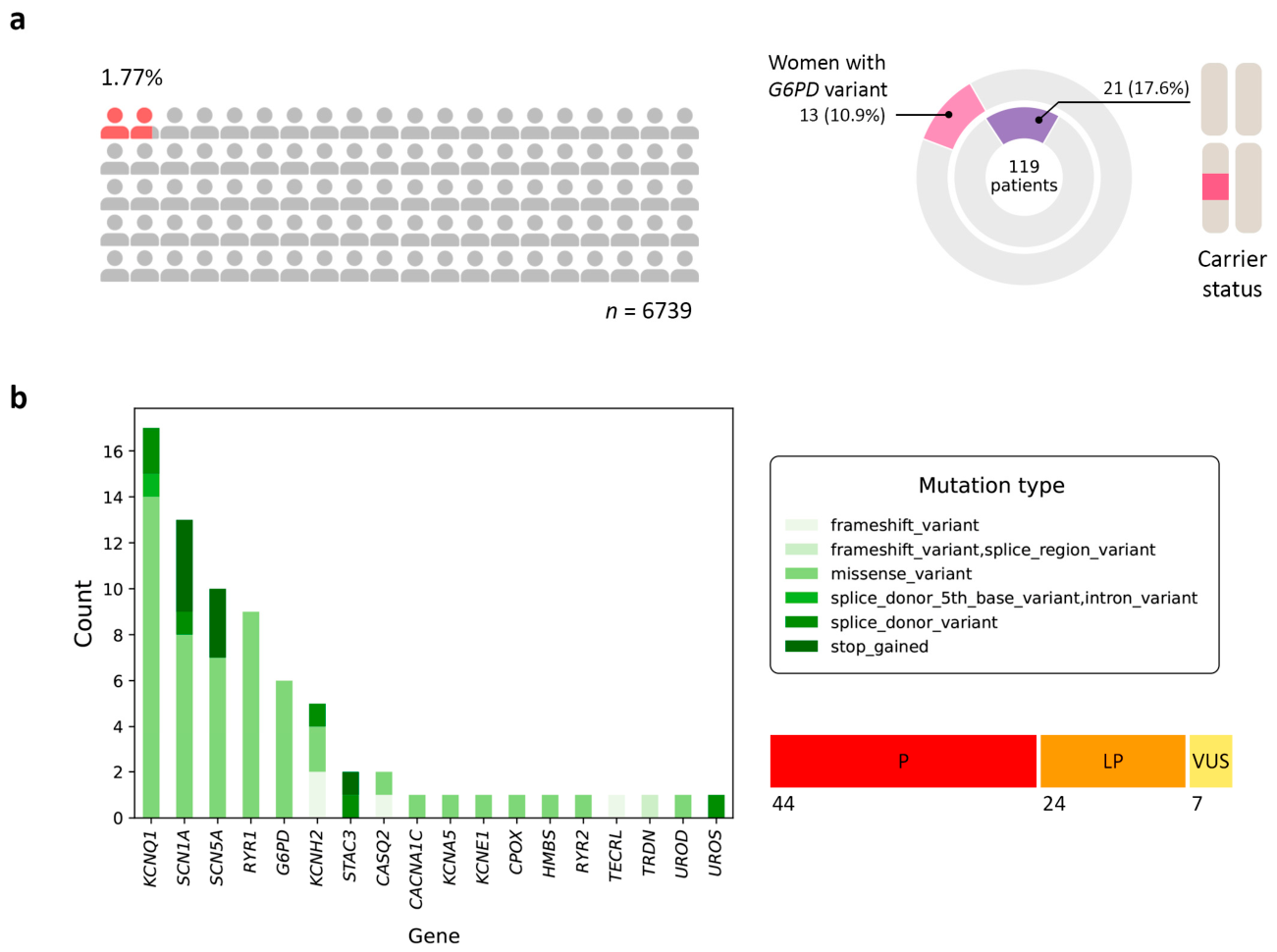
2.1. Overall Characteristics of Clinically Significant Variants
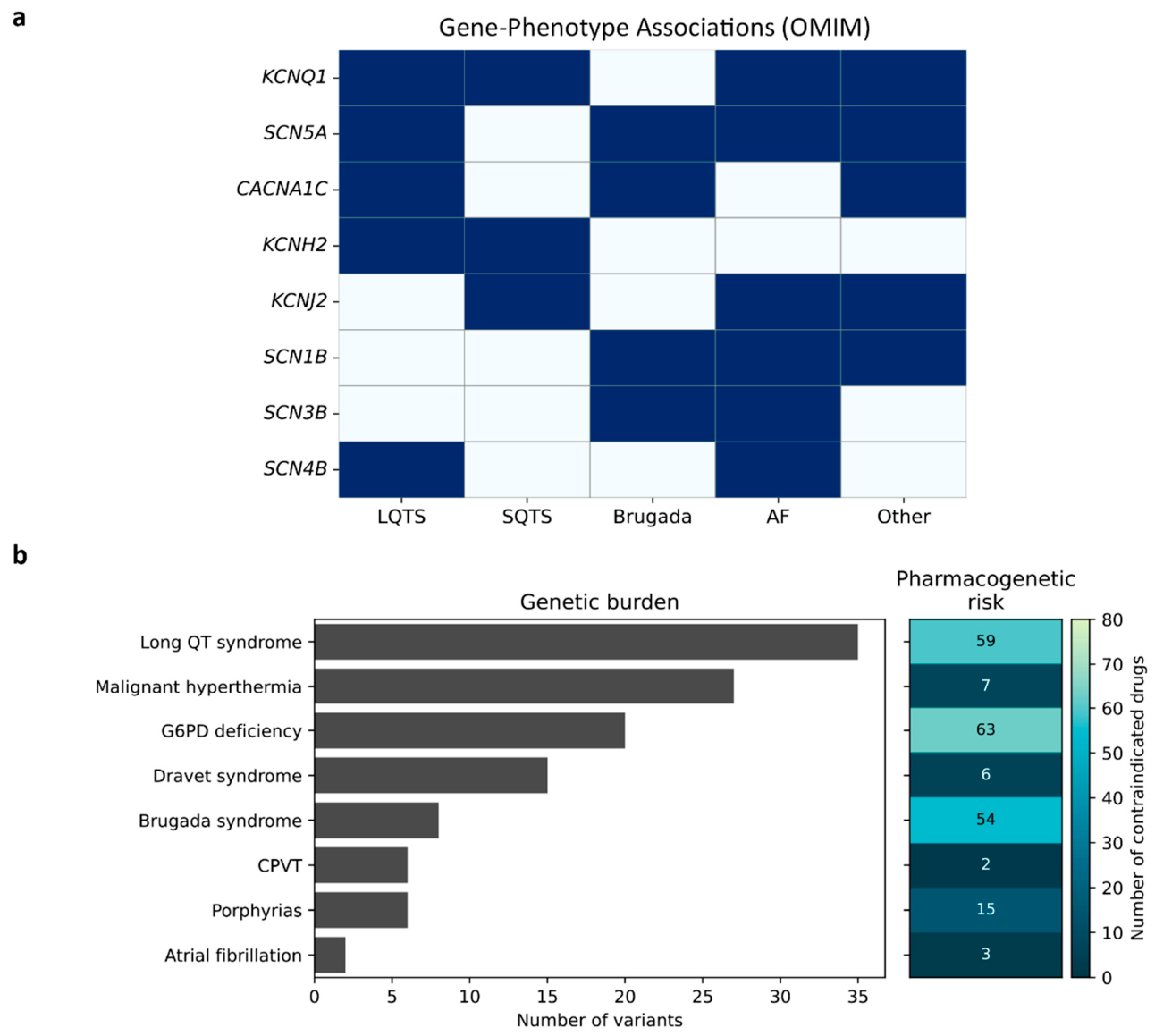
2.2. Spectrum of Pharmacogenetically Relevant Genetic Syndromes
3. Discussion
4. Materials and Methods
4.1. Sample Collection
4.2. DNA Sequencing and Bioinformatic Data Processing
4.3. Clinical Interpretation
4.4. Population Frequency Comparisons
5. Conclusions
6. Limitations of Our Study
Supplementary Materials
Author Contributions
Funding
Institutional Review Board Statement
Informed Consent Statement
Data Availability Statement
Conflicts of Interest
References
- Potter, E.; Reyes, M.; Naples, J.; Dal Pan, G. FDA Adverse Event Reporting System (FAERS) Essentials: A Guide to Understanding, Applying, and Interpreting Adverse Event Data Reported to FAERS. Clin. Pharmacol. Ther. 2025, 118, 567–582. [Google Scholar] [CrossRef]
- Beijer, H.J.M.; De Blaey, C.J. Hospitalisations caused by adverse drug reactions (ADR): A meta-analysis of observational studies. Pharmacol. World Sci. 2002, 24, 46–54. [Google Scholar] [CrossRef]
- Komagamine, J. Prevalence of Urgent Hospitalizations Caused by Adverse Drug Reactions: A Cross-Sectional Study. Sci. Rep. 2024, 14, 6058. [Google Scholar] [CrossRef]
- Zhai, J.; Yan, H.; Zhang, J.; Yan, H.; Ma, J.; Zhang, S. A Comprehensive Analysis of Adverse Drug Reactions in 2020–2023: Case Studies. Front. Pharmacol. 2025, 16, 1628347. [Google Scholar] [CrossRef]
- Montastruc, J.; Lafaurie, M.; De Canecaude, C.; Durrieu, G.; Sommet, A.; Montastruc, F.; Bagheri, H. Fatal Adverse Drug Reactions: A Worldwide Perspective in the World Health Organization Pharmacovigilance Database. Br. J. Clin. Pharmacol. 2021, 87, 4334–4340. [Google Scholar] [CrossRef]
- Yang, R.; Yin, N.; Zhang, Y.; Faiola, F. Visualization of FDA Adverse Drug Reaction Reports: Development and Usability Study of the VisDrugs Web Server. JMIR Form. Res. 2025, 9, e71519. [Google Scholar] [CrossRef]
- De La Torre, B.G.; Albericio, F. The Pharmaceutical Industry in 2024: An Analysis of the FDA Drug Approvals from the Perspective of Molecules. Molecules 2025, 30, 482. [Google Scholar] [CrossRef]
- McInnes, G.; Lavertu, A.; Sangkuhl, K.; Klein, T.E.; Whirl-Carrillo, M.; Altman, R.B. Pharmacogenetics at Scale: An Analysis of the UK Biobank. Clin. Pharmacol. Ther. 2021, 109, 1528–1537. [Google Scholar] [CrossRef]
- Sangkuhl, K.; Whirl-Carrillo, M.; Whaley, R.M.; Woon, M.; Lavertu, A.; Altman, R.B.; Carter, L.; Verma, A.; Ritchie, M.D.; Klein, T.E. Pharmacogenomics Clinical Annotation Tool (Pharm CAT). Clin. Pharmacol. Ther. 2020, 107, 203–210. [Google Scholar] [CrossRef]
- Micaglio, E.; Locati, E.T.; Monasky, M.M.; Romani, F.; Heilbron, F.; Pappone, C. Role of Pharmacogenetics in Adverse Drug Reactions: An Update towards Personalized Medicine. Front. Pharmacol. 2021, 12, 651720. [Google Scholar] [CrossRef] [PubMed]
- Nakano, M.; Funayama, M.; Takata, T.; Wakisaka, R.; Koyama, G.; Koreki, A.; Ishida, T.; Uchida, H.; Mimura, M. Caution for Psychiatrists: Malignant Hyperthermia Risks with the Anesthetic Agent Succinylcholine (Suxamethonium) during Electroconvulsive Therapy. BMC Psychiatry 2024, 24, 411. [Google Scholar] [CrossRef] [PubMed]
- Streeten, E.A.; See, V.Y.; Jeng, L.B.J.; Maloney, K.A.; Lynch, M.; Glazer, A.M.; Yang, T.; Roden, D.; Pollin, T.I.; Daue, M.; et al. KCNQ1 and Long QT Syndrome in 1/45 Amish: The Road From Identification to Implementation of Culturally Appropriate Precision Medicine. Circ. Genom. Precis. Med. 2020, 13, e003133. [Google Scholar] [CrossRef] [PubMed]
- CredibleMeds: QTdrugs List//AZCERT, Inc.—Last Updated: 7 November 2025. Available online: https://crediblemeds.org (accessed on 13 December 2025).
- BrugadaDrugs.org. Safe Drug Use and the Brugada Syndrome. Available online: https://www.brugadadrugs.org/ (accessed on 14 December 2025).
- Gonsalves, S.G.; Dirksen, R.T.; Sangkuhl, K.; Pulk, R.; Alvarellos, M.; Vo, T.; Hikino, K.; Roden, D.; Klein, T.E.; Poler, S.M.; et al. Clinical Pharmacogenetics Implementation Consortium (CPIC) Guideline for the Use of Potent Volatile Anesthetic Agents and Succinylcholine in the Context of RYR 1 or CACNA 1S Genotypes. Clin. Pharmacol. Ther. 2019, 105, 1338–1344, Correction in Clin. Pharmacol. Ther. 2019, 106, 1408. [Google Scholar] [CrossRef]
- Bauce, B.; Rampazzo, A.; Basso, C.; Bagattin, A.; Daliento, L.; Tiso, N.; Turrini, P.; Thiene, G.; Danieli, G.A.; Nava, A. Screening for Ryanodine Receptor Type 2 Mutations in Families with Effort-Induced Polymorphic Ventricular Arrhythmias and Sudden Death. J. Am. Coll. Cardiol. 2002, 40, 341–349. [Google Scholar] [CrossRef]
- Cestèle, S.; Harper, A.J.; Marra, S.; Leroudier, N.; Rusconi, R.; Dhifallah, S.; Horrocks, I.A.; Kirkham, F.J.; Morgan, I.M.R.; Singh, J.; et al. Elicited Repetitive Daily Blindness Associated With Gain-of-Function SCN1A Variants and Responsiveness to Sodium Channel Blockers. Neurol. Genet. 2026, 12, e200352. [Google Scholar] [CrossRef]
- Gardner, R.J.M.; Crozier, I.G.; Binfield, A.L.; Love, D.R.; Lehnert, K.; Gibson, K.; Lintott, C.J.; Snell, R.G.; Jacobsen, J.C.; Jones, P.P.; et al. Penetrance and Expressivity of the R858H CACNA1C Variant in a Five-generation Pedigree Segregating an Arrhythmogenic Channelopathy. Mol. Genet. Genom. Med. 2019, 7, e00476. [Google Scholar] [CrossRef]
- Roberts, J.D.; Asaki, S.Y.; Mazzanti, A.; Bos, J.M.; Tuleta, I.; Muir, A.R.; Crotti, L.; Krahn, A.D.; Kutyifa, V.; Shoemaker, M.B.; et al. An International Multicenter Evaluation of Type 5 Long QT Syndrome: A Low Penetrant Primary Arrhythmic Condition. Circulation 2020, 141, 429–439. [Google Scholar] [CrossRef]
- Bdier, A.Y.; Al-Ghamdi, S.; Verma, P.K.; Dagriri, K.; Alshehri, B.; Jiman, O.A.; Ahmed, S.E.; Wilde, A.A.M.; Bhuiyan, Z.A.; Al-Aama, J.Y. Autosomal Recessive Long QT Syndrome, Type 1 in Eight Families from Saudi Arabia. Mol. Genet. Genom. Med. 2017, 5, 592–601. [Google Scholar] [CrossRef]
- Zhou, H.; Lai, W.; Zhu, W.; Xie, J.; Liu, X.; Shen, Y.; Yuan, P.; Liu, Y.; Cao, Q.; He, W.; et al. Genotype-Based Clinical Manifestation and Treatment of Chinese Long QT Syndrome Patients with KCNQ1 Mutations—R380S and W305L. Cardiol. Young 2016, 26, 754–763. [Google Scholar] [CrossRef]
- Chen, S.; Zhang, L.; Bryant, R.; Vincent, G.; Flippin, M.; Lee, J.; Brown, E.; Zimmerman, F.; Rozich, R.; Szafranski, P.; et al. KCNQ1 Mutations in Patients with a Family History of Lethal Cardiac Arrhythmias and Sudden Death. Clin. Genet. 2003, 63, 273–282. [Google Scholar] [CrossRef]
- Ereiz, J.; Cvitkušić Lukenda, K.; Vučić, D.; Bitunjac, I.; Silović, J.; Miškić, B. Familial Long QT Syndrome: A Case Report. Cardiol. Croat. 2023, 19, 126. [Google Scholar] [CrossRef]
- Wu, J.; Mizusawa, Y.; Ohno, S.; Ding, W.-G.; Higaki, T.; Wang, Q.; Kohjitani, H.; Makiyama, T.; Itoh, H.; Toyoda, F.; et al. A hERG Mutation E1039X Produced a Synergistic Lesion on IKs Together with KCNQ1-R174C Mutation in a LQTS Family with Three Compound Mutations. Sci. Rep. 2018, 8, 3129. [Google Scholar] [CrossRef] [PubMed]
- Table of Pharmacogenomic Biomarkers in Drug Labeling//U.S. Food and Drug Administration (FDA).—Last Updated: 23 September 2024. Available online: https://www.fda.gov/drugs/science-and-research-drugs/table-pharmacogenomic-biomarkers-drug-labeling (accessed on 13 December 2025).
- Kopanos, C.; Tsiolkas, V.; Kouris, A.; Chapple, C.E.; Albarca Aguilera, M.; Meyer, R.; Massouras, A. VarSome: The Human Genomic Variant Search Engine. Bioinformatics 2019, 35, 1978–1980. [Google Scholar] [CrossRef]
- Hirvensalo, P.; Tornio, A.; Neuvonen, M.; Tapaninen, T.; Paile-Hyvärinen, M.; Kärjä, V.; Männistö, V.T.; Pihlajamäki, J.; Backman, J.T.; Niemi, M. Comprehensive Pharmacogenomic Study Reveals an Important Role of UGT1A3 in Montelukast Pharmacokinetics. Clin. Pharmacol. Ther. 2018, 104, 158–168. [Google Scholar] [CrossRef] [PubMed]
- Gollob, M.; Spears, D. Genetics of Inherited Primary Arrhythmia Disorders. Appl. Clin. Genet. 2015, 8, 215–233. [Google Scholar] [CrossRef]
- Schneider, L.; Begovic, M.; Zhou, X.; Hamdani, N.; Akin, I.; El-Battrawy, I. Catecholaminergic Polymorphic Ventricular Tachycardia: Advancing From Molecular Insights to Preclinical Models. J. Am. Heart Assoc. 2025, 14, e038308. [Google Scholar] [CrossRef]
- Bellamy, D.; Nuthall, G.; Dalziel, S.; Skinner, J.R. Catecholaminergic Polymorphic Ventricular Tachycardia: The Cardiac Arrest Where Epinephrine Is Contraindicated*. Pediatr. Crit. Care Med. 2019, 20, 262–268. [Google Scholar] [CrossRef]
- Linz, D.; Gawalko, M.; Betz, K.; Hendriks, J.M.; Lip, G.Y.H.; Vinter, N.; Guo, Y.; Johnsen, S. Atrial Fibrillation: Epidemiology, Screening and Digital Health. Lancet Reg. Health-Eur. 2024, 37, 100786. [Google Scholar] [CrossRef]
- Tamargo, J.; Villacastín, J.; Caballero, R.; Delpón, E. Drug-Induced Atrial Fibrillation. A Narrative Review of a Forgotten Adverse Effect. Pharmacol. Res. 2024, 200, 107077. [Google Scholar] [CrossRef]
- Schwartz, P.J.; Stramba-Badiale, M.; Crotti, L.; Pedrazzini, M.; Besana, A.; Bosi, G.; Gabbarini, F.; Goulene, K.; Insolia, R.; Mannarino, S.; et al. Prevalence of the Congenital Long-QT Syndrome. Circulation 2009, 120, 1761–1767. [Google Scholar] [CrossRef]
- Berge, K.E.; Haugaa, K.H.; Früh, A.; Anfinsen, O.-G.; Gjesdal, K.; Siem, G.; Øyen, N.; Greve, G.; Carlsson, A.; Rognum, T.O.; et al. Molecular Genetic Analysis of Long QT Syndrome in Norway Indicating a High Prevalence of Heterozygous Mutation Carriers. Scand. J. Clin. Lab. Investig. 2008, 68, 362–368. [Google Scholar] [CrossRef]
- Malin, D.I.; Bulatova, D.R.; Shchustova, L.Y.; Gordeeva, R.P. Prevalence and risk Factors for long QT interval Syndrome in Patients of the City Psychiatric hospital. Mod. Ther. Ment. Disord. 2023, 3, 50–56. [Google Scholar] [CrossRef]
- Zaklyazminskaya, E.V.; Abriel, H. Prevalence of Significant Genetic Variants in Congenital Long QT Syndrome Is Largely Underestimated. Front. Pharmacol. 2012, 3, 72. [Google Scholar] [CrossRef]
- Shimamoto, K.; Dagradi, F.; Ohno, S.; Spazzolini, C.; Crotti, L.; Giovenzana, F.L.F.; Musu, G.; Pedrazzini, M.; Kusano, K.; Takegami, M.; et al. Clinical Features, Long-Term Prognosis, and Clinical Management of Genotype-Negative Long QT Syndrome Patients. JACC Clin. Electrophysiol. 2024, 10, 2584–2596. [Google Scholar] [CrossRef]
- Boulmpou, A.; Giannopoulos, A.; Papadopoulos, C.; Giannopoulos, G.; Papagiannis, I.; Zormpas, G.; Keivanidou, A.; Fidani, L.; Vassilikos, V. The Uncommon Phenomenon of Short QT Syndrome: A Scoping Review of the Literature. J. Pers. Med. 2025, 15, 105. [Google Scholar] [CrossRef]
- Vutthikraivit, W.; Rattanawong, P.; Putthapiban, P.; Sukhumthammarat, W.; Vathesatogkit, P.; Ngarmukos, T.; Thakkinstian, A. Worldwide Prevalence of Brugada Syndrome: A Systematic Review and Meta-Analysis. Acta Cardiol. Sin. 2018, 34, 267–277, Erratum in Acta Cardiol. Sin. 2019, 35, 192. [Google Scholar] [CrossRef]
- Xu, T.; Wang, S.; Wang, J.; Xing, J. Brugada Syndrome Update. Front. Physiol. 2025, 15, 1520008. [Google Scholar] [CrossRef]
- Chung, C.T.; Bazoukis, G.; Matusik, P.T.; Zaklyazminskaya, E.; Radford, D.; Rajan, R.; Liu, T.; Mok, N.S.; Lee, S.; Tse, G. Differences in the Rate and Yield of Genetic Testing in Patients With Brugada Syndrome: A Systematic Review and Analysis of Cohort Studies. Ann. Clin. Cardiol. 2023, 5, 11–16. [Google Scholar] [CrossRef]
- Adytia, G.J.; Sutanto, H. Brugada Phenocopy vs. Brugada Syndrome: Delineating the Differences for Optimal Diagnosis and Management. Curr. Probl. Cardiol. 2024, 49, 102566. [Google Scholar] [CrossRef]
- Leelaviwat, N.; Benjanuwattra, J.; Vutthikraivit, W.; Kewcharoen, J.; Trongtorsak, A.; Abdelnabi, M.; Del Rio-Pertuz, G.; Mekraksakit, P.; Thangjui, S.; Sethi, P. Genotypic Overlap Between Brugada Syndrome and Hypertrophic Cardiomyopathy or Brugada Phenocopy? J. Am. Coll. Cardiol. 2023, 81, 3870. [Google Scholar] [CrossRef]
- Jeong, J.H.; Lee, H.S.; Choi, Y.Y.; Kim, Y.G.; Shim, J.; Hwang, J.H.; Yun, S.G.; Cho, Y.J.; Kim, Y.-H.; Choi, J.-I. Clinical Role of Genetic Testing for the Brugada Syndrome Overlapping with Arrhythmogenic Cardiomyopathy. Int. J. Arrhythm. 2024, 25, 12. [Google Scholar] [CrossRef]
- Kataoka, S.; Serizawa, N.; Kitamura, K.; Suzuki, A.; Suzuki, T.; Shiga, T.; Shoda, M.; Hagiwara, N. An Overlap of Brugada Syndrome and Arrhythmogenic Right Ventricular Cardiomyopathy/Dysplasia. J. Arrhythm. 2016, 32, 70–73. [Google Scholar] [CrossRef]
- Saha, A.K.; Pinyavat, T. Genetic Testing for Malignant Hyperthermia Susceptibility—Threading the Needle in the Haystack. Genes 2025, 16, 1281. [Google Scholar] [CrossRef]
- Silva, M.S.; Nakamura, R.; Arjona, M.R.; Monaco, T.P.C.D.; Malito, M.L.; Sampaio, T.O.; Oliveira, S.L.D.; Magalhães, J.S.D.A.; Machado-Costa, M.C.; Silva, H.C.A. STAC3 Gene Congenital Myopathy and Malignant Hyperthermia: A Crossroads between Neurology and Anesthesia. Arq. Neuropsiquiatr. 2025, 83, 001–006. [Google Scholar] [CrossRef]
- Miller, D.M.; Daly, C.; Aboelsaod, E.M.; Gardner, L.; Hobson, S.J.; Riasat, K.; Shepherd, S.; Robinson, R.L.; Bilmen, J.G.; Gupta, P.K.; et al. Genetic Epidemiology of Malignant Hyperthermia in the UK. Br. J. Anaesth. 2018, 121, 944–952. [Google Scholar] [CrossRef]
- Ibarra Moreno, C.A.; Hu, S.; Kraeva, N.; Schuster, F.; Johannsen, S.; Rueffert, H.; Klingler, W.; Heytens, L.; Riazi, S. An Assessment of Penetrance and Clinical Expression of Malignant Hyperthermia in Individuals Carrying Diagnostic Ryanodine Receptor 1 Gene Mutations. Anesthesiology 2019, 131, 983–991. [Google Scholar] [CrossRef]
- Rüffert, H.; Gillies, R.; Hopkins, P.M.; Glahn, K.P.E.; Johannsen, S.; Kamsteeg, E.-J.; Hellblom, A.; Stowell, K.; Bilmen, J.; Klincova, M.; et al. European Malignant Hyperthermia Group 2025 Guidelines for the Investigation of Malignant Hyperthermia Susceptibility. Br. J. Anaesth. 2026, 136, 653–661. [Google Scholar] [CrossRef]
- Sullivan, J.; Benítez, A.; Roth, J.; Andrews, J.S.; Shah, D.; Butcher, E.; Jones, A.; Cross, J.H. A Systematic Literature Review on the Global Epidemiology of Dravet Syndrome and Lennox–Gastaut Syndrome: Prevalence, Incidence, Diagnosis, and Mortality. Epilepsia 2024, 65, 1240–1263. [Google Scholar] [CrossRef]
- Gao, C.; Pielas, M.; Jiao, F.; Mei, D.; Wang, X.; Kotulska, K.; Jozwiak, S. Epilepsy in Dravet Syndrome—Current and Future Therapeutic Opportunities. J. Clin. Med. 2023, 12, 2532. [Google Scholar] [CrossRef]
- Strzelczyk, A.; Kalski, M.; Bast, T.; Wiemer-Kruel, A.; Bettendorf, U.; Kay, L.; Kieslich, M.; Kluger, G.; Kurlemann, G.; Mayer, T.; et al. Burden-of-Illness and Cost-Driving Factors in Dravet Syndrome Patients and Carers: A Prospective, Multicenter Study from Germany. Eur. J. Paediatr. Neurol. 2019, 23, 392–403. [Google Scholar] [CrossRef]
- Ramanujam, V.S.; Anderson, K.E. Porphyria Diagnostics—Part 1: A Brief Overview of the Porphyrias. Curr. Protoc. Hum. Genet. 2015, 86, 17–20. [Google Scholar] [CrossRef] [PubMed]
- Chakraborty, A.; Muranjan, M.; Karande, S.; Kharkar, V. Porphyrias: Uncommon Disorders Masquerading as Common Childhood Diseases. J. Postgrad. Med. 2023, 69, 164–171. [Google Scholar] [CrossRef]
- Yu, Z.; Xiong, Q.; Wang, Z.; Li, L.; Niu, T. Global, Regional, and National Burden of Glucose-6-Phosphate Dehydrogenase (G6PD) Deficiency from 1990 to 2021: A Systematic Analysis of the Global Burden of Disease Study 2021. Front. Genet. 2025, 16, 1593728. [Google Scholar] [CrossRef]
- Belova, V.; Pavlova, A.; Afasizhev, R.; Moskalenko, V.; Korzhanova, M.; Krivoy, A.; Cheranev, V.; Nikashin, B.; Bulusheva, I.; Rebrikov, D.; et al. System Analysis of the Sequencing Quality of Human Whole Exome Samples on BGI NGS Platform. Sci. Rep. 2022, 12, 609. [Google Scholar] [CrossRef]
- Andrews, S. FastQC: A Quality Control Tool for High Throughput Sequence Data. 2010. Available online: http://www.bioinformatics.babraham.ac.uk/projects/fastqc/ (accessed on 20 November 2025).
- Joint Genome Institute. Available online: https://jgi.doe.gov/data-and-tools/software-tools/bbtools/bb-tools-user-guide/bbduk-guide/ (accessed on 20 April 2025).
- Li, H.; Durbin, R. Fast and Accurate Short Read Alignment with Burrows–Wheeler Transform. Bioinformatics 2009, 25, 1754–1760. [Google Scholar] [CrossRef]
- Li, H.; Handsaker, B.; Wysoker, A.; Fennell, T.; Ruan, J.; Homer, N.; Marth, G.; Abecasis, G.; Durbin, R. 1000 Genome Project Data Processing Subgroup The Sequence Alignment/Map Format and SAMtools. Bioinformatics 2009, 25, 2078–2079. [Google Scholar] [CrossRef]
- Picard Toolkit, version 2.22.4; Broad Institute: Cambridge, MA, USA, 2019. Available online: https://broadinstitute.github.io/picard/ (accessed on 20 April 2025).
- Li, H. A Statistical Framework for SNP Calling, Mutation Discovery, Association Mapping and Population Genetical Parameter Estimation from Sequencing Data. Bioinformatics 2011, 27, 2987–2993. [Google Scholar] [CrossRef] [PubMed]
- Poplin, R.; Chang, P.-C.; Alexander, D.; Schwartz, S.; Colthurst, T.; Ku, A.; Newburger, D.; Dijamco, J.; Nguyen, N.; Afshar, P.T.; et al. A Universal SNP and Small-Indel Variant Caller Using Deep Neural Networks. Nat. Biotechnol. 2018, 36, 983–987. [Google Scholar] [CrossRef]
- McLaren, W.; Gil, L.; Hunt, S.E.; Riat, H.S.; Ritchie, G.R.S.; Thormann, A.; Flicek, P.; Cunningham, F. The Ensembl Variant Effect Predictor. Genome Biol. 2016, 17, 122. [Google Scholar] [CrossRef]
- Ewels, P.; Magnusson, M.; Lundin, S.; Käller, M. MultiQC: Summarize Analysis Results for Multiple Tools and Samples in a Single Report. Bioinformatics 2016, 32, 3047–3048. [Google Scholar] [CrossRef] [PubMed]
- Richards, S.; Aziz, N.; Bale, S.; Bick, D.; Das, S.; Gastier-Foster, J.; Grody, W.W.; Hegde, M.; Lyon, E.; Spector, E.; et al. Standards and Guidelines for the Interpretation of Sequence Variants: A Joint Consensus Recommendation of the American College of Medical Genetics and Genomics and the Association for Molecular Pathology. Genet. Med. 2015, 17, 405–424. [Google Scholar] [CrossRef] [PubMed]
- Robinson, J.T.; Thorvaldsdóttir, H.; Winckler, W.; Guttman, M.; Lander, E.S.; Getz, G.; Mesirov, J.P. Integrative Genomics Viewer. Nat. Biotechnol. 2011, 29, 24–26. [Google Scholar] [CrossRef] [PubMed]
- Online Mendelian Inheritance in Man, OMIM®. McKusick-Nathans Institute of Genetic Medicine, Johns Hopkins University (Baltimore, MD). Available online: https://omim.org/ (accessed on 13 December 2025).
- DiStefano, M.T.; Goehringer, S.; Babb, L.; Alkuraya, F.S.; Amberger, J.; Amin, M.; Austin-Tse, C.; Balzotti, M.; Berg, J.S.; Birney, E.; et al. The Gene Curation Coalition: A Global Effort to Harmonize Gene–Disease Evidence Resources. Genet. Med. 2022, 24, 1732–1742. [Google Scholar] [CrossRef] [PubMed]
- Liu, H.; Chatel, S.; Simard, C.; Syam, N.; Salle, L.; Probst, V.; Morel, J.; Millat, G.; Lopez, M.; Abriel, H.; et al. Molecular Genetics and Functional Anomalies in a Series of 248 Brugada Cases with 11 Mutations in the TRPM4 Channel. PLoS ONE 2013, 8, e54131. [Google Scholar] [CrossRef]
- Johnston, J.J.; Dirksen, R.T.; Girard, T.; Hopkins, P.M.; Kraeva, N.; Ognoon, M.; Radenbaugh, K.B.; Riazi, S.; Robinson, R.L.; Saddic, L.A., III; et al. Updated Variant Curation Expert Panel Criteria and Pathogenicity Classifications for 251 Variants for RYR1-Related Malignant Hyperthermia Susceptibility. Hum. Mol. Genet. 2022, 31, 4087–4093. [Google Scholar] [CrossRef]
- Geck, R.C.; Powell, N.R.; Dunham, M.J. Functional Interpretation, Cataloging, and Analysis of 1,341 Glucose-6-Phosphate Dehydrogenase Variants. Am. J. Hum. Genet. 2023, 110, 228–239. [Google Scholar] [CrossRef]
- Jameson, H.S.; Hanley, A.; Hill, M.C.; Xiao, L.; Ye, J.; Bapat, A.; Ronzier, E.; Hall, A.W.; Hucker, W.J.; Clauss, S.; et al. Loss of the Atrial Fibrillation-Related Gene, Zfhx3, Results in Atrial Dilation and Arrhythmias. Circ. Res. 2023, 133, 313–329. [Google Scholar] [CrossRef]

| Disease | Drugs |
|---|---|
| Glucose-6-Phosphate Dehydrogenase Deficiency | Acetylphenylhydrazine, Anacin, Articaine, Ascorbic Acid, Aspirin, Beta-naphthol, Bufferin, Bupivacaine, Ceftriaxone, Chloramphenicol, Chloroprocaine, Chloroquine, Ciprofloxacin, Dabrafenib, Dapsone, Dimercaprol, Ecotrin, Empirin, Epinephrine, Excedrin, Flutamide, Furosemide, Furazolidone, Glimepiride, Glyburide, Hydroxychloroquine, Isobutyl nitrite, Levofloxacin, Lidocaine, Mafenide, Mefloquine, Menthol, Mepivacaine, Methylene blue, Moxifloxacin, Nalidixic Acid, Nitrofurantoin, Norfloxacin, Oxymetazoline, Pamaquine, Pegloticase, Penicillamine, Peptobismol, Phenazopyridine, Phenylhydrazine, Prilocaine, Primaquine, Probenecid, Quinidine, Quinine, Rasburicase, Ropivacaine, Sulfacetamide, Sulfamethoxazole, Sulfanilamide, Sulfasalazine, Sulfisoxazole, Tafenoquine, Tetracaine, Tolazamide, Tolbutamide, Toluidine blue, Trametinib |
| Porphyrias | Articaine, Bupivacaine, Lidocaine, Mepivacaine, Prilocaine, Ropivacaine, Carbamazepine, Phenytoin, Phenobarbitone, Primidone, Ethosuximide, Tiagabine, Felbamate, Valproate, Oxcarbazine |
| Malignant Hyperthermia | Succinylcholine (suxamethonium), Desflurane, Enflurane, Halothane, Isoflurane, Methoxyflurane, Sevoflurane |
| Long QT syndrome | Aclarubicin, Amiodarone, Anagrelide, Arsenic trioxide, Azithromycin, Cesium Chloride, Chloroquine, Chlorpromazine, Chlorprothixene, Cilostazol, Ciprofloxacin, Citalopram, Clarithromycin, Cocaine, Disopyramide, Dofetilide, Domperidone, Donepezil, Dronedarone, Droperidol, Erythromycin, Escitalopram, Flecainide, Fluconazole, Halofantrine, Haloperidol, Hydroquinidine (Dihydroquinidine), Hydroxychloroquine, Ibogaine, Ibutilide, Ivabradine, Levofloxacin, Levomepromazine (Methotrimeprazine), Levosulpiride, Meglumine antimoniate, Methadone, Mobocertinib, Moxifloxacin, Nifekalant, Ondansetron, Osimertinib, Oxaliplatin, Papaverine HCl, Pentamidine, Pimozide, Procainamide, Propofol, Quinidine, Quizartinib, Roxithromycin, Sertindole, Sevoflurane, Sotalol, Sulpiride, Sultopride, Terlipressin, Terodiline, Thioridazine, Vandetanib |
| Brugada Syndrome | Ajmaline, Allapinin, Ethacizine, Flecainide, Pilsicainide, Procainamide, Propafenone, Amitriptyline, Clomipramine, Desipramine, Lithium, Loxapine, Nortriptyline, Oxcarbazepine, Trifluoperazine, Bupivacaine, Procaine, Propofol, Acetylcholine, Alcohol, Cannabis, Cocaine, Ergonovine, Amiodarone, Cibenzoline, Disopyramide, Lidocaine, Propranolol, Verapamil, Vernakalant, Bupropion, Carbamazepine, Clothiapine, Cyamemazine, Dosulepine, Doxepin, Fluoxetine, Fluvoxamine, Imipramine, Lamotrigine, Maprotiline, Paroxetine, Perphenazine, Phenytoin, Thioridazine, Ketamine, Tramadol, Dimenhydrinate, Diphenhydramine, Edrophonium, Indapamide, Metoclopramide, Terfenadine, Fexofenadine |
| Atrial Fibrillation | Acetylcholine, Adenosine, Ibrutinib |
| Ventricular tachycardia, catecholaminergic polymorphic | Epinephrine, Pseudoephedrine |
| Dravet Syndrome | Carbamazepine, Lamotrigine, Vigabatrin, Phenytoin, Rufinamide, Oxcarbazepine |
Disclaimer/Publisher’s Note: The statements, opinions and data contained in all publications are solely those of the individual author(s) and contributor(s) and not of MDPI and/or the editor(s). MDPI and/or the editor(s) disclaim responsibility for any injury to people or property resulting from any ideas, methods, instructions or products referred to in the content. |
© 2026 by the authors. Licensee MDPI, Basel, Switzerland. This article is an open access article distributed under the terms and conditions of the Creative Commons Attribution (CC BY) license.
Share and Cite
Buianova, A.A.; Cheranev, V.V.; Shmitko, A.O.; Vasiliadis, I.A.; Samitova, A.F.; Suchalko, O.N.; Repinskaia, Z.A.; Kuznetsov, M.I.; Belova, V.A.; Korostin, D.O. Monogenic Syndromes as a Cause of Adverse Drug Reactions in the Russian Population. Int. J. Mol. Sci. 2026, 27, 4851. https://doi.org/10.3390/ijms27114851
Buianova AA, Cheranev VV, Shmitko AO, Vasiliadis IA, Samitova AF, Suchalko ON, Repinskaia ZA, Kuznetsov MI, Belova VA, Korostin DO. Monogenic Syndromes as a Cause of Adverse Drug Reactions in the Russian Population. International Journal of Molecular Sciences. 2026; 27(11):4851. https://doi.org/10.3390/ijms27114851
Chicago/Turabian StyleBuianova, Anastasiia A., Valery V. Cheranev, Anna O. Shmitko, Iuliia A. Vasiliadis, Alina F. Samitova, Oleg N. Suchalko, Zhanna A. Repinskaia, Mikhail Iu. Kuznetsov, Vera A. Belova, and Dmitriy O. Korostin. 2026. "Monogenic Syndromes as a Cause of Adverse Drug Reactions in the Russian Population" International Journal of Molecular Sciences 27, no. 11: 4851. https://doi.org/10.3390/ijms27114851
APA StyleBuianova, A. A., Cheranev, V. V., Shmitko, A. O., Vasiliadis, I. A., Samitova, A. F., Suchalko, O. N., Repinskaia, Z. A., Kuznetsov, M. I., Belova, V. A., & Korostin, D. O. (2026). Monogenic Syndromes as a Cause of Adverse Drug Reactions in the Russian Population. International Journal of Molecular Sciences, 27(11), 4851. https://doi.org/10.3390/ijms27114851

