Motif-Level Graph Learning Enables Interpretable Prediction of Drug-Induced QT Prolongation via Cooperative Substructural Determinants


Abstract
1. Introduction
2. Results
2.1. Structural Alert Enrichment Associated with QT Prolongation
2.2. Model Performance in Predicting Drug-Induced QT Prolongation
2.2.1. Model Performance on DIQTA and FAERS Datasets
2.2.2. Comparison with Previous QSAR Methods
2.3. Motif Analysis Based on Attention Mechanism
2.3.1. Whole-Dataset Motif Importance Analysis
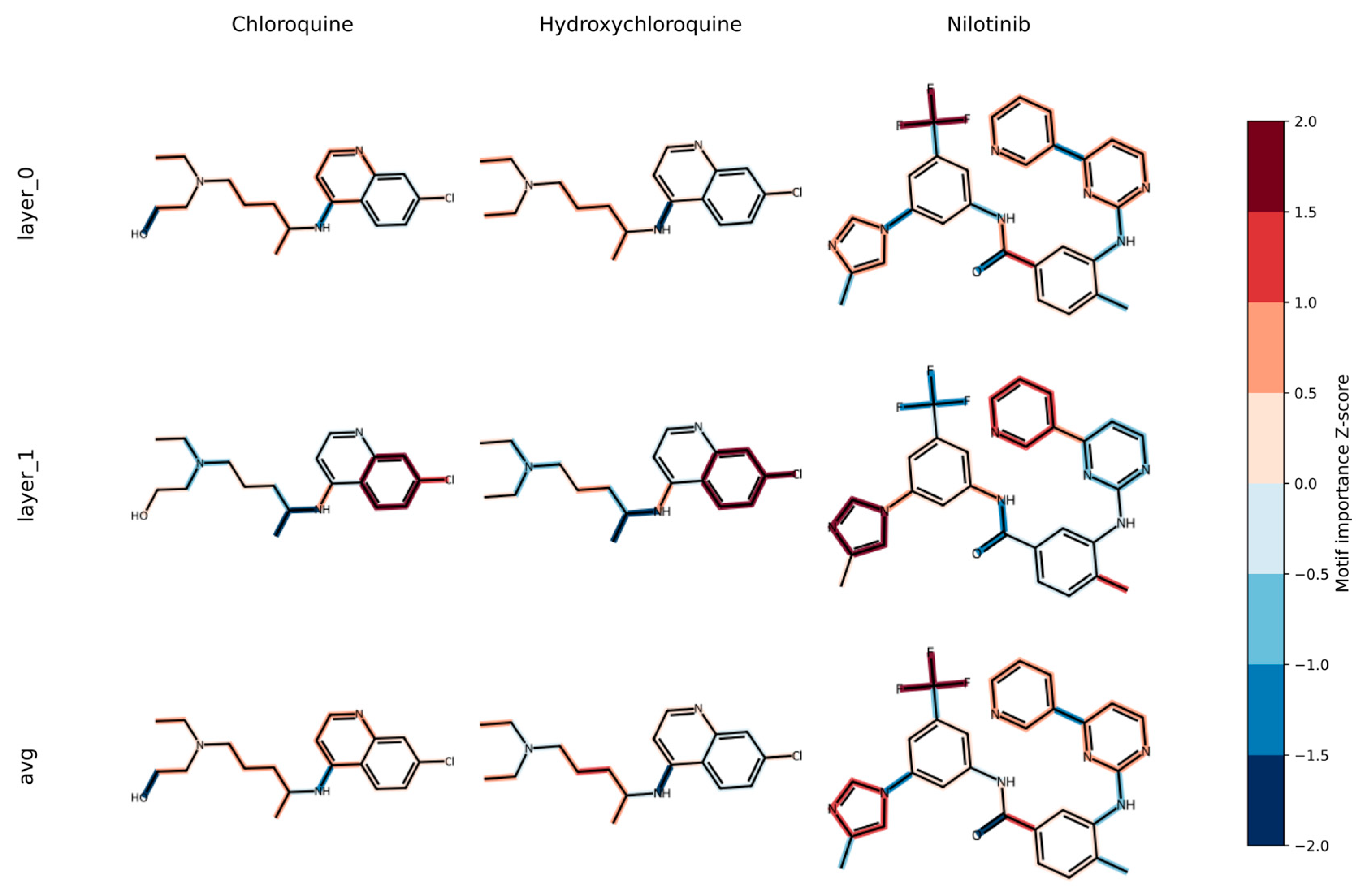
2.3.2. Case Study: Motif-Level Interpretation of Representative Drugs
2.4. Result of Ablation Study
3. Discussion
4. Materials and Methods
4.1. Data Collection
4.1.1. Regulatory Label–Based Dataset (DIQTA)
4.1.2. Pharmacovigilance Signal-Based Dataset (FAERS)
4.2. Identification of Structural Alerts
4.3. Data Preparation
4.3.1. Molecular Fingerprints
4.3.2. Motif Graph
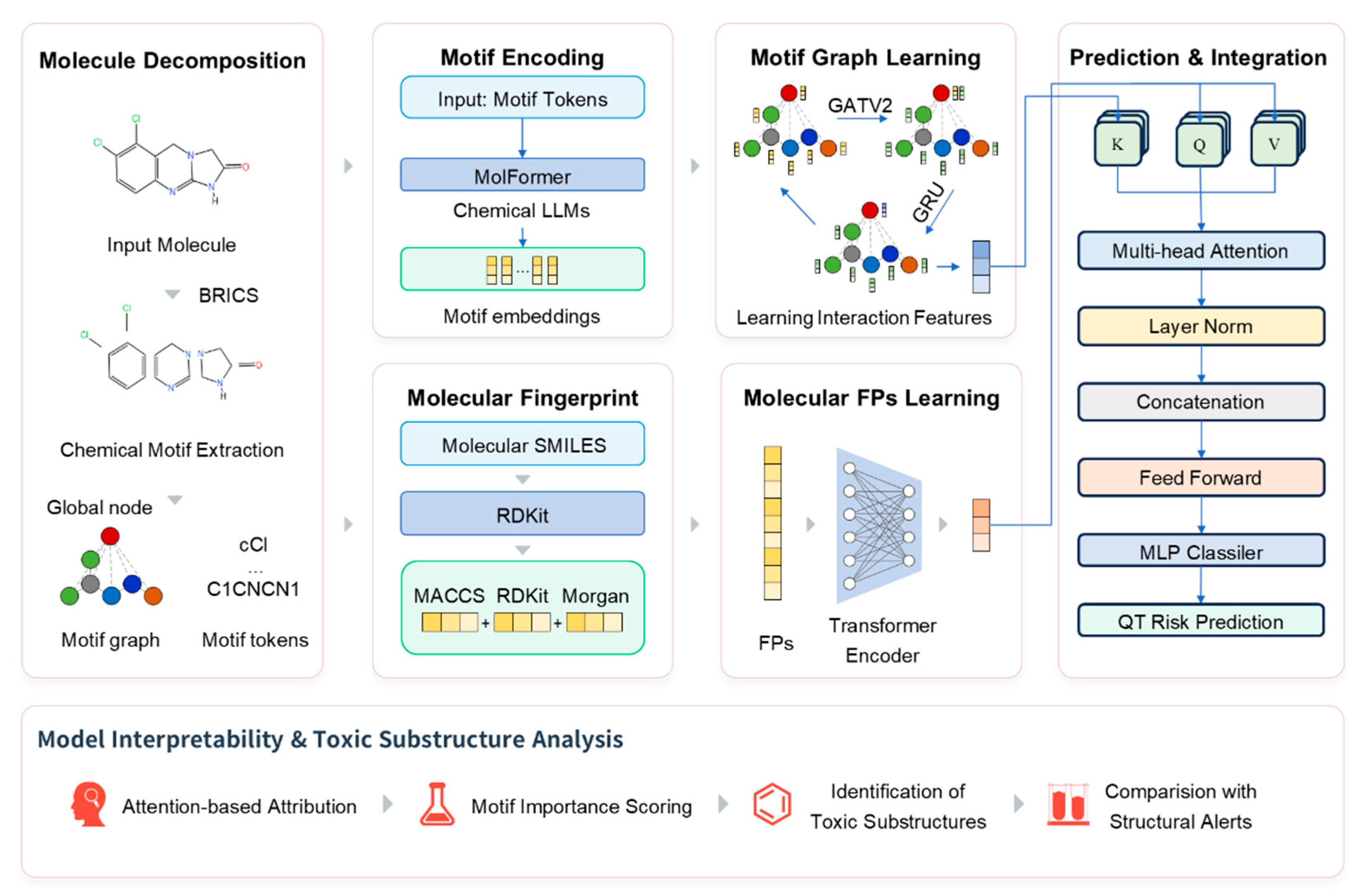
4.4. Model Architecture
4.4.1. Fingerprint Encoding Module
4.4.2. Node Encoding Module
4.4.3. Motif Graph Embedding Module
4.4.4. Cross-Attention Fusion Module
4.4.5. Prediction Head
4.4.6. Attention-Based Motif Importance Analysis
4.5. Model Evaluation
4.6. Baseline Model
4.7. Ablation Study
- Model without [GLOBAL] node (w/o GN). To evaluate the role of explicit global information aggregation, we remove the global node from the motif graph and replace the readout function with a permutation-invariant mean pooling over all motif embeddings.
- Model without motif graph (w/o MG). To evaluate the necessity of motif-level abstraction, the motif graph is replaced by an atom-level graph. Each atom is treated as an individual node and encoded using a 133-dimensional one-hot vector capturing atomic number, degree, formal charge, chiral tag, number of bonded hydrogens, and hybridization state. These features are projected into a 768-dimensional space via a linear layer. The [GLOBAL] node is initialized as the element-wise mean of all atomic node features.
- Model without MoLFormer embeddings (w/o ME). The motif graph structure is retained, while MoLFormer-derived motif node embeddings are replaced by the mean of 133-dimensional projected atomic features within each motif; all other experimental settings are identical to the w/o MG model.
- Model without GRU (w/o GRU). To examine the role of recurrent state refinement, the GRU module is removed. Node representations are updated solely through stacked graph attention (GAT) layers without gated temporal aggregation.
- FPs-only. To quantify the contribution of structural learning from motif graphs, this variant discards the entire motif graph branch and relies exclusively on molecular fingerprint embeddings for QT risk prediction.
- Graph-only. To evaluate the importance of molecular descriptors, the fingerprint branch is removed, and predictions are made solely based on the motif graph representation.
- Model without cross-attention (w/o CA). To assess the effectiveness of cross-modal interaction, the cross-attention module is replaced by a simple concatenation of motif graph and fingerprint embeddings, followed by the same prediction head.
5. Conclusions
Supplementary Materials
Author Contributions
Funding
Institutional Review Board Statement
Informed Consent Statement
Data Availability Statement
Conflicts of Interest
Abbreviations
| DIQTA | Drug-Induced QT Prolongation Atlas |
| FAERS | FDA Adverse Event Reporting System |
| hERG | human ether-à-go-go-related gene |
| GATv2 | Graph Attention Network Version 2 |
| GRU | Gated Recurrent Unit |
| SA | Structural Alert |
| OCHEM | Online Chemical Database |
| MCC | Matthews Correlation Coefficient |
| AUROC | Area Under the Receiver Operating Characteristic Curve |
| AUPRC | Area Under the Precision-Recall Curve |
References
- Sanguinetti, M.C.; Tristani-Firouzi, M. hERG Potassium Channels and Cardiac Arrhythmia. Nature 2006, 440, 463–469. [Google Scholar] [CrossRef] [PubMed]
- Vicente, J.; Zusterzeel, R.; Johannesen, L.; Mason, J.; Sager, P.; Patel, V.; Matta, M.K.; Li, Z.; Liu, J.; Garnett, C.; et al. Mechanistic Model-Informed Proarrhythmic Risk Assessment of Drugs: Review of the “CiPA” Initiative and Design of a Prospective Clinical Validation Study. Clin. Pharmacol. Ther. 2018, 103, 54–66. [Google Scholar] [CrossRef]
- Tisdale, J.E.; Chung, M.K.; Campbell, K.B.; Hammadah, M.; Joglar, J.A.; Leclerc, J.; Rajagopalan, B.; On behalf of the American Heart Association Clinical Pharmacology Committee of the Council on Clinical Cardiology and Council on Cardiovascular and Stroke Nursing. Drug-Induced Arrhythmias: A Scientific Statement from the American Heart Association. Circulation 2020, 142, e214–e233. [Google Scholar] [CrossRef] [PubMed]
- Wallis, R.M. Integrated Risk Assessment and Predictive Value to Humans of Non-Clinical Repolarization Assays. Br. J. Pharmacol. 2010, 159, 115–121. [Google Scholar] [CrossRef]
- Haverkamp, W.; Breithardt, G.; Camm, A.J.; Janse, M.J.; Rosen, M.R.; Antzelevitch, C.; Escande, D.; Franz, M.; Malik, M.; Moss, A.; et al. The Potential for QT Prolongation and Pro-Arrhythmia by Non-Anti-Arrhythmic Drugs: Clinical and Regulatory Implications: Report on a Policy Conference of the European Society of Cardiology. Cardiovasc. Res. 2000, 47, 219–233. [Google Scholar] [CrossRef]
- Cai, C.; Guo, P.; Zhou, Y.; Zhou, J.; Wang, Q.; Zhang, F.; Fang, J.; Cheng, F. Deep Learning-Based Prediction of Drug-Induced Cardiotoxicity. J. Chem. Inf. Model. 2019, 59, 1073–1084. [Google Scholar] [CrossRef]
- Karim, A.; Lee, M.; Balle, T.; Sattar, A. CardioTox Net: A Robust Predictor for hERG Channel Blockade Based on Deep Learning Meta-Feature Ensembles. J. Cheminf. 2021, 13, 60. [Google Scholar] [CrossRef]
- Siramshetty, V.B.; Nguyen, D.-T.; Martinez, N.J.; Southall, N.T.; Simeonov, A.; Zakharov, A.V. Critical Assessment of Artificial Intelligence Methods for Prediction of hERG Channel Inhibition in the “Big Data” Era. J. Chem. Inf. Model. 2020, 60, 6007–6019. [Google Scholar] [CrossRef]
- Zhang, X.; Mao, J.; Wei, M.; Qi, Y.; Zhang, J.Z.H. HergSPred: Accurate Classification of hERG Blockers/Nonblockers with Machine-Learning Models. J. Chem. Inf. Model. 2022, 62, 1830–1839. [Google Scholar] [CrossRef]
- Kim, H.; Park, M.; Lee, I.; Nam, H. BayeshERG: A Robust, Reliable and Interpretable Deep Learning Model for Predicting hERG Channel Blockers. Brief. Bioinf. 2022, 23, bbac211. [Google Scholar] [CrossRef] [PubMed]
- Yang, T.; Ding, X.; McMichael, E.; Pun, F.W.; Aliper, A.; Ren, F.; Zhavoronkov, A.; Ding, X. AttenhERG: A Reliable and Interpretable Graph Neural Network Framework for Predicting hERG Channel Blockers. J. Cheminf. 2024, 16, 143. [Google Scholar] [CrossRef] [PubMed]
- Colatsky, T.; Fermini, B.; Gintant, G.; Pierson, J.B.; Sager, P.; Sekino, Y.; Strauss, D.G.; Stockbridge, N. The Comprehensive in Vitro Proarrhythmia Assay (CiPA) Initiative—Update on Progress. J. Pharmacol. Toxicol. Methods 2016, 81, 15–20. [Google Scholar] [CrossRef]
- Darpo, B.; Nebout, T.; Sager, P.T. Clinical Evaluation of QT/QTc Prolongation and Proarrhythmic Potential for Nonantiarrhythmic Drugs: The International Conference on Harmonization of Technical Requirements for Registration of Pharmaceuticals for Human Use E14 Guideline. J. Clin. Pharmacol. 2006, 46, 498–507. [Google Scholar] [CrossRef]
- Ryu, J.Y.; Lee, M.Y.; Lee, J.H.; Lee, B.H.; Oh, K.-S. DeepHIT: A Deep Learning Framework for Prediction of hERG-Induced Cardiotoxicity. Bioinformatics 2020, 36, 3049–3055. [Google Scholar] [CrossRef]
- Polak, S.; Wiśniowska, B.; Brandys, J. Collation, Assessment and Analysis of Literature in Vitro Data on hERG Receptor Blocking Potency for Subsequent Modeling of Drugs’ Cardiotoxic Properties. J. Appl. Toxicol. 2009, 29, 183–206. [Google Scholar] [CrossRef]
- Fenichel, R.R.; Malik, M.; Antzelevitch, C.; Sanguinetti, M.; Roden, D.M.; Priori, S.G.; Ruskin, J.N.; Lipicky, R.J.; Cantilena, L.R.; Force, I.A.T. Drug-Induced Torsades de Pointes and Implications for Drug Development. J. Cardiovasc. Electrophysiol. 2004, 15, 475–495. [Google Scholar] [CrossRef] [PubMed]
- Yao, G.; Zhang, Y.; Zhang, H.; Tang, L.; Ding, C.; Zhou, X. Immune Checkpoint Inhibitor-Associated Myocarditis and Pericarditis: A Pharmacovigilance Study Based on the FAERS Database. BMC Cancer 2025, 25, 1294. [Google Scholar] [CrossRef] [PubMed]
- Banda, J.M.; Evans, L.; Vanguri, R.S.; Tatonetti, N.P.; Ryan, P.B.; Shah, N.H. A Curated and Standardized Adverse Drug Event Resource to Accelerate Drug Safety Research. Sci. Data 2016, 3, 160026. [Google Scholar] [CrossRef]
- Ross, A.S.; Hughes, M.C.; Doshi-Velez, F. Right for the Right Reasons: Training Differentiable Models by Constraining Their Explanations. In Proceedings of the 26th International Joint Conference on Artificial Intelligence (IJCAI), Melbourne, Australia, 19–25 August 2017; pp. 2662–2670. [Google Scholar] [CrossRef]
- Huang, K.; Xiao, C.; Glass, L.M.; Sun, J. MolTrans: Molecular Interaction Transformer for Drug–Target Interaction Prediction. Bioinformatics 2020, 37, 830–836. [Google Scholar] [CrossRef]
- Zitnik, M.; Agrawal, M.; Leskovec, J. Modeling Polypharmacy Side Effects with Graph Convolutional Networks. Bioinformatics 2018, 34, i457–i466. [Google Scholar] [CrossRef]
- Gilmer, J.; Schoenholz, S.S.; Riley, P.F.; Vinyals, O.; Dahl, G.E. Neural Message Passing for Quantum Chemistry; Precup, D., Teh, Y.W., Eds.; PMLR: Sydney, Australia, 2017; Volume 70, pp. 1263–1272. [Google Scholar]
- Rong, Y.; Bian, Y.; Xu, T.; Xie, W.; Wei, Y.; Huang, W.; Huang, J. Self-Supervised Graph Transformer on Large-Scale Molecular Data; Curran Associates, Inc.: Red Hook, NY, USA, 2020; Volume 33, pp. 12559–12571. [Google Scholar]
- Wu, Z.; Ramsundar, B.; Feinberg, E.N.; Gomes, J.; Geniesse, C.; Pappu, A.S.; Leswing, K.; Pande, V. MoleculeNet: A Benchmark for Molecular Machine Learning. Chem. Sci. 2018, 9, 513–530. [Google Scholar] [CrossRef]
- Wang, Z.; Liu, M.; Luo, Y.; Xu, Z.; Xie, Y.; Wang, L.; Cai, L.; Qi, Q.; Yuan, Z.; Yang, T.; et al. Advanced Graph and Sequence Neural Networks for Molecular Property Prediction and Drug Discovery. Bioinformatics 2022, 38, 2579–2586. [Google Scholar] [CrossRef]
- Li, P.; Li, Y.; Hsieh, C.-Y.; Zhang, S.; Liu, X.; Liu, H.; Song, S.; Yao, X. TrimNet: Learning Molecular Representation from Triplet Messages for Biomedicine. Brief. Bioinf. 2021, 22, bbaa266. [Google Scholar] [CrossRef]
- Rudin, C. Stop Explaining Black Box Machine Learning Models for High Stakes Decisions and Use Interpretable Models Instead. Nat. Mach. Intell. 2019, 1, 206–215. [Google Scholar] [CrossRef]
- Jiménez-Luna, J.; Grisoni, F.; Schneider, G. Drug Discovery with Explainable Artificial Intelligence. Nat. Mach. Intell. 2020, 2, 573–584. [Google Scholar] [CrossRef]
- Wellawatte, G.P.; Seshadri, A.; White, A.D. Model Agnostic Generation of Counterfactual Explanations for Molecules. Chem. Sci. 2022, 13, 3697–3705. [Google Scholar] [CrossRef] [PubMed]
- Lundberg, S.M.; Lee, S.-I. A Unified Approach to Interpreting Model Predictions; Curran Associates, Inc.: Red Hook, NY, USA, 2017; Volume 30, pp. 4765–4774. [Google Scholar]
- Pope, P.E.; Kolouri, S.; Rostami, M.; Martin, C.E.; Hoffmann, H. Explainability Methods for Graph Convolutional Neural Networks; IEEE: New York, NY, USA, 2019; pp. 10772–10781. [Google Scholar]
- Miyashita, Y.; Moriya, T.; Kato, T.; Kawasaki, M.; Yasuda, S.; Adachi, N.; Suzuki, K.; Ogasawara, S.; Saito, T.; Senda, T.; et al. Improved Higher Resolution Cryo-EM Structures Reveal the Binding Modes of hERG Channel Inhibitors. Structure 2024, 32, 1926–1935.e3. [Google Scholar] [CrossRef] [PubMed]
- Vandenberg, J.I.; Perry, M.D.; Perrin, M.J.; Mann, S.A.; Ke, Y.; Hill, A.P. hERG K+ Channels: Structure, Function, and Clinical Significance. Physiol. Rev. 2012, 92, 1393–1478. [Google Scholar] [CrossRef]
- Vandenberg, J.I.; Perozo, E.; Allen, T.W. Towards a Structural View of Drug Binding to hERG K+ Channels. Trends Pharmacol. Sci. 2017, 38, 899–907. [Google Scholar] [CrossRef]
- Honda, S.; Shi, S.; Ueda, H.R. SMILES Transformer: Pre-Trained Molecular Fingerprint for Low Data Drug Discovery. arXiv 2019, arXiv:1911.04738. [Google Scholar] [CrossRef]
- Degen, J.; Wegscheid-Gerlach, C.; Zaliani, A.; Rarey, M. On the Art of Compiling and Using “drug-like” Chemical Fragment Spaces. Chemmedchem 2008, 3, 1503–1507. [Google Scholar] [CrossRef]
- Jin, W.; Barzilay, R.; Jaakkola, T. Junction Tree Variational Autoencoder for Molecular Graph Generation. In Proceedings of the 35th International Conference on Machine Learning (PMLR), Stockholm, Sweden, 10–15 July 2018; pp. 2323–2332. [Google Scholar]
- Maziarka, Ł.; Pocha, A.; Kaczmarczyk, J.; Rataj, K.; Danel, T.; Warchoł, M. Mol-CycleGAN: A Generative Model for Molecular Optimization. J. Cheminf. 2020, 12, 2. [Google Scholar] [CrossRef]
- Strauss, D.G.; Wu, W.W.; Li, Z.; Koerner, J.; Garnett, C. Translational Models and Tools to Reduce Clinical Trials and Improve Regulatory Decision Making for QTc and Proarrhythmia Risk (ICH E14/S7B Updates). Clin. Pharmacol. Ther. 2021, 109, 319–333. [Google Scholar] [CrossRef] [PubMed]
- Lin, J.; He, Y.; Ru, C.; Long, W.; Li, M.; Wen, Z. Advancing Adverse Drug Reaction Prediction with Deep Chemical Language Model for Drug Safety Evaluation. Int. J. Mol. Sci. 2024, 25, 4516. [Google Scholar] [CrossRef] [PubMed]
- He, Y.; Lv, X.; Long, W.; Zhai, S.; Li, M.; Wen, Z. ToxBERT: An Explainable AI Framework for Enhancing Prediction of Adverse Drug Reactions and Structural Insights. J. Pharm. Anal. 2025, 15, 101387. [Google Scholar] [CrossRef]
- Long, W.; Li, S.; He, Y.; Lin, J.; Li, M.; Wen, Z. Unraveling Structural Alerts in Marketed Drugs for Improving Adverse Outcome Pathway Framework of Drug-Induced QT Prolongation. Int. J. Mol. Sci. 2023, 24, 6771. [Google Scholar] [CrossRef]
- Wang, G.; Feng, H.; Du, M.; Feng, Y.; Cao, C. Multimodal Representation Learning via Graph Isomorphism Network for Toxicity Multitask Learning. J. Chem. Inf. Model. 2024, 64, 8322–8338. [Google Scholar] [CrossRef] [PubMed]
- Ross, J.; Belgodere, B.; Chenthamarakshan, V.; Padhi, I.; Mroueh, Y.; Das, P. Large-Scale Chemical Language Representations Capture Molecular Structure and Properties. Nat. Mach. Intell. 2022, 4, 1256–1264. [Google Scholar] [CrossRef]
- Brody, S.; Alon, U.; Yahav, E. How Attentive Are Graph Attention Networks? arXiv 2022, arXiv:2105.14491. [Google Scholar] [CrossRef]
- Cho, K.; van Merriënboer, B.; Gulcehre, C.; Bahdanau, D.; Bougares, F.; Schwenk, H.; Bengio, Y. Learning Phrase Representations Using RNN Encoder–Decoder for Statistical Machine Translation. In Proceedings of the 2014 Conference on Empirical Methods in Natural Language Processing (EMNLP); Moschitti, A., Pang, B., Daelemans, W., Eds.; Association for Computational Linguistics: Doha, Qatar, 2014; pp. 1724–1734. [Google Scholar]
- Li, S.; Xu, Z.; Guo, M.; Li, M.; Wen, Z. Drug-Induced QT Prolongation Atlas (DIQTA) for Enhancing Cardiotoxicity Management. Drug Discov. Today 2022, 27, 831–837. [Google Scholar] [CrossRef]
- U.S. Food and Drug Administration. U.S. Food and Drug Administration’s Adverse Event Reporting System. Available online: https://www.fda.gov/drugs/drug-approvals-and-databases/fda-adverse-event-reporting-system-faers-database (accessed on 6 August 2025).
- Rothman, K.J.; Lanes, S.; Sacks, S.T. The Reporting Odds Ratio and Its Advantages over the Proportional Reporting Ratio. Pharmacoepidemiol. Drug Saf. 2004, 13, 519–523. [Google Scholar] [CrossRef]
- European Medicines Agency. Screening for Adverse Reactions in EudraVigilance; European Medicines Agency: London, UK, 2016. [Google Scholar]
- Sushko, I.; Novotarskyi, S.; Körner, R.; Pandey, A.K.; Rupp, M.; Teetz, W.; Brandmaier, S.; Abdelaziz, A.; Prokopenko, V.V.; Tanchuk, V.Y.; et al. Online Chemical Modeling Environment (OCHEM): Web Platform for Data Storage, Model Development and Publishing of Chemical Information. J. Comput.-Aided Mol. Des. 2011, 25, 533–554. [Google Scholar] [CrossRef] [PubMed]
- Sushko, I.; Salmina, E.; Potemkin, V.A.; Poda, G.; Tetko, I.V. ToxAlerts: A Web Server of Structural Alerts for Toxic Chemicals and Compounds with Potential Adverse Reactions. J. Chem. Inf. Model. 2012, 52, 2310–2316. [Google Scholar] [CrossRef] [PubMed]
- Durant, J.L.; Leland, B.A.; Henry, D.R.; Nourse, J.G. Reoptimization of MDL Keys for Use in Drug Discovery. J. Chem. Inf. Comput. Sci. 2002, 42, 1273–1280. [Google Scholar] [CrossRef] [PubMed]
- Rogers, D.; Hahn, M. Extended-Connectivity Fingerprints. J. Chem. Inf. Model. 2010, 50, 742–754. [Google Scholar] [CrossRef]
- Zhang, Z.; Liu, Q.; Wang, H.; Lu, C.; Lee, C.-K. Motif-Based Graph Self-Supervised Learning for Molecular Property Prediction. arXiv 2021, arXiv:2110.00987. [Google Scholar]
- Gaulton, A.; Bellis, L.J.; Bento, A.P.; Chambers, J.; Davies, M.; Hersey, A.; Light, Y.; McGlinchey, S.; Michalovich, D.; Al-Lazikani, B.; et al. ChEMBL: A Large-Scale Bioactivity Database for Drug Discovery. Nucleic Acids Res. 2012, 40, D1100–D1107. [Google Scholar] [CrossRef]



| Class | Name | SA | QT-Prolonging Drugs (n = 155) | Non–QT-Prolonging Drugs (n = 97) | χ2 | p Value |
|---|---|---|---|---|---|---|
| amine | Tertiary amines |  | 96 (61.9%) | 13 (13.4%) | 55.30 | 0.000 |
| Amines |  | 129 (83.2%) | 39 (40.2%) | 47.77 | 0.000 | |
| 1,2-Diamines | 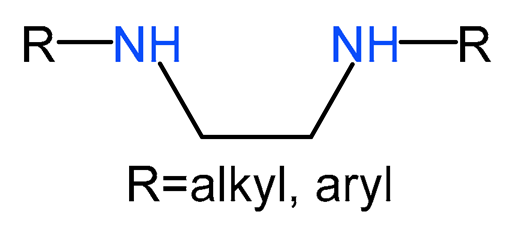 | 25 (16.1%) | 2 (2.1%) | 10.91 | 0.001 | |
| heterocycle | Piperidines(HS) |  | 22 (14.2%) | 3 (3.1%) | 7.03 | 0.008 |
| Six-membered heterocycles (HS) |  | 71 (45.8%) | 25 (25.8%) | 9.32 | 0.002 | |
| Saturated six-membered heterocycles with one heteroatom (LS) |  | 44 (28.4%) | 11 (11.3%) | 9.19 | 0.002 | |
| Aromatic | Arenes |  | 137 (88.4%) | 58 (59.8%) | 26.26 | 0.000 |
| Aromatic | 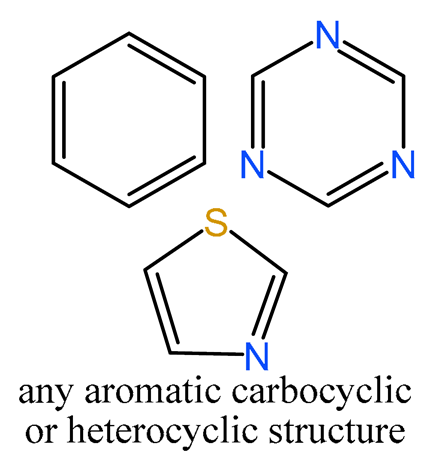 | 145 (93.5%) | 74 (76.3%) | 14.14 | 0.000 | |
| Ether | Ethers |  | 74 (47.7%) | 18 (18.6%) | 20.68 | 0.000 |
| Alkyl aryl ethers |  | 55 (35.5%) | 11 (11.3%) | 16.76 | 0.000 | |
| Halogen | Halogen derivatives | 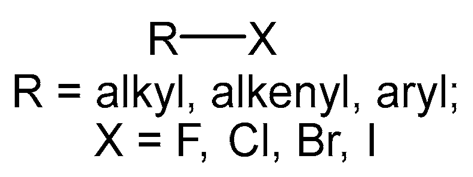 | 72 (46.5%) | 22 (22.7%) | 13.42 | 0.000 |
| Aryl fluorides |  | 36 (23.2%) | 5 (5.2%) | 13.01 | 0.000 |
| Metric | DIQTA | FAERS |
|---|---|---|
| Accuracy | 0.904 ± 0.022 | 0.933 ± 0.017 |
| Precision | 0.971 ± 0.039 | 0.941 ± 0.019 |
| Recall | 0.867 ± 0.000 | 0.941 ± 0.020 |
| F1 score | 0.916 ± 0.018 | 0.941 ± 0.016 |
| MCC | 0.813 ± 0.051 | 0.865 ± 0.036 |
| AUROC | 0.976 ± 0.014 | 0.991 ± 0.004 |
| Specificity | 0.960 ± 0.055 | 0.924 ± 0.026 |
| AUPRC | 0.985 ± 0.010 | 0.994 ± 0.002 |
| Metric | MoLFormer-XL-CNN [40] | ToxBERT [41] | SVM [42] | MMGIN [43] | Ours |
|---|---|---|---|---|---|
| Accuracy | 0.859 ± 0.029 | 0.783 ± 0.018 | 0.806 ± 0.014 | 0.862 ± 0.169 | 0.903 ± 0.014 |
| AUPRC | 0.822 ± 0.079 | 0.945 ± 0.009 | 0.791 ± 0.013 | 0.942 ± 0.071 | 0.967 ± 0.008 |
| AUROC | 0.829 ± 0.060 | 0.839 ± 0.015 | 0.790 ± 0.015 | 0.929 ± 0.087 | 0.946 ± 0.013 |
| F1 score | 0.891 ± 0.022 | 0.766 ± 0.014 | 0.844 ± 0.012 | 0.917 ± 0.102 | 0.921 ± 0.013 |
| MCC | 0.702 ± 0.062 | 0.604 ± 0.028 | 0.591 ± 0.031 | 0.600 ± 0.490 | 0.795 ± 0.030 |
| Precision | 0.845 ± 0.029 | 0.664 ± 0.034 | 0.820 ± 0.014 | 0.862 ± 0.169 | 0.917 ± 0.007 |
| Recall rate | 0.942 ± 0.027 | 0.913 ± 0.064 | 0.870 ± 0.017 | 1.000 ± 0.000 | 0.928 ± 0.020 |
| Specificity | 0.747 ± 0.036 | 0.700 ± 0.061 | 0.710 ± 0.026 | 0.600 ± 0.490 | 0.859 ± 0.015 |
| Rank | Motifs | z-Score |
|---|---|---|
| 1 | C1CCOCC1 | 2.2651 |
| 2 | C1COCC1 | 2.1018 |
| 3 | C1C = NCN1 | 1.8587 |
| 4 | c1cOCCC1 | 1.8384 |
| 5 | c1nCCCC1 | 1.7674 |
| 6 | C1NCCO1 | 1.7569 |
| 7 | C1SCS1 | 1.7468 |
| 8 | C1CCCCCCCCOCCCC1 | 1.707 |
| 9 | C1CCCNCC1 | 1.6629 |
| 10 | C1CCOC1 | 1.5951 |
| 11 | c | 1.5547 |
| 12 | C1 = CCOC1 | 1.5489 |
| 13 | cO | 1.5232 |
| 14 | C1CCCOC1 | 1.4964 |
| 15 | C1CCCNC1 | 1.4855 |
| 16 | C1CCCCCCCCNCCCCO1 | 1.4722 |
| 17 | c1cCCCC1 | 1.4549 |
| 18 | C1COCS1 | 1.4537 |
| 19 | C1COCCC1 | 1.4532 |
| 20 | Cc | 1.4242 |
| All | FP-Only | Graph-Only | w/o CA | w/o GN | w/o GRU | w/o ME | w/o MG | |
|---|---|---|---|---|---|---|---|---|
| Accuracy | 0.904 ± 0.022 | 0.840 ± 0.057 | 0.856 ± 0.146 | 0.880 ± 0.028 | 0.560 ± 0.057 | 0.44 ± 0.089 | 0.592 ± 0.128 | 0.664 ± 0.067 |
| Precision | 0.971 ± 0.039 | 0.901 ± 0.025 | 0.892 ± 0.167 | 0.908 ± 0.027 | 0.811 ± 0.202 | 0.120 ± 0.268 | 0.520 ± 0.303 | 0.688 ± 0.062 |
| Recall | 0.867 ± 0.000 | 0.827 ± 0.121 | 0.92 ± 0.056 | 0.893 ± 0.076 | 0.547 ± 0.425 | 0.200 ± 0.447 | 0.760 ± 0.434 | 0.84 ± 0.192 |
| F1 score | 0.916 ± 0.018 | 0.857 ± 0.062 | 0.895 ± 0.085 | 0.898 ± 0.029 | 0.523 ± 0.236 | 0.150 ± 0.335 | 0.610 ± 0.342 | 0.744 ± 0.071 |
| MCC | 0.813 ± 0.051 | 0.687 ± 0.091 | 0.689 ± 0.344 | 0.758 ± 0.055 | 0.207 ± 0.118 | −0.049 ± 0.073 | 0.133 ± 0.217 | 0.297 ± 0.171 |
| AUROC | 0.976 ± 0.014 | 0.935 ± 0.017 | 0.856 ± 0.266 | 0.956 ± 0.025 | 0.803 ± 0.16 | 0.535 ± 0.244 | 0.701 ± 0.098 | 0.776 ± 0.03 |
| Specificity | 0.960 ± 0.055 | 0.860 ± 0.055 | 0.760 ± 0.428 | 0.860 ± 0.055 | 0.580 ± 0.531 | 0.800 ± 0.447 | 0.340 ± 0.477 | 0.400 ± 0.274 |
| AUPRC | 0.985 ± 0.001 | 0.948 ± 0.020 | 0.893 ± 0.208 | 0.972 ± 0.015 | 0.858 ± 0.11 | 0.682 ± 0.146 | 0.774 ± 0.115 | 0.820 ± 0.051 |
| Cases with Current ADR | Cases Without Current ADR | |
|---|---|---|
| Cases with current drugs | a | b |
| Cases without current ADR | c | d |
Disclaimer/Publisher’s Note: The statements, opinions and data contained in all publications are solely those of the individual author(s) and contributor(s) and not of MDPI and/or the editor(s). MDPI and/or the editor(s) disclaim responsibility for any injury to people or property resulting from any ideas, methods, instructions or products referred to in the content. |
© 2026 by the authors. Licensee MDPI, Basel, Switzerland. This article is an open access article distributed under the terms and conditions of the Creative Commons Attribution (CC BY) license.
Share and Cite
Long, W.; Zhai, S.; Liu, Y.; Li, M.; Wen, Z. Motif-Level Graph Learning Enables Interpretable Prediction of Drug-Induced QT Prolongation via Cooperative Substructural Determinants. Int. J. Mol. Sci. 2026, 27, 4706. https://doi.org/10.3390/ijms27114706
Long W, Zhai S, Liu Y, Li M, Wen Z. Motif-Level Graph Learning Enables Interpretable Prediction of Drug-Induced QT Prolongation via Cooperative Substructural Determinants. International Journal of Molecular Sciences. 2026; 27(11):4706. https://doi.org/10.3390/ijms27114706
Chicago/Turabian StyleLong, Wulin, Shengqiu Zhai, Yuheng Liu, Menglong Li, and Zhining Wen. 2026. "Motif-Level Graph Learning Enables Interpretable Prediction of Drug-Induced QT Prolongation via Cooperative Substructural Determinants" International Journal of Molecular Sciences 27, no. 11: 4706. https://doi.org/10.3390/ijms27114706
APA StyleLong, W., Zhai, S., Liu, Y., Li, M., & Wen, Z. (2026). Motif-Level Graph Learning Enables Interpretable Prediction of Drug-Induced QT Prolongation via Cooperative Substructural Determinants. International Journal of Molecular Sciences, 27(11), 4706. https://doi.org/10.3390/ijms27114706