Chitooligosaccharide Seed Priming Enhances Photosynthetic Efficiency in Pea (Pisum sativum) Under Salinity

 , ,
, ,  , ,
, ,  , , , and
Abstract
1. Introduction
2. Results
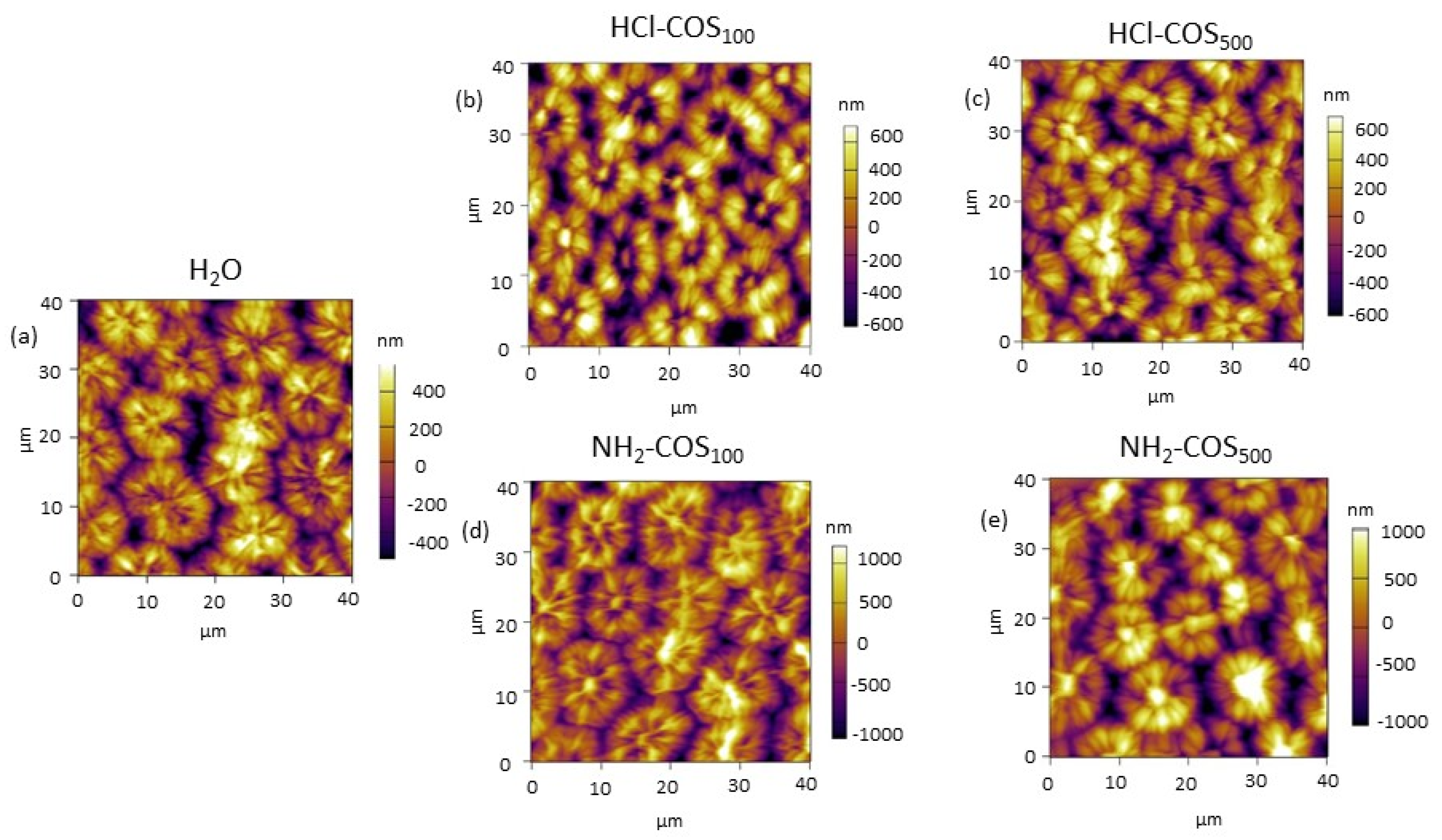
2.1. Effect of COS-Priming on Seed Integrity and Surface Topology
2.2. Effect of COS-Priming on Seed Germination Uunder Control and Salt Stress Conditions
2.3. Effect of COS-Priming on the Water Potential and Na+ Content in Pea Seedlings Under Control and Salt Stress Conditions
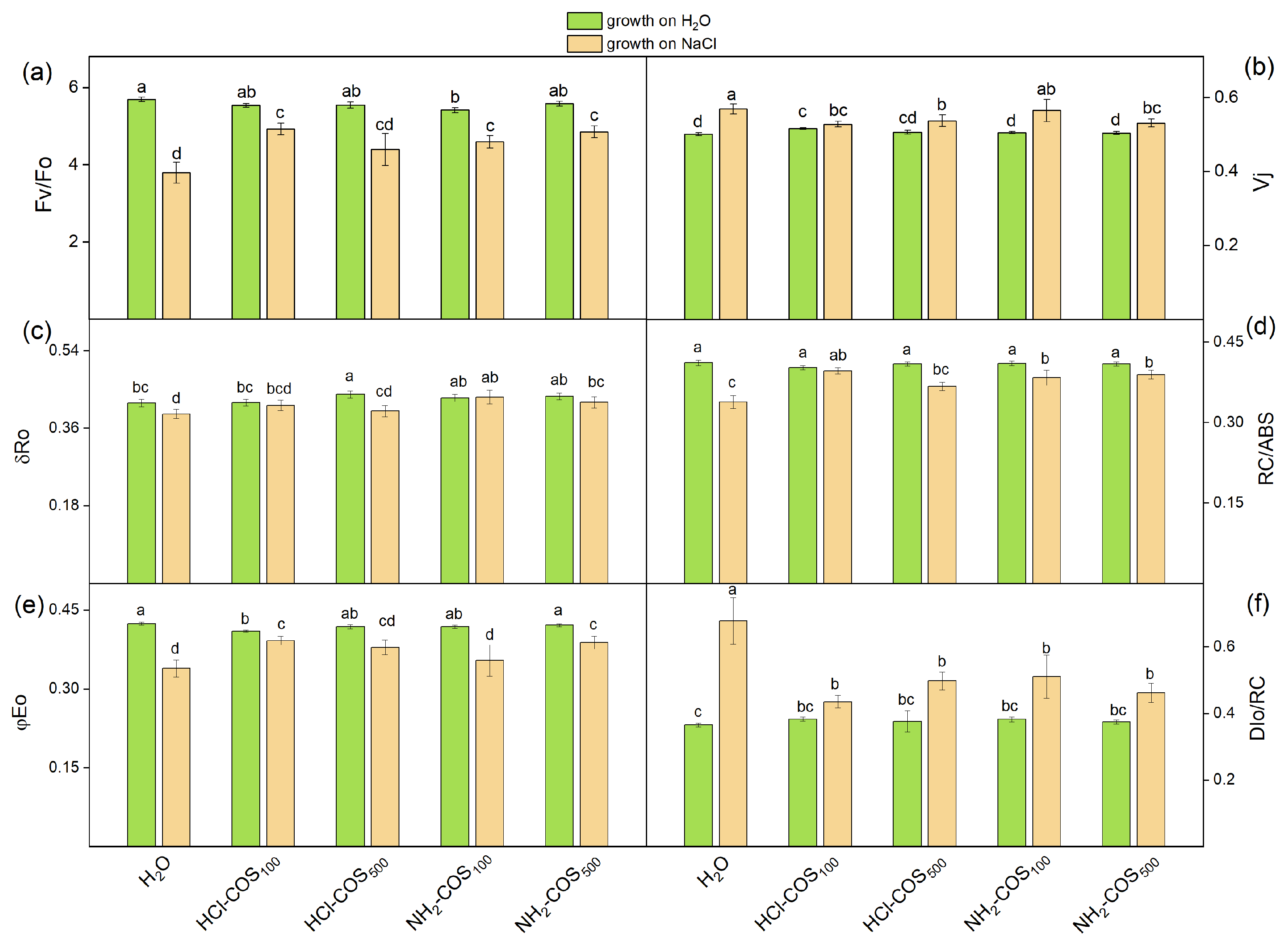
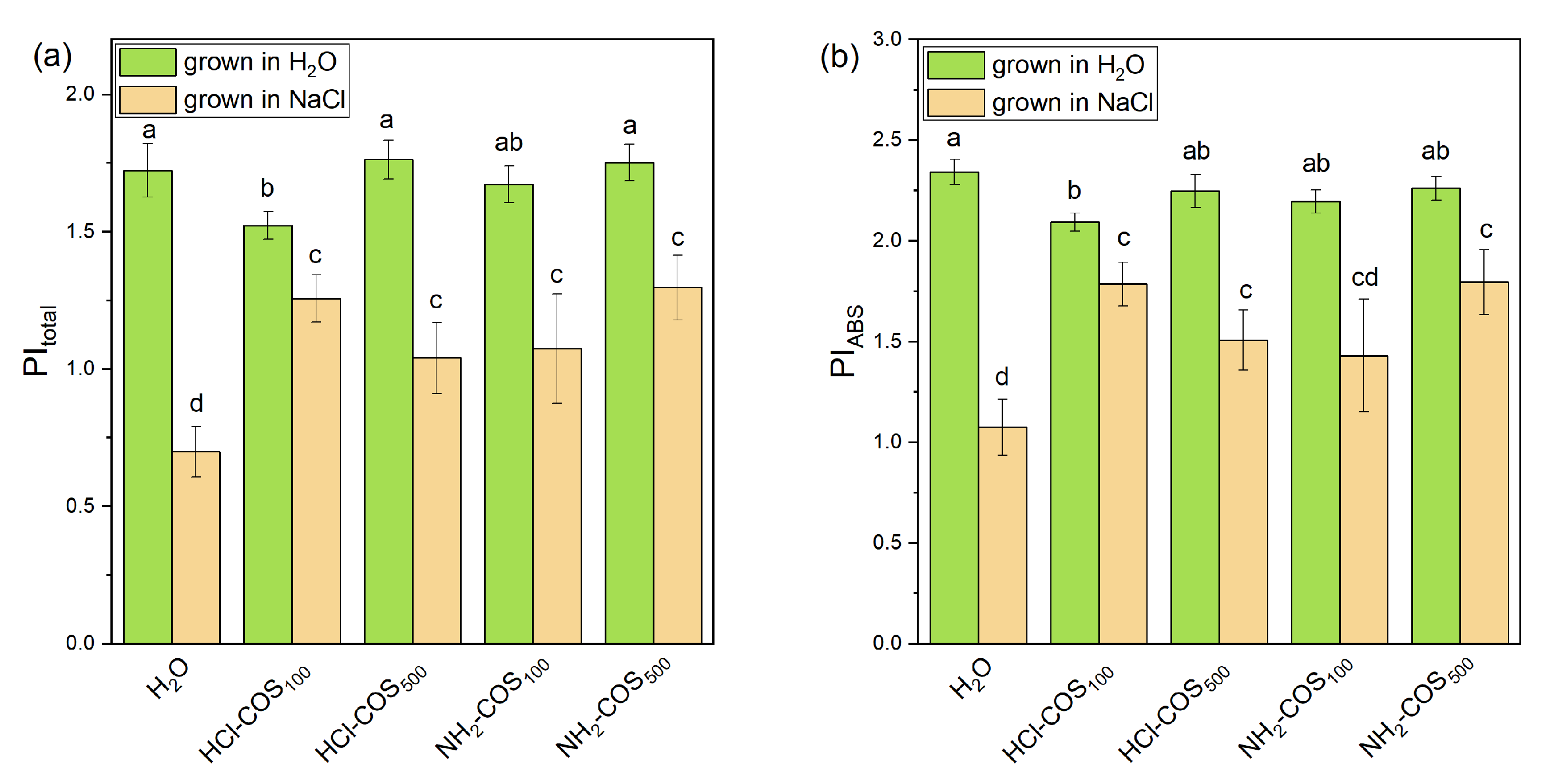
2.4. Effect of COS-Priming on the Photosynthetic Activity of Pea Seedlings Under Control and Salt Stress Conditions
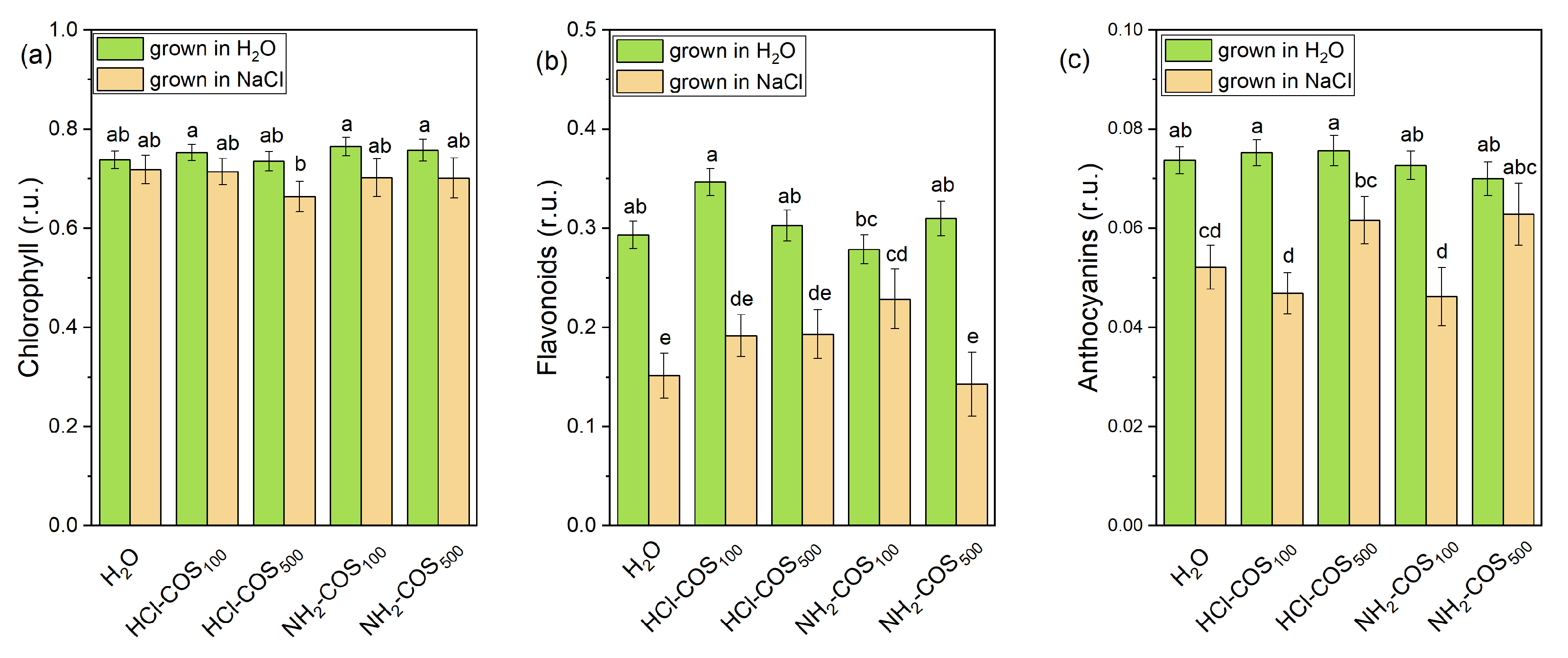
2.5. Effect of COS-Priming on the Leaf Pigment Content Under Control and Salt Stress Conditions
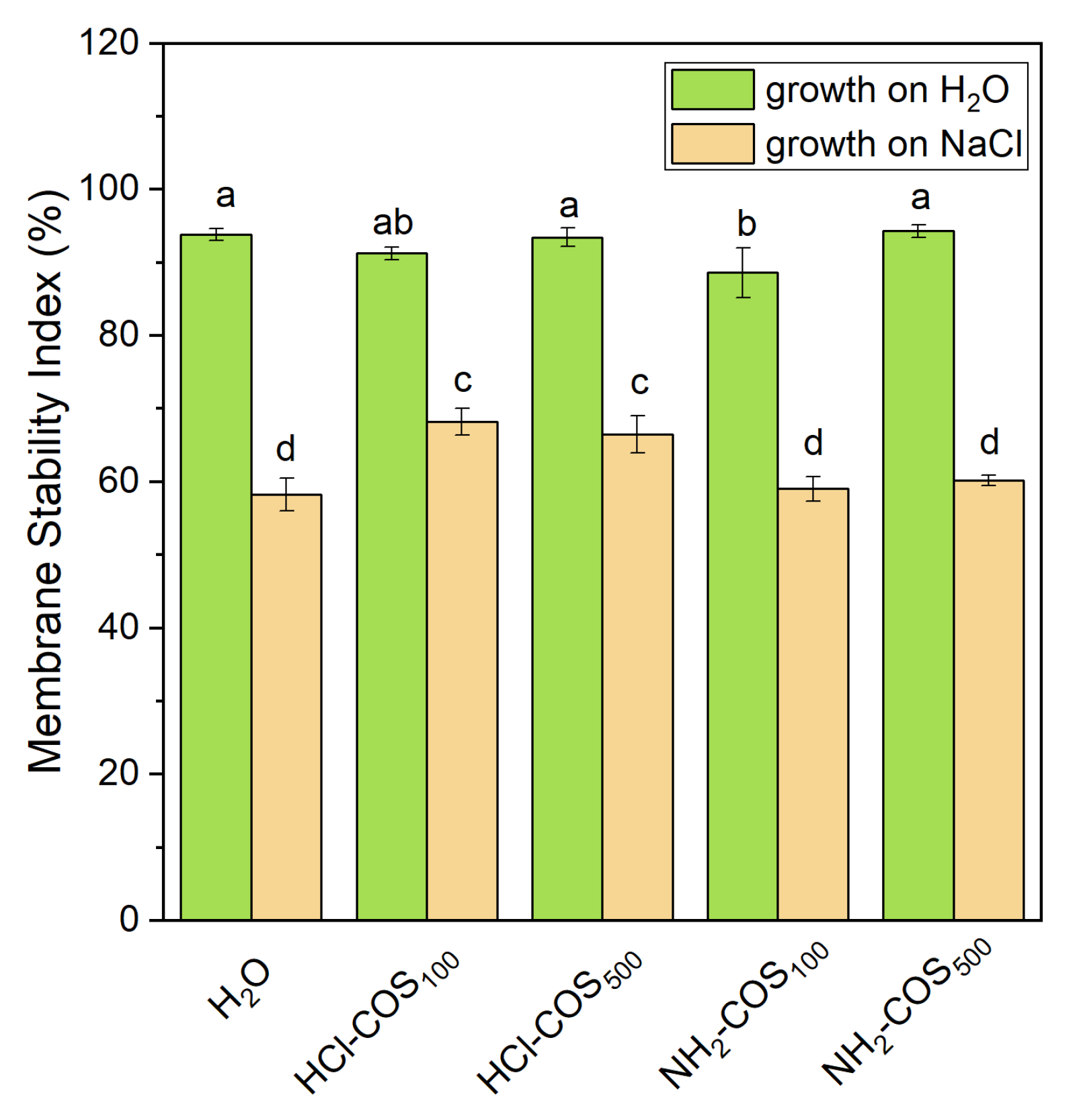
2.6. Effect of COS-Priming on Plants Membrane Integrity Under Control and Salt Stress Conditions
2.7. Statistical Evaluation of the Individual and Combined COS-Priming and Salt Effects
3. Discussion
3.1. Effect of COS on Seed and Plant Fitness in Non-Stress Conditions
3.2. Effect of COS on Seed and Plant Fitness in Growth Under 50 mM NaCl Salt Stress
4. Materials and Methods
4.1. Seed Treatment and Germination
4.2. Seed Surface Properties
4.3. Growth Conditions for Control and Stressed Seedlings
4.4. Leaf Water Potential Measurements
4.5. Sodium Ion Content in Leaves and Roots
4.6. Fluorescence Induction Kinetics
4.7. Measurements of Leaf Pigments
4.8. Determination of Membrane Stability Index
4.9. Graphical Representation and Statistical Evaluation
Supplementary Materials
Author Contributions
Funding
Institutional Review Board Statement
Informed Consent Statement
Data Availability Statement
Acknowledgments
Conflicts of Interest
Abbreviations
| AFM | atomic force microscopy |
| COS | chitooligosaccarides |
| DM | dry mass |
| MSI | Membrane Stability Index |
| NH2-COS100 | aminooligochitosan in concentration 100 mg/L |
| NH2-COS500 | aminooligochitosan in concentration 500 mg/L |
| HCl-COS100 | oligochitosan hydrochloride in concentration 100 mg/L |
| HCl-COS500 | oligochitosan hydrochloride in concentration 500 mg/L |
| OEC | oxygen-evolving complex |
| PSI | photosystem I |
| PSII | photosystem II |
| RC | reaction center |
| ROS | reactive oxygen species |
| Fv/Fo | ratio of quantum yields of photochemical and concurrent non-photochemical processes |
| Vj | relative variable fluorescence at the J step, indicating the proportion of closed photosystem II reaction centers |
| δRo | efficiency/probability of reduction in the end electron acceptors at the photosystem I acceptor side |
| RC/ABS | density of the active reaction centers |
| φEo | quantum yield of electron transport beyond QA |
| DIo/RC | quantum yield of energy dissipation in the form of heat and fluorescence at the reaction center level |
| Rrms | seed surface roughness |
| PIABS | performance index on absorption basis |
| PItotal | total performance index |
| Ψleaf | leaf water potential |
References
- FAO. The State of the World’s Land and Water Resources for Food and Agriculture—Systems at Breaking Point (SOLAW 2021); FAO: Rome, Italy, 2021. [Google Scholar]
- Munns, R.; Tester, M. Mechanisms of salinity tolerance. Annu. Rev. Plant Biol. 2008, 59, 651–681. [Google Scholar] [CrossRef]
- Parida, A.K.; Das, A.B. Salt tolerance and salinity effects on plants: A review. Ecotoxicol. Environ. Saf. 2005, 60, 324–349. [Google Scholar] [CrossRef] [PubMed]
- Barhoumi, Z.; Djebali, W.; Chaïbi, W.; Abdelly, C.; Smaoui, A. Salt impact on photosynthesis and leaf ultrastructure of Aeluropus littoralis. J. Plant Res. 2007, 120, 529–537. [Google Scholar] [CrossRef] [PubMed]
- Hameed, A.; Ahmed, M.Z.; Hussain, T.; Aziz, I.; Ahmad, N.; Gul, B.; Nielsen, B.L. Effects of salinity stress on chloroplast structure and function. Cells 2021, 10, 2023. [Google Scholar] [CrossRef]
- Mehraban, A.; Kadali, F.; Miri, M. Influence of salt stress on lipids metabolism, photorespiration, photosynthesis and chlorophyll fluorescence in crop plants. Chem. Res. J. 2017, 2, 127–132. [Google Scholar]
- Ashraf, M.; Harris, P.J.C. Photosynthesis under stressful environments: An overview. Photosynthetica 2013, 51, 163–190. [Google Scholar] [CrossRef]
- Huang, L.; Li, Z.; Liu, Q.; Pu, G.; Zhang, Y.; Li, J. Research on the adaptive mechanism of photosynthetic apparatus under salt stress: New directions to increase crop yield in saline soils. Ann. Appl. Biol. 2019, 175, 1–17. [Google Scholar] [CrossRef]
- Liu, Z.; Zou, L.; Chen, C.; Zhao, H.; Yan, Y.; Wang, C.; Liu, X. ITRAQ-based quantitative proteomic analysis of salt stress in Spica Prunellae. Sci. Rep. 2019, 9, 9590. [Google Scholar] [CrossRef]
- Hao, S.; Wang, Y.; Yan, Y.; Liu, Y.; Wang, J.; Chen, S. A review on plant responses to salt stress and their mechanisms of salt resistance. Horticulturae 2021, 7, 132. [Google Scholar] [CrossRef]
- Rashkov, G.D.; Stefanov, M.A.; Yotsova, E.K.; Borisova, P.B.; Dobrikova, A.G.; Apostolova, E.L. Exploring nitric oxide as a regulator in salt tolerance: Insights into photosynthetic efficiency in maize. Plants 2024, 13, 1312. [Google Scholar] [CrossRef]
- Stefanov, M.A.; Rashkov, G.D.; Apostolova, E.L. Assessment of the photosynthetic apparatus functions by chlorophyll fluorescence and P700 absorbance in C3 and C4 plants under physiological conditions and under salt stress. Int. J. Mol. Sci. 2022, 23, 3768. [Google Scholar] [CrossRef]
- Stefanov, M.A.; Rashkov, G.D.; Yotsova, E.K.; Dobrikova, A.G.; Apostolova, E.L. Impact of salinity on the energy transfer between pigment–protein complexes in photosynthetic apparatus, functions of the oxygen-evolving complex and photochemical activities of photosystem II and photosystem I in two Paulownia lines. Int. J. Mol. Sci. 2023, 24, 3108. [Google Scholar] [CrossRef]
- Stefanov, M.A.; Rashkov, G.D.; Borisova, P.B.; Apostolova, E.L. Changes in photosystem II complex and physiological activities in pea and maize plants in response to salt stress. Plants 2024, 13, 1025. [Google Scholar] [CrossRef]
- Demmig-Adams, B.; Adams, W.W., III. Photoprotection and Other Responses of Plants to High Light Stress. Annu. Rev. Plant Physiol. Plant Mol. Biol. 1992, 43, 599–626. [Google Scholar] [CrossRef]
- Kramer, D.M.; Johnson, G.; Kiirats, O.; Edwards, G.E. New fluorescence parameters for the determination of QA redox state and excitation energy fluxes. Photosynth. Res. 2004, 79, 209–218. [Google Scholar] [CrossRef] [PubMed]
- Agati, G.; Azzarello, E.; Pollastri, S.; Tattini, M. Flavonoids as antioxidants in plants: Location and functional significance. Plant Sci. 2012, 196, 67–76. [Google Scholar] [CrossRef]
- Li, Z.; Ahammed, G.J. Plant stress response and adaptation via anthocyanins: A review. Plant Stress 2023, 10, 100230. [Google Scholar] [CrossRef]
- Fini, A.; Brunetti, C.; Di Ferdinando, M.; Ferrini, F.; Tattini, M. Stress-induced flavonoid biosynthesis and the antioxidant machinery of plants. Plant Signal. Behav. 2011, 6, 709–711. [Google Scholar] [CrossRef]
- Chen, Z.; Debernardi, J.M.; Dubcovsky, J.; Gallavotti, A. Recent advances in crop transformation technologies. Nat. Plants 2022, 8, 1343–1351. [Google Scholar] [CrossRef]
- da Fonseca-Pereira, P.; Siqueira, J.A.; Monteiro-Batista, R.d.C.; Vaz, M.G.M.V.; Nunes-Nesi, A.; Araújo, W.L. Using synthetic biology to improve photosynthesis for sustainable food production. J. Biotechnol. 2022, 359, 1–14. [Google Scholar] [CrossRef]
- De Pascale, S.; Rouphael, Y.; Colla, G. Plant biostimulants: Innovative tool for enhancing plant nutrition in organic farming. Eur. J. Hortic. Sci. 2018, 82, 277–285. [Google Scholar] [CrossRef]
- Shukla, P.S.; Mantin, E.G.; Adil, M.; Bajpai, S.; Critchley, A.T.; Prithiviraj, B. Ascophyllum nodosum-Based Biostimulants: Sustainable Applications in Agriculture for the Stimulation of Plant Growth, Stress Tolerance, and Disease Management. Front. Plant Sci. 2019, 10, 655. [Google Scholar] [CrossRef]
- Mukhtar Ahmed, K.B.; Khan, M.M.A.; Siddiqui, H.; Jahan, A. Chitosan and its oligosaccharides, a promising option for sustainable crop production—A review. Carbohydr. Polym. 2020, 227, 115331. [Google Scholar] [CrossRef]
- Yuan, X.; Zheng, J.; Jiao, S.; Cheng, G.; Feng, C.; Du, Y.; Liu, H. A review on the preparation of chitosan oligosaccharides and application to human health, animal husbandry and agricultural production. Carbohydr. Polym. 2019, 220, 60–70. [Google Scholar] [CrossRef]
- Liu, Y.; Yang, H.; Wen, F.; Bao, L.; Zhao, Z.; Zhong, Z. Chitooligosaccharide-induced plant stress resistance. Carbohydr. Polym. 2023, 302, 120344. [Google Scholar] [CrossRef]
- An, M.; Zhang, L.; Wang, Q.; Ren, K.; Wang, Q.; Lin, D.; Zhu, Y.; Fan, Y. Chito-oligosaccharide composites enhanced the adaptability of cotton seedlings to salinized soil by modulating photosynthetic efficiency and metabolite. Front. Plant Sci. 2025, 16, 1615321, Correction in Front. Plant Sci. 2025, 16, 1668787. https://doi.org/10.3389/fpls.2025.1615321. [Google Scholar] [PubMed]
- Ma, L.; Li, Y.; Yu, C.; Wang, Y.; Li, X.; Li, N.; Chen, Q.; Bu, N. Alleviation of exogenous oligochitosan on wheat seedlings growth under salt stress. Protoplasma 2012, 249, 393–399. [Google Scholar] [CrossRef]
- Heydecker, W.; Higgins, J.; Gulliver, R.L. Accelerated germination by osmotic seed treatment. Nature 1973, 246, 42–44. [Google Scholar] [CrossRef]
- Fu, Y.; Ma, L.; Li, J.; Hou, D.; Zeng, B.; Zhang, L.; Liu, C.; Bi, Q.; Tan, J.; Yu, X.; et al. Factors influencing seed dormancy and germination and advances in seed priming technology. Plants 2024, 13, 1319. [Google Scholar] [CrossRef]
- Jisha, K.C.; Vijayakumari, K.; Puthur, J.T. Seed priming for abiotic stress tolerance: An overview. Acta Physiol. Plant. 2013, 35, 1381–1396. [Google Scholar] [CrossRef]
- Ibrahim, E.A. Seed priming to alleviate salinity stress in germinating seeds. J. Plant Physiol. 2016, 192, 38–46. [Google Scholar] [CrossRef]
- Mahdavi, B.; Rahimi, A. Seed priming with chitosan improves the germination and growth performance of ajowan. EurAsian J. Biosci. 2013, 7, 69–76. [Google Scholar] [CrossRef]
- Strasser, R.J.; Tsimilli-Michael, M.; Srivastava, A. Analysis of the Chlorophyll a Fluorescence Transient. In Chlorophyll a Fluorescence a Signature of Photosynthesis; Papageorgiou, G.C., Govindjee, G., Eds.; Springer: Dordrecht, The Netherlands, 2004; pp. 321–362. [Google Scholar]
- Tsimilli-Michael, M.; Strasser, R.J. The energy flux theory 35 years later: Formulations and applications. Photosynth. Res. 2013, 117, 289–320. [Google Scholar] [CrossRef] [PubMed]
- Suwanchaikasem, P.; Idnurm, A.; Selby-Pham, J.; Walker, R.; Boughton, B.A. The impacts of chitosan on plant root systems and Its potential to be Used for controlling fungal diseases in agriculture. J. Plant Growth Regul. 2024, 43, 3424–3445. [Google Scholar] [CrossRef]
- Lopez-Moya, F.; Suarez-Fernandez, M.; Lopez-Llorca, L.V. Molecular mechanisms of chitosan interactions with fungi and plants. Int. J. Mol. Sci. 2019, 20, 332. [Google Scholar] [CrossRef]
- Lopez-Moya, F.; Escudero, N.; Zavala-Gonzalez, E.A.; Esteve-Bruna, D.; Blázquez, M.A.; Alabadí, D.; Lopez-Llorca, L.V. Induction of auxin biosynthesis and WOX5 repression mediate changes in root development in Arabidopsis exposed to chitosan. Sci. Rep. 2017, 7, 16813. [Google Scholar] [CrossRef]
- Hadwiger, L.A. Multiple effects of chitosan on plant systems: Solid science or hype. Plant Sci. 2013, 208, 42–49. [Google Scholar] [CrossRef]
- Moustakas, M.; Bayçu, G.; Sperdouli, I.; Eroğlu, H.; Eleftheriou, E.P. Arbuscular mycorrhizal symbiosis enhances photosynthesis in the medicinal herb Salvia fruticosa by improving photosystem II photochemistry. Plants 2020, 9, 962. [Google Scholar] [CrossRef]
- Kalaji, H.M.; Schansker, G.; Brestic, M.; Bussotti, F.; Calatayud, A.; Ferroni, L.; Goltsev, V.; Guidi, L.; Jajoo, A.; Li, P.; et al. Frequently asked questions about chlorophyll fluorescence, the sequel. Photosynth. Res. 2017, 132, 13–66, Erratum in Photosynth. Res. 2017, 132, 67–68. https://doi.org/10.1007/s11120-016-0318-y. [Google Scholar] [CrossRef]
- Athar, H.U.R.; Zafar, Z.U.; Ashraf, M. Glycinebetaine improved photosynthesis in canola under salt stress: Evaluation of chlorophyll fluorescence parameters as potential indicators. J. Agron. Crop Sci. 2015, 201, 428–442. [Google Scholar] [CrossRef]
- Stefanov, M.; Yotsova, E.; Rashkov, G.D.; Ivanova, K.; Markovska, Y.; Apostolova, E.L. Effects of salinity on the photosynthetic apparatus of two Paulownia lines. Plant Physiol. Biochem. 2016, 101, 54–59. [Google Scholar] [CrossRef]
- Kan, X.; Ren, J.; Chen, T.; Cui, M.; Li, C.; Zhou, R.; Zhang, Y.; Liu, H.; Deng, D.; Yin, Z. Effects of salinity on photosynthesis in maize probed by prompt fluorescence, delayed fluorescence and P700 signals. Environ. Exp. Bot. 2017, 140, 56–64. [Google Scholar] [CrossRef]
- Stefanov, M.A.; Rashkov, G.D.; Yotsova, E.K.; Borisova, P.B.; Dobrikova, A.G.; Apostolova, E.L. Protective effects of sodium nitroprusside on photosynthetic performance of Sorghum bicolor L. under salt stress. Plants 2023, 12, 832. [Google Scholar] [CrossRef]
- Stefanov, M.A.; Rashkov, G.D.; Yotsova, E.K.; Borisova, P.B.; Dobrikova, A.G.; Apostolova, E.L. Different sensitivity levels of the photosynthetic apparatus in Zea mays L. and Sorghum bicolor L. under salt stress. Plants 2021, 10, 1469. [Google Scholar] [CrossRef] [PubMed]
- Michelet, L.; Zaffagnini, M.; Morisse, S.; Sparla, F.; Pérez-Pérez, M.E.; Francia, F.; Danon, A.; Marchand, C.H.; Fermani, S.; Trost, P.; et al. Redox regulation of the Calvin–Benson cycle: Something old, something new. Front. Plant Sci. 2013, 4, 470. [Google Scholar] [CrossRef] [PubMed]
- Patil, P.P.; Kodru, S.; Szabó, M.; Vass, I. Investigation of the effect of salt stress on photosynthetic electron transport pathways in the Synechocystis PCC 6803 cyanobacterium. Physiol. Plant. 2025, 177, e70066. [Google Scholar] [CrossRef]
- Derks, A.; Schaven, K.; Bruce, D. Diverse mechanisms for photoprotection in photosynthesis. Dynamic regulation of photosystem II excitation in response to rapid environmental change. Biochim. Biophys. Acta Bioenerg. 2015, 1847, 468–485. [Google Scholar] [CrossRef]
- Lu, C.; Vonshak, A. Effects of salinity stress on photosystem II function in cyanobacterial Spirulina platensis cells. Physiol. Plant. 2002, 114, 405–413. [Google Scholar] [CrossRef]
- Gong, H.; Tang, Y.; Wang, J.; Wen, X.; Zhang, L.; Lu, C. Characterization of photosystem II in salt-stressed cyanobacterial Spirulina platensis cells. Biochim. Biophys. Acta Bioenerg. 2008, 1777, 488–495. [Google Scholar] [CrossRef] [PubMed]
- Zhang, H.; Xu, N.; Wu, X.; Wang, J.; Ma, S.; Li, X.; Sun, G. Effects of four types of sodium salt stress on plant growth and photosynthetic apparatus in sorghum leaves. J. Plant Interact. 2018, 13, 506–513. [Google Scholar] [CrossRef]
- Mitsuya, S.; Takeoka, Y.; Miyake, H. Effects of sodium chloride on foliar ultrastructure of sweet potato (Ipomoea batatas Lam.) plantlets grown under light and dark conditions in vitro. J. Plant Physiol. 2000, 157, 661–667. [Google Scholar] [CrossRef]
- Li, X.; Han, Y.; Cong, Y.; Wang, L.; Shi, Y.; Liu, H.; Liu, H. Mechanisms of salt tolerance: Insights into photosystem function and carbon metabolism in tomato seedlings. Plant Soil 2025, 516, 1489–1513. [Google Scholar] [CrossRef]
- Tabassum, M.; Noreen, Z.; Aslam, M.; Shah, A.N.; Usman, S.; Waqas, A.; Alsherif, E.A.; Korany, S.M.; Nazim, M. Chitosan modulated antioxidant activity, inorganic ions homeostasis and endogenous melatonin to improve yield of Pisum sativum L. accessions under salt stress. Sci. Hortic. 2024, 323, 112509. [Google Scholar] [CrossRef]
- Amooaghaie, R.; Rajaie, N. Exploring effect of chitosan on antioxidant system and hypericin content in Hypericum perforatum L. under various irrigation regimes. BMC Plant Biol. 2025, 25, 799. [Google Scholar] [CrossRef] [PubMed]
- Rady, M.M. Effect of 24-epibrassinolide on growth, yield, antioxidant system and cadmium content of bean (Phaseolus vulgaris L.) plants under salinity and cadmium stress. Sci. Hortic. 2011, 129, 232–237. [Google Scholar] [CrossRef]
- Ru, C.; Liu, Y.; Yu, X.; Xie, C.; Hu, X. Melatonin enhances tomato salt tolerance by improving water use efficiency, photosynthesis, and redox homeostasis. Agronomy 2025, 15, 1746. [Google Scholar] [CrossRef]
- Brunetti, C.; Di Ferdinando, M.; Fini, A.; Pollastri, S.; Tattini, M. Flavonoids as Antioxidants and Developmental Regulators: Relative Significance in Plants and Humans. Int. J. Mol. Sci. 2013, 14, 3540–3555. [Google Scholar] [CrossRef]
- Li, J.; Han, A.; Zhang, L.; Meng, Y.; Xu, L.; Ma, F.; Liu, R. Chitosan oligosaccharide alleviates the growth inhibition caused by physcion and synergistically enhances resilience in maize seedlings. Sci. Rep. 2022, 12, 162. [Google Scholar] [CrossRef]
- Ranal, M.A.; Santana, D.G.d.; Ferreira, W.R.; Mendes-Rodrigues, C. Calculating germination measurements and organizing spreadsheets. Rev. Bras. Botânica 2009, 32, 849–855. [Google Scholar] [CrossRef]
- Krumova, S.; Stoichev, S.; Ilkov, D.; Strijkova, V.; Katrova, V.; Crespo, A.; Álvarez, J.; Martínez, E.; Martínez-Ramírez, S.; Tsonev, T.; et al. Pea seed priming with pluronic P85-grafted single-walled carbon nanotubes affects photosynthetic gas exchange but not photosynthetic light reactions. Int. J. Mol. Sci. 2024, 25, 7901. [Google Scholar] [CrossRef]
- Banks, J.M. Continuous excitation chlorophyll fluorescence parameters: A review for practitioners. Tree Physiol. 2017, 37, 1128–1136. [Google Scholar] [CrossRef]
- Maliba, B.G.; Inbaraj, P.M.; Berner, J.M. The use of OJIP fluorescence transients to monitor the effect of elevated ozone on biomass of canola plants. Water Air Soil Pollut. 2019, 230, 75, Correction in Water Air Soil Pollut. 2019, 230, 99. https://doi.org/10.1007/s11270-019-4124-y. [Google Scholar] [CrossRef]



| Treatments | Rrms (nm) |
|---|---|
| H2O | 266 ± 31 c |
| HCl-COS100 | 404 ± 22 ab |
| HCl-COS500 | 339 ± 30 b |
| NH2-COS100 | 264 ± 30 c |
| NH2-COS500 | 421 ± 18 a |
| Treatments | γ(RC)/((1 − γ(RC)) | φ(Po)/((1 − φ(Po)) | ψ(Eo)/(1 − ψ(Eo)) | δ(Ro)/(1 − δ(Ro)) |
|---|---|---|---|---|
| H2O | 0.411 ± 0.005 a | 5.698 ± 0.061 a | 0.999 ± 0.018 a | 0.729 ± 0.028 ab |
| HCl-COS100 | 0.402 ± 0.004 ab | 5.538 ± 0.056 b | 0.938 ± 0.009 b | 0.731 ± 0.022 ab |
| HCl-COS500 | 0.411 ± 0.005 a | 5.540 ± 0.087 ab | 0.979 ± 0.018 a | 0.789 ± 0.026 a |
| NH2-COS100 | 0.410 ± 0.004 a | 5.419 ± 0.069 ab | 0.983 ± 0.011 a | 0.765 ± 0.027 ab |
| NH2-COS500 | 0.409 ± 0.004 a | 5.585 ± 0.062 ab | 0.987 ± 0.014 a | 0.775 ± 0.023 ab |
| NaCl | 0.338 ± 0.012 d | 3.797 ± 0.273 d | 0.769 ± 0.041 d | 0.655 ± 0.029 c |
| HCl-COS100 + NaCl | 0.396 ± 0.006 bc | 4.928 ± 0.148 bc | 0.898 ± 0.026 bc | 0.718 ± 0.041 b |
| HCl-COS500 + NaCl | 0.367 ± 0.008 cd | 4.596 ± 0.209 c | 0.877 ± 0.058 c | 0.674 ± 0.034 bc |
| NH2-COS100 + NaCl | 0.383 ± 0.014 bc | 4.399 ± 0.418 c | 0.792 ± 0.085 d | 0.769 ± 0.054 ab |
| NH2-COS500 + NaCl | 0.389 ± 0.008 bc | 4.858 ± 0.211 bc | 0.901 ± 0.038 bc | 0.743 ± 0.039 ab |
| Trait | Fsalt | FCOS | Fsalt×COS |
|---|---|---|---|
| Rrms | 11.92 *** | ||
| Imbibition | 2.48 | ||
| Conductivity | 2.47 | ||
| Germination | 0.48 | 0.76 | 0.41 |
| Synchrony | 0.12 | 0.33 | 0.23 |
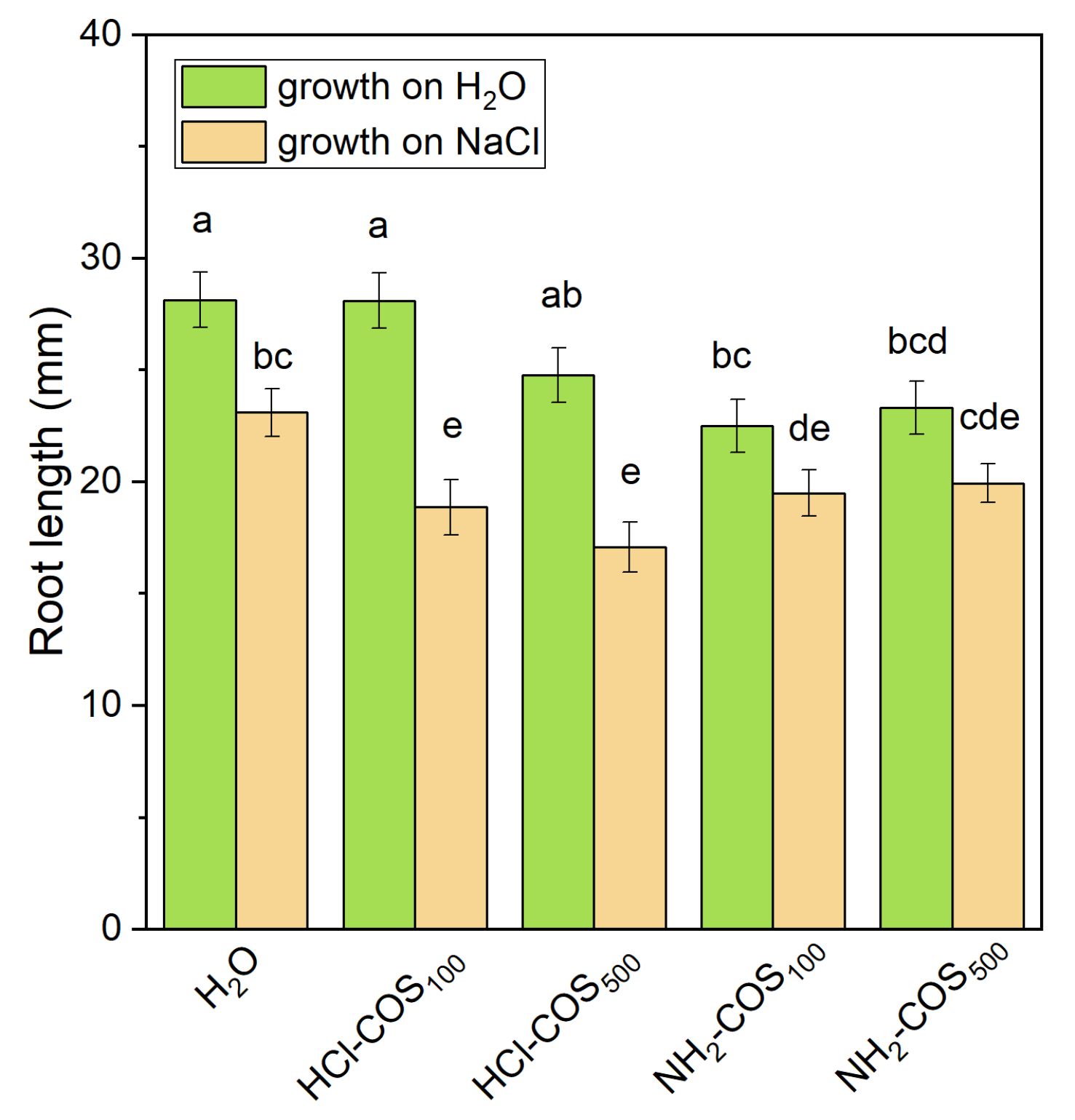
| Root length | 62.33 *** | 6.33 *** | 2.81 * |
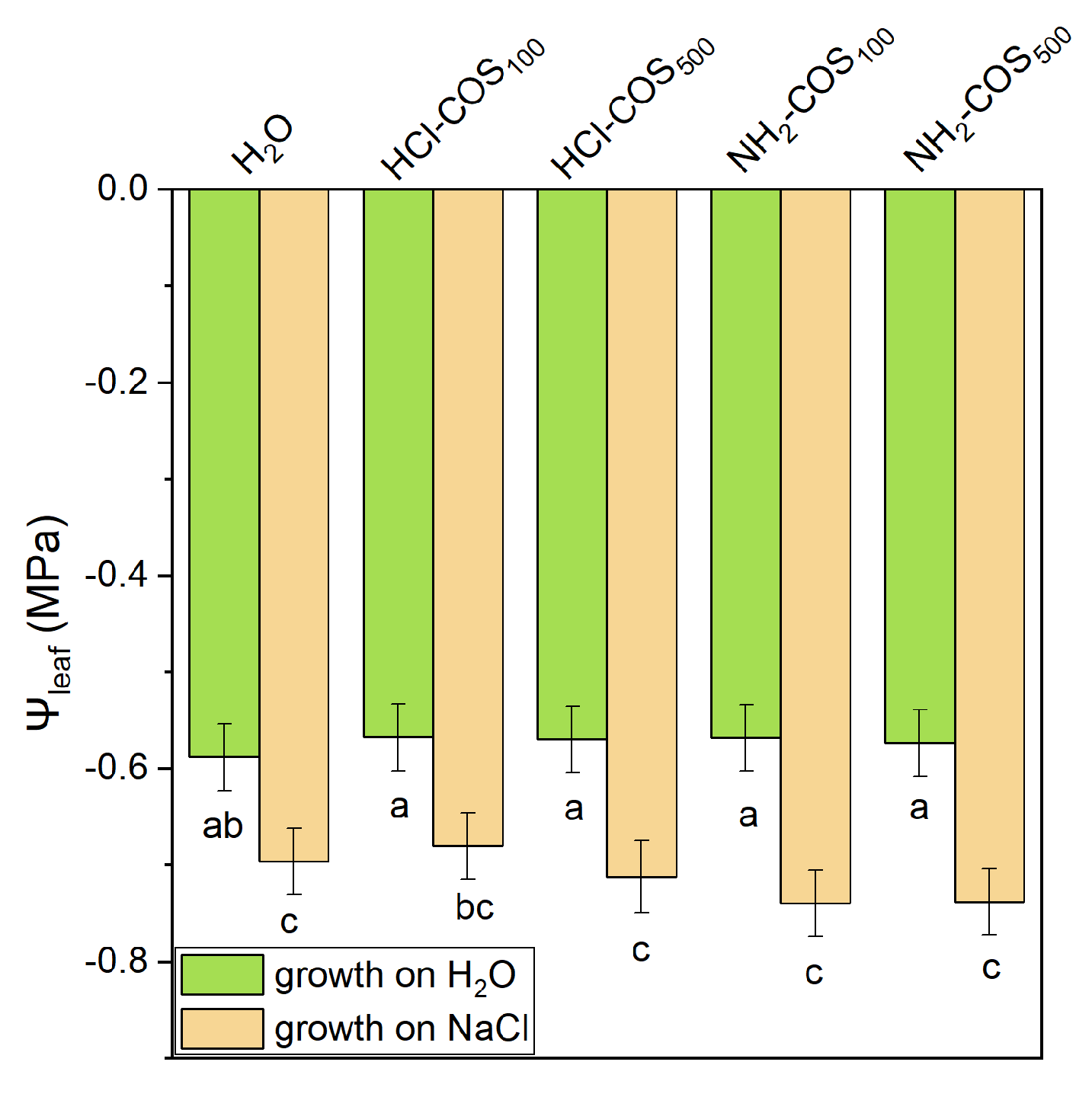
| Leaf water potential | 40.58 *** | 0.27 | 0.36 |
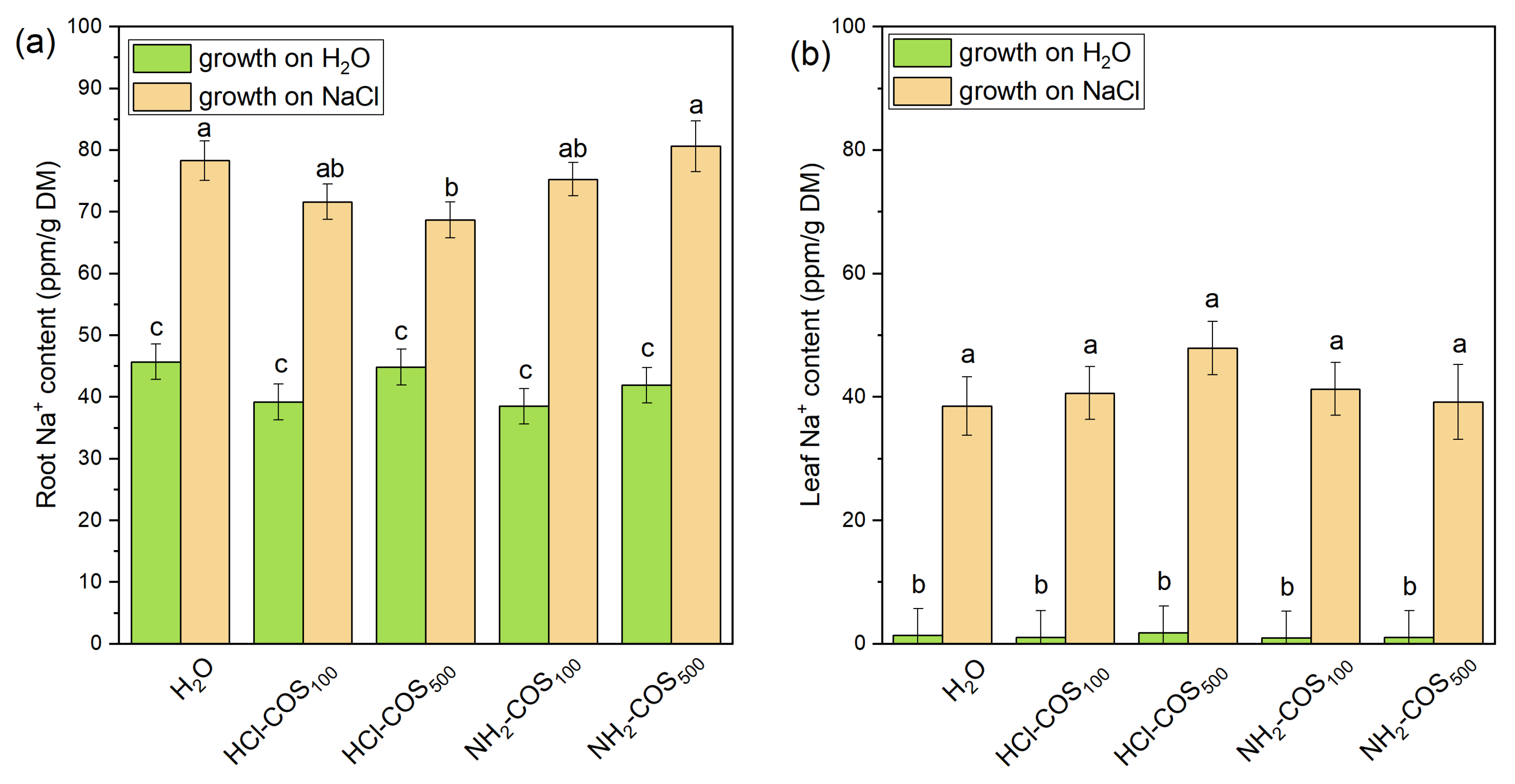
| Root Na+ content | 290.15 *** | 1.62 | 1.78 |
| Leaves Na+ content | 206.59 *** | 0.39 | 0.31 |
| Fv/Fo | 92.87 *** | 2.63 * | 6.05 *** |
| Vj | 17.60 *** | 1.36 | 2.70 * |
| DIo/RC | 55.80 *** | 3.62 ** | 8.05 *** |
| φ(Eo) | 32.60 *** | 1.57 | 3.74 ** |
| RC/ABS | 27.44 *** | 1.20 | 0.93 |
| δ(Ro) | 33.54 *** | 1.40 | 0.21 |
| PIABS | 34.13 *** | 2.37 | 2.05 |
| PItotal | 71.02 *** | 1.83 | 3.81 ** |
| Chlorophyll | 8.58 ** | 0.63 | 0.34 |
| Flavonoids | 93.29 *** | 2.80 * | 2.10 |
| Anthocyanins | 65.16 *** | 0.78 | 2.07 |
| Membrane Stability Index | 430.64 *** | 4.91 * | 144.11 *** |
Disclaimer/Publisher’s Note: The statements, opinions and data contained in all publications are solely those of the individual author(s) and contributor(s) and not of MDPI and/or the editor(s). MDPI and/or the editor(s) disclaim responsibility for any injury to people or property resulting from any ideas, methods, instructions or products referred to in the content. |
© 2026 by the authors. Licensee MDPI, Basel, Switzerland. This article is an open access article distributed under the terms and conditions of the Creative Commons Attribution (CC BY) license.
Share and Cite
Krumova, S.; Stoichev, S.; Ilkov, D.; Rashkov, G.; Dobrikova, A.; Apostolova, E.; Strijkova, V.; Katrova, V.; Tsonev, T.; Velikova, V. Chitooligosaccharide Seed Priming Enhances Photosynthetic Efficiency in Pea (Pisum sativum) Under Salinity. Int. J. Mol. Sci. 2026, 27, 4498. https://doi.org/10.3390/ijms27104498
Krumova S, Stoichev S, Ilkov D, Rashkov G, Dobrikova A, Apostolova E, Strijkova V, Katrova V, Tsonev T, Velikova V. Chitooligosaccharide Seed Priming Enhances Photosynthetic Efficiency in Pea (Pisum sativum) Under Salinity. International Journal of Molecular Sciences. 2026; 27(10):4498. https://doi.org/10.3390/ijms27104498
Chicago/Turabian StyleKrumova, Sashka, Svetozar Stoichev, Daniel Ilkov, Georgi Rashkov, Anelia Dobrikova, Emilia Apostolova, Velichka Strijkova, Vesela Katrova, Tsonko Tsonev, and Violeta Velikova. 2026. "Chitooligosaccharide Seed Priming Enhances Photosynthetic Efficiency in Pea (Pisum sativum) Under Salinity" International Journal of Molecular Sciences 27, no. 10: 4498. https://doi.org/10.3390/ijms27104498
APA StyleKrumova, S., Stoichev, S., Ilkov, D., Rashkov, G., Dobrikova, A., Apostolova, E., Strijkova, V., Katrova, V., Tsonev, T., & Velikova, V. (2026). Chitooligosaccharide Seed Priming Enhances Photosynthetic Efficiency in Pea (Pisum sativum) Under Salinity. International Journal of Molecular Sciences, 27(10), 4498. https://doi.org/10.3390/ijms27104498