Article

Development of Isoniazid–Pyrazole Hybrids as Potential Antitubercular Agents

by
Mukanda Gedeon Kadima
1,
Vinayak Singh
2,
Gobind Kumar
3,
Sahil Mishra
3,
Pule Seboletswe
3,
Ankit
3,
Afsana Kajee
4,
Françoise Roquet-Banères
5,
Laurent Kremer
5,6,
Rajshekhar Karpoormath
1,* and
Parvesh Singh
3,*
1
Discipline of Pharmaceutical Sciences, Westville Campus, University of KwaZulu-Natal, Durban 4000, South Africa
2
Division of Medical Microbiology, Department of Pathology, Faculty of Health Sciences, Institute of Infectious Disease and Molecular Medicine (IDM), University of Cape Town, Rondebosch, Cape Town 7701, South Africa
3
Discipline of Chemistry, Westville Campus, University of KwaZulu-Natal, P/Bag X54001, Durban 4000, South Africa
4
National Health Laboratory Services (NHLS), Department of Microbiology, Inkosi Albert Luthuli Central Hospital, Durban 4000, South Africa
5
Centre National de la Recherche Scientifique UMR 9004, Institut de Recherche en Infectiologie de Montpellier (IRIM), Université de Montpellier, 1919 Route de Mende, 34293 Montpellier, France
6
INSERM, IRIM, 34293 Montpellier, France
*
Authors to whom correspondence should be addressed.
Int. J. Mol. Sci. 2026, 27(10), 4385; https://doi.org/10.3390/ijms27104385
Submission received: 15 April 2026 / Revised: 10 May 2026 / Accepted: 11 May 2026 / Published: 14 May 2026
(This article belongs to the Special Issue Emerging Strategies in Tuberculosis Drug Discovery)

Abstract

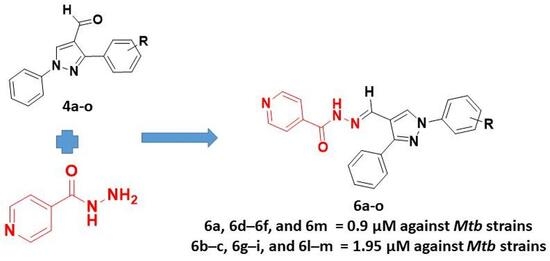
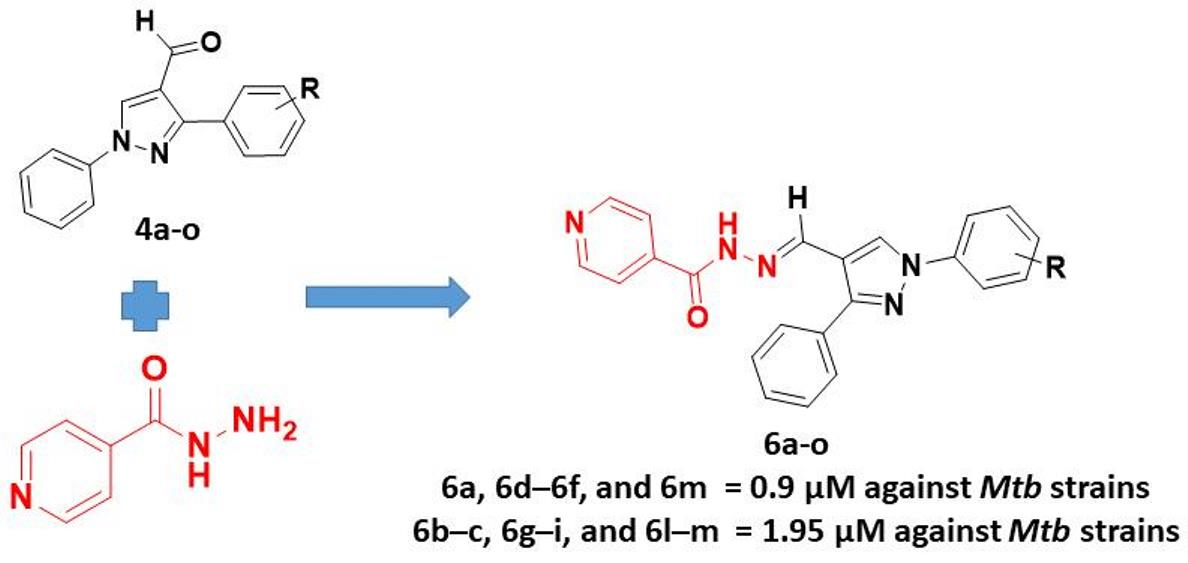
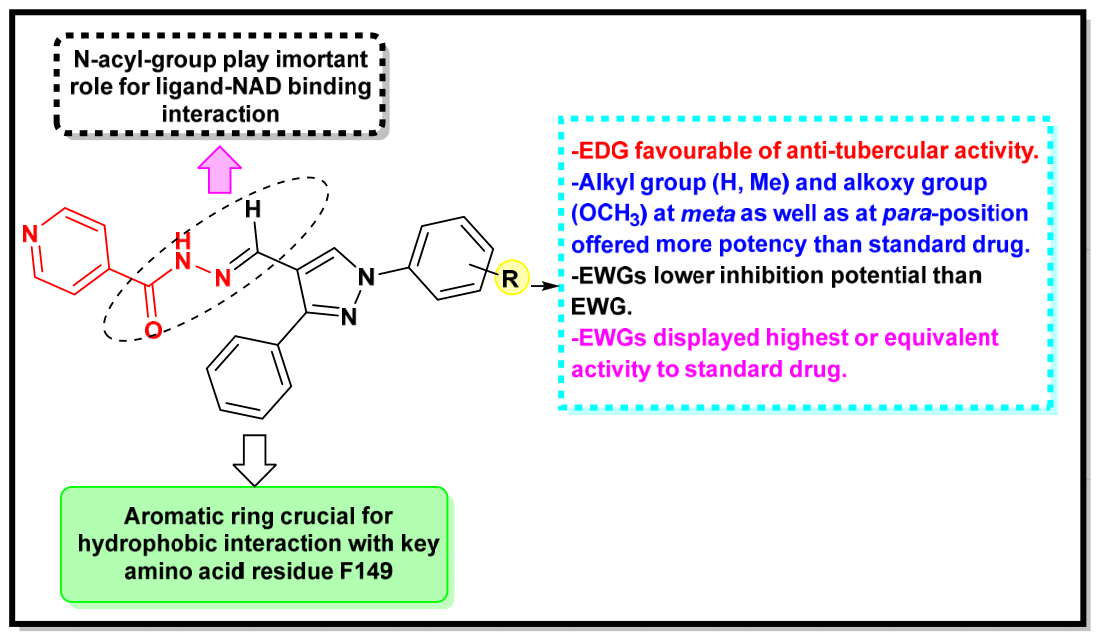
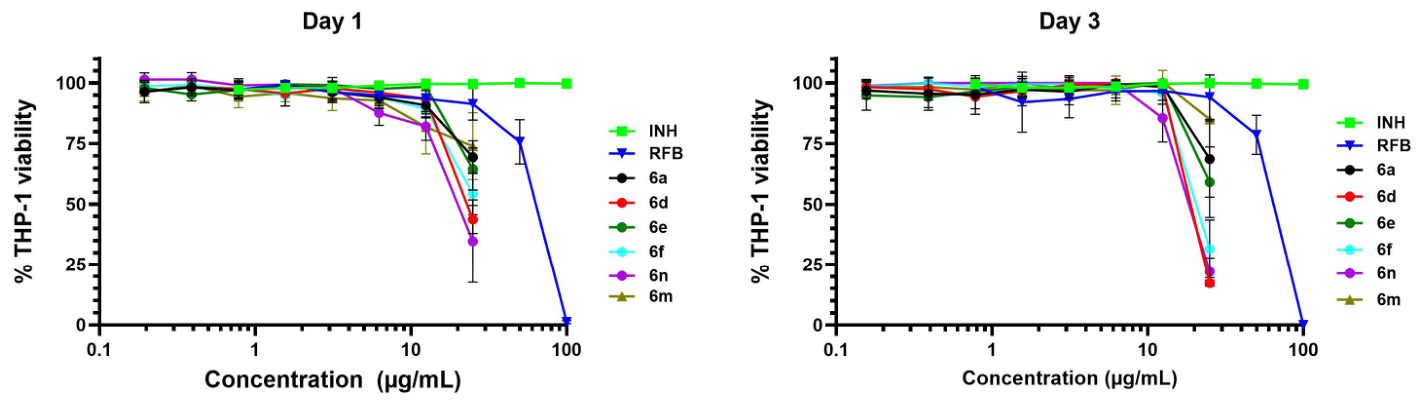
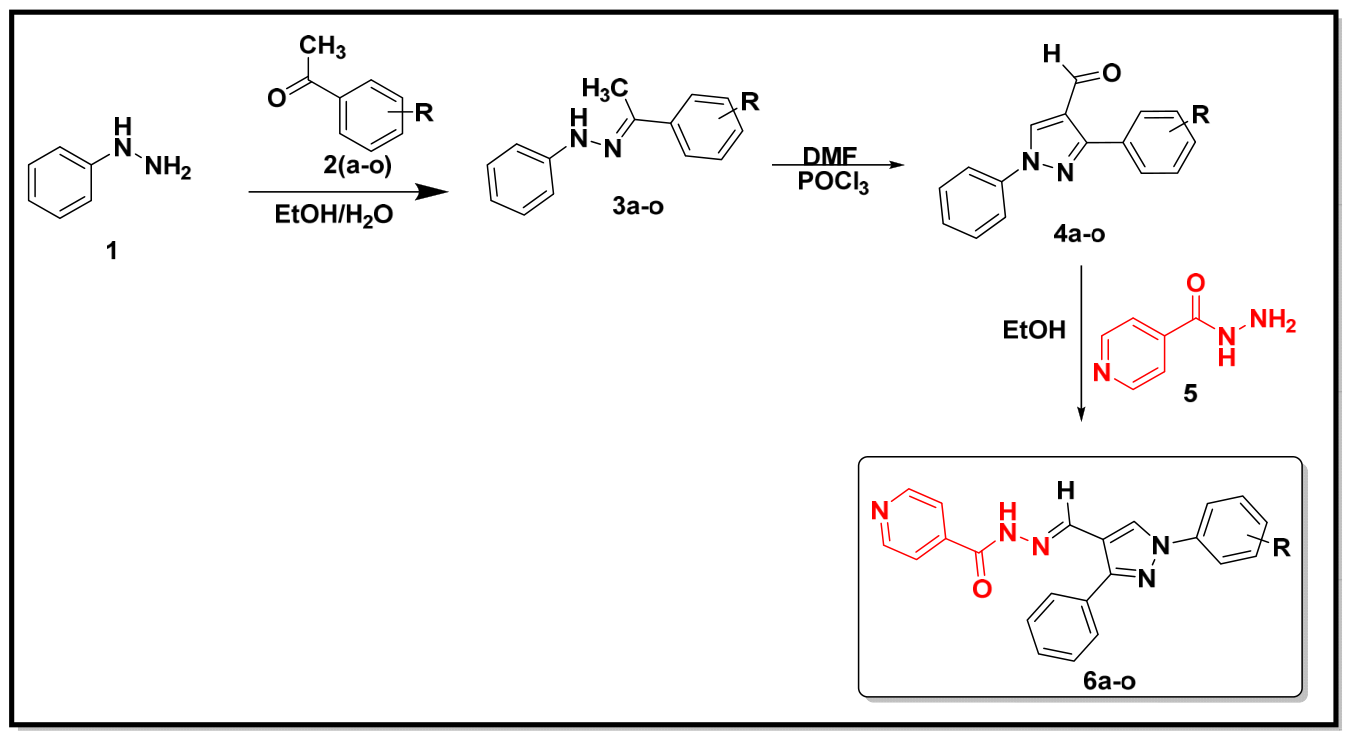
A series of INH–pyrazole molecular hybrids (6ao) was synthesized and evaluated for in vitro anti-tubercular activity against drug-susceptible, multidrug-resistant (MDR), and extensively drug-resistant (XDR) Mycobacterium tuberculosis strains, alongside their corresponding precursors (4ao), using isoniazid (INH) as the reference drug. Overall, the hybrid compounds exhibited inhibitory activity comparable to or exceeding that of INH against the drug-susceptible strain. Among the series, compounds 6a, 6d6f, and 6m demonstrated the highest potency, with a minimum inhibitory concentration (MIC) of 0.9 µM, corresponding to an approximately 4.3-fold enhancement relative to INH. Compounds 6b,c, 6gi, and 6l,m also showed noticeable activity (MIC = 1.95 µM), representing an approximate twofold improvement over INH and significantly outperforming their respective precursors. Notably, compound 6o exhibited enhanced activity against the XDR strain (MIC = 121 µM), reflecting an approximately 2.8-fold improvement compared to precursor 4o (MIC > 341 µM), thereby highlighting the advantage of molecular hybridization. However, all compounds displayed diminished activity relative to INH against the resistant strains. Against the MDR strain, compounds 4h, 6e, and 6g displayed measurable activity, with MIC values of 76, 125, and 112 µM, respectively. Cytotoxicity assessment using THP-1 human monocytic cells revealed low toxicity, with all tested compounds maintaining acceptable cell viability at 10 µg/mL. In addition, in silico ADME analysis indicated that the hybrid molecules comply with key drug-likeness criteria. Collectively, these findings suggest that INH–pyrazole hybrids represent promising lead scaffolds for the development of next-generation anti-tubercular agents.
Keywords: Mycobacterium tuberculosis; pyrazole; hydrazone; molecular hybrids; isoniazid; drug-likeness Mycobacterium tuberculosis; pyrazole; hydrazone; molecular hybrids; isoniazid; drug-likeness
Graphical Abstract