AKT2 Exon 3 Variants and Their Prevalence in Prostate Cancer Patients: Insights from a Jordanian Clinical Cohort
 , , , , ,
Abstract
1. Introduction
2. Results
3. Discussion
4. Materials and Methods
4.1. Samples Collection
4.2. DNA Extraction
4.3. Primer Design for AKT2 Exon 3 Amplification Using PCR
4.4. DNA Sequencing
4.5. Data Analysis
5. Conclusions
Author Contributions
Funding
Institutional Review Board Statement
Informed Consent Statement
Data Availability Statement
Conflicts of Interest
Abbreviations
References
- Falkenbach, F.; Le, Q.C.; Longoni, M.; Marmiroli, A.; Catanzaro, C.; Nicolazzini, M.; Polverino, F.; Tian, Z.; Goyal, J.A.; Schiavina, R.; et al. Years of life lost in metastatic and locally advanced prostate cancer. Eur. Urol. Oncol. 2025, 8, 961–967. [Google Scholar] [CrossRef] [PubMed]
- Bray, F.; Laversanne, M.; Sung, H.; Ferlay, J.; Siegel, R.L.; Soerjomataram, I.; Jemal, A. Global cancer statistics 2022: GLOBOCAN estimates of incidence and mortality worldwide for 36 cancers in 185 countries. CA Cancer J. Clin. 2024, 74, 229–263. [Google Scholar] [CrossRef] [PubMed]
- Ofner, H.; Kramer, G.; Shariat, S.F.; Hassler, M.R. TP53 deficiency in the natural history of prostate cancer. Cancers 2025, 17, 645. [Google Scholar] [CrossRef]
- Markozannes, G.; Tzoulaki, I.; Karli, D.; Evangelou, E.; Ntzani, E.; Gunter, M.J.; Norat, T.; Ioannidis, J.P.; Tsilidis, K.K. Diet, body size, physical activity and risk of prostate cancer: An umbrella review of the evidence. Eur. J. Cancer 2016, 69, 61–69. [Google Scholar] [CrossRef]
- Ni Raghallaigh, H.; Eeles, R.J.F.C. Genetic predisposition to prostate cancer: An update. Fam. Cancer 2022, 21, 101–114. [Google Scholar] [CrossRef]
- Berenguer, C.V.; Pereira, F.; Câmara, J.S.; Pereira, J.A. Underlying features of prostate cancer—Statistics, risk factors, and emerging methods for its diagnosis. Curr. Oncol. 2023, 30, 2300–2321. [Google Scholar] [CrossRef]
- Bergengren, O.; Pekala, K.R.; Matsoukas, K.; Fainberg, J.; Mungovan, S.F.; Bratt, O.; Bray, F.; Brawley, O.; Luckenbaugh, A.N.; Mucci, L.; et al. 2022 update on prostate cancer epidemiology and risk factors—A systematic review. Eur. Urol. 2023, 84, 191–206. [Google Scholar] [CrossRef]
- Arenas-Gallo, C.; Owiredu, J.; Weinstein, I.; Lewicki, P.; Basourakos, S.P.; Vince, R., Jr.; Al Hussein Al Awamlh, B.; Schumacher, F.R.; Spratt, D.E.; Barbieri, C.E.; et al. Race and prostate cancer: Genomic landscape. Nat. Rev. Urol. 2022, 19, 547–561. [Google Scholar] [CrossRef]
- Cotter, K.; Rubin, M.A. The evolving landscape of prostate cancer somatic mutations. Prostate 2022, 82, S13–S24. [Google Scholar] [CrossRef] [PubMed]
- Ecke, T.H.; Schlechte, H.H.; Schiemenz, K.; Sachs, M.D.; Lenk, S.V.; Rudolph, B.D.; Loening, S.A. TP53 gene mutations in prostate cancer progression. Anticancer research. Anticancer. Res. 2010, 30, 1579–1586. [Google Scholar]
- Al Zoubi, M.S.; Otoum, R.; Alorjani, M.S.; Al Bashir, S.; Al Trad, B.; Abualrja, M.I.; Al-Khatib, S.M.; Al-Batayneh, K. TP53, SPOP and PIK3CA genes status in prostate cancer. Asian Pac. J. Cancer Prev. 2020, 21, 3365. [Google Scholar] [CrossRef]
- Angele, S.; Falconer, A.; Edwards, S.; Dörk, T.; Bremer, M.; Moullan, N.; Chapot, B.; Muir, K.; Houlston, R.; Norman, A.R.; et al. ATM polymorphisms as risk factors for prostate cancer development. Br. J. Cancer 2004, 91, 783–787. [Google Scholar] [CrossRef]
- Leongamornlert, D.; Mahmud, N.; Tymrakiewicz, M.; Saunders, E.; Dadaev, T.; Castro, E.; Goh, C.; Govindasami, K.; Guy, M.; O’Brien, L.; et al. Germline BRCA1 mutations increase prostate cancer risk. Br. J. Cancer 2012, 106, 1697–1701. [Google Scholar] [CrossRef]
- Junejo, N.N.; AlKhateeb, S.S. BRCA2 gene mutation and prostate cancer risk: Comprehensive review and update. Saudi Med. J. 2020, 41, 9. [Google Scholar] [CrossRef]
- Alasmar, A.A.; Al-Alami, Z.; Zein, S.; Al-Smadi, A.; Al Bashir, S.; Alorjani, M.S.; Al-Zoubi, R.M.; Al Zoubi, M. Novel mutations in AKT1 gene in prostate cancer patients in Jordan. Curr. Issues Mol. Biol. 2024, 46, 9856–9866. [Google Scholar] [CrossRef]
- Maier, C.; Vesovic, Z.; Bachmann, N.; Herkommer, K.; Braun, A.K.; Surowy, H.M.; Assum, G.; Paiss, T.; Vogel, W. Germline mutations of the MSR1 gene in prostate cancer families from Germany. Hum. Mutat. 2006, 27, 98–102. [Google Scholar] [CrossRef]
- Rökman, A.; Ikonen, T.; Seppälä, E.H.; Nupponen, N.; Autio, V.; Mononen, N.; Bailey-Wilson, J.; Trent, J.; Carpten, J.; Matikainen, M.P.; et al. Germline alterations of the RNASEL gene, a candidate HPC1 gene at 1q25, in patients and families with prostate cancer. Am. J. Hum. Genet. 2002, 70, 1299–1304. [Google Scholar] [CrossRef]
- Javed, S.; Langley, S.E. Importance of HOX genes in normal prostate gland formation, prostate cancer development and its early detection. BJU Int. 2014, 113, 535–540. [Google Scholar] [CrossRef] [PubMed]
- Rökman, A.; Ikonen, T.; Mononen, N.; Autio, V.; Matikainen, M.P.; Koivisto, P.A.; Tammela, T.L.; Kallioniemi, O.P.; Schleutker, J. ELAC2/HPC2 involvement in hereditary and sporadic prostate cancer. Cancer Res. 2001, 61, 6038–6041. [Google Scholar] [PubMed]
- Sekhoacha, M.; Riet, K.; Motloung, P.; Gumenku, L.; Adegoke, A.; Mashele, S.J.M. Prostate cancer review: Genetics, diagnosis, treatment options, and alternative approaches. Molecules 2022, 27, 5730. [Google Scholar] [CrossRef] [PubMed]
- Salim, A.-Z.M.; Khalid, A.-B.; Bahaa, A.-T.; Mohammed, A.; Samir, A.-B.; Mohammad, A.-H.; Riyad, M.; Ismail, M. Polymorphisms of 5’-UTR of rad51 gene in prostate cancer. Экoлoгическая генетика 2018, 16, 24–29. [Google Scholar]
- Degan, S.E.; Gelman, I.H. Emerging roles for AKT isoform preference in cancer progression pathways. Mol. Cancer Res. 2021, 19, 1251–1257. [Google Scholar] [CrossRef]
- Kyung, H.Y.; Lauring, J.J.O. Recurrent AKT mutations in human cancers: Functional consequences and effects on drug sensitivity. Oncotarget 2015, 7, 4241. [Google Scholar] [CrossRef]
- Song, M.; Bode, A.M.; Dong, Z.; Lee, M.H. AKT as a therapeutic target for cancer. Cancer Res. 2019, 79, 1019–1031. [Google Scholar] [CrossRef]
- Sakamoto, K.; Arnolds, D.E.; Fujii, N.; Kramer, H.F.; Hirshman, M.F.; Goodyear, L.J. Role of Akt2 in contraction-stimulated cell signaling and glucose uptake in skeletal muscle. Am. J. Physiol. Endocrinol. Metab. 2006, 291, E1031–E1037. [Google Scholar] [CrossRef]
- Mäkinen, S.; Datta, N.; Rangarajan, S.; Nguyen, Y.H.; Olkkonen, V.M.; Latva-Rasku, A.; Nuutila, P.; Laakso, M.; Koistinen, H.A. Finnish-specific AKT2 gene variant leads to impaired insulin signalling in myotubes. J. Mol. Endocrinol. 2023, 70, e210285. [Google Scholar] [CrossRef]
- Altomare, D.A.; Testa, J.R. Perturbations of the AKT signaling pathway in human cancer. Oncogene 2005, 24, 7455–7464. [Google Scholar] [CrossRef] [PubMed]
- Maekawa, S.; Takata, R.; Obara, W. Molecular mechanisms of prostate cancer development in the precision medicine era: A comprehensive review. Cancers 2024, 16, 523. [Google Scholar] [CrossRef]
- Nandwa, J.O.; Mehmood, A.; Mahjabeen, I.; Raheem, K.Y.; Hamadou, M.; Raimi, M.Z.; Kayani, M.A. miR-4716–3p and the target AKT2 Gene/rs2304186 SNP are associated with blood cancer pathogenesis in Pakistani population. Non-Coding RNA Res. 2024, 9, 695–703. [Google Scholar] [CrossRef] [PubMed]
- Miao, L.; Wang, B.; Zhang, J.; Yin, L.; Pu, Y.J.E.S.; Research, P. A functional SNP in miR-625-5p binding site of AKT2 3′ UTR is associated with noise-induced hearing loss susceptibility in the Chinese population. Environ. Sci. Pollut. Res. Int. 2021, 28, 40782–40792. [Google Scholar] [CrossRef] [PubMed]
- Sun, X.Q.; Luo, Y.Y.; An, L.W.; Chu, L.; Huo, L.L.; Han, X.Y.; Zhou, X.H.; Ren, Q.; Ji, L.N. Contribution of the Akt2 gene to type 2 diabetes in the Chinese Han population. Chin. Med. J. 2011, 124, 725–728. [Google Scholar]
- Manning, A.; Highland, H.M.; Gasser, J.; Sim, X.; Tukiainen, T.; Fontanillas, P.; Grarup, N.; Rivas, M.A.; Mahajan, A.; Locke, A.E.; et al. A Low-Frequency Inactivating Variant Enriched in the Finnish Population Is Associated with Fasting Insulin Levels and Type 2 Diabetes Risk. Diabetes 2017, 66, 2019–2032. [Google Scholar] [CrossRef] [PubMed]
- Sasaki, H.; Okuda, K.; Kawano, O.; Yukiue, H.; Yano, M.; Fujii, Y. AKT1 and AKT2 mutations in lung cancer in a Japanese population. Mol. Med. Rep. 2008, 1, 663–666. [Google Scholar] [CrossRef]
- Mitala, Y.; Ssenkumba, B.; Birungi, A.; Kiconco, R.; Mutakooha, M.M.; Atwine, R. A cross-sectional study of ERG expression and the relationship with clinicopathological features of Prostate cancer in Southwestern Uganda. Diagn. Pathol. 2024, 19, 67. [Google Scholar] [CrossRef]
- Shorning, B.Y.; Dass, M.S.; Smalley, M.J.; Pearson, H.B. The PI3K-AKT-mTOR pathway and prostate cancer: At the crossroads of AR, MAPK, and WNT signaling. Int. J. Mol. Sci. 2020, 21, 4507. [Google Scholar] [CrossRef]
- Glaviano, A.; Foo, A.S.; Lam, H.Y.; Yap, K.C.; Jacot, W.; Jones, R.H.; Eng, H.; Nair, M.G.; Makvandi, P.; Geoerger, B.; et al. PI3K/AKT/mTOR signaling transduction pathway and targeted therapies in cancer. Mol. Cancer 2023, 22, 138. [Google Scholar] [CrossRef]
- Fujio, Y.; Mitsuuchi, Y.; Testa, J.; Walsh, K. Differentiation. Activation of Akt2 Inhibits anoikis and apoptosis induced by myogenic differentiation. Cell Death Differ. 2001, 8, 1207–1212. [Google Scholar] [CrossRef]
- Arboleda, M.J.; Lyons, J.F.; Kabbinavar, F.F.; Bray, M.R.; Snow, B.E.; Ayala, R.; Danino, M.; Karlan, B.Y.; Slamon, D.J. Overexpression of AKT2/protein kinase Bβ leads to up-regulation of β1 integrins, increased invasion, and metastasis of human breast and ovarian cancer cells. Cancer Res. 2003, 63, 196–206. [Google Scholar]
- Linnerth-Petrik, N.M.; Santry, L.A.; Moorehead, R.; Juecker, M.; Wootton, S.K.; Petrik, J. Akt isoform specific effects in ovarian cancer progression. Oncotarget 2016, 7, 74820. [Google Scholar] [CrossRef] [PubMed]
- Cheng, J.Q.; Ruggeri, B.; Klein, W.M.; Sonoda, G.; Altomare, D.A.; Watson, D.K.; Testa, J.R. Amplification of AKT2 in human pancreatic cells and inhibition of AKT2 expression and tumorigenicity by antisense RNA. Proc. Natl. Acad. Sci. USA 1996, 93, 3636–3641. [Google Scholar] [CrossRef] [PubMed]
- Hassan, D.; Menges, C.W.; Testa, J.R.; Bellacosa, A. Research CC. AKT kinases as therapeutic targets. J. Exp. Clin. Cancer Res. 2024, 43, 313. [Google Scholar] [CrossRef] [PubMed]
- Chau, N.-M.; Ashcroft, M. Akt2: A role in breast cancer metastasis. Breast Cancer Res. 2003, 6, 55. [Google Scholar] [CrossRef]
- Attoub, S.; Arafat, K.; Kamel Hammadi, N.; Mester, J.; Gaben, A.-M. Akt2 knock-down reveals its contribution to human lung cancer cell proliferation, growth, motility, invasion and endothelial cell tube formation. Sci. Rep. 2015, 5, 12759, Correction in Sci. Rep. 2022, 12, 10431. [Google Scholar] [CrossRef]
- Liu, T.; Zhu, J.; Du, W.; Ning, W.; Zhang, Y.; Zeng, Y.; Liu, Z.; Huang, J.-A. AKT2 drives cancer progression and is negatively modulated by miR-124 in human lung adenocarcinoma. Respir. Res. 2020, 21, 227. [Google Scholar] [CrossRef] [PubMed]
- Rychahou, P.G.; Kang, J.; Gulhati, P.; Doan, H.Q.; Chen, L.A.; Xiao, S.Y.; Chung, D.H.; Evers, B.M. Akt2 overexpression plays a critical role in the establishment of colorectal cancer metastasis. Proc. Natl. Acad. Sci. USA 2008, 105, 20315–20320. [Google Scholar] [CrossRef]
- Zheng, B.; Geng, L.; Zeng, L.; Liu, F.; Huang, Q. AKT2 contributes to increase ovarian cancer cell migration and invasion through the AKT2-PKM2-STAT3/NF-κB axis. Cell. Signal. 2018, 45, 122–131. [Google Scholar] [CrossRef] [PubMed]
- Altomare, D.A.; Tanno, S.; De Rienzo, A.; Klein-Szanto, A.J.; Tanno, S.; Skele, K.L.; Hoffman, J.P.; Testa, J.R. Frequent activation of AKT2 kinase in human pancreatic carcinomas. J. Cell. Biochem. 2002, 87, 470–476. [Google Scholar] [CrossRef]



| Parameters | Data |
| Number of samples (N) | 123 |
| Range of age (years) | 39–96 |
| Age (Mean) | 71.57 |
| PSA score (Mean) | 53.21 |
| Gleason score (Median) | 8 |
| Mutation | Position | Mutation Type | Amino Acid Change | Codon Change | Recorded Genotype |
|---|---|---|---|---|---|
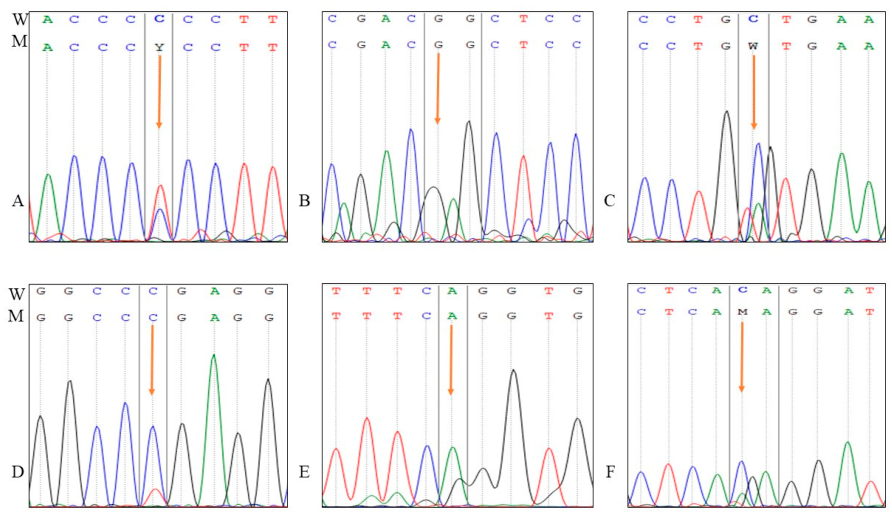
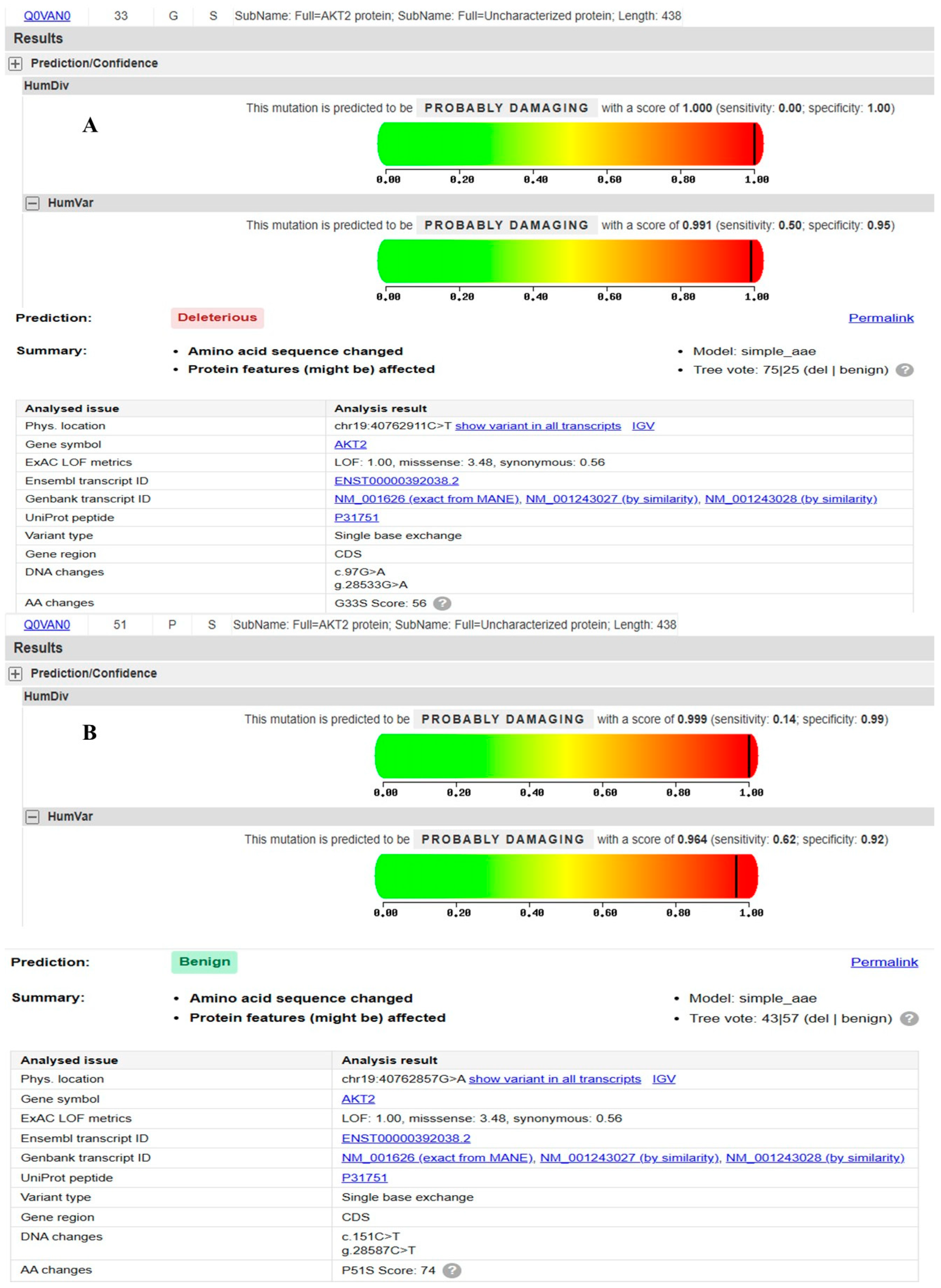
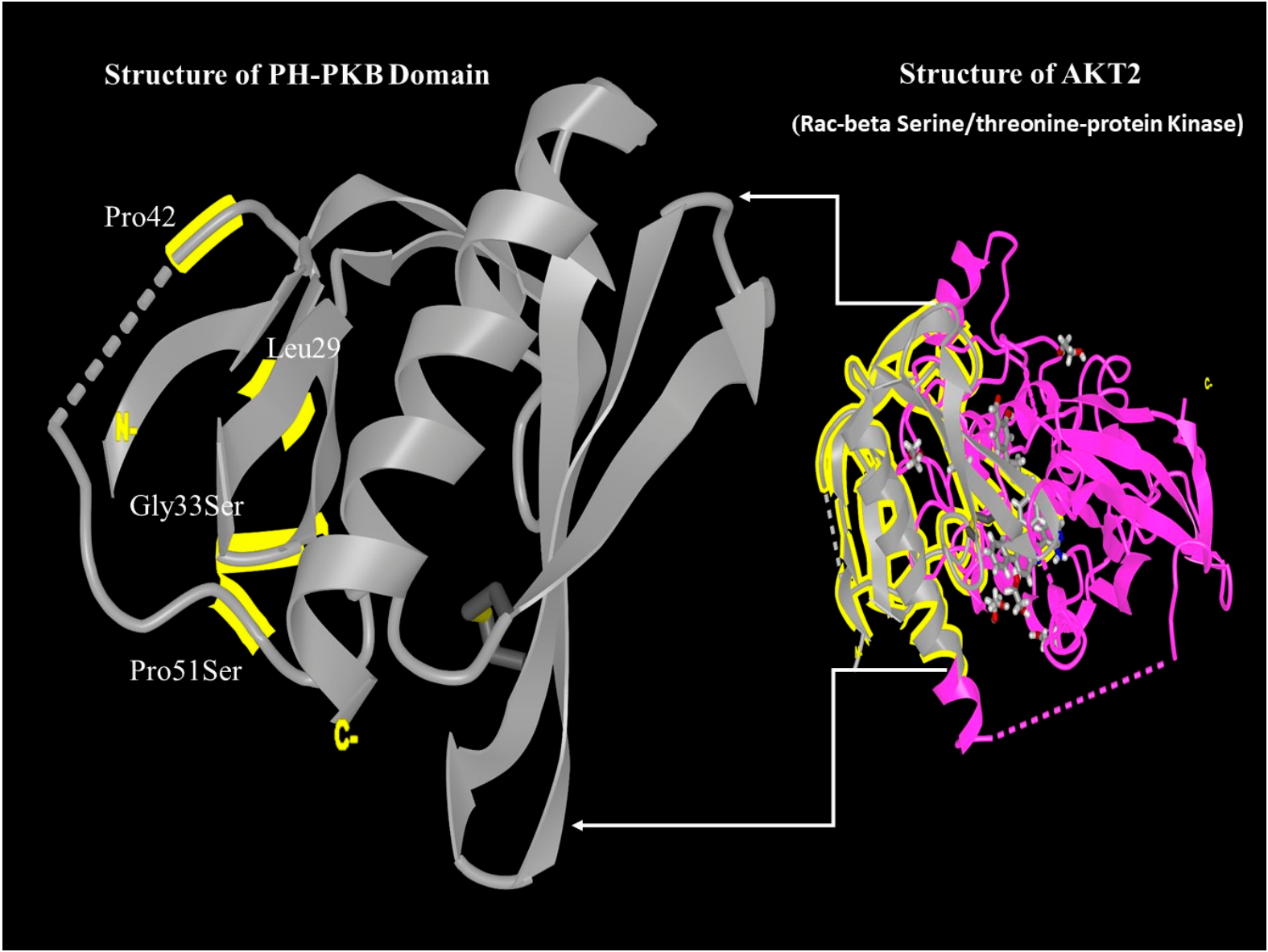
| rs201145928 | c.151C>T | Missense Variant | Pro51Ser | CCC > TCC | TT |
| rs1975585202 | c.97G>A | Missense Variant | Gly33Ser | GGC > AGC | GA |
| rs1975586566 | c.85C>T | Synonymous Variant | Leu29 | CTG > TTG | CT |
| rs1347826243 | c.126C>T | Synonymous Variant | Pro42 | CCC > CCT | CT |
| rs1975588070 | - | Splice Acceptor Variant | - | A > G | AG |
| rs2145305645 | c.175+40C>G | Intron Variant | - | - | CG |
| Parameter | Category | AKT2/Exon3 Mutation | p Value | ||
|---|---|---|---|---|---|
| Number | M | W | |||
| Age years | <70 | 44 | 1 | 43 | 0.2331 |
| 70–80 | 58 | 3 | 55 | ||
| <80 | 20 | 3 | 17 | ||
| No data | 1 | 0 | 1 | ||
| PSA Level ng/mL | <4 | 15 | 0 | 15 | 0.1052 |
| 4–20 | 34 | 4 | 30 | ||
| >20 | 39 | 0 | 39 | ||
| No data | 35 | 3 | 32 | ||
| Gleason score | <7 | 22 | 1 | 21 | 0.1793 |
| =7 | 35 | 1 | 34 | ||
| >7 | 63 | 4 | 59 | ||
| No data | 3 | 1 | 2 | ||
| Exon 3/AKT2 | |||
|---|---|---|---|
| Forward 5′-3′ | TTG TGA GTC ACC GTC ACA CT | ||
| Reverse 5′-3′ | GTT AGC TTT ACA GTG GGC TC | ||
| Operation | Temp °C | Time | cycles |
| Initial denaturation | 95 | 5 min | 1 cycle |
| Denaturation Annealing Elongation | 95 60 72 | 30 s 30 s 40 s | 40 cycles |
| Final elongation | 72 | 5 min | 1 cycle |
| Product size | 290 bp | ||
Disclaimer/Publisher’s Note: The statements, opinions and data contained in all publications are solely those of the individual author(s) and contributor(s) and not of MDPI and/or the editor(s). MDPI and/or the editor(s) disclaim responsibility for any injury to people or property resulting from any ideas, methods, instructions or products referred to in the content. |
© 2026 by the authors. Licensee MDPI, Basel, Switzerland. This article is an open access article distributed under the terms and conditions of the Creative Commons Attribution (CC BY) license.
Share and Cite
Rahahlah, N.; Al-Alami, Z.; Alorjani, M.S.; Al-Smadi, A.; Obeidat, S.; Otoom, R.; Al-Zoubi, R.M.; Al Bashir, S.; Al Zoubi, M.S. AKT2 Exon 3 Variants and Their Prevalence in Prostate Cancer Patients: Insights from a Jordanian Clinical Cohort. Int. J. Mol. Sci. 2026, 27, 4228. https://doi.org/10.3390/ijms27104228
Rahahlah N, Al-Alami Z, Alorjani MS, Al-Smadi A, Obeidat S, Otoom R, Al-Zoubi RM, Al Bashir S, Al Zoubi MS. AKT2 Exon 3 Variants and Their Prevalence in Prostate Cancer Patients: Insights from a Jordanian Clinical Cohort. International Journal of Molecular Sciences. 2026; 27(10):4228. https://doi.org/10.3390/ijms27104228
Chicago/Turabian StyleRahahlah, Nuseibah, Zina Al-Alami, Mohammed S. Alorjani, Asmaa Al-Smadi, Sewar Obeidat, Raed Otoom, Raed M. Al-Zoubi, Samir Al Bashir, and Mazhar Salim Al Zoubi. 2026. "AKT2 Exon 3 Variants and Their Prevalence in Prostate Cancer Patients: Insights from a Jordanian Clinical Cohort" International Journal of Molecular Sciences 27, no. 10: 4228. https://doi.org/10.3390/ijms27104228
APA StyleRahahlah, N., Al-Alami, Z., Alorjani, M. S., Al-Smadi, A., Obeidat, S., Otoom, R., Al-Zoubi, R. M., Al Bashir, S., & Al Zoubi, M. S. (2026). AKT2 Exon 3 Variants and Their Prevalence in Prostate Cancer Patients: Insights from a Jordanian Clinical Cohort. International Journal of Molecular Sciences, 27(10), 4228. https://doi.org/10.3390/ijms27104228