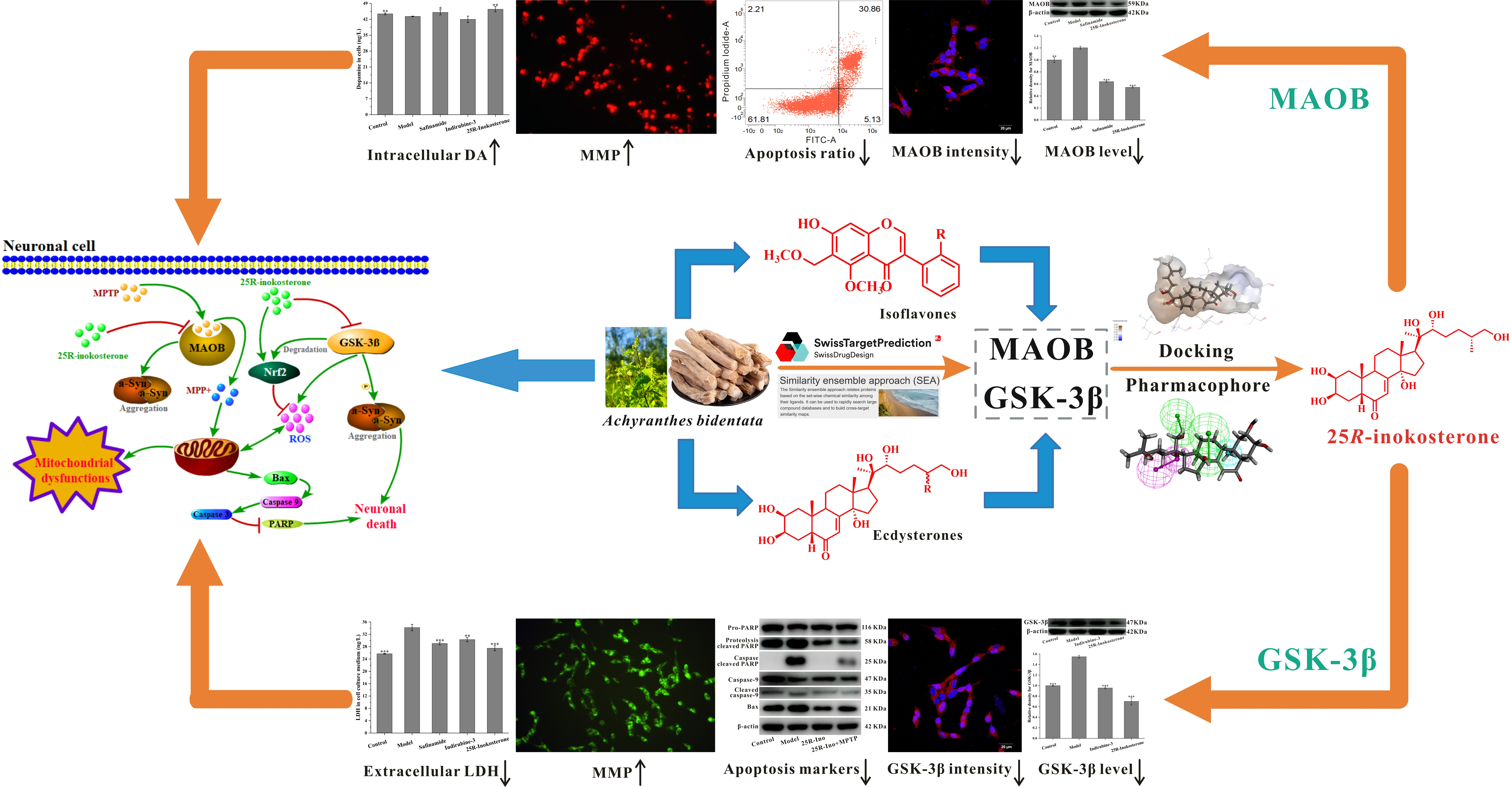
25R-Inokosterone from Achyranthes bidentata Ameliorates Parkinson’s Disease Pathology Predominantly via Nrf2/HO-1 Activation with Coordinated MAOB/GSK-3β Expression Downregulation: An In Vitro and In Silico Study


Abstract
1. Introduction
2. Results
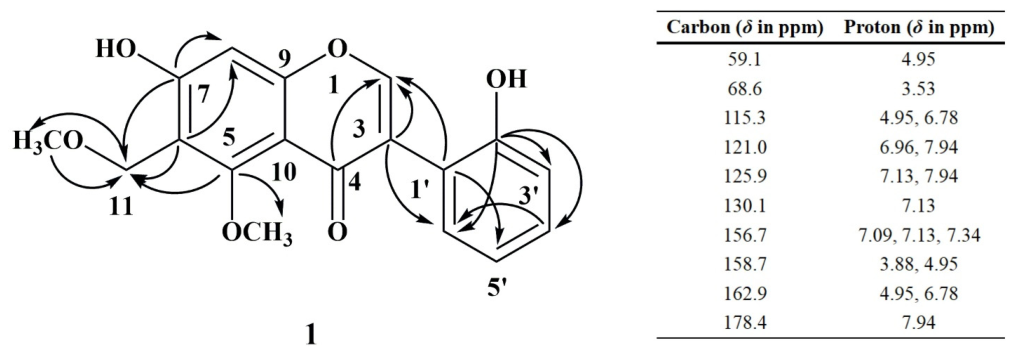
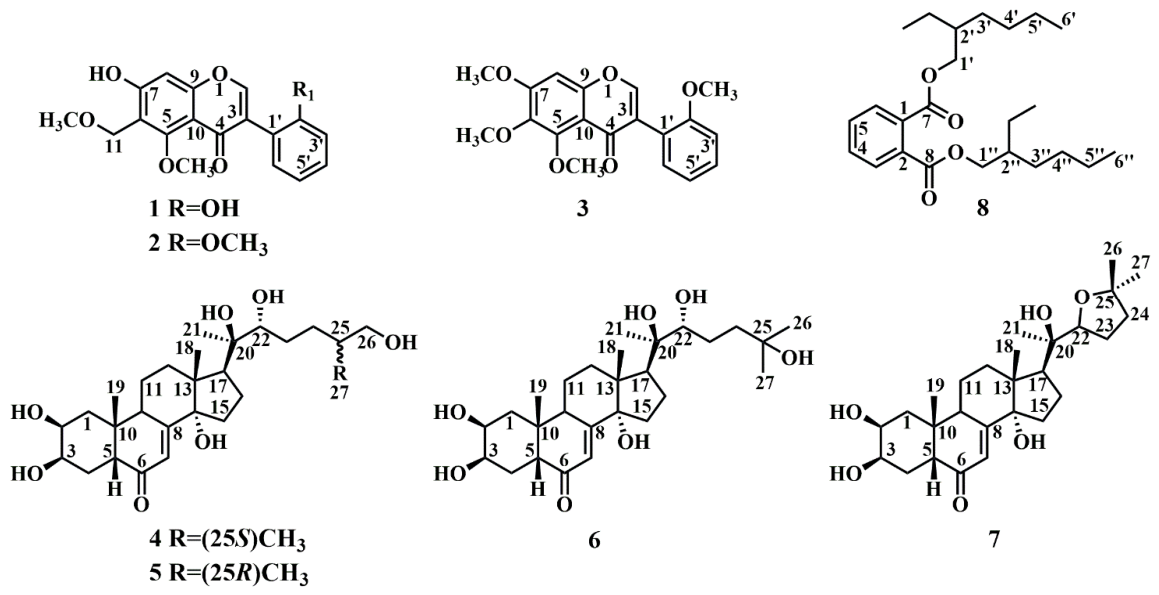
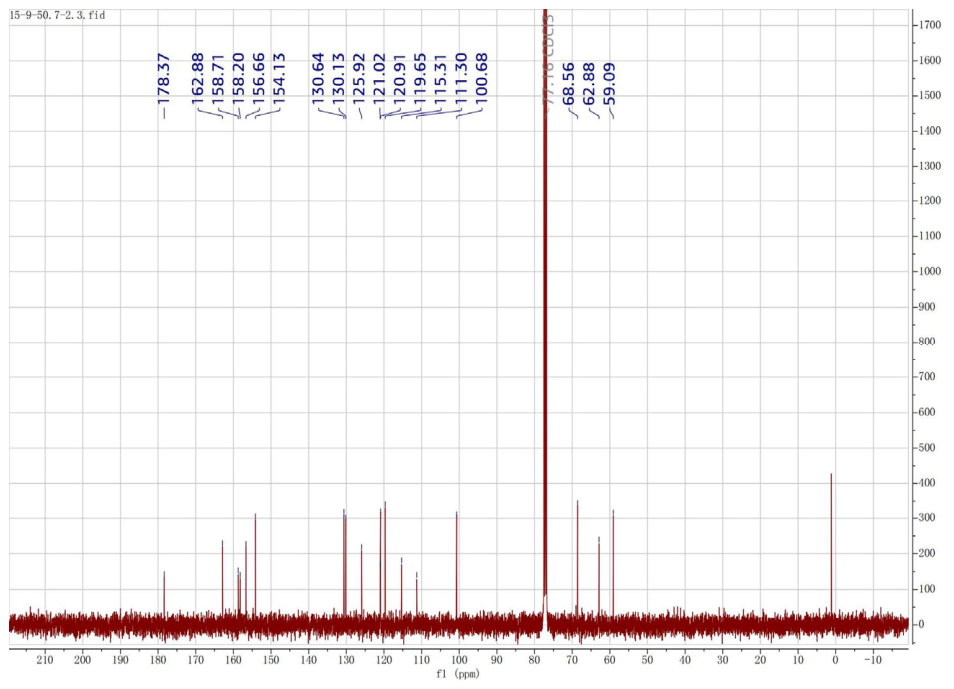
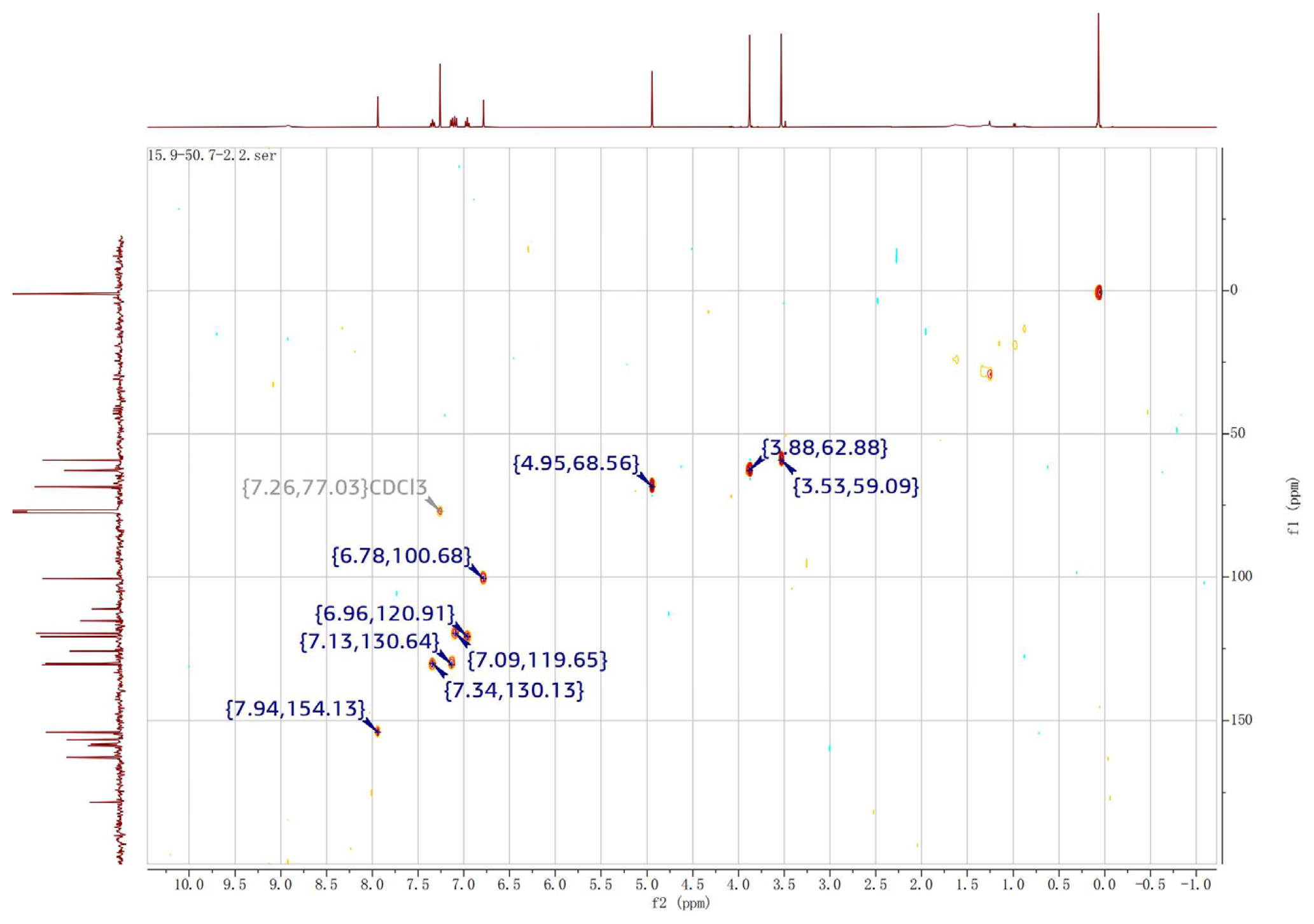
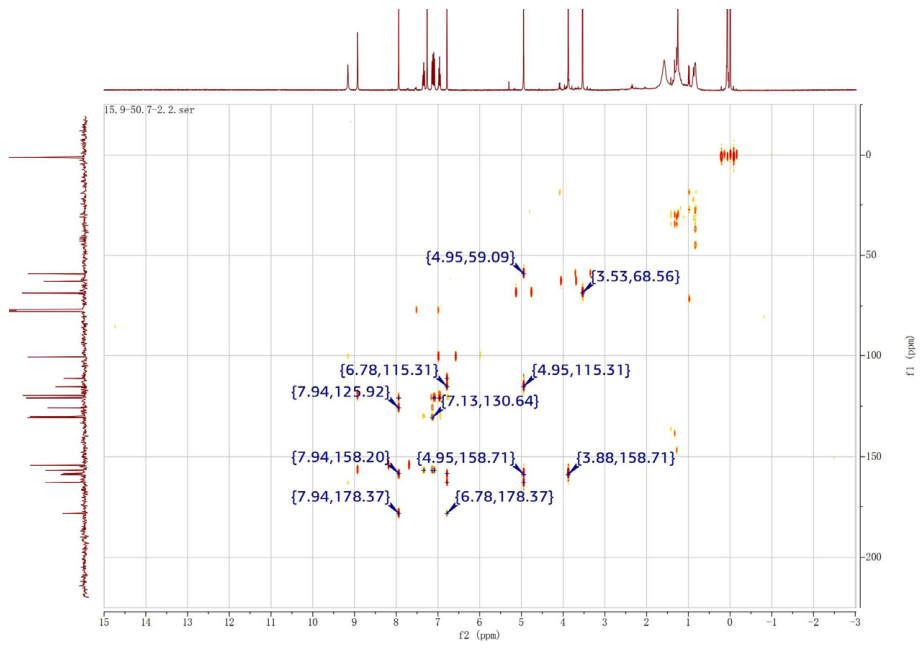
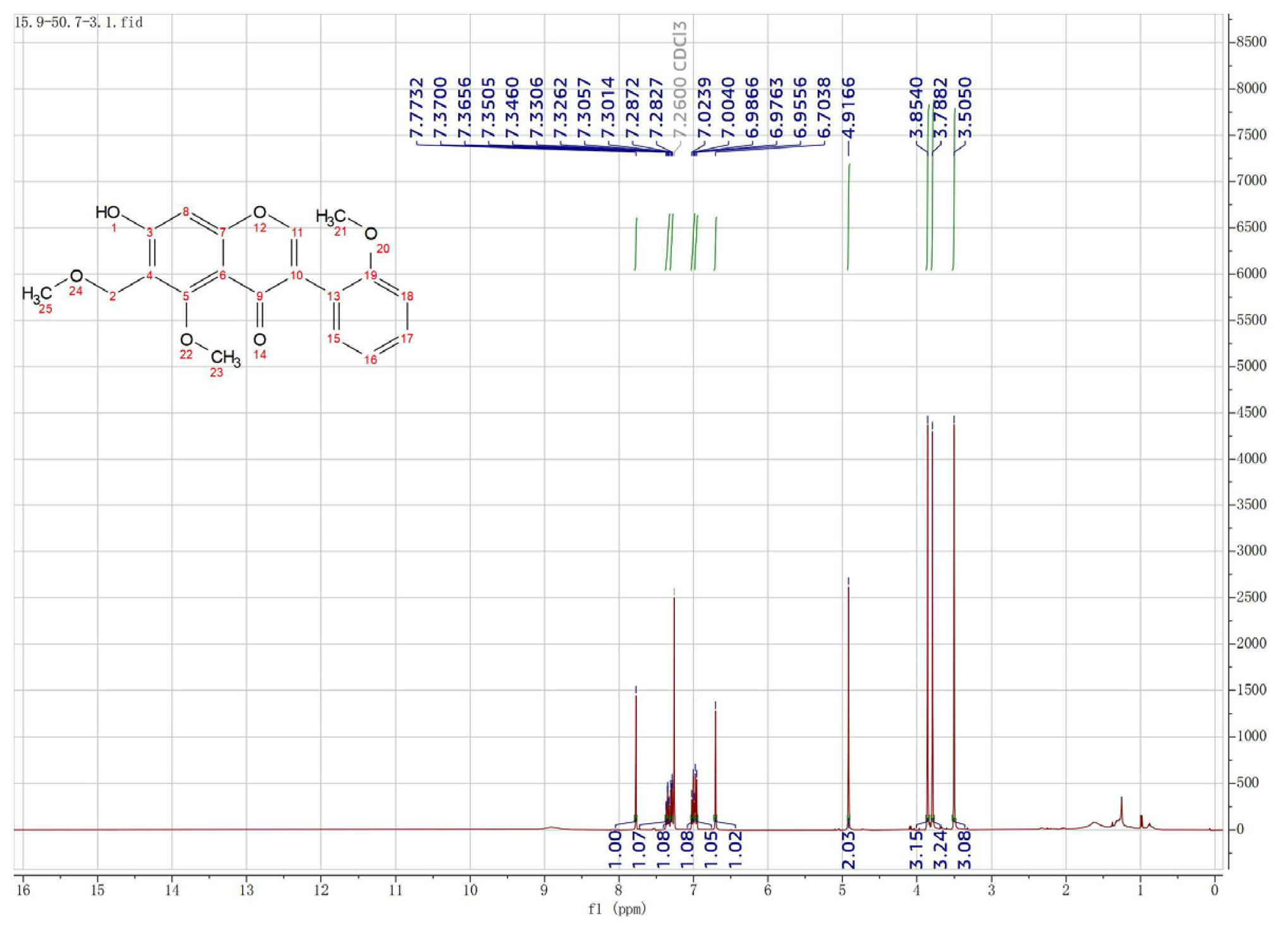
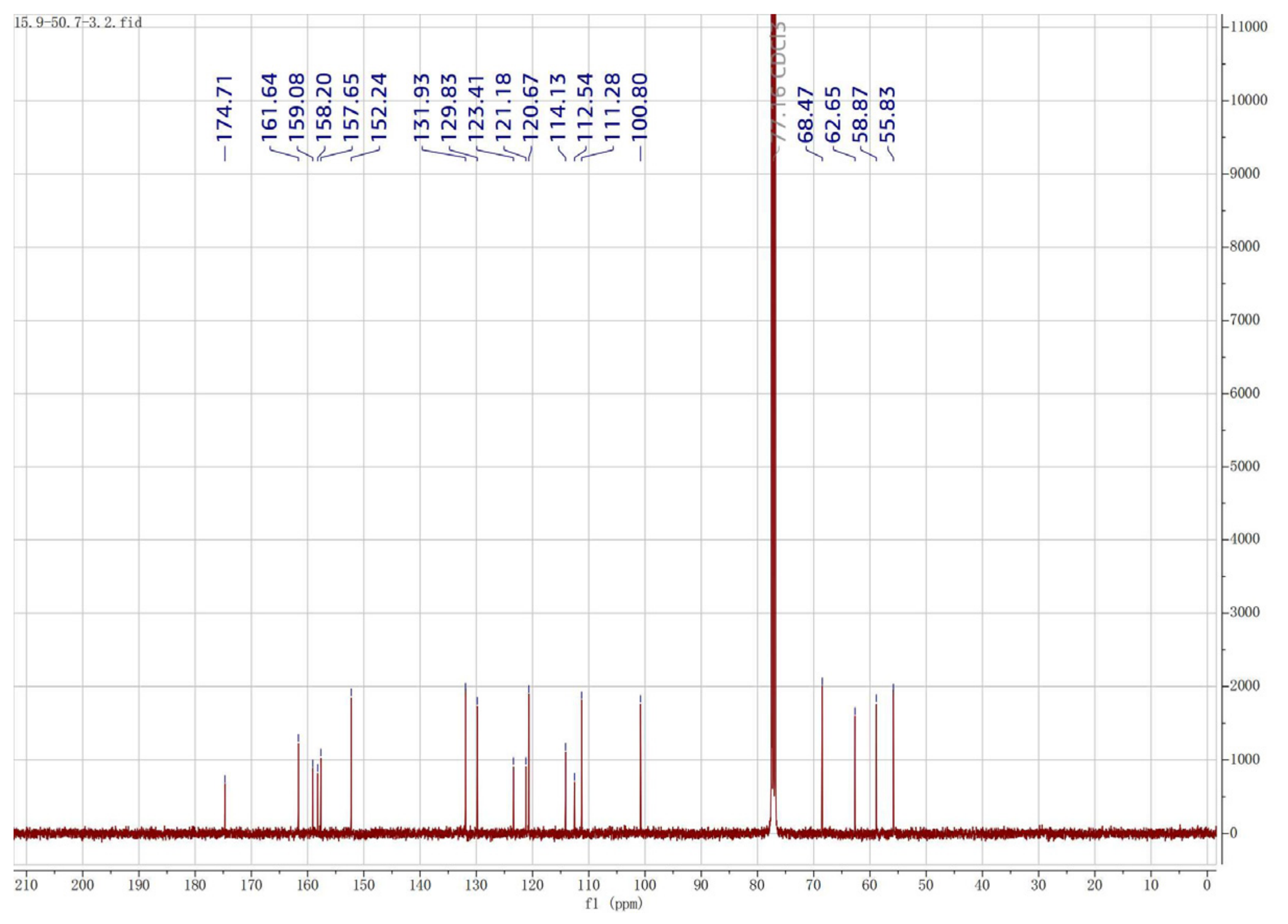
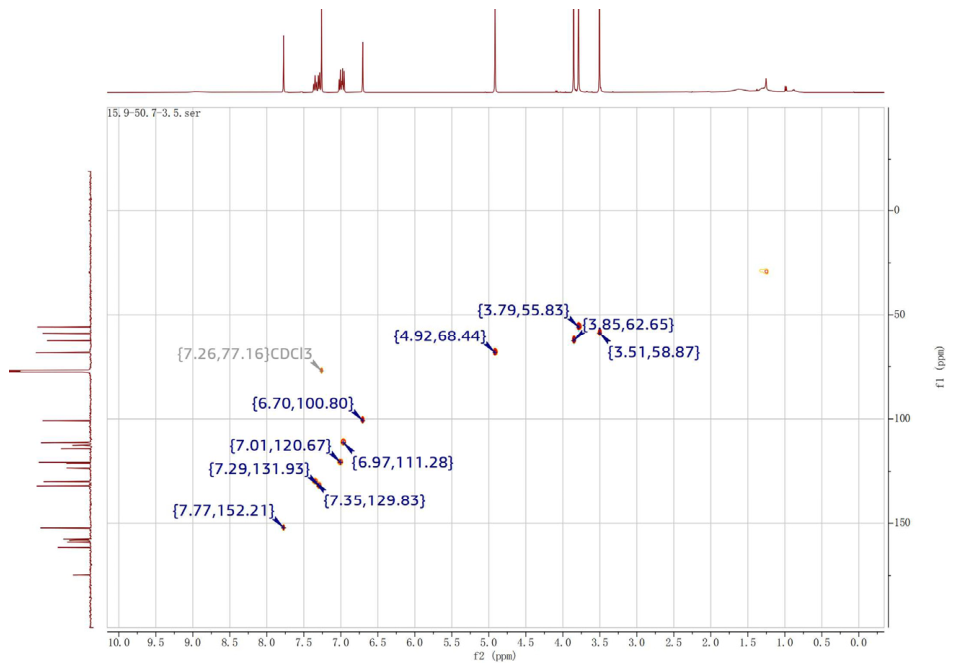
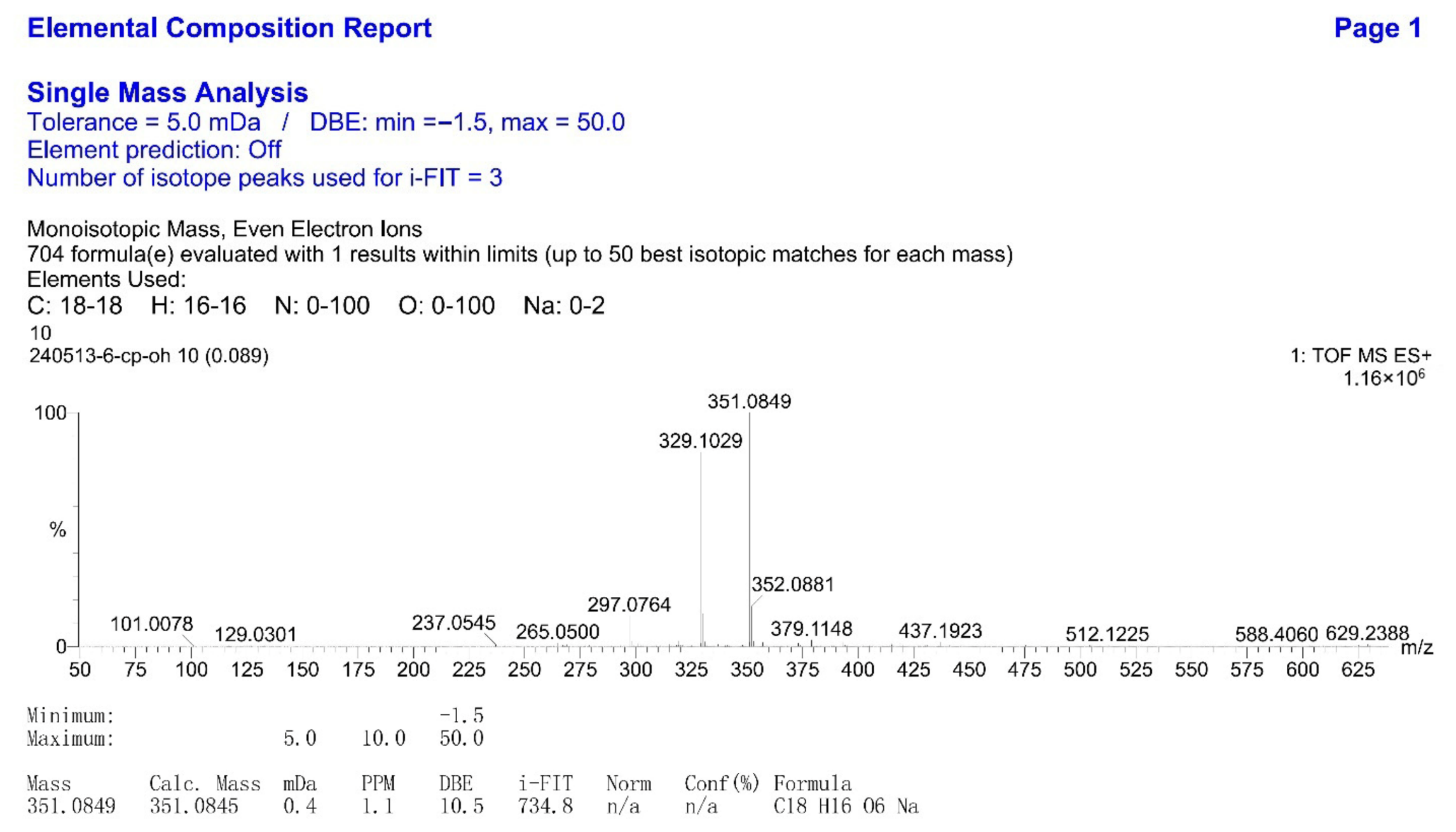
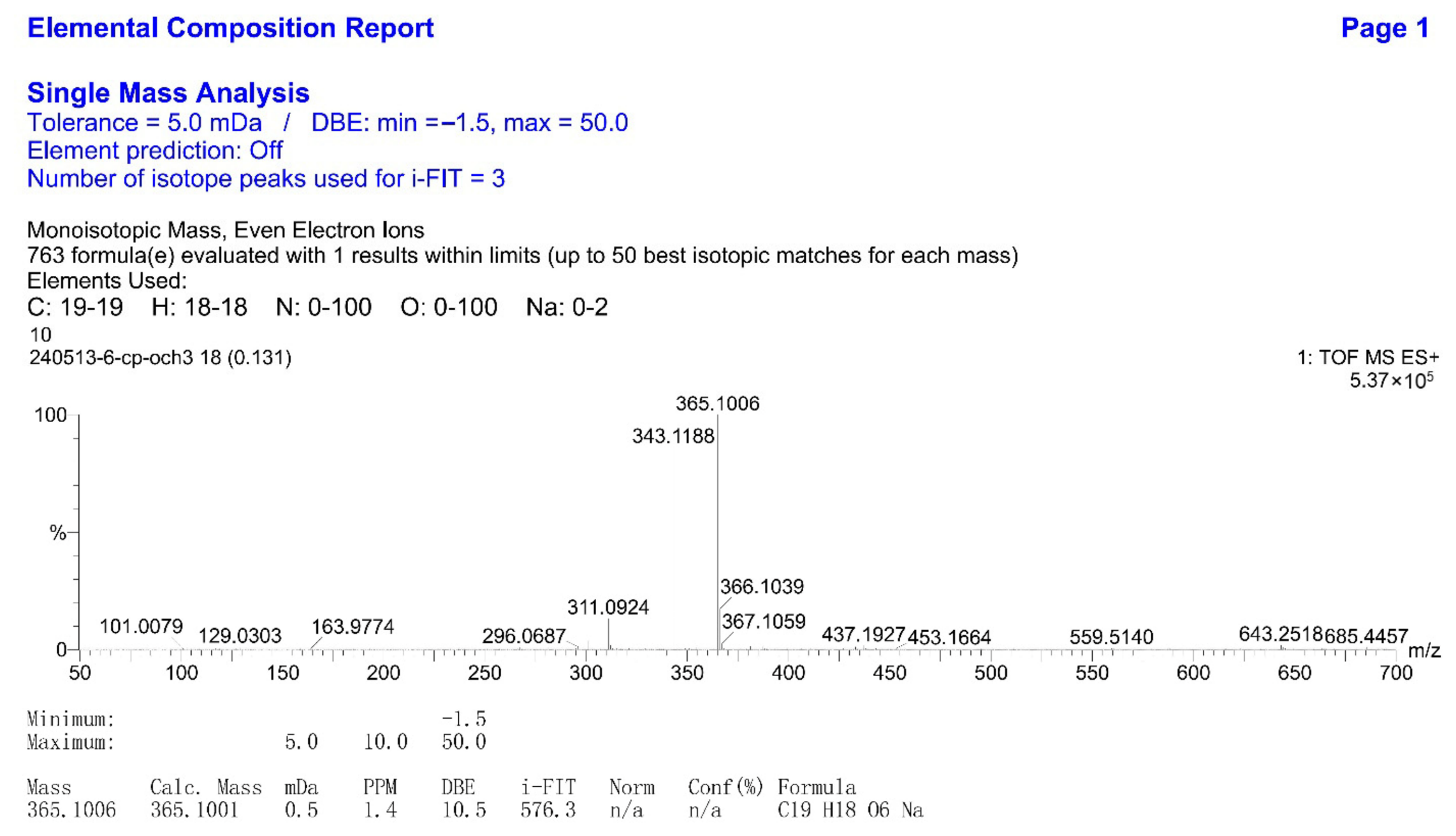
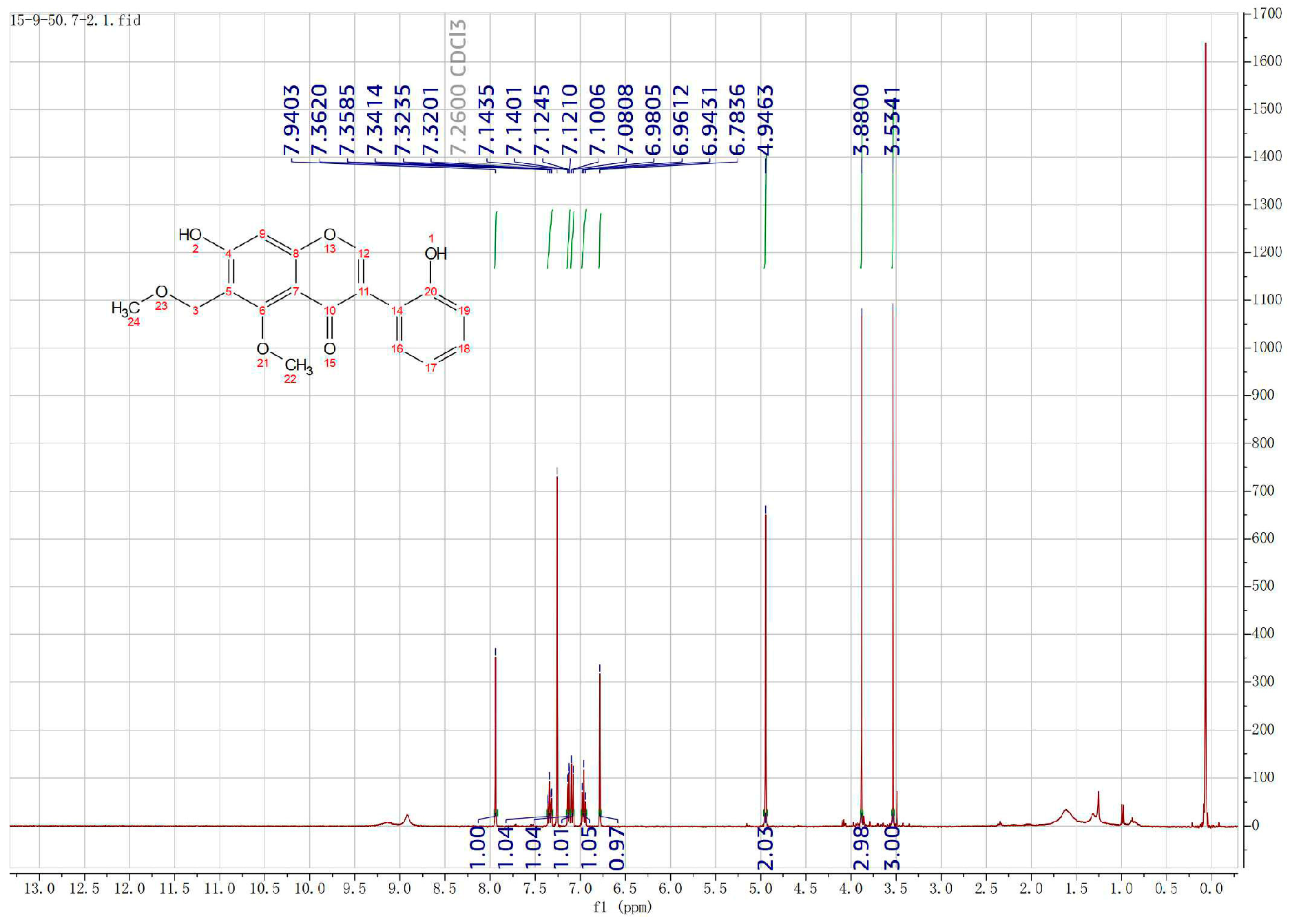
2.1. Structural Elucidation
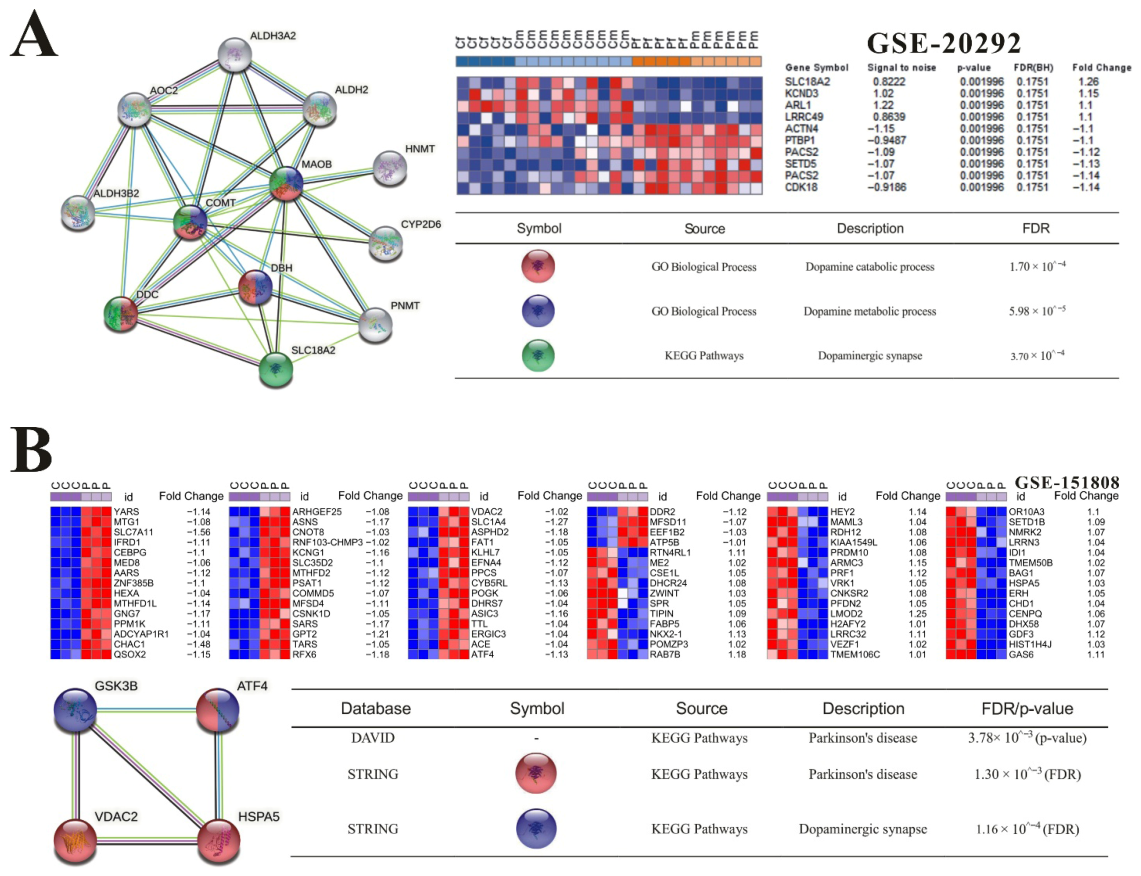
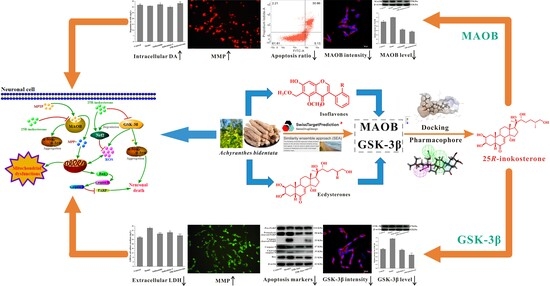
2.2. GSK-3β and MAOB Are Likely to Be the Binding Targets for the A. bidentata Compounds to Exert the Anti-Neurodegeneration Efficacy
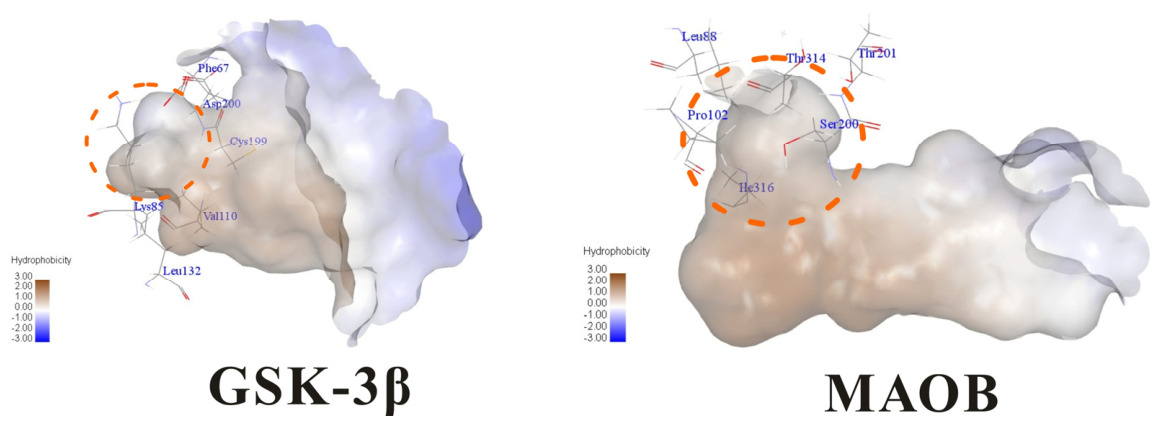
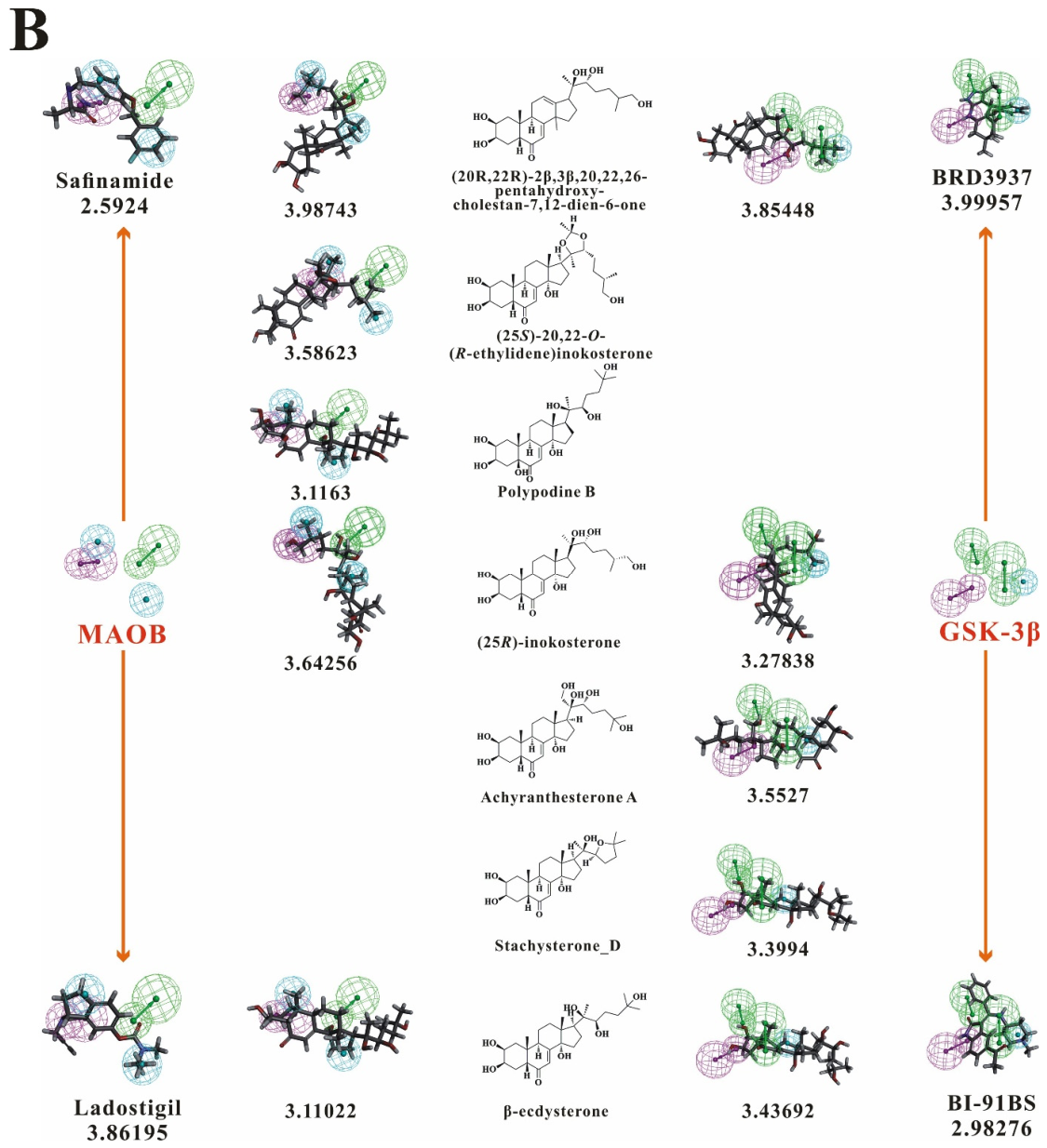
2.3. In Silico Determination of Potentially Effective MAOB and GSK-3β Binding Ligands from the Isolated A. bidentata Compounds
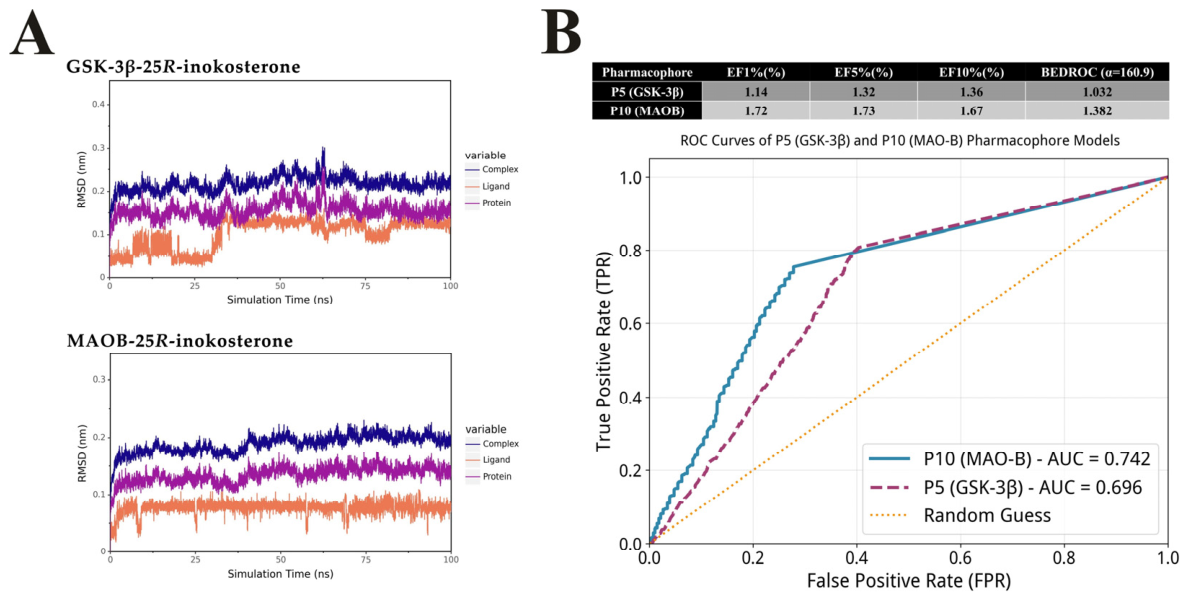
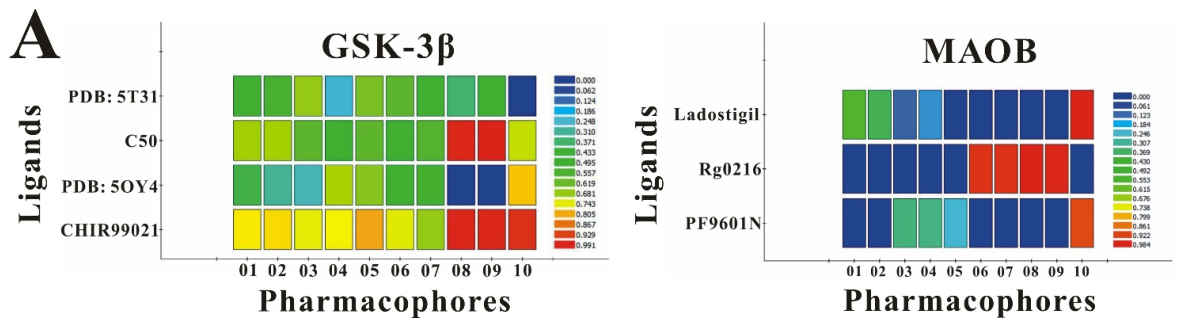
2.4. Validation of Pharmacophore Models and Binding Poses Stability
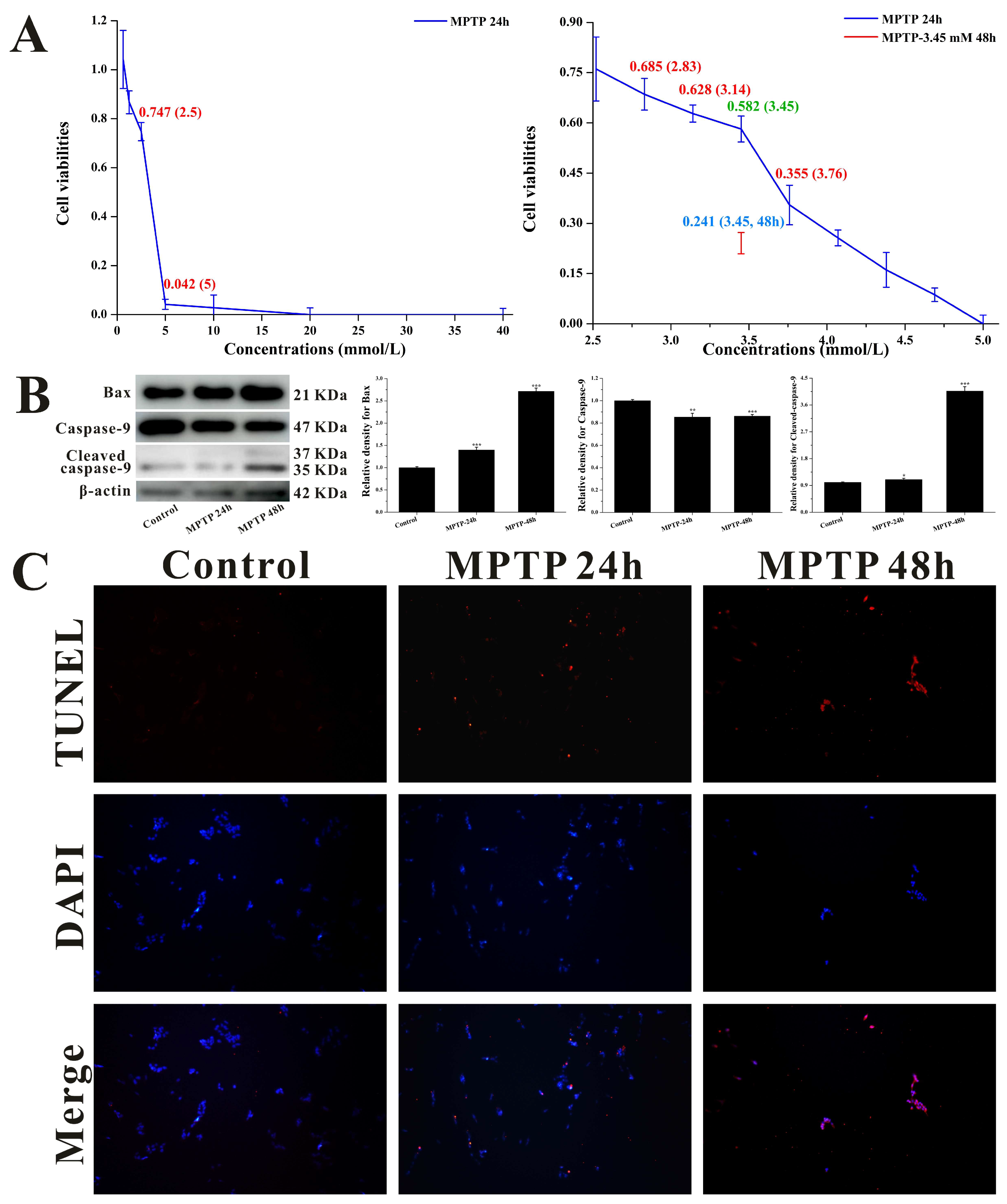
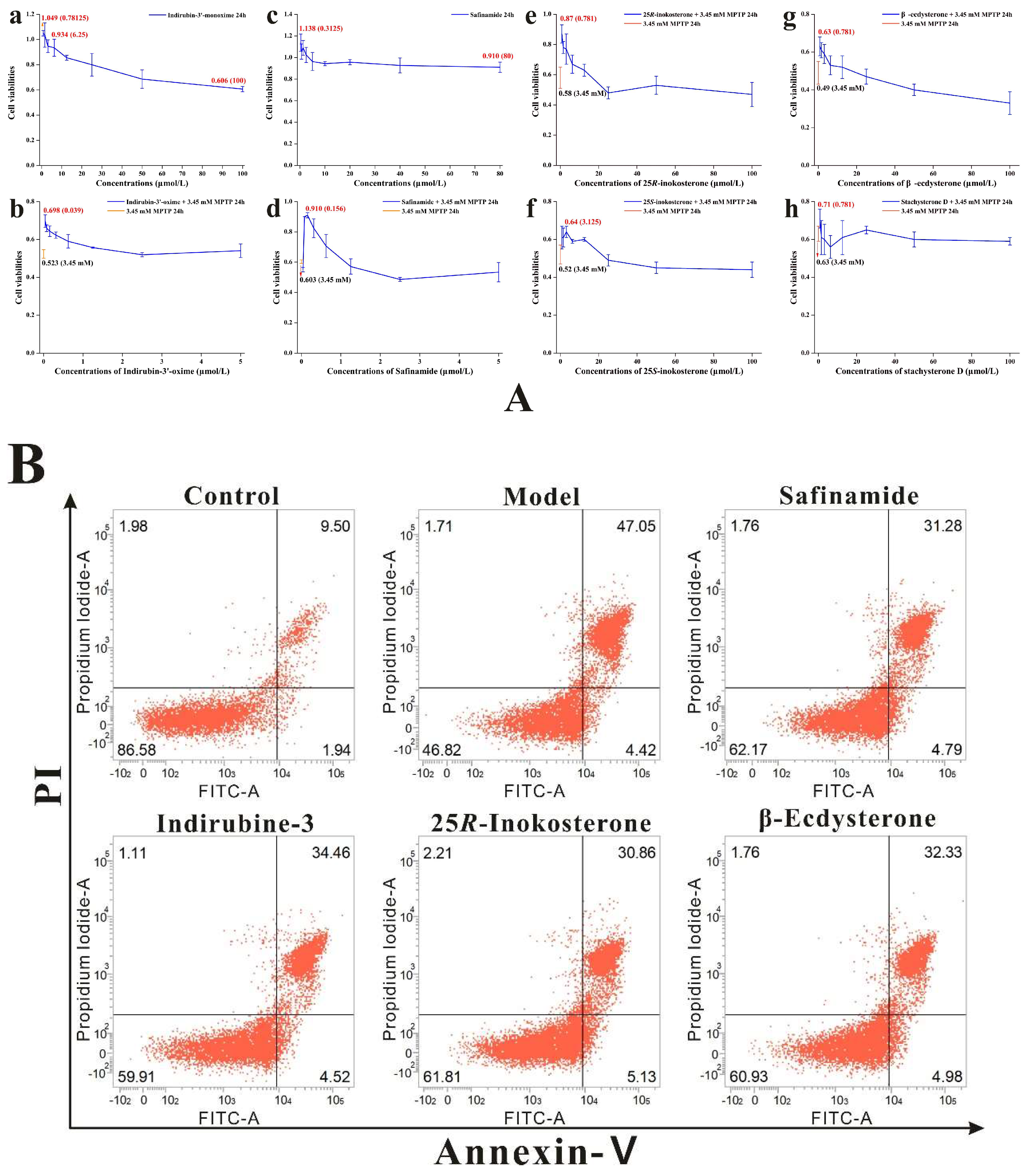
2.5. Assigning 25R-Inokosterone as the Representative Compound to Conduct the Neuroprotection Assays
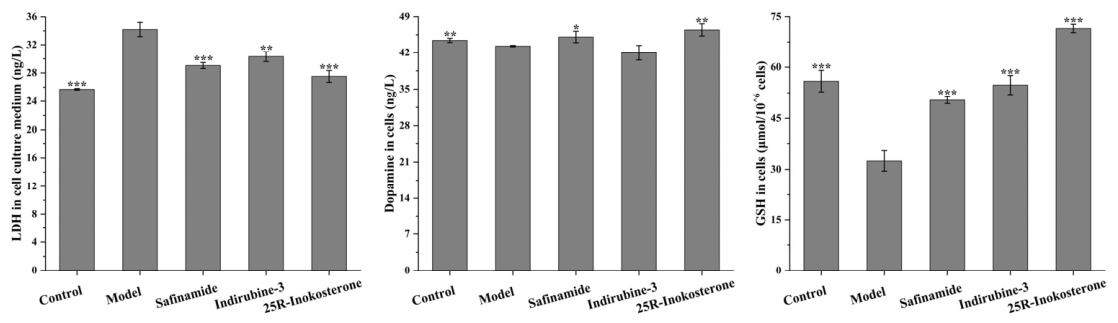
2.6. 25R-Inokosterone Restored GSH and Dopamine Levels with Concomitant Reduction in LDH Leakage in SH-SY5Y Cells
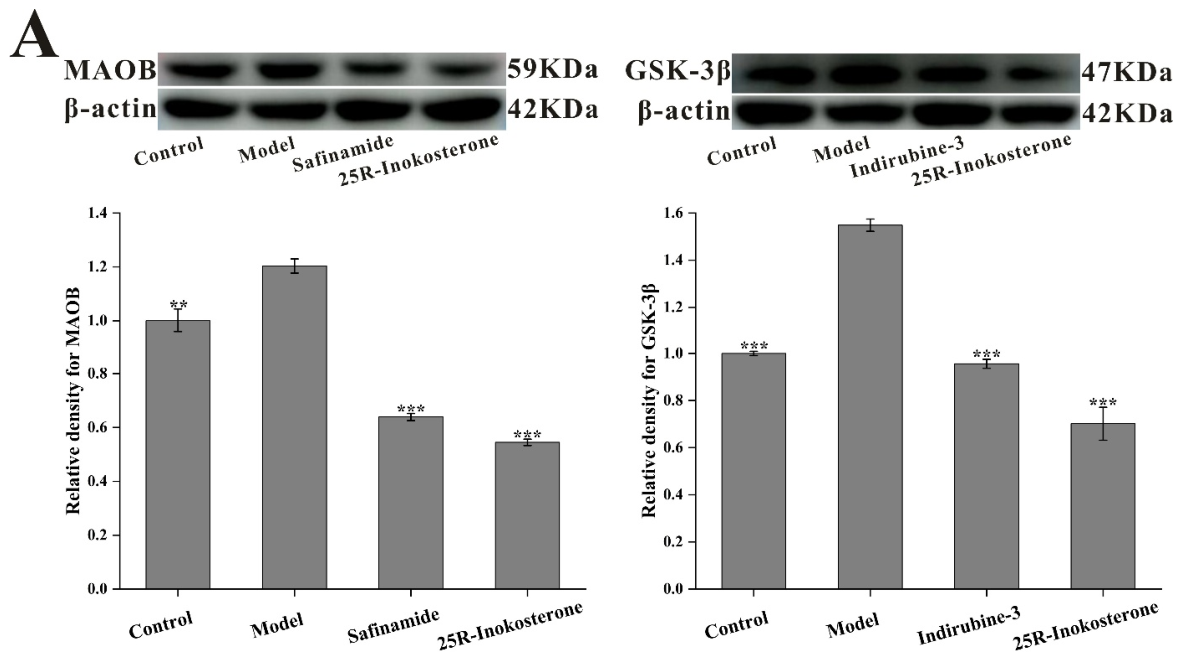
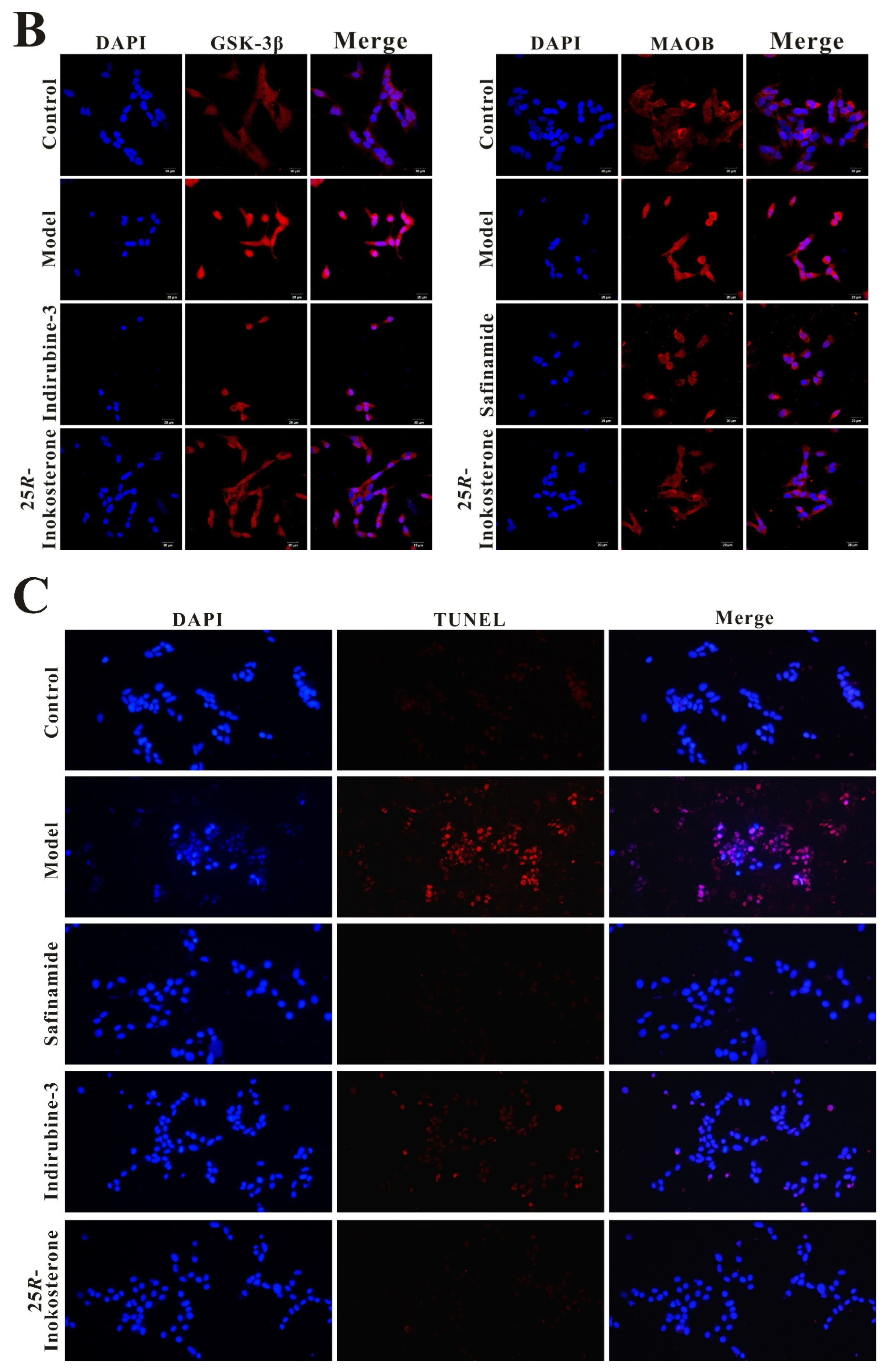
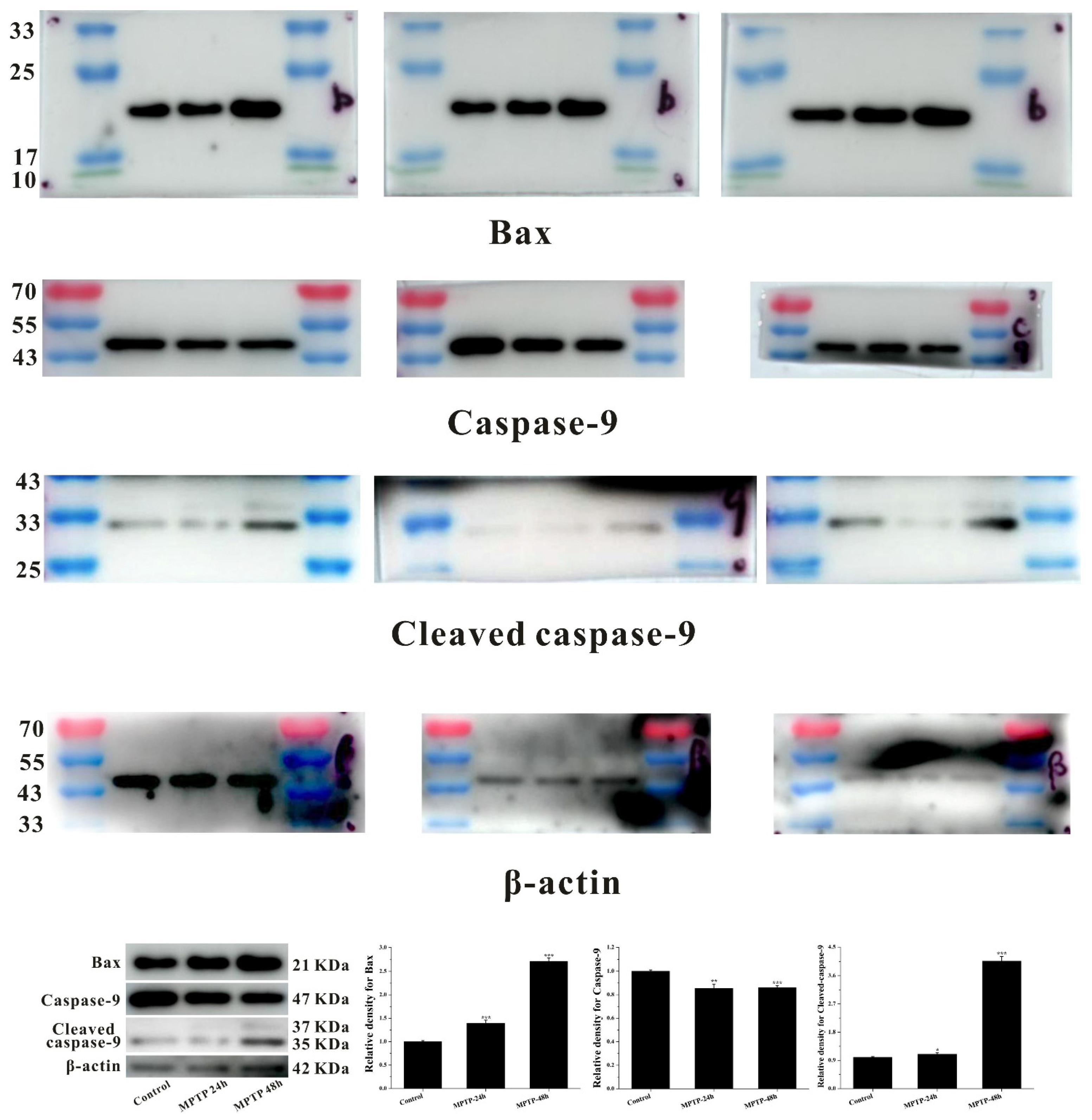
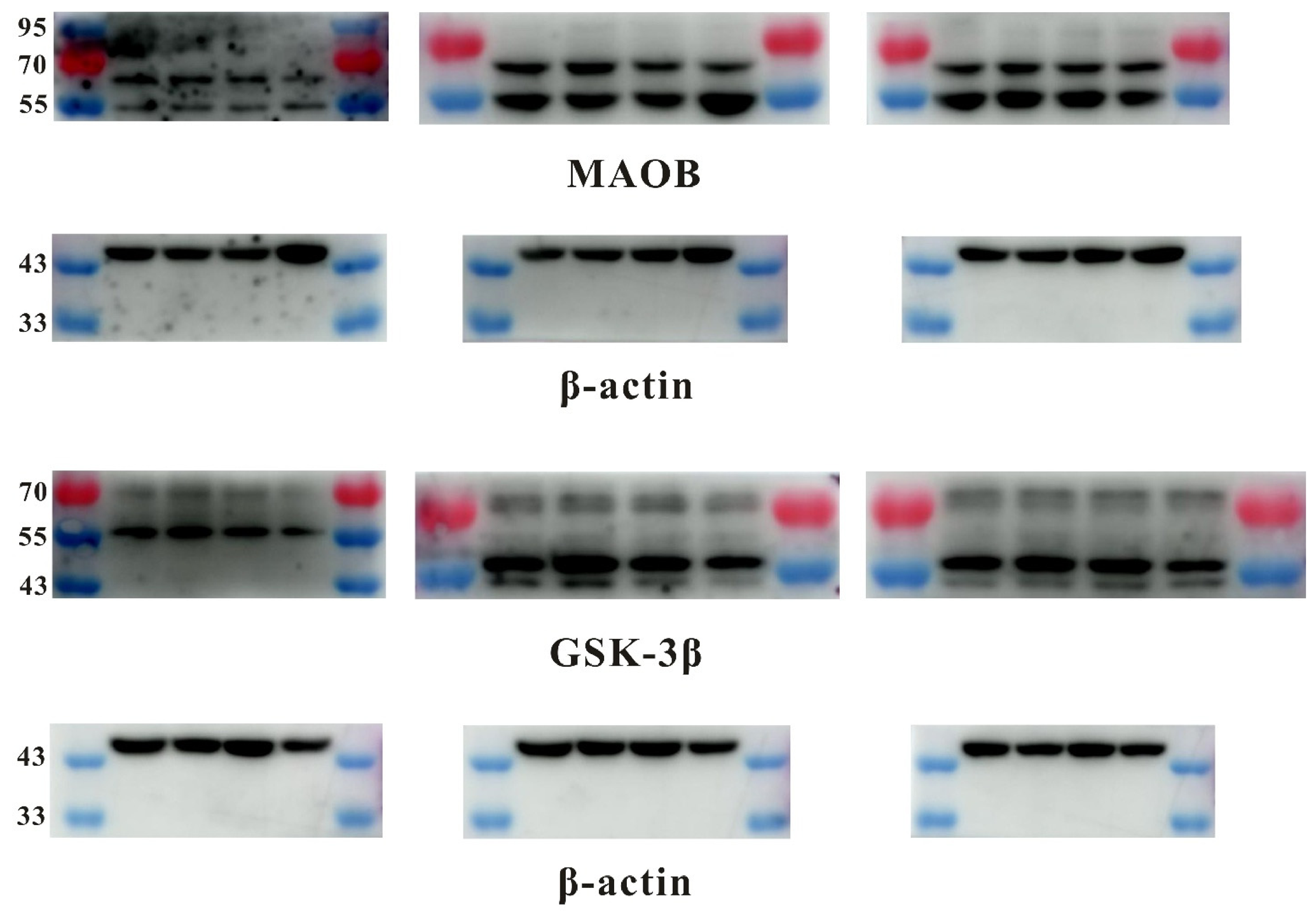
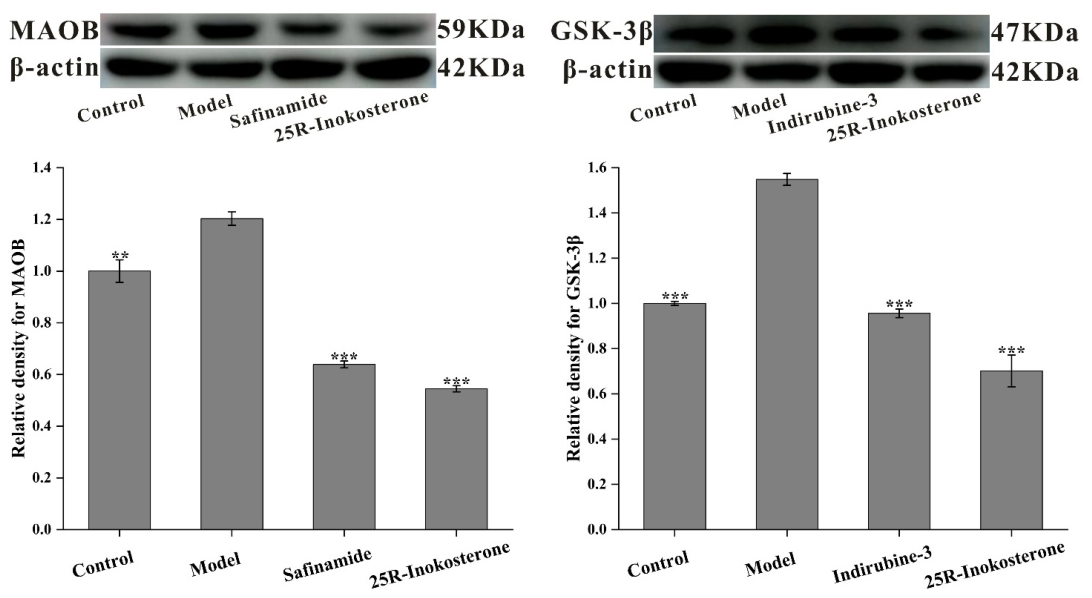
2.7. Reduction in MAOB and GSK-3β Protein Levels by 25R-Inokosterone Was Associated with the Alleviation of MPTP-Induced Cytotoxicity in SH-SY5Y Cells
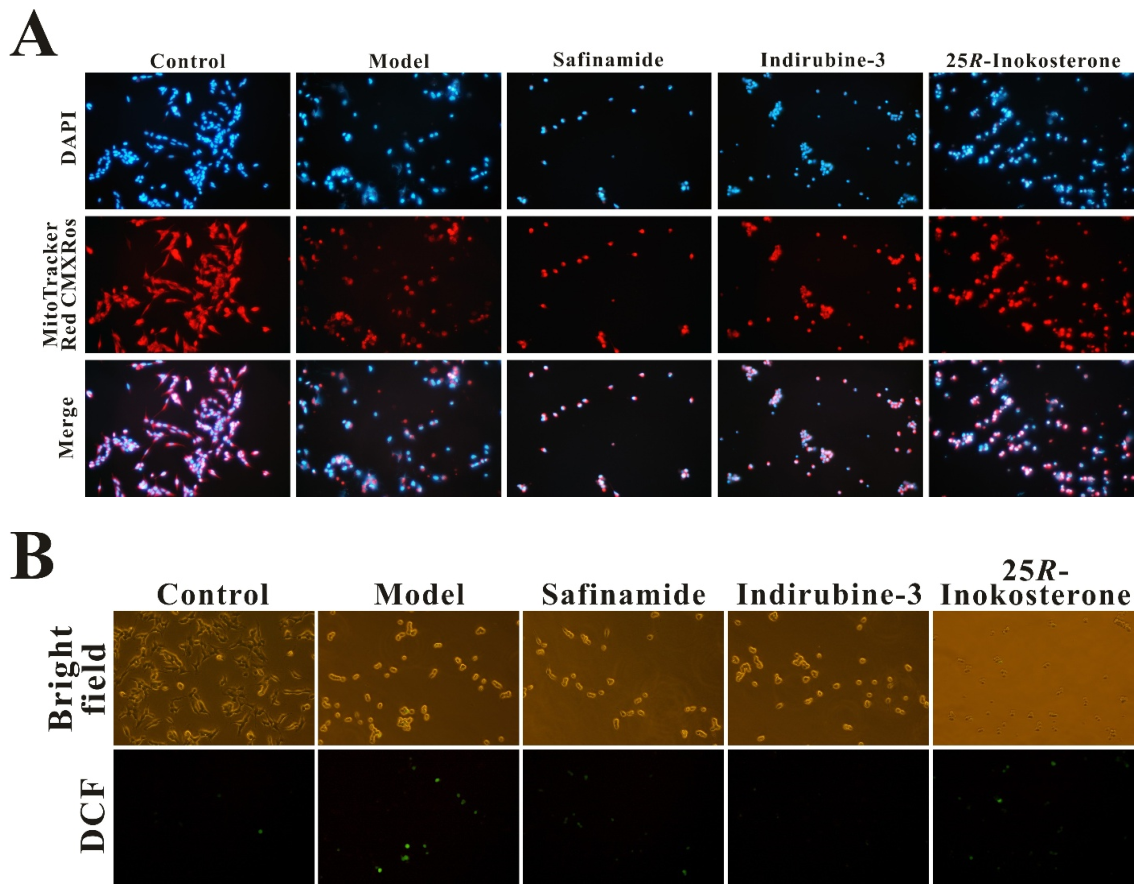
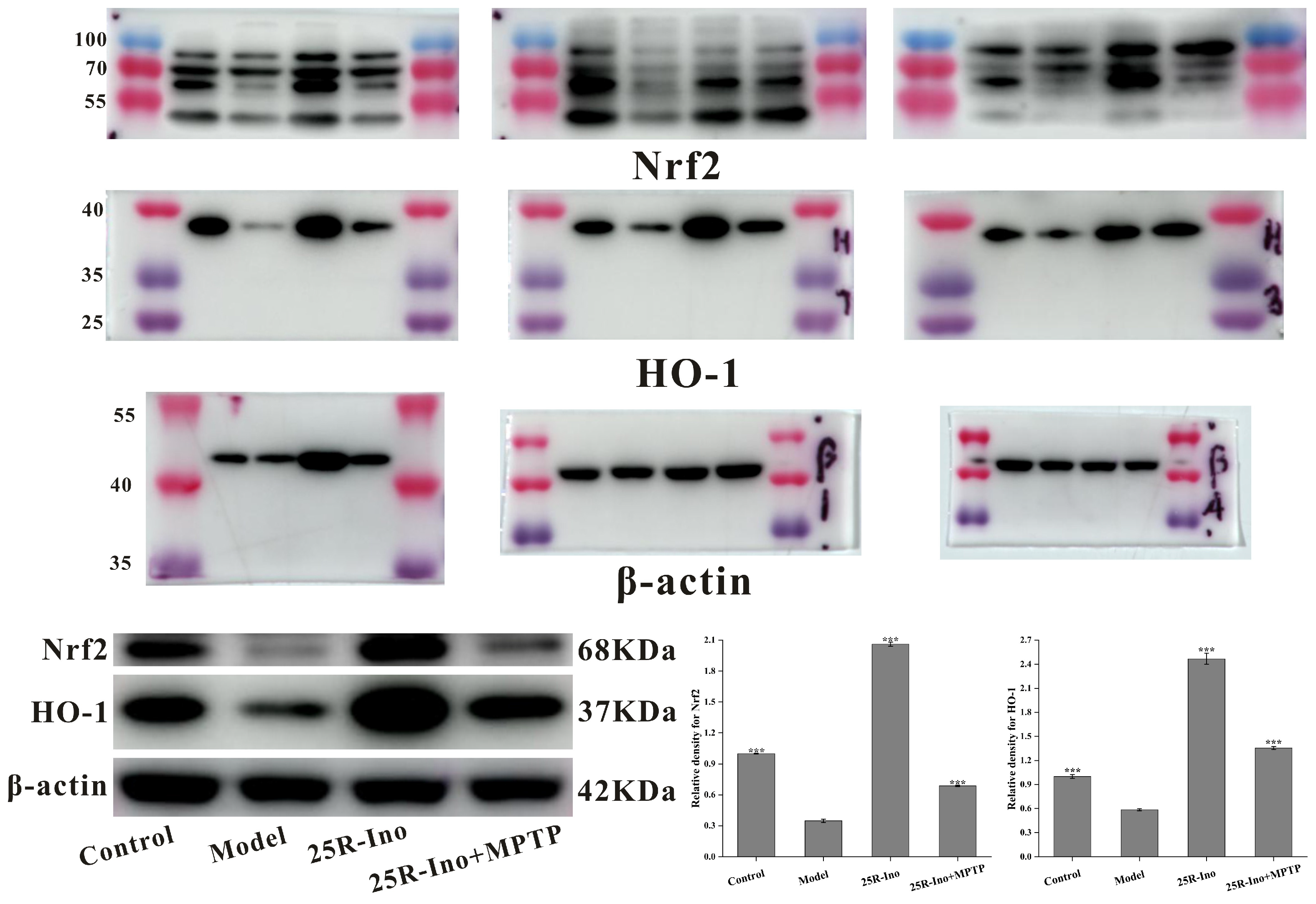
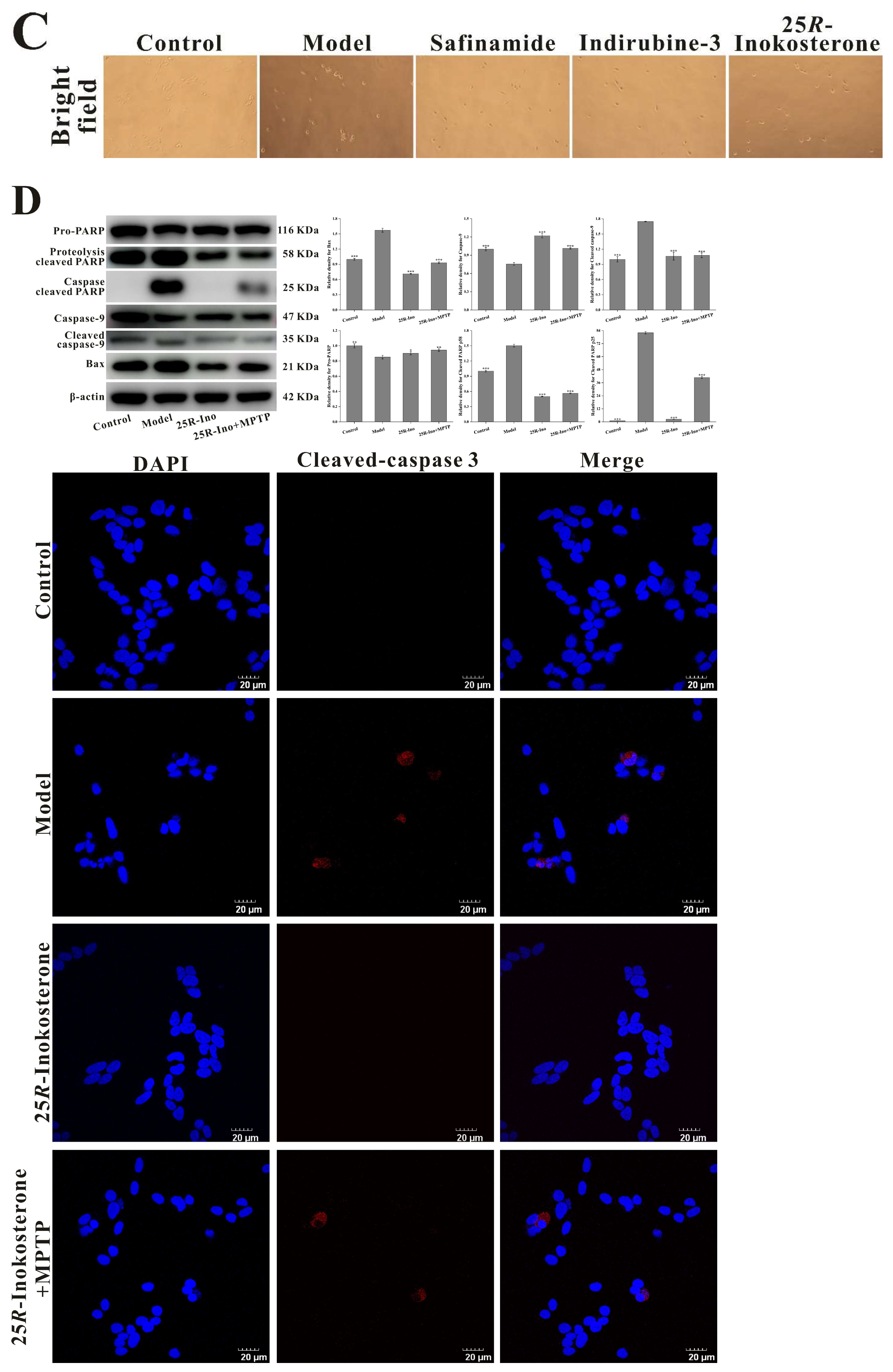
2.8. 25R-Inokosterone Rescued MPTP-Induced SH-SY5Y Cell Lesion, MMP Loss and ROS Elevation
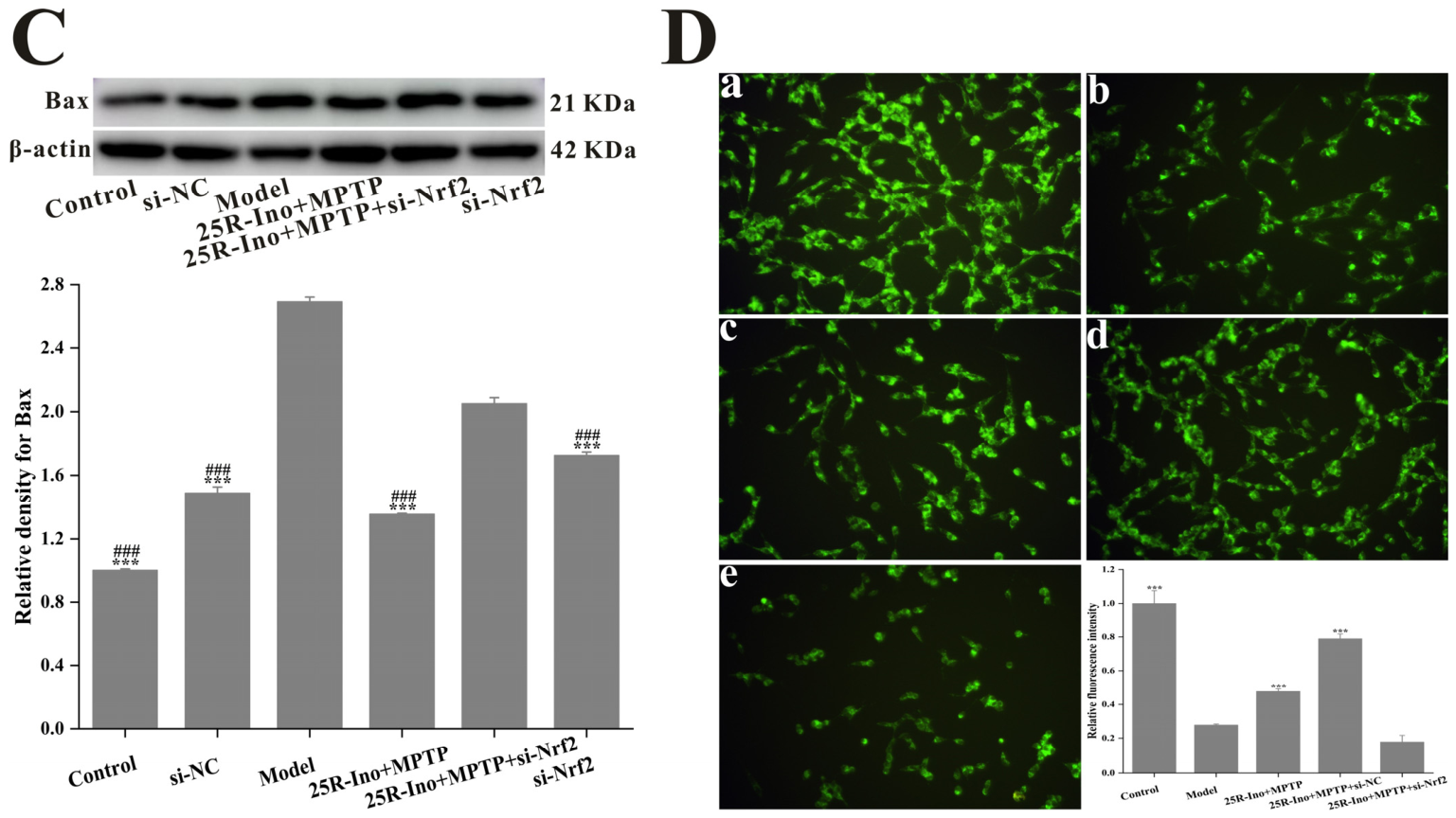
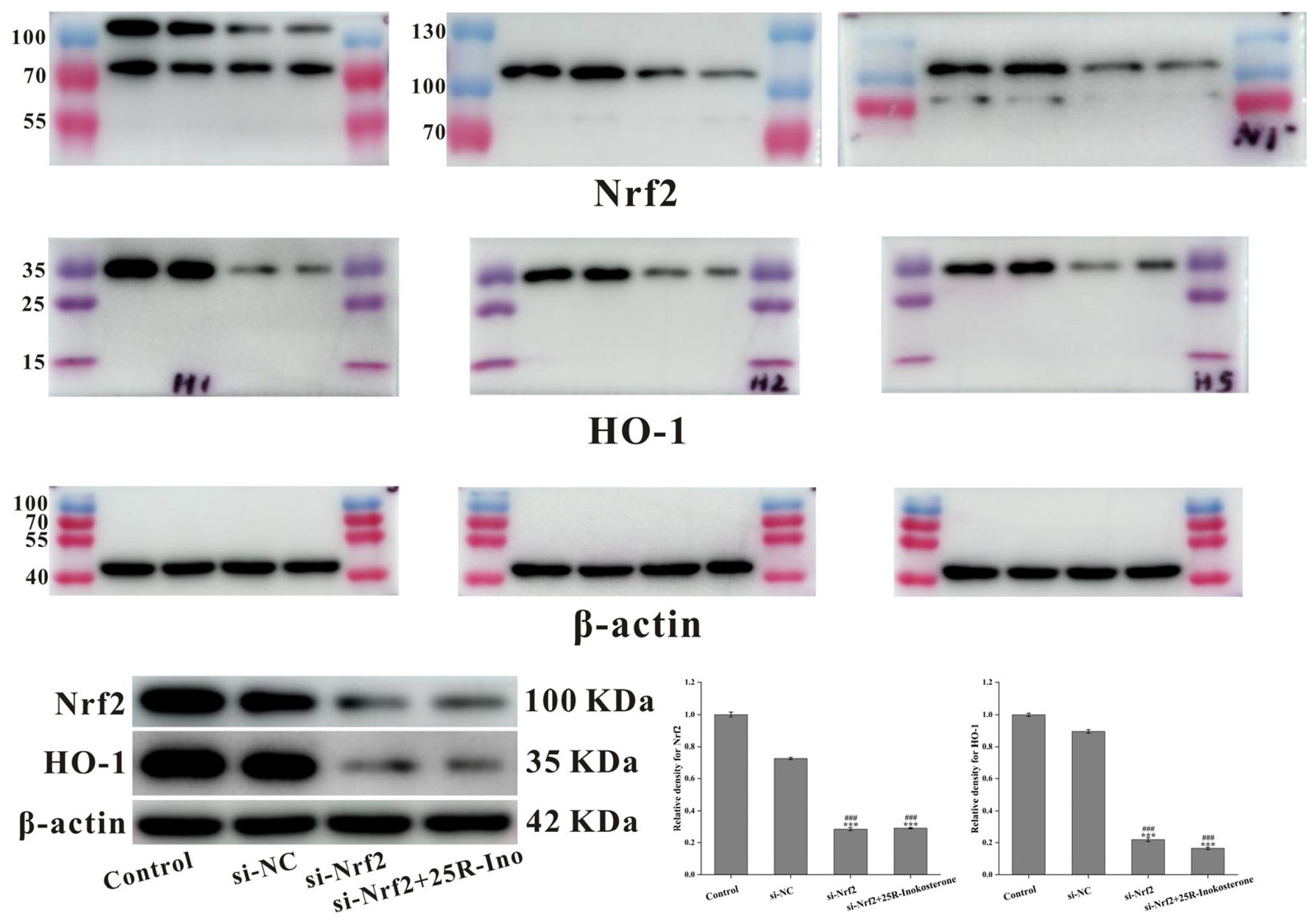
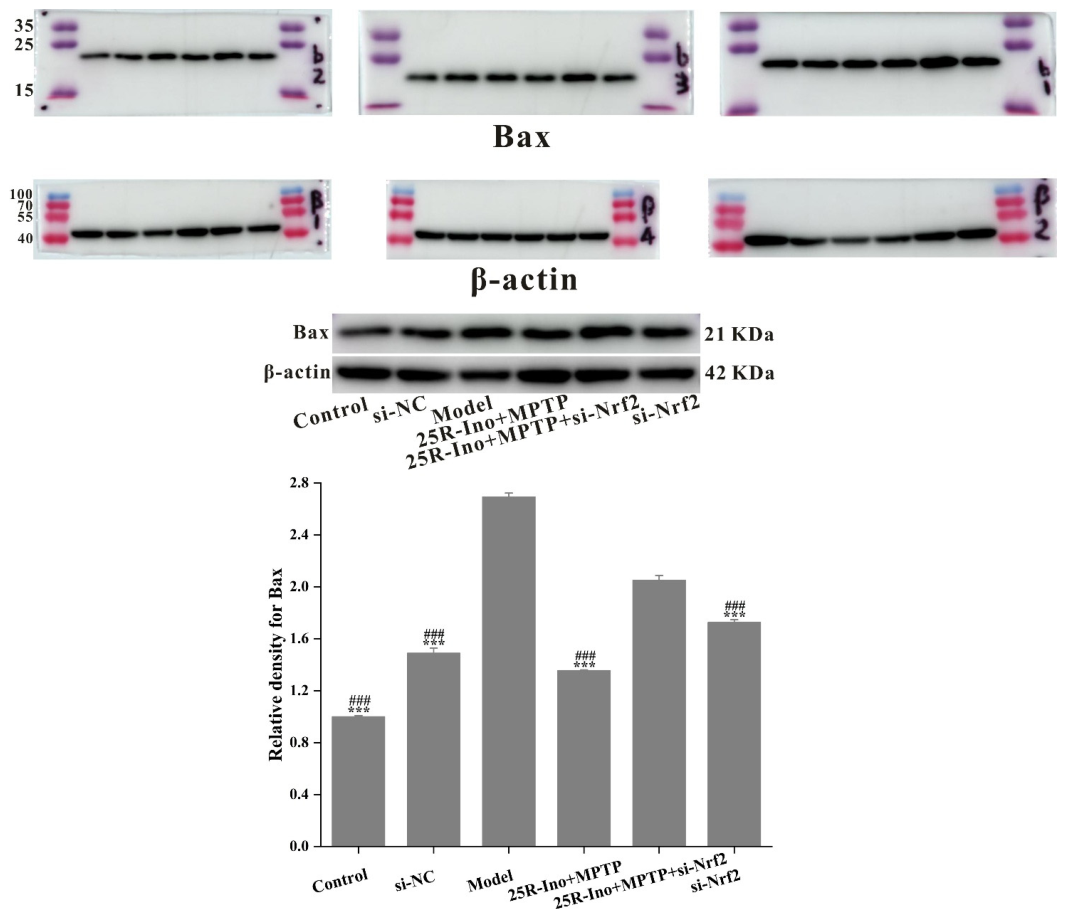
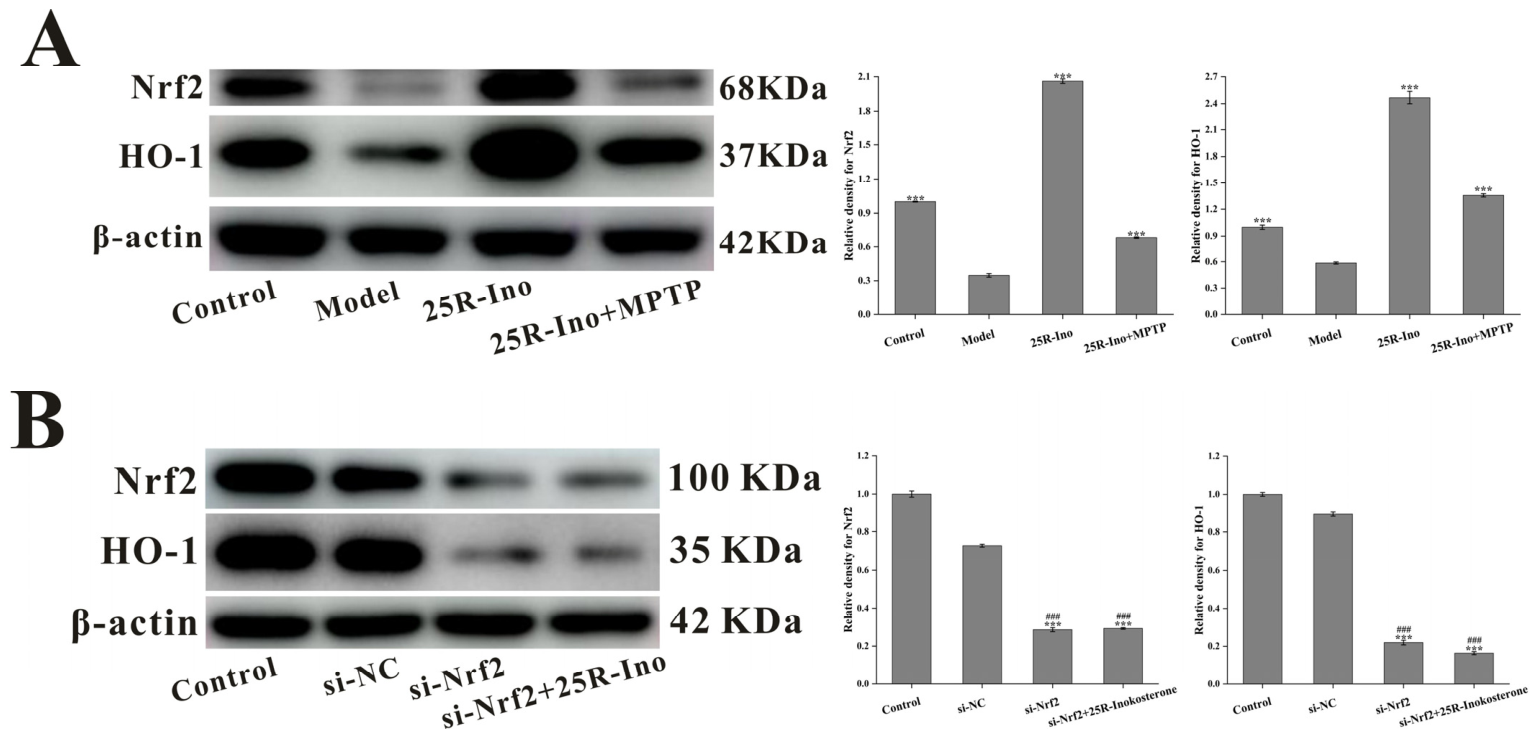
2.9. Knockdown of Nrf2 Interfered 25R-Inokosteron Mediated Neuroprotection on SH-SY5Y Cells
3. Discussion
4. Materials and Methods
4.1. Materials
4.1.1. Medicinal Plant
4.1.2. Regents and Experimental Assay Kits
4.1.3. Antibodies and siRNA
4.2. Natural Compounds Purification
4.2.1. Methodologies
4.2.2. Extraction and Isolation
4.2.3. Spectroscopic Data Analysis
4.3. Bioinformatics and In Silico Analysis
4.3.1. Screening of Key Compounds Targets on Neurodegenerative Disorder
4.3.2. Gene Microarray Data
4.3.3. Computational Simulation of Interactions Between Key Nodes and Compounds
4.3.4. Validation of the Reliability of the Pharmacophore Models
4.3.5. Validation of the Stability of the Receptor-Ligand Complexes
4.4. General Experimental Contents
4.4.1. Cell Culture
4.4.2. Cell Viability Assay
4.4.3. ELISA
4.4.4. Transfection of siRNA
4.4.5. Immunoblotting Assay
4.4.6. Immunofluorescence Assay
4.5. Cell Morphology
4.5.1. TUNEL Staining
4.5.2. Mito-Tracker Red CMXRos Staining
4.5.3. DCFH-DA Staining
4.5.4. Rhodamine 123 Staining
4.6. Flow Cytometry
Annexin V-FITC/PI Dual Staining
4.7. Statistical Analysis
5. Conclusions
Author Contributions
Funding
Institutional Review Board Statement
Informed Consent Statement
Data Availability Statement
Conflicts of Interest
Abbreviations
| PD | Parkinson’s disease |
| AD | Alzheimer’s disease |
| CNS | Central nervous system |
| PNS | Peripheral nervous system |
| MAOB | Monoamine oxidase B |
| GSK-3β | Glycogen synthase kinase-3β |
| DAT | Dopamine transporter |
| SNCA | α-Synuclein |
| Nrf2 | Nuclear factor erythroid 2-related factor 2 |
| HO-1 | Heme oxygenase-1 |
| MMP | Mitochondrial membrane potential |
| ΔΨm | Mitochondrial transmembrane potential |
| ROS | Reactive oxygen species |
| MPTP | 1-Methyl-4-phenyl-1,2,3,6-tetrahydropyridine |
| MPP+ | 1-Methyl-4-phenylpyridinium |
| HPLC | High-performance liquid chromatography |
| NMR | Nuclear magnetic resonance |
| TOF-MS | Time-of-flight mass spectrometry |
| HSQC | Heteronuclear single quantum coherence |
| HMBC | Heteronuclear multiple bond correlation |
| TMS | Tetramethylsilane |
| TLC | Thin-layer chromatography |
| DMEM/F12 | Dulbecco’s Modified Eagle Medium/Nutrient Mixture F-12 |
| FBS | Fetal bovine serum |
| PMSF | Phenylmethanesulfonyl fluoride |
| BCA | Bicinchoninic acid |
| ECL | Enhanced chemiluminescence |
| ELISA | Enzyme-linked immunosorbent assay |
| GSH | Glutathione |
| LDH | Lactate dehydrogenase |
| siRNA | Small interfering RNA |
| si-NC | Small interfering RNA negative control |
| si-Nrf2 | Small interfering RNA targeting Nrf2 |
| HRP | Horseradish peroxidase |
| TBST | Tris-buffered saline with Tween-20 |
| BSA | Bovine serum albumin |
| PFA | Paraformaldehyde |
| TUNEL | Terminal deoxynucleotidyl transferase dUTP nick end labeling |
| DCFH-DA | 2′,7′-Dichlorodihydrofluorescein diacetate |
| FITC | Fluorescein isothiocyanate |
| PI | Propidium iodide |
| PPI | Protein–protein interaction |
| GO | Gene Ontology |
| KEGG | Kyoto Encyclopedia of Genes and Genomes |
| DAVID | Database for Annotation, Visualization and Integrated Discovery |
| STRING | Search Tool for the Retrieval of Interacting Genes/Proteins |
| PDB | Protein Data Bank |
| DEGs | Differentially expressed genes |
| EC50 | Half maximal effective concentration |
| ANOVA | Analysis of variance |
| SD | Standard deviation |
| Aβ | β-Amyloid |
| ER | Endoplasmic reticulum |
| RMSD | Root-mean-square deviation |
Appendix A

| Targets | Structures | |
|---|---|---|
| GSK-3β |  BRD0209 (Training set) |  BRD3937 (Training set) |
 PF-04802367 (Training set) |  BRD0705 (Training set) | |
 C22 (Training set) |  Inhibitor 16 (Training set) | |
 Ligand 1 (Training set) |  BRD3731 (Training set) | |
 BI-91BS (Training set) |  PIK-75 (Training set) | |
| GSK-3β |  CHIR99021 (Test set) | 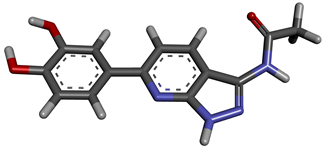 PDB 5OY4 (Test set) |
 C50 (Test set) | 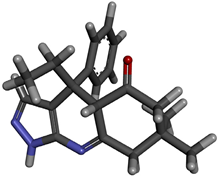 PDB 5T31 (Test set) | |
| MAOB |  N-(3-chlorophenyl)-4-oxo-4H-chromene-3-carboxamide (Training set) |  PF9601N (Test set) |
 Pioglitazone (Training set) |  RG0216 (Test set) | |
 Safinamide (Training set) |  Ladostigil_(Test set) | |
Appendix B


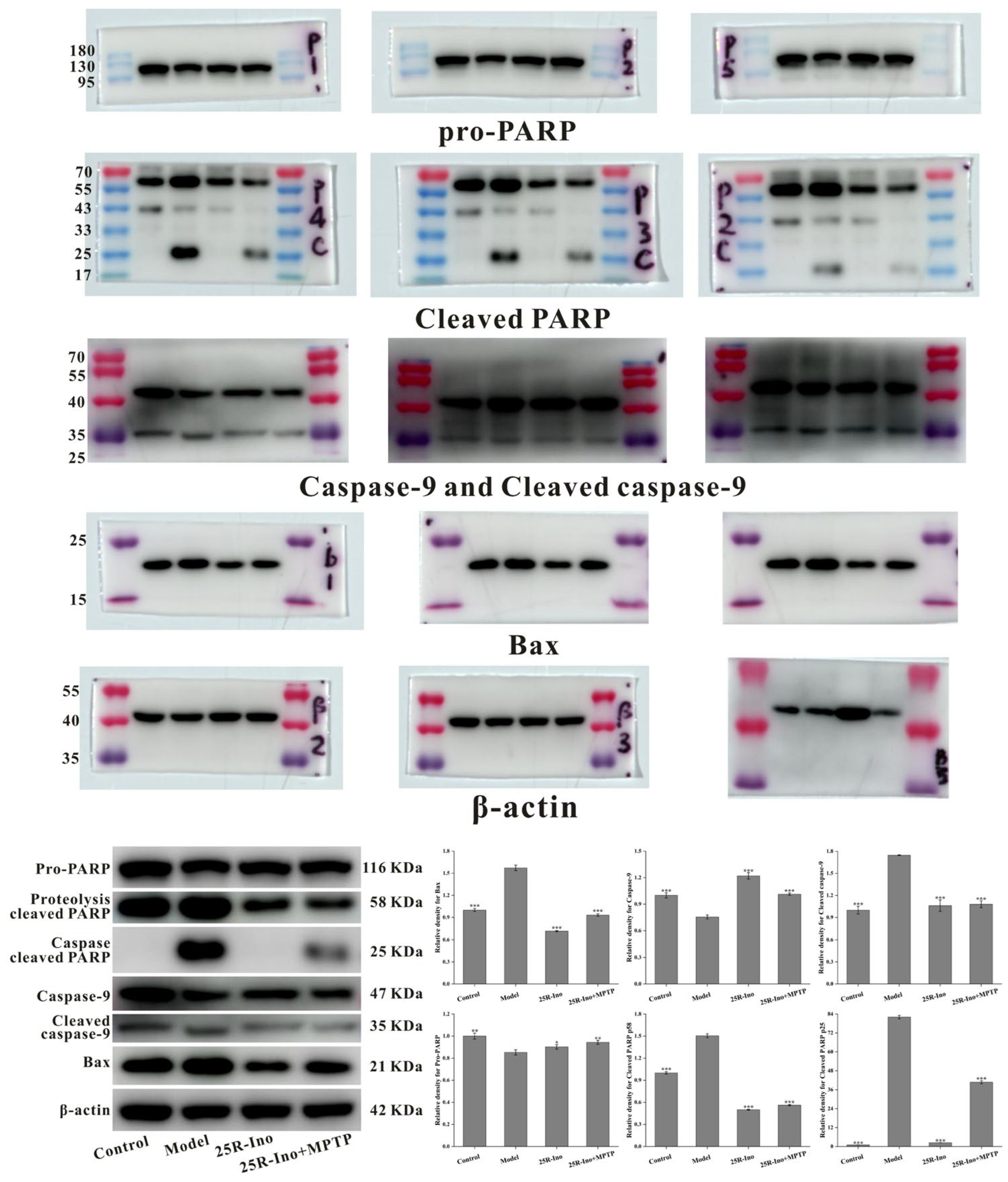


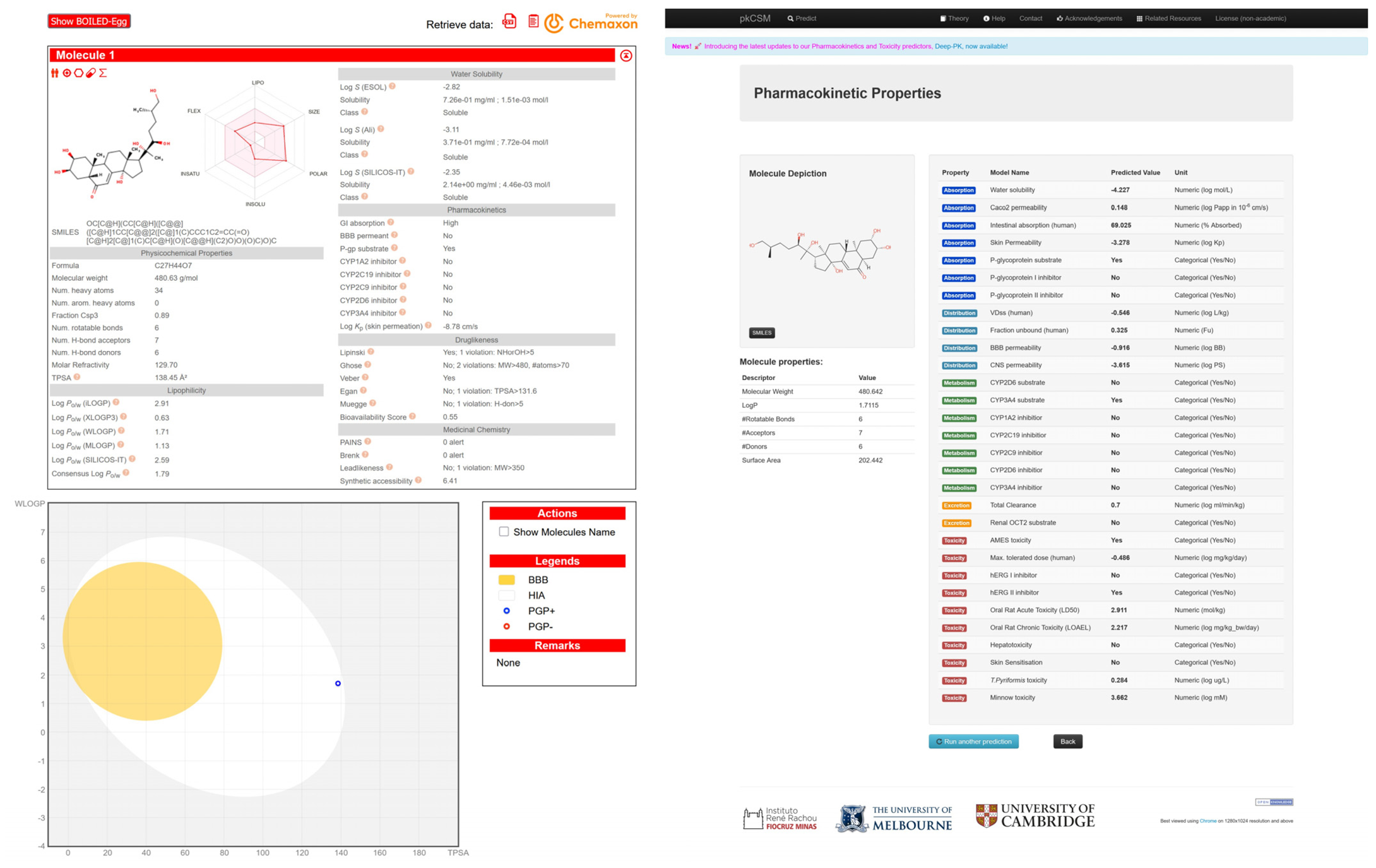
References
- Berg, D.; Borghammer, P.; Fereshtehnejad, S.M.; Heinzel, S.; Horsager, J.; Schaeffer, E.; Postuma, R.B. Prodromal Parkinson disease subtypes—Key to understanding heterogeneity. Nat. Rev. Neurol. 2021, 17, 349–361. [Google Scholar] [CrossRef] [PubMed]
- Agarwal, M.C.E. Sanjeev, Neuroanatomy, Upper Motor Neuron Lesion. 2023. Available online: http://www.ncbi.nlm.nih.gov/books/NBK537305/ (accessed on 1 March 2026).
- Kumar, V. Toll-like receptors in the pathogenesis of neuroinflammation. J. Neuroimmunol. 2019, 332, 16–30. [Google Scholar] [CrossRef]
- Nielsen, K.J.; Carstensen, O.; Kærgaard, A.; Vestergaard, J.M.; Biering, K. Neurological symptoms and disorders following electrical injury: A register-based matched cohort study. PLoS ONE 2022, 17, e0264857. [Google Scholar] [CrossRef]
- Scheltens, P.; De Strooper, B.; Kivipelto, M.; Holstege, H.; Chételat, G.; Teunissen, C.E.; Cummings, J.; van der Flier, W.M. Alzheimer’s disease. Lancet 2021, 397, 1577–1590. [Google Scholar] [CrossRef] [PubMed]
- Krishnamurthy, H.K.; Jayaraman, V.; Krishna, K.; Wang, T.; Bei, K.; Changalath, C.; Rajasekaran, J.J. An overview of the genes and biomarkers in Alzheimer’s disease. Ageing Res. Rev. 2025, 104, 102599. [Google Scholar] [CrossRef] [PubMed]
- Tinazzi, M.; Gandolfi, M.; Artusi, C.A.; Bannister, K.; Rukavina, K.; Brefel-Courbon, C.; de Andrade, D.C.; Perez-Lloret, S.; Mylius, V. Advances in diagnosis, classification, and management of pain in Parkinson’s disease. Lancet Neurol. 2025, 24, 331–347. [Google Scholar] [CrossRef]
- Armstrong, M.J.; Okun, M.S. Diagnosis and Treatment of Parkinson Disease: A Review. JAMA 2020, 323, 548–560. [Google Scholar] [CrossRef]
- Marucci, G.; Buccioni, M.; Ben, D.D.; Lambertucci, C.; Volpini, R.; Amenta, F. Efficacy of acetylcholinesterase inhibitors in Alzheimer’s disease. Neuropharmacology 2021, 190, 108352. [Google Scholar] [CrossRef]
- Nishijima, H.; Ueno, T.; Funamizu, Y.; Ueno, S.; Tomiyama, M. Levodopa treatment and dendritic spine pathology. Mov. Disord. 2018, 33, 877–888. [Google Scholar] [CrossRef]
- Szeto, J.Y.; Lewis, S.J. Current Treatment Options for Alzheimer’s Disease and Parkinson’s Disease Dementia. Curr. Neuropharmacol. 2016, 14, 326–338. [Google Scholar] [CrossRef]
- Li, Z.; Zhang, Z.; Yu, B. Unlocking the Therapeutic Potential of Natural Products for Alzheimer’s Disease. J. Med. Chem. 2025, 68, 2377–2402, Erratum in J. Med. Chem. 2025, 68, 9018–9024. [Google Scholar] [CrossRef]
- Ju, Y.; Liang, H.; Du, K.; Guo, Z.; Meng, D. Isolation of triterpenoids and phytosterones from Achyranthes bidentata Bl. to treat breast cancer based on network pharmacology. Nat. Prod. Res. 2021, 35, 5939–5942. [Google Scholar] [CrossRef] [PubMed]
- Wang, D.; Liu, Y.; Zhao, W. The Adjuvant Effects on Vaccine and the Immunomodulatory Mechanisms of Polysaccharides From Traditional Chinese Medicine. Front. Mol. Biosci. 2021, 8, 655570. [Google Scholar] [CrossRef] [PubMed]
- Zhang, L.; Shi, X.; Huang, Z.; Mao, J.; Mei, W.; Ding, L.; Zhang, L.; Xing, R.; Wang, P. Network pharmacology approach to uncover the mechanism governing the effect of radix Achyranthis bidentatae on osteoarthritis. BMC Complement. Med. Ther. 2020, 20, 121. [Google Scholar] [CrossRef] [PubMed]
- Zhang, M.; Zhou, Z.Y.; Wang, J.; Cao, Y.; Chen, X.X.; Zhang, W.M.; Lin, L.D.; Tan, J.W. Phytoecdysteroids from the roots of Achyranthes bidentata Blume. Molecules 2012, 17, 3324–3332. [Google Scholar] [CrossRef]
- Meng, D.L.; Li, X.; Wang, J.H.; Li, W. A new phytosterone from Achyranthes bidentata B1. J. Asian Nat. Prod. Res. 2005, 7, 181–184. [Google Scholar] [CrossRef]
- Wang, Z.Y.; Tang, S.Q. Chemical constituents form Solanum lyratum. Chin. Tradit. Pat. Med. 2019, 41, 2928–2932. [Google Scholar] [CrossRef]
- He, X.; Wang, X.; Fang, J.; Chang, Y.; Ning, N.; Guo, H.; Huang, L.; Huang, X. The genus Achyranthes: A review on traditional uses, phytochemistry, and pharmacological activities. J. Ethnopharmacol. 2017, 203, 260–278. [Google Scholar] [CrossRef]
- Wang, Q.H.; Yang, L.; Jiang, H.; Wang, Z.B.; Yang, B.Y.; Kuang, H.X. Three new phytoecdysteroids containing a furan ring from the roots of Achyranthes bidentata Bl. Molecules 2011, 16, 5989–5997. [Google Scholar] [CrossRef]
- Li, X.; Zhao, W.; Meng, D.; Qiao, A. A new phytosterone from the roots of Achyranthes bidentata. Fitoterapia 2007, 78, 607–608. [Google Scholar] [CrossRef]
- Holzer, M.; Schade, N.; Opitz, A.; Hilbrich, I.; Stieler, J.; Vogel, T.; Neukel, V.; Oberstadt, M.; Totzke, F.; Schächtele, C.; et al. Novel protein kinase inhibitors related to tau pathology modulate tau protein-self interaction using a luciferase complementation assay. Molecules 2018, 23, 2335. [Google Scholar] [CrossRef] [PubMed]
- Billingsley, M.L.; Kincaid, R.L. Regulated phosphorylation and dephosphorylation of tau protein: Effects on microtubule interaction, intracellular trafficking and neurodegeneration. Biochem. J. 1997, 323, 577–591. [Google Scholar] [CrossRef] [PubMed]
- Credle, J.J.; George, J.L.; Wills, J.; Duka, V.; Shah, K.; Lee, Y.C.; Rodriguez, O.; Simkins, T.; Winter, M.; Moechars, D.; et al. GSK-3β dysregulation contributes to parkinson’s-like pathophysiology with associated region-specific phosphorylation and accumulation of tau and α-synuclein. Cell Death Differ. 2015, 22, 838–851. [Google Scholar] [CrossRef]
- Di Martino, R.M.C.; Pruccoli, L.; Bisi, A.; Gobbi, S.; Rampa, A.; Martinez, A.; Pérez, C.; Martinez-Gonzalez, L.; Paglione, M.; Di Schiavi, E.; et al. Novel curcumin-diethyl fumarate hybrid as a dualistic GSK-3β inhibitor/Nrf2 inducer for the treatment of Parkinson’s disease. ACS Chem. Neurosci. 2020, 11, 2728–2740. [Google Scholar] [CrossRef]
- Ma, S.; Liu, S.; Huang, Q.; Xie, B.; Lai, B.; Wang, C.; Song, B.; Li, M. Site-specific phosphorylation protects glycogen synthase kinase-3β from calpain-mediated truncation of its N and C termini. J. Biol. Chem. 2012, 287, 22521–22532. [Google Scholar] [CrossRef]
- Song, B.; Lai, B.; Zheng, Z.; Zhang, Y.; Luo, J.; Wang, C.; Chen, Y.; Woodgett, J.R.; Li, M. Inhibitory phosphorylation of GSK-3 by CaMKII couples depolarization to neuronal survival. J. Biol. Chem. 2010, 285, 41122–41134. [Google Scholar] [CrossRef]
- Naoi, M.; Maruyama, W. Functional mechanism of neuroprotection by inhibitors of type B monoamine oxidase in Parkinson’s disease. Expert Rev. Neurother. 2009, 9, 1233–1250. [Google Scholar] [CrossRef]
- Nam, M.H.; Sa, M.; Ju, Y.H.; Park, M.G.; Lee, C.J. Revisiting the role of astrocytic MAOB in Parkinson’s disease. Int. J. Mol. Sci. 2022, 23, 4453. [Google Scholar] [CrossRef]
- Nakamura, Y.; Arawaka, S.; Sato, H.; Sasaki, A.; Shigekiyo, T.; Takahata, K.; Tsunekawa, H.; Kato, T. Monoamine Oxidase-B inhibition facilitates α-synuclein secretion in vitro and delays its aggregation in rAAV-based rat models of Parkinson’s disease. J. Neurosci. 2021, 41, 7479–7491. [Google Scholar] [CrossRef] [PubMed]
- An, H.; Heo, J.Y.; Lee, C.J.; Nam, M.H. The pathological role of astrocytic MAOB in parkinsonism revealed by genetic ablation and over-expression of MAOB. Exp. Neurobiol. 2021, 30, 113–119. [Google Scholar] [CrossRef]
- Wagner, F.F.; Benajiba, L.; Campbell, A.J.; Weïwer, M.; Sacher, J.R.; Gale, J.P.; Ross, L.; Puissant, A.; Alexe, G.; Conway, A.; et al. Exploiting an Asp-Glu “switch” in glycogen synthase kinase 3 to design paralog-selective inhibitors for use in acute myeloid leukemia. Sci. Transl. Med. 2018, 10, eaam8460. [Google Scholar] [CrossRef]
- Wagner, F.F.; Bishop, J.A.; Gale, J.P.; Shi, X.; Walk, M.; Ketterman, J.; Patnaik, D.; Barker, D.; Walpita, D.; Campbell, A.J.; et al. Inhibitors of glycogen synthase kinase 3 with exquisite kinome-wide selectivity and their functional effects. ACS Chem. Biol. 2016, 11, 1952–1963. [Google Scholar] [CrossRef] [PubMed]
- Liang, S.H.; Chen, J.M.; Normandin, M.D.; Chang, J.S.; Chang, G.C.; Taylor, C.K.; Trapa, P.; Plummer, M.S.; Para, K.S.; Conn, E.L.; et al. Discovery of a highly selective glycogen synthase kinase-3 inhibitor (PF-04802367) that modulates tau phosphorylation in the brain: Translation for PET neuroimaging. Angew. Chem. Int. Ed. Engl. 2016, 55, 9601–9605. [Google Scholar] [CrossRef]
- Gobbo, D.; Piretti, V.; Di Martino, R.M.C.; Tripathi, S.K.; Giabbai, B.; Storici, P.; Demitri, N.; Girotto, S.; Decherchi, S.; Cavalli, A. Investigating drug-target residence time in kinases through enhanced sampling simulations. J. Chem. Theory Comput. 2019, 15, 4646–4659. [Google Scholar] [CrossRef] [PubMed]
- Buonfiglio, R.; Prati, F.; Bischetti, M.; Cavarischia, C.; Furlotti, G.; Ombrato, R. Discovery of novel imidazopyridine GSK-3β inhibitors supported by computational approaches. Molecules 2020, 25, 2163. [Google Scholar] [CrossRef] [PubMed]
- Tesch, R.; Becker, C.; Müller, M.P.; Beck, M.E.; Quambusch, L.; Getlik, M.; Lategahn, J.; Uhlenbrock, N.; Costa, F.N.; Polêto, M.D.; et al. An unusual intramolecular halogen bond guides conformational selection. Angew. Chem. Int. Ed. Engl. 2018, 57, 9970–9975. [Google Scholar] [CrossRef]
- Ostadkarampour, M.; Putnins, E.E. A monoamine oxidase B inhibitor altered gene expression of catalytically active dual-specificity phosphatases in human oral gingival keratinocytes. Eur. Rev. Med. Pharmacol. Sci. 2024, 28, 4681–4690. [Google Scholar] [CrossRef]
- Reis, J.; Manzella, N.; Cagide, F.; Mialet-Perez, J.; Uriarte, E.; Parini, A.; Borges, F.; Binda, C. Tight-binding inhibition of human monoamine oxidase B by chromone analogs: A kinetic, crystallographic, and biological analysis. J. Med. Chem. 2018, 61, 4203–4212. [Google Scholar] [CrossRef]
- Knez, D.; Colettis, N.; Iacovino, L.G.; Sova, M.; Pišlar, A.; Konc, J.; Lešnik, S.; Higgs, J.; Kamecki, F.; Mangialavori, I.; et al. Stereoselective activity of 1-propargyl-4-styrylpiperidine-like analogues that can discriminate between monoamine oxidase isoforms A and B. J. Med. Chem. 2020, 63, 1361–1387. [Google Scholar] [CrossRef]
- Reis, J.; Cagide, F.; Chavarria, D.; Silva, T.; Fernandes, C.; Gaspar, A.; Uriarte, E.; Remião, F.; Alcaro, S.; Ortuso, F.; et al. Discovery of new chemical entities for old targets: Insights on the lead optimization of chromone-based monoamine oxidase B (MAO-B) inhibitors. J. Med. Chem. 2016, 59, 5879–5893, Erratum in J. Med. Chem. 2018, 61, 5054. [Google Scholar] [CrossRef]
- Unzeta, M.; Sanz, E. Novel MAO-B inhibitors: Potential therapeutic use of the selective MAO-B inhibitor PF9601N in Parkinson’s disease. Int. Rev. Neurobiol. 2011, 100, 217–236. [Google Scholar] [CrossRef]
- Aboulatta, L.; Haidar, L.; Abou-Setta, A.; Askin, N.; Rabbani, R.; Lavu, A.; Peymani, P.; Zarychanski, R.; Eltonsy, S. Efficacy and safety of MAO-B inhibitors safinamide and zonisamide in Parkinson’s disease: A systematic review and meta-analysis of randomized controlled trials. CNS Drugs 2023, 37, 941–956. [Google Scholar] [CrossRef]
- Liu, H.; Yu, C.; Xu, T.; Zhang, X.; Dong, M. Synergistic protective effect of paeoniflorin and β-ecdysterone against rotenone-induced neurotoxicity in PC12 cells. Apoptosis 2016, 21, 1354–1365. [Google Scholar] [CrossRef] [PubMed]
- Hansson, O. Biomarkers for neurodegenerative diseases. Nat. Med. 2021, 27, 954–963. [Google Scholar] [CrossRef]
- Vanni, S.; Baldeschi, A.C.; Zattoni, M.; Legname, G. Brain aging: A ianus-faced player between health and neurodegeneration. J. Neurosci. Res. 2020, 98, 299–311. [Google Scholar] [CrossRef]
- Dorsey, E.R.; Elbaz, A.; Nichols, E.; Abbasi, N.; Abd-Allah, F.; Abdelalim, A.; Adsuar, J.C.; Ansha, M.G.; Brayne, C.; Choi, J.-Y.J.; et al. Global, regional, and national burden of Parkinson’s disease, 1990-2016: A systematic analysis for the global burden of disease study 2016. Lancet Neurol. 2018, 17, 939–953, Erratum in Lancet Neurol. 2021, 20, e7. [Google Scholar] [CrossRef]
- Dorsey, E.R.; Sherer, T.; Okun, M.S.; Bloem, B.R. The emerging evidence of the Parkinson pandemic. J. Park. Dis. 2018, 8, S3–S8. [Google Scholar] [CrossRef] [PubMed]
- Giannopoulos, S.; Samardzic, K.; Raymond, B.B.A.; Djordjevic, S.P.; Rodgers, K.J. L-DOPA causes mitochondrial dysfunction in vitro: A novel mechanism of L-DOPA toxicity uncovered. Int. J. Biochem. Cell Biol. 2019, 117, 105624. [Google Scholar] [CrossRef]
- Zhang, F.; Ye, Z.; Xie, Y.; Liu, M.; Zhang, L.; Zhang, J.; Xu, Z. Levodopa-induced dyskinesia: Brain iron deposition as a new hypothesis. Biometals 2024, 37, 1307–1323. [Google Scholar] [CrossRef] [PubMed]
- Ibarra-Gutiérrez, M.T.; Serrano-García, N.; Orozco-Ibarra, M. Rotenone-induced model of Parkinson’s disease: Beyond mitochondrial complex I inhibition. Mol. Neurobiol. 2023, 60, 1929–1948. [Google Scholar] [CrossRef]
- Narmashiri, A.; Abbaszadeh, M.; Ghazizadeh, A. The effects of 1-methyl-4-phenyl-1,2,3,6-tetrahydropyridine (MPTP) on the cognitive and motor functions in rodents: A systematic review and meta-analysis. Neurosci. Biobehav. Rev. 2022, 140, 104792. [Google Scholar] [CrossRef] [PubMed]
- Yang, Y.L.; Lin, T.K.; Huang, Y.H. MiR-29a efficiently suppresses the generation of reactive oxygen species and α-synuclein in a cellular model of Parkinson’s disease by potentially targeting GSK-3β. Eur. J. Pharmacol. 2024, 974, 176615. [Google Scholar] [CrossRef]
- Chen, H.; Asia, H.; Yang, Z.D.; Li, Y.C. Isolation and structure identification of chemical constituents from Anabasis brevifolia. Acta Pharm. Sin. 2005, 40, 248–251. [Google Scholar] [CrossRef]
- Ling, T.; Zhang, Z.; Xia, T.; Ling, W.; Wan, X. Phytoecdysteroids and other constituents from the roots of Klaseopsis chinensis. Biochem. Syst. Ecol. 2009, 37, 49–51. [Google Scholar] [CrossRef]
- Zibareva, L.N.; Saatov, Z.; Abubakirov, N.K. Stachysterone D, viticosterone E and α-ecdysone from Lychnis chalcedonica. Chem. Nat. Compd. 1991, 27, 514–515. [Google Scholar] [CrossRef]
- Todorova, V.; Ivanov, K.; Ivanova, S. Comparison between the Biological Active Compounds in Plants with Adaptogenic Properties (Rhaponticum carthamoides, Lepidium meyenii, Eleutherococcus senticosus and Panax ginseng). Plants 2022, 11, 64. [Google Scholar] [CrossRef] [PubMed]






| Proton | 1 | 2 | 3 | Proton | 4 | 5 | 6 | 7 | Proton | 8 |
|---|---|---|---|---|---|---|---|---|---|---|
| δ in ppm J in Hz | δ in ppm J in Hz | δ in ppm J in Hz | ||||||||
| 1 | - | - | - | 1 | 2.16 (1H, m) 1.94 (1H, m) | 2.16 (1H, m) 1.94 (1H, m) | 1.43 (1H, m) 1.78 (1H, m) | 1.43 (1H, t, 12.6) 1.78 (1H, m) | 1 | - |
| 2 | 7.94 (1H, s) | 7.77 (1H, s) | 7.79 (1H, s) | 2 | 4.19 (1H, m) | 4.19 (1H, m) | 3.83 (1H, dt, 3.9, 11.6) | 3.84 (1H, dt, 3.9, 11.7) | 2 | - |
| 3 | - | - | - | 3 | 4.25 (1H, brs) | 4.26 (1H, brs) | 3.95 (1H, d, 3.0) | 3.95 (1H, d, 3.3) | 3 | 7.70 (1H, m) |
| 4 | - | - | - | 4 | 2.03 (1H, m) 1.82 (1H, m) | 2.05 (1H, m) 1.82 (1H, m) | 1.67 (1H, m) 1.75 (1H, m) | 1.70 (1H, m) 1.75 (1H, m) | 4 | 7.52 (1H, m) |
| 5 | - | - | - | 5 | 3.03 (1H, dd, 3.7, 13.2) | 3.03 (1H, dd, 3.8, 13.1) | 2.38 (1H, m) | 2.37 (1H, m) | 5 | 7.52 (1H, m) |
| 6 | - | - | - | 6 | - | - | - | - | 6 | 7.70 (1H, m) |
| 7 | - | - | - | 7 | 6.27 (1H, d, 2.5) | 6.28 (1H, d, 2.5) | 5.81 (1H, d, 2.5) | 5.81 (1H, d, 2.5) | 7 | - |
| 8 | 6.78 (1H, s) | 6.70 (1H, s) | 6.69 (1H, s) | 8 | - | - | - | - | 8 | - |
| 9 | - | - | - | 9 | 3.61 (1H, m) | 3.62 (1H, m) | 3.15 (1H, m) | 3.16 (1H, m) | 1’ | 4.22 (2H, m) |
| 10 | - | - | - | 10 | - | - | - | - | 2’ | 1.68 (1H, m) |
| 11 | 4.95 (2H, s) | 4.92 (2H, s) | - | 11 | 1.75 (1H, m) 1.89 (1H, m) | 1.75 (1H, m) 1.89 (1H, m) | 1.68 (1H, m) 1.80 (1H, m) | 1.69 (1H, m) 1.80 (1H, m) | 3′ | 1.33 (2H, m) |
| 1′ | - | - | - | 12 | 2.04 (1H, m) 2.63 (1H, td, 4.8, 12.9) | 2.05 (1H, m) 2.64 (1H, td, 4.6, 12.9) | 1.83 (1H, m) 2.14 (1H, td, 4.8, 13.0) | 1.85 (1H, m) 2.15 (1H, td, 4.6, 13.0) | 4′ | 1.30 (2H, m) |
| 2′ | - | - | - | 13 | - | - | - | - | 5′ | 1.30 (2H, m) |
| 3′ | 7.09 (1H, brd, 7.9) | 6.97 (1H, brd, 8.3) | 6.96 (1H, brd, 8.3) | 14 | - | - | - | - | 6′ | 0.91 (3H, t, 7.5) |
| 4′ | 7.34 (1H, td, 1.4, 7.6) | 7.35 (1H, td, 1.8, 7.8) | 7.35 (1H, td, 1.8, 7.7) | 15 | 1.91 (1H, m) 2.17 (1H, m) | 1.91 (1H, m) 2.17 (1H, m) | 2.00 (1H, m) 1.57 (1H, m) | 1.98 (1H, m) 1.60 (1H, m) | 1″ | 4.22 (2H, m) |
| 5′ | 6.96 (1H, t, 7.7) | 7.01 (1H, t, 7.9) | 7.00 (1H, td, 1.1, 7.4) | 16 | 2.05 (1H, m) 2.48 (1H, m) | 2.07 (1H, m) 2.50 (1H, m) | 1.95 (1H, m) 1.75 (1H, m) | 1.95 (1H, m) 1.71 (1H, m) | 2″ | 1.68 (1H, m) |
| 6′ | 7.13 (1H, dd, 1.4, 7.6) | 7.29 (1H, dd, 1.8, 7.4) | 7.31 (1H, dd, 1.8, 7.5) | 17 | 2.97 (1H, t, 9.2) | 2.97 (1H, t, 9.1) | 2.39 (1H, m) | 2.37 (1H, m) | 3″ | 1.33 (2H, m) |
| 5-OCH3 | 3.88 (3H, s) | 3.85 (3H, s) | 3.94 (3H, s) | 18 | 1.24 (3H, s) | 1.25 (3H, s) | 0.89 (3H, s) | 0.84 (3H, s) | 4″ | 1.30 (2H, m) |
| 6-OCH3 | - | - | 3.91 (3H, s) | 19 | 1.08 (3H, s) | 1.09 (3H, s) | 0.97 (3H, s) | 0.97 (3H, s) | 5″ | 1.30 (2H, m) |
| 7-OCH3 | - | - | 3.95 (3H, s) | 20 | - | - | - | - | 6″ | 0.91 (3H, t, 7.5) |
| 11-OCH3 | 3.53 (3H, s) | 3.51 (3H, s) | - | 21 | 1.59 (3H, s) | 1.61 (3H, s) | 1.19 (3H, s) | 1.21 (3H, s) | 2′-C2H5 | 1.41 (2H, m) 0.89 (3H, t, 6.8) |
| 2′-OCH3 | - | 3.79 (3H, s) | 3.78 (3H, s) | 22 | 3.87 (1H, brd, 10.2) | 3.88 (1H, brd, 10.2) | 3.33 (1H, m) | 3.93 (1H, m) | 2″-C2H5 | 1.41 (2H, m) 0.89 (3H, t, 6.8) |
| 23 | 1.63 (1H, m) 1.94 (1H, m) | 1.70 (1H, m) 1.77 (1H, m) | 1.30 (1H, m) 1.66 (1H, m) | 1.76 (1H, m) 1.91 (1H, m) | ||||||
| 24 | 1.43 (1H, m) 2.26 (1H, m) | 1.78 (1H, m) 1.93 (1H, m) | 1.75 (1H, m) 1.45 (1H, m) | 1.75 (1H, m) 1.71 (1H, m) | ||||||
| 25 | 1.82 (1H, m) | 1.82 (1H, m) | - | - | ||||||
| 26 | 3.68 (1H, d, 6.6) 3.78 (1H, dd, 5.4, 10.3) | 3.68 (1H, d, 5.6) 3.74 (1H, m) | 1.20 (3H, s) | 1.25 (3H, s) | ||||||
| 27 | 1.05 (3H, d, 6.6) | 1.06 (3H, d, 6.2) | 1.21 (3H, s) | 1.24 (3H, s) | ||||||
| Carbon | 1 | 2 | 3 | Carbon | 4 | 5 | 6 | 7 | Carbon | 8 |
|---|---|---|---|---|---|---|---|---|---|---|
| δ in ppm | δ in ppm | δ in ppm | ||||||||
| 1 | - | - | - | 1 | 37.9 | 37.9 | 37.4 | 37.4 | 1 | 132.6 |
| 2 | 154.1 | 152.2 | 152.2 | 2 | 68.0 | 68.0 | 68.7 | 68.7 | 2 | 132.6 |
| 3 | 125.9 | 123.4 | 123.1 | 3 | 68.0 | 68.0 | 68.5 | 68.5 | 3 | 128.9 |
| 4 | 178.4 | 174.7 | 174.8 | 4 | 32.4 | 32.4 | 32.9 | 32.9 | 4 | 131.0 |
| 5 | 158.7 | 159.1 | 153.1 | 5 | 51.3 | 51.3 | 51.8 | 51.8 | 5 | 131.0 |
| 6 | 115.3 | 114.1 | 140.6 | 6 | 203.4 | 203.4 | 206.5 | 206.5 | 6 | 128.9 |
| 7 | 162.9 | 161.6 | 157.6 | 7 | 121.6 | 121.6 | 122.1 | 122.1 | 7 | 167.9 |
| 8 | 100.7 | 100.8 | 96.2 | 8 | 166.0 | 166.0 | 168.0 | 168.0 | 8 | 167.9 |
| 9 | 158.2 | 158.2 | 154.8 | 9 | 34.4 | 34.3 | 35.1 | 35.1 | 1′ | 68.3 |
| 10 | 111.3 | 112.5 | 113.9 | 10 | 38.6 | 38.6 | 39.3 | 39.3 | 2′ | 38.9 |
| 11 | 68.6 | 68.4 | - | 11 | 21.4 | 21.3 | 21.5 | 21.8 | 3′ | 30.5 |
| 1′ | 121.0 | 121.2 | 121.1 | 12 | 31.7 | 31.6 | 32.5 | 32.3 | 4′ | 29.1 |
| 2′ | 156.7 | 157.7 | 157.7 | 13 | 48.0 | 48.0 | 49.0 | 49.0 | 5′ | 23.1 |
| 3′ | 119.7 | 111.3 | 111.3 | 14 | 84.1 | 84.1 | 85.2 | 85.2 | 6′ | 14.2 |
| 4′ | 130.1 | 129.8 | 129.8 | 15 | 31.9 | 31.9 | 31.8 | 31.7 | 1″ | 68.3 |
| 5′ | 120.9 | 120.7 | 120.6 | 16 | 21.6 | 21.5 | 21.5 | 21.5 | 2″ | 38.9 |
| 6′ | 130.6 | 131.9 | 132.0 | 17 | 50.0 | 49.9 | 50.5 | 51.8 | 3″ | 30.5 |
| 5-OCH3 | 62.9 | 62.7 | 62.3 | 18 | 17.7 | 17.8 | 18.1 | 18.1 | 4″ | 29.1 |
| 6-OCH3 | - | - | 61.7 | 19 | 24.4 | 24.3 | 24.4 | 24.4 | 5″ | 23.1 |
| 7-OCH3 | - | - | 56.4 | 20 | 76.7 | 76.6 | 77.9 | 77.0 | 6″ | 14.2 |
| 11-OCH3 | 59.1 | 58.9 | - | 21 | 21.0 | 21.0 | 21.1 | 20.7 | 2′-C2H5 | 23.9 11.1 |
| 2′-OCH3 | - | 55.8 | 55.9 | 22 | 77.2 | 76.7 | 78.4 | 85.5 | 2″-C2H5 | 23.9 11.1 |
| 23 | 30.1 | 29.8 | 27.3 | 28.5 | ||||||
| 24 | 31.9 | 31.6 | 42.4 | 39.6 | ||||||
| 25 | 36.7 | 36.3 | 71.3 | 81.8 | ||||||
| 26 | 67.2 | 68.0 | 29.7 | 28.4 | ||||||
| 27 | 17.8 | 16.9 | 29.0 | 29.0 | ||||||
| Class | Compounds | Terms | p-Values | Diseases | Key Nodes |
|---|---|---|---|---|---|
| Ecdysterones | Stachysterone D; β-ecdysterone; 25R-inokosterone | GO-MF: Tau-protein kinase activity | 2.91 × 10⁻³ | Alzheimer’s disease | GSK3B |
| Stachysterone D; β-ecdysterone; 25R-inokosterone | KEGG-Pathway: Alzheimer′s disease | 5.05 × 10⁻⁶ | Alzheimer’s disease | GSK3B | |
| Stachysterone D; Achyranthesterone A; Niuxixinsterone A; Polypodine B | mTOR | ||||
| Achyranthesterone A; β-ecdysterone; Niuxixinsterone A; 25S-inokosterone; 20R, 22R-2β, 3β, 20, 22, 26-pentahydroxy-cholestan-7,12-dien-6-one | PSEN2 | ||||
| 20,22-O-R-ethylidene-20-hydroxyecdysone; 25S-inokosterone-20,22-acetonide; 20-hydroxyecdysone-20,22-monoacetonide; β-ecdysterone; 25R-inokosterone | KEGG-Pathway: Parkinson′s disease | 7.38 × 10⁻⁵ | Parkinson’s disease | MAOB | |
| 20R, 22R-2β, 3β, 20, 22, 26-pentahydroxy-cholestan-7,12-dien-6-one; Achyranthesterone A; Polypodine B; β-ecdysterone; 25R-inokosterone; 25S-inokosterone | SLC6A3 | ||||
| Stachysterone D; β-ecdysterone; 25R-inokosterone | KEGG-Pathway: Dopaminergic synapse | 5.13 × 10⁻⁷ | Parkinson’s disease | GSK3B | |
| 20,22-O-R-ethylidene-20-hydroxyecdysone; 25S-inokosterone-20,22-acetonide; 20-hydroxyecdysone-20,22-monoacetonide; β-ecdysterone; 25R-inokosterone | MAOB | ||||
| 20R, 22R-2β, 3β, 20, 22, 26-pentahydroxy-cholestan-7,12-dien-6-one; Achyranthesterone A; Polypodine B; β-ecdysterone; 25R-inokosterone; 25S-inokosterone | SLC6A3 | ||||
| Niuxixinsterone B; Achyranthesterone A; 20R, 22R-2β, 3β, 20, 22, 26-pentahydroxy-cholestan-7,12-dien-6-one; β-ecdysterone; 25R-inokosterone; 25S-inokosterone; Polypodine B | GO-MF: Dopamine binding | 3.50 × 10⁻³ | Parkinson’s disease | DRD1 | |
| 20R, 22R-2β, 3β, 20, 22, 26-pentahydroxy-cholestan-7,12-dien-6-one; Achyranthesterone A; Polypodine B; β-ecdysterone; 25R-inokosterone; 25S-inokosterone | SLC6A3 | ||||
| 20R, 22R-2β, 3β, 20, 22, 26-pentahydroxy-cholestan-7,12-dien-6-one; Stachysterone D | GO-BP: synaptic transmission, dopaminergic | 4.15 × 10⁻⁴ | Parkinson’s disease | CDK5 | |
| Niuxixinsterone B; Achyranthesterone A; 20R, 22R-2β, 3β, 20, 22, 26-pentahydroxy-cholestan-7,12-dien-6-one; β-ecdysterone; 25R-inokosterone; 25S-inokosterone; Polypodine B | DRD1 | ||||
| Niuxixinsterone A; Niuxixinsterone B; 20R, 22R-2β, 3β, 20, 22, 26-pentahydroxy-cholestan-7,12-dien-6-one; β-ecdysterone; 25R-inokosterone; 25S-inokosterone | DRD2 | ||||
| Niuxixinsterone B; Achyranthesterone A; 20R, 22R-2β, 3β, 20, 22, 26-pentahydroxy-cholestan-7,12-dien-6-one; β-ecdysterone; 25R-inokosterone; 25S-inokosterone; Polypodine B | DRD3 | ||||
| Polyphenol derivatives | Wogonin; Astragalin; Caffeic acid; Isoquercetin; Rutin | KEGG-Pathway: Alzheimer′s disease | 1.58 × 10⁻⁶ | Alzheimer’s disease | GSK3B |
| Achyraone A; Achyraone B | mTOR | ||||
| Achyraone A | GRIN2B | ||||
| Wogonin; Caffeic acid; Astragalin; Isoquercetin; Rutin | APP | ||||
| Wogonin; Astragalin; Caffeic acid; Isoquercetin; Rutin | KEGG-Pathway: Dopaminergic synapse | 2.20 × 10⁻⁶ | Parkinson’s disease | GSK3B | |
| Achyraone B;5,6,7, 2’-tetramethoxy-isoflavone; Caffeic acid | MAOB | ||||
| Achyraone B; 5,6,7, 2’-tetramethoxy-isoflavone; Caffeic acid | GO-BP: dopamine catabolic process | 1.97 × 10⁻² | Parkinson’s disease | MAOB | |
| Astragalin | COMT |
| MAOB | GSK-3β | ||
|---|---|---|---|
| Binding mode | -CDOCKER interaction energy | Binding mode | -CDOCKER interaction energy |
 Pioglitazone (positive control) | 52.5142 |  PDB: 6TCU (positive control) | 49.5199 |
 Safinamide (positive control) | 51.6137 |  BI-91BS (positive control) | 47.1882 |
 (20R,22R)-2β,3β,20,22,26-pentahydroxy-cholestan-7,12-dien-6-one | 43.78239 |  (20R,22R)-2β,3β,20,22,26-pentahydroxy-cholestan-7,12-dien-6-one | 55.0985 |
 (25S)-20,22-O-(R-ethylidene)-inokosterone | 33.9403 |  Niuxixinsterone B | 54.9859 |
 (25R)-inokosterone | 28.2977 |  Achyranthesterone A | 54.4297 |
 β-ecdysterone | 26.2112 |  (25R)-inokosterone | 53.4706 |
 Stachysterone D | 13.7666 |  β-ecdysterone | 47.4114 |
| GSK-3β | MAOB | ||||||
|---|---|---|---|---|---|---|---|
| No. | Features | Direct Hit | Partial Hit | No. | Features | Direct Hit | Partial Hit |
| 1 | HDAA | 10 | 0 | 1 | HDAA | 3 | 0 |
| 2 | HDAA | 10 | 0 | 2 | HDAA | 3 | 0 |
| 3 | HDAA | 10 | 0 | 3 | HHDA | 3 | 0 |
| 4 | HDAA | 10 | 0 | 4 | HHDA | 3 | 0 |
| 5 | HDAA | 10 | 0 | 5 | RHA | 3 | 0 |
| 6 | HDAA | 10 | 0 | 6 | RHA | 3 | 0 |
| 7 | HDAA | 10 | 0 | 7 | RHA | 3 | 0 |
| 8 | HAA | 10 | 0 | 8 | RHA | 3 | 0 |
| 9 | HAA | 10 | 0 | 9 | RHA | 3 | 0 |
| 10 | DAA | 10 | 0 | 10 | HHDA | 3 | 0 |
| Compound | MPTP 3.45 mM | EC50 (μM) | Cell Viabilities Under Different Compound Concentrations | ||||||||
|---|---|---|---|---|---|---|---|---|---|---|---|
| 0 μM | 0.78125 μM | 1.5625 μM | 3.125 μM | 6.25 μM | 12.5 μM | 25 μM | 50 μM | 100 μM | |||
| 1 | - | - | 1.00 | 0.96 ± 0.03 | 0.95 ± 0.01 | 0.90 ± 0.04 | 0.87 ± 0.03 | 0.88 ± 0.04 | 0.84 ± 0.05 | 0.75 ± 0.03 | 0.42 ± 0.06 |
| + | inactive | 0.61 ± 0.02 | 0.62 ± 0.02 | 0.59 ± 0.04 | 0.60 ± 0.01 | 0.60 ± 0.04 | 0.56 ± 0.06 | 0.55 ± 0.01 | 0.52 ± 0.03 | 0.46 ± 0.08 | |
| 2 | - | - | 1.00 | 0.98 ± 0.04 | 0.98 ± 0.01 | 0.92 ± 0.03 | 0.91 ± 0.01 | 0.84 ± 0.05 | 0.85 ± 0.02 | 0.79 ± 0.04 | 0.36 ± 0.03 |
| + | inactive | 0.59 ± 0.02 | 0.56 ± 0.03 | 0.55 ± 0.05 | 0.57 ± 0.04 | 0.53 ± 0.02 | 0.50 ± 0.07 | 0.51 ± 0.04 | 0.51 ± 0.02 | 0.43 ± 0.02 | |
| 3 | - | - | 1.00 | 0.98 ± 0.02 | 0.96 ± 0.05 | 0.88 ± 0.03 | 0.89 ± 0.06 | 0.85 ± 0.04 | 0.84 ± 0.09 | 0.80 ± 0.07 | 0.34 ± 0.02 |
| + | inactive | 0.63 ± 0.05 | 0.62 ± 0.02 | 0.60 ± 0.05 | 0.60 ± 0.06 | 0.56 ± 0.08 | 0.59 ± 0.04 | 0.56 ± 0.03 | 0.57 ± 0.03 | 0.44 ± 0.03 | |
| 4 | - | - | 1.00 | 1.03 ± 0.03 | 1.09 ± 0.04 | 1.00 ± 0.04 | 0.99 ± 0.09 | 0.98 ± 0.11 | 0.93 ± 0.03 | 0.95 ± 0.08 | 0.89 ± 0.07 |
| + | 0.52 | 0.52 ± 0.05 | 0.61 ± 0.09 | 0.61 ± 0.05 | 0.64 ± 0.03 | 0.59 ± 0.01 | 0.60 ± 0.01 | 0.49 ± 0.03 | 0.45 ± 0.03 | 0.44 ± 0.04 | |
| 5 | - | - | 1.00 | 1.13 ± 0.08 | 1.08 ± 0.05 | 0.94 ± 0.06 | 1.02 ± 0.06 | 0.99 ± 0.07 | 1.01 ± 0.05 | 0.99 ± 0.07 | 0.94 ± 0.06 |
| + | 0.39 | 0.58 ± 0.11 | 0.87 ± 0.06 | 0.78 ± 0.04 | 0.77 ± 0.10 | 0.67 ± 0.12 | 0.63 ± 0.07 | 0.48 ± 0.07 | 0.53 ± 0.09 | 0.47 ± 0.08 | |
| 6 | - | - | 1.00 | 1.12 ± 0.08 | 1.10 ± 0.12 | 1.04 ± 0.05 | 1.05 ± 0.11 | 0.96 ± 0.06 | 0.93 ± 0.06 | 0.94 ± 0.05 | 0.94 ± 0.06 |
| + | 0.39 | 0.49 ± 0.06 | 0.63 ± 0.05 | 0.61 ± 0.04 | 0.59 ± 0.05 | 0.53 ± 0.05 | 0.52 ± 0.06 | 0.47 ± 0.04 | 0.40 ± 0.03 | 0.33 ± 0.06 | |
| 7 | - | - | 1.00 | 0.90 ± 0.06 | 0.87 ± 0.03 | 0.89 ± 0.06 | 0.88 ± 0.03 | 0.90 ± 0.03 | 0.92 ± 0.05 | 0.92 ± 0.06 | 0.70 ± 0.03 |
| + | 0.39 | 0.63 ± 0.04 | 0.71 ± 0.05 | 0.61 ± 0.09 | 0.60 ± 0.08 | 0.56 ± 0.06 | 0.61 ± 0.09 | 0.65 ± 0.02 | 0.60 ± 0.04 | 0.59 ± 0.02 | |
| 8 | - | - | 1.00 | 1.04 ± 0.04 | 0.97 ± 0.03 | 0.97 ± 0.06 | 0.95 ± 0.003 | 0.93 ± 0.05 | 0.93 ± 0.02 | 0.92 ± 0.06 | 0.88 ± 0.02 |
| + | inactive | 0.48 ± 0.01 | 0.45 ± 0.02 | 0.38 ± 0.07 | 0.36 ± 0.04 | 0.27 ± 0.05 | 0.31 ± 0.02 | 0.16 ± 0.02 | 0.04 ± 0.01 | 0.03 ± 0.01 | |
Disclaimer/Publisher’s Note: The statements, opinions and data contained in all publications are solely those of the individual author(s) and contributor(s) and not of MDPI and/or the editor(s). MDPI and/or the editor(s) disclaim responsibility for any injury to people or property resulting from any ideas, methods, instructions or products referred to in the content. |
© 2026 by the authors. Licensee MDPI, Basel, Switzerland. This article is an open access article distributed under the terms and conditions of the Creative Commons Attribution (CC BY) license.
Share and Cite
Li, D.; Chen, Z.-Y.; Peng, Z.-Y.; Fan, L.-T.; Wu, L.-X.; Ma, X.-K.; Wu, J.-M. 25R-Inokosterone from Achyranthes bidentata Ameliorates Parkinson’s Disease Pathology Predominantly via Nrf2/HO-1 Activation with Coordinated MAOB/GSK-3β Expression Downregulation: An In Vitro and In Silico Study. Int. J. Mol. Sci. 2026, 27, 4204. https://doi.org/10.3390/ijms27104204
Li D, Chen Z-Y, Peng Z-Y, Fan L-T, Wu L-X, Ma X-K, Wu J-M. 25R-Inokosterone from Achyranthes bidentata Ameliorates Parkinson’s Disease Pathology Predominantly via Nrf2/HO-1 Activation with Coordinated MAOB/GSK-3β Expression Downregulation: An In Vitro and In Silico Study. International Journal of Molecular Sciences. 2026; 27(10):4204. https://doi.org/10.3390/ijms27104204
Chicago/Turabian StyleLi, Ding, Zhi-Ye Chen, Zi-Yang Peng, Liu-Tian Fan, Li-Xia Wu, Xiu-Kun Ma, and Ji-Ming Wu. 2026. "25R-Inokosterone from Achyranthes bidentata Ameliorates Parkinson’s Disease Pathology Predominantly via Nrf2/HO-1 Activation with Coordinated MAOB/GSK-3β Expression Downregulation: An In Vitro and In Silico Study" International Journal of Molecular Sciences 27, no. 10: 4204. https://doi.org/10.3390/ijms27104204
APA StyleLi, D., Chen, Z.-Y., Peng, Z.-Y., Fan, L.-T., Wu, L.-X., Ma, X.-K., & Wu, J.-M. (2026). 25R-Inokosterone from Achyranthes bidentata Ameliorates Parkinson’s Disease Pathology Predominantly via Nrf2/HO-1 Activation with Coordinated MAOB/GSK-3β Expression Downregulation: An In Vitro and In Silico Study. International Journal of Molecular Sciences, 27(10), 4204. https://doi.org/10.3390/ijms27104204