Wiedemann–Steiner Syndrome (WSS): A Neonatal Case Report Expanding the Phenotypic Spectrum of a Previously Reported Missense Variant

 , ,
, ,
Abstract
1. Introduction
2. Detailed Case Description
3. Discussion
- (a)
- Leukemia: KMT2A rearrangements and partial tandem duplications (KMT2A-PTD) are hallmark mutations in high-risk pediatric, infant, and therapy-related AML/ALL. “Numerous genomic breakpoints within the KMT2A gene have been reported in young children and adults with hematologic disorders and are present in up to 10% of acute leukemias” [22].
- (b)
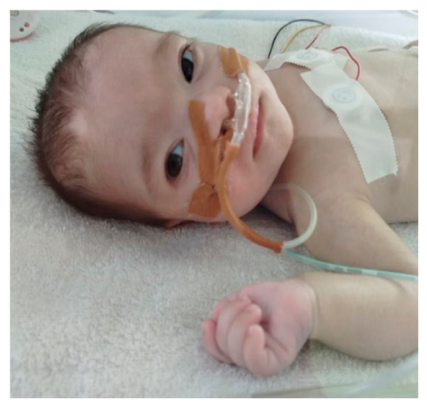
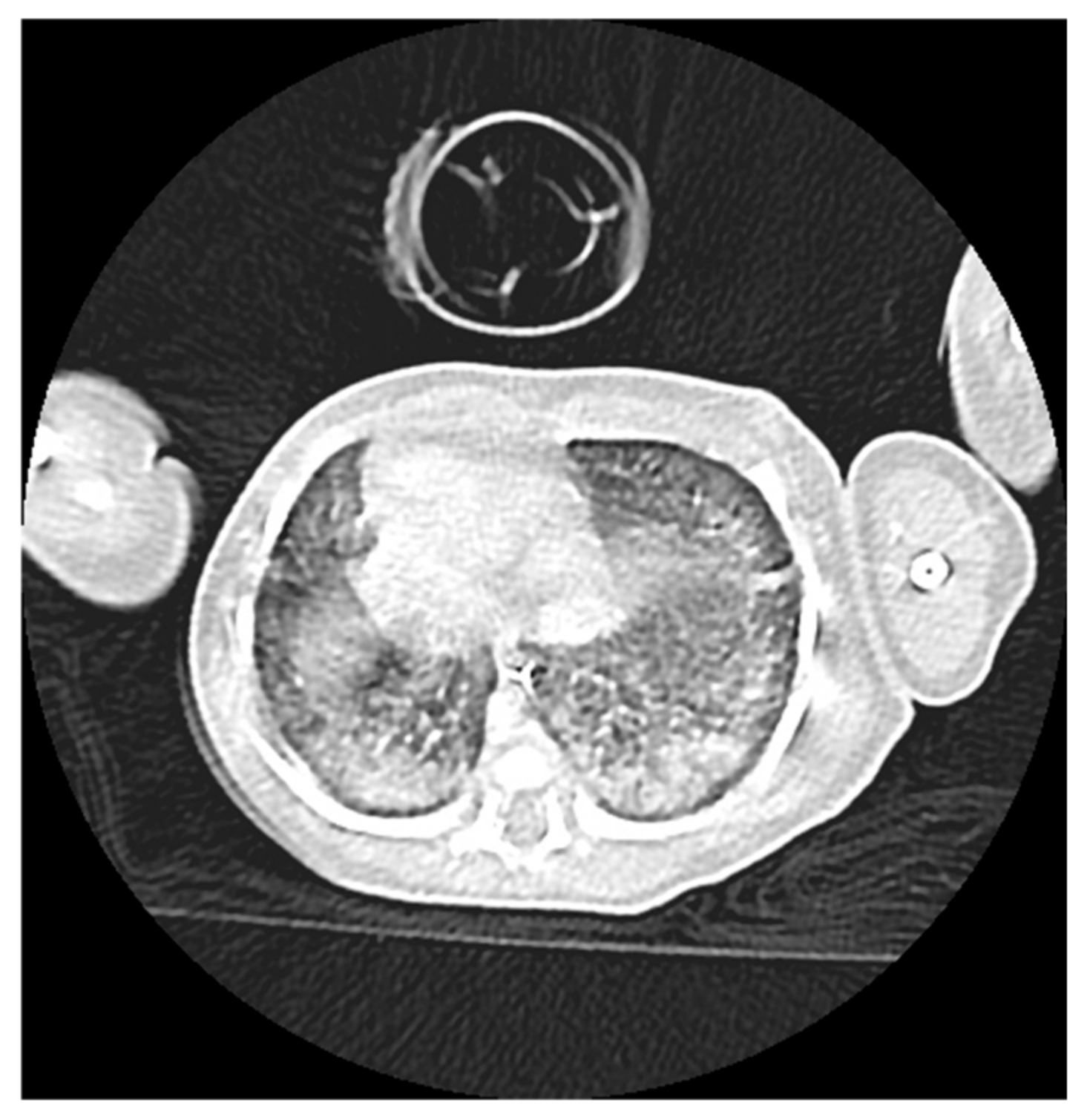
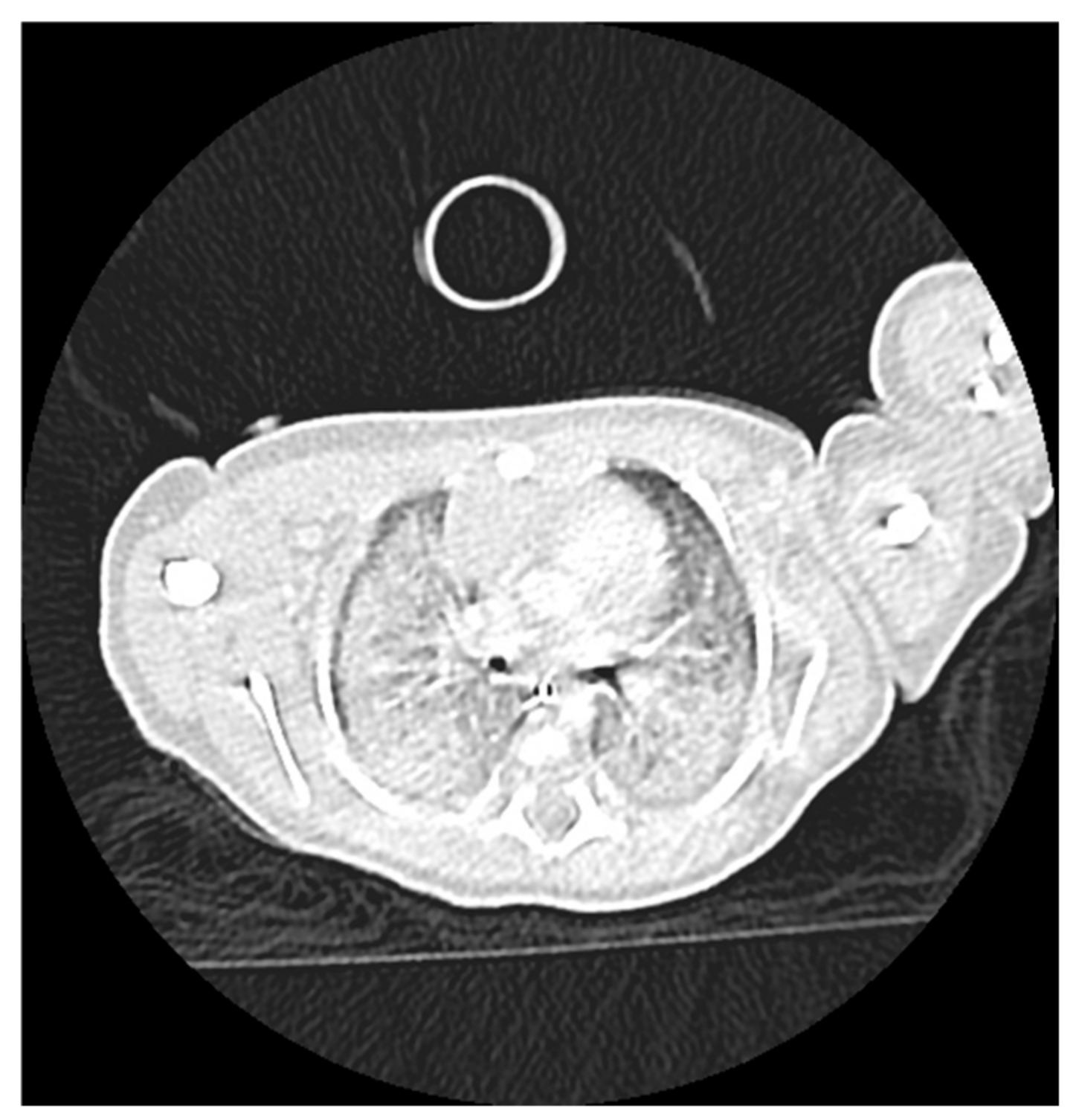
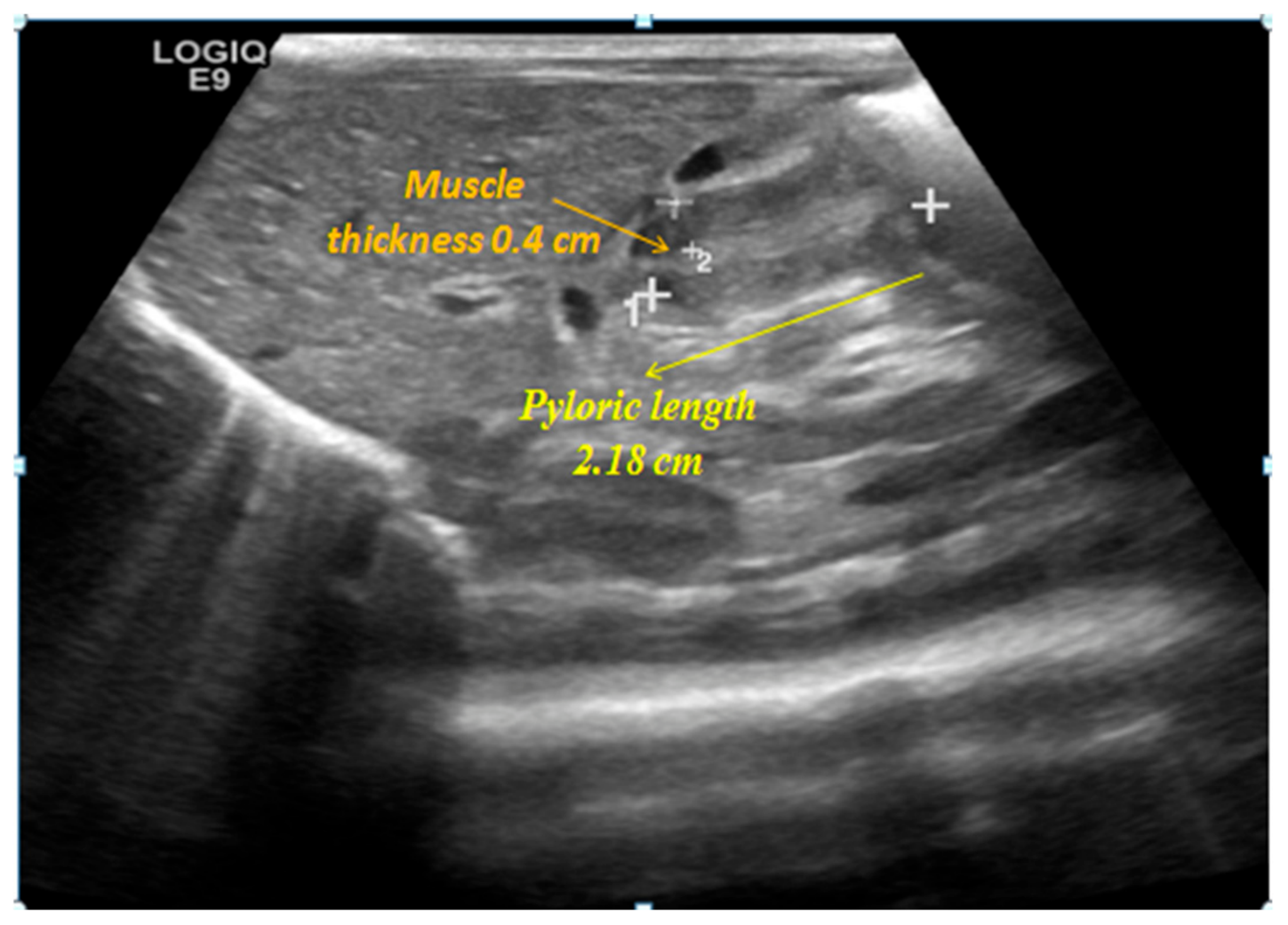
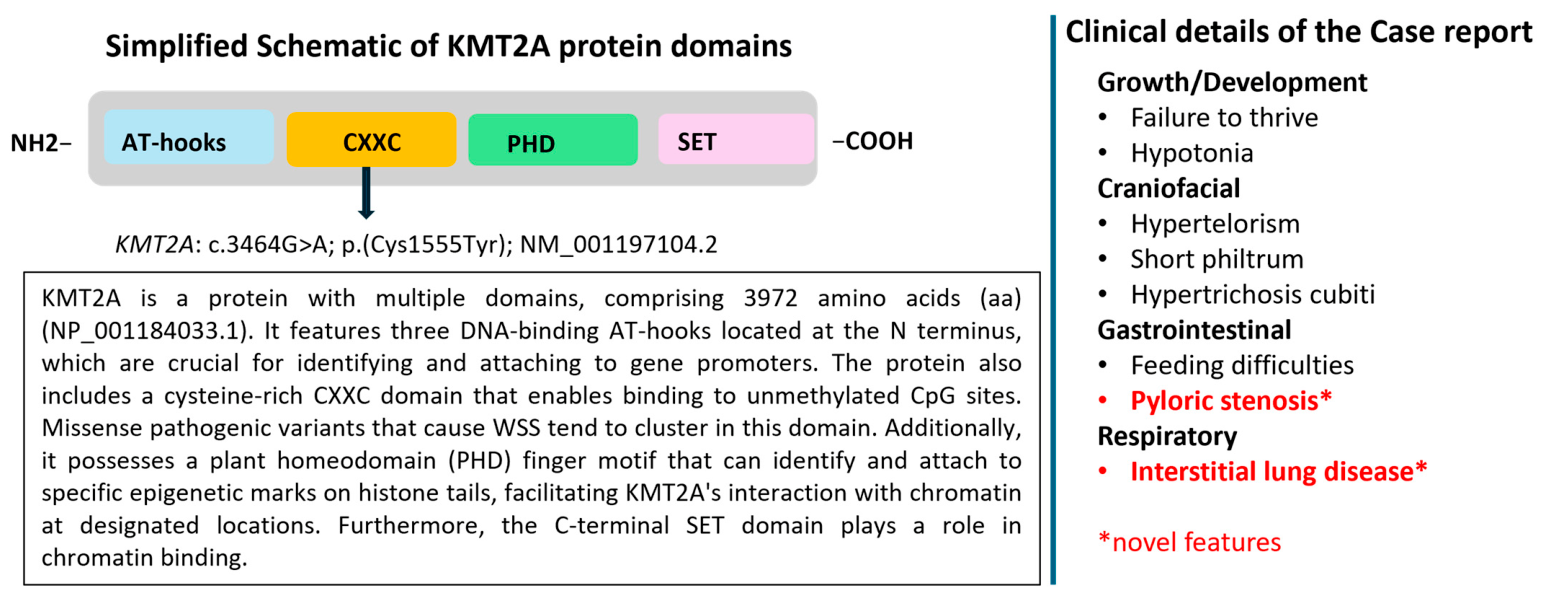
- Developmental Syndrome: Heterozygous germline mutations in the KMT2A gene (functional loss of one copy) lead to WSS [3,5], a neurodevelopmental disorder characterized by developmental delay, distinctive facial features, short stature, hypertrichosis, and neurological features, including hypotonia and seizures [2]. Our case adds to the phenotypic spectrum of the syndrome, as it presented with characteristic interstitial lung disease and hypertrophic pyloric stenosis requiring surgical intervention.

| Source (Citation) | Case ID/Cohort | Inheritance | Age/Sex | Key Phenotypes Reported | Evidence/Notes |
|---|---|---|---|---|---|
| Present case (this report) | Proband | De novo | Neonate (female) | failure to thrive, hypotonia, dysmorphic features, feeding difficulties, patent ductus arteriosus, hypertrichosis cubiti, hypertrophic pyloric stenosis, interstitial lung disease | WES confirmed; detailed clinical phenotype |
| Foroutan A et al. [26] PMID: 35163737 | WDSTS_EPIC Pt.7 | Not specified (likely de novo) | Male, 3 years | included in methylation episignature cohort; phenotype details limited | Variant validated within cohort |
| Kaur A et al. [27] PMID: 38567171 | WDST | De novo | Female, 11 months | small palpebral fissures, thin upper lip, hypertrichosis cubiti, puffy hands, hypotonia, failure to thrive, global developmental delay | WES confirmed |
| Baer S et al. [25], PMID: 29574747. | WDST, pt.25 | Male, 5 years | hypertelorism, small palpebral fissures, downslanted palpebral fissures, thick eyebrows, long eyelashes, thin upper lip, advance bone age (+2 years), rib anomalies (11 pairs), tapering finger, sacral dimple, hypertrichosis of the back, hypertrichosis of lower limbs, hypotonia neonatal and persistent, developmental delay, severe intellectual disability, seizures (absences), dysgenesis of corpus callosum, bilateral ptosis, strabismus, astigmatism, lachrymal stenosis, left pyelectasia, posterior urethral valve, constipation, frequent infections, central apneas | WES | |
| Bramswig NC et al. [46]; PMID: 25724810. | K2431–WDST | De novo | Male, 22 months | intellectual disability, hypotonia, right retinal atrophy, frequent infections, feeding problems, coarse face, low frontal hairline, thick eyebrows, long eyelashes, flat nasal bridge, broad nose, upturned nasal tip, large mouth, thin upper vermillion, thick lower vermillion, macroglossia, long philtrum, small, protruding ears, aplasia/hypoplasia of distal phalanges of the 5th finger, prominent interphalangeal joints, prominent distal phalanges, cryptorchidism, patent ductus arteriosus, mitral valve prolapse, body hirsutism, sparse scalp hair, fasciculation of tongue | WES Trio-analysis/the patient presented aspiration pneumonia at the age of 3 months and recurrent pulmonary infections—died of sepsis at the age of 3 years. |
| Li et al. [16] PMID: 30305169 | Chinese cohort | Not specified | Not detailed | cohort phenotypes: developmental delay, hypertrichosis, short stature; phenotype details limited for specific variant | Variant listed in supplemental tables |
4. Conclusions
Author Contributions
Funding
Institutional Review Board Statement
Informed Consent Statement
Data Availability Statement
Conflicts of Interest
Abbreviations
| ABR | Auditory Brainstem Response |
| ALL | Acute Lymphoblastic Leukemia |
| AML | Acute Myeloid Leukemia |
| BOR | Brain–Lung–Thyroid |
| BPD | Bronchopulmonary Dysplasia |
| CT | Computed Tomography |
| HFNC | High-Flow Nasal Cannula |
| HGMD | Human Gene Mutation Database |
| ILD | Interstitial Lung Disease |
| MAS | Meconium Aspiration Syndrome |
| MRI | Magnetic Resonance Imaging |
| NICU | Neonatal Intensive Care Unit |
| PCR | Polymerase Chain Reaction |
| PDA | Patent Ductus Arteriosus |
| PTD | Partial Tandem Duplications |
| WES | Whole-Exome Sequencing |
| WSS | Wiedemann–Steiner Syndrome |
References
- Park, J.; Lee, K.; Kim, K.; Yi, S.-J. The Role of Histone Modifications: From Neurodevelopment to Neurodiseases. Signal Transduct. Target. Ther. 2022, 7, 217. [Google Scholar] [CrossRef]
- Sheppard, S.E.; Quintero-Rivera, F. Wiedemann-Steiner Syndrome. In GeneReviews® [Internet]; University of Washington: Seattle, WA, USA, 2022. [Google Scholar]
- Chan, A.J.S.; Cytrynbaum, C.; Hoang, N.; Ambrozewicz, P.M.; Weksberg, R.; Drmic, I.; Ritzema, A.; Schachar, R.; Walker, S.; Uddin, M.; et al. Expanding the Neurodevelopmental Phenotypes of Individuals with de Novo KMT2A Variants. npj Genom. Med. 2019, 4, 9. [Google Scholar] [CrossRef]
- Castiglioni, S.; Di Fede, E.; Bernardelli, C.; Lettieri, A.; Parodi, C.; Grazioli, P.; Colombo, E.A.; Ancona, S.; Milani, D.; Ottaviano, E.; et al. KMT2A: Umbrella Gene for Multiple Diseases. Genes 2022, 13, 514. [Google Scholar] [CrossRef]
- Sheppard, S.E.; Campbell, I.M.; Harr, M.H.; Gold, N.; Li, D.; Bjornsson, H.T.; Cohen, J.S.; Fahrner, J.A.; Fatemi, A.; Harris, J.R.; et al. Expanding the Genotypic and Phenotypic Spectrum in a Diverse Cohort of 104 Individuals with Wiedemann-Steiner Syndrome. Am. J. Med. Genet. A 2021, 185, 1649–1665. [Google Scholar] [CrossRef] [PubMed]
- Bukowska-Olech, E.; Majchrzak-Celińska, A.; Przyborska, M.; Jamsheer, A. Chromatinopathies: Insight in Clinical Aspects and Underlying Epigenetic Changes. J. Appl. Genet. 2024, 65, 287–301. [Google Scholar] [CrossRef] [PubMed]
- di Bari, I.; Ceccarini, C.; Curcetti, M.; Cesarano, C.; Croce, A.I.; Adipietro, I.; Gallicchio, M.G.; Palladino, G.P.; Patrizio, M.P.; Frisoli, B.; et al. Uncovering a Genetic Diagnosis in a Pediatric Patient by Whole Exome Sequencing: A Modeling Investigation in Wiedemann–Steiner Syndrome. Genes 2024, 15, 1155. [Google Scholar] [CrossRef] [PubMed]
- Wenger, A.M.; Guturu, H.; Bernstein, J.A.; Bejerano, G. Systematic Reanalysis of Clinical Exome Data Yields Additional Diagnoses: Implications for Providers. Genet. Med. 2017, 19, 209–214. [Google Scholar] [CrossRef]
- Fontana, P.; Passaretti, F.F.; Maioli, M.; Cantalupo, G.; Scarano, F.; Lonardo, F. Clinical and Molecular Spectrum of Wiedemann-Steiner Syndrome, an Emerging Member of the Chromatinopathy Family. World J. Med. Genet. 2020, 9, 1–11. [Google Scholar] [CrossRef]
- Carman, K.B.; Kaplan, E.; Aslan, C.N.; Kocagil, S.; Cilinigr, O.; Yarar, C. Wiedemann–Steiner Syndrome: A Rare Differential Diagnosis of Neurodevelopmental Delay and Dysmorphic Features. J. Pediatr. Genet. 2022, 11, 162–164. [Google Scholar] [CrossRef]
- Yoo, J.; Park, A.Y.; Ko, J.M. Wiedemann-Steiner Syndrome: Description of Genetic Profiles and Clinical Phenotypes of 10 Korean Pediatric Patients. BMC Med. Genom. 2025, 18, 149. [Google Scholar] [CrossRef]
- Stellacci, E.; Onesimo, R.; Bruselles, A.; Pizzi, S.; Battaglia, D.; Leoni, C.; Zampino, G.; Tartaglia, M. Congenital Immunodeficiency in an Individual with Wiedemann–Steiner Syndrome Due to a Novel Missense Mutation in KMT2A. Am. J. Med. Genet. A 2016, 170, 2389–2393. [Google Scholar] [CrossRef]
- Manav Yiğit, Z.; Mengübaş Erbaş, A.; Türkyılmaz, A.; Tekin, İ.M.; Yılmaz Güleç, E.; Kayhan, G.; Aydın Gümüş, A.; Arslan Ateş, E.; Üçtepe, E.; Ateş, K.; et al. Revisiting Wiedemann-Steiner Syndrome: Novel KMT2A Variants and Broadened Clinical Spectrum. Balk. Med. J. 2026, 43, 92–102. [Google Scholar] [CrossRef]
- Bogaert, D.J.; Dullaers, M.; Kuehn, H.S.; Leroy, B.P.; Niemela, J.E.; De Wilde, H.; De Schryver, S.; De Bruyne, M.; Coppieters, F.; Lambrecht, B.N.; et al. Early-Onset Primary Antibody Deficiency Resembling Common Variable Immunodeficiency Challenges the Diagnosis of Wiedeman-Steiner and Roifman Syndromes. Sci. Rep. 2017, 7, 3702. [Google Scholar] [CrossRef] [PubMed]
- Min Ko, J.; Cho, J.S.; Yoo, Y.; Seo, J.; Choi, M.; Chae, J.-H.; Lee, H.-R.; Cho, T.-J. Wiedemann-Steiner Syndrome With 2 Novel KMT2A Mutations: Variable Severity in Psychomotor Development and Musculoskeletal Manifestation. J. Child Neurol. 2017, 32, 237–242. [Google Scholar] [CrossRef] [PubMed]
- Li, N.; Wang, Y.; Yang, Y.; Wang, P.; Huang, H.; Xiong, S.; Sun, L.; Cheng, M.; Song, C.; Cheng, X.; et al. Description of the Molecular and Phenotypic Spectrum of Wiedemann-Steiner Syndrome in Chinese Patients. Orphanet J. Rare Dis. 2018, 13, 178. [Google Scholar] [CrossRef] [PubMed]
- Reynisdottir, T.; Anderson, K.J.; Boukas, L.; Bjornsson, H.T. Missense Variants Causing Wiedemann-Steiner Syndrome Preferentially Occur in the KMT2A-CXXC Domain and Are Accurately Classified Using AlphaFold2. PLoS Genet. 2022, 18, e1010278. [Google Scholar] [CrossRef]
- Nogee, L.M. Interstitial Lung Disease in Newborns. Semin. Fetal Neonatal Med. 2017, 22, 227–233. [Google Scholar] [CrossRef]
- Richards, S.; Aziz, N.; Bale, S.; Bick, D.; Das, S.; Gastier-Foster, J.; Grody, W.W.; Hegde, M.; Lyon, E.; Spector, E.; et al. Standards and Guidelines for the Interpretation of Sequence Variants: A Joint Consensus Recommendation of the American College of Medical Genetics and Genomics and the Association for Molecular Pathology. Genet. Med. 2015, 17, 405–424. [Google Scholar] [CrossRef]
- Zehtabcheh, S.; Soleimani Samarkhazan, H.; Asadi, M.; Zabihi, M.; Parkhideh, S.; Mohammadi, M.H. Insights into KMT2A Rearrangements in Acute Myeloid Leukemia: From Molecular Characteristics to Targeted Therapies. Biomark. Res. 2025, 13, 73. [Google Scholar] [CrossRef]
- Ogino, J.; Dou, Y. Histone Methyltransferase KMT2A: Developmental Regulation to Oncogenic Transformation. J. Biol. Chem. 2024, 300, 107791. [Google Scholar] [CrossRef]
- Guarnera, L.; D’Addona, M.; Bravo-Perez, C.; Visconte, V. KMT2A Rearrangements in Leukemias: Molecular Aspects and Therapeutic Perspectives. Int. J. Mol. Sci. 2024, 25, 9023. [Google Scholar] [CrossRef]
- Lebrun, N.; Giurgea, I.; Goldenberg, A.; Dieux, A.; Afenjar, A.; Ghoumid, J.; Diebold, B.; Mietton, L.; Briand-Suleau, A.; Billuart, P.; et al. Molecular and Cellular Issues of KMT2A Variants Involved in Wiedemann-Steiner Syndrome. Eur. J. Hum. Genet. 2018, 26, 107–116. [Google Scholar] [CrossRef] [PubMed]
- Stenson, P.D.; Mort, M.; Ball, E.V.; Chapman, M.; Evans, K.; Azevedo, L.; Hayden, M.; Heywood, S.; Millar, D.S.; Phillips, A.D.; et al. The Human Gene Mutation Database (HGMD®): Optimizing Its Use in a Clinical Diagnostic or Research Setting. Hum. Genet. 2020, 139, 1197–1207. [Google Scholar] [CrossRef]
- Baer, S.; Afenjar, A.; Smol, T.; Piton, A.; Gérard, B.; Alembik, Y.; Bienvenu, T.; Boursier, G.; Boute, O.; Colson, C.; et al. Wiedemann-Steiner Syndrome as a Major Cause of Syndromic Intellectual Disability: A Study of 33 French Cases. Clin. Genet. 2018, 94, 141–152. [Google Scholar] [CrossRef]
- Foroutan, A.; Haghshenas, S.; Bhai, P.; Levy, M.A.; Kerkhof, J.; McConkey, H.; Niceta, M.; Ciolfi, A.; Pedace, L.; Miele, E.; et al. Clinical Utility of a Unique Genome-Wide DNA Methylation Signature for KMT2A-Related Syndrome. Int. J. Mol. Sci. 2022, 23, 1815. [Google Scholar] [CrossRef]
- Kaur, A.; Chaudhry, C.; Kaur, P.; Daniel, R.; Srivastava, P. Pattern Recognition of Common Multiple Congenital Malformation Syndromes with Underlying Chromatinopathy. J. Pediatr. Genet. 2024, 13, 006–014. [Google Scholar] [CrossRef] [PubMed]
- Sokolova, T.; Ivanov, H.; Panova, M.; Sotkova-Ivanova, I.; Stoyanova, V. Neuronal Heterotopy in a Patient with Wiedemann–Steiner Syndrome Caused by a Truncating KMT2A Variant: Clinical and Genetic Correlations. Reports 2026, 9, 37. [Google Scholar] [CrossRef]
- Shilatifard, A. The COMPASS Family of Histone H3K4 Methylases: Mechanisms of Regulation in Development and Disease Pathogenesis. Annu. Rev. Biochem. 2012, 81, 65–95. [Google Scholar] [CrossRef]
- Rao, R.C.; Dou, Y. Hijacked in Cancer: The KMT2 (MLL) Family of Methyltransferases. Nat. Rev. Cancer 2015, 15, 334–346. [Google Scholar] [CrossRef]
- Wan, H.; Dingle, S.; Xu, Y.; Besnard, V.; Kaestner, K.H.; Ang, S.-L.; Wert, S.; Stahlman, M.T.; Whitsett, J.A. Compensatory Roles of Foxa1 and Foxa2 during Lung Morphogenesis. J. Biol. Chem. 2005, 280, 13809–13816. [Google Scholar] [CrossRef] [PubMed]
- Meng, G.; Yin, W.; Hong, Y.; Oliviero, S. Emerging Roles of Epigenetic Regulators during Lung Development. Cell Death Dis. 2025, 16, 567. [Google Scholar] [CrossRef] [PubMed]
- Snyder, J.; Teisanu, R.; Stripp, B. Endogenous Lung Stem Cells and Contribution to Disease. J. Pathol. 2009, 217, 254–264. [Google Scholar] [CrossRef]
- Walton, K.D.; Gumucio, D.L. Hedgehog Signaling in Intestinal Development and Homeostasis. Annu. Rev. Physiol. 2021, 83, 359–380. [Google Scholar] [CrossRef]
- McLin, V.A.; Rankin, S.A.; Zorn, A.M. Repression of Wnt/β-Catenin Signaling in the Anterior Endoderm Is Essential for Liver and Pancreas Development. Development 2007, 134, 2207–2217. [Google Scholar] [CrossRef]
- Jakovcevski, M.; Ruan, H.; Shen, E.Y.; Dincer, A.; Javidfar, B.; Ma, Q.; Peter, C.J.; Cheung, I.; Mitchell, A.C.; Jiang, Y.; et al. Neuronal Kmt2a/Mll1 Histone Methyltransferase Is Essential for Prefrontal Synaptic Plasticity and Working Memory. J. Neurosci. 2015, 35, 5097–5108. [Google Scholar] [CrossRef] [PubMed]
- Kerimoglu, C.; Sakib, M.S.; Jain, G.; Benito, E.; Burkhardt, S.; Capece, V.; Kaurani, L.; Halder, R.; Agís-Balboa, R.C.; Stilling, R.; et al. KMT2A and KMT2B Mediate Memory Function by Affecting Distinct Genomic Regions. Cell Rep. 2017, 20, 538–548. [Google Scholar] [CrossRef]
- Yu, H.; Zhang, G.; Yu, S.; Wu, W. Wiedemann–Steiner Syndrome: Case Report and Review of Literature. Children 2022, 9, 1545. [Google Scholar] [CrossRef]
- Fan, H.; Wang, H.; Lian, Z.; Yu, Q.; Wu, X.; Kuang, N.; Becker, B.; Feng, J.; Fan, M.; Song, L.; et al. Dynamic Interactions Between Hemispheres Reveal a Compensatory Pathway for Motor Recovery in Moderate-to-Severe Subcortical Stroke. J. Stroke 2026, 28, 97–114. [Google Scholar] [CrossRef]
- Ran, X.; Wang, M.; Huang, J.; Kuang, N.; Tian, P.; Wu, J.; Feng, F.; Luo, Y.; Huang, N. Mechanistic Research and Therapeutic Prospects of Alternative Splicing in Neurodegenerative Diseases. Ageing Res. Rev. 2026, 118, 103133. [Google Scholar] [CrossRef] [PubMed]
- Liu, X.; Zuo, J.; Zhang, G.; Han, X.; Tian, Y. The Role of mRNA Alternative Processing in Mammalian Neurodevelopment. Int. J. Mol. Sci. 2025, 26, 11075. [Google Scholar] [CrossRef]
- Porter, R.S.; An, S.; Gavilan, M.C.; Nagai, M.; Murata-Nakamura, Y.; Zhou, B.; Bonefas, K.M.; Dionne, O.; Manuel, J.M.; St-Germain, J.; et al. Coordinated Neuron-Specific Splicing Events Restrict Nucleosome Engagement of the LSD1 Histone Demethylase Complex. Cell Rep. 2025, 44, 115213. [Google Scholar] [CrossRef]
- Nagai, M.; Porter, R.S.; Miyasato, M.; Wang, A.; Gavilan, C.M.; Hughes, E.D.; Wu, M.C.; Saunders, T.L.; Iwase, S. Neuronal Splicing of the Unmethylated Histone H3K4 Reader, PHF21A, Prevents Excessive Synaptogenesis. J. Biol. Chem. 2024, 300, 107881. [Google Scholar] [CrossRef]
- Crapnell, T.; Rogers, C.; Neil, J.; Inder, T.; Woodward, L.; Pineda, R. Factors Associated with Feeding Difficulties in the Very Preterm Infant. Acta Paediatr. 2013, 102, e539–e545. [Google Scholar] [CrossRef]
- Obaid, Y.Y.; Toubasi, A.A.; Albustanji, F.H.; Al-Qawasmeh, A.R. Perinatal Risk Factors for Infantile Hypertrophic Pyloric Stenosis: A Systematic Review and Meta-Analysis. J. Pediatr. Surg. 2023, 58, 458–466. [Google Scholar] [CrossRef] [PubMed]
- Bramswig, N.C.; Lüdecke, H.J.; Alanay, Y.; Albrecht, B.; Barthelmie, A.; Boduroglu, K.; Braunholz, D.; Caliebe, A.; Chrzanowska, K.H.; Czeschik, J.C.; et al. Exome Sequencing Unravels Unexpected Differential Diagnoses in Individuals with the Tentative Diagnosis of Coffin–Siris and Nicolaides–Baraitser Syndromes. Hum. Genet. 2015, 134, 553–568. [Google Scholar] [CrossRef] [PubMed]
- Narta, K.; Teltumbade, M.R.; Vishal, M.; Sadaf, S.; Faruq, M.; Jama, H.; Waseem, N.; Rao, A.; Sen, A.; Ray, K.; et al. Whole Exome Sequencing Reveals Novel Candidate Genes in Familial Forms of Glaucomatous Neurodegeneration. Genes 2023, 14, 495. [Google Scholar] [CrossRef] [PubMed]




Disclaimer/Publisher’s Note: The statements, opinions and data contained in all publications are solely those of the individual author(s) and contributor(s) and not of MDPI and/or the editor(s). MDPI and/or the editor(s) disclaim responsibility for any injury to people or property resulting from any ideas, methods, instructions or products referred to in the content. |
© 2026 by the authors. Licensee MDPI, Basel, Switzerland. This article is an open access article distributed under the terms and conditions of the Creative Commons Attribution (CC BY) license.
Share and Cite
Poulou, M.; Kamilari, T.; Nikaina, E.; Dikoglou-Tzanetatou, E.; Kanaka-Gantenbein, C.; Kolialexi, A.; Siahanidou, T. Wiedemann–Steiner Syndrome (WSS): A Neonatal Case Report Expanding the Phenotypic Spectrum of a Previously Reported Missense Variant. Int. J. Mol. Sci. 2026, 27, 4163. https://doi.org/10.3390/ijms27104163
Poulou M, Kamilari T, Nikaina E, Dikoglou-Tzanetatou E, Kanaka-Gantenbein C, Kolialexi A, Siahanidou T. Wiedemann–Steiner Syndrome (WSS): A Neonatal Case Report Expanding the Phenotypic Spectrum of a Previously Reported Missense Variant. International Journal of Molecular Sciences. 2026; 27(10):4163. https://doi.org/10.3390/ijms27104163
Chicago/Turabian StylePoulou, Myrto, Thessalia Kamilari, Eirini Nikaina, Eleftheria Dikoglou-Tzanetatou, Christina Kanaka-Gantenbein, Aggeliki Kolialexi, and Tania Siahanidou. 2026. "Wiedemann–Steiner Syndrome (WSS): A Neonatal Case Report Expanding the Phenotypic Spectrum of a Previously Reported Missense Variant" International Journal of Molecular Sciences 27, no. 10: 4163. https://doi.org/10.3390/ijms27104163
APA StylePoulou, M., Kamilari, T., Nikaina, E., Dikoglou-Tzanetatou, E., Kanaka-Gantenbein, C., Kolialexi, A., & Siahanidou, T. (2026). Wiedemann–Steiner Syndrome (WSS): A Neonatal Case Report Expanding the Phenotypic Spectrum of a Previously Reported Missense Variant. International Journal of Molecular Sciences, 27(10), 4163. https://doi.org/10.3390/ijms27104163