Cutaneous α-Synuclein and Age Spots in Neurodegeneration: A Systematic Review and Testable Hypothesis

 ,
,  , ,
, ,  and
and
Abstract
1. Introduction
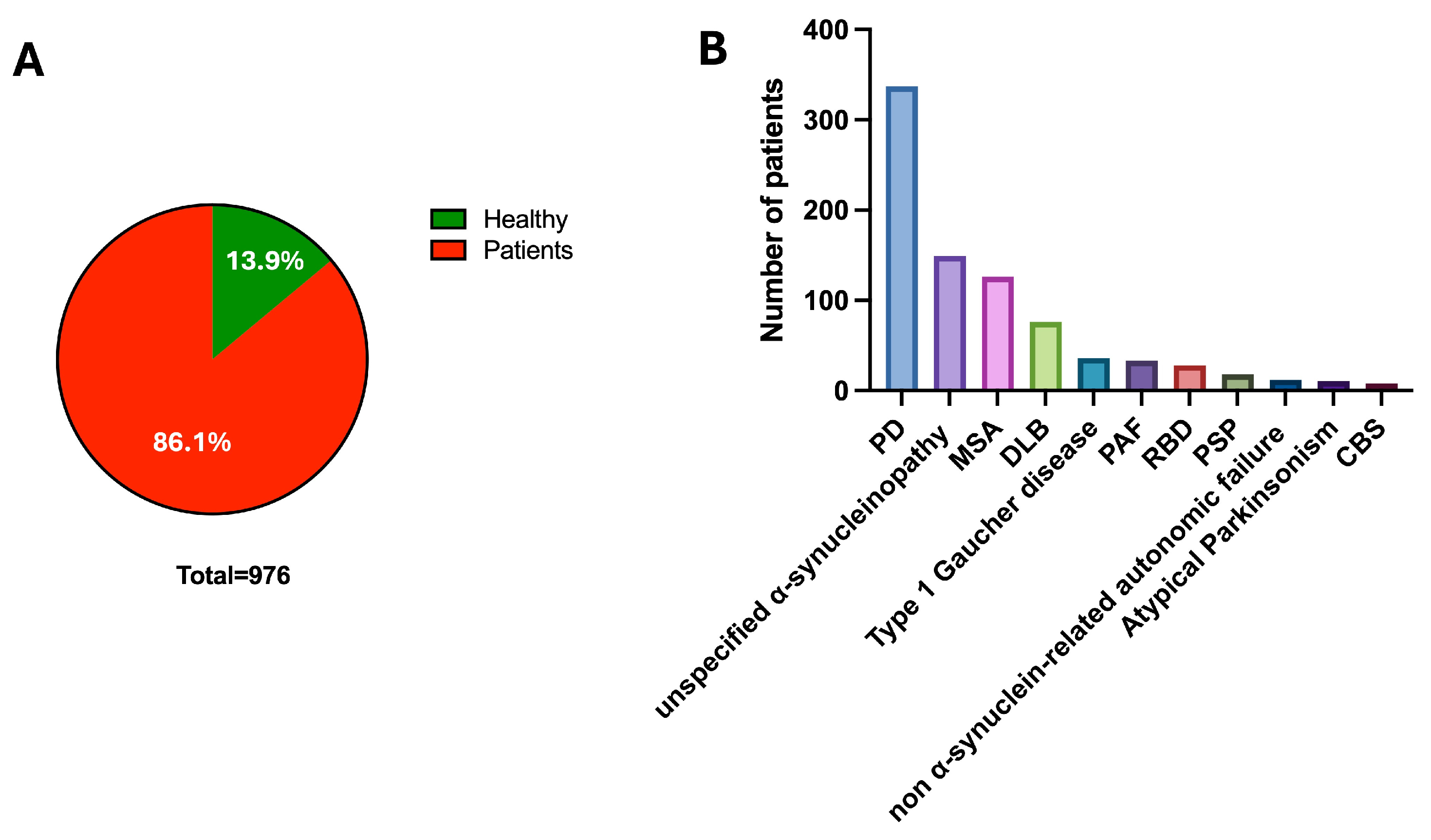
2. Results
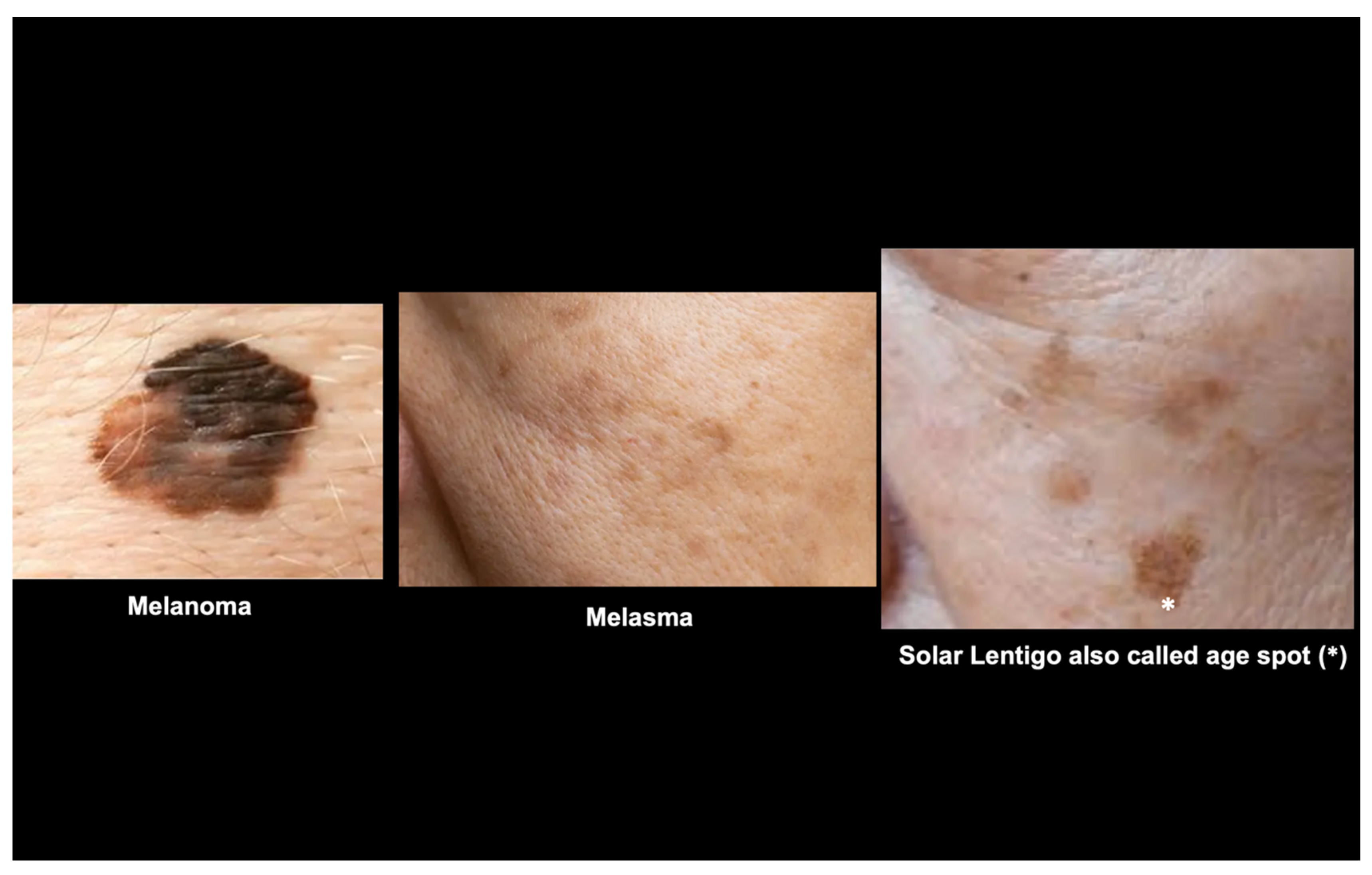
3. Discussion
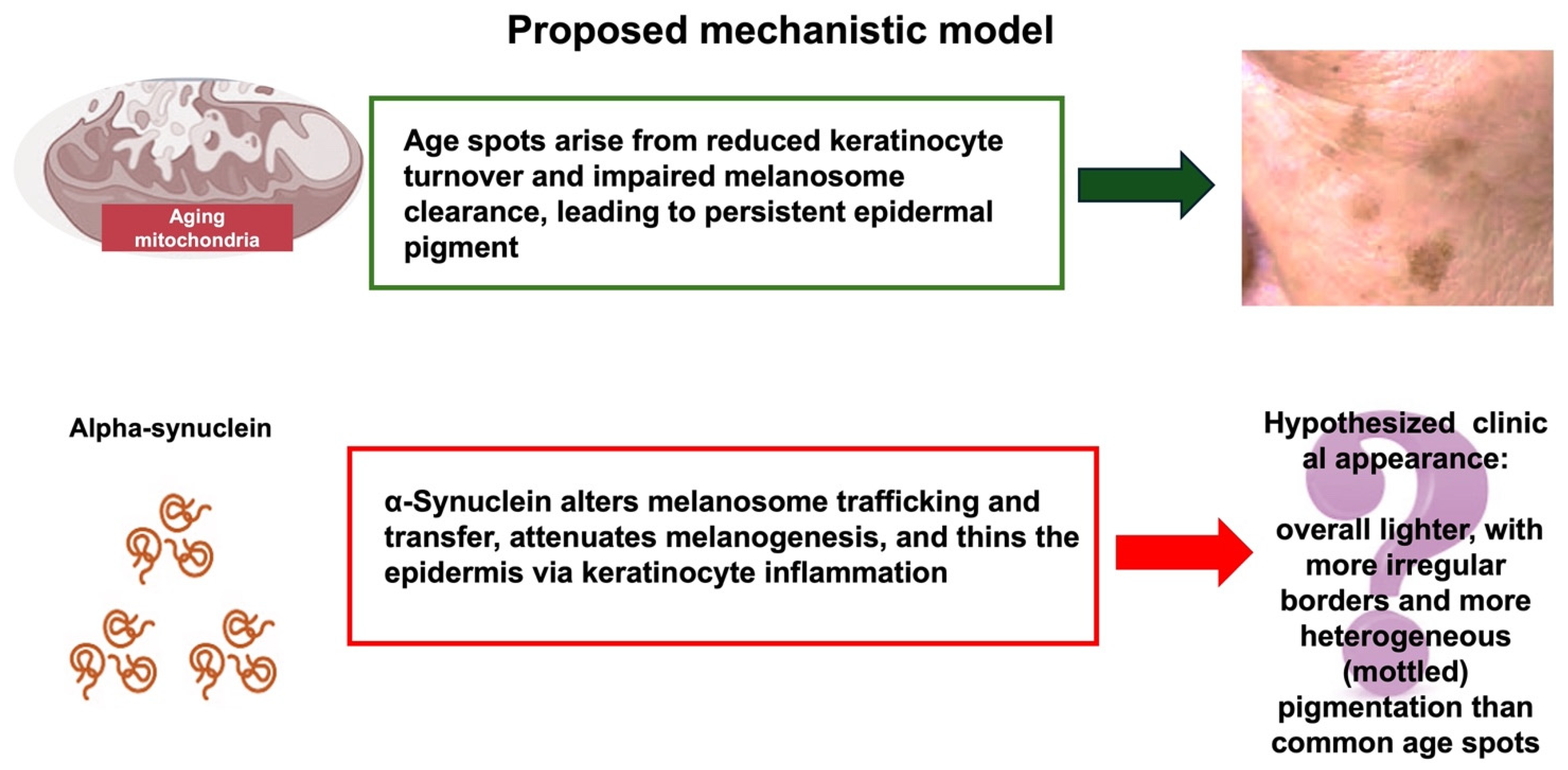
Proposed Mechanistic Hypothesis: α-Synuclein and Pigmentary Changes in Aging Skin
4. Materials and Methods
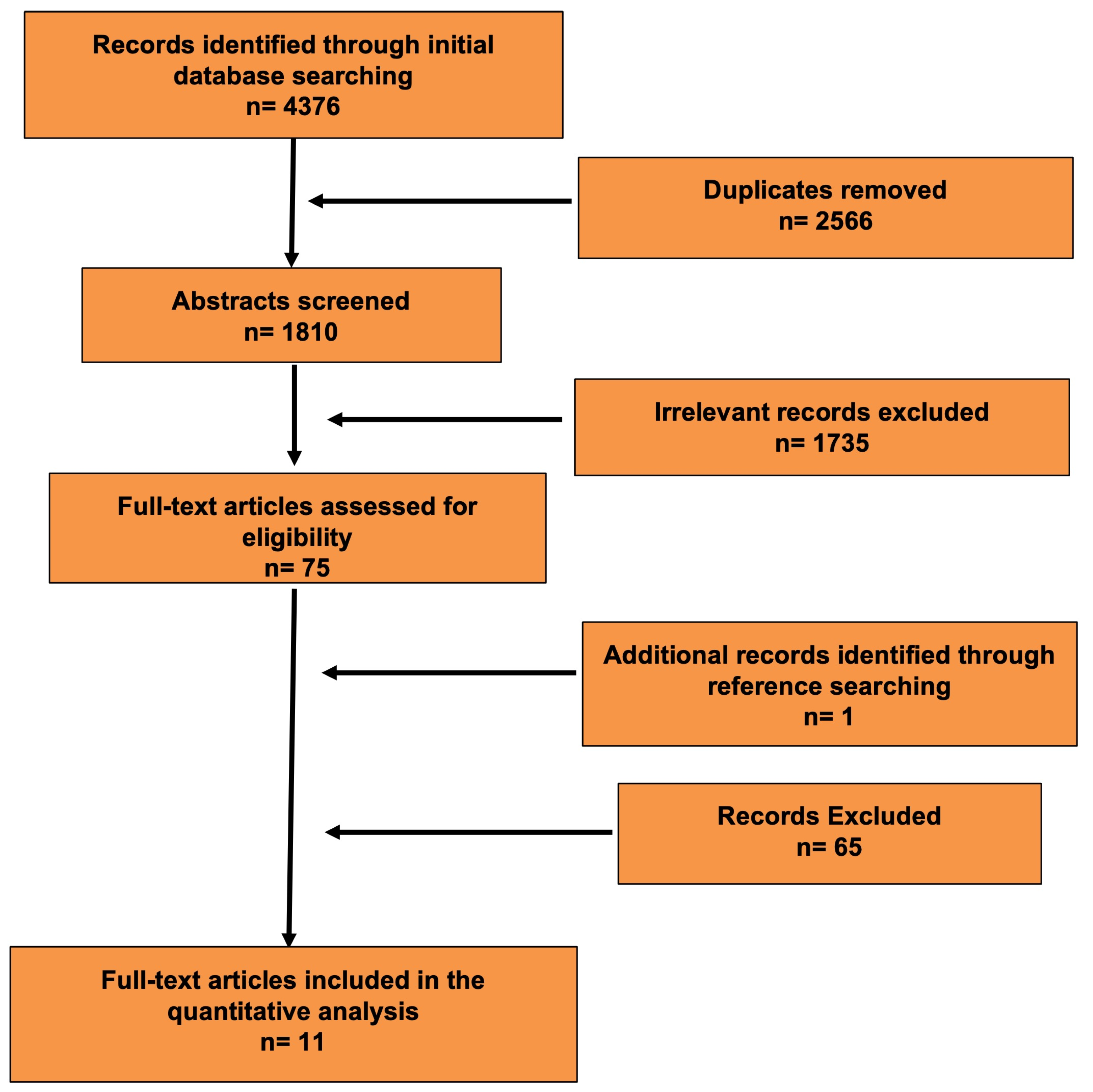
4.1. Search Strategy
4.2. Study Selection Criteria
- Studies providing quantitative data on characteristics of skin in neurodegenerative disease in humans.
- Studies published in peer-reviewed journals.
- Studies involving adult patients with α-synucleinopathy.
- Articles published in English
- Studies involving children or adolescents under 18 years old.
- Studies conducted on animals.
- Systematic reviews, case reports, and commentaries.
- Non-peer-reviewed articles, conference abstracts, or opinion pieces.
4.3. Data Extraction
4.4. Risk of Bias Assessment
5. Conclusions
Author Contributions
Funding
Institutional Review Board Statement
Informed Consent Statement
Data Availability Statement
Conflicts of Interest
References
- Klostermeier, S.; Li, A.; Hou, H.X.; Green, U.; Lennerz, J.K. Exploring the Skin Brain Link: Biomarkers in the Skin with Implications for Aging Research and Alzheimer’s Disease Diagnostics. Int. J. Mol. Sci. 2023, 24, 13309. [Google Scholar] [CrossRef] [Scilit]
- Yoon, K.N.; Chung, J.H. Healthy skin, Healthy brain. J. Dermatol. Sci. 2025, 119, 47–52. [Google Scholar] [CrossRef] [Scilit]
- Choi, W.; Yin, L.; Smuda, C.; Batzer, J.; Hearing, V.J.; Kolbe, L. Molecular and histological characterization of age spots. Exp. Dermatol. 2017, 26, 242–248. [Google Scholar] [CrossRef] [Scilit]
- Wu, C.-Y.; Ho, C.-Y.; Yang, Y.-H. Developing Biomarkers for the Skin: Biomarkers for the Diagnosis and Prediction of Treatment Outcomes of Alzheimer’s Disease. Int. J. Mol. Sci. 2023, 24, 8478. [Google Scholar] [CrossRef] [Scilit] [PubMed]
- Sharma, M.; Burré, J. α-Synuclein in synaptic function and dysfunction. Trends Neurosci. 2023, 46, 153–166. [Google Scholar] [CrossRef] [Scilit] [PubMed]
- Matsuo, Y.; Kamitani, T. Parkinson’s Disease-Related Protein, a-Synuclein, in Malignant Melanoma. PLoS ONE 2010, 5, e10481. [Google Scholar] [CrossRef] [Scilit]
- Kumaran, R.; Cookson, M.R. Pathways to Parkinsonism Redux: Convergent pathobiological mechanisms in genetics of Parkinson’s disease. Hum. Mol. Genet. 2015, 24, R32–R44. [Google Scholar] [CrossRef] [Scilit]
- Gibbons, C.H.; Levine, T.; Adler, C.; Bellaire, B.; Wang, N.; Stohl, J.; Agarwal, P.; Aldridge, G.M.; Barboi, A.; Evidente, V.G.H.; et al. Skin Biopsy Detection of Phosphorylated α-Synuclein in Patients with Synucleinopathies. JAMA 2024, 331, 1298–1306. [Google Scholar] [CrossRef] [Scilit] [PubMed]
- Rodriguez-Leyva, I.; Chi-Ahumada, E.; Mejía, M.; Castanedo-Cazares, J.P.; Eng, W.; Saikaly, S.K.; Carrizales, J.; Levine, T.D.; Norman, R.A.; Jimenez-Capdeville, M.E. The Presence of Alpha-Synuclein in Skin from Melanoma and Patients with Parkinson’s Disease. Mov. Disord. Clin. Pract. 2017, 4, 724–732. [Google Scholar] [CrossRef] [Scilit]
- Yang, Y.; Wu, Y.; Xiang, L.; Picardo, M.; Zhang, C. Deciphering the role of skin aging in pigmentary disorders. Free Radic. Biol. Med. 2025, 227, 638–655. [Google Scholar] [CrossRef] [Scilit]
- Chen, Y.; Lyga, J. Brain-skin connection: Stress, inflammation and skin aging. Inflamm. Allergy-Drug Targets 2014, 13, 177–190. [Google Scholar] [CrossRef] [Scilit]
- Jucevičiūtė, N.; Banaitytė, I.; Vaitkus, A.; Balnytė, R. Preclinical signs of Parkinson’s disease: A possible association of Parkinson’s disease with skin and hair features. Med. Hypotheses 2019, 127, 100–104. [Google Scholar] [CrossRef] [Scilit] [PubMed]
- Wang, Z.; Becker, K.; Donadio, V.; Siedlak, S.; Yuan, J.; Rezaee, M.; Incensi, A.; Kuzkina, A.; Orrú, C.D.; Tatsuoka, C.; et al. Skin α-Synuclein Aggregation Seeding Activity as a Novel Biomarker for Parkinson Disease. JAMA Neurol. 2020, 78, 30–40, Erratum in JAMA Neurol. 2021, 78, 120. https://doi.org/10.1001/jamaneurol.2020.4087. [Google Scholar] [CrossRef] [Scilit]
- Giannoccaro, M.P.; Avoni, P.; Rizzo, G.; Incensi, A.; Infante, R.; Donadio, V.; Liguori, R. Presence of Skin α-Synuclein Deposits Discriminates Parkinson’s Disease from Progressive Supranuclear Palsy and Corticobasal Syndrome. J. Park. Dis. 2022, 12, 585–591. [Google Scholar] [CrossRef] [Scilit] [PubMed]
- Al-Qassabi, A.; Tsao, T.; Racolta, A.; Kremer, T.; Cañamero, M.; Belousov, A.; Santana, M.A.; Beck, R.C.; Zhang, H.; Meridew, J.; et al. Immunohistochemical Detection of Synuclein Pathology in Skin in Idiopathic Rapid Eye Movement Sleep Behavior Disorder and Parkinsonism. Mov. Disord. 2021, 36, 895–904. [Google Scholar] [CrossRef] [Scilit]
- Gibbons, C.; Wang, N.; Rajan, S.; Kern, D.; Palma, J.-A.; Kaufmann, H.; Freeman, R. Cutaneous α-Synuclein Signatures in Patients with Multiple System Atrophy and Parkinson Disease. Neurology 2023, 100, e1529–e1539, Erratum in Neurology 2023, 101, 684. https://doi.org/10.1212/WNL.0000000000207614. [Google Scholar] [CrossRef] [Scilit]
- Koay, S.; Provitera, V.; Caporaso, G.; Vichayanrat, E.; Valerio, F.; Stancanelli, A.; Borreca, I.; Lunn, M.P.; Nolano, M.; Iodice, V. Cutaneous phosphorylated-synuclein: An early diagnostic biomarker for pure autonomic failure. J. Neurol. Neurosurg. Psychiatry 2025, 96, 500–507. [Google Scholar] [CrossRef] [Scilit]
- Isaacson, J.R.; Freeman, R.; Gibbons, C.H. Clinical utility of synuclein skin biopsy in the diagnosis and evaluation of synucleinopathies. Front. Neurol. 2024, 15, 1510796. [Google Scholar] [CrossRef] [Scilit]
- LoPiccolo, M.K.; Wang, Z.; Eshed, G.M.; Fierro, L.; Stauffer, C.; Wang, K.; Zhang, J.; Tatsuoka, C.; Balwani, M.; Zou, W.; et al. Skin α-Synuclein Seeding Activity in Patients with Type 1 Gaucher Disease. Mov. Disord. 2024, 39, 2087–2091. [Google Scholar] [CrossRef] [Scilit]
- Gummerson, C.E.; Tinaz, S.; Santini, V.; Zubair, A. Utilization of Skin Punch Biopsy for the Diagnosis of α-Synucleinopathy in Clinical Practice. Mov. Disord. Clin. Pract. 2025. [Google Scholar] [CrossRef] [Scilit] [PubMed]
- Leupold, D.; Szyc, L.; Stankovic, G.; Strobel, S.; Völker, H.-U.; Fleck, U.; Müller, T.; Scholz, M.; Riederer, P.; Monoranu, C.-M. Melanin and Neuromelanin Fluorescence Studies Focusing on Parkinson’s Disease and Its Inherent Risk for Melanoma. Cells 2019, 8, 592. [Google Scholar] [CrossRef] [Scilit] [PubMed]
- Kang, H.Y.; Lee, J.W.; Papaccio, F.; Bellei, B.; Picardo, M. Alterations of the pigmentation system in the aging process. Pigment Cell Melanoma Res. 2021, 34, 800–813. [Google Scholar] [CrossRef] [Scilit]
- Aoki, H.; Moro, O.; Tagami, H.; Kishimoto, J. Gene expression profiling analysis of solar lentigo in relation to immunohistochemical characteristics. Br. J. Dermatol. 2007, 156, 1214–1223. [Google Scholar] [CrossRef] [Scilit]
- Kovacs, D.; Cardinali, G.; Aspite, N.; Cota, C.; Luzi, F.; Bellei, B.; Briganti, S.; Amantea, A.; Torrisi, M.R.; Picardo, M. Role of fibroblast-derived growth factors in regulating hyperpigmentation of solar lentigo. Br. J. Dermatol. 2010, 163, 1020–1027. [Google Scholar] [CrossRef] [Scilit]
- Goyarts, E.; Muizzuddin, N.; Maes, D.; Giacomoni, P.U. Morphological changes associated with aging: Age spots and the microinflammatory model of skin aging. Ann. N. Y. Acad. Sci. 2007, 1119, 32–39. [Google Scholar] [CrossRef] [Scilit] [PubMed]
- Rachinger, N.; Mittag, N.; Böhme-Schäfer, I.; Xiang, W.; Kuphal, S.; Bosserhoff, A.K. Alpha-Synuclein and Its Role in Melanocytes. Cells 2022, 11, 2087. [Google Scholar] [CrossRef] [Scilit]
- Pan, T.; Zhu, J.; Hwu, W.-J.; Jankovic, J. The role of alpha-synuclein in melanin synthesis in melanoma and dopaminergic neuronal cells. PLoS ONE 2012, 7, e45183. [Google Scholar] [CrossRef] [Scilit] [PubMed]
- Oliveira, J.T.; Dakic, V.; Vitória, G.; Pedrosa, C.d.S.; Mendes, M.; Aragão, L.G.H.; Cardim-Pires, T.R.; Lelièvre, D.; Furtado, D.R.; Pinheiro, R.O.; et al. Oligomeric α-Synuclein induces skin degeneration in reconstructed human epidermis. Neurobiol. Aging 2022, 113, 108–117. [Google Scholar] [CrossRef] [Scilit]
- Tessari, I.; Bisaglia, M.; Valle, F.; Samorì, B.; Bergantino, E.; Mammi, S.; Bubacco, L. The reaction of alpha-synuclein with tyrosinase: Possible implications for Parkinson disease. J. Biol. Chem. 2008, 283, 16808–16817. [Google Scholar] [CrossRef] [Scilit]
- Jin, W.; Stehbens, S.J.; Barnard, R.T.; Blaskovich, M.A.T.; Ziora, Z.M. Dysregulation of tyrosinase activity: A potential link between skin disorders and neurodegeneration. J. Pharm. Pharmacol. 2024, 76, 13–22. [Google Scholar] [CrossRef] [Scilit]
- Bento-Lopes, L.; Cabaço, L.C.; Charneca, J.; Neto, M.V.; Seabra, M.C.; Barral, D.C. Melanin’s Journey from Melanocytes to Keratinocytes: Uncovering the Molecular Mechanisms of Melanin Transfer and Processing. Int. J. Mol. Sci. 2023, 24, 11289. [Google Scholar] [CrossRef] [Scilit] [PubMed]
- Handel, A.C.; Miot, L.D.B.; Miot, H.A. Melasma: A clinical and epidemiological review. An. Bras. De Dermatol. 2014, 89, 771–782. [Google Scholar] [CrossRef] [Scilit] [PubMed]
- Yoshikawa-Murakami, C.; Mizutani, Y.; Ryu, A.; Naru, E.; Teramura, T.; Homma, Y.; Fukuda, M. A Novel Method for Visualizing Melanosome and Melanin Distribution in Human Skin Tissues. Int. J. Mol. Sci. 2020, 21, 8514. [Google Scholar] [CrossRef] [Scilit]
- El Safoury, O.; Rashid, L.; Ibrahim, M. A study of androgen and estrogen receptors alpha, beta in skin tags. Indian J. Dermatol. 2010, 55, 20–24. [Google Scholar] [CrossRef] [Scilit] [PubMed]
- Available online: https://www.ncbi.nlm.nih.gov/books/NBK542253/ (accessed on 4 December 2025).



| Author, Year, Country | Type of Study | Sample (n) | Age * | Disease | Findings | Quality Rating |
|---|---|---|---|---|---|---|
| Rodriguez-Leyva et al., Mexico, 2017 [9] | Cross-sectional | 48 | 49.9 | PD (n = 8) melanoma (n = 7) | Patients with PD and melanoma have increased staining for α-synuclein in their skin compared to controls. | Fair |
| Jucevičiūtė et al., Lithuania, 2019 [12] | Exploratory cross-sectional case–control pilot | 32 | 35 | PD (n = 32) | PD is associated with earlier age at onset of hair greying, greater tendency to sunburn, difficulty tanning and non-normal skin type. | Good |
| Wang et al., United States, 2020 [13] | Diagnostic accuracy study with retrospective (post-mortem) and prospective (ante-mortem) components | 160 | 68 | PD (n = 47) MSA (n = 3) DLB (n = 7) | Skin αSynP aggregation seeding activity may serve as a novel biomarker for ante-mortem diagnosis of PD and other synucleinopathies. | Good |
| Giannoccaro et al., Italy, 2022 [14] | Cross-sectional diagnostic case–control | 52 | 71 | PSP (n = 18) CBS (n = 8) PD (n = 26) | All PD patients, and only 2/26 with a clinical diagnosis of PSP/CBS, had skin P-SYN deposits. Furthermore, these two patients had clinical features suggesting an atypical synucleinopathy presentation or a mixed pathology. | Good |
| Al-Qassabi et al., Multicenter, 2021 [15] | Cross-sectional diagnostic case–control; autopsy assay-development phase | 58 | 67.3 | PD (n = 20) RBD (n = 28) atypical Parkinsonism (n = 10) | Even with a single 3 mm punch biopsy, there is considerable promise for using P-SYN deposition in skin to diagnose both clinical and prodromal PD. | Fair |
| Gibbons et al., United States, 2023 [16] | Prospective cross-sectional | 85 | 62 | PD (n = 54) MSA (n = 31) | All patients with MSA and 51/54 with PD had evidence of P-SYN in at least one skin biopsy. No P-SYN was detected in controls. Patients with MSA had greater P-SYN deposition (p < 0.0001) and more widespread peripheral distribution (p < 0.0001) than patients with PD. These combined measures achieved ~97% sensitivity and 98% specificity in distinguishing between the 2 disorders. | Good |
| Koay et al., United Kingdom, 2025 [17] | Prospective cross-sectional (diagnostic) | 36 | 61 | PAF (n = 11) MSA (n = 13) Non-synucleinopathy-related autonomic failure (n = 12) | Cutaneous P-SYN was abundant in PAF, a predominantly peripheral α-synucleinopathy. It is a promising biomarker to help distinguish PAF from MSA and non-synucleinopathy-related autonomic failure, aiding early diagnosis and recruitment to future clinical trials. | Fair |
| Isaacson et al., United States, 2024 [18] | Retrospective chart review | 97 | 71 | PD (n = 54) MSA (n = 24) DLB (n = 19) | In patients with suspected synucleinopathies, skin biopsy detection of P-SYN demonstrated high clinical utility, leading to changes in clinical diagnosis and treatment. | Fair |
| LoPiccolo et al., United States, 2024 [19] | Cross-sectional | 36 | 59.3 | GD1 * | 10 participants (27.8%) were αSyn SAA positive, 7 (19.4%) were intermediate, and 19 (52.8%) were negative. αSyn SAA positivity was associated with older age (p = 0.043), although αSyn SAA positivity was more prevalent in patients with GD1 than historic controls. | Fair |
| Gibbons et al., United States, 2024 [8] | Blinded cross-sectional (diagnostic) | 223 | 69.5 | PD (n = 96) MSA (n = 55) DLB (n = 50) PAF (n = 22) | A high proportion of individuals meeting clinical consensus criteria for PD, DLB, MSA, and PAF had P-SYN detected by skin biopsy. | Good |
| Gummerson et al. United States, 2025 [20] | Retrospective chart review | 149 | 72.7 | α-synuclein-related disease (n = 149) | Out of 149 biopsies, 105 (70%) had ≥1 positive skin sample. No pre-biopsy symptom was significantly associated with a positive biopsy. | Fair |
Disclaimer/Publisher’s Note: The statements, opinions and data contained in all publications are solely those of the individual author(s) and contributor(s) and not of MDPI and/or the editor(s). MDPI and/or the editor(s) disclaim responsibility for any injury to people or property resulting from any ideas, methods, instructions or products referred to in the content. |
© 2025 by the authors. Licensee MDPI, Basel, Switzerland. This article is an open access article distributed under the terms and conditions of the Creative Commons Attribution (CC BY) license.
Share and Cite
Di Stadio, A.; De Luca, P.; Francavilla, B.; Ralli, M.; Di Girolamo, S.; Indovina, I.; Ciccarese, G.; Dipietro, L. Cutaneous α-Synuclein and Age Spots in Neurodegeneration: A Systematic Review and Testable Hypothesis. Int. J. Mol. Sci. 2026, 27, 96. https://doi.org/10.3390/ijms27010096
Di Stadio A, De Luca P, Francavilla B, Ralli M, Di Girolamo S, Indovina I, Ciccarese G, Dipietro L. Cutaneous α-Synuclein and Age Spots in Neurodegeneration: A Systematic Review and Testable Hypothesis. International Journal of Molecular Sciences. 2026; 27(1):96. https://doi.org/10.3390/ijms27010096
Chicago/Turabian StyleDi Stadio, Arianna, Pietro De Luca, Beatrice Francavilla, Massimo Ralli, Stefano Di Girolamo, Iole Indovina, Giulia Ciccarese, and Laura Dipietro. 2026. "Cutaneous α-Synuclein and Age Spots in Neurodegeneration: A Systematic Review and Testable Hypothesis" International Journal of Molecular Sciences 27, no. 1: 96. https://doi.org/10.3390/ijms27010096
APA StyleDi Stadio, A., De Luca, P., Francavilla, B., Ralli, M., Di Girolamo, S., Indovina, I., Ciccarese, G., & Dipietro, L. (2026). Cutaneous α-Synuclein and Age Spots in Neurodegeneration: A Systematic Review and Testable Hypothesis. International Journal of Molecular Sciences, 27(1), 96. https://doi.org/10.3390/ijms27010096