Review

Recent Advances in Photoelectrochemical Nitrate Reduction to Ammonia

Marine Engineering College, Dalian Maritime University, Linghai Road 1, Dalian 116026, China
*
Author to whom correspondence should be addressed.
Int. J. Mol. Sci. 2026, 27(1), 470; https://doi.org/10.3390/ijms27010470
Submission received: 5 December 2025 / Revised: 29 December 2025 / Accepted: 31 December 2025 / Published: 1 January 2026
(This article belongs to the Special Issue Advanced Functional Materials for Catalysis and Storage)

Abstract

Ammonia, as an essential chemical, plays an indispensable role in both industry and agriculture. However, the traditional Haber–Bosch technique for ammonia synthesis suffers from high energy consumption and significant CO2 emissions. Therefore, developing an energy-efficient and eco-friendly method for ammonia production is imperative. Photoelectrochemical (PEC) nitrate reduction to ammonia has emerged as a promising green alternative, which utilizes renewable solar energy to convert nitrate into valuable ammonia, thereby contributing to nitrogen recycling and wastewater remediation. This review systematically summarizes recent advances in PEC nitrate reduction to ammonia, focusing on the rational design of efficient photocathodes with the development of semiconductor materials, cocatalysts, p–n junction and heterostructure strategies. Furthermore, the integration of photocathodes with photoanodes enables the assembly of bias-free PEC systems capable of simultaneously producing ammonia and value-added chemicals, demonstrating the potential for scalable solar-driven ammonia synthesis. The mechanistic studies and future research directions are also discussed. The review aims to offer valuable insights and promote the further development of PEC nitrate reduction to ammonia.

1. Introduction

Ammonia (NH3), the second most produced chemical worldwide, serves as a critical feedstock for pharmaceuticals, fertilizers, polymers, and other essential products [1,2,3]. As the primary downstream product of ammonia, fertilizers play an indispensable role in agricultural production [4,5]. The widespread application of fertilizers has significantly enhanced crop yields, thereby supporting rapid global population growth [6]. Furthermore, NH3 is regarded as a promising next-generation hydrogen carrier due to its ease of storage and transportation, high hydrogen content (17.6%), and carbon-free combustion characteristics [7,8,9]. Consequently, ammonia synthesis technologies have attracted extensive research interest. Currently, large-scale NH3 production predominantly relies on the conventional Haber–Bosch process, which converts N2 and H2 into NH3 under severe reaction conditions (400–500 °C and 20–30 MPa) [10,11,12,13]. However, such harsh operational requirements result in the ammonia synthesis process consuming approximately 1–2% of global energy supply and contributing about 1% of global CO2 emissions [14,15,16,17]. In the context of global efforts to reduce CO2 emission, the development of green ammonia synthesis technologies has become particularly important.
Nitrate (NO3) is a widespread environmental pollutant, primarily originating from the discharge of nitrogen-containing wastewater and the excessive use of fertilizers [18,19,20]. The reduction of nitrate to ammonia not only mitigates the negative impacts of excess nitrate on ecosystems and the environment, but also enables the resource utilization of waste, thereby promoting the recycling of nitrogen element within the biosphere [21,22,23]. The photoelectrochemical (PEC) nitrate reduction to ammonia technology utilizes renewable solar energy to convert nitrate into valuable NH3, providing a feasible pathway for distributed green ammonia synthesis [24,25,26]. Similar to PEC water splitting for hydrogen production [27,28,29], the PEC nitrate reduction process involves three steps (Figure 1). Firstly, the semiconductor photocathode absorbs photons with energy greater than its bandgap, producing photogenerated electron-hole pairs. Subsequently, under an applied bias, the photogenerated electrons and holes are separated and directionally transported. The photogenerated electrons migrate to the surface of the photocathode, while the photogenerated holes are transferred to the anode through the external circuit. Finally, the electrons reaching the photocathode surface reduce nitrate to ammonia with the assistance of cocatalysts. The holes at the anode oxidize water to produce oxygen. Although the N=O bond in NO3 has a low dissociation energy (204 kJ·mol−1) [30,31,32], the reduction of nitrate to ammonia is a complex multi-step reaction with eight electrons and nine protons (Table 1) [33,34,35]. This reaction proceeds through several intermediates (Figure 1), resulting in the formation of various by-products, such as NO2, NO, and H2NOH, alongside the target product NH3 [36,37,38]. Therefore, research on PEC nitrate reduction to ammonia is still in its early stages. In recent years, growing interest in solar-driven ammonia synthesis via photoelectrochemical nitrate reduction has stimulated significant progress in this field, and several excellent reviews have been published [24,25,39]. However, a dedicated review that specifically and systematically summarizes photocathodes for PEC nitrate reduction to ammonia remains lacking.
In this review, we provide an overview of the recent advances in the development of photoelectrochemical nitrate reduction to ammonia. The review covers representative works on photocathodes with the employment of semiconductor materials, cocatalysts, p–n junctions and heterostructures. The possible mechanisms responsible for the improved performance of photocathodes are discussed. The bias-free systems for PEC nitrate reduction to NH3 are highlighted. We also provide perspectives on future research directions in this emerging field. Overall, this review aims to offer valuable insights for the development of solar-driven green ammonia synthesis technologies.

2. Photocathodes for PEC Nitrate Reduction to NH3

2.1. Antimony-Based Photocathodes

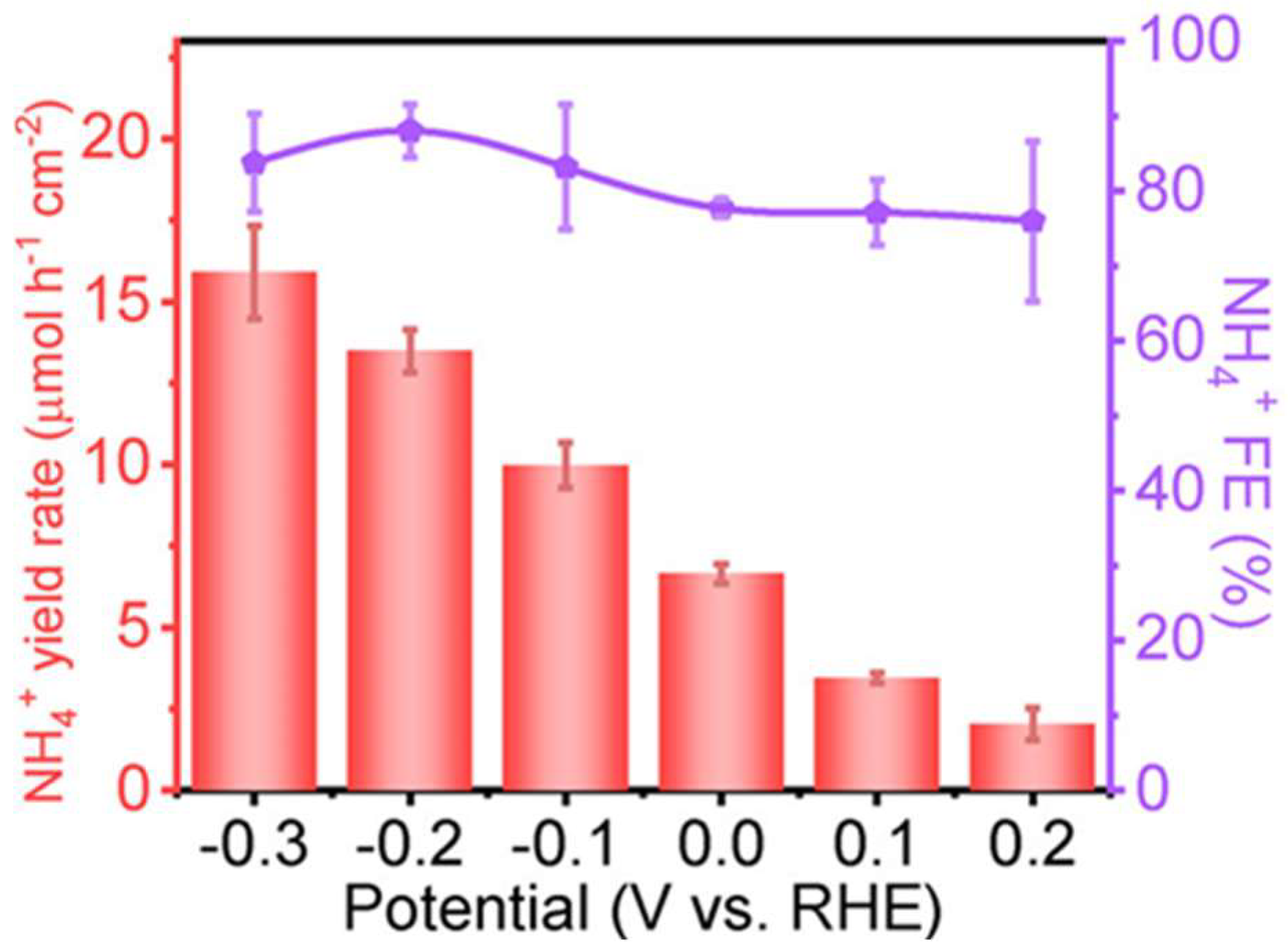
Antimony selenide (Sb2Se3) is an important p-type semiconductor material owing to its narrow bandgap (~1.2 eV), low cost, large absorption coefficient, and high carrier mobility [40,41,42,43]. It can be used as a photocathode in PEC reactions such as PEC water splitting for hydrogen production [44,45,46]. Recently, Wang et al. reported an Sb2Se3-based photocathode for highly selective photoelectrochemical nitrate reduction to ammonia [47]. The Sb2Se3 nanorods were fabricated on fluorine-doped tin oxide (FTO) substrates via spin-coating and annealing, followed by the deposition of a TiO2 protective layer using atomic layer deposition. Finally, a CoCu co-catalyst was introduced on the surface via electrodeposition, forming a CoCu/TiO2/Sb2Se3 composite photocathode. The PEC nitrate reduction performance of the CoCu/TiO2/Sb2Se3 photocathode was evaluated in a 0.1 M KNO3 electrolyte containing 10 mM H2SO4 under AM 1.5 G (100 mW cm−2) illumination. The photocathode exhibited an onset potential of 0.43 V vs. reversible hydrogen electrode (RHE) and a photocurrent density of 4.75 mA·cm−2 at −0.3 V vs. RHE. As shown in Figure 2, within the potential range of −0.3 V to 0.2 V vs. RHE, the average Faradaic efficiency for NH4+ exceeded 75%. The highest NH4+ Faradaic efficiency of 88.01% was achieved at −0.2 V vs. RHE, with a corresponding NH4+ production rate of 13.49 μmol·h−1·cm−2. To further investigate the reaction mechanism, density functional theory (DFT) calculations were performed. The results indicated that Co plays a critical role in the CoCu co-catalyst. On the surface of CoCu/TiO2/Sb2Se3 photocathode, Cu sites serve as the main active centers for nitrate reduction to ammonia. The introduction of Co can improve the spin density of Cu and enhance the density of states near the Fermi level in the projected density of states (PDOS), thereby improving the PEC nitrate reduction activity of the CoCu/TiO2/Sb2Se3. In addition, the photocathode was tested in a simulated wastewater with low nitrate content to assess its performance under practical conditions. The simulated wastewater contained 3 mM NO3, 0.07 M Cl, and 0.05 M SO42−. At −0.3 V vs. RHE, a Faradaic efficiency of 44% for NH4+ was still achieved, demonstrating the potential of the CoCu/TiO2/Sb2Se3 photocathode for solar-driven PEC nitrate reduction to ammonia in real wastewater environments.
Similar to Sb2Se3, Sb2S3 also exhibits a p-type property [48,49,50]. Sb2S3 is regarded as a promising photocathode for the efficient photoelectrochemical reduction of nitrate to ammonia due to a suitable bandgap of approximately 1.7 eV, a high light absorption coefficient and a long carrier diffusion length [51,52,53]. Wang et al. fabricated a CuSn/TiO2/Sb2S3 photocathode, which achieved a Faradaic efficiency for ammonia of 97.82% at 0.4 V vs. RHE, and an ammonia yield rate of 16.96 μmol·h−1·cm−2 at 0 V vs. RHE under AM 1.5 G (100 mW cm−2) illumination [54]. Moreover, the onset potential of the photocathode positively shifted to 0.62 V vs. RHE, and it demonstrated good stability over 4 h, with the ammonia yield rate increasing linearly. Structural characterizations revealed that the addition of Sn into the CuSn cocatalyst increases the lattice spacing of Cu and induces electron redistribution, with electron density transferring from Sn to Cu. This electron redistribution optimizes the adsorption of reactant NO3 and enhances the hydrogenation of intermediates, thereby significantly accelerating the reaction kinetics of the PEC nitrate reduction reaction on the CuSn/TiO2/Sb2S3 photocathode and leading to high ammonia yield and Faradaic efficiency. Charge carrier kinetics studies further indicated that the CuSn/TiO2/Sb2S3 photocathode exhibits high charge separation efficiency and low carrier recombination rate, facilitating the rapid transfer of photogenerated electrons in the nitrate reduction reaction. DFT calculations demonstrated that the CuSn/TiO2/Sb2S3 surface exhibits a moderate adsorption energy for the intermediate, which ensures sufficient catalytic reaction time without hindering product desorption. This optimizes the reaction pathway and effectively suppresses competing side reactions such as the hydrogen evolution reaction (HER).
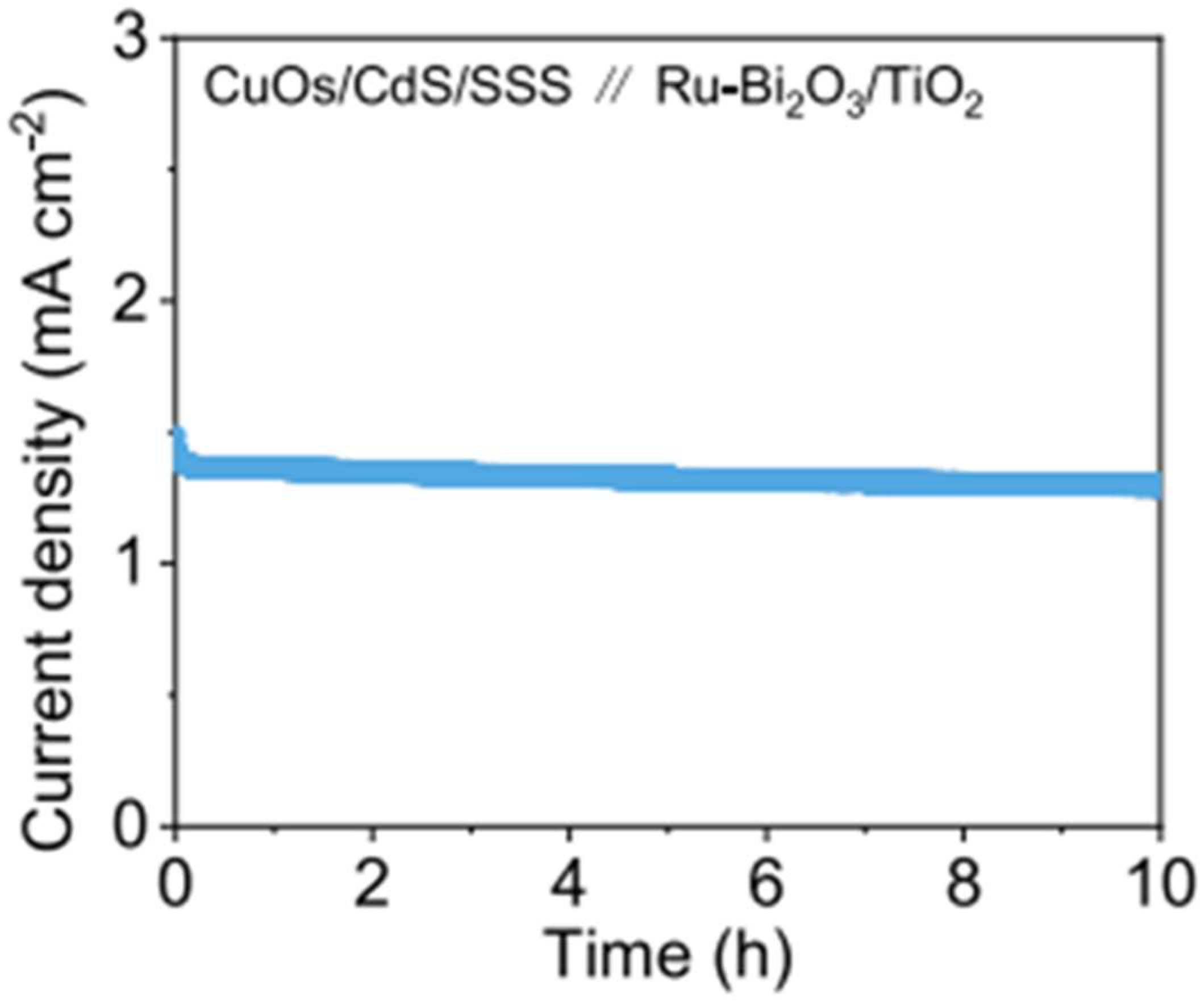
In photoelectrochemical nitrate reduction for ammonia production, the oxygen evolution reaction (OER) typically occurs at the anode. However, considering the high thermodynamic potential (1.23 V) of the water oxidation reaction and the limited economic value of oxygen [55,56], replacing OER with thermodynamically more favorable reactions that generate value-added products represents a promising alternative strategy [57,58,59]. Recently, Wang et al. developed a Sb2(S,Se)3-based photocathode for photoelectrochemical nitrate reduction to ammonia [60]. The photocathode featured a multilayer structure, with gradient selenium-doped Sb2(S,Se)3 as the light-absorbing layer, CdS as the electron transport layer, and TiO2 as the protective layer. A copper-osmium (CuOs) cocatalyst was further deposited onto the TiO2 layer to form the final CuOs/TiO2/CdS/Sb2(S,Se)3 (denoted as CuOs/CdS/SSS) photocathode. At 0 V vs. RHE, the CuOs/CdS/SSS photocathode achieves a photocurrent density of 5.6 mA·cm−2, with the onset potential shifting positively to 0.86 V vs. RHE. At 0.6 V vs. RHE, a Faradaic efficiency of 96.98% for ammonia is achieved. DFT calculations indicate that Os modification facilitates the provision of *H atoms, thereby enhancing the selectivity of ammonia. On the anode side, a Ru-Bi2O3/TiO2 photoanode was developed for the glycerol oxidation reaction. Under AM 1.5 G (100 mW·cm−2) illumination, the photoanode achieved a Faradaic efficiency of 42.9% and a selectivity of 59.2% for glycerol oxidation to dihydroxyacetone (DHA) at 0.6 V vs. RHE. For the three-carbon (C3) products (including glyceric acid, DHA, and glyceraldehyde), the total Faradaic efficiency reached 62.9% at 0.6 V vs. RHE. Fourier-transform infrared spectroscopy (FTIR) analysis revealed that Ru-Bi2O3/TiO2 favors the adsorption of intermediate hydroxyl groups, which promotes the formation of DHA. By coupling the CuOs/CdS/SSS photocathode with Ru-Bi2O3/TiO2 photoanode, a bias-free photoelectrochemical system was constructed. As shown in Figure 3, under AM 1.5 G (100 mW·cm−2) illumination, the system operates spontaneously, delivering a stable photocurrent density of approximately 1.4 mA·cm−2 without significant decay over 10 h of continuous reaction. This bias-free system simultaneously achieves efficient synthesis of ammonia and C3 products (such as DHA), with Faradaic efficiencies exceeding 90% and 77%, respectively.
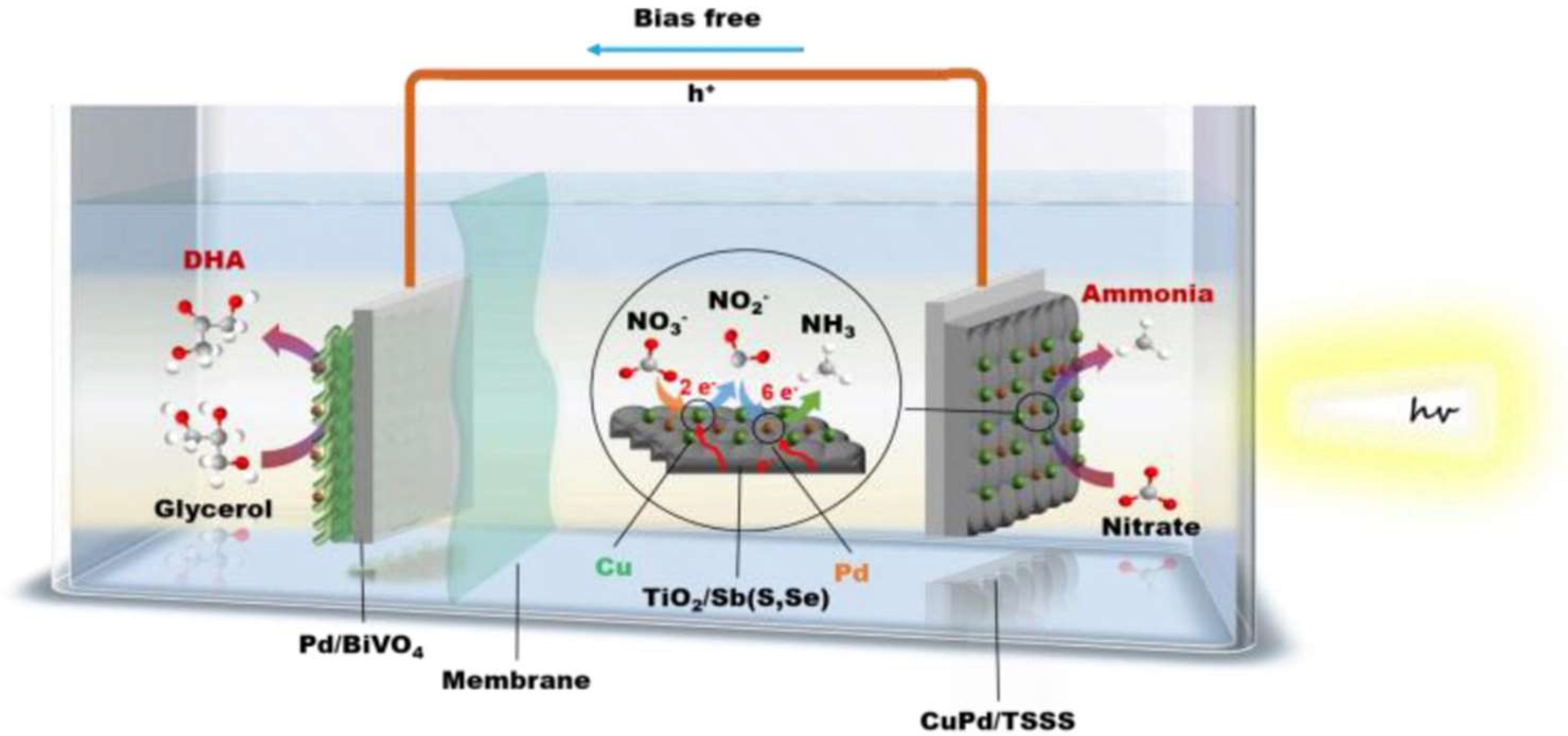
Moreover, Wang et al. reported a bias-free system by coupling a CuPd/TiO2/Sb2(S,Se)3 photocathode with a Pd/BiVO4 photoanode to achieve nitrate reduction and glycerol oxidation (Figure 4) [61]. After 5 h of operation under AM 1.5 G (100 mW·cm−2) illumination, the accumulated yields of NH3 and DHA in this bias-free system reached 11.98 µmol·cm−2 and 20.19 µmol·cm−2, respectively. These studies demonstrate the considerable potential of photoelectrochemical systems to simultaneously produce ammonia and high-value chemicals. They provide a feasible avenue for green synthesis utilizing solar energy, nitrate-containing wastewater, and biomass byproducts, thereby contributing significantly to the advancement of sustainable energy and resource recycling.

2.2. Silicon

Silicon (Si) is extensively employed as a photocathode due to its excellent properties, such as narrow bandgap (1.12 eV), high earth abundance and suitable band alignment [62,63,64,65,66]. Gao et al. coated a p-type silicon nanowire array with an ultrathin TiO2 passivation layer by atomic layer deposition (ALD) method [67]. The oxygen defect in the TiO2 layer served as the adsorption site for nitrate and reduced the energy barriers of key steps in the nitrate reduction reaction. By varying the number of ALD cycles, the oxygen defect content was effectively modulated. The sample prepared with 50 cycles exhibited optimal performance for photoelectrochemical nitrate reduction to ammonia, achieving an NH3 production rate of 1074 μg h−1 cm−2 and a Faradaic efficiency of 94.3% for NO3-to-NH3 conversion at −0.6 V vs. RHE.
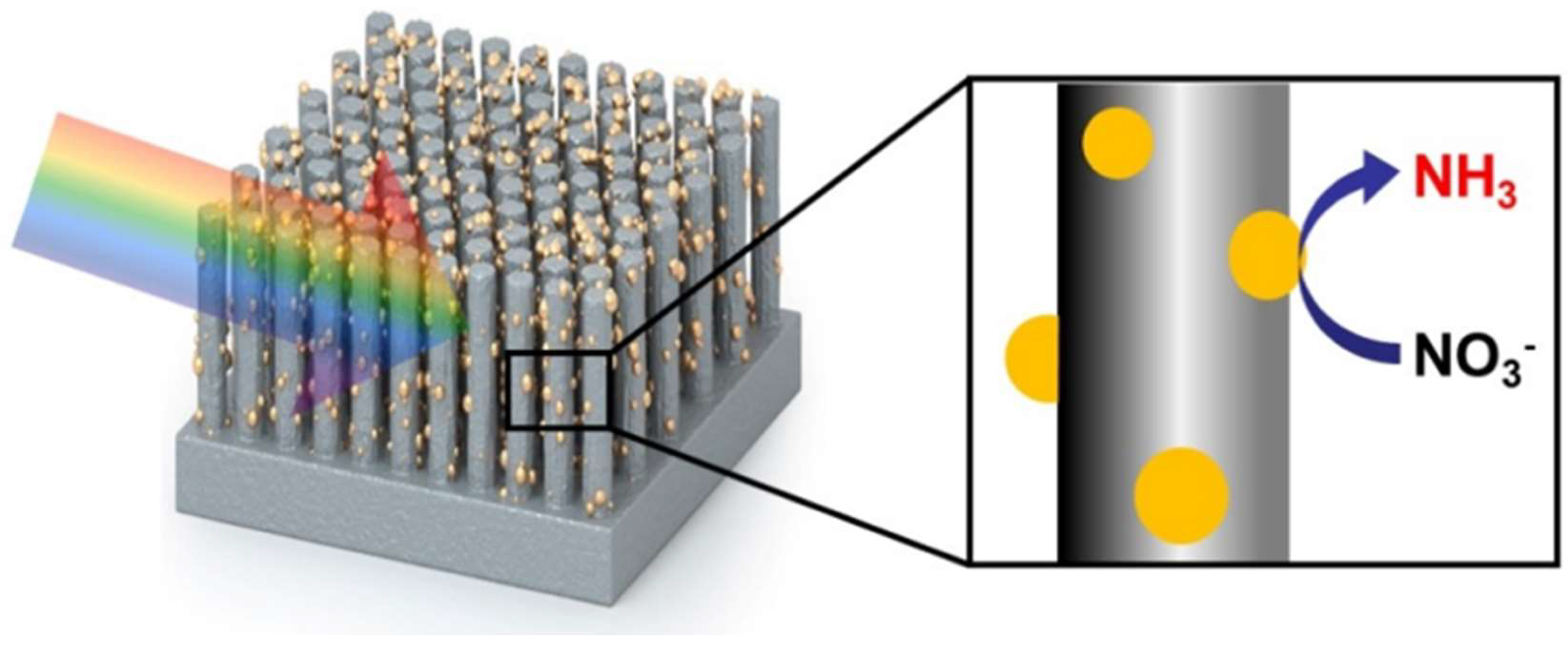
Lee et al. reported an ordered silicon nanowire array photocathode decorated with Au nanoparticles (O_SiNW/Au) for the photoelectrochemical reduction of nitrate to ammonia (Figure 5) [68]. The O_SiNW/Au photocathode achieved a high Faradaic efficiency (FE) of 95.6% for NH3 at 0.2 V vs. RHE. It was demonstrated that the ordered silicon nanowire structure facilitated uniform distribution of Au nanoparticles cocatalyst and enhanced mass transport during the reaction. Furthermore, the inherent inactivity of both Si and Au surfaces toward the competing hydrogen evolution reaction contributed to the high Faradaic efficiency for ammonia generation.
Pan et al. fabricated a Co0.95Ni0.05-modified Si (Co0.95Ni0.05/Si) photocathode via photo-assisted electrodeposition for the photoelectrochemical nitrate reduction to ammonia [69]. The photocathode exhibited an onset potential of 0.42 V vs. RHE and achieved an ammonia yield rate of 2054 µg h−1 cm−2 with a Faradaic efficiency of 98.6% at −0.1 V vs. RHE. Furthermore, The Co0.95Ni0.05/Si photocathode demonstrated high durability during prolonged operation, maintaining the ammonia Faradaic efficiency above 90% and the stable average ammonia production rate. Structural characterization and theoretical calculations revealed that the Co0.95Ni0.05 cocatalyst was composed of a metallic Co core and a Ni-incorporated Co3O4 shell. The metallic Co core facilitates efficient electron transfer, yielding a high photovoltage, while the incorporation of Ni into Co3O4 enhances the reaction kinetics and ammonia selectivity.
Xiao et al. developed a copper nanoparticle-decorated silicon nanowire (Cu–Si NW) photocathode for the photoelectrochemical nitrate reduction to ammonia in acidic electrolyte [70]. The Si NW array was fabricated via metal-assisted chemical etching method. Cu nanoparticles were uniformly distributed on the silicon nanowires by a facile photo-deposition strategy. Under AM 1.5 G (100 mW cm−2) illumination, the Cu–Si NW photocathode exhibited an excellent performance for nitrate reduction to ammonia in 0.5 M H2SO4 electrolyte, achieving a positive onset potential of 0.3 V vs. RHE, a high photocurrent density of −34.29 mA cm−2, and a Faradaic efficiency of 97.03% for NH4+. Mechanistic studies revealed that the well-matched work functions and Fermi levels of Cu and silicon contributed to a favorable band alignment at the Cu–Si interface, thereby facilitating efficient charge transfer. In situ experiments and theoretical calculations further demonstrated that the Cu cocatalyst optimizes intermediate adsorption and promotes the protonation steps of NO3. Moreover, the Cu–Si NW photocathode exhibited outstanding durability in simulated industrial wastewater treatment experiments, indicating its significant potential for practical applications.
Seo et al. constructed a crystalline silicon (c-Si) photocathode modified with Ni foil for the photoelectrochemical nitrate reduction reaction [71]. The Ni foil serves not only as an encapsulation layer to protect the c-Si from the electrolyte but also undergoes self-activation under alkaline conditions to form Ni(OH)2, which acts as an active catalyst for the nitrate reduction to ammonia. Under AM 1.5 G (100 mW cm−2) illumination, the photocathode exhibited an ammonia yield of 2468 μg cm−2 h−1 at –0.1 V vs. RHE, with a Faradaic efficiency of 85% for ammonia. Moreover, the photocathode demonstrated high durability, maintaining a stable photocurrent over multiple cycling tests. Experimental and theoretical studies revealed that the self-activated Ni(OH)2 effectively suppresses the competing hydrogen evolution reaction, thereby promoting the conversion of nitrate to ammonia. Furthermore, an all-back contact (ABC) c-Si photocathode was fabricated to achieve solar-driven ammonia synthesis under bias-free condition. The system remained stable over 51 h of continuous operation, delivering an ammonia production rate of 554 μg cm−2 h−1.
Benefiting from the well-established photovoltaic technology, commercial solar cells can serve as the light absorbers in photoelectrodes [72,73,74]. Amal et al. integrated a copper nano-structured top layer (Cu-NSTL) and Co(OH)2 nanosheets onto a commercial Si solar cell to construct a Si/Cu-NSTL/Co(OH)2 ternary photocathode [75]. The photocathode exhibited high performance in photoelectrochemical nitrate reduction to ammonia, demonstrating an onset potential of 1.0 V vs. RHE. Across the applied potential range from 0.6 to 0 V vs. RHE, the ammonia production rate increased from 22.3 to 106.6 μmol·h−1·cm−2, while the Faradaic efficiency consistently remained above 90%. Moreover, the photocathode demonstrated good structural integrity and catalytic stability. Mechanistic studies revealed a synergistic effect between Cu-NSTL and Co(OH)2, which enhanced the transport of photogenerated electrons, promoted water dissociation, and facilitated the deoxygenation and hydrogenation of reactants/intermediates, thereby enabling highly efficient and selective ammonia production. Furthermore, a large-scale “artificial leaf” photoelectrochemical device was developed to simultaneously achieve nitrate reduction to ammonia and oxidation of biomass-derived glycerol to formate under bias-free conditions. Outdoor testing confirmed the promising practicality of this system.

2.3. Gallium Nitride

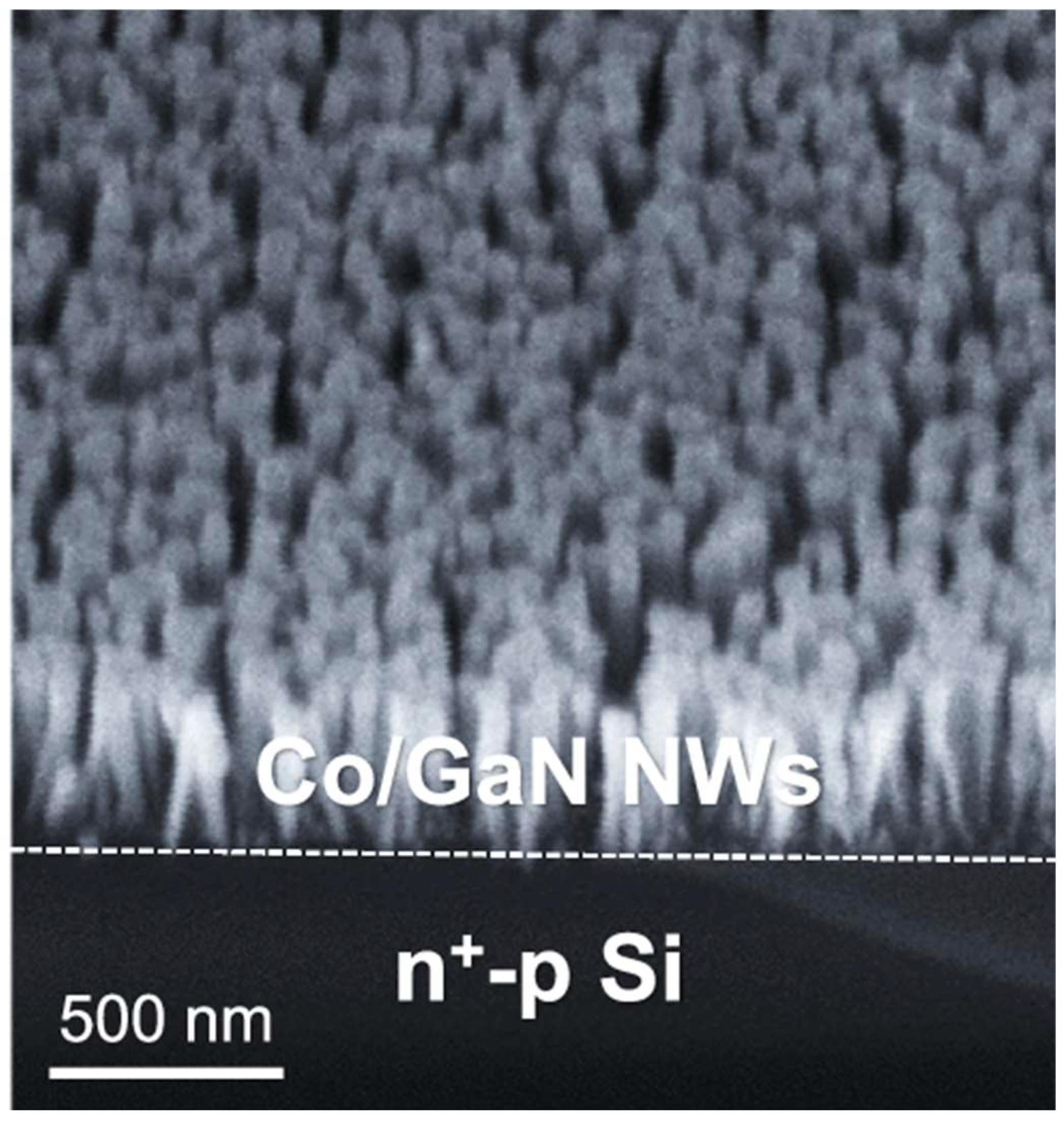
Gallium nitride (GaN) is a chemically stable semiconductor widely used in optoelectronic devices [76,77,78]. Mi et al. constructed an Au/GaN/Si photocathode by vertically growing GaN nanowires on an n+-p Si substrate via plasma-assisted molecular beam epitaxy, followed by photodeposition of Au nanoclusters on the surface [79]. Experimental data and theoretical calculations revealed that NO3 is first adsorbed and reduced to NO2 on the GaN surface, after which NO2 migrates to adjacent Au nanoclusters for further hydrogenation to NH3. By optimizing the size and surface coverage of the Au nanoclusters, the performance for photoelectrochemical conversion of nitrate to ammonia was improved, delivering a Faradaic efficiency for ammonia of 91.8% at −0.4 V vs. RHE and an ammonia yield rate of 131.1 μmol·cm−2·h−1 at −0.8 V vs. RHE, with no apparent degradation over 8 h. Furthermore, Mi et al. fabricated Co/GaN/Si and Ni/GaN/Si photocathodes by employing transition metals Co and Ni as cocatalysts, respectively [80]. The Scanning electron microscopy (SEM) image showed GaN NWs with lengths of about 400 nm (Figure 6). The Co/GaN/Si and Ni/GaN/Si photocathodes exhibited the Faradaic efficiency for ammonia production close to 100% at potentials more positive than 0 V vs. RHE. In terms of ammonia yield rate, the Co/GaN/Si photocathode achieved 166.7 µmol h−1 cm−2 at −0.7 V vs. RHE, while the Ni/GaN/Si photocathode reached 201.6 µmol h−1 cm−2 at −0.4 V vs. RHE.

2.4. Oxides

P-type BiVO4 is a promising photocathode material [81,82,83]. Fan et al. prepared a p-BiVO4 photocathode modified with amorphous metal oxide CoFeMnO (denoted as CoFeMnO/BiVO4) [84]. The CoFeMnO cocatalyst promoted the carrier density, NO3 adsorption, and electron transfer kinetics, thereby boosting the photoelectrochemical nitrate reduction to ammonia. At −0.1 V vs. RHE, the CoFeMnO/BiVO4 photocathode achieved a current density of −0.36 mA cm−2, an NH3 production rate of 17.82 µg h−1 cm−2, and a Faradaic efficiency of 32.8%. Moreover, the photocathode exhibited high stability, maintaining consistent current without obvious degradation over 12 h. In addition, Fan et al. reported a ZnIn2S4/BiVO4 heterostructure with the abundant zinc vacancies (VZn) [85]. The VZn induces the formation of “frustrated Lewis pairs (FLPs)”. The FLPs promote the adsorption and activation of NO3 ions, while the VZn sites suppress charge carrier recombination. The ZnIn2S4/BiVO4 photocathode achieved an ammonia production rate of 29.95 μg h−1 cm−2 and a Faradaic efficiency of 37.2% at −0.1 V vs. RHE.
Cu2O is a typical p-type semiconductor with a bandgap of 2.0 eV, which has been widely used in solar energy conversion [86,87,88]. However, the application of Cu2O in photoelectrochemical reactions has been limited by its photocorrosion, often necessitating protection layers to enhance its stability [89,90,91]. Notably, Choi et al. reported that the surface of pristine Cu2O exhibits catalytic activity toward the photoelectrochemical nitrate reduction, which kinetically suppresses the photocorrosion of Cu2O without requiring additional cocatalysts or protection layers [92]. The Cu2O photocathode selectively reduces nitrate to nitrite with a Faradaic efficiency exceeding 85%. In contrast to nitrate reduction, the photoelectrochemical reduction of nitrite on the Cu2O photocathode is slower and fails to suppress photocorrosion effectively. The reaction primarily yields ammonia with a Faradaic efficiency of about 50%. Furthermore, Hou et al. employed TiO2 and Al-doped ZnO (AZO) as protective layers to fabricate a TiO2/AZO/Cu2O/Au photocathode [93]. By coupling with a CdS/CdIn2S4 photoanode, the integrated system simultaneously achieved photoelectrochemical benzyl alcohol oxidation and nitrite reduction to ammonia, with a maximum Faradaic efficiency exceeding 98%.
Titanium dioxide (TiO2) is the most commonly used semiconductor in photoelectrochemistry [94,95]. Silveira et al. reported a NiO/Au plasmon/TiO2 composite for photo-assisted electrocatalytic nitrate reduction to ammonia [96]. Their study revealed that amorphous TiO2 markedly promotes the conversion of nitrate to nitrite, elevating the nitrite concentration in solution by nearly 50% and improving the corresponding Faradaic efficiency by 10%. In contrast, the rutile phase TiO2 primarily facilitates the subsequent reduction of nitrite to ammonia, increasing the Faradaic efficiency by 30%.

2.5. Cu2ZnSnS4

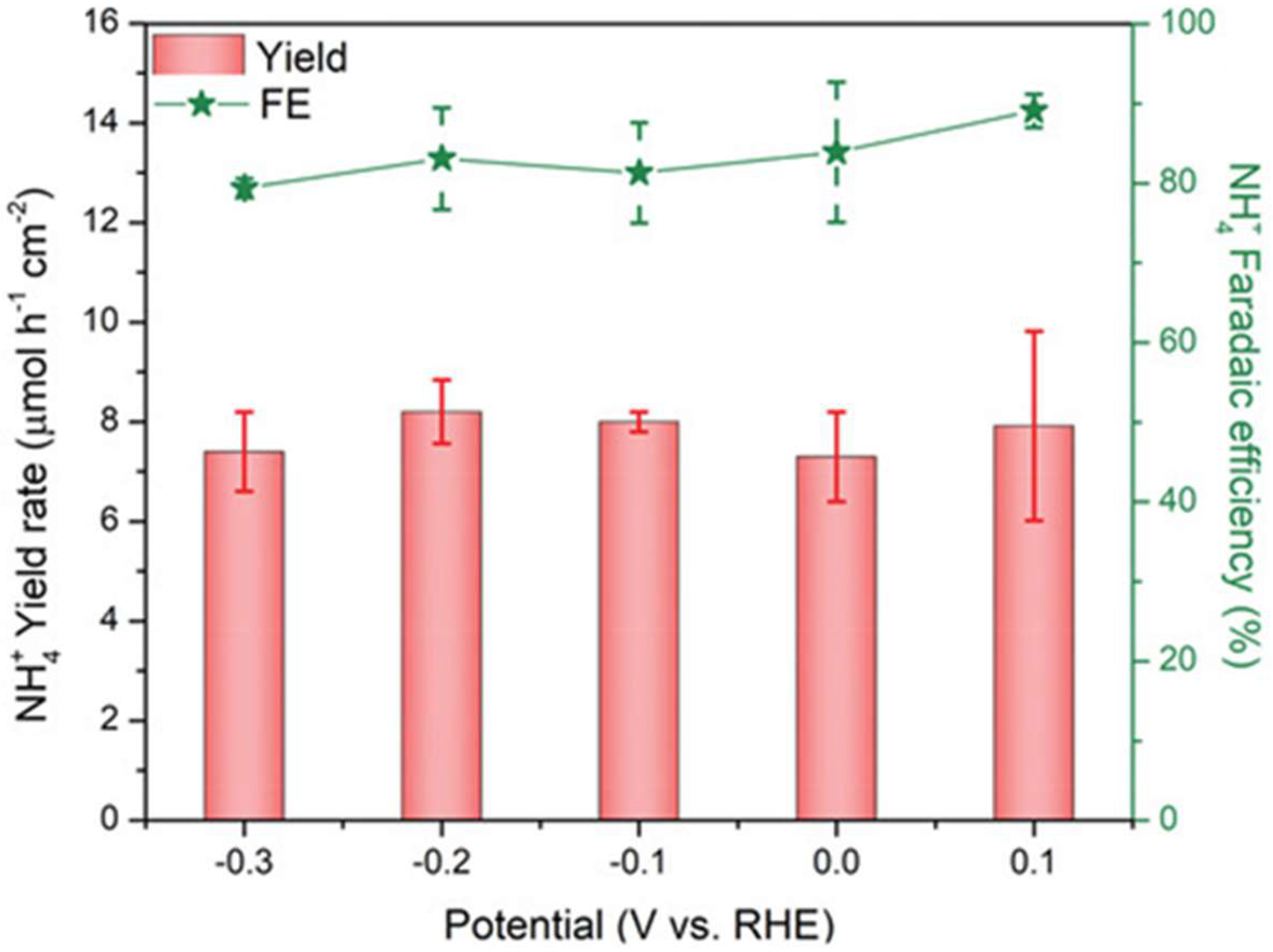
Cu2ZnSnS4 (CZTS) semiconductor has emerged as a promising photocathode material due to its excellent light absorption, environmental compatibility, and earth-abundant availability [97,98,99]. Amal et al. developed a CZTS-based photocathode, in which CZTS serves as the light-absorbing layer, CdS buffer layer forms a p–n junction to facilitate charge separation, and TiOₓ layer is modified on the surface as a cocatalyst [100]. By optimizing the preparation temperature of the TiOₓ layer, the optimal photocathode (TiOₓ-250/CdS/CZTS) was obtained. The photocathode exhibits an onset potential of 0.38 V vs. RHE, a Faradaic efficiency for ammonia of 89.1% at 0.1 V vs. RHE, and a maximum production rate of 8.21 µmol·h−1·cm−2 at −0.2 V vs. RHE (Figure 7). It also demonstrates good stability, retaining over 80% of initial photocurrent density after 5 h reaction. Experimental and theoretical analyses reveal that the Ti3+ species in the TiOₓ layer enhance the adsorption of NO3, thereby suppressing the formation of the by-product NO2 and improving the selectivity toward ammonia. Furthermore, the TiOₓ-250/CdS/CZTS photocathode sustains ammonia production even in simulated wastewater, achieving a Faradaic efficiency of 64.9% at −0.38 V vs. RHE and a production rate of 6.54 µmol·h−1·cm−2.

2.6. Organic Semiconductor Photocathodes

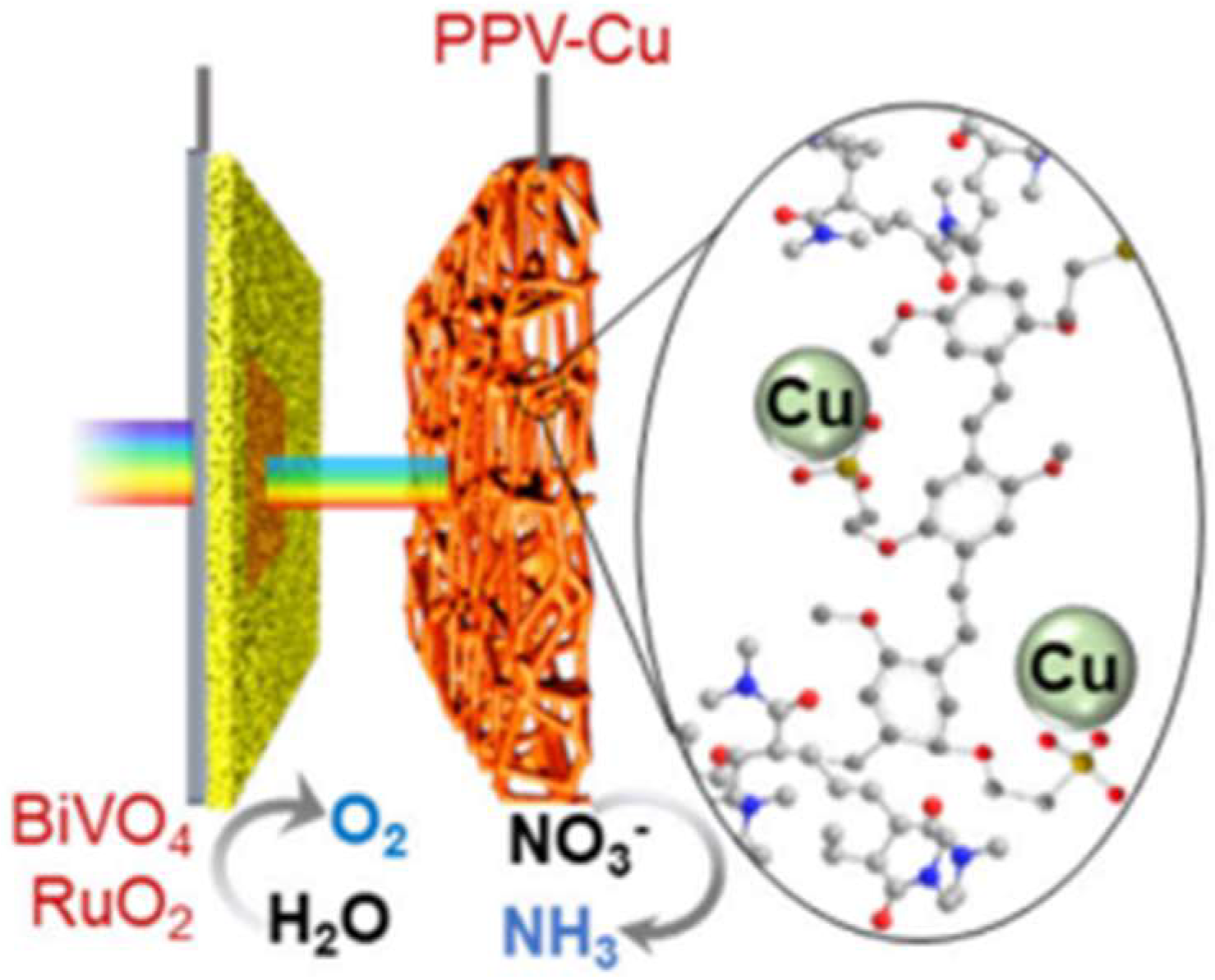
Compared with inorganic materials, organic polymer semiconductors exhibit highly tunable optoelectronic properties, enabling the construction of diverse photoelectrodes for the targeted reactions [101,102,103]. Recently, Shan et al. designed a photoconductive supramolecular network based on poly(2-methoxy-5-propyloxysulfonate phenylene vinylene) (PPV) for photoelectrochemical reduction of nitrate to ammonia [104]. The PPV network with an ordered porous structure was decorated by a Cu cocatalyst via site-selective deposition to form a PPV-Cu photocathode. Under AM 1.5 G illumination (100 mW cm−2), the photocathode delivered an average photocurrent density of 8.5 mA cm−2, with a Faradaic efficiency of 95% for nitrate reduction to ammonia. Furthermore, as shown in Figure 8, a tandem photoelectrochemical system was fabricated by integrating PPV–Cu photocathode with a BiVO4–RuO2 photoanode, which can simultaneously realize nitrate reduction to ammonia and water oxidation to oxygen. The tandem system achieved high Faradaic efficiencies of 95–98% for both NH3 and O2, with photocurrent and product yields 10 times higher than the single-junction BiVO4–RuO2.
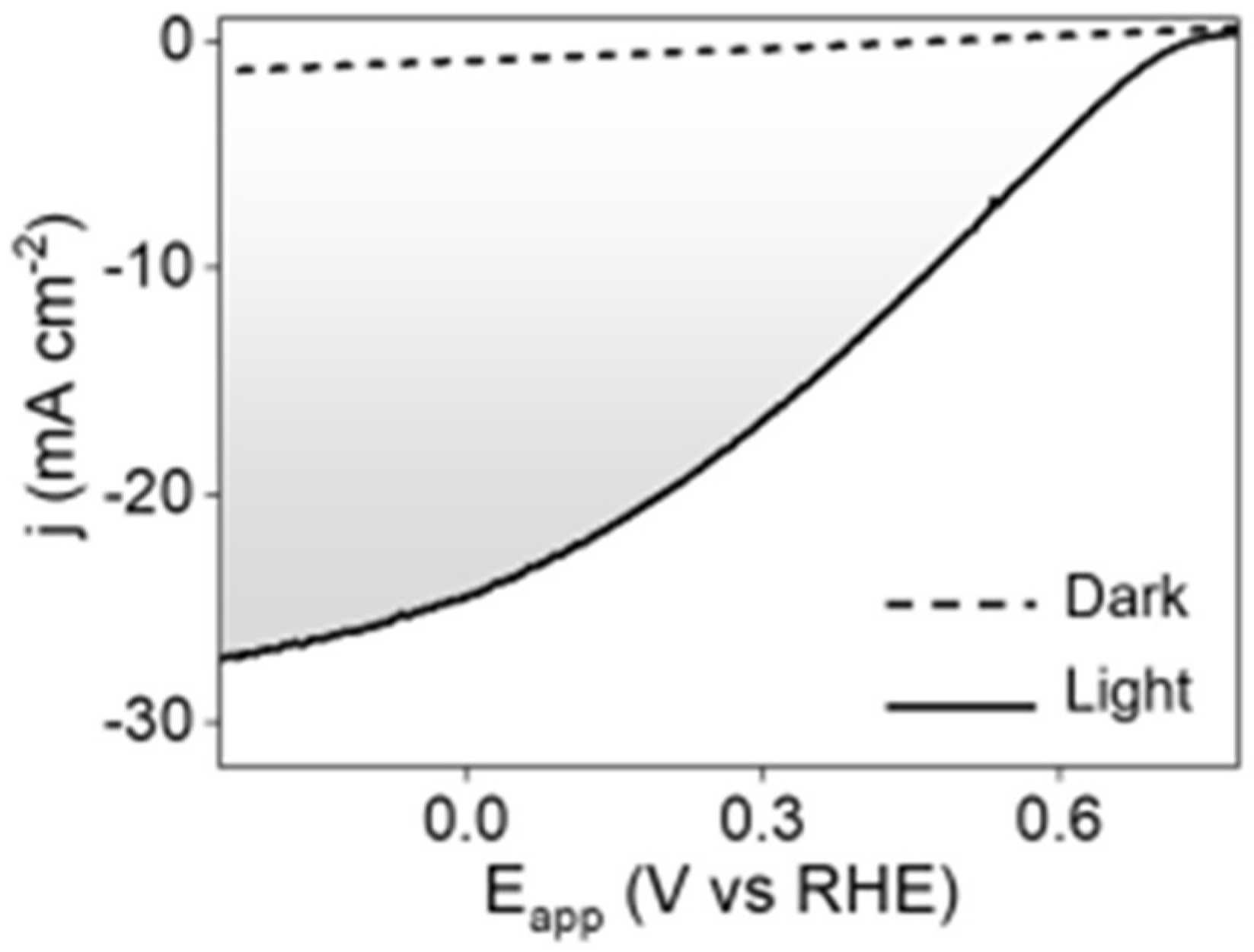
In order to improve the performance of organic photoelectrodes, Shan et al. proposed an organic p–n junction (OPN) strategy to prepare polymer-based photocathode for solar-driven ammonia production [105]. The p-type poly(3,4-ethylenedioxythiophene) (PEDOT) and n-type perylene diimide (PDI) were assembled in a covalent framework to fabricate the OPN photocathode. Surface photovoltage mapping and atomic force microscopy confirmed that photogenerated electrons and holes in the OPN photocathode were spatially separated in the PDI and PEDOT regions, respectively, with a separation distance of approximately 36 nm. The CuCo cocatalyst was subsequently incorporated into the OPN matrix via in situ electrochemical deposition, yielding the OPN–CuCo photocathode. As shown in Figure 9, under AM 1.5 G (100 mW cm−2) irradiation, the OPN-CuCo photocathode achieved a photocurrent density of 27 mA cm−2 at 0.10 V vs. RHE for photochemical nitrate reduction to NH3. It exhibited a Faradaic efficiency of 96% for NH3 production. In situ spectroscopy and scanning electrochemical microscopy revealed that the Co component in the CuCo catalyst facilitates the protonation of the intermediate. Density functional theory calculations further indicated that the introduction of Co lowers the energy barrier, thereby enhancing the selectivity toward ammonia. To construct a bias-free photoelectrochemical system, the OPN–CuCo photocathode was coupled with a silicon solar cell in a flow-cell system. The bias-free system delivered a photocurrent density of 57 mA cm−2. Moreover, the generated ammonia was collected in the form of NH4Cl crystals via an air-stripping technique, achieving an overall collection efficiency of 87%.
Organic molecules, such as copper phthalocyanine (CuPc), show a wide potential for solar energy conversion [106,107,108]. Shi et al. reported a CuPc/CeO2 heterostructure photocathode for photoelectrochemical nitrate reduction to ammonia [109]. Under light irradiation, photogenerated electrons in the lowest unoccupied molecular orbital (LUMO) of CuPc are transferred to the conduction band of CeO2, quickly captured by the abundant oxygen vacancies on the CeO2 surface. These trapped electrons subsequently react with the adsorbed NO3 to produce NH3. Photoelectrochemical tests demonstrated that the CuPc/CeO2 photocathode achieves an ammonia production rate of 1.16 µmol·h−1·cm−2 with a Faradaic efficiency of 33% at −0.6 V vs. RHE. Moreover, the photocathode exhibits acceptable stability, maintaining its NH3 yield rate without significant degradation over 5 cycling tests.

2.7. Organic–Inorganic Hybrid Perovskites

Organic-inorganic hybrid perovskites have shown great promise for highly efficient solar energy conversion due to their excellent properties, such as high extinction coefficient, tunable bandgap, and high charge carrier mobility [110,111,112]. Recently, Jang et al. fabricated a Cs0.05(FA0.83MA0.17)0.95Pb(Br0.17I0.83)3 perovskite-based photocathode with a Ru-loaded titanate nanosheet (TiNS) cocatalyst (Ru@TiNS) for highly efficient and selective nitrate reduction to NH3 [113]. To address the instability of perovskite materials in aqueous environments, a protective layer composed of Ni foil and Field’s metal was introduced, which effectively prevented electrolyte penetration and facilitated charge transport. Under AM 1.5 G (100 mW cm−2) illumination, the Ru@TiNS/Ni/perovskite photocathode exhibited an onset potential of 1.5 V vs. RHE and a Faradaic efficiency of 93.7% for NH3 production at 0.62 V vs. RHE. The photocurrent density remained stable without significant degradation over 24 h of continuous reaction. Furthermore, glycerol oxidation was carried out on a Pt-loaded TiNS electrocatalyst (Pt@TiNS). By coupling the perovskite-based photocathode with the glycerol oxidation anode, a bias-free photoelectrochemical system was constructed. Under AM 1.5 G (100 mW cm−2) illumination, the bias-free system delivered a photocurrent density of 21.2 mA cm−2 and an ammonia production rate of 1744.9 µg cm−2 h−1 with an NH3 Faradaic efficiency of 99.5%. Simultaneously, glycerol was oxidized to glyceric acid and lactic acid, with a total Faradaic efficiency of 98.1%. The system maintained stable performance over 24 h of continuous operation, demonstrating great potential for sustainable ammonia synthesis and valorization of biomass-derived compounds.
The performance of representative photocathodes for photoelectrochemical nitrate reduction to ammonia is exhibited in Table 2.

3. Conclusions and Perspectives

Photoelectrochemical nitrate reduction to ammonia provides an ideal method for green ammonia synthesis. The development of efficient photocathode materials is essential for achieving solar-driven green ammonia production. Considerable efforts have been devoted to investigating various semiconductor materials, and significant progress has been achieved. For instance, several p-type semiconductors have been employed to fabricate photocathodes for nitrate reduction to ammonia, and their performance has been enhanced through strategies such as cocatalyst modification, construction of p–n junctions, or heterostructures. The integration of photocathodes with photoanodes enables the fabrication of bias-free photoelectrochemical systems for nitrate reduction to ammonia. Although these preliminary results are encouraging, the current efficiency of ammonia synthesis is still low. This can be attributed to the multi-electron and multi-proton transfer processes involved in nitrate reduction, which lead to complex reaction pathways and a tendency for by-product formation. In addition, the practical application of PEC nitrate reduction to ammonia is primarily constrained by several intertwined bottlenecks. Intrinsic material limitations, including inefficient charge separation, limited broad-spectrum light absorption, and insufficient long-term stability of semiconductor photocathodes, remain central challenges. Concurrently, system-level design hurdles, such as achieving high energy efficiency and stability under unbiased operation, scaling up device architectures, and efficiently integrating photocathodes with selective photoanodes for value-added oxidation reactions, are equally critical.
To improve the ammonia yield and facilitate practical application, future research could focus on the following aspects: (i) developing novel photocathode materials with suitable band gaps for broad-spectrum absorption, high charge carrier mobility, and appropriate band energy levels; (ii) enhancing ammonia production rate by suppressing photogenerated charge carrier recombination through cocatalyst modification and interface engineering; (iii) gaining in-depth insight into the reaction mechanism of photoelectrochemical nitrate reduction to ammonia via in situ characterization techniques, thereby guiding the rational design and performance optimization of photocathodes; (iv) employing artificial intelligence (e.g., machine learning and high-throughput screening) integrated with first-principles calculations to explore complex reaction networks and discover high-performance semiconductor materials with excellent properties from vast candidate material libraries, thus reducing reliance on trial-and-error experimentation and enhancing efficiency in material research and development; and (v) Coupling new materials with scalable reactor architectures to realize practical implementation of PEC nitrate reduction to ammonia.

Author Contributions

Conceptualization, H.Z.; Investigation and data analysis, K.Z. and H.Z.; formal analysis, K.Z. and H.Z.; resources, K.Z.; data curation, K.Z.; writing—original draft preparation, K.Z.; writing—review and editing, K.Z. and H.Z.; visualization, K.Z.; funding acquisition, H.Z. All authors have read and agreed to the published version of the manuscript.

Funding

This work was supported by the Fundamental Research Funds for the Central Universities (grant number 3132024206).

Data Availability Statement

No new data were created or analyzed in this study. Data sharing is not applicable.

Conflicts of Interest

The authors declare no conflicts of interest.

References

  1. Hollevoet, L.; De Ras, M.; Roeffaers, M.; Hofkens, J.; Martens, J.A. Energy-Efficient Ammonia Production from Air and Water Using Electrocatalysts with Limited Faradaic Efficiency. ACS Energy Lett. 2020, 5, 1124–1127. [Google Scholar] [CrossRef]
  2. Han, S.; Li, H.; Li, T.; Chen, F.; Yang, R.; Yu, Y.; Zhang, B. Ultralow overpotential nitrate reduction to ammonia via a three-step relay mechanism. Nat. Catal. 2023, 6, 402–414. [Google Scholar] [CrossRef]
  3. van Langevelde, P.H.; Katsounaros, I.; Koper, M.T.M. Electrocatalytic Nitrate Reduction for Sustainable Ammonia Production. Joule 2021, 5, 290–294. [Google Scholar] [CrossRef]
  4. Cui, X.; Tang, C.; Zhang, Q. A Review of Electrocatalytic Reduction of Dinitrogen to Ammonia under Ambient Conditions. Adv. Energy Mater. 2018, 8, 1800369. [Google Scholar] [CrossRef]
  5. Zhao, X.; Hu, G.; Chen, G.-F.; Zhang, H.; Zhang, S.; Wang, H. Comprehensive Understanding of the Thriving Ambient Electrochemical Nitrogen Reduction Reaction. Adv. Mater. 2021, 33, 2007650. [Google Scholar] [CrossRef]
  6. Li, Y.; Li, J.; Huang, J.; Chen, J.; Kong, Y.; Yang, B.; Li, Z.; Lei, L.; Chai, G.; Wen, Z.; et al. Boosting Electroreduction Kinetics of Nitrogen to Ammonia via Tuning Electron Distribution of Single-Atomic Iron Sites. Angew. Chem. Int. Ed. 2021, 60, 9078–9085. [Google Scholar] [CrossRef]
  7. Wang, S.; Ichihara, F.; Pang, H.; Chen, H.; Ye, J. Nitrogen Fixation Reaction Derived from Nanostructured Catalytic Materials. Adv. Funct. Mater. 2018, 28, 1803309. [Google Scholar] [CrossRef]
  8. Klerke, A.; Christensen, C.H.; Nørskov, J.K.; Vegge, T. Ammonia for hydrogen storage: Challenges and opportunities. J. Mater. Chem. 2008, 18, 2304–2310. [Google Scholar] [CrossRef]
  9. Kojima, Y.; Yamaguchi, M. Ammonia as a hydrogen energy carrier. Int. J. Hydrogen Energy 2022, 47, 22832–22839. [Google Scholar] [CrossRef]
  10. Liu, H. Ammonia synthesis catalyst 100 years: Practice, enlightenment and challenge. Chin. J. Catal. 2014, 35, 1619–1640. [Google Scholar] [CrossRef]
  11. Greenlee, L.F. Recycling fertilizer. Nat. Energy 2020, 5, 557–558. [Google Scholar] [CrossRef]
  12. Galloway, J.N.; Townsend, A.R.; Erisman, J.W.; Bekunda, M.; Cai, Z.; Freney, J.R.; Martinelli, L.A.; Seitzinger, S.P.; Sutton, M.A. Transformation of the Nitrogen Cycle: Recent Trends, Questions, and Potential Solutions. Science 2008, 320, 889–892. [Google Scholar] [CrossRef] [PubMed]
  13. Kyriakou, V.; Garagounis, I.; Vourros, A.; Vasileiou, E.; Stoukides, M. An Electrochemical Haber-Bosch Process. Joule 2020, 4, 142–158. [Google Scholar] [CrossRef]
  14. Capdevila-Cortada, M. Electrifying the Haber–Bosch. Nat. Catal. 2019, 2, 1055. [Google Scholar] [CrossRef]
  15. McEnaney, J.M.; Singh, A.R.; Schwalbe, J.A.; Kibsgaard, J.; Lin, J.C.; Cargnello, M.; Jaramillo, T.F.; Nørskov, J.K. Ammonia synthesis from N2 and H2O using a lithium cycling electrification strategy at atmospheric pressure. Energy Environ. Sci. 2017, 10, 1621–1630. [Google Scholar] [CrossRef]
  16. van der Ham, C.J.M.; Koper, M.T.M.; Hetterscheid, D.G.H. Challenges in reduction of dinitrogen by proton and electron transfer. Chem. Soc. Rev. 2014, 43, 5183–5191. [Google Scholar] [CrossRef] [PubMed]
  17. Bossola, F.; Tuci, G.; Sangiorgi, N.; Sanson, A.; Dal Santo, V.; Psaro, R.; Giambastiani, G. Iron-group single-atom catalysts for ammonia synthesis and decomposition. Rend. Fis. Acc. Lincei 2025, 36, 659–676. [Google Scholar] [CrossRef]
  18. Chen, G.-F.; Yuan, Y.; Jiang, H.; Ren, S.-Y.; Ding, L.-X.; Ma, L.; Wu, T.; Lu, J.; Wang, H. Electrochemical reduction of nitrate to ammonia via direct eight-electron transfer using a copper–molecular solid catalyst. Nat. Energy 2020, 5, 605–613. [Google Scholar] [CrossRef]
  19. Soares, O.S.G.P.; Pereira, M.F.R.; Órfão, J.J.M.; Faria, J.L.; Silva, C.G. Photocatalytic nitrate reduction over Pd–Cu/TiO2. Chem. Eng. J. 2014, 251, 123–130. [Google Scholar] [CrossRef]
  20. Wang, Y.; Wang, C.; Li, M.; Yu, Y.; Zhang, B. Nitrate electroreduction: Mechanism insight, in situ characterization, performance evaluation, and challenges. Chem. Soc. Rev. 2021, 50, 6720–6733. [Google Scholar] [CrossRef]
  21. Zheng, Y.; Jiao, Y.; Vasileff, A.; Qiao, S.-Z. The Hydrogen Evolution Reaction in Alkaline Solution: From Theory, Single Crystal Models, to Practical Electrocatalysts. Angew. Chem. Int. Ed. 2018, 57, 7568–7579. [Google Scholar] [CrossRef]
  22. Gao, W.; Xie, K.; Xie, J.; Wang, X.; Zhang, H.; Chen, S.; Wang, H.; Li, Z.; Li, C. Alloying of Cu with Ru Enabling the Relay Catalysis for Reduction of Nitrate to Ammonia. Adv. Mater. 2023, 35, 2202952. [Google Scholar] [CrossRef]
  23. Kanter, D.R.; Chodos, O.; Nordland, O.; Rutigliano, M.; Winiwarter, W. Gaps and opportunities in nitrogen pollution policies around the world. Nat. Sustain. 2020, 3, 956–963. [Google Scholar] [CrossRef]
  24. Kou, Z.; Shi, D.; Yang, B.; Li, Z.; Zhang, Q.; Lu, J.; Zhang, T.; Lei, L.; Li, Y.; Dai, L.; et al. Efficient green synthesis of ammonia: From mechanistic understanding to reactor design for potential production. Chem. Soc. Rev. 2025, 54, 10796–10844. [Google Scholar] [CrossRef]
  25. Han, C.; Wang, K. Recent Advances in Photoelectrochemical Synthesis of Nitrogen-Containing Solar Fuels and Chemicals. Energy Fuels 2025, 39, 16065–16077. [Google Scholar] [CrossRef]
  26. Sendeku, M.G.; Shifa, T.A.; Dajan, F.T.; Ibrahim, K.B.; Wu, B.; Yang, Y.; Moretti, E.; Vomiero, A.; Wang, F. Frontiers in Photoelectrochemical Catalysis: A Focus on Valuable Product Synthesis. Adv. Mater. 2024, 36, 2308101. [Google Scholar] [CrossRef] [PubMed]
  27. Walter, M.G.; Warren, E.L.; McKone, J.R.; Boettcher, S.W.; Mi, Q.; Santori, E.A.; Lewis, N.S. Solar Water Splitting Cells. Chem. Rev. 2010, 110, 6446–6473. [Google Scholar] [CrossRef]
  28. Li, Z.; Luo, W.; Zhang, M.; Feng, J.; Zou, Z. Photoelectrochemical cells for solar hydrogen production: Current state of promising photoelectrodes, methods to improve their properties, and outlook. Energy Environ. Sci. 2013, 6, 347–370. [Google Scholar] [CrossRef]
  29. Hisatomi, T.; Kubota, J.; Domen, K. Recent advances in semiconductors for photocatalytic and photoelectrochemical water splitting. Chem. Soc. Rev. 2014, 43, 7520–7535. [Google Scholar] [CrossRef]
  30. Zheng, J.; Lyu, Y.; Qiao, M.; Wang, R.; Zhou, Y.; Li, H.; Chen, C.; Li, Y.; Zhou, H.; Jiang, S.P.; et al. Photoelectrochemical Synthesis of Ammonia on the Aerophilic-Hydrophilic Heterostructure with 37.8% Efficiency. Chem 2019, 5, 617–633. [Google Scholar] [CrossRef]
  31. Qing, G.; Ghazfar, R.; Jackowski, S.T.; Habibzadeh, F.; Ashtiani, M.M.; Chen, C.-P.; Smith, M.R., III; Hamann, T.W. Recent Advances and Challenges of Electrocatalytic N2 Reduction to Ammonia. Chem. Rev. 2020, 120, 5437–5516. [Google Scholar] [CrossRef] [PubMed]
  32. Wang, Y.; Yu, Y.; Jia, R.; Zhang, C.; Zhang, B. Electrochemical synthesis of nitric acid from air and ammonia through waste utilization. Natl. Sci. Rev. 2019, 6, 730–738. [Google Scholar] [CrossRef]
  33. Duca, M.; Koper, M.T.M. Powering denitrification: The perspectives of electrocatalytic nitrate reduction. Energy Environ. Sci. 2012, 5, 9726–9742. [Google Scholar] [CrossRef]
  34. Reyter, D.; Bélanger, D.; Roué, L. Study of the electroreduction of nitrate on copper in alkaline solution. Electrochim. Acta 2008, 53, 5977–5984. [Google Scholar] [CrossRef]
  35. Butcher, D.P.; Gewirth, A.A. Nitrate reduction pathways on Cu single crystal surfaces: Effect of oxide and Cl. Nano Energy 2016, 29, 457–465. [Google Scholar] [CrossRef]
  36. Garcia-Segura, S.; Lanzarini-Lopes, M.; Hristovski, K.; Westerhoff, P. Electrocatalytic reduction of nitrate: Fundamentals to full-scale water treatment applications. Appl. Catal. B Environ. 2018, 236, 546–568. [Google Scholar] [CrossRef]
  37. Zeng, Y.; Priest, C.; Wang, G.; Wu, G. Restoring the Nitrogen Cycle by Electrochemical Reduction of Nitrate: Progress and Prospects. Small Methods 2020, 4, 2000672. [Google Scholar] [CrossRef]
  38. Zhang, Z.; Zhang, N.; Zhang, J.; Deng, B.; Cao, Z.; Wang, Z.; Wei, G.; Zhang, Q.; Jia, R.; Xiang, P.; et al. Critical review in electrocatalytic nitrate reduction to ammonia towards a sustainable nitrogen utilization. Chem. Eng. J. 2024, 483, 148952. [Google Scholar] [CrossRef]
  39. Dong, W.J.; Mi, Z. Recent advances in photoelectrochemical ammonia synthesis. Nano Futures 2025, 9, 032002. [Google Scholar] [CrossRef]
  40. Tan, J.; Kang, B.; Kim, K.; Kang, D.; Lee, H.; Ma, S.; Jang, G.; Lee, H.; Moon, J. Hydrogel protection strategy to stabilize water-splitting photoelectrodes. Nat. Energy 2022, 7, 537–547. [Google Scholar] [CrossRef]
  41. Yang, W.; Kim, J.H.; Hutter, O.S.; Phillips, L.J.; Tan, J.; Park, J.; Lee, H.; Major, J.D.; Lee, J.S.; Moon, J. Benchmark performance of low-cost Sb2Se3 photocathodes for unassisted solar overall water splitting. Nat. Commun. 2020, 11, 861. [Google Scholar] [CrossRef]
  42. Wang, L.; Li, D.-B.; Li, K.; Chen, C.; Deng, H.-X.; Gao, L.; Zhao, Y.; Jiang, F.; Li, L.; Huang, F.; et al. Stable 6%-efficient Sb2Se3 solar cells with a ZnO buffer layer. Nat. Energy 2017, 2, 17046. [Google Scholar] [CrossRef]
  43. Qin, G.; Liu, B.; Liu, Y.; Xiao, Y.; Liu, F.; Wang, L. In Situ Constructing Polymer Conductors with Aromatic Side Chains Functionalized Sb2Se3 Complex for Enhanced Potassium Motion. Adv. Energy Mater. 2023, 13, 2300414. [Google Scholar] [CrossRef]
  44. Kim, J.; Yang, W.; Oh, Y.; Lee, H.; Lee, S.; Shin, H.; Kim, J.; Moon, J. Self-oriented Sb2Se3 nanoneedle photocathodes for water splitting obtained by a simple spin-coating method. J. Mater. Chem. A 2017, 5, 2180–2187. [Google Scholar] [CrossRef]
  45. Liang, G.; Liu, T.; Ishaq, M.; Chen, Z.; Tang, R.; Zheng, Z.; Su, Z.; Fan, P.; Zhang, X.; Chen, S. Heterojunction interface engineering enabling high onset potential in Sb2Se3/CdS photocathodes for efficient solar hydrogen production. Chem. Eng. J. 2022, 431, 133359. [Google Scholar] [CrossRef]
  46. Wang, Z.; Bae, S.; Baljozović, M.; Adams, P.; Yong, D.; Service, E.; Moehl, T.; Niu, W.; Tilley, S.D. One-Step Hydrothermal Synthesis of Sn-Doped Sb2Se3 for Solar Hydrogen Production. ACS Catal. 2024, 14, 9877–9886. [Google Scholar] [CrossRef] [PubMed]
  47. Ren, S.; Gao, R.-T.; Nguyen, N.T.; Wang, L. Enhanced Charge Carrier Dynamics on Sb2Se3 Photocathodes for Efficient Photoelectrochemical Nitrate Reduction to Ammonia. Angew. Chem. Int. Ed. 2024, 63, e202317414. [Google Scholar] [CrossRef]
  48. Chen, S.; Li, M.; Zhu, Y.; Cai, X.; Xiao, F.; Ma, T.; Yang, J.; Shen, G.; Ke, A.; Lu, Y.; et al. A Codoping Strategy for Efficient Planar Heterojunction Sb2S3 Solar Cells. Adv. Energy Mater. 2022, 12, 2202897. [Google Scholar] [CrossRef]
  49. Li, Z.; Jiang, N.; Zhang, F.; Wang, K.; Fu, Y.; Ye, Z.; Jiang, J.; Zhu, L. A High-Performance Sb2S3–Based Photocathode with rGO and TiO2/Pt for Photoelectrochemical Water Splitting. ACS Appl. Energy Mater. 2025, 8, 9175–9187. [Google Scholar] [CrossRef]
  50. Feng, K.; Zhao, B.; Fan, Z.; Li, R.; Zhang, B.; Li, Y. Solar-driven bipolar hydrogen production using a large-grain Sb2S3 photocathode coupled with a Cu2O anode. Chem. Eng. J. 2025, 521, 166622. [Google Scholar] [CrossRef]
  51. Kondrotas, R.; Chen, C.; Tang, J. Sb2S3 Solar Cells. Joule 2018, 2, 857–878. [Google Scholar] [CrossRef]
  52. Yang, M.; Fan, Z.; Du, J.; Li, R.; Liu, D.; Zhang, B.; Feng, K.; Feng, C.; Li, Y. Tailoring the Crystallographic Orientation of a Sb2S3 Thin Film for Efficient Photoelectrochemical Water Reduction. ACS Catal. 2022, 12, 8175–8184. [Google Scholar] [CrossRef]
  53. Kumar, M.; Ghosh, C.C.; Meena, B.; Ma, T.; Subrahmanyam, C. Plasmonic Au nanoparticle sandwiched CuBi2O4/Sb2S3 photocathode with multi-mediated electron transfer for efficient solar water splitting. Sustain. Energy Fuels 2022, 6, 3961–3974. [Google Scholar] [CrossRef]
  54. Ren, S.; Gao, R.-T.; Yu, J.; Yang, Y.; Liu, X.; Wu, L.; Wang, L. Enhanced Charge-Carrier Dynamics and Efficient Photoelectrochemical Nitrate-to-Ammonia Conversion on Antimony Sulfide-Based Photocathodes. Angew. Chem. Int. Ed. 2024, 63, e202409693. [Google Scholar] [CrossRef] [PubMed]
  55. Zhou, P.; Navid, I.A.; Ma, Y.; Xiao, Y.; Wang, P.; Ye, Z.; Zhou, B.; Sun, K.; Mi, Z. Solar-to-hydrogen efficiency of more than 9% in photocatalytic water splitting. Nature 2023, 613, 66–70. [Google Scholar] [CrossRef]
  56. Andrei, V.; Ucoski, G.M.; Pornrungroj, C.; Uswachoke, C.; Wang, Q.; Achilleos, D.S.; Kasap, H.; Sokol, K.P.; Jagt, R.A.; Lu, H.; et al. Floating perovskite-BiVO4 devices for scalable solar fuel production. Nature 2022, 608, 518–522. [Google Scholar] [CrossRef] [PubMed]
  57. Lu, Y.; Lee, B.G.; Lin, C.; Liu, T.-K.; Wang, Z.; Miao, J.; Oh, S.H.; Kim, K.C.; Zhang, K.; Park, J.H. Solar-driven highly selective conversion of glycerol to dihydroxyacetone using surface atom engineered BiVO4 photoanodes. Nat. Commun. 2024, 15, 5475. [Google Scholar] [CrossRef]
  58. Luo, L.; Chen, W.; Xu, S.-M.; Yang, J.; Li, M.; Zhou, H.; Xu, M.; Shao, M.; Kong, X.; Li, Z.; et al. Selective Photoelectrocatalytic Glycerol Oxidation to Dihydroxyacetone via Enhanced Middle Hydroxyl Adsorption over a Bi2O3-Incorporated Catalyst. J. Am. Chem. Soc. 2022, 144, 7720–7730. [Google Scholar] [CrossRef]
  59. Kim, S.; Oh, D.; Jang, J.-W. Unassisted Photoelectrochemical H2O2 Production with In Situ Glycerol Valorization Using α-Fe2O3. Nano Lett. 2024, 24, 5146–5153. [Google Scholar] [CrossRef]
  60. Guo, X.; Gao, R.-T.; Ren, S.; Nguyen, N.T.; Chen, H.; Wu, L.; Wang, L. Direct ammonia and dihydroxyacetone production in an unbiased photoelectrochemical cell. Nat. Commun. 2025, 16, 6220. [Google Scholar] [CrossRef]
  61. Su, K.; Ren, S.; Gao, R.-T.; Bai, G.-E.; Wu, L.; Wang, L. Bias-Free Solar-Driven Ammonia Coupled to C3-Dihydroxyacetone Production through Photoelectrochemistry. Angew. Chem. Int. Ed. 2025, 64, e202422443. [Google Scholar] [CrossRef]
  62. Luo, Z.; Wang, T.; Gong, J. Single-crystal silicon-based electrodes for unbiased solar water splitting: Current status and prospects. Chem. Soc. Rev. 2019, 48, 2158–2181. [Google Scholar] [CrossRef] [PubMed]
  63. Dong, W.J.; Navid, I.A.; Xiao, Y.; Lim, J.W.; Lee, J.-L.; Mi, Z. CuS-Decorated GaN Nanowires on Silicon Photocathodes for Converting CO2 Mixture Gas to HCOOH. J. Am. Chem. Soc. 2021, 143, 10099–10107. [Google Scholar] [CrossRef]
  64. Oh, I.; Kye, J.; Hwang, S. Enhanced Photoelectrochemical Hydrogen Production from Silicon Nanowire Array Photocathode. Nano Lett. 2012, 12, 298–302. [Google Scholar] [CrossRef]
  65. Lu, L.; Li, Z.; Chen, X.; Wang, H.; Dai, S.; Pan, X.; Ren, Z.J.; Gu, J. Spontaneous Solar Syngas Production from CO2 Driven by Energetically Favorable Wastewater Microbial Anodes. Joule 2020, 4, 2149–2161. [Google Scholar] [CrossRef]
  66. Zhang, H.; Li, A.; Wang, Z.; Ma, W.; Li, D.; Zong, X.; Li, C. Decorating mesoporous silicon with amorphous metal–phosphorous-derived nanocatalysts towards enhanced photoelectrochemical water reduction. J. Mater. Chem. A 2016, 4, 14960–14967. [Google Scholar] [CrossRef]
  67. Xu, M.; Xu, F.; Zhu, K.; Xu, X.; Deng, P.; Wu, W.; Ye, W.; Sun, Z.; Gao, P. Atomic layer deposition technique refining oxygen vacancies in TiO2 passivation layer for photoelectrochemical ammonia synthesis. Compos. Commun. 2022, 29, 101037. [Google Scholar] [CrossRef]
  68. Kim, H.E.; Kim, J.; Ra, E.C.; Zhang, H.; Jang, Y.J.; Lee, J.S. Photoelectrochemical Nitrate Reduction to Ammonia on Ordered Silicon Nanowire Array Photocathodes. Angew. Chem. Int. Ed. 2022, 61, e202204117. [Google Scholar] [CrossRef] [PubMed]
  69. Liu, D.; Peng, S.; Qiao, L.; Bai, H.; An, K.; Liu, C.; Chen, M.; Lo, K.H.; Ng, K.W.; Peng, S.; et al. Rational design of cocatalyst for highly improved ammonia production from photoelectrochemical nitrate reduction. Appl. Catal. B Environ. Energy 2024, 351, 123980. [Google Scholar] [CrossRef]
  70. Li, Y.; Zhang, Q.; Dai, H.; He, D.; Ke, Z.; Xiao, X. Photoelectrochemical nitrate denitrification towards acidic ammonia synthesis on copper-decorated black silicon. Energy Environ. Sci. 2024, 17, 9233–9243. [Google Scholar] [CrossRef]
  71. Jin, W.; Go, H.; Jeong, J.; Park, J.; Tayyebi, A.; Yu, J.M.; Kim, S.; Choi, K.; Jang, J.-W.; Seo, K. Nickel Hydroxide Catalyzed Bias-free Photoelectrochemical NH3 Production via Nitrate Reduction. Adv. Mater. 2025, 37, 2506567. [Google Scholar] [CrossRef]
  72. Varadhan, P.; Fu, H.-C.; Kao, Y.-C.; Horng, R.-H.; He, J.-H. An efficient and stable photoelectrochemical system with 9% solar-to-hydrogen conversion efficiency via InGaP/GaAs double junction. Nat. Commun. 2019, 10, 5282. [Google Scholar] [CrossRef]
  73. Young, J.L.; Steiner, M.A.; Döscher, H.; France, R.M.; Turner, J.A.; Deutsch, T.G. Direct solar-to-hydrogen conversion via inverted metamorphic multi-junction semiconductor architectures. Nat. Energy 2017, 2, 17028. [Google Scholar] [CrossRef]
  74. Liu, B.; Feng, S.; Yang, L.; Li, C.; Luo, Z.; Wang, T.; Gong, J. Bifacial passivation of n-silicon metal–insulator–semiconductor photoelectrodes for efficient oxygen and hydrogen evolution reactions. Energy Environ. Sci. 2020, 13, 221–228. [Google Scholar] [CrossRef]
  75. Han, C.; Li, C.; Yuwono, J.A.; Liu, Z.; Sun, K.; Wang, K.; He, G.; Huang, J.; Kumar, P.V.; Vongsvivut, J.; et al. Nanostructured hybrid catalysts empower the artificial leaf for solar-driven ammonia production from nitrate. Energy Environ. Sci. 2024, 17, 5653–5665. [Google Scholar] [CrossRef]
  76. Kibria, M.G.; Qiao, R.; Yang, W.; Boukahil, I.; Kong, X.; Chowdhury, F.A.; Trudeau, M.L.; Ji, W.; Guo, H.; Himpsel, F.J.; et al. Atomic-Scale Origin of Long-Term Stability and High Performance of p-GaN Nanowire Arrays for Photocatalytic Overall Pure Water Splitting. Adv. Mater. 2016, 28, 8388–8397. [Google Scholar] [CrossRef]
  77. Dong, W.J.; Xiao, Y.; Yang, K.R.; Ye, Z.; Zhou, P.; Navid, I.A.; Batista, V.S.; Mi, Z. Pt nanoclusters on GaN nanowires for solar-asssisted seawater hydrogen evolution. Nat. Commun. 2023, 14, 179. [Google Scholar] [CrossRef]
  78. Xiao, Y.; Vanka, S.; Pham, T.A.; Dong, W.J.; Sun, Y.; Liu, X.; Navid, I.A.; Varley, J.B.; Hajibabaei, H.; Hamann, T.W.; et al. Crystallographic Effects of GaN Nanostructures in Photoelectrochemical Reaction. Nano Lett. 2022, 22, 2236–2243. [Google Scholar] [CrossRef]
  79. Dong, W.J.; Menzel, J.P.; Ye, Z.; Long, Z.; Navid, I.A.; Batista, V.S.; Mi, Z. Synergistic Metal-Support Interactions in Au/GaN Catalysts for Photoelectrochemical Nitrate Reduction to Ammonia. Small 2025, 21, 2412089. [Google Scholar] [CrossRef] [PubMed]
  80. Dong, W.J.; Menzel, J.P.; Li, K.; Ye, Z.; Long, Z.; Navid, I.A.; Yang, K.R.; Xiao, Y.; Batista, V.S.; Mi, Z. Nitrate reduction to ammonia catalyzed by GaN/Si photoelectrodes with metal clusters. Nat. Commun. 2025, 16, 3383. [Google Scholar] [CrossRef]
  81. Wang, J.; Song, Y.; Hu, J.; Li, Y.; Wang, Z.; Yang, P.; Wang, G.; Ma, Q.; Che, Q.; Dai, Y.; et al. Photocatalytic hydrogen evolution on P-type tetragonal zircon BiVO4. Appl. Catal. B Environ. 2019, 251, 94–101. [Google Scholar] [CrossRef]
  82. Sun, D.; Bai, H.; Zhao, Y.; Zhang, Q.; Bai, Y.; Liu, Y.; Pang, X.; Wang, F.; Ding, J.; Xu, D.; et al. Amorphous MnCO3/C Double Layers Decorated on BiVO4 Photoelectrodes to Boost Nitrogen Reduction. ACS Appl. Mater. Interfaces 2020, 12, 52763–52770. [Google Scholar] [CrossRef]
  83. Ullah, H.; Tahir, A.A.; Mallick, T.K. Structural and electronic properties of oxygen defective and Se-doped p-type BiVO4(001) thin film for the applications of photocatalysis. Appl. Catal. B Environ. 2018, 224, 895–903. [Google Scholar] [CrossRef]
  84. Wang, F.; Ding, Q.; Bai, Y.; Bai, H.; Wang, S.; Fan, W. Fabrication of an amorphous metal oxide/p-BiVO4 photocathode: Understanding the role of entropy for reducing nitrate to ammonia. Inorg. Chem. Front. 2022, 9, 805–813. [Google Scholar] [CrossRef]
  85. Wang, F.; Ding, Q.; Ding, J.; Bai, Y.; Bai, H.; Fan, W. Frustrated Lewis pairs boosting photoelectrochemical nitrate reduction over ZnIn2S4/BiVO4 heterostructure. Chem. Eng. J. 2022, 450, 138260. [Google Scholar] [CrossRef]
  86. Pan, L.; Kim, J.H.; Mayer, M.T.; Son, M.-K.; Ummadisingu, A.; Lee, J.S.; Hagfeldt, A.; Luo, J.; Grätzel, M. Boosting the performance of Cu2O photocathodes for unassisted solar water splitting devices. Nat. Catal. 2018, 1, 412–420. [Google Scholar] [CrossRef]
  87. Pan, L.; Liu, Y.; Yao, L.; Dan, R.; Sivula, K.; Grätzel, M.; Hagfeldt, A. Cu2O photocathodes with band-tail states assisted hole transport for standalone solar water splitting. Nat. Commun. 2020, 11, 318. [Google Scholar] [CrossRef]
  88. Lee, J.; Oh, J. Nanopixelated Cuprous Oxide Photocathodes for Durable Photoelectrochemical Water Splitting. ACS Energy Lett. 2022, 7, 3244–3250. [Google Scholar] [CrossRef]
  89. Paracchino, A.; Laporte, V.; Sivula, K.; Grätzel, M.; Thimsen, E. Highly active oxide photocathode for photoelectrochemical water reduction. Nat. Mater. 2011, 10, 456–461. [Google Scholar] [CrossRef]
  90. Tilley, S.D. Will Cuprous Oxide Really Make It in Water-Splitting Applications? ACS Energy Lett. 2023, 8, 2338–2344. [Google Scholar] [CrossRef]
  91. Liu, G.; Zheng, F.; Li, J.; Zeng, G.; Ye, Y.; Larson, D.M.; Yano, J.; Crumlin, E.J.; Ager, J.W.; Wang, L.-W.; et al. Investigation and mitigation of degradation mechanisms in Cu2O photoelectrodes for CO2 reduction to ethylene. Nat. Energy 2021, 6, 1124–1132. [Google Scholar] [CrossRef]
  92. Kim, H.E.; Wi, D.H.; Lee, J.S.; Choi, K.-S. Photoelectrochemical Nitrate and Nitrite Reduction Using Cu2O Photocathodes. ACS Energy Lett. 2024, 9, 1993–1999. [Google Scholar] [CrossRef]
  93. Song, Y.; Wu, Y.; Cao, S.; Zhang, Y.; Luo, D.; Gao, J.; Li, Z.; Sun, L.; Hou, J. Simultaneous Photoelectrocatalytic Oxidation and Nitrite-Ammonia Conversion with Artificial Photoelectrochemistry Cells. Adv. Energy Mater. 2022, 12, 2201782. [Google Scholar] [CrossRef]
  94. Yu, Z.; Liu, H.; Zhu, M.; Li, Y.; Li, W. Interfacial Charge Transport in 1D TiO2 Based Photoelectrodes for Photoelectrochemical Water Splitting. Small 2021, 17, 1903378. [Google Scholar] [CrossRef] [PubMed]
  95. Dong, Z.; Chen, M.; Qin, D.; Han, S. Recent advances and perspective of modified TiO2-based photoanodes toward photoelectrochemical water splitting. Fuel 2024, 373, 132366. [Google Scholar] [CrossRef]
  96. Silveira, V.R.; Fernandes, D.F.; Bericat-Vadell, R.; Edvinsson, T.; Kubart, T.; Sá, J. Phase-dependent photo-assisted electrocatalytic conversion of nitrate to ammonia using TiO2: Insights into amorphous and rutile activity. Appl. Catal. O Open 2024, 197, 207017. [Google Scholar] [CrossRef]
  97. Huang, D.; Wang, K.; Yu, L.; Nguyen, T.H.; Ikeda, S.; Jiang, F. Over 1% Efficient Unbiased Stable Solar Water Splitting Based on a Sprayed Cu2ZnSnS4 Photocathode Protected by a HfO2 Photocorrosion-Resistant Film. ACS Energy Lett. 2018, 3, 1875–1881. [Google Scholar] [CrossRef]
  98. Guo, P.; Tang, Y.; Cheng, J.; Mo, R.; Luo, J.; Li, H. Improving Cu2ZnSnS4-Based Photocathodes for Solar Water Splitting via SnO2 Overlayers. ACS Energy Lett. 2024, 9, 6055–6063. [Google Scholar] [CrossRef]
  99. Jiang, F.; Gunawan; Harada, T.; Kuang, Y.; Minegishi, T.; Domen, K.; Ikeda, S. Pt/In2S3/CdS/Cu2ZnSnS4 Thin Film as an Efficient and Stable Photocathode for Water Reduction under Sunlight Radiation. J. Am. Chem. Soc. 2015, 137, 13691–13697. [Google Scholar] [CrossRef]
  100. Zhou, S.; Sun, K.; Toe, C.Y.; Yin, J.; Huang, J.; Zeng, Y.; Zhang, D.; Chen, W.; Mohammed, O.F.; Hao, X.; et al. Engineering a Kesterite-Based Photocathode for Photoelectrochemical Ammonia Synthesis from NOx Reduction. Adv. Mater. 2022, 34, 2201670. [Google Scholar] [CrossRef] [PubMed]
  101. Zhang, D.; Cho, H.-H.; Yum, J.-H.; Mensi, M.; Sivula, K. An Organic Semiconductor Photoelectrochemical Tandem Cell for Solar Water Splitting. Adv. Energy Mater. 2022, 12, 2202363. [Google Scholar] [CrossRef]
  102. Oka, K.; Winther-Jensen, B.; Nishide, H. Organic π-Conjugated Polymers as Photocathode Materials for Visible-Light-Enhanced Hydrogen and Hydrogen Peroxide Production from Water. Adv. Energy Mater. 2021, 11, 2003724. [Google Scholar] [CrossRef]
  103. Zhang, B.; Wang, S.; Fan, W.; Ma, W.; Liang, Z.; Shi, J.; Liao, S.; Li, C. Photoassisted Oxygen Reduction Reaction in H2–O2 Fuel Cells. Angew. Chem. Int. Ed. 2016, 55, 14748–14751. [Google Scholar] [CrossRef] [PubMed]
  104. Hong, F.; Su, X.; Fang, Y.; He, X.; Shan, B. Manipulating Photoconduction in Supramolecular Networks for Solar-Driven Nitrate Conversion to Ammonia and Oxygen. J. Am. Chem. Soc. 2024, 146, 25200–25210. [Google Scholar] [CrossRef] [PubMed]
  105. Fang, Y.; Li, M.; Gao, Y.; Wen, Y.; Shan, B. Static Organic p-n Junctions in Photoelectrodes for Solar Ammonia Production with 86 % Internal Quantum Efficiency. Angew. Chem. Int. Ed. 2025, 64, e202415729. [Google Scholar] [CrossRef]
  106. Sfyri, G.; Kumar, C.V.; Wang, Y.-L.; Xu, Z.-X.; Krontiras, C.A.; Lianos, P. Tetra methyl substituted Cu(II) phthalocyanine as alternative hole transporting material for organometal halide perovskite solar cells. Appl. Surf. Sci. 2016, 360, 767–771. [Google Scholar] [CrossRef]
  107. Li, X.; Zhang, T.; Chen, Y.; Fu, Y.; Su, J.; Guo, L. Hybrid nanostructured Copper(II) phthalocyanine/TiO2 films with efficient photoelectrochemical performance. Chem. Eng. J. 2020, 382, 122783. [Google Scholar] [CrossRef]
  108. Moon, H.S.; Yong, K. Noble-metal free photocatalytic hydrogen generation of CuPc/TiO2 nanoparticles under visible-light irradiation. Appl. Surf. Sci. 2020, 530, 147215. [Google Scholar] [CrossRef]
  109. Li, X.; Fan, W.; Bai, Y.; Liu, Y.; Wang, F.; Bai, H.; Shi, W. Photoelectrochemical reduction of nitrate to ammonia over CuPc/CeO2 heterostructure: Understanding the synergistic effect between oxygen vacancies and Ce sites. Chem. Eng. J. 2022, 433, 133225. [Google Scholar] [CrossRef]
  110. Nazir, G.; Lee, S.-Y.; Lee, J.-H.; Rehman, A.; Lee, J.-K.; Seok, S.I.; Park, S.-J. Stabilization of Perovskite Solar Cells: Recent Developments and Future Perspectives. Adv. Mater. 2022, 34, 2204380. [Google Scholar] [CrossRef] [PubMed]
  111. Chen, Q.H.; Zhang, Y.; Huang, P.; Chen, Q.; Yang, Z.; Jiang, Y. Optical, Electrical, Thermal, Stress, and Energy Yield Simulations Enhance the Performance and Stability of Perovskite Photovoltaics. Adv. Mater. 2025, e14184. [Google Scholar] [CrossRef] [PubMed]
  112. Fan, L.; Li, G.; Xing, Z.; Liu, J.; Li, W.; Zhang, Q.; Liu, H.; Chen, H. Large-Scale Carbon-Based Perovskite Solar Cells: Scalable Fabrication, Performance Optimization, and Industrialization Pathways. Adv. Mater. 2025, e13332. [Google Scholar] [CrossRef] [PubMed]
  113. Tayyebi, A.; Mehrotra, R.; Mubarok, M.A.; Kim, J.; Zafari, M.; Tayebi, M.; Oh, D.; Lee, S.-H.; Matthews, J.E.; Lee, S.-W.; et al. Bias-free solar NH3 production by perovskite-based photocathode coupled to valorization of glycerol. Nat. Catal. 2024, 7, 510–521. [Google Scholar] [CrossRef]
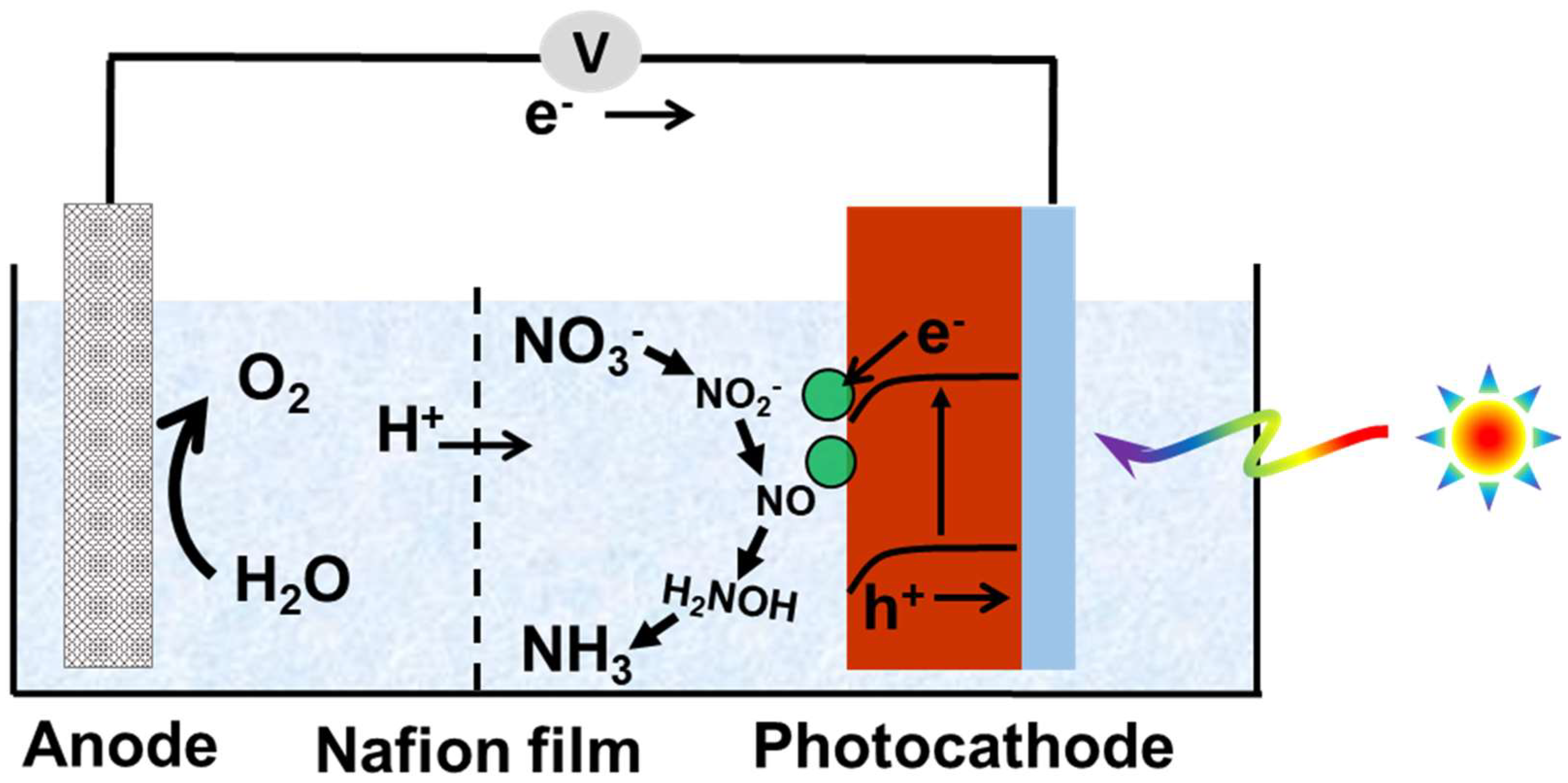
Figure 1. Schematic illustration of photoelectrochemical nitrate reduction to ammonia.
Ijms 27 00470 g001
Figure 2. NH4+ Faradaic efficiencies and yield rates of CoCu/TiO2/Sb2Se3 in various applied potentials. The error bars denote the standard deviation of the Faradaic efficiencies and yield rates calculated from three independent samples. Reproduced with permission from [47]. Copyright WILEY-VCH Verlag GmbH & Co. KGaA, Weinheim, 2024.
Ijms 27 00470 g002
Figure 3. Unbiased stability for the CuOs/CdS/SSS||Ru-Bi2O3/TiO2 devices. Reproduced with permission from [60]. Copyright Springer Nature, 2025.
Ijms 27 00470 g003
Figure 4. Schematic of a PEC cell fabricated by coupling the CuPd/TiO2/Sb2(S,Se)3 photocathode with the Pd/BiVO4 photoanode for unbiased production of NH3 and DHA. Reproduced with permission from [61]. Copyright WILEY-VCH Verlag GmbH & Co. KGaA, Weinheim, 2025.
Ijms 27 00470 g004
Figure 5. Schematic illustration of photoelectrochemical reduction of nitrate to ammonia using O_SiNW/Au. Reproduced with permission from [68]. Copyright WILEY-VCH Verlag GmbH & Co. KGaA, Weinheim, 2022.
Ijms 27 00470 g005
Figure 6. 45 degree-tilt-view SEM image of Co/GaN/Si. Reproduced with permission from [80]. Copyright Springer Nature, 2025.
Ijms 27 00470 g006
Figure 7. NH4+ Faradaic efficiency and yield rate of TiOₓ-250/CdS/CZTS in different applied potentials; the error bars denote the standard deviation (SD) of the Faradaic efficiencies and yield rates calculated from three independent samples. Reproduced with permission from [100]. Copyright WILEY-VCH Verlag GmbH & Co. KGaA, Weinheim, 2022.
Ijms 27 00470 g007
Figure 8. Schematic illustration of PPV-Cu and BiVO4 tandem system. Reproduced with permission from [104]. Copyright American Chemical Society, 2024.
Ijms 27 00470 g008
Figure 9. Current density (j) of OPN-CuCo under AM 1.5 G (100 mW cm−2) irradiation (solid line) and under dark (dashed line) in aqueous KNO3 (1.0 M) at pH 4.5. Scan rate: 50 mVs−1. Eapp: applied bias. Reproduced with permission from [105]. Copyright WILEY-VCH Verlag GmbH & Co. KGaA, Weinheim, 2025.
Ijms 27 00470 g009
Table 1. Reaction pathway for nitrate reduction to ammonia mediated by electron transfer.
Reaction StepsEƟ vs. Standard Hydrogen Electrode (SHE)
N O 3 ( a d ) + e N O 3 ( a d ) 2 −0.89 V
N O 3 ( a d ) 2 + 2 H + N O 2 a d + H 2 O
N O 2 ( a d ) + e N O 2 ( a d ) 1.04 V
N O 2 ( a d ) + e N O 2 ( a d ) 2 −0.47 V
N O 2 ( a d ) 2 + H 2 O N O ( a d ) + 2 O H
N O ( a d ) + H + + e H N O ( a d ) −0.78 V
H N O ( a d ) + H + + e H 2 N O ( a d ) 0.52 V
H 2 N O ( a d ) + H + + e H 2 N O H ( a d ) 0.90 V
H 2 N O H + 2 H + + 2 e N H 3 + H 2 O 0.42 V
Table 2. Summary of recently representative photocathodes used in the photoelectrochemical nitrate reduction to ammonia.
PhotocathodeOnset Potential
(vs. RHE)
Yield Rate of NH3Faradaic Efficiency of NH3StabilityReferences
CoCu/TiO2/Sb2Se30.43 V15.91 μmol h−1 cm−2 at −0.3 V vs. RHE88.01% at −0.2 V vs. RHE4 h[47]
CuSn/TiO2/Sb2S30.62 V16.96 μmol h−1 cm−2 at 0 V vs. RHE97.82% at 0.4 V vs. RHE4 h[54]
CuOs/TiO2/CdS/Sb2(S,Se)30.86 V19.87 μmol h−1 cm−2 at 0.1 V vs. RHE96.98% at 0.6 V vs. RHE12 h[60]
CuPd/TiO2/Sb2(S,Se)30.83 V14.5 μmol h−1 cm−2 at 0 V vs. RHE94.6% at 0.8 V vs. RHE6 h[61]
Si@TiO263.17 umol h−1 cm−2 at −0.6 V vs. RHE94.3% at
−0.6 V vs. RHE
10 h[67]
O_SiNW/Au0.3 V0.41 umol h−1 cm−2 at 0.1 V vs. RHE95.6% at 0.2 V vs. RHE8 h[68]
Co0.95Ni0.05/Si0.42 V120.82 umol h−1 cm−2 at −0.1 V vs. RHE98.6% at
−0.1 V vs. RHE
6 h[69]
Cu–Si NW0.3 V65.91 μmol h−1 cm−2 at −0.6 V vs. RHE97.03% at
−0.4 V vs. RHE
36 h[70]
Ni(OH)2@Ni foil/c-Si0.69 V145.1 umol h−1 cm−2 at −0.1 V vs. RHE85% at −0.1 V vs. RHE5 h[71]
Si/Cu-NSTL/Co(OH)21.0 V106.6 μmol h−1 cm−2 at 0 V vs. RHEnearly 100% at 0 V vs. RHE10 h[75]
Au/GaN/Si−0.2 V131.1 μmol h−1 cm−2 at −0.8 V vs. RHE91.8% at −0.4 V vs. RHE8 h[79]
Co/GaN/Si or Ni/GaN/Si0.3 V201.6 μmol h−1 cm−2 at −0.4 V vs. RHE99% at 0.2 V vs. RHE10 h[80]
CoFeMnO/BiVO41.04 umol h−1 cm−2 at −0.1 V vs. RHE32.8% at −0.1 V vs. RHE12 h[84]
ZnIn2S4/BiVO41.76 μmo h−1 cm−2 at −0.1 V vs. RHE37.2% at −0.1 V vs. RHE13 h[85]
Cu2O0.7 V15%5 h[92]
TiO2/AZO/Cu2O/Au98.1%1 h[93]
TiOₓ/CdS/CZTS0.38 V8.21 μmol h−1 cm−2 at −0.2 V vs. RHE89.1% at 0.1 V vs. RHE5 h[100]
PPV-Cu95%[104]
OPN–CuCo96%[105]
CuPc/CeO21.16 umol h−1 cm−2 at
−0.6 V vs. RHE
33% at −0.6 V vs. RHE2 h[109]
Ru@TiNS/Ni/
Cs0.05(FA0.83MA0.17)0.95Pb(Br0.17I0.83)3
1.5 V93.7% at 0.62 V vs. RHE24 h[113]
Disclaimer/Publisher’s Note: The statements, opinions and data contained in all publications are solely those of the individual author(s) and contributor(s) and not of MDPI and/or the editor(s). MDPI and/or the editor(s) disclaim responsibility for any injury to people or property resulting from any ideas, methods, instructions or products referred to in the content.