Article

New Insights into the Mechanism of Insulin-like Peptide 3 (INSL3) Regulating the Growth and Development of Bovine Follicular Granulosa Cells


College of Animal Science, Anhui Science and Technology University, Fengyang 233100, China
*
Authors to whom correspondence should be addressed.
Int. J. Mol. Sci. 2026, 27(1), 405; https://doi.org/10.3390/ijms27010405 (registering DOI)
Submission received: 1 December 2025 / Revised: 26 December 2025 / Accepted: 29 December 2025 / Published: 30 December 2025
(This article belongs to the Section Biochemistry)

Abstract

Dabie Mountain cattle are characterized by their ability to tolerate coarse feed, strong disease resistance, and delicious meat. Lower reproductive efficiency has become one of the key factors limiting its development. Therefore, this study investigated the developmental patterns of Dabie Mountain cattle follicles and screened key candidate genes for in vitro experimental validation. Research collected granulosa cells from small follicles (<5 mm), medium (5–8 mm), and big (>8 mm), followed by RNA extraction for transcriptomic sequencing. A total of 20,775 genes were identified, including 13,777 (66.3%) differentially expressed genes (DEGs). DEGs showing up-regulation and down-regulated in B vs. S, B vs. M, and M vs. S groups were collected. A total of 19 commonly up-regulated DEGs across the three groups were identified, including genes such as DEFB, FAM124A, and RASSF10. Additionally, 227 commonly down-regulated DEGs were identified, including genes such as INSL3, GAS7, and PAQR7. Protein interaction network analysis revealed an interaction between INSL3 and STAR. Bovine ovarian granulosa cells (GCs) were collected to investigate the effect of the INSL3 on GCs proliferation. The results revealed that INSL3 expression was highest in small follicles and was almost absent in big follicles. Subsequently, the INLS3 gene was knocked down in GCs using small interfering RNA. RT-qPCR results demonstrated that both si-INSL3 (239) and si-INSL3 (392) significantly knock down INSL3 expression (p < 0.01), si-INSL3 (239) for follow-up research. CCK-8 was used to assess cell proliferation, revealing that INSL3 knockdown significantly enhanced GCs viability and number at 24, 48, and 72 h (p < 0.05). Flow cytometry was used to detect cell cycle distribution. The results showed that knockdown of INSL3 expression significantly decreased the proportion of G1 phase cells and significantly increased the number of S phase cells (p < 0.01). RT-qPCR was used to detect the expression of cell proliferation-related genes. The results showed that compared with the siNC group, the expression levels of Myc, PCNA, Cytochrome C, and Cyclin D1 were significantly increased in the si-INSL3 group. In conclusion, knockdown of INSL3 affects follicular development in Dabie Mountain cattle by regulating granulosa cell proliferation in the ovaries, providing new insights into the regulatory mechanisms of follicular development in cattle.

1. Introduction

Dabie Mountain cattle is one of the unique local yellow cattle breeds in China, belonging to the dual-purpose and meat use type of yellow cattle breeds. Under suitable feeding conditions, high-quality snowflake beef can be produced, which has the characteristics of tolerance to extensive feeding, strong disease resistance, and delicious meat [1]. But its reproductive rate is relatively low, with cows starting to heat at an average age of 1.5 and a gestation period of about 274 days. Breeding activities are mostly concentrated from May to July, and bulls only have mating ability after the age of 2.5. The existing inventory is less than 2000 heads and is showing a downward trend year by year [2]. However, the reproductive rate is influenced by various factors and complex regulatory mechanisms both within and outside the organism [3,4], particularly the developmental stage of ovarian follicles in vivo [5,6]. Therefore, elucidating the regulatory mechanisms underlying Dabie Mountain cattle follicular development is crucial for enhancing reproductive efficiency.
As is well known, the ovaries are the reproductive glands of female animals, serving as both a source of germ cells and a major donor of steroid hormones. Follicles are mainly composed of oocytes, granulosa cells, and theca cells, and are the basic units for mammalian ovarian function. Follicles in female animals at different developmental stages have different physiological functions and morphological structures. Its development process presents the characteristics of follicular waves, which is a continuous dynamic process mainly including three stages of recruitment, selection, and dominance, and finally enters the ovulation stage. Relevant studies showed that when the diameter of follicles reached 8 mm, the differentiation of follicles began to shift. Specifically, except for dominant follicles, the growth and development of other follicles became slow [7]. At this time, this follicle is defined as the dominant follicle, while other follicles are defined as subordinate follicles [8,9,10]. The transcriptome sequencing analysis of follicles (follicle diameter > 10 mm) after differentiation showed that follicles at this stage were involved in cell mitosis, DNA replication, and gene expression of cell structure and repair [11]. At the same time, mgarp, GLDC, chst8, GPx3 and other genes were found in the detection of small follicles (3–5 mm) and big follicles (>9 mm), which were considered as potential markers of GC [12]. Circular RNAs were detected in granulosa cells of 5.0–6.9 mm porcine follicles to participate in follicular development through a variety of mechanisms, including regulating the dynamic balance of follicular growth through competitive binding miRNAs, interacting with RNA binding proteins, regulating gene splicing and translation, and regulating follicular endocrine function [13]. Although there are many studies on different stages of follicular development, and many differentially expressed genes and related biological functions in different follicular diameters have been identified, the exploration of different follicular development is still imperative.
INSL3 (Insulin-Like Peptide 3), also known as Leydig insulin-like hormone (Leydig LH), is an important member of the insulin/relaxin family. This peptide hormone was first discovered in Leydig cells of rodent testes in the 1990s [14,15]. Similar to members of the insulin and INSL5 families, INSL3 is a small molecule secreted peptide hormone that primarily exerts its biological effects by binding to its specific receptor RXFP2 (Relaxin Family Peptide Receptor 2) [16]. Initially, INSL3 was considered a key endocrine factor in embryonic testicular descent, but recent studies have shown that its function is far from limited to reproductive development, and it is involved in reproductive regulation, bone metabolism, energy homeostasis, and various endocrine processes in adult males and females [17]. For example, during male fetal development, INSL3 mainly regulates the second stage of testicular descent (inguinal scrotal stage); in adult males, it mainly plays a role in maintaining Leydig cell homeostasis and reproductive function, while in adult females, it plays a biological role in regulating follicular development, luteal function, and ovarian endocrine function [18,19]. In addition, relevant research reports suggest that INSL3 has potential roles in bones, muscles, metabolism, and the immune system [20,21]. With the improvement of high-precision measurement technology and the deepening of RXFP2 signaling mechanism research, INSL3 is expected to become an important clinical biomarker for evaluating reproductive health, bone health, and metabolic status, and may develop into a new therapeutic target [18,22].

2. Results

2.1. Analysis of Transcriptomes of Follicular Granulosa Cells from Different Follicles

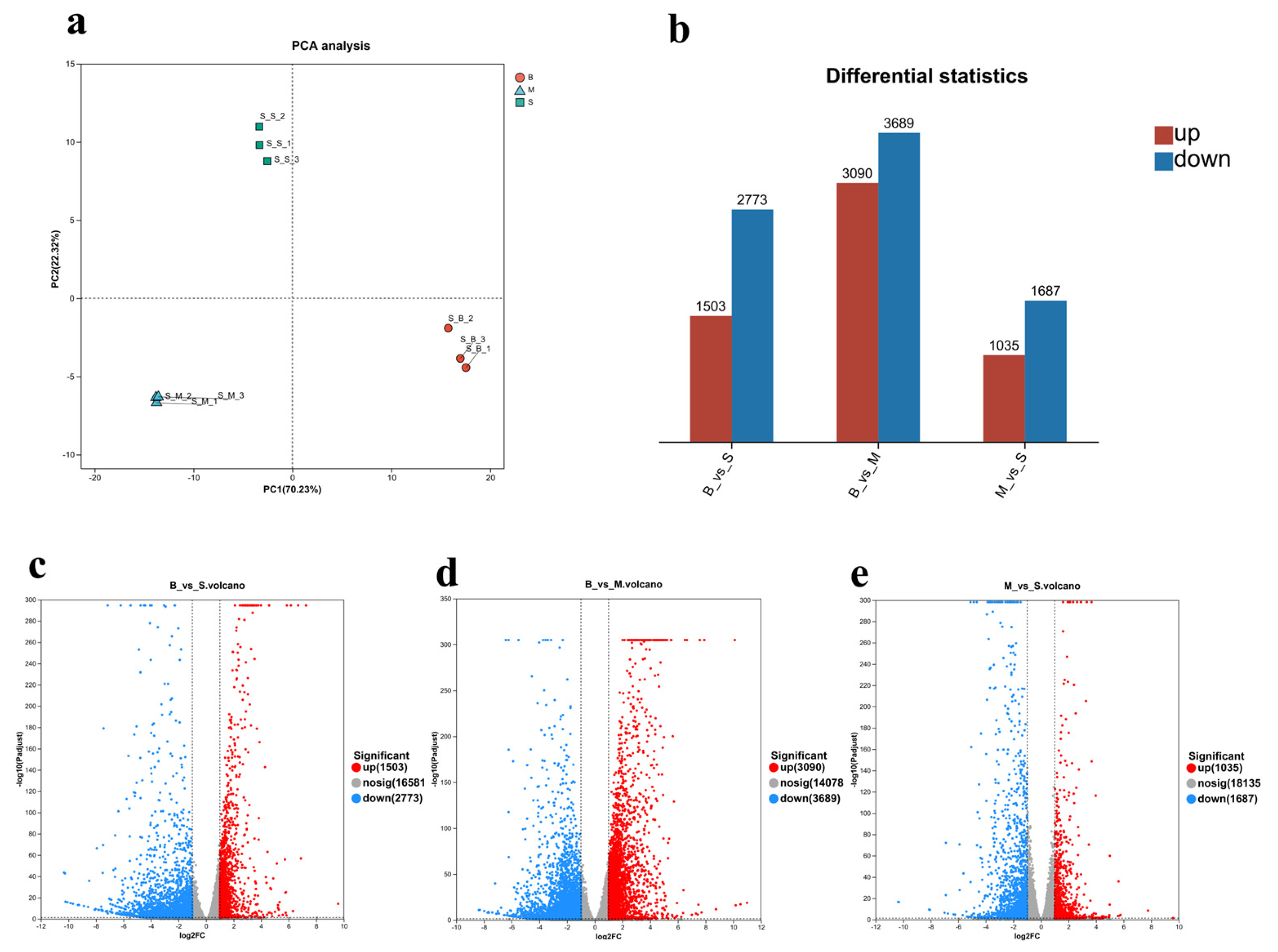
To investigate the regulatory mechanisms associated with Dabie Mountain cattle follicular development, this study collected granulosa cells from follicles of different sizes (<5 mm, 5–8 mm, and >8 mm) and performed transcriptome sequencing. The results of the principal component analysis (PCA) indicate no significant separation was observed among the three sample groups, indicating strong reproducibility across samples and providing a reliable foundation for subsequent analyses (Figure 1a). Differential expression gene (DEGs) analysis reveale among the 20,775 identified genes, 13,777 (66.3%) were differentially expressed (Figure 1b). Compared to Group S, Group B identified a total of 4276 DEGs (1503 up-regulated and 2773 down-regulated) (Figure 1c); Compared to Group M, Group B identified a total of 6779 DEGs (3090 up-regulated and 3689 down-regulated) (Figure 1d); Compared to Group S, Group M identified a total of 2722 DEGs (1035 up-regulated and 1687 down-regulated) (Figure 1e).

2.2. Selection of Crucial Genes Regulating Follicular Development

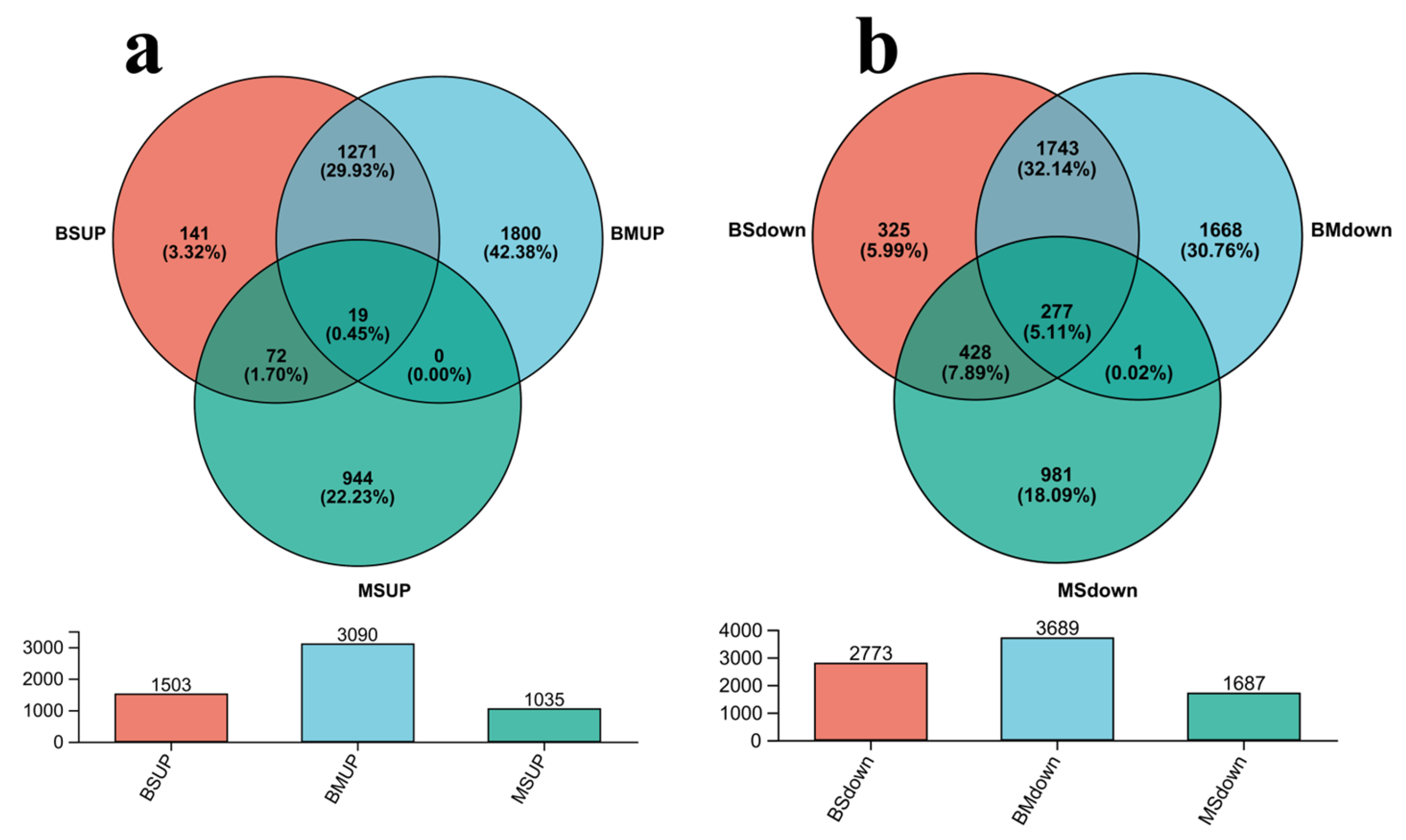
To identify key candidate genes regulating follicular development, this study screened all up and down-regulated genes across the B vs. S, B vs. M, and M vs. S groups. Based on the aforementioned analysis, the up-regulated genes and down-regulated genes established distinct gene sets for Venn analysis, resulting in the identification of 19 up-regulated DEGs (Figure 2a), including genes such as DEFB, FAM124A, RASSF10. Additionally, the identification revealed 277 down-regulated DEGs (Figure 2b), including genes such as DAZL, GAS7, INSL3, and PAQR7.

2.3. Gene Ontology (GO) and Kyoto Encyclopedia of Genes and Genomes (KEGG) Analysis

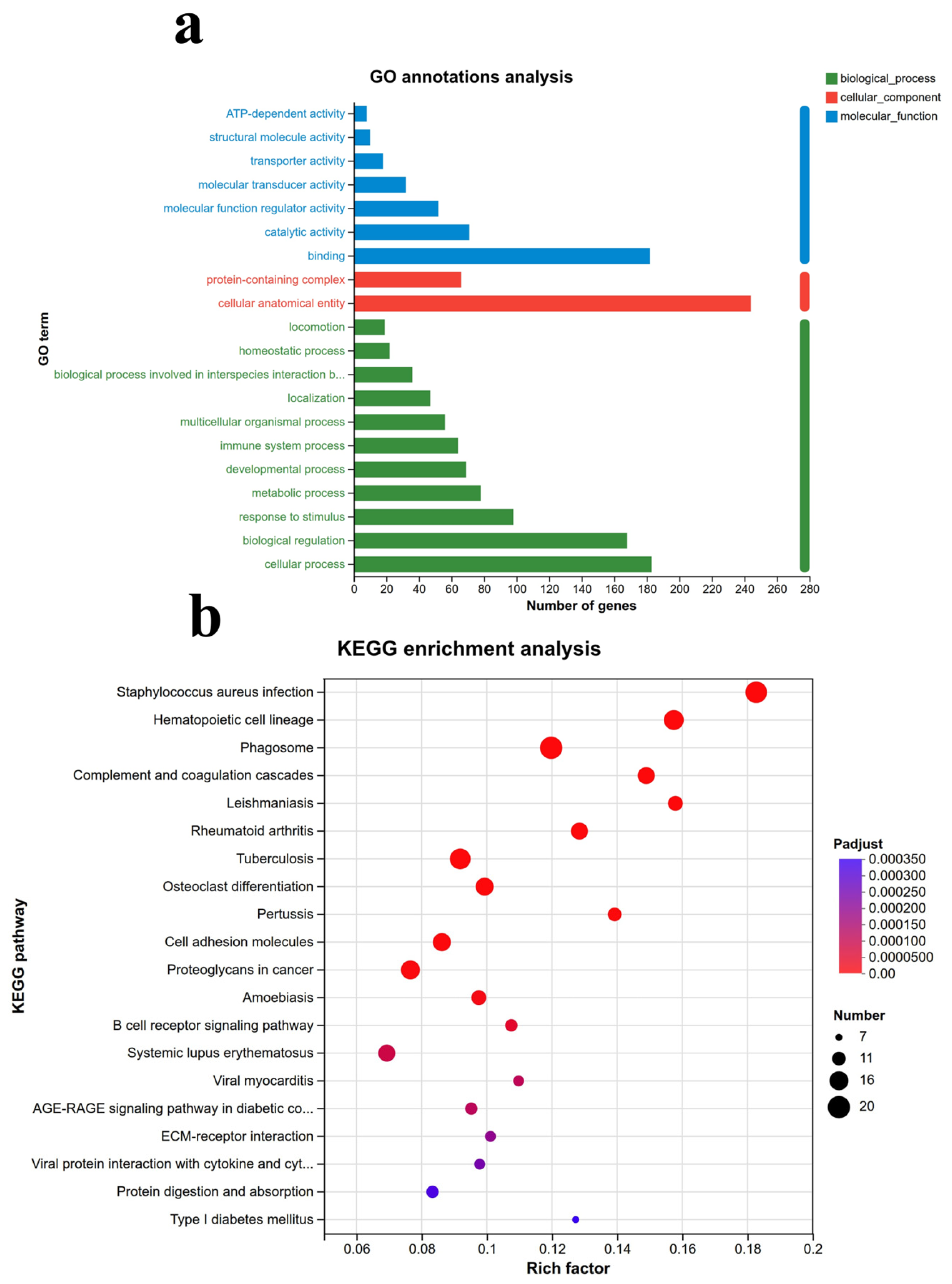
The Fisher test was employed to conduct functional enrichment analysis of the co-downregulated and co-upregulated gene sets mentioned above. The results indicated that, at the biological process (BP) level, these gene sets were primarily involved in cellular processes, biological regulation, responses to stimuli, metabolic processes, developmental processes, and immune system processes, with the most significant number of genes enriched in cellular processes. At the cellular component (CC) level, they were predominantly associated with cellular anatomical entities and protein-containing complexes. At the molecular function (MF) level, the gene sets were mainly involved in binding, catalytic activity, molecular function regulation, molecular transduction, transporter activity, structural molecular activity, and ATP-dependent activity, with the binding function genes being the most abundant (Figure 3a).
KEGG enrichment analysis showed that the gene set was mainly enriched in the relaxin signaling pathway, ECM receptor interaction, AGE-RAGE signaling pathway, B cell receptor signaling pathway, cell adhesion molecules, coagulation cascade, and other complex signaling pathways in diabetes complications (Figure 3b).

2.4. Protein–Protein Interaction (PPI) and Hub Genes

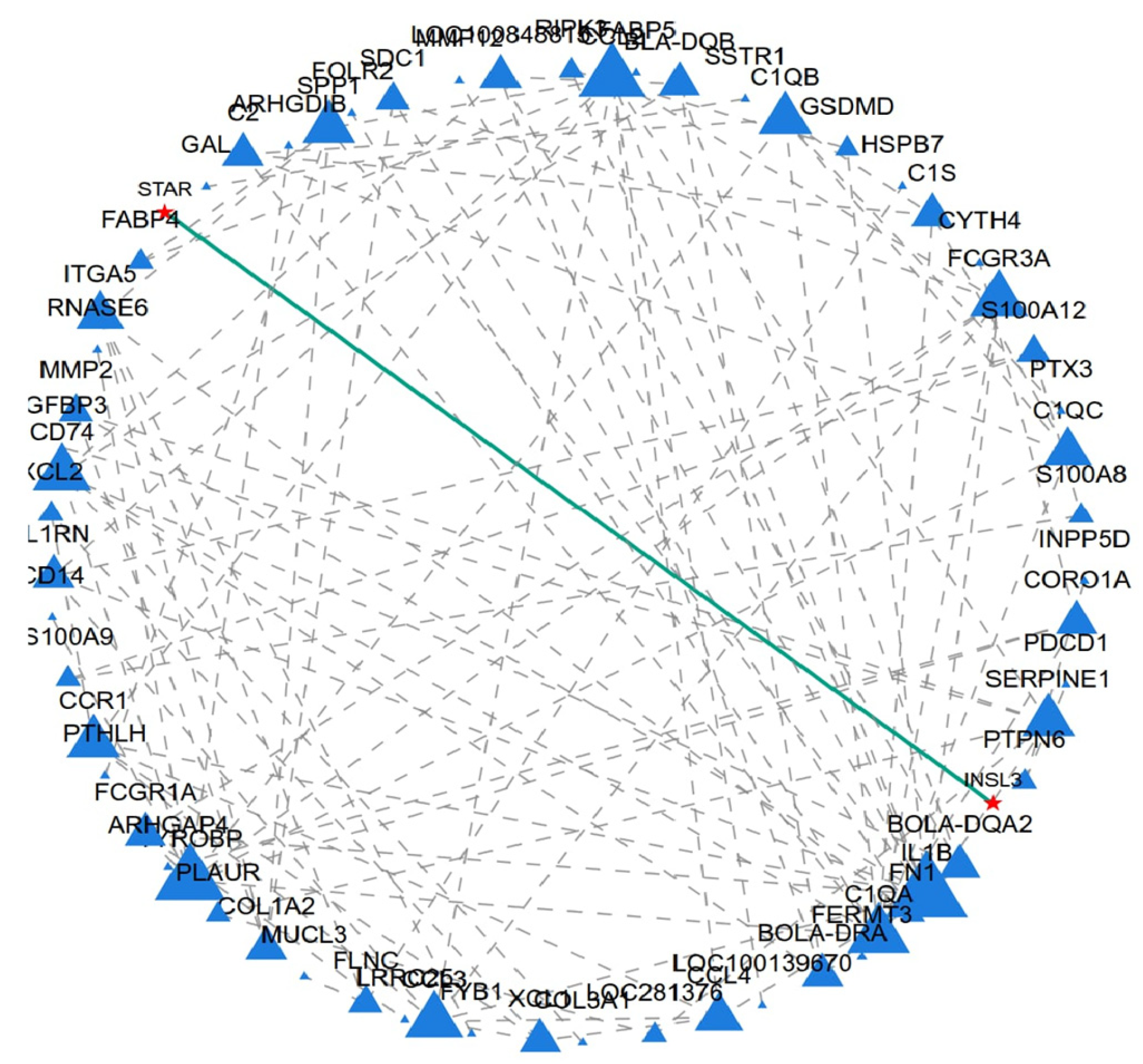
Through protein interaction network analysis, it was found that there is an interaction relationship between INSL3 and STAR (Figure 4). However, the specific mechanism behind this relationship is still unclear. STAR, as a key regulatory protein in gonadal steroid hormone synthesis, indicates that INSL3 may also play an important role in follicular development in female animals. These novel findings could challenge previous research on INSL3 and may serve as a new target marker for the treatment of human ovarian diseases and for enhancing reproductive rates in ruminants.

2.5. Detection of INSL3 Expression in Follicles at Different Developmental Stages and Interference Efficiency

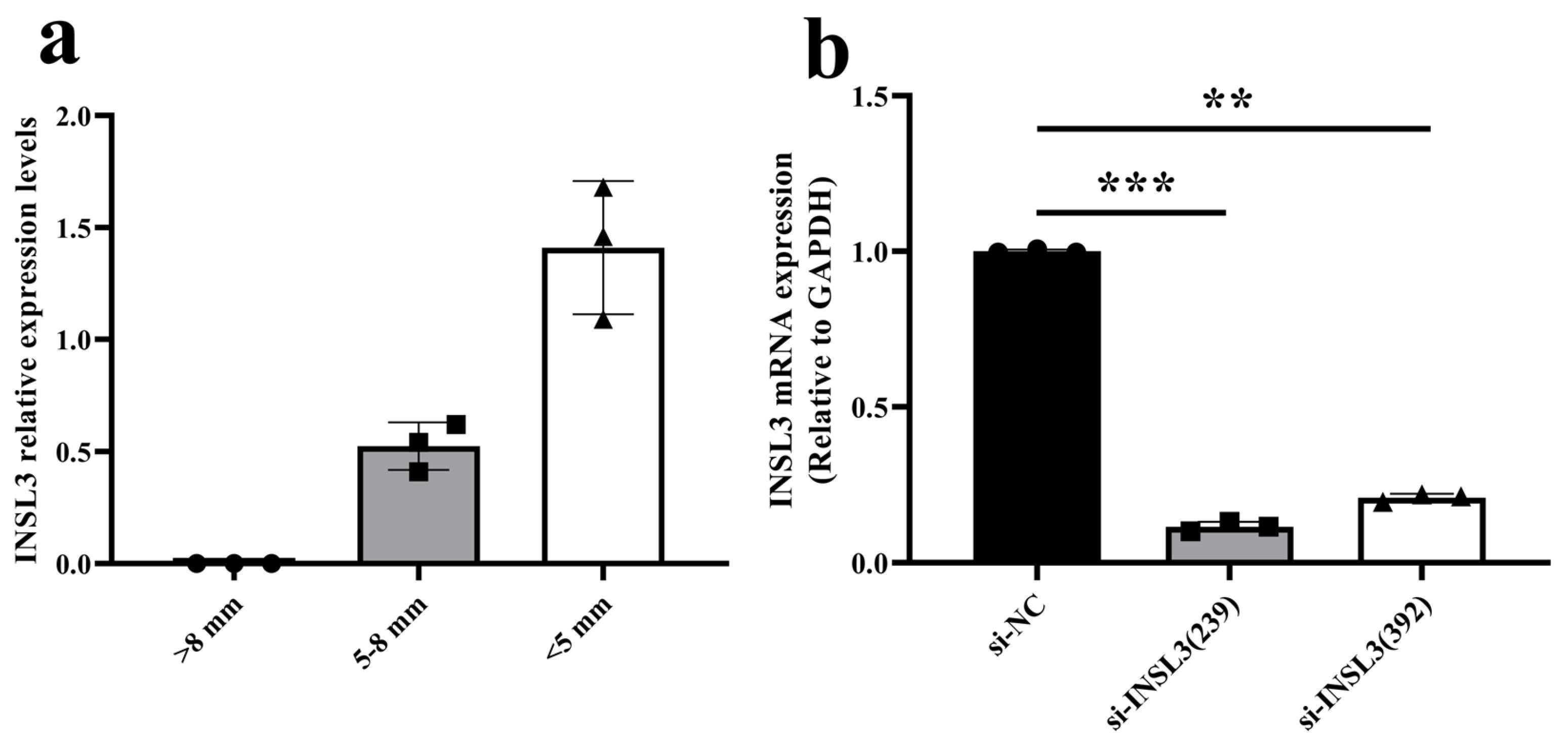
GCs were collected to investigate the effect of the INSL3 on GCs proliferation. The results revealed that INSL3 expression was highest in small follicles and was almost absent in big follicles (Figure 5a). The ovarian granulosa cells of Dabie Mountain cattle were grouped and transfected with INSL3 siRNA (si-INSL3 (239, 392)) and a negative control (si-NC), respectively. RNA was extracted 48 h later, and the interference efficiency of si-INSL3 was detected using the real-time fluorescence quantitative PCR method. The results are shown in Figure 5b, compared with the control group, the relative expression levels of si-INSL3 (239) and si-INSL3 (392) mRNA were significantly downregulated by 88% (p < 0.001) and 79% (p < 0.01), respectively. This research selected si-INSL3 (239) for subsequent experiments because it was the most effective siRNA.

2.6. Knockdown of INSL3 Affects Granulosa Cell Proliferation and Cell Cycle Progression

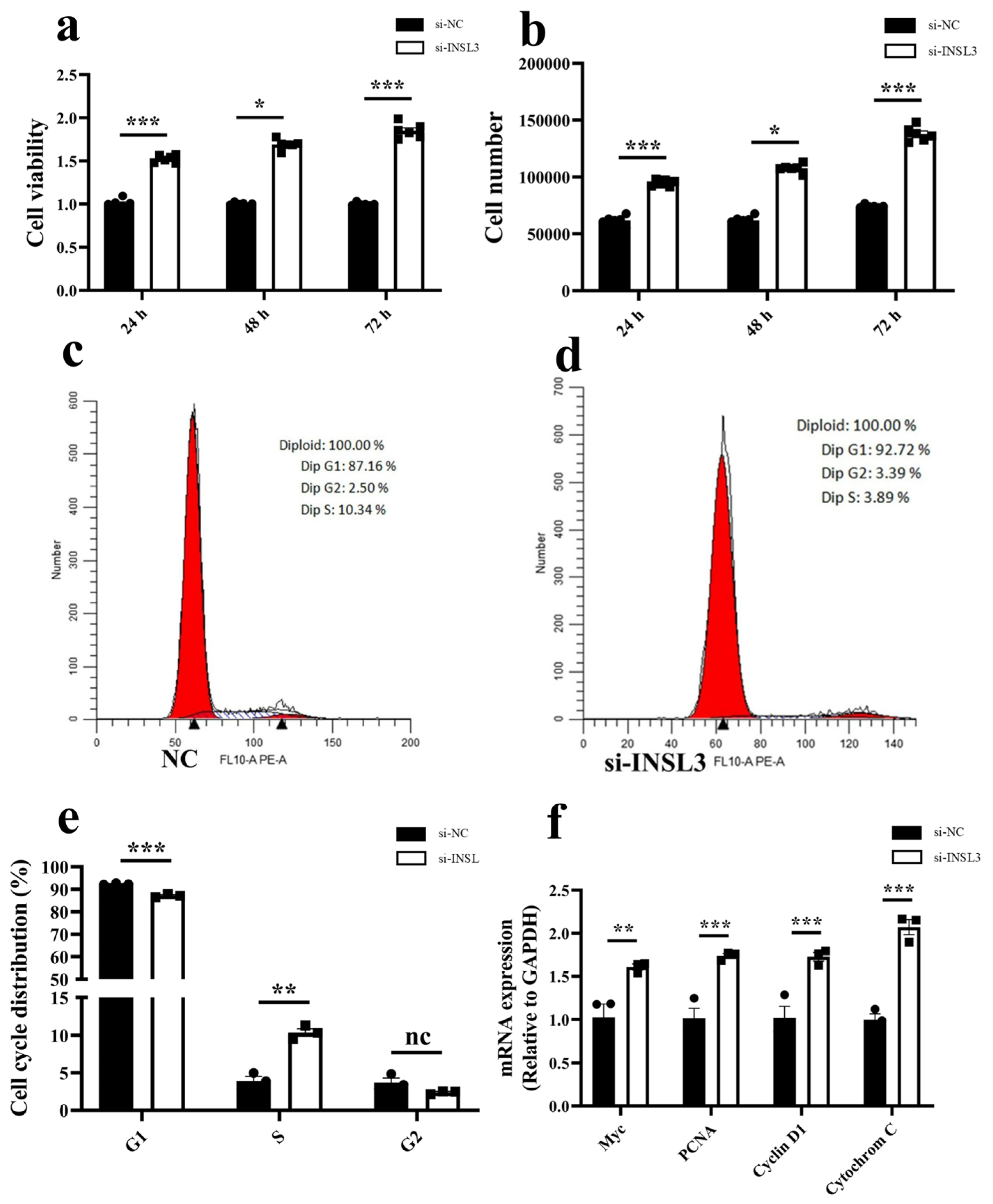
To investigate the effect of INSL3 on granulosa cell proliferation, cell proliferation was assessed using the CCK-8 assay. Results indicated that following INSL3 gene RNA interference treatment, the cell vitality and cell number of bovine follicular granulosa cells were significantly increased compared to the si-NC group (p < 0.01) (Figure 6a,b). Flow cytometry analysis revealed that compared with the control group, the si-INSL3 group exhibited a significant downregulation in the G1 phase and a significant up-regulation in the S phase (p < 0.01), while no significant difference was observed in the G2 phase (p > 0.01) (Figure 6c–e). Finally, to investigate the molecular mechanisms underlying INSL3 regulation of GCs proliferation, RT-qPCR analysis revealed significantly elevated relative expression levels of the cell proliferation-related genes Myc, PCNA, Cytochrome C, and Cyclin D1 (p < 0.01) compared to the control group (Figure 6f). These findings suggest that INSL3 may function as a novel growth-inhibitory factor in bovine follicular granulosa cells, indicating its involvement in a series of complex bio-logical processes and providing a theoretical basis for further elucidation of its molecular mechanisms.

3. Discussion

Currently, there are many studies on the different developmental stages of ovarian follicles in female animals, and these studies have elucidated the dynamic biological processes behind follicular changes and their associated molecular functional mechanisms. However, the follicular development process in the ovaries of female animals is very complex, especially the regulatory mechanisms of granulosa cells. In studies of bovine oocytes with diameters of 60–120 µm, it was found that during the growth phase of bovine oocytes, the role of oxidative phosphorylation diminishes and is accompanied by an increase in the level of expression of maternal genes and transcriptional regulators, and that the level of expression of about 5000 genes remains unchanged. When the diameter of the oocyte exceeded 100 μm, the expression of genes associated with cytoplasmic activity was replaced by genes associated with nuclear activity, such as chromosome segregation [23]. Additionally, relevant studies have explored the developmental patterns and regulatory mechanisms of follicles across different species. Transcriptome sequencing analysis of granulosa cells from 3–5 mm diameter pig follicles identified a big number of differentially expressed genes (DEGs). Among these, 51 DEGs were implicated in steroid biosynthesis, cell adhesion molecules, and TGF-β signaling pathways, Genes such as LHR, ACACB, and CXCR4 were identified as key candidate genes through interaction network analysis [24]. In the transcriptomes of chicken follicular granulosa cells at 4–8 mm, 9–12 mm, and 40 mm stages, 41 differentially expressed genes were identified that are closely associated with the reproductive process. These include UTRN, LOC422926, MYH11, CD9, TIGAR, RARA, PLBD1, PPP1CB, RMDN2, SORCS2, SLC9A5, PDLIM4, and PPP4R4. Furthermore, RMND2 expression showed negative correlations with differentiation markers FSHR and AMH, as well as proliferation marker CDK2, and positive correlations with steroidogenesis markers CYP11A1, STAR, and ESR1 [25]. Research indicates that alterations in carbohydrate metabolism within the cumulus-oocyte complex may lead to reduced oocyte fertilization capacity in both small follicles (≤11.7 mm) and big follicles (≥12.7 mm) exposed to exogenous GnRH-induced gonadotropin surges [26]. As one of the endemic yellow cattle breeds in China, Dabie Mountain cattle are characterized by roughage tolerance and delicious meat quality, but low reproductive rate. In order to analyze the follicular development and regulatory mechanism of Dabie Mountain cattle, this research collected granulosa cells from small follicles (<5 mm), medium follicles (5–8 mm), and large follicles (>8 mm) of Dabie Mountain cattle for transcriptome sequencing, and identified a total of 20,775 genes, of which 13,777 were differentially expressed (DEGs). This further confirms the existence of a highly coordinated gene regulatory network among granulosa cells during follicular development, collectively governing proliferation, differentiation, and steroidogenesis [16,27,28,29]. Principal component analysis (PCA) revealed significant transcriptome segregation between small, medium and large follicle groups, further validating the reliability of the transcriptome dataset [30]. GO functional enrichment analysis revealed that GEGs may participate in extracellular matrix receptor interactions, and the extracellular matrix plays a crucial role in oocyte maturation [31,32,33,34]. In addition, DEGs were found to be enriched in the AGE-RAGE signaling pathway in KEGG enrichment analysis, suggesting that DEGs may indirectly affect follicle development through activation of the AGE-RAGE signaling pathway, a finding that further confirms previous evidence that advanced glycosylation end-products (AGEs) impair ovarian function and follicle quality [35,36,37]. Meanwhile, the enrichment of DEGs in relaxin-related signaling pathways, cell adhesion molecules, and the coagulation cascade suggests that the ovarian microenvironment plays an important regulatory function by modulating these pathways [38,39].
This study identified a total of 227 downregulated genes, among which INSL3 exhibited the highest relative expression in small follicles and was nearly absent in big follicles. Transcriptome analysis revealed that insulin-like growth factor-3 (INSL3) regulates the biological functions of bovine follicular granulosa cells at different developmental stages, especially in follicles less than 5 mm and 5–8 mm in diameter. INSL3 is mainly secreted by testicular mesenchymal stromal cells, and acts as a paracrine factor to regulate follicular growth through its receptor RXFP2 [40]. Furthermore, cross-species studies have also demonstrated the biological function of INSL3 in the ovaries [16,41,42,43,44]. These results suggest that follicles at different developmental stages affect INSL3 levels, which indirectly affects follicular growth and development. To investigate the regulatory role of this gene in follicular development in Dabie Mountain cattle, ovarian granulosa cells were used as an in vitro model to assess its effects on cell proliferation and the cell cycle. First, protein-protein interaction (PPI) network analysis revealed a potential association between insulin-like growth factor 3 (INSL3) and steroidogenic acute response protein (STAR), which not only mediates cholesterol transport to mitochondria but also directly regulates steroidogenesis [45,46,47], a phenomenon that implies that INSL3 may indirectly regulate steroidogenesis through modulating the this phenomenon implies that INSL3 may indirectly play an important role in the regulation of steroidogenesis by modulating the function of STAR. Increasing evidence suggests that microRNAs act with the nuclear receptors NR5A1 and NR4A1 to regulate STAR and INSL3 expression [48,49]. These studies reveal that the INSL3-STAR regulatory axis may play a potential biological function during follicular development. Functional validation by RNA interference demonstrated that knockdown of INSL3 significantly increased granulosa cell vitality and up-regulated the expression of genes associated with proliferation and cell cycle progression, including Myc, PCNA, Cytochrome C, and Cyclin D1. Notably, the proliferation markers Myc and PCNA were strongly associated with granulosa cell proliferation [50,51,52,53]. In studies linking INSL3 signaling disorders to the follicular cell survival pathway, increased Cytochrome C expression is a hallmark feature of mitochondria-mediated cell apoptosis [54]. Flow cytometry analysis showed that INSL3 knockdown resulted in a significant decrease in G1 phase and a significant increase in S phase, while no significant changes were seen in G2 phase compared to controls. Furthermore, the results of INSL3 knockdown experiments and studies using RNA interference (RNAi) targeting other hormones or receptors collectively validate the reliability of RNAi technology in follicular function research [55,56,57,58]. Based on the above circumstances, this research findings closely correlate with previous experimental evidence regarding INSL3 regulation of follicular development.
To sum it up, the present study suggests that insulin-like growth factor-3 (INSL3) may inhibit the proliferation of bovine follicular granulosa cells. This suggests that it may synergize with other factors to regulate follicular development through specific signaling pathways. Future studies should utilize in vivo models to systematically analyze the INSL3-STAR regulatory axis, providing a theoretical basis for the targeted treatment of ovarian diseases and the enhancement of reproductive efficiency in livestock and poultry.

4. Materials and Methods

4.1. Animals and Experimental Design

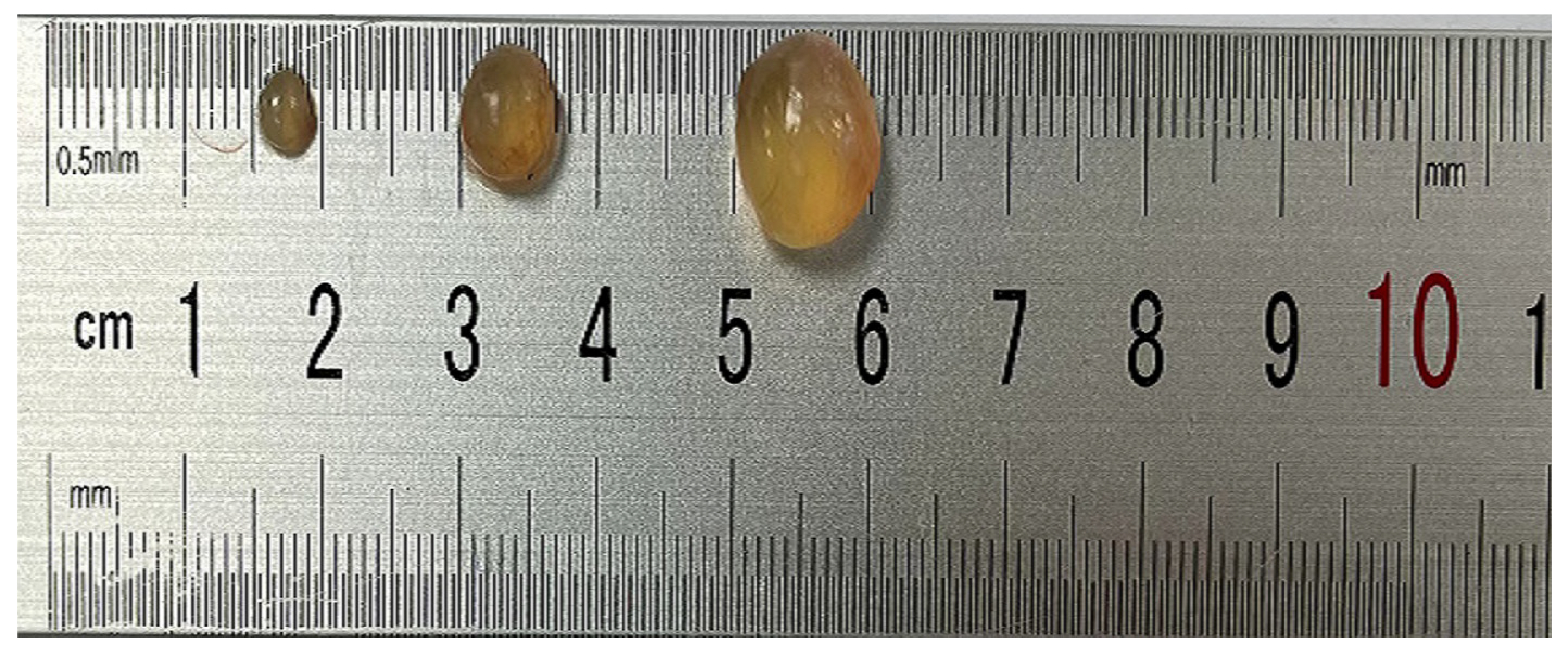
The samples were collected from the slaughterhouse of Wanjia Group in Taihu County, Anqing City, Anhui Province. Ovarian tissue was collected from both sides of the uterus using sterile surgical scissors and immediately washed 3–4 times with 75% alcohol and 37 °C PBS solution, then transferred back to the laboratory in a water cup containing 37 °C penicillin-streptomycin PBS buffer. Upon arrival, the samples were washed 2–3 times with 75% alcohol and a 37 °C PBS buffer solution, and then transferred to a clean workbench for follicular fluid extraction. Based on the diameter of the follicles, they were categorized into three groups: small follicles (S, <5 mm), medium follicles (M, 5–8 mm), and big follicles (B, >8 mm) (Figure 7). When extracting follicular fluid, sterile and enzyme-free 5 mL syringes were used to extract follicular fluid from each group (n = 3). Filter the extracted follicular fluid from each group through a 40 nm cell sieve, then transfer it to a 1.5 mL sterile enzyme-free centrifuge tube and centrifuge at 1200 rpm for 5 to 8 min. Discard the supernatant to obtain the cell pellet.
This study has been approved by the Experimental Animal Ethics Committee of Anhui Science and Technology University, with approval number [2025092]. Subsequently, the obtained cells were cultured in DMEM medium supplemented with 10% fetal bovine serum and 1% penicillin-streptomycin at 37 °C under 5% CO2 and saturated humidity conditions for subsequent studies.

4.2. RNA Extraction, Library Preparation, and Sequencing

According to the manufacturer’s protocol (Invitrogen, Waltham, MA, USA), TRIzol® reagent was utilized to extract total RNA from each follicle group. The quality of RNA was assessed using a 5300 Bioanalyzer (Agilent 5300) and quantified with an ND-2000 (NanoDrop 2000 Technologies). Only high-quality RNA samples (OD260/280 = 1.8–2.2, OD260/230 ≥ 2.0, RQN ≥ 6.5, 28S:18S ≥ 1.0, >1 μg) were employed to construct the sequencing library. According to the manufacturer’s recommendations, an mRNA library was constructed using the Illumina Stranded Total RNA Prep method and Ribo Zero Plus. The sequencing library was constructed on the NovaSeq X Plus platform at Majorbio Bio-Pharm Technology Co., Ltd. (Shanghai, China) utilizing the NovaSeq Reagent Kit.

4.3. Protein–Protein Interaction (PPI) and Hub Genes

Protein interaction network analysis was performed on 296 DEGs. After the construction of the protein interaction network, Network X 2.8 in Python 3.7 was used for the visualization of the gene network. To pinpoint the principal crucial nodes of the interaction network, various topological parameters like degree, betweenness, compactness, clustering coefficient, etc., were computed. The top 20 differentially expressed genes (DEGs) highlighted by each method were selected, and through intersection analysis, DEGs identified by at least five methods were classified as Hub DEGs.

4.4. Dabie Mountain Cattle GCs Isolation and Culture

Ovaries from non-pregnant Dabie Mountain cattle were collected from slaughterhouses. Ovaries exhibiting luteal cysts or follicular cysts were visually identified and discarded. Follicles were dissected using a scalpel and categorized into three size groups based on diameter: <5 mm, 5–8 mm, and >8 mm. Follicles of appropriate size were selected for subsequent experiments. Collect follicular fluid using a syringe with a 10-gauge needle. Transfer the fluid to a 50 mL centrifuge tube fitted with a 40 nm cell strainer. After filtration, aliquot the follicular fluid into 2 mL EP, Centrifuge at 1200 rpm for 5 min and discard the supernatant. Resuspend the pellet in DMEM, centrifuge at 1200 rpm for 3 min, and collect the cell pellet. Repeat this step 2–3 times to obtain relatively pure Dabao Mountain cattle granulosa cells. Place granulosa cells in DMEM medium supplemented with 10% fetal bovine serum and 1% penicillin/streptomycin (Hyclone). Culture in a 6-well plate at 37 °C with 5% CO2 for 48 h. Change the medium every 24 h during culture.

4.5. INSL3 siRNA Transfection

According to the known gene sequences of cattle in the GenBank database using Primer Premier 5.0 software, primers were designed for the INSL3 gene, cell cycle-related protein gene Cyclin D1 and Cytochrome C, cell proliferation-related protein genes Myc and PCNA, and internal reference gene GAPDH. Both siRNA and NC-siRNA (without any target sequence) were purchased from Suzhou Jima Gene Co., Ltd. (Suzhou, China). The primers were synthesized by Beijing Qingke Biotechnology Co., Ltd. (Nanjing, China). The cells were transfected with 20 nM of siRNA compared to NC using Lipofectamine RNAiMAX reagent in Opti-MEM medium (Life Technology, Inc., Carlsbad, CA, USA) instructions. Cells were harvested 48 h after transfection for mRNA expression. Small RNA interference sequences specific to INSL3 (si-INSL3) used in this study are given in Table 1.

4.6. RNA Extraction and Reverse-Transcription Polymerase Chain Reaction (RT-PCR)

Cells were lysed 48 h post-transfection. Total RNA was extracted using a kit (RNApure Fast Tissue & Cell Kit; Kangwei Century Biotechnology Co., Ltd., Taizhou, China), followed by subsequent cDNA synthesis according to the manufacturer’s instructions. RNA quality and quantity were assessed by spectrophotometry (Nanodrop 2000 analyzer; Thermo Scientific, Wilmington, DE, USA). Finally, 1 µg of qualified total RNA (260/280 ratio 1.8–2.1) was reverse transcribed using a kit (HiFiScript gDNA Removal RT MasterMix; Kangwei Century Biotechnology Co., Ltd., Taizhou, China), with all operations performed according to the manufacturer’s instructions.

4.7. Quantitative Real-Time PCR (qRT-PCR)

The primers listed in this study (Table 1) were designed using Primer 5.0 software. Gene expression levels were determined by real-time quantitative PCR (LightCycler 480 Multiwell Plate 96; Roche, Indianapolis, IN, USA) using the TaKaRa TB Green® Premix Ex Taq™ II (Tli RNaseH Plus) kit, with GAPDH as the internal reference gene. Each reaction consisted of a 10 µL system containing cDNA (1 µL), RNase-free water (3 µL), forward and reverse primers (0.5 µL each), and TB Green® Premix Ex Taq™ II (5 µL).

4.8. CCK-8 Method for Detecting Cell Proliferation

Passage the cells into a 96-well plate, overnight culture, transfection treatment, 6 replicates per treatment, and place them in a 37 °C, 5% CO2 incubator. Add 90 μL of 10% complete culture medium and 10 μL of CCK-8 to each well, taking care to avoid the formation of bubbles. Wrap the culture plate with tin foil and incubate it in a dark incubator. After 4 h, take out the culture plate and detect the OD450 nm value in an enzyme-linked immunosorbent assay (ELISA) reader.

4.9. Cell Cycle Assay Middling

Forty-eight hours after transfection with si-INSL3 and NC, granulosa cells from Dabie Mountain cattle were digested with 0.25% trypsin (37 °C, 3 min) and centrifuged (4000 rpm, 5 min). After washing with 70% ethanol and overnight incubation at 4 °C, collected cells were stained with RNase A (100 µL) and PI solution (400 µL) for 30 min. Cell cycle progression was assessed using FACSVerse Calibur flow cytometer (BD Biosciences, San Jose, CA, USA). The proportion distribution of each cell cycle phase in three independent experiments was analyzed using ModFit v 6.0 software.

4.10. Statistical Analysis

Data indicated as mean ± SEM were obtained from three independent replicates at least. The statistically significant difference between groups was determined using paired-samples t-test in Graph-Pad. The cut-off value adjusted to a statistically significant difference was p < 0.05.

5. Conclusions

To investigate the molecular mechanisms regulating Dabie Mountain cattle follicular development, this study collected small, medium, and big follicles for transcriptome sequencing. A total of 19 genes were identified as upregulated and 227 as downregulated in the comparisons B vs. S, B vs. M, and M vs. S. The results revealed that INSL3 gene expression was highest in small follicles and was almost absent in big follicles. Subsequent in vitro studies on INSL3 revealed that knocking down INSL3 expression significantly promoted GCs proliferation by markedly upregulating the expression of proliferation-related genes Myc, PCNA, Cytochrome C, and Cyclin D1. This treatment also significantly reduced the number of G1-phase cells and markedly increased the number of S-phase cells. In conclusion, INSL3 influences follicular development in Dabie Mountain cattle by regulating GCs proliferation, thereby contributing to the regulation of their reproductive efficiency.

Author Contributions

Conceptualization, C.C., H.L. and J.H.; Methodology, H.L. and C.C.; Software, F.H. and H.L.; Validation, H.L., X.L. and J.N.; Formal analysis, H.L. and H.A.K.; Investigation, H.L.; Resources, J.H.; Data curation, H.L.; Writing—original draft preparation, H.L.; Writing—review and editing, H.L.; Visualization, F.H.; Supervision, X.L.; Project administration, J.N.; Funding acquisition, J.H. All authors have read and agreed to the published version of the manuscript.

Funding

This research was funded by the Anhui Province Beef Cattle Breeding Collaborative Research Project (Wannong China-Korea [2021] No. 1146) and Anhui Province Excellent Scientific Research and Innovation Team—Grass eating Livestock Resource Utilization and Health Technology Innovation Team (2023AH010061) and Anhui Provincial Collaborative Innovation Project for Higher Education Institutions (GXXT-2023-045) and High-level Talents Introduction Project of Anhui Science and Technology University (DKYJ202405) and Anhui Provincial College Student Innovation Training Program Project (202510879015, S202410879063).

Institutional Review Board Statement

This study has been approved by the Experimental Animal Ethics Committee of Anhui University of Science and Technology, with approval number 2025092 (approval date 2024-08-20).

Informed Consent Statement

Not applicable.

Data Availability Statement

The data presented in this study are available on request from the corresponding author due to (The experimental data is kept by the corresponding author due to privacy concerns).

Conflicts of Interest

The authors declare no conflicts of interest.

References

  1. Zhao, S.; Jin, H.; Xu, L.; Jia, Y. Polymorphisms of the Growth Hormone Releasing Hormone Receptor Gene Affect Body Conformation Traits in Chinese Dabieshan Cattle. Animals 2022, 12, 1601. [Google Scholar] [CrossRef] [PubMed]
  2. Zhao, S.; Jin, H.; Xu, L.; Jia, Y. Genetic variants of the growth differentiation factor 8 affect body conformation traits in Chinese Dabieshan cattle. Anim. Biosci. 2022, 35, 517–526. [Google Scholar] [CrossRef] [PubMed]
  3. Parrish, E.M.; Siletz, A.; Xu, M.; Woodruff, T.K.; Shea, L.D. Gene expression in mouse ovarian follicle development in vivo versus an ex vivo alginate culture system. Reproduction 2011, 142, 309–318. [Google Scholar] [CrossRef] [PubMed]
  4. Zhang, H.; Liu, K. Cellular and molecular regulation of the activation of mammalian primordial follicles: Somatic cells initiate follicle activation in adulthood. Hum. Reprod. Update 2015, 21, 779–786. [Google Scholar] [CrossRef]
  5. Lo, B.K.M.; Sheikh, S.; Williams, S.A. In vitro and in vivo mouse follicle development in ovaries and reaggregated ovaries. Reproduction 2019, 157, 135–148. [Google Scholar] [CrossRef]
  6. Juengel, J.L.; McNatty, K.P. The role of proteins of the transforming growth factor-beta superfamily in the intraovarian regulation of follicular development. Hum. Reprod. Update 2005, 11, 143–160. [Google Scholar] [CrossRef]
  7. Ginther, O.J. The theory of follicle selection in cattle. Domest. Anim. Endocrinol. 2016, 57, 85–99. [Google Scholar] [CrossRef]
  8. Kulick, L.J.; Bergfelt, D.R.; Kot, K.; Ginther, O.J. Follicle selection in cattle: Follicle deviation and codominance within sequential waves. Biol. Reprod. 2001, 65, 839–846. [Google Scholar] [CrossRef]
  9. Sartori, R.; Fricke, P.M.; Ferreira, J.C.; Ginther, O.J.; Wiltbank, M.C. Follicular deviation and acquisition of ovulatory capacity in bovine follicles. Biol. Reprod. 2001, 65, 1403–1409. [Google Scholar] [CrossRef]
  10. Fortune, J.E. Ovarian follicular growth and development in mammals. Biol. Reprod. 1994, 50, 225–232. [Google Scholar] [CrossRef]
  11. Romereim, S.M.; Summers, A.F.; Pohlmeier, W.E.; Zhang, P.; Hou, X.; Talbott, H.A.; Cushman, R.A.; Wood, J.R.; Davis, J.S.; Cupp, A.S. Gene expression profiling of bovine ovarian follicular and luteal cells provides insight into cellular identities and functions. Mol. Cell. Endocrinol. 2017, 439, 379–394. [Google Scholar] [CrossRef] [PubMed]
  12. Hatzirodos, N.; Hummitzsch, K.; Irving-Rodgers, H.F.; Rodgers, R.J. Transcriptome comparisons identify new cell markers for theca interna and granulosa cells from small and large antral ovarian follicles. PLoS ONE 2015, 10, e0119800. [Google Scholar] [CrossRef] [PubMed]
  13. Xie, S.; Li, M.; Chen, Y.; Liu, Y.; Ma, L.; Sun, X.; Sun, Y.; Gao, R.; Huang, T. Identification of circular RNAs in the ovarian follicles of Meishan and Duroc sows during the follicular phase. J. Ovarian Res. 2020, 13, 104. [Google Scholar] [CrossRef] [PubMed]
  14. Adham, I.M.; Burkhardt, E.; Benahmed, M.; Engel, W. Cloning of a cDNA for a novel insulin-like peptide of the testicular Leydig cells. J. Biol. Chem. 1993, 268, 26668–26672. [Google Scholar] [CrossRef]
  15. Burkhardt, E.; Adham, I.M.; Brosig, B.; Gastmann, A.; Mattei, M.G.; Engel, W. Structural organization of the porcine and human genes coding for a Leydig cell-specific insulin-like peptide (LEY I-L) and chromosomal localization of the human gene (INSL3). Genomics 1994, 20, 13–19. [Google Scholar] [CrossRef]
  16. Ivell, R.; Anand-Ivell, R. Insulin-like peptide 3 (INSL3) is a major regulator of female reproductive physiology. Hum. Reprod. Update 2018, 24, 639–651. [Google Scholar] [CrossRef]
  17. Esteban-Lopez, M.; Agoulnik, A.I. Diverse functions of insulin-like 3 peptide. J. Endocrinol. 2020, 247, R1–R12. [Google Scholar] [CrossRef]
  18. Ferlin, A.; Perilli, L.; Gianesello, L.; Taglialavoro, G.; Foresta, C. Profiling insulin like factor 3 (INSL3) signaling in human osteoblasts. PLoS ONE 2011, 6, e29733. [Google Scholar] [CrossRef]
  19. Ivell, R.; Heng, K.; Severn, K.; Antonio, L.; Bartfai, G.; Casanueva, F.F.; Huhtaniemi, I.T.; Giwercman, A.; Maggi, M.; O’Connor, D.B.; et al. The Leydig cell biomarker INSL3 as a predictor of age-related morbidity: Findings from the EMAS cohort. Front. Endocrinol. 2022, 13, 1016107. [Google Scholar] [CrossRef]
  20. Neirijnck, Y.; Papaioannou, M.D.; Nef, S. The Insulin/IGF System in Mammalian Sexual Development and Reproduction. Int. J. Mol. Sci. 2019, 20, 4440. [Google Scholar] [CrossRef]
  21. Wang, G.; Hardy, M.P. Development of leydig cells in the insulin-like growth factor-I (igf-I) knockout mouse: Effects of igf-I replacement and gonadotropic stimulation. Biol. Reprod. 2004, 70, 632–639. [Google Scholar] [CrossRef] [PubMed]
  22. Esteban-Lopez, M.; Wilson, K.J.; Myhr, C.; Kaftanovskaya, E.M.; Henderson, M.J.; Southall, N.T.; Xu, X.; Wang, A.; Hu, X.; Barnaeva, E.; et al. Discovery of small molecule agonists of the Relaxin Family Peptide Receptor 2. Commun. Biol. 2022, 5, 1183. [Google Scholar] [CrossRef] [PubMed]
  23. Latorraca, L.B.; Galvao, A.; Rabaglino, M.B.; D’Augero, J.M.; Kelsey, G.; Fair, T. Single-cell profiling reveals transcriptome dynamics during bovine oocyte growth. BMC Genom. 2024, 25, 335. [Google Scholar] [CrossRef] [PubMed]
  24. Zhang, J.; Qin, X.; Wang, C.; Zhang, Y.; Dou, Y.; Xu, S.; Liu, J.; Pan, Z. Comparative transcriptome profile analysis of granulosa cells from porcine ovarian follicles during early atresia. Anim. Biotechnol. 2024, 35, 2282090. [Google Scholar] [CrossRef]
  25. Li, A.; Liao, Y.; Li, D.; Li, T.; Luo, Y.; Ma, M.; Wang, X.; Sun, L.; Qu, L.; Shen, M. Transcriptome profiling of granulosa cells during follicular development identifies RMDN2 polymorphisms associated with reproductive traits in chickens. Theriogenology 2025, 252, 117775. [Google Scholar] [CrossRef]
  26. Moorey, S.E.; Monnig, J.M.; Smith, M.F.; Ortega, M.S.; Green, J.A.; Pohler, K.G.; Bridges, G.A.; Behura, S.K.; Geary, T.W. Differential Transcript Profiles in Cumulus-Oocyte Complexes Originating from Pre-Ovulatory Follicles of Varied Physiological Maturity in Beef Cows. Genes 2021, 12, 893. [Google Scholar] [CrossRef]
  27. Bathgate, R.A.; Halls, M.L.; van der Westhuizen, E.T.; Callander, G.E.; Kocan, M.; Summers, R.J. Relaxin family peptides and their receptors. Physiol. Rev. 2013, 93, 405–480. [Google Scholar] [CrossRef]
  28. Sherwood, O.D. Relaxin’s physiological roles and other diverse actions. Endocr. Rev. 2004, 25, 205–234. [Google Scholar] [CrossRef]
  29. Chen, T.Y.; Li, X.; Hung, C.H.; Bahudhanapati, H.; Tan, J.; Kass, D.J.; Zhang, Y. The relaxin family peptide receptor 1 (RXFP1): An emerging player in human health and disease. Mol. Genet. Genom. Med. 2020, 8, e1194. [Google Scholar] [CrossRef]
  30. Wadood, A.A.; Bordbar, F.; Zhang, X. Integrative Transcriptome Analysis Across Follicles Highlights Key Regulatory Pathways in Low and High-Egg-Laying Hens. Animals 2025, 15, 3300. [Google Scholar] [CrossRef]
  31. Perkins, A.V.; Vanderlelie, J.J. Multiple micronutrient supplementation and birth outcomes: The potential importance of selenium. Placenta 2016, 48, S61–S65. [Google Scholar] [CrossRef] [PubMed]
  32. Bortolotti, D.; Soffritti, I.; D’Accolti, M.; Gentili, V.; Di Luca, D.; Rizzo, R.; Caselli, E. HHV-6A Infection of Endometrial Epithelial Cells Affects miRNA Expression and Trophoblast Cell Attachment. Reprod. Sci. 2020, 27, 779–786. [Google Scholar] [CrossRef] [PubMed]
  33. Tang, H.; Goldberg, E. A-MYB (MYBL1) stimulates murine testis-specific Ldhc expression via the cAMP-responsive element (CRE) site. Biol. Reprod. 2012, 86, 30. [Google Scholar] [CrossRef] [PubMed]
  34. Diaz, E.C.; Briggs, M.; Wen, Y.; Zhuang, G.; Wallace, S.L.; Dobberfuhl, A.D.; Kao, C.S.; Chen, B.C. Characterizing relaxin receptor expression and exploring relaxin’s effect on tissue remodeling/fibrosis in the human bladder. BMC Urol. 2020, 20, 44. [Google Scholar] [CrossRef]
  35. Nagyova, E.; Nemcova, L.; Camaioni, A. Cumulus Extracellular Matrix Is an Important Part of Oocyte Microenvironment in Ovarian Follicles: Its Remodeling and Proteolytic Degradation. Int. J. Mol. Sci. 2021, 23, 54. [Google Scholar] [CrossRef]
  36. Gomez-Lopez, N.; Romero, R.; Xu, Y.; Leng, Y.; Garcia-Flores, V.; Miller, D.; Jacques, S.M.; Hassan, S.S.; Faro, J.; Alsamsam, A.; et al. Are amniotic fluid neutrophils in women with intraamniotic infection and/or inflammation of fetal or maternal origin? Am. J. Obstet. Gynecol. 2017, 217, 693.e1–693.e16. [Google Scholar] [CrossRef]
  37. Nynca, J.; Słowińska, M.; Judycka, S.; Ciereszko, A. Maladaptation of trout spermatozoa to fresh water is related to oxidative stress and proteome changes. Reproduction 2019, 157, 485–499. [Google Scholar] [CrossRef]
  38. Chen, X.B.; Shi, H.J.; Niu, L.S. Numerical study of the phase separation in binary lipid membrane containing protein inclusions under stationary shear flow. J. Biomech. 2009, 42, 603–613. [Google Scholar] [CrossRef]
  39. Nemerovsky, L.; Bar-Joseph, H.; Eldar-Boock, A.; Tarabeih, R.; Elmechaly, C.; Ben-Ami, I.; Shalgi, R. The Role of PEDF in Reproductive Aging of the Ovary. Int. J. Mol. Sci. 2022, 23, 10359. [Google Scholar] [CrossRef]
  40. Satchell, L.; Glister, C.; Bleach, E.C.; Glencross, R.G.; Bicknell, A.B.; Dai, Y.; Anand-Ivell, R.; Ivell, R.; Knight, P.G. Ovarian expression of insulin-like peptide 3 (INSL3) and its receptor (RXFP2) during development of bovine antral follicles and corpora lutea and measurement of circulating INSL3 levels during synchronized estrous cycles. Endocrinology 2013, 154, 1897–1906. [Google Scholar] [CrossRef]
  41. Johansson, H.K.L.; Damdimopoulou, P.; van Duursen, M.B.M.; Boberg, J.; Franssen, D.; de Cock, M.; Jaager, K.; Wagner, M.; Velthut-Meikas, A.; Xie, Y.; et al. Putative adverse outcome pathways for female reproductive disorders to improve testing and regulation of chemicals. Arch. Toxicol. 2020, 94, 3359–3379. [Google Scholar] [CrossRef] [PubMed]
  42. Dai, Y.; Ivell, R.; Anand-Ivell, R. Theca Cell INSL3 and Steroids Together Orchestrate the Growing Bovine Antral Follicle. Front. Physiol. 2017, 8, 1033. [Google Scholar] [CrossRef] [PubMed]
  43. Ayar Madenli, A.; Oz, I. Evaluating the efficacy of potential ovarian reserve markers from theca and granulosa cells: INSL3 & TNFR2. Medicine 2025, 104, e42842. [Google Scholar] [CrossRef] [PubMed]
  44. Xue, K.; Kim, J.Y.; Liu, J.Y.; Tsang, B.K. Insulin-like 3-induced rat preantral follicular growth is mediated by growth differentiation factor 9. Endocrinology 2014, 155, 156–167. [Google Scholar] [CrossRef]
  45. Oztas, E.; Ozler, S.; Ersoy, A.O.; Ersoy, E.; Caglar, A.T.; Uygur, D.; Yucel, A.; Ergin, M.; Danisman, N. Decreased placental and maternal serum TRAIL-R2 levels are associated with placenta accreta. Placenta 2016, 39, 1–6. [Google Scholar] [CrossRef]
  46. Matthias, J.; Cui, Q.; Shumate, L.T.; Plagge, A.; He, Q.; Bastepe, M. Extra-Large Gα Protein (XLαs) Deficiency Causes Severe Adenine-Induced Renal Injury with Massive FGF23 Elevation. Endocrinology 2020, 161, bqz025. [Google Scholar] [CrossRef]
  47. Rahat, B.; Thakur, S.; Bagga, R.; Kaur, J. Epigenetic regulation of STAT5A and its role as fetal DNA epigenetic marker during placental development and dysfunction. Placenta 2016, 44, 46–53. [Google Scholar] [CrossRef]
  48. Robert, N.M.; Martin, L.J.; Tremblay, J.J. The orphan nuclear receptor NR4A1 regulates insulin-like 3 gene transcription in Leydig cells. Biol. Reprod. 2006, 74, 322–330. [Google Scholar] [CrossRef]
  49. Martin, L.J.; Tremblay, J.J. Nuclear receptors in Leydig cell gene expression and function. Biol. Reprod. 2010, 83, 3–14. [Google Scholar] [CrossRef]
  50. Zhao, J.; Xu, Y.; Yu, H.; Li, X.; Wang, W.; Mao, D. Effects of PPARG on the proliferation, apoptosis, and estrogen secretion in goat granulosa cells. Theriogenology 2025, 231, 62–72. [Google Scholar] [CrossRef]
  51. Li, X.; Chen, H.; Zhang, Z.; Xu, D.; Duan, J.; Li, X.; Yang, L.; Hua, R.; Cheng, J.; Li, Q. Isorhamnetin Promotes Estrogen Biosynthesis and Proliferation in Porcine Granulosa Cells via the PI3K/Akt Signaling Pathway. J. Agric. Food Chem. 2021, 69, 6535–6542. [Google Scholar] [CrossRef] [PubMed]
  52. Wang, H.; Wang, Y.; Wang, Y. MiR-222-3p inhibits formation of medulloblastoma stem-like cells by targeting Notch2/c-myc signaling pathway. Immunopharmacol. Immunotoxicol. 2022, 44, 548–555. [Google Scholar] [CrossRef] [PubMed]
  53. Cho, Y.; Cha, J.H.; Hwang, Y.; Kang, H.T.; Lee, J.H. Ground Salicornia herbacea Powder Suppresses AOM/DSS-induced Colon Cancer by Inhibiting Wnt/beta-catenin Signaling and Nrf2. Pharm. Res. 2024, 41, 2225–2234. [Google Scholar] [CrossRef] [PubMed]
  54. Jiang, S.; Cai, J.; Wallace, D.C.; Jones, D.P. Cytochrome c-mediated apoptosis in cells lacking mitochondrial DNA. Signaling pathway involving release and caspase 3 activation is conserved. J. Biol. Chem. 1999, 274, 29905–29911. [Google Scholar] [CrossRef]
  55. Glister, C.; Satchell, L.; Bathgate, R.A.; Wade, J.D.; Dai, Y.; Ivell, R.; Anand-Ivell, R.; Rodgers, R.J.; Knight, P.G. Functional link between bone morphogenetic proteins and insulin-like peptide 3 signaling in modulating ovarian androgen production. Proc. Natl. Acad. Sci. USA 2013, 110, E1426–E1435. [Google Scholar] [CrossRef]
  56. Laird, M.; Glister, C.; Cheewasopit, W.; Satchell, L.S.; Bicknell, A.B.; Knight, P.G. ‘Free’ inhibin alpha subunit is expressed by bovine ovarian theca cells and its knockdown suppresses androgen production. Sci. Rep. 2019, 9, 19793. [Google Scholar] [CrossRef]
  57. Elbashir, S.M.; Harborth, J.; Lendeckel, W.; Yalcin, A.; Weber, K.; Tuschl, T. Duplexes of 21-nucleotide RNAs mediate RNA interference in cultured mammalian cells. Nature 2001, 411, 494–498. [Google Scholar] [CrossRef]
  58. Boettcher, M.; McManus, M.T. Choosing the Right Tool for the Job: RNAi, TALEN, or CRISPR. Mol. Cell 2015, 58, 575–585. [Google Scholar] [CrossRef]
Figure 1. Differentially Expressed Genes in Follicles at Different Developmental Stages. (a): PCA plot grouped by B vs. S, B vs. M, and M vs. S follicle stages. Each stage is represented by its own color; (b): The number of DEGs in the three groups; (ce): representing heatmaps of differentially expressed genes (DEGs) showing upregulation (red) and downregulation (blue) in B vs. S, B vs. M, and M vs. S, respectively.
Ijms 27 00405 g001
Figure 2. Follicular Development Critical Regulatory Genes. (a): Venn analysis results of BSUP (Compared with group S, the number of up-regulated DEGs in group B), BMUP (Compared with group M, the number of up-regulated DEGs in group B), and MSUP (Compared with group S, the number of up-regulated DEGs in group M); (b): Venn analysis results for BSdown (Compared with group S, the number of down-regulated DEGs in group B), BMdown (Compared with group M, the number of down-regulated DEGs in group B), and MSdown (Compared with group S, the number of down-regulated DEGs in group M).
Ijms 27 00405 g002
Figure 3. GO and KEGG analysis. (a) GO functional enrichment analysis of DEGs; (b) KEGG enrichment analysis of DEGs.
Ijms 27 00405 g003
Figure 4. Protein interaction analysis results of 296 differentially expressed genes.
Ijms 27 00405 g004
Figure 5. Expression of INSL3 and detection of intervention efficiency. (a) Expression of INSL3 in GCS with different follicular diameters. (b) INSL3 mRNA expression was successfully decreased in Dabie Mountain cattle GCs transfected with si-INSL3 (20 μM). mRNA levels by RT-qPCR relative to endogenous control GAPDH. The results are indicated as means ± SEM of three independent experiments. ** p< 0.01, *** p < 0.001.
Ijms 27 00405 g005
Figure 6. Knockdown of INSL3 expression affects GCs proliferation, cycle, and proliferation-related genes. (a,b) CCK-8 kit was used to evaluate the cell vitality and cell number of GC transfected with si-INSL3 and siNC at 24, 48 and 72 h, respectively. (ce) Dabie Mountain cattle GC was transfected with si-INSL3 and incubated for 48 h before being saturated in PI, and the FACS and GC cycle were determined. (f) Expression levels of Myc, PCNA, Cytochrome C, and Cyclin D1 genes in GC transfected with siRNA and siNC were determined by RT-qPCR against endogenous control GAPDH. All results are presented as means ± SEM. Significance difference, * p < 0.05, ** p < 0.01, *** p < 0.001.
Ijms 27 00405 g006
Figure 7. Follicle diameter size.
Ijms 27 00405 g007
Table 1. Primer sequences for quantitative real-time PCR and si-INSL3 sequences.
Gene NamePrimer Sequences
si-INSL3(239)F: GUGGCUGGAAGGACAACAUTT
R: AUGUUGUCCUUCCAGCCACTT
si-INSL3(392)F: CUGCACCCGGCAAGACCUGTT
R: CAGGUCUUGCCGGGUGCAGTT
siNCF: UUCUCCGAACGUGUCACGUTT
R: ACGUGACACGUUCGGAGAATT
GAPDHF: GTGCCCAGTGCCATAC
R: CCATCAGCGTCTCCTC
MycF: CCCACCCACGACCAGTA
R: GCTGTGAGGAGGTTTGC
PCNAF: AGAAAGTGCTGGAGGC
R: TCGGAGCGAAGGGTTA
Cyclin D1F: CTGGTCCTGGTGAACAAA
R: TGGCACAGAGGGCAAC
Cytochrome CF: GTGCCCAGTGCCATAC
R: CCATCAGCGTCTCCTC
Disclaimer/Publisher’s Note: The statements, opinions and data contained in all publications are solely those of the individual author(s) and contributor(s) and not of MDPI and/or the editor(s). MDPI and/or the editor(s) disclaim responsibility for any injury to people or property resulting from any ideas, methods, instructions or products referred to in the content.