Neuromodulatory Effects of Arecoline on Anxiety-like Behavior in Mice Exposed to Chronic Unpredictable Mild Stress
Abstract
1. Introduction
2. Results
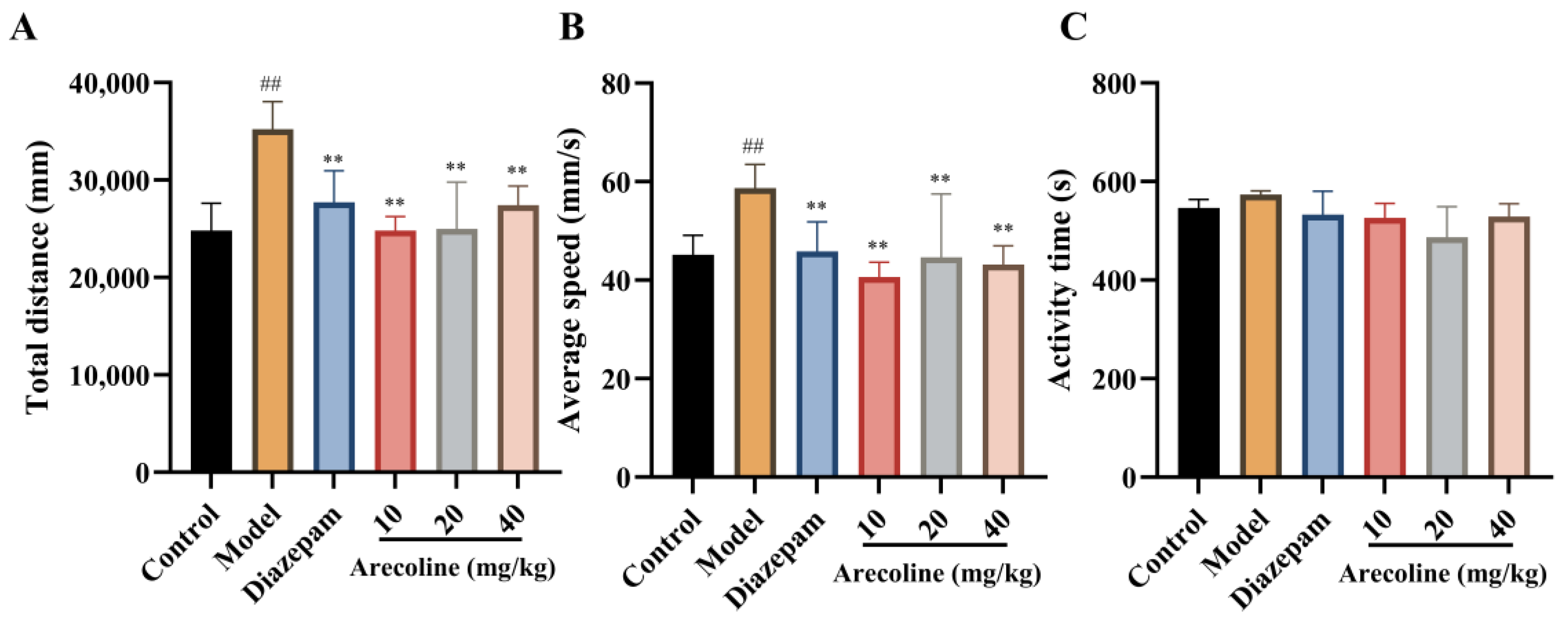
2.1. Effects of Arecoline on Exploratory Behavior in Mice Subjected to CUMS in the Open Field Test
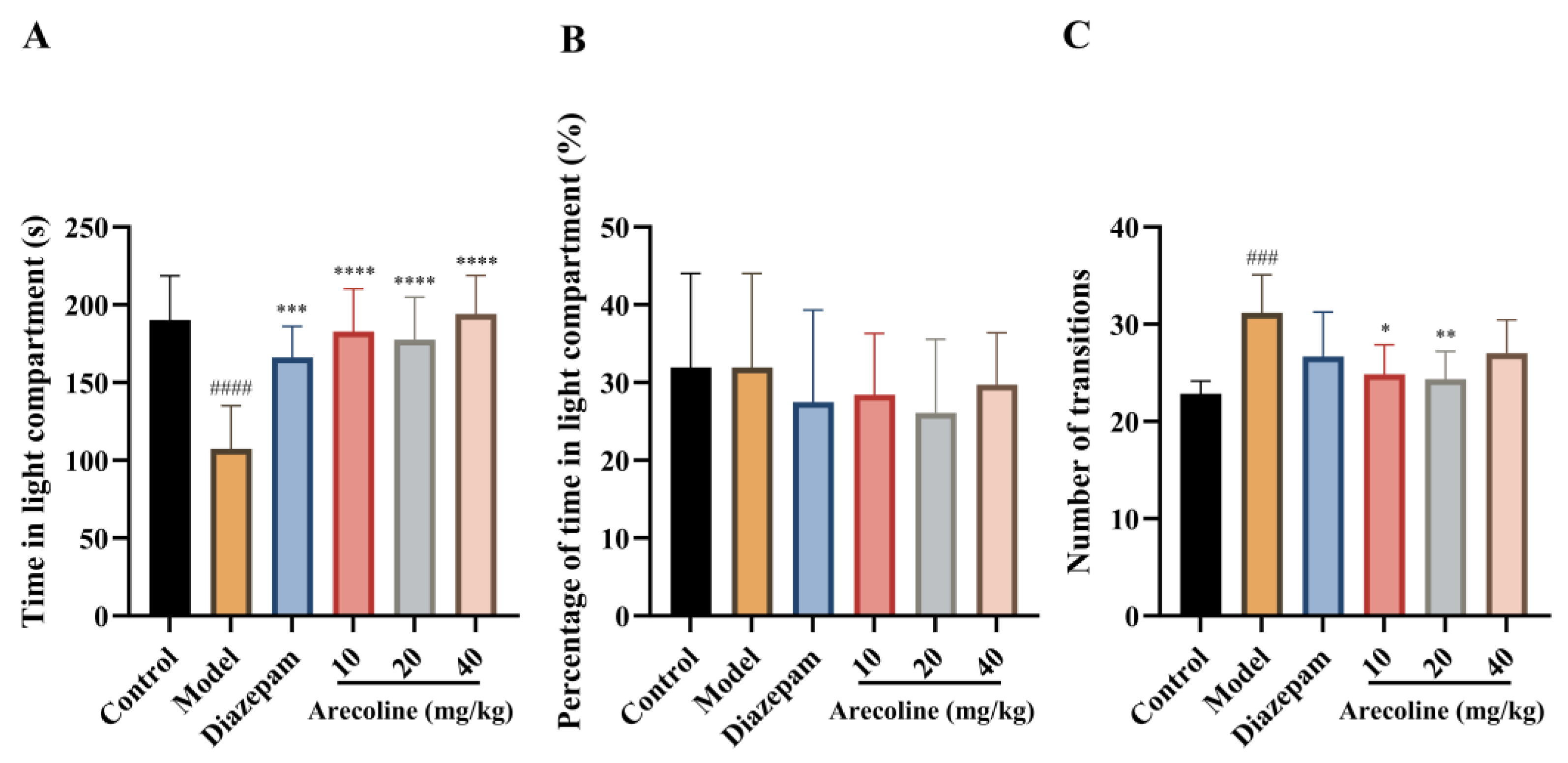
2.2. Effects of Arecoline on Anxiety-Related Behaviors in Mice Subjected to CUMS in the Light–Dark Box Test
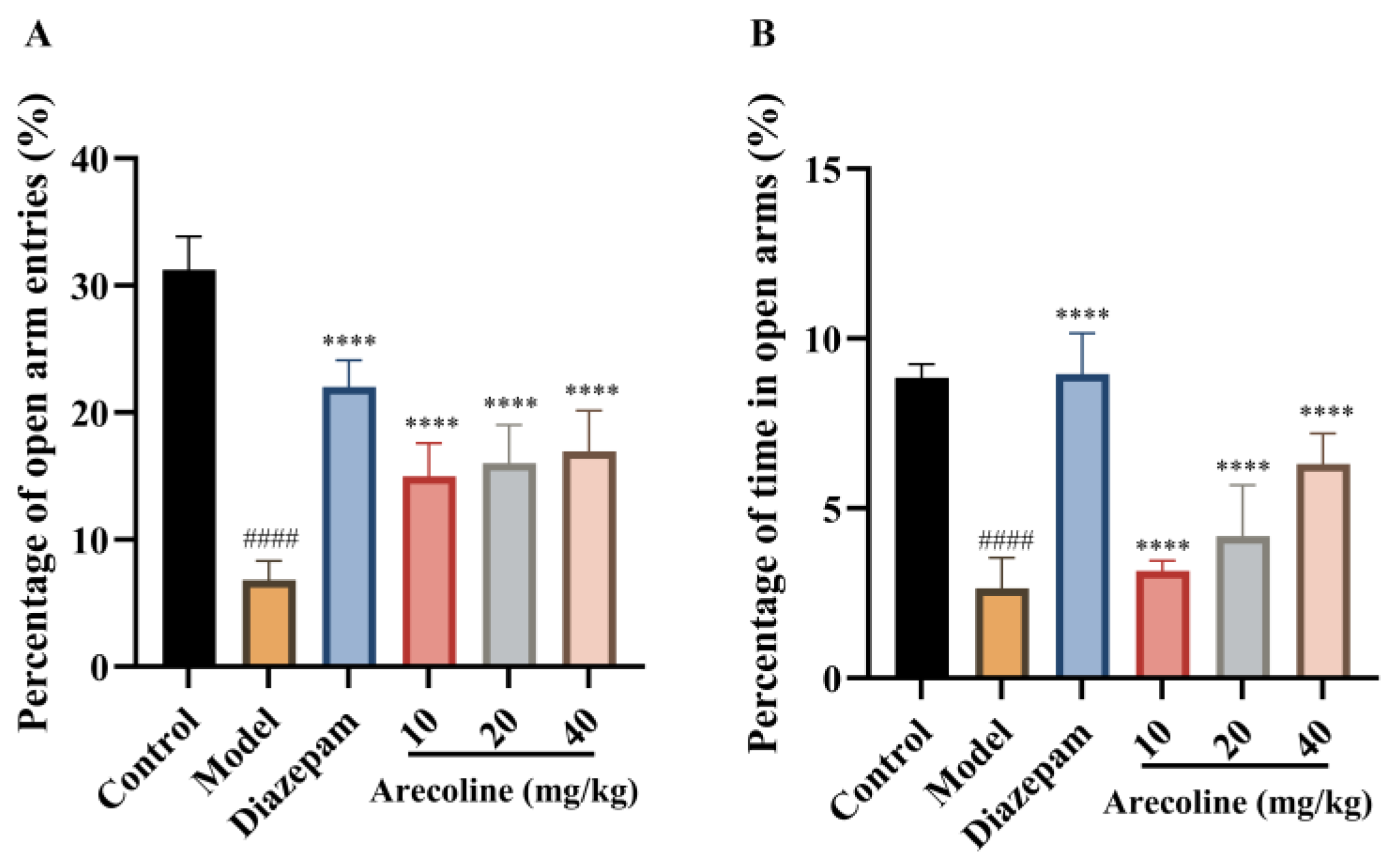
2.3. Effects of Arecoline on Elevated Plus Maze Performance in Mice Subjected to CUMS
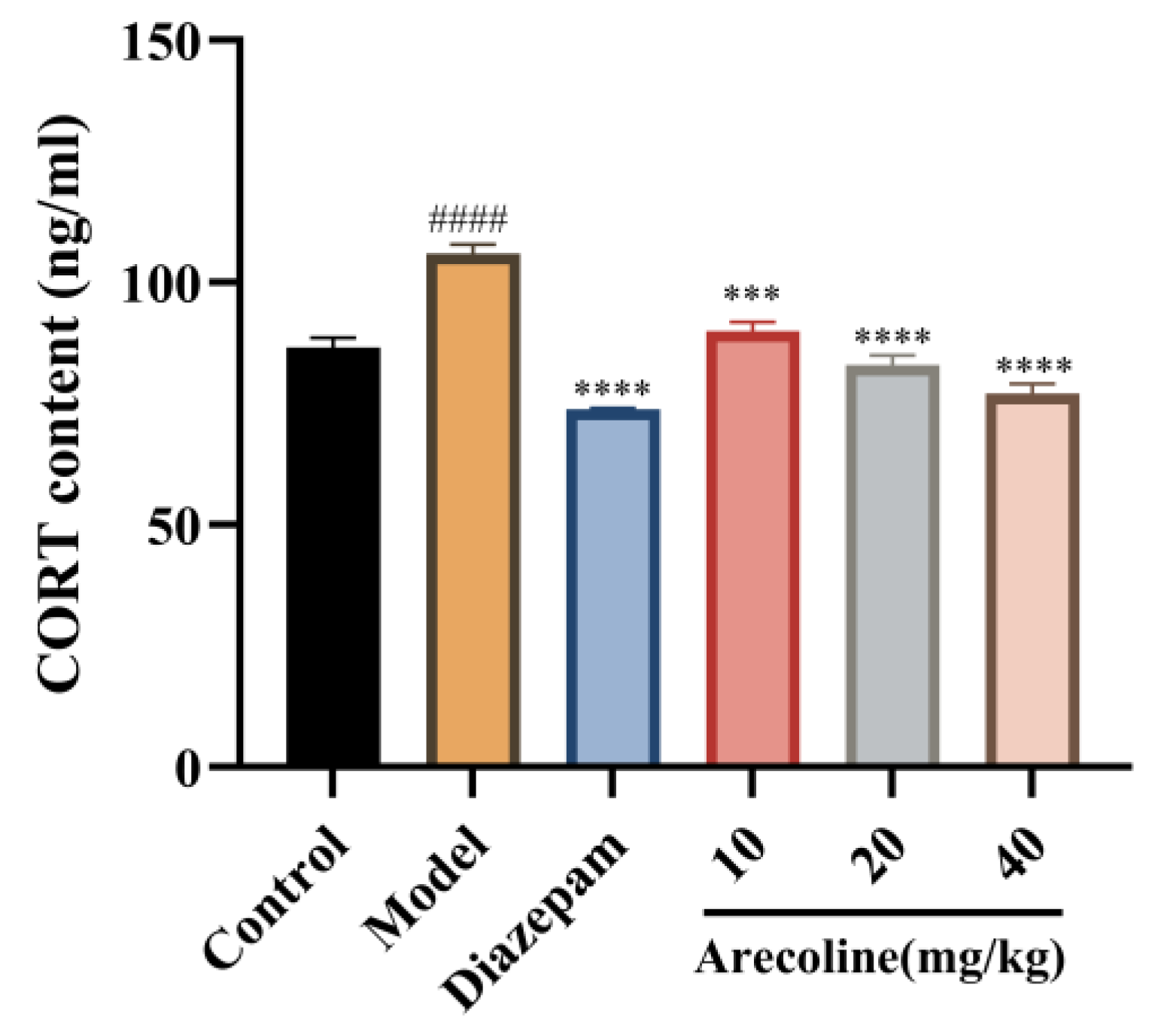
2.4. Effects of Arecoline on Serum Corticosterone Levels in Mice Subjected to CUMS
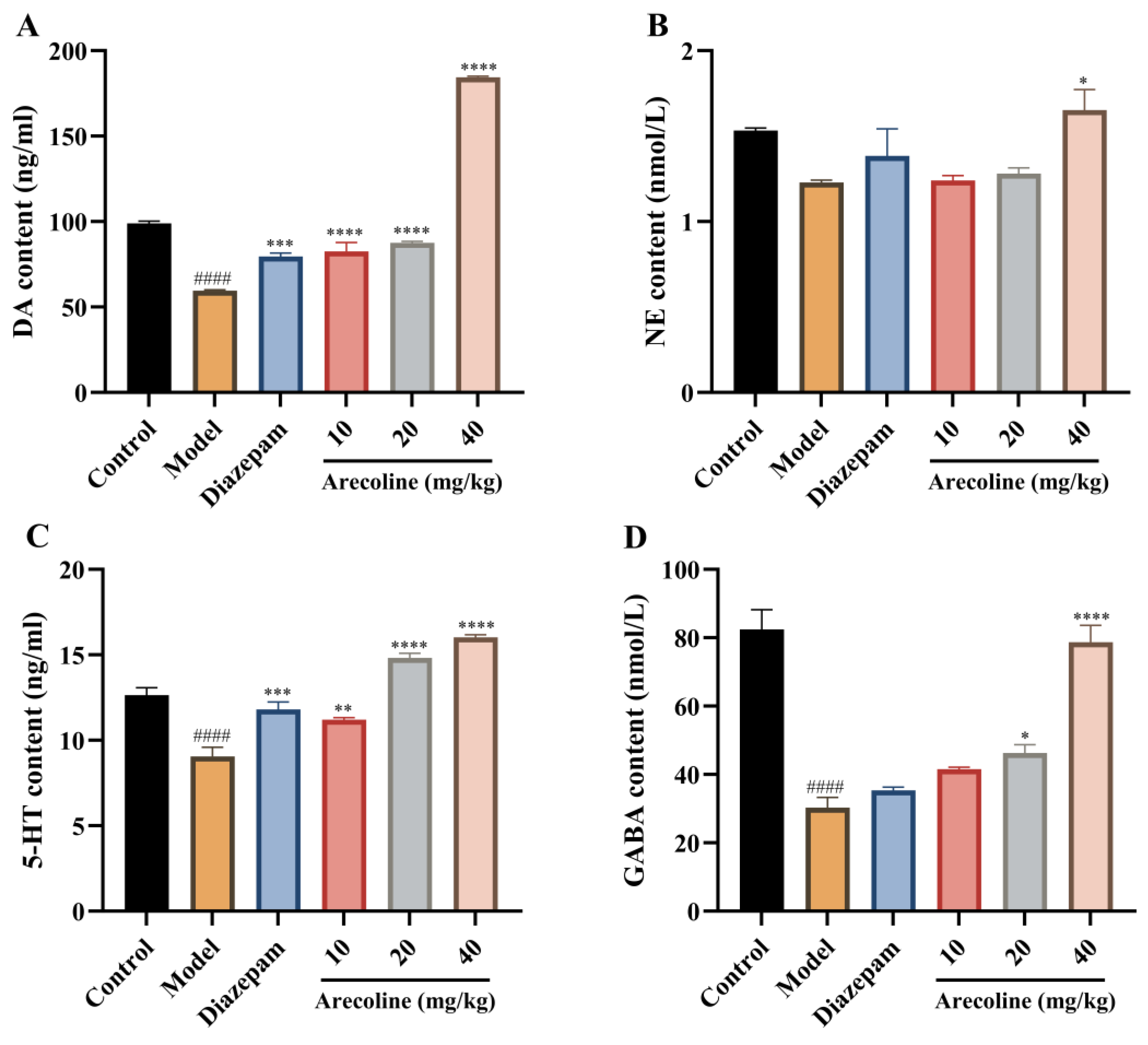
2.5. Effects of Arecoline on Monoamine Neurotransmitter and GABA Levels in the Hippocampus of Mice Subjected to CUMS
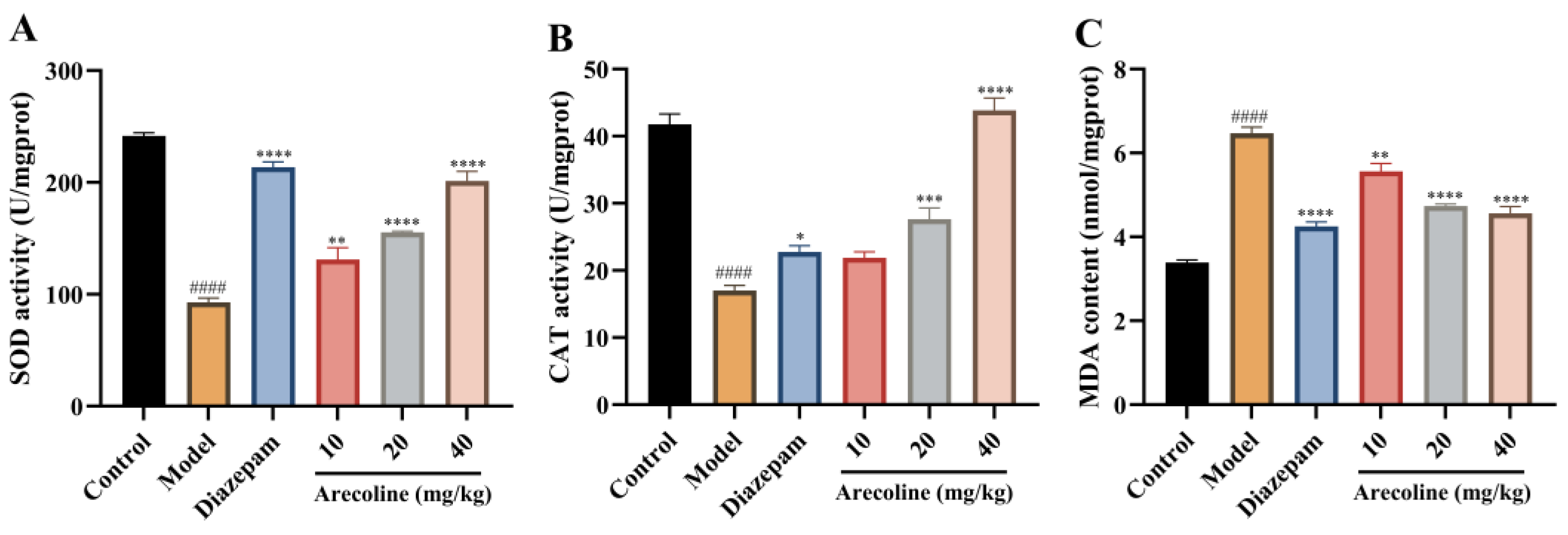
2.6. Effects of Arecoline on Oxidative Stress Markers in the Hippocampus of Mice Subjected to CUMS
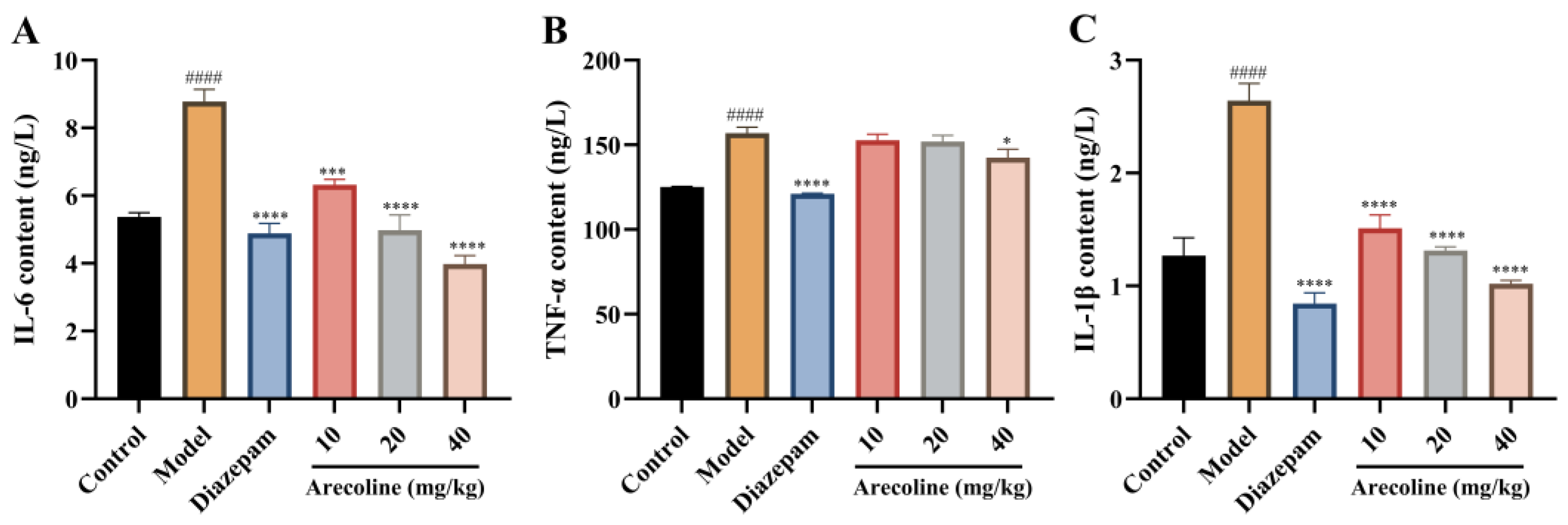
2.7. Effects of Arecoline on Inflammatory Cytokine Levels in the Hippocampus of Mice Subjected to CUMS
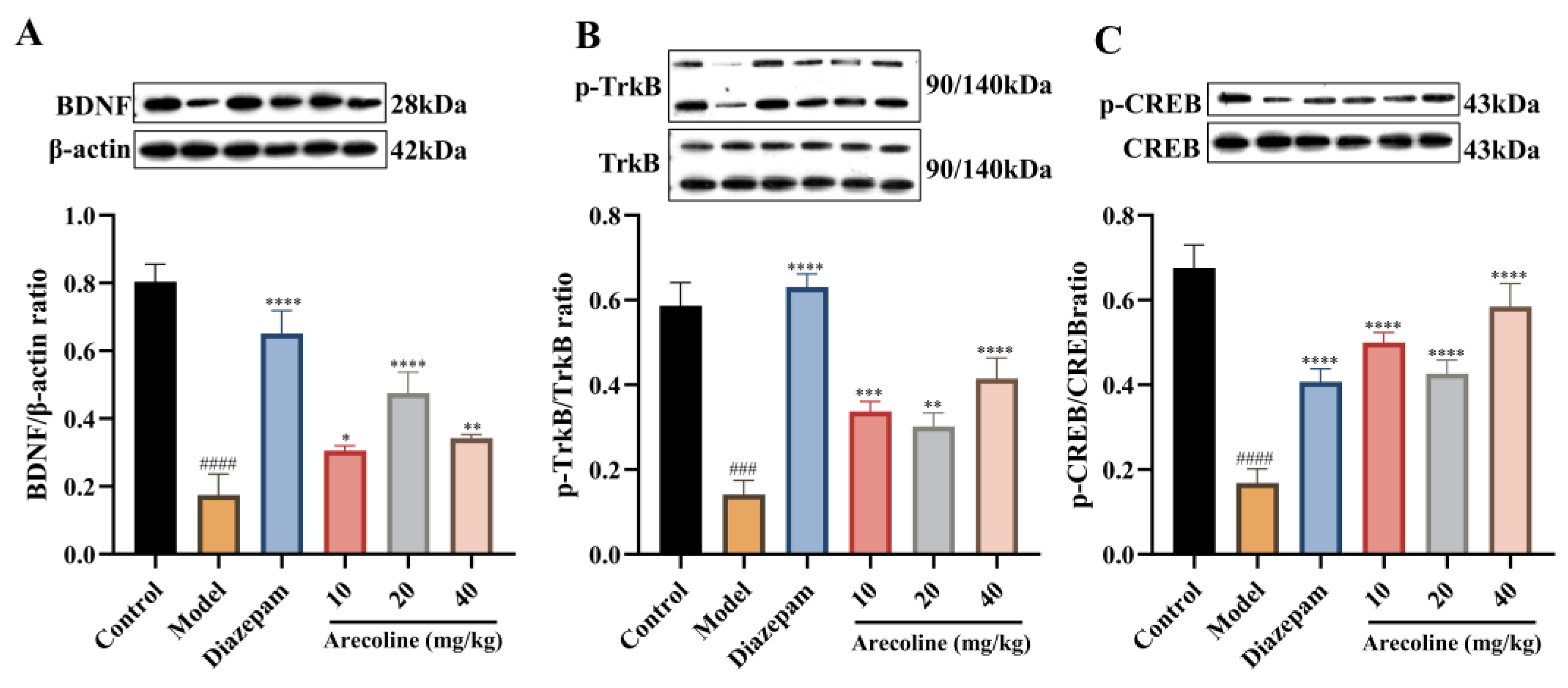
2.8. Effects of Arecoline on BDNF/TrkB/CREB Signaling in the Hippocampus of Mice Subjected to CUMS
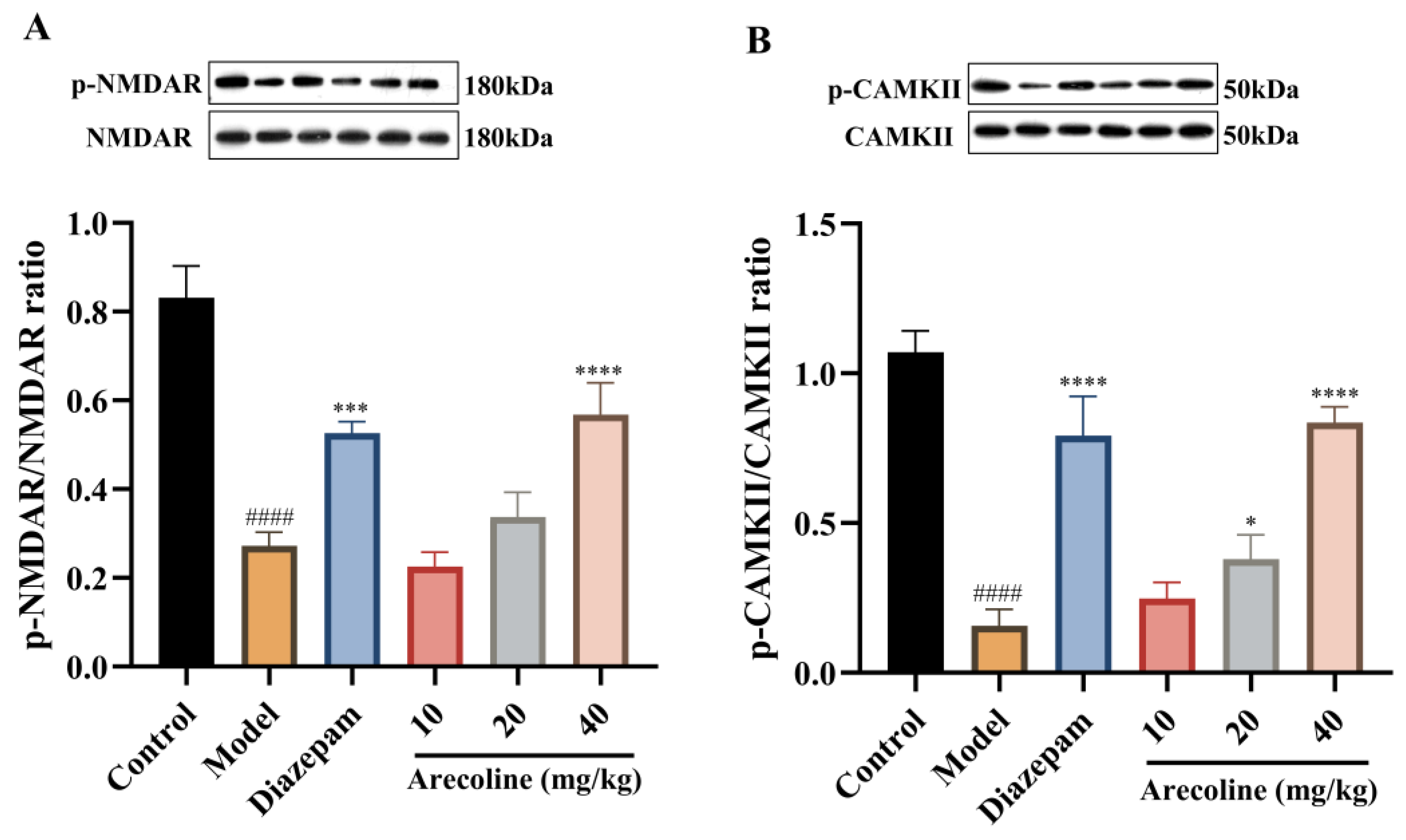
2.9. Effects of Arecoline on NMDAR/CaMKII Signaling in the Hippocampus of Mice Subjected to CUMS
3. Discussion
4. Materials and Methods
4.1. Materials
4.2. Ethical Statement
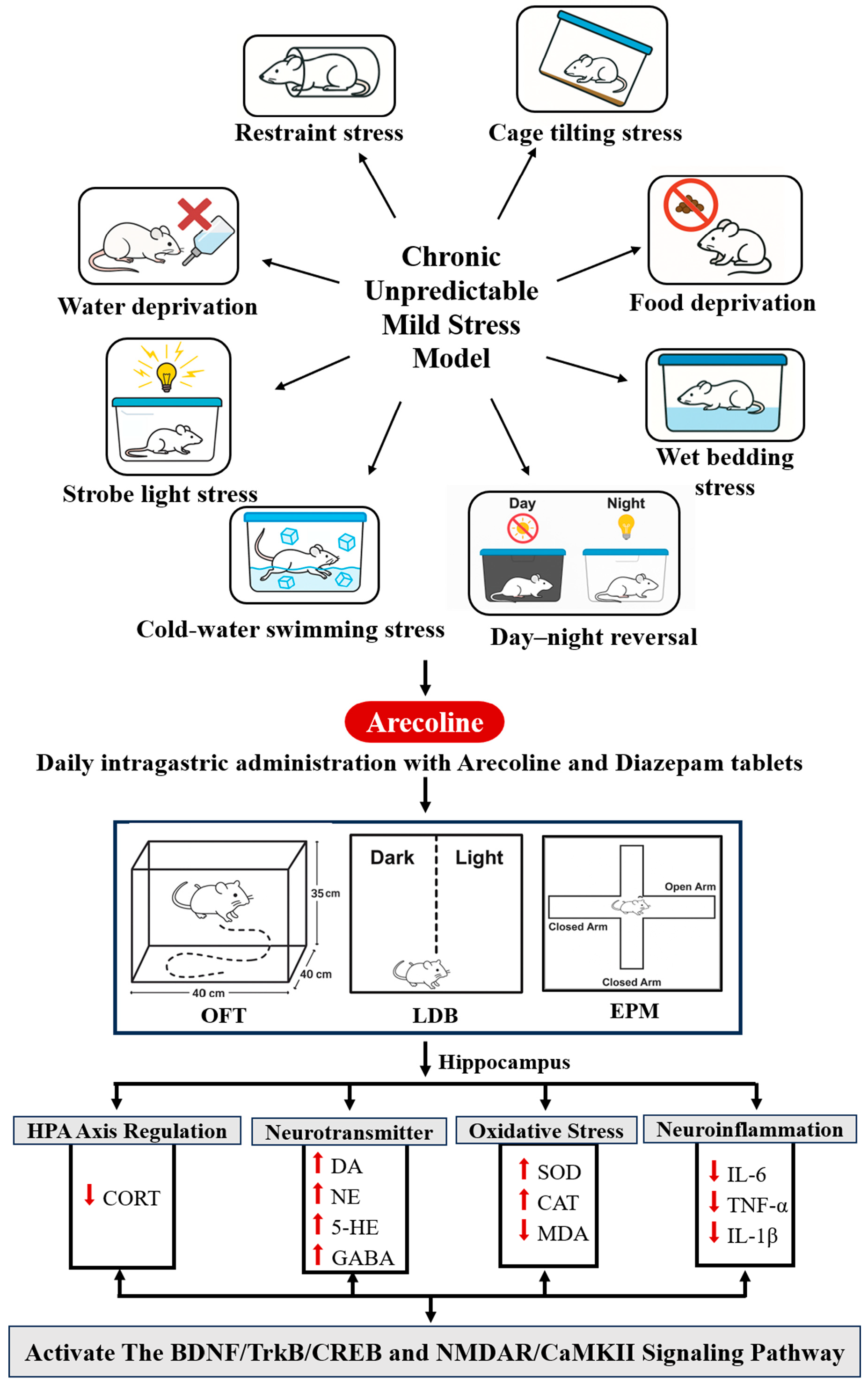
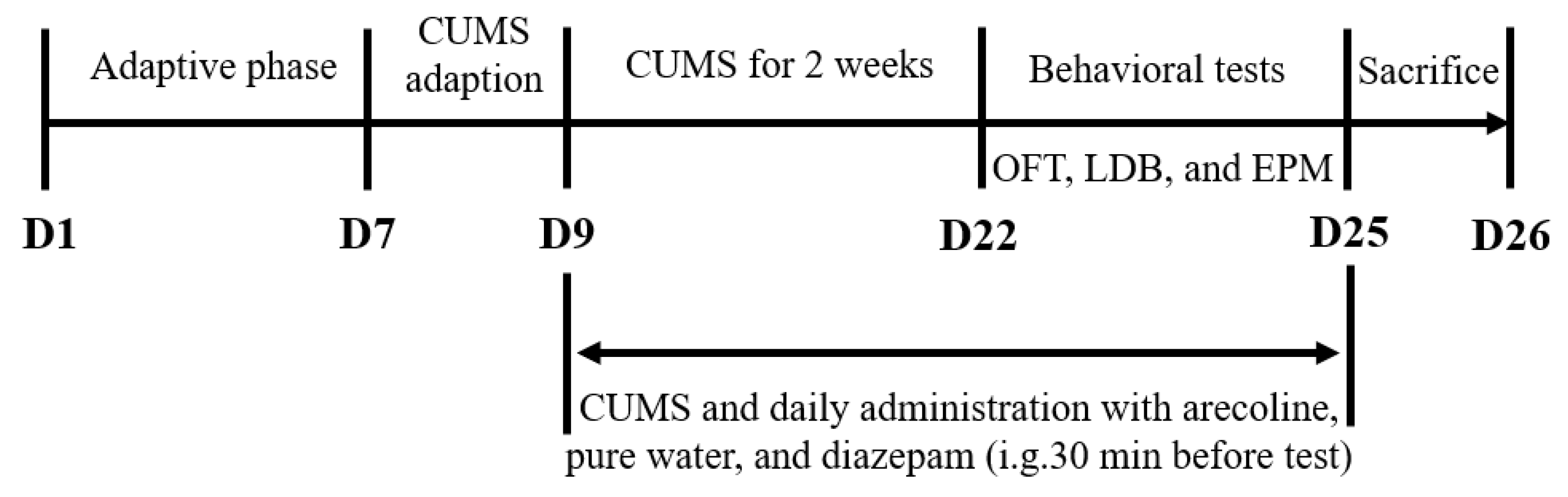
4.3. Animals and Experimental Protocol for CUMS Induction
- (1)
- Control group (no stress, purified water);
- (2)
- Model group (CUMS, purified water);
- (3)
- Diazepam group (CUMS, diazepam 2.5 mg/kg, positive control);
- (4)
- Arecoline low-dose group (CUMS, arecoline 10 mg/kg);
- (5)
- Arecoline medium-dose group (CUMS, arecoline 20 mg/kg);
- (6)
- Arecoline high-dose group (CUMS, arecoline 40 mg/kg).
4.4. Behavioral Tests
4.4.1. Open Field Test (OFT)
4.4.2. Light–Dark Box (LDB) Test
4.4.3. Elevated Plus Maze (EPM) Test
4.5. Sample Collection
4.6. Biochemical Parameter Assays
4.7. Western Blot Analysis
4.8. Statistical Analysis
5. Conclusions
Author Contributions
Funding
Institutional Review Board Statement
Informed Consent Statement
Data Availability Statement
Conflicts of Interest
Abbreviations
| BDNF | Brain-Derived Neurotrophic Factor |
| CaMKII | Calcium/Calmodulin-Dependent Protein Kinase II |
| CAT | Catalase |
| CORT | Corticosterone |
| CREB | cAMP Response Element-Binding Protein |
| CUMS | Chronic Unpredictable Mild Stress |
| DA | Dopamine |
| ELISA | Enzyme-Linked Immunosorbent Assay |
| GABA | Gamma-Aminobutyric Acid |
| GAPDH | Glyceraldehyde-3-Phosphate Dehydrogenase |
| HPA | Hypothalamic–Pituitary–Adrenal (Axis) |
| IL-1β | Interleukin-1β |
| IL-6 | Interleukin-6 |
| LDB | Light–Dark Box |
| MDA | Malondialdehyde |
| NE | Norepinephrine |
| NMDAR | N-Methyl-D-Aspartate Receptor |
| OFT | Open Field Test |
| ROS | Reactive Oxygen Species |
| SOD | Superoxide Dismutase |
| SPF | Specific Pathogen-Free |
| TNF-α | Tumor Necrosis Factor-Alpha |
| TrkB | Tropomyosin Receptor Kinase B |
| 5-HT | 5-Hydroxytryptamine (Serotonin) |
References
- Bandelow, B.; Michaelis, S. Epidemiology of anxiety disorders in the 21st century. Dialogues Clin. Neurosci. 2015, 17, 327–335. [Google Scholar] [CrossRef]
- Vladan, S. Review: Worldwide lifetime prevalence of anxiety disorders is 16.6%, with considerable heterogeneity between studies. Evid. Based Ment. Health 2006, 9, 115. [Google Scholar]
- Baldwin, D.S.; Aitchison, K.; Bateson, A.; Curran, H.V.; Davies, S.; Leonard, B.; Nutt, D.J.; Stephens, D.N.; Wilson, S. Benzodiazepines: Risks and benefits. A reconsideration. J. Psychopharmacol. 2013, 27, 967–971. [Google Scholar] [CrossRef]
- Katzman, M.A.; Bleau, P.; Blier, P.; Chokka, P.; Kjernisted, K.; Van Ameringen, M.; Canadian Anxiety Guidelines Initiative Group on behalf of the Anxiety Disorders Association of Canada/Association Canadienne des troubles anxieux and McGill University; Antony, M.M.; Bouchard, S.; Brunet, A.; et al. Canadian clinical practice guidelines for the management of anxiety, posttraumatic stress and obsessive-compulsive disorders. BMC Psychiatry 2014, 14, S1. [Google Scholar]
- P, S.; Vellapandian, C. Hypothalamic-Pituitary-Adrenal (HPA) Axis: Unveiling the Potential Mechanisms Involved in Stress-Induced Alzheimer’s Disease and Depression. Cureus 2024, 16, e67595. [Google Scholar] [CrossRef]
- Liu, Y.; Zhao, J.; Guo, W. Emotional Roles of Mono-Aminergic Neurotransmitters in Major Depressive Disorder and Anxiety Disorders. Front. Psychol. 2018, 9, 2201. [Google Scholar] [CrossRef]
- Guo, B.; Zhang, M.; Hao, W.; Wang, Y.; Zhang, T.; Liu, C. Neuroinflammation mechanisms of neuromodulation therapies for anxiety and depression. Transl. Psychiatry 2023, 13, 5. [Google Scholar] [CrossRef]
- Parul; Mishra, A.; Singh, S.; Singh, S.; Tiwari, V.; Chaturvedi, S.; Wahajuddin, M.; Palit, G.; Shukla, S. Chronic unpredictable stress negatively regulates hippocampal neurogenesis and promote anxious depression-like behavior via upregulating apoptosis and inflammatory signals in adult rats. Brain Res. Bull. 2021, 172, 164–179. [Google Scholar] [CrossRef] [PubMed]
- Autry, A.E.; Monteggia, L.M. Brain-Derived Neurotrophic Factor and Neuropsychiatric Disorders. Pharmacol. Rev. 2012, 64, 238–258. [Google Scholar] [CrossRef] [PubMed]
- Lakhan, S.E.; Vieira, K.F. Nutritional and herbal supplements for anxiety and anxiety-related disorders: Systematic review. Nutr. J. 2010, 9, 42. [Google Scholar] [CrossRef]
- Spagnuolo, C.; Napolitano, M.; Tedesco, I.; Moccia, S.; Milito, A.; Russo, G.L. Neuroprotective Role of Natural Polyphenols. Curr. Top. Med. Chem. 2016, 16, 1943–1950. [Google Scholar] [CrossRef]
- Aslam, M.; Sultana, N. Evaluation of anxiolytic-like activity of Vitis vinifera juice in mice. Avicenna J. Phytomed. 2016, 6, 344–350. [Google Scholar]
- Zeng, S.; Tai, F.; Zhai, P.; Yuan, A.; Jia, R.; Zhang, X. Effect of daidzein on anxiety, social behavior and spatial learning in male Balb/cJ mice. Pharmacol. Biochem. Behav. 2010, 96, 16–23. [Google Scholar] [CrossRef]
- Ma, M.; Quan, H.; Chen, S.; Fu, X.; Zang, L.; Dong, L. The Anxiolytic Effect of Polysaccharides from Stellariae Radix through Monoamine Neurotransmitters, HPA Axis, and ECS/ERK/CREB/BDNF Signaling Pathway in Stress-induced Male Rats. Brain Res. Bull. 2023, 203, 110768. [Google Scholar] [CrossRef] [PubMed]
- Garakani, A.; Murrough, J.W.; Freire, R.C.; Thom, R.P.; Larkin, K.; Buono, F.D.; Iosifescu, D.V. Pharmacotherapy of Anxiety Disorders: Current and Emerging Treatment Options. Front. Psychiatry 2020, 11, 595584. [Google Scholar] [CrossRef]
- Boucher, B.J.; Mannan, N. Metabolic effects of the consumption of Areca catechu. Addict. Biol. 2002, 7, 103–110. [Google Scholar] [CrossRef]
- Peng, W.; Liu, Y.-J.; Wu, N.; Sun, T.; He, X.-Y.; Gao, Y.-X.; Wu, C.-J. Areca catechu L. (Arecaceae): A review of its traditional uses, botany, phytochemistry, pharmacology and toxicology. J. Ethnopharmacol. 2015, 164, 340–356. [Google Scholar] [CrossRef]
- Wang, D.; Sun, Y.; Liu, J.; Sun, J.; Fan, B.; Lu, C.; Wang, F. Research on the Anti-Fatigue Effects and Mechanisms of Arecoline in Sleep-Deprived Mice. Nutrients 2024, 16, 2783. [Google Scholar] [CrossRef]
- Wang, T.H.; Shen, Y.W.; Chen, H.Y.; Chen, C.C.; Lin, N.C.; Shih, Y.H.; Hsia, S.M.; Chiu, K.C.; Shieh, T.M. Arecoline Induces ROS Accumulation, Transcription of Proinflammatory Factors, and Expression of KRT6 in Oral Epithelial Cells. Biomedicines 2024, 12, 412. [Google Scholar] [CrossRef] [PubMed]
- Li, X.; Gao, J.; Liu, X.; Guo, J.; Liu, Y.; Cui, P.; Yan, D.; Fei, T.; Chen, M.; Gao, Y. Modulation of neural activity and gene expression by arecoline. Front. Integr. Neurosci. 2025, 19, 1545260. [Google Scholar] [CrossRef] [PubMed]
- Wen, C.; Xu, Z.; Cao, F.; Yuan, Q.; Su, W.; Huang, Z. Arecoline alleviates autism spectrum disorder-like behaviors and cognition disorders in a valproic acid mouse model by activating the AMPK/CREB/BDNF signaling pathway. Brain Res. Bull. 2025, 229, 111431. [Google Scholar] [CrossRef]
- Di, J.; Xie, S.; Shen, J.; Fang, L.; Tan, Z.; Liang, X. Arecoline Triggers Psychostimulant Responses by Modulating the Intestinal Microbiota to Influence Neurotransmitter Levels and Digestive Enzyme Activity. Pharmaceuticals 2025, 18, 794. [Google Scholar] [CrossRef]
- Lan, Q.; Guan, P.; Huang, C.; Huang, S.; Zhou, P.; Zhang, C. Arecoline Induces an Excitatory Response in Ventral Tegmental Area Dopaminergic Neurons in Anesthetized Rats. Front. Pharmacol. 2022, 13, 872212. [Google Scholar] [CrossRef]
- Papke, R.L.; Horenstein, N.A.; Stokes, C. Nicotinic Activity of Arecoline, the Psychoactive Element of “Betel Nuts”, Suggests a Basis for Habitual Use and Anti-Inflammatory Activity. PLoS ONE 2015, 10, e0140907. [Google Scholar] [CrossRef]
- Chen, Q.-Y.; Zhang, Y.; Ma, Y.; Zhuo, M. Inhibition of cortical synaptic transmission, behavioral nociceptive, and anxiodepressive-like responses by arecoline in adult mice. Mol. Brain 2024, 17, 39. [Google Scholar] [CrossRef]
- Meng, C.; Feng, S.; Hao, Z.; Dong, C.; Liu, H. Antibiotics exposure attenuates chronic unpredictable mild stress-induced anxiety-like and depression-like behavior. Psychoneuroendocrinology 2022, 136, 105620. [Google Scholar] [CrossRef] [PubMed]
- Katz, R.J.; Roth, K.A.; Carroll, B.J. Acute and chronic stress effects on open field activity in the rat: Implications for a model of depression. Neurosci. Biobehav. Rev. 1981, 5, 247–251. [Google Scholar] [CrossRef]
- Tran, I.; Gellner, A.K. Long-term effects of chronic stress models in adult mice. J. Neural Transm. 2023, 130, 1133–1151. [Google Scholar] [CrossRef]
- Luo, Y.; Jiang, N.; Zhang, Y.; Zhao, Y.; Chen, F.; Li, X.; Qiang, M.; Zeng, G.; He, Q.; Liu, X.; et al. Chronic unpredictable mild stress induces anxiety-like behavior in female C57BL/6N mice, accompanied by alterations in inflammation and the kynurenine pathway of tryptophan metabolism. Front. Neurosci. 2025, 19, 1556744. [Google Scholar] [CrossRef] [PubMed]
- Shen, J.; Zhou, M.; Xiao, N.; Tan, Z.; Liang, X. Unveiling the Mystery of the Stimulatory Effects of Arecoline: Its Relevance to the Regulation of Neurotransmitters and the Microecosystem in Multi-Ecological Intestinal Sites. Int. J. Mol. Sci. 2025, 26, 3150. [Google Scholar] [CrossRef] [PubMed]
- Lei, A.A.; Phang, V.W.X.; Lee, Y.Z.; Kow, A.S.F.; Tham, C.L.; Ho, Y.-C.; Lee, M.T. Chronic Stress-Associated Depressive Disorders: The Impact of HPA Axis Dysregulation and Neuroinflammation on the Hippocampus—A Mini Review. Int. J. Mol. Sci. 2025, 26, 2940. [Google Scholar] [CrossRef]
- Roth, M.K.; Bingham, B.; Shah, A.; Joshi, A.; Frazer, A.; Strong, R.; Morilak, D.A.; Consortium, S.S. Effects of chronic plus acute prolonged stress on measures of coping style, anxiety, and evoked HPA-axis reactivity. Neuropharmacology 2012, 63, 1118–1126. [Google Scholar] [CrossRef]
- Moss, E.M.M.; Mahdi, F.; Worth, C.J.J.; Paris, J.J.J. Physiological Corticosterone Attenuates gp120-Mediated Microglial Activation and Is Associated with Reduced Anxiety-Like Behavior in gp120-Expressing Mice. Viruses 2023, 15, 424. [Google Scholar] [CrossRef] [PubMed]
- Merkouris, E.; Brasinika, A.; Patsiavoura, M.; Siniosoglou, C.; Tsiptsios, D.; Triantafyllis, A.S.; Mueller, C.; Mpikou, I.; Samara, M.T.; Christodoulou, N.; et al. Molecular Basis of Anxiety: A Comprehensive Review of 2014–2024 Clinical and Preclinical Studies. Int. J. Mol. Sci. 2025, 26, 5417. [Google Scholar] [CrossRef]
- Mittal, R.; Debs, L.H.; Patel, A.P.; Nguyen, D.; Patel, K.; O’Connor, G.; Grati, M.h.; Mittal, J.; Yan, D.; Eshraghi, A.A. Neurotransmitters: The critical modulators regulating gut–brain axis. J. Cell. Physiol. 2017, 232, 2359–2372. [Google Scholar] [CrossRef]
- Griebel, G.; Holmes, A. 50 years of hurdles and hope in anxiolytic drug discovery. Nat. Rev. Drug Discov. 2013, 12, 667–687. [Google Scholar] [CrossRef] [PubMed]
- Suranyi-Cadotte, B.E.; Bodnoff, S.R.; Welner, S.A. Antidepressant-anxiolytic interactions: Involvement of the benzodiazepine-GABA and serotonin systems. Prog. Neuropsychopharmacol. Biol. Psychiatry 1990, 14, 633–654. [Google Scholar] [CrossRef]
- Nuss, P. Anxiety disorders and GABA neurotransmission: A disturbance of modulation. Neuropsychiatr. Dis. Treat. 2015, 11, 165–175. [Google Scholar] [CrossRef]
- Chu, N.S. Effects of betel chewing on the central and autonomic nervous systems. J. Biomed. Sci. 2001, 8, 229–236. [Google Scholar] [CrossRef]
- Johnston, G.A.R.; Krogsgaard-Larsen, P.; Stephanson, A. Betel nut constituents as inhibitors of γ-aminobutyric acid uptake. Nature 1975, 258, 627–628. [Google Scholar] [CrossRef] [PubMed]
- Picciotto, M.R.; Higley, M.J.; Mineur, Y.S. Acetylcholine as a neuromodulator: Cholinergic signaling shapes nervous system function and behavior. Neuron 2012, 76, 116–129. [Google Scholar] [CrossRef]
- Apweiler, M.; Saliba, S.W.; Sun, L.; Streyczek, J.; Normann, C.; Hellwig, S.; Bräse, S.; Fiebich, B.L. Modulation of neuroinflammation and oxidative stress by targeting GPR55—New approaches in the treatment of psychiatric disorders. Mol. Psychiatry 2024, 29, 3779–3788. [Google Scholar] [CrossRef]
- Herbet, M.; Korga, A.; Gawrońska-Grzywacz, M.; Izdebska, M.; Piątkowska-Chmiel, I.; Poleszak, E.; Wróbel, A.; Matysiak, W.; Jodłowska-Jędrych, B.; Dudka, J. Chronic Variable Stress Is Responsible for Lipid and DNA Oxidative Disorders and Activation of Oxidative Stress Response Genes in the Brain of Rats. Oxid. Med. Cell. Longev. 2017, 2017, 7313090. [Google Scholar] [CrossRef]
- Fontella, F.U.; Siqueira, I.R.; Vasconcellos, A.P.S.; Tabajara, A.S.; Netto, C.A.; Dalmaz, C. Repeated Restraint Stress Induces Oxidative Damage in Rat Hippocampus. Neurochem. Res. 2005, 30, 105–111. [Google Scholar] [CrossRef] [PubMed]
- White, A.G.; Elias, E.; Orozco, A.; Robinson, S.A.; Manners, M.T. Chronic Stress-Induced Neuroinflammation: Relevance of Rodent Models to Human Disease. Int. J. Mol. Sci. 2024, 25, 5085. [Google Scholar] [CrossRef] [PubMed]
- Tanaka, T.; Narazaki, M.; Kishimoto, T. IL-6 in Inflammation, Immunity, and Disease. Cold Spring Harb. Perspect. Biol. 2014, 6, a016295. [Google Scholar] [CrossRef]
- Lopez-Castejon, G.; Brough, D. Understanding the mechanism of IL-1β secretion. Cytokine Growth Factor Rev. 2011, 22, 189–195. [Google Scholar] [CrossRef] [PubMed]
- Idriss, H.T.; Naismith, J.H. TNFα and the TNF receptor superfamily: Structure-function relationship(s). Microsc. Res. Tech. 2000, 50, 184–195. [Google Scholar] [CrossRef]
- Tzanavari, T.; Giannogonas, P.; Karalis, K.P. TNF-α and Obesity. In TNF Pathophysiology: Molecular and Cellular Mechanisms; Kollias, G., Sfikakis, P.P., Eds.; S. Karger AG: Basel, Switzerland, 2010; Volume 11, pp. 145–156. [Google Scholar]
- Algaidi, S.A. Chronic stress-induced neuroplasticity in the prefrontal cortex: Structural, functional, and molecular mechanisms from development to aging. Brain Res. 2025, 1851, 149461. [Google Scholar] [CrossRef]
- Rosa, E.; Fahnestock, M. CREB expression mediates amyloid β-induced basal BDNF downregulation. Neurobiol. Aging 2015, 36, 2406–2413. [Google Scholar] [CrossRef]
- Numakawa, T.; Kajihara, R. Involvement of brain-derived neurotrophic factor signaling in the pathogenesis of stress-related brain diseases. Front. Mol. Neurosci. 2023, 16, 1247422. [Google Scholar] [CrossRef]
- Shao, Q.; Li, Y.; Jin, L.; Zhou, S.; Fu, X.; Liu, T.; Luo, G.; Du, S.; Chen, C. Semen Cuscutae flavonoids activated the cAMP-PKA-CREB-BDNF pathway and exerted an antidepressant effect in mice. Front. Pharmacol. 2024, 15, 1491900. [Google Scholar] [CrossRef] [PubMed]
- Liu, F.; Jia, Y.; Zhao, L.; Xiao, L.-n.; Cheng, X.; Xiao, Y.; Zhang, Y.; Zhang, Y.; Yu, H.; Deng, Q.-e.; et al. Escin ameliorates CUMS-induced depressive-like behavior via BDNF/TrkB/CREB and TLR4/MyD88/NF-κB signaling pathways in rats. Eur. J. Pharmacol. 2024, 984, 177063. [Google Scholar] [CrossRef] [PubMed]
- Sałaciak, K.; Koszałka, A.; Żmudzka, E.; Pytka, K. The Calcium/Calmodulin-Dependent Kinases II and IV as Therapeutic Targets in Neurodegenerative and Neuropsychiatric Disorders. Int. J. Mol. Sci. 2021, 22, 4307. [Google Scholar] [CrossRef] [PubMed]
- Gerges, N.Z.; Aleisa, A.M.; Schwarz, L.A.; Alkadhi, K.A. Reduced basal CaMKII levels in hippocampal CA1 region: Possible cause of stress-induced impairment of LTP in chronically stressed rats. Hippocampus 2004, 14, 402–410. [Google Scholar] [CrossRef]
- Huang, G.; Zeng, D.; Liang, T.; Liu, Y.; Cui, F.; Zhao, H.; Lu, W. Recent Advance on Biological Activity and Toxicity of Arecoline in Edible Areca (Betel) Nut: A Review. Foods 2024, 13, 3825. [Google Scholar] [CrossRef]
- Goldschen-Ohm, M.P. Benzodiazepine Modulation of GABA(A) Receptors: A Mechanistic Perspective. Biomolecules 2022, 12, 1784. [Google Scholar] [CrossRef]
- Lu, C.; Gao, R.; Lv, J.; Chen, Y.; Li, S.; Zhang, L.; Zhang, N.; Wang, Y.; Fan, B.; Liu, X.; et al. Neuroprotective effects of soy isoflavones on chronic ethanol-induced dementia in male ICR mice. Food Funct. 2020, 11, 10011–10021. [Google Scholar] [CrossRef]


Disclaimer/Publisher’s Note: The statements, opinions and data contained in all publications are solely those of the individual author(s) and contributor(s) and not of MDPI and/or the editor(s). MDPI and/or the editor(s) disclaim responsibility for any injury to people or property resulting from any ideas, methods, instructions or products referred to in the content. |
© 2025 by the authors. Licensee MDPI, Basel, Switzerland. This article is an open access article distributed under the terms and conditions of the Creative Commons Attribution (CC BY) license.
Share and Cite
Zhang, X.; Wang, D.; Cui, J.; Fan, B.; Wang, F.; Lu, C. Neuromodulatory Effects of Arecoline on Anxiety-like Behavior in Mice Exposed to Chronic Unpredictable Mild Stress. Int. J. Mol. Sci. 2026, 27, 371. https://doi.org/10.3390/ijms27010371
Zhang X, Wang D, Cui J, Fan B, Wang F, Lu C. Neuromodulatory Effects of Arecoline on Anxiety-like Behavior in Mice Exposed to Chronic Unpredictable Mild Stress. International Journal of Molecular Sciences. 2026; 27(1):371. https://doi.org/10.3390/ijms27010371
Chicago/Turabian StyleZhang, Xiangfei, Danyang Wang, Jingwen Cui, Bei Fan, Fengzhong Wang, and Cong Lu. 2026. "Neuromodulatory Effects of Arecoline on Anxiety-like Behavior in Mice Exposed to Chronic Unpredictable Mild Stress" International Journal of Molecular Sciences 27, no. 1: 371. https://doi.org/10.3390/ijms27010371
APA StyleZhang, X., Wang, D., Cui, J., Fan, B., Wang, F., & Lu, C. (2026). Neuromodulatory Effects of Arecoline on Anxiety-like Behavior in Mice Exposed to Chronic Unpredictable Mild Stress. International Journal of Molecular Sciences, 27(1), 371. https://doi.org/10.3390/ijms27010371