Article

Genetic Characterisation of Closely Related Lactococcus lactis Strains Used in Dairy Starter Cultures


by
Yuliya E. Uvarova
1,2,
Tamara M. Khlebodarova
1,
Asya R. Vasilieva
1,2,*,
Aleksandra A. Shipova
1,2,
Vladimir N. Babenko
1,
Andrey V. Zadorozhny
1,2,
Nikolay M. Slynko
1,2,
Natalia V. Bogacheva
1,2,
Ekaterina Y. Bukatich
1,
Valeriya N. Shlyakhtun
1,2,
Anton V. Korzhuk
1,2,
Elena Y. Pavlova
1,2,
Danil O. Chesnokov
1,2 and
Sergey E. Peltek
1,2,*
1
Laboratory of Molecular Biotechnology, Institute of Cytology and Genetics SB RAS, Lavrentyev Ave. 10, 630090 Novosibirsk, Russia
2
Kurchatov Genomics Center, Institute of Cytology and Genetics SB RAS, Lavrentyev Ave. 10, 630090 Novosibirsk, Russia
*
Authors to whom correspondence should be addressed.
Int. J. Mol. Sci. 2026, 27(1), 292; https://doi.org/10.3390/ijms27010292 (registering DOI)
Submission received: 26 November 2025 / Revised: 24 December 2025 / Accepted: 25 December 2025 / Published: 27 December 2025

Abstract

The complex microbiota of cheese starters plays a key role in determining the structure and flavour of the final product, primarily through their acid-forming capacity, protease activity, and exopolysaccharide synthesis. However, the specific microbial communities underlying the unique qualities of artisanal cheeses remain poorly understood. This study presents the microbiological and molecular genetic characterisation of the microbiome isolated from an artisanal cheese starter in Kosh-Agach, Altai, Russia. Metagenomic analysis of this starter revealed the presence of three bacterial genomes corresponding to those of Lactococcus lactis. Pure cultures from this starter were obtained by sequential subculture, and seventeen colonies displaying distinct characteristics on differential media were selected. Genome sequencing was performed for each colony. Bioinformatic analysis based on the rpoB gene grouped the isolates into three clusters, each corresponding to a distinct strain of Lactococcus lactis subsp. diacetilactis. This classification was further confirmed by microbiological and microscopic analyses. A notable finding was that none of the strains produced the characteristic aroma compounds of L. l. subsp. diacetilactis, namely, diacetyl and CO2. The functional properties and metabolic characteristics of this starter consortium are discussed.

1. Introduction

Thousands of industrial starters derived from lactic acid bacteria are used worldwide in the production of fermented dairy products. Private farms often use starters derived from unique local bacterial flora, the microbiological structure of which is currently being actively studied [1,2,3,4,5]. When characterising a recently isolated lactic acid bacteria culture, determining its taxonomic position and microbiological characteristics does not fully reflect its industrial potential. Significant intraspecific diversity of lactic acid bacteria is used to produce products with various flavours, aromas, and textural properties characteristic of fermented milk products in different regions. Metagenomic analysis of the microflora of artisanal lactic acid products revealed general trends in the use of specific microorganism species. According to these data, Lactococcus predominates in cream and solid products obtained by fermentation of raw milk at room temperature, whereas Lactobacillus predominates in beverages. Furthermore, it has been shown that Streptococcus species predominate in food products made from baked or pasteurised milk and fermented at higher temperatures [1]. The main objective of our study was to investigate the strain composition of the bacterial consortium of the Kraft cheese starter culture from the village of Kosh-Agach, Altai Republic, using metagenomic analysis. Metagenomic analysis of the Kraft starter microflora allows us to determine these characteristics. Genome sequencing of individual strains allows us to identify key gene differences and, based on bioinformatics analysis, construct genetic networks involved in shaping the quality of fermented milk products. Typically, the highly polymorphic species Lactococcus lactis is used in cheese starters, which has five subspecies: L. l. cremoris, L. l. hordniae, L. l. lactis, L. l. lactis bv. diacetilactis, and L. l. tructae. Of these, L. l. lactis, L. l. lactis bv. L. diacetilactis, and L. l. cremoris exhibit the closest taxonomic relationship [6]. Traditionally, these bacteria have been differentiated using microbiological methods, since microscopic analysis is often insufficient to distinguish between these subspecies of Lactococcus lactis. For example, microscopic specimens of L. l. lactis and L. l. diacetilactis are virtually indistinguishable. Their cells are spherical or oval, 0.5–1.5 μm, and form pairs or short chains [7]. However, they differ from L. l. cremoris, which typically forms longer chains. At the same time, the enzymatic properties of L. l. lactis and L. l. diacetilactis differ significantly. For example, active strains of L. l. lactis coagulate milk within 4–6 h, forming a smooth, dense curd and reaching maximum acidity (125 °T) after 5–7 days of development in milk. Strains of this subspecies break down arginine to form ammonia and are used in starters for cottage cheese, sour cream, butter, and low-temperature cheeses. Some strains of L. lactis subsp. lactis produce the bacteriocin nisin, which exhibits antagonistic activity against most Gram-positive bacteria [8]. Lactococcus lactis subsp. lactis bv. diacetilactis, unlike L. l. lactis, is an aromatic streptococcus with relatively weak acid-forming activity. Its strains coagulate milk within 16–18 h, with maximum acidity not exceeding 70–100 °T. The resulting curd often contains gas bubbles (CO2) and has a pleasant, characteristic aroma due to the accumulation of diacetyl, as L. l. Lactococcus lactis subsp. cremoris breaks down lactose and citrates, forming diacetyl, carbon dioxide, and acetoin [9]. These strains are widely used in starters for most fermented dairy products [7]. Lactococcus lactis subsp. cremoris is characterised as a cream-type streptococcus. Its strains coagulate milk relatively quickly, within 6–8 h, forming a dense curd with a slightly viscous or creamy consistency, which is explained by the ability of L. l. cremoris to synthesise polysaccharides. However, the maximum acidity of milk does not exceed 110–115 °T. Unlike L. l. lactis, L. l. strains of cremoris do not metabolise arginine, although some can produce diacetyl depending on the concentration of citric acid in the medium [10]. These strains are used in starters for sour cream, butter, and other fermented dairy products. Some strains of this subspecies can also synthesise the bacteriocin lactococcin [11]. This study examines the microbiological and molecular genetic characteristics of lactic acid bacteria belonging to the species Lactococcus lactis, isolated from a farmer’s cheese starter culture, designated as the lakt1p sample. The functional properties of the lakt1p consortium are also discussed.

2. Results and Discussion

2.1. Microbiological Characterisation of Pure Cultures Isolated from the lakt1p Starter Culture

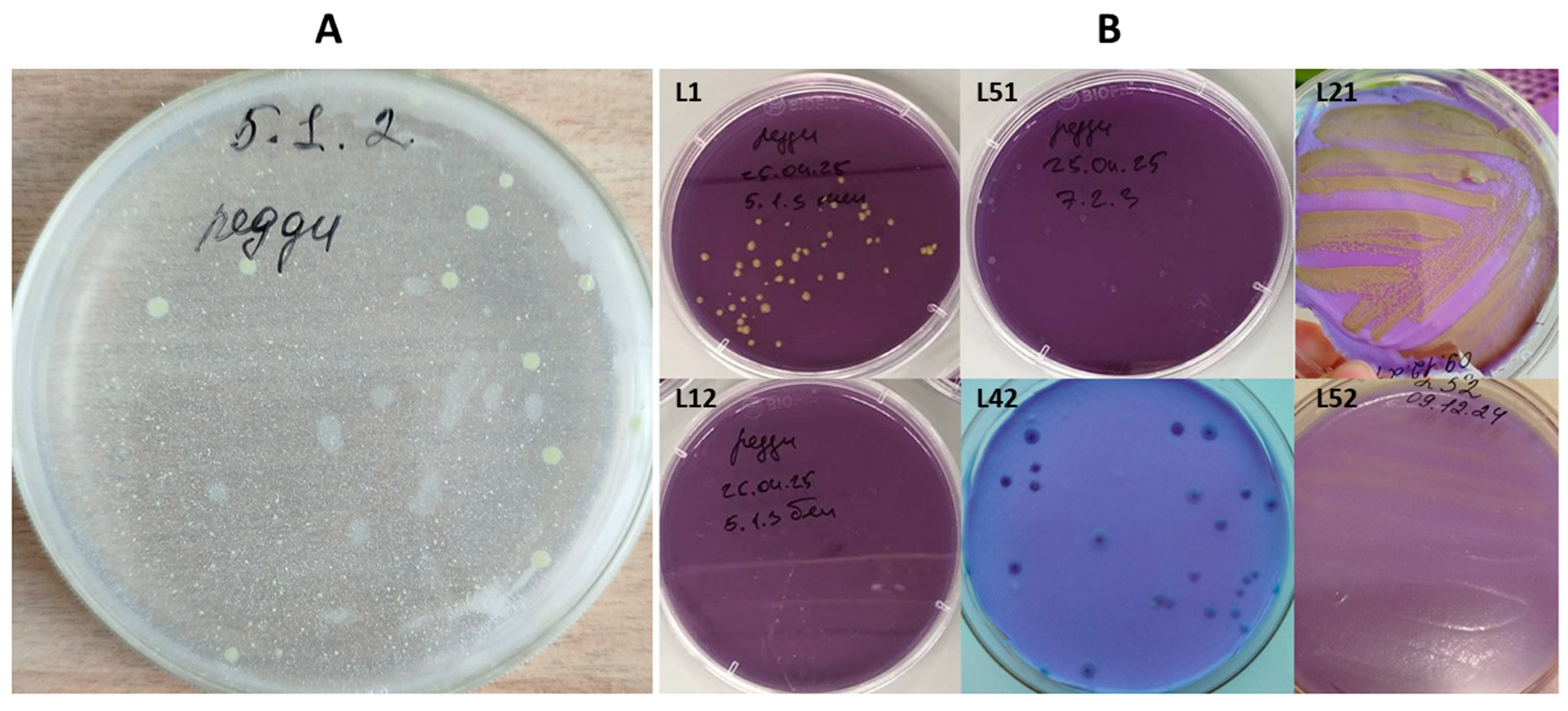
Pure cultures were isolated from the lakt1p cheese starter culture sample from a private farm in the Kosh-Agach district of the Altai Republic by sequential subculturing. Seventeen colonies exhibiting distinct morphological characteristics on differential media were selected from these. On Reddy’s differential agar, some colonies exhibited a cream colour, corresponding microbiologically to L. l. subsp. lactis and L. l. subsp. diacetilactis, while others were yellow, corresponding to L. l. subsp. cremoris (Figure 1A).
The yellow colouration observed in L. l. subsp. cremoris colonies on Reddy’s differential agar is associated with acidification of the medium, as the bromocresol purple indicator acts as a pH-sensitive dye, turning yellow at pH values below 5.2 and purple at pH values above 6.8.
For further differentiation, we used test media based on modified Reddy agar. On these media, L. lactis subsp. diacetilactis hydrolyses citrate, forming gas bubbles and turning colonies purple (Figure 1B—L51, L12, L42), whereas L. cremoris colours colonies yellow (Figure 1B—L1, L21, L52). However, as shown in Figure 1B, none of the cultures tested or any colony in the consortia inoculum (Figure 1A) produced gas bubbles on modified Reddy’s agar. This finding indicates that the cultures under analysis cannot utilise citrate, a trait uncharacteristic of L. lactis subsp. lactis bv. diacetilactis.
Citrate utilisation ability was assessed by performing deep inoculations on a medium containing milk hydrolysate and citrate. However, again, none of the cultures demonstrated this ability.
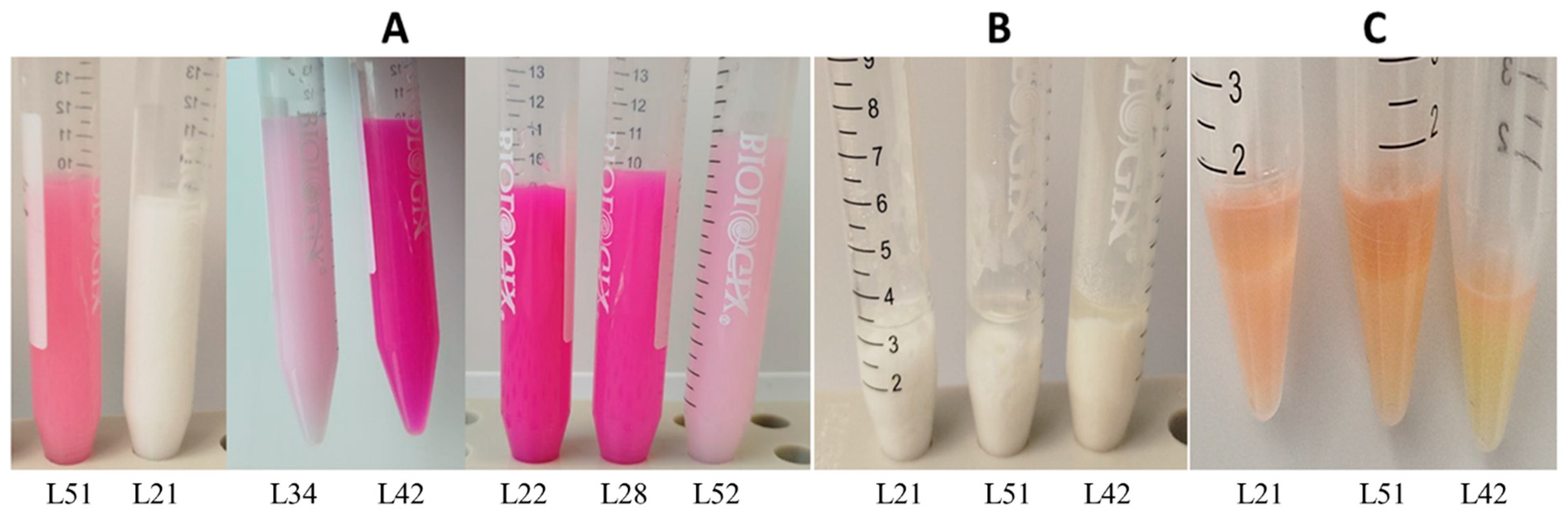
Taxonomic affiliation was determined through a microbiological characterisation of the cultures. This process involved the evaluation of the pure strain activity by measuring the time required for pasteurised milk to curdle after inoculation with 5% of a pure culture and assessing acid-forming activity and curd characteristics. The results showed that the cultures coagulated pasteurised milk within 18–25 h. The acidity of all the samples ranged from 40 °T (pale pink colour, samples L1, L21, L34, and L52) to 80 °T (bright pink colour, samples L42, L22, and L28) (Figure 2A), which corresponds to L. lactis subsp. lactis bv. diacetilactis. However, in all the samples, the curds had a similar texture: they were dense, without gas bubbles and had a consistency of thick sour cream, and upon heating, the curds did not rise but sank to the bottom, indicating the absence of carbon dioxide production (Figure 2B), which is uncharacteristic for L. lactis subsp. lactis bv. diacetilactis. Moreover, none of the cultures produced diacetyl, the main aroma compound of L. l. subsp. diacetilactis. The presence of a pink hue within 10 min is indicative of diacetyl within the starter. In all analysed cultures, the time for the pink colour to appear varied from 52 min to 1.5 h (Figure 2C). Consequently, none of the starter cultures analysed contained diacetyl.
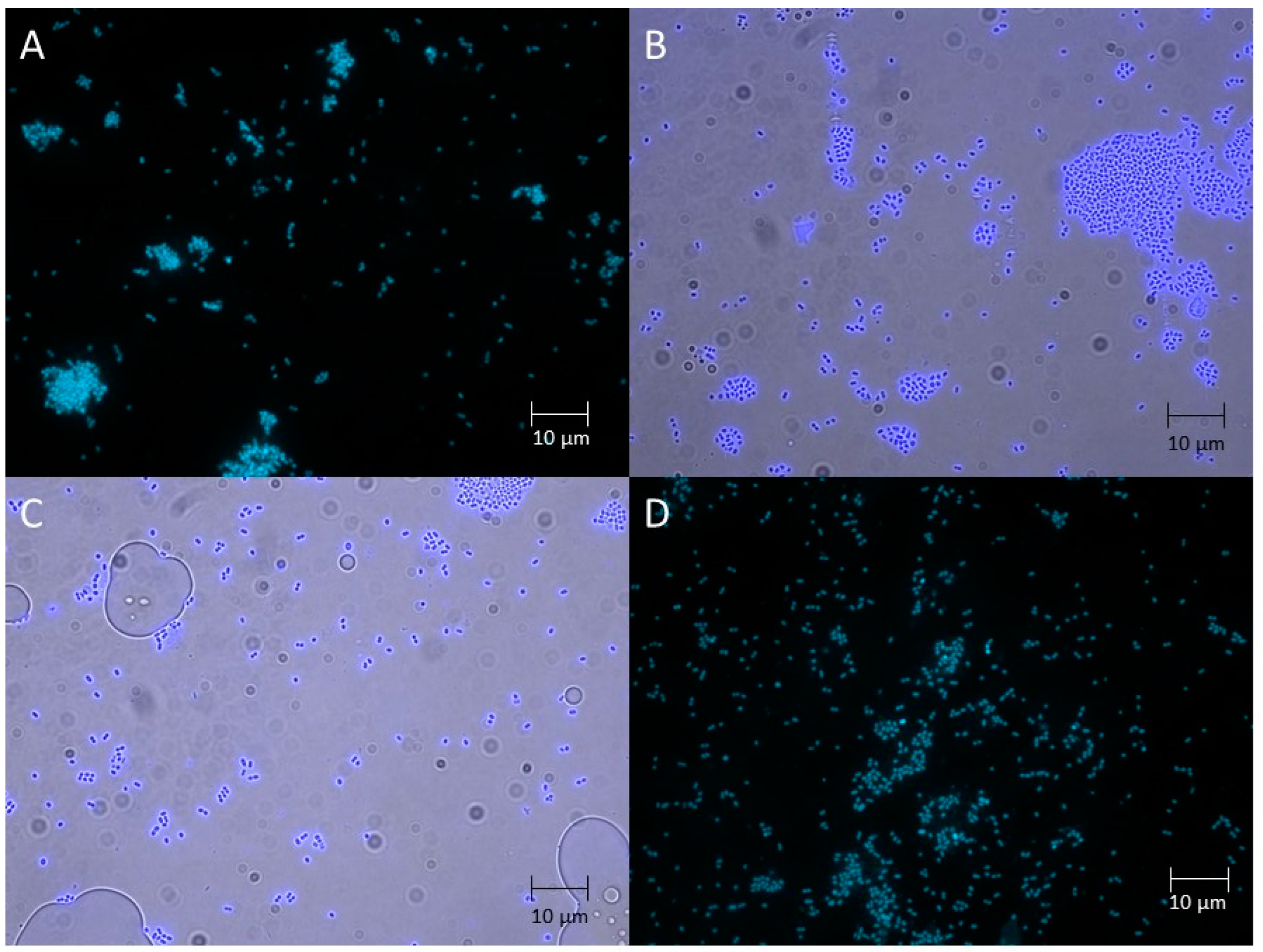
Fluorescent microscopy of the consortium and pure cultures demonstrated that the samples contained spherical cells occurring in groups of 2–4, occasionally forming short chains, approximately 1–1.5 µm in diameter, non-motile and non-spore-forming (Figure 3), which is morphologically consistent with L. lactis and L. lactis subsp. diacetilactis. Most cells were stained with DAPI and exhibited intense fluorescence at 460 nm.

2.2. Analysis of the Metagenome of the Microbiological Consortium in Sample lakt1p

Metagenomic analysis of sample lakt1p was performed to identify the microbial consortium present in the lakt1p cheese starter culture and to facilitate the subsequent isolation of pure cultures. Analysis of the DNA sequencing data obtained from lakt1p revealed that the contig sequences belonged to the genus Lactococcus. At the same time, it proved challenging to identify the taxonomic classification using 16S rRNA within the metagenomic data set. Table 1 shows the results of mapping the reads from this sample to reference genomes.
In total, 85.9% of reads were mapped to reference genomes of L. lactis subsp. lactis bv. diacetilactis, with 13% assigned to L. lactis subsp. cremoris and approximately 1% to L. lactis subsp. lactis.
It should be noted that L. lactis subsp. lactis and L. lactis subsp. lactis bv. diacetilactis are closely related strains of the same species and therefore have very similar genomes. When using short-read metagenomic sequencing, the low density of genetic differences between these strains makes them difficult to distinguish. Likewise, the contig-binning software cannot distinguish L. lactis from L. lactis bv. diacetilactis. Given the above, only two rather than three distinct genomes were recovered, corresponding to L. cremoris subsp. cremoris and L. lactis subsp. lactis. It cannot be excluded that the lakt1p sample contains only two strains, L. cremoris and L. lactis subsp. Lactis, which differ from the specific reference genomes chosen (L. lactis subsp. lactis and L. lactis subsp. lactis bv. diacetilactis).

2.3. Bioinformatic Analysis of Sequenced Genomes

Seventeen genomic assemblies were obtained and analysed from individual cultures of the lakt1p consortium. Clustering allowed the identification of three clusters based on the rpoB gene, one cluster based on the gyrB gene, and two clusters according to 16S rRNA. The pairwise ANI comparisons demonstrated 99.9% similarity between assemblies within the same rpoB cluster. However, assemblies from different clusters had ANI values ranging from 99.03% to 99.37%. When compared with reference genomes for all the assemblies, the following ANI values were determined: 87.3–87.5% relative to L. cremoris subsp. cremoris KW2 (GCF_000468955.1); 98–98.3% relative to L. lactis subsp. lactis strain 14B4 (GCF_003176835.1); and 99.2–99.6% relative to L. lactis subsp. lactis bv. diacetilactis strain S50 (GCF_003627395.2). These findings indicate that the 17 genome assemblies form three rpoB-based clusters (Table 2), each representing a distinct strain of L. lactis subsp. lactis bv. diacetilactis.

2.4. Mass Spectrometric Analysis of Strains After Separation of the lakt1p Consortium

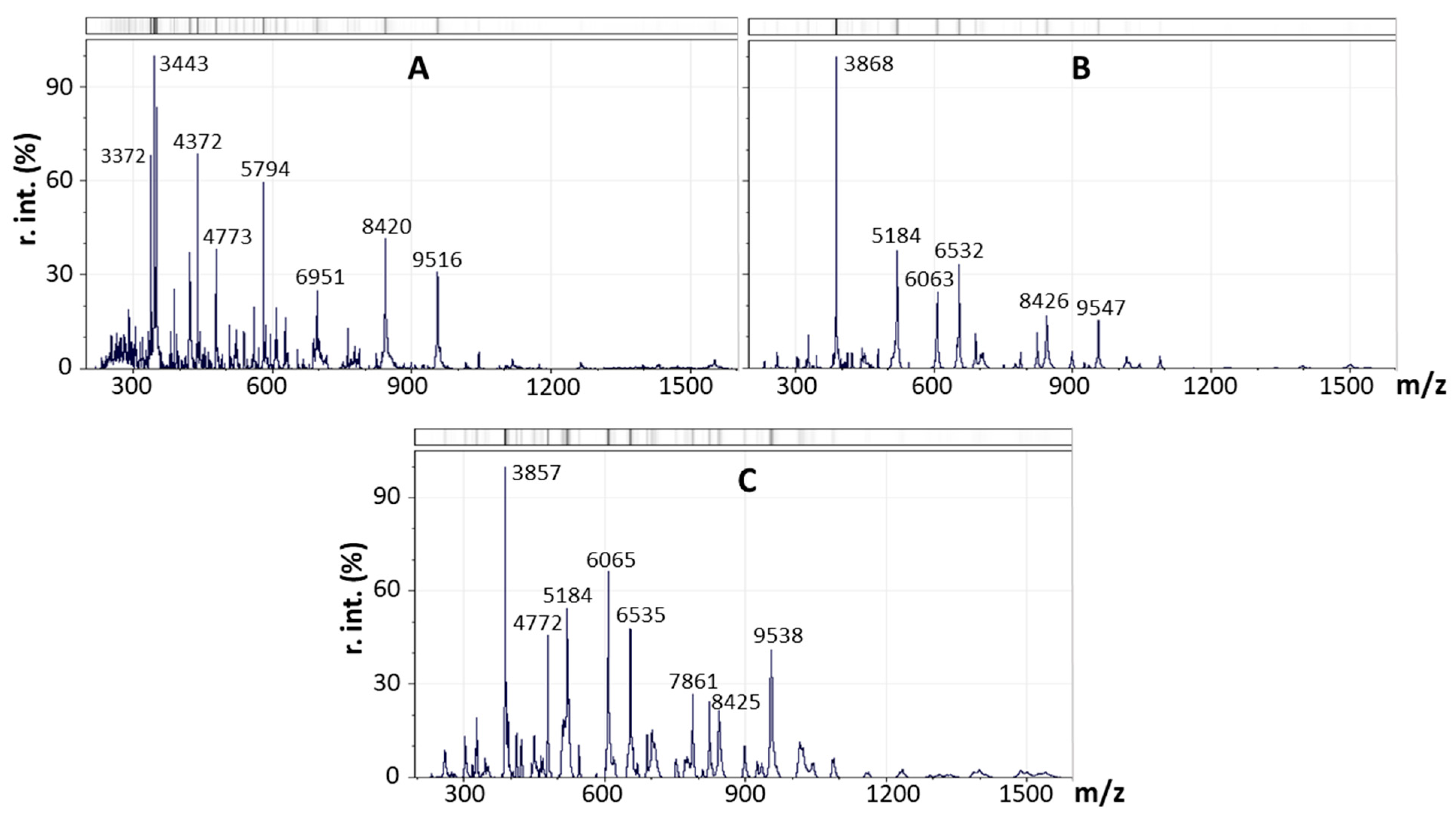
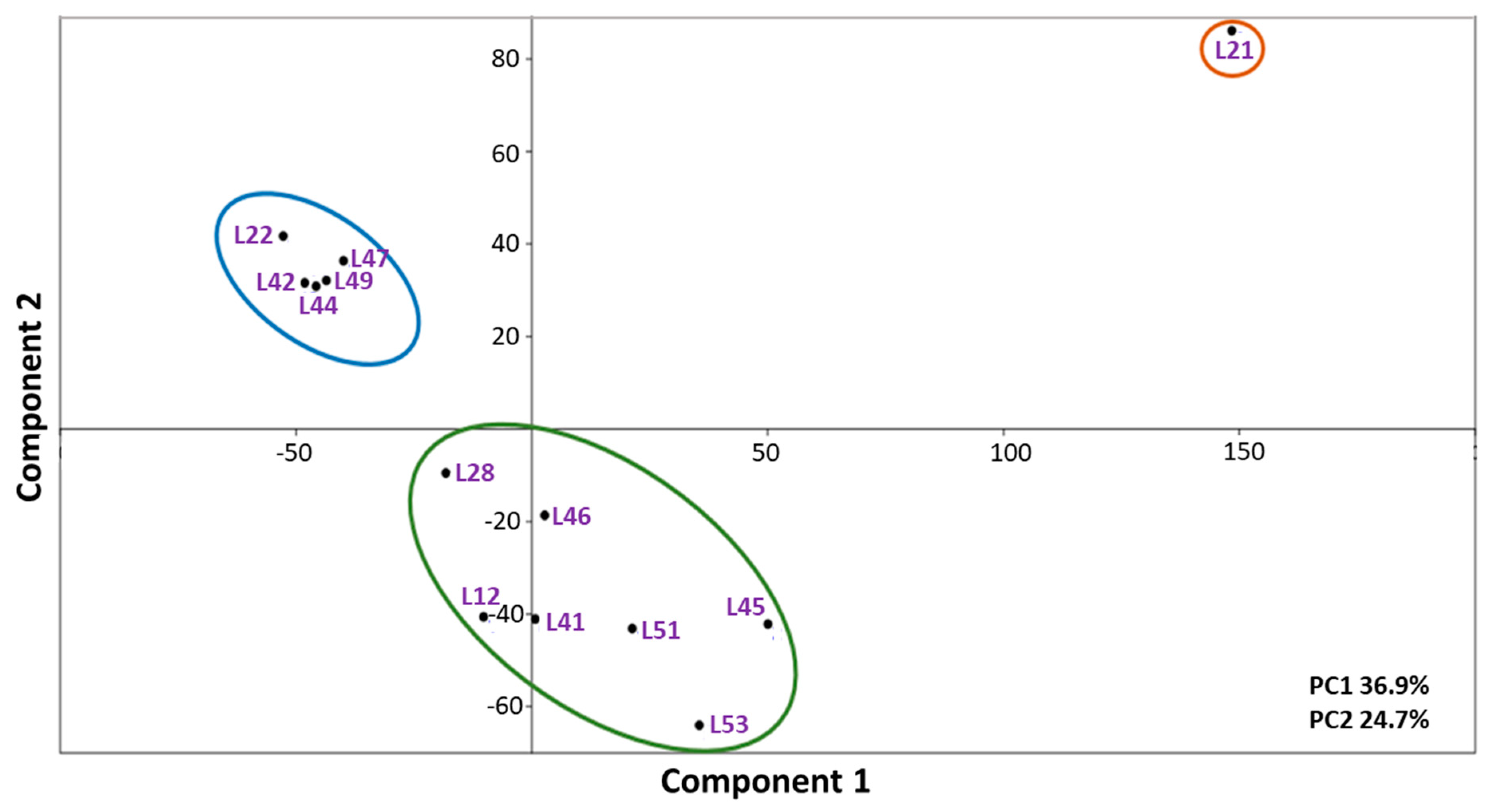
Mass spectrometric profiling of 13 cultures from the lakt1p consortium enabled their separation into three groups: (1) sample L21; (2) a group of five samples—L22, L42, L44, L47 and L49; (3) a group of seven samples—L12, L28, L41, L45, L46, L51, and L53. The averaged spectra of three experimental repeats for samples L21, L44 and L51 are presented, respectively, in Figure 4A–C.
Samples L22, L42, L44, L47 and L49 (Figure 4B) exhibited similar compositions and intensities of m/z peaks at 3868, 5184, 6063, 6532, 8426 and 9547. The group comprising L12, L28, L41, L45, L46, L51, and L53 contained several intense peaks shared with the previous group, as well as peaks characteristic of this group alone (m/z 3857, 4772, 7861, 9538). Sample L21 contained several additional intense m/z signals, including 3372, 4372, 5794, and 6951. An analysis of the mass spectrograms of the lakt1p consortium cultures, based on the m/z values of all identified mass peaks and their intensities, using principal component analysis, is presented in Figure 5. The analysed samples are clearly divided into three distinct groups.
Further conclusions regarding the similarities and differences between the studied cultures will be made after evaluating the results using other methods (microbiological and genetic).
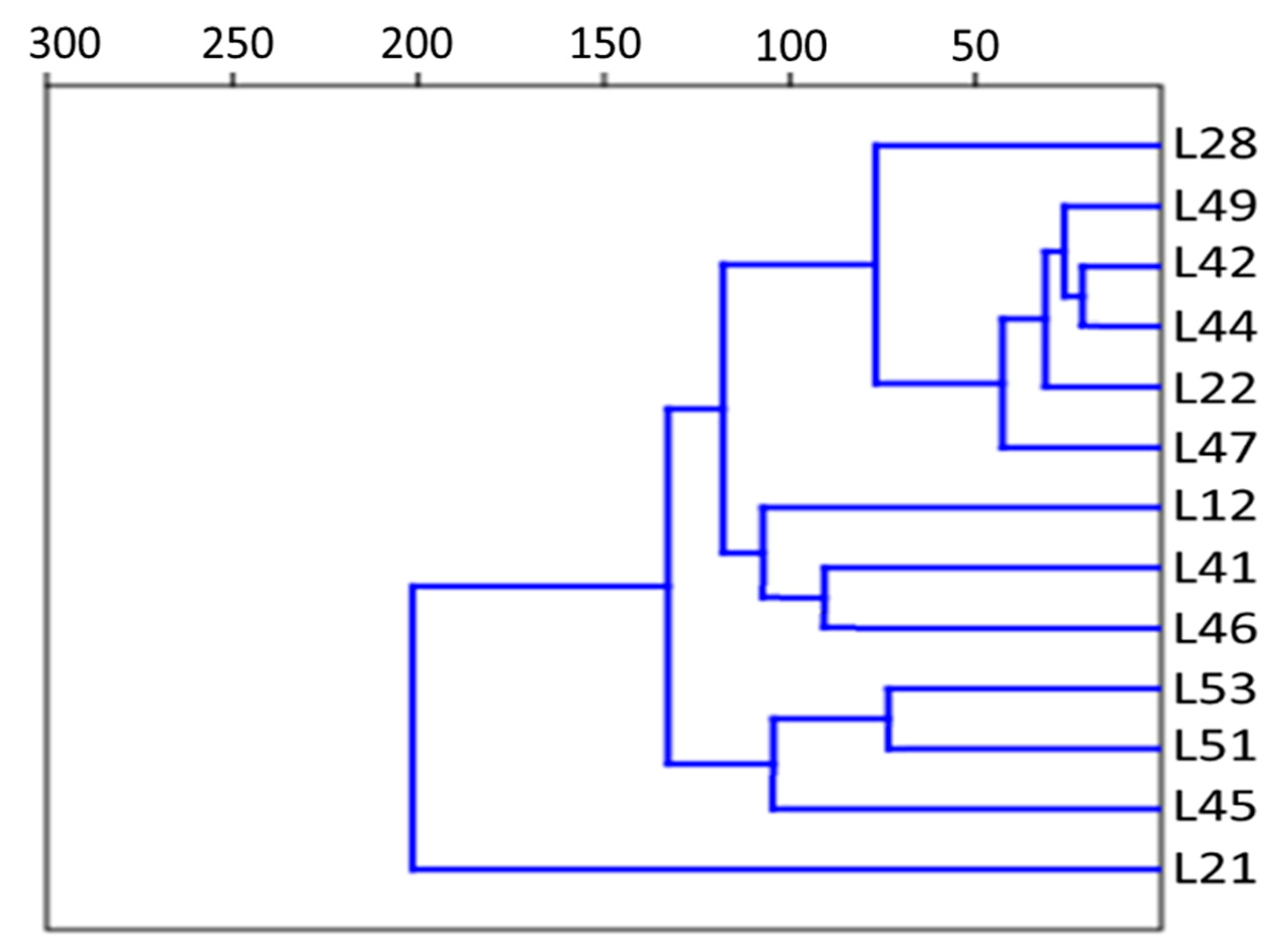
Figure 6 presents a dendrogram based on all identified m/z values, determined using the UPGMA method (Unweighted Pair Group Method with Arithmetic Mean). The analysis of the sample has revealed three clear groupings. The cophenetic correlation coefficient was high (0.9691), indicating that the dendrogram accurately reflects the similarity between the samples.
Hence, mass spectrometric analysis revealed three distinct bacterial groups within the lakt1p consortium.
Table 3 summarises the results of the microbiological, genetic, and mass spectrometric analyses of 17 pure cultures derived from the lact1p consortium.
As shown, microbiological analysis on Reddy’s differential medium, along with genomic and mass spectrometric analyses, consistently divided the lact1p pure culture isolates into three clusters. According to phenotypic characteristics based on colony colouration, Cluster 1 was assigned to L. lactis cremoris, Cluster 2 to L. lactis lactis, and Cluster 3 to L. lactis diacetilactis. However, genetic analysis indicated that the three clusters defined by the rpoB gene represent distinct strains of L. lactis diacetilactis. Microscopic analysis also placed all the strains within L. lactis diacetilactis, as the cells were arranged predominantly in pairs (diplococci), virtually without forming chains. Likewise, based on the rate of milk coagulation, the nature of the curd, and final acidity of the samples during milk fermentation, these strains were found to exhibit the traits of L. lactis diacetilactis. However, none of the strains, including those identified as L. lactis diacetilactis on Reddy differential medium, produced the key aroma-forming compounds characteristic of L. lactis diacetilactis, such as diacetyl and CO2.
Given the uncertainty regarding the precise taxonomic assignment of the lact1p strains, we sought to identify distinguishing genomic features of the lact1p metagenome. In particular, it is worth performing a comparison with the reference genome of Lactococcus lactis subsp. lactis and with a synthetic metagenome composed of reference sequences from L. lactis cremoris, L. lactis lactis and L. lactis diacetilactis. Special attention should be paid to genes involved in the synthesis of enzymes, pheromones, exopolysaccharides and other compounds responsible for the flavour, aroma and textural properties of the final product in the lakt1p consortium strains.
Furthermore, the division of the lakt1p consortium into three clusters, based on genomic, proteomic, and phenotypic characteristics observed in differential media, necessitates supplementary comparative bioinformatic analyses of genomic traits among the strains within these clusters. The following sections of the article address these questions in detail.

2.5. Comparison of Exopolysaccharide Synthesis Genes in the Metagenome of the lakt1p Starter Culture and the Synthetic Metagenome

As noted above, L. lactis subsp. cremoris is characterised as a “creamy” streptococcus, owing to its higher capacity for exopolysaccharide (EPS) synthesis and secretion compared with other L. lactis subspecies. Microbiological tests of individual colonies from the lakt1p starter on Reddy’s differential agar exhibited a yellow colouration, which, according to microbiological characteristics, is typical of L. l. cremoris (Figure 1A), suggesting that this subspecies may indeed be present in the lakt1p culture. This assumption is also consistent with the metagenomic analysis of lakt1p.
Exopolysaccharide synthesis in lactic acid bacteria is facilitated by an extensive pool of glycosyltransferases with a broad spectrum of sugar and linkage specificities. Exopolysaccharides secreted by lactic acid bacteria can be directly applied to achieve the desired viscosity, texture, and mouthfeel in food production, particularly due to their water-binding capacity, gel formation, flow behaviour and overall rheological performance of the final product [12]. Exopolysaccharides exhibit great structural diversity, and some provide specific biological activity and physiological functions, such as antioxidant activity [13], antimicrobial effects [14], and immunostimulatory effects [15], among others.
We compared the set of glycosyltransferases identified in the metagenome of the lakt1p sample and found that, when compared with the genome of L. lactis subsp. lactis, the glycosyltransferase repertoire was identical. However, comparison with a synthetic metagenome composed of reference sequences from L. l. cremoris, L. l. lactis and L. l. diacetilactis revealed that the lakt1p sample contains genes encoding glucosyltransferase, oligosaccharide 4-α-D-glucosyltransferase and poly(ribitol-phosphate) β-glucosyltransferase, which are absent from the annotated synthetic metagenome. This indicates certain genetic differences between the strains in the lakt1p consortium and the reference genomes of L. lactis cremoris and L. lactis diacetilactis.

2.6. Analysis of the Peptidase Spectrum in the lakt1p Metagenome and in the Isolated Cultures

Given the strong correlation between high acidification capacity of starter strains and the proteolytic activity of their proteinases [16,17], consideration should be given to the fact that lactic acid bacterial strains may differ substantially in both the spectrum and activity of their proteinases. Consequently, we analysed the peptidase repertoire in the lakt1p sample and in the reference genomes. The results are summarised in Table 4 and Table 5.
As shown in Table 4, the lakt1p metagenome shares 11 peptidases with the L. l. lactis reference genome. It also contains five peptidases that are not annotated in the reference genome, whereas the reference genome encodes eight peptidases that were not annotated in the lakt1p metagenome. Table 5 shows that the lakt1p metagenome shares 14 peptidases with the synthetic metagenome. The lakt1p sample also contains four peptidases absent from the annotations of L. l. cremoris, L. l. lactis and L. l. diacetilactis, while three reference species collectively possess ten peptidases that were not annotated in the lakt1p metagenome.
Genomic DNA analysis of 17 individual strains from the lakt1p consortium revealed that all 17 genomes encoded peptidases: Neutral endopeptidase (pepO_1, pepO_2), Dipeptidase A (pepDA_1, pepDA_2), Beta-Ala-Xaa dipeptidase (pepV), and Xaa-Pro dipeptidase (pepQ). Notably, only genomes from the third cluster (based on genomic analysis) encoded the peptidase PepF1 (EC 3.4.24, oligoendopeptidase F), which appears to be plasmid-borne. Differences observed between the isolated strains may be explained by plasmid loss in some strains, which could underlie the morphological variation.
Pheromones, exopolysaccharides and other compounds contribute to the flavour, aroma, and textural properties of the final fermented product. The presence of genes encoding these traits in the lakt1p lactococcal strains is summarised in Table 6. Shown are clusters identified through genome analysis.
The genomic analysis presented in Table 6 demonstrates that the individual strains of the lakt1p consortium have genes for most enzymes responsible for lactose utilisation, synthesis of exopolysaccharide precursors with diverse sugars, including glucose, galactose, and rhamnose. Only a single bacteriocin-encoding gene was identified: the lcnB gene for lactococcin B, which is present in clusters 2 and 3 and absent from cluster 1 strains. It has been reported that lactococcin B can be produced by some strains of Lactococcus lactis subsp. lactis [18] as well as by L. lactis subsp. cremoris [19], and thus does not allow subspecies identity of the lakt1p clusters to be determined unambiguously.
The exopolysaccharide synthesis gene cluster contains only the epsL gene. In Bacillus subtilis, this gene produces a phosphoglycosyltransferase. This enzyme initiates exopolysaccharide unit synthesis, utilising UDP-di-N-acetylbacillosamine as a phosphosaccharide donor [20]. These findings suggest that a larger EPS gene cluster may be located on plasmids.

2.7. Bioinformatic Analysis of Gene Interaction Networks in Strains L21, L42 and L51 from the lakt1p Consortium

As demonstrated above, genomic analysis of the rpoB gene (Table 2) and mass spectrometry (Figure 6) reveal that strains L21, L42, and L51, obtained from the lakt1p consortium, belong to different clusters. Furthermore, on Reddy’s differential agar, the colonies of these strains exhibited differential staining, indicative of their belonging to distinct subspecies of Lactococcus lactis. According to differential colouration, L21 corresponds to cluster 1 (L. lactis cremoris), L51 to cluster 2 (L. lactis lactis) and L42 to cluster 3 (L. lactis diacetilactis) (Table 3). These strains were therefore selected as representative genomes for each cluster.
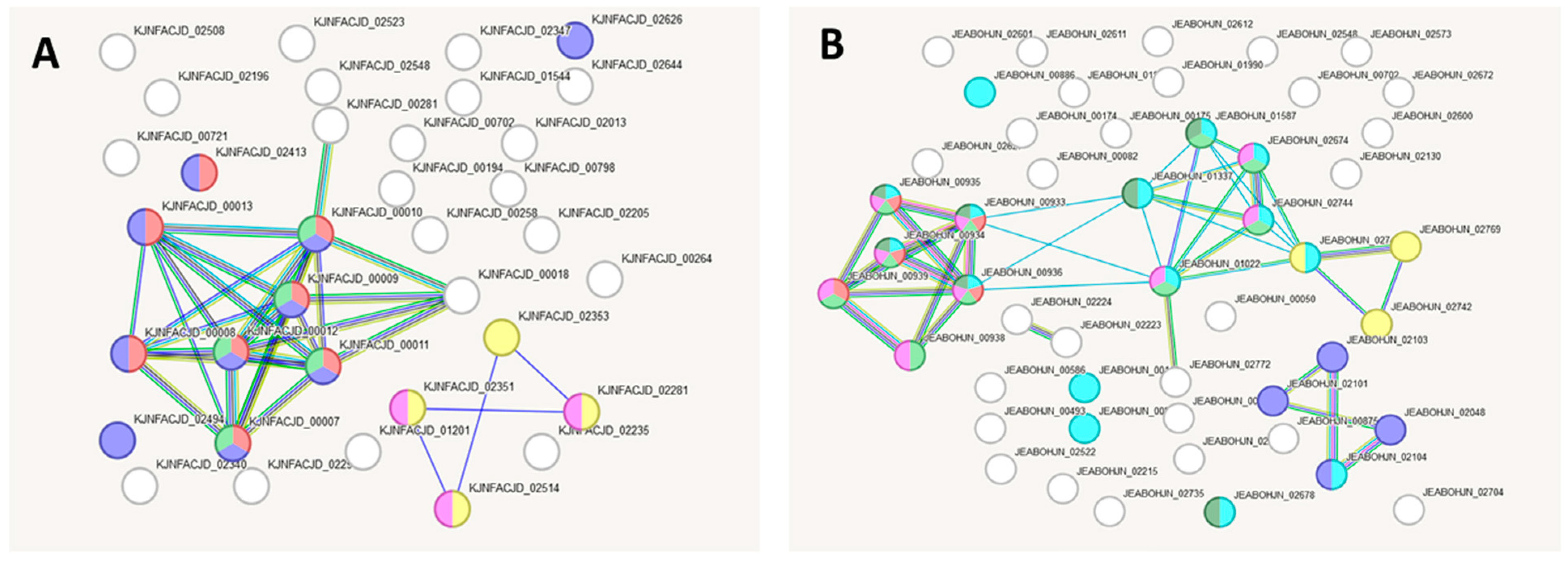
To determine the gene groups responsible for the aforementioned metabolic characteristics in these strains, we performed a comparative genomic analysis and compiled unique gene lists for each strain through pairwise comparisons (Appendix A, Table A1, Table A2 and Table A3). Based on the data obtained, a pairwise comparison of the gene networks of strains L21, L42, and L52 was conducted using the string-db resource. Below, three pairs of gene interaction networks are presented: L21 vs. L42, L42 vs. L51, and L21 vs. L51, each characterised by specific Gene Ontology (GO) categories. For each comparison, the most reliable GO category (based on the number of genes involved) is reported. Figure 7 shows the reconstructed interaction networks based on genes differentiating strains L21 and L42. One network includes 37 genes present in L21 but absent from L42 (Table A1; Figure 7A), while the other comprises 44 genes present in L42 but absent from L21 (Table A1; Figure 7B).
Table 7 and Table 8 provide the data on the gene networks specific to strains L21 and L42, with a focus on their GO characteristics and how they differ from each other.
The protein-coding genes present in strain L42 but absent in L21 are involved in membrane transport processes (Figure 8B, Table 8), including the transport of peptides and metal ions. This indicates a potentially greater capacity of strain L42 to maintain intracellular homeostasis and to utilise protein derivatives. At the same time, the gene network of strain L21 compared with L42 (Table 7) contains GO categories associated with oxo-acid lyase activity, which suggests a potential ability of L21 to metabolise oxo-acids, including citric acid.
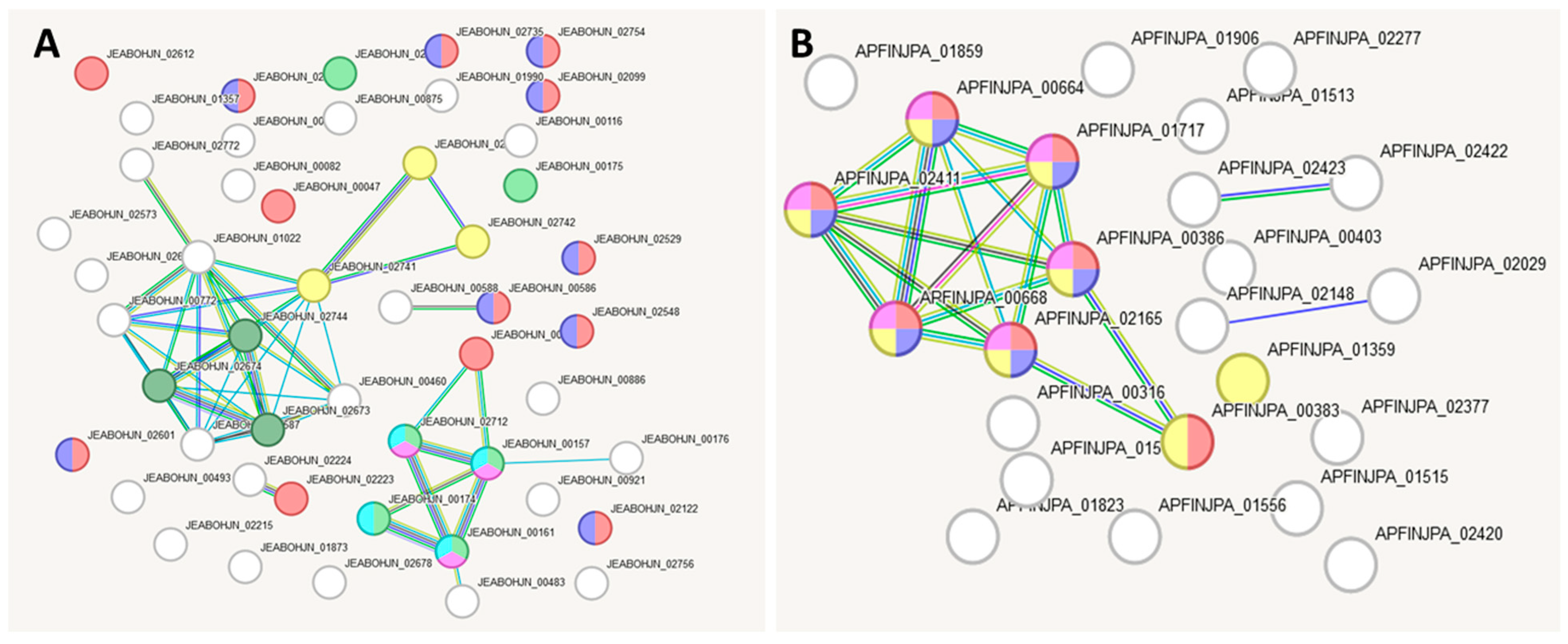
Figure 8 shows the reconstructed gene interaction networks based on genes distinguishing strains L42 and L51 from each other. One network comprises 44 genes present in strain L42 but absent in L51 (Table A2; Figure 8A), while the other comprises 27 genes present in L51 but absent in L42 (Table A2; Figure 8B).
According to the data presented in Figure 8 and Table 9 and Table 10, the protein-coding genes present in strain L42 but absent in strain L51 are involved in the biosynthesis of polysaccharides, including pathways using galactose as a precursor. In turn, the protein-coding genes found in strain L51 but absent in L42 are implicated in the metabolism of sugars—including galactose—and polysaccharides. These findings suggest that the differences between strains L42 and L51 are minor and are potentially associated with the involvement of the products of their unique genes in the same polysaccharide biosynthesis processes, albeit at different stages of their implementation.
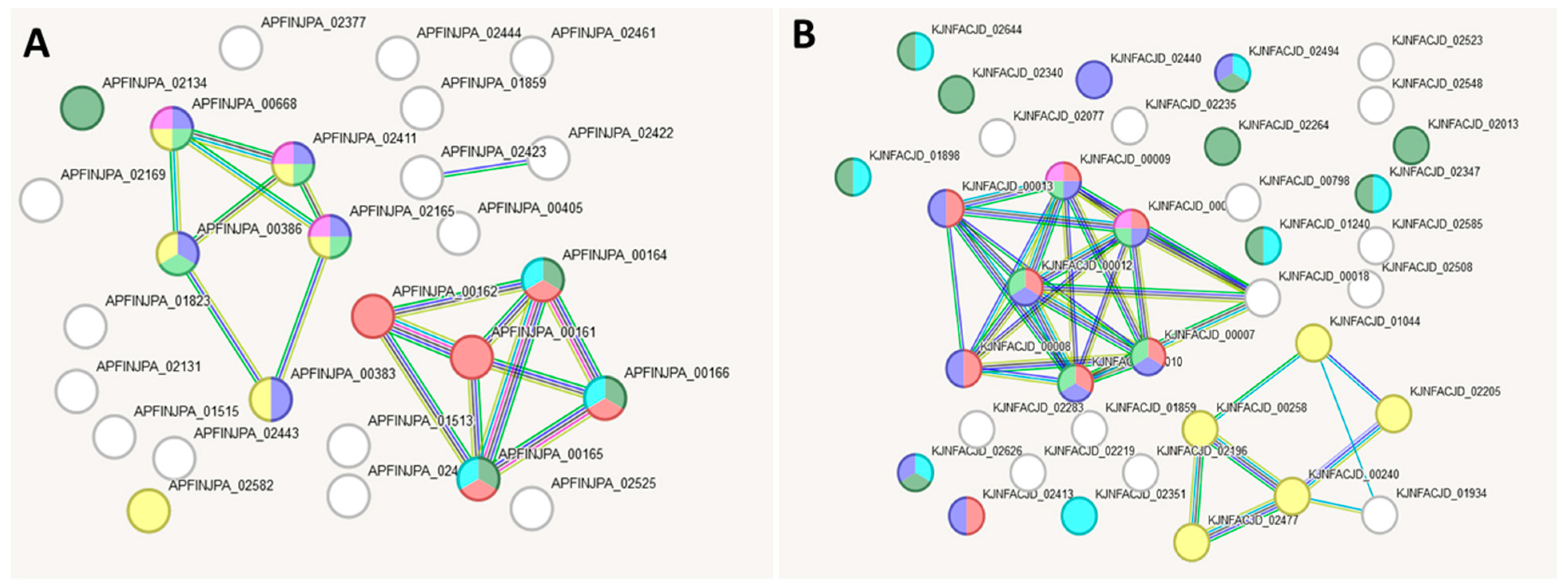
Figure 9 shows the reconstructed gene interaction networks based on genes distinguishing strains L51 and L21 from each other, comprising 28 genes present in strain L51 but absent in L21 (Table A3; Figure 9A) and 37 genes present in strain L21 but absent in L51 (Table A3; Figure 9B).
According to the data provided in Figure 9 and Table 11, the protein-coding genes present in strain L51 but absent in strain L21 are involved in transport processes, signal transduction pathways and carbohydrate metabolism. By contrast, the principal distinction between strain L21 and strain L51 (see Table 12) is the presence in L21 of a citrate utilisation gene cluster, which enables this strain to metabolise citrate.
Thus, the comparative analysis indicates that the sets of protein-coding genes underlying the differences between strains L51 and L42 exhibit only minor variation in metabolic potential, primarily in the repertoire of enzymes involved in carbohydrate metabolism and polysaccharide biosynthesis. In contrast, the genome of strain L21 contains genes encoding the key enzyme of citrate metabolism, a feature characteristic of the subspecies L. lactis diacetilactis [9], although certain strains of L. lactis cremoris may also possess this capability [10].
Since none of the lact1p strains, including L21, can synthesise diacetyl or CO2 from citrate, we hypothesise that strain L21 may have lost this ability. The reason for this loss remains unclear. When considering potential causes of this loss, it is important to acknowledge that the activity of the citrate lyase complex depends on the activity of citrate permease, a transport protein required for citrate uptake from the medium. Notably, the gene encoding this citrate-specific transporter in L. lactis diacetilactis is plasmid-borne [9]. Since the current analysis was limited to chromosomal genomic sequences, it proved impossible to determine if strain L21 possesses the plasmid-encoded citP gene, which codes for citrate permease.

3. Materials and Methods

In this study, we examined a cow’s milk cheese starter culture from a farm in the village of Kosh-Agach (Altai Republic). The starter culture (named lakt1p) was aseptically collected into a sterile container. Metagenomic DNA was extracted from the starter culture to analyse the taxonomic affiliation of the cultures in the consortium. The lakt1p starter culture was also separated into individual cultures by sequential subculture on milk agar, MRS and M17 media (Condalab, Madrid, Spain), and Reddy’s differential agar at 30 °C. Seventeen individual colonies were selected for further analysis.

3.1. Microbiological Methods

Microbiological characterisation of the pure cultures was performed by inoculating them onto test media. The Reddy’s differential agar medium was prepared with the following components (%): Tryptone, 0.5; CaCO3, 0.3; carboxymethyl cellulose (CMC), 0.6; K2HPO4, 0.1; yeast extract, 0.5; l-arginine hydrochloride, 0.5; agar-agar, 1.5, 5 mL sterile skim milk; and 0.1% bromocresol purple indicator solution, 2 mL (pH 6.3). On this medium, L. lactis subsp. cremoris, which does not hydrolyse arginine, forms yellow colonies, while L. lactis subsp. lactis and L. lactis subsp. diacetilactis form white colonies.
A modified Reddy’s differential agar was also used, containing (g/L): CMC, 5; sodium citrate, 10; peptone, 7.5; yeast extract, 7.5; meat extract, 5; lactose, 1.5; L-Arginine hydrochloride, 1.5; bromocresol purple, 0.002; and agar-agar, 15 (pH 6.0).
Citrate utilisation was assessed using a medium comprising milk hydrolysate, 2.5% yeast autolysate, 2.0% agar-agar, 2 mL of 0.1% bromcresol purple indicator solution, and 1% sodium citrate. After 18–24 h of cultivation at 30 °C in this enrichment medium, the bacterial suspension was plated using the deep-pour method onto the solidified medium of the same composition. Colonies of L. l. diacetilactis were identified by the gas bubble formation resulting from citrate metabolism.
The acidification activity of pure strains was evaluated by measuring the time required for pasteurised milk to coagulate after inoculation with 5% of the pure culture starter. Titratable acidity was measured by adding 10 mL of the starter culture, 20 mL of distilled water, and three drops of phenolphthalein to a 100 mL flask, then titrating with a 0.1 N NaOH solution until a pink colour appeared. The volume of NaOH (in mL) multiplied by 10 corresponds to the acidity of the sample, expressed in Turner degrees (°T).
Carbon dioxide and four-carbon compounds are metabolic products of the aroma-forming bacterium L. l. diacetilactis. Carbon dioxide production was quantified by thoroughly homogenising the starter culture and pipetting 20 cm3 into a tube (15 mm diameter). The initial level of the culture was marked, and the tube was placed in a water bath containing cold water. The water was then heated to 90 °C, and the elevation of the curd was recorded without removing the tube. In the presence of carbon dioxide, the curd becomes spongy and rises 0.6–3 cm or more above the whey. In the absence of carbon dioxide, the curd typically does not rise and may even sink to the bottom.
Determination of diacetyl and acetoin was performed by mixing the starter culture and filtering it through a paper filter. To 200 µL of the filtrate, 200 µL of a 40% KOH solution was added, followed by thorough mixing. The time required for the development of a pink colour was recorded. If the colour appeared within 10 min, the presence of diacetyl in the starter culture was inferred.

3.2. Sample Morphology Analysis by Fluorescence Microscopy

Cells grown on a solid medium were used for microscopy. For each sample, at least three preparations were examined, with a minimum of 10 fields of view counted in each preparation. Fixed preparations were prepared from each sample and subsequently stained with DAPI in PBS buffer. Morphological analysis was performed using Karl Zeiss (Jena, Germany) microscopes: Axio Imager.M2 and Axio Imager.A2 (microscopic analysis was carried out at the Multiple-access Center for Microscopy of Biological Objects (Institute of Cytology and Genetics, Novosibirsk, Russia)) and Axio Scope.1 (Laboratory of Molecular Biotechnology, IC&G SB RAS, Akademgorodok, Russia).

3.3. DNA Extraction, Library Preparation, Sequencing

Genomic DNA was extracted from pure microbial cultures. The cells were resuspended in TE buffer (pH 8), and genomic DNA was isolated using the phenol–chloroform method. Plasmid DNA was not sequenced separately. The quality of the extracted DNA was assessed spectrophotometrically (Epoch, BioTek Instruments, Winooski, VT, USA) and using a Qubit fluorometer (Quant-iT™ dsDNA Assay Kit, High Sensitivity (HS), Thermo Fisher, Waltham, MA, USA). Library preparation and sequencing were performed at the Sequencing Centre of IC&G SB RAS using an Illumina MiSeq platform (version 4.1.0).

3.4. Bioinformatic Analysis of Sequencing Data

Quality check of metagenomic and individual strain sequencing raw reads was performed using FastQC (version 0.11.8), followed by trimming with Cutadapt (version 1.18). Metagenomic reads were aligned to the following reference genomes available in the NCBI database: Lactococcus cremoris subsp. cremoris KW2 (GCF_000468955.1), Lactococcus lactis subsp. lactis strain 14B4 (GCF_003176835.1), and Lactococcus lactis subsp. lactis bv. diacetilactis strain S50 (GCF_003627395.2), using Bowtie2 (version 2.3.5). Genome and metagenome assemblies were generated using SPAdes (version 4.0.0). The assembled metagenomic contigs were classified using MetaWRAP (version 1.2.2, classify_bins option), and the proportion of contigs assigned to each taxonomic unit was calculated. Genome and metagenome annotation was performed using PROKKA (version 1.14.6). Annotated genomes of individual samples were screened for the 16S, rpoB, and gyrB genes to determine the taxonomic identity of the strains. Clustering of the identified sequences was performed using CD-HIT (version 4.7). Average nucleotide identity (ANI) values for the assemblies were calculated using fastANI (version 1.34). A synthetic metagenome consisting of L. l. cremoris, L. l. diacetilactis, and L. l. lactis was constructed by combining the sequences of the corresponding reference genomes (GCF_000468955.1, GCF_003627395.2, and GCF_003176835.1) into a single file.
Seventeen genome assemblies from individual cultures of the lakt1p consortium were obtained and analysed. Sequence similarity clustering was performed using rpoB, and a genome from each cluster was selected for further bioinformatics analysis (L51, L42, L21).

3.5. Mass Spectrometric Analysis of Strain Proteomes

Proteomic analysis was performed using matrix-assisted laser desorption/ionisation time-of-flight mass spectrometry (MALDI-TOF MS).

3.6. Preparation of Bacterial Cell Lysates for MALDI-TOF MS Measurement

For each colony analysed, approximately 50 µL of culture was collected. The cells were resuspended in 300 µL of deionised water, followed by the addition of 900 µL of 96% ethanol for inactivation. The cells were pelleted by centrifugation for 2 min at 15,600× g. The supernatant was removed, and the pellet was dried for 5 min in an Eppendorf vacuum concentrator. Bacterial cell walls were disrupted by adding 50 µL of 70% formic acid. Proteins were extracted with 50 µL of acetonitrile. The mixture was centrifuged for 2 min at 15,600× g, and the supernatant was transferred to a clean tube for mass spectrometric analysis.

3.7. Conditions for MALDI-TOF MS Measurement

For mass spectrometric analysis, 1 µL of the protein extract was applied to a stainless-steel plate and allowed to dry at room temperature. Subsequently, 1 µL of matrix solution (6 mg/mL α-cyano-4-hydroxycinnamic acid in acetonitrile/water/trifluoroacetic acid, 50:47.5:2.5, v/v) was overlaid onto the sample.
Measurements were performed using an Ultraflex III MALDI-TOF/TOF mass spectrometer (Bruker Daltonics, Billerica, MA, USA). Spectra were acquired in linear positive mode with a laser frequency of 200 Hz over a mass range of 2000–20,000 Da. The accelerating voltage was set to 20 kV, IS2 voltage to 18.66 kV, and lens voltage to 6 kV, with extraction delay disabled. The obtained spectra represent the dependence of the mass of the sample proteins (m/z) and their intensity.
For each colony, the spectra were obtained by summing 2000 laser shots (10 × 200 shots from different target spot positions). External calibration was performed using the accurate mass values of known Escherichia coli proteins: RL36—4365.3 Da, RS22—5096.8 Da, RL34—5381.4 Da, RL32—6315.0 Da, RL29—7274.5 Da, and RS19—10,300.1 Da.
The acquired spectra were exported to mMass. A baseline subtraction procedure was applied to all spectra using the MALDI-TOF Proteins 5–20 kDa preset with default settings. Peak picking was performed using the following parameters: signal-to-noise threshold—2.5, absolute intensity threshold—0, relative intensity threshold—1%, and picking height—100%.

3.8. Statistical Analysis of Mass Spectra

Multivariate statistical analysis was performed using Past 5 software, version 5.0 [21]. Hierarchical cluster analysis was used to visualise the differences between the strains analysed. Multivariate approaches, particularly principal component analysis (PCA), were applied for a more comprehensive and in-depth evaluation. All m/z values and their intensities were used as variables for the principal component analysis (PCA).

3.9. Bioinformatic Analysis: Gene Network Construction

A comparative analysis of gene networks constructed from genes unique to each strain was performed to identify specific metabolic features of strains L21, L42, and L51 isolated from the lact1p sample. The STRING database application (https://string-db.org/, accessed on 23 December 2025) [22] was used to identify associated gene networks.
For each clone (L51, L42, L21), genome protein annotations were uploaded to STRING using the corresponding identifiers: L51—STRG0A09PVY, L42—STRG0A14NDF, and L21—STRG0A47PZJ.
The string-db.org application was configured with the following parameters: (1) meaning of network edges—evidence; (2) types of evidence used—text mining, experiments, databases, co-expression, neighbourhood, gene fusion, co-occurrence; (3) minimum required interaction score—minimum confidence 0.41; and (4) max number of interactions to show—no more than 10 interactions.
When describing the strain comparisons, the most reliable Gene Ontology (GO) categories (based on the number of genes represented) were selected.

4. Conclusions

This study characterised the microbiological and molecular genetic properties of lactic acid bacteria belonging to the species Lactococcus lactis isolated from a farm cheese starter culture (sample lakt1p). Pure cultures were obtained from this sample by sequential subculturing, and 17 colonies exhibiting different characteristics on differential media were selected. Genetic analysis based on the rpoB gene grouped these colonies into three clusters, each corresponding to a distinct strain of L. lactis subsp. diacetilactis. Microbiological and microscopic analyses further confirmed that all the strains could be assigned to L. lactis subsp. diacetilactis. However, none of the studied strains produced the characteristic aroma compounds of L. l. diacetilactis, such as diacetyl and CO2. Phenotypically, based on colony colouration on Reddy’s differential media, the strains were also divided into three clusters.
The functional characteristics of the lakt1p consortium strains were further explored using the STRING database. Pairwise comparisons of gene sets unique to strains L21, L42, and L52, which were assigned to different clusters based on genomic, proteomic, and phenotypic features, were performed. Gene network analysis revealed that the unique protein-coding genes distinguishing strains L51 and L42 conferred only minor differences in metabolic potential, primarily in the repertoire of enzymes involved in sugar metabolism and polysaccharide biosynthesis. In contrast, the gene network of unique protein-coding genes in strain L21 included a cluster of genes from the citrate lyase cluster, a feature characteristic of L. lactis subsp. diacetilactis [9]. Nevertheless, the inability of the lakt1p strains, including L21, to synthesise diacetyl and CO2 due to citrate utilisation suggests that at least L21 may have once possessed this ability but subsequently lost it. This loss could be associated with the absence of a functional citrate permease, which may be encoded on a plasmid.

Author Contributions

Conceptualisation, Y.E.U. and S.E.P.; supervision, S.E.P.; validation, Y.E.U., A.R.V., A.A.S., V.N.B., A.V.Z., N.M.S., N.V.B., E.Y.B., V.N.S., A.V.K., E.Y.P., D.O.C. and S.E.P.; writing—original draft, Y.E.U., T.M.K., A.R.V., A.A.S., V.N.B. and S.E.P.; writing—review and editing, Y.E.U., T.M.K., A.R.V., A.A.S., V.N.B. and S.E.P. All authors have read and agreed to the published version of the manuscript.

Funding

This work was funded by the Ministry of Science and Higher Education project “Study of metabolic control networks in living systems under environmental interaction, including in genetically modified organisms.” (No. FWNR-2022-0022).

Institutional Review Board Statement

Not applicable.

Informed Consent Statement

Not applicable.

Data Availability Statement

The original contributions presented in this study are included in the article. Further inquiries can be directed to the corresponding author.

Acknowledgments

Microscopy was performed at the Microscopy Center of the Institute of Cytology and Genetics, SB RAS, Russia.

Conflicts of Interest

The authors declare no conflicts of interest.

Appendix A

Table A1. Products of the genes that differentiate strains L42 and L21.
NL42L21
1.ABC transporter ATP-binding protein YtrB[Citrate [pro-3S]-lyase] ligase
2.Bacteriocin lactococcin B2-(5″-triphosphoribosyl)-3′-dephosphocoenzyme-A synthase
3.Cadmium resistance transcriptional regulatory protein CadC2-C-methyl-D-erythritol 4-phosphate cytidylyltransferase
4.Cadmium-transporting ATPaseApo-citrate lyase phosphoribosyl-dephospho-CoA transferase
5.Curved DNA-binding proteinBis(5′-nucleosyl)-tetraphosphatase, symmetrical
6.General stress protein 18Citrate lyase acyl carrier protein
7.Glycosyltransferase GlyDCitrate lyase alpha chain
8.Group II intron-encoded protein LtrACitrate lyase subunit beta
9.Homoserine O-succinyltransferaseCitrate/malate transporter
10.HTH-type transcriptional repressor YtrAD-alanyl-D-alanine carboxypeptidase DacA
11.IS21 family transposase IS712Galactose/methyl galactoside import ATP-binding protein MglA
12.IS3 family transposase IS1163GDP-L-fucose synthase
13.IS3 family transposase IS981GDP-mannose 4,6-dehydratase
14.IS3 family transposase IS-LL6Glucitol operon repressor
15.IS3 family transposase ISSag5HTH-type transcriptional regulator Hpr
16.IS3 family transposase ISWci2Intermembrane phospholipid transport system ATP-binding protein MlaF
17.IS4 family transposase IS1675IS256 family transposase IS1310
18.K(+)/H(+) antiporter NhaP2IS256 family transposase IS905
19.Multidrug resistance protein 3IS256 family transposase ISEfm2
20.N-acetyl-alpha-D-glucosaminyl L-malate synthaseIS6 family transposase ISS1W
21.NADP-dependent 3-hydroxy acid dehydrogenase YdfGIS6 family transposase ISTeha2
22.Nitrogen fixation regulation protein FixKIS982 family transposase ISLll1
23.Oligopeptide-binding protein AppAISL3 family transposase ISSpn3
24.Potassium-transporting ATPase KdpC subunitL-threonine 3-dehydrogenase
25.Potassium-transporting ATPase potassium-binding subunitNAD-dependent malic enzyme
26.putative ABC transporter ATP-binding protein YheSOxidoreductase YdhF
27.putative ATP-dependent Clp protease ATP-binding subunitPeptide transporter CstA
28.putative HTH-type transcriptional regulator YdjFPTS system oligo-beta-mannoside-specific EIIC component
29.putative MFS-type transporter YfcJputative acyl-CoA ligase YhfT
30.Putative mycofactocin radical SAM maturase MftCputative SapB synthase
31.putative oxidoreductase YghAPyrrolidone-carboxylate peptidase
32.putative protein YqbDSorbitol operon regulator
33.Pyruvate/proton symporter BtsTSpore coat protein SA
34.Replication initiation proteinStaphylopine export protein
35.Riboflavin biosynthesis proteinTransposase from transposon Tn916
36.Sensor protein KdpDTyrosine recombinase XerD
37.Sensory transduction protein regX3UDP-galactopyranose mutase
38.Serine/threonine-protein kinase PknD
39.SkfA peptide export ATP-binding protein SkfE
40.Teichuronic acid biosynthesis protein TuaB
41.Trans-aconitate 2-methyltransferase
42.Transcriptional regulatory protein KdpE
43.UDP-N-acetylglucosamine 4-epimerase
44.Xylose import ATP-binding protein XylG
Table A2. Products of the genes that differentiate strains L42 and L51.
NL42L51
1.ABC transporter ATP-binding protein YtrB[LysW]-aminoadipate semialdehyde transaminase
2.ADP-L-glycero-D-manno-heptose-6-epimerase1-(5-phosphoribosyl)-5-[(5-phosphoribosylamino) methylideneamino] imidazole-4-carboxamide isomerase
3.Branched-chain amino acid transport system 2 carrier protein2,5-diketo-D-gluconic acid reductase A
4.Cadmium resistance transcriptional regulatory protein CadC2-C-methyl-D-erythritol 4-phosphate cytidylyltransferase
5.Curved DNA-binding proteinAconitate hydratase A
6.DNA topoisomerase 3Arsenical pump-driving ATPase
7.DNA-invertase hinArsenical resistance operon trans-acting repressor ArsD
8.dTDP-4-dehydrorhamnose 3,5-epimeraseArsenical resistance protein Acr3
9.General stress protein 18D-alanyl-D-alanine carboxypeptidase DacA
10.Glycosyltransferase GlyDGalactose/methyl galactoside import ATP-binding protein MglA
11.Homoserine O-succinyltransferaseGlucitol operon repressor
12.HTH-type transcriptional repressor YtrAHTH-type transcriptional regulator Hpr
13.IS21 family transposase IS712Inner membrane protein YagU
14.IS3 family transposase IS1163IS6 family transposase ISTeha2
15.IS3 family transposase ISLla3L-threonine 3-dehydrogenase
16.IS3 family transposase ISWci2Modification methylase FokI
17.IS4 family transposase IS1675Oxidoreductase YdhF
18.IS5 family transposase IS1194PTS system oligo-beta-mannoside-specific EIIC component
19.IS982 family transposase ISLla2putative acyl--CoA ligase YhfT
20.K(+)/H(+) antiporter NhaP2Putative O-antigen transporter
21.N-acetyl-alpha-D-glucosaminyl L-malate synthaseStaphylopine export protein
22.NADP-dependent 3-hydroxy acid dehydrogenase YdfGType-2 restriction enzyme BsuMI component YdiS
23.Oligoendopeptidase F, plasmidUDP-galactopyranose mutase
24.Oligopeptide-binding protein AppAUDP-glucose 4-epimerase
25.Phosphoribosyl isomerase AUDP-glucose 6-dehydrogenase
26.putative ABC transporter ATP-binding protein YheS[LysW]-aminoadipate semialdehyde transaminase
27.putative HTH-type transcriptional regulator YdjF
28.putative MFS-type transporter YfcJ
29.Putative mycofactocin radical SAM maturase MftC
30.putative oxidoreductase YghA
31.putative protein YjdJ
32.putative protein YqbD
33.Pyruvate/proton symporter BtsT
34.Replication initiation protein
35.Riboflavin biosynthesis protein
36.Sensory transduction protein regX3
37.Serine/threonine-protein kinase PknD
38.SkfA peptide export ATP-binding protein SkfE
39.Teichuronic acid biosynthesis protein TuaB
40.Type-1 restriction enzyme R protein
41.UDP-N-acetylglucosamine 4-epimerase
42.Xylose import ATP-binding protein XylG
43.ABC transporter ATP-binding protein YtrB
44.ADP-L-glycero-D-manno-heptose-6-epimerase
Table A3. Products of the genes that differentiate strains L51 and L21.
NL51L21
1.[LysW]-aminoadipate semialdehyde transaminase[Citrate [pro-3S]-lyase] ligase
2.1-(5-phosphoribosyl)-5-[(5-phosphoribosylamino)methylideneamino] imidazole-4-carboxamide isomerase2-(5″-triphosphoribosyl)-3′-dephosphocoenzyme-A synthase
3.2,5-diketo-D-gluconic acid reductase AADP-L-glycero-D-manno-heptose-6-epimerase
4.Aconitate hydratase AApo-citrate lyase phosphoribosyl-dephospho-CoA transferase
5.Arsenical pump-driving ATPaseBis(5′-nucleosyl)-tetraphosphatase, symmetrical
6.Arsenical resistance operon trans-acting repressor ArsDBranched-chain amino acid transport system 2 carrier protein
7.Arsenical resistance protein Acr3Citrate lyase acyl carrier protein
8.Bacteriocin lactococcin BCitrate lyase alpha chain
9.Cadmium-transporting ATPaseCitrate lyase subunit beta
10.Group II intron-encoded protein LtrACitrate/malate transporter
11.Inner membrane protein YagUDNA topoisomerase 3
12.IS3 family transposase IS981DNA-invertase hin
13.IS3 family transposase IS-LL6dTDP-4-dehydrorhamnose 3,5-epimerase
14.IS3 family transposase ISSag5GDP-L-fucose synthase
15.Modification methylase FokIGDP-mannose 4,6-dehydratase
16.Multidrug resistance protein 3Intermembrane phospholipid transport system ATP-binding protein MlaF
17.Nitrogen fixation regulation protein FixKIS256 family transposase IS1310
18.Potassium-transporting ATPase KdpC subunitIS256 family transposase IS905
19.Potassium-transporting ATPase potassium-binding subunitIS256 family transposase ISEfm2
20.putative ATP-dependent Clp protease ATP-binding subunitIS3 family transposase ISLla3
21.Putative O-antigen transporterIS5 family transposase IS1194
22.Sensor protein KdpDIS6 family transposase ISS1W
23.Trans-aconitate 2-methyltransferaseIS982 family transposase ISLla2
24.Transcriptional regulatory protein KdpEIS982 family transposase ISLll1
25.Type-2 restriction enzyme BsuMI component YdiSISL3 family transposase ISSpn3
26.UDP-glucose 4-epimeraseNAD-dependent malic enzyme
27.UDP-glucose 6-dehydrogenaseOligoendopeptidase F, plasmid
28.[LysW]-aminoadipate semialdehyde transaminasePeptide transporter CstA
29. Phosphoribosyl isomerase A
30. putative protein YjdJ
31. putative SapB synthase
32. Pyrrolidone-carboxylate peptidase
33. Sorbitol operon regulator
34. Spore coat protein SA
35. Transposase from transposon Tn916
36. Type-1 restriction enzyme R protein
37. Tyrosine recombinase XerD

References

  1. Kochetkova, T.V.; Grabarnik, I.P.; Klyukina, A.A.; Zayulina, K.S.; Elizarov, I.M.; Shestakova, O.O.; Gavirova, L.A.; Malysheva, A.D.; Shcherbakova, P.A.; Barkhutova, D.D.; et al. Microbial Communities of Artisanal Fermented Milk Products from Russia. Microorganisms 2022, 10, 2140. [Google Scholar] [CrossRef] [PubMed]
  2. Elcheninov, A.G.; Zayulina, K.S.; Klyukina, A.A.; Kremneva, M.K.; Kublanov, I.V.; Kochetkova, T.V. Metagenomic Insights into the Taxonomic and Functional Features of Traditional Fermented Milk Products from Russia. Microorganisms 2023, 12, 16. [Google Scholar] [CrossRef] [PubMed]
  3. Shangpliang, H.N.J.; Tamang, J.P. Metagenome-assembled genomes for biomarkers of bio-functionalities in Laal dahi, an Indian ethnic fermented milk product. Int. J. Food Microbiol. 2023, 402, 110300. [Google Scholar] [CrossRef] [PubMed]
  4. Kuerman, M.; Wang, R.; Zhou, Y.; Tian, X.; Cui, Q.; Yi, H.; Gong, P.; Zhang, Z.; Lin, K.; Liu, T.; et al. Metagenomic insights into bacterial communities and functional genes associated with texture characteristics of Kazakh artisanal fermented milk Ayran in Xinjiang, China. Food Res. Int. 2023, 164, 112414. [Google Scholar] [CrossRef] [PubMed]
  5. Bilal, Z.; Akhmetsadykova, S.; Baubekova, A.; Tormo, H.; Faye, B.; Konuspayeva, G. The Main Features and Microbiota Diversity of Fermented Camel Milk. Foods 2024, 13, 1985. [Google Scholar] [CrossRef]
  6. Litvina, L.A.; Gorskikh, V.G.; Anfilofyeva, I.Y. Milk Microbiology: A Teaching Aid. Novosibirsk State Agrarian University, Institute of Ecological and Food Biotechnology, 3rd ed.; Suppl. and Updated; Publishing House of NSAU: Novosibirsk, Russia, 2024; p. 105. [Google Scholar]
  7. Krasnikova, L.V.; Gunkova, P.I.; Markelova, V.V. Microbiology of Milk and Dairy Products: Laboratory Practical Training: Textbook; National Research University ITMO: St. Petersburg, Russia; Institute of Chemical Technology and Biotechnology: St. Petersburg, Russia, 2013; p. 85. [Google Scholar]
  8. Khelissa, S.; Chihib, N.E.; Gharsallaoui, A. Conditions of nisin production by Lactococcus lactis subsp. lactis and its main uses as a food preservative. Arch. Microbiol. 2021, 203, 465–480. [Google Scholar] [CrossRef]
  9. Eicher, C.; Coulon, J.; Favier, M.; Alexandre, H.; Reguant, C.; Grandvalet, C. Citrate metabolism in lactic acid bacteria: Is there a beneficial effect for Oenococcus oeni in wine? Front. Microbiol. 2024, 14, 1283220. [Google Scholar] [CrossRef] [PubMed]
  10. Kim, Y.; Yoon, S.; Shin, H.; Jo, M.; Lee, S.; Kim, S.H. Isolation of Lactococcus lactis ssp. cremoris LRCC5306 and Optimization of Diacetyl Production Conditions for Manufacturing Sour Cream. Food Sci. Anim. Resour. 2021, 41, 373–385. [Google Scholar] [CrossRef] [PubMed]
  11. Abdullaeva, N.F. Modern concepts of the mechanism of action of lactic acid bacteria bacteriocins (review). Aktual. Probl. Gumanit. Yestestvennykh Nauk 2014, 10, 23–27. (In Russian) [Google Scholar]
  12. Zhou, Y.; Cui, Y.; Qu, X. Exopolysaccharides of lactic acid bacteria: Structure, bioactivity and associations: A review. Carbohydr. Polym. 2019, 207, 317–332. [Google Scholar] [CrossRef] [PubMed]
  13. Abdel-Fattah, A.M.; Gamal-Eldeen, A.M.; Helmy, W.A.; Esawy, M.A. Antitumor and antioxidant activities of levan and its derivative from the isolate Bacillus subtilis NRC1aza. Carbohydr. Polym. 2012, 89, 314–322. [Google Scholar] [CrossRef] [PubMed]
  14. Rajoka, M.S.R.; Mehwish, H.M.; Hayat, H.F.; Hussain, N.; Sarwar, S.; Aslam, H.; Nadeem, A.; Shi, J. Characterization, the Antioxidant and Antimicrobial Activity of Exopolysaccharide Isolated from Poultry Origin Lactobacilli. Probiotics Antimicrob. Proteins 2019, 11, 1132–1142, Correction in Probiotics Antimicrob. Proteins 2019, 11, 1143–1144.. [Google Scholar] [CrossRef]
  15. Shao, L.; Wu, Z.; Zhang, H.; Chen, W.; Ai, L.; Guo, B. Partial characterization and immunostimulatory activity of exopolysaccharides from Lactobacillus rhamnosus KF5. Carbohydr. Polym. 2014, 107, 51–56. [Google Scholar] [CrossRef] [PubMed]
  16. Shahbal, S.; Hemme, D.; Desmazeaud, M. High cell wall-associated proteinase activity of some Streptococcus thermophilus strains (H-strains) correlated with a high acidification rate in milk. Le Lait 1991, 71, 351–357. [Google Scholar] [CrossRef]
  17. Galia, W.; Perrin, C.; Genay, M. Variability and molecular typing of Streptococcus thermophilus strains displaying different proteolytic and acidifying properties. Int. Dairy J. 2009, 19, 89–95. [Google Scholar] [CrossRef]
  18. Vukotic, G.; Mirkovic, N.; Jovcic, B.; Miljkovic, M.; Strahinic, I.; Fira, D.; Radulovic, Z.; Kojic, M. Proteinase PrtP impairs lactococcin LcnB activity in Lactococcus lactis BGMN1-501: New insights into bacteriocin regulation. Front. Microbiol. 2015, 10, 6–92. [Google Scholar] [CrossRef] [PubMed]
  19. Venema, K.; Abee, T.; Haandrikman, A.J.; Leenhouts, K.J.; Kok, J.; Konings, W.N.; Venema, G. Mode of Action of Lactococcin B, a Thiol-Activated Bacteriocin from Lactococcus lactis. Appl. Environ. Microbiol. 1993, 59, 1041–1048. [Google Scholar] [CrossRef] [PubMed]
  20. Arbour, C.A.; Nagar, R.; Bernstein, H.M.; Ghosh, S.; Al-Sammarraie, Y.; Dorfmueller, H.C.; Ferguson, M.A.J.; Stanley-Wall, N.R.; Imperiali, B. Defining early steps in Bacillus subtilis biofilm biosynthesis. MBio 2023, 14, e00948-23. [Google Scholar] [CrossRef] [PubMed]
  21. Hammer, Ø.; Harper, D.A.T. Paleontological Data Analysis; John Wiley & Sons: Hoboken, NJ, USA, 2024; 400p, ISBN 978-1-119-93395-3. [Google Scholar]
  22. Szklarczyk, D.; Kirsch, R.; Koutrouli, M.; Nastou, K.; Mehryary, F.; Hachilif, R.; Gable, A.L.; Fang, T.; Doncheva, N.T.; Pyysalo, S.; et al. The STRING database in 2023: Protein-protein association networks and functional enrichment analyses for any sequenced genome of interest. Nucleic Acids Res. 2023, 51, D638–D646. [Google Scholar] [CrossRef] [PubMed]
Figure 1. Isolation and differentiation of strains from the lakt1p consortium. (A) lakt1p consortium on Reddy’s differential agar; (B) individual colonies after separation of the consortium on the modified Reddy’s agar.
Ijms 27 00292 g001
Figure 2. Assessment of microbiological parameters of pure cultures: (A) evaluation of culture acidity by titration; (B) assessment of carbon dioxide production based on curd characteristics upon heating; (C) diacetyl production test after 2 h of cultivation. X-axis: sample numbers.
Ijms 27 00292 g002
Figure 3. Morphology of the lakt1p consortium and pure culture cells with fluorescence (DAPI channel). Scale bar: 10 µm. (A) lakt1p consortium; (B) pure culture sample L21; (C) pure culture sample L51; (D) pure culture sample L42.
Ijms 27 00292 g003
Figure 4. Mass spectra of samples L21 (A), L44 (as an example characterising the group of L22/L42/L44/L47/L49) (B), and L51 (as an example characterising the group of L12/L28/L41/L45/L46/L51/L53) (C). X-axis: mass-to-charge ratio (m/z); Y-axis: relative intensity (r/int, %).
Ijms 27 00292 g004
Figure 5. PCA biplot based on all identified m/z values for each sample.
Ijms 27 00292 g005
Figure 6. Hierarchical clustering dendrogram based on m/z values for each sample. Y-axis: sample numbers, X-axis: dissimilarity index.
Ijms 27 00292 g006
Figure 7. Reconstruction of the gene interaction network based on genes unique to strains L21 and L42 when compared with each other. (A) L21 vs. L42 version; (B) L42 vs. L21 version.
Ijms 27 00292 g007
Figure 8. Reconstruction of the gene interaction network based on genes unique to strains L42 and L51 when compared with each other. (A) L42 vs. L51 version; (B) L51 vs. L42 version.
Ijms 27 00292 g008
Figure 9. Reconstruction of the gene interaction networks based on genes unique to strains L51 and L21 when compared with each other. (A) L51 vs. L21 version; (B) L21 vs. L51 version.
Ijms 27 00292 g009
Table 1. Proportion of reads from the lakt1p sample mapped to reference genomes.
Proportion of Reads in the Metagenome, %Reference Genome Used for Read Alignment
85.9Lactococcus lactissubsp. diacetilactis
25NZ CP061325.1 Lactococcus lactis subsp. lactis bv. diacetilactis strain S50 plasmid pS6, complete sequence
20NZ CP061326.1 Lactococcus lactis subsp. lactis bv. diacetilactis strain S50 plasmid pS74, complete sequence
15NZ CP061327.1 Lactococcus lactis subsp. lactis bv. diacetilactis strain S50 plasmid pS7a, complete sequence
8NZ CP061328.1 Lactococcus lactis subsp. lactis bv. diacetilactis strain S50 plasmid pS7b, complete sequence
6.7NZ CP061322.1 Lactococcus lactis subsp. lactis bv. diacetilactis strain S50 chromosome, complete genome
5.6NZ CP061323.1 Lactococcus lactis subsp. lactis bv. diacetilactis strain S50 plasmid pS127, complete sequence
5.6NZ CP061324.1 Lactococcus lactis subsp. lactis bv. diacetilactis strain S50 plasmid pS19, complete sequence
13Lactococcus lactissubsp. cremoris
13NC 022369.1 Lactococcus cremoris subsp. cremoris KW2, complete sequence
1.0061Lactococcus lactissubsp. lactis
1NZ CP028160.1 Lactococcus lactis subsp. lactis strain 14B4 chromosome, complete genome
0.0061NZ CP028161.1 Lactococcus lactis subsp. lactis strain 14B4 plasmid p14B4, complete sequence
Table 2. rpoB-based clusters of lakt1p consortium strains.
Cluster NumberStrain Name
Cluster 1L1, L21, L34, L52
Cluster 2L12, L41, L45, L46, L47, L49, L51, L53
Cluster 3L22, L28, L29, L42, L44
Table 3. Summary of microbiological, genetic and mass spectrometric analyses of pure cultures *.
Strain NumberCluster Number, Genomic AnalysisCluster Number, Mass Spectrometry AnalysisColour on Reddy’s AgarCoagulation Time, HoursDiacetyl Test Time, MinSample Acidity, °T
L11yellow165840
L2111yellow176340
L341yellow185240
L521yellow187240
L1222white196165
L4122white206765
L4522white208065
L4622white208765
L4723white189365
L4923white178565
L5122white198865
L5322white188465
L2233purple177680
L2832purple188480
L293purple197375
L4233purple187080
L4433purple206475
All the cultures lacked citrate-hydrolysing ability and did not produce CO2. All of them formed dense, sour-cream-like coagula during milk fermentation.
Table 4. Spectrum of peptidases in the lakt1p sample obtained by comparing the metagenome with the genome of Lactococcus lactis subsp. lactis.
NGenes Encoding Peptidases
Unique to the lakt1p MetagenomeUnique to the L. l. subsp. lactis Genome (GCF_003176835.1)Common to the Reference Genome L. l. subsp. lactis (GCF_003176835.1) and the lakt1p Sample
1Aminopeptidase YpdFBeta-Ala-Xaa dipeptidaseAminopeptidase C
2D-alanyl-D-alanine carboxypeptidase DacAD-alanyl-D-alanine carboxypeptidase DacA precursorAminopeptidase N
3Putative D-alanyl-D-alanine carboxypeptidaseGamma-D-glutamyl-L-lysine endopeptidaseD-alanyl-D-alanine carboxypeptidase
4Signal peptidase I UGlutamyl aminopeptidaseDipeptidase A
5Pyrrolidone-carboxylate peptidaseMurein tetrapeptide carboxypeptidaseLipoprotein signal peptidase
6 Peptidoglycan DL-endopeptidase CwlO precursorMethionine aminopeptidase 1
7 putative murein peptide carboxypeptidaseNeutral endopeptidase
8 putative peptidaseOligoendopeptidase F, plasmid
9 Peptidase T
10 Signal peptidase I T
11 Xaa-Pro dipeptidase
Table 5. Spectrum of peptidases in the lakt1p sample obtained by comparing the lakt1p sample with a synthetic metagenome composed of reference genome sequences of L. lactis subsp. cremoris, L. lactis subsp. diacetilactis, and L. lactis subsp. lactis.
NGenes Encoding Peptidases
Unique to the lakt1p MetagenomeUnique to the Synthetic Metagenome (from Reference Genomes of L. l. subsp. cremoris, L. l. subsp. diacetilactis, L. l. subsp. lactis) Common to the Synthetic Metagenome and the lakt1p Sample
1Aminopeptidase YpdFD-alanyl-D-alanine carboxypeptidase DacA precursorAminopeptidase C
2D-alanyl-D-alanine carboxypeptidase DacAD-gamma-glutamyl-meso-diaminopimelic acid endopeptidase CwlS precursorAminopeptidase N
3Putative D-alanyl-D-alanine carboxypeptidaseGamma-D-glutamyl-L-lysine endopeptidaseBeta-Ala-Xaa dipeptidase
4Pyrrolidone-carboxylate peptidaseGlutamyl endopeptidase precursorD-alanyl-D-alanine carboxypeptidase
5 Murein DD-endopeptidase MepMDipeptidase A
6 Murein tetrapeptide carboxypeptidaseGlutamyl aminopeptidase
7 Peptidoglycan DL-endopeptidase CwlO precursorLipoprotein signal peptidase
8 putative endopeptidase precursorMethionine aminopeptidase 1
9 putative murein peptide carboxypeptidaseNeutral endopeptidase
10 putative peptidaseOligoendopeptidase F, plasmid
11 Peptidase T
12 Signal peptidase I T
13 Signal peptidase I U
14 Xaa-Pro dipeptidase
Table 6. Genes responsible for the synthesis of pheromones, exopolysaccharides, and other compounds determining the flavour, aroma and textural properties of the final product in strains of the lakt1p consortium.
Cluster1Cluster 2Cluster 3EC NumberGene NameProcess
lcnBlcnB Bacteriocin lactococcin BAntimicrobial peptide (bacteriocin) synthesis
epsLepsLepsL2.-.-.-putative sugar transferase EpsLExopolysaccharide biosynthesis
pgmBpgmBpgmB5.4.2.6Beta-phosphoglucomutaseBiosynthesis of EPS precursors containing glucose and galactose
gtaBgtaBgtaB2.7.7.9UTP-glucose-1-phosphate uridylyltransferase
galK_1galK_1galK_12.7.1.6Galactokinase
galK_2galK_2galK_22.7.1.6
galTgalTgalT2.7.7.12Galactose-1-phosphate uridylyltransferase
mromromro5.1.3.3Aldose 1-epimerase (mutarotase)
galE 5.1.3.2UDP-glucose 4-epimerase
rfbArfbArfbA2.7.7.24Glucose-1-phosphate thymidylyltransferase 1Biosynthesis of EPS precursors containing rhamnose
rfbC_1rfbCrfbC_15.1.3.-Protein RmlC
rfbC_2 rfbC_25.1.3.13
rfbB 4.2.1.46dTDP-glucose 4,6-dehydratase
lacSlacSlacS Lactose permeaseTransport of lactose and galactose
lacZlacZlacZ_13.2.1.23Beta-galactosidaseHydrolysis of lactose into glucose and galactose
lacZ_23.2.1.23
mnaAmnaAmnaA5.1.3.14UDP-N-acetylglucosamine 2-epimeraseTeichoic acid biosynthesis
ywqDywqDywqD2.7.10.2Tyrosine-protein kinase YwqDCapsular polysaccharide biosynthesis
prsA_1prsA_1prsA_15.2.1.8Foldase protein PrsAProtein secretion
prsA_2prsA_2prsA_25.2.1.8Foldase protein PrsA
Table 7. GO categories characterising the gene network for the L21 vs. L42 comparison: those present in L42 but absent in L21 (Figure 7A).
ColourTerm IDTerm DescriptionObserved Gene CountFalse Discovery Rate
redCL:3513Mixed, incl. Oxo-acid-lyase activity, and Symport81.44 × 10−8
blueCL:3474Mixed, incl. Glycerophospholipid metabolism, and Two-component system103.22 × 10−8
lime-greenCL:3517Oxo-acid-lyase activity, and Acyl carrier activity57.48 × 10−6
yellowCL:4045Transposition, and DNA replication initiation40.0027
magentaCL:4057DNA replication initiation, and Transposition30.0082
Table 8. GO categories characterising the gene network for the L42 vs. L21 comparison: those present in L42 but absent in L21 (Figure 7B).
ColourTerm IDTerm DescriptionObserved Gene CountFalse Discovery Rate
darkgreenGOCC:0098533ATPase dependent transmembrane transport complex70.00018
redCL:2853P-type potassium transmembrane transporter activity50.00019
lime-greenCL:2693ABC transporters, and Peptide transport100.0016
magentaCL:2695ABC transporters, and Nickel cation transmembrane transporter activity90.0035
blueCL:3353Mixed, incl. Copper ion transport, and Ferric iron binding40.0035
yellowCL:3028Mixed, incl. Entry into host, and Collagen binding30.0183
cyanGO:0055085Transmembrane transport150.0443
Table 9. GO categories characterising the gene network for the L42 vs. L51 comparison: those present in L42 but absent in L51 (Figure 8A).
ColourTerm IDTerm DescriptionObserved Gene CountFalse Discovery Rate
blueGO:0140097Catalytic activity, acting on DNA90.0352
lime-greenCL:2293Mixed, incl. Polysaccharide biosynthetic process, and O-Antigen nucleotide sugar biosynthesis60.0173
magentaCL:2298Polyketide sugar unit biosynthesis30.035
yellowCL:3028Mixed, incl. Entry into host, and Collagen binding30.035
darkgreenCL:2759Nickel cation transmembrane transporter activity, and Periplasmic space30.035
cyanCL:2296Mixed, incl. Polyketide sugar unit biosynthesis, and Galactose metabolism40.035
redGO:0006259DNA metabolic process130.0426
Table 10. GO categories characterising the gene network for the L51 vs. L42 comparison: those present in L51 but absent in L42 (Figure 8B).
ColourTerm IDTerm DescriptionObserved Gene CountFalse Discovery Rate
magentamap00520Amino sugar and nucleotide sugar metabolism60.0019
redCL:2607Mixed, incl. O-Antigen nucleotide sugar biosynthesis, and Capsule organisation71.45 × 10−6
blueCL:2608O-Antigen nucleotide sugar biosynthesis, and Galactose metabolic process64.62 × 10−6
yellowCL:2423Mixed, incl. Starch and sucrose metabolism, and Carbohydrate metabolic process80.0025
Table 11. GO categories characterising the gene network for the L51 vs. L21 comparison: those present in L51 but absent in L21 (Figure 9A).
ColourTerm IDTerm DescriptionObserved Gene CountFalse Discovery Rate
cyanGOCC:0031004Potassium ion-transporting ATPase complex30.0043
dark greenGO:0019829ATPase-coupled cation transmembrane transporter activity40.0058
redCL:2267P-type potassium transmembrane transporter activity, and Phosphorelay signal transduction system59.57 × 10−6
blueCL:2607Mixed, incl. O-Antigen nucleotide sugar biosynthesis, and Capsule organisation50.0014
lime-greenCL:2608O-Antigen nucleotide sugar biosynthesis, and Galactose metabolic process40.0059
yellowCL:2601Mixed, incl. Polysaccharide biosynthetic process, and Phosphotransferase activity, for other substituted phosphate groups60.0059
magentaCL:2610O-Antigen nucleotide sugar biosynthesis, and Galactose metabolism30.0226
Table 12. GO categories characterising the gene network for the L21 vs. L51 comparison: those present in L21 but absent in L51 (Figure 9B).
ColourTerm IDTerm DescriptionObserved Gene CountFalse Discovery Rate
cyanGOCC:0031004Potassium ion-transporting ATPase complex3
dark greenGO:0019829ATPase-coupled cation transmembrane transporter activity40.0058
redCL:2267P-type potassium transmembrane transporter activity, and Phosphorelay signal transduction system59.57 × 10−6
blueCL:2607Mixed, incl. O-Antigen nucleotide sugar biosynthesis, and Capsule organisation50.0014
lime-greenCL:2608O-Antigen nucleotide sugar biosynthesis, and Galactose metabolic process40.0059
yellowCL:2601Mixed, incl. Polysaccharide biosynthetic process, and Phosphotransferase activity, for other substituted phosphate groups60.0059
magentaCL:2610O-Antigen nucleotide sugar biosynthesis, and Galactose metabolism30.0226
Disclaimer/Publisher’s Note: The statements, opinions and data contained in all publications are solely those of the individual author(s) and contributor(s) and not of MDPI and/or the editor(s). MDPI and/or the editor(s) disclaim responsibility for any injury to people or property resulting from any ideas, methods, instructions or products referred to in the content.