Redefining Chemotherapy-Related Headaches: From Pathobiology to Differential Diagnosis and Management

 , ,
, ,  and
and 
Abstract
1. Introduction
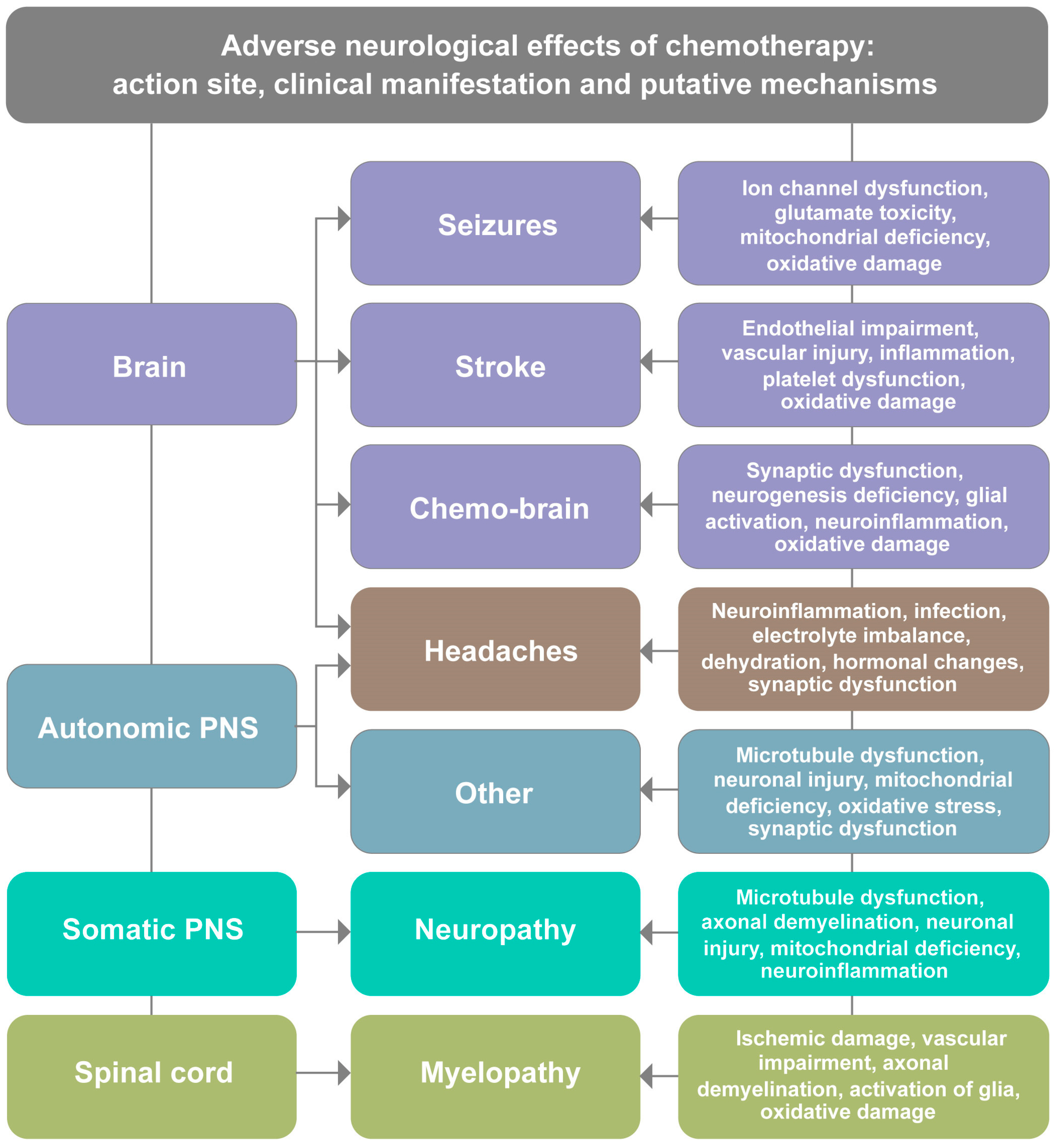
2. Adverse Neurological Effects of Chemotherapy—A Brief Overview
2.1. Cognitive Impairments
2.2. Seizures
2.3. Stroke
2.4. Myelopathy
2.5. Neuropathy
3. Chemotherapy-Related Headaches: A Review of Reported Cases
3.1. Breast Cancer
3.2. B-Cell Acute Lymphoblastic Leukemia (ALL)—Case 1
3.3. B-Cell Acute Lymphoblastic Leukemia (ALL)—Case 2
3.4. Chronic Lymphocytic Leukemia (CLL)—Case 3
3.5. Lymphoblastic Lymphoma—Case 4
3.6. Non-Hodgkin’s Lymphoma—Case 5
3.7. Small-Cell Lung Cancer—Case 6
3.8. Testicular Cancer—Case 7
3.9. Systematic Epidemiological Data from Cohort Studies
4. Mechanisms of Chemotherapy-Related Headaches
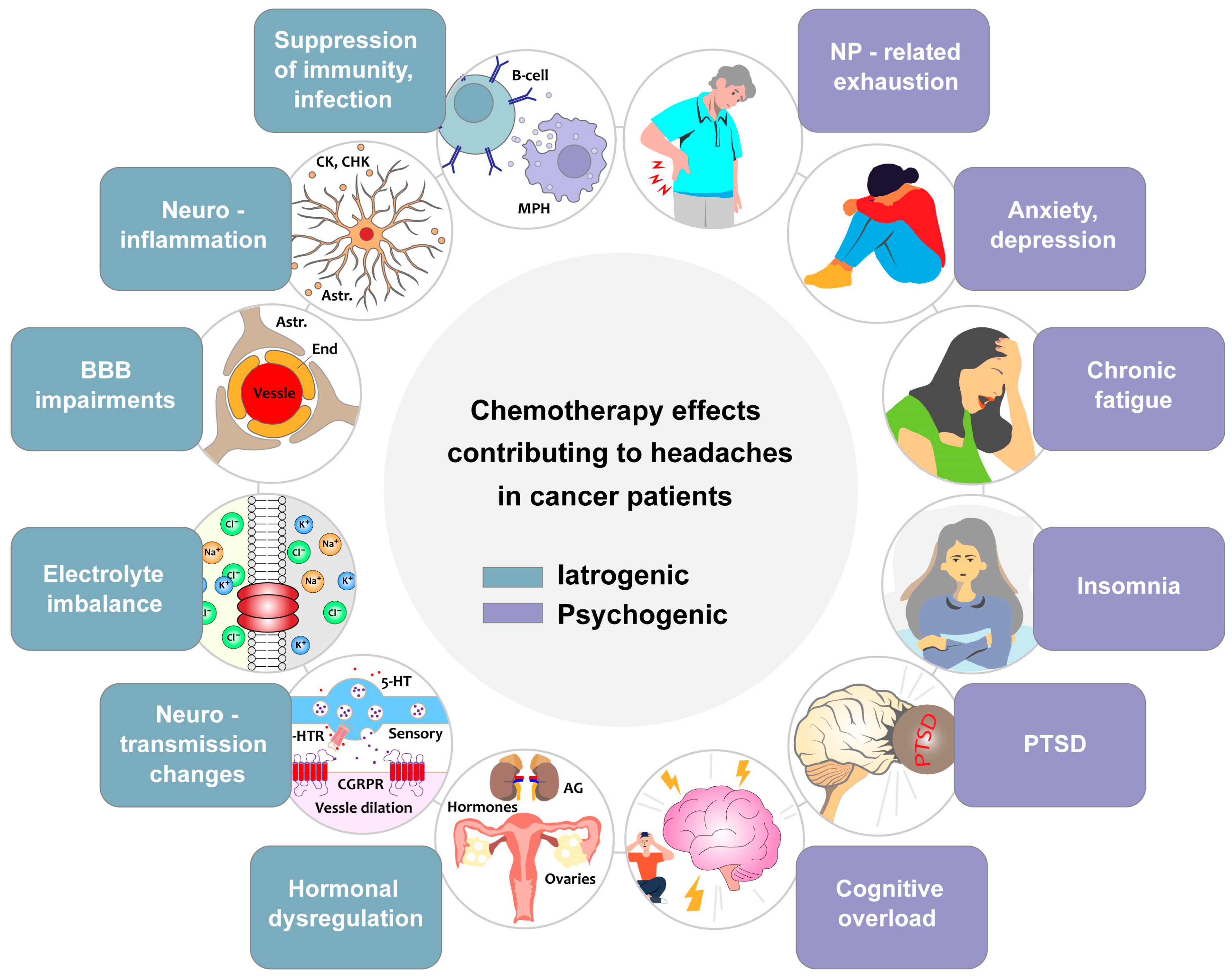
4.1. Iatrogenic Mechanisms of CRHs
- Immunosuppression and infections: Chemotherapy weakens immune defenses and induces cytopenia, creating a vulnerability window for opportunistic infections that may contribute to headaches [80]. Neutropenia caused by chemotherapy, which is characterized by a reduction in neutrophils, is particularly hazardous to the body’s ability to fight infections [80,81,82]. Patients undergoing chemotherapy are particularly prone to bacterial, viral, and fungal infections, some of which can lead to meningitis or encephalitis, both of which are known to cause persistent headaches [83,84]. Additionally, IT chemotherapy, which involves administering drugs into the CSF through a lumbar puncture or lateral ventricles, increases the risk of introducing pathogens. This procedure may result in aseptic or infectious meningitis, which is often accompanied by severe headaches. Occasionally, oncologists may need to reduce chemotherapy doses to mitigate infection risks, but this can compromise the relative dose intensity (RDI) and, in turn, treatment effectiveness [85,86]. Finally, latent viruses such as herpes simplex and cytomegalovirus can reactivate during chemotherapy, presenting neurological symptoms, including headaches.
- Neuroinflammation: Neuroinflammation represents a central convergent pathway in CRH pathogenesis, distinct from the general inflammatory response seen in other chemotherapy complications. Specifically, CRHs exhibit elevated levels of trigeminal-specific inflammatory mediators and preferentially activate pain-processing neural circuits. Neuroinflammation is the second leading mechanism in chemotherapy-induced headaches, driven by the brain’s immune response to tissue damage, toxins, and chemotherapy agents. The inflammation may persist even after the initial trigger is removed, leading to chronic headache syndromes [87,88]. Chemotherapy activates glial cells, such as microglia and astrocytes, which release pro-inflammatory cytokines, including IL-6, TNF-α, and IL-1β, sensitizing pain pathways and contributing to headache development [1,89,90,91]. Although chemotherapy agents are known to trigger CRH through the aforementioned mechanisms, there is no evidence for a role in selective meningeal inflammatory pathology. Indirectly, these agents can trigger a general inflammatory cascade, which leads to meningeal inflammation and irritation. For example, oxaliplatin activates the PI3K-mTOR pathway, which increases cytokine expression and may promote neuroinflammation and headaches [3,89]. Similarly, platinum-based drugs (cisplatin, oxaliplatin), alkylating agents, and taxanes disrupt the neuroimmune balance, causing interference with axonal transport, alterations in ion channels, and mitochondrial dysfunction, all of which exacerbate neuroinflammation [92]. These disruptions increase neuronal excitability and lower pain thresholds, worsening headaches. Cytokine-mediated neuroinflammation associated with chemotherapy has previously been established, although no dedicated biomarker studies have yet quantified IL-6 or TNF-α specifically in patients with CRHs. Work in cancer-related pain and primary headache disorders consistently demonstrates higher serum levels of IL-6 and TNF-α in migraine and chronic migraine compared with controls, with positive correlations between cytokine levels and headache frequency or intensity [93,94]. Chemotherapy-induced neuroinflammation can also alter serotonin signaling, increasing its release through the activation of calcitonin gene-related peptide (CGRP) pathways, both of which are strongly implicated in migraine pathophysiology [3,95]. The rise of CGRP along meningeal vessels contributes to vasodilation and sensitization of trigeminal innervation, further linking chemotherapy to migraine-like headaches [95,96,97,98].
- Disruption of the blood–brain barrier: BBB is a semipermeable membrane of the vascular system of the CNS that protects the neural tissue from toxins and infection, regulates ion balance and neurotransmitter levels, and transports nutrients and waste between the blood and brain [99,100]. Some chemotherapeutic agents are known to disrupt the integrity of the BBB, increasing its permeability to toxins, inflammatory cytokines, and immune molecules. Drugs such as temozolomide, nelarabine, rituximab, methotrexate and others are known to cross the BBB, contributing to headache development [99,101,102]. For example, in neuro-oncology, protocols that combine intra-arterial hyperosmolar mannitol with methotrexate-based or other intra-arterial chemotherapy regimens produce marked, territory-specific increases in contrast leakage on MRI, consistent with transient BBB opening and enhanced drug penetration into brain tissue [103]. This anatomically specific BBB compromise may explain why headaches predominate over other cognitive symptoms in some patients. The disruption of the BBB allows pro-inflammatory cytokines, such as IL-6 and TNF-α, to penetrate the CNS, leading to heightened pain sensitivity and neuroinflammation [104]. This inflammatory cascade sensitizes the trigeminal nerve, which is closely linked to migraine pathogenesis and may also be involved in chemotherapy-related headaches [105]. Additionally, increased BBB permeability exposes the CNS to chemotherapeutic agents, exacerbating neurotoxicity, neuronal damage, and functional impairments.
- Homeostatic dysregulations: The systemic toxicity of chemotherapy with homeostatic impairments is another significant contributor to CRHs, as it can disrupt multiple organ systems, including the kidneys, liver, heart, and gastrointestinal tract, causing homeostatic disruptions [106,107,108]. Chemotherapeutic agents, such as cisplatin, cause electrolyte imbalances, leading to hypomagnesemia and hypokalemia, as well as sodium-potassium disturbances and dehydration, which are well-recognized triggers of headaches [109]. Specifically, hypomagnesemia occurs in 40–90% of cisplatin-treated patients, and headache is a recognized symptom of clinically significant magnesium deficiency [110]. Migraine data suggest that low magnesium markedly increases migraine attacks [111], but CRH-related hypomagnesemia has not yet been quantified. Dehydration is particularly relevant in headache pathogenesis, as many chemotherapy patients experience fluid loss due to vomiting and gastrointestinal dysfunction [112]. Dehydration also reduces CSF volume, leading to changes in intracranial pressure that can trigger headaches [113]. Additionally, drugs like methotrexate and cisplatin impair kidney function, further exacerbating fluid and electrolyte imbalances, which contribute to headache severity [114].
- Other iatrogenic mechanisms contributing to headaches: Hormonal fluctuations may also play a role in CRHs, as some chemotherapies affect the endocrine system, notably cortisol and estrogen levels, both of which are linked to headache disorders. Elevated cortisol levels in chemotherapy patients have been associated with increased headache intensity, similar to patterns observed in migraine [115]. In females, for instance, chemotherapy-induced ovarian dysfunction results in estrogen depletion, a known migraine trigger that may worsen CRHs [115,116,117]. Prospective studies in premenopausal breast cancer patients undergoing chemotherapy demonstrate that over 80% experience chemotherapy-induced amenorrhea with corresponding profound estrogen level drop compared to pre-treatment levels [118]. This precipitous decline correlates with new-onset or worsening headaches in 9–42% in post-menopausal women, with temporal patterns resembling menstrual migraine [119]. However, no study has yet directly correlated serial estradiol measurements with chemotherapy-related headache frequency, so extrapolation from migraine and menopause data remains inferential rather than definitive. Finally, vascular changes induced by chemotherapies, such as cisplatin, can cause vasospasms, endothelial damage, and altered cerebral blood flow, leading to fluctuations in intracranial pressure and headaches [39,120].
4.2. Psychogenic Mechanisms Underlying CRHs
- Sleep disruptions and fatigue: Sleep disturbances and fatigue are common among cancer patients, both as a direct result of chemotherapy and due to the emotional stress associated with a cancer diagnosis [121]. Chemotherapy-induced insomnia, frequent nocturnal awakenings, and poor sleep quality can lead to increased headache frequency and severity [122]. Disruptions in the circadian rhythm further compound this process, as inadequate sleep can lower pain thresholds and heighten neuroinflammatory responses, making headaches more persistent [123]. Polysomnography-based studies in cancer populations show that objective sleep continuity and architecture can be altered, including more awakenings/arousals and, in some cohorts, reduced REM and slow-wave sleep. However, findings vary by cancer type, disease stage, and treatment status [124]. Experimental evidence also links cytotoxic chemotherapy to sleep fragmentation, along with inflammatory signaling, resulting in a correlation with hypothalamic IL-6 expression [125]. Additionally, chemotherapy often causes profound fatigue, leaving patients in a state of chronic exhaustion. This persistent fatigue is linked to mitochondrial dysfunction, oxidative stress, and neuroinflammatory activation, all of which can contribute to headache pathogenesis. The combination of sleep deprivation and systemic fatigue creates a cycle in which exhaustion and neuroinflammation lead to more severe headaches [126].
- Anxiety and emotional stress: Anxiety is another well-recognized trigger for headaches. Cancer patients undergoing chemotherapy frequently experience heightened levels of stress and anxiety related to their prognosis, treatment side effects, and financial or social burdens. Studies have shown that individuals with high anxiety levels are more prone to developing chronic headaches, including migraine-like symptoms [127,128,129]. Anxiety triggers autonomic nervous system dysregulation, increasing cortisol and adrenaline release, both of which can exacerbate neuroinflammation, vasoconstriction, and pain perception [130]. Prolonged exposure to high stress can increase muscle tension, particularly in the neck and scalp, contributing to tension-type headaches [131], which are commonly reported in chemotherapy patients. Furthermore, chronic stress can alter neurotransmitter balance, especially in dopaminergic and serotonergic pathways, which are known to play a role in pain modulation and the development of headaches [130]. These neurochemical changes may explain why chemotherapy patients with preexisting anxiety or depressive disorders often experience more frequent and severe headaches compared to those without psychological distress.
- Disruption of daily routine and social life: Cancer treatment can significantly disrupt daily routines, social interactions, and overall quality of life. Many patients experience isolation, reduced physical activity, and a lack of control over their schedules, all of which contribute to emotional distress and headache exacerbation [132]. Routine disruptions can interfere with meal schedules, hydration habits, and medication adherence, critical factors in headache management. For example, inconsistent eating patterns and dehydration can contribute to hypoglycemia and electrolyte imbalances, known headache triggers [133,134]. Likewise, a lack of structured physical activity can lead to musculoskeletal tension and poor circulation, further contributing to headache development. Additionally, chemotherapy-related nausea, dizziness, and gastrointestinal disturbances can prevent patients from engaging in everyday social and occupational activities, leading to emotional distress and an increased perception of pain [135,136].
- Neuropathic pain-associated exhaustion leading to CRHs: Chemotherapy-induced neuropathic pain is another major factor that contributes to headache development and worsening fatigue. Many chemotherapeutic agents cause direct nerve damage, leading to burning, tingling, or electric-shock-like pain in the extremities. While neuropathic pain primarily affects the peripheral nervous system, it can also sensitize central pain pathways, making patients more susceptible to headaches [137]. Moreover, prolonged exposure to neuropathic pain drains mental and physical energy, leading to a state of exhaustion and increased pain sensitivity. Patients with persistent neuropathic symptoms often report higher levels of stress, irritability, and sleep disturbances, all of which further exacerbate CRHs [3].
- Other psychological factors: Beyond sleep disturbances, anxiety, routine disruptions, and neuropathic pain, other psychological factors can significantly influence the severity and persistence of chemotherapy-related headaches. Depression and emotional distress are particularly relevant, as cancer-related depression can alter pain perception, inflammatory responses, and neurotransmitter regulation [138], making headaches more intense and lasting. The psychological burden of undergoing chemotherapy, dealing with uncertainty, and facing physical changes often leads to increased emotional strain, which in turn exacerbates headache symptoms.
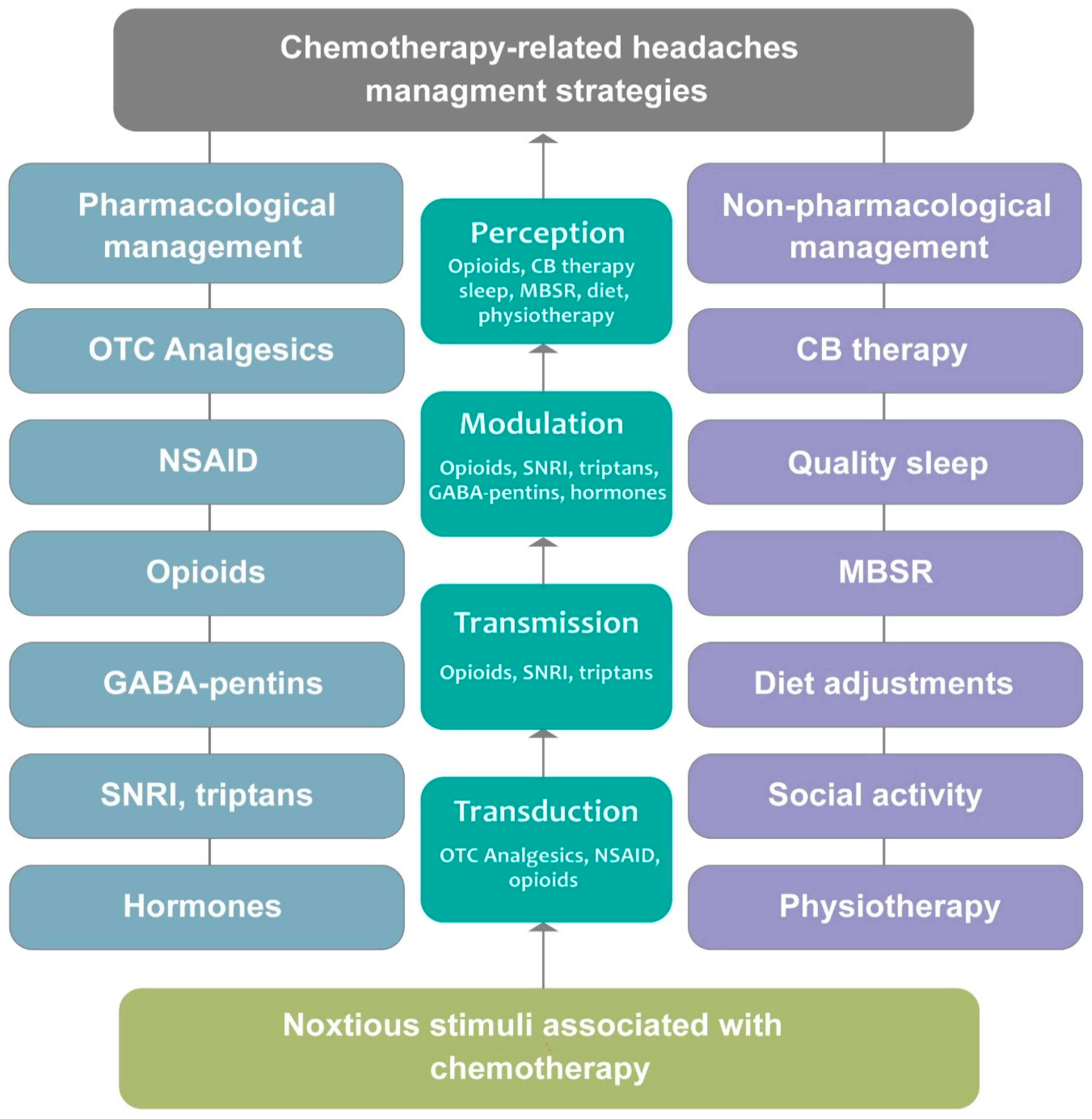
5. Management Strategies for Chemotherapy-Related Headaches
5.1. Current Strategies
5.2. Limitations of Current Strategies
6. Integrating CRHs into Standard Oncology Care: Practical Recommendations
6.1. Screening and Assessment Protocols
6.2. Multidisciplinary Care Models
6.3. Treatment Algorithms and Decision-Making Frameworks
7. The Way Forward: Toward Effective Management of CRHs
7.1. Priority Research Initiatives That Would Most Advance the Field
7.2. Advancing Mechanistic Research Through Translational Models
7.3. Targeted Pharmacological Interventions Based on Mechanism
7.4. Optimizing Supportive Care and Non-Pharmacological Interventions
7.5. Developing Personalized Treatment Plans Through Precision Medicine
7.6. Clinical Trials Establishing Evidence-Based Guidelines
7.7. Healthcare System and Policy Changes Supporting CRH Management
8. General Considerations and Future Directions
- (1)
- Mechanistic studies investigating the roles of inflammation, BBB disruption, mitochondrial dysfunction, sensitization, and neurotransmitter imbalances in the CNS of CRHs. Investigating these pathways should help elucidate the pathobiology of CRHs and identify novel therapeutic targets that extend beyond conventional symptomatic relief.
- (2)
- Establishing biomarker-guided standardized diagnostic criteria for CRHs and their integration in treating cancer patients and clinical care. These will involve routine assessment of headache patterns in chemotherapy patients, along with preventive steps such as improved hydration, sleep regulation, and customized pain management plans.
- (3)
- Multicenter clinical trials with pharmacological interventions combining traditional NSAID and OTC painkillers with triptans, anti-CGRP antibodies, hormone therapies and others, as well as treatment of hypertension, vascular dysfunction, and neural sensitization that might contribute to CRHs. This work must be conducted with careful consideration of potential cross-interactions of drugs with toxicity.
9. Limitations of the Review
10. Conclusions
Funding
Data Availability Statement
Acknowledgments
Conflicts of Interest
Abbreviations
| AEDs | Antiepileptic drugs |
| AI | Artificial intelligence |
| ALL | Acute lymphoblastic leukemia |
| BBB | Blood–brain barrier |
| CBT | Cognitive-behavioral therapy |
| CGRP | Calcitonin gene-related peptide |
| CIPN | Chemotherapy-induced peripheral neuropathy |
| CLL | Chronic lymphocytic leukemia |
| CNS | Central nervous system |
| CRH(s) | Chemotherapy-related headache(s) |
| CSF | Cerebrospinal fluid |
| CT | Computed tomography |
| DNA | Deoxyribonucleic acid |
| eGFR | Estimated glomerular filtration rate |
| EORTC | European Organization for Research and Treatment of Cancer |
| FDA | Food and Drug Administration |
| fMRI | Functional magnetic resonance imaging |
| GABA | γ-amino butyric acid (gamma-aminobutyric acid) |
| HIT-6 | Headache Impact Test-6 |
| ICHD-3 | International Classification of Headache Disorders, Third Edition |
| IL | Interleukin |
| IT | Intrathecal |
| MBSR | Mindfulness-based stress reduction |
| MIDAS | Migraine Disability Assessment Scale |
| MINE | Mesna, Ifosfamide, Mitoxantrone, and Etoposide |
| MRI | Magnetic resonance imaging |
| NSAID(s) | Nonsteroidal anti-inflammatory drug(s) |
| OTC | Over the counter |
| PET | Positron emission tomography |
| PI3K-mTOR | Phosphoinositide 3-kinase-mechanistic target of rapamycin |
| PNS | Peripheral nervous system |
| PTSD | Post-traumatic stress disorder |
| RCT(s) | Randomized controlled trial(s) |
| RDI | Relative dose intensity |
| REM | Rapid eye movement |
| SNRI(s) | Serotonin-norepinephrine reuptake inhibitor(s) |
| TNF-α | Tumor necrosis factor alpha |
| VAS | Visual analog scale |
| VEGF | Vascular endothelial growth factor |
| WHO | World Health Organization |
References
- Giglio, P.; Gilbert, M.R. Neurologic complications of cancer and its treatment. Curr. Oncol. Rep. 2010, 12, 50–59. [Google Scholar] [CrossRef]
- Murillo, L.C.; Sutachan, J.J.; Albarracin, S.L. An update on neurobiological mechanisms involved in the development of chemotherapy-induced cognitive impairment (CICI). Toxicol. Rep. 2023, 10, 544–553. [Google Scholar] [CrossRef]
- Was, H.; Borkowska, A.; Bagues, A.; Tu, L.; Liu, J.Y.H.; Lu, Z.; Rudd, J.A.; Nurgali, k.; Abalo, R. Mechanisms of Chemotherapy-Induced Neurotoxicity. Front. Pharmacol. 2022, 13, 750507. [Google Scholar] [CrossRef]
- Stone, J.B.; DeAngelis, L.M. Cancer-treatment-induced neurotoxicity--focus on newer treatments. Nat. Rev. Clin. Oncol. 2016, 13, 92–105. [Google Scholar] [CrossRef] [PubMed]
- Loprinzi, C.L.; Lacchetti, C.; Bleeker, J.; Cavaletti, G.; Chauhan, C.; Hertz, D.L.; Kelley, M.R.; Lavino, A.; Lustberg, M.B.; Paice, J.A.; et al. Prevention and Management of Chemotherapy-Induced Peripheral Neuropathy in Survivors of Adult Cancers: ASCO Guideline Update. J. Clin. Oncol. 2020, 38, 3325–3348. [Google Scholar] [CrossRef] [PubMed]
- Rai, A.C.; Goyal, A.; Khurana, A.K.; Vangala, A. Chemotherapy as cause of refractory severe headache in a case of small-cell lung cancer. BMJ Case Rep. 2021, 14, e240654. [Google Scholar] [CrossRef]
- Nurgali, K.; Jagoe, R.T.; Abalo, R. Editorial: Adverse Effects of Cancer Chemotherapy: Anything New to Improve Tolerance and Reduce Sequelae? Front. Pharmacol. 2018, 9, 245. [Google Scholar] [CrossRef] [PubMed]
- Wolff, B.J.; Wolff, M.J.; Wolff, J.E. Headache Reporting in Oncology Trials Depends on the Demographics of the Study Population. Vivo 2021, 35, 1939–1943. [Google Scholar] [CrossRef]
- Ilieva, M.B.; Tiberio, P.; Torrisi, R.; Lanzone, J.; Piero, V.D.; Santoro, A.; Viganò, A.; Sanctis, R.D. Profiling the Spectrum of Headache Disorders on 440 Breast Cancer Patients: Highlights on Clinical and Pathological Mechanisms. Biomedicines 2023, 11, 1059. [Google Scholar] [CrossRef]
- Burgess, J.; Ferdousi, M.; Gosal, D.; Boon, C.; Matsumoto, K.; Marshall, A.; Mak, T.; Marshall, A.; Frank, B.; Malik, R.A.; et al. Chemotherapy-Induced Peripheral Neuropathy: Epidemiology, Pathomechanisms and Treatment. Oncol. Ther. 2021, 9, 385–450. [Google Scholar] [CrossRef]
- Kandula, T.; Park, S.B.; Cohn, R.J.; Krishnan, A.V.; Farrar, M.A. Pediatric chemotherapy induced peripheral neuropathy: A systematic review of current knowledge. Cancer Treat. Rev. 2016, 50, 118–128. [Google Scholar] [CrossRef] [PubMed]
- Vitali, M.; Ripamonti, C.I.; Roila, F.; Proto, C.; Signorelli, D.; Imbimbo, M.; Corrao, G.; Brissa, A.; Rosaria, G.; de Braud, F.; et al. Cognitive impairment and chemotherapy: A brief overview. Crit. Rev. Oncol. Hematol. 2017, 118, 7–14. [Google Scholar] [CrossRef]
- Miyashita, M. Chemotherapy-related cognitive impairment: What we need to know and what we can do. Asia Pac. J. Oncol. Nurs. 2024, 11, 100334. [Google Scholar] [CrossRef]
- Tannock, I.F.; Ahles, T.A.; Ganz, P.A.; Van Dam, F.S. Cognitive impairment associated with chemotherapy for cancer: Report of a workshop. J. Clin. Oncol. 2004, 22, 2233–2239. [Google Scholar] [CrossRef]
- Moore, H.C. An overview of chemotherapy-related cognitive dysfunction, or ‘chemobrain’. Oncology 2014, 28, 797–804. [Google Scholar]
- Singh, G.; Rees, J.H.; Sander, J.W. Seizures and epilepsy in oncological practice: Causes, course, mechanisms and treatment. J. Neurol. Neurosurg. Psychiatry 2007, 78, 342–349. [Google Scholar] [CrossRef] [PubMed]
- Dana, R.; Spartacus, R.K.; Mutha, S.; Bhat, P. Seizure following chemotherapy (paclitaxel and cisplatin) in a patient of carcinoma cervix. Indian J. Pharmacol. 2016, 48, 736–738. [Google Scholar] [CrossRef]
- Gonzalez Castro, L.N.; Milligan, T.A. Seizures in patients with cancer. Cancer 2020, 126, 1379–1389. [Google Scholar] [CrossRef]
- Dardiotis, E.; Aloizou, A.-M.; Markoula, S.; Siokas, V.; Tsarouhas, K.; Tzanakakis, G.; Libra, M.; Kyritsis, A.; Brotis, A.; Aschner, M.; et al. Cancer-associated stroke: Pathophysiology, detection and management (Review). Int. J. Oncol. 2019, 54, 779–796. [Google Scholar] [CrossRef]
- Navi, B.B.; Iadecola, C. Ischemic stroke in cancer patients: A review of an underappreciated pathology. Ann. Neurol. 2018, 83, 873–883. [Google Scholar] [CrossRef] [PubMed]
- Cachia, D.; Kamiya-Matsuoka, C.; Pinnix, C.C.; Chi, L.; Kantarjian, H.M.; Cortes, J.E.; Daver, N.; Woodman, K. Myelopathy following intrathecal chemotherapy in adults: A single institution experience. J. Neuro-Oncol. 2015, 122, 391–398. [Google Scholar] [CrossRef]
- Graber, J.J.; Nolan, C.P. Myelopathies in patients with cancer. Arch. Neurol. 2010, 67, 298–304. [Google Scholar] [CrossRef] [PubMed]
- International Headache Society. International Classification of Headache Disorders 3rd edition beta-based field testing of vestibular migraine in China: Demographic, clinical characteristics, audiometric findings and diagnosis statues. Cephalalgia 2016, 36, 240–248. [Google Scholar] [CrossRef] [PubMed]
- De la Riva, P.; Andres-Marín, N.; Gonzalo-Yubero, N.; Tainta-Cuezva, M.; Caminos, N.; Urtasun-Ocariz, M.Á.; Martí-Massó, J.F. Headache and other complications following intrathecal chemotherapy administration. Cephalalgia 2016, 37, 1109–1110. [Google Scholar] [CrossRef] [PubMed]
- Prabhakar, N.K.; Schmidt, P.C. Chemotherapy Withdrawal Migraine. Pain Med. 2022, 23, 860–862. [Google Scholar] [CrossRef]
- Bernstein, C.A. Evaluation of headache in patients with cancer. Cancer 2021, 127, 4368–4375. [Google Scholar] [CrossRef]
- Vichaya, E.G.; Chiu, G.S.; Krukowski, K.; Lacourt, T.E.; Kavelaars, A.; Dantzer, R.; Heijnen, C.J.; Walker, A.K. Mechanisms of chemotherapy-induced behavioral toxicities. Front. Neurosci. 2015, 9, 131. [Google Scholar] [CrossRef]
- Kitano, T.; Sasaki, T.; Gon, Y.; Todo, K.; Okazaki, S.; Kitamura, T.; Sakaguchi, M.; Sobue, T.; Matsumura, Y.; Hattori, S.; et al. The Effect of Chemotherapy on Stroke Risk in Cancer Patients. Thromb. Haemost. 2020, 120, 714–723. [Google Scholar] [CrossRef]
- Colvin, L.A. Chemotherapy-induced peripheral neuropathy: Where are we now? Pain 2019, 160, S1–S10. [Google Scholar] [CrossRef]
- Seretny, M.; Romaniuk, L.; Whalley, H.; Sladdin, K.; Lawrie, S.; Warnaby, C.E.; Roberts, N.; Colvin, L.; Tracey, I.; Fallon, M. Neuroimaging reveals a potential brain-based pre-existing mechanism that confers vulnerability to development of chronic painful chemotherapy-induced peripheral neuropathy. Br. J. Anaesth. 2023, 130, 83–93. [Google Scholar] [CrossRef]
- Fleming, B.; Edison, P.; Kenny, L. Cognitive impairment after cancer treatment: Mechanisms, clinical characterization, and management. BMJ 2023, 380, e071726. [Google Scholar] [CrossRef]
- Dietrich, J.; Prust, M.; Kaiser, J. Chemotherapy, cognitive impairment and hippocampal toxicity. Neuroscience 2015, 309, 224–232. [Google Scholar] [CrossRef]
- Sekeres, M.J.; Bradley-Garcia, M.; Martinez-Canabal, A.; Winocur, G. Chemotherapy-Induced Cognitive Impairment and Hippocampal Neurogenesis: A Review of Physiological Mechanisms and Interventions. Int. J. Mol. Sci. 2021, 22, 12697. [Google Scholar] [CrossRef]
- Vrajová, M.; Šlamberová, R.; Hoschl, C.; Ovsepian, S.V. Methamphetamine and sleep impairments: Neurobehavioral correlates and molecular mechanisms. Sleep 2021, 44, zsab001. [Google Scholar] [CrossRef] [PubMed]
- Byrnes, D.M.; Vargas, F.; Dermarkarian, C.; Kahn, R.; Kwon, D.; Hurley, J.; Schatz, J.H. Complications of Intrathecal Chemotherapy in Adults: Single-Institution Experience in 109 Consecutive Patients. J. Oncol. 2019, 2019, 4047617. [Google Scholar] [CrossRef]
- Sioka, C.; Kyritsis, A.P. Central and peripheral nervous system toxicity of common chemotherapeutic agents. Cancer Chemother. Pharmacol. 2009, 63, 761–767. [Google Scholar] [CrossRef] [PubMed]
- Zsurka, G.; Kunz, W.S. Mitochondrial dysfunction and seizures: The neuronal energy crisis. Lancet Neurol. 2015, 14, 956–966. [Google Scholar] [CrossRef]
- Verzicco, I.; Regolisti, G.; Quaini, F.; Bocchi, P.; Brusasco, I.; Ferrari, M.; Passeri, G.; Cannone, V.; Coghi, P.; Fiaccadori; et al. Electrolyte Disorders Induced by Antineoplastic Drugs. Front. Oncol. 2020, 10, 779. [Google Scholar] [CrossRef]
- Cameron, A.C.; Touyz, R.M.; Lang, N.N. Vascular Complications of Cancer Chemotherapy. Can. J. Cardiol. 2016, 32, 852–862. [Google Scholar] [CrossRef] [PubMed]
- Totzeck, M.; Mincu, R.I.; Rassaf, T. Cardiovascular Adverse Events in Patients with Cancer Treated with Bevacizumab: A Meta-Analysis of More Than 20 000 Patients. J. Am. Heart Assoc. 2017, 6, e006278. [Google Scholar] [CrossRef]
- Fung, C.; Dinh, P.; Ardeshir-Rouhani-Fard, S.; Schaffer, K.; Fossa, S.D.; Travis, L.B. Toxicities Associated with Cisplatin-Based Chemotherapy and Radiotherapy in Long-Term Testicular Cancer Survivors. Adv. Urol. 2018, 2018, 8671832. [Google Scholar] [CrossRef] [PubMed]
- Moik, F.; Makatsariya, A.; Ay, C. Challenging anticoagulation cases: Cancer-associated venous thromboembolism and chemotherapy-induced thrombocytopenia—A case-based review of clinical management. Thromb. Res. 2021, 199, 38–42. [Google Scholar] [CrossRef]
- Salman, R.A.-S.; Minks, D.P.; Mitra, D.; Rodrigues, M.A.; Bhatnagar, P.; du Plessis, J.C.; Joshi, Y.; Dennis, M.S.; Murray, G.D.; Newby, D.E.; et al. Effects of antiplatelet therapy on stroke risk by brain imaging features of intracerebral haemorrhage and cerebral small vessel diseases: Subgroup analyses of the RESTART randomised, open-label trial. Lancet Neurol. 2019, 18, 643–652. [Google Scholar] [CrossRef]
- Minhas, J.S.; Chithiramohan, T.; Wang, X.; Barnes, S.C.; Clough, R.H.; Kadicheeni, M.; Beishon, L.C.; Robinson, T. Oral antiplatelet therapy for acute ischaemic stroke. Cochrane Database Syst. Rev. 2022, 2022, CD000029. [Google Scholar]
- Verma, N.; Nolan, C.; Hirano, M.; Young, R.J. Intramedullary spinal cord and leptomeningeal metastases from intracranial low-grade oligodendroglioma. Clin. Imaging 2014, 38, 505–507. [Google Scholar] [CrossRef]
- Lim, K.Y.; Kim, S.I.; Kim, H.; Kang, J.; Park, J.W.; Won, J.K.; Shin, D.-Y.; Park, S.-H. Toxic leukoencephalopathy with axonal spheroids caused by chemotherapeutic drugs other than methotrexate. BMC Neurol. 2022, 22, 288. [Google Scholar] [CrossRef]
- Calls, A.; Carozzi, V.; Navarro, X.; Monza, L.; Bruna, J. Pathogenesis of platinum-induced peripheral neurotoxicity: Insights from preclinical studies. Exp. Neurol. 2020, 325, 113141. [Google Scholar] [CrossRef]
- Lee, E.C.; Lee, D.G. Progressive Lower Extremity Paralysis Caused by Intrathecal MTX-Induced Myelopathy Mimicking Guillain-Barre Syndrome: A Case Report. Diagnostics 2023, 13, 3337. [Google Scholar] [CrossRef] [PubMed]
- Sharma, S.; Sial, A.; Sima, S.; Diwan, A. Clinical signs and symptoms for degenerative cervical myelopathy: A scoping review of case-control studies to facilitate early diagnosis among healthcare professionals with stakeholder engagement. Spinal Cord 2025, 63, 171–180. [Google Scholar] [CrossRef] [PubMed]
- Hirakawa, Y.; Kitao, A.; Watanabe, M.; Matsumoto, S.; Komaki, R.; Sakai, R.; Morimoto, K.; Yakushijin, K.; Minami, H. Irreversible Intrathecal Chemotherapy-induced Myelopathy in a Patient with Diffuse Large B-cell Lymphoma. Intern. Med. 2024, 63, 547–551. [Google Scholar] [CrossRef]
- Levy, M. Immune-Mediated Myelopathies. Continuum 2024, 30, 180–198. [Google Scholar] [CrossRef]
- Preti, K.; Davis, M.E. Chemotherapy-Induced Peripheral Neuropathy: Assessment and Treatment Strategies for Advanced Practice Providers. Clin. J. Oncol. Nurs. 2024, 28, 351–357. [Google Scholar] [CrossRef] [PubMed]
- Staff, N.P.; Cavaletti, G.; Islam, B.; Lustberg, M.; Psimaras, D.; Tamburin, S. Platinum-induced peripheral neurotoxicity: From pathogenesis to treatment. J. Peripher. Nerv. Syst. 2019, 24, S26–S39. [Google Scholar] [CrossRef]
- Zajaczkowska, R.; Kocot-Kepska, M.; Leppert, W.; Wrzosek, A.; Mika, J.; Wordliczek, J. Mechanisms of Chemotherapy-Induced Peripheral Neuropathy. Int. J. Mol. Sci. 2019, 20, 1451. [Google Scholar] [CrossRef]
- Triarico, S.; Romano, A.; Attina, G.; Capozza, M.A.; Maurizi, P.; Mastrangelo, S.; Ruggiero, A. Vincristine-Induced Peripheral Neuropathy (VIPN) in Pediatric Tumors: Mechanisms, Risk Factors, Strategies of Prevention and Treatment. Int. J. Mol. Sci. 2021, 22, 4112. [Google Scholar] [CrossRef]
- Meregalli, C. An Overview of Bortezomib-Induced Neurotoxicity. Toxics 2015, 3, 294–303. [Google Scholar] [CrossRef] [PubMed]
- Starobova, H.; Vetter, I. Pathophysiology of Chemotherapy-Induced Peripheral Neuropathy. Front. Mol. Neurosci. 2017, 10, 174. [Google Scholar] [CrossRef] [PubMed]
- Maihofner, C.; Diel, I.; Tesch, H.; Quandel, T.; Baron, R. Chemotherapy-induced peripheral neuropathy (CIPN): Current therapies and topical treatment option with high-concentration capsaicin. Support. Care Cancer 2021, 29, 4223–4238. [Google Scholar] [CrossRef]
- Awaki, E.; Takeshima, T.; Matsumori, Y.; Hirata, K.; Miyazaki, N.; Takemura, R.; Osaga, S.; Tanizawa, Y.; Komori, M. Impact of Migraine on Daily Life: Results of the Observational survey of the Epidemiology, Treatment, and Care of Migraine (OVERCOME [Japan]) Study. Neurol. Ther. 2024, 13, 165–182. [Google Scholar] [CrossRef]
- Sullivan, D.P.; Martin, P.R.; Boschen, M.J.; Bandarian-Balooch, S. Dysfunctional sleep beliefs and behaviours: Psychological factors in sleep-related headaches. Behav. Res. Ther. 2022, 153, 104094. [Google Scholar] [CrossRef]
- Olawade, D.B.; Teke, J.; Adeleye, K.K.; Egbon, E.; Weerasinghe, K.; Ovsepian, S.V.; Boussios, S. AI-Guided Cancer Therapy for Patients with Coexisting Migraines. Cancers 2024, 16, 3690. [Google Scholar] [CrossRef]
- Numico, G.; Garrone, O.; Dongiovanni, V.; Silvestris, N.; Colantonio, I.; Di Costanzo, G.; Granetto, C.; Occelli, M.; Fea, E.; Heouaine, A.; et al. Prospective evaluation of major vascular events in patients with nonsmall cell lung carcinoma treated with cisplatin and gemcitabine. Cancer 2005, 103, 994–999. [Google Scholar] [CrossRef]
- Wang, X.; Yao, C.; Quan, L.; Zhou, J. A review on intrathecal administration of medications for leptomeningeal metastases in solid tumors. Front. Pharmacol. 2025, 16, 1472945. [Google Scholar] [CrossRef]
- Watanabe, K.; Arakawa, Y.; Oguma, E.; Uehara, T.; Yanagi, M.; Oyama, C.; Ikeda, Y.; Sasaki, K.; Isobe, K.; Mori, M.; et al. Characteristics of methotrexate-induced stroke-like neurotoxicity. Int. J. Haematol. 2018, 108, 630–636. [Google Scholar] [CrossRef] [PubMed]
- Vyas, D.; Laput, G.; Vyas, A. Chemotherapy-enhanced inflammation may lead to the failure of therapy and metastasis. Onco Targets Ther. 2014, 7, 1015–1023. [Google Scholar] [CrossRef] [PubMed]
- De Sanctis, R.; Vigano, A.; Pindilli, S.; Torrisi, R.; Santoro, A. A pilot analysis of headache disorders in breast cancer patients. Neurol. Sci. 2022, 43, 3313–3320. [Google Scholar] [CrossRef]
- Kataria, P.S.; Kendre, P.P.; Patel, A.A. Ifosfamide-induced Encephalopathy Precipitated by Aprepitant: A Rarely Manifested Side Effect of Drug Interaction. J. Pharmacol. Pharmacother. 2017, 8, 38–40. [Google Scholar] [CrossRef]
- Manoukian, M.A.C.; Panigrahi, A.R.; Tzimenatos, L. Headache and changes in artwork as a presentation of central venous sinus thrombosis in a child with acute lymphoblastic leukemia. Am. J. Emerg. Med. 2022, 59, 217.e1–217.e3. [Google Scholar] [CrossRef] [PubMed]
- Abd-Elsayed, A.; Pahapill, N. Successful Treatment of Chemotherapy-Induced Headaches with Occipital Nerve Stimulation: A Case Report. Neuromodulation 2020, 23, 881–882. [Google Scholar] [CrossRef]
- Hu, Y.H.; Li, G.Z.; Long, J.Y.; Yang, Q.-Y.; Zhang, Y.; Chen, F.; Wang, Y.-R. Severe Vincristine-Induced Neuropathic Pain: A Case Report with Pharmacogenetic Analysis and Literature Review. Pharmgenom. Pers. Med. 2022, 15, 1029–1035. [Google Scholar] [CrossRef]
- Riva, D.; Giorgi, C.; Nichelli, F.; Bulgheroni, S.; Massimino, M.; Cefalo, G.; Gandola, L.; Giannotta, M.; Bagnasco, I.; Saletti, V.; et al. Intrathecal methotrexate affects cognitive function in children with medulloblastoma. Neurology 2002, 59, 48–53. [Google Scholar] [CrossRef] [PubMed]
- Clarke, H.M.; Rao, A.R.; Porfiri, E. An Unusual Cause of Subacute Headache in a Patient Undergoing Chemotherapy for Advanced Testicular Nonseminomatous Germ Cell Tumour. Case Rep. Oncol. Med. 2016, 2016, 4317108. [Google Scholar] [CrossRef] [PubMed]
- Warrad, R.; Abushar, A.; Qubbaj, A.; Mosleh, S.; Odeh, R.; Abuhassan, A.; Shawahna, R. Neurotoxicity associated with cancer chemotherapy: The first study in the Palestinian healthcare system. BMC Cancer 2025, 25, 904. [Google Scholar] [CrossRef]
- Licaj, I.; Coquan, E.; Dabakuyo-Yonli, T.S.; Dauchy, S.; Vaz Luis, I.; Charles, C.; Lemogne, C.; Tredan, O.; Vanlemmens, L.; Jouannaud, C.; et al. Baseline quality of life and chemotherapy toxicities in patients with early breast cancer. Cancer 2023, 129, 1085–1095. [Google Scholar] [CrossRef]
- Quinten, C.; Martinelli, F.; Coens, C.; Sprangers, G.; Ringash, J.; Gotay, C.C.; Bjordal, K.; Greimel, E.; Reeve, B.B.; Maringwa, J.; et al. A global analysis of multitrial data investigating quality of life and symptoms as prognostic factors for survival in different tumor sites. Cancer 2014, 120, 302–311. [Google Scholar] [CrossRef]
- Newton, H.B. Neurological complications of chemotherapy to the central nervous system. Handb. Clin. Neurol. 2012, 105, 903–916. [Google Scholar] [PubMed]
- Rubnitz, J.; Relling, M.; Harrison, P.; Sandlund, J.; Ribeiro, R.; Rivera, G.; Thompson, S.J.; Evans, W.E.; Pui, C.-H. Transient encephalopathy following high-dose methotrexate treatment in childhood acute lymphoblastic leukemia. Leukemia 1998, 12, 1176–1181. [Google Scholar] [CrossRef]
- Demartini, C.; Francavilla, M.; Zanaboni, A.M.; Facchetti, S.; De Icco, R.; Martinelli, D.; Allena, M.; Greco, R.; Tassorelli, C. Biomarkers of Migraine: An Integrated Evaluation of Preclinical and Clinical Findings. Int. J. Mol. Sci. 2023, 24, 5334. [Google Scholar] [CrossRef]
- Grodzka, O.; Lagowski, W.; Eyileten, C.; Domitrz, I. Biomarkers in headaches as a potential solution to simplify differential diagnosis of primary headache disorders: A systematic review. J. Headache Pain 2025, 26, 73. [Google Scholar] [CrossRef]
- Delgado, A.; Guddati, A.K. Infections in Hospitalized Cancer Patients. World J. Oncol. 2021, 12, 195–205. [Google Scholar] [CrossRef]
- Lustberg, M.B. Management of neutropenia in cancer patients. Clin. Adv. Hematol. Oncol. 2012, 10, 825–826. [Google Scholar]
- Dale, D.C. Advances in the treatment of neutropenia. Curr. Opin. Support. Palliat. Care 2009, 3, 207–212. [Google Scholar] [CrossRef] [PubMed]
- Pomar, V.; Benito, N.; Lopez-Contreras, J.; Coll, P.; Gurgui, M.; Domingo, P. Characteristics and outcome of spontaneous bacterial meningitis in patients with cancer compared to patients without cancer. Medicine 2017, 96, e6899. [Google Scholar] [CrossRef]
- Costerus, J.M.; Brouwer, M.C.; van der Ende, A.; van de Beek, D. Community-acquired bacterial meningitis in adults with cancer or a history of cancer. Neurology 2016, 86, 860–866. [Google Scholar] [CrossRef] [PubMed]
- Ba, Y.; Shi, Y.; Jiang, W.; Feng, J.; Cheng, Y.; Xiao, L.; Zhang, Q.; Qiu, W.; Xu, B.; Xu, R.; et al. Current management of chemotherapy-induced neutropenia in adults: Key points and new challenges: Committee of Neoplastic Supportive-Care (CONS), China Anti-Cancer Association Committee of Clinical Chemotherapy, China Anti-Cancer Association. Cancer Biol. Med. 2020, 17, 896–909. [Google Scholar] [CrossRef]
- Blayney, D.W.; Schwartzberg, L. Chemotherapy-induced neutropenia and emerging agents for prevention and treatment: A review. Cancer Treat. Rev. 2022, 109, 102427. [Google Scholar] [CrossRef]
- Kursun, O.; Yemisci, M.; van den Maagdenberg, A.; Karatas, H. Migraine and neuroinflammation: The inflammasome perspective. J. Headache Pain 2021, 22, 55. [Google Scholar] [CrossRef]
- Wijeratne, T.; Murphy, M.J.; Wijeratne, C.; Martelletti, P.; Karimi, L.; Apostolopoulos, V.; Sales, C.; Riddell, N.; Crewther, S.G. Serial systemic immune inflammation indices: Markers of acute migraine events or indicators of persistent inflammatory status? J. Headache Pain 2025, 26, 7. [Google Scholar] [CrossRef]
- Schmitt, L.I.; Leo, M.; Kutritz, A.; Kleinschnitz, C.; Hagenacker, T. Activation and functional modulation of satellite glial cells by oxaliplatin lead to hyperexcitability of sensory neurons in vitro. Mol. Cell. Neurosci. 2020, 105, 103499. [Google Scholar] [CrossRef] [PubMed]
- Gibson, E.M.; Monje, M. Emerging mechanistic underpinnings and therapeutic targets for chemotherapy-related cognitive impairment. Curr. Opin. Oncol. 2019, 31, 531–539. [Google Scholar] [CrossRef]
- Gibson, E.M.; Nagaraja, S.; Ocampo, A.; Tam, L.T.; Wood, L.S.; Pallegar, P.N.; Greene, J.J.; Geraghty, A.C.; Goldstein, A.K.; Ni, L.; et al. Methotrexate Chemotherapy Induces Persistent Tri-glial Dysregulation that Underlies Chemotherapy-Related Cognitive Impairment. Cell 2019, 176, 43–55 e13. [Google Scholar] [CrossRef]
- Ollodart, J.; Steele, L.R.; Romero-Sandoval, E.A.; Strowd, R.E.; Shiozawa, Y. Contributions of neuroimmune interactions to chemotherapy-induced peripheral neuropathy development and its prevention/therapy. Biochem. Pharmacol. 2024, 222, 116070. [Google Scholar] [CrossRef] [PubMed]
- Musubire, A.K.; Cheema, S.; Ray, J.C.; Hutton, E.J.; Matharu, M. Cytokines in primary headache disorders: A systematic review and meta-analysis. J. Headache Pain 2023, 24, 36. [Google Scholar] [CrossRef]
- Al-Mazidi, S.; Farhat, K.; Nedjadi, T.; Chaudhary, A.; Zin Al-Abdin, O.; Rabah, D.; Al-Zoghaibi, M.; Djouhri, L. Association of Interleukin-6 and Other Cytokines with Self-Reported Pain in Prostate Cancer Patients Receiving Chemotherapy. Pain Med. 2017, 19, 1058–1066, Erratum in Pain Med. 2019, 20, 1259. https://doi.org/10.1093/pm/pnx300.. [Google Scholar] [CrossRef]
- Meng, J.; Ovsepian, S.V.; Wang, J.; Pickering, M.; Sasse, A.; Aoki, K.R.; Lawrence, G.W.; Dolly, J.O. Activation of TRPV1 mediates calcitonin gene-related peptide release, which excites trigeminal sensory neurons and is attenuated by a retargeted botulinum toxin with anti-nociceptive potential. J. Neurosci. 2009, 29, 4981–4992. [Google Scholar] [CrossRef]
- Guo, S.; Christensen, A.F.; Liu, M.L.; Janjooa, B.N.; Olesen, J.; Ashina, M. Calcitonin gene-related peptide induced migraine attacks in patients with and without familial aggregation of migraine. Cephalalgia 2017, 37, 114–124. [Google Scholar] [CrossRef]
- Guo, S.; Vollesen, A.L.H.; Olesen, J.; Ashina, M. Premonitory and nonheadache symptoms induced by CGRP and PACAP38 in patients with migraine. Pain 2016, 157, 2773–2781. [Google Scholar] [CrossRef]
- Hansen, J.M.; Hauge, A.W.; Olesen, J.; Ashina, M. Calcitonin gene-related peptide triggers migraine-like attacks in patients with migraine with aura. Cephalalgia 2010, 30, 1179–1186. [Google Scholar] [CrossRef]
- Mitusova, K.; Peltek, O.O.; Karpov, T.E.; Muslimov, A.R.; Zyuzin, M.V.; Timin, A.S. Overcoming the blood-brain barrier for the therapy of malignant brain tumor: Current status and prospects of drug delivery approaches. J. Nanobiotechnol. 2022, 20, 412. [Google Scholar] [CrossRef] [PubMed]
- Ovsepian, S.V.; O’Leary, V.B.; Ntziachristos, V.; Dolly, J.O. Circumventing Brain Barriers: Nanovehicles for Retroaxonal Therapeutic Delivery. Trends Mol. Med. 2016, 22, 983–993. [Google Scholar] [CrossRef] [PubMed]
- Csik, B.; Kordestan, K.V.; Gulej, R.; Patai, R.; Nyul-Toth, A.; Shanmugarama, S.; Mukli, P.; Ungvari, A.; Balsara, K.E.; McNall, R.Y.; et al. Cisplatin and methotrexate induce brain microvascular endothelial and microglial senescence in mouse models of chemotherapy-associated cognitive impairment. Geroscience 2025, 47, 3447–3459. [Google Scholar] [CrossRef]
- Patai, R.; Csik, B.; Nyul-Toth, A.; Gulej, R.; Kordestan, K.V.; Chandragiri, S.S.; Shanmugarama, S.S.; Tarantini, S.; Mukli, P.; Ungvari, A.; et al. Persisting blood-brain barrier disruption following cisplatin treatment in a mouse model of chemotherapy-associated cognitive impairment. Geroscience 2025, 47, 3835–3847. [Google Scholar] [CrossRef]
- Doolittle, N.D.; Muldoon, L.L.; Culp, A.Y.; Neuwelt, E.A. Delivery of Chemotherapeutics Across the Blood–Brain Barrier: Challenges and Advances. Adv. Pharmacol. 2014, 71, 203–243. [Google Scholar]
- Huang, X.; Hussain, B.; Chang, J. Peripheral inflammation and blood-brain barrier disruption: Effects and mechanisms. CNS Neurosci. Ther. 2021, 27, 36–47. [Google Scholar] [CrossRef]
- Ostertag, C.; Friedman, T.N.; Keough, M.B.; Kerr, B.J.; Sankar, T. Heightened presence of inflammatory mediators in the cerebrospinal fluid of patients with trigeminal neuralgia. Pain Rep. 2023, 8, e1117. [Google Scholar] [CrossRef]
- Zeien, J.; Qiu, W.; Triay, M.; Dhaibar, H.A.; Cruz-Topete, D.; Cornett, E.M.; Urits, I.; Viswanath, O.; Kaye, A.D. Clinical implications of chemotherapeutic agent organ toxicity on perioperative care. Biomed. Pharmacother. 2022, 146, 112503. [Google Scholar] [CrossRef] [PubMed]
- Ginsberg, J.P.; Womer, R.B. Preventing organ-specific chemotherapy toxicity. Eur. J. Cancer 2005, 41, 2690–2700. [Google Scholar] [CrossRef] [PubMed]
- Lleo, A.; Rimassa, L.; Colombo, M. Hepatotoxicity of immune check point inhibitors: Approach and management. Dig. Liver Dis. 2019, 51, 1074–1078. [Google Scholar] [CrossRef]
- Oronsky, B.; Caroen, S.; Oronsky, A.; Dobalian, V.E.; Oronsky, N.; Lybeck, M.; Reid, T.R.; Carter, C.A. Electrolyte disorders with platinum-based chemotherapy: Mechanisms, manifestations and management. Cancer Chemother. Pharmacol. 2017, 80, 895–907. [Google Scholar] [CrossRef]
- Workeneh, B.T.; Uppal, N.N.; Jhaveri, K.D.; Rondon-Berrios, H. Hypomagnesemia in the cancer patient. Kidney360 2020, 2, 154–166. [Google Scholar] [CrossRef] [PubMed]
- Assarzadegan, F.; Asgarzadeh, S.; Hatamabadi, H.R.; Shahrami, A.; Tabatabaey, A.; Asgarzadeh, M. Serum concentration of magnesium as an independent risk factor in migraine attacks. Int. Clin. Psychopharmacol. 2016, 31, 287–292. [Google Scholar] [CrossRef] [PubMed]
- Akbarali, H.I.; Muchhala, K.H.; Jessup, D.K.; Cheatham, S. Chemotherapy induced gastrointestinal toxicities. Adv. Cancer Res. 2022, 155, 131–166. [Google Scholar]
- Ducros, A.; Biousse, V. Headache arising from idiopathic changes in CSF pressure. Lancet Neurol. 2015, 14, 655–668. [Google Scholar] [CrossRef]
- Kiaunyte, S.; Maske, R.; Kiudeliene, R.; Rutkauskiene, G. Chemotherapy induced kidney and urinary tract related complications: A study in the Department of Pediatric Oncology and Hematology. Biomed. Pharmacother. 2022, 153, 113316. [Google Scholar] [CrossRef]
- Woldeamanuel, Y.W.; Sanjanwala, B.M.; Cowan, R.P. Endogenous glucocorticoids may serve as biomarkers for migraine chronification. Ther. Adv. Chronic Dis. 2020, 11, 2040622320939793. [Google Scholar] [CrossRef]
- Nappi, R.E.; Tiranini, L.; Sacco, S.; De Matteis, E.; De Icco, R.; Tassorelli, C. Role of Estrogens in Menstrual Migraine. Cells 2022, 11, 1355. [Google Scholar] [CrossRef]
- Tiranini, L.; Cucinella, L.; Martella, S.; Bosoni, D.; Martini, E.; Nappi, R.E. Is now the time to reconsider risks, benefits, and limitations of estrogen preparations as a treatment for menstrually related migraine? Expert Rev. Neurother. 2023, 23, 377–388. [Google Scholar] [CrossRef]
- Raveendran, C.; Meloot, S.S.; Yadev, I. Clinical and biochemical amenorrhea in premenopausal patients with breast cancer treated with chemotherapy—A prospective cohort study. BMC Cancer 2025, 25, 753. [Google Scholar] [CrossRef] [PubMed]
- Kim, S.; Park, J.W. Migraines in Women: A Focus on Reproductive Events and Hormonal Milestones. Deleted J. 2024, 25, 3–15. [Google Scholar] [CrossRef]
- Sole-Guardia, G.; Custers, E.; de Lange, A.; Clijncke, E.; Geenen, B.; Gutierrez, J.; Küsters, B.; Claassen, J.A.H.R.; de Leeuw, F.-E.; Wiesmann, M.; et al. Association between hypertension and neurovascular inflammation in both normal-appearing white matter and white matter hyperintensities. Acta Neuropathol. Commun. 2023, 11, 2. [Google Scholar] [CrossRef]
- Kwekkeboom, K.L.; Tostrud, L.; Costanzo, E.; Coe, C.L.; Serlin, R.C.; Ward, S.E.; Zhang, Y. The Role of Inflammation in the Pain, Fatigue, and Sleep Disturbance Symptom Cluster in Advanced Cancer. J. Pain Symptom Manag. 2018, 55, 1286–1295. [Google Scholar] [CrossRef]
- Woldeamanuel, Y.W.; Blayney, D.W.; Jo, B.; Fisher, S.E.; Benedict, C.; Oakley-Girvan, I.; Kesler, S.R.; Palesh, O. Headache outcomes of a sleep behavioral intervention in breast cancer survivors: Secondary analysis of a randomized clinical trial. Cancer 2021, 127, 4492–4503. [Google Scholar] [CrossRef]
- Bumgarner, J.R.; Nelson, R.J. Implications of Disrupted Circadian Rhythms on Pain. J. Psychiatr. Brain Sci. 2021, 6, e210014. [Google Scholar] [PubMed]
- Vaughn, C.M.; Vaughn, B.V. Sleep and Cancer. Cancers 2025, 17, 911. [Google Scholar] [CrossRef] [PubMed]
- Borniger, J.C.; Gaudier-Diaz, M.M.; Zhang, N.; Nelson, R.J.; DeVries, A.C. Cytotoxic chemotherapy increases sleep and sleep fragmentation in non-tumor-bearing mice. Brain Behav. Immun. 2015, 47, 218–227. [Google Scholar] [CrossRef] [PubMed]
- Morris, G.; Berk, M.; Walder, K.; Maes, M. Central pathways causing fatigue in neuro-inflammatory and autoimmune illnesses. BMC Med. 2015, 13, 28. [Google Scholar] [CrossRef]
- Belete, A.M.; Alemagegn, A.; Mulu, A.T.; Yazie, T.S.; Bewket, B.; Asefa, A.; Shiferaw, W.S.; Akash, M.S.H. Prevalence of depression and associated factors among adult cancer patients receiving chemotherapy during the era of COVID-19 in Ethiopia. Hospital-based cross-sectional study. PLoS ONE 2022, 17, e0270293. [Google Scholar] [CrossRef]
- Demissie, G.; Balta, B. Prevalence of depression and associated factors among primary caregivers of adult cancer patients, Sidama region Southern Ethiopia: Cross-sectional study. BMC Nurs. 2024, 23, 384. [Google Scholar] [CrossRef]
- Kumar, R.; Asif, S.; Bali, A.; Dang, A.K.; Gonzalez, D.A. The Development and Impact of Anxiety With Migraines: A Narrative Review. Cureus 2022, 14, e26419. [Google Scholar] [CrossRef]
- Sic, A.; Bogicevic, M.; Brezic, N.; Nemr, C.; Knezevic, N.N. Chronic Stress and Headaches: The Role of the HPA Axis and Autonomic Nervous System. Biomedicines 2025, 13, 463. [Google Scholar] [CrossRef]
- Zielinski, G.; Ginszt, M.; Zawadka, M.; Rutkowska, K.; Podstawka, Z.; Szkutnik, J.; Majcher, P.; Gawda, P. The Relationship between Stress and Masticatory Muscle Activity in Female Students. J. Clin. Med. 2021, 10, 3459. [Google Scholar] [CrossRef]
- Westergaard, M.L.; Lau, C.J.; Allesoe, K.; Andreasen, A.H.; Jensen, R.H. Poor social support and loneliness in chronic headache: Prevalence and effect modifiers. Cephalalgia 2021, 41, 1318–1331. [Google Scholar] [CrossRef]
- Dziewa, M.; Banka, B.; Herbet, M.; Piatkowska-Chmiel, I. Eating Disorders and Diabetes: Facing the Dual Challenge. Nutrients 2023, 15, 3955. [Google Scholar] [CrossRef] [PubMed]
- Arca, K.N.; Halker Singh, R.B. Dehydration and Headache. Curr. Pain Headache Rep. 2021, 25, 56. [Google Scholar] [CrossRef]
- Olver, I.N.; Eliott, J.A.; Koczwara, B. A qualitative study investigating chemotherapy-induced nausea as a symptom cluster. Support. Care Cancer 2014, 22, 2749–2756. [Google Scholar] [CrossRef]
- Salihah, N.; Mazlan, N.; Lua, P.L. Chemotherapy-induced nausea and vomiting: Exploring patients’ subjective experience. J. Multidiscip. Healthc. 2016, 9, 145–151. [Google Scholar]
- Cao, B.; Xu, Q.; Shi, Y.; Zhao, R.; Li, H.; Zheng, J.; Liu, F.; Wan, Y.; Wei, B. Pathology of pain and its implications for therapeutic interventions. Signal Transduct. Target. Ther. 2024, 9, 155. [Google Scholar] [CrossRef]
- Han, C.; Pae, C.U. Pain and depression: A neurobiological perspective of their relationship. Psychiatry Investig. 2015, 12, 1–8. [Google Scholar] [CrossRef]
- Vega, J.N.; Dumas, J.; Newhouse, P.A. Cognitive Effects of Chemotherapy and Cancer-Related Treatments in Older Adults. Am. J. Geriatr. Psychiatry 2017, 25, 1415–1426. [Google Scholar] [CrossRef] [PubMed]
- Oppegaard, K.R.; Conley, Y.P.; Paul, S.; Cooper, B.; Harris, C.S.; Shin, J.; Morse, L.; Levine, J.D.; Cartwright, F.; Roy, R.; et al. Self-reported cancer-related cognitive impairment is associated with perturbed neurotransmission pathways. J. Neural Transm. 2025, 132, 275–286. [Google Scholar] [CrossRef] [PubMed]
- Rao, V.; Bhushan, R.; Kumari, P.; Cheruku, S.P.; Ravichandiran, V.; Kumar, N. Chemobrain: A review on mechanistic insight, targets and treatments. Adv. Cancer Res. 2022, 155, 29–76. [Google Scholar]
- Koffel, E.; Khawaja, I.S.; Germain, A. Sleep Disturbances in Posttraumatic Stress Disorder: Updated Review and Implications for Treatment. Psychiatr. Ann. 2016, 46, 173–176. [Google Scholar] [CrossRef]
- Pace-Schott, E.F.; Germain, A.; Milad, M.R. Sleep and REM sleep disturbance in the pathophysiology of PTSD: The role of extinction memory. Biol. Mood Anxiety Disord. 2015, 5, 3. [Google Scholar] [CrossRef]
- Crona, D.J.; Faso, A.; Nishijima, T.F.; McGraw, K.A.; Galsky, M.D.; Milowsky, M.I. A Systematic Review of Strategies to Prevent Cisplatin-Induced Nephrotoxicity. Oncologist 2017, 22, 609–619. [Google Scholar] [CrossRef] [PubMed]
- Sikking, C.; Niggebrugge-Mentink, K.L.; van der Sman, A.S.E.; Smit, R.H.P.; Bouman-Wammes, E.W.; Beex-Oosterhuis, M.M.; van Kesteren, C. Hydration Methods for Cisplatin Containing Chemotherapy: A Systematic Review. Oncologist 2023, 29, e173–e186. [Google Scholar] [CrossRef]
- Bindu, S.; Mazumder, S.; Bandyopadhyay, U. Non-steroidal anti-inflammatory drugs (NSAIDs) and organ damage: A current perspective. Biochem. Pharmacol. 2020, 180, 114147. [Google Scholar] [CrossRef] [PubMed]
- Manfredi, P.L.; Shenoy, S.; Payne, R. Sumatriptan for Headache Caused by Head and Neck Cancer. Headache J. Head Face Pain 2000, 40, 758–760. [Google Scholar] [CrossRef] [PubMed]
- Satow, T.; Saiki, M.; Kishi, Y.; Fukuda, M.; Nakaoku, T.; Nakatani, K. Rizatriptan Is Effective for Headache in a Patient with Meningeal Carcinomatosis. J. Pain Symptom Manag. 2011, 41, e2–e4. [Google Scholar] [CrossRef]
- Kashyap, P.V.; Chabri, S. Steroids in Headache: A Comprehensive Review of Recent Research. Ann. Neurosci. 2023, 30, 256–261. [Google Scholar] [CrossRef]
- Lv, W.J.; He, J.Y.; Zou, Y.L.; Liu, Y.J.; Zhang, Q.Q.; Liu, X.; Bu, H. Intrathecal dexamethasone and methotrexate treatment of neoplastic meningitis from solid tumors. Neuroimmunol. Neuroinflamm. 2015, 2, 162–166. [Google Scholar][Green Version]
- Bennett, M.I.; Laird, B.; van Litsenburg, C.; Nimour, M. Pregabalin for the management of neuropathic pain in adults with cancer: A systematic review of the literature. Pain Med. 2013, 14, 1681–1688. [Google Scholar] [CrossRef]
- Edwards, H.L.; Mulvey, M.R.; Bennett, M.I. Cancer-Related Neuropathic Pain. Cancers 2019, 11, 373. [Google Scholar] [CrossRef]
- Biscetti, L.; Cresta, E.; Cupini, L.M.; Calabresi, P.; Sarchielli, P. The putative role of neuroinflammation in the complex pathophysiology of migraine: From bench to bedside. Neurobiol. Dis. 2023, 180, 106072. [Google Scholar] [CrossRef]
- Sierra, S.; Herz, S.M.; On, D.; Dozmorov, M.G.; Damaj, M.I.; Gonzalez-Maeso, J. Upregulation of the neuropeptide receptor calcitonin receptor-like in the spinal cord via MLL2 in a mouse model of paclitaxel-induced peripheral neuropathy. Mol. Pain 2025, 21, 17448069251314857. [Google Scholar] [CrossRef]
- Howard, S.C.; McCormick, J.; Pui, C.H.; Buddington, R.K.; Harvey, R.D. Preventing and Managing Toxicities of High-Dose Methotrexate. Oncologist 2016, 21, 1471–1482. [Google Scholar] [CrossRef]
- Zeidan, F.; Vago, D.R. Mindfulness meditation-based pain relief: A mechanistic account. Ann. N. Y. Acad. Sci. 2016, 1373, 114–127. [Google Scholar] [CrossRef] [PubMed]
- Okamoto, K.; Saito, Y.; Narumi, K.; Furugen, A.; Iseki, K.; Kobayashi, M. Non-steroidal Anti-inflammatory Drugs Are a Risk Factor for Cisplatin-induced Nephrotoxicity: A Meta-analysis of Retrospective Studies. Anticancer Res. 2020, 40, 1747–1751. [Google Scholar] [CrossRef] [PubMed]
- Sørup, S.; Darvalics, B.; Russo, L.; Oksen, D.; Lamy, F.; Verpillat, P.; Aa, K.; Ht, S.; Cronin-Fenton, D. High-dose corticosteroid use and risk of hospitalization for infection in patients treated with immune checkpoint inhibitors––A nationwide register-based cohort study. Cancer Med. 2021, 10, 4957–4963. [Google Scholar] [CrossRef]
- Ciorcan, M.; Chisavu, L.; Mihaescu, A.; Gadalean, F.; Bob, F.R.; Negru, S.; Schiller, O.M.; Grosu, I.D.; Marc, L.; Chisavu, F.; et al. Chronic kidney disease in cancer patients, the analysis of a large oncology database from Eastern Europe. PLoS ONE 2022, 17, e0265930. [Google Scholar] [CrossRef]
- Zimmermann-Schlegel, V.; Hartmann, M.; Sklenarova, H.; Herzog, W.; Haun, M.W. Accessibility, Availability, and Potential Benefits of Psycho-Oncology Services: The Perspective of Community-Based Physicians Providing Cancer Survivorship Care. Oncologist 2017, 22, 719–727. [Google Scholar] [CrossRef] [PubMed]
- Martin, M.L.; Chung, H.; Rydén, A. Willingness to report treatment-related symptoms of immunotherapy among patients with non-small cell lung cancer. Qual. Life Res. 2021, 31, 1147–1155. [Google Scholar] [CrossRef]
- Sauro, K.M.; Rose, M.S.; Becker, W.J.; Christie, S.N.; Giammarco, R.; Mackie, G.F.; Eloff, A.G.; Gawel, M.J. HIT-6 and MIDAS as Measures of Headache Disability in a Headache Referral Population. Headache J. Head Face Pain 2010, 50, 383–395. [Google Scholar] [CrossRef]
- Raffaelli, B.; Mecklenburg, J.; Overeem, L.H.; Scholler, S.; Dahlem, M.A.; Kurth, T.; Gonçalves, A.S.O.; Reuter, U.; Neeb, L. Determining the Evolution of Headache Among Regular Users of a Daily Electronic Diary via a Smartphone App: Observational Study. JMIR MHealth UHealth 2021, 9, e26401. [Google Scholar] [CrossRef]
- Gago-Veiga, A.B.; Camiña Muñiz, J.; García-Azorín, D.; González-Quintanilla, V.; Ordás, C.M.; Torres-Ferrus, M.; Santos-Lasaosa, S.; Viguera-Romero, J.; Pozo-Rosich, P. Headache: What to ask, how to examine, and what scales to use. Recommendations of the Spanish society of neurology’s headache study group. Neurol. (Engl. Ed.) 2021, 37, 564–574. [Google Scholar] [CrossRef]
- National Institute for Health Care Excellence. Overview|Headaches in over 12s: Diagnosis Management|Guidance; NICE Niceorguk: London, UK, 2012. [Google Scholar]
- Nayar, G.; Ejikeme, T.; Chongsathidkiet, P.; Elsamadicy, A.A.; Blackwell, K.L.; Clarke, J.M.; Lad, S.P.; Fecci, P.E. Leptomeningeal disease: Current diagnostic and therapeutic strategies. Oncotarget 2017, 8, 73312–73328. [Google Scholar] [CrossRef] [PubMed]
- Scotté, F.; Taylor, A.; Davies, A. Supportive Care: The “Keystone” of Modern Oncology Practice. Cancers 2023, 15, 3860. [Google Scholar] [CrossRef] [PubMed]
- Kang, E.; Kang, J.H.; Koh, S.-J.; Kim, Y.J.; Seo, S.; Kim, J.H.; Cheon, J.; Kang, E.J.; Song, E.-K.; Nam, E.M.; et al. Early Integrated Palliative Care in Patients with Advanced Cancer. JAMA Netw. Open 2024, 7, e2426304. [Google Scholar] [CrossRef]
- Di Maio, M.; Basch, E.; Denis, F.; Fallowfield, L.J.; Ganz, P.A.; Howell, D.; Kowalski, C.; Perrone, F.; Stover, A.M.; Sundaresan, P.; et al. The role of patient-reported outcome measures in the continuum of cancer clinical care: ESMO Clinical Practice Guideline. Ann. Oncol. 2022, 33, 878–892. [Google Scholar] [CrossRef]
- Arata, W.H.; Midha, R.K.; Varrassi, G.; Sala, K.; Plessala, M.J.; Brodtmann, J.; Dufrene, K.; Palowsky, Z.; Griffin, P.; Ahmadzadeh, S.; et al. Occipital nerve block for headaches: A narrative review. J. Oral Facial Pain Headache 2024, 38, 1–10. [Google Scholar] [CrossRef] [PubMed]
- Gu, Q.; Wang, L.; King, T.Z.; Chen, H.; Zhang, L.; Ni, J.; Mao, H. Seeing through “brain fog”: Neuroimaging assessment and imaging biomarkers for cancer-related cognitive impairments. Cancer Imaging 2024, 24, 158. [Google Scholar] [CrossRef]
- Kesler, S.R.; Henneghan, A.M.; Prinsloo, S.; Palesh, O.; Wintermark, M. Neuroimaging based biotypes for precision diagnosis and prognosis in cancer-related cognitive impairment. Front. Med. 2023, 10, 1199605. [Google Scholar] [CrossRef] [PubMed]
- Ray, J.C.; Allen, P.; Bacsi, A.; Bosco, J.J.; Chen, L.; Eller, M.; Kua, H.; Lim, L.L.; Matharu, M.S.; Monif, M.; et al. Inflammatory complications of CGRP monoclonal antibodies: A case series. J. Headache Pain 2021, 22, 121. [Google Scholar] [CrossRef]
- Mallah, K.; Couch, C.; Borucki, D.M.; Toutonji, A.; Alshareef, M.; Tomlinson, S. Anti-inflammatory and Neuroprotective Agents in Clinical Trials for CNS Disease and Injury: Where Do We Go from Here? Front. Immunol. 2020, 11, 2021. [Google Scholar] [CrossRef]
- Dave, J.; Hakkinen, I.; Zhang, P. Comprehensive list of preventative migraine headache medications without significant drug-drug interactions. Front. Neurol. 2024, 15, 1527897. [Google Scholar] [CrossRef]
- Arbour, C.; Hjeij, D.; Bilodeau, K. Managing sleep disruptions during cancer: Practical tips for patient education. Can. Oncol. Nurs. J. 2024, 34, 583–590. [Google Scholar] [PubMed]
- Sohail, R.; Mathew, M.; Patel, K.K.; Reddy, S.A.; Haider, Z.; Naria, M.; Habib, A.; Abdin, Z.U.; Chaudhry, W.R.; Akbar, A. Effects of Non-steroidal Anti-inflammatory Drugs (NSAIDs) and Gastroprotective NSAIDs on the Gastrointestinal Tract: A Narrative Review. Cureus 2023, 15, e37080. [Google Scholar] [CrossRef] [PubMed]
- De Luca, C.; Baldacci, F. Dissecting Migraine: The Future of Anatomical, Functional, and Liquid Biomarkers. J. Clin. Med. 2022, 11, 5538. [Google Scholar] [CrossRef]



| Neurological Complication | Reported Incidence (%) | Co-Occurrence with CRHs (%) | Primary Contributing Agents | Reference |
|---|---|---|---|---|
| Chemotherapy-Related Headaches | 10–30% | N/A | Platinum compounds, methotrexate, cytarabine | [4,8,9] |
| Peripheral Neuropathy | 30–70% | 15–25% | Taxanes, platinum compounds, and vinca alkaloids | [10,11] |
| Cognitive Impairment | 20–75% | 20–30% | Methotrexate, cisplatin, cyclophosphamide | [12,13,14,15] |
| Seizures | 1–5% | 10–15% | Methotrexate, ifosfamide, cytarabine | [16,17,18] |
| Stroke | 1–3% | 5–10% | Bevacizumab, cisplatin, 5-fluorouracil | [19,20] |
| Myelopathy | <1% | Rare | Methotrexate (intrathecal), cisplatin | [21,22] |
| Cancer Type | Prevalence of Headaches (%) | Population Demographics | Headache Characteristics | Potential Mechanisms | Impact on Cancer Type | Ref. |
|---|---|---|---|---|---|---|
| Breast Cancer | 29.8% (from the study cohort) | Mean age 53.5 years, majority hormone receptor-positive | Varying headache intensity and duration, from dull to migraine-like | Chemotherapy (92% received), endocrine therapy (66%), radiotherapy (52%) | Contributes to treatment burden, affecting quality of life | [66] |
| B-cell Acute Lymphoblastic Leukemia (ALL) | 100% (Single Case) | 25-year-old male | Headache, vomiting, disorientation, seizures within 24 h of chemotherapy | Neurotoxic effects of MINE chemotherapy protocol (Ifosfamide, Mitoxantrone, Etoposide) | Chemotherapy was withheld due to neurological symptoms. | [67] |
| B-cell Acute Lymphoblastic Leukemia (ALL) | 100% (Single Case) | 2-year-old | Frontal headache for one week, associated with visual disturbances | Methotrexate-induced neurotoxicity, possible CNS involvement | Differential diagnosis expanded to rule out CNS complications | [68] |
| Chronic Lymphocytic Leukemia (CLL) | 100% (Single Case) | 56-year-old male | Severe, persistent headaches following chemotherapy | Possible neurotoxicity from chemotherapy | Need for alternative pain management strategies. | [69] |
| Lymphoblastic Lymphoma | 100% Single Case | 10-year-old male | Numbness of the face and lips, progressing to systemic pain, including headache | Vincristine-induced neurotoxicity, inflammatory response to chemotherapy | Analgesic pump is used for pain relief | [70] |
| Non-Hodgkin’s Lymphoma | 10.3% (reported headache frequency) | Median age 55 years, 33.3% female | Recurrent headaches lasting 4–36 h (median 15 h) | Intrathecal chemotherapy (methotrexate, cytarabine, hydrocortisone | Pain management necessary during chemotherapy | [71] |
| Small-Cell Lung Cancer | 100% (Single Case) | 58-year-old male smoker | Severe, holocranial headache, pressure-like, unresponsive to NSAIDs | Chemotherapy-induced neurotoxicity, intracranial pressure changes | IV morphine is required due to a treatment-resistant headache | [6] |
| Testicular Cancer | 100% (Single Case) | 22-year-old male | Moderate, persistent headache, worsened by coughing and straining | Possible vasculotoxic effects of cisplatin leading to cerebral venous sinus thrombosis | Awareness of thrombotic risks is necessary | [72] |
| Headache Type | Distinguishing Features | Possible Overlap with CRHs | Primary Diagnostic Considerations | Treatment Implications |
|---|---|---|---|---|
| Migraine | Unilateral, pulsating pain with nausea, photophobia, and phonophobia | CRHs may mimic migraine features due to neuroinflammation and CGRP pathway activation | Presence of aura, responsiveness to triptans, and history of prior migraines | Triptans, anti-CGRP monoclonal antibodies, and lifestyle modifications |
| Tension-Type Headache | Bilateral, pressing or tight sensation, mild to moderate intensity | Some CRHs resemble tension headaches due to stress and muscle tension | Absence of nausea and photophobia, linked to psychological stress | NSAIDs, stress management, and muscle relaxation techniques |
| Meningitis-Related Headache | Severe, persistent headache with fever, neck stiffness, and altered mental status | IT chemotherapy may trigger aseptic or infectious meningitis | Presence of CSF abnormalities on lumbar puncture | Empirical antibiotics for infections, corticosteroids for inflammation |
| Medication Overuse Headache (Rebound Headache) | Worsening headache with frequent analgesic use | Long-term use of NSAIDs or triptans in CRH patients may cause rebound effects | Resolves upon medication withdrawal | Gradual discontinuation of overused medications, preventive therapy |
| Hypertensive Headache | Headache with marked blood pressure elevations, often occipital | Specific chemotherapy agents (e.g., bevacizumab) increase blood pressure | Presence of hypertension on clinical evaluation | Anti-hypertensive therapy, lifestyle modifications |
| Cerebrovascular Headache (Stroke-Related) | Sudden-onset, severe headache with neurological deficits | Chemotherapy increases stroke risk due to vascular toxicity | MRI or CT scan to assess ischemic or hemorrhagic events | Immediate stroke management, anticoagulation if indicated |
Disclaimer/Publisher’s Note: The statements, opinions and data contained in all publications are solely those of the individual author(s) and contributor(s) and not of MDPI and/or the editor(s). MDPI and/or the editor(s) disclaim responsibility for any injury to people or property resulting from any ideas, methods, instructions or products referred to in the content. |
© 2025 by the authors. Licensee MDPI, Basel, Switzerland. This article is an open access article distributed under the terms and conditions of the Creative Commons Attribution (CC BY) license.
Share and Cite
Nnadi, C.V.; Olawade, D.B.; Shorter, S.; Oisakede, E.O.; Boussios, S.; Ovsepian, S.V. Redefining Chemotherapy-Related Headaches: From Pathobiology to Differential Diagnosis and Management. Int. J. Mol. Sci. 2026, 27, 262. https://doi.org/10.3390/ijms27010262
Nnadi CV, Olawade DB, Shorter S, Oisakede EO, Boussios S, Ovsepian SV. Redefining Chemotherapy-Related Headaches: From Pathobiology to Differential Diagnosis and Management. International Journal of Molecular Sciences. 2026; 27(1):262. https://doi.org/10.3390/ijms27010262
Chicago/Turabian StyleNnadi, Chioma V., David B. Olawade, Susan Shorter, Emmanuel O. Oisakede, Stergios Boussios, and Saak V. Ovsepian. 2026. "Redefining Chemotherapy-Related Headaches: From Pathobiology to Differential Diagnosis and Management" International Journal of Molecular Sciences 27, no. 1: 262. https://doi.org/10.3390/ijms27010262
APA StyleNnadi, C. V., Olawade, D. B., Shorter, S., Oisakede, E. O., Boussios, S., & Ovsepian, S. V. (2026). Redefining Chemotherapy-Related Headaches: From Pathobiology to Differential Diagnosis and Management. International Journal of Molecular Sciences, 27(1), 262. https://doi.org/10.3390/ijms27010262