Review

St. John’s Wort for Depression: From Neurotransmitters to Membrane Plasticity

Medical Department, Max Zeller Söhne AG, 8590 Romanshorn, Switzerland
*
Author to whom correspondence should be addressed.
Int. J. Mol. Sci. 2025, 26(24), 11925; https://doi.org/10.3390/ijms262411925
Submission received: 4 November 2025 / Revised: 8 December 2025 / Accepted: 9 December 2025 / Published: 10 December 2025
(This article belongs to the Special Issue The Role of Lipids in Health and Diseases)

Abstract

Depression is a multifactorial disorder shaped by genetic, psychosocial, and biological influences, with hypotheses ranging from monoamine deficiency and neuroplasticity deficits to inflammation and stress-induced dysregulation. St. John’s wort (Hypericum perforatum L.) has long been used as an herbal antidepressant and is supported by clinical evidence for efficacy and safety in mild-to-moderate depression. While its multimodal mechanisms have been linked to neurotransmitter reuptake inhibition, neuroendocrine regulation, and modulation of neuroplasticity, recent findings suggest an additional role at the membrane level. Emerging lipidomic studies highlight that Ze 117, a low-hyperforin H. perforatum extract, counteracts stress- and glucocorticoid-induced increases in membrane fluidity by modulating lipid composition and cholesterol metabolism. These effects normalize receptor mobility and signal transduction, particularly of β1-adrenoceptors, and modulate glycerophospholipid metabolism in both cellular and animal models. Such membrane-stabilizing properties may represent a novel mechanistic pathway complementing classical neurochemical actions. This review revisits the mechanisms of St. John’s wort with a special focus on its impact on membrane lipids, positioning lipidomics as a promising tool for elucidating antidepressant activity. These insights may open avenues toward personalized therapeutic strategies in depression.

1. On the Origin of Depression: Integrating Psychosocial and Biological Perspectives

Depression is a multifaceted disorder, characterized by varying symptoms and degrees of severity. The identification of its underlying causes remains a significant challenge for clinicians and scientists.
Throughout history, a plethora of explanatory models have been proposed, encompassing psychosocial and biological aspects. While these models have each succeeded in capturing certain aspects of the disorder, they have frequently fallen short in addressing the comprehensive nature of the condition when considered in isolation. In recent decades, an integrative perspective has emerged, whereby psychological, social and biological factors interact in complex ways [1,2,3]. But there was a long way to go until then. One of the first psychosocial theories was established by the Austrian psychoanalyst Sigmund Freud in his essay “Mourning and Melancholia” (1917) [4]. Freud interpreted depression (or melancholia) as internalized feelings of self-blame and self-directed aggression arising, for example, in response to a conscious or unconscious significant loss, manifesting as feelings of guilt, low self-esteem, and sadness [4].
By the mid-20th century, cognitive theories shifted the focus toward conscious thought processes. For example, the American psychiatrist and psychotherapist Aaron Beck proposed that depression is based on a “negative bias” about the self and experiences while simultaneously blocking positive memories [5]. These schemata fuel cognitive distortions such as irrational beliefs, overgeneralization, and selective attention to negative information, which in turn maintain depressive symptoms [5]. Moreover, psychosocial theories explain depression within the context of social structures and individual life perspectives [6]. They assume that unstable social structures and environments, as well as destructive individual thought patterns, represent a significant risk factor for the development of depressive disorders [6].
Heritability studies have further shown an increase in depressive disorders within families, indicating a heritability estimate of approximately 37% for major depressive disorder [7]. This genetic component is part of the complex biological perspective on the development of depression. In addition to genetic factors, further biological hypotheses have emerged that could explain various aspects of the symptoms and the development of depressive disorders [2]. The initial hypothesis, designated as the “monoamine hypothesis”, emerged from the observation that various drugs that elevate monoamine levels alleviate depressive symptoms [8]. Based on the effects of tricyclic antidepressants (TCAs) and selective serotonin reuptake inhibitors (SSRIs), depression is interpreted as a neurotransmitter deficiency [8]. Although the effectiveness of these drugs is undeniable, the monoamine hypothesis alone is insufficient to provide a comprehensive explanation for depression [9]. This is evident from the fact that an increase in monoamine levels can be detected within hours after oral application, yet clinical improvement of symptoms only occurs after several weeks [10]. This prompted the development of hypotheses extending beyond a simple neurotransmitter deficit. A widely recognized hypothesis in this context is the “neuroplasticity hypothesis”. It associates depression with impaired synaptic plasticity and structural changes in the brain [11]. The delay in the onset of the clinical efficacy of antidepressants can be attributed to the time required to restore neuroplasticity through enhanced neurogenesis, synaptic remodeling and neuronal resilience [11]. Moreover, evidence implicates immune dysregulation, often referred to as “inflammation hypothesis”, as another key factor in the development of depression [12]. Elevated levels of pro-inflammatory cytokines (e.g., Interleukin-6 (IL-6), tumor necrosis factor (TNF), C-reactive protein (CRP)) are consistently observed in depressed patients and the experimental induction of inflammation triggers depressive symptoms [12,13]. Low-grade chronic inflammation may fuel pathways that can be linked to depressive symptoms, such as the body’s stress response [14,15]. The “stress hypothesis” proposes the correlation between hypercortisolemia and depression [2]. The mammalian stress response is regulated by the hypothalamus–pituitary–adrenal (HPA) axis [16]. Various stress signals stimulate the hypothalamus to produce and release corticotropin releasing hormone (CRH) which stimulates adrenocorticotropic hormone (ACTH) secretion from the pituitary gland [16]. ACTH reaches the adrenal gland through the circulation and induces glucocorticoid (cortisol, corticosterone) secretion from the adrenal cortex [16]. The system functions as a self-regulating control loop via feedback mechanisms [16]. This process is evolutionarily conserved and displays a central adaptation mechanism to maintain body homeostasis [16,17]. However, dysregulation leading to prolonged hypercortisolemia disrupts hippocampal homeostasis and impairs negative feedback loops, which may contribute to depressive episodes [18,19,20]. Furthermore, the impact of glucocorticoids on lipid membranes should not be disregarded in this context. Cortisol enhances membrane fluidity via non-genomic effects which affects receptor mobility, clustering and thereby signal transduction through membranes [21,22]. The downstream effects can be far-reaching, with the potential to influence the development and manifestation of depression [23]. In line with this, chronic stress and stress-induced oxidative processes can modify the lipidomic profile in the brain [24,25]. Moreover, a study on cortical cells has shown that cortisol induces neuronal depletion, which can be prevented by the presence of specific phospholipids [26]. Furthermore, chronic stress may alter membrane integrity by promoting the generation of reactive oxygen species (ROS) and reactive nitrogen species (RNS), which drive lipid peroxidation [27]. Oxidized lipids act as danger signals and have the capacity to amplify pro-inflammatory cytokine release [28]. This may result in a vicious cycle leading to disrupted membranes and inflammation.
Another intriguing hypothesis that links lipids and depression focuses on lipid rafts [29]. These cholesterol- and glycosphingolipid-rich microdomains are important for membrane receptor organization [29]. The integrity of lipid rafts appears to be crucial in the modulation of monoaminergic neurotransmission by influencing localization of receptors and adaptor proteins as well as downstream second messenger-mediated actions [29]. Alterations to lipid membranes may therefore provide a possible mechanistic link between external factors, metabolic disturbances and molecular dysfunction in depression.
However, to gain a comprehensive understanding of depressive disorders, an integrative approach is certainly the most promising option. Depression is influenced not only by inherited vulnerabilities but also by adverse environments, maladaptive cognition, and neurobiological dysregulation. Furthermore, a more profound comprehension of the mechanisms of action of antidepressants can also contribute to a more complete understanding of the development of depression. New findings on St. John’s wort, an herbal antidepressant that has been used for centuries, suggest that the impact on neuronal membranes may be more significant than previously understood.

2. St. John’s Wort: A Traditional Antidepressant—From Historical Use to Clinical Evidence

St. John’s wort (SJW, Hypericum perforatum L.), which is classified within the Hypericaceae family, is one of the most extensively researched medicinal plant. Its nomenclature reflects its flowering period around the feast of St. John the Baptist (24 June) and its leaves which seem perforated due to the presence of ethereal oil glands [30].
Historical records document the use of SJW in early European herbal medicine. SJW has been employed in multiple forms, including oils, tinctures, and teas. The Lorscher Arzneibuch (8th century), one of the oldest European pharmacopeias, and Hildegard von Bingen (1098–1179), a German polymath, described the plant as a remedy for depressive states, melancholia, and nervous disorders [31,32]. Furthermore, the plant’s flowers were often macerated in olive or sunflower oil to produce a red-colored oil known as Hypericum oil, which was widely used both externally for the treatment of wounds, burns, and nerve-related pain, and internally for various ailments [30]. The main ingredients of SJW are considered to be hypericin, hyperforin and various flavonoids (Figure 1) [33].
By now, the use of SJW extracts in evidence-based phytomedicine is based on a plethora of clinical studies, overall supporting its beneficial effects in mild to moderate depressive states. A Cochrane review evaluating 29 trials that met the selection criteria came up with three main conclusions: (1) “[Hypericum extracts] are superior to placebo in patients with major depression”, (2) “[Hypericum extracts] are similarly effective as standard antidepressants” and (3) “[Hypericum extracts] have fewer side effects than standard antidepressants” [34]. The clinical studies on efficacy and safety of common Hypericum extracts such as WS 5572, LI 160, WS 5570 and Ze 117 have been extensively summarized before and are not within the scope of this review [35]. Despite its favorable safety profile, SJW is a prime example of pharmacokinetic interactions between herbal medicines and synthetic drugs. Not only professionals, but also laypeople are aware of the potentially weakening effect of SJW preparations on hormonal contraceptives, heart medications, and immunosuppressants. Reports of unwanted pregnancies and transplant organ rejections caused great uncertainty more than 20 years ago [36,37,38]. However, the mechanisms underlying these drug interactions are now well characterized, and with appropriate awareness, such interactions can be effectively prevented even in the context of polypharmacy [39].
One of the most frequent causes of drug interaction is the influence on Cytochrome P450 (CYP450) enzymes in the liver [40]. Increased or decreased expression of these enzymes result in enhanced or reduced drug metabolism, respectively [40]. Consequently, this causes side effects with either reduced or enhanced efficiency [40]. In vitro analyses of isolated substances from SJW extracts were tested for their ability to activate pregnane-x-receptor (PXR), an important transcription factor that induce gene expression of CYP450 enzymes [41]. Within these studies, the phloroglucinol derivative hyperforin has been identified to be the only constituent that significantly induced PXR activity and thus CYP450 enzyme expression (Figure 2) [41]. The amount of hyperforin differs significantly in authorized SJW extracts, therefore several clinical studies investigated the drug-interactions induced by hyperforin-low and hyperforin-high extracts [39,42,43,44,45,46]. The pharmacokinetic drug interactions induced by hyperforin-low extracts were not clinically relevant and are therefore negligible [39,42,43,44]. This is of great importance especially for patients with multiple medications. Nevertheless, there is still an ongoing discussion about the importance of high hyperforin content for the antidepressant effect [33]. By now, it is evident that hyperforin alone is not responsible for the antidepressant effect and rather co-determinates the effect as part of the whole extract [33,47]. This is why the Herbal Medicinal Products Committee (HMPC) of the European Medical Agency (EMA) considers the whole extract as active ingredient and not a single constituent [47]. Nevertheless, the risk of pharmacodynamic drug interactions persists also with hyperforin-low extracts. In very rare cases, a combination of SJW and serotonin reuptake inhibitors or other serotonergic agents can result in the serotonin syndrome [46]. The excessive stimulation of serotonin receptors cause a range of various symptoms, including neuromuscular abnormalities, autonomic hyperactivity and mental impairments [48]. Consequently, it is critical to evaluate the risks and benefits when considering the concurrent administration of St. John’s wort and other medications.

3. Current Concepts in the Mechanisms of Antidepressants and St. John’s Wort

The mechanisms of action of antidepressants in general have been the focus of intensive research for decades, yet they remain incompletely understood. The earliest explanatory framework, the monoamine hypothesis, was derived from the observation that TCAs and SSRIs increase synaptic serotonin and noradrenaline within hours [10,49]. However, therapeutic benefits typically appear only after weeks, implying that acute monoamine elevation is not sufficient for clinical efficacy.
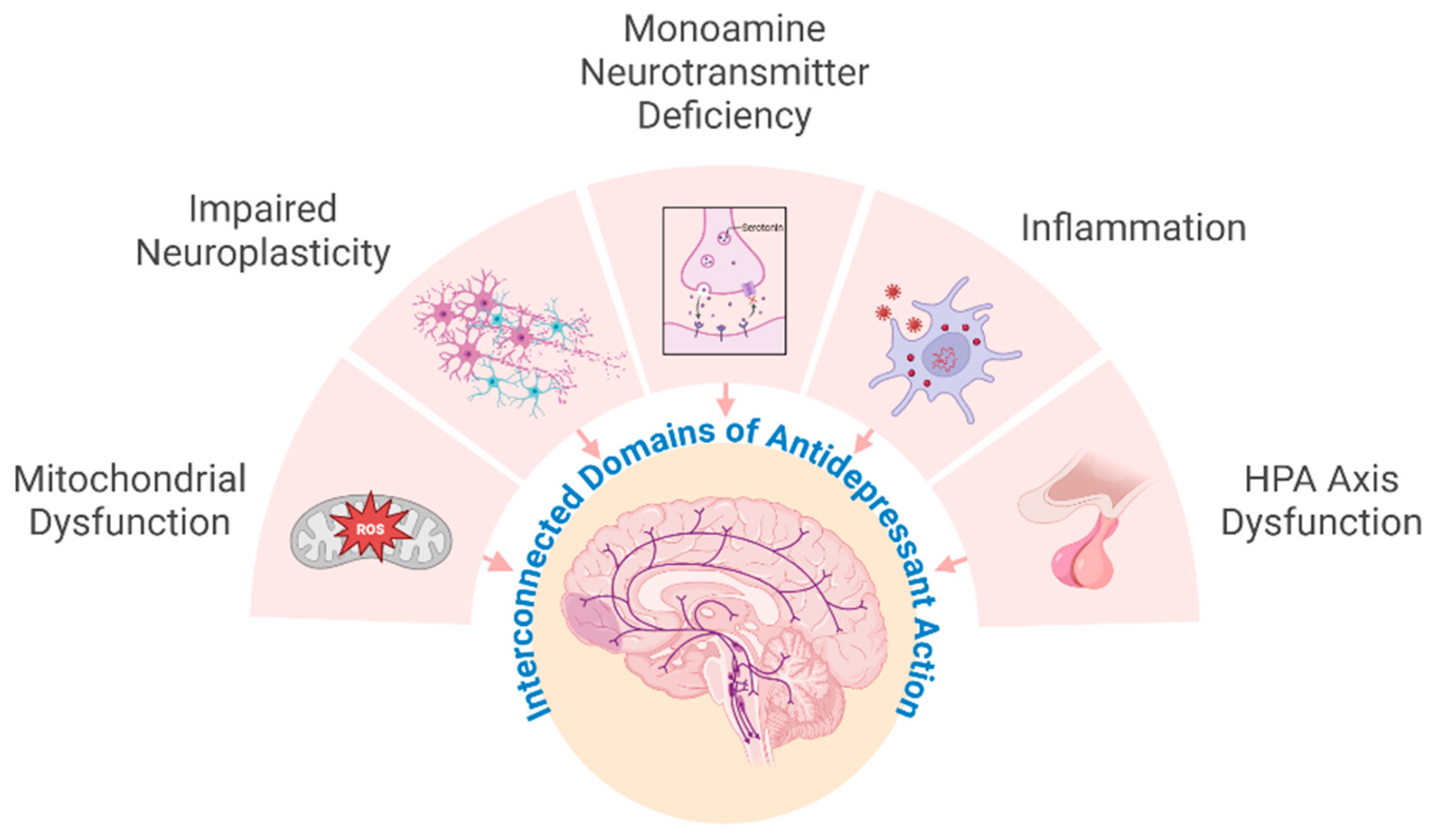
Contemporary concepts, as outlined by Cui et al. (2024), highlight antidepressants as modulators of a neurobiological network rather than single-target drugs [2]. Their effects span multiple, interconnected domains: neurotransmission, neuroplasticity, glutamatergic signaling, HPA axis regulation, immune and inflammatory pathways, mitochondrial metabolism, and circadian rhythm alignment. A unifying theme is the restoration of synaptic plasticity. Conventional antidepressants gradually enhance brain-derived neurotrophic factor (BDNF) signaling and tropomyosin receptor kinase B (TrkB) receptor activity, thereby promoting dendritic growth and resilience [50,51]. By contrast, rapid-acting agents such as ketamine block NMDA receptors on interneurons, trigger a glutamate surge, and activate mammalian target of rapamycin complex 1 (mTORC1)-dependent translation, leading to rapid synaptogenesis [50,52]. Antidepressants also normalize HPA axis hyperactivity, dampen pro-inflammatory cytokine responses, improve mitochondrial efficiency, and stabilize circadian rhythms. Taken together, these processes converge on restoring neuronal and network homeostasis, which appears to be the final common pathway of antidepressant efficacy.
Against this backdrop, the pharmacology of SJW illustrates the particular complexity of herbal medicines. Despite extensive research, no single constituent—whether hyperforin, hypericin, or flavonoids—can explain its clinical efficacy. As mentioned before, the whole extract is considered the pharmacologically active principle [53].
Pharmacological studies demonstrate that SJW inhibits the reuptake of serotonin, noradrenaline, dopamine, gamma-aminobutyric acid (GABA), and glutamate in neuronal preparations, thereby enhancing neurotransmitter availability [54,55,56,57,58,59]. These effects appear to result from indirect actions such as altered intracellular sodium or reserpine-like mechanisms, rather than high-affinity transporter binding [60,61]. In vivo, SJW extracts increase cortical monoamine concentrations [62]. In addition, receptor binding studies show low-affinity interactions with serotonin, noradrenaline, GABA, opioid, corticosteroid, NMDA, and neurokinin receptors [63,64,65,66,67,68,69,70,71]. Chronic treatment reliably downregulates β-adrenergic receptors, mirroring the adaptive receptor regulation seen with TCAs [72,73,74].
Beyond neurotransmission, SJW affects neuroplasticity, neuroendocrine function, and inflammation. Chronic administration alters hippocampal BDNF expression [75,76] and normalizes HPA axis hyperactivity, reducing CRH, ACTH, and corticosterone [77]. It also modulates FK506 binding protein 5 (FKBP5) expression, influencing glucocorticoid receptor sensitivity and stress resilience [78,79]. Anti-inflammatory properties are well documented, including reduced cytokine release in neuronal cells, protection against cytokine toxicity, and attenuation of systemic inflammatory responses [80,81,82,83].
Additional evidence comes from genomic and molecular studies. Jungke et al. (2010) showed that SJW and fluoxetine share the ability to reverse stress-induced gene expression changes in hippocampus and hypothalamus, regulating genes linked to oxidative stress defense, vesicle trafficking, and inflammatory signaling [84]. Interestingly, SJW induced broader transcriptional changes than fluoxetine and uniquely upregulated β-synuclein, a protein with neuroprotective properties. These data suggest that SJW, like SSRIs, targets fundamental stress-related molecular pathways while also exerting distinct neuroprotective effects.
In a recent study, El Hamdaoui et al. (2022) [85] identified transient receptor potential canonical 6 (TRPC6) channels as a molecular target of hyperforin. TRPC6-deficient mice displayed anxiety- and depression-like behaviors, and hyperforin was shown to activate TRPC6 selectively, enhancing hippocampal excitability and synaptic plasticity [85].
Consistent with these mechanistic insights, SJW extracts display robust antidepressant and anxiolytic activity in behavioral models such as the forced-swim test, tail-suspension test, learned helplessness, and cognition assays, with efficacy comparable to reference antidepressants [54,77,86,87,88,89,90,91,92,93,94,95,96,97,98,99,100].
Taken together, SJW exerts its antidepressant activity through a multi-layered network of mechanisms, encompassing monoamine modulation, receptor adaptation, neuroplasticity, HPA axis normalization, immune regulation, and constituent-specific molecular effects such as TRPC6 activation (Figure 3). Yet, despite decades of research, these pathways still do not fully explain how a complex extract achieves clinically robust antidepressant effects. This gap has prompted increasing attention to the role of cellular membranes and brain lipids, which are central to receptor function, signal transduction, and stress adaptation. The next chapter will therefore focus on brain membrane lipids and explore how lipid remodeling may represent the missing link that integrates its diverse pharmacological actions into a coherent mechanism of antidepressant efficacy.

4. Beyond Synaptic Neurotransmission: The Role of Brain Lipids in Antidepressant Efficacy

The central nervous system (CNS) is unique among tissues in its exceptionally high lipid content. Nearly half of the dry weight of the brain consists of lipids, which form the structural matrix of neuronal membranes and provide the dynamic environment required for processes such as neurotransmitter release, receptor activation, and synaptic plasticity [101]. Membrane lipids not only determine the physical properties of neuronal membranes, such as viscosity, fluidity, curvature, and lateral heterogeneity, but also directly regulate the function of embedded proteins, including ion channels, receptors, and transporters [101,102]. Subtle changes in lipid composition therefore have profound consequences for neuronal excitability and signal transduction [101].
The lipid composition of neuronal membranes is highly complex, and each class of lipids contributes distinct physical and functional properties. Glycerophospholipids, which represent the majority of membrane lipids, are especially important for synaptic activity [103]. Their chemical diversity, reflected in the different headgroups such as phosphatidylcholine (PC), phosphatidylethanolamine (PE), and phosphatidylserine (PS), as well as in their acyl chain composition, controls membrane curvature, vesicle fusion dynamics, and the ability of proteins to interact with the bilayer [104]. Polyunsaturated fatty acids (PUFAs), such as docosahexaenoic acid (DHA) and arachidonic acid, are highly enriched in neuronal phospholipids. They confer high membrane fluidity and facilitate rapid synaptic vesicle turnover and receptor–effector coupling [101,105].
Cholesterol is another central regulator of neuronal membranes. It interacts with phospholipids to modulate bilayer order and to form specialized membrane microdomains, known as lipid rafts, which serve as organizing platforms for neurotransmitter receptors, G-proteins, and ion channels [106]. Adequate cholesterol levels are critical for neurotransmission and synaptic signaling, but imbalances of cholesterol content of membranes alter flexibility, lateral receptor distribution, and receptor mobility [107,108]. These processes can have direct consequences for signal transduction and synaptic plasticity, both of which are impaired in mood disorders as described before [2]. Moreover, cholesterol is the precursor of glucocorticoids. Elevated glucocorticoids, a hallmark of chronic stress, are believed to alter hippocampal structure and function with far-reaching consequences [25]. These findings may provide a mechanistic link between stress-induced hypercortisolemia and impaired neurotransmission.
Sphingolipids, including sphingomyelin, ceramides, and gangliosides, are highly enriched in neuronal membranes, particularly within lipid rafts [109,110]. Beyond their structural role, sphingolipids also function as bioactive signaling molecules. Ceramides, for example, are produced during cellular stress and modulate apoptotic pathways [111]. Chronic stress leads to elevated ceramide levels which have been consistently linked to neuroinflammation, impaired neurogenesis, and the development of depressive-like behavior in animal models, underscoring their pathogenic role in stress-related disorders [112,113,114]. Moreover, elevated ceramide levels have not only been detected in experimental stress models but also in the blood of patients suffering from depression, reinforcing their translational significance [115].
Plasmalogens, a subgroup of ether phospholipids, add another layer of complexity to neuronal membranes. These lipids are highly abundant in the brain and are characterized by their antioxidant capacity and their ability to influence vesicle fusion and membrane curvature [116]. Loss of plasmalogens, which occurs during aging and in neurodegenerative disorders, increases susceptibility to oxidative stress and compromises synaptic function [116].
This finely tuned lipid balance is highly vulnerable to environmental and biological stressors. Chronic stress and depression are increasingly recognized as conditions that profoundly alter lipid metabolism and membrane organization [25]. One of the most robust findings in clinical studies is a reduction in PUFA content, particularly DHA, in the brains and plasma membranes of patients with major depressive disorder [117]. Since DHA-rich phospholipids are essential for maintaining fluidity and synaptic adaptability, their depletion leads to stiffer membranes, diminished neurotransmitter release, and impaired plasticity [118]. This could display another important factor in the development of depression.
Finally, depression shares important features with the lipid changes observed in aging, as summarized by Skowrońska-Krawczyk et al. (2020). These include reduced levels of plasmalogens, shifts in the phosphatidylcholine-to-phosphatidylethanolamine ratio, and increased lipid peroxidation, all of which impair antioxidant defenses and weaken neuronal resilience [119]. Together, these processes render membranes more vulnerable to oxidative stress, which is heightened in both aging and depression, thereby compounding the vulnerability of neuronal networks [119].
In summary, chronic stress and depression produce a characteristic lipid signature consisting of reduced PUFAs, altered cholesterol distribution, elevated ceramide levels, and loss of protective plasmalogens. This constellation destabilizes receptor mobility, disrupts synaptic signaling, and perpetuates maladaptive stress responses through both neuroinflammatory and endocrine pathways. Lipids must therefore be considered not as passive scaffolds but as active regulators of neuronal function and plasticity. Their central role in synaptic physiology suggests that the membrane lipid environment may provide the missing link in antidepressant pharmacology. The following section will explore how St. John’s wort, particularly the low-hyperforin extract Ze 117, modulates neuronal membrane lipids and how such effects may complement classical neurotransmitter-based mechanisms to explain its clinical efficacy in depression.

5. St. John’s Wort and Membrane Plasticity: Bridging Classical Neurotransmission and Novel Mechanisms

A multifaceted mode of action of SJW is evident, and intensive preclinical research has now identified membrane lipids as a novel target of the hyperforin-low extract Ze 117 [120,121,122,123,124]. These findings suggest that the therapeutic potential of SJW extends beyond the modulation of neurotransmitters and receptors, into the fundamental biophysical properties of neuronal membranes.
The first evidence for membrane modulation by SJW extract came from experiments in rat glioblastoma (C6) cells exposed to cortisol, a glucocorticoid known to increase membrane fluidity. Using TMA-DPH fluorescence anisotropy, cortisol was shown to induce a dose-dependent increase in membrane fluidity. Chronic treatment with Ze 117, but not with citalopram and only weakly with desipramine, reversed this effect [120]. In addition, Ze 117 reduced the PC/PE ratio and inhibited the synthesis of saturated and monounsaturated fatty acids, thereby rigidifying the membrane. This normalization of membrane properties had functional consequences: the mobility of β1-adrenergic receptors, assessed by single-particle tracking of SNAP-labeled receptors, was reduced under Ze 117 treatment. Receptor trajectories could be categorized into three states according to diffusion speed: immobile (S1), slow-diffusing (S2), and fast-diffusing (S3). Ze 117 significantly increased the fraction of immobile receptors (S1) while reducing the slow-diffusing fraction (S2), leaving the fast-diffusing fraction unchanged [121]. Since lateral receptor mobility is crucial for efficient signaling but excessive fluidity impairs transmission, these data suggest that Ze 117 restores receptor dynamics to a physiological range, thereby optimizing signal transduction under stress conditions [125].
Similar effects were observed when membranes were challenged with dexamethasone. This synthetic glucocorticoid also increased membrane fluidity, an effect counterbalanced by Ze 117 [123]. At the molecular level, dexamethasone upregulated the expression of stearoyl-CoA desaturase 1 (SCD1), a rate-limiting enzyme in fatty acid desaturation, whereas Ze 117 downregulated its expression [123]. However, direct inhibition of SCD1 catalytic activity by Ze 117 could not be confirmed, as fatty acid desaturation ratios remained unchanged. Notably, Ze 117 reversed dexamethasone-induced fluidity changes to the same extent as the specific SCD1 inhibitor CAY10556 [123]. In addition, proteomic analyses revealed upregulation of multiple proteins involved in cholesterol biosynthesis following Ze 117 treatment, consistent with an observed increase in total membrane cholesterol [123]. Because cholesterol is a key determinant of membrane rigidity, low levels being associated with fluid membranes and high levels with rigid ones [126]. These findings suggest that Ze 117’s effects on fluidity are mediated, at least in part, by enhanced cholesterol synthesis. Hypericin may contribute to this process, since low concentrations of the pure compound were sufficient to increase cholesterol content in membranes [123]. Functionally, these changes translated into improved receptor signaling: Ze 117 rescued the dexamethasone-induced reduction in β-arrestin-2 recruitment following serotonin 1A (5-HT1A) receptor stimulation, indicating restored signal transduction capacity [123].
These findings were complemented by lipidomic analyses in human peripheral blood mononuclear cells (PBMCs) [122]. Cortisol treatment increased membrane fluidity and reduced overall lipid levels across most classes, with the exception of triacylglycerols (TAG) and cholesteryl esters (CE), which remained unchanged. Co-treatment with Ze 117 counteracted these effects, tending to normalize lipid profiles and significantly upregulating TAG and CE. Detailed analysis revealed that cortisol increased chain length and unsaturation of phosphatidylcholine species, whereas Ze 117 reversed these changes [122]. In PE and phosphatidylcholine ethers (PC-O), Ze 117 reduced chain length and double bonds, though the physiological significance of these changes remains to be fully clarified. Overall, the data indicate that the primary drivers of Ze 117’s effects on fluidity are changes in cholesterol metabolism and modulation of double bond content in phospholipids [122,123].
Evidence from animal models further supports these cellular findings. In rats exposed to chronic corticosterone, Ze 117 reduced immobility in the forced swim test, confirming its antidepressant-like activity [124]. Plasma lipidomics revealed that corticosterone increased the average number of double bonds in plasma glycerophospholipids, while Ze 117 co-treatment reduced this effect to control levels. Interestingly, similar results were observed with escitalopram, suggesting a shared impact of antidepressants on glycerophospholipid metabolism [124]. In hippocampal samples, Ze 117 and escitalopram increased levels of lysophosphatidylethanolamines (LPEs), and higher LPE content positively correlated with improved behavioral performance in the forced swim test, specifically with longer latency to immobility [124]. This indicates that modulation of glycerophospholipid metabolism may contribute directly to the behavioral efficacy of antidepressants.
Although cell culture systems and plasma levels do probably not reflect the situation in the brain directly, they are indispensable for mechanism of action studies due to their availability. Blood is expected to be an indicator for changes that take place in other organs, including the brain [127]. Given the unavailability of human brain samples from patients suffering from major depressive disorder (MDD) due to ethical considerations, research cannot focus solely on brain samples in animal models but must also examine blood samples. Moreover, it is currently unknown which brain regions are affected by lipidomic changes, and whether there are individual differences in these regions depending on the severity of MDD. Consequently, until further biologically and translationally relevant methods are developed, blood samples remain the best option.
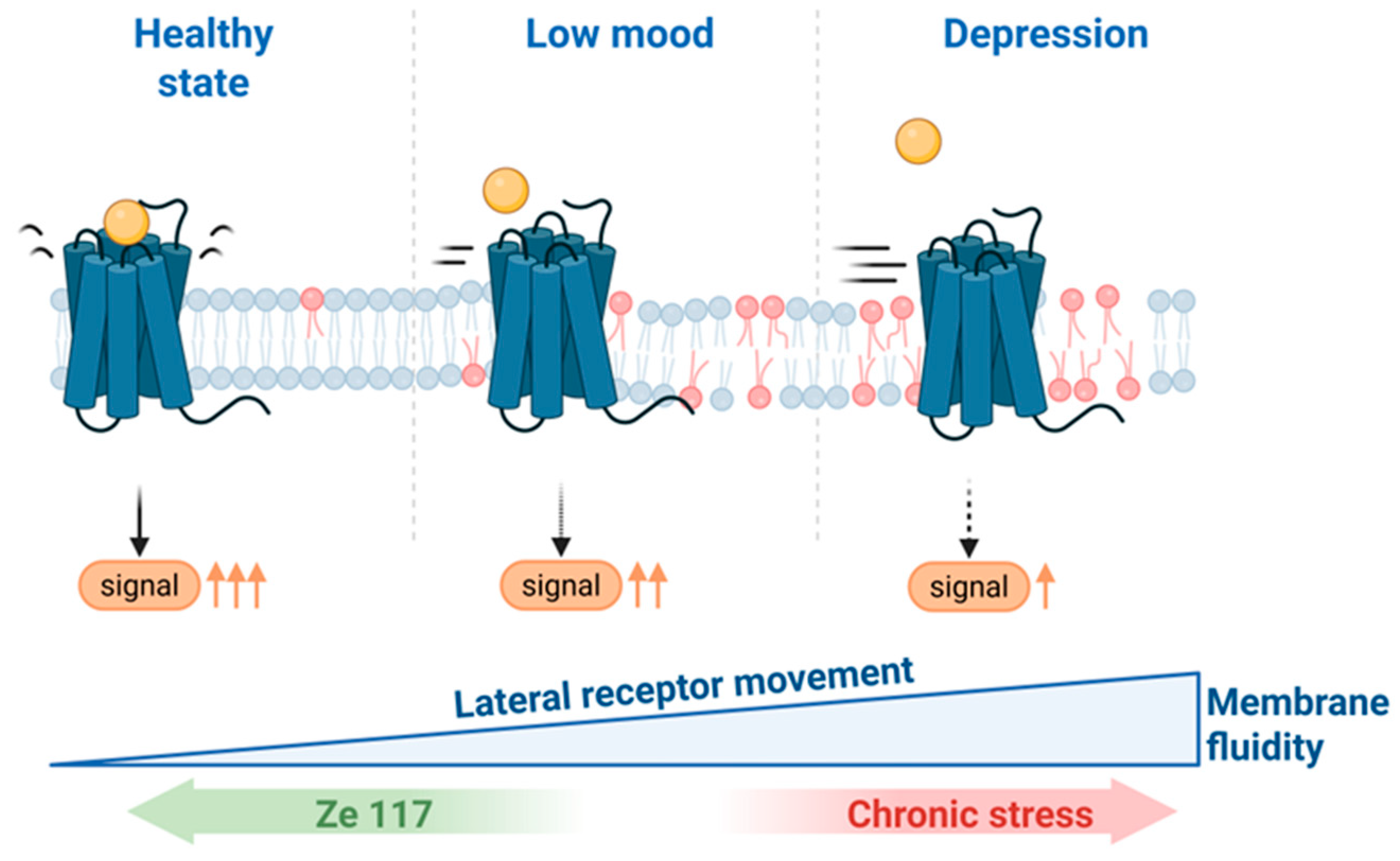
Together, these studies highlight a novel mode of action of SJW that extends beyond the classical neurochemical framework. Chronic stress and elevated glucocorticoids induce pathological changes in membrane fluidity, lipid composition, and receptor signaling. Ze 117 reverses these changes by restoring lipid balance, enhancing cholesterol content, adjusting fatty acid composition, and normalizing receptor mobility. The net result is stabilization of membrane properties and restoration of efficient signal transduction through receptors such as β1-adrenergic and 5-HT1A receptors (Figure 4).

6. Conclusions and Future Perspectives

The emerging evidence on Ze 117 demonstrates that SJW acts not only through modulation of neurotransmitter systems, receptor interactions, and HPA axis regulation but also by stabilizing the lipid environment of neuronal membranes. By restoring membrane fluidity, normalizing receptor mobility, and influencing cholesterol and phospholipid composition, Ze 117 supports efficient serotonergic and adrenergic signaling. This lipid-centered mechanism thus bridges classical neurochemical pharmacology with a broader systems-level perspective, positioning membrane lipids as the missing link that integrates SJW’s multifaceted pharmacology.
Beyond explaining clinical efficacy, these lipid effects open new avenues for biomarker discovery and therapeutic innovation. Lipidomic signatures, such as changes in PCs, LPEs, or cholesterol-associated profiles, may possibly serve as translational biomarkers to monitor treatment response and stress adaptation. The identification of specific lipid species as biomarkers may also facilitate the diagnosis of early-onset depression in certain cases. Furthermore, these biomarkers could guide individualized treatment strategies, potentially in an algorithmic manner, paving the way toward personalized medicine in psychiatry. However, the prediction and actual verification of human membrane lipids as biomarkers with actual clinical utility will require human clinical studies because previous hints towards lipid biomarkers in depression are mostly based on in vitro and rodent studies.
Taken together, membrane lipids emerge not only as passive structural components but as dynamic therapeutic interfaces. Their modulation by SJW extracts such as Ze 117 provides a unifying framework for its antidepressant action and highlights novel opportunities for precision medicine in depression. Nevertheless, further research, particularly clinical studies, is required to verify these findings and to translate lipid-based mechanisms and biomarkers into therapeutic practice. Importantly, the current evidence derives from studies with the low-hyperforin extract Ze 117, and it remains to be established whether high-hyperforin extracts exert comparable effects on membrane lipids or whether their pharmacology differs in this respect.

Author Contributions

Conceptualization, V.M.M. and V.B.; writing—original draft preparation, V.M.M., V.B.; writing—review and editing, V.B. and G.B.; visualization, V.M.M. and V.B. All authors have read and agreed to the published version of the manuscript.

Funding

This research received no external funding.

Institutional Review Board Statement

Not applicable.

Informed Consent Statement

Not applicable.

Data Availability Statement

No new data were created or analyzed in this study. Data sharing is not applicable to this article.

Conflicts of Interest

V.M.M., G.B. and V.B. are employees of Max Zeller Söhne AG, the manufacturer of Ze 117.

Abbreviations

The following abbreviations are used in this manuscript:
5-HT1ASerotonin 1A receptor
ACTHAdrenocorticotropic hormone
BDNFBrain-derived neurotrophic factor
CECholesteryl esters
CNSCentral nervous system
CRHCorticotropin releasing hormone
CRPC-reactive protein
CYP450Cytochrome P450
DHADocosahexaenoic acid
EMAEuropean Medical Agency
FKBP5FK506 binding protein 5
GABAGamma-aminobutyric acid
HMPCHerbal Medicinal Products Committee
HPAHypothalamus–pituitary–adrenal axis
IL-6Interleukin-6
LPEsLysophosphatidylethanolamines
mTORC1Mammalian target of rapamycin complex 1
PBMCsPeripheral blood mononuclear cells
PCPhosphatidylcholine
PC-OPhosphatidylcholine ethers
PEPhosphatidylethanolamine
PSPhosphatidylserine
PUFAsPolyunsaturated fatty acids
PXRPregnane-x-receptor
RNSReactive nitrogen species
ROSReactive oxygen species
SCD1Stearoyl-CoA desaturase 1
SJWSt John’s wort
SSRISelective serotonin reuptake inhibitors
TAGTriacylglycerols
TCAsTricyclic antidepressants
TNFTumor necrosis factor
TrkBTropomyosin receptor kinase B
TRPC6Transient receptor potential canonical 6

References

  1. Dean, J.; Keshavan, M. The Neurobiology of Depression: An Integrated View. Asian J. Psychiatry 2017, 27, 101–111. [Google Scholar] [CrossRef] [PubMed]
  2. Cui, L.; Li, S.; Wang, S.; Wu, X.; Liu, Y.; Yu, W.; Wang, Y.; Tang, Y.; Xia, M.; Li, B. Major Depressive Disorder: Hypothesis, Mechanism, Prevention and Treatment. Signal Transduct. Target. Ther. 2024, 9, 30. [Google Scholar] [CrossRef]
  3. Filatova, E.V.; Shadrina, M.I.; Slominsky, P.A. Major Depression: One Brain, One Disease, One Set of Intertwined Processes. Cells 2021, 10, 1283. [Google Scholar] [CrossRef]
  4. Freud, S. Mourning and Melancholia. In The Standard Edition of the Complete Psychological Works of Sigmund Freud, Volume Xiv (1914–1916): On the History of the Psycho-Analytic Movement, Papers on Metapsychology and Other Works; The Hogarth Press: London, UK, 1917; pp. 237–258. [Google Scholar]
  5. Beck, A.T. The Evolution of the Cognitive Model of Depression and Its Neurobiological Correlates. Am. J. Psychiatry 2008, 165, 969–977. [Google Scholar] [CrossRef]
  6. Billings, A.G.; Moos, R.H. Psychosocial Theory and Research on Depression: An Integrative Framework and Review. Clin. Psychol. Rev. 1982, 2, 213–237. [Google Scholar] [CrossRef]
  7. Sullivan, P.F.; Neale, M.C.; Kendler, K.S. Genetic Epidemiology of Major Depression: Review and Meta-Analysis. Am. Psychiatr. Publ. 2000, 157, 1552–1562. [Google Scholar] [CrossRef]
  8. Hirschfeld, R.M. History and Evolution of the Monoamine Hypothesis of Depression. J. Clin. Psychiatry 2000, 61, 4–6. [Google Scholar]
  9. Pastis, I.M.; Santos, G.; Paruchuri, A. Exploring the Role of Inflammation in Major Depressive Disorder: Beyond the Monoamine Hypothesis. Front. Behav. Neurosci. 2023, 17, 1282242. [Google Scholar] [CrossRef]
  10. Hindmarch, I. Expanding the Horizons of Depression: Beyond the Monoamine Hypothesis. Hum. Psychopharmacol. 2001, 16, 203–218. [Google Scholar] [CrossRef] [PubMed]
  11. Tartt, A.N.; Mariani, M.B.; Hen, R.; Mann, J.J.; Boldrini, M. Dysregulation of Adult Hippocampal Neuroplasticity in Major Depression: Pathogenesis and Therapeutic Implications. Mol. Psychiatry 2022, 27, 2689–2699. [Google Scholar] [CrossRef] [PubMed]
  12. Yirmiya, R. The Inflammatory Underpinning of Depression: An Historical Perspective. Brain Behav. Immun. 2024, 122, 433–443. [Google Scholar] [CrossRef]
  13. Dooley, L.N.; Kuhlman, K.R.; Robles, T.F.; Eisenberger, N.I.; Craske, M.G.; Bower, J.E. The Role of Inflammation in Core Features of Depression: Insights from Paradigms Using Exogenously-Induced Inflammation. Neurosci. Biobehav. Rev. 2018, 94, 219–237. [Google Scholar] [CrossRef]
  14. Kiecolt-Glaser, J.K.; Derry, H.M.; Fagundes, C.P. Inflammation: Depression Fans the Flames and Feasts on the Heat. Am. J. Psychiatry 2015, 172, 1075–1091. [Google Scholar] [CrossRef]
  15. Miller, A.H.; Raison, C.L. The Role of Inflammation in Depression: From Evolutionary Imperative to Modern Treatment Target. Nat. Rev. Immunol. 2016, 16, 22–34. [Google Scholar] [CrossRef]
  16. Russell, G.; Lightman, S. The Human Stress Response. Nat. Rev. Endocrinol. 2019, 15, 525–534. [Google Scholar] [CrossRef] [PubMed]
  17. Ortega, V.A.; Mercer, E.M.; Giesbrecht, G.F.; Arrieta, M.C. Evolutionary Significance of the Neuroendocrine Stress Axis on Vertebrate Immunity and the Influence of the Microbiome on Early-Life Stress Regulation and Health Outcomes. Front. Microbiol. 2021, 12, 634539. [Google Scholar] [CrossRef] [PubMed]
  18. Pariante, C.M.; Lightman, S.L. The Hpa Axis in Major Depression: Classical Theories and New Developments. Trends Neurosci. 2008, 31, 464–468. [Google Scholar] [CrossRef] [PubMed]
  19. Kuipers, S.D.; Bramham, C.R.; Cameron, H.A.; Fitzsimons, C.P.; Korosi, A.; Lucassen, P.J. Environmental Control of Adult Neurogenesis: From Hippocampal Homeostasis to Behavior and Disease. Neural Plast. 2014, 2014, 808643. [Google Scholar] [CrossRef]
  20. Guerry, J.D.; Hastings, P.D. In Search of Hpa Axis Dysregulation in Child and Adolescent Depression. Clin. Child. Fam. Psychol. Rev. 2011, 14, 135–160. [Google Scholar] [CrossRef]
  21. Evanson, N.K.; Herman, J.P.; Sakai, R.R.; Krause, E.G. Nongenomic Actions of Adrenal Steroids in the Central Nervous System. J. Neuroendocr. 2010, 22, 846–861. [Google Scholar] [CrossRef]
  22. Groves, J.T.; Kuriyan, J. Molecular Mechanisms in Signal Transduction at the Membrane. Nat. Struct. Mol. Biol. 2010, 17, 659–665. [Google Scholar] [CrossRef]
  23. Nandam, L.S.; Brazel, M.; Zhou, M.; Jhaveri, D.J. Cortisol and Major Depressive Disorder-Translating Findings from Humans to Animal Models and Back. Front. Psychiatry 2019, 10, 974. [Google Scholar] [CrossRef]
  24. Faria, R.; Santana, M.M.; Aveleira, C.A.; Simoes, C.; Maciel, E.; Melo, T.; Santinha, D.; Oliveira, M.M.; Peixoto, F.; Domingues, P.; et al. Alterations in Phospholipidomic Profile in the Brain of Mouse Model of Depression Induced by Chronic Unpredictable Stress. Neuroscience 2014, 273, 1–11. [Google Scholar] [CrossRef]
  25. Miranda, A.M.; Oliveira, T.G. Lipids under Stress—A Lipidomic Approach for the Study of Mood Disorders. Bioessays 2015, 37, 1226–1235. [Google Scholar] [CrossRef] [PubMed]
  26. Donoso, F.; Schverer, M.; Rea, K.; Pusceddu, M.M.; Roy, B.L.; Dinan, T.G.; Cryan, J.F.; Schellekens, H. Neurobiological Effects of Phospholipids in Vitro: Relevance to Stress-Related Disorders. Neurobiol. Stress 2020, 13, 100252. [Google Scholar] [CrossRef]
  27. Wang, X.; Michaelis, E.K. Selective Neuronal Vulnerability to Oxidative Stress in the Brain. Front. Aging Neurosci. 2010, 2, 12. [Google Scholar] [CrossRef] [PubMed]
  28. Zhivaki, D.; Kagan, J.C. Innate Immune Detection of Lipid Oxidation as a Threat Assessment Strategy. Nat. Rev. Immunol. 2022, 22, 322–330. [Google Scholar] [CrossRef]
  29. Liu, J.J.; Hezghia, A.; Shaikh, S.R.; Cenido, J.F.; Stark, R.E.; Mann, J.J.; Sublette, M.E. Regulation of Monoamine Transporters and Receptors by Lipid Microdomains: Implications for Depression. Neuropsychopharmacology 2018, 43, 2165–2179. [Google Scholar] [CrossRef]
  30. Blaschek, W. Wichtl—Teedrogen Und Phytopharmaka; Wissenschaftliche Verlagsgesellschaft: Stuttgart, Germany, 2015; Volume 6. [Google Scholar]
  31. Hildebrandt, R.; Gloning, T. (Eds.) Hildegard Von Bingen: Physica. Liber Subtilitatum Diversarum Naturarum Creaturarum; Textkritische Ausgabe. 2 Bde; De Gruyter: Berlin, Germany, 2010. [Google Scholar]
  32. Keil, G. (Ed.) Das Lorscher Arzneibuch; (Handschrift Msc. Med. 1 der Staatsbibliothek Bamberg); Band 2: Übersetzung von Ulrich Stoll und Gundolf Keil Unter Mitwirkung von Altabt Albert Ohlmeyer; Wissenschaftliche Verlagsgesellschaft: Stuttgart, Germany, 1989. [Google Scholar]
  33. Butterweck, V.; Schmidt, M. St. John’s Wort: Role of Active Compounds for Its Mechanism of Action and Efficacy. Wien. Med. Wochenschr. 2007, 157, 356–361. [Google Scholar] [CrossRef] [PubMed]
  34. Linde, K.; Berner, M.M.; Kriston, L. St John’s Wort for Major Depression. Cochrane Database Syst. Rev. 2008, 2008, CD000448. [Google Scholar] [CrossRef]
  35. Kasper, S.; Caraci, F.; Forti, B.; Drago, F.; Aguglia, E. Efficacy and Tolerability of Hypericum Extract for the Treatment of Mild to Moderate Depression. Eur. Neuropsychopharmacol. 2010, 20, 747–765. [Google Scholar] [CrossRef]
  36. Schwarz, U.I.; Büschel, B.; Kirch, W. Unwanted Pregnancy on Self-Medication with St John’s Wort Despite Hormonal Contraception. Br. J. Clin. Pharmacol. 2003, 55, 112–113. [Google Scholar] [CrossRef] [PubMed]
  37. Yue, Q.Y.; Bergquist, C.; Gerden, B. Safety of St John’s Wort (Hypericum perforatum). Lancet 2000, 355, 576–577. [Google Scholar] [CrossRef] [PubMed]
  38. Johne, A.; Brockmöller, J.; Bauer, S.; Maurer, A.; Langheinrich, M.; Roots, I. Pharmacokinetic Interaction of Digoxin with an Herbal Extract from St John’s Wort (Hypericum perforatum). Clin. Pharmacol. Ther. 1999, 66, 338–345. [Google Scholar] [CrossRef] [PubMed]
  39. Nicolussi, S.; Drewe, J.; Butterweck, V.; zu Schwabedissen, H.E.M. Clinical Relevance of St. John’s Wort Drug Interactions Revisited. Br. J. Pharmacol. 2020, 177, 1212–1226. [Google Scholar] [CrossRef]
  40. Lynch, T.; Price, A. The Effect of Cytochrome P450 Metabolism on Drug Response, Interactions, and Adverse Effects. Am. Fam. Physician 2007, 76, 391–396. [Google Scholar]
  41. Moore, L.B.; Goodwin, B.; Jones, S.A.; Wisely, B.G.; Serabjit-Singh, C.J.; Willson, T.M.; Collins, J.L.; Kliewer, S.A. St. John’s Wort Induces Hepatic Drug Metabolism through Activation of the Pregnane X Receptor. Proc. Natl. Acad. Sci. USA 2000, 97, 7500–7502. [Google Scholar] [CrossRef]
  42. Zahner, C.; Kruttschnitt, E.; Uricher, J.; Lissy, M.; Hirsch, M.; Nicolussi, S.; Krahenbuhl, S.; Drewe, J. No Clinically Relevant Interactions of St. John’s Wort Extract Ze 117 Low in Hyperforin with Cytochrome P450 Enzymes and P-Glycoprotein. Clin. Pharmacol. Ther. 2019, 106, 432–440. [Google Scholar] [CrossRef]
  43. Will-Shahab, L.; Bauer, S.; Kunter, U.; Roots, I.; Brattstrom, A. St John’s Wort Extract (Ze 117) Does Not Alter the Pharmacokinetics of a Low-Dose Oral Contraceptive. Eur. J. Clin. Pharmacol. 2009, 65, 287–294. [Google Scholar] [CrossRef]
  44. Mueller, S. Effect of St John’s Wort Dose and Preparations on the Pharmacokinetics of Digoxin. Clin. Pharmacol. Ther. 2004, 75, 546–557. [Google Scholar] [CrossRef]
  45. Schaefer, A.M.; Potterat, O.; Seibert, I.; Fertig, O.; zu Schwabedissen, H.E.M. Hyperforin-Induced Activation of the Pregnane X Receptor Is Influenced by the Organic Anion-Transporting Polypeptide 2b1. Mol. Pharmacol. 2019, 95, 313–323. [Google Scholar] [CrossRef]
  46. Borrelli, F.; Izzo, A.A. Herb-Drug Interactions with St John’s Wort (Hypericum perforatum): An Update on Clinical Observations. AAPS J. 2009, 11, 710–727. [Google Scholar] [CrossRef]
  47. Committee on Herbal Medicinal Products (HMPC). Assessment Report on Hypericum perforatum L., Herba; EMA/HMPC/244315/2016; Committee on Herbal Medicinal Products (HMPC): Amsterdam, The Netherlands, 2022. [Google Scholar]
  48. Mikkelsen, N.; Damkier, P.; Pedersen, S.A. Serotonin Syndrome-a Focused Review. Basic Clin. Pharmacol. Toxicol. 2023, 133, 124–129. [Google Scholar] [CrossRef]
  49. Harmer, C.J.; Duman, R.S.; Cowen, P.J. How Do Antidepressants Work? New Perspectives for Refining Future Treatment Approaches. Lancet Psychiatry 2017, 4, 409–418. [Google Scholar] [CrossRef]
  50. Bjorkholm, C.; Monteggia, L.M. Bdnf—A Key Transducer of Antidepressant Effects. Neuropharmacology 2016, 102, 72–79. [Google Scholar] [CrossRef] [PubMed]
  51. Tapia-Arancibia, L.; Rage, F.; Givalois, L.; Arancibia, S. Physiology of Bdnf: Focus on Hypothalamic Function. Front. Neuroendocr. 2004, 25, 77–107. [Google Scholar] [CrossRef]
  52. Duman, R.S.; Aghajanian, G.K.; Sanacora, G.; Krystal, J.H. Synaptic Plasticity and Depression: New Insights from Stress and Rapid-Acting Antidepressants. Nat. Med. 2016, 22, 238–249. [Google Scholar] [CrossRef]
  53. Schmidt, M.; Butterweck, V. The Mechanisms of Action of St. John’s Wort: An Update. Wien. Med. Wochenschr. (1946) 2015, 165, 229–235. [Google Scholar] [CrossRef] [PubMed]
  54. Chatterjee, S.S.; Bhattacharya, S.K.; Wonnemann, M.; Singer, A.; Müller, W.E. Hyperforin as a Possible Antidepressant Component of Hypericum Extracts. Life Sci. 1998, 63, 499–510. [Google Scholar] [CrossRef] [PubMed]
  55. Müller, W.E.; Singer, A.; Wonnemann, M.; Hafner, U.; Rolli, M.; Schäfer, C. Hyperforin Represents the Neurotransmitter Reuptake Inhibiting Constituent of Hypericum Extract. Pharmacopsychiatry 1998, 31, 16–21. [Google Scholar] [CrossRef]
  56. Neary, J.T.; Bu, Y. Hypericum Li 160 Inhibits Uptake of Serotonin and Norepinephrine in Astrocytes. Brain Res. 1999, 816, 358–363. [Google Scholar] [CrossRef]
  57. Perovic, S.; Müller, W.E. Pharmacological Profile of Hypericum Extract. Effect on Serotonin Uptake by Postsynaptic Receptors. Arzneim. Forsch. 1995, 45, 1145–1148. [Google Scholar]
  58. Ruedeberg, C.; Wiesmann, U.N.; Brattstroem, A.; Honegger, U.E. Hypericum perforatum L. (St John’s Wort) Extract Ze 117 Inhibits Dopamine Re-Uptake in Rat Striatal Brain Slices. An Implication for Use in Smoking Cessation Treatment? Phytother. Res. PTR 2010, 24, 249–251. [Google Scholar] [CrossRef]
  59. Wonnemann, M.; Singer, A.; Siebert, B.; Müller, W.E. Evaluation of Synaptosomal Uptake Inhibition of Most Relevant Constituents of St. John’s Wort. Pharmacopsychiatry 2001, 34, 148–151. [Google Scholar] [CrossRef]
  60. Singer, A.; Wonnemann, M.; Müller, W.E. Hyperforin, a Major Antidepressant Constituent of St. John’s Wort, Inhibits Serotonin Uptake by Elevating Free Intracellular Na+1. J. Pharmacol. Exp. Ther. 1999, 290, 1363–1368. [Google Scholar] [CrossRef]
  61. Gobbi, M.; Valle, F.D.; Ciapparelli, C.; Diomede, L.; Morazzoni, P.; Verotta, L.; Caccia, S.; Cervo, L.; Mennini, T. Hypericum perforatum L. Extract Does Not Inhibit 5-Ht Transporter in Rat Brain Cortex. Naunyn Schmiedebergs Arch. Pharmacol. 1999, 360, 262–269. [Google Scholar] [CrossRef] [PubMed]
  62. Butterweck, V.; Böckers, T.; Korte, B.; Wittkowski, W.; Winterhoff, H. Long-Term Effects of St. John’s Wort and Hypericin on Monoamine Levels in Rat Hypothalamus and Hippocampus. Brain Res. 2002, 930, 21–29. [Google Scholar] [CrossRef] [PubMed]
  63. Baureithel, K.H.; Büter, K.B.; Engesser, A.; Burkard, W.; Schaffner, W. Inhibition of Benzodiazepine Binding in Vitro by Amentoflavone, a Constituent of Various Species of Hypericum. Pharm. Acta Helv. 1997, 72, 153–157. [Google Scholar] [CrossRef] [PubMed]
  64. Cott, J.M. In Vitro Receptor Binding and Enzyme Inhibition by Hypericum perforatum Extract. Pharmacopsychiatry 1997, 30 (Suppl. S2), 108–112. [Google Scholar] [CrossRef]
  65. Butterweck, V.; Nahrstedt, A.; Evans, J.; Hufeisen, S.; Rauser, L.; Savage, J.; Popadak, B.; Ernsberger, P.; Roth, B.L. In Vitro Receptor Screening of Pure Constituents of St. John’s Wort Reveals Novel Interactions with a Number of Gpcrs. Psychopharmacology 2002, 162, 193–202. [Google Scholar] [CrossRef]
  66. Gobbi, M.; Moia, M.; Pirona, L.; Morizzoni, P.; Mennini, T. In Vitro Binding Studies with Two Hypericum perforatum Extracts--Hyperforin, Hypericin and Biapigenin--on 5-Ht6, 5-Ht7, Gaba(a)/Benzodiazepine, Sigma, Npy-Y1/Y2 Receptors and Dopamine Transporters. Pharmacopsychiatry 2001, 34 (Suppl. S1), S45–S48. [Google Scholar] [CrossRef]
  67. Müller, W.E.; Schäfer, C. Johanniskraut: In-Vitro Studie Über Hypericum-Extrakt (Li 160), Hypericin Und Kämpferol Als Antidepressiva. Dtsch. Apoth. Ztg. 1996, 136, 17–24. [Google Scholar]
  68. Rolli, M.; Schäfer, C.; Müller, W.E. Effect of Hypericum Extract (Li 160) on Neurotransmitter Receptor Binding and Synaptosomal Uptake Systems. Pharmacopsychiatry 1995, 28, 207. [Google Scholar]
  69. Simmen, U.; Higelin, J.; Berger-Büter, K.; Schaffner, W.; Lundstrom, K. Neurochemical Studies with St. John’s Wort in Vitro. Pharmacopsychiatry 2001, 34 (Suppl. S1), S137–S142. [Google Scholar] [CrossRef]
  70. Wirz, A.; Simmen, U.; Heilmann, J.; Calis, I.; Meier, B.; Sticher, O. Bisanthraquinone Glycosides of Hypericum perforatum with Binding Inhibition to Crh-1 Receptors. Phytochemistry 2000, 55, 941–947. [Google Scholar] [CrossRef]
  71. Wonnemann, M.; Schafer, C.; Müller, W.E. Effects of Hypericum Extracts on Glutaminergic and Gabaergic Receptor Systems. Pharmacopsychiatry 1997, 30, 237–240. [Google Scholar]
  72. Kientsch, U.; Bürgi, S.; Ruedeberg, S.C.; Probst, S.; Honegger, U.E. St. John’s Wort Extract Ze 117 (Hypericum perforatum) Inhibits Norepinephrine and Serotonin Uptake into Rat Brain Slices and Reduces ß-Adrenoceptor Numbers on Cultured Rat Brain Cells. Pharmacopsychiatry 2001, 34 (Suppl. S1), S56–S60. [Google Scholar] [CrossRef]
  73. Simbrey, K.; Winterhoff, H.; Butterweck, V. Extracts of St. John’s Wort and Various Constituents Affect Beta-Adrenergic Binding in Rat Frontal Cortex. Life Sci. 2004, 74, 1027–1038. [Google Scholar] [CrossRef] [PubMed]
  74. Müller, W.E.; Rolli, M.; Schäfer, C.; Hafner, U. Effects of Hypericum Extract (Li 160) in Biochemical Models of Antidepressant Activity. Pharmacopsychiatry 1997, 30 (Suppl. S2), 102–107. [Google Scholar] [CrossRef] [PubMed]
  75. Butterweck, V.; Winterhoff, H.; Herkenham, M. St John’s Wort, Hypericin, and Imipramine: A Comparative Analysis of Mrna Levels in Brain Areas Involved in Hpa Axis Control Following Short-Term and Long-Term Administration in Normal and Stressed Rats. Mol. Psychiatry 2001, 6, 547–564. [Google Scholar] [CrossRef]
  76. Valvassori, S.S.; Borges, C.; Bavaresco, D.V.; Varela, R.B.; Resende, W.R.; Peterle, B.R.; Arent, C.O.; Budni, J.; Quevedo, J. Hypericum perforatum Chronic Treatment Affects Cognitive Parameters and Brain Neurotrophic Factor Levels. Braz. J. Psychiatry 2018, 40, 367–375. [Google Scholar] [CrossRef] [PubMed]
  77. Butterweck, V.; Winterhoff, H.; Herkenham, M. Hyperforin-Containing Extracts of St John’s Wort Fail to Alter Gene Transcription in Brain Areas Involved in Hpa Axis Control in a Long-Term Treatment Regimen in Rats. Neuropsychopharmacology 2003, 28, 2160–2168. [Google Scholar] [CrossRef] [PubMed]
  78. Verjee, S.; Weston, A.; Kolb, C.; Kalbhenn-Aziz, H.; Butterweck, V. Hyperforin and Miquelianin from St. john’s Wort Attenuate Gene Expression in Neuronal Cells after Dexamethasone-Induced Stress. Planta Med. 2018, 84, 696–703. [Google Scholar]
  79. Menke, A. Is the Hpa Axis as Target for Depression Outdated, or Is There a New Hope? Front. Psychiatry 2019, 10, 101. [Google Scholar]
  80. Thiele, B.; Brink, I.; Ploch, M. Modulation of Cytokine Expression by Hypericum Extract. J. Geriatr. Psychiatry Neurol. 1994, 7 (Suppl. S1), S60–S62. [Google Scholar] [CrossRef]
  81. Bonaterra, G.A.; Schwendler, A.; Huther, J.; Schwarzbach, H.; Schwarz, A.; Kolb, C.; Abdel-Aziz, H.; Kinscherf, R. Neurotrophic, Cytoprotective, and Anti-Inflammatory Effects of St. John’s Wort Extract on Differentiated Mouse Hippocampal Ht-22 Neurons. Front. Pharmacol. 2017, 8, 955. [Google Scholar] [CrossRef]
  82. Novelli, M.; Beffy, P.; Menegazzi, M.; De Tata, V.; Martino, L.; Sgarbossa, A.; Porozov, S.; Pippa, A.; Masini, M.; Marchetti, P.; et al. St. John’s Wort Extract and Hyperforin Protect Rat and Human Pancreatic Islets against Cytokine Toxicity. Acta Diabetol. 2014, 51, 113–121. [Google Scholar] [CrossRef]
  83. Hohmann, M.S.; Cardoso, R.D.; Fattori, V.; Arakawa, N.S.; Tomaz, J.C.; Lopes, N.P.; Casagrande, R.; Verri, W.A., Jr. Hypericum perforatum Reduces Paracetamol-Induced Hepatotoxicity and Lethality in Mice by Modulating Inflammation and Oxidative Stress. Phytother. Res. 2015, 29, 1097–1101. [Google Scholar] [CrossRef]
  84. Jungke, P.; Ostrow, G.; Li, J.L.; Norton, S.; Nieber, K.; Kelber, O.; Butterweck, V. Profiling of Hypothalamic and Hippocampal Gene Expression in Chronically Stressed Rats Treated with St. John’s Wort Extract (Stw 3-Vi) and Fluoxetine. Psychopharmacology 2011, 213, 757–772. [Google Scholar] [CrossRef]
  85. El Hamdaoui, Y.; Zheng, F.; Fritz, N.; Ye, L.; Tran, M.A.; Schwickert, K.; Schirmeister, T.; Braeuning, A.; Lichtenstein, D.; Hellmich, U.A.; et al. Analysis of Hyperforin (St. John’s Wort) Action at Trpc6 Channel Leads to the Development of a New Class of Antidepressant Drugs. Mol. Psychiatry 2022, 27, 5070–5085. [Google Scholar] [CrossRef]
  86. Butterweck, V.; Wall, A.; Liefländer-Wulf, U.; Winterhoff, H.; Nahrstedt, A. Effects of the Total Extract and Fractions of Hypericum perforatum in Animal Assays for Antidepressant Activity. Pharmacopsychiatry 1997, 30 (Suppl. S2), 117–124. [Google Scholar] [CrossRef]
  87. Butterweck, V.; Petereit, F.; Winterhoff, H.; Nahrstedt, A. Solubilized Hypericin and Pseudohypericin from Hypericum perforatum Exert Antidepressant Activity in the Forced Swimming Test. Planta Med. 1998, 64, 291–294. [Google Scholar] [CrossRef]
  88. Butterweck, V.; Jürgenliemk, G.; Nahrstedt, A.; Winterhoff, H. Flavonoids from Hypericum perforatum Show Antidepressant Activity in the Forced Swimming Test. Planta Med. 2000, 66, 3–6. [Google Scholar] [CrossRef] [PubMed]
  89. De Vry, J.; Maurel, S.; Schreiber, R.; de Beun, R.; Jentzsch, K.R. Comparison of Hypericum Extracts with Imipramine and Fluoxetine in Animal Models of Depression and Alcoholism. Eur. Neuropsychopharmacol. 1999, 9, 461–468. [Google Scholar] [CrossRef] [PubMed]
  90. Bhattacharya, S.K.; Chakrabarti, A.; Chatterjee, S.S. Activity Profiles of Two Hyperforin-Containing Hypericum Extracts in Behavioral Models. Pharmacopsychiatry 1998, 31 (Suppl. S1), 22–29. [Google Scholar] [CrossRef]
  91. Gambarana, C.; Ghiglieri, O.; Taddei, I.; Tagliamonte, A.; De Montis, M.G. Imipramine and Fluoxetine Prevent the Stress-Induced Escape Deficits in Rats through a Distinct Mechanism of Action. Behav. Pharmacol. 1995, 6, 66–73. [Google Scholar] [CrossRef]
  92. Gambarana, C.; Masi, F.; Tagliamonte, A.; Scheggi, S.; Ghiglieri, O.; De Montis, M.G. A Chronic Stress That Impairs Reactivity in Rats Also Decreases Dopaminergic Transmission in the Nucleus Accumbens: A Microdialysis Study. J. Neurochem. 1999, 72, 2039–2046. [Google Scholar] [CrossRef] [PubMed]
  93. Paulke, A.; Nöldner, M.; Schubert-Zsilavecz, M.; Wurglics, M. St. John’s Wort Flavonoids and Their Metabolites Show Antidepressant Activity and Accumulate in Brain after Multiple Oral Doses. Pharmazie 2008, 63, 296–302. [Google Scholar]
  94. Tian, J.; Zhang, F.; Cheng, J.; Guo, S.; Liu, P.; Wang, H. Antidepressant-Like Activity of Adhyperforin, a Novel Constituent of Hypericum perforatum L. Sci. Rep. 2014, 4, 5632. [Google Scholar] [CrossRef]
  95. Bano, S.; Dawood, S. Serotonergic Mediation Effects of St John’s Wort in Rats Subjected to Swim Stress. Pak. J. Pharm. Sci. 2008, 21, 63–69. [Google Scholar]
  96. Lozano-Hernandez, R.; Rodríguez-Landa, J.F.; Hernández-Figueroa, J.F.; Saavedra, M.; Ramos-Morales, F.R.; Cruz-Sánchez, J.S. Antidepressant-Like Effects of Two Commercially Available Products of Hypericum perforatum in the Forced Swim Test: A Long-Term Study. J. Med. Plant Res. 2010, 4, 131–137. [Google Scholar]
  97. Scheggi, S.; Marandino, A.; Del Monte, D.; De Martino, L.; Pelliccia, T.; Fusco, M.d.R.; Petenatti, E.M.; Gambarana, C.; De Feo, V. The Protective Effect of Hypericum Connatum on Stress-Induced Escape Deficit in Rat Is Related to Its Flavonoid Content. Pharm. Biol. 2016, 54, 1782–1792. [Google Scholar] [CrossRef]
  98. Trofimiuk, E.; Braszko, J.J. Alleviation by Hypericum perforatum of the Stress-Induced Impairment of Spatial Working Memory in Rats. Naunyn Schmiedebergs Arch. Pharmacol. 2008, 376, 463–471. [Google Scholar] [CrossRef]
  99. Trofimiuk, E.; Holownia, A.; Braszko, J.J. St. John’s Wort May Relieve Negative Effects of Stress on Spatial Working Memory by Changing Synaptic Plasticity. Naunyn Schmiedebergs Arch. Pharmacol. 2011, 383, 415–422. [Google Scholar] [CrossRef]
  100. Machado, D.G.; Bettio, L.E.; Cunha, M.P.; Santos, A.R.; Pizzolatti, M.G.; Brighente, I.M.; Rodrigues, A.L. Antidepressant-Like Effect of Rutin Isolated from the Ethanolic Extract from Schinus molle L. In Mice: Evidence for the Involvement of the Serotonergic and Noradrenergic Systems. Eur. J. Pharmacol. 2008, 587, 163–168. [Google Scholar] [CrossRef] [PubMed]
  101. Müller, C.P.; Reichel, M.; Mühle, C.; Rhein, C.; Gulbins, E.; Kornhuber, J. Brain Membrane Lipids in Major Depression and Anxiety Disorders. Biochim. Biophys. Acta 2015, 1851, 1052–1065. [Google Scholar] [CrossRef]
  102. Contreras, F.-X.; Ernst, A.M.; Haberkant, P.; Björkholm, P.; Lindahl, E.; Gönen, B.; Tischer, C.; Elofsson, A.; von Heijne, G.; Thiele, C.; et al. Molecular Recognition of a Single Sphingolipid Species by a Protein’s Transmembrane Domain. Nature 2012, 481, 525–529. [Google Scholar] [CrossRef]
  103. Xu, S.; Zhu, Z.; Delafield, D.G.; Rigby, M.J.; Lu, G.; Braun, M.; Puglielli, L.; Li, L. Spatially and Temporally Probing Distinctive Glycerophospholipid Alterations in Alzheimer’s Disease Mouse Brain Via High-Resolution Ion Mobility-Enabled Sn-Position Resolved Lipidomics. Nat. Commun. 2024, 15, 6252. [Google Scholar] [CrossRef]
  104. van Meer, G.; Voelker, D.R.; Feigenson, G.W. Membrane Lipids: Where They Are and How They Behave. Nat. Rev. Mol. Cell Biol. 2008, 9, 112–124. [Google Scholar] [CrossRef] [PubMed]
  105. Stachowicz, K. The Role of Polyunsaturated Fatty Acids in Neuronal Signaling in Depression and Cognitive Processes. Arch. Biochem. Biophys. 2023, 737, 109555. [Google Scholar] [CrossRef] [PubMed]
  106. Vance, J.E. Dysregulation of Cholesterol Balance in the Brain: Contribution to Neurodegenerative Diseases. Dis. Model. Mech. 2012, 5, 746–755. [Google Scholar] [CrossRef] [PubMed]
  107. Kalinichenko, L.S.; Kornhuber, J.; Sinning, S.; Haase, J.; Müller, C.P. Serotonin Signaling through Lipid Membranes. ACS Chem. Neurosci. 2024, 15, 1298–1320. [Google Scholar] [CrossRef]
  108. Korinek, M.; Gonzalez-Gonzalez, I.M.; Smejkalova, T.; Hajdukovic, D.; Skrenkova, K.; Krusek, J.; Horak, M.; Vyklicky, L. Cholesterol Modulates Presynaptic and Postsynaptic Properties of Excitatory Synaptic Transmission. Sci. Rep. 2020, 10, 12651. [Google Scholar] [CrossRef] [PubMed]
  109. Posse de Chaves, E.; Sipione, S. Sphingolipids and Gangliosides of the Nervous System in Membrane Function and Dysfunction. FEBS Lett. 2010, 584, 1748–1759. [Google Scholar] [CrossRef]
  110. Simons, K.; Ehehalt, R. Cholesterol, Lipid Rafts, and Disease. J. Clin. Investig. 2002, 110, 597–603. [Google Scholar] [CrossRef]
  111. van Blitterswijk, W.J.; van der Luit, A.H.; Veldman, R.J.; Verheij, M.; Borst, J. Ceramide: Second Messenger or Modulator of Membrane Structure and Dynamics? Biochem. J. 2003, 369 Pt 2, 199–211. [Google Scholar] [CrossRef]
  112. Oliveira, T.G.; Chan, R.B.; Bravo, F.V.; Miranda, A.; Silva, R.R.; Zhou, B.; Marques, F.; Pinto, V.; Cerqueira, J.J.; Di Paolo, G.; et al. The Impact of Chronic Stress on the Rat Brain Lipidome. Mol. Psychiatry 2016, 21, 80–88. [Google Scholar] [CrossRef]
  113. Lee, J.Y.; Jin, H.K.; Bae, J.S. Sphingolipids in Neuroinflammation: A Potential Target for Diagnosis and Therapy. BMB Rep. 2019, 53, 28–34. [Google Scholar] [CrossRef]
  114. Miranda, A.M.; Bravo, F.V.; Chan, R.B.; Sousa, N.; Di Paolo, G.; Oliveira, T.G. Differential Lipid Composition and Regulation Along the Hippocampal Longitudinal Axis. Transl. Psychiatry 2019, 9, 144. [Google Scholar] [CrossRef] [PubMed]
  115. Gracia-Garcia, P.; Rao, V.; Haughey, N.J.; Bandaru, V.V.; Smith, G.; Rosenberg, P.B.; Lobo, A.; Lyketsos, C.G.; Mielke, M.M. Elevated Plasma Ceramides in Depression. J. Neuropsychiatry Clin. Neurosci. 2011, 23, 215–218. [Google Scholar] [CrossRef]
  116. Udagawa, J.; Hino, K. Plasmalogen in the Brain: Effects on Cognitive Functions and Behaviors Attributable to Its Properties. Brain Res. Bull. 2022, 188, 197–202. [Google Scholar] [CrossRef]
  117. Lin, P.-Y.; Huang, S.-Y.; Su, K.-P. A Meta-Analytic Review of Polyunsaturated Fatty Acid Compositions in Patients with Depression. Biol. Psychiatry 2010, 68, 140–147. [Google Scholar] [CrossRef]
  118. Stillwell, W.; Wassall, S.R. Docosahexaenoic Acid: Membrane Properties of a Unique Fatty Acid. Chem. Phys. Lipids 2003, 126, 1–27. [Google Scholar] [CrossRef]
  119. Skowronska-Krawczyk, D.; Budin, I. Aging Membranes: Unexplored Functions for Lipids in the Lifespan of the Central Nervous System. Exp. Gerontol. 2020, 131, 110817. [Google Scholar] [CrossRef]
  120. Keksel, N.; Bussmann, H.; Unger, M.; Drewe, J.; Boonen, G.; Haberlein, H.; Franken, S. St John’s Wort Extract Influences Membrane Fluidity and Composition of Phosphatidylcholine and Phosphatidylethanolamine in Rat C6 Glioblastoma Cells. Phytomedicine 2019, 54, 66–76. [Google Scholar] [CrossRef]
  121. Bussmann, H.; Haberlein, H.; Boonen, G.; Drewe, J.; Butterweck, V.; Franken, S. Effect of St. John’s Wort Extract Ze 117 on the Lateral Mobility of Beta(1)-Adrenergic Receptors in C6 Cells. Biomed. Pharmacother. 2023, 157, 114006. [Google Scholar] [CrossRef]
  122. Bussmann, H.; Bremer, S.; Haberlein, H.; Boonen, G.; Drewe, J.; Butterweck, V.; Franken, S. Impact of St. John’s Wort Extract Ze 117 on Stress Induced Changes in the Lipidome of Pbmc. Mol. Med. 2023, 29, 50. [Google Scholar] [CrossRef]
  123. Bremer, S.; Weitkemper, E.; Haberlein, H.; Franken, S. St. John’s Wort Extract Ze 117 Alters the Membrane Fluidity of C6 Glioma Cells by Influencing Cellular Cholesterol Metabolism. Sci. Rep. 2024, 14, 9878. [Google Scholar] [CrossRef] [PubMed]
  124. Bussmann, H.; Bremer, S.; Hernier, A.M.; Drewe, J.; Häberlein, H.; Franken, S.; Freytag, V.; Boonen, G.; Butterweck, V. St. John’s Wort Extract Ze 117 and Escitalopram Alter Plasma and Hippocampal Lipidome in a Rat Model of Chronic-Stress-Induced Depression. Int. J. Mol. Sci. 2024, 25, 12667. [Google Scholar] [CrossRef] [PubMed]
  125. Jacobson, K.; Liu, P.; Lagerholm, B.C. The Lateral Organization and Mobility of Plasma Membrane Components. Cell 2019, 177, 806–819. [Google Scholar] [CrossRef] [PubMed]
  126. Subczynski, W.K.; Pasenkiewicz-Gierula, M.; Widomska, J.; Mainali, L.; Raguz, M. High Cholesterol/Low Cholesterol: Effects in Biological Membranes: A Review. Cell Biochem. Biophys. 2017, 75, 369–385. [Google Scholar] [CrossRef] [PubMed]
  127. Pinto, B.; Conde, T.; Domingues, I.; Domingues, M.R. Adaptation of Lipid Profiling in Depression Disease and Treatment: A Critical Review. Int. J. Mol. Sci. 2022, 23, 2032. [Google Scholar] [CrossRef] [PubMed]
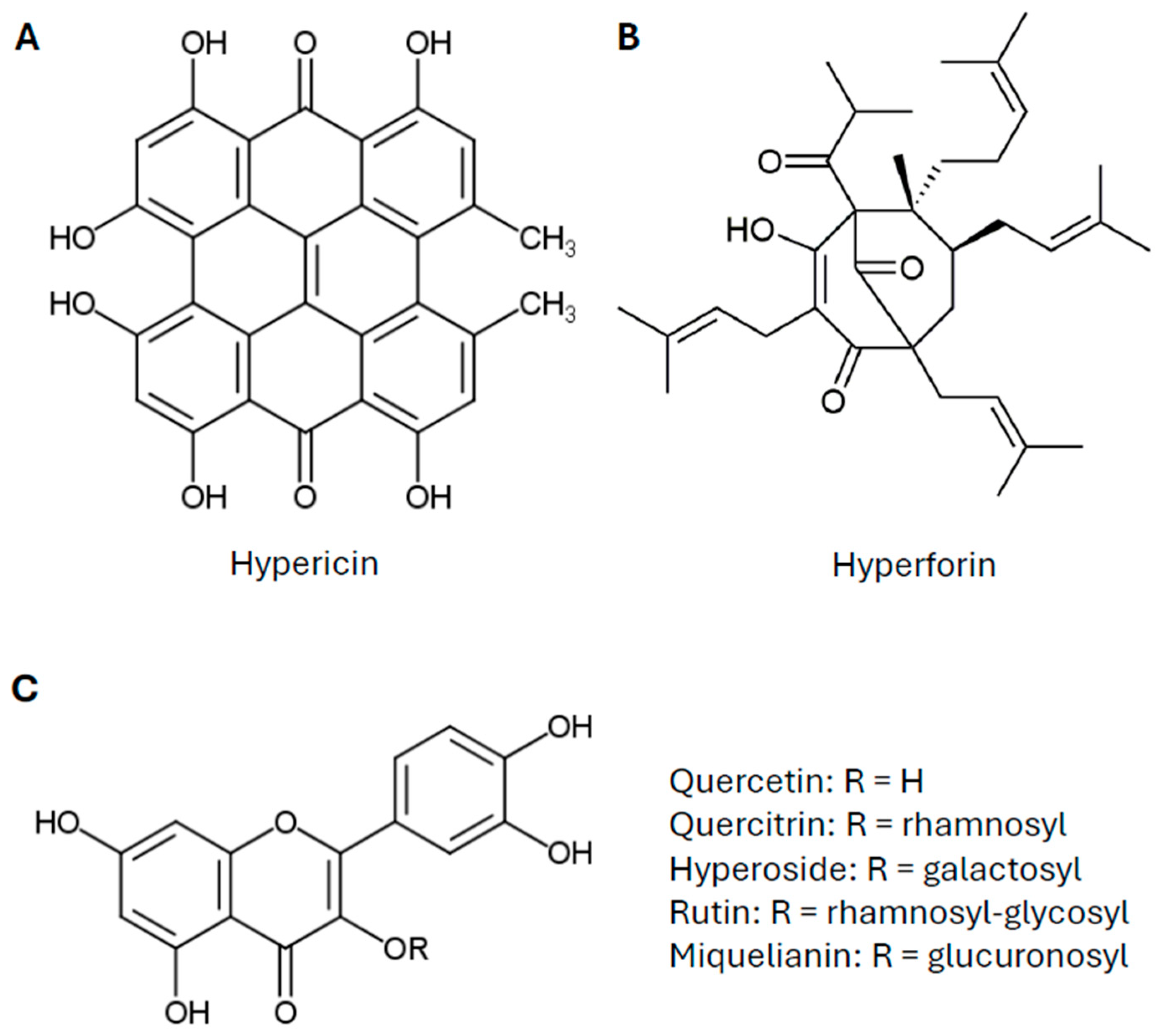
Figure 1. Chemical structures of the main ingredients of St. John’s wort. (A) Hypericin; (B) hyperforin; (C) flavonoid structure with respective residues.
Ijms 26 11925 g001
Figure 2. Mechanism of action of the pharmacokinetic drug interactions of St. John’s wort. Hyperforin, an ingredient of St. John’s wort, binds to and activates the nuclear receptor pregnane X receptor (PXR). Activated PXR forms a heterodimer with the retinoid X receptor (RXR) and binds to specific response elements in DNA, thereby inducing the expression of genes encoding cytochrome P450 (CYP450) enzymes (e.g., CYP3A4). The resulting upregulation of CYP450 enzymes enhances the metabolism and clearance of active pharmaceutical ingredients (APIs) that are substrates of this enzyme system, leading to reduced plasma concentrations and therapeutic efficacy of co-administered drugs. Created in BioRender.com. https://BioRender.com/qybq9to (accessed on 31 October 2025).
Ijms 26 11925 g002
Figure 3. Interconnected domains of antidepressant action. Schematic representation of the major neurobiological domains implicated in antidepressant efficacy. Antidepressants modulate monoamine neurotransmitter signaling, enhance neuroplasticity, attenuate neuroinflammation, normalize hypothalamic–pituitary–adrenal (HPA) axis activity, and improve mitochondrial function. These domains are functionally interconnected, and disturbances in one system propagate across others, reflecting the network-based nature of depression pathophysiology and antidepressant mechanisms. Created in BioRender.com. https://BioRender.com/poizucx (accessed on 31 October 2025).
Ijms 26 11925 g003
Figure 4. Hypothesized mode of action of Ze 117. The membrane properties of depressed individuals differ from those of healthy individuals. However, the transitions are not clearly defined. Chronic stress leads to persistently high cortisol levels in the blood which are believed to be associated with depression. Cortisol has been demonstrated to alter cellular membranes by making them more fluid and consequently modifying the lateral mobility of receptors such as β1-adrenergic receptors. Consequently, signal transduction becomes restricted. Ze 117 may normalizes signal transduction by reversing cortisol-dependent changes in membrane fluidity. Such changes may be indicated by the amount of double bonds and the chain length of membrane lipids. This finding provides a partial explanation for the antidepressant properties of Ze 117. Created in BioRender.com. https://BioRender.com/y14nkjc (accessed on 31 October 2025).
Ijms 26 11925 g004
Disclaimer/Publisher’s Note: The statements, opinions and data contained in all publications are solely those of the individual author(s) and contributor(s) and not of MDPI and/or the editor(s). MDPI and/or the editor(s) disclaim responsibility for any injury to people or property resulting from any ideas, methods, instructions or products referred to in the content.