Article

Novel Mono-Substituted 4H-1,2,6-Thiadiazines with Antioxidant and Anti-Lipoxygenase Activities
by
Eleftherios Charissopoulos
1,
Panayiotis A. Koutentis
2,
Andreas S. Kalogirou
3,* and
Eleni Pontiki
1,*
1
Laboratory of Pharmaceutical Chemistry, Faculty of Health Sciences, School of Pharmacy, Aristotle University of Thessaloniki, 54124 Thessaloniki, Greece
2
Department of Chemistry, University of Cyprus, P.O. Box 20537, Nicosia 1678, Cyprus
3
Department of Life Sciences, School of Sciences, European University Cyprus, 6 Diogenis Str., Engomi, P.O. Box 22006, Nicosia 1516, Cyprus
*
Authors to whom correspondence should be addressed.
Int. J. Mol. Sci. 2025, 26(24), 11817; https://doi.org/10.3390/ijms262411817
Submission received: 10 October 2025 / Revised: 13 November 2025 / Accepted: 3 December 2025 / Published: 7 December 2025
(This article belongs to the Section Biochemistry)

Abstract

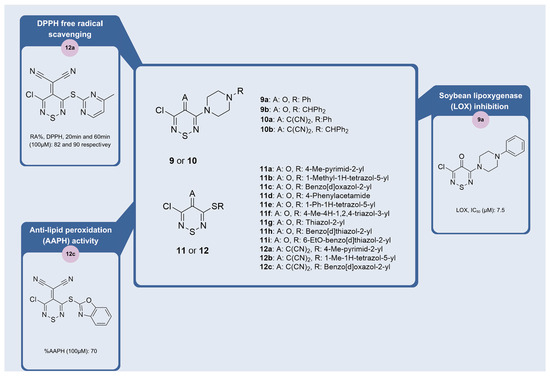
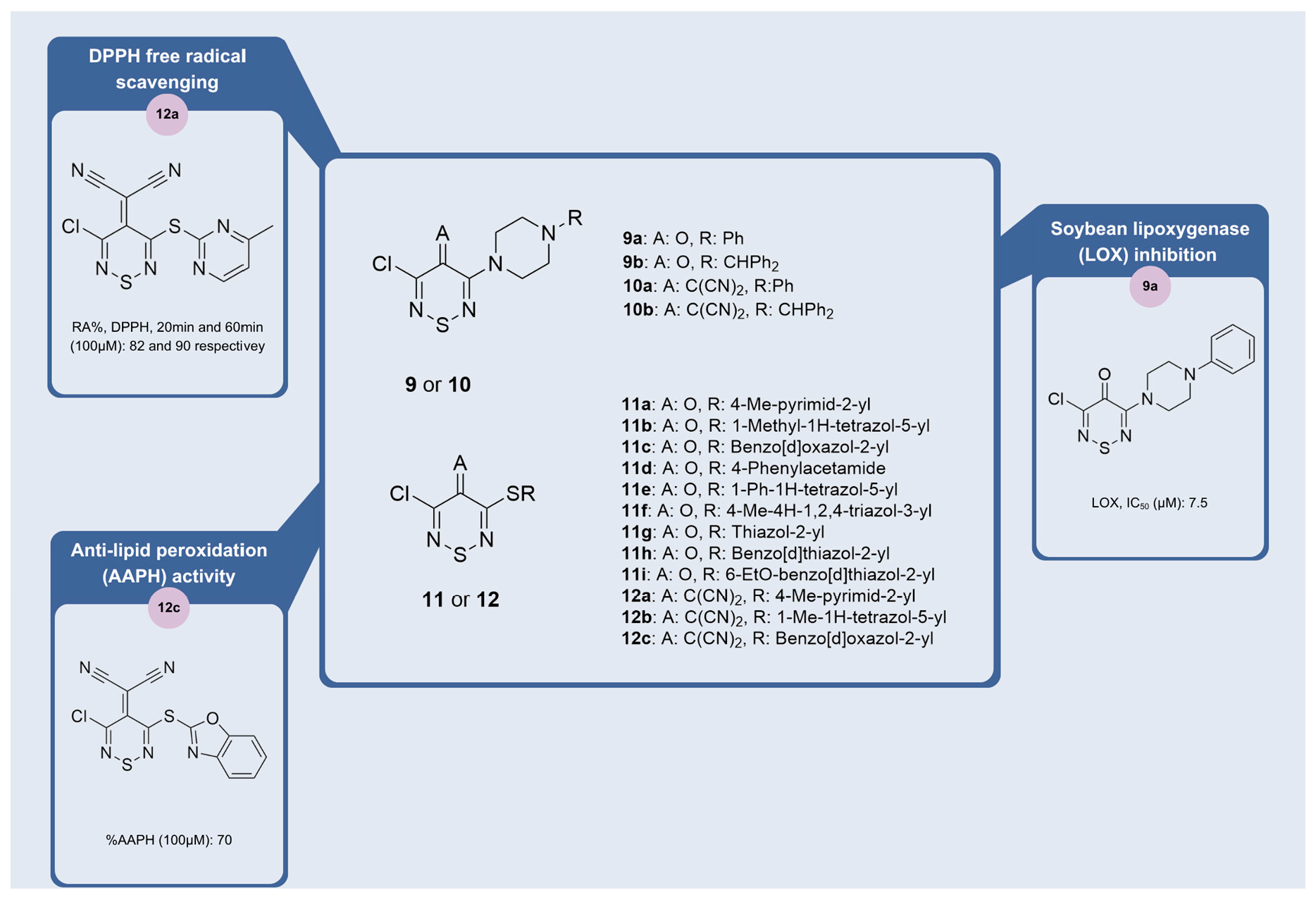
Τhe synthesis of a novel series of mono-substituted 4H-1,2,6-thiadiazine derivatives was reported, aiming at enhancing antioxidant and lipoxygenase inhibitory activities via pharmacophore combination. The compounds were prepared from 3,5-dichloro-4H-1,2,6-thiadiazin-4-one and 2-(3,5-dichloro-4H-1,2,6-thiadiazin-4-ylidene)malononitrile. All the derivatives were evaluated for radical scavenging activity towards 2,2-diphenyl-1-picrylhydrazyl (DPPH), 2,2′-azobis(2-methylpropionamidine) dihydrochloride (AAPH)-induced lipid peroxidation inhibition, and soybean lipoxygenase (sLOX) inhibition. The compounds exhibited moderate to good antioxidant activity and variable sLOX inhibition. Notably, 2-[3-(benzo[d]oxazol-2-ylthio)-5-chloro-4H-1,2,6-thiadiazin-4-ylidene]malononitrile showed the strongest antioxidant effect (92% DPPH scavenging at 60 min and 70% inhibition of AAPH-induced lipid peroxidation) but low sLOX inhibition, whereas 3-chloro-5-(4-phenylpiperazin-1-yl)-4H-1,2,6-thiadiazin-4-one displayed the most potent sLOX inhibition (IC50: 7.5 μM), with a docking score of −8.3 kcal/mol developing hydrophobic interactions with Phe134 and Val520.

Graphical Abstract

1. Introduction

1.1. Interplay Between Inflammation and Oxidative Stress

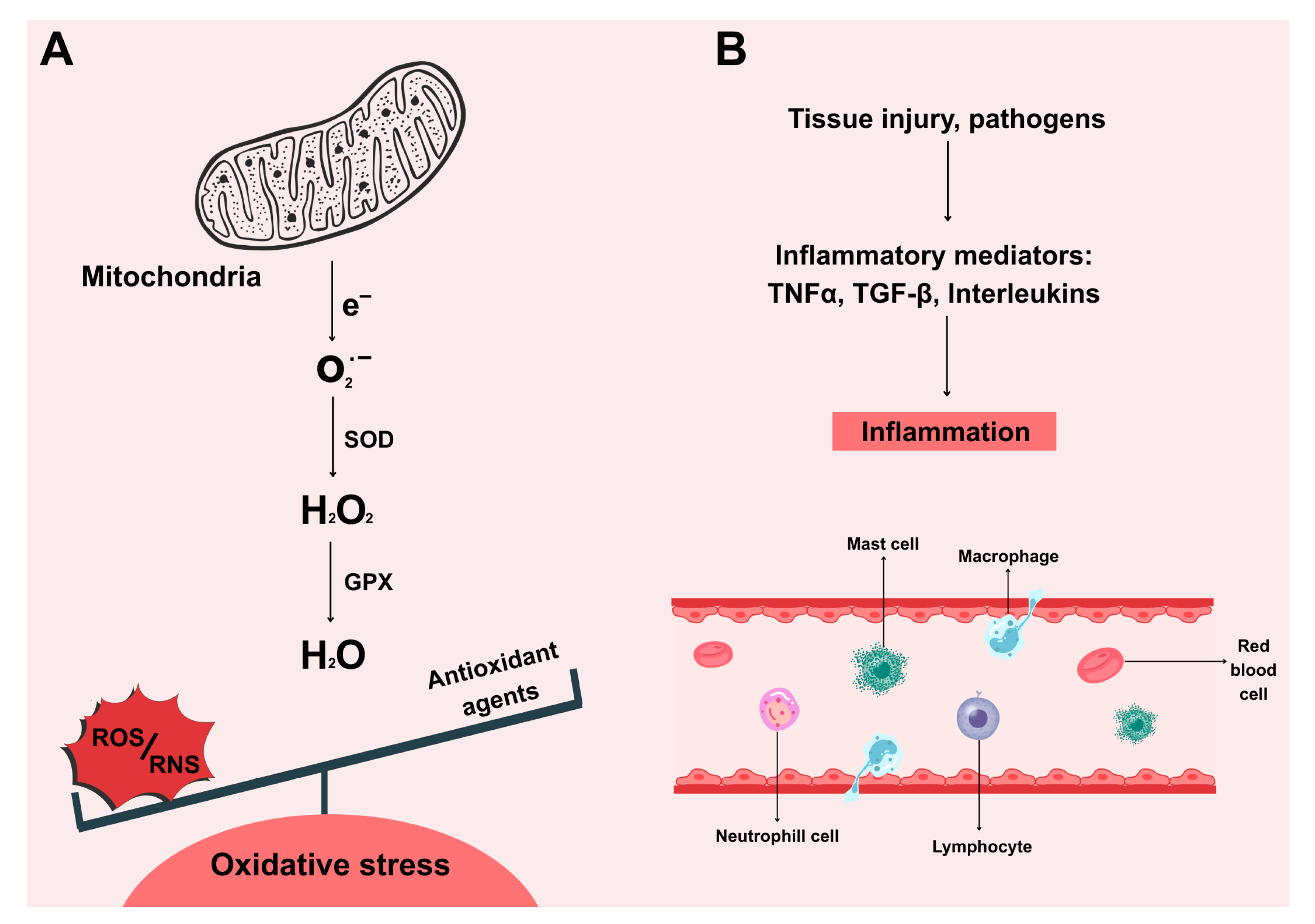
Oxidative stress (OS) and inflammation are interconnected processes that not only serve protective roles but are also essential in maintaining physiological homeostasis [1]. Inflammation is a fundamental response of the immune system, typically triggered by invading pathogens or physical injury (Figure 1) [2,3,4]. The main microcirculatory events of the inflammatory phase include increased vascular permeability, leukocyte recruitment and accumulation, and the release of inflammatory mediators [5]. Oxidative stress occurs when the balance between oxidants and antioxidants is disrupted (Figure 1), resulting in tissue damage [6]. During OS, inflammatory mediators are generated, which in turn enhance the production of reactive oxygen species (ROS) [7,8]. Targeting the excessive generation of reactive oxygen species (ROS) has emerged as a clinically significant strategy for managing diseases driven by chronic inflammation [9].

1.2. 1,2,6-Thiadiazines: Structure and Biological Functions

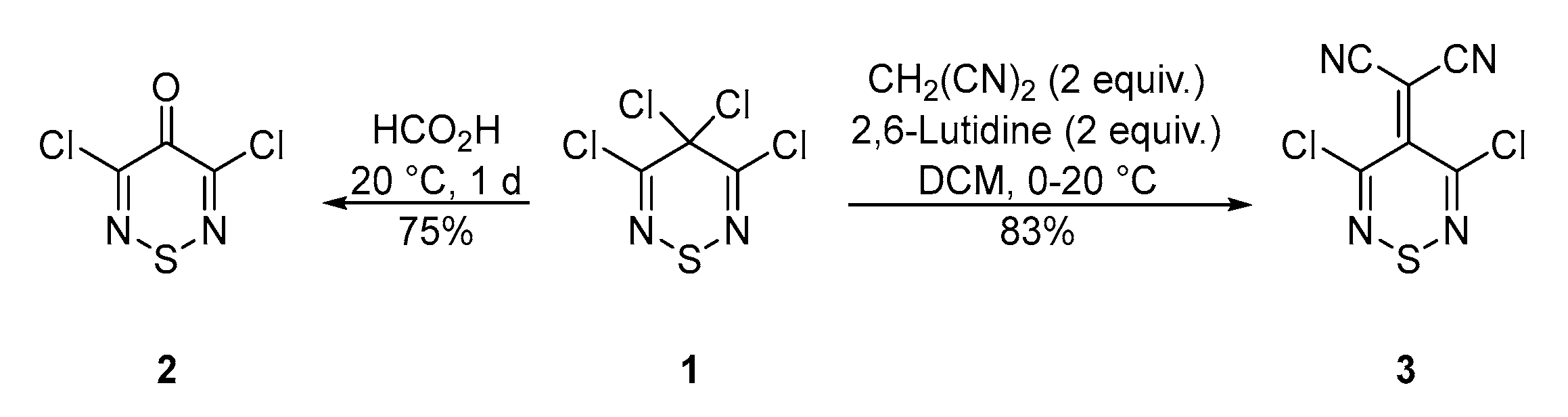
1,2,6-Thiadiazines are sulfur–nitrogen heterocycles with diverse applications [10]. Non-S-oxidized 4H-1,2,6-thiadiazines are rare, but find uses in the biological [11,12,13,14,15,16] as well as the materials sciences [17,18,19,20,21,22]. Their chemistry and applications have recently been reviewed [23]. Current research on thiadiazines primarily centers on three key starting materials, 3,4,4,5-tetrachloro-4H-1,2,6-thiadiazine (1), ketone 2 (see Figure S1 in the Supporting Information for its synthesis, SI), and ylidenemalononitrile 3 (Scheme 1).
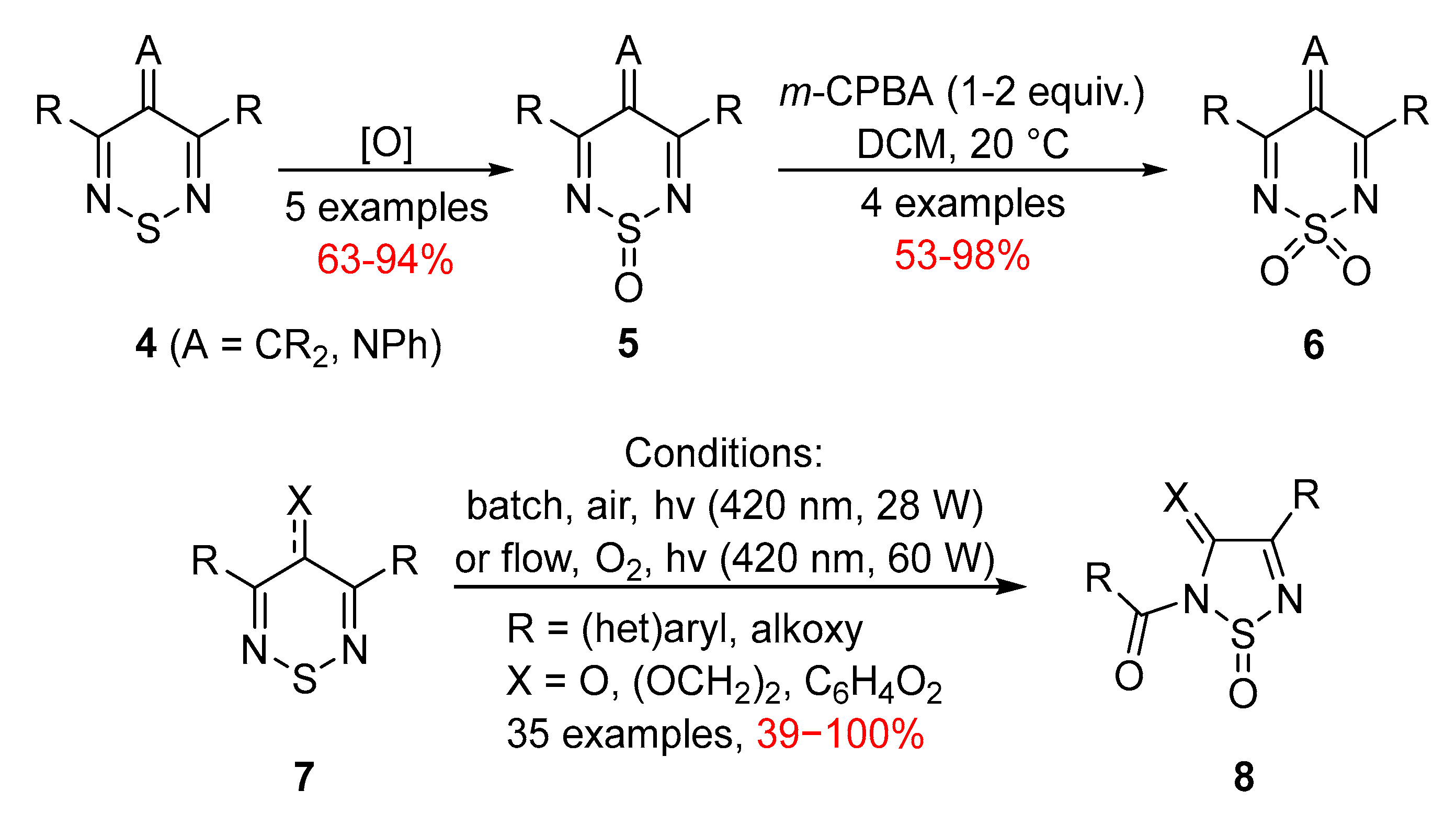
This research work is focused on mono-substituted 1,2,6-thiadiazines as antioxidants. A small library of monosubstituted 3-amino and 3-thiothiadiazines (Table 1 and Table 2) was investigated. Interestingly, 1,2,6-thiadiazines 4 can be oxidized by a range of oxidants (N2O4, m-CPBA, Oxone, PIFA, and PIDA) to give oxidation of the endocyclic sulfur to either sulfoxides 5 or sulfones 6 [24] (Scheme 2). Moreover, the photochemical treatment of 4H-1,2,6-thiadiazines 7 with visible light and air (or 3O2) afforded ring-contracted 1,2,5-thiadiazole 1-oxides 8 in good yields under both batch and flow conditions [23,25] (Scheme 2, see Figure S2, SI for the reaction mechanism).
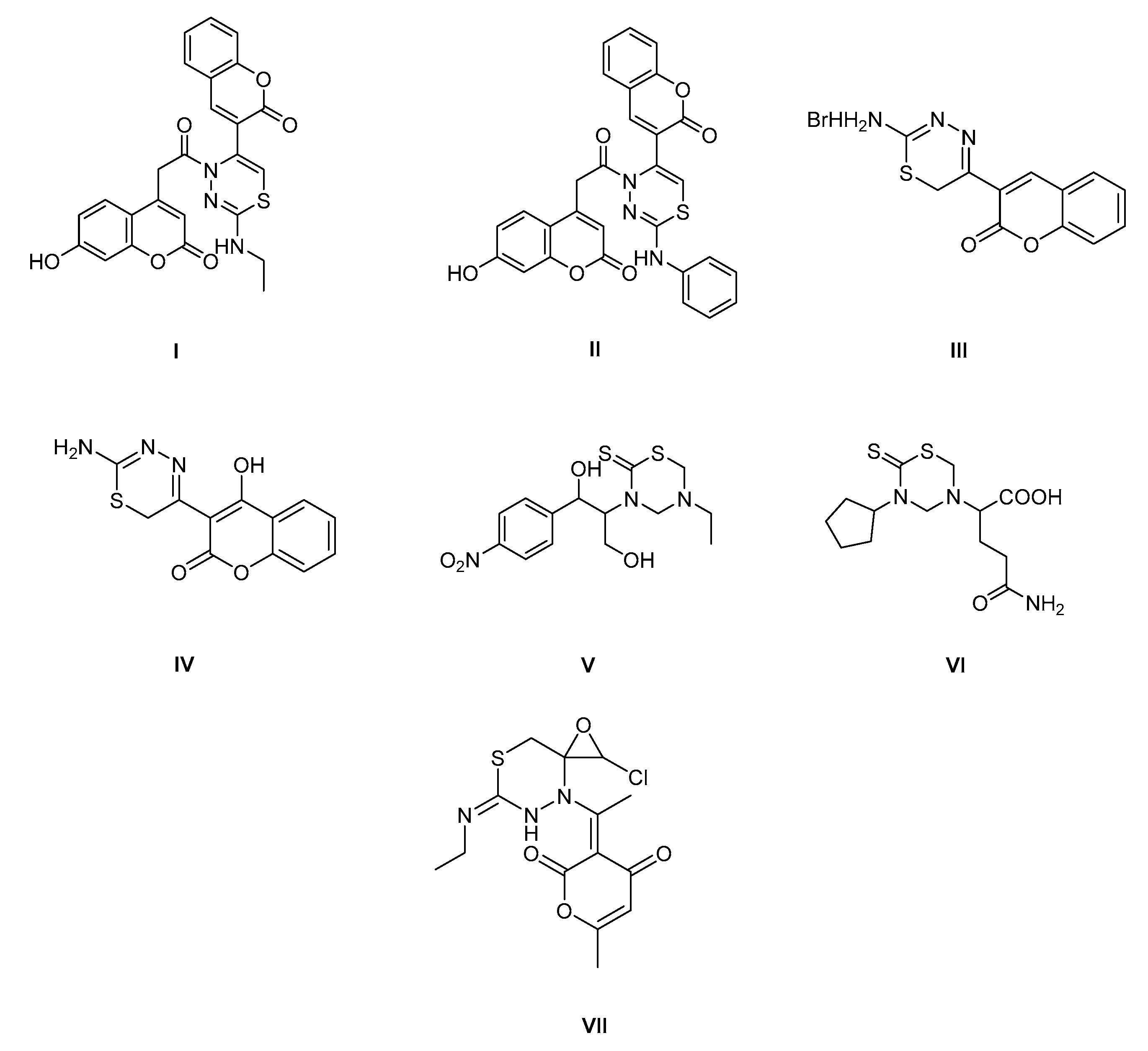
Additionally, other thiadiazine isomers have previously been explored for a broad spectrum of biological activities. For example, a series of 1,3,4-thiadiazine–coumarin hybrids has been investigated for their antioxidative and antifungal properties. Other thiadiazine derivatives have been reported as potential antiparasitic, antioxidant, anticancer, antibacterial, and antifungal agents (Scheme 3) [26,27,28]. Compounds IIV were evaluated for DPPH scavenging activity and antifungal effects against A. flavus, showing promising results [27]. Compound V exhibited notable antibacterial and antifungal properties [26], while compounds VI [26] and VII [28] emerged as promising candidates for future anticancer and antiparasitic studies, respectively. Recent studies have also highlighted that thiadiazines, due to their resemblance to cephalosporins, can play a pivotal role in bacterial resistance by inhibiting the NorA pump [28].
In light of these findings, a series of 1,2,6-thiadiazines was assessed for their capacity to (i) neutralize the stable DPPH free radical; (ii) inhibit linoleic acid peroxidation, and (iii) inhibit soybean lipoxygenase as a marker of anti-inflammatory activity.

2. Results and Discussion

2.1. Synthesis

Ιnitially the selective mono-displacement of dichlorothiadiazines 2 and 3 with selected amine nucleophiles was investigated. N-Substituted piperazines, such as 1-phenylpiperazine and 1-benzhydrylpiperazine, were selected. Piperazines are privileged scaffolds [29,30] in drug discovery, as they often improve the solubility and pharmacokinetic properties of bioactive molecules. The reactions proceeded smoothly, affording four new 3-aminothiadiazines 9a,b and 10a,b in high yields (Table 1).
Table 1. Synthesis of 3-aminothiadiazine targets.
Ijms 26 11817 i001
CompoundARConditions
(Time, h)
Yield
(%)
9aOPhA (1)97
9bOCHPh2A (1)99
10aC(CN)2PhB (1)88
10bC(CN)2CHPh2B (1)100
Subsequently, the mono-displacement of dichlorothiadiazines 2 and 3 with a number of aromatic and heteroaromatic thiols to prepare 3-thiothiadiazines was explored. Interestingly, dichlorothiazinone 2 gave good yields of sulfides 11 (43–81%) with the exception of tetrazole thiols (28 and 39%, Table 2, 11b & 11e) and 6-ethoxybenzothiazol thiol (43%, Table 2, 11i) that gave low yields. The three examples of thiol displacement of dicyanoylidene 3 all gave medium yields of sulfides 12 (49–71%, Table 2, 12ac). Compound 11h has been previously reported in the literature [31]. For all the compounds, the identification was carried out by melting point, IR, MS, and 1H and 13C NMR (see SI for NMR spectra).
Table 2. Synthesis of 3-thiothiadiazine targets.
Ijms 26 11817 i002
CompoundARTime (h)Yield (%)
11aO4-Me-pyrimid-2-yl2481
11bO1-Methyl-1H-tetrazol-5-yl528
11cOBenzo[d]oxazol-2-yl2074
11dO4-Phenylacetamide181
11eO1-Ph-1H-tetrazol-5-yl539
11fO4-Me-4H-1,2,4-triazol-3-yl381
11gOThiazol-2-yl173
11hOBenzo[d]thiazol-2-yl2471 a
11iO6-EtO-benzo[d]thiazol-2-yl243
12aC(CN)24-Me-pyrimid-2-yl0.571
12bC(CN)21-Me-1H-tetrazol-5-yl3.556
12cC(CN)2Benzo[d]oxazol-2-yl349
a Prepared according to the literature [31].

2.2. Physicochemical Studies

2.2.1. Determination of Lipophilicity

Lipophilicity is an important property of a drug candidate, as it affects solubility and how easily the molecule crosses cell membranes, which in turn influences its ADMET profile (absorption, distribution, metabolism, elimination, and toxicity) [32,33]. Lipophilicity (expressed as clogP values) was theoretically calculated using the Bio-Loom program from BioByte Corp (http://www.biobyte.com/, accessed on 10 June 2025).

2.2.2. Theoretical Calculation of Physicochemical Properties

Drug-likeness refers to the likelihood that a molecule can become an orally bioavailable drug. In practice, it is evaluated by comparing the physicochemical and structural properties of a new compound to those of established drugs. ADMET profiles can often be estimated directly from a molecule’s structure, ideally even before its synthesis and biological testing. To support this, numerous in silico tools have been established for predicting ADMET characteristics. Among these is the online platform Molinspiration (www.molinspiration.com, Molinspiration Cheminformatics 2025, 9 September 2025). On this platform, drug-likeness is evaluated using Lipinski’s Rule of Five. The parameters calculated include miLogP (lipophilicity); TPSA (topological polar surface area), an important indicator of drug absorption and bioavailability; Natoms (total atom count); MW (molecular weight), which influences absorption, distribution, and overall drug-likeness; nON (hydrogen bond acceptors); nOHNH (hydrogen bond donors), which affect hydrogen-bonding potential and target affinity; Nviolations (number of Lipinski’s rule of five violations); Nrotb (rotatable bonds), reflecting molecular flexibility and oral bioavailability; and Volume (three-dimensional molecular size), impacting membrane permeability and steric compatibility. All the synthesized compounds do not present any violations. The results are presented in Table 3.

2.3. Biological Evaluation

The synthesized compounds were evaluated in vitro for their ability to interact with the stable free radical DPPH, inhibit the AAPH-induced linoleic acid peroxidation, and suppress soybean lipoxygenase activity.
The synthesized derivatives were tested for their interaction with the stable free radical 2,2-diphenyl-1-picrylhydrazyl (DPPH) at a concentration of 100 μM after 20 and 60 min (Table 4). DPPH is widely used as a standard method for evaluating antioxidant activity [34]. Interestingly, the interaction between lipophilic compounds and DPPH is not dictated by lipophilicity alone. The antioxidant’s molecular structure, the solvent environment, and several experimental conditions can significantly influence this behavior. However, lipophilic compounds typically dissolve efficiently in organic solvents when they react with DPPH. The relationship between antioxidant activity and lipophilicity was reported in previous studies [35]. Nordihydroguaiaretic acid (NDGA) was used as a reference standard [36].
Among the 9a,b, 10a,b, and 11ai series, none of the compounds exhibited significant DPPH radical scavenging activity at 20 or 60 min. Moreover, the interaction with DPPH was not time-dependent. Among these series, compound 11c showed the highest activity, with 21% at 20min, which seems to be stable over time (22% interaction at 60 min). From the 11 series, compound 11c, which contains the benzo[d]oxazol-2-yl substitution, presented the highest interaction with DPPH, but still moderate compared to the reference compound.
Compounds 12ac exhibited the most potent activity, with compounds 12a and 12c showing excellent interactions of 90% and 92%, respectively, at 60 min, compared to NDGA (87%). The interaction of compounds 12ac with the DPPH radical appears to increase over time. Compound 12c, which contains a benzo[d]oxazol-2-yl moiety, again emerged as the most active compound, similar to the 11-series. The results indicate that the presence of a 4-dicyanoylidine group on the thiadiazine instead of a ketone enhances DPPH interaction, as evidenced by the greater increase in % interaction values observed for compounds 12ac compared to the corresponding compounds 11ac.
In the lipid peroxidation assay, sodium linoleate was used as the substrate, while 2,2′-azobis(2-methylpropionamidine) dihydrochloride (AAPH) was the peroxyl radical initiator. The formation of 13-hydroperoxy-linoleic acid from linoleic acid was observed by UV-Vis absorption measurements at 234 nm. Trolox was used as a reference compound.
Most of the synthesized compounds exhibited moderate to low inhibitory activity, except for compound 12c, with 70% anti-lipid peroxidation.
Among the 9a,b and 10a,b series, all of them showed low inhibitory activity, with compound 10a having the best one with 27%. Among the 11ai series, the compounds exhibited moderate to low activity, with 11b and 11d showing the highest values of 45% and 43%, respectively. Among the 12ac series, compound 12c, which contains the benzo[d]oxazol-2-yl moiety, showed excellent AAPH inhibitory effect (70%). Comparison between the 11ac and 12ac series revealed that the presence of a 4-dicyanoylidine group in the thiadiazine instead of a ketone favors AAPH inhibition, with the exception of the comparison between compounds 11b and 12b.
Lipoxygenase (LOX) plays a key role in the formation of leukotrienes, which are important inflammatory mediators [37]. Leukotrienes are considered key therapeutic targets in inflammatory diseases due to their role. Soybean lipoxygenase (LOX), a plant-based enzyme, has long been used as a model system to study the structural and functional characteristics of the lipoxygenase family [38] due to its significant homology with human 5-LOX [39]. NDGA was used as a reference drug.
Based on the IC50 values, the compounds generally exhibited moderate to low inhibitory effects, with the exception of compound 9a, which presented an IC50 value of 7.5 µM and A: O and R: Ph substitution. Comparison of the pairs 9a,b and 10a,b suggests that in this case, the presence of a 4-ketone group in the thiadiazine instead of a dicyanoylidine is more favorable for sLOX inhibition. Among the 11ai series, compounds 11f, 11i, 11c, and 11d exhibited moderate inhibitory effects, with IC50 values of 52.5, 67.5, 77.5, and 85 µM, respectively. Compound 11f, bearing a 4-Me-4H-1,2,4-triazol-3-yl substitution, presented slightly better results within the 11-series with an IC50 of 52.5 µM. Comparison of the 11ac and 12ac series suggests that within these series, the presence of a 4-dicyanoylidine group in the thiadiazine instead of a ketone enhances the anti-LOX inhibition, with the exception of compounds 11c and 12c.

2.4. Docking Simulation Soybean Lipoxygenase Studies

Soybean lipoxygenase-1(PDB ID: 3PZW) was selected for the docking studies. The crystal structure of soybean lipoxygenase-1 (PDB ID: 3PZW) lacks a co-crystallized ligand. Thus, potential allosteric binding pockets outside the established iron-binding and substrate-binding sites have been identified, as highlighted in recent studies. Detsi, A. et al. [40] have detected three potential binding sites using SiteMap’s [41]. Researchers have identified Site 1 between the amino-terminal β-barrel (PLAT domain) and the α-helical domain that contains the catalytic iron. This is recognized as a potential binding site in blind docking studies [40]. Sites 2 and 3 are positioned within the α-helical segment as well.
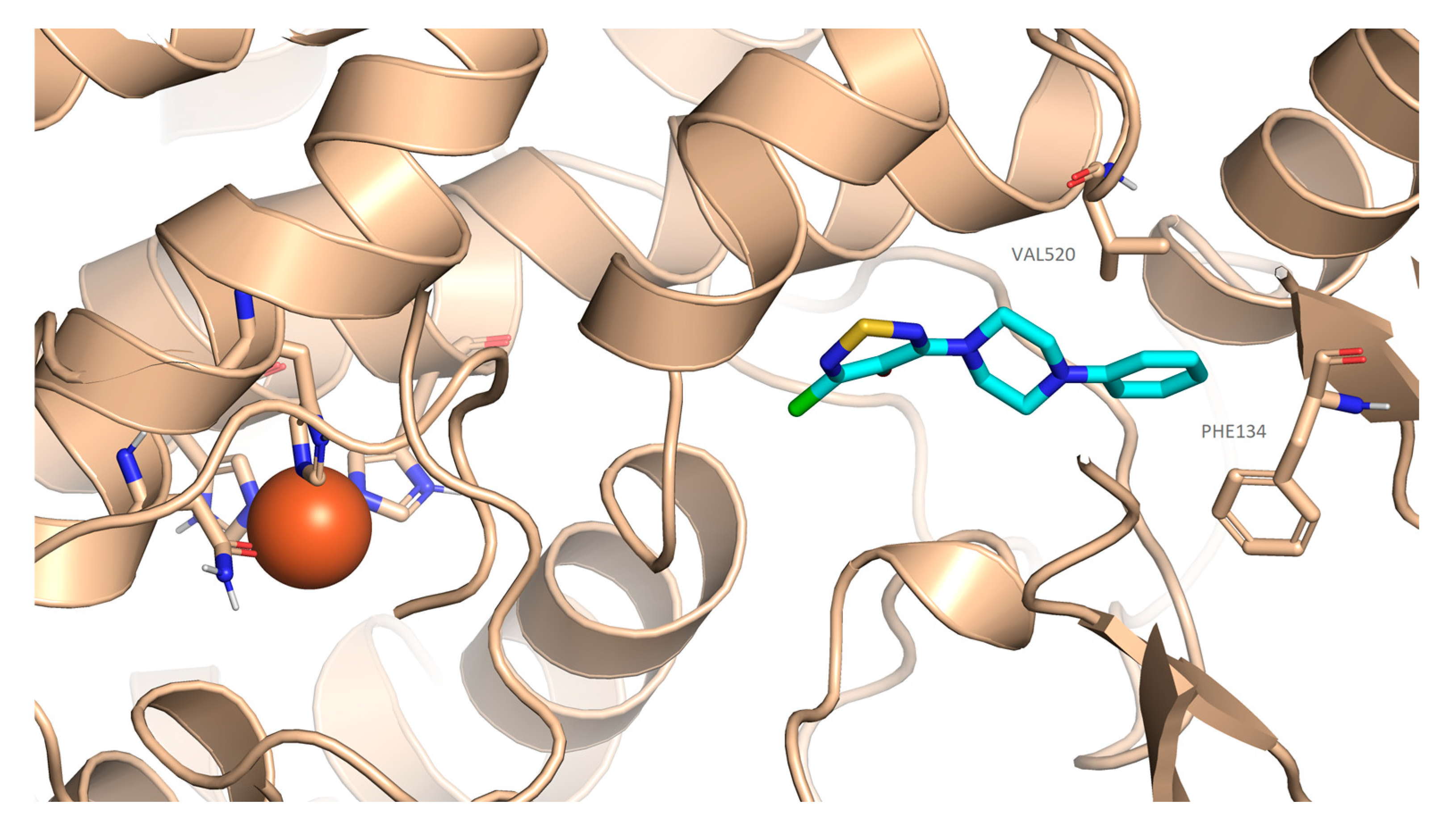
Consistent with previous studies, blind docking was performed to explore all potential binding sites. The results indicate that the compounds preferentially bind to Site 1, which aligns with the findings discussed earlier. Compound 9a was the most potent, presenting a binding score of −8.3 kcal/mol. Compound 9a develops hydrophobic interactions with the amino acids Phe134 and Val520 (Figure 2).

3. Materials and Methods

3.1. Materials and Instruments

The reaction mixture was monitored by TLC using commercial glass-backed thin-layer chromatography (TLC) plates (Merck Kieselgel 60 F254, Merck, Darmstadt, Germany). The plates were observed under UV light at 254 and 365 nm. Tetrahydrofuran (THF) was distilled over CaH2 before use. Melting points were determined using a PolyTherm-A, Wagner & Munz, Kofler Hotstage Microscope apparatus (Wagner & Munz, Munich, Germany). The solvent used for recrystallization is indicated after the melting point. The UV-vis spectrum was obtained using a Perkin-Elmer Lambda-25 UV/vis spectrophotometer (Perkin-Elmer, Waltham, MA, USA), and inflections are identified by the abbreviation “inf”. The IR spectrum was recorded on a Shimadzu FTIR-NIR Prestige-21 spectrometer (Shimadzu, Kyoto, Japan) with Pike Miracle Ge ATR accessory (Pike Miracle, Madison, WI, USA), and strong, medium, and weak peaks are represented by s, m, and w, respectively. 1H and 13C NMR spectra were recorded on a Bruker Avance 300 (at 300 and 75 MHz, respectively), or a 500 machine (at 500 and 125 MHz, respectively) (Bruker, Billerica, MA, USA). Deuterated solvents were used for homonuclear lock, and the signals are referenced to the deuterated solvent peaks. Attached proton test (APT) NMR studies were used for the assignment of the 13C peaks as CH3, CH2, CH, and Cq (quaternary). The Matrix-Assisted Laser Desorption/Ionization-Time of Flight (MALDI-TOF) mass spectrum (+ve mode) was recorded on a Bruker Autoflex III Smartbeam instrument (Bruker), while ESI-APCI+ mass spectra were recorded on a Model 6110 Quadrupole MSD, Agilent Technologies (Agilent, Santa Clara, CA, USA), and ES-API spectra on a Model 1260 Infinity II Quadrupole MSD, Agilent Technologies. The elemental analysis was run by the London Metropolitan University Elemental Analysis Service. 3,5-Dichloro-4H-1,2,6-thiadiazin-4-one (2) [42], 2-(3,5-dichloro-4H-1,2,6-thiadiazin-4-ylidene)malononitrile (3) [43], and 3-(benzo[d]thiazol-2-ylthio)-5-chloro-4H-1,2,6-thiadiazin-4-one (11h) [26] were prepared according to the literature procedures.

3.2. Chemistry General Procedure

3.2.1. Synthesis of 3-Aminothiadiazines (9a,b, 10a,b, 11ai, 12ac)

3-Chloro-5-(4-phenylpiperazin-1-yl)-4H-1,2,6-thiadiazin-4-one (9a)
To a stirred mixture of 3,5-dichloro-4H-1,2,6-thiadiazin-4-one (2) (92.0 mg, 0.50 mmol) in EtOH (1 mL) at ca. 20 °C, N-phenylpiperazine was added (76 μL, 0.50 mmol), followed by 2,6-lutidine (58 μL, 0.50 mmol), and the mixture was stirred at this temperature until complete consumption of the starting material (TLC, 1 h). The precipitate formed was then filtered, washed with EtOH (1 mL), then t-BuOMe (1 mL), and dried to give the title compound 9a (82.6 mg, 53%). The filtrate was then adsorbed onto silica and chromatographed (n-hexane/DCM 50:50) to give a further quantity of the title compound 9a (68 mg, total yield 97%) as yellow needles, mp 166–167 °C (from c-hexane); Rf 0.48 (n-hexane/DCM 50:50); (found: C, 50.47; H, 4.07; N, 18.07. C13H13ClN4OS requires C, 50.57; H, 4.24; N, 18.14%); λmax (DCM)/nm 255 (log ε 4.21), 312 (4.21), 320 inf (4.18), 404 (3.74); vmax/cm−1 2901w and 2833w (C-H), 1624s (C=O), 1595m, 1497s, 1344s, 1389m, 1366m, 1277m, 1233s, 1157m, 1094w, 1055w, 1040m, 989m, 955m, 922m, 872s, 854s, 752s; δH (300 MHz; CDCl3) 7.33–7.27 (2H, m, Ar CH), 6.93–6.89 (3H, m, Ar CH), 4.08 (4H, t, J 4.8, Ar CH2), 3.29 (4H, t, J 5.3, Ar CH2); δC (75 MHz; CDCl3) 158.7 (Cq), 152.8 (Cq), 150.7 (Cq), 145.4 (Cq), 129.3 (CH), 120.6 (CH), 116.4 (CH), 49.3 (CH2), 46.6 (CH2); m/z (APCI+) 311 (MH++2, 35%), 309 (MH+, 100), 190 (8), 163 (8), 108 (10), 104 (11).
3-(4-Benzhydrylpiperazin-1-yl)-5-chloro-4H-1,2,6-thiadiazin-4-one (9b)
To a stirred mixture of 3,5-dichloro-4H-1,2,6-thiadiazin-4-one (2) (92.0 mg, 0.50 mmol) in EtOH (1 mL) at ca. 20 °C, 1-benzhydrylpiperazine was added (126 mg, 0.50 mmol), followed by 2,6-lutidine (58 μL, 0.50 mmol), and the mixture was stirred at this temperature until complete consumption of the starting material (TLC, 1 h). The mixture was then adsorbed onto silica and chromatographed (n-hexane/DCM 70:30) to give the title compound 9b (197 mg, 99%) as yellow needles, mp 56–57 °C (from EtOH/H2O); Rf 0.24 (n-hexane/DCM 70:30); (found: C, 60.45; H, 4.66; N, 14.01. C20H19ClN4OS requires C, 60.22; H, 4.80; N, 14.05%); λmax (DCM)/nm 268 (log ε 3.98), 312 (4.21), 322 (4.18), 408 (3.76); vmax/cm−1 3021w (C-H arom), 2810w (C-H alip), 1626s (C=O), 1503s, 1441m, 1300m, 1283m, 1260s, 1190s, 1123m, 1142m, 1103m, 1076m, 1051m, 1030m, 995s, 953s, 922m, 876s, 854s, 838m, 764s, 746s, 725m, 704s; δH (500 MHz; CDCl3) 7.42 (4H, d, J 7.2, Ar CH), 7.29 (4H, dd, J 7.4, 7.4, Ar CH), 7.20 (2H, dd, J 7.4, 7.4, Ar CH), 4.25 (1H, s, NCH), 3.90 (4H, s, CH2), 2.49 (4H, t, J 5.0, CH2); δC (125 MHz; CDCl3) 158.7 (Cq), 152.8 (Cq), 145.0 (Cq), 142.0 (Cq), 128.6 (CH), 127.9 (CH), 127.2 (CH), 76.0 (CH), 51.8 (CH2), 46.9 (CH2); m/z (ESI+) 423 (M+Na++2, 5), 421 (M+Na+, 14), 401 (MH++2, 3%), 399 (MH+, 7), 381 (27), 325 (36), 167 (Ph2CH+, 100).
2-[3-Chloro-5-(4-phenylpiperazin-1-yl)-4H-1,2,6-thiadiazin-4-ylidene]malononitrile (10a)
To a stirred mixture of 2-(3,5-dichloro-4H-1,2,6-thiadiazin-4-ylidene)malononitrile (3) (116 mg, 0.50 mmol) in DCM (2 mL) at ca. 0 °C, N-phenylpiperazine was added (76 μL, 0.50 mmol), followed by 2,6-lutidine (58 μL, 0.50 mmol), and the mixture was left to warm to ca. 20 °C and stirred until complete consumption of the starting material (TLC, 1 h). The mixture was then adsorbed onto silica and chromatographed (n-hexane/DCM 50:50) to give the title compound 10a (157 mg, 88%) as red plates, mp 114–115 °C (from EtOH/H2O); Rf 0.40 (n-hexane/DCM 50:50); (found: C, 53.92; H, 3.45; N, 23.39. C16H13ClN6O requires C, 53.86; H, 3.67; N, 23.55%); λmax (DCM)/nm 251 (log ε 4.30), 330 (3.98), 491 (3.97); vmax/cm−1 2955w, 2918w, 2889w and 2849w (C-H), 2210 (C≡N), 1597m, 1493s, 1479s, 1435s, 1391m, 1385m, 1364m, 1337m, 1294m, 1267m, 1227s, 1188w, 1150m, 1069m, 1034w, 999m, 935s, 916m, 851m, 826s, 775m, 760s, 733s; δH (500 MHz; CDCl3) 7.30 (2H, dd, J 8.6, 7.3, Ar CH), 6.96–6.92 (3H, m, Ar CH), 3.75 (2H, br. s, CH2), 3.84 (6H, br. s, CH2); δC (125 MHz; CDCl3) 150.5 (Cq), 147.6 (Cq), 134.4 (Cq), 134.0 (Cq), 129.3 (CH), 121.0 (CH), 116.9 (CH), 113.3 (Cq), 112.3 (Cq), 75.6 (Cq), 48.3 (CH2), 48.0 (CH2); m/z (APCI+) 359 (MH++2, 33%), 357 (MH+, 100), 238 (10), 146 (16).
2-[3-(4-Benzhydrylpiperazin-1-yl)-5-chloro-4H-1,2,6-thiadiazin-4-ylidene]malononitrile (10b)
To a stirred mixture of 2-(3,5-dichloro-4H-1,2,6-thiadiazin-4-ylidene)malononitrile (3) (116 mg, 0.50 mmol) in DCM (2 mL) at ca. 0 °C, 1-benzhydrylpiperazine was added (126 mg, 0.50 mmol), followed by 2,6-lutidine (58 μL, 0.50 mmol), and the mixture was left to warm to ca. 20 °C and stirred until complete consumption of the starting material (TLC, 1 h). The mixture was then adsorbed onto silica and chromatographed (n-hexane/DCM 50:50) to give the title compound 10b (223 mg, 100%) as orange needles, mp 204–205 °C (from EtOH); Rf 0.39 (n-hexane/DCM 50:50); (found: C, 61.97; H, 4.13; N, 18.56. C23H19ClN6S requires C, 61.81; H, 4.28; N, 18.80%); λmax (DCM)/nm 249 inf (log ε 3.97), 330 (4.06), 381 inf (3.66), 499 (4.04); vmax/cm−1 3071w, 3040w and 3024w (C-H arom), 2997w, 1984w, 2957w, 2912w and 2886 (C-H alip), 2214m (C≡N), 1516s, 1498s, 1446m, 1437s, 1400m, 1342w, 1308m, 1300m, 1290m, 1273m, 1256w, 1234m, 1207w, 1188m, 1150m, 1140m, 1113m, 1103m, 1074m, 1067m, 1055w, 1030w, 991m, 968w, 932m, 864m, 854m, 827m, 814s, 777m, 756m, 745m, 729s, 704s; δH (500 MHz; CDCl3) 7.41 (4H, d, J 7.5, Ar CH), 7.28 (4H, dd, J 7.4, 7.4, Ar CH), 7.20 (2H, dd, J 7.4, 7.4, Ar CH), 4.28 (1H, s, NCH), 3.60 (2H, br. s, CH2), 3.33 (2H, br. s, CH2), 2.59 (4H, br. s, CH2); δC (125 MHz; CDCl3) 147.4 (Cq), 142.0 (Cq), 134.1 (Cq), 134.0 (Cq), 128.7 (CH), 127.8 (CH), 127.3 (CH), 113.3 (Cq), 112.4 (Cq), 75.8 (CH), 75.2 (Cq), 50.5 (CH2), 48.3 (CH2); m/z (ESI+) 449 (MH++2, 3%), 447 (MH+, 5), 381 (5), 325 (15), 167 (Ph2CH+, 100).

3.2.2. Synthesis of 3-thiothiadiazines

3-Chloro-5-[(4-methylpyrimidin-2-yl)thio]-4H-1,2,6-thiadiazin-4-one (11a)
To a stirred mixture of 3,5-dichloro-4H-1,2,6-thiadiazin-4-one (2) (92.0 mg, 0.50 mmol) in THF (2 mL) at ca. 20 °C, 4-methylpyrimidine-2-thiol was added (63.0 mg, 0.50 mmol), followed by Et3N (69 μL, 0.50 mmol), and the mixture was stirred at this temperature until complete consumption of the starting material (TLC, 24 h). The mixture was then adsorbed onto silica and chromatographed (DCM) to give the title compound 11a (111 mg, 81%) as yellow needles, mp 119–120 °C (from DCE/c-hexane); Rf 0.43 (DCM); (found: C, 35.36; H, 1.72; N, 20.39. C8H5ClN4OS2 requires C, 35.23; H, 1.85; N, 20.54%); λmax (DCM)/nm 241 inf (log ε 4.10), 285 inf (4.13), 315 (4.32), 357 (4.22); vmax/cm−1 1643s (C=O), 1572s, 1534w, 1491m, 1431w, 1416m, 1371w, 1339m, 1281m, 1273m, 1240w, 1200m, 1186m, 1099w, 1059m, 1045w, 899w, 878w, 856m, 849m, 762m, 736s, 721s; δH (300 MHz; DMSO-d6) 8.68 (1H, d, J 5.4, Ar CH), 7.41 (1H, d, J 5.0, Ar CH), 2.47 (3H, s, CH3); δC (75 MHz; DMSO-d6) 169.1 (Cq), 163.7 (Cq), 160.3 (Cq), 158.8 (Cq), 158.4 (CH), 145.4 (Cq), 120.2 (CH), 23.4 (CH3); m/z (APCI+) 275 (MH++2, 39%), 273 (MH+, 100), 237 (10).
3-Chloro-5-[(1-methyl-1H-tetrazol-5-yl)thio]-4H-1,2,6-thiadiazin-4-one (11b)
To a stirred mixture of 3,5-dichloro-4H-1,2,6-thiadiazin-4-one (2) (92.0 mg, 0.50 mmol) in THF (2 mL) at ca. 20 °C, 1-methyl-1H-tetrazole-5-thiol was added (58.0 mg, 0.50 mmol), followed by Et3N (69 μL, 0.50 mmol), and the mixture was stirred at this temperature until complete consumption of the starting material (TLC, 5 h). The mixture was then adsorbed onto silica and chromatographed (DCM) to give the title compound 11b (36 mg, 28%) as yellow needles, mp 215–216 °C (from EtOH); Rf 0.42 (DCM); (found: C, 22.73; H, 1.38; N, 31.75. C5H3ClN6OS2 requires C, 22.86; H, 1.15; N, 31.99%); λmax (DCM)/nm 305 (log ε 4.17), 347 (4.23); vmax/cm−1 1634s (C=O), 1493m, 1470w, 1396w, 1285m, 1263w, 1244w, 1204w, 1180m, 1065s, 984w, 932w, 905w, 862m, 748s, 721m; δH (500 MHz; DMSO-d6) 4.04 (3H, s, CH3); δC (125 MHz; DMSO-d6) 159.2 (Cq), 158.1 (Cq), 146.3 (Cq), 144.4 (Cq), 34.5 (CH3); m/z (APCI+) 264 (M++2, 3%), 262 (M+, 5), 120 (100).
3-(Benzo[d]oxazol-2-ylthio)-5-chloro-4H-1,2,6-thiadiazin-4-one (11c)
To a stirred mixture of 3,5-dichloro-4H-1,2,6-thiadiazin-4-one (2) (92.0 mg, 0.50 mmol) in THF (2 mL) at ca. 20 °C, benzo[d]oxazole-2-thiol was added (76.0 mg, 0.50 mmol), followed by Et3N (69 μL, 0.50 mmol), and the mixture was stirred at this temperature until complete consumption of the starting material (TLC, 20 h). The solvent was then evaporated under vacuum, EtOH (5 mL) added and the precipitate filtered, washed with EtOH (1 mL) and dried to give the title compound 11c (110 mg, 74%) as brown needles, mp 277–279 °C (from PhMe/DMA); Rf 0.71 (DCM); (found: C, 40.26; H, 1.47; N, 13.96. C10H4ClN3O2S2 requires C, 40.34; H, 1.35; N, 14.11%); λmax (DCM)/nm 293 inf (log ε 4.20), 313 (4.32), 346 inf (4.17); vmax/cm−1 1645s (C=O), 1504m, 1497m, 1472w, 1449m, 1337w, 1300m, 1287w, 1248m, 1213m, 1123m, 1094s, 1067w, 1003w, 934m, 891w, 804m, 760s, 750s, 729s; δH (500 MHz; DMSO-d6) 7.89 (1H, d, J 7.8, Ar CH), 7.84 (1H, d, J 8.2, Ar CH), 7.54 (1H, ddd, J 7.7, 7.7, 1.1, Ar CH), 7.48 (1H, ddd, J 7.7, 7.7, 0.8, Ar CH); δC (125 MHz; DMSO-d6) 159.4 (Cq), 158.9 (Cq), 154.2 (Cq), 152.3 (Cq), 144.6 (Cq), 141.2 (Cq), 126.9 (CH), 125.2 (CH), 120.3 (CH), 111.2 (CH); m/z (MALDI-TOF) 300 (MH++2, 4%), 298 (MH+, 9), 193 (13), 177 (35), 137 (53), 102 (100).
N-{4-[(5-Chloro-4-oxo-4H-1,2,6-thiadiazin-3-yl)thio]phenyl}acetamide (11d)
To a stirred mixture of 3,5-dichloro-4H-1,2,6-thiadiazin-4-one (2) (92.0 mg, 0.50 mmol) in THF (2 mL) at ca. 20 °C, N-(4-mercaptophenyl)acetamide was added (84.0 mg, 0.50 mmol), followed by Et3N (69 μL, 0.50 mmol), and the mixture was stirred at this temperature until complete consumption of the starting material (TLC, 1 h). The mixture was then adsorbed onto silica and chromatographed (DCM/t-BuOMe 50:50) to give the title compound 11d (127 mg, 81%) as yellow needles, mp 191–192 °C (from EtOH); Rf 0.62 (DCM/t-BuOMe 50:50); (found: C, 42.14; H, 2.49; N, 13.32. C11H8ClN3O2S2 requires C, 42.11; H, 2.57; N, 13.39%); λmax (DCM)/nm 278 (log ε 4.22), 294 (4.25), 358 (4.08), 416 (3.76); vmax/cm−1 3319w (N-H), 1670m and 1649s (C=O), 1589m, 1518m, 1485m, 1458w, 1398m, 1368m, 1354m, 1294m, 1271m, 1261m, 1244m, 1180m, 1061m, 829m, 746s, 721m, 716m; δH (300 MHz; DMSO-d6) 10.19 (1H, s, NH), 7.70 (2H, d, J 8.7, Ar CH), 7.43 (2H, d, J 8.7, Ar CH), 2.07 (3H, s, CH3); δC (75 MHz; DMSO-d6) 168.7 (Cq), 163.5 (Cq), 159.2 (Cq), 143.5 (Cq), 141.0 (Cq), 135.9 (CH), 119.8 (CH), 119.2 (Cq), 24.0 (CH3); m/z (APCI+) 316 (MH++2, 42%), 314 (MH+, 100).
3-Chloro-5-[(1-phenyl-1H-tetrazol-5-yl)thio]-4H-1,2,6-thiadiazin-4-one (11e)
To a stirred mixture of 3,5-dichloro-4H-1,2,6-thiadiazin-4-one (2) (92.0 mg, 0.50 mmol) in THF (2 mL) at ca. 20 °C, 1-phenyl-1H-tetrazole-5-thiol was added (63.0 mg, 0.50 mmol), followed by Et3N (69 μL, 0.50 mmol), and the mixture was stirred at this temperature until complete consumption of the starting material (TLC, 5 h). The mixture was then adsorbed onto silica and chromatographed (n-hexane/DCM 20:80) to give the title compound 11e (64 mg, 39%) as colorless plates, mp 182–183 °C (from EtOH); Rf 0.16 (n-hexane/DCM 20:80); (found: C, 37.06; H, 1.40; N, 25.54. C10H5ClN6OS2 requires C, 36.98; H, 1.55; N, 25.88%); λmax (MeCN)/nm 235 inf (log ε 4.19), 305 (4.26), 347 (4.30); vmax/cm−1 3100w and 3063w (C-H arom), 1655s (C=O), 1497m, 1485m, 1418w, 1406m, 1279m, 1244w, 1219m, 1123w, 1067m, 1015w, 760s, 745s, 727m; δH (300 MHz; CDCl3) 7.60–7.51 (5H, m, Ar CH); δC (125 MHz; CDCl3) 159.0 (Cq), 158.1 (Cq), 146.2 (Cq), 145.3 (Cq), 133.2 (Cq), 131.1 (CH), 129.9 (CH), 124.6 (CH); m/z (MALDI-TOF) 327 (MH++2, 31%), 325 (MH+, 82), 279 (54), 220 (46), 128 (100), 100 (49).
3-Chloro-5-[(4-methyl-4H-1,2,4-triazol-3-yl)thio]-4H-1,2,6-thiadiazin-4-one (11f)
To a stirred mixture of 3,5-dichloro-4H-1,2,6-thiadiazin-4-one (2) (92.0 mg, 0.50 mmol) in THF (2 mL) at ca. 20 °C, 4-methyl-4H-1,2,4-triazole-3-thiol was added (58.0 mg, 0.50 mmol), followed by Et3N (69 μL, 0.50 mmol), and the mixture was stirred at this temperature until complete consumption of the starting material (TLC, 3 h). The precipitate was then filtered, washed with EtOH (5 mL) and dried to give the title compound 11f (106 mg, 81%) as yellow needles, mp 152–153 °C (from THF/EtOH); Rf 0.18 (DCM/t-BuOMe 50:50); (found: C, 27.69; H, 1.46; N, 26.74. C6H4ClN5OS2 requires C, 27.54; H, 1.54; N, 26.76%); λmax (DCM)/nm 263 (log ε 4.60), 291 (4.60), 346 (4.11); vmax/cm−1 2959w, 2920w and 2853w (C-H), 1624s (C=O), 1506m, 1470w, 1418w, 1290m, 1254w, 1192m, 1163w, 1065m, 1016w, 957w, 856m, 748s, 733m; δH (500 MHz; DMSO-d6) 8.85 (1H, s, Ar CH), 3.60 (3H, s, CH3); δC (125 MHz; DMSO-d6) 159.7 (Cq), 159.3 (Cq), 148.2 (CH), 144.3 (Cq), 141.8 (Cq), 31.3 (CH3); m/z (MALDI-TOF) 264 (MH++2, 25%), 262 (MH+, 65), 184 (23), 100 (100).
3-Chloro-5-(thiazol-2-ylthio)-4H-1,2,6-thiadiazin-4-one (11g)
To a stirred mixture of 3,5-dichloro-4H-1,2,6-thiadiazin-4-one (2) (92.0 mg, 0.50 mmol) in THF (2 mL) at ca. 20 °C, thiazole-2-thiol was added (59.0 mg, 0.50 mmol), followed by Et3N (69 μL, 0.50 mmol), and the mixture was stirred at this temperature until complete consumption of the starting material (TLC, 1 h). The mixture was then adsorbed onto silica and chromatographed (n-hexane/DCM 20:80) to give the title compound 11g (96 mg, 73%) as yellow needles, mp 136–137 °C (from EtOH); Rf 0.29 (n-hexane/DCM 20:80); (found: C, 27.17; H, 0.54; N, 15.79. C6H2ClN3OS3 requires C, 27.33; H, 0.76; N, 15.93%); λmax (DCM)/nm 247 (log ε 3.94), 308 (4.16), 352 (4.08); vmax/cm−1 3053w (C-H arom), 1643s (C=O), 1605w, 1567w, 1491m, 1468m, 1350m, 1312m, 1279m, 1260w, 1242w, 1159w, 1063s, 1034s, 741s, 719s; δH (300 MHz; CDCl3) 8.04 (1H, d, J 3.4, Ar CH), 7.68 (1H, d, J 3.3, Ar CH); δC (125 MHz; DMSO-d6) 160.1 (Cq), 159.0 (Cq), 152.4 (Cq), 144.2 (Cq), 144.1 (CH), 126.8 (CH); m/z (MALDI-TOF) 266 (MH++2, 68%), 264 (MH+, 100), 247 (90), 232 (42), 142 (29).
3-Chloro-5-[(6-ethoxybenzo[d]thiazol-2-yl)thio]-4H-1,2,6-thiadiazin-4-one (11i)
To a stirred mixture of 3,5-dichloro-4H-1,2,6-thiadiazin-4-one (2) (92.0 mg, 0.50 mmol) in THF (2 mL) at ca. 20 °C, 6-ethoxybenzo[d]thiazole-2-thiol was added (106 mg, 0.50 mmol), followed by Et3N (69 μL, 0.50 mmol), and the mixture was stirred at this temperature until complete consumption of the starting material (TLC, 2 h). The mixture was then adsorbed onto silica and chromatographed (n-hexane/DCM 20:80) to give the title compound 11i (77 mg, 43%) as yellow needles, mp 180–181 °C (from DCE/EtOH); Rf 0.32 (n-hexane/DCM 20:80); (found: C, 40.19; H, 2.55; N, 11.48. C12H8ClN3O2S3 requires C, 40.28; H, 2.25; N, 11.74%); λmax (MeCN)/nm 213 (log ε 4.44), 222 inf (4.41), 256 (3.99), 314 (4.32), 346 inf (4.14); vmax/cm−1 3088w and 3061w (C-H arom), 2994w, 2943w and 2891w (C-H alip), 1634s (C=O), 1595m, 1558w, 1541w, 1481m, 1460m, 1431m, 1396m, 1321w, 1273m, 1260s, 1229s, 1130w, 1107w, 1066m, 1036m, 1016m, 939m, 851m, 827m, 746s, 725m; δH (300 MHz; DMSO-d6) 7.96 (1H, d, J 8.9, Ar CH), 7.74 (1H, d, J 2.5, Ar CH), 7.17 (1H, ddd, J 9.0, 2.5, Ar CH), 4.11 (2H, q, J 7.0, OCH2), 1.37 (3H, t, J 7.0, CH3); δC (75 MHz; DMSO-d6) 159.7 (Cq), 158.9 (Cq), 157.2 (Cq), 152.3 (Cq), 146.5 (Cq), 144.3 (Cq), 138.8 (CH), 123.6 (CH), 116.7 (CH), 105.0 (CH), 63.8 (CH2), 14.5 (CH3); m/z (MALDI-TOF) 360 (MH++2, 24%), 358 (MH+, 56), 280 (100), 233 (29), 210 (40), 182 (30).
2-{3-Chloro-5-[(4-methylpyrimidin-2-yl)thio]-4H-1,2,6-thiadiazin-4-ylidene}malononitrile (12a)
To a stirred mixture of 2-(3,5-dichloro-4H-1,2,6-thiadiazin-4-ylidene)malononitrile (3) (116 mg, 0.50 mmol) in DCM (5 mL) at ca. 0 °C, 4-methylpyrimidine-2-thiol was added (63.0 mg, 0.50 mmol), followed by Hünig’s base (87 μL, 0.50 mmol), and the mixture was left to warm to ca. 20 °C and stirred until complete consumption of the starting material (TLC, 30 min). The mixture was then adsorbed onto silica and chromatographed (n-hexane/DCM 20:80) to give the title compound 12a (114 mg, 71%) as yellow needles, mp 126–127 °C (from c-hexane); Rf 0.86 (n-hexane/DCM 20:80); (found: C, 41.36; H, 1.43; N, 26.17. C11H5ClN6S2 requires C, 41.19; H, 1.57; N, 26.20%); λmax (DCM)/nm 238 (log ε 4.28), 271 inf (4.09), 353 (4.06), 424 (4.28); vmax/cm−1 2226m (C≡N), 1574s, 1537s, 1504w, 1487m, 1454m, 1435m, 1418m, 1373w, 1344m, 1337s, 1333s, 1285s, 1204m, 1182m, 1157m, 1105m, 1096m, 1078w, 943w, 883m, 851m, 810m, 795m, 785s, 764m, 754s, 716s; δH (500 MHz; CDCl3) 8.43 (1H, d, J 5.0, Ar CH), 7.04 (1H, d, J 5.0, Ar CH), 2.50 (3H, s, CH3); δC (125 MHz; CDCl3) 163.3 (Cq), 166.6 (Cq), 157.6 (CH), 144.7 (Cq), 141.5 (Cq), 137.0 (Cq), 118.7 (CH), 111.9 (Cq), 111.8 (Cq), 79.2 (Cq), 24.2 (CH3); m/z (APCI+) 323 (MH++2, 21%), 321 (MH+, 60), 313 (100), 285 (M+-Cl,), 267 (44), 239 (62), 197 (C6ClN4S++2, 34), 195 (C6ClN4S+, 100), 159 (51).
2-{3-Chloro-5-[(1-methyl-1H-tetrazol-5-yl)thio]-4H-1,2,6-thiadiazin-4-ylidene}malononitrile (12b)
To a stirred mixture of 2-(3,5-dichloro-4H-1,2,6-thiadiazin-4-ylidene)malononitrile (3) (116 mg, 0.50 mmol) in DCM (5 mL) at ca. 0 °C, 1-methyl-1H-tetrazole-5-thiol was added (58.0 mg, 0.50 mmol), followed by Hünig’s base (87 μL, 0.50 mmol), and the mixture was left to warm to ca. 20 °C and stirred until complete consumption of the starting material (TLC, 3.5 h). The precipitate formed was then filtered, washed with n-hexane (5 mL), and dried to give the title compound 12b (64 mg, 41%). The filtrate was then adsorbed onto silica and chromatographed (DCM/t-BuOMe 80:20) to give a further quantity of the title compound 12b (23 mg, total yield 56%) as orange needles, mp >300 °C (from DCE/EtOH); Rf 0.48 (DCM/t-BuOMe 80:20); (found: C, 31.06; H, 0.84; N, 36.00. C8H3ClN8S2 requires C, 30.92; H, 0.97; N, 36.06%); λmax (DCM)/nm 240 (log ε 3.99), 314 (3.96), 324 inf (3.94), 359 (3.84), 438 (4.05); vmax/cm−1 2911w (C-H), 2201w (C≡N), 1624s, 1493m, 1470m, 1449m, 1402m, 1377w, 1310m, 1271w, 1207m, 1179m, 1148w, 1069s, 1026w, 986w, 930w, 853w, 831w, 739s, 725s; δH (500 MHz; CD3CN) 4.06 (3H, s, CH3); δC (125 MHz; CD3CN) 146.7 (Cq), 145.1 (Cq), 137.7 (Cq), 114.3 (Cq), 35.6 (CH3), three Cq resonances missing; m/z (APCI+) 313 (MH++2, 19%), 311 (MH+, 20), 273 (41), 265 (41), 263 (97), 199 (33), 185 (100).
2-[3-(Benzo[d]oxazol-2-ylthio)-5-chloro-4H-1,2,6-thiadiazin-4-ylidene]malononitrile (12c)
To a stirred mixture of 2-(3,5-dichloro-4H-1,2,6-thiadiazin-4-ylidene)malononitrile (3) (116 mg, 0.50 mmol) in DCM (5 mL) at ca. 0 °C, benzo[d]oxazole-2-thiol was added (76.0 mg, 0.50 mmol), followed by Hünig’s base (87 μL, 0.50 mmol), and the mixture was left to warm to ca. 20 °C and stirred until complete consumption of the starting material (TLC, 3 h). The mixture was then adsorbed onto silica and chromatographed (DCM) to give the title compound 12c (85 mg, 49%) as orange plates, mp 192–193 °C (from c-hexane); Rf 0.65 (DCM); (found: C, 45.38; H, 1.04; N, 20.16. C13H13ClN4OS requires C, 45.16; H, 1.17; N, 20.25%); λmax (DCM)/nm 251 (log ε 4.33), 276 (4.22), 284 (4.22), 425 (4.35); vmax/cm−1 3150w (C-H arom), 2208m (C≡N), 1493m, 1470m, 1445m, 1339w, 1288m, 1265w, 1242w, 1213w, 1146m, 1125m, 1098m, 1076m, 1003w, 961w, 937w, 845w, 818m, 806m, 744s; δH (500 MHz; CDCl3) 7.78 (1H, dd, J 7.3, 1.6, Ar CH), 7.59 (1H, dd, J 7.3, 1.1, Ar CH), 7.47–7.41 (2H, m, Ar CH); δC (125 MHz; CDCl3) 153.7 (Cq), 152.7 (Cq), 146.1 (Cq), 141.4 (Cq), 137.3 (Cq), 136.3 (Cq), 126.8 (CH), 125.4 (CH), 120.6 (CH), 112.3 (Cq), 111.7 (Cq), 111.0 (CH), 79.6 (Cq); m/z (MALDI-TOF) 348 (MH++2, 40%), 346 (MH+, 100), 287 (21), 151 (26).

3.3. Biological In Vitro Assays

For the in vitro studies, the synthesized compounds were prepared as a 10 mM stock solution in DMSO. To determine the IC50 values, serial dilutions were performed. Each assay was performed six times, and the standard deviations were less than 10% of the average.

3.3.1. Determination of the Reducing Activity of the Stable Radical DPPH

In vitro assays were carried out to evaluate the reducing activity of the novel derivatives against the DPPH stable radical. Free radical scavenging activity was determined by measuring absorbance at 517 nm after 20 and 60 min at room temperature. NDGA served as the reference compound. (Table 4) [44].

3.3.2. Inhibition of AAPH-Induced Linoleic Acid Peroxidation

AAPH was used as an alkyl peroxyl radical inducer. In this experiment, the compounds’ ability to prevent linoleic acid oxidation by alkyl peroxyl radicals through absorbance changes at 234nm was evaluated, corresponding to the production of 13-hydroperoxy-linoleic acid. Trolox was used as the reference compound. The results are presented in Table 4 [44].

3.3.3. Inhibition of Soybean Lipoxygenase

Sodium linoleate (0.1 mM), 0.2 mL of soybean lipoxygenase solution (1/9 × 10−4 w/v in saline), and 10 μL of the test compound stock solution (10 mM in DMSO) were incubated at room temperature. The formation of 13-hydroperoxy-linoleic acid was monitored by measuring absorbance at 234 nm. NDGA was used as the reference compound. A couple of concentrations of the test compounds were used to calculate the IC50 values. The results are presented in Table 4 [44].

3.4. Computational Methods

3.4.1. Molecular Docking Studies on Soybean Lipoxygenase

The protein structure (PDB ID: 3PZW) was visualized and preprocessed using UCSF Chimera (version 1.18) [45]. Chimera was used to remove water molecules and non-essential crystallographic compounds. Missing residues (Met1–Phe2–Ser3–Ala4–Gly5; Glu21–Val22–Asn23–Pro24–Asp25–Gly26–Ser27–Ala28–Val28–Asp29; Ile117–Ser118–Asn119–Gln120) were added using Modeller (v. 10.3) [46]. Hydrogen atoms and partial charges were incorporated using AmberTools 23 [47,48]. A +2.0 charge was assigned to the iron center using the 12-6 Lennard-Jones (LJ) non-bonded model. [49]. Histidine residues (His499, His504, His690), which coordinate the iron, were modeled as neutral with δ-nitrogen protonation. For solvation, the simulated box kept a minimum of 12 Å between the solute and the box boundary using the TIP3P water model. Ligand 3D structures were generated and minimized using Open Babel (v. 3.1.1) [50] with the MMFF94 force field [51]. Ligand topologies and parameters were generated with ACPYPE [52], employing AnteChamber (AmberTools v. 22.10) [53]. Energy minimization of the protein was performed using GROMACS (v. 4.6.5). [54]. Ligand docking was carried out with AutoDock Vina (v. 1.2.3) [55], using a grid box centered at x = 1.35 Å, y = 14.3 Å, z = −34.60 Å, and with dimensions x = 100 Å, y = 70 Å, z = 70 Å. The exhaustiveness was set to 10, with up to 20 docking modes generated. Docking outcomes were examined using UCSF Chimera.

3.4.2. In Silico Determination of Drug-likeness and Lipophilicity

The compounds’ drugability was performed using the online software Molinspiration (https://www.molinspiration.com/, accessed on 9 September).
Lipophilicity was theoretically calculated as clog p values by the Bio-Loom program of BioByte Corp (http://biobyte.com/bb/prod/bioloom.html, accessed on 9 June 2025) [56].

4. Conclusions

Fifteen novel 1,2,6-thiadiazine derivatives were synthesized via mono-displacement of dichlorothiadiazinone 2 and dicyanoylidene 3 with amine and thiol nucleophiles. All the compounds were evaluated for antioxidant activity (DPPH radical scavenging and AAPH-induced lipid peroxidation) and anti-inflammatory potential (soybean lipoxygenase inhibition). Structural characterization was confirmed by melting point and spectroscopic analysis (IR, 1H/13C NMR, MS).
Compounds 9a,b, 10a,b, and 11ai showed low, time-independent DPPH activity, whereas compounds 12ac exhibited markedly enhanced scavenging, with 12c and 12a reaching 92% and 90% interaction at 60 min, respectively. The superior activity of 12ac compared to 11ac indicates that a 4-dicyanoylidine group in the thiadiazine, instead of a ketone, is more favorable for DPPH interaction. Similarly, AAPH inhibition was low in the 9a,b and 10a,b series and moderate to low in 11ai, while 12c demonstrated the strongest effect (70%, at 100 µM), further supporting the beneficial role of the 4-dicyanoylidine group.
sLOX inhibition was generally moderate to low, except for compound 9a (IC50 = 7.5 µM), which bears ketone and phenyl substitutions. Overall, compound 12c emerged as the most potent antioxidant across both DPPH and AAPH assays, while 9a showed the most significant lipoxygenase inhibitory activity. These results highlight the influence of specific substitutions on the biological activity of 1,2,6-thiadiazine derivatives and provide guidance for further optimization.

Supplementary Materials

The following supporting information can be downloaded at https://www.mdpi.com/article/10.3390/ijms262411817/s1.

Author Contributions

A.S.K., P.A.K. and E.P. contributed to the conceptualization and methodology. A.S.K. performed the synthesis experiments and analyzed the characterization data. E.C. performed the biological assays of the novel derivatives. A.S.K., E.P. and E.C. contributed to the writing and preparation of the manuscript. A.S.K., P.A.K. and E.P. contributed to the supervision, writing, reviewing, and editing of this manuscript. All authors have read and agreed to the published version of the manuscript.

Funding

This research was funded by the Cyprus Research Promotion Foundation, grant numbers ΣΤΡAΤHΙΙ/0308/06, NEKYP/0308/02 ΥΓΕΙA/0506/19, and ΕΝΙΣΧ/0308/83.

Institutional Review Board Statement

Not applicable.

Informed Consent Statement

Not applicable.

Data Availability Statement

The original contributions presented in this study are included in the article/Supplementary Materials. Further inquiries can be directed to the corresponding authors.

Acknowledgments

The authors thank the following organizations and companies in Cyprus for generous donations of chemicals and glassware: The State General Laboratory, the Agricultural Research Institute, the Ministry of Agriculture, MedoChemie Ltd., Medisell Ltd., and Biotronics Ltd. Furthermore, we thank the A.G. Leventis Foundation for helping to establish the NMR facility at the University of Cyprus.

Conflicts of Interest

The authors declare no conflicts of interest.

Abbreviations

The following abbreviations are used in this manuscript:
AAPH2,2′-Azobis(2-amidinopropane) dihydrochloride
ADMETAbsorption, Distribution, Metabolism, Excretion, Toxicity
DCMDichloromethane
DPPH2,2-diphenyl-1-picrylhydrazyl
EtOHEthanol
GPXGlutathione peroxidase
MWMolecular weight
NDGANordihydroguaiaretic acid
OSOxidative stress
PIDA(Diacetoxyiodo)benzene
ROSReactive oxygen species
SODSuperoxide dismutase
sLOXSoybean lipoxygenase
THFTetrahydrofuran
TLCThin-layer chromatography
TPSATopological polar surface area
Uv/visUltraviolet/visible light

References

  1. Sibony, R.W.; Segev, O.; Dor, S.; Raz, I. Overview of oxidative stress and inflammation in diabetes. J. Diabetes 2024, 16, e70014. [Google Scholar] [CrossRef] [PubMed]
  2. Arshad, N.; Jawaid, S.; Hashim, J.; Ullah, I.; Gul, S.; Aziz, A.; Wadood, A.; Khan, A. Highly potent anti-inflammatory, analgesic and antioxidant activities of 3,5-disubstituted tetrahydro-2H-1,3,5-thiadiazine thiones. Bioorg. Med. Chem. Lett. 2023, 79, 129068. [Google Scholar] [CrossRef]
  3. Soták, M.; Clark, M.; Suur, B.E.; Börgeson, E. Inflammation and resolution in obesity. Nat. Rev. Endocrinol. 2025, 21, 45–61. [Google Scholar] [CrossRef] [PubMed]
  4. Chen, A.; Huang, H.; Fang, S.; Hang, Q. ROS: A “booster” for chronic inflammation and tumor metastasis. BBA Rev. Cancer 2024, 1879, 189175. [Google Scholar] [CrossRef]
  5. Chopra, D.; Shukla, S.; Rana, P.; Kamar, M.D.; Gaur, P.; Bala, M.; Pathaniya, D. Overview of Inflammation. In Inflammation Resolution and Chronic Diseases; Tripathi, A., Dwivedi, A., Gupta, S., Poojan, S., Eds.; Springer Nature: Singapore, 2024; pp. 1–18. [Google Scholar] [CrossRef]
  6. Jin, S.; Kang, P.M. A Systematic Review on Advances in Management of Oxidative Stress-Associated Cardiovascular Diseases. Antioxidants 2024, 13, 923. [Google Scholar] [CrossRef] [PubMed]
  7. Oguntibeju, O.O. Type 2 diabetes mellitus, oxidative stress and inflammation: Examining the links. Int. J. Physiol. Pathophysiol. Pharmacol. 2019, 11, 45–63. [Google Scholar]
  8. Yu, Y.; Liu, S.; Yang, L.; Song, P.; Liu, Z.; Liu, X.; Yan, X.; Dong, Q. Roles of reactive oxygen species in inflammation and cancer. MedComm 2024, 5, e519. [Google Scholar] [CrossRef]
  9. Perillo, B.; Di Donato, M.; Pezone, A.; Di Zazzo, E.; Giovannelli, P.; Galasso, G.; Castoria, G.; Migliaccio, A. ROS in cancer therapy: The bright side of the moon. Exp. Mol. Med. 2020, 52, 192–203. [Google Scholar] [CrossRef]
  10. Weintraup, P.M. 1,2,6-Oxadiazines and 1,2,6-Thiadiazines. In Comprehensive Heterocyclic Chemistry III; Katritzky, A.R., Ramsden, C.A., Scriven, E.F.V., Taylor, R.J.K., Eds.; Elsevier: Oxford, UK, 2008; Volume 9, pp. 355–400, Chapter 9.07. [Google Scholar] [CrossRef]
  11. Asquith, C.R.M.; Godoi, P.H.; Couñago, R.M.; Laitinen, T.; Scott, J.W.; Langendorf, C.G.; Oakhill, J.S.; Drewry, D.H.; Zuercher, W.J.; Koutentis, P.A.; et al. 1,2,6-Thiadiazinones as novel narrow spectrum calcium/calmodulin-dependent protein kinase kinase 2 (CaMKK2) inhibitors. Molecules 2018, 23, 1221. [Google Scholar] [CrossRef]
  12. Peake, C.J.; Harnish, W.N.; Davidson, B.L. Mono-5-Substituted-3-Chloro-4H-1,2,6-Thiadiazin-4-One Antifungal Agents. U.S. Patent 4,097,594A, 27 June 1978. [Google Scholar]
  13. Peake, C.J.; Harnish, W.N.; Davidson, B.L. Mono-5-Substituted-Thio-3-Chloro-4H-1,2,6-Thiadiazin-4-One Antifungal Agents. U.S. Patent 4,100,281A, 27 June 1978. [Google Scholar]
  14. Peake, C.J.; Harnish, W.N.; Davidson, B.L. 3-Chloro-5-(Optionally Substituted Heterocycloxy)-4H-1,2,6-Thiadiazin-4-one Antifungal Agents. U.S. Patent 4,143,138, 3 March 1979. [Google Scholar]
  15. Peake, C.J.; Harnish, W.N.; Davidson, B.L. Mono-5-Substituted-3-Chloro-4H-1,2,6-Thiadiazin-4-One Antifungal Agents. U.S. Patent 4,201,780, 6 May 1980. [Google Scholar]
  16. Portnoy, R.C. Thiadiazinone Plant Disease Control Agents. U.S. Patent 4,497,807A, 5 February 1985. [Google Scholar]
  17. Gómez, T.; Macho, S.; Miguel, D.; Neo, A.G.; Rodríguez, T.; Torroba, T. Cyclopentathiadiazines, cyclohepta- and cyclopen-tadithiazoles: New materials and a rich heterocyclic chemistry of cyclic enaminonitriles. Eur. J. Org. Chem. 2005, 2005, 5055–5066. [Google Scholar] [CrossRef]
  18. Macho, S.; Miguel, D.; Neo, A.G.; Rodríguez, T.; Torroba, T. Cyclopentathiadiazines, new heterocyclic materials from cyclic enaminonitriles. Chem. Commun. 2005, 334–336. [Google Scholar] [CrossRef] [PubMed]
  19. Hermerschmidt, F.; Kalogirou, A.S.; Min, J.; Zissimou, G.A.; Tuladhar, S.M.; Ameri, T.; Faber, H.; Itskos, G.; Choulis, S.A.; Anthopoulos, T.D.; et al. 4H-1,2,6-Thiadiazin-4-one-containing small molecule donors and additive effects on their performance in solu-tion-processed organic solar cells. J. Mater. Chem. C 2015, 3, 2358–2365. [Google Scholar] [CrossRef]
  20. Haddon, R.C.; Kaplan, M.L.; Marshall, J.H. Naphtho[1,8-cd:4,5-c’d’]bis[1,2,6]thiadiazine. A compound of ambiguous aromatic character. J. Am. Chem. Soc. 1978, 100, 1235–1239. [Google Scholar] [CrossRef]
  21. Cava, M.; Lakshmikantham, M.V.; Hoffmann, R.; Williams, R.M.R.B. Woodward’s unfinished symphony: Designing organic superconductors (1975–79). Tetrahedron 2011, 67, 6771–6797. [Google Scholar] [CrossRef]
  22. Lonchakov, A.V.; Rakitin, O.A.; Gritsan, N.P.; Zibarev, A.V. Breathing Some New Life into an Old Topic: Chalcogen-Nitrogen π-Heterocycles as Electron Acceptors. Molecules 2013, 18, 9850–9900. [Google Scholar] [CrossRef] [PubMed]
  23. Kalogirou, A.S. 1,2,6-Oxadiazines and 1,2,6-Thiadiazines. In Comprehensive Heterocyclic Chemistry IV; Black, D.S., Cossy, J., Stevens, C.V., Eds.; Elsevier: Oxford, UK, 2022; Volume 9, Chapter 9.07; pp. 363–401. [Google Scholar] [CrossRef]
  24. Kalogirou, A.S.; Kourtellaris, A.; Koutentis, P.A. Oxidations of 4H-1,2,6-thiadiazines. ChemistrySelect 2022, 7, e202204204. [Google Scholar] [CrossRef]
  25. Broumidis, E.; Thomson, C.G.; Gallagher, B.; Sotorríos, L.; McKendrick, K.G.; Macgregor, S.A.; Paterson, M.J.; Lovett, J.E.; Lloyd, G.O.; Rosair, G.M.; et al. The photochemical mediated ring contraction of 4H-1,2,6-thiadiazines to afford 1,2,5-thiadiazol-3(2H)-one 1-oxides. Org. Lett. 2023, 25, 6907–6912. [Google Scholar] [CrossRef]
  26. Rodríguez, H.; Suárez, M.; Albericio, F. Thiadiazines, N,N-Heterocycles of Biological Relevance. Molecules 2012, 17, 7612–7628. [Google Scholar] [CrossRef]
  27. Čačić, M.; Pavić, V.; Molnar, M.; Šarkanj, B.; Has-Schön, E. Design and Synthesis of Some New 1,3,4-Thiadiazines with Coumarin Moieties and Their Antioxidative and Antifungal Activity. Molecules 2014, 19, 1163–1177. [Google Scholar] [CrossRef]
  28. de Araújo, A.C.J.; Freitas, P.R.; Araújo, I.M.; de Oliveira Borges, J.A.; Gonçalves, S.A.; Paulo, C.L.R.; Almeida, R.S.; de Moraes Oliveira-Tintino, C.D.; de Araújo-Neto, J.B.; dos Santos Nascimento, I.J.; et al. Assessment In vitro and In silico of the Activity of Thiadiazines as NorA Efflux Pump Inhibitors. Curr. Microbiol. 2024, 81, 325. [Google Scholar] [CrossRef]
  29. Vitaku, E.; Smith, D.T.; Njardarson, J.T. Analysis of the structural diversity, substitution patterns, and frequency of nitrogen heterocycles among U.S. FDA approved pharmaceuticals. J. Med. Chem. 2014, 57, 10257–10274. [Google Scholar] [CrossRef]
  30. Romanelli, M.N.; Manetti, D.; Braconi, L.; Dei, S.; Gabellini, A.; Teodori, E. The piperazine scaffold for novel drug discovery efforts: The evidence to date. Expert. Opin. Drug Discov. 2022, 17, 969–984. [Google Scholar] [CrossRef]
  31. Kalogirou, A.S.; Koutentis, P.A. Reactions of 4H-1,2,6-thiadiazine sulfides. Molbank 2022, 2022, M1321. [Google Scholar] [CrossRef]
  32. Bate-Smith, E.C.; Westall, R.G. Chromatographic behaviour and chemical structure I. Some naturally occuring phenolic substances. Biochim. Biophys. Acta 1950, 4, 427–440. [Google Scholar] [CrossRef]
  33. Waring, M.J. Lipophilicity in drug discovery. Expert. Opin. Drug Discov. 2010, 5, 235–248. [Google Scholar] [CrossRef]
  34. Heim, K.E.; Tagliaferro, A.R.; Bobilya, D.J. Flavonoid antioxidants: Chemistry, metabolism and structure-activity relationships. J. Nutr. Biochem. 2002, 13, 572–584. [Google Scholar] [CrossRef]
  35. Bariamis, S.E.; Magoulas, G.E.; Grafanaki, K.; Pontiki, E.; Tsegenidis, T.; Athanassopoulos, C.M.; Maroulis, G.; Papaioannou, D.; Hadjipavlou-Litina, D. Synthesis and biological evaluation of new C-10 substituted dithranol pleiotropic hybrids. Bioorg. Med. Chem. 2015, 23, 7251–7263. [Google Scholar] [CrossRef] [PubMed]
  36. Pontiki, E.; Hadjipavlou-Litina, D. Multi-Target Cinnamic Acids for Oxidative Stress and Inflammation: Design, Synthesis, Biological Evaluation and Modeling Studies. Molecules 2018, 24, 12. [Google Scholar] [CrossRef]
  37. Rådmark, O.; Werz, O.; Steinhilber, D.; Samuelsson, B. 5-Lipoxygenase, a key enzyme for leukotriene biosynthesis in health and disease. BBA Mol. Cell Biol. Lipids 2015, 1851, 331–339. [Google Scholar] [CrossRef] [PubMed]
  38. Maccarrone, M.; Melino, G.; Finazzi-Agro, A. Lipoxygenases and their involvement in programmed cell death. Cell Death Differ. 2001, 8, 776–784. [Google Scholar] [CrossRef] [PubMed]
  39. Dixon, R.A.; Jones, R.E.; Diehl, R.E.; Bennett, C.D.; Kargman, S.; Rouzer, C.A. Cloning of the cDNA for human 5-lipoxygenase. PNAS 1988, 85, 416–420. [Google Scholar] [CrossRef]
  40. Kostopoulou, I.; Tzani, A.; Polyzos, N.-I.; Karadendrou, M.-A.; Kritsi, E.; Pontiki, E.; Liargkova, T.; Hadjipavlou-Litina, D.; Zoumpoulakis, P.; Detsi, A. Exploring the 2′-Hydroxy-Chalcone Framework for the Development of Dual Antioxidant and Soybean Lipoxygenase Inhibitory Agents. Molecules 2021, 26, 2777. [Google Scholar] [CrossRef]
  41. El Khatabi, K.; El-Mernissi, R.; Aanouz, I.; Ajana, M.A.; Lakhlifi, T.; Khan, A.; Wei, D.-Q.; Bouachrine, M. Identification of novel acetylcholinesterase inhibitors through 3D-QSAR, molecular docking, and molecular dynamics simulation targeting Alzheimer’s disease. J. Mol. Model. 2021, 27, 302. [Google Scholar] [CrossRef]
  42. Geevers, J.; Trompen, W.P. Synthesis and reactions of 3,5-dichloro-4H-1,2,6-thiadiazin-4-one. Recl. Trav. Chim. Pays-Bas 1974, 93, 270–272. [Google Scholar] [CrossRef]
  43. Kalogirou, A.S.; Koutentis, P.A. A qualitative comparison of the reactivities of 3,4,4,5-tetrachloro-4H-1,2,6-thiadiazine and 4,5-dichloro-1,2,3-dithiazolium chloride. Molecules 2015, 20, 14576. [Google Scholar] [CrossRef] [PubMed]
  44. Kouzi, O.; Pontiki, E.; Hadjipavlou-Litina, D. 2-Arylidene-1-indandiones as Pleiotropic Agents with Antioxidant and Inhibitory Enzymes Activities. Molecules 2019, 24, 4411. [Google Scholar] [CrossRef]
  45. Pettersen, E.F.; Goddard, T.D.; Huang, C.C.; Couch, G.S.; Greenblatt, D.M.; Meng, E.C.; Ferrin, T.E. UCSF Chimera—A visualization system for exploratory research and analysis. J. Comput. Chem. 2004, 25, 1605–1612. [Google Scholar] [CrossRef] [PubMed]
  46. Fiser, A.; Sali, A. Modeller: Generation and refinement of homology-based protein structure models. Methods Enzymol. 2003, 374, 461–491. [Google Scholar] [CrossRef] [PubMed]
  47. Lindorff-Larsen, K.; Piana, S.; Palmo, K.; Maragakis, P.; Klepeis, J.L.; Dror, R.O.; Shaw, D.E. Improved side-chain torsion potentials for the Amber ff99SB protein force field. Proteins 2010, 78, 1950–1958. [Google Scholar] [CrossRef] [PubMed]
  48. Case, D.A.; Aktulga, H.M.; Belfon, K.; Cerutti, D.S.; Cisneros, G.A.; Cruzeiro, V.W.D.; Forouzesh, N.; Giese, T.J.; Götz, A.W.; Gohlke, H.; et al. AmberTools. J. Chem. Inf. Model. 2023, 63, 6183–6191. [Google Scholar] [CrossRef]
  49. Li, P.; Roberts, B.P.; Chakravorty, D.K.; Merz, K.M. Rational Design of Particle Mesh Ewald Compatible Lennard-Jones Parameters for +2 Metal Cations in Explicit Solvent. J. Chem. Theory Comput. 2013, 9, 2733–2748. [Google Scholar] [CrossRef] [PubMed]
  50. O’Boyle, N.M.; Banck, M.; James, C.A.; Morley, C.; Vandermeersch, T.; Hutchison, G.R. Open Babel: An open chemical toolbox. J. Cheminform. 2011, 3, 33. [Google Scholar] [CrossRef] [PubMed]
  51. Halgren, T.A. Merck molecular force field. I. Basis, form, scope, parameterization, and performance of MMFF94. J. Comput. Chem. 1996, 17, 490–519. [Google Scholar] [CrossRef]
  52. Sousa da Silva, A.W.; Vranken, W.F. ACPYPE—AnteChamber PYthon Parser interfacE. BMC Res. Notes 2012, 5, 367. [Google Scholar] [CrossRef]
  53. Wang, J.; Wang, W.; Kollman, P.A.; Case, D.A. Automatic atom type and bond type perception in molecular mechanical calculations. J. Mol. Graph. Model. 2006, 25, 247–260. [Google Scholar] [CrossRef]
  54. Hess, B.; Kutzner, C.; van der Spoel, D.; Lindahl, E. GROMACS 4: Algorithms for Highly Efficient, Load-Balanced, and Scalable Molecular Simulation. J. Chem. Theory. Comput. 2008, 4, 435–447. [Google Scholar] [CrossRef]
  55. Trott, O.; Olson, A.J. AutoDock Vina: Improving the speed and accuracy of docking with a new scoring function, efficient optimization, and multithreading. J. Comput. Chem. 2010, 31, 455–461. [Google Scholar] [CrossRef]
  56. Chem-Bio Informatics and Comparative QSAR. 2002. Available online: http://biobyte.com/bb/prod/bioloom.html (accessed on 30 October 2025).
Figure 1. (A) Schematic representation of mitochondrial involvement in oxidative stress. Molecular oxygen (O2) undergoes partial reduction, generating superoxide anion (O2.−). O2.− is then converted into hydrogen peroxide (H2O2) by superoxide dismutase (SOD), which is subsequently reduced to water (H2O) by glutathione peroxidase (GPX). This pathway shows how mitochondria balance ROS production with antioxidant defenses. (B) Schematic overview of the inflammatory response. The figure illustrates the recruitment and activation of mast cells, macrophages, neutrophils, and lymphocytes, and the presence of red blood cells within the vasculature.
Ijms 26 11817 g001
Scheme 1. Formation of thiadiazines 2 and 3.
Ijms 26 11817 sch001
Scheme 2. Oxidations of selected 4H-1,2,6-thiadiazinones 4 and 7 [22,23].
Ijms 26 11817 sch002
Scheme 3. Structures of thiadiazine derivatives exhibiting potential antiparasitic, antioxidant, anticancer, antibacterial, and antifungal activities (IVII) [26,27,28].
Ijms 26 11817 sch003
Figure 2. The 3D preferred docking pose of compound 9a (depicted in cyan) bound to soybean lipoxygenase. Iron appears as an orange sphere.
Ijms 26 11817 g002
Table 3. Drug-likeness studies of synthesized compounds.
CompdMilog P aTPSA bNo of
Atoms
No of O and N cNo of OH and NH dNo of
Violations
No of
Rotational Bonds e
Volume fMW gClog P h
9a2.749.33205002252.30308.792.12
9b4.1849.33275004340.54398.924.21
10a3.0579.84246002294.46356.841.69
10b4.5379.84316004382.69446.973.75
11a1.9268.64165002196.75272.741.32
11b1.0186.47157002177.96262.710.66
11c3.2268.89185002209.90297.752.54
11d2.3671.95195103236.45313.791.87
11e2.2886.47207003232.81324.781.81
11f1.1573.57156002182.11261.720.34
11g2.3655.75144002175.05263.761.61
11h3.8655.75184002219.05313.823.21
11i4.2764.98215004261.39357.874.03
12a2.2799.15206002238.90320.790.63
12b1.35116.98198002220.11310.750.88
12c3.5799.4226002252.05345.800.6
a Logarithm of partition coefficient between n-octanol and water (milog P); b Topological polar surface area (TPSA); c number of hydrogen bond acceptors; d number of hydrogen bond donors; e number of rotatable bonds; f molecular volume; g molecular weight; h theoretically calculated lipophilicity.
Table 4. Interaction with DPPH at 20 and 60 min, inhibition of AAPH-induced linoleic acid peroxidation (AAPH%), and in vitro inhibitory activity against soybean lipoxygenase (expressed as % inhibition and IC50) were evaluated for the synthesized compounds.
CompoundRA%, DPPH, 20 min
(100 µM)
RA%, DPPH, 60 min
(100 µM)
LOX
% Inhibition 100 μM
or IC50 (μM)
%AAPH
(100 µM)
9a767.5 μM15
9b2255 μM20
10a161546%27
10bnono67.5 μMNo
11a2no31%No
11b3344%45
11c212277.5 μM5
11d1285 μM43
11e151750%No
11f101252.5 μM7
11g10740%No
11h8133%No
11i3no67.5 μMNo
12a829041%18
12b273675 μMNo
12c899227%70
ΝDGA879393%
0.45 μM (93%)
-
Trolox---93
no: no action under the experimental conditions. Standard deviation (±SD) of the mean is less than <10%. For the in vitro assays, the mean value is derived from at least six independent experiments.
Disclaimer/Publisher’s Note: The statements, opinions and data contained in all publications are solely those of the individual author(s) and contributor(s) and not of MDPI and/or the editor(s). MDPI and/or the editor(s) disclaim responsibility for any injury to people or property resulting from any ideas, methods, instructions or products referred to in the content.