Article

Screening and Identification of Reference Genes Under Different Conditions and Growth Stages of Lyophyllum decastes


1
Hunan Provincial Key Laboratory of Forestry Biotechnology, Central South University of Forestry & Technology, Changsha 410004, China
2
Institute of Edible Fungi, Shanghai Academy of Agricultural Sciences, Shanghai 201403, China
3
State Key Laboratory for Conservation and Utilization of Bio-Resources in Yunnan, Key Laboratory for Southwest Microbial Diversity of the Ministry of Education, Yunnan University, Kunming 650032, China
*
Authors to whom correspondence should be addressed.
These authors contributed equally to this work.
Int. J. Mol. Sci. 2025, 26(22), 11004; https://doi.org/10.3390/ijms262211004
Submission received: 11 October 2025 / Revised: 4 November 2025 / Accepted: 5 November 2025 / Published: 13 November 2025
(This article belongs to the Section Molecular Plant Sciences)

Abstract

Internal reference genes are a prerequisite for ensuring the accuracy of gene verification experiments, but few relevant studies on Lyophyllum decastes have investigated the growth cycle and different environmental conditions. In this study, the qPCR results of 22 house-keeping genes were analyzed using GeNorm, BestKeeper, NormFinder and RefFinder. The results revealed that the most stable gene differed under different conditions. Across all developmental stages and under hot, cold, acidic, alkaline, and salt conditions, UBCE gene displays the greatest expression stability. However, EF1b, β-ACT, HSD17B3, and Cyb presented the greatest stability under cold, heat, and acidic conditions, and heavy metal exposure, respectively. To screen for genes suitable for all conditions, RefFinder’s ranking results revealed that UBCE and EF1b ranked in the top 2, demonstrating the highest gene expression stability. In contrast, Cyb was positioned at the bottom of the comprehensive ranking table. This study not only revealed potential factors affecting the suitability of reference genes but also identified optimal reference genes from a set of candidate genes across diverse conditions.

1. Introduction

Lyophyllum decastes (Fr.) Singer belongs to the Tricholomataceae and is a low-temperature type of edible mushroom. Owing to its abundant polysaccharide, protein, cellulose, and vitamin contents, it is widely recognized for its prominent bioactive properties, including antitumor, immunoregulatory, antioxidant, antidiabetic, and hypolipidemic effects [1,2,3,4]. The growing demand for this mushroom, coupled with its potential for large-scale commercial cultivation, highlights its significant economic value and reinforces its role in both the food industry and broader market [5]. In 2023, China produced 442,200 tonnes of L. decastes, accounting for the largest global share and reinforcing its position as the world’s leading producer. However, several critical genetic questions, including the developmental mechanisms of the fruiting body and the functions of some key genes, remain unanswered and are closely related to improvements in the cultivation of this fungus. Accurately determining gene expression is highly important for solving these problems, as it provides fundamental insights into how these processes are regulated at the molecular level [6].
Since the genome sequencing of L. decastes was completed, research on the functional expression of L. decastes has gradually increased [7,8,9,10]. qRT–PCR has become one of the most commonly used and effective methods for comparing the differences in gene expression among experimental samples [11]. The stability of reference genes, which are used as standard indicators in qRT–PCR experiments, determines the accuracy of the detection results [12,13]. Housekeeping genes are often selected as reference genes and standardized to reduce the error range effectively in research [14]. However, in recent years, studies have shown that the expression levels of reference genes used in other species do not remain constant under different experimental conditions [15]. Therefore, it is crucial to assess the stability of reference genes under specific experimental conditions prior to performing quantitative experiments [16]. There are many published articles on the selection of appropriate reference genes for different mushrooms, including Agaricus bisporus [17], Armillaria mellea [18], Auricularia cornea [19], Ganoderma lucidum [20], Pleurotus ostreatus [21], Ophiocordyceps sinensis [22], Wolfiporia cocos [23], Auricularia heimuer [24], Flammulina filiformis [25], Inonotus obliquus [26], Lentinula edodes [27], Tricholoma giganteum [28], Morchella importuna [29], Phlebopus portentosus [30], Pleurotus eryngii [31], Tuber melanosporum [32] and Volvariella volvacea [33]. These results revealed that different reference genes are required for different species and under different conditions.
Currently, relatively few reports exist on the reference genes of L. decastes, which cannot meet the needs of in-depth research on gene expression and its regulatory functions. Liang et al. completed the selection of reference genes for different developmental stages and tissues in L. decastes [34]. However, previous research revealed that the expression levels of different genes vary significantly not only at different developmental stages but also in different parts of fruiting bodies and are even more related to different culture environments [30,33]. In V. volvacea and P. portentosus, stresses such as acid, alkaline, temperature, and oxidation are considered [30,33]. The selection of well-validated reference genes provides a parsimonious and functionally sufficient strategy for normalization when their expression stability has been confirmed under the specific experimental conditions [35]. The reference genes of L. decastes under different conditions need to be further studied [36].
Our study aimed to screen reference genes that are stably expressed under different conditions, including acid, alkaline, salt, cold, heat, and heavy metal conditions, providing a foundation for subsequent investigations into the genetic background of L. decastes.

2. Results

2.1. Total RNA Quality Assessment

The OD260/OD280 ratios of all the extracted RNA samples ranged from 1.96 to 2.15 (Table S1). The results of integrity testing using 1.0% agarose gel electrophoresis are shown in Figure 1A. Clear 28S and 18S subunit bands and no obvious degradation were observed, indicating that the fragments were intact and good quality. This suggested that this material was suitable for subsequent experiments. To confirm the specificity of the primers with Tm 60 °C, agarose gel electrophoresis was conducted. High specificity was determined by the presence of a single band of the expected size and the absence of primer dimers from each primer pair in the cDNA samples (Figure 1B). Therefore, Tm 60 °C was subsequently used as the annealing temperature for qPCR.

2.2. Analysis of Ct Values of Candidate Reference Genes

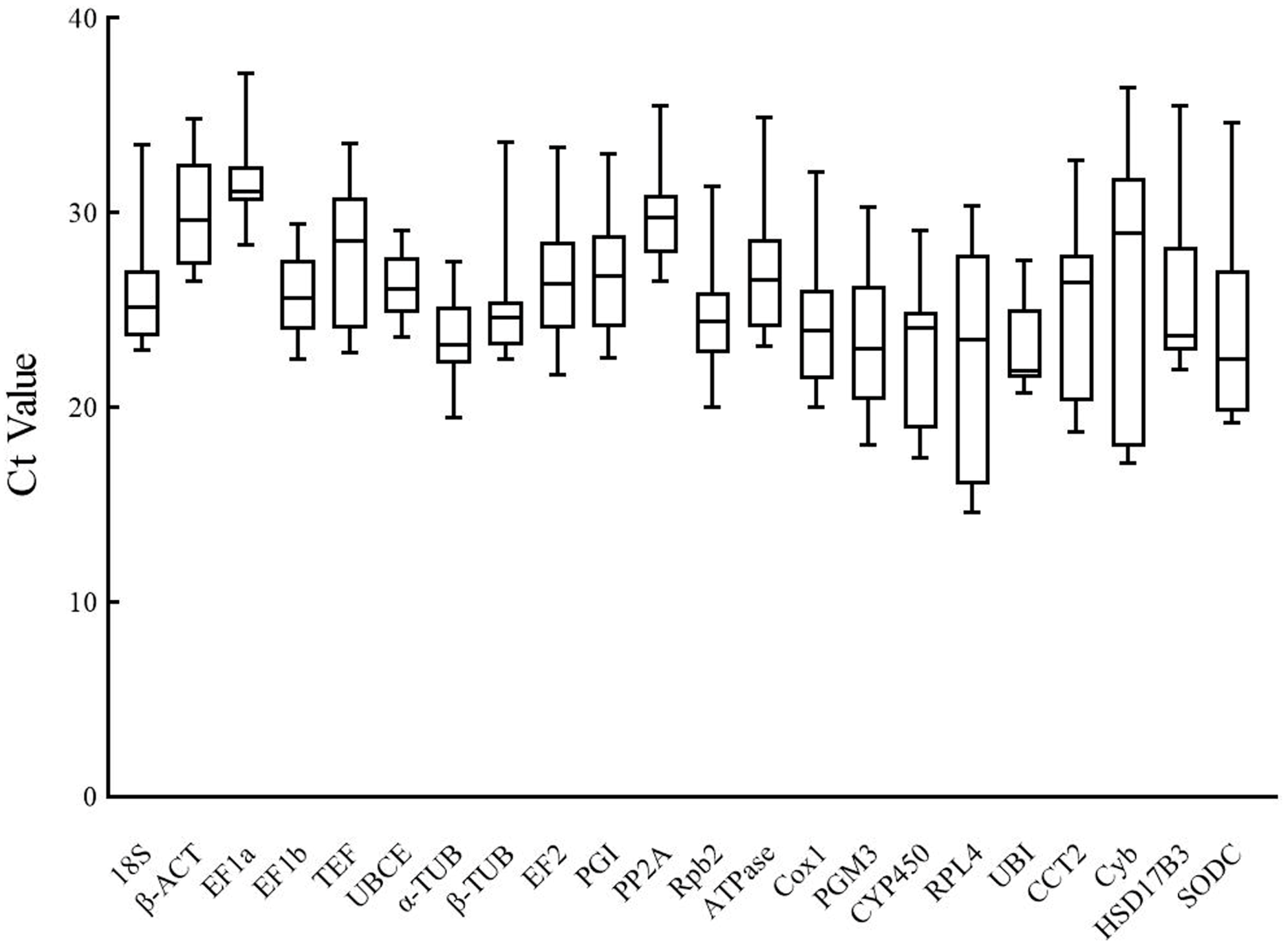
The lower Ct value in the qRT–PCR results revealed a greater gene expression level. The analysis indicated that the Ct values ranged, for each gene under different growth stages and conditions, from 14.5 (salt, RPL4) to 37.1 (alkaline, EF1A) (Figure 2). EF1A presented the smallest range of Ct values, differing by 3.07 cycles, whereas Cyb presented the greatest variation, differing by 13.94 cycles (Figure 2).

2.3. Analysis of the Expression Stability of Candidate Genes

2.3.1. geNorm Analysis

geNorm is a widely accepted program used for screening reference genes by qRT–PCR and determining the optimal number of reference genes among tested candidate genes. It achieves accurate normalization in a given sample panel by calculating the geometric mean of a user-defined number of reference genes. This algorithm identifies reference genes with high stability by calculating the M value for each candidate gene.
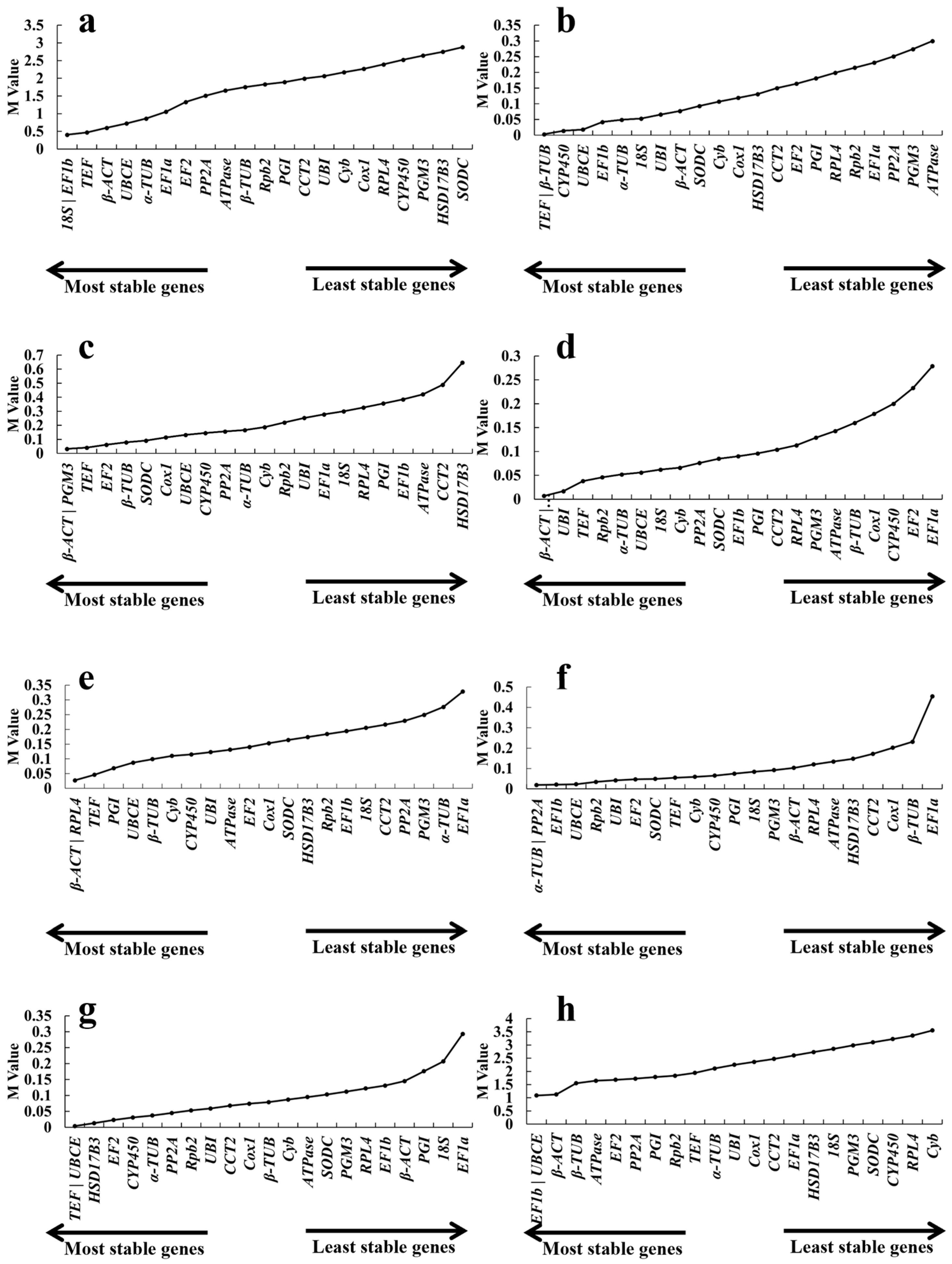
TEF and UBCE presented the highest stability under heavy metal (CdCl2) exposure, with M values of 0.004—which were lower than those of all the other genes analyzed in this study (Figure 3g). In addition, TEF was also the most stable gene for qRT–PCR under cold conditions (Figure 3b). β-ACT exhibited the highest stability under heat, acid, and alkali conditions, with M values of 0.07, 0.17, and 0.17, respectively. This finding indicated that it was a relatively optimal reference gene for these conditions (Figure 3c–e). 18S and EF1b were the most stable in different developmental stages (Figure 3a). Considering all the different conditions, the combined analysis revealed that EF1b, UBCE, β-ACT, β-TUB, and ATPase were the universal genes used as internal reference genes (Figure 3h). The M values of CYP450, RPL4 and Cyb were the highest, revealing that the expression of these three genes varied greatly (Figure 3h).
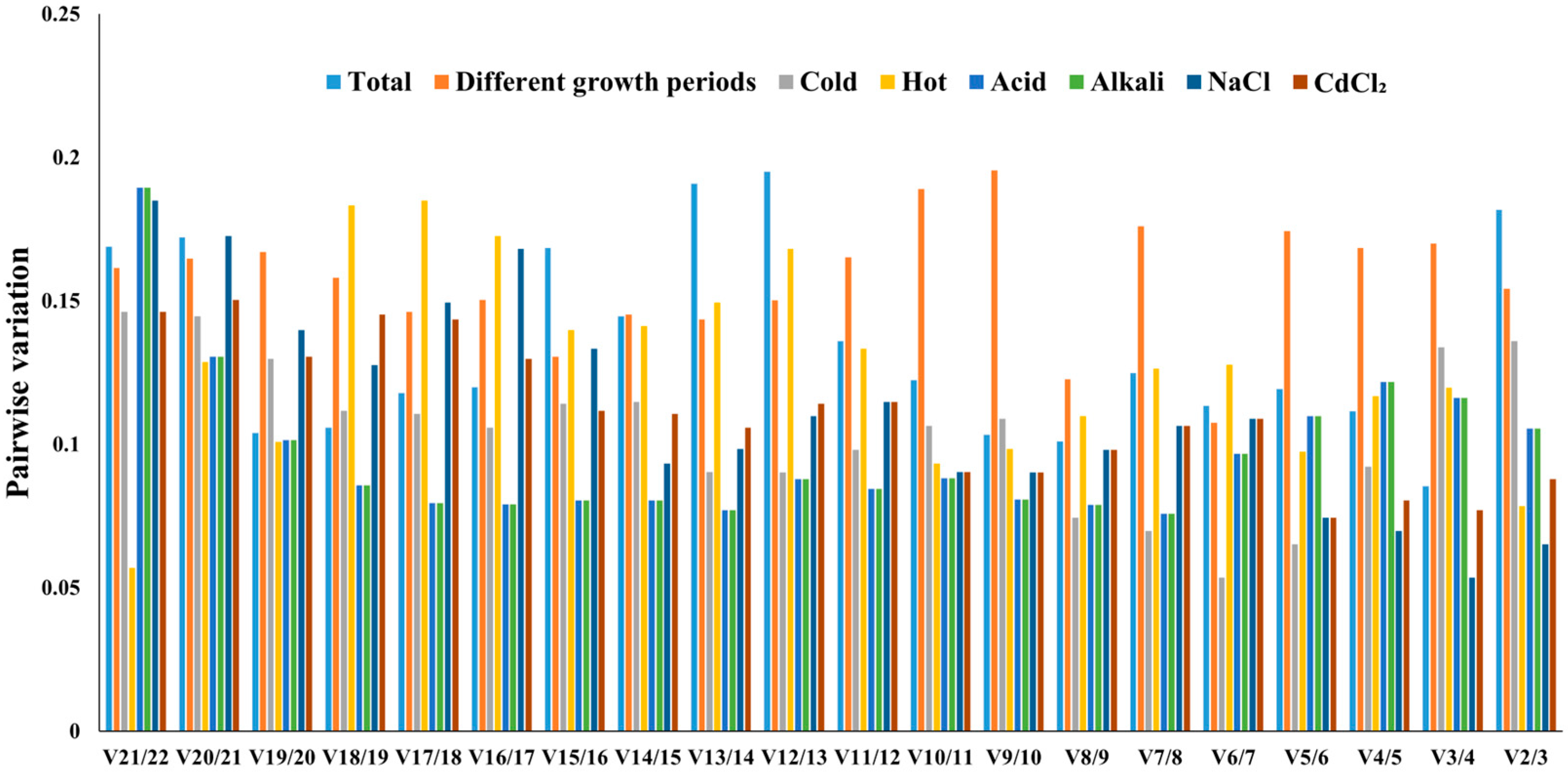
geNorm can also be employed to determine the optimal number of reference genes for normalization. Specifically, the pairwise variation (Vn/Vn + 1) between the normalization factors is calculated for all samples, and 0.15 is suggested as the threshold value. On this basis, the pairwise variations were calculated and are listed in Figure 4. As shown, the two most stable reference genes were adequate for reliable normalization across all samples except under all conditions. Three genes were required for normalization when V3/4 < 0.09 was used for all the conditions, as the pairwise variation V2/3 value was 0.18.

2.3.2. NormFinder Analysis

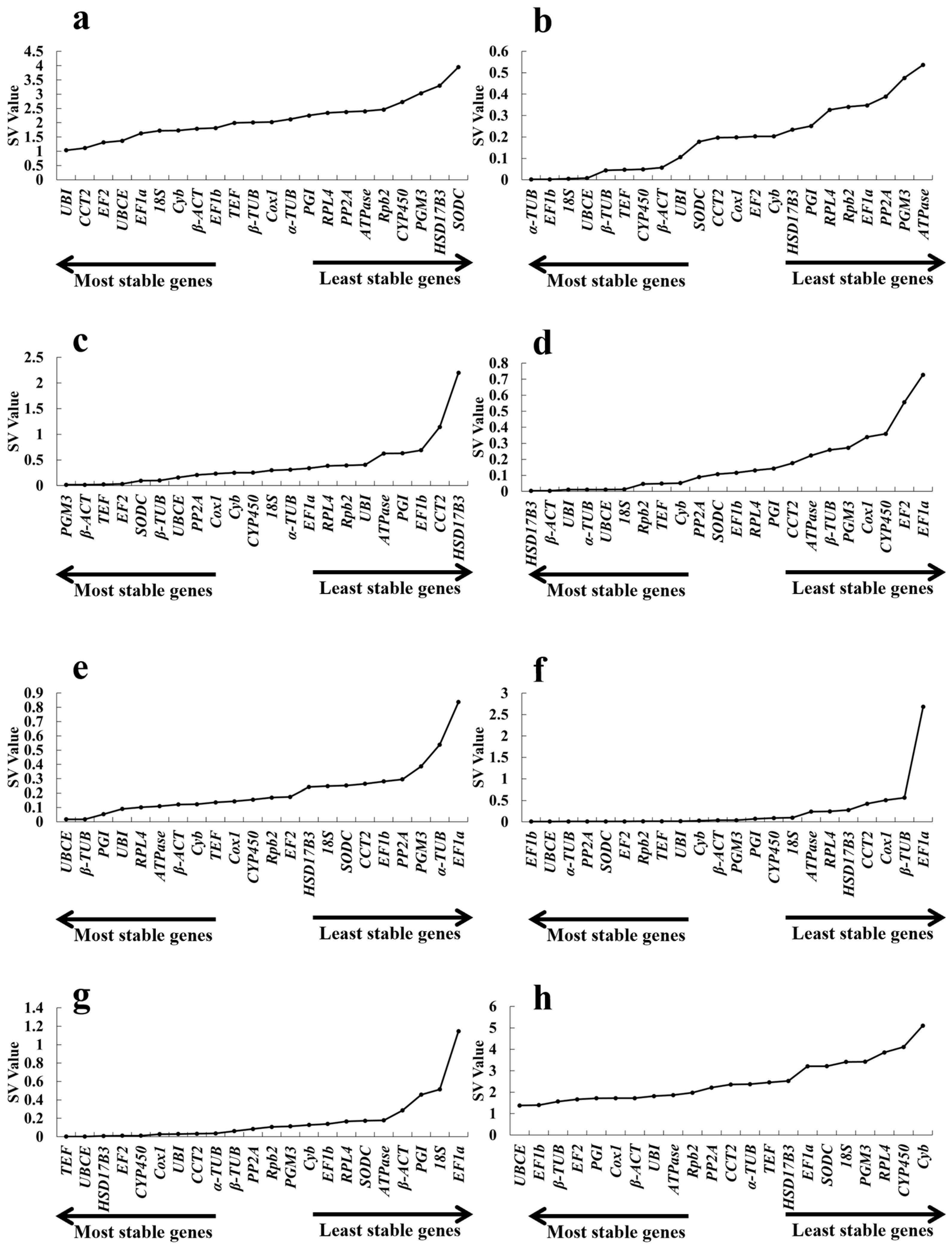
NormFinder evaluates the expression stability of each single reference gene and takes into account intra- and intergroup variations for normalization. For each candidate gene, NormFinder provides a stability value (SV) related to expression variation. UBI was the most stable across different developmental stages; however, its SV was significantly higher than those of the other treatments. The SVs of α-TUB and EF1b, TEF and UBCE under cold and CdCl2 conditions were 0.002, which were the lowest in this study across all the treatments (Figure 5b,g). UBCE was also the most stable gene in alkaline and salt environments (Figure 5e,f). In addition to UBCE, the SVs of β-TUB and EF1b were both 0.002 under the same conditions. The β-ACT and HSD17B3 genes presented the most stable potential when treated with acid (Figure 5d). PGM3 and β-ACT presented the highest stability at high temperatures. The values of UBI and CCT2 across all the developmental stages were 1.034 and 1.112, respectively, and these were lower than those of the other genes in the same stage and much higher than those of the other most stable genes in all the treatments used in this study (Figure 5c). Like in the abovementioned analysis, different genes presented different expression stabilities. To obtain a consensus internal reference gene, combination analysis was also used. The results revealed that the SVs of UBCE and EF1b were 1.378 and 1.4, respectively, indicating that they have the potential to adapt to various environments (Figure 5h). RPL4, CYP450 and Cyb were the most unstable genes across all the treatments, with SVs higher than 4.00 (Figure 5h).

2.3.3. BestKeeper Analysis

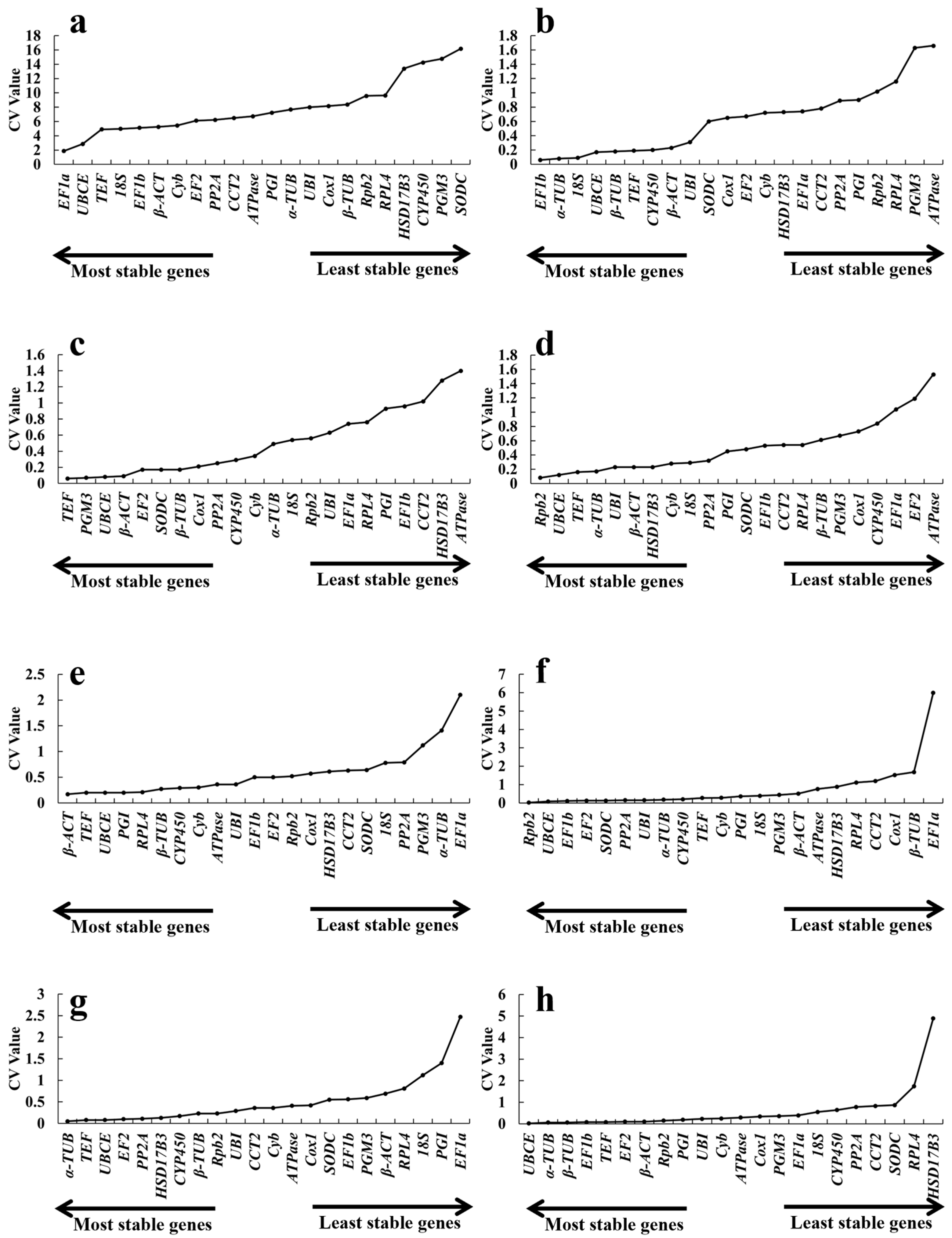
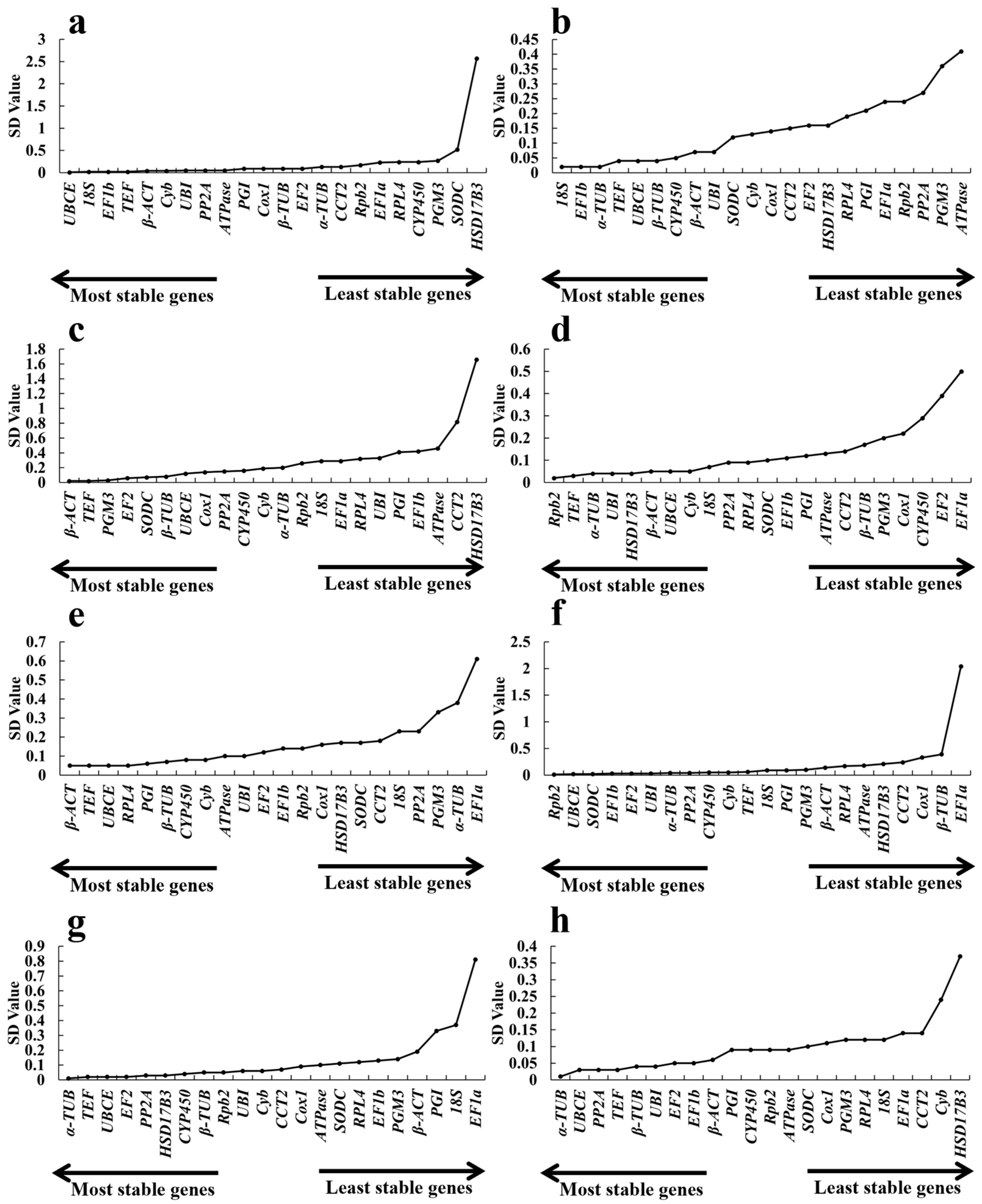
BestKeeper assesses the expression stability of reference genes by analyzing raw Ct data and calculates stability indices on the basis of the standard deviation (SD) and coefficient of variation (CV) of all candidate genes evaluated [37]. When the CV and SD are smaller, the gene is more stable. According to the suitable reference criterion, genes with SDs > 1.0 are considered unstable and should be avoided. Only the SD values of HSD17B3 and EF1a exceeded 1.0 across developmental stages, heat, and salt treatments, with values of 2.57, 1.66, and 2.04, respectively (Figure 6a,c,f). Consequently, both genes were excluded from further analysis. In all other cases, the SD values were less than 1.0. Notably, Rpb2 and α-TUB presented the lowest SD values (0.01) under the salt and CdCl2 treatments (Figure 6f,g). Under the same conditions, TEF and UBCE were also relatively stable genes with low SD values. Among them, UBCE was also one of the most stable genes in the cold and alkaline treatments (Figure 6b,e). β-ACT was identified as the most suitable reference gene under heat and alkaline conditions (Figure 6c,e). TEF also showed the greatest stability in samples subjected to cold, acidic conditions, and CdCl2 treatments (Figure 6b,d,g). Furthermore, 18S was the most stable gene under cold conditions (Figure 6b). A comprehensive evaluation integrating all the treatments was conducted to screen for reference genes with broad applicability. These results indicated that EF1a and UBCE could be used as universal internal reference genes.
During the developmental stages, EF1a, UBCE, TEF, 18S and EF1b were the five genes with the most stable expression, as revealed by their low CV values (Figure 7a). However, EF1a had the least stability under alkaline, salt and CdCl2 conditions. β-ACT (0.17), Rpb2 (0.02) and α-TUB were stable genes (Figure 7e,f,g). The genes with the lowest values under the other treatments (cold, heat and acid, respectively) were EF1b (followed by α-TUB, 18S, UBCE and β-TUB), TEF (followed by β-ACT, PGM3, EF2 and SODC) and Rpb2 (followed by TEF, α-TUB, β-ACT and UBI) (Figure 7b–d). Although different genes had different stabilities under different conditions, UBCE in all the treatments ranked among the genes with the highest stable expression, followed by α-TUB (0.06), β-TUB (0.06), and EF1b (0.08). The ΔC value of HSD17B3 was 4.89, the largest value in this study, indicating the worst expression stability (Figure 7h).

2.3.4. Comprehensive Stability Analysis of the Reference Genes

RefFinder integrates the results from the widely used algorithms geNorm, Normfinder and BestKeeper to make comparisons and rank the tested candidate reference genes [38]. Using the rankings from each algorithm, we assigned weights to individual genes proportional to their stability scores and computed the geometric mean of these weights to establish the final comprehensive ranking. On the basis of the comprehensive ranking, UBCE emerged as the most suitable reference gene for alkaline and salt conditions, as well as across developmental stages. EF1b, TEF, α-TUB, and TEF ranked highest in the analyses for the cold, heat, acid, and CdCl2 treatments, respectively. When all the treatments were combined, UBCE, EF1b, β-TUB, β-ACT and EF2 ranked in the top five positions and presented the greatest gene expression stability (Table 1). PGM3, SODC, CYP450, RPL4 and Cyb are located at the bottom of the comprehensive table.

2.4. Verification of Reference Gene Stability

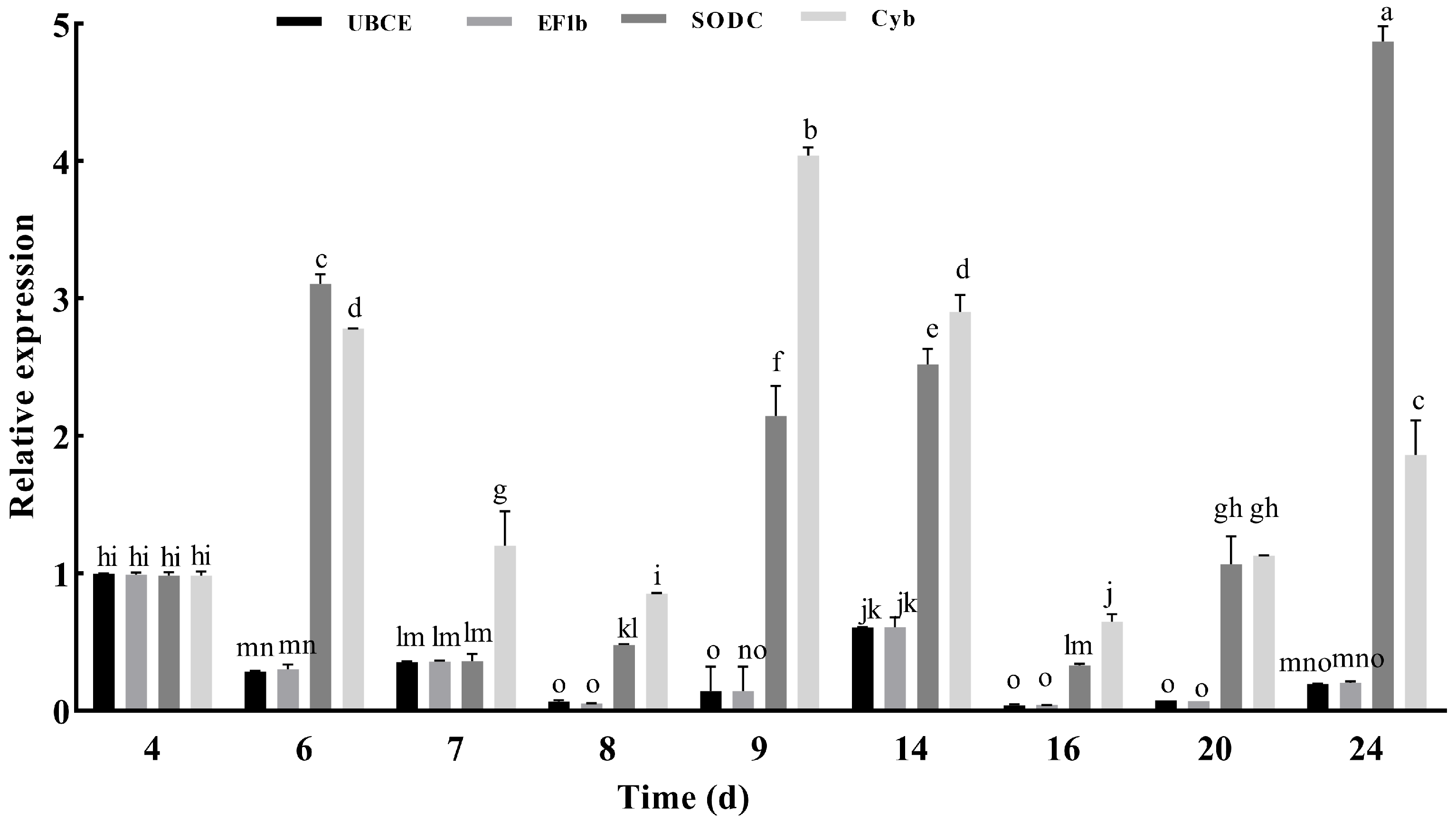
To further verify the stability of the selected reference genes, the relative expression of the key gene lac2 in response to fruiting body developmental stages was monitored. During the entire growth period of L. decastes, the expression levels of UBCE, EF1b, Cyb, and SODC were determined using lac2 as a reference gene (Figure 8). Normalization results with UBCE and EF1b showed similar expression patterns, with the highest levels observed at 4 d. In contrast, Cyb and SODC exhibited distinct trends: SODC reached its peak at 24 d, while the highest expression of Cyb occurred at 9 d. Comprehensive analysis indicated that throughout all growth stages, UBCE and EF1b were the most stable candidate reference genes, whereas Cyb and SODC were the least stable.

3. Discussion

In this study, the expression stability of 22 candidate reference genes was evaluated and ranked. This was the first in-depth study that examined the stability of several genes serving as internal controls in RT–qPCR studies. Different conditions were considered instead of only the growth and development periods in L. decastes. The results revealed that UBCE was the most suitable reference gene under different conditions and different developmental stages. These findings could serve as a reference for gene expression analysis in this fungus. Moreover, these findings highlight the importance of selecting appropriate reference genes.
In this study, the most authoritative algorithms or methods (geNorm, BestKeeper, NormFinder, and RefFinder) were utilized to screen for the most appropriate reference genes. These algorithms are frequently applied in the fields of plants, animals, and fungi [39]. In edible fungi, the best reference genes (control genes) have been identified using these tools and include [17,18,24] C. militaris [40], F. filiformis [25], G. lucidum [20], Hymenopellis radicata [41], I. obliquus [26], L. sordida [42], T. giganteum [28], M. importuna [29], O. sinensis [22], P. eryngii [31], P. ostreatus [21], T. melanosporum [21], V. volvacea [33] and W. cocos [23]. However, the results from the different methods are not always consistent [30,33]. When the stability of the reference genes in this study was analyzedc geNorm and NormFinder often reached the same conclusion [30,31]. According to these criteria, BestKeeper selected the most stable reference gene, EF1A, whereas UBCE and EF1b were identified as the most stable genes in the other two software programs. The analysis results of the BestKeeper software showed certain discrepancies compared with those of these two software programs [31,36,43,44]. This may be because BestKeeper relies on the standard deviation of candidate reference genes to evaluate their stability, whereas geNorm and NormFinder assess reference genes according to the cumulative standard deviation and pairwise stability of the genes [33]. Therefore, it is necessary to analyze the RT–qPCR results using multiple analysis software programs, use RefFinder software to rank the analysis results comprehensively, and finally screen the optimal reference genes [36]. Although the integration results from RefFinder may be influenced by the distinct statistical assumptions underlying the included algorithms, they could offset the potential integration bias of a single tool and enhance the precision of gene set selection [35]. In this study, the reference genes UBCE ultimately selected demonstrated high stability and ranked on the top in the vast majority of independent algorithms.
The first study that reported an investigation of suitable internal control genes was conducted by Liang et al., who evaluated 10 candidate genes across different developmental stages and various parts of fruiting bodies in L. decastes [34]. However, in studies on fungal genetics, response mechanisms to various environmental conditions have been identified in many instances [30,33]. This underscores the need to have a reference gene with a wider scope of application. Therefore, in studies of V. volvacea and P. portentosus, different factors were considered [18,30]. This was aimed mainly at obtaining a reference gene that exhibited stable expression across all environments. This is the first study to screen stable internal genes for acid, alkali, temperature and heavy metal contents in L. decastes. In addition, a total of 22 candidate reference genes, including the 10 genes in the previously published related study, were utilized in this study [34], and these genes were commonly tested in other studies on mushrooms. The most suitable internal genes often differ in different species and under different conditions [30,33]. Almost all related studies reported this phenomenon. In this study, ubiquitin-conjugating enzyme (UBCE) emerged as the most suitable internal reference gene across a wider range of environmental conditions. In addition, UBCE was also reported to be the ideal reference gene for Oreochromis niloticus [45], Oocystis borgei [46], and Piper species [47]. Genetic investigations have uncovered that UBCE orchestrate an impressively wide array of functions, including DNA repair, sporulation, cell cycle progression, peroxisome biogenesis, membrane—protein degradation, heat shock resistance, and cadmium tolerance in plants and animals [48]. In mushrooms, UBCE may be indispensable for growth, development, and response to stresses [49,50]. In V. volvacea, UBCE was correlated with the cryogenic autolysis [49]. However, the functions of these related enzymes in mushrooms have not been uncovered now. In L. decastes, CYP450, RPL4 and Cyb were the most unstable genes. This result was in agreement with the evaluation of CYP450 in Cicer species [51]. These observations were intriguing since they contrast with studies in Poria cocos and G. lucidum, where the CYP and RPL4 genes were expressed most stably [20,47]. This inconsistency might be caused by species differences. Another study on selecting internal reference genes for L. decastes reported that, based on RefFinder results, HSD17B3 exhibited the most stable expression across developmental stages [34]. However, in our study, HSD17B3 showed the opposite trend in expression stability. In our stability ranking, UBCE and 18S performed significantly better than HSD17B3, indicating that HSD17B3 was less stable as a reference gene compared to these two genes. Notably, 18S has also been identified as the optimal reference gene for different developmental stages in L. edodes [27] and T. melanosporum [32].
In addition to the in silico analyses, Lac2 (a laccase) was used to validate the stability of certain genes across developmental stages. This same verification strategy has been employed in other studies [52,53,54]. Laccases are known to participate not only in lignin degradation but also in regulating fruiting body morphogenesis and pigment formation in mushrooms [54,55,56,57,58,59,60]. Normalization results using UBCE and EF1b showed consistent expression patterns, with no significant differences detected across all stages. In contrast, Cyb and SODC exhibited distinct expression trends. These findings indicated that UBCE and EF1b are more stably expressed than Cyb and SODC, which was consistent with the results described above.

4. Materials and Methods

4.1. Sample Preparation

The tested strain of L. decastes is currently preserved in the National Engineering Research Center for Edible Fungi, Shanghai Academy of Agricultural Sciences. This fungus was cultivated to promote the growth of mycelia on potato dextrose agar (PDA) at 25 °C in the dark as previously described [34]. The growing mycelia were treated with NaCl (1%), CdCl2 (1%), HCl (pH 4.0), and NaOH (pH 9.0) at the optimal growth temperature of 25 °C 160 rpm/min in 150 mL potato dextrose broth (PDB) for 7 days [30,33]. For the temperature experiments, at the optimal growth temperature of 25 °C, the mycelia grown in 150 mL of PDA were incubated for 6 days and then treated at 0 °C and 35 °C for 24 h in the dark. The fruiting bodies were collected at culture times of 4 d, 6 d, 7 d, 8 d, 9 d, 14 d, 16 d, 20 d and 24 d. All the samples were chopped into small pieces (2 mm), and immediately frozen in liquid nitrogen and stored at −80 °C before RNA extraction. Three independent biological replicates were tested for each treatment.

4.2. Total RNA Extraction and cDNA Synthesis

The total RNA of fruiting bodies was extracted using a Redzol reagent kit from Shanghai Qingke Biotechnology Co., Ltd. (Shanghai, China). RNA integrity was detected using 1% agarose gel electrophoresis at 120 V for 10 min. RNA concentration and purity were measured using a nucleic acid–protein analyzer. The reverse transcription reaction system was prepared in a total volume of 20 μL, containing 5 μL of 4× One-Tube RT SuperMix, 1 μg of RNA template (with equal amounts of RNA used for different samples [17,18,19,20,21,22,23,24,25,26,27,28,29,30,31,32,33,34,35,36]), and double-distilled water to bring the volume to 20 μL. Reverse-transcribed cDNA was synthesized using the PrimeScriptTM RT Reagent Kit for qRT–PCR according to the manufacturer’s instructions. All the samples were stored at −80 °C for later use.

4.3. Selection of Reference Candidate Genes and Primer Design

Reference genes were screened in line with the criteria published in the study of screening and validation of reference genes in other species(Table S2). Finally, 18S, β-ACT, EF1a, EF1b, TEF, UBCE, α-TUB, β-TUB, EF2, UBI, CYP450, RPL4, PGM3, CCT2, Cox1, Rbp2, Cyb, ATPase, HSD17B3, PGI, PP2A and SODC were selected as candidate test reference genes (Table S1). All the sequences were extracted from the genome published previously [8]. Specific primers were designed using the Primer-BLAST online program (https://www.ncbi.nlm.nih.gov/tools/primer-blast/; accessed on 20 April 2024.), with amplicon lengths ranging from 100 to 200 bp. All primers were synthesized by Qingke Biotechnology Co., Ltd. (Shanghai) and stored at 4 °C for later use. The specificity of the amplified products was detected by 1% agarose gel electrophoresis (Table 2).

4.4. Fluorescence Quantitative PCR

For real-time fluorescence quantitative PCR, a 2× Universal SYBR qPCR mix (TaKaRa, Kusatsu, Japan) kit was used. The experiment was performed on a Step OnePlus Real-Time PCR instrument(Applied Biosystems, Thermo Fisher Scientific, Shanghai, China). The reaction system consisted of 10 μL of 2× Universal SYBR qPCR mix (blue), 2 μL of template cDNA, 0.4 μL of each primer, and 7.2 μL of RNase-free water. The amplification program was as follows: predenaturation at 95 °C for 1 min; 40 cycles of 95 °C for 10 s and 60 °C for 30 s; and melting curve analysis at 95 °C for 15 min, 60 °C for 30 s (adjust according to the primer Tm value), and 95 °C for 15 min. Four technical replicates were set for each reaction.

4.5. Data Analysis

After qRT–PCR amplification was completed. The geNorm website (https://seqyuan.shinyapps.io/seqyuan_prosper/; accessed on 20 April 2024.), NormFinder [61], BestKeeper [37], and RefFinder [38] were used to analyze the differences in the expression of 22 candidate reference genes.

4.6. Experimental Validation

To confirm the validity of the selected reference genes for data normalization, the two most stable and two least stable candidate reference genes were selected [55]. Meanwhile, the expression levels of laccase (lac2) across different developmental stages were verified by qRT-PCR. The qRT-PCR amplification conditions were consistent with those described above. For gene expression analysis via qRT-PCR, three technical replicates were included for each biological replicate. In this study, the Duncan multiple range test was used to evaluate the significant intergroup differences in using Analysis of Variance (ANOVA).

5. Conclusions

In this study, a total of 22 housekeeping genes (18S, β-ACT, EF1A, EF1B, TEF, UBCE, α-TUB, β-TUB, EF2, UBI, CYP450, RPL4, PGM3, CCT2, Cox1, Cyb, ATPase, HSD17B3, PGI, PP2A, Rbp2 and SODC) were validated under different conditions and at different developmental stages. According to the selection criteria, the reference gene UBCE was relatively stable, with broader suitability for different environments. UBCE selected in this study not only exhibited excellent average inter-sample stability, but also showed extremely low variability across its three biological replicates at all experimental time points. This indicated that its expression was not affected by minor experimental fluctuations, and thus its stability was highly reliable.
This study provided an important tool for the molecular identification and functional research of germplasm resources of L. decastes.

Supplementary Materials

The following supporting information can be downloaded at https://www.mdpi.com/article/10.3390/ijms262211004/s1.

Author Contributions

Y.-Q.H.: data curation, investigation, writing—original draft. H.-L.Y.: conceptualization, data curation, writing—original draft. Y.-Q.Z.: investigation, data curation. C.-Z.Z.: data curation, investigation. L.-P.X.: data curation, investigation. C.-Y.S.: conceptualization, editing, supervision. Z.-P.L.: data curation, investigation. E.-X.L.: conceptualization, collected literature data. S.-H.L.: conceptualization, collected literature data. Y.-N.L.: conceptualization, supervision, writing and editing of the manuscript. R.-H.Y.: conceptualization, supervision, writing and editing of the manuscript. All authors have read and agreed to the published version of the manuscript.

Funding

This study was funded by the key R&D plan of Shandong Province (Agricultural Elite Varieties Project) (2024 LZGCQY010).

Institutional Review Board Statement

Not applicable.

Informed Consent Statement

Not applicable.

Data Availability Statement

The original contributions presented in this study are included in the article/Supplementary Materials. Further inquiries can be directed to the corresponding author.

Conflicts of Interest

The authors declare no conflicts of interest.

References

  1. Li, W.; Wen, S.; Zhang, H.; Zhu, J.; Pei, Y.; Wei, L.; Lu, X.; Wang, X.; Zhang, S. Research progress of Lyophyllum decastes. Edible Fungi China 2022, 41, 1–5. [Google Scholar] [CrossRef]
  2. Kong, J.; Wei, C.; Feng, B.; Ren, A.; Hu, J.; Kong, X.; Liu, H. An overview of the research on Lyophyllum decastes. Edible Fungi China 2024, 46, 1–6. [Google Scholar]
  3. Li, X.J.; Xiao, S.J.; Xie, Y.H.; Chen, J.; Xu, H.R.; Yin, Y.; Zhang, R.; Yang, T.; Zhou, T.Y.; Zhang, S.Y.; et al. Structural characterization and immune activity evaluation of a polysaccharide from Lyophyllum decastes. Int. J. Biol. Macromol. 2024, 278, 134628. [Google Scholar] [CrossRef]
  4. Zhang, H.; Wang, X.M. Nutrition ingredient analysis and evaluation of Lyophyllum decastes fruit body. Mycosystema 2008, 27, 696–700. [Google Scholar] [CrossRef]
  5. Cheng, J.; Zheng, H.; Ben, W.; Ma, S. Industrial cultivation of Lyophyllum decastes. Acta Edulis Fungi 2008, 15, 23–25. [Google Scholar] [CrossRef]
  6. Wang, Y.; Liu, Y. Research progress on reference gene selection in real-time quantitative PCR of tomatoes. North. Hortic. 2015, 23, 198–201. [Google Scholar] [CrossRef]
  7. Liang, L.; Zang, X.; Zhang, P.; Sun, J.; Shi, Q.; Chang, S.; Ren, P.; Li, Z.; Meng, L. Screening of the candidate metabolite to evaluate the mycelium physiological maturation of Lyophyllum decastes based on metabolome and transcriptome analysis. J. Fungi 2024, 10, 734. [Google Scholar] [CrossRef]
  8. Xu, L.; Yang, W.; Qiu, T.; Gao, X.; Zhang, H.; Zhang, S.; Cui, H.; Guo, L.; Yu, H.; Yu, H. Complete genome sequences and comparative secretomic analysis for the industrially cultivated edible mushroom Lyophyllum decastes reveals insights on evolution and lignocellulose degradation potential. Front. Microbiol. 2023, 14, 1137162. [Google Scholar] [CrossRef]
  9. Ke, S.; Ding, L.; Niu, X.; Shan, H.; Song, L.; Xi, Y.; Feng, J.; Wei, S.; Liang, Q. Comparative transcriptome analysis on candidate genes associated with fruiting body growth and development in Lyophyllum decastes. PeerJ 2023, 11, e16288. [Google Scholar] [CrossRef]
  10. Li, X.; Qin, Y.; Kong, Y.; Karunarathna, S.C.; Liang, Y.; Xu, J. Optimization of protoplast preparation conditions in Lyophyllum decastes and transcriptomic analysis throughout the process. J. Fungi 2024, 10, 886. [Google Scholar] [CrossRef]
  11. Jozefczuk, J.; Adjaye, J. Quantitative real-time PCR-based analysis of gene expression. Methods Enzymol. 2011, 500, 99–109. [Google Scholar] [CrossRef]
  12. Pandita, S.; Alam, H.; Shivhare, R.; Singh, M.; Singh, S.; Mishra, G.; Verma, P.C. Selection and validation of reference genes for quantitative expression analysis of regeneration-related genes in Cheilomenes sexmaculata by real-time qRT-PCR. Mol. Biol. Rep. 2024, 51, 1118. [Google Scholar] [CrossRef]
  13. Ni, X.; Yang, Y.; Xie, Y.; Li, D.; Xia, X.; Zhang, Y.; Zheng, C. Selection and verification of reference genes for real-time quantitative PCR in endangered mangrove species Acanthus ebracteatus under different abiotic stress conditions. Mar. Environ. Res. 2025, 204, 106862. [Google Scholar] [CrossRef]
  14. Marabita, F.; de Candia, P.; Torri, A.; Tegnér, J.; Abrignani, S.; Rossi, R.L. Normalization of circulating microRNA expression data obtained by quantitative real-time RT-PCR. Briefings Bioinform. 2016, 17, 204–212. [Google Scholar] [CrossRef]
  15. Kozera, B.; Rapacz, M. Reference genes in real-time PCR. J. Appl. Genet. 2013, 54, 391–406. [Google Scholar] [CrossRef]
  16. Stefaan, D.; Vandesompele, J.; Hellemans, J. How to do successful gene expression analysis using real-time PCR. Methods 2009, 50, 227–230. [Google Scholar] [CrossRef]
  17. Zhao, J.; Shen, Y.; Feng, W.; Jin, Q.; Song, T.; Fan, L.; Cai, W. Screening of internal reference gene of Agaricus bisporus. Acta Agric. Zhejiangensis 2019, 31, 1312–1320. [Google Scholar] [CrossRef]
  18. Li, B.; Liu, L.; Shan, T.; Xing, Y.; Guo, S. Selection of reference genes for real-time quantitative PCR of Armillaria mellea. Microbiol. China 2022, 49, 473–482. [Google Scholar] [CrossRef]
  19. Jia, D.-H.; Wang, B.; Li, X.-L.; Tan, W.; Gan, B.-C.; Peng, W.-H. Validation of reference genes for quantitative gene expression analysis in Auricularia cornea. J. Microbiol. Methods 2019, 163, 105658. [Google Scholar] [CrossRef]
  20. Xu, Z.; Xu, J.; Ji, A.; Zhu, Y.; Zhang, X.; Hu, Y.; Song, J.; Chen, S. Genome-wide selection of superior reference genes for expression studies in Ganoderma lucidum. Gene 2015, 574, 352–358. [Google Scholar] [CrossRef]
  21. Hu, Y.; Shao, Y.; Chen, H.; Qi, Y.; Wang, F.; Wen, Q.; Shen, J. The screening of reference genes in RT-qPCR under heat stress of Pleurotus ostreatus. J. Fungi Res. 2023, 21, 200–206. [Google Scholar] [CrossRef]
  22. Su, Q.; Xia, Y.; Xie, F.; Vestine, U.; Chen, Z.; Zhou, G. Screening of the reference genes for qRT-PCR analysis of gene expression in Ophiocordyceps sinensis. Mycosystema 2021, 40, 1712–17122. [Google Scholar] [CrossRef]
  23. Zhao, X. Selection of Reference Gene for qRT–PCR in Wolfiporia cocos. Master’s Thesis, Wuhan University of Technology, Wuhan, China, 2016. [Google Scholar]
  24. Zhang, Y.; Yao, F.; Sun, W.; Fang, M.; Wu, C. Screening of reference genes for qRT-PCR amplification in Auricularia heimuer. Mycosystema 2020, 39, 1510–1519. [Google Scholar] [CrossRef]
  25. Wu, C.; Yuan, X.; Song, L.; Chang, M.; Liu, J.; Deng, B.; Meng, J. Screening of reference genes for real-time fluorescence quantitative PCR of Flammulina filiformis. Acta Edulis Fungi 2021, 28, 30–39. [Google Scholar] [CrossRef]
  26. Li, L.; Guo, X.; Wang, S. Selection and evaluation of reference genes for qRT-PCR in Inonotus obliquus. Front. Microbiol. 2025, 16, 1500043. [Google Scholar] [CrossRef]
  27. Luo, Y.; Wang, G.; Wang, C.; Gong, Y.; Bian, Y.; Zhou, Y. Selection and validation of reference genes for qRT-PCR in Lentinula edodes under different experimental conditions. Genes 2019, 10, 647. [Google Scholar] [CrossRef]
  28. Liu, Y.; Yu, X.; Cai, Q.; Wu, Y.; Jiang, Z.; Mo, M. Screening of the internal reference genes of Tricholoma giganteum. Acta Edulis Fungi 2017, 24, 12–18. [Google Scholar] [CrossRef]
  29. Zhang, Q.; Liu, W.; Cai, Y.; Lan, A.; Bian, Y. Validation of internal control genes for quantitative real-time PCR gene expression analysis in Morchella. Molecules 2018, 23, 2331. [Google Scholar] [CrossRef]
  30. Hu, C.; Zhou, C.; Wan, J.; Guo, T.; Ji, G.; Luo, S.; Ji, K.; Cao, Y.; Tan, Q.; Bao, D.; et al. Selection and validation of internal control genes for quantitative real-time RT–qPCR normalization of Phlebopus portentosus gene expression under different conditions. PLoS ONE 2023, 18, e0288982. [Google Scholar] [CrossRef]
  31. Qin, X.; Wang, J. Selection of reference genes for quantitative real-time PCR of lignification related genes in postharvest Pleurotus eryngii. J. Northwest A&F Univ. (Nat. Sci. Ed.) 2015, 43, 219–227. [Google Scholar] [CrossRef]
  32. Zarivi, O.; Cesare, P.; Ragnelli, A.M.; Aimola, P.; Leonardi, M.; Bonfigli, A.; Colafarina, S.; Poma, A.M.; Miranda, M.; Pacioni, G. Validation of reference genes for quantitative real-time PCR in périgord black truffle (Tuber melanosporum) developmental stages. Phytochemistry 2015, 116, 78–86. [Google Scholar] [CrossRef]
  33. Qian, J.; Gao, Y.; Wáng, Y.; Wu, Y.; Wāng, Y.; Zhao, Y.; Chen, H.; Bao, D.; Xu, J.; Bian, X. Selection and evaluation of appropriate reference genes for RT-qPCR normalization of Volvariella volvacea gene expression under different conditions. Biomed. Res. Int. 2018, 2018, 6125706. [Google Scholar] [CrossRef] [PubMed]
  34. Liang, L.; Li, H.; Lan, Y.; Zang, X.; Lin, J.; Wei, Y.; Zhang, P.; Ren, P.; Meng, L. Screening and validation of reference genes in Lyophyllum decastes by qRT-PCR. J. Agric. Biotechnol. 2024, 32, 2915–2925. [Google Scholar] [CrossRef]
  35. Bustin, S.A.; Benes, V.; Garson, J.A.; Hellemans, J.; Huggett, J.; Kubista, M.; Mueller, R.; Nolan, T.; Pfaffl, M.W.; Shipley, G.L.; et al. The MIQE guidelines: Minimum information for publication of quantitative real-time PCR experiments. Clin. Chem. 2009, 55, 611–622. [Google Scholar] [CrossRef] [PubMed]
  36. Chen, L.; Liang, Q.; Lai, Z.; Cui, H.; Xu, Z.; Chen, Z.; Dong, Z.; Wang, Z.; Guo, Y. Systematic selection of suitable reference genes for quantitative real-time PCR normalization studies of gene expression in Lutjanus erythropterus. Sci. Rep. 2024, 14, 13323. [Google Scholar] [CrossRef]
  37. Andersen, C.L.; Jensen, J.L.; Ørntoft, T.F. Normalization of real-time quantitative reverse transcription-PCR data: A model-based variance estimation approach to identify genes suited for normalization, applied to bladder and colon cancer data sets. Cancer Res. 2004, 64, 5245–5250. [Google Scholar] [CrossRef]
  38. Xie, F.; Wang, J.; Zhang, B. Reffinder: A web-based tool for comprehensively analyzing and identifying reference genes. Funct. Integr. Genom. 2023, 23, 125. [Google Scholar] [CrossRef]
  39. De Spiegelaere, W.; Dern-Wieloch, J.; Weigel, R.; Schumacher, V.; Schorle, H.; Nettersheim, D.; Bergmann, M.; Brehm, R.; Kliesch, S.; Vandekerckhove, L. Reference gene validation for RT-qPCR, a note on different available software packages. PLoS ONE 2015, 10, e0122515. [Google Scholar] [CrossRef]
  40. Zhou, F.; Chen, Y.; Wu, H.; Yin, T. A selection of reliable reference genes for gene expression analysis in the female and male flowers of Salix suchowensis. Plants 2022, 11, 647. [Google Scholar] [CrossRef]
  41. Cao, L.; Zhang, Q.; Miao, R.; Zhao, X.; Ni, Y.; Li, W.; Feng, R.; Yang, D. Reference gene selection for quantitative real-time PCR analysis of Hymenopellis radicata under abiotic stress. Fungal Biol. 2024, 128, 1567–1577. [Google Scholar] [CrossRef]
  42. Min, F.; Wu, K.; Wang, L.; Liang, L. Fluorescence quantitative PCR internal reference gene screening and determination of gene expression levels related to polysaccharide anabolism in Tricholoma alba. Acta Edulis Fungi 2021, 28, 20–28. [Google Scholar] [CrossRef]
  43. Zhao, Y.; Luo, J.; Xu, S.; Wang, W.; Liu, T.; Han, C.; Chen, Y.; Kong, L. Selection of reference genes for gene expression normalization in Peucedanum praeruptorum dunn under abiotic stresses, hormone treatments and different tissues. PLoS ONE 2016, 11, e0152356. [Google Scholar] [CrossRef]
  44. Tian, C.; Jiang, Q.; Wang, F.; Wang, G.L.; Xu, Z.S.; Xiong, A.S. Selection of suitable reference genes for qPCR normalization under abiotic stresses and hormone stimuli in carrot leaves. PLoS ONE 2015, 10, e0117569. [Google Scholar] [CrossRef]
  45. Yang, C.; Wang, X.; Tian, J.; Liu, W.; Wu, F.; Jiang, M.; Wen, H. Evaluation of reference genes for quantitative real-time RT-PCR analysis of gene expression in Nile tilapia (Oreochromis niloticus). Gene 2013, 527, 183–192. [Google Scholar] [CrossRef] [PubMed]
  46. Zhang, N.; Ren, J.; Hong, T.; Dong, Z.; Li, F.; Zhang, Y.; Huang, X.; Li, C.; Hu, Z. Identification of stable reference genes for QPCR analysis of gene expression in Oocystis borgei under various abiotic conditions. Algal Res. 2025, 86, 103899. [Google Scholar] [CrossRef]
  47. De Oliveira, L.F.; Piovezani, A.R.; Ivanov, D.A.; Yoshida, L.; Segal, F.E.I.; Kato, M.J. Selection and validation of reference genes for measuring gene expression in Piper species at different life stages using RT-qPCR analysis. Plant Physiol. Biochem. 2022, 171, 201–212. [Google Scholar] [CrossRef] [PubMed]
  48. Matuschewski, K.; Hauser, H.P.; Treier, M.; Jentsch, S. Identification of a novel family of ubiquitin-conjugating enzymes with distinct amino-terminal extensions. J. Biol. Chem. 1996, 271, 2789–2794. [Google Scholar] [CrossRef]
  49. Gong, M.; Wang, H.; Chen, M.; Bao, D.; Zhu, Q.; Tan, Q. A newly discovered ubiquitin-conjugating enzyme E2 correlated with the cryogenic autolysis of Volvariella volvacea. Gene 2016, 583, 58–63. [Google Scholar] [CrossRef]
  50. Li, D.F.; Feng, L.; Hou, Y.J.; Liu, W. The expression, purification and crystallization of a ubiquitin-conjugating enzyme E2 from Agrocybe aegerita underscore the impact of his-tag location on recombinant protein properties. Struct. Biol. Cryst. Commun. 2013, 69, 153–157. [Google Scholar] [CrossRef]
  51. Reddy, D.S.; Bhatnagar-Mathur, P.; Reddy, P.S.; Cindhuri, K.S.; Sivaji Ganesh, A.; Sharma, K.K. Identification and validation of reference genes and their impact on normalized gene expression studies across cultivated and wild Cicer species. PLoS ONE 2016, 11, e0148451. [Google Scholar] [CrossRef]
  52. Liu, Y.; Lu, X.; Ren, A.; Shi, L.; Jiang, A.; Yu, H.; Zhao, M. Identification of reference genes and analysis of heat shock protein gene expression in Lingzhi or Reishi medicinal mushroom, Ganoderma lucidum, after exposure to heat stress. Int. J. Med. Mushrooms 2017, 19, 1029–1040. [Google Scholar] [CrossRef] [PubMed]
  53. Lu, X.; Liu, Y.; Zhao, L.; Liu, Y.; Zhao, M. Selection of reliable reference genes for RT-qPCR during methyl jasmonate, salicylic acid and hydrogen peroxide treatments in Ganoderma lucidum. World J. Microbiol. Biotechnol. 2018, 34, 92. [Google Scholar] [CrossRef] [PubMed]
  54. Hong-Duk, Y.; Chil, H.Y.; Sa-Ouk, K. Role of laccase in lignin degradation by white-rot fungi. FEMS Microbiol. Lett. 1995, 132, 183–188. [Google Scholar] [CrossRef]
  55. Zhao, X.; Yang, H.; Chen, M.; Song, X.; Yu, C.; Zhao, Y.; Wu, Y. Reference gene selection for quantitative real-time PCR of mycelia from Lentinula edodes under high-temperature stress. Biomed. Res. Int. 2018, 2018, 1670328. [Google Scholar] [CrossRef]
  56. Chen, S.; Ge, W.; Buswell, J. Molecular cloning of a new laccase from the edible straw mushroom Volvariella volvacea: Possible involvement in fruit body development. FEMS Microbiol. Lett. 2004, 230, 171–176. [Google Scholar] [CrossRef]
  57. Lu, Y.; Wu, G.; Lian, L.; Guo, L.; Wang, W.; Yang, Z.; Miao, J.; Chen, B.; Xie, B. Cloning and expression analysis of Vvlcc3, a novel and functional laccase gene possibly involved in stipe elongation. Int. J. Mol. Sci. 2015, 16, 28498–28509. [Google Scholar] [CrossRef]
  58. Upadhyay, S.; Torres, G.; Lin, X. Laccases involved in 1,8-dihydroxynaphthalene melanin biosynthesis in Aspergillus fumigatus are regulated by developmental factors and copper homeostasis. Eukaryot. Cell 2013, 12, 1641–1652. [Google Scholar] [CrossRef]
  59. Tsai, H.F.; Wheeler, M.H.; Chang, Y.C.; Kwon-Chung, K.J. A developmentally regulated gene cluster involved in conidial pigment biosynthesis in Aspergillus fumigatus. J. Bacteriol. 1999, 181, 6469–6477. [Google Scholar] [CrossRef]
  60. Chen, X.; Liu, Y.; Guo, W.; Wang, M.; Zhao, J.; Zhang, X.; Zheng, W. The development and nutritional quality of Lyophyllum decastes affected by monochromatic or mixed light provided by light-emitting diode. Front. Nutr. 2024, 11, 1404138. [Google Scholar] [CrossRef]
  61. Pfaffl, M.W.; Tichopad, A.; Prgomet, C.; Neuvians, T.P. Determination of stable housekeeping genes, differentially regulated target genes and sample integrity: Bestkeeper–Excel-based tool using pair-wise correlations. Biotechnol. Lett. 2004, 26, 509–515. [Google Scholar] [CrossRef]
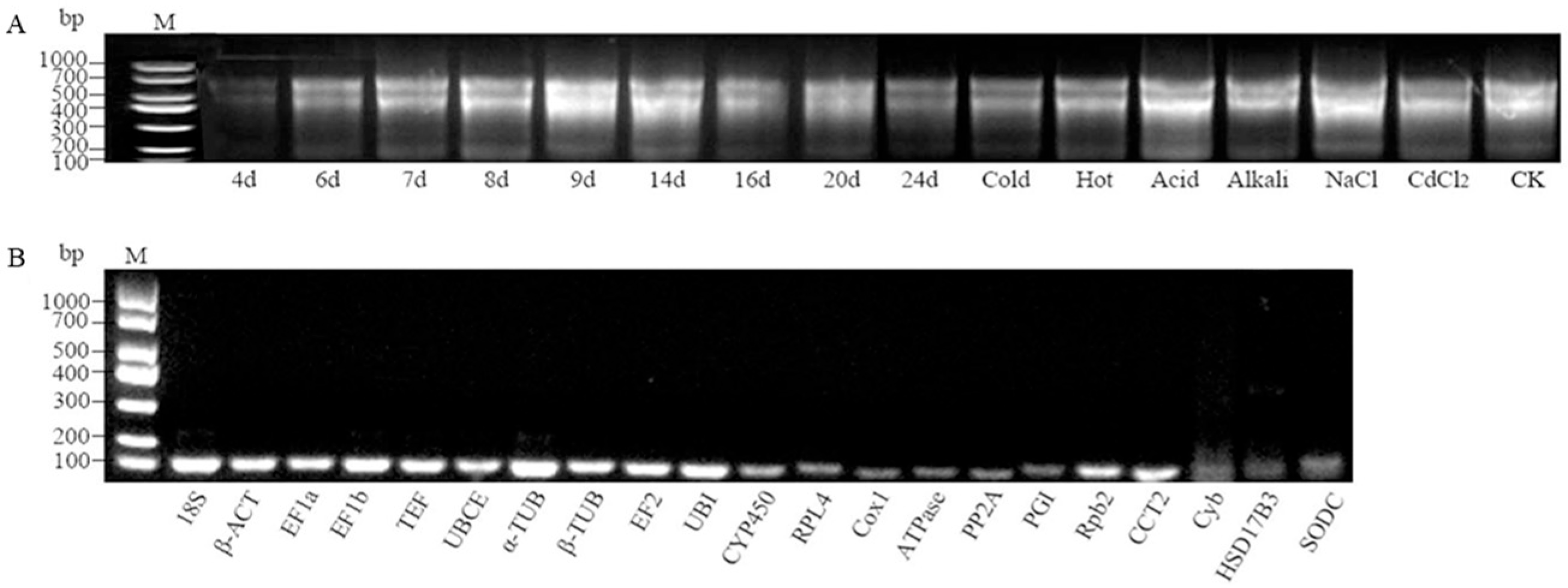
Figure 1. Agarose gel electrophoresis (1%) of the PCR amplicons and RNA extraction (10 μL). (A) RNA extraction; (B) PCR amplicons of cDNA.
Ijms 26 11004 g001
Figure 2. Ct values of candidate reference genes.
Ijms 26 11004 g002
Figure 3. geNorm analysis of 22 candidate reference genes under different conditions. Different growth stages of fruiting bodies (a), cold (b), heat (c), pH 4.0 (d), pH 9.0 (e), 1% NaCl (f), 1% CdCl2 (g), and total (h).
Ijms 26 11004 g003
Figure 4. The pairwise differences in Vn and Vn + 1 analyzed using GeNorm (Vn and Vn + 1 < 0.150).
Ijms 26 11004 g004
Figure 5. NormFinder analysis of 22 candidate reference genes under different conditions. Different growth stages of fruiting bodies (a), cold (b), heat (c), pH 4.0 (d), pH 9.0 (e), 1% NaCl (f), 1% CdCl2 (g), and total (h).
Ijms 26 11004 g005
Figure 6. BestKeeper analysis of the CV values of 22 candidate reference genes at different growth stages: fruiting bodies (a), cold (b), heat (c), pH 4.0 (d), pH 9.0 (e), 1% NaCl (f), 1% CdCl2 (g), and total (h).
Ijms 26 11004 g006
Figure 7. BestKeeper analysis of the SDs of 22 candidate reference genes at different growth stages: fruiting bodies (a), cold (b), heat (c), pH 4.0 (d), pH 9.0 (e), 1% NaCl (f), 1% CdCl2 (g), and total (h).
Ijms 26 11004 g007
Figure 8. Relative expression of UBCE, EF1b, Cyb and SODC using lac 2 as reference. Different lowercase letters indicate significant differences (n = 3, p < 0.05).
Ijms 26 11004 g008
Table 1. Comprehensive sequencing of candidate reference genes using RefFinder.
Gene NameDifferent Growth Periods RankingCold RankingHot RankingAcid RankingAlkali RankingNaCl RankingCdCl2 RankingTotal Ranking
UBCE12331121
EF1b312816242
β-TUB1265552133
β-ACT954421574
EF25151120117155
PGI151681241266
ATPase14202218817177
PP2A137181919558
EF1a42119222222209
α-TUB1141212131610
UBI6813678811
Rpb217117161341212
Cox1161716912201813
TEF8312610114
CCT2713101018191315
18S21091317132116
HSD17B32118201514182217
PGM32019171420141418
SODC222214111561919
CYP4501996211011920
RPL4181215173161021
Cyb1014217991122
Table 2. Characteristics and targets of the qPCR primers.(Note: F represents the upstream primer; R stands for downstream primer.)
Primer NamePrimer sequence (5′-3′)Length of Product (bp)Tm/°C
18S-FTATTATGGCGACACCGAGGC19157.45
18S-RCCCAGCCCAAATGTAACCCT57.45
EF1a-FCGTGGTAACGTCTGTTCCGA13757.45
EF1a-RTGAGCGGTGTGACAATCCAA59.5
β-ACT-FCTTCCCATTCCCCTGACCTG12659.5
β-ACT-RGCGCTTCAAACCCGACTAAG57.45
UBCE-FGCTAGATCGTTTGTCGCAGC11257.45
UBCE-RTGTGACTGCAAGAGTCCGTC55.40
TEF-FGTCCAGGCCGTTGAACAAAC10755.40
TEF-RAAGGGCGAAGATAGCGATGG57.45
EF1b-FACCGCTTTTTGCCGAAATCC18557.45
EF1b-RTCACCATGAAACTGCCCTCC55.40
α-TUB-FGACCGAGACCTTATGGAGCG15955.40
α-TUB-RGAGGTCTGTGTCGTGTCCTG57.45
β-TUB-FCGAAAGCTTTAGGAAGTGCCG9959.50
β-TUB-RCCGGATGAATGGAAGAGGGG57.40
UBI-FCTGCGTAACACGGACGAGAT11657.45
UBI-RAGCACTTGTGCGATCTGAGG57.45
CYP450-FATCCGCTTATCGGACACCTC12457.45
CYP450-RGTGGAGCGCATGAATCTCCT57.45
RPL4-FCATGTTCGCTCCCACCAAGA15659.5
RPL4-RAGGGGAACCTCCTCGATCTC59.5
EF2-FCTGTGCAGAAGAGAACATGCG10357.45
EF2-RCTATAGGACTCGGTGGGCAAA57.45
PGM3-FTCATGATTGCCAGCGAACCT11455.40
PGM3-RCGATAATCGGGACCTGGAGC55.40
CCT2-FGTGAAGCTCGGACACTGTGA16657.45
CCT2-RCAGAAAGCGCATCGTGTAGC57.45
Cox1-FTGGGGTGGTTCTGTCGATTG18155.40
Cox1-RCGCGTGGAATGAAAGTAGCG55.40
Cyb-FGGACCATCCAGACCGTGAAG17057.45
Cyb-RGTAGAGGACAACACCGAGGC59.50
ATPase-FCTGCAGGCCATTTCGTATGC15557.40
ATPase-RTCGCTACTCGGATTTCTCGC57.45
HSD17B3-FTTCCAGCATCGTTGCAGTCT17855.40
HSD17B3-RGTTGGCGATAGCAAAGCTCG55.40
PGI-FTGATCGAGGTCGACTGAGGT14757.45
PGI-RGACCATGACCGCACTCTTCA57.45
PP2A-FTGCGATAGCCATTGTGGGTT14855.40
PP2A-RGAGACGATGGCACGAGTAGG55.40
Rpb2-FGAAGGCGTACTTCGTCCACA10657.45
Rpb2-RCACTCTGGAGATCCCTTGGC59.50
SODC-FCATGACCGAAACATCGACGC11357.40
SODC-RACAATTCGCAACCCATTGCC57.45
Disclaimer/Publisher’s Note: The statements, opinions and data contained in all publications are solely those of the individual author(s) and contributor(s) and not of MDPI and/or the editor(s). MDPI and/or the editor(s) disclaim responsibility for any injury to people or property resulting from any ideas, methods, instructions or products referred to in the content.