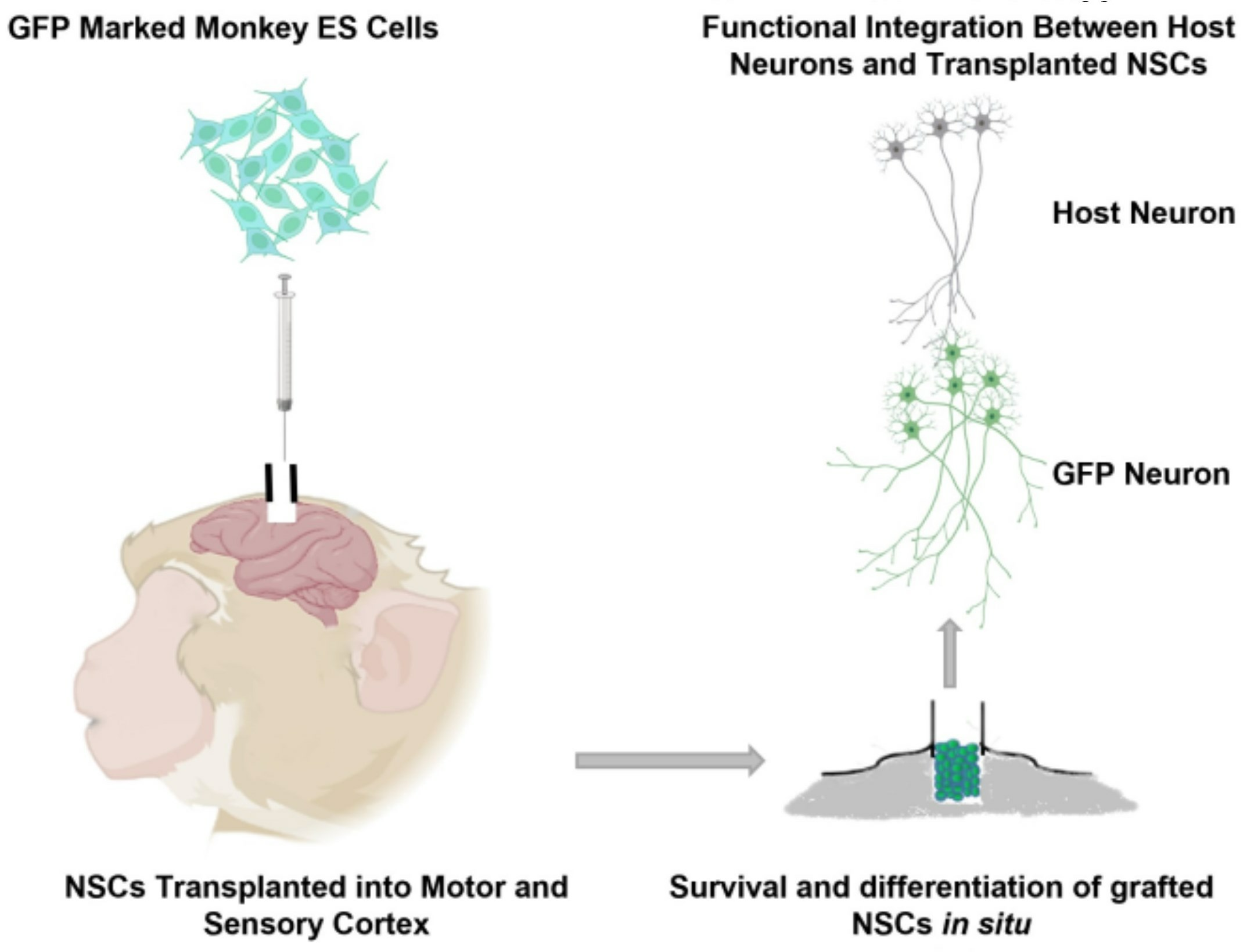
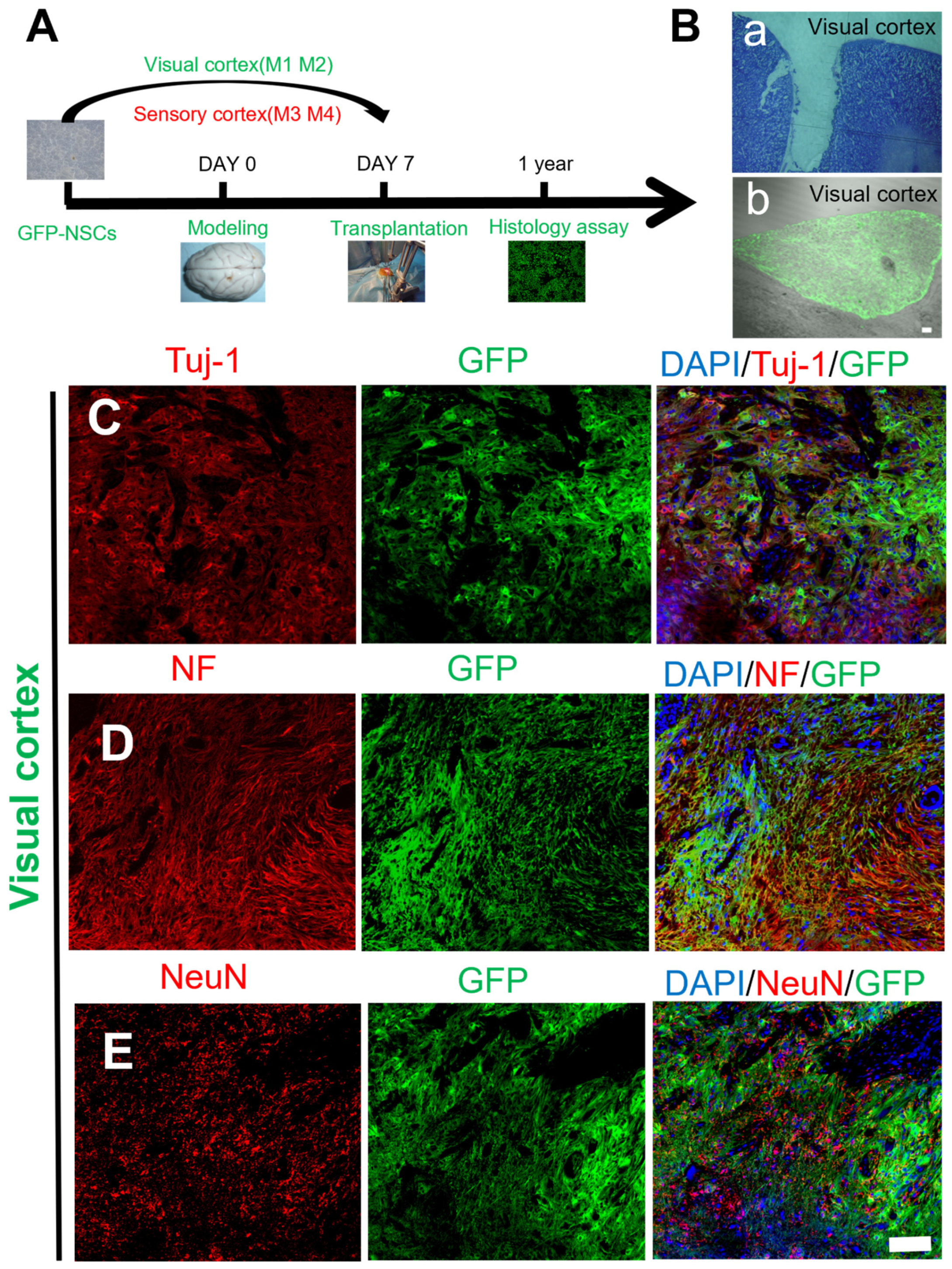
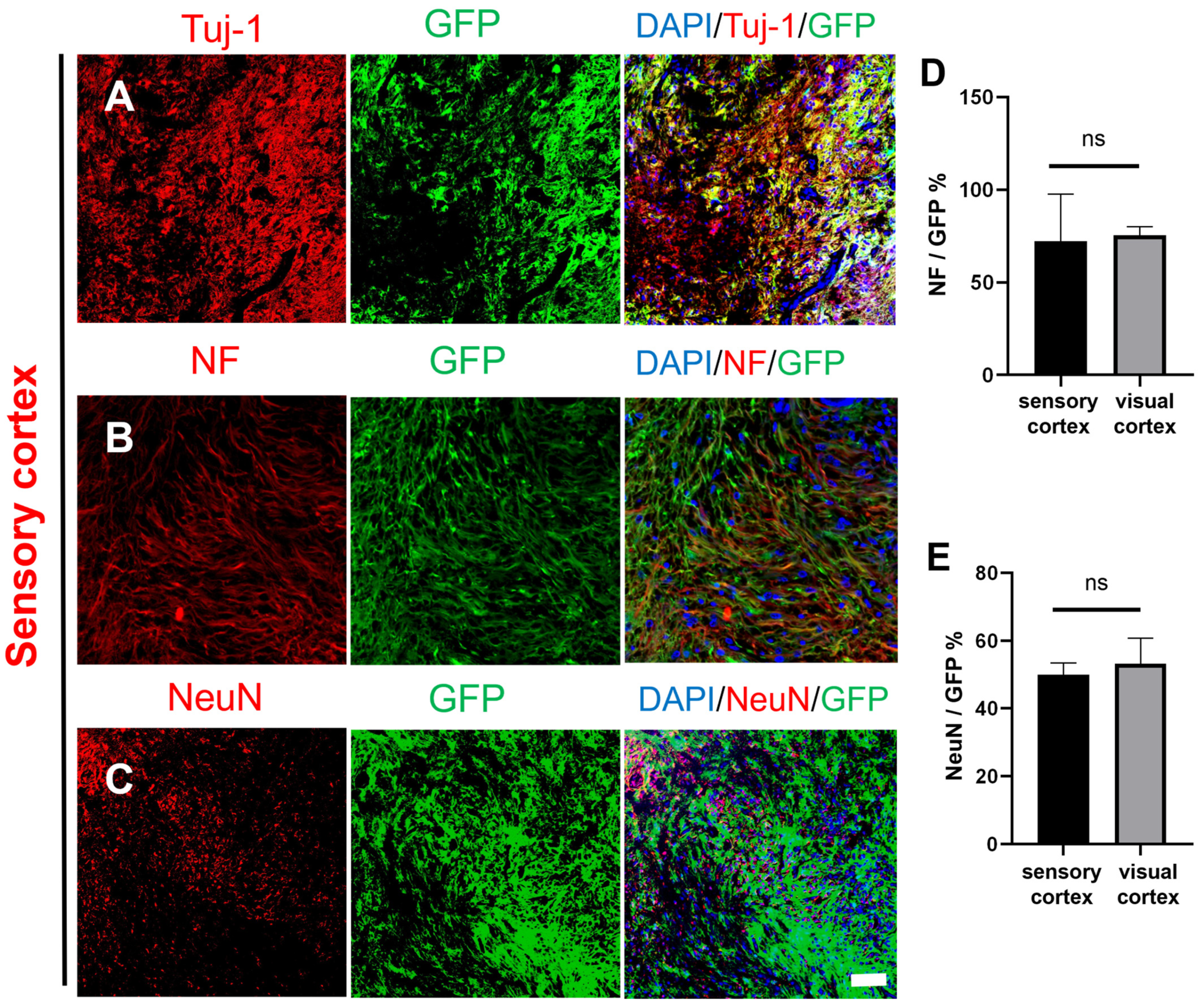
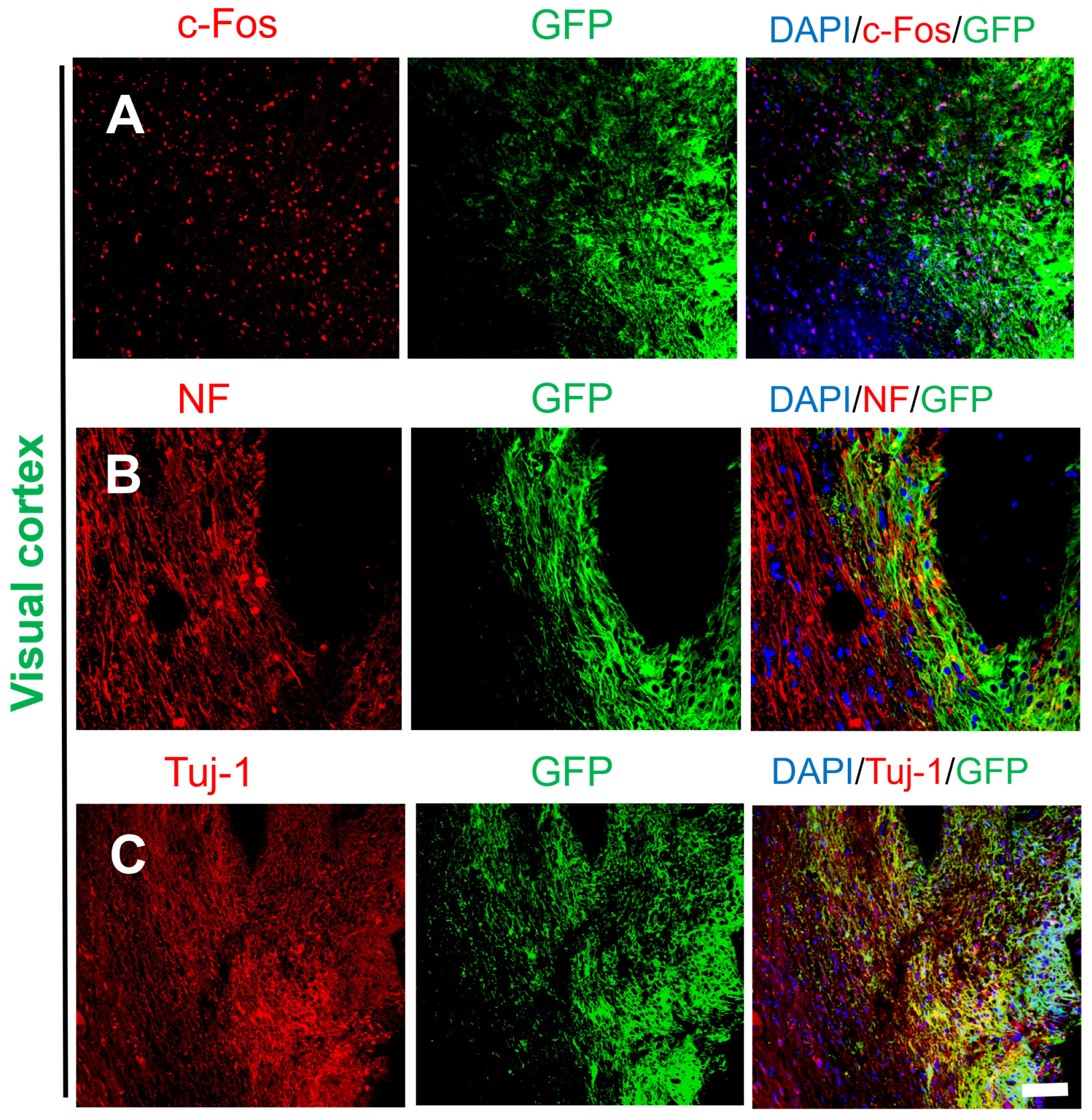
Neural Stem Cells Transplanted into Rhesus Monkey Cortical Traumatic Brain Injury Can Survive and Differentiate into Neurons


Abstract
Share and Cite
Liu, S.; Shi, L.; Huang, T.; Luo, Y.; Chen, Y.; Li, S.; Wang, Z. Neural Stem Cells Transplanted into Rhesus Monkey Cortical Traumatic Brain Injury Can Survive and Differentiate into Neurons. Int. J. Mol. Sci. 2024, 25, 1642. https://doi.org/10.3390/ijms25031642
Liu S, Shi L, Huang T, Luo Y, Chen Y, Li S, Wang Z. Neural Stem Cells Transplanted into Rhesus Monkey Cortical Traumatic Brain Injury Can Survive and Differentiate into Neurons. International Journal of Molecular Sciences. 2024; 25(3):1642. https://doi.org/10.3390/ijms25031642
Chicago/Turabian StyleLiu, Shuyi, Liping Shi, Tianzhuang Huang, Yuyi Luo, Yongchang Chen, Shangang Li, and Zhengbo Wang. 2024. "Neural Stem Cells Transplanted into Rhesus Monkey Cortical Traumatic Brain Injury Can Survive and Differentiate into Neurons" International Journal of Molecular Sciences 25, no. 3: 1642. https://doi.org/10.3390/ijms25031642
APA StyleLiu, S., Shi, L., Huang, T., Luo, Y., Chen, Y., Li, S., & Wang, Z. (2024). Neural Stem Cells Transplanted into Rhesus Monkey Cortical Traumatic Brain Injury Can Survive and Differentiate into Neurons. International Journal of Molecular Sciences, 25(3), 1642. https://doi.org/10.3390/ijms25031642