Case Report

Deep Intronic ETFDH Variants Represent a Recurrent Pathogenic Event in Multiple Acyl-CoA Dehydrogenase Deficiency


by
Stefania Martino
1,†,
Pietro D’Addabbo
2,†,
Antonella Turchiano
1,
Francesca Clementina Radio
3,
Alessandro Bruselles
4,
Viviana Cordeddu
4,
Cecilia Mancini
3,
Alessandro Stella
1,
Nicola Laforgia
5,
Donatella Capodiferro
5,
Simonetta Simonetti
6,
Rosanna Bagnulo
1,
Orazio Palumbo
7,
Flaviana Marzano
8,
Ornella Tabaku
1,
Antonella Garganese
9,
Michele Stasi
1,
Marco Tartaglia
3,
Graziano Pesole
2,8 and
Nicoletta Resta
1,*
1
Medical Genetics Unit, Department of Precision and Regenerative Medicine and Ionian Area (DiMePRe-J), University of Bari “Aldo Moro”, 70124 Bari, Italy
2
Department of Biosciences, Biotechnologies & Environment, University of Bari “Aldo Moro”, Via Edoardo Orabona 4, 70125 Bari, Italy
3
Molecular Genetics and Functional Genomics, Ospedale Pediatrico Bambino Gesù, IRCCS, Viale di San Paolo 15, 00146 Rome, Italy
4
Department of Oncology and Molecular Medicine, Istituto Superiore di Sanità, Viale Regina Elena 299, 00161 Rome, Italy
5
Section of Neonatology and Neonatal Intensive Care Unit, Department of Interdisciplinary Medicine, University of Bari “Aldo Moro”, 70121 Bari, Italy
6
Clinical Pathology and Neonatal Screening, Hospital “Giovanni XXIII”, University Hospital Consortium Corporation Polyclinics of Bari, 70124 Bari, Italy
7
Division of Medical Genetics, Fondazione IRCCS—Casa Sollievo della Sofferenza, San Giovanni Rotondo, 71013 Foggia, Italy
8
Institute of Biomembranes, Bioenergetics and Molecular Biotechnologies, Consiglio Nazionale delle Ricerche, Via Amendola 122/O, 70126 Bari, Italy
9
Medical Genetic Unit, University Hospital Consortium Corporation Polyclinics of Bari, 70124 Bari, Italy
*
Author to whom correspondence should be addressed.
These authors contributed equally to this work.
Int. J. Mol. Sci. 2024, 25(17), 9637; https://doi.org/10.3390/ijms25179637
Submission received: 20 August 2024 / Revised: 2 September 2024 / Accepted: 3 September 2024 / Published: 5 September 2024
(This article belongs to the Section Molecular Genetics and Genomics)

Abstract

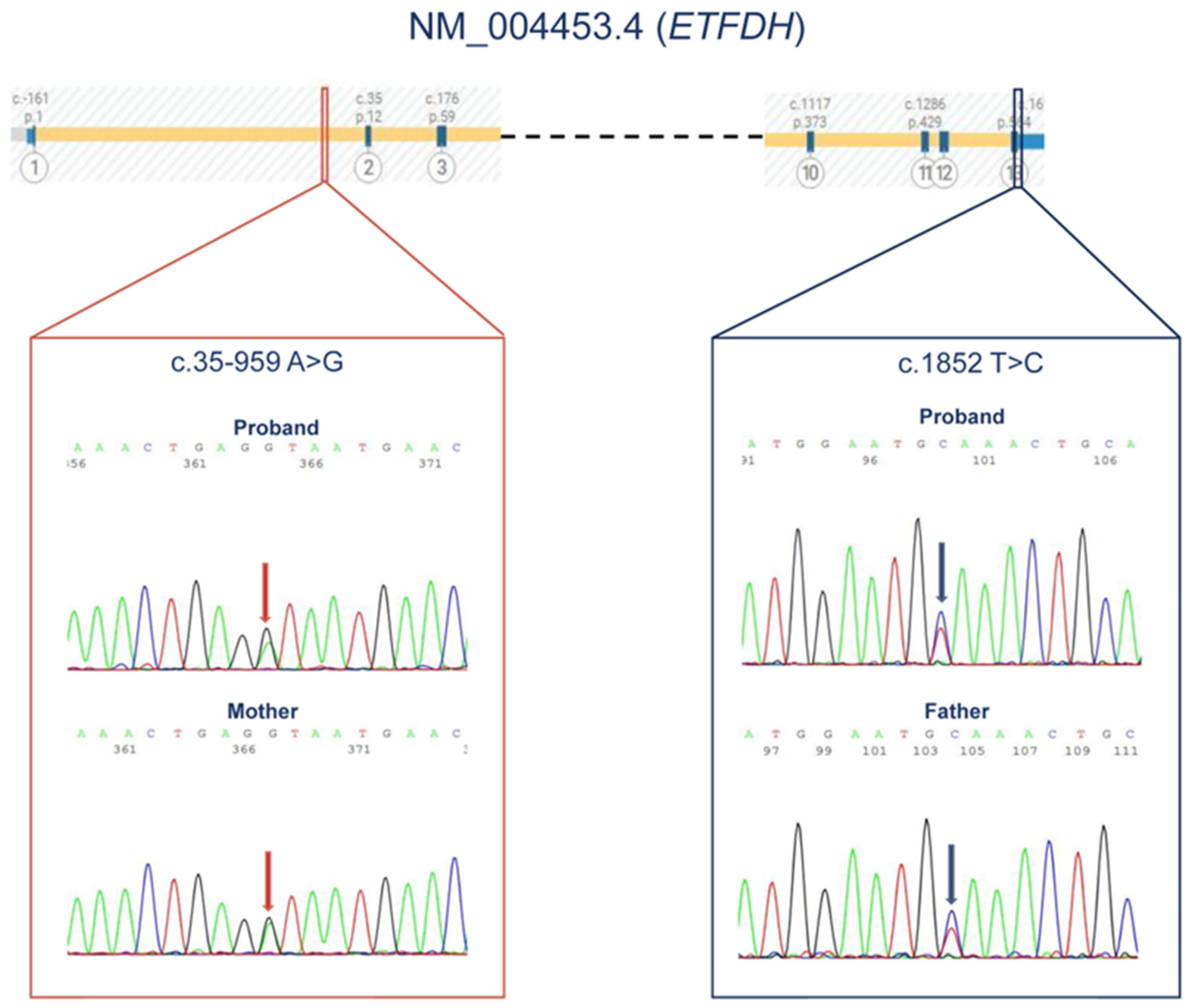
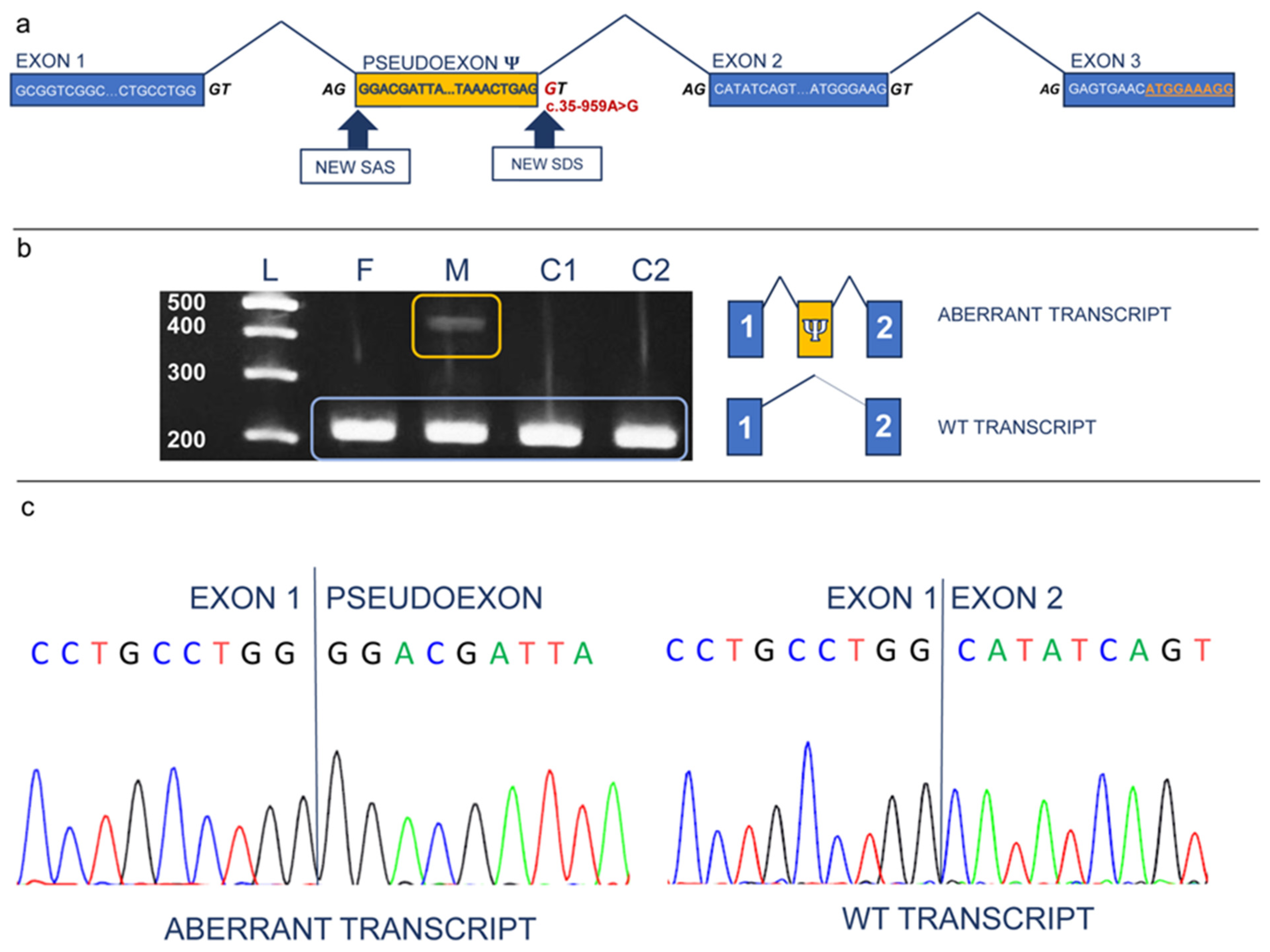
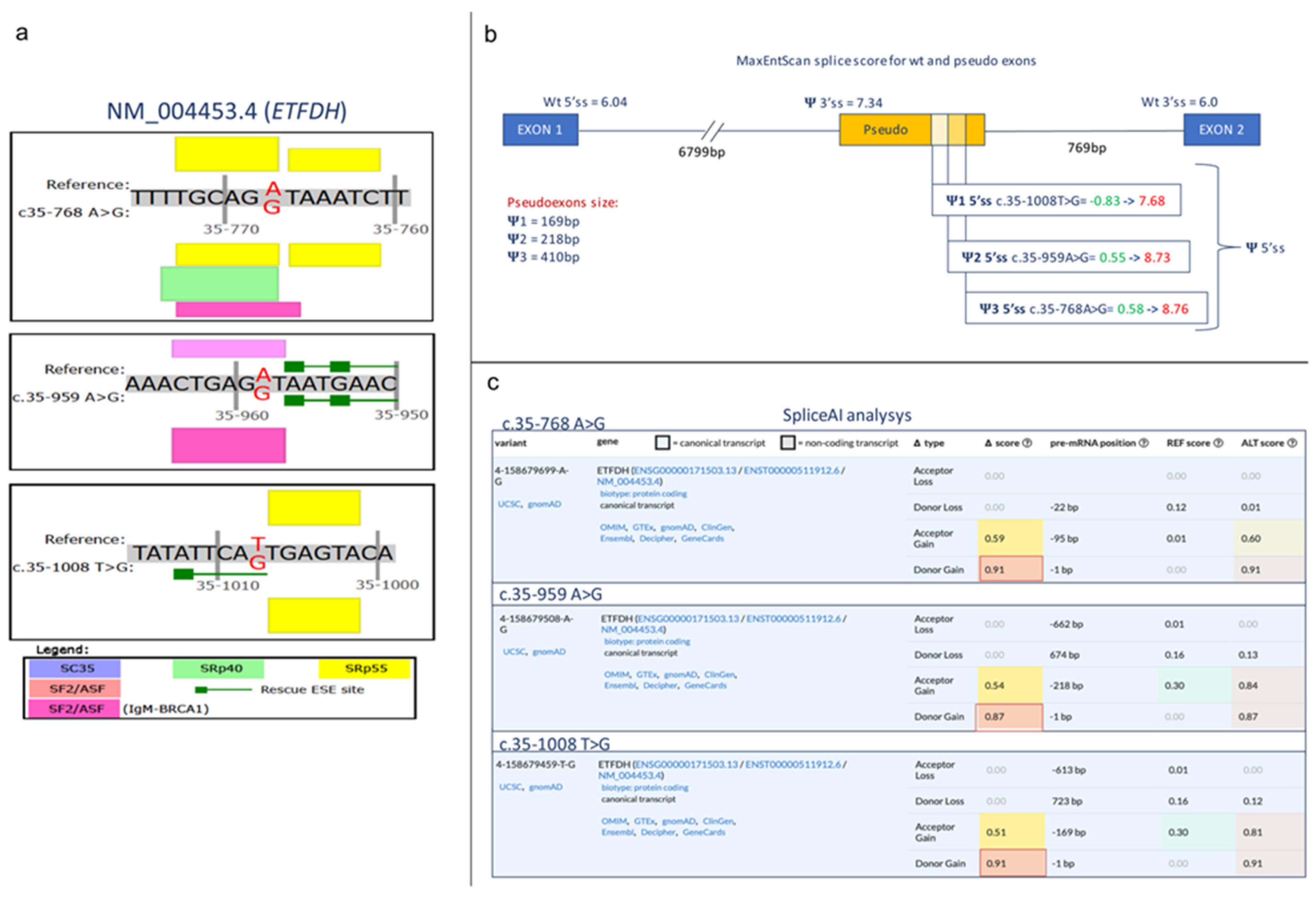
Multiple acyl-CoA dehydrogenase deficiency (MADD) is a rare inborn error of metabolism affecting fatty acid and amino acid oxidation with an incidence of 1 in 200,000 live births. MADD has three clinical phenotypes: severe neonatal-onset with or without congenital anomalies, and a milder late-onset form. Clinical diagnosis is supported by urinary organic acid and blood acylcarnitine analysis using tandem mass spectrometry in newborn screening programs. MADD is an autosomal recessive trait caused by biallelic mutations in the ETFA, ETFB, and ETFDH genes encoding the alpha and beta subunits of the electron transfer flavoprotein (ETF) and ETF-coenzyme Q oxidoreductase enzymes. Despite significant advancements in sequencing techniques, many patients remain undiagnosed, impacting their access to clinical care and genetic counseling. In this report, we achieved a definitive molecular diagnosis in a newborn by combining whole-genome sequencing (WGS) with RNA sequencing (RNA-seq). Whole-exome sequencing and next-generation gene panels fail to detect variants, possibly affecting splicing, in deep intronic regions. Here, we report a unique deep intronic mutation in intron 1 of the ETFDH gene, c.35-959A>G, in a patient with early-onset lethal MADD, resulting in pseudo-exon inclusion. The identified variant is the third mutation reported in this region, highlighting ETFDH intron 1 vulnerability. It cannot be excluded that these intronic sequence features may be more common in other genes than is currently believed. This study highlights the importance of incorporating RNA analysis into genome-wide testing to reveal the functional consequences of intronic mutations.
Keywords: ETFDH; deep intronic variant; MADD; genome sequencing; RNA sequencing; pseudo-exon; transcript processing; splicing ETFDH; deep intronic variant; MADD; genome sequencing; RNA sequencing; pseudo-exon; transcript processing; splicing