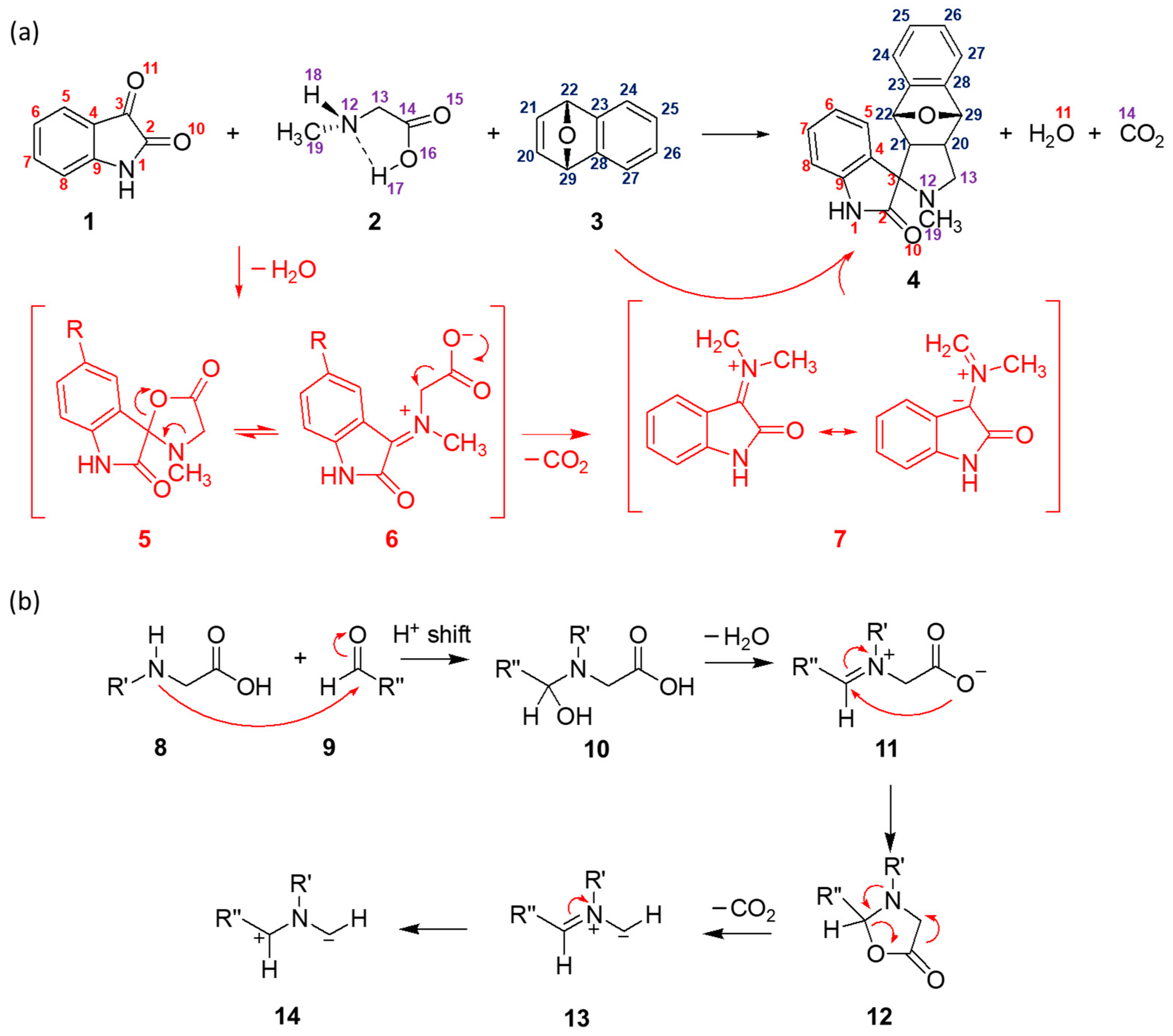
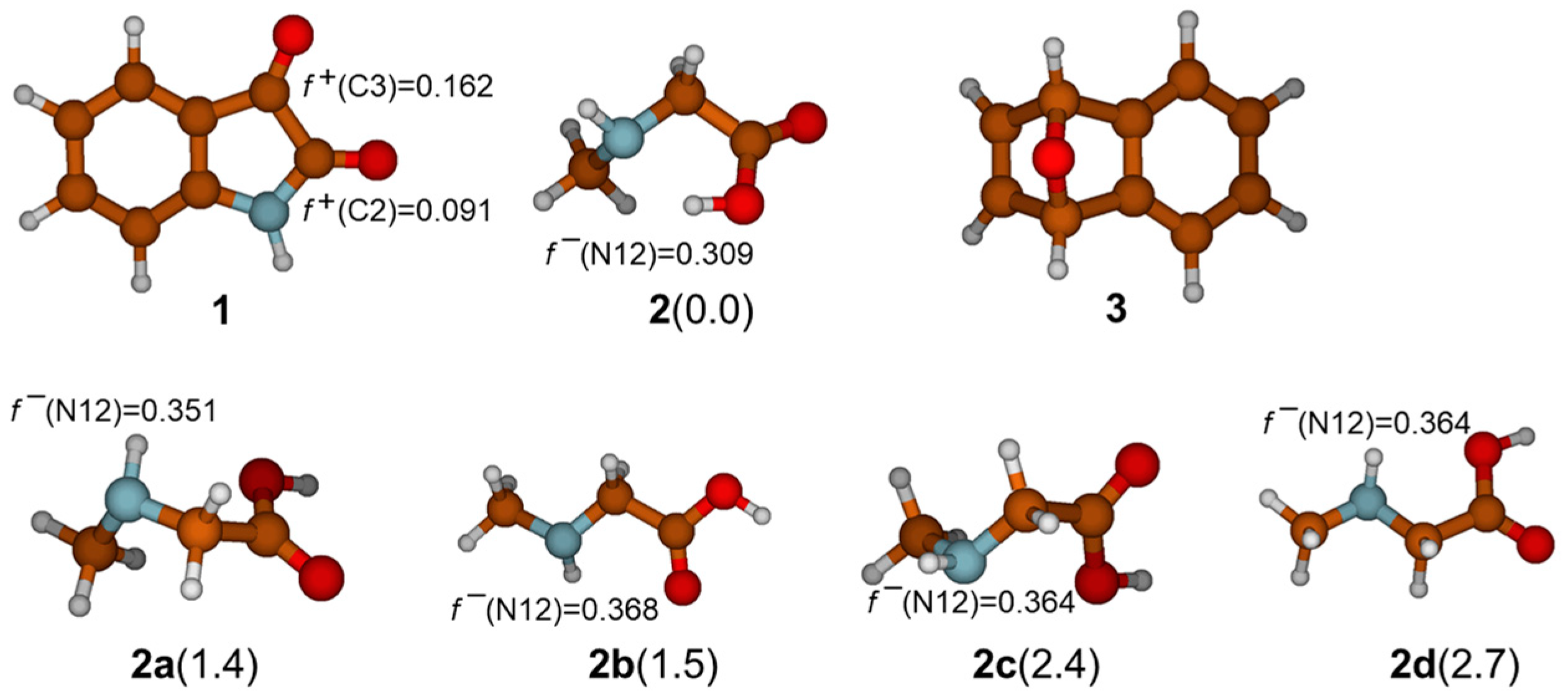
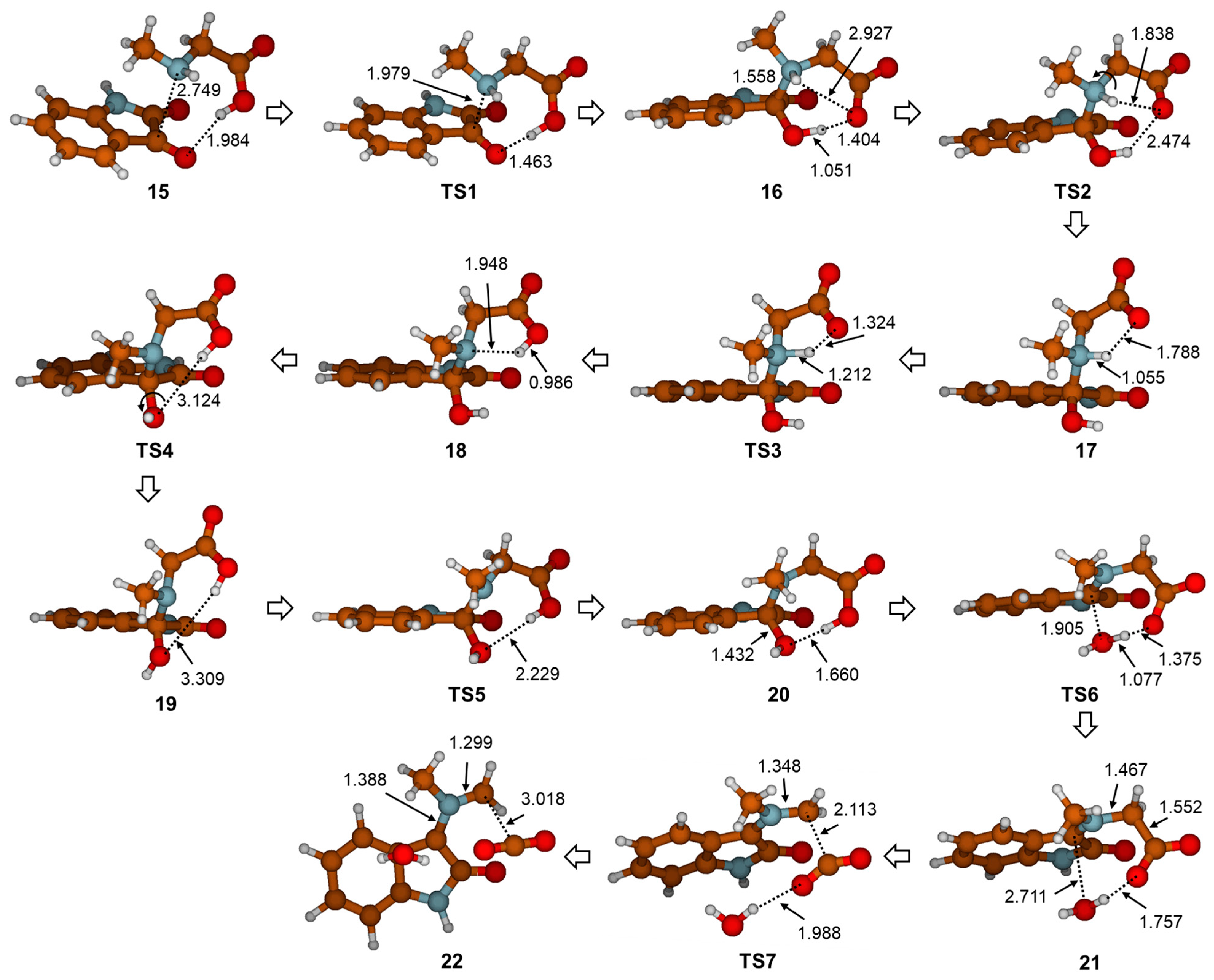
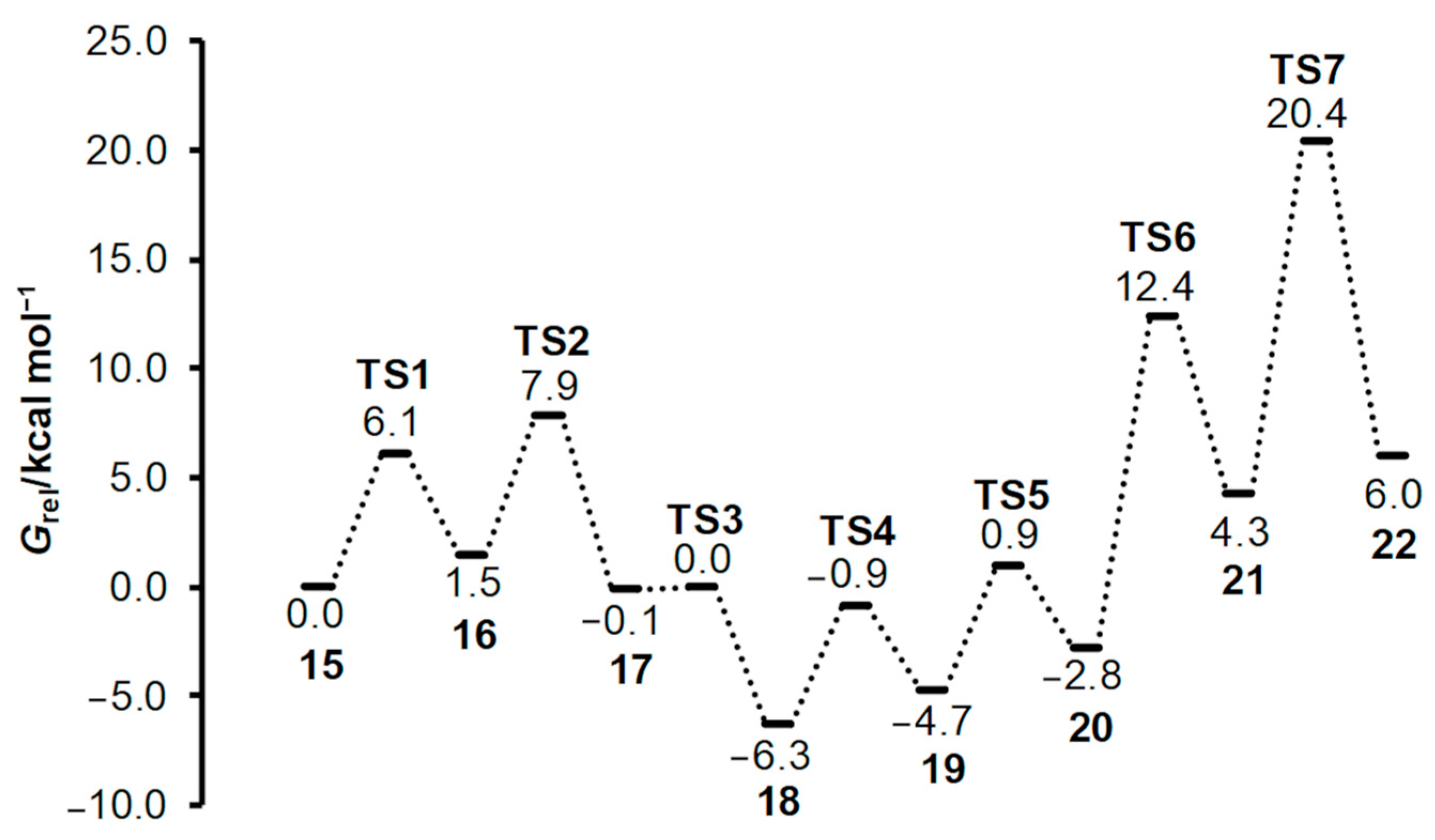
Theoretical Study of the Mechanism of the Formation of Azomethine Ylide from Isatine and Sarcosine and Its Reactivity in 1,3-Dipolar Cycloaddition Reaction with 7-Oxabenzonorbornadiene †


Abstract
Share and Cite
Antol, I.; Štrbac, P.; Murata, Y.; Margetić, D. Theoretical Study of the Mechanism of the Formation of Azomethine Ylide from Isatine and Sarcosine and Its Reactivity in 1,3-Dipolar Cycloaddition Reaction with 7-Oxabenzonorbornadiene. Int. J. Mol. Sci. 2024, 25, 6524. https://doi.org/10.3390/ijms25126524
Antol I, Štrbac P, Murata Y, Margetić D. Theoretical Study of the Mechanism of the Formation of Azomethine Ylide from Isatine and Sarcosine and Its Reactivity in 1,3-Dipolar Cycloaddition Reaction with 7-Oxabenzonorbornadiene. International Journal of Molecular Sciences. 2024; 25(12):6524. https://doi.org/10.3390/ijms25126524
Chicago/Turabian StyleAntol, Ivana, Petar Štrbac, Yasujiro Murata, and Davor Margetić. 2024. "Theoretical Study of the Mechanism of the Formation of Azomethine Ylide from Isatine and Sarcosine and Its Reactivity in 1,3-Dipolar Cycloaddition Reaction with 7-Oxabenzonorbornadiene" International Journal of Molecular Sciences 25, no. 12: 6524. https://doi.org/10.3390/ijms25126524
APA StyleAntol, I., Štrbac, P., Murata, Y., & Margetić, D. (2024). Theoretical Study of the Mechanism of the Formation of Azomethine Ylide from Isatine and Sarcosine and Its Reactivity in 1,3-Dipolar Cycloaddition Reaction with 7-Oxabenzonorbornadiene. International Journal of Molecular Sciences, 25(12), 6524. https://doi.org/10.3390/ijms25126524