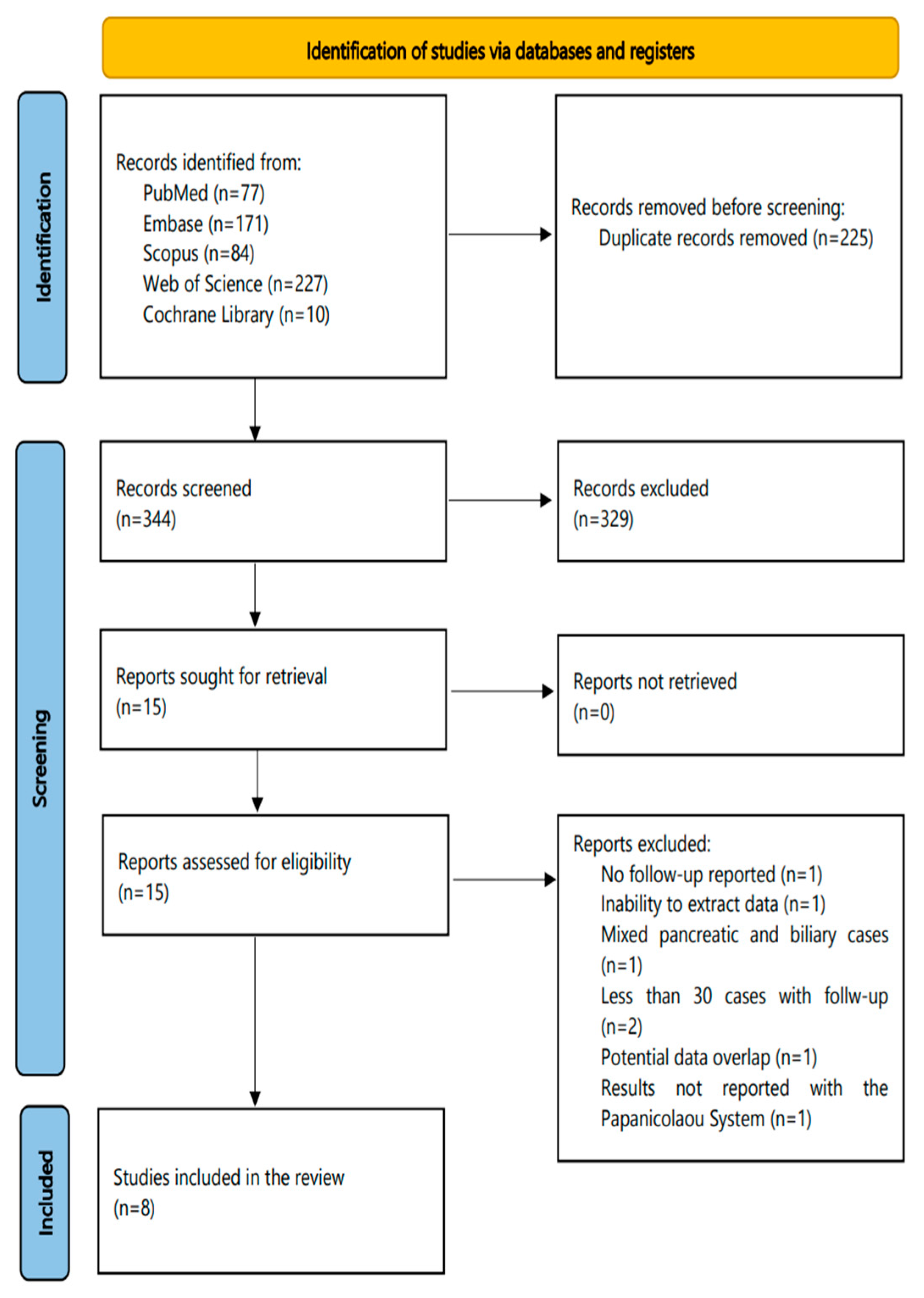
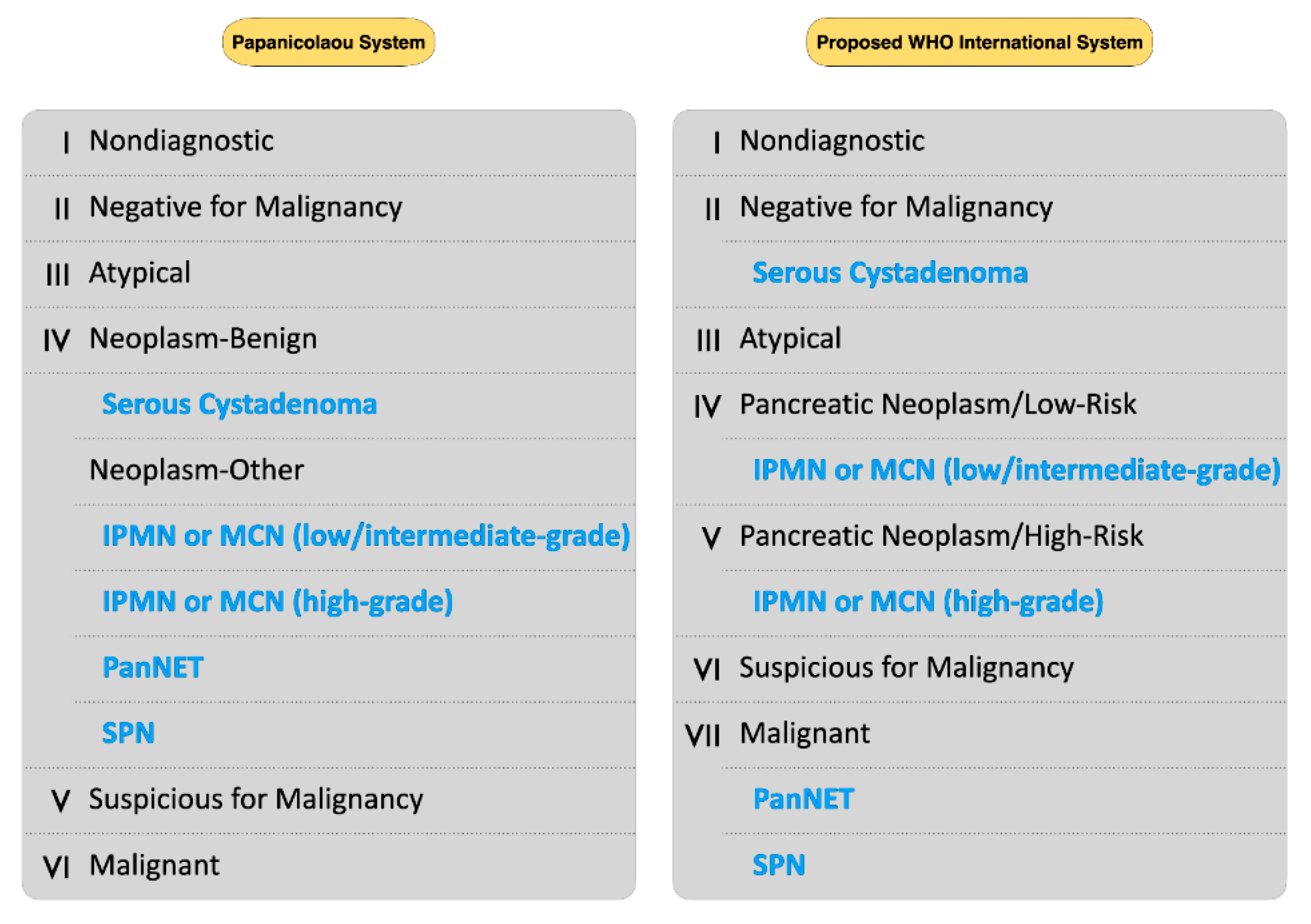
Diagnostic Performance of Pancreatic Cytology with the Papanicolaou Society of Cytopathology System: A Systematic Review, before Shifting into the Upcoming WHO International System
 , , and
 Abstract
Share and Cite
Nikas, I.P.; Proctor, T.; Seide, S.; Chatziioannou, S.S.; Reynolds, J.P.; Ntourakis, D. Diagnostic Performance of Pancreatic Cytology with the Papanicolaou Society of Cytopathology System: A Systematic Review, before Shifting into the Upcoming WHO International System. Int. J. Mol. Sci. 2022, 23, 1650. https://doi.org/10.3390/ijms23031650
Nikas IP, Proctor T, Seide S, Chatziioannou SS, Reynolds JP, Ntourakis D. Diagnostic Performance of Pancreatic Cytology with the Papanicolaou Society of Cytopathology System: A Systematic Review, before Shifting into the Upcoming WHO International System. International Journal of Molecular Sciences. 2022; 23(3):1650. https://doi.org/10.3390/ijms23031650
Chicago/Turabian StyleNikas, Ilias P., Tanja Proctor, Svenja Seide, Stylianos S. Chatziioannou, Jordan P. Reynolds, and Dimitrios Ntourakis. 2022. "Diagnostic Performance of Pancreatic Cytology with the Papanicolaou Society of Cytopathology System: A Systematic Review, before Shifting into the Upcoming WHO International System" International Journal of Molecular Sciences 23, no. 3: 1650. https://doi.org/10.3390/ijms23031650
APA StyleNikas, I. P., Proctor, T., Seide, S., Chatziioannou, S. S., Reynolds, J. P., & Ntourakis, D. (2022). Diagnostic Performance of Pancreatic Cytology with the Papanicolaou Society of Cytopathology System: A Systematic Review, before Shifting into the Upcoming WHO International System. International Journal of Molecular Sciences, 23(3), 1650. https://doi.org/10.3390/ijms23031650