Review

Vesicle Fusion as a Target Process for the Action of Sphingosine and Its Derived Drugs
by
José Villanueva
1,*,
Yolanda Gimenez-Molina
1,
Bazbek Davletov
2 and
Luis M. Gutiérrez
1,*
1
Instituto de Neurociencias, CSIC-Universidad Miguel Hernández, Cra de Valencia S/N, Sant Joan d’Alacant, 03550 Alicante, Spain
2
Department of Biomedical Science, University of Sheffield, Sheffield S10 2TN, UK
*
Authors to whom correspondence should be addressed.
Int. J. Mol. Sci. 2022, 23(3), 1086; https://doi.org/10.3390/ijms23031086
Submission received: 20 December 2021 / Revised: 13 January 2022 / Accepted: 18 January 2022 / Published: 19 January 2022
(This article belongs to the Special Issue Sphingolipids: Signals and Disease 2.0)

Abstract

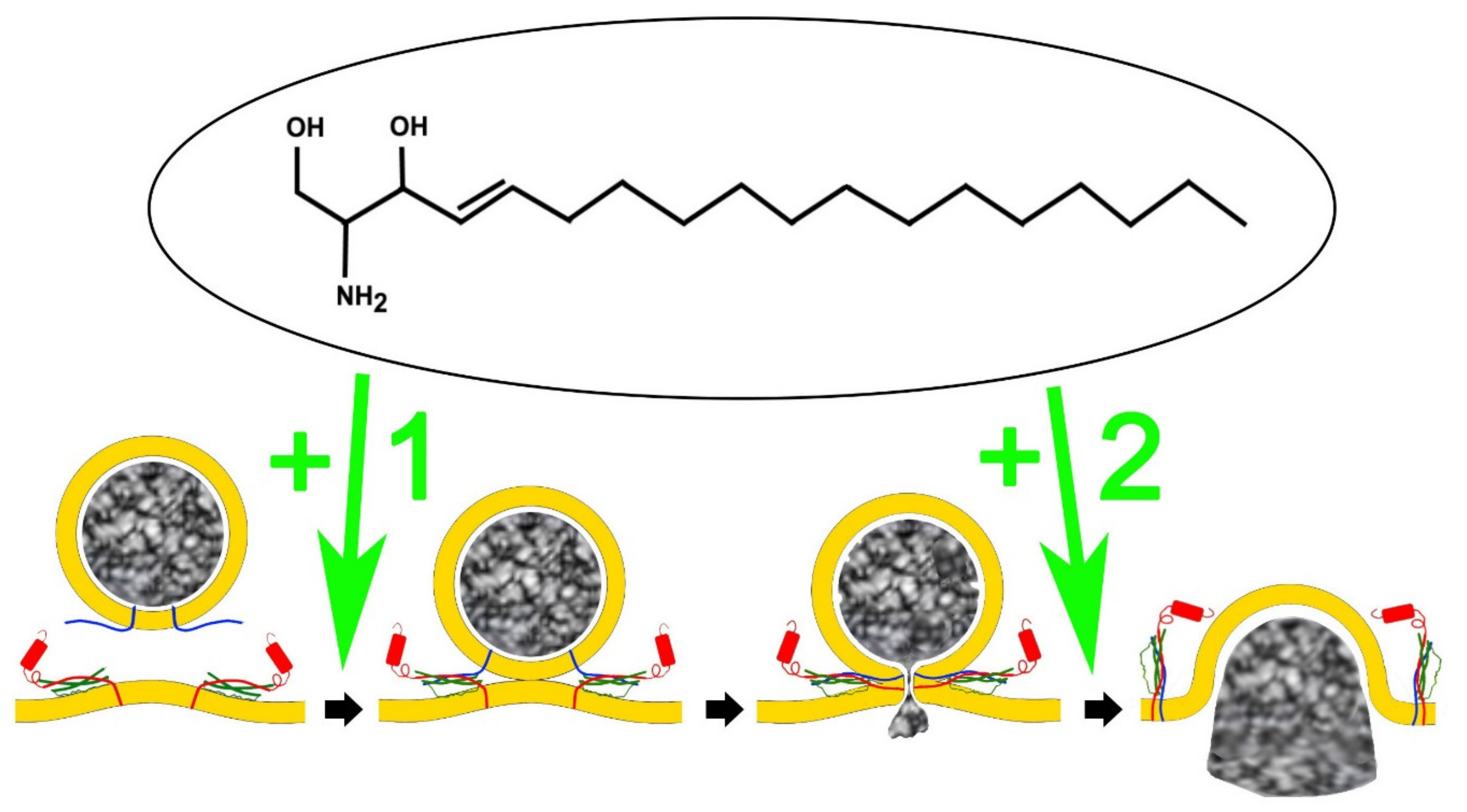
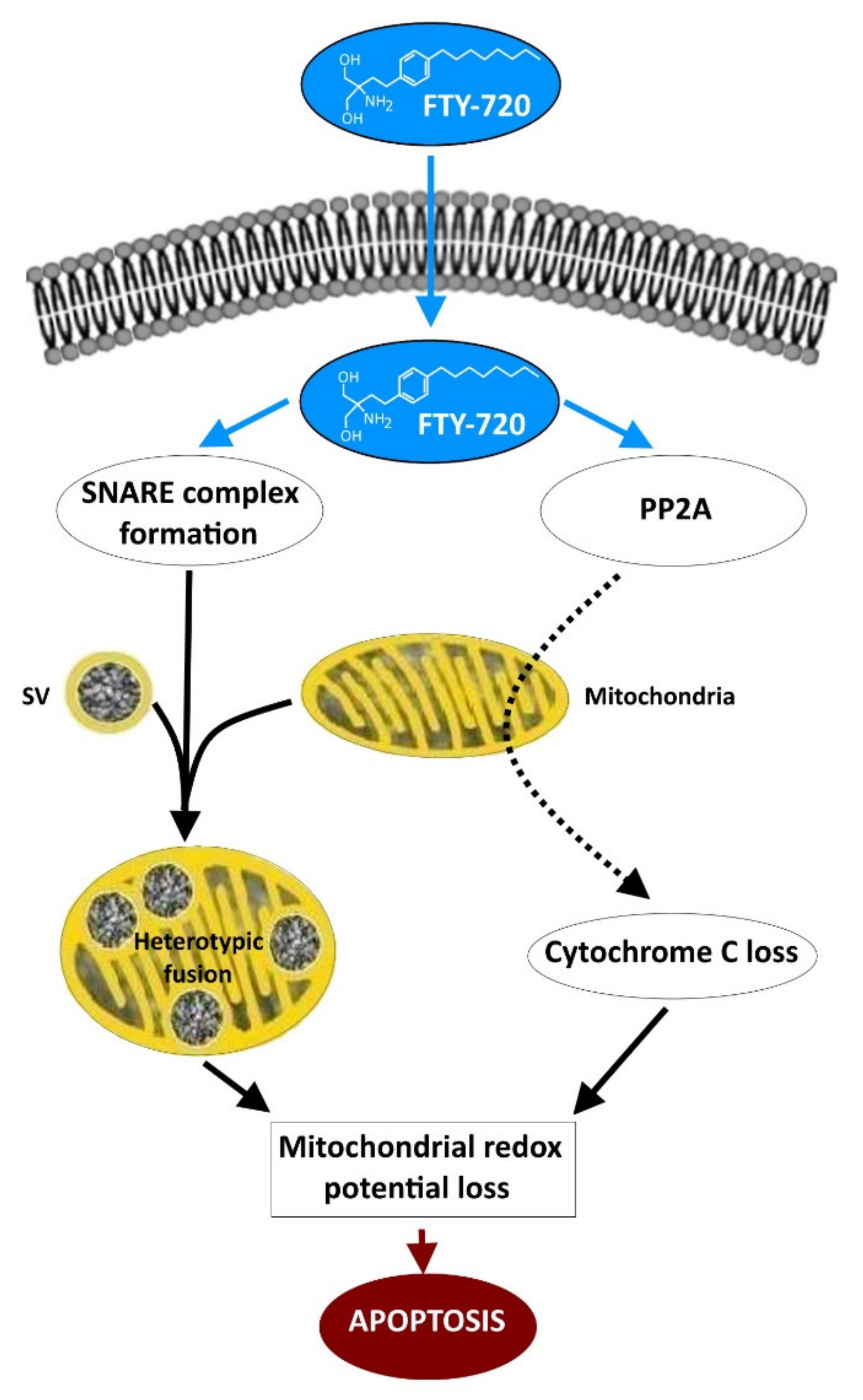
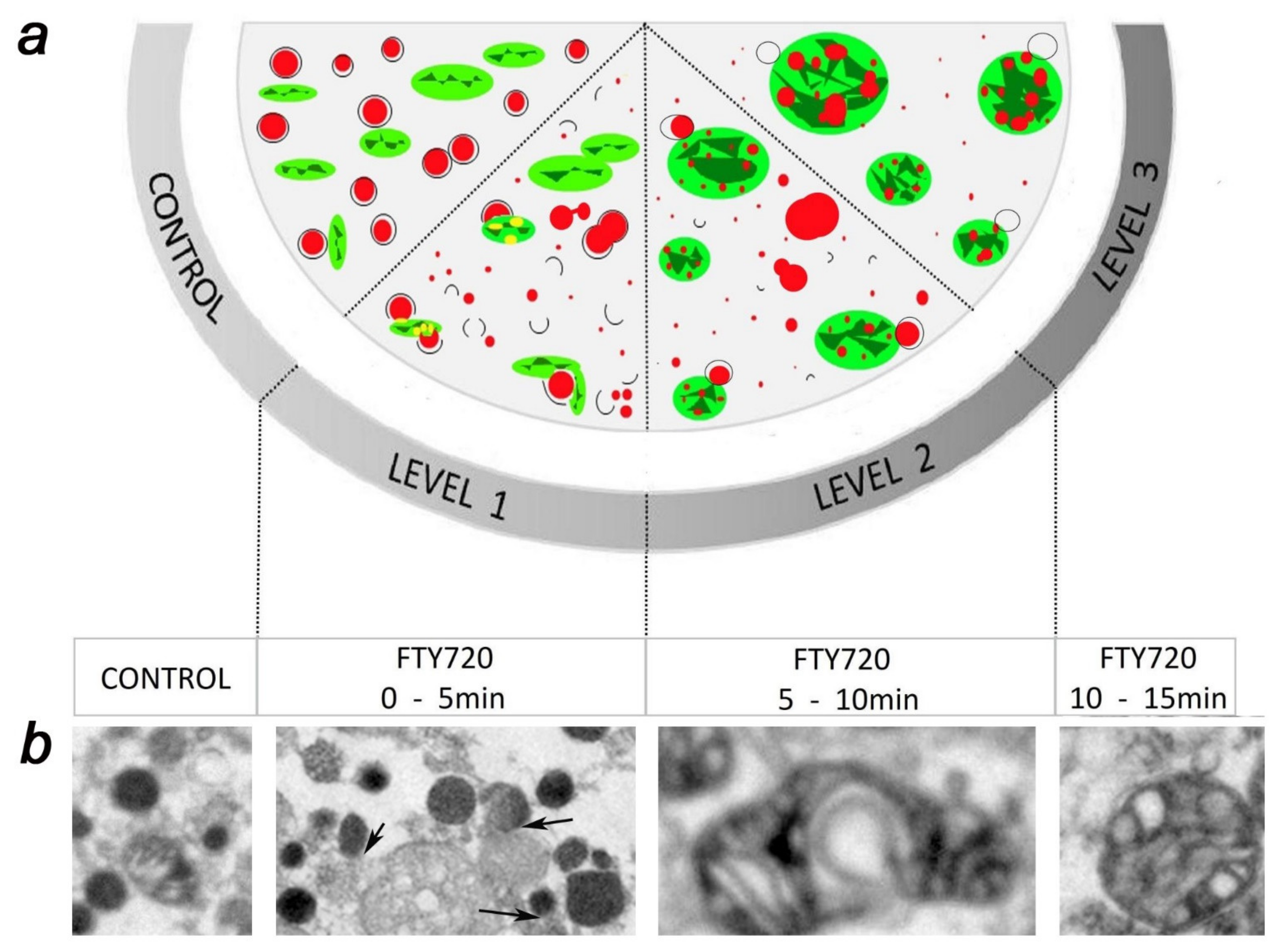
The fusion of membranes is a central part of the physiological processes involving the intracellular transport and maturation of vesicles and the final release of their contents, such as neurotransmitters and hormones, by exocytosis. Traditionally, in this process, proteins, such SNAREs have been considered the essential components of the fusion molecular machinery, while lipids have been seen as merely structural elements. Nevertheless, sphingosine, an intracellular signalling lipid, greatly increases the release of neurotransmitters in neuronal and neuroendocrine cells, affecting the exocytotic fusion mode through the direct interaction with SNAREs. Moreover, recent studies suggest that FTY-720 (Fingolimod), a sphingosine structural analogue used in the treatment of multiple sclerosis, simulates sphingosine in the promotion of exocytosis. Furthermore, this drug also induces the intracellular fusion of organelles such as dense vesicles and mitochondria causing cell death in neuroendocrine cells. Therefore, the effect of sphingosine and synthetic derivatives on the heterologous and homologous fusion of organelles can be considered as a new mechanism of action of sphingolipids influencing important physiological processes, which could underlie therapeutic uses of sphingosine derived lipids in the treatment of neurodegenerative disorders and cancers of neuronal origin such neuroblastoma.
Keywords: sphingosine; FTY-720; exocytosis; vesicle fusion; mitochondria; neurotransmitter release; neuroendocrine cells sphingosine; FTY-720; exocytosis; vesicle fusion; mitochondria; neurotransmitter release; neuroendocrine cells