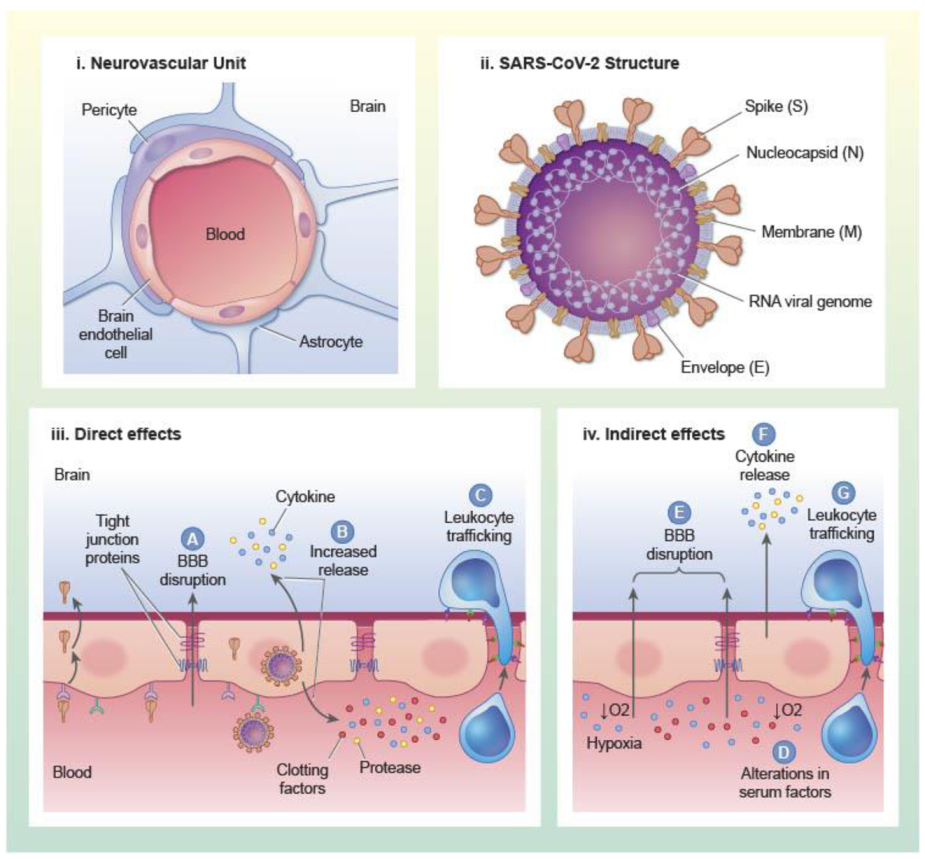
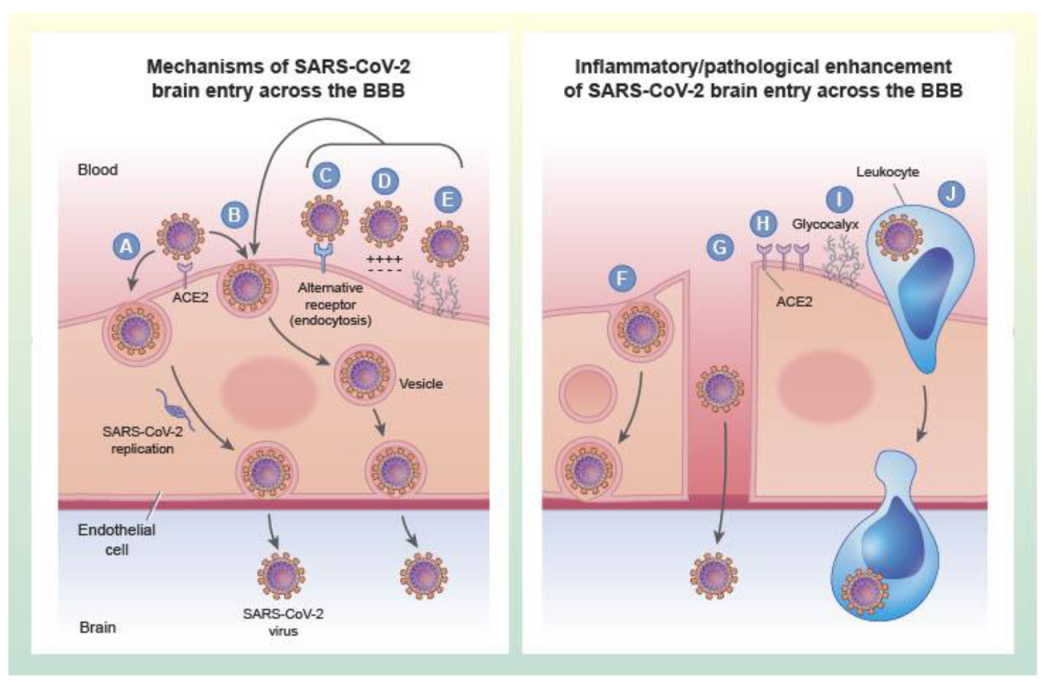
Interactions of SARS-CoV-2 with the Blood–Brain Barrier
 , ,
, ,  and
and 
Abstract
Share and Cite
Erickson, M.A.; Rhea, E.M.; Knopp, R.C.; Banks, W.A. Interactions of SARS-CoV-2 with the Blood–Brain Barrier. Int. J. Mol. Sci. 2021, 22, 2681. https://doi.org/10.3390/ijms22052681
Erickson MA, Rhea EM, Knopp RC, Banks WA. Interactions of SARS-CoV-2 with the Blood–Brain Barrier. International Journal of Molecular Sciences. 2021; 22(5):2681. https://doi.org/10.3390/ijms22052681
Chicago/Turabian StyleErickson, Michelle A., Elizabeth M. Rhea, Rachel C. Knopp, and William A. Banks. 2021. "Interactions of SARS-CoV-2 with the Blood–Brain Barrier" International Journal of Molecular Sciences 22, no. 5: 2681. https://doi.org/10.3390/ijms22052681
APA StyleErickson, M. A., Rhea, E. M., Knopp, R. C., & Banks, W. A. (2021). Interactions of SARS-CoV-2 with the Blood–Brain Barrier. International Journal of Molecular Sciences, 22(5), 2681. https://doi.org/10.3390/ijms22052681