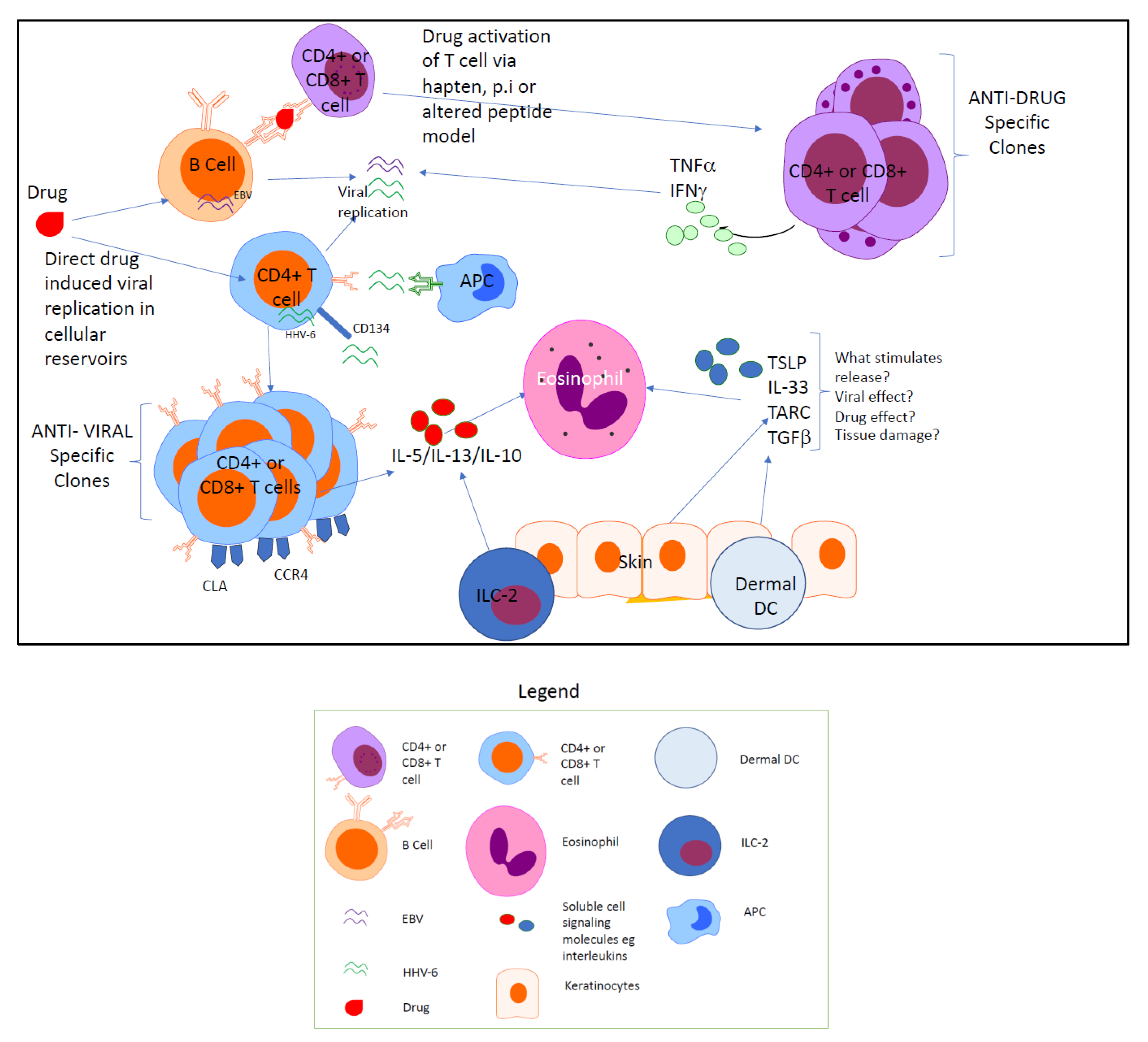
Drug Reaction with Eosinophilia and Systemic Symptoms: A Complex Interplay between Drug, T Cells, and Herpesviridae
Abstract
Share and Cite
Ganeshanandan, L.; Lucas, M. Drug Reaction with Eosinophilia and Systemic Symptoms: A Complex Interplay between Drug, T Cells, and Herpesviridae. Int. J. Mol. Sci. 2021, 22, 1127. https://doi.org/10.3390/ijms22031127
Ganeshanandan L, Lucas M. Drug Reaction with Eosinophilia and Systemic Symptoms: A Complex Interplay between Drug, T Cells, and Herpesviridae. International Journal of Molecular Sciences. 2021; 22(3):1127. https://doi.org/10.3390/ijms22031127
Chicago/Turabian StyleGaneshanandan, Luckshman, and Michaela Lucas. 2021. "Drug Reaction with Eosinophilia and Systemic Symptoms: A Complex Interplay between Drug, T Cells, and Herpesviridae" International Journal of Molecular Sciences 22, no. 3: 1127. https://doi.org/10.3390/ijms22031127
APA StyleGaneshanandan, L., & Lucas, M. (2021). Drug Reaction with Eosinophilia and Systemic Symptoms: A Complex Interplay between Drug, T Cells, and Herpesviridae. International Journal of Molecular Sciences, 22(3), 1127. https://doi.org/10.3390/ijms22031127