Article

Spike Formation Is a Turning Point Determining Wheat Root Microbiome Abundance, Structures and Functions
1
Soil, Water and Environmental Sciences, Volcani Research Center, Rishon LeZion 7505101, Israel
2
Robert H. Smith Faculty of Agriculture, Food and Environment, The Hebrew University of Jerusalem, Rehovot 7610001, Israel
*
Author to whom correspondence should be addressed.
Int. J. Mol. Sci. 2021, 22(21), 11948; https://doi.org/10.3390/ijms222111948
Submission received: 7 October 2021 / Revised: 24 October 2021 / Accepted: 29 October 2021 / Published: 4 November 2021
(This article belongs to the Section Molecular Plant Sciences)

Abstract

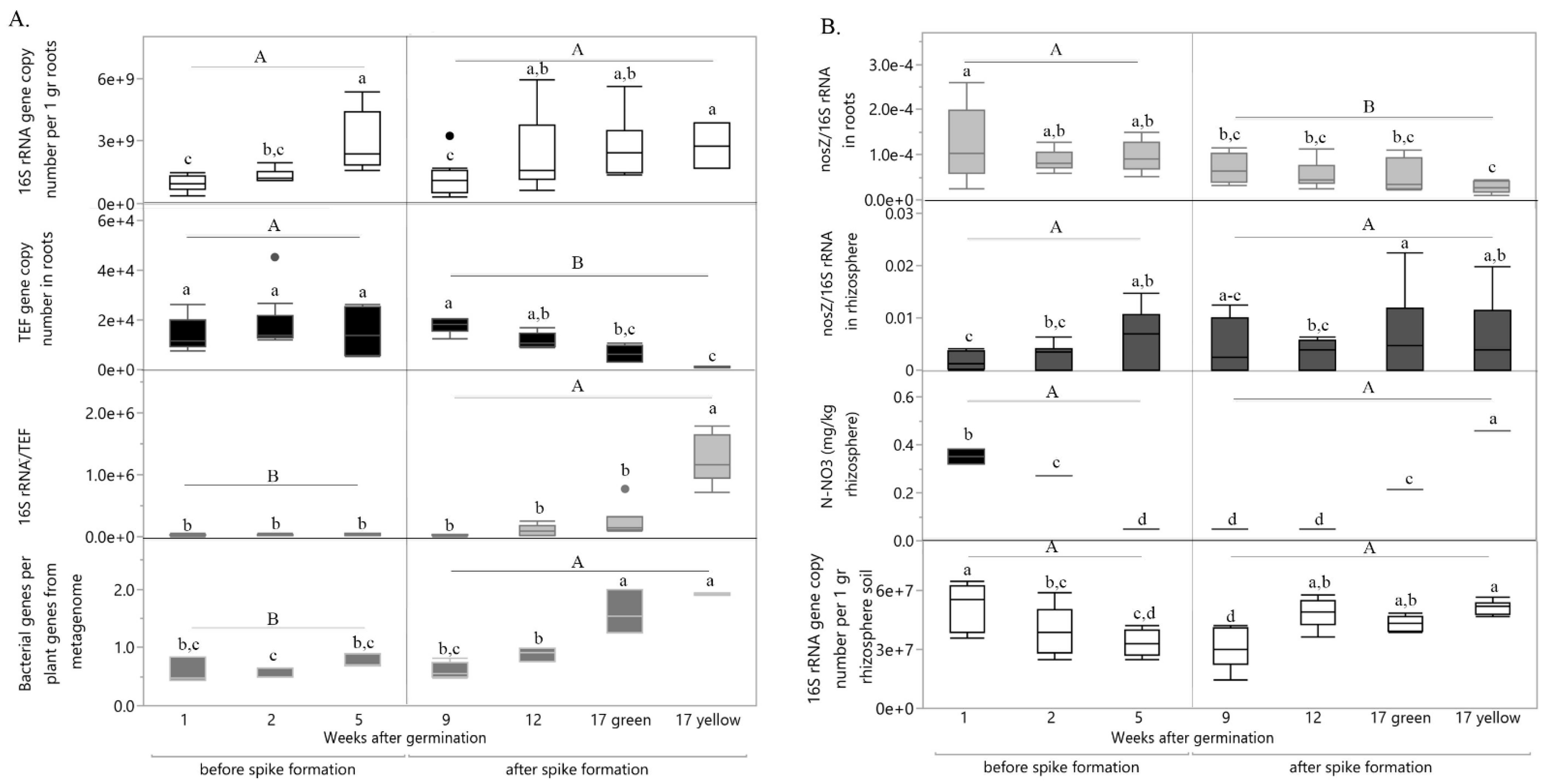
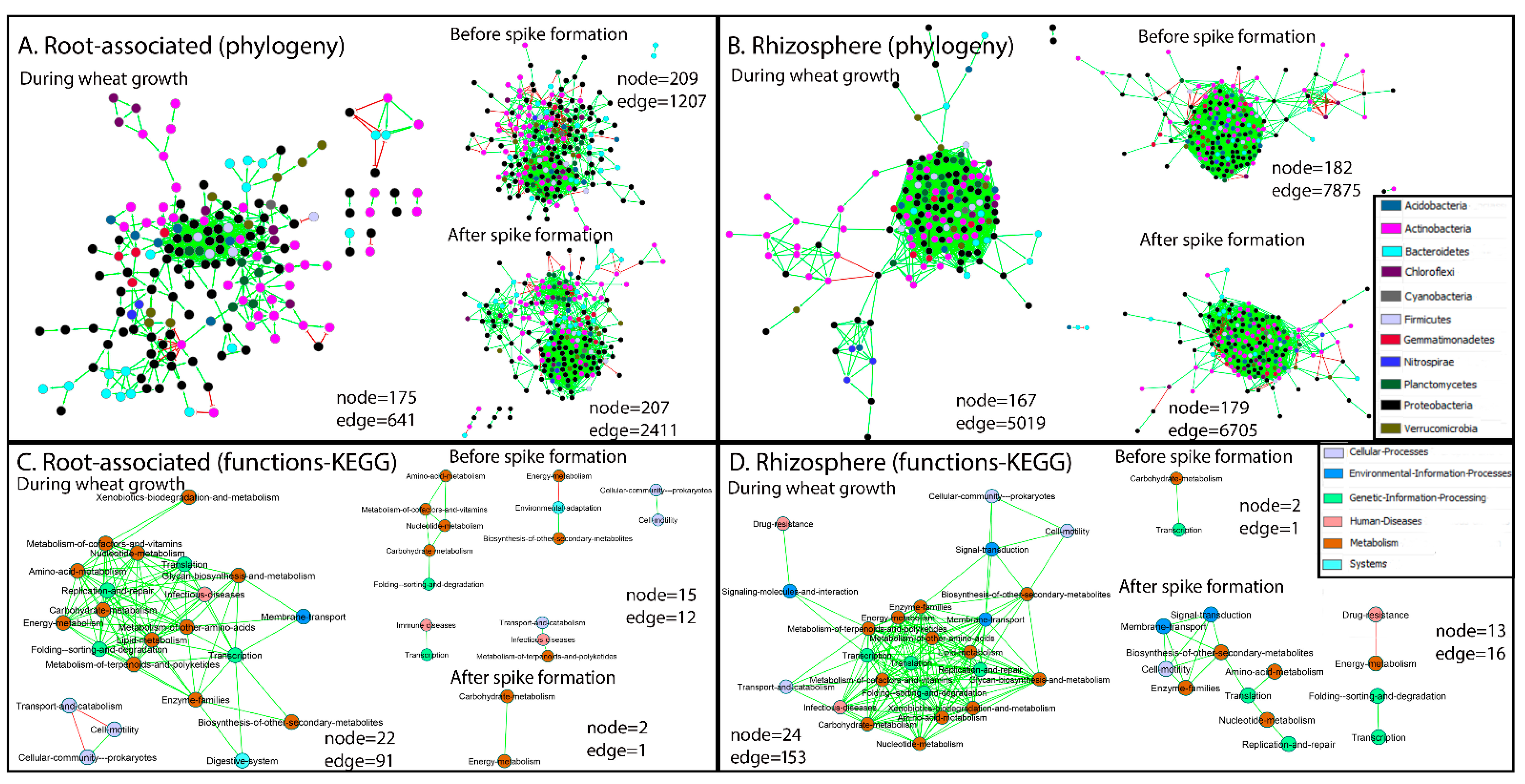
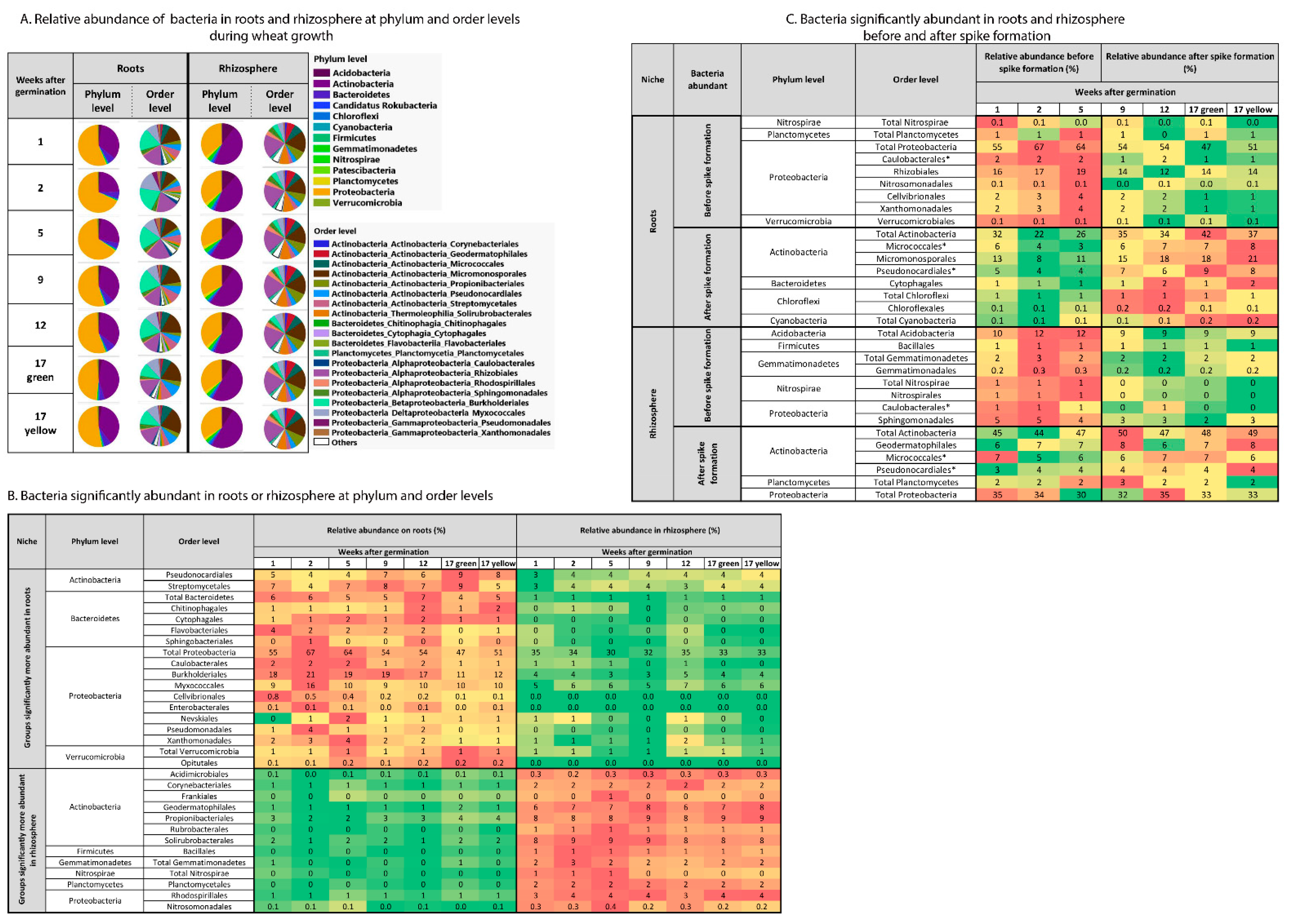
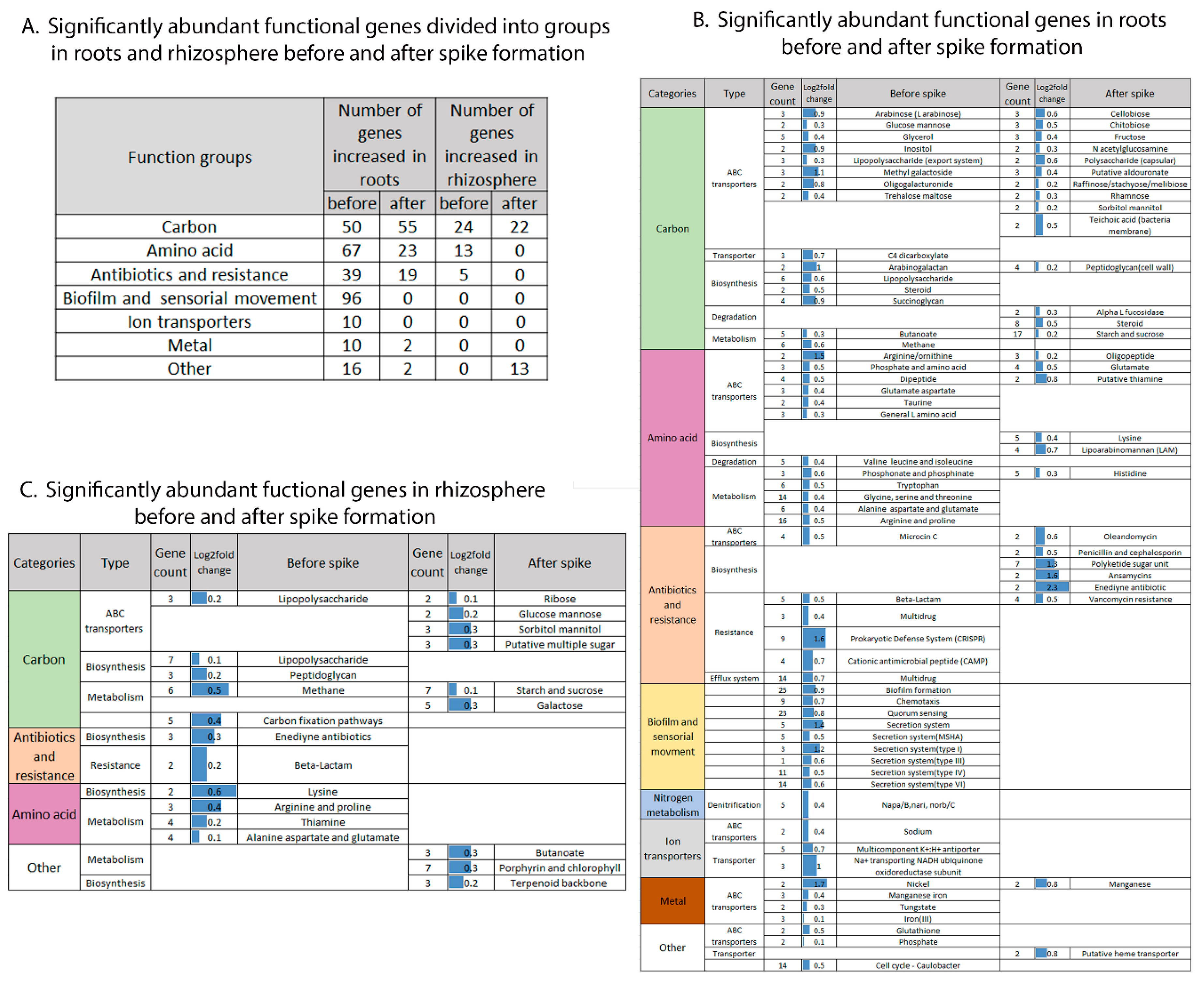
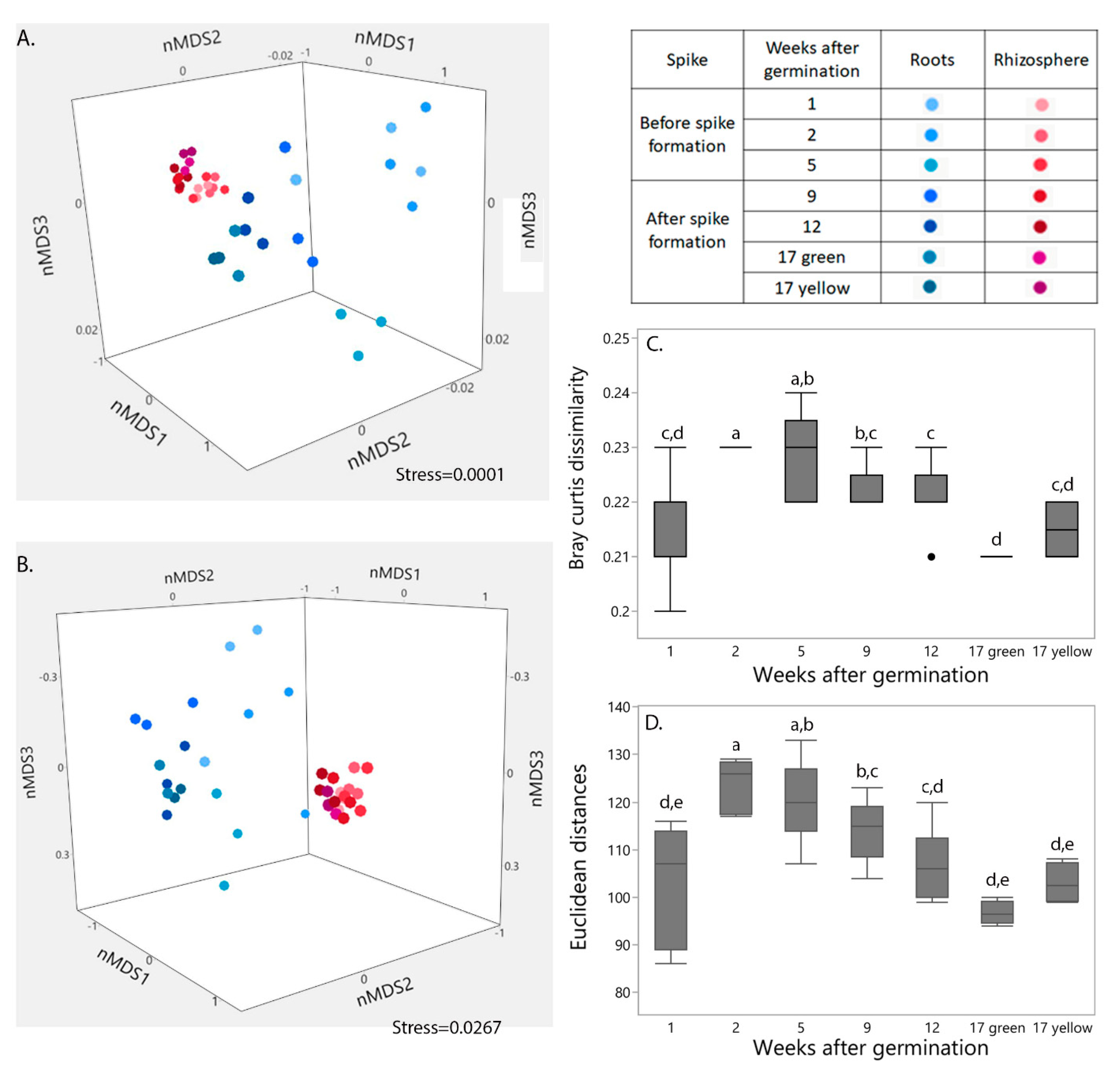
Root selection of their associated microbiome composition and activities is determined by the plant’s developmental stage and distance from the root. Total gene abundance, structure and functions of root-associated and rhizospheric microbiomes were studied throughout wheat growth season under field conditions. On the root surface, abundance of the well-known wheat colonizers Proteobacteria and Actinobacteria decreased and increased, respectively, during spike formation, whereas abundance of Bacteroidetes was independent of spike formation. Metagenomic analysis combined with functional co-occurrence networks revealed a significant impact of plant developmental stage on its microbiome during the transition from vegetative growth to spike formation. For example, gene functions related to biofilm and sensorial movement, antibiotic production and resistance and carbons and amino acids and their transporters. Genes associated with these functions were also in higher abundance in root vs. the rhizosphere microbiome. We propose that abundance of transporter-encoding genes related to carbon and amino acid, may mirror the availability and utilization of root exudates. Genes related to antibiotic resistance mechanisms were abundant during vegetative growth, while after spike formation, genes related to the biosynthesis of various antibiotics were enriched. This observation suggests that during root colonization and biofilm formation, bacteria cope with competitor’s antibiotics, whereas in the mature biofilm stage, they invest in inhibiting new colonizers. Additionally, there is higher abundance of genes related to denitrification in rhizosphere compared to root-associated microbiome during wheat growth, possibly due to competition with the plant over nitrogen in the root vicinity. We demonstrated functional and phylogenetic division in wheat root zone microbiome in both time and space: pre- and post-spike formation, and root-associated vs. rhizospheric niches. These findings shed light on the dynamics of plant–microbe and microbe–microbe interactions in the developing root zone.
Keywords: wheat; spike; root-associated; rhizosphere; microbiome; metagenome wheat; spike; root-associated; rhizosphere; microbiome; metagenome