Combination Therapy with STAT3 Inhibitor Enhances SERCA2a-Induced BMPR2 Expression and Inhibits Pulmonary Arterial Hypertension

 ,
,  , , , ,
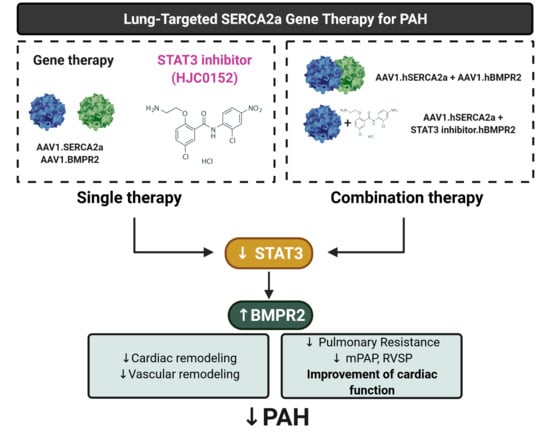
Abstract
Share and Cite
Bisserier, M.; Katz, M.G.; Bueno-Beti, C.; Brojakowska, A.; Zhang, S.; Gubara, S.; Kohlbrenner, E.; Fazal, S.; Fargnoli, A.; Dorfmuller, P.; et al. Combination Therapy with STAT3 Inhibitor Enhances SERCA2a-Induced BMPR2 Expression and Inhibits Pulmonary Arterial Hypertension. Int. J. Mol. Sci. 2021, 22, 9105. https://doi.org/10.3390/ijms22179105
Bisserier M, Katz MG, Bueno-Beti C, Brojakowska A, Zhang S, Gubara S, Kohlbrenner E, Fazal S, Fargnoli A, Dorfmuller P, et al. Combination Therapy with STAT3 Inhibitor Enhances SERCA2a-Induced BMPR2 Expression and Inhibits Pulmonary Arterial Hypertension. International Journal of Molecular Sciences. 2021; 22(17):9105. https://doi.org/10.3390/ijms22179105
Chicago/Turabian StyleBisserier, Malik, Michael G. Katz, Carlos Bueno-Beti, Agnieszka Brojakowska, Shihong Zhang, Sarah Gubara, Erik Kohlbrenner, Shahood Fazal, Anthony Fargnoli, Peter Dorfmuller, and et al. 2021. "Combination Therapy with STAT3 Inhibitor Enhances SERCA2a-Induced BMPR2 Expression and Inhibits Pulmonary Arterial Hypertension" International Journal of Molecular Sciences 22, no. 17: 9105. https://doi.org/10.3390/ijms22179105
APA StyleBisserier, M., Katz, M. G., Bueno-Beti, C., Brojakowska, A., Zhang, S., Gubara, S., Kohlbrenner, E., Fazal, S., Fargnoli, A., Dorfmuller, P., Humbert, M., Hata, A., Goukassian, D. A., Sassi, Y., & Hadri, L. (2021). Combination Therapy with STAT3 Inhibitor Enhances SERCA2a-Induced BMPR2 Expression and Inhibits Pulmonary Arterial Hypertension. International Journal of Molecular Sciences, 22(17), 9105. https://doi.org/10.3390/ijms22179105