Article

Biocompatibility and Biological Performance Evaluation of Additive-Manufactured Bioabsorbable Iron-Based Porous Suture Anchor in a Rabbit Model

1
Internal Ph.D. Program for Cell Therapy and Regeneration Medicine, College of Medicine, Taipei Medical University, Taipei 11031, Taiwan
2
Department of Orthopedic Surgery, Kaohsiung Medical University Hospital, Kaohsiung Medical University, Kaohsiung 80756, Taiwan
3
Department of Orthopedics, School of Medicine, College of Medicine, Taipei Medical University, Taipei 11031, Taiwan
4
Department of Orthopedics, Shuang Ho Hospital, Taipei Medical University, No. 291, Zhongzheng Rd., Zhong He Dist., New Taipei City 23561, Taiwan
5
Research Center of Biomedical Device, Graduate Institute of Biomedical Optomechatronics, College of Biomedical Engineering, Taipei Medical University, Taipei 11301, Taiwan
6
Department of Biochemistry and Molecular Cell Biology, School of Medicine, College of Medicine, Taipei Medical University, Taipei 11031, Taiwan
7
TMU Research Center of Cell Therapy and Regeneration Medicine, Taipei Medical University, Taipei 11031, Taiwan
8
Biomedical Technology and Device Research Laboratories, Industrial Technology Research Institute, Chutung, Hsinchu 310401, Taiwan
9
Material and Chemical Research Laboratories, Industrial Technology Research Institute, Hsinchu 31040, Taiwan
10
Department of Orthopaedics, Park One International Hospital, Kaohsiung 813322, Taiwan
11
Ph.D. Program in Biomedical Engineering, College of Medicine, Kaohsiung Medical University, Kaohsiung 807378, Taiwan
12
Regeneration Medicine and Cell Therapy Research Center, Kaohsiung Medical University, Kaohsiung 807378, Taiwan
13
Department of Orthopedics, China Medical University, Taichung 40202, Taiwan
14
School of Medicine, College of Medicine, China Medical University, Taichung 40202, Taiwan
*
Author to whom correspondence should be addressed.
These authors contributed equally.
Int. J. Mol. Sci. 2021, 22(14), 7368; https://doi.org/10.3390/ijms22147368
Submission received: 17 May 2021 / Revised: 23 June 2021 / Accepted: 5 July 2021 / Published: 8 July 2021
(This article belongs to the Special Issue 3D Printing and Biomaterials for Biological and Medical Application)

Abstract

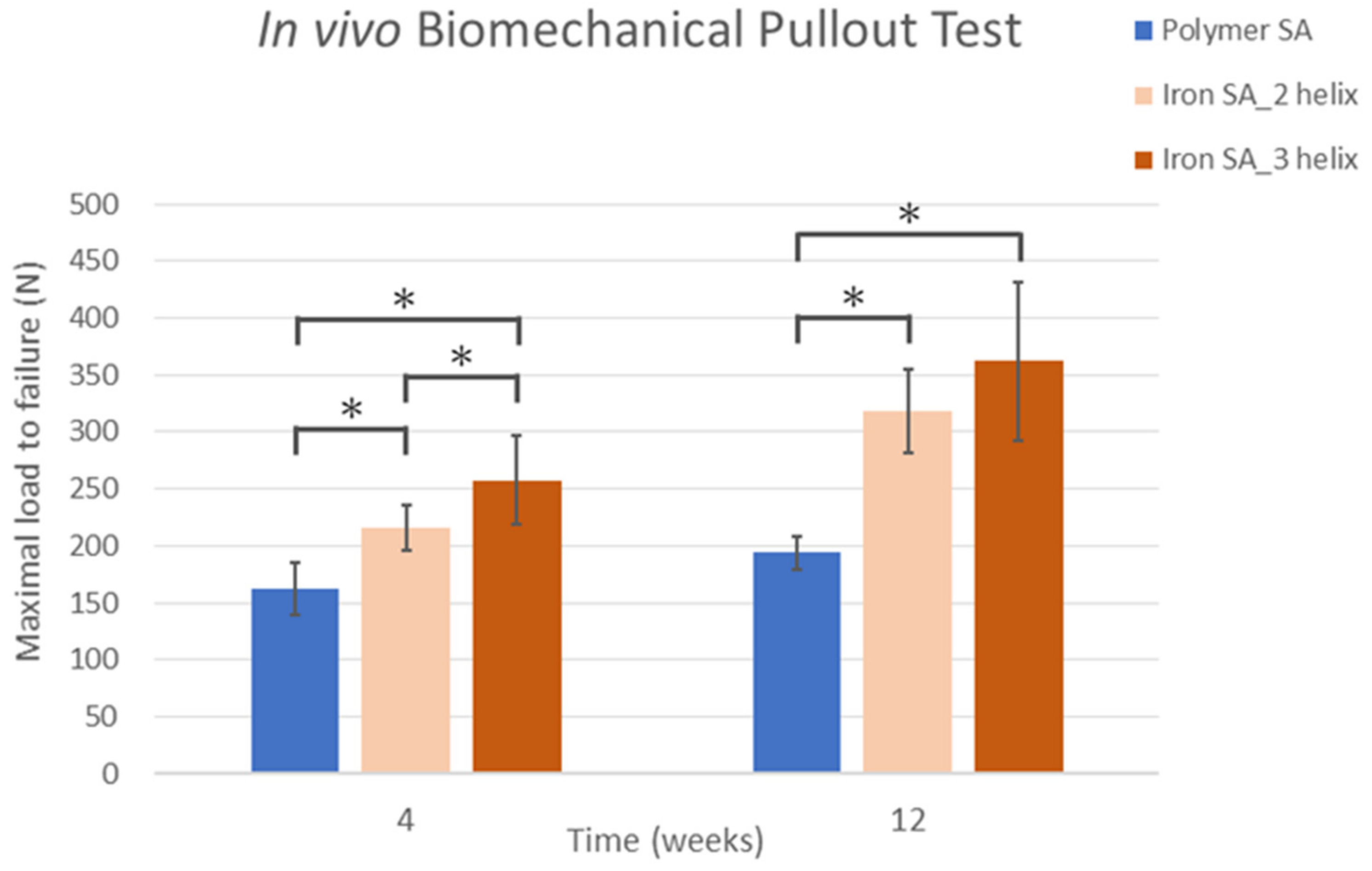
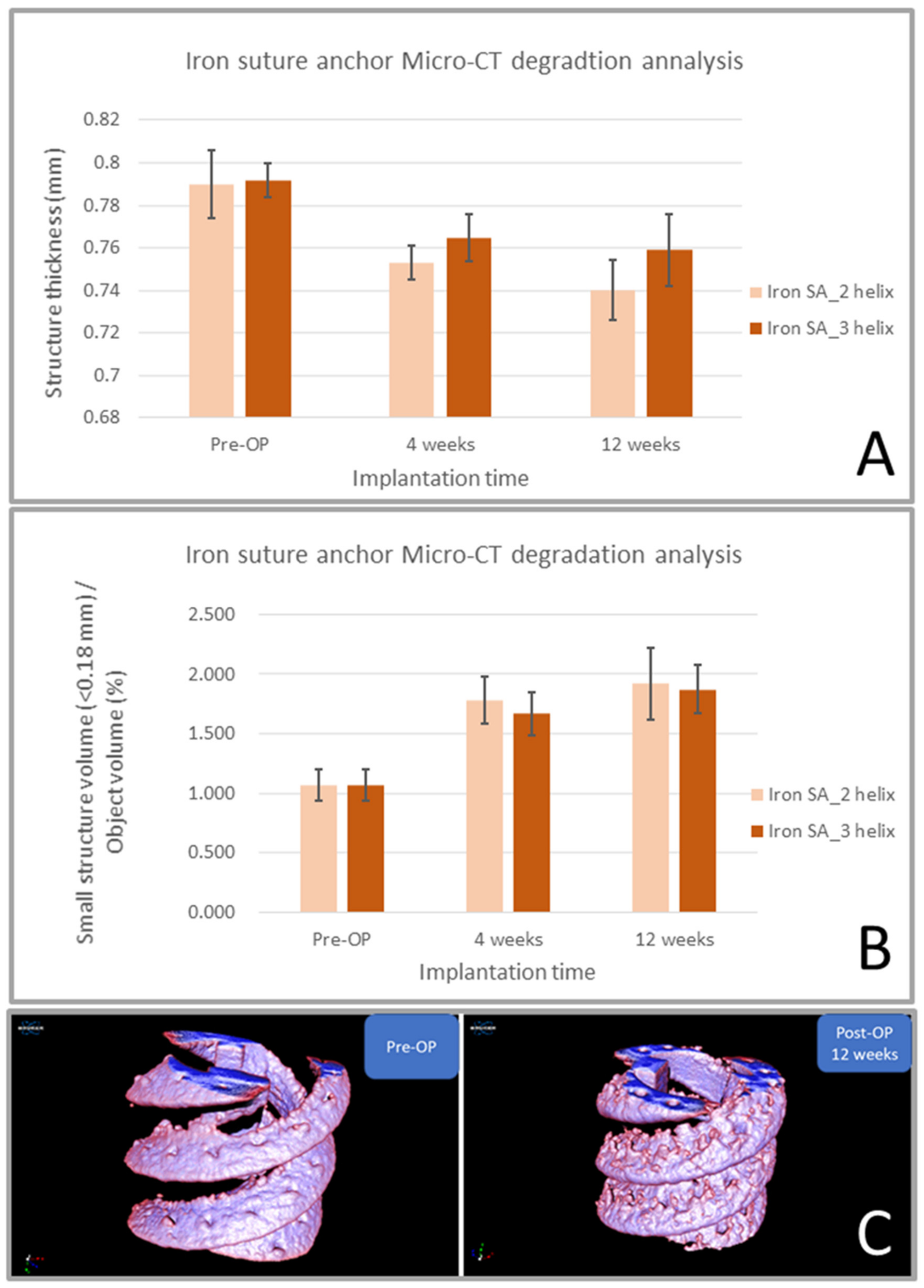
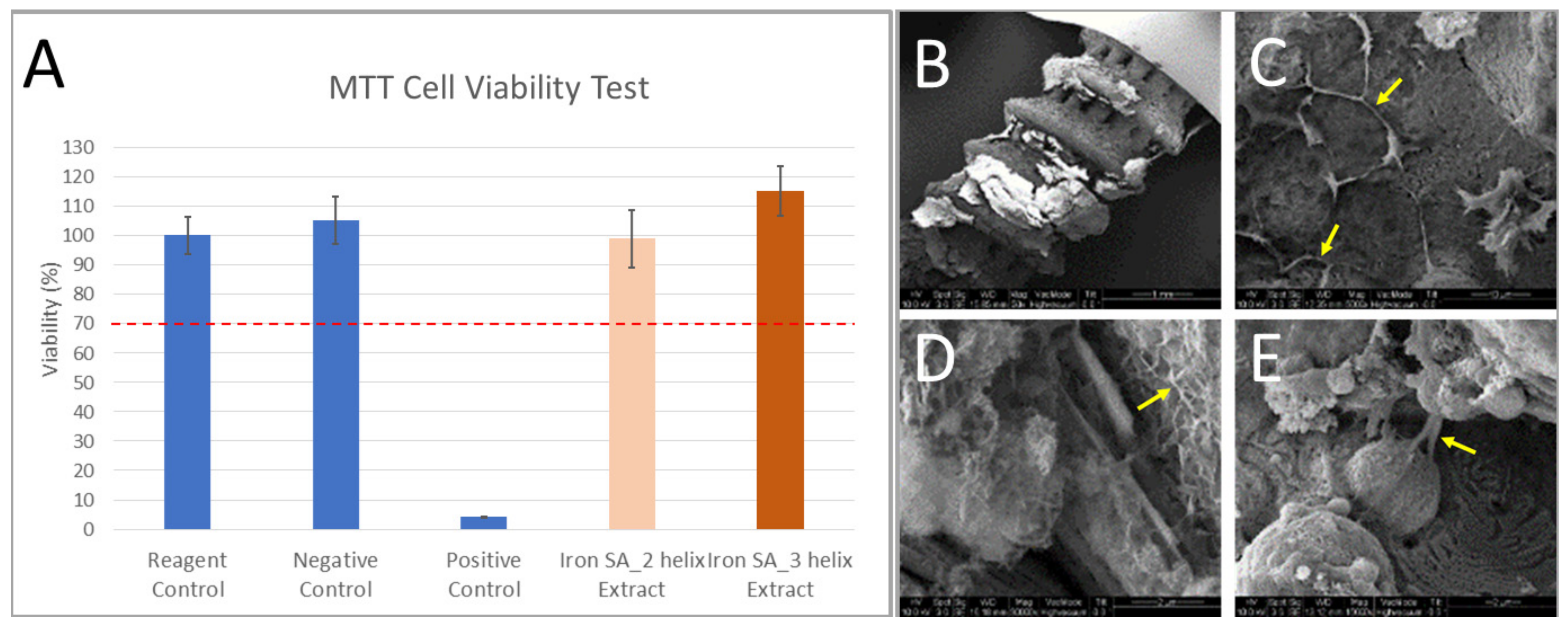
This study evaluated the biocompatibility and biological performance of novel additive-manufactured bioabsorbable iron-based porous suture anchors (iron_SAs). Two types of bioabsorbable iron_SAs, with double- and triple-helical structures (iron_SA_2_helix and iron_SA_3_helix, respectively), were compared with the synthetic polymer-based bioabsorbable suture anchor (polymer_SAs). An in vitro mechanical test, MTT assay, and scanning electron microscope (SEM) analysis were performed. An in vivo animal study was also performed. The three types of suture anchors were randomly implanted in the outer cortex of the lateral femoral condyle. The ultimate in vitro pullout strength of the iron_SA_3_helix group was significantly higher than the iron_SA_2_helix and polymer_SA groups. The MTT assay findings demonstrated no significant cytotoxicity, and the SEM analysis showed cells attachment on implant surface. The ultimate failure load of the iron_SA_3_helix group was significantly higher than that of the polymer_SA group. The micro-CT analysis indicated the iron_SA_3_helix group showed a higher bone volume fraction (BV/TV) after surgery. Moreover, both iron SAs underwent degradation with time. Iron_SAs with triple-helical threads and a porous structure demonstrated better mechanical strength and high biocompatibility after short-term implantation. The combined advantages of the mechanical superiority of the iron metal and the possibility of absorption after implantation make the iron_SA a suitable candidate for further development.
Keywords: additive manufacturing (3D printing); bioabsorbable; iron-based; suture anchor additive manufacturing (3D printing); bioabsorbable; iron-based; suture anchor