Review

Fortifying Horticultural Crops with Essential Amino Acids: A Review

1
College of Horticulture, South China Agricultural University, Guangzhou 510642, China
2
Department of Plant Science, Weizmann Institute of Science, Rehovot 76100, Israel
*
Authors to whom correspondence should be addressed.
Int. J. Mol. Sci. 2017, 18(6), 1306; https://doi.org/10.3390/ijms18061306
Submission received: 17 May 2017 / Revised: 13 June 2017 / Accepted: 14 June 2017 / Published: 19 June 2017
(This article belongs to the Section Molecular Plant Sciences)

Abstract

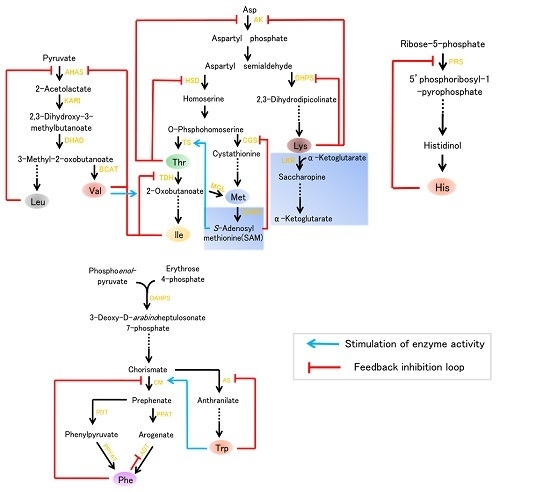
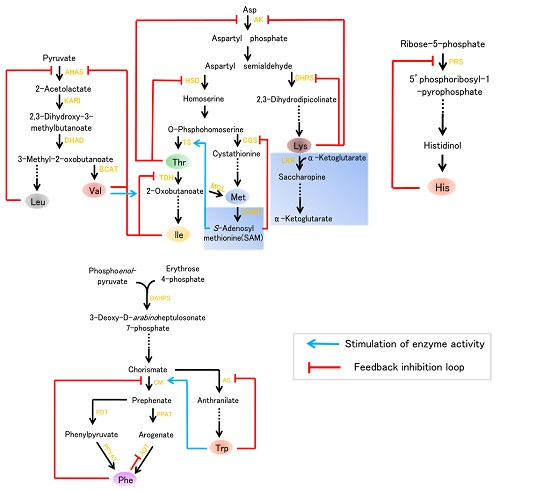
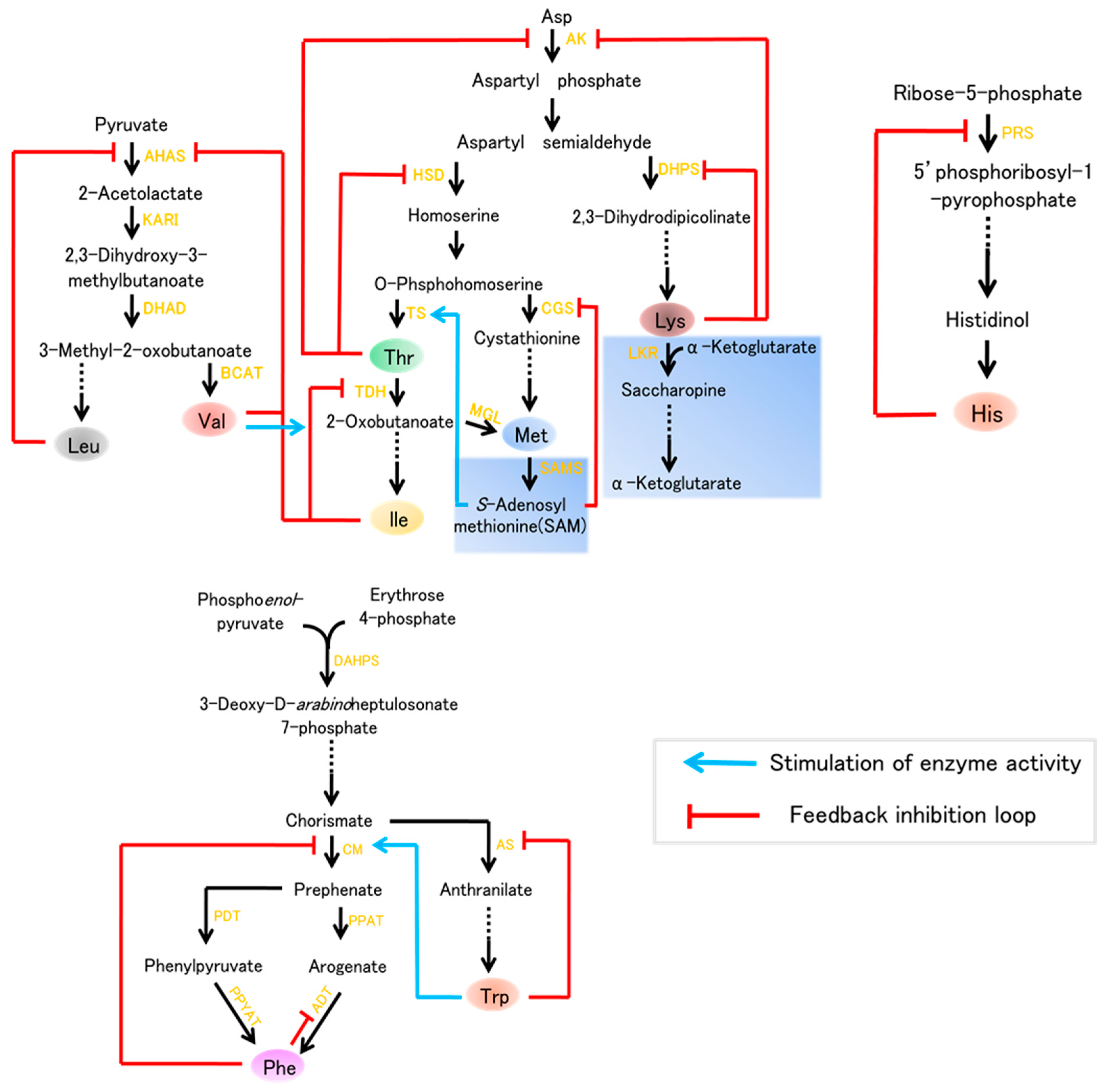
To feed the world′s growing population, increasing the yield of crops is not the only important factor, improving crop quality is also important, and it presents a significant challenge. Among the important crops, horticultural crops (particularly fruits and vegetables) provide numerous health compounds, such as vitamins, antioxidants, and amino acids. Essential amino acids are those that cannot be produced by the organism and, therefore, must be obtained from diet, particularly from meat, eggs, and milk, as well as a variety of plants. Extensive efforts have been devoted to increasing the levels of essential amino acids in plants. Yet, these efforts have been met with very little success due to the limited genetic resources for plant breeding and because high essential amino acid content is generally accompanied by limited plant growth. With a deep understanding of the biosynthetic pathways of essential amino acids and their interactions with the regulatory networks in plants, it should be possible to use genetic engineering to improve the essential amino acid content of horticultural plants, rendering these plants more nutritionally favorable crops. In the present report, we describe the recent advances in the enhancement of essential amino acids in horticultural plants and possible future directions towards their bio-fortification.
Keywords: essential amino acid; horticultural crops; nutritional quality; lysine; metabolic engineering essential amino acid; horticultural crops; nutritional quality; lysine; metabolic engineering
Graphical Abstract