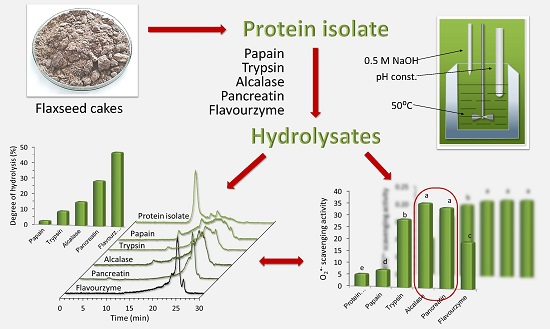
Use of Different Proteases to Obtain Flaxseed Protein Hydrolysates with Antioxidant Activity

Abstract
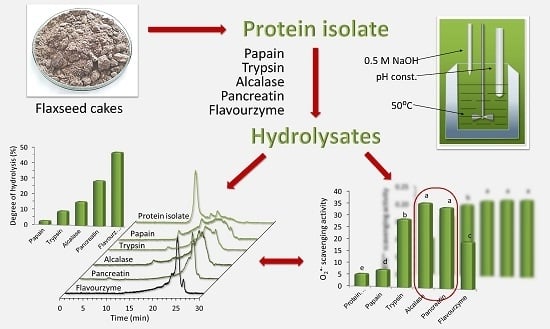
:
1. Introduction
2. Results and Discussion
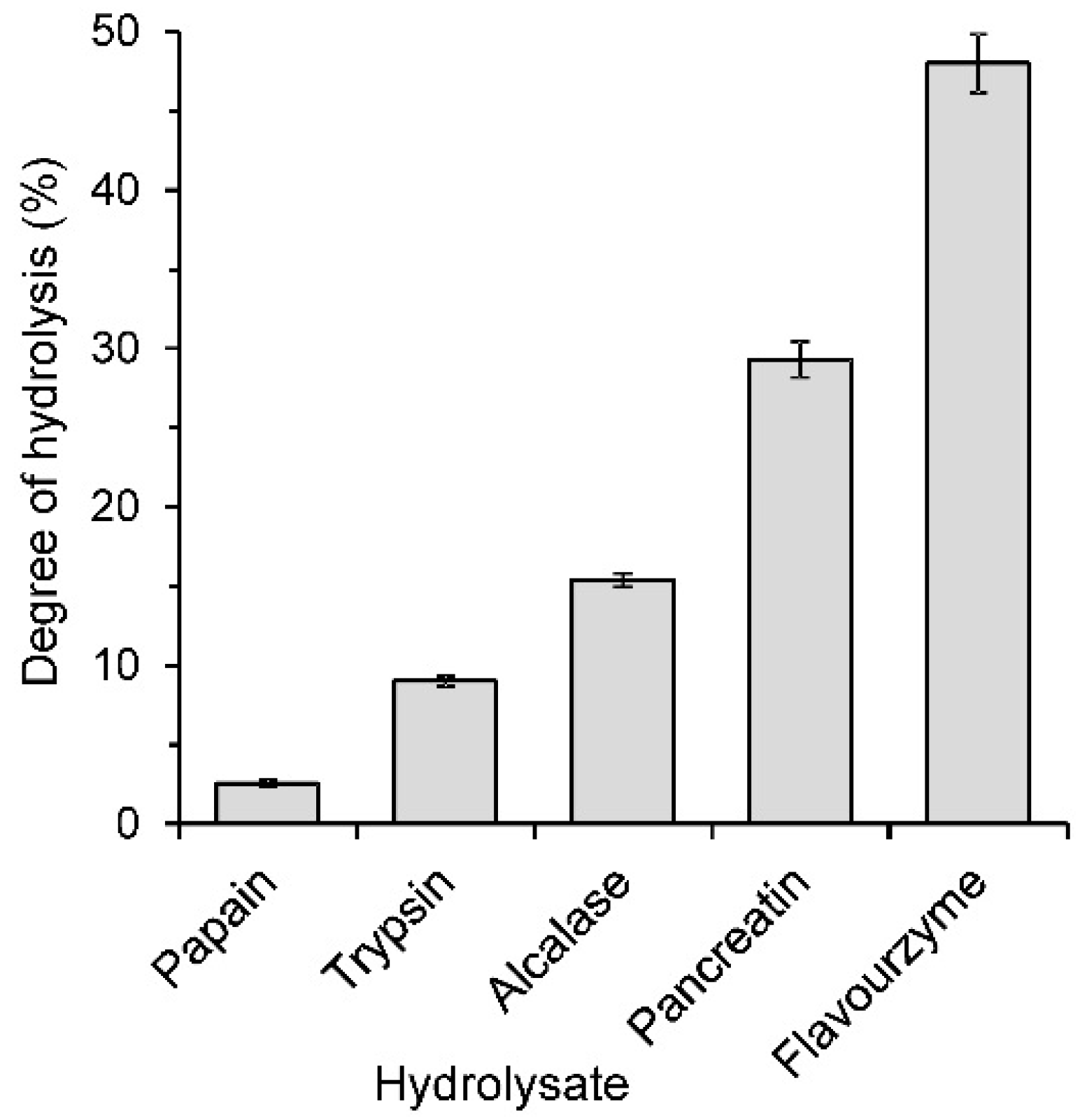
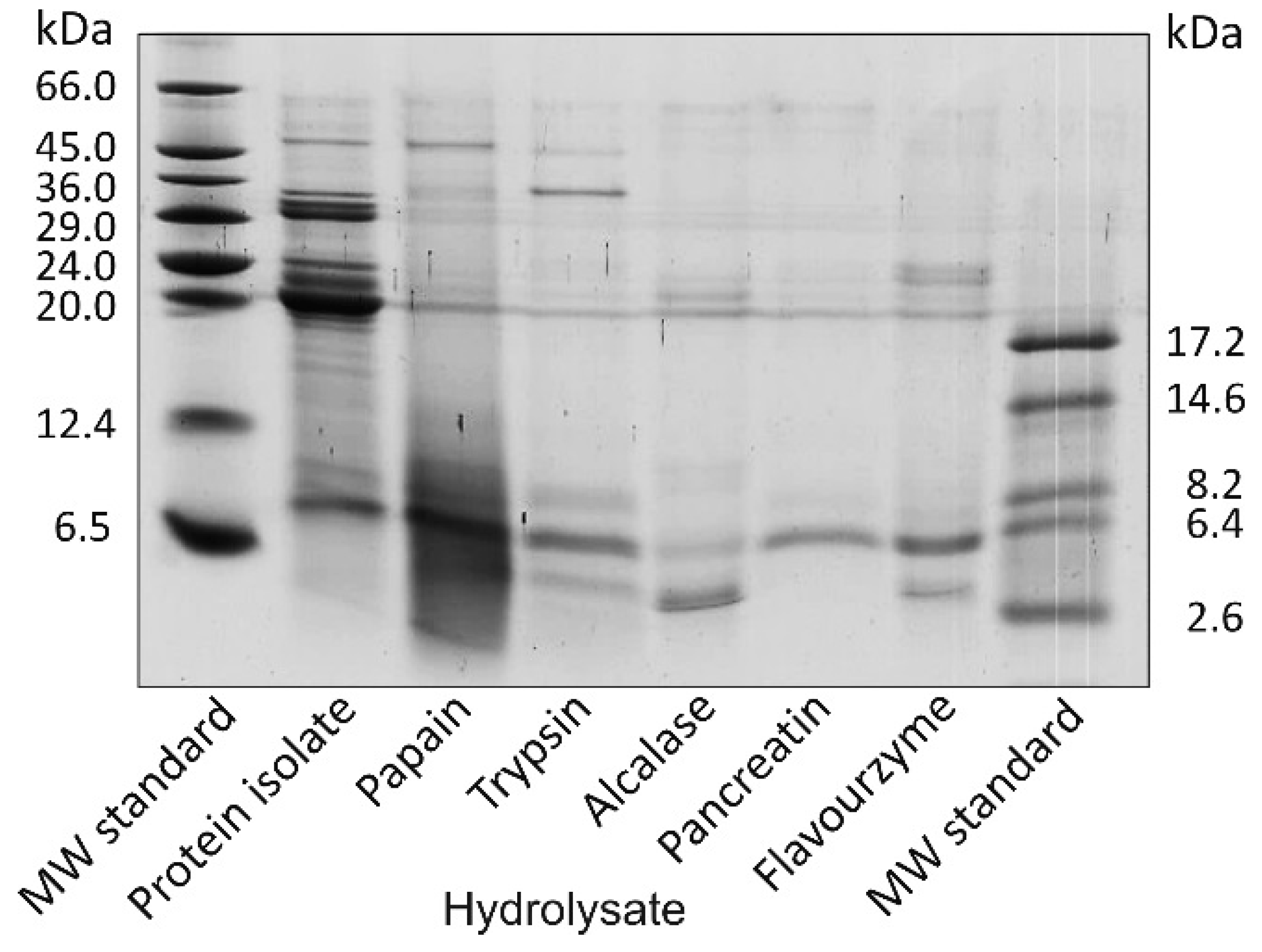
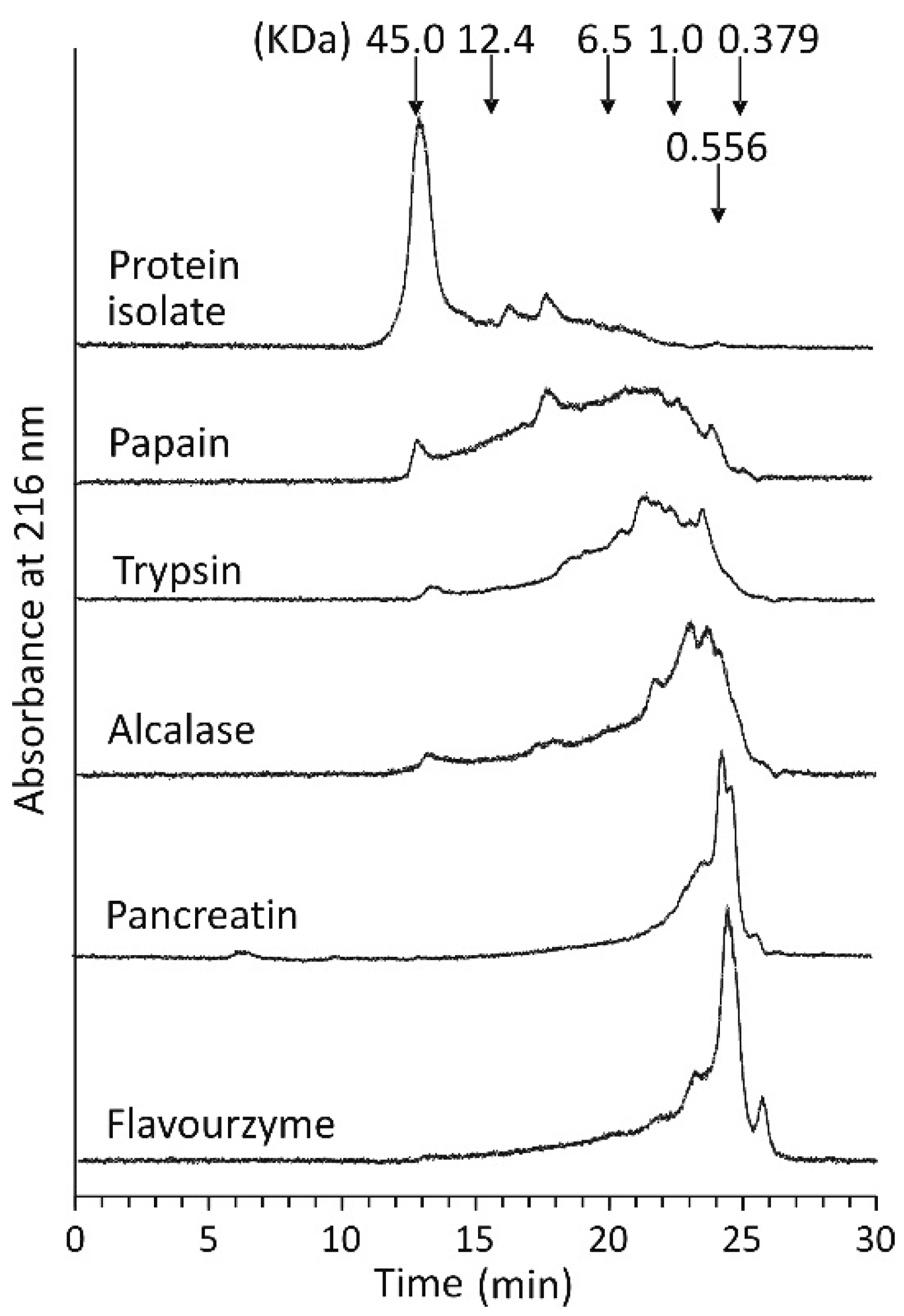
2.1. Characteristic of Flaxseed Protein Hydrolysates
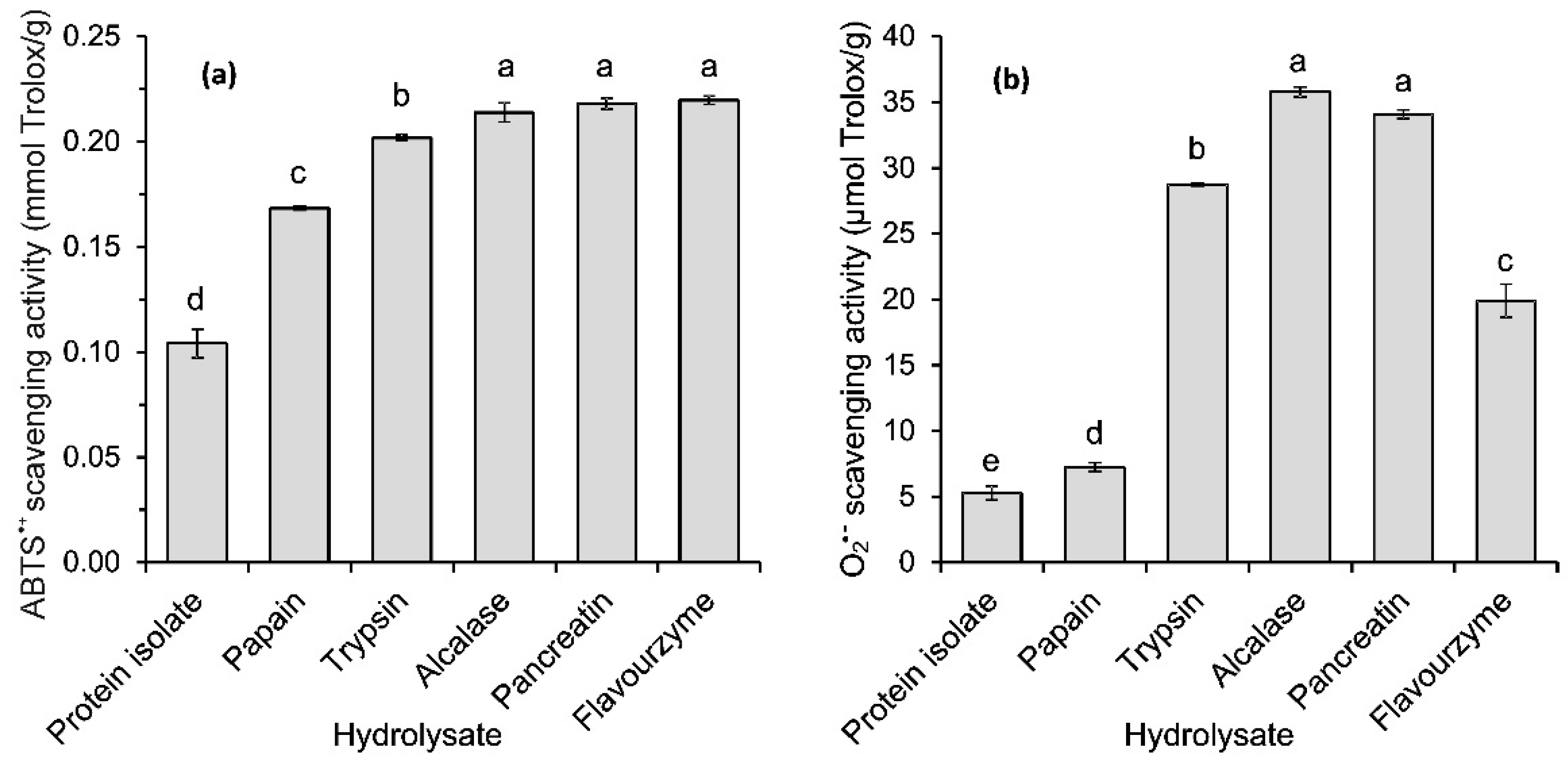
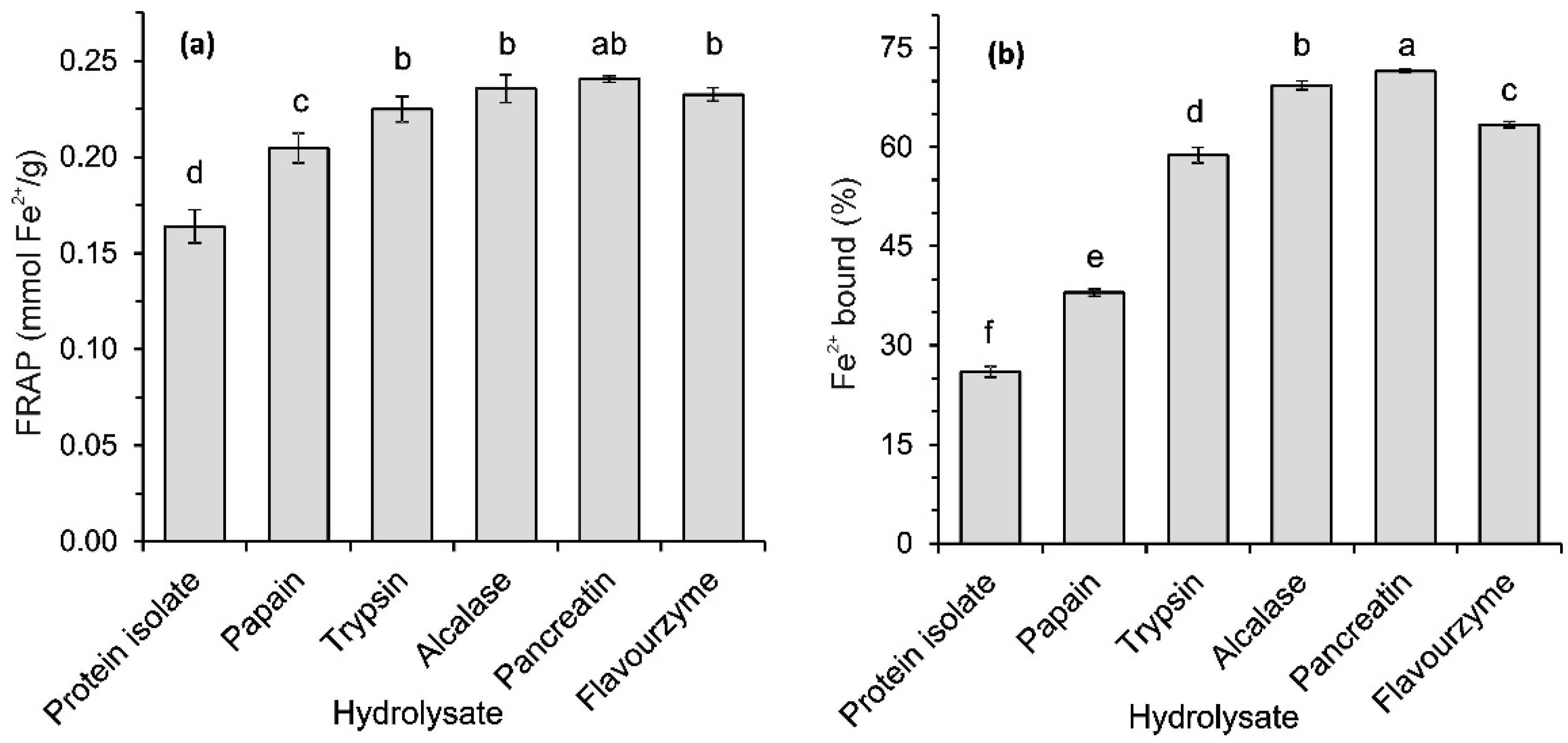
2.2. Antioxidant Activity of Flaxseed Protein Hydrolysates
3. Materials and Methods
3.1. Materials and Reagents
3.2. Protein Isolation
3.3. Protein Hydrolysis
3.4. Characteristics of Hydrolysates
3.4.1. DH Determination
3.4.2. Tricine-SDS-PAGE Separation
3.4.3. MW Distribution by SE-HPLC
3.5. Antioxidant Activity Assays
3.5.1. Antiradical Activity towards ABTS•+
3.5.2. PCL-ACL Assay
3.5.3. FRAP Assay
3.5.4. Fe2+ Chelating Ability
3.6. Statistical Analysis
4. Conclusions
Acknowledgments
Author Contributions
Conflicts of Interest
Abbreviations
| DH | degree of hydrolysis |
| MW | molecular weight |
| SDS-PAGE | sodium dodecyl sulfate-polyacrylamide gel electrophoresis |
| SE-HPLC | size exclusion high-performance liquid chromatography |
| ABTS | [2,2′-azino-bis-(3-ethylbenzothiazoline-6-sulfonic acid)] diammonium salt |
| PCL | photochemiluminescence |
| ACL | antioxidant capacity of lipid-soluble substance |
| FRAP | ferric reducing antioxidant power |
| BHT | butylated hydroxytoluene |
| BHA | butylated hydroxyanisole |
| RP-HPLC | reversed phase high-performance liquid chromatography |
| DPPH | 2,2-diphenyl-1-picrylhydrazyl |
| TPTZ | 2,4,6-Tris(2-pyridyl)-S-triazine |
| EC | Enzyme Commission |
| OPA | o-phthaldialdehyde |
| AU | Anson unit |
References
- StAngelo, A.J. Lipid oxidation in foods. Crit. Rev. Food Sci. 1996, 36, 175–224. [Google Scholar] [CrossRef] [PubMed]
- Pihlanto, A. Antioxidative peptides derived from milk proteins. Int. Dairy J. 2006, 16, 1306–1314. [Google Scholar] [CrossRef]
- Fang, Y.Z.; Yang, S.; Wu, G.Y. Free radicals, antioxidants, and nutrition. Nutrition 2002, 18, 872–879. [Google Scholar] [CrossRef]
- Udenigwe, C.C.; Aluko, R.E. Food protein-derived bioactive peptides: Production, processing, and potential health benefits. J. Food Sci. 2012, 77, R11–R24. [Google Scholar] [CrossRef] [PubMed]
- Garcia, M.C.; Puchalska, P.; Esteve, C.; Marina, M.L. Vegetable foods: A cheap source of proteins and peptides with antihypertensive, antioxidant, and other less occurrence bioactivities. Talanta 2013, 106, 328–349. [Google Scholar] [CrossRef] [PubMed]
- Valdez-Ortiz, A.; Fuentes-Gutiérrez, C.I.; Germán-Báez, L.J.; Gutiérrez-Dorado, R.; Medina-Godoy, S. Protein hydrolysates obtained from Azufrado (sulphur yellow) beans (Phaseolus vulgaris): Nutritional, ACE-inhibitory and antioxidative characterization. LWT-Food Sci. Technol. 2012, 46, 91–96. [Google Scholar] [CrossRef]
- Alashi, A.M.; Blanchard, C.L.; Mailer, R.J.; Agboola, S.O.; Mawson, A.J.; He, R.; Girgih, A.; Aluko, R.E. Antioxidant properties of Australian canola meal protein hydrolysates. Food Chem. 2014, 146, 500–506. [Google Scholar] [CrossRef] [PubMed]
- Popović, L.; Peričin, D.; Vaštag, Z.; Popović, S.; Krimer, V.; Torbica, A. Antioxidative and functional properties of pumpkin oil cake globulin hydrolysates. J. Am. Oil Chem. Soc. 2013, 90, 1157–1165. [Google Scholar] [CrossRef]
- Silva, F.G.D.; O’Callagahan, Y.; O’Brien, N.M.; Netto, F.M. Antioxidant capacity of flaxseed products: The effect of in vitro digestion. Plant Food Hum. Nutr. 2013, 68, 24–30. [Google Scholar] [CrossRef] [PubMed]
- Karamać, M.; Kulczyk, A.; Sulewska, K. Antioxidant activity of hydrolysates prepared from flaxseed cake proteins using pancreatin. Pol. J. Food Nutr. Sci. 2014, 64, 227–233. [Google Scholar] [CrossRef]
- Karamać, M.; Amarowicz, R.; Kostyra, H. Effect of temperature and enzyme/substrate ratio on the hydrolysis of pea protein isolates by trypsin. Czech J. Food Sci. 2002, 20, 1–6. [Google Scholar]
- Marambe, P.W.M.L.H.K.; Shand, P.J.; Wanasundara, J.P.D. An in vitro investigation of selected biological activities of hydrolysed flaxseed (Linum usitatissimum L.) proteins. J. Am. Oil Chem. Soc. 2008, 85, 1155–1164. [Google Scholar] [CrossRef]
- Tang, X.Y.; He, Z.Y.; Dai, Y.F.; Xiong, Y.L.L.; Xie, M.Y.; Chen, J. Peptide fractionation and free radical scavenging activity of zein hydrolysate. J. Agric. Food Chem. 2010, 58, 587–593. [Google Scholar] [CrossRef] [PubMed]
- Udenigwe, C.C.; Aluko, R.E. Chemometric analysis of the amino acid requirements of antioxidant food protein hydrolysates. Int. J. Mol. Sci. 2011, 12, 3148–3161. [Google Scholar] [CrossRef] [PubMed]
- Zheng, L.; Ren, J.; Su, G.; Yang, B.; Zhao, M. Comparison of in vitro digestion characteristics and antioxidant activity of hot- and cold-pressed peanut meals. Food Chem. 2013, 141, 4246–4252. [Google Scholar] [CrossRef] [PubMed]
- Pownall, T.L.; Udenigwe, C.C.; Aluko, R.E. Amino acid composition and antioxidant properties of pea seed (Pisum sativum L.) enzymatic protein hydrolysate fractions. J. Agric. Food Chem. 2010, 58, 4712–4718. [Google Scholar] [CrossRef] [PubMed]
- Li, Y.H.; Jiang, B.; Zhang, T.; Mu, W.M.; Liu, J. Antioxidant and free radical-scavenging activities of chickpea protein hydrolysate (CPH). Food Chem. 2008, 106, 444–450. [Google Scholar] [CrossRef]
- Hwang, C.F.; Chen, Y.A.; Luo, C.; Chiang, W.D. Antioxidant and antibacterial activities of peptide fractions from flaxseed protein hydrolysed by protease from Bacillus altitudinis HK02. Int. J. Food Sci. Technol. 2016, 51, 681–689. [Google Scholar] [CrossRef]
- Krause, J.P.; Schultz, M.; Dudek, S. Effect of extraction conditions on composition, surface activity and rheological properties of protein isolates from flaxseed (Linum usitativissimum L.). J. Sci. Food Agric. 2002, 82, 970–976. [Google Scholar] [CrossRef]
- Oomah, B.D.; Mazza, G. Flaxseed proteins—A review. Food Chem. 1993, 48, 109–114. [Google Scholar] [CrossRef]
- Udenigwe, C.C.; Lu, Y.L.; Han, C.H.; Hou, W.C.; Aluko, R.E. Flaxseed protein-derived peptide fractions: Antioxidant properties and inhibition of lipopolysaccharide-induced nitric oxide production in murine macrophages. Food Chem. 2009, 116, 277–284. [Google Scholar] [CrossRef]
- Udenigwe, C.C.; Aluko, R.E. Antioxidant and angiotensin converting enzyme-inhibitory properties of a flaxseed protein-derived high Fischer ratio peptide mixture. J. Agric. Food Chem. 2010, 58, 4762–4768. [Google Scholar] [CrossRef] [PubMed]
- Pihlanto, A.; Johansson, T.; Mäkinen, S. Inhibition of angiotensin I-converting enzyme and lipid peroxidation by fermented rapeseed and flaxseed meal. Eng. Life Sci. 2012, 12, 450–456. [Google Scholar] [CrossRef]
- Marambe, H.K.; Shand, P.J.; Wanasundara, J.P.D. Release of angiotensin I-converting enzyme inhibitory peptides from flaxseed (Linum usitatissimum L.) protein under simulated gastrointestinal digestion. J. Agric. Food Chem. 2011, 59, 9596–9604. [Google Scholar] [CrossRef] [PubMed]
- Zheng, L.; Zhao, Y.J.; Xiao, C.Q.; Sun-Waterhouse, D.; Zhao, M.M.; Su, G.W. Mechanism of the discrepancy in the enzymatic hydrolysis efficiency between defatted peanut flour and peanut protein isolate by Flavorzyme. Food Chem. 2015, 168, 100–106. [Google Scholar] [CrossRef] [PubMed]
- Meinlschmidt, P.; Sussmann, D.; Schweiggert-Weisz, U.; Eisner, P. Enzymatic treatment of soy protein isolates: Effects on the potential allergenicity, technofunctionality, and sensory properties. Food Sci. Nutr. 2016, 4, 11–23. [Google Scholar] [CrossRef] [PubMed]
- Prior, R.L.; Wu, X.L.; Schaich, K. Standardized methods for the determination of antioxidant capacity and phenolics in foods and dietary supplements. J. Agric. Food Chem. 2005, 53, 4290–4302. [Google Scholar] [CrossRef] [PubMed]
- Dev, D.K.; Quensel, E. Preparation and functional-properties of linseed protein products containing differing levels of mucilage. J. Food Sci. 1988, 53, 1834–1837. [Google Scholar] [CrossRef]
- Adler-Nissen, J. Enzymatic Hydrolysis of Food Proteins, 1st ed.; Elsevier Applied Science: London, UK, 1986; pp. 12–15. [Google Scholar]
- Panasiuk, R.; Amarowicz, R.; Kostyra, H.; Sijtsma, L. Determination of α-amino nitrogen in pea protein hydrolysates: A comparison of three analytical methods. Food Chem. 1998, 62, 363–367. [Google Scholar] [CrossRef]
- Association of Official Analytical Chemists (AOAC). Official Methods of Analysis, 15th ed.; AOAC: Arlington, VA, USA, 1990. [Google Scholar]
- Schägger, H.; von Jagow, G.V. Tricine sodium dodecyl sulfate-polyacrylamide gel electrophoresis for the separation of proteins in the range from 1 to 100 kDa. Anal. Biochem. 1987, 166, 368–379. [Google Scholar] [CrossRef]
- Re, R.; Pellegrini, N.; Proteggente, A.; Pannala, A.; Yang, M.; Rice-Evans, C. Antioxidant activity applying an improved ABTS radical cation decolorization assay. Free Radic. Biol. Med. 1999, 26, 1231–1237. [Google Scholar] [CrossRef]
- Popov, I.; Lewin, G. Antioxidative homeostasis: characterization by means of chemiluminescent technique. Meth. Enzymol. 1999, 300, 437–456. [Google Scholar] [PubMed]
- Benzie, I.F.F.; Strain, J.J. The ferric reducing ability of plasma (FRAP) as a measure of “antioxidant power”: The FRAP assay. Anal. Biochem. 1996, 239, 70–76. [Google Scholar] [CrossRef] [PubMed]
- Karamać, M.; Pegg, R.B. Limitations of the tetramethylmurexide assay for investigating the Fe(II) chelation activity of phenolic compounds. J. Agric. Food Chem. 2009, 57, 6425–6431. [Google Scholar] [CrossRef] [PubMed]
© 2016 by the authors; licensee MDPI, Basel, Switzerland. This article is an open access article distributed under the terms and conditions of the Creative Commons Attribution (CC-BY) license (http://creativecommons.org/licenses/by/4.0/).
Share and Cite
Karamać, M.; Kosińska-Cagnazzo, A.; Kulczyk, A. Use of Different Proteases to Obtain Flaxseed Protein Hydrolysates with Antioxidant Activity. Int. J. Mol. Sci. 2016, 17, 1027. https://doi.org/10.3390/ijms17071027
Karamać M, Kosińska-Cagnazzo A, Kulczyk A. Use of Different Proteases to Obtain Flaxseed Protein Hydrolysates with Antioxidant Activity. International Journal of Molecular Sciences. 2016; 17(7):1027. https://doi.org/10.3390/ijms17071027
Chicago/Turabian StyleKaramać, Magdalena, Agnieszka Kosińska-Cagnazzo, and Anna Kulczyk. 2016. "Use of Different Proteases to Obtain Flaxseed Protein Hydrolysates with Antioxidant Activity" International Journal of Molecular Sciences 17, no. 7: 1027. https://doi.org/10.3390/ijms17071027
APA StyleKaramać, M., Kosińska-Cagnazzo, A., & Kulczyk, A. (2016). Use of Different Proteases to Obtain Flaxseed Protein Hydrolysates with Antioxidant Activity. International Journal of Molecular Sciences, 17(7), 1027. https://doi.org/10.3390/ijms17071027