Macromolecular Model Construction and Pore Structure Distribution of Coals with Different Ranks


Abstract
1. Introduction
2. Results
2.1. Basic Coal Quality Analysis
2.2. FTIR-Based Analysis of Functional Groups
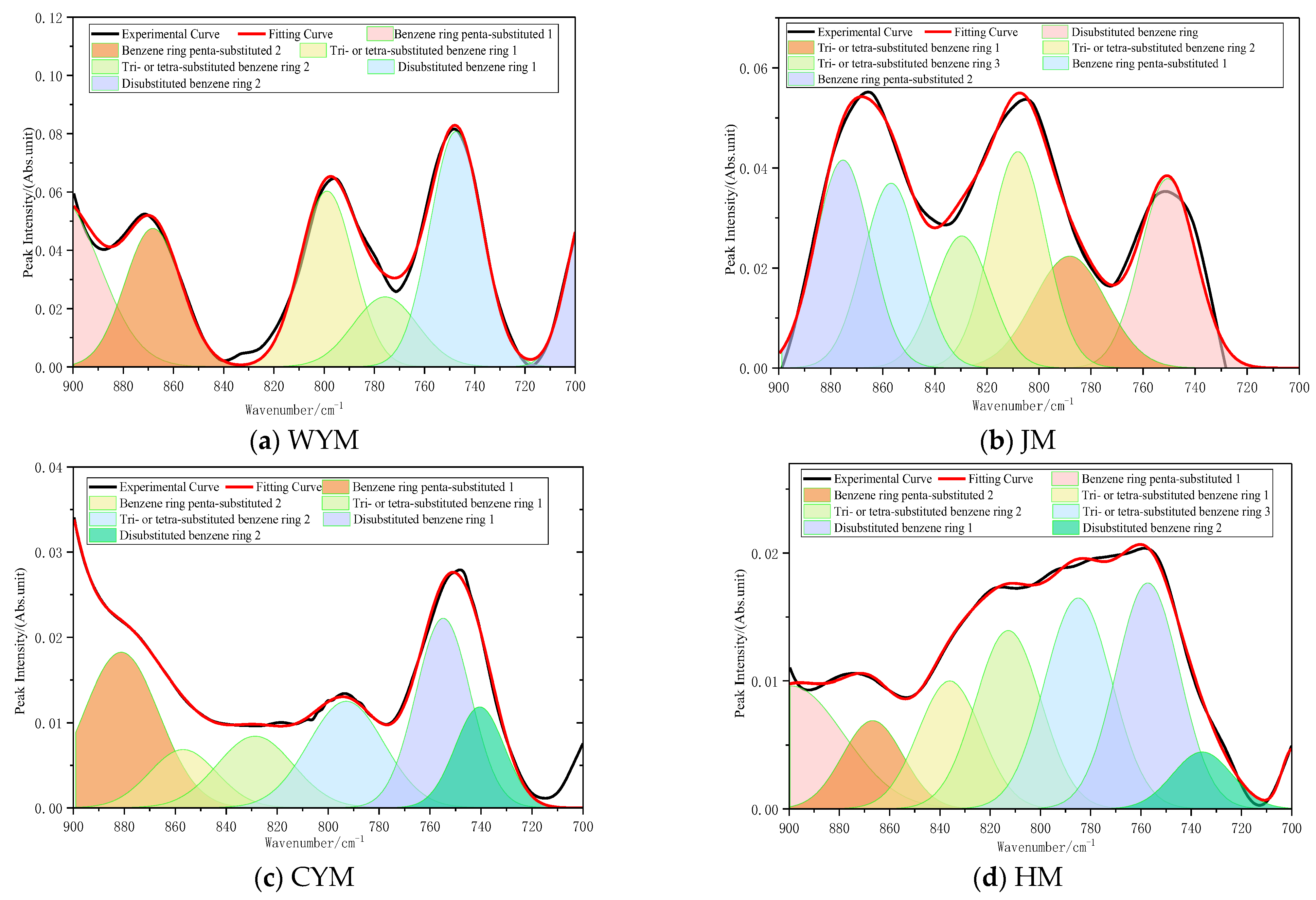
2.2.1. Aromatic Region (900–700 cm−1)
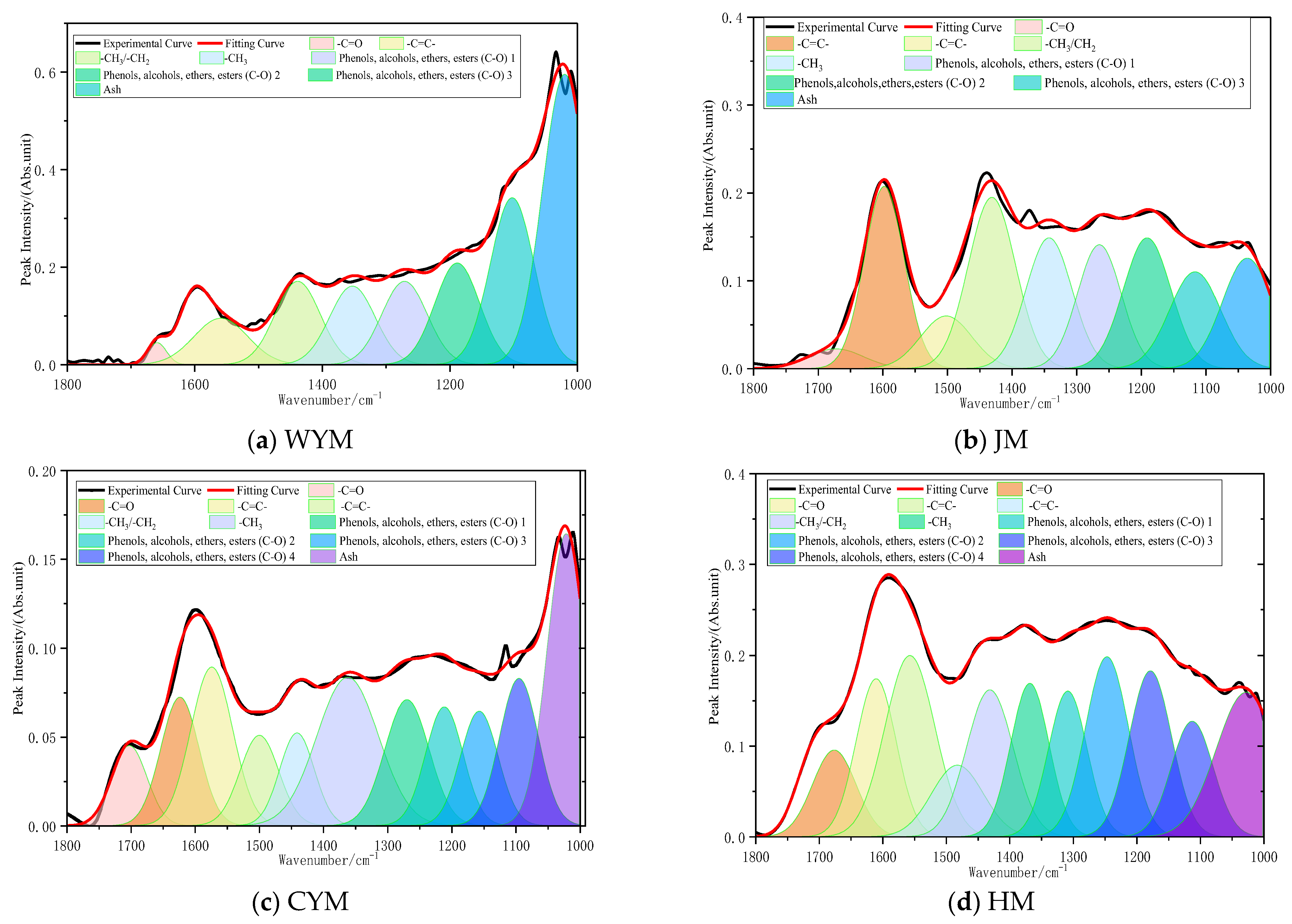
2.2.2. Oxygen-Containing Functional Groups (1800–1000 cm−1)
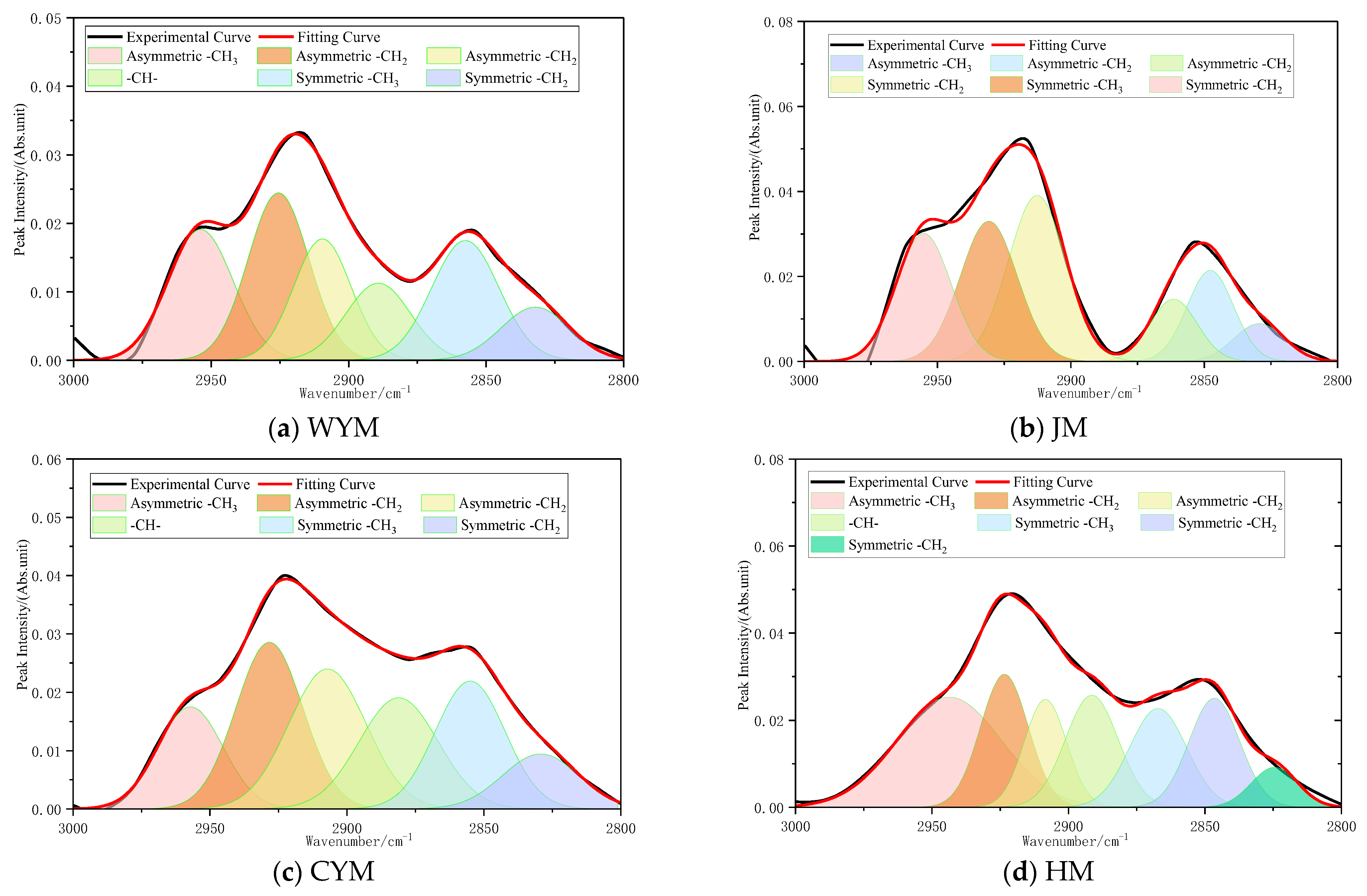
2.2.3. Aliphatic C–H Stretching Region (3000–2800 cm−1)
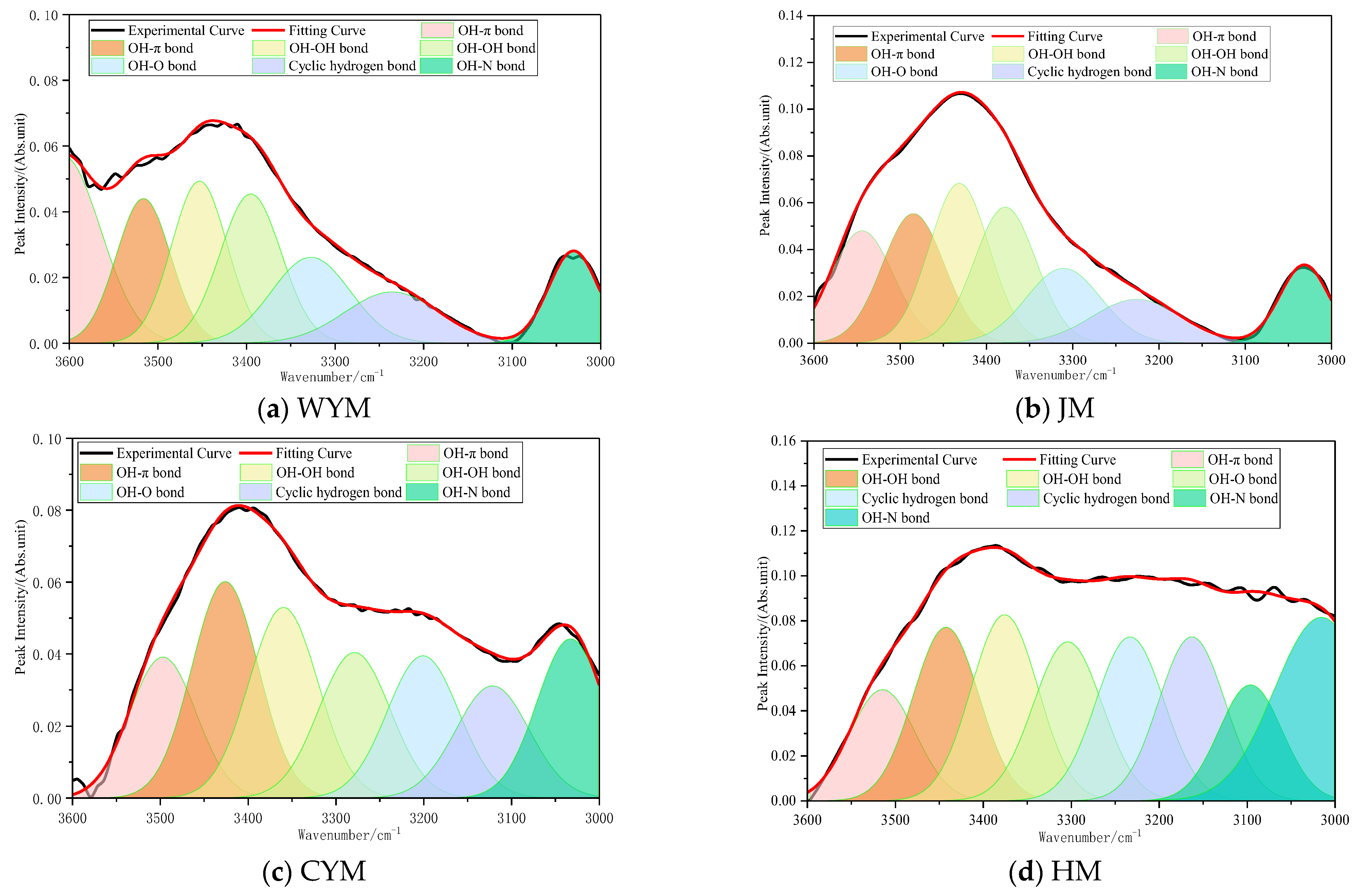
2.2.4. Hydroxyl Band (3600–3000 cm−1)
2.2.5. FTIR-Derived Structural Parameters
- (1)
- Aliphatic chain length. The aliphatic chain length was estimated using the –CH3/–CH2 peak-area ratio. A smaller value indicates a longer aliphatic chain. The calculated values were 1.18 for WYM, 1.25 for JM, 1.67 for CYM, and 1.80 for HM.
- (2)
- Aromaticity describes the richness of aromatic relative to aliphatic functionalities. The calculated aromaticity values were 2.47 for WYM, 1.55 for JM, 0.68 for CYM, and 0.57 for HM.
- (3)
- Degree of aromatic-ring condensation (DOC). DOC was defined as the ratio between the aromatic C–H out-of-plane deformation in the 900–700 cm−1 region and the aromatic C=C skeletal vibration near 1600 cm−1. The DOC values were 0.64 for WYM, 0.26 for JM, 0.12 for CYM, and 0.11 for HM.
2.3. Occurrence of N and S in Coal
2.3.1. Nitrogen Speciation
2.3.2. Sulfur Speciation
2.4. Carbon Skeleton Characteristics
2.5. Construction of Coal Macromolecular Models
12x + Ax + 16Bx + 14Cx + 32Dx < 3000
2.6. Pore-Structure Development
3. Discussion
4. Materials and Methods
4.1. Selection and Preparation of Coal Samples
4.2. Elemental Analysis and Proximate Analysis
4.3. FTIR Experiment
4.4. XPS Experiment
4.5. 13C NMR Experiment
4.6. Low-Temperature N2 Adsorption
5. Conclusions
- (1)
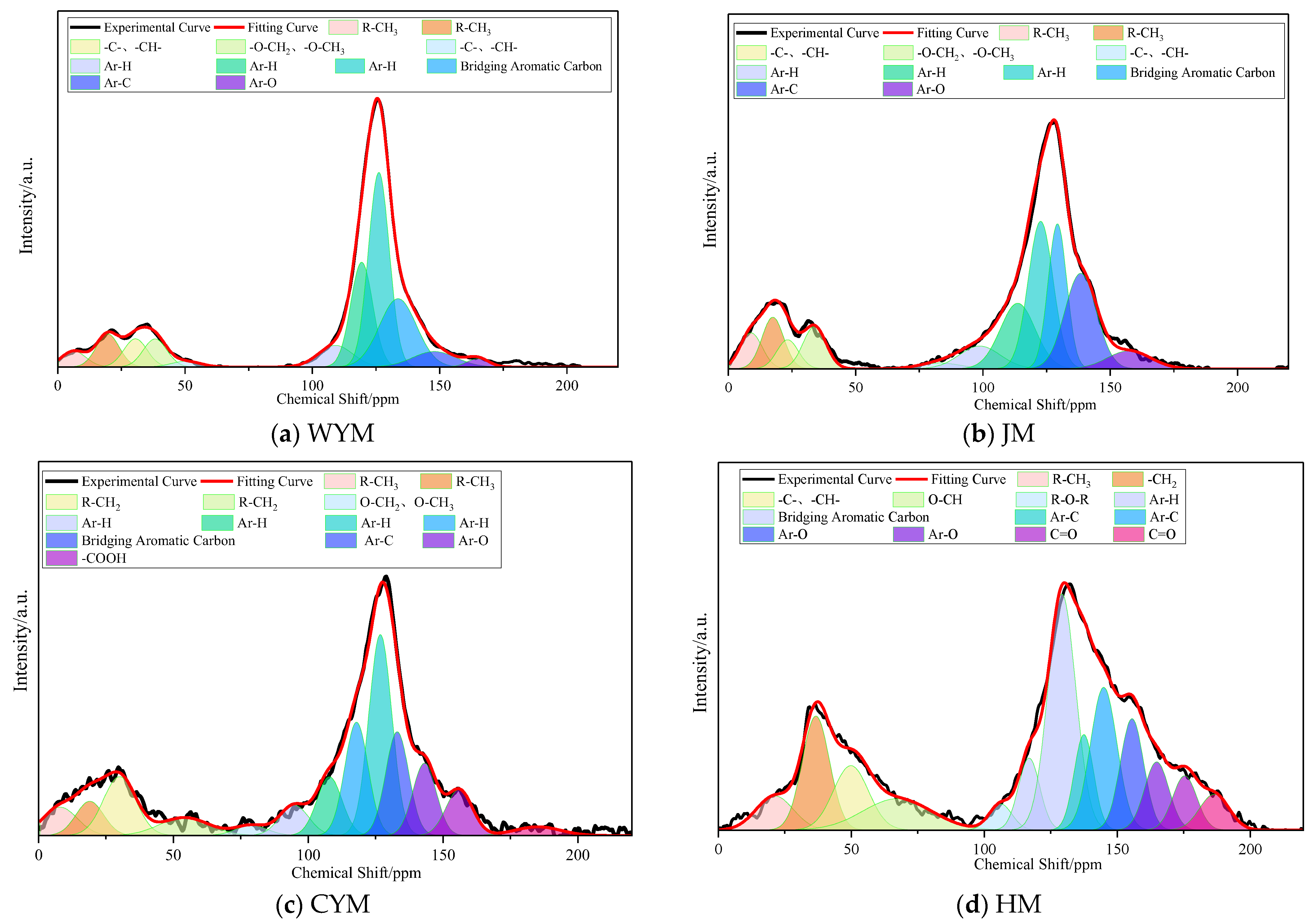
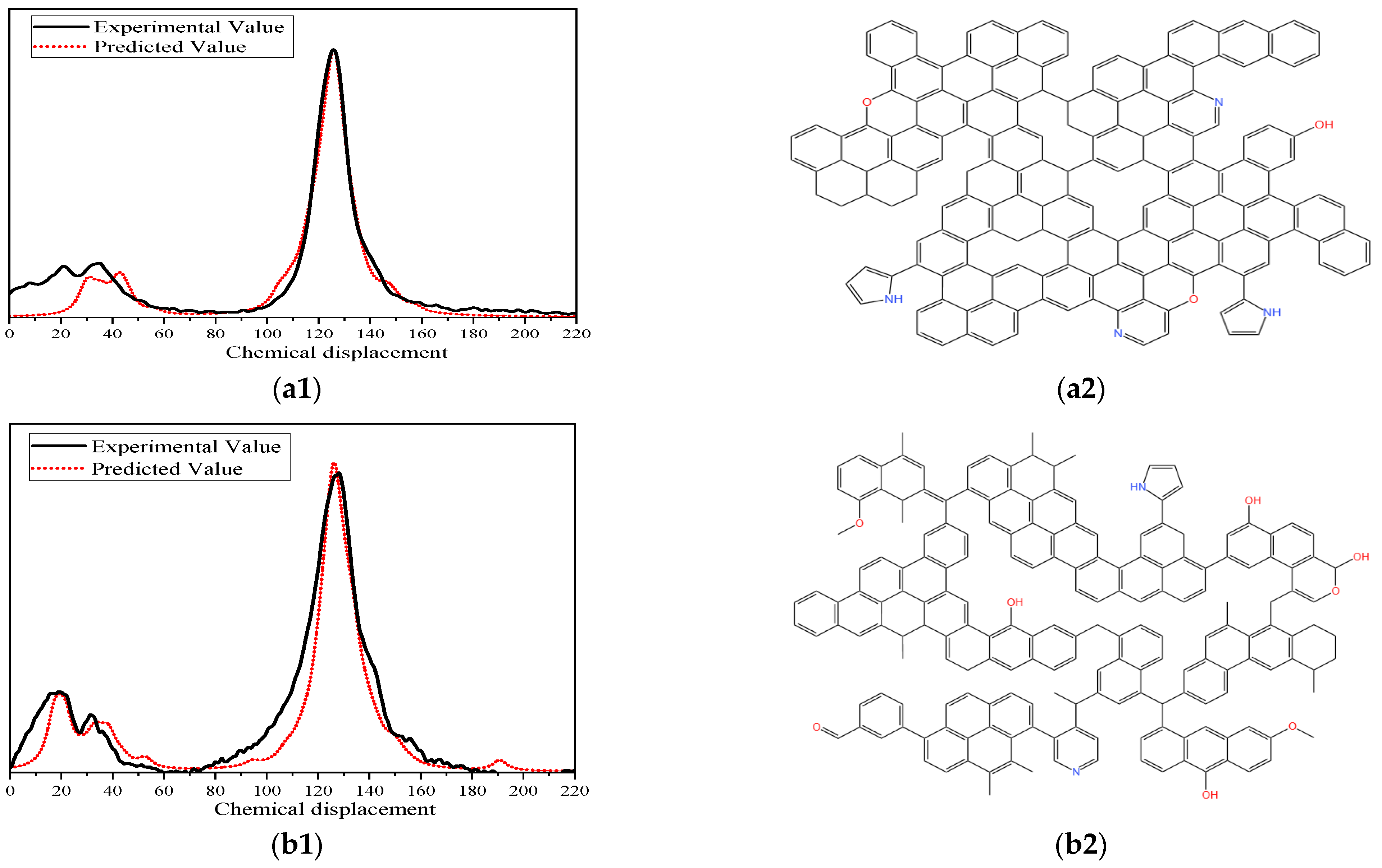
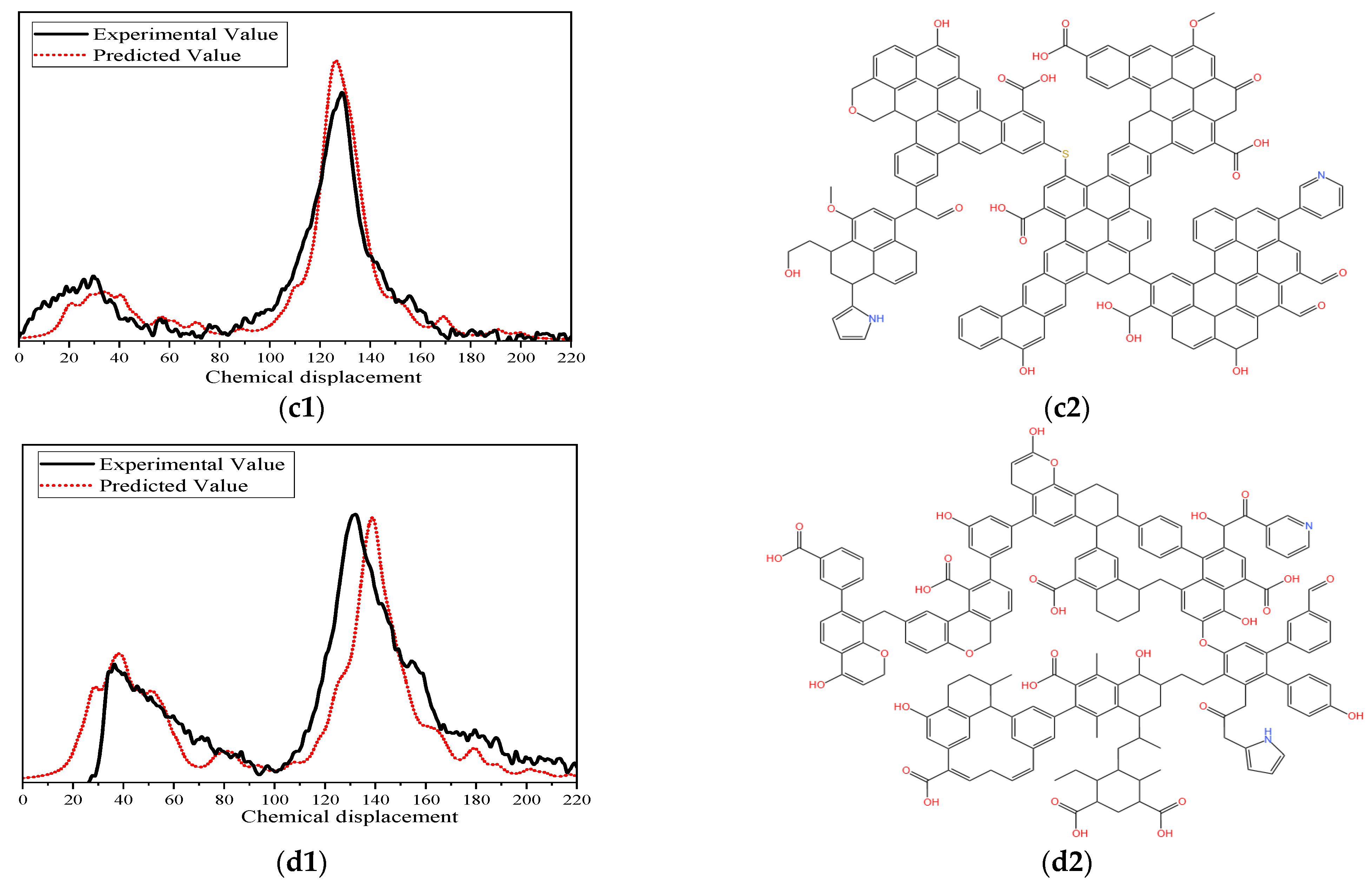
- Aromatization and polycondensation. Based on FTIR, 13C NMR, and elemental analysis, coal macromolecular structure evolves systematically with rank. Low-rank HM is enriched in hydroxyl, carboxyl, and ether groups and contains well-developed aliphatic side chains, with high CH2/CH3 and the lowest aromaticity and aromatic condensation. As coalification proceeds through CYM and JM, decarboxylation, dehydration, and side-chain cleavage reduce oxygenated structures, the aromatic C=C band strengthens, aromaticity increases, and aromatic condensation becomes more pronounced. In high-rank WYM, aliphatic structures are largely removed, oxygenated groups nearly disappear, aromatic carbon exceeds 80%, and the bridgehead carbon ratio reaches 0.32, indicating highly condensed aromatic lamellae and a tendency toward graphitization. Overall, coal structure follows a ‘deoxygenation–side-chain removal–aromatization–high condensation’ pathway, with declining polarity and enhanced π–π conjugation, leading to greater structural stability.
- (2)
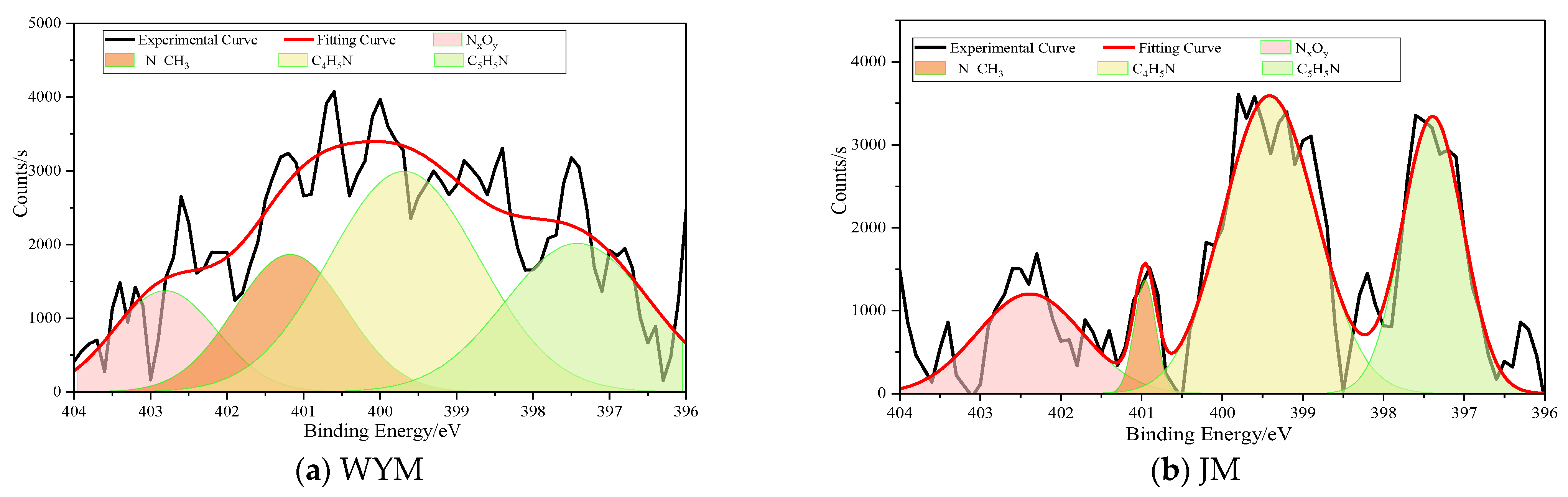
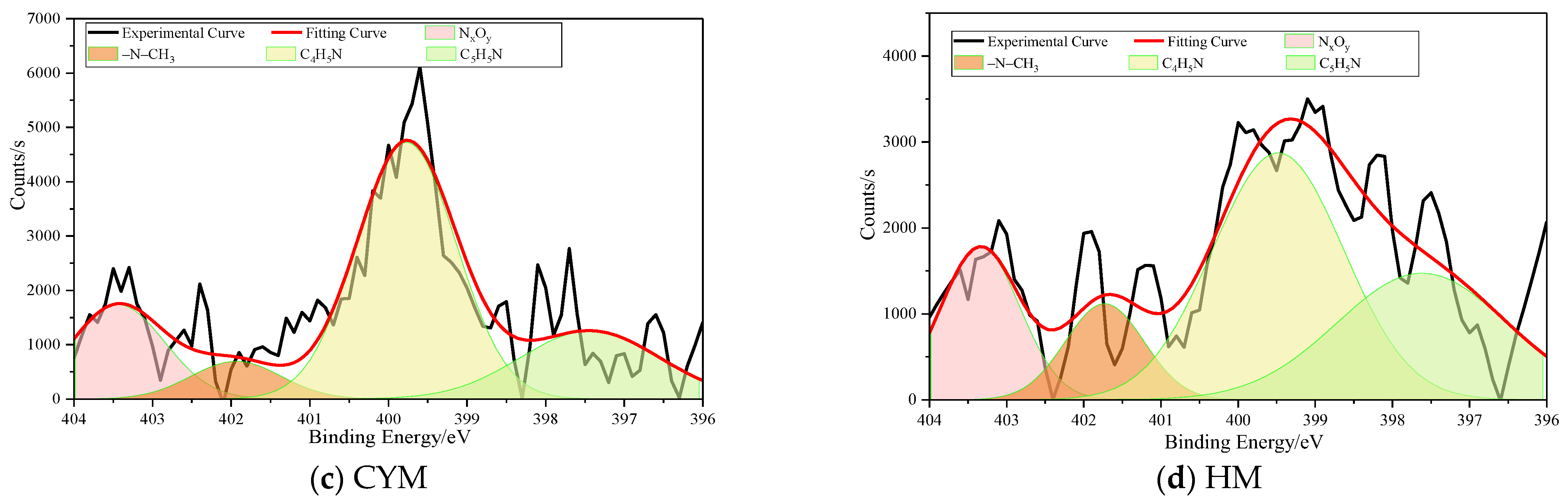
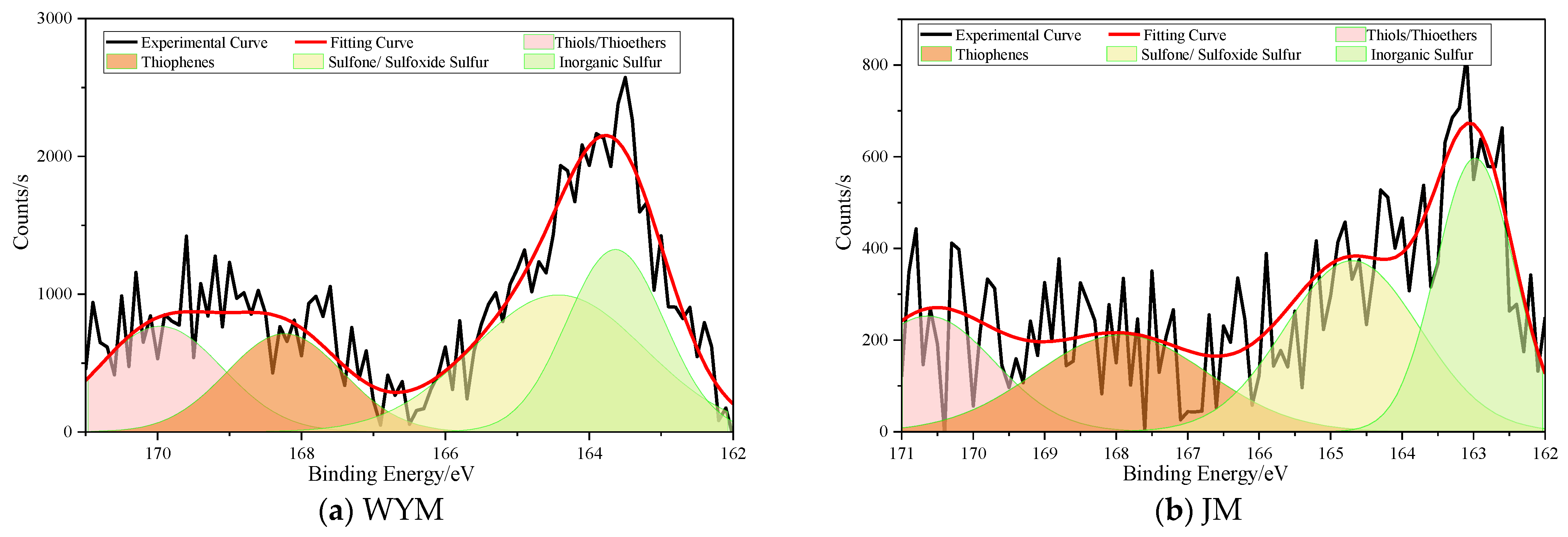
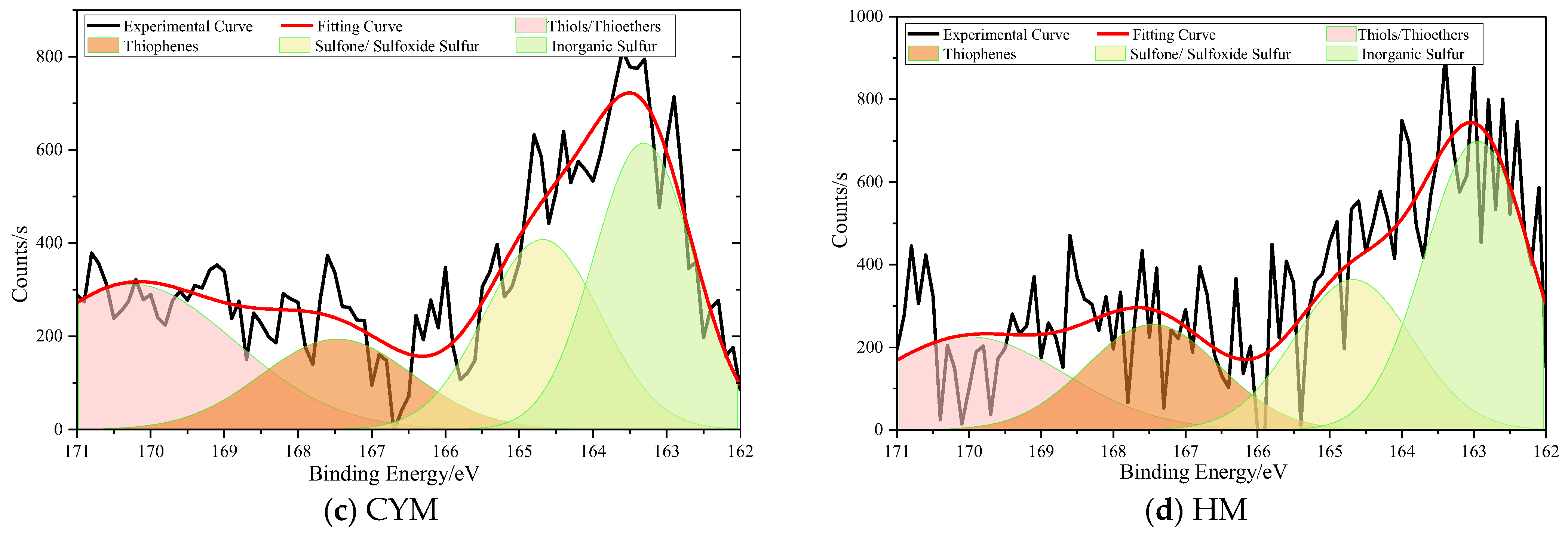
- Rank-dependent incorporation of N and S. XPS results show that low-rank coal has higher fractions of N-5 and N-X, indicating that nitrogen mainly occurs at reactive edges of five-membered heterocycles or as oxidized nitrogen, which is relatively labile. With increasing rank, the fractions of N-6 and N-Q rise; particularly in JM and WYM, graphitic nitrogen increases markedly, implying progressive incorporation of nitrogen into aromatic lamellae and participation in conjugated systems. For sulfur, low-rank coal contains more thioether/thiol and partially oxidized sulfur, whereas thiophenic sulfur increases with rank and dominates in high-rank coal. Thus, N and S evolve from reactive edge structures toward stable aromatic heterocycles, reflecting stabilization and structural embedding of heteroatoms during coalification.
- (3)
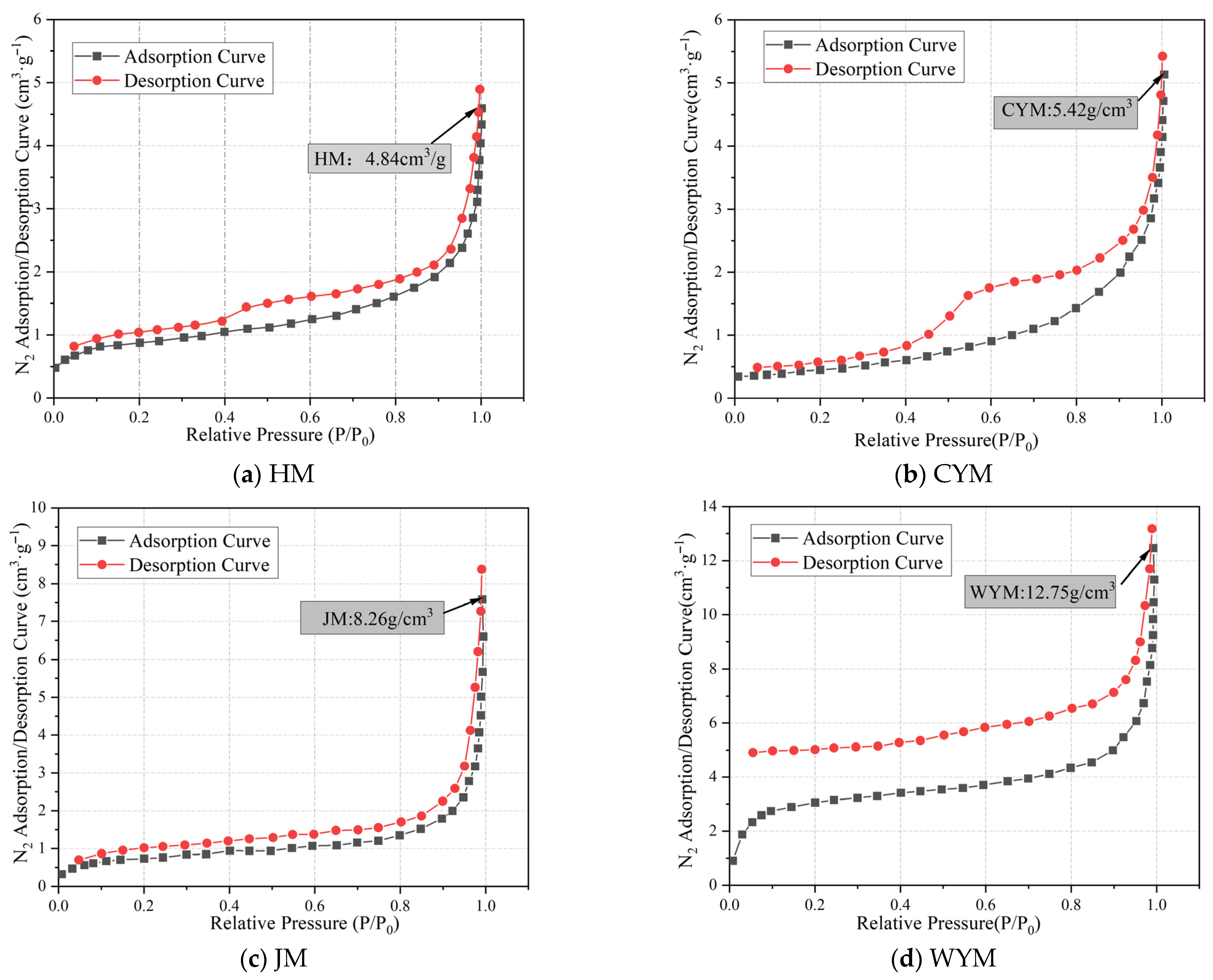
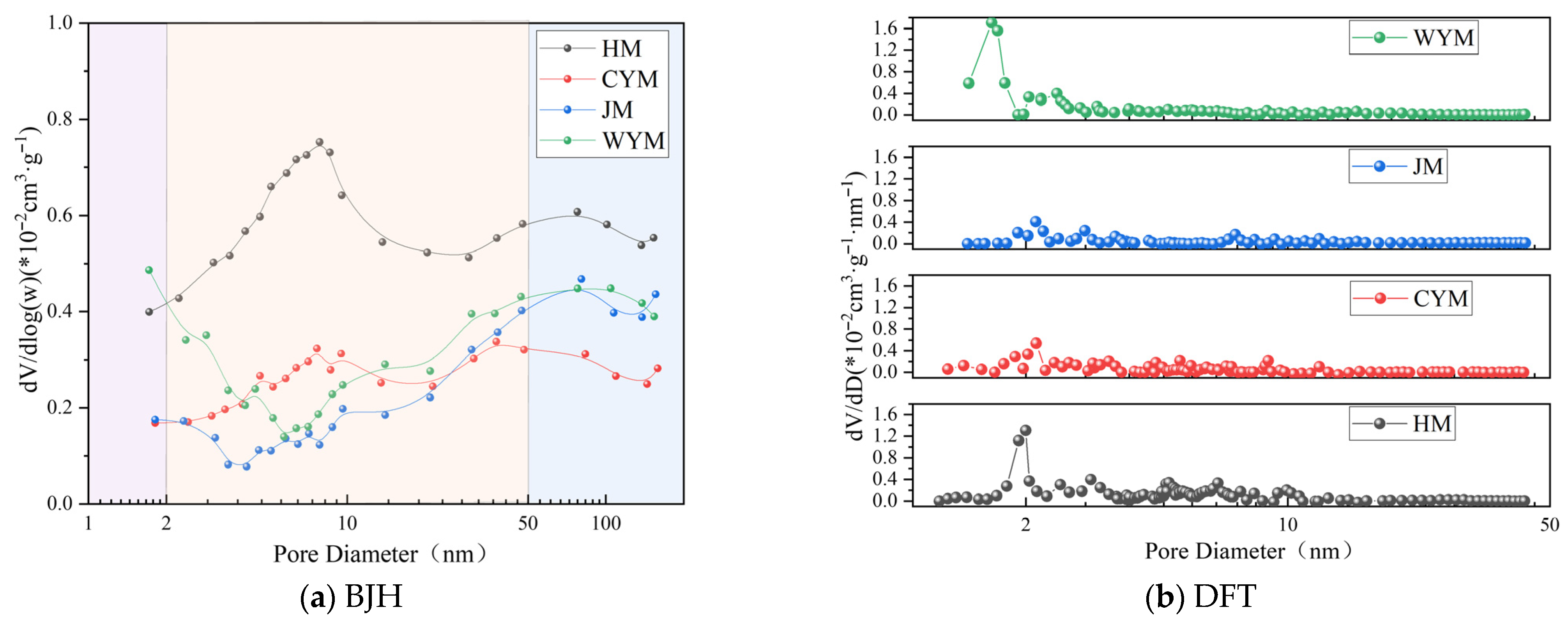
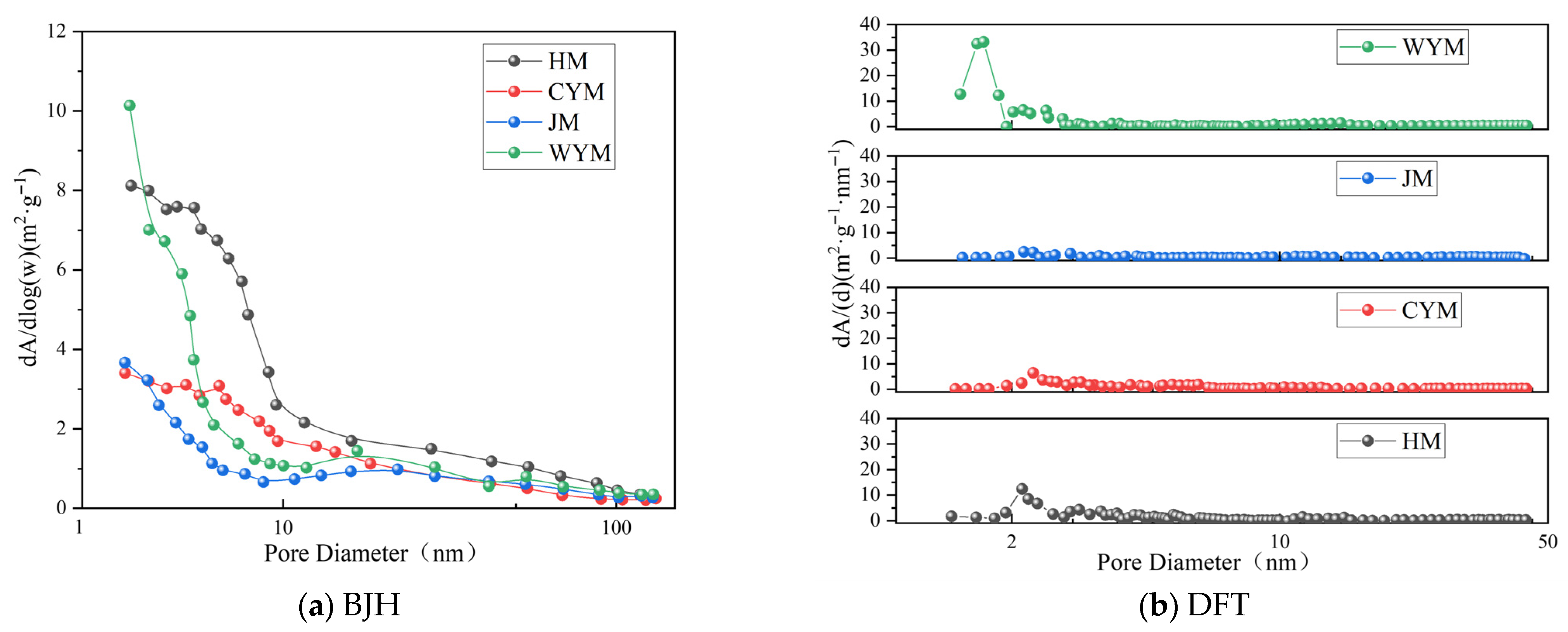
- Evolution of pore structure. Pronounced differences exist among coal ranks. HM shows a well-developed multilevel pore system dominated by mesopores (2–50 nm) with a multimodal pore volume distribution, indicative of an open pore network. As rank increases to CYM and JM, increasing aromaticity densifies the carbon skeleton, causing partial mesopore collapse or conversion into closed micropores, reducing total pore volume and concentrating the pore-size distribution. In WYM, pore sizes concentrate in 1–2 nm micropores with unimodal DFT curves, indicating a highly refined and more closed pore network. Overall, pore development exhibits a U-shaped trend, with relatively more developed pore systems in low- and high-rank coals but comparatively compact structures at intermediate ranks, highlighting the coupling between macromolecular polycondensation and pore reconstruction.
Author Contributions
Funding
Institutional Review Board Statement
Informed Consent Statement
Data Availability Statement
Acknowledgments
Conflicts of Interest
Abbreviations
| FTIR | Fourier transform infrared spectroscopy |
| XPS | X-ray photoelectron spectroscopy |
| 13C NMR | Solid-state 13C nuclear magnetic resonance |
| HM | Lignite from Lingquan mine |
| CYM | Long-flame coal from Changtan mine |
| JM | 1/3 coking coal from Yixin mine |
| WYM | Anthracite from Baoquan mine |
| BET | Brunauer–Emmett–Teller method |
| BJH | Barrett–Joyner–Halenda method |
| DFT | Density functional theory |
References
- Li, B. Study on the Adsorption-Deformation-Percolation-Diffusion Characteristics of CO2/CH4/N2 in Different Rank Coals. Ph.D. Thesis, Liaoning Technical University, Fuxin, China, 2022. [Google Scholar]
- Solomon, P.R.; Hamblen, D.G.; Carangelo, R.M.; Serio, M.A.; Deshpande, G.V. General model of coal devolatilization. Energy Fuels 1988, 2, 405–422. [Google Scholar] [CrossRef] [Scilit]
- Given, P.H. Structure of Bituminous Coals: Evidence from Distribution of Hydrogen. Nature 1959, 184, 980–981. [Google Scholar] [CrossRef] [Scilit]
- Faulon, J.-L. Calculating the Number-Averaged Molecular Weight (M0) of Aromatic and Hydroaromatic Clusters in Coal using Rubber Elasticity Theory. Energy Fuels 2002, 8, 1020–1023. [Google Scholar] [CrossRef] [Scilit]
- Mathews, J.P.; Castro-Marcano, F.; Fernandez-Also, V.; Watson, J.K.; Alvarez, Y.E.; van Niekerk, D.; Kamat, A.; Russo, M.F.; van Duin, A. Breaking the barriers: Accurate large-scale molecular representations of coal (or other carbonaceous structures) with relative ease and their use with reactive simulations. In Abstracts of Papers of The American Chemical Society; American Chemical Society: Washington, DC, USA, 2011; Volume 242. [Google Scholar]
- Huang, X.; Zhang, S.; Liang, N.; Huang, J.; Yang, C.; Lv, B. Effects of Sodium Compounds on Sintering Characteristics and Microstructural Evolution of Coal Ash during Thermal Treatment. ACS Omega 2025, 10, 46442–46456. [Google Scholar] [CrossRef] [Scilit] [PubMed]
- Qiao, Y.; Wang, X.; Fan, N.; Wang, Y.; Zhang, S.; Gan, M. Multidirectional gas flow simulation in water-saturated coal under liquid nitrogen fracturing via pore network modeling. Energy Sources Part A Recovery Util. Environ. Eff. 2026, 48, 2621934. [Google Scholar]
- Clarkson, C.R.; Solano, N.; Bustin, R.M.; Bustin, A.M.M.; Chalmers, G.R.; He, L.; Melnichenko, Y.B.; Radliński, A.P.; Blach, T.P. Pore structure characterization of North American shale gas reservoirs using USANS/SANS, gas adsorption, and mercury intrusion. Fuel 2013, 103, 606–616. [Google Scholar] [CrossRef] [Scilit]
- Liu, H.; Wang, Z.; Tian, X.; Jacob, K.I.; Wang, Y. Molecular investigation of thermal conduction and local phonon transport in graphene aerogels. Int. J. Heat Mass Transf. 2026, 255, 127713. [Google Scholar] [CrossRef] [Scilit]
- Hou, R.; Bai, Z.; Feng, Z.; Guo, Z.; Kong, L.; Bai, J.; Li, W. Research progress on hydrogen bond distribution characteristics and regulation methods in the thermal conversion process of lignite. Clean Coal Technol. 2021, 27, 34–41. [Google Scholar]
- GB/T 6948-2008; Method for Microscopical Determination of Vitrinite Reflectance of Coal. General Administration of Quality Supervision, Inspection and Quarantine of the People’s Republic of China: Beijing, China; Standardization Administration of China: Beijing, China, 2008; p. 16.
- GB/T 212-2008; Industrial Analysis Method of Coal. General Administration of Quality Supervision, Inspection and Quarantine of the People’s Republic of China: Beijing, China; Standardization Administration of China: Beijing, China, 2008; p. 16.
- Behera, D.; Nandi, B.; Bhattacharya, S. Variations in combustion properties of coal with average relative density and functional groups identified by FTIR analysis. Int. J. Coal Prep. Util. 2022, 42, 1695–1711. [Google Scholar] [CrossRef] [Scilit]
- Painter, P.C.; Snyder, R.W.; Starsinic, M.; Coleman, M.M.; Kuehn, D.W.; Davis, A. Concerning the Application of FT-IR to the Study of Coal: A Critical Assessment of Band Assignments and the Application of Spectral Analysis Programs. Appl. Spectrosc. 1981, 35, 475–485. [Google Scholar] [CrossRef] [Scilit]
- Ibarra, J.; Muoz, E.; Moliner, R. FTIR study of the evolution of coal structure during the coalification process. Org. Geochem. 1996, 24, 725–735. [Google Scholar] [CrossRef] [Scilit]
- Petersen, H.I.; Rosenberg, P.; Nytoft, H.P. Oxygen groups in coals and alginite-rich kerogen revisited. Int. J. Coal Geol. 2008, 74, 93–113. [Google Scholar] [CrossRef] [Scilit]
- Fujitsuka, H.; Ashida, R.; Kawase, M.; Miura, K. Examination of Low-Temperature Oxidation of Low-Rank Coals, Aiming at Understanding Their Self-Ignition Tendency. Energy Fuels 2014, 28, 2402–2407. [Google Scholar] [CrossRef] [Scilit]
- Jia, B.; Lin, J.; Zhang, T.; Zhang, H. Construction of molecular structure model of Linglu lignite and verification of CO2 adsorption-migration. Coal Convers. 2025, 1–15. [Google Scholar]
- Liu, S.; Zhang, Y.; Zhang, M.; Zeng, Q.; Yang, H.; Zhu, K.; Liu, F.; Zhang, J.; Zhao, L.; Zhao, H.; et al. Decoding the molecular architecture of lignite: Construction and validation of a multi-scale 3D structural model. J. Mol. Struct. 2025, 1345, 143068. [Google Scholar] [CrossRef] [Scilit]
- Shan, T.; Bao, Y.; Liu, X.; Wang, X.; Li, D. Evolution characteristics and molecular constraints of microbial communities during coal biogasification. Bioprocess Biosyst. Eng. 2024, 47, 2075–2089. [Google Scholar] [CrossRef] [Scilit] [PubMed]
- Liu, S.; Zheng, C.; Jiang, B.; Xue, S.; Han, F.; Tang, M.; Chen, Z. Experimental study on molecular structure and multifractal characteristics of coal modified by anaerobic microorganisms. Powder Technol. 2026, 473, 122214. [Google Scholar] [CrossRef] [Scilit]



| Sample | Proximate Analysis/Wdaf % | Elemental Analysis/% | |||||||
|---|---|---|---|---|---|---|---|---|---|
| Mad | Aad | Vad | FCad | C | H | O | N | S | |
| WYM | 0.62 | 21.28 | 15.13 | 62.97 | 88.50 | 3.31 | 2.04 | 2.61 | 0.4 |
| JM | 1.31 | 8.01 | 30.55 | 60.13 | 85.34 | 4.66 | 4.99 | 1.04 | 0.24 |
| CYM | 1.5 | 17.99 | 23.2 | 57.31 | 69.36 | 3.26 | 12.27 | 1.08 | 1.02 |
| HM | 1.35 | 20.77 | 39.90 | 37.98 | 67.98 | 4.28 | 20.93 | 0.92 | 0.44 |
| Sample | fal* | falH | falO | faH | faB | faS | faP | faN | faC | fal | fa | fa’ |
|---|---|---|---|---|---|---|---|---|---|---|---|---|
| WYM | 8.45 | 10.07 | 1.26 | 54.36 | 19.37 | 5.09 | 1.34 | 25.80 | 0 | 19.78 | 80.16 | 80.16 |
| JM | 15.18 | 4.39 | 4.41 | 42.91 | 16.19 | 15.25 | 1.61 | 33.05 | 0 | 23.98 | 75.96 | 75.96 |
| CYM | 23.49 | 2.94 | 2.43 | 47.03 | 11.69 | 7.15 | 4.12 | 22.96 | 1.07 | 28.86 | 71.06 | 69.99 |
| HM | 4.27 | 18.01 | 7.22 | 29.11 | 6.25 | 12.75 | 14.31 | 33.31 | 7.91 | 29.50 | 70.33 | 62.42 |
| Sample | a | b | c | d | e | f | g |
|---|---|---|---|---|---|---|---|
| WYM | 1 | 3 | 3 | 2 | 2 | 3 | 0 |
| JM | 2 | 2 | 2 | 1 | 1 | 1 | 0 |
| CYM | 4 | 2 | 1 | 0 | 0 | 1 | 1 |
| HM | 6 | 2 | 0 | 0 | 1 | 1 | 0 |
| Sample | BJH Total Pore Volume (10−2 cm·g−1) | BJH Pore Volume (10−2 cm·g−1) | BJH-Specific Surface Area (m2·g−1) | BET-Specific Surface Area (m2·g−1) | Average Pore Diameter (nm) | ||
|---|---|---|---|---|---|---|---|
| <2 nm | 2–50 nm | <2 nm | 2–50 nm | ||||
| HM | 1.456 | 0.029 | 0.963 | 0.538 | 0.158 | 7.266 | 9.569 |
| CYM | 0.725 | 0.010 | 0.459 | 0.284 | 2.355 | 3.269 | 11.265 |
| JM | 0.685 | 0.001 | 0.295 | 0.196 | 1.357 | 2.360 | 14.689 |
| WYM | 0.897 | 0.036 | 0.426 | 0.689 | 2.054 | 7.894 | 12.597 |
Disclaimer/Publisher’s Note: The statements, opinions and data contained in all publications are solely those of the individual author(s) and contributor(s) and not of MDPI and/or the editor(s). MDPI and/or the editor(s) disclaim responsibility for any injury to people or property resulting from any ideas, methods, instructions or products referred to in the content. |
© 2026 by the authors. Licensee MDPI, Basel, Switzerland. This article is an open access article distributed under the terms and conditions of the Creative Commons Attribution (CC BY) license.
Share and Cite
Zhao, X.; Zhou, X.; Cao, Y. Macromolecular Model Construction and Pore Structure Distribution of Coals with Different Ranks. Molecules 2026, 31, 1289. https://doi.org/10.3390/molecules31081289
Zhao X, Zhou X, Cao Y. Macromolecular Model Construction and Pore Structure Distribution of Coals with Different Ranks. Molecules. 2026; 31(8):1289. https://doi.org/10.3390/molecules31081289
Chicago/Turabian StyleZhao, Xiaoyue, Xihua Zhou, and Yu Cao. 2026. "Macromolecular Model Construction and Pore Structure Distribution of Coals with Different Ranks" Molecules 31, no. 8: 1289. https://doi.org/10.3390/molecules31081289
APA StyleZhao, X., Zhou, X., & Cao, Y. (2026). Macromolecular Model Construction and Pore Structure Distribution of Coals with Different Ranks. Molecules, 31(8), 1289. https://doi.org/10.3390/molecules31081289