Review

Titanium Dioxide in Biomedical and Environmental Nanotechnology: From Photocatalytic Detoxification to Targeted Therapeutics

1
Multidisciplinary Vesicle Program, Life Sciences Core Facilities, Weizmann Institute of Science, Rehovot 76100, Israel
2
The Shmunis School of Biomedicine and Cancer Research, George S. Wise Faculty of Life Sciences, Tel Aviv University, Tel Aviv 69978, Israel
*
Author to whom correspondence should be addressed.
Molecules 2026, 31(7), 1197; https://doi.org/10.3390/molecules31071197

Submission received: 3 March 2026 / Revised: 27 March 2026 / Accepted: 1 April 2026 / Published: 3 April 2026
(This article belongs to the Section Applied Chemistry)

Abstract

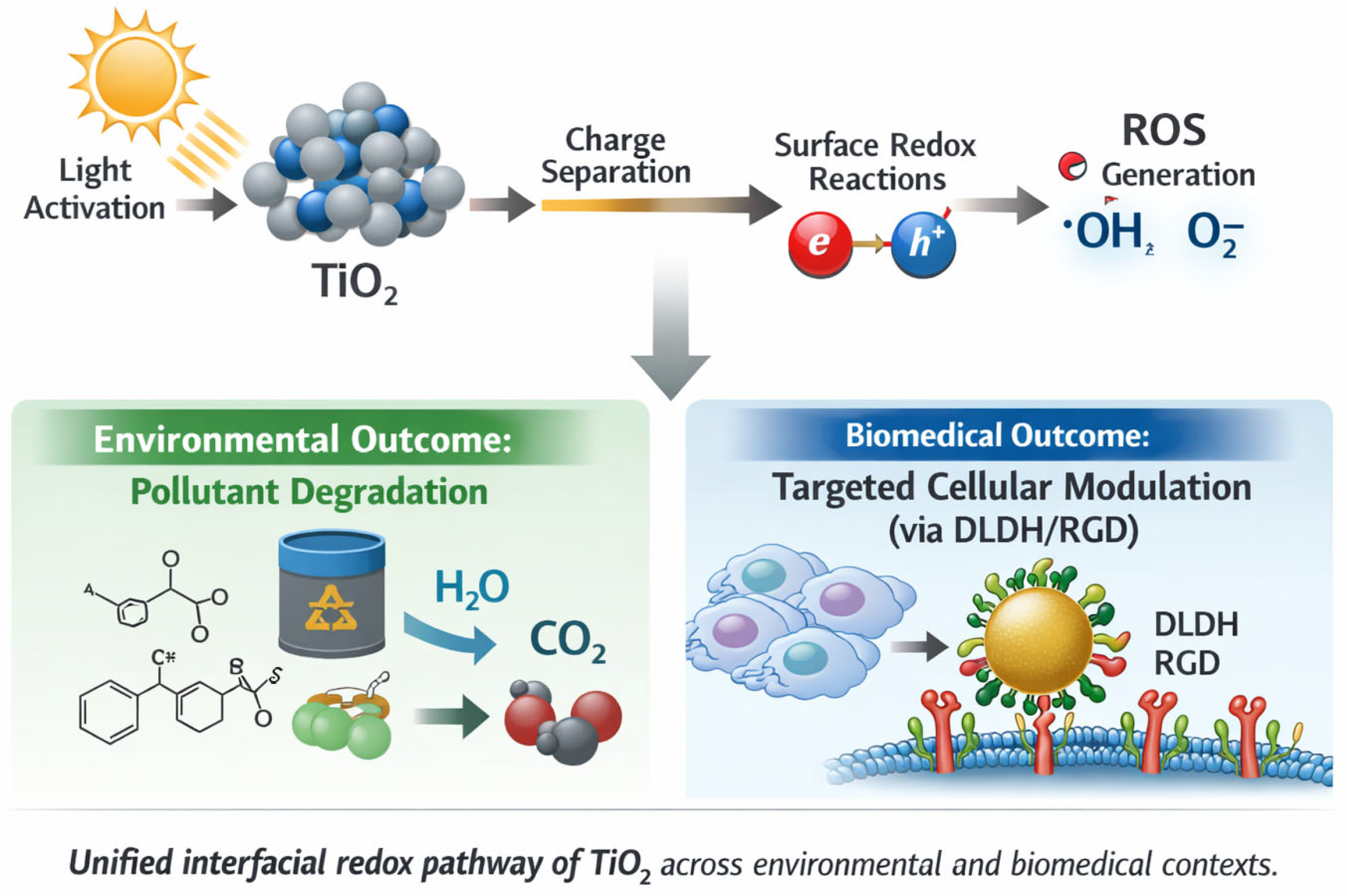
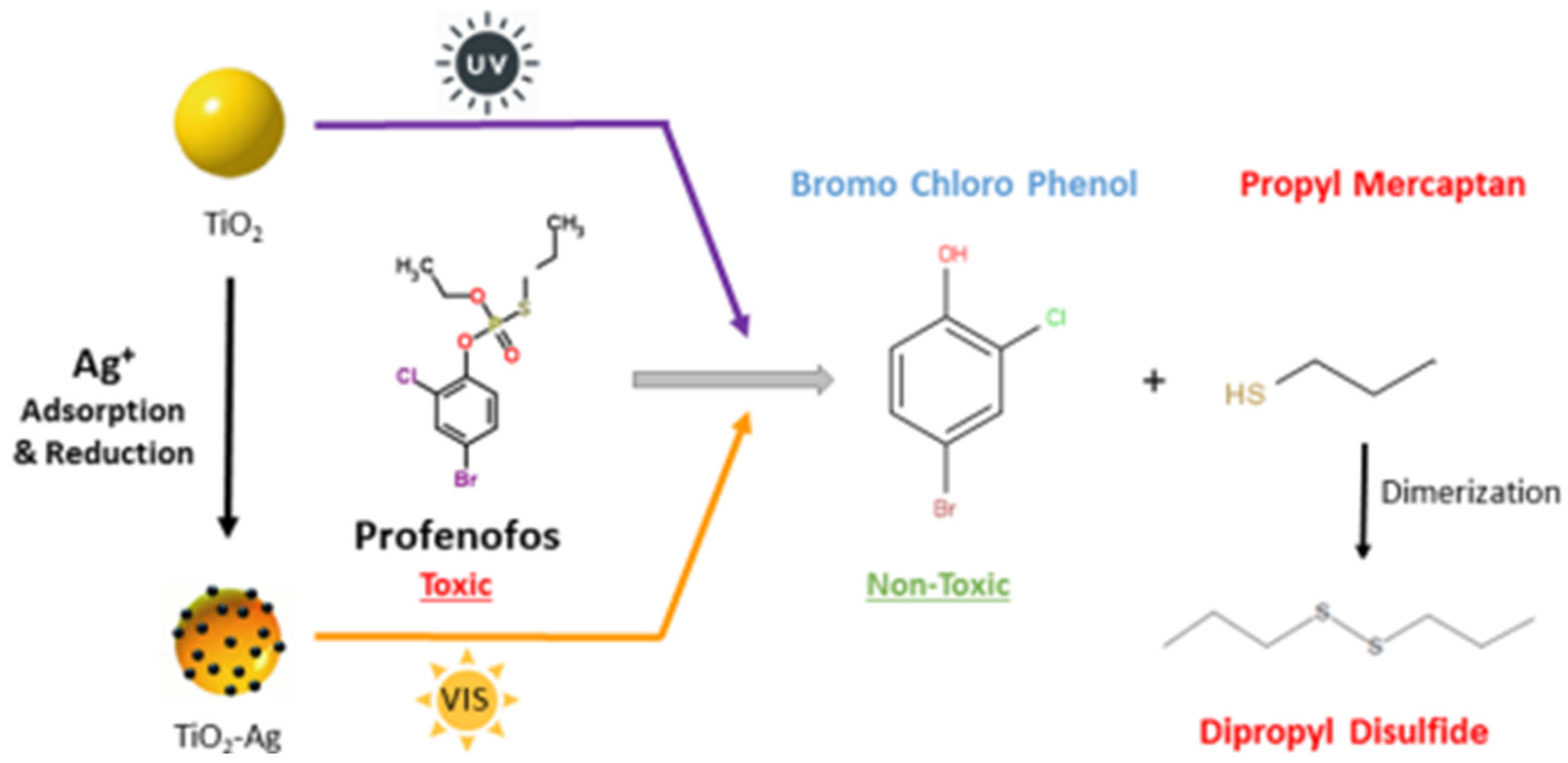
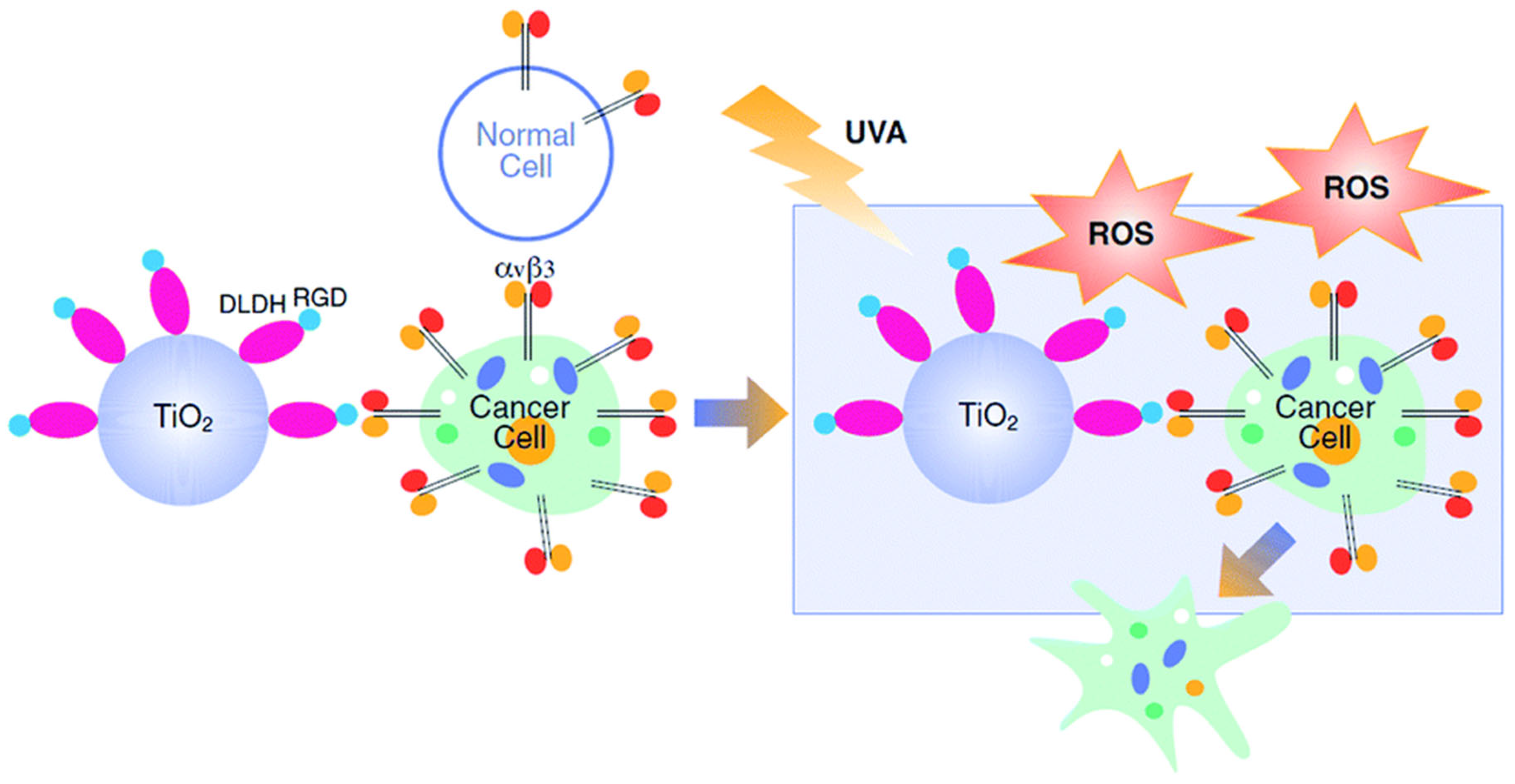
Titanium dioxide (TiO2) has evolved from a conventional photocatalyst into a sophisticated nano-platform that bridges environmental sustainability and biomedicine. This paper proposes a unified interfacial redox design framework that links the electronic-structure engineering of the TiO2 with the spatial control of its reactive oxygen species (ROS). In the environmental sector, we highlight advances in photocatalytic detoxification, such as the cleavage of organophosphates via Ag-modified TiO2, driven by doping and metal–support interactions. In the biomedical domain, TiO2 is framed as an active bio-interface capable of coordinative protein binding. We specifically examine the “moonlighting” protein dihydrolipoamide dehydrogenase (DLDH) as a model for stable, oriented biofunctionalization. By integrating RGD-targeting motifs, these hybrid systems enable integrin-directed, localized photodynamic effects. We further address critical toxicological considerations, emphasizing that TiO2 behavior is context-dependent and governed by particle size, crystallinity, and surface state. By synthesizing insights from catalysis and redox biology, this manuscript outlines principles for the rational design of safer, application-specific TiO2 technologies. This convergence supports a transition from non-selective oxidation toward predictable, spatially confined redox outcomes in both complex environmental matrices and physiological systems. This review outlines key mechanistic insights and proposes design principles for controlled and context-dependent TiO2 activity.
Keywords: titanium dioxide; reactive oxygen species; photocatalysis; metal–support interactions; environmental remediation; photodynamic therapy; implant; nanotoxicology; moonlight proteins titanium dioxide; reactive oxygen species; photocatalysis; metal–support interactions; environmental remediation; photodynamic therapy; implant; nanotoxicology; moonlight proteins
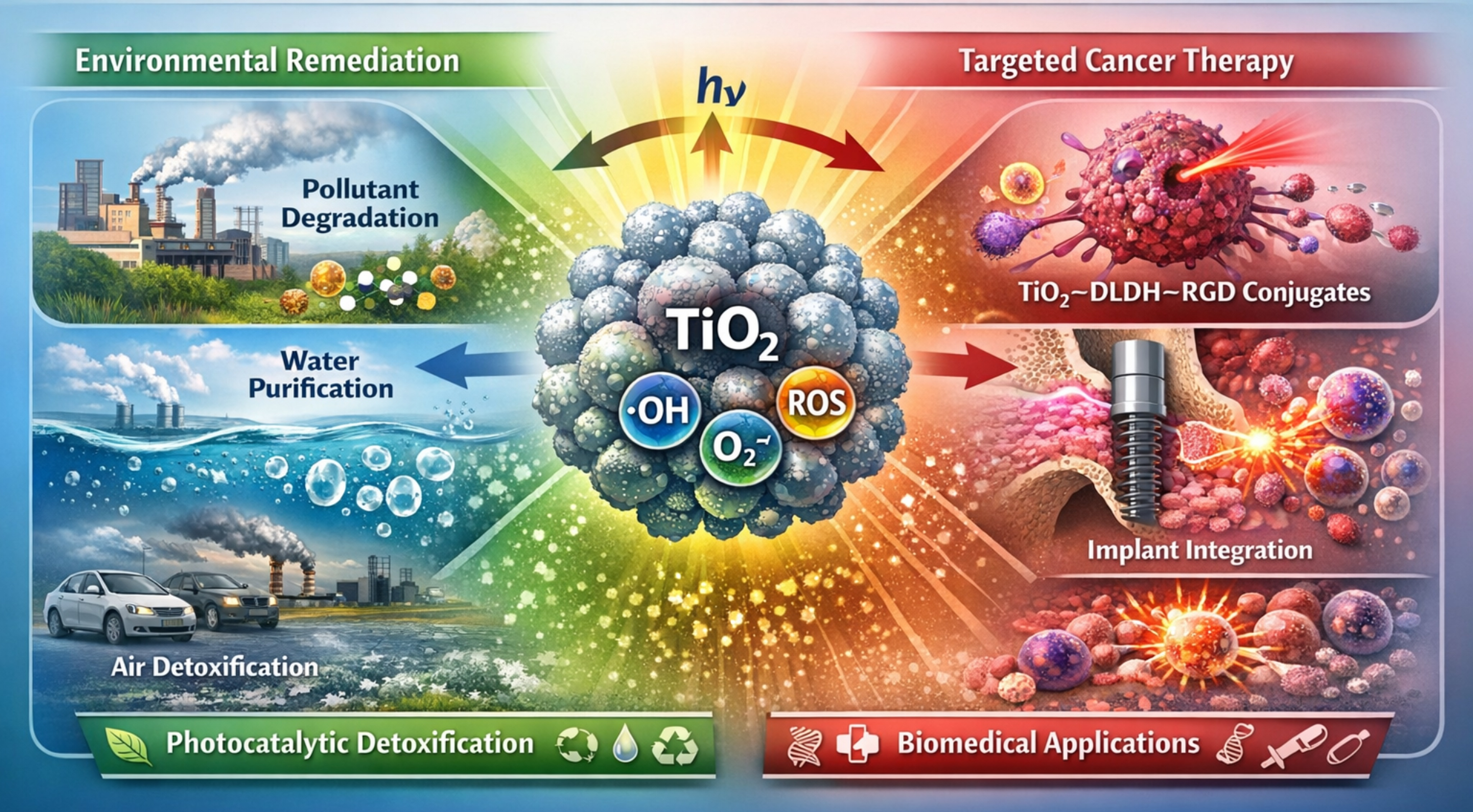
Graphical Abstract