Review

Research Progress on the Immunomodulatory Effects by Dang Gui (Radix Angelica sinensis) and Its Active Chemical Components


School of Basic Medical Sciences, Heilongjiang University of Chinese Medicine, 24 Heping Road, Harbin 150040, China
*
Author to whom correspondence should be addressed.
Molecules 2026, 31(7), 1153; https://doi.org/10.3390/molecules31071153
Submission received: 16 January 2026 / Revised: 24 March 2026 / Accepted: 25 March 2026 / Published: 31 March 2026
(This article belongs to the Special Issue Featured Review Papers in Food Chemistry—2nd Edition)

Abstract

Dang Gui (Radix Angelica sinensis), a classic Chinese medicinal herb, is renowned for nourishing blood, promoting blood circulation, regulating meridians, and relieving pain, and widely used clinically for anemia, cancer, rheumatoid arthritis, ulcerative colitis, and other diseases. Studies have confirmed that Dang Gui and its major bioactive components (e.g., polysaccharides, ferulic acid, (Z)-ligustilide) exert diverse pharmacological activities including immunomodulation, neuroprotection, and hepatoprotection. Based on a systematic literature search, this review summarizes the traditional applications and main chemical constituents of A. sinensis, with a focused analysis of its immunomodulatory effects. Evidence shows that A. sinensis exerts bidirectional immunoregulation by improving immune organ indices, promoting the proliferation and activation of immune cells, including T/B lymphocytes (T/B cells), macrophages, and regulating cytokine secretion. Furthermore, it reviews its immunomodulatory mechanisms in immune-related diseases (e.g., cancer, aplastic anemia, chronic pain), analyzes its quality control standards from regulatory and pharmacopeial perspectives and summarizes relevant safety research. This review comprehensively integrates the immunoregulatory effects and underlying mechanisms of A. sinensis, aiming to provide a scientific basis for its future research and clinical application.

1. Introduction

Angelica sinensis (Oliv.) Diels (A. sinensis), a member of the Apiaceae family (formerly Umbelliferae), is commonly known as “Dang Gui” or “female ginseng”. First recorded in the Shennong’s Classic of Materia Medica, this medium-grade herb has a pungent–sweet flavor, warm nature, and belongs to the heart, liver, and spleen meridians, with core functions of promoting blood circulation, regulating meridians, relieving pain, and moistening the intestines. Classic traditional Chinese medicine (TCM) formulas containing A. sinensis (e.g., Dang Gui Shao Yao San, Dang Gui Si Ni Decoction) have long been clinically applied, and relevant studies have confirmed their efficacy and safety in treating primary dysmenorrhea [1], diabetic peripheral neuropathy [2], menopause symptoms [3], and hyperthyroidism [4].
Recent studies have revealed that A. sinensis and its compound formulas possess complex chemical compositions, including terpenoids, phenolic acids, volatile oils, and polysaccharides [5]. These constituents contribute to a range of pharmacological activities, including immunomodulation and antioxidation [6,7]. Mu et al. [8] found that Angelica sinensis polysaccharides (ASP) can prevent D-galactose induced hematopoietic stem cell aging and reduce oxidative damage. Zhang et al. [9] demonstrated that ASP can ameliorates iron deficiency anemia caused by hepcidin overexpression through inhibition of hepcidin expression and modulation of iron metabolism. Lang et al. [10] revealed that (Z)-ligustilide induces oxidative stress, thereby promoting apoptosis in ovarian cancer cells.
Existing reviews on A. sinensis are limited by their narrow focus—either focusing on a single pharmacological effect (e.g., anti-tumor or hematopoietic activity) or individual active components, failing to systematically summarize its immunomodulatory mechanisms across multiple biological levels. More importantly, they lack integration of pharmacopeial regulations, quality control standards, and safety research, which are critical for clinical application and industrialization. It systematically integrates research on the regulation of immune organs, immune cells, and immune-active substances by A. sinensis and its key components (e.g., ASP, ferulic acid, (Z)-ligustilide); further elaborates on their immunomodulatory roles in immune-mediated diseases; and supplements discussions on pharmacopeial compliance, quality control, and safety. Therefore, this comprehensive perspective fills the gaps in existing literature, offering more systematic and practical insights for the clinical application and in-depth mechanistic research of A. sinensis.

2. Literature Search Strategy

A systematic literature search was conducted per a prespecified strategy to ensure a comprehensive, reproducible review of the immunomodulatory effects of A. sinensis and its constituents.

2.1. Databases and Time Frame

Electronic searches were performed in three key databases: PubMed, Web of Science (Core Collection), and China National Knowledge Infrastructure (CNKI). The search covered all literature from each database’s inception to December 2025, encompassing both foundational and the latest relevant studies.

2.2. Search Terms

A combination of database-specific subject headings (e.g., Medical Subject Headings (MeSH) in PubMed) and free-text keywords was used. Core terms included: Angelica sinensis, Dang Gui, Radix Angelica sinensis, Angelica sinensis polysaccharide, polysaccharide AND Radix Angelica sinensis, ligustilide, ferulic acid, immunomodulate, immune response, immune system, cytokine, macrophage, lymphocyte, thymus, spleen. Additional terms for quality control and standardization were incorporated: pharmacopeia, quality control, standardization, marker compound, processing, and herbal medicine standardization. Boolean operators (AND, OR) were used to combine terms for capturing studies on chemical constituents, quality standards, immune-related outcomes, and disease models.

2.3. Inclusion and Exclusion Criteria

Studies were screened by the following criteria: Including (1) original in vitro, in vivo or clinical research, or relevant reviews focusing on A. sinensis (whole extract, formulations, isolated constituents); (2) studies reporting quantifiable immune function outcomes (e.g., immune organ indices, immune cell activity, cytokine levels) or immune-mediated diseases (e.g., cancer, anemia, arthritis); (3) English or Chinese publications. Excluding: (1) duplicate publications; (2) non-peer-reviewed conference abstracts, editorials, letters or unpublished theses; (3) studies with inadequate methodological description or missing ethical approval (animal/human studies); (4) articles unrelated to the immunomodulatory effects of A. sinensis.

3. Traditional Uses

The medicinal history of A. sinensis is extremely long. It was first recorded in the Shennong’s Classic of Materia Medica and classified as a medium-grade herb. Over time, medical practitioners have continuously enriched our understanding of its efficacy and applications, establishing comprehensive compatibility theories and numerous classic formulas, including Dang Gui Si Ni Decoction, Dang Gui Shao Yao San, and Dang Gui Bu Xue Decoction. These preparations remain widely used in clinical practice to date. Clinical observations have demonstrated that compounds mainly consisting of A. sinensis exhibit promising therapeutic potential against cancer, anemia, osteoarthritis, and neurodegenerative diseases, primarily by alleviating clinical symptoms, regulating immune function, and improving the quality of life of patients. Furthermore, they also show favorable application prospects in gynecological disorders, digestive system diseases, and diabetic complications. The traditional and modern clinical applications of A. sinensis are summarized in Table 1.
Based on the above discussion, Dang Gui is widely used in clinical traditional Chinese medicine, often in combination with other herbs to treat a diverse range of conditions, including cancer, anemia, osteoarthritis, neurodegenerative diseases, gynecological disorders (e.g., dysmenorrhea), and diabetic nephropathy. Clinical evidence supports its favorable efficacy and safety profile. Notably, studies have demonstrated that A. sinensis-containing formulations can modulate human immune function and suppress the expression of inflammatory factors, thereby contributing to their anti-inflammatory and therapeutic effects.
However, the chemical composition of A. sinensis-based compound prescriptions is highly complex. Formulations such as Dang Gui Bu Xue Decoction and Dang Gui Shao Yao San have been shown to contain multiple bioactive constituents, including polysaccharides, volatile oils, and organic acids. Given the multi-target and multi-pathway characteristics of traditional Chinese medicine, a critical challenge is to deconvolute this complexity and identify the specific components responsible for the observed immunological effects. Addressing this issue requires systematic chemical and pharmacological analyses to clarify the active constituents of A. sinensis and their specific impacts on the immune system. Such investigations will facilitate a deeper understanding of the immunomodulatory mechanisms of its key components in diseases including cancer, anemia, and osteoarthritis, ultimately providing a scientific basis for future research on A. sinensis.

4. Chemical Constituents of Angelica sinensis

4.1. Angelica sinensis Polysaccharides

Angelica sinensis polysaccharides (ASP), water-soluble polysaccharides isolated from A. sinensis, represent one of its major bioactive constituents. They are mainly composed of monosaccharide units (e.g., galactose, mannose, glucose, and rhamnose) linked by α- or β-glycosidic bonds. Cao et al. [29] extracted two arabinogalactan fractions, designated APS-1cI and APS-1cII. APS-1cI was a linear α-glucan composed exclusively of (1→6)-α-D-Glcp, while APS-1cII had a repeating unit consisting of (1→4)-α-D-Glcp and (1→6)-α-D-Glcp at a molar ratio of 4:1. Another study reported that polysaccharides extracted from A. sinensis roots consist of rhamnose, galacturonic acid, glucose, galactose, and arabinose at a molar ratio of 0.05:0.26:14.47:1.00:1.17 [30]. Zhao et al. [31] isolated two polysaccharide fractions, APS-1a and APS-3a, from A. sinensis and performed structural characterization. APS-1a was predominantly composed of glucose, with galactose and a small amount of arabinose. Its core structure was a linear chain of 1,4-linked β-D-Glcp, interspersed with a small quantity of 1,4-linked β-D-Galp, forming a mixed main chain of “Glc-Glc-Gal-Glc-…”. APS-3a contained glucose, galactose, glucuronic acid, and a small amount of arabinose. Its structural core was a linear chain of 1,4-linked β-D-GalAp (showing acidic characteristics), interspersed with 1,4-linked β-D-Glcp, forming an acidic main chain of “GalA-GalA-Glc-GalA-…”. Additionally, Wang et al. [32] obtained four distinct polysaccharide fractions from A. sinensis and elucidated their structures. Their results revealed that all four polysaccharides shared a linear backbone formed by D-pyranose residues connected via 1,4-glycosidic linkages, although slight variations existed in their core structural motifs.
Additionally, ASP can exert a variety of immunomodulatory effects. And the structural complexity of ASP and the structural differences caused by different extraction methods, further studies on their structure–activity relationship are still required. Commonly used extraction methods for ASP include hot-water extraction, ethanol precipitation, and ultrasonic-assisted extraction. The choice of extraction method significantly affects both the extraction yield and the bioactivity of the obtained polysaccharides. Conventional hot-water extraction generally requires long-term heating at high temperatures, which not only results in relatively low extraction efficiency but may also cause polysaccharide degradation and reduced biological activity [33]. In a comparative study, Nai et al. [34] reported that ASP could be obtained by both hot-water extraction and ultrasonic extraction, with the latter showing higher extraction efficiency.

4.2. Phthalein Compounds

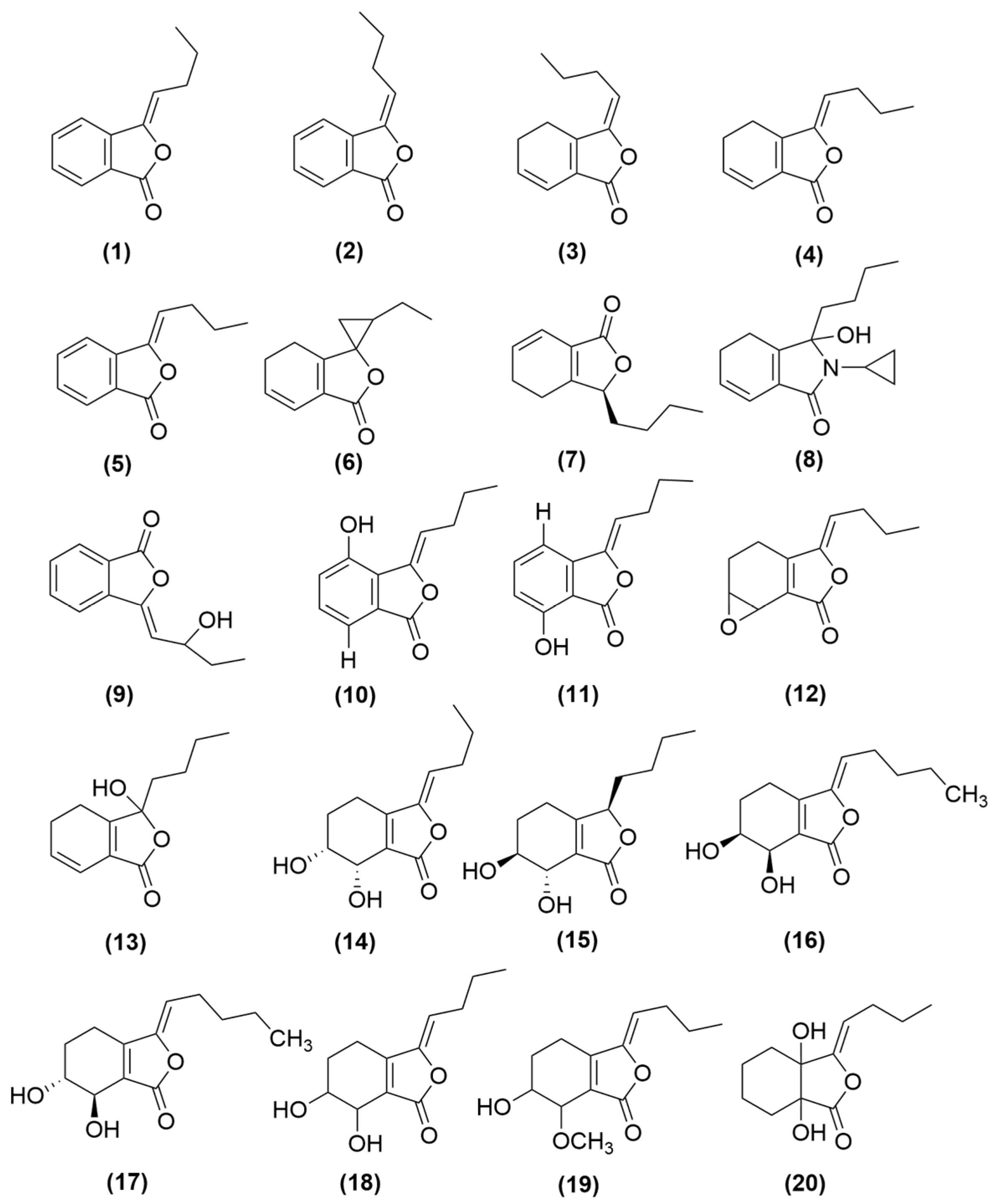
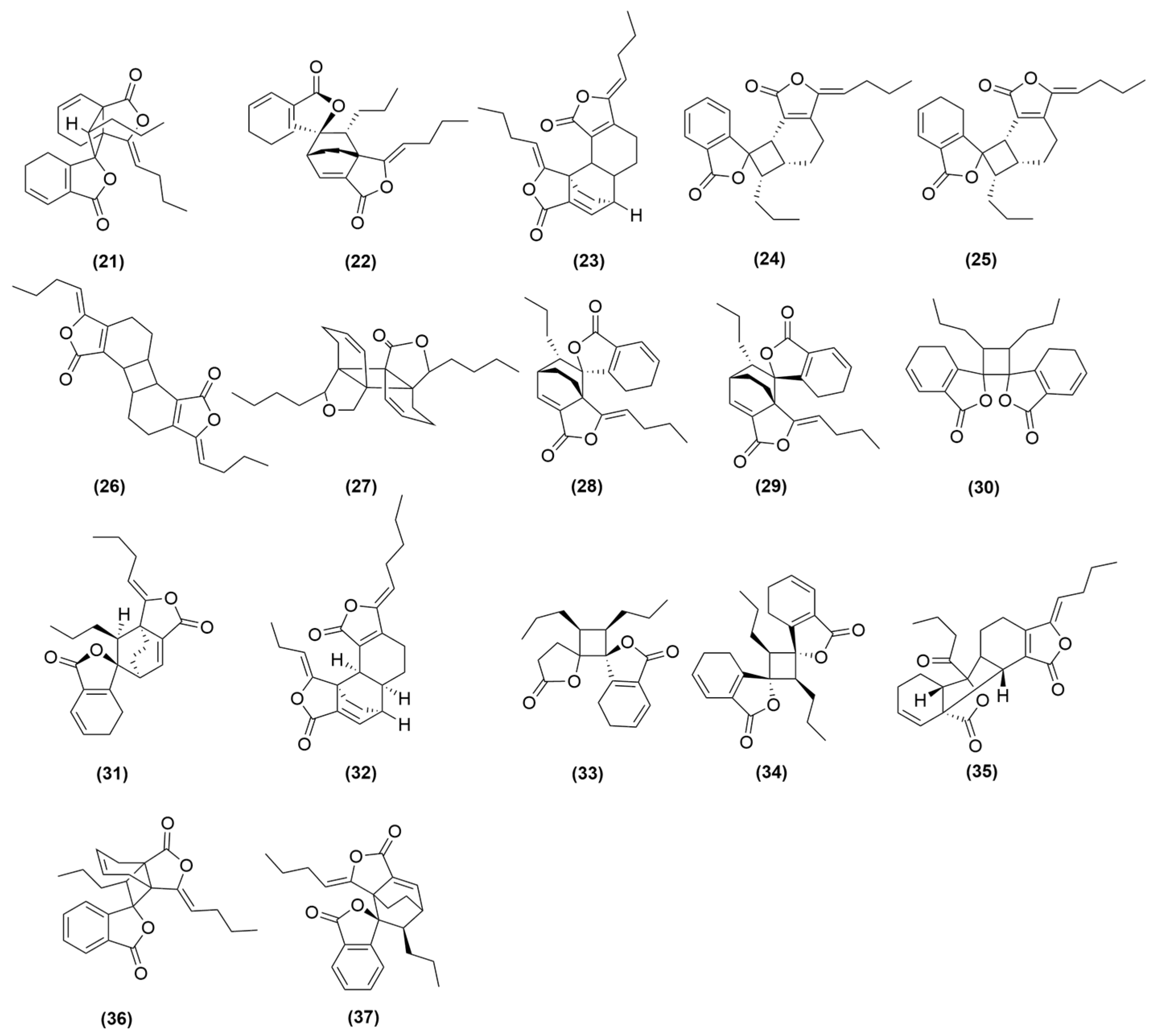
Phthalein compounds include phthalein monomers (120) and phthalein dimers (2137) in A. sinensis volatile oil, all of which are illustrated in Figure 1 and Figure 2. Phthalide monomers include Z-butylidenephthalide (1), E-butylidenephthalide (2), (Z)-ligustilide (3), (E)-ligustilide (4), n-butylphthalide (5), neoligustilide (6), senkyunolide A (7), ligusticum cycloprolactam (LIGc) (8), senkyunolide F (9), 3-butylidene-4-hydroxyphthalide (10), 3-butylidene-7-hydroxyphthalide (11), Z-6,7-epoxyligustilide (12), senkyunolide G (13), senkyunolide H (14), senkyunolide J (15), homosenkyunolide I (16), homosenkyunolide H (17), 6,7-dihydroxyligustilide (18), Z-6-hydroxy-7-methoxydihydroligustilide (19), 3a,7a-dihydroxyligutilide (20). Phthalide dimers include neodiligustilide (21), (Z)-ligustilide dimer E-232 (22), senkyunolide O (23), gelispirolide (24), riligustilide (25), 3,3′Z-6.7′,7.6′-diligustilide (26), 3a.7′a,7a.3′a-diligustilide (27), tokinolide B (28), isotokinolide B (29), angelicolide (30), (3Z)-(3aR, 6S, 3′R, 8′, 8)-3a.8′,6.3-diligustilide (31), levistolide A (32), E,E-3.3′,8.8′-diligustilide (33), E,E′-3.8′,8.3′-isodiligustilide (34), Z-3′,8′,3′a,7′a-tetrahydro-6,3, 7.7′a-diligustilide-8′-one (35), sinaspirolide (36), ansaspirolide (37) [33,35,36,37,38].
In conclusion, phthalides are the major bioactive components of the volatile oil from A. sinensis. Among them, (Z)-ligustilide (3, Figure 1) is a major phthalide and the most abundant compound in volatile oil of A. sinensis. It has been demonstrated to regulate macrophage polarization, suppress the release of pro-inflammatory cytokines, and protect against thymic immune senescence. However, current research has predominantly focused on (Z)-ligustilide monomers. The immunological activities of its dimers and other derivatives remain to be systematically evaluated. Furthermore, the poor stability of phthalides may compromise the reproducibility of their pharmacological effects. Future studies should establish robust quality control methods and explore the immunological activity profiles of individual phthalides, as well as their synergistic effects.

4.3. Phenylpropanoids

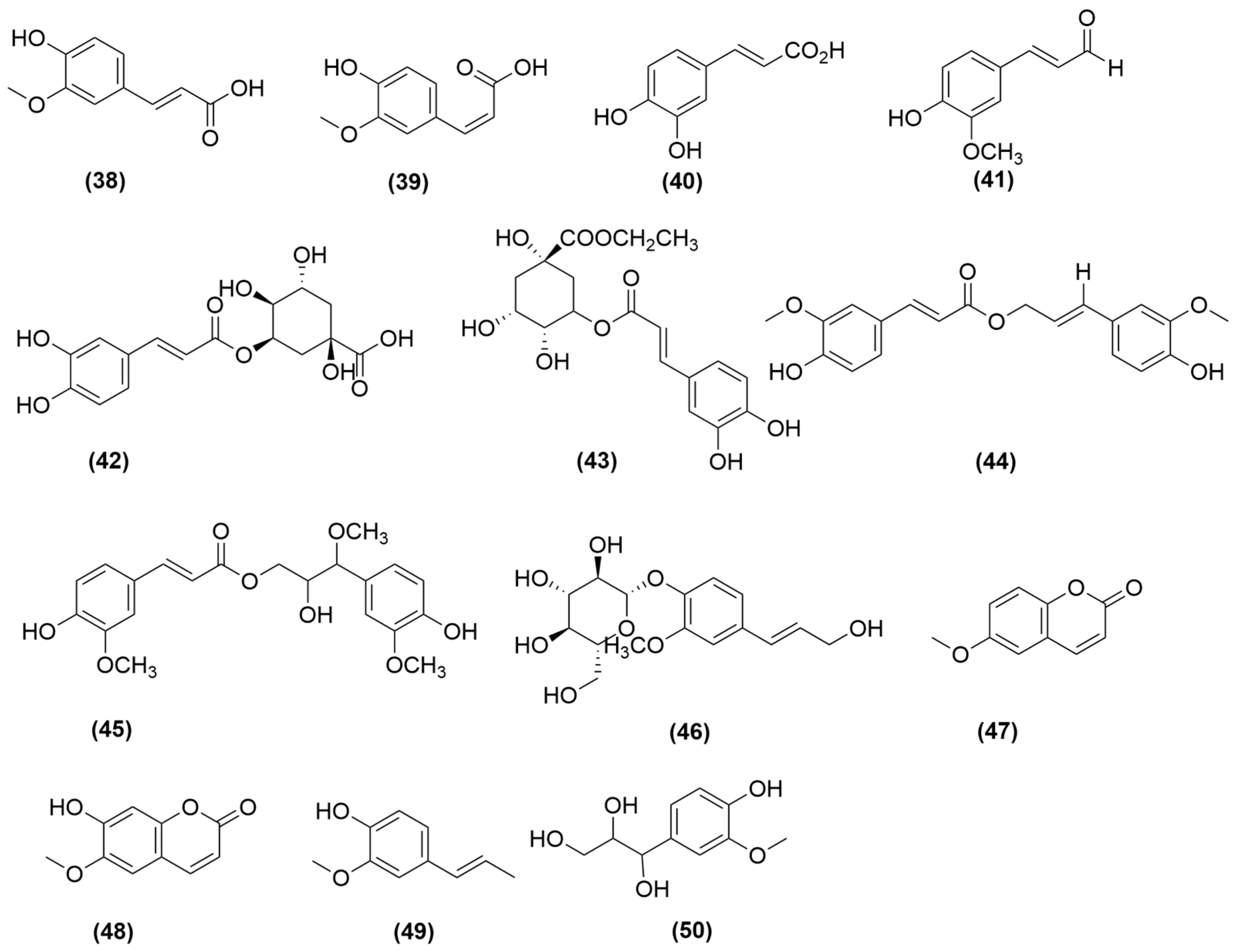
Phenylpropanoids compounds in A. sinensis include phenolic acids and their derivatives (3843), phenylpropanoid esters (4445), phenylpropanoid glycosides (46), coumarins (4748), and other related compounds(4950), including ferulic acid (38), cis-ferulic acid (39), caffeic acid (40), ferulic aldehyde (41), chlorogenic acid (42), 3-O-caffeoyl-D-quinic acid ethyl ester (43), coniferyl ferulate (44), angeliferulate (45), E-coniferin (46), 6-methoxy-coumarin (47), 6-methoxy-7-hydroxycoumarin (48), isoeugenol (49), and guaiacylglycerol (50) [35,37,39,40]. These phenylpropanoids are illustrated in Figure 3.
Among these, ferulic acid (38, Figure 3) is the most abundant [41], with the ability to regulate Th2 immune responses, suppress pro-inflammatory cytokine release and protect osteoblasts. Research has found that ferulic acid varies across different parts of A. sinensis, with the highest concentration found in the root tail segment [42,43]. Furthermore, Xu et al. [44] found that precipitation and temperature have an effect on the content of ferulic acid and chlorogenic acid in A. sinensis. Although the immunomodulatory potential of other phenolic acids, such as caffeic acid (40, Figure 3), chlorogenic acid (42, Figure 3) and coumarins has been preliminarily reported, systematic research is still lacking. Future studies should clarify their contribution to the overall immunomodulatory effects of A. sinensis based on the spectrum–activity relationship.

4.4. Terpenoids

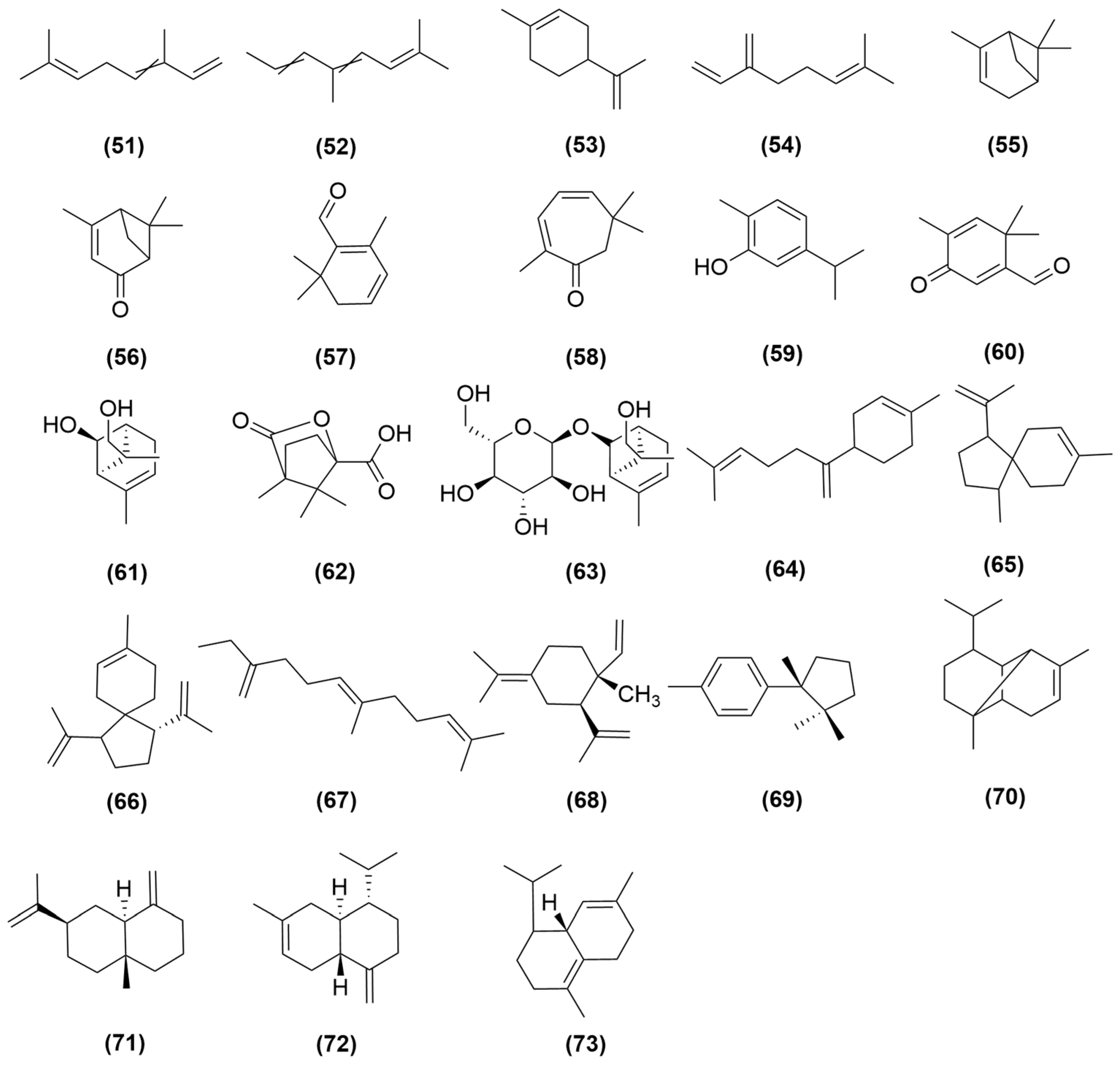
Research has found that monoterpenoids (5163) and sesquiterpenoids (6473) are the components of essential oil in A. sinensis, including β-ocimene (51), allo-ocimene (52), limonene (53), myrcene (54), α-pinene (55), verbenone (56), safranal (57), eucarvone (58), carvacrol (59), 1,1,5-trimethyl-2-formyl-cyclohexa-2,5-diene-4-one (60), 6β,9-hydroxy-(+)-α-pinene (61), camphanic acid (62), 9-hydroxy-(+)-α-pinene-6β-O- D-glucoside (63), β-bisabolene (64), isoacoradien (65), acoradiene (66), trans-β-farnesene (67), γ-elemene (68), cuparene (69), copaene (70), β-selinene (71), γ-cadinene (72), bergamotone (73) [45,46], all of which are illustrated in Figure 4.
The terpenoids (monoterpenes and sesquiterpenes) in A. sinensis, primarily identified via Finnigan Trace Mass gas chromatography-mass spectrometer (GC-MS, Thermo Fisher Scientific Inc., Waltham, MA, USA), are integral components of its volatile oil. However, immunopharmacological research on these terpenoids remains limited, and current evidence is insufficient to confirm their direct contribution to the herb’s immunomodulatory effects. Given their low abundance and high structural diversity, future studies should adopt activity-guided fractionation strategies combined with in vitro immune screening to identify key bioactive components from the complex mixture and elucidate their underlying mechanisms.

4.5. Other Aromatic Compounds

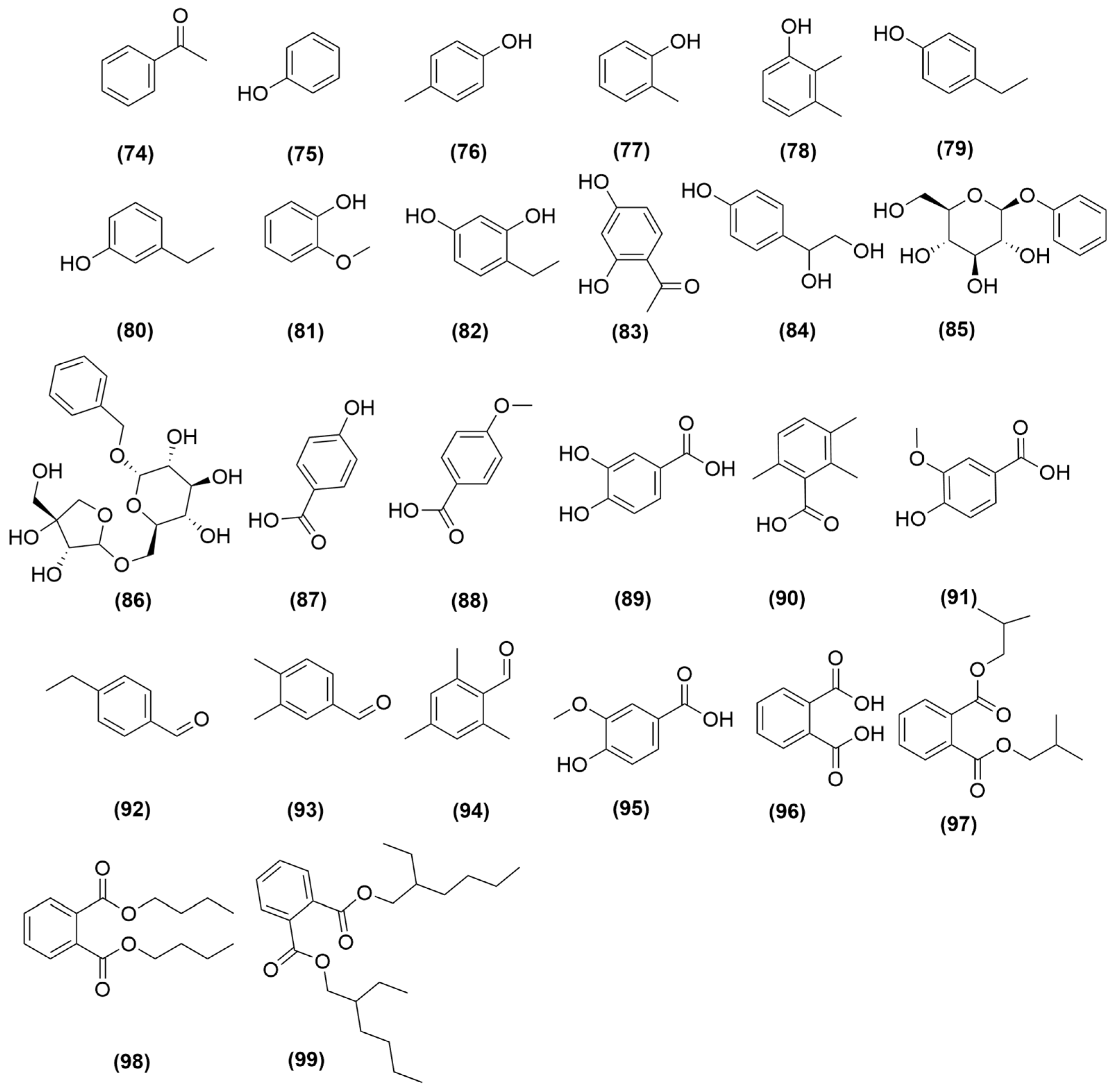
Furthermore, studies have identified aromatic ketone (74), phenolic compounds (7584), phenolic glycosides (8586), benzoic acid (8791), aromatic aldehydes (9295), phthalate esters (9699) in A. sinensis, including acetophenone (74), phenol (75), p-cresol (76), o-cresol (77), 2,3-dimethylphenol (78), p-ethylphenol (79), m-ethylphenol (80), guaiacol (81), 4-ethylresorcinol (82), 2,4-dihydroxyacetophenone (83), 4-(1,2-dihydroxyethyl)-phenol (84), phenyl-β-D-glucopyranoside (85), benzyl-0-β-D-apiofuranosyl-(1-6)-β-D-glucopyranoside (86), p-hydroxybenzoic acid (87), anisic acid (88), protocatechuic acid (89), 2,3,6-trimethylbenzoic acid (90), vanillic acid (91), p-ethylbenzaldehyde (92), 3,4-dimethylbenzaldehyde (93), 2,4,6-trimeitylbenzaldehyde (94), vanillin (95), phthalic acid (96), bis (2-methylpropyl) phthalate (97), dibutp phthalate (98), bis (2-ethylhexyl) phthalate (99) [37,46,47,48], all of which are illustrated in Figure 5.

4.6. Flavonoid Components

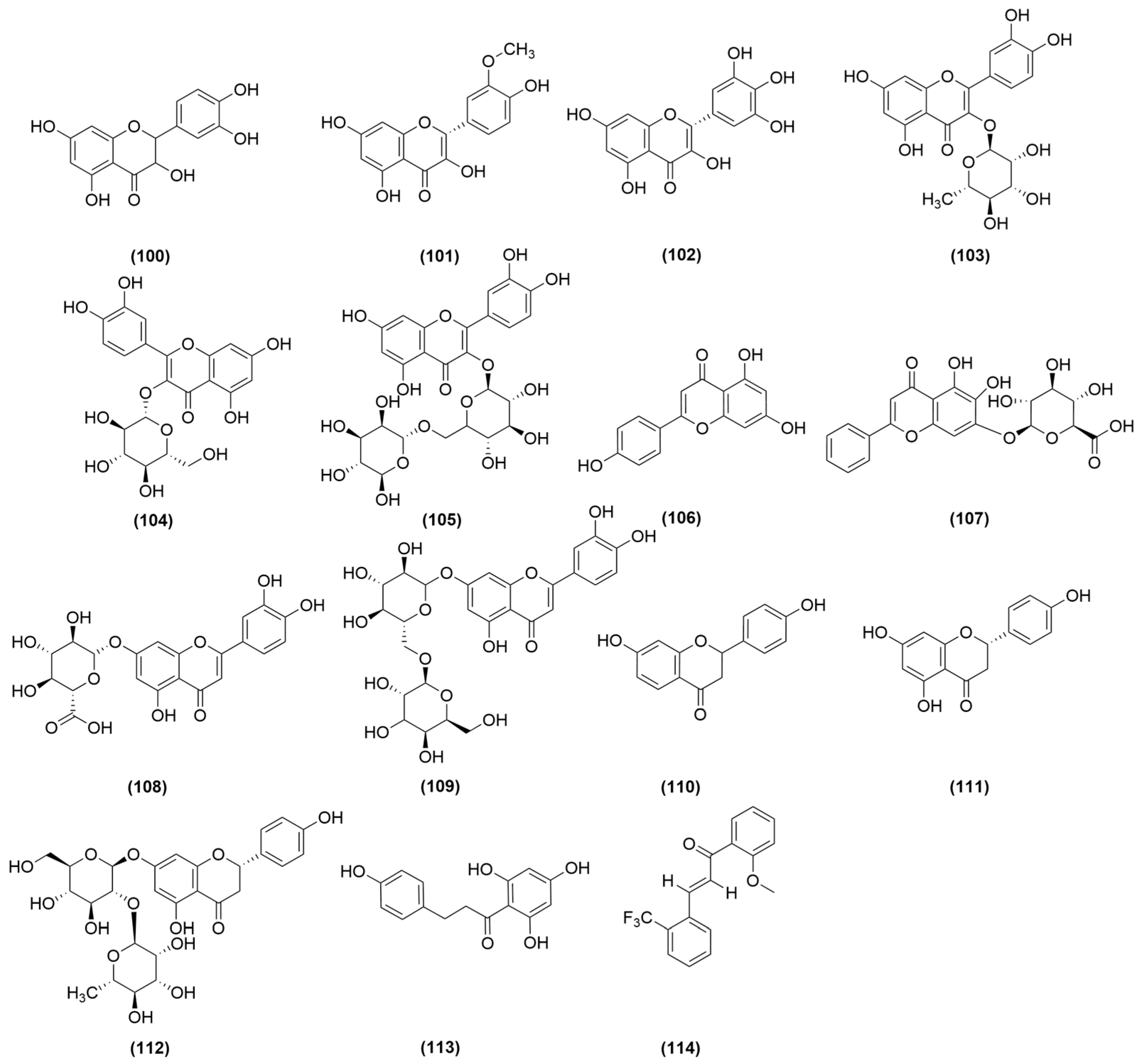
Flavonoids (100114) represent another class of bioactive constituents in A. sinensis, with extraction methods including reflux extraction, ultrasonic extraction and chromatography [49]. Researchers have identified flavonols (100105), flavones (106109), flavanones (110112), chalcones (113114) in A. sinensis, among which flavonols are the most diverse subclass, including kaempferol (100), isorhamnetin (101), myricetin (102), quercitrin (103), isoquercitrin (104) and rutin (105). Flavones include apigenin (106), baicalin (107), luteolin-7-O-β-D-glucoside (108) and luteolin-7-O-rutinoside (109). Flavanones comprise liquiritigenin (110), naringenin (111) and naringin (112). Chalcones include phloretin (113), chalcone derivative (114) [48,49,50,51], all of which are illustrated in Figure 6.

4.7. Other Chemical Constituents

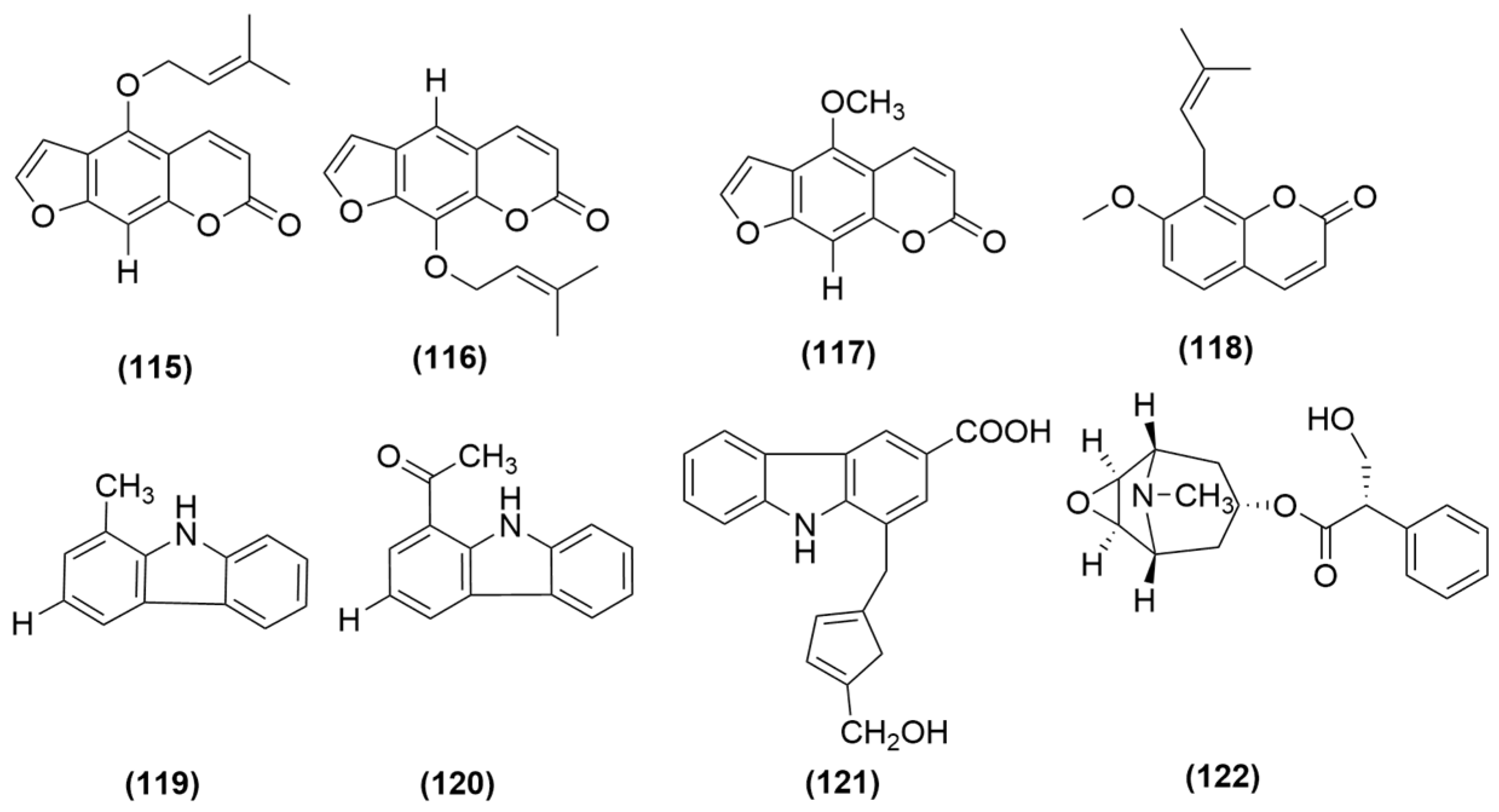
In addition, studies have demonstrated that A. sinensis contains coumarin derivatives (115118) and trace amounts of alkaloids (119122), among other constituents. The coumarin derivatives include furanocoumarins such as isoimperatorin (115), imperatorin (116), bergapten (117) and osthole (118), while the alkaloid components comprise harman (119), 1-acetyl-β-carboline (120), harmaline (121), scopolamine (122) [48,52,53] and other analogs, all of which are illustrated in Figure 7.
In summary, A. sinensis possesses a complex chemical profile, including polysaccharides, phthalein, phenylpropanoids, terpenoids, and aromatic compounds, flavonoid components, coumarin derivatives and alkaloids, which contribute to its diverse bioactivities. Among these, ASP, (Z)-ligustilide (3, Figure 1), and ferulic acid (38, Figure 3) are the key immunomodulatory constituents. The identification methods of these chemical constituents are summarized in Table 2. Current research is imbalanced: while polysaccharides are relatively well-studied, most other phthalides, phenylpropanoids, terpenoids, flavonoids and other chemical components remain insufficiently investigated. Polysaccharides also display high structural heterogeneity dependent on extraction and processing, and the structure–activity relationships underlying immunomodulation remain unclear. Future studies should combine advanced analytical techniques with bioactivity-guided fractionation, spectrum–activity relationship analysis, and network pharmacology to clarify the “chemical constituent–immunomodulatory activity” network. This will facilitate the development of efficacy-based quality control standards and mechanism-driven clinical applications of A. sinensis.

5. Effect of Angelica sinensis and Its Components on the Immune System

5.1. Restoration of Immune Organ Weights and Their Indices

Research has confirmed that angelica polysaccharides in A. sinensis can restore the spleen and thymus indices in animal models. Table 3 presents the effects of ASP on the immune organs. Zhao et al. [31] found that two novel polysaccharides, isolated from A. sinensis, designated APS-1a and APS-3a, could elevate the thymus and spleen indices as well as bone marrow cells counts in irradiated mice. These polysaccharides also exhibited protective effects against radiation-induced micronucleus formation in bone marrow cells, indicating their potential application as radioprotective agents. In a separate study, Du et al. [54] studied the protective properties and potential mechanisms of ASP against splenic injury and immune cell damage induced by 5-fluorouracil (5-FU) in mice. The results revealed that ASP treatment mitigated the chemotherapy-induced reduction in spleen weight and organ index, while also improving splenic histopathological structure and functional recovery. Further mechanistic analysis suggested that this protection may be mediated through ASP-induced nuclear translocation of nuclear factor erythroid 2-related factor 2 (Nrf2) and activation of the phosphoinositide 3-kinase/protein kinase B (PI3K/AKT) signaling pathway. Specifically, Nrf2 nuclear translocation induced by ASP alleviates oxidative stress-induced immune cell apoptosis by promoting antioxidant gene expression (e.g., CAT, HO-1), while PI3K/AKT activation mediated by ASP enhances splenic immune cell proliferation and survival, with such activation only occurring under 5-FU-induced stress rather than normal physiological conditions. Additionally, Yang et al. [55] studied the activity of synthesized angelica APS and its sulfated derivative APS-1 against murine leukemia virus in vivo experiments. Their findings revealed that APS-1 significantly reversed the thymus-to-body weight index reduction induced by viral infection in a dose-dependent manner, not only suppressing viral replication but also enhancing host immune function.
In conclusion, immune organ weight and indices are fundamental for evaluating immune system integrity. Current evidence confirms that ASP exerts radioprotective, antiviral, and immunoregulatory effects by restoring spleen and thymus indices in immune-deficient models; however, its restorative efficacy varies significantly with the injury etiology. Structurally distinct fractions (e.g., APS-1a, APS-3a) show differential potency against radiation- or 5-FU-induced damage, which correlates with ASP structural heterogeneity, the pathological mechanisms of injury (DNA damage/oxidative stress for radiation, cell proliferation inhibition for 5-FU, and complex immune escape for viruses), and administration routes.
Notably, systematic structure–activity relationship studies are lacking, as structural variations (influenced by monosaccharide ratios, linkages, and extraction methods) that affect receptor binding have not been correlated with immune organ protection efficacy. Additionally, non-standardized administration routes (e.g., intraperitoneal injection, gavage) and absent pharmacokinetic data hinder cross-study comparison and clinical translation. Furthermore, the evaluation system is overly narrow, relying solely on organ indices without assessing cellular composition, lymphocyte development, or microenvironmental changes. Research scope is also restricted to central immune organs, leaving protective effects on mucosal-associated lymphoid tissues (e.g., gut, lung) largely unexplored. Therefore, future research should establish a multi-dimensional evaluation system integrating “organ indices—histopathology—cellular function—immune microenvironment,” address the knowledge gap concerning mucosal-associated peripheral immune organs, clarify the structure–activity relationships of structurally distinct ASP and the roles of non-polysaccharide components, and conduct rigorous dose–effect and safety studies to provide the evidence base necessary for clinical translation. At the same time, the effects of non-polysaccharide components (such as ligustilide and ferulic acid) on the central and peripheral immune organs will be systematically evaluated, and research on the synergistic effect of ASP with other active components will be conducted to fill the current research gap and provide a material basis for exploring the “multi-component, multi-target” immune regulation research of A. sinensis.

5.2. Promoting Proliferation and Activation of Immune Cells

5.2.1. Proliferation and Activation of Macrophages

Macrophages, as tissue-resident or infiltrating immune cells, are pivotal to innate immunity, tissue development, physiological homeostasis, and tissue repair processes [56]. M1 macrophages which migrate to inflammatory sites during host defense, secrete pro-inflammatory cytokines, superoxide anion (O2), and nitric oxide (NO).In contrast, M2 macrophages maintain immune homeostasis through the production of anti-inflammatory cytokines and the phagocytic clearance of apoptotic cells [57,58].
Accumulating evidence indicates that polysaccharides derived from A. sinensis not only have function as immunological adjuvants to enhance antigen uptake by macrophages and potentiate immune responses, but also can stimulate macrophage proliferation, thereby increasing both the number and functional activity of these cells, as shown in Table 4. Sun et al. [59] studied the effect of ASP on extramedullary erythropoiesis under stress conditions and found that ASP upregulated gene expression of the macrophage chemokine (C-C motif) ligand 2 (CCl2) and increased the population of F4/80+ macrophages in the mouse spleen. This effect of ASP is achieved through the erythropoietin/signal transducer and activator of transcription 5 (EPO/STAT5) and PI3K/Akt/hypoxia-inducible factor 2α (HIF2α) signaling pathways. Studies have shown that the PI3K/signal transducer and activator of transcription 3 (STAT3) pathway is critical for macrophage phenotypic regulation, in which STAT3 phosphorylation is essential for the function of IL-10, and M2 polarization requires STAT3 mediation to reduce collagen production. Moreover, aging can lead to abnormal activation of this pathway and decreased STAT3 activity, thereby reducing cardiac M2 macrophage infiltration and impairing cardioprotection. N-butylphthalide (5, Figure 1), a constituent of the volatile oil of A. sinensis, can target the PI3K/STAT3 pathway, promote M2 macrophage polarization, and alleviate myocardial fibrosis. Meanwhile, this phthalide can also regulate multiple key targets along the PI3K/STAT3 cascade, including promoting the phosphorylation of STAT3, and activating its downstream anti-inflammatory and anti-fibrotic signaling, thus further enhancing the phenotypic transformation of macrophages and protecting cardiac function [60].
In the mouse tumor model, Shen et al. [61] found that ASP can upregulate monocytes/macrophages, T cells, cytotoxic T lymphocyte (CD8+T cells), gamma delta T cells, and granulocytes in both peripheral blood and spleen of mice, with effects showing a dose-dependent pattern. Meanwhile, in vivo studies confirm that STAT3 is critical for myeloid-derived suppressor cell (MDSC) proliferation. STAT1 modulates arginase and inducible Nitric Oxide Synthase (iNOS) activity in M-MDSCs and inhibits IFN-γ secretion by T cells. APS dose-dependently elevates the phosphorylation levels of STAT1 and STAT3 in MDSCs, which may enhance MDSC function via regulating these two pathways. Furthermore, toll-like receptors (TLRs) are a family of transmembrane proteins in mammals that play a key role in innate immune recognition. Yang et al. found that ASP can enhance the mRNA expression of toll-like receptor 4 (TLR4), thereby activating the TLR4 signaling pathway to promote the release of NO, TNF-α and ROS by macrophages and increase the activities of iNOS and LSZ in macrophages [62]. Chen et al. [63] compared the immunomodulatory effects of ASP, A. sinensis oligosaccharides, A. sinensis sucrose, and total amino acids of A. sinensis on mouse peritoneal macrophages. The results demonstrated that ASP significantly enhanced macrophage growth and proliferative activity and exhibited synergistic immunomodulatory potential when combined with total amino acids, and this effect of ASP might be associated with the upregulation of TLR4 mRNA. The effect of the active components of A. sinensis in promoting the proliferation and activation of lymphocytes is shown in Table 4.
Table 4. Promoting effect of active components from A. sinensis on proliferation and activation of immune cells.
No.Chemical ComponentModelPathwaysEffectsRef.
1ASPIn vivo: stress-induced anemia mouse modelEPO/STAT5
PI3K/Akt/HIF2α
↑ cellular proliferation, CCl2, F4/80+ macrophages,
splenic macrophages,
↓ IL-1β
[59]
2n-butylphthalide
(5, Figure 1)
In vivo: myocardial infarction rat modelPI3K/STAT3↑ M2 macrophages, M2c subtype macrophages, IL-10
↓ M1 macrophages
[60]
3ferulic acid (38, Figure 3)In vivo: hematopoietic cell depletion mouse model/↑ white blood cells
↑ CFU-GEMM
[64]
4ASPIn vivo: mouse tumor model
In vitro: MDSC model
STAT1
STAT3
↑ CD8+ T cells, T cells, NK cells, γδT cells, granulocytes, MDSC[61]
5AAPIn vivo: female BALB/c mouse model
In vitro: mouse peritoneal macrophage model
TLR4↑ macrophages enzyme activity, NO, TNF-α, TLR4 mRNA[62]
6AP I
AP II
In vivo: Balb/c strain of mice model
In vitro: mouse splenic lymphocyte model
/↑ lymphocyte, IFN-γ[65]
7ligustilideIn vivo: acute thymus atrophy mouse model
In vitro: mouse iTECs model
Tβ15-G-actin↑ thymic epithelial cells, CD4SP T cells
↓ thymic damage
[66]
8ASPIn vitro: mouse peritoneal macrophage modelTLR4 mRNA↑ macrophages
↑ iNOS, LZM, ICAM-1, TLR4 mRNA
[63]
9ASP-PLGAIn vitro: mouse splenic lymphocyte model/↑ lymphocytes, CD4+/CD8+ T cells[67]
10ASPIn vitro: mouse splenic lymphocyte model/↑ macrophages, lymphocyte [68]
11sCAPIn vitro: chicken peripheral blood lymphocyte /↑ lymphocyte [69]
12AP-3In vitro: mouse splenic cell/↑ macrophages, mixed lymphocyte, IFN-γ, IL-2[70]
13CAPS30, CAPS50, CAPS70, CAPS80In vitro: peripheral blood lymphocyte /↑ lymphocytes, IFN-γ, IL-2, IL-6, TNF–α
↑ CD3+, CD56+ cells
[32]
Abbreviations: EPO/STAT5, erythropoietin/signal transducer and activator of transcription 5; PI3K/Akt/HIF2α, phosphoinositide 3-kinase/protein kinase B/hypoxia-inducible factor 2α; PI3K/STAT3, phosphoinositide 3-kinase/signal transducer and activator of transcription 3; TLR4, toll-like receptor 4; MDSC, myeloid-derived suppressor cell; STAT1, signal transducer and activator of transcription 1; CFU-GEMM, colony-forming unit-granulocyte-erythrocyte-monocyte-megakaryocyte; iTECs, immature thymic epithelial cells; Tβ15-G-actin, thymosin β15-G-actin; CD4SP T cells, CD4+ single-positive T lymphocytes; iNOS, inducible nitric oxide synthase; LZM, lysozyme; ICAM-1, intercellular adhesion molecule-1; PLGA, polylactic-co-glycolic acid; sCAP, selenium-modified Angelica polysaccharide; AP-3, Angelica polysaccharide-3; CAPS30/50/70/80, graded Angelica polysaccharides (30/50/70/80); CD3+/56+, cluster of differentiation 3+/56+ cells; NK cells, natural killer cells. ↑ means increase; ↓ means decrease.

5.2.2. Proliferation and Activation of Lymphocytes

Shan et al. [65] found that various ASP fractions could enhance the proliferation and biological activity of mouse spleen lymphocytes both in vitro and in vivo, and simultaneously stimulate the production of interferon-γ (IFN-γ) and other cytokines, thereby regulating the cellular immune response. And studies have shown that encapsulating ASP into polylactic acid glycolic acid copolymer (PLGA) to form ASP-PLGA can significantly promote lymphocyte proliferation and enhance immune function [67]. Moreover, the extraction methods applied to ASP can influence its capacity to stimulate T cell proliferation to varying degrees [68]. Qin et al. [69] found that selenium-modified ASP, obtained via water decoction and ethanol precipitation, further augments the immunomodulatory activity of Chinese angelica polysaccharide by promoting the proliferation of peripheral lymphocytes in chickens. In a comparative study, Wang et al. [32] extracted four graded polysaccharides from A. sinensis, named CAPS30, CAPS50, CAPS70, and CAPS80, which were evaluated for immunostimulatory activity in vitro. All four were found to induce lymphocyte proliferation and upregulate secretion of IFN-γ, tumor necrosis factor-α (TNF–α), interleukin (IL)-2, IL-6. Among them, CAPS50 and CAPS70 also increased the proportion of cluster of differentiation 3 (CD3+) T lymphocytes.
In addition, Deng et al. [64] found that ferulic acid (38, Figure 3) in A. sinensis can promote the recovery of white blood cell count in a mouse model of blood cell deficiency. Xu et al. [66] found that ligustilide in the volatile oil of A. sinensis can reverse thymus damage, promote thymic epithelial cell (TEC) proliferation and reticular differentiation, increase the proportion of CD4+ single positive (CD4SP) T cells, and alleviate thymic immune aging induced by doxorubicin. This effect of ligustilide is achieved by inhibiting the binding of thymosin β15 (Tβ15) to G-actin. Yang et al. [70] found that ASP can activate macrophages and T cells, and can also exert immunomodulatory effects through cytokines IL-2 and IFN-γ.
In summary, immune cell proliferation and activation are core steps in initiating immune responses, and active components of A. sinensis promote this process via TLR4-related signaling. Macrophages are key targets: ASP may activate macrophages through TLR4, and via the EPO/STAT5 pathway in stress-induced anemia to facilitate erythroid differentiation. Notably, distinct components exert divergent effects—ASP primarily promotes M1 polarization, while volatile oil-derived butylphthalide induces M2 polarization via PI3K/STAT3 to alleviate myocardial fibrosis in rats. Mechanistically, macrophage surface TLR4 and Dectin-1 are critical for polysaccharide recognition, with ASP structural characteristics potentially determining receptor selectivity; however, direct validation of receptor-mediated macrophage proliferation and comparative studies on receptor selectivity of different ASP structures are lacking.
Lymphocytes, as core executors of adaptive immunity, are significantly regulated by A. sinensis components. Various ASP fractions and graded CAPS30–80 (with CAPS70 most potent) promote splenic lymphocyte proliferation and induce IFN-γ/IL-2 secretion in vitro and in vivo. Ligustilide maintains the thymic microenvironment via Tβ15 to support T cell development, while preparation/modification methods strongly influence ASP activity—microwave-dried polysaccharides enhance lymphocyte proliferation (unlike far-infrared-dried counterparts), and selenylated/sulfated ASP further boost lymphocyte function, inhibit viral replication, and improve host immunity.
Nevertheless, current research faces critical bottlenecks: over 90% of studies focus on macrophages and lymphocytes, leaving dendritic cells (DC), natural killer (NK) cells, and mast cells largely unexplored. Core mechanisms suffer from logical gaps—most studies only detect activation phenotypes without validating immune cell activation as a necessary condition for efficacy via cell depletion or conditional knockout. In vitro monoculture experiments outnumber vivo studies, with the validity of in vitro conclusions in complex in vivo microenvironments unconfirmed. Additionally, component-specific regulatory preferences for immune subsets and multi-component synergies remain unelucidated. Future research should fill gaps in non-dominant immune cells, validate the core driving role of immune activation via lineage tracing/knockout, establish physiologically relevant co-culture/organoid models, and clarify component specificity and multi-component synergies.

5.3. Inhibiting Excessive Activation of Immune Cells

However, excessive activation of immune cells, including macrophages, mast cells, and T helper 2 (Th2) cells, can trigger inflammation responses, oxidative stress, and other pathological reactions. The effective components of A. sinensis effectively inhibited the excessive response of immune responses, as displayed in Table 5. Cheng et al. [71] revealed that ferulic acid (38, Figure 3) can suppress the dominant expression of Th2 related factors in a membranous nephropathy (MN) rat model, which may be related to the regulation of oxidative stress, angiogenesis and anti-angiogenic factors, as well as the suppression of Th2-mediated immune response. Proto-oncogene tyrosine–protein kinase (Fyn) is a crucial signaling molecule for activation of mast cells stimulated by various antigens. Mao et al. [72] demonstrated that ASP can downregulate the activation of mast cells by suppressing pro-inflammatory cytokines and allergens release, as well as downregulating GRB2-associated binding protein 2 (Gab2)/PI3K/Akt and Fyn/spleen tyrosine kinase (Syk) signaling pathways. Fu et al. [73] found that n-butylphenolphthalein, a phthalein compound also derived from A. sinensis, can significantly reduce the secretion of IL-6 and TNF-α in lipopolysaccharide (LPS)-stimulated DC2.4 in mice, and this inhibitory effect is achieved by suppressing the nuclear factor kappa-B (NF-κB) signaling pathway. In the experiment of excessive proliferation of spleen cells induced by concanavalin A (Con A), it was found that ASP could significantly inhibit the proliferation of spleen cells and CD4+T cells, while promoting the proliferation of CD19-positive B (CD19+B) cells, thereby achieving a bidirectional regulatory effect on immune cells [74].
Building on these mechanistic insights, it becomes evident that different active components of A. sinensis target distinct nodes of the immune network: ferulic acid modulates adaptive immunity by suppressing Th2 responses; n-butylphthalide acts on dendritic cells to curb NF-κB-driven inflammation; ASP exerts dual effects on innate and adaptive immunity by inhibiting mast cell activation while fine-tuning T/B cell balance. This multi-component, multi-target regulatory network enables A. sinensis to achieve precise immunomodulation without tipping into global immunosuppression—a hallmark advantage of herbal therapeutics. This precise regulation stems from the synergy of multiple components in A. sinensis—different components target distinct nodes of the immune response to jointly maintain immune homeostasis. However, current research has obvious limitations: most studies remain at the phenotypic description stage without validating direct molecular targets; the boundary between inhibiting excessive activation and comprehensive immunosuppression is unclear; and the synergistic mechanism among different components has not been systematically evaluated. Future research should focus on three aspects: verifying key targets using gene knockout models; elucidating the cell subset specificity of component effects via single-cell technology; and exploring the molecular network of multi-component synergistic regulation of immune homeostasis, so as to provide a theoretical basis for the selective intervention of inflammatory diseases.

5.4. Modulation of Immune Active Substance Release

Many studies found that the primary bioactive components from A. sinensis can modulate the release of the immune active substances, as shown in Table 6. NF-κB is a key transcription factor mediating the production of pro-inflammatory cytokines and chemokines linked to inflammation and autoimmune diseases, and blocking its activation may ameliorate Con A-induced liver injury. The IL-6/STAT3 signaling pathway not only mediates inflammatory responses but also leads to a significant increase in STAT3 phosphorylation levels [75].In a Con A-induced mouse model of liver injury, ASP can significantly reduce pro-inflammatory cytokines IFN-γ, TNF-α, IL-2, and IL-6, and this anti-inflammatory effect of ASP was achieved through the inhibition of the IL-6/STAT3 and NF-κB signaling pathways [74]. Li et al. [76] found that ASP can alleviates inflammation in complete Freund’s adjuvant (CFA) induced arthritic rats by inhibiting TNF-α and IL-6 levels and suppressing the IL-6/janus kinase 2 (JAK2)/STAT3 signaling pathway. In a murine model of sepsis, ASP was shown to reduce myeloperoxidase (MPO) activity—a marker of neutrophil infiltration—and inhibit TNF-α, IL-6, IL-18, and IL-1β expression, thereby protecting against sepsis-induced acute lung injury through inhibition of the NOD-like receptor family pyrin domain containing 3 (NLRP3) and NF-κB pathways [77]. In the acute inflammation rat model, it was found that the volatile oil of A. sinensis could reduce the levels of white blood cell (WBC), neutrophil percentage (NE%), TNF-α, NO, inducible nitric oxide synthase (iNOS), cyclooxygenase-2 (COX-2), IL-1β, and IL-6, exerting liver-protective and anti-inflammatory properties [78]. Zhong et al. [79] compared processing methods and found that stir-fried and alcohol-processed the volatile oil of A. sinensis exhibited the strongest inhibition of PGE2, histamine, 5-hydroxytryptamine, and TNF-α release. Furthermore, urine metabolomics studies have revealed that disrupted metabolism of glycine, arachidonic acid, L-glutamate, pyruvate, and succinate may play a critical role in the susceptibility and progression of LPS-induced inflammation. Notably, the volatile oil of A. sinensis can regulate these metabolic disturbances to exert anti-inflammatory effects [80]. Li et al. [81] not only found multiple types of ligustilide in the volatile oil of A. sinensis, but also found in a mouse model of ear edema that A. sinensis volatile oil can significantly reduce the levels of inflammatory cytokines TNF-α, COX-2, and IL-6.
In the model of hepatic stellate cell, Wang et al. [82] revealed that ASP can significantly enhance the secretion of IL-22 in splenic cells and hepatic tissues. And this effect of ASP can effectively alleviate the liver fibrosis condition of mice with chronic liver fibrosis, thereby suppressing activation of hepatic stellate cell (HSC) via the IL-22/signal transducer and STAT3 pathway. Chao et al. [83] demonstrated that the ethyl acetate extract of A. sinensis, rich in ferulic acid (38, Figure 3), ligustilide and other components, can significantly inhibit the NF-κB luciferase activity in LPS/IFN-γ and IL-6-stimulated RAW 264.7 cells, and reduce the secretion of TNF-α. In addition, it can suppress the release of NO and macrophage inflammatory protein-2 (MIP-2)—a chemokine whose expression is dependent on NF-κB activation, thereby alleviating acute inflammatory injury. Choi et al. [84] found that glabralactone, a coumarin derivative from A. sinensis with a structure analogous to compounds 3850, acts as an effective inhibitor of NO release in macrophages, and this inhibitory effect is mediated through the suppression of the NF-κB and TIR-domain-containing adaptor protein inducing IFN-β- (TRIF-) dependent interferon regulatory factor 3 (IRF-3) pathways.
Su et al. [85] further identified that ligustilide in A. sinensis can prevent LPS induced iNOS, NO, PGE2 and TNF-α expression in RAW 264.7 macrophages by scavenging reactive oxygen species (ROS) generation and downregulating the mitogen-activated protein kinase (MAPK), activator protein-1 (AP-1) and NF-κB signaling pathways. Meanwhile, Chen et al. [86] found that ferulic acid (38, Figure 3) from A. sinensis reduced hydrogen peroxide induced TNF-α, IL-1β, MMP-1, and matrix metalloproteinase 13 (MMP-13) expression, and upregulated SRY-box transcription factor 9 (SOX9) gene to protect osteoblasts.
In inflammatory or immune hyperactivity states, immune homeostasis is imbalanced—characterized by upregulated pro-inflammatory mediators (e.g., IL-2, IL-6, TNF-α, IFN-γ) and downregulated regulatory cytokines (e.g., IL-10, IL-22). Active components of A. sinensis (polysaccharides, ferulic acid, volatile oils) restore balance by inhibiting excessive pro-inflammatory mediator expression, via regulating key pathways (STAT3, NF-κB, Caspase-8, NLRP3) and metabolisms (histidine, tryptophan, fatty acid).
Notably, components act on distinct targets: ASP inhibits mast cell activation via Gab2/PI3K/Akt and Fyn/Syk, ligustilide maintains the thymic microenvironment by modulating thymosin β15; butylphthalide induces M2 macrophage polarization through PI3K/STAT3 to exert anti-inflammatory effects. These components regulate cytokine networks—IL-2 modulates T cell proliferation, TNF-α enhances phagocytosis and T/B cell differentiation, and IL-6 supports T cell development and antibody production—enabling precise modulation of immune cell functions.
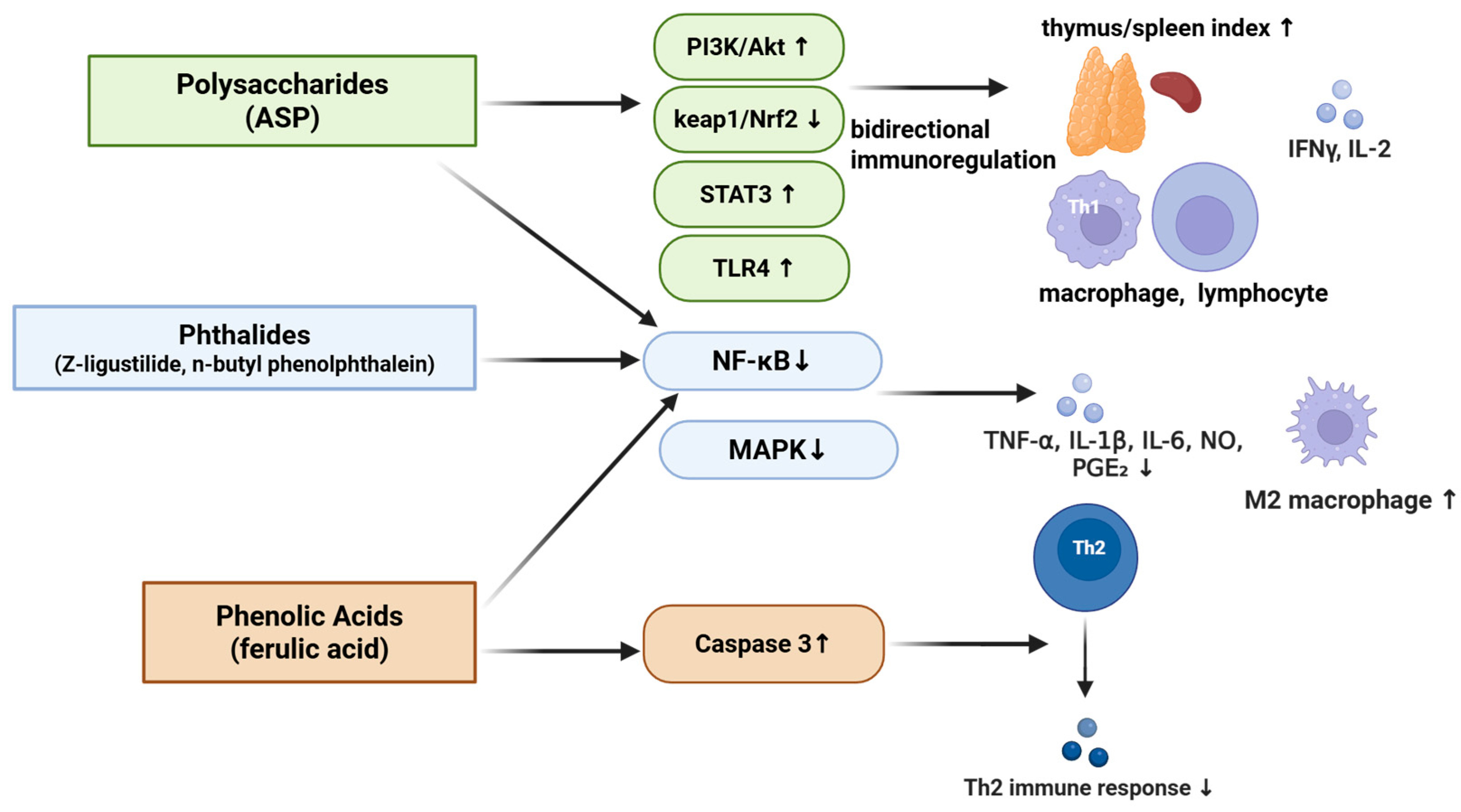
However, critical mechanistic gaps persist. Most studies only detected changes in immune-active substances, but failed to determine their cellular origin, thus failing to clarify the cascade reaction between the active components in A. sinensis, immune cells, immune-active substances and the therapeutic effect. The driving role of immunomodulation requires further causal validation. Research remains phenotypic, focusing on individual factor changes rather than cytokine network hierarchies, and is homogenized—concentrating on classical pro-inflammatory cytokines (IL-1β, IL-6, TNF-α) while neglecting emerging regulators (IL-10, IL-22). Future research should use cell sorting and conditional knockout to confirm cellular sources of immune-active substances and immunomodulation’s core role, employ multi-omics to dissect cytokine networks, and fill gaps in emerging regulatory cytokines via loss-of-function experiments to complete the mechanistic landscape. The immunomodulatory effects achieved through multiple pathways and multiple targets by compounds such as ASP are as shown in Figure 8.

6. Pharmacological Effects Through Immune Mediation

6.1. Anti-Tumor

6.1.1. Regulating Expression of Cytokines

Studies have confirmed that multiple cytokines, including transforming growth factor-β (TGF-β), interleukin-6 (IL-6), and vascular endothelial growth factor (VEGF), play critical roles in tumor cell proliferation and metastasis. The active components of ASP can modulate cytokine expression, thereby exerting anti-tumor effects.
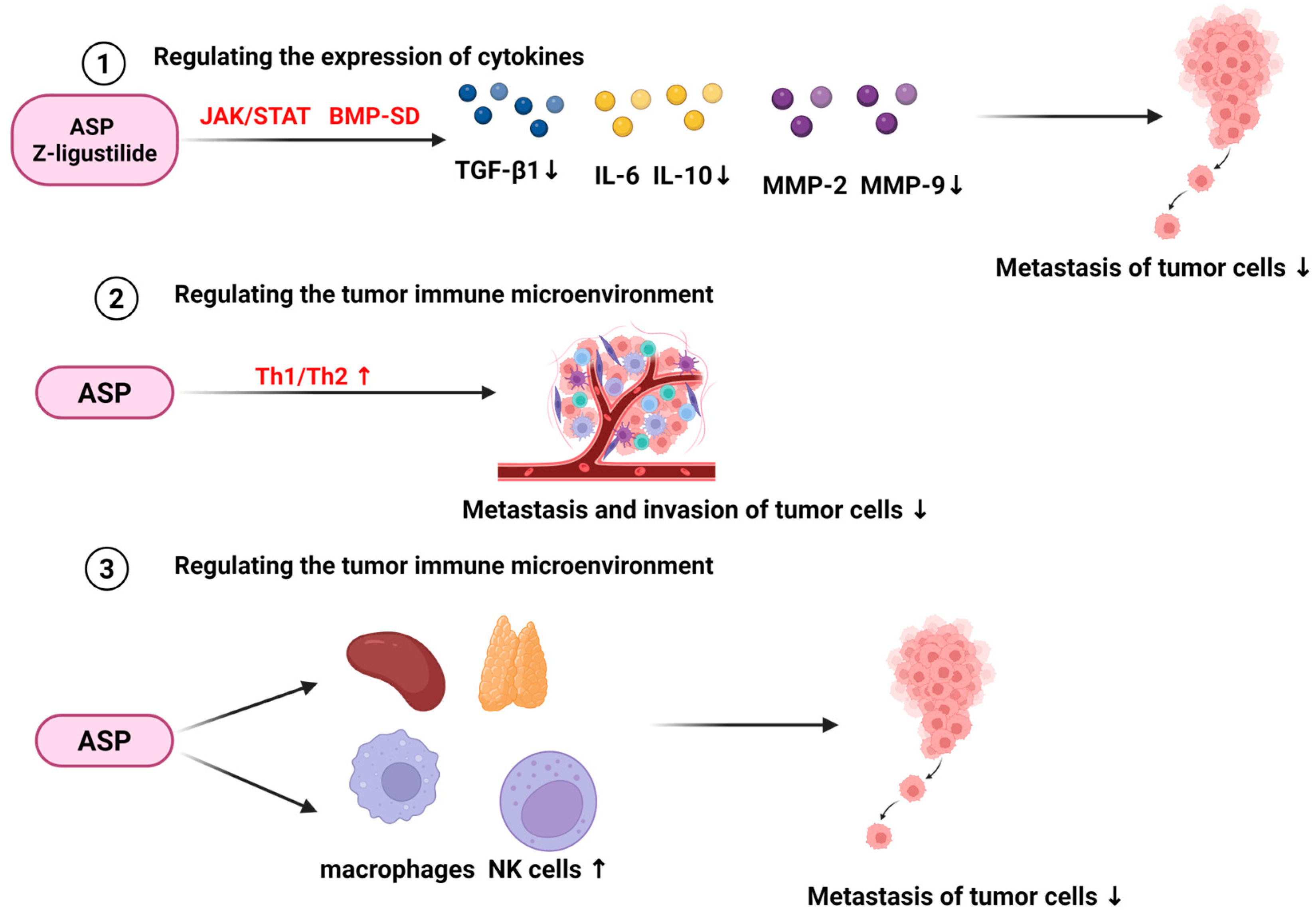
In colorectal cancer research, supercritical fluid extracts of A. sinensis, including n-butylphthalide (5, Figure 1), ferulic acid (38, Figure 3), caffeic acid (40, Figure 3) and chlorogenic acid (42, Figure 3), can suppress the expression of inflammatory mediators such as inducible nitric oxide synthase (iNOS) and COX-2 in tumor tissues, suggesting that A. sinensis extract may interfere with the initiation and progression of colorectal cancer [87]. On the other hand, Gao et al. [88] found that A. sinensis could inhibit the enzymatic activities of MMP-2 and MMP-9, reduce the levels of cytokines such as TGF-β1, and suppress the invasive and migratory capabilities of A549 human lung adenocarcinoma cells, indicating its potential in inhibiting tumor metastasis. Furthermore, Ren et al. [89] confirmed that ASP not only inhibits iron accumulation in the liver, spleen and transplanted tumors of tumor-bearing mice but also significantly downregulates the hepatic expression of IL-6, JAK2 and p-STAT3, p-SMAD1/5/8. Furthermore, this study demonstrated that ASP can suppress hepcidin expression and iron deposition in tumor-bearing mice by inhibiting the JAK/STAT and bone morphogenetic proteins (BMP)/Sma- and Mad-related protein (SMAD) signaling pathways, thereby inhibiting tumor proliferation. In vitro experiments in mouse peritoneal macrophages, Yang et al. [90] investigated the effect of ASP on the production of effector molecules in peritoneal macrophages and found that ASP can promote the release of NO, TNF-α and reactive oxygen species (ROS), and enhance the activities of inducible iNOS and lysozyme (LSZ), thereby exerting indirect anti-tumor effects.

6.1.2. Regulating Immune Cells and Tumor Immune Microenvironment

Immune cells including tumor-associated macrophages (TAMs) and regulatory B cells (Bregs) are associated with the prognosis of bladder cancer, gastric cancer and other malignancies [91]. Within the tumor microenvironment, the suppression of Th1-type immune responses and the concomitant enhancement of Th2-type responses lead to impaired anti-tumor immunity [92]. The inhibitory effects of A. sinensis on tumor cells via the immune system is shown as Table 7.
Notably, a novel alkaline-soluble polysaccharide (AASP) has been identified in tumor-bearing mice. This polysaccharide not only protects the spleen and thymus from damage but also exerts stimulatory effects on the proliferation of macrophages, splenocytes, NK cells and other immune cells [93]. Shang et al. [94] demonstrated that total polysaccharides extracted from A. sinensis can significantly alleviate thymic atrophy in sarcoma-bearing mouse models. Hao et al. [95] found that A-SFE, which contains (Z)-ligustilide (3, Figure 1), could directly inhibit the proliferation, migration and invasion of colorectal cancer cells in vitro, and also suppress the M2 polarization of tumor-associated macrophages to regulate the tumor microenvironment. The combined use of A-SFE and oxaliplatin exhibited synergistic or additive anti-proliferative effects on colorectal cancer cells in vitro, and their combination significantly reduced tumor volume and weight in a mouse CT26 syngeneic xenograft model, while downregulating the expression of Ki67, MMP9 and CD206 in tumor tissues. Furthermore, the research has confirmed that the ASP released from AP-PP-DOX can upregulate the expression of IL-2 and downregulate the expression of IL-10, indicating its potential to restore the Th1/Th2 balance and its ability to regulate the tumor microenvironment [96]. A schematic illustration of how the bioactive components of A. sinensis inhibit tumor cell proliferation and metastasis by modulating immune cells, cytokines, and the tumor immune microenvironment is presented in Figure 9.
In the clinical treatment of cancer, chemotherapeutic agents such as cisplatin, carboplatin and cyclophosphamide can induce gastric mucosal damage. Studies have shown that subcutaneous administration of ASP can promote the recovery from leukopenia and increase the density of blood vessels and proliferating cells in gastric and duodenal tissues, thereby exerting a protective effect on the gastrointestinal tract [97].
In summary, ASP can exert anti-tumor effects through a variety of interrelated mechanisms: they regulate the JAK/STAT signaling pathway, downregulate the expression of IL-6 and TNF-α, alleviate hepcidin-mediated iron homeostasis imbalance, restore hepatic iron metabolic balance, and thereby inhibit tumor progression driven by iron overload. Meanwhile, ASP and other active components of A. sinensis exert immunomodulatory effects by targeting the inflammatory cytokine cascade and maintaining the metabolic homeostasis of the tumor microenvironment. However, as key markers of immune activity, the exact roles of iNOS and NO and the regulatory mechanisms of A. sinensis components on them remain unclear.
Despite the substantial accumulation of experimental data on the immunomodulatory effects of A. sinensis, the field remains largely at the stage of “phenomenon accumulation” rather than “mechanistic elucidation” and “systematic integration”. Core limitations are evident in four aspects. First, mechanistic depth is insufficient. Most studies present linear descriptions of components exerting effects through pathways but lack identification and validation of direct molecular targets. For instance, while ASP inhibits mast cell activation and regulates JAK/STAT signaling, the systematic analysis of JAK/STAT upstream activators (e.g., gp130, SOCS) and downstream transcriptional targets remain unexplored. Second, polysaccharides have been relatively intensively studied, but dozens of terpenoids in volatile oils, aside from ligustilide and butylphthalide, remain almost unexplored. The receptor selectivity of structurally diverse ASP and their structure–activity relationships with immune effects have not been systematically established. Third, synergistic or antagonistic interactions among multiple components have not been systematically evaluated, hindering explanation of the therapeutic advantages of A. sinensis compound preparations. Moreover, the emerging dimension of immunometabolism—the crosstalk between immune cells and metabolic pathways in the tumor microenvironment—has not been incorporated into research scope. Fourth, the development of nano-delivery systems loaded with A. sinensis active components remains nascent, lacking pharmacokinetic and systemic toxicological data, which severely limits clinical translation.
Future research must transcend reductionist single-component, single-pathway thinking by integrating systems pharmacology, chemical biology, single-cell technologies, and gene editing tools. Priority areas include identifying direct molecular targets of key components; elucidating receptor selectivity and structure–activity relationships of structurally diverse ASP; revealing immunometabolic regulatory networks through integrative omics; exploring molecular mechanisms of multi-component synergy; and establishing clinically aligned pharmacological evaluation systems and nano-delivery platforms. Such efforts will advance the field from fragmented phenotypic description toward systematic mechanistic elucidation, laying a scientific foundation for precise clinical application and international development of A. sinensis.

6.2. Regulate Hematopoiesis

6.2.1. Regulating the Expression of Immune Cells and Their Ability to Form Colonies

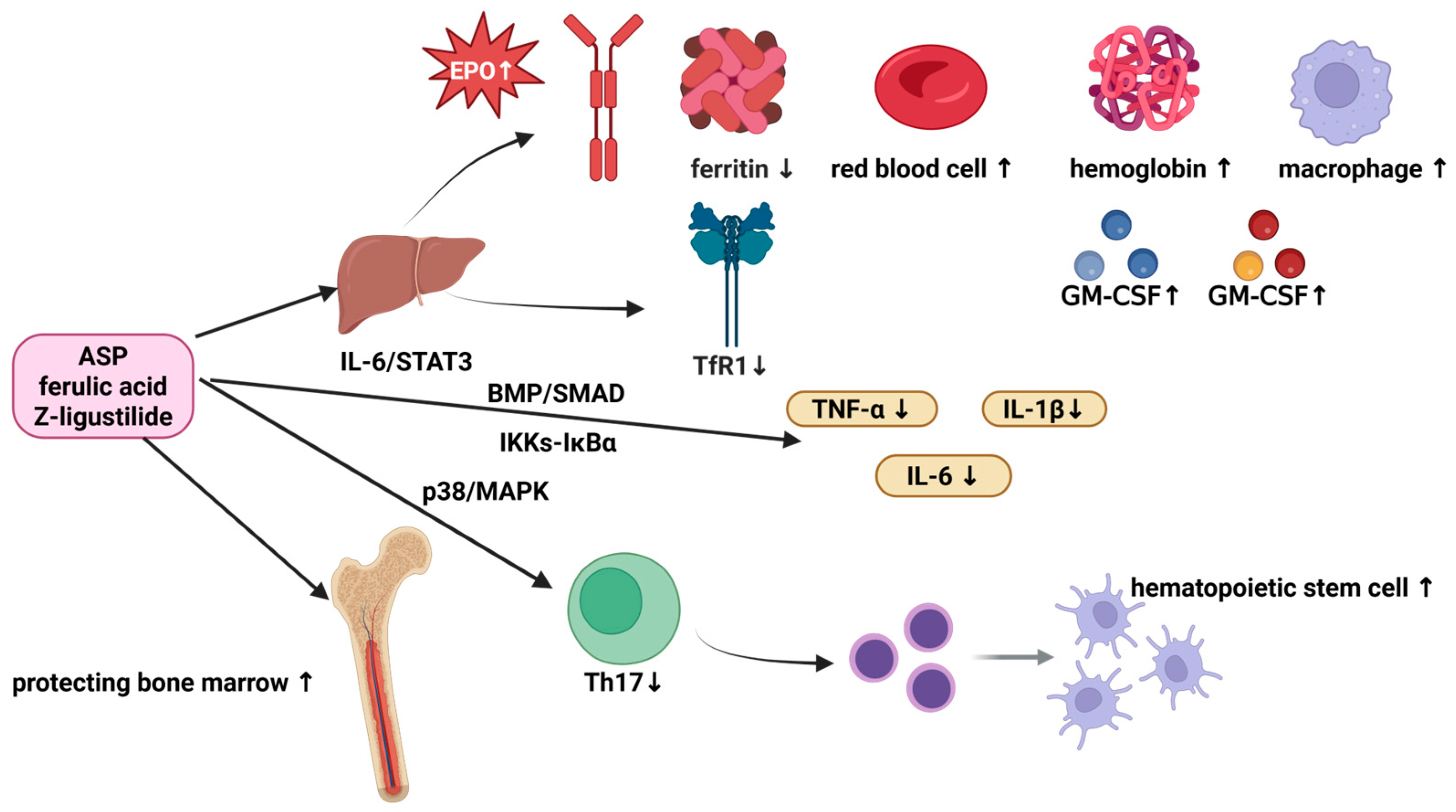
Studies have revealed that the pathogenesis of various types of anemia is closely associated with macrophages, natural killer (NK) cells and T lymphocytes [98,99,100]. In the model of stress-induced anemia, Wang et al. [101] demonstrated that ASP not only significantly accelerates the recovery of red blood cells, hemoglobin and hematocrit in peripheral blood, but also increases the number of F4/80+VCAM-1+ central macrophages in splenic erythroid islands. Their research results indicate that ASP may promote the generation and differentiation of red blood cells by enhancing the sensitivity of peripheral hematopoietic organs to erythropoietin (EPO), and by enhancing the functions mediated by macrophages, including adhesion, iron homeostasis, cell migration and erythrocyte nuclear exocytosis.
And in acute hemorrhagic mice model, researchers found that low-dose water-soluble polysaccharides from A. sinensis can regulate the expression of IL-6 and IL-3, and enhance the colony-forming ability of granulocyte–macrophage (GM) progenitors [102]. Chen et al. [103] conducted clinical studies and demonstrated that A. sinensis administration was significantly associated with a reduced incidence of transfusion dependence in patients with aplastic anemia (AA). This therapeutic benefit may be attributed to its ability to suppress IL-17 expression and ameliorate anemia symptoms. Subsequent in vitro and in vivo experiments further revealed that ASP effectively attenuates p38/MAPK signaling pathway-mediated mitochondrial apoptosis, decreases the proportion of activated Th17 cells and inhibits IL-17 expression. In anemic patients and cancer patients undergoing radiotherapy and chemotherapy, acidic polysaccharides from A. sinensis exert a protective effect on bone marrow hematopoietic function and CD34+ progenitor cells by stimulating the secretion of granulocyte–macrophage colony-stimulating factor (GM-CSF) and IL-3 in peripheral blood [104].

6.2.2. Regulating the Expression of Cytokines

Tian et al. [105] found that ASP can regulate the levels of IL-3 and granulocyte colony-stimulating factor (G-CSF) while reducing TNF-α levels in a rat model of blood deficiency, thereby promoting hematopoiesis via cytokine regulation. This provides further evidence that the aqueous extract of A. sinensis enhances hematopoietic function through immune modulation. Furthermore, Chang et al. [106] found in a rat model of severe exercise-induced anemia that the root extract of A. sinensis, containing ferulic acid (38, Figure 3), (Z)-ligustilide (3, Figure 1), etc., not only significantly increases the red blood cell count and hemoglobin concentration in anemic rats, but also reduces hepatic IL-6 expression, demonstrating that the root of A. sinensis exerts a protective effect against exercise-induced anemia.
In addition, the majority of iron required for erythropoiesis is derived from the phagocytic recycling of senescent red blood cells by macrophages [107]. Inflammatory cytokines directly disrupt iron homeostasis by stimulating the synthesis of divalent metal ion transporter 1 (DMT1) in macrophages, upregulating ferritin expression while impairing its biological function, enhancing transferrin receptor (TfR)-mediated iron uptake, and promoting erythrophagocytosis [108]. Studies demonstrated that ASP can mitigate the inflammatory perturbation of iron metabolism. Specifically, ASP inhibits hepatic hepcidin expression by suppressing the phosphorylation of STAT3 and SMAD 1/5/8 and concurrently upregulates ferroportin expression in the spleen and liver to facilitate iron efflux from these iron storage organs into the plasma. Moreover, ASP can not only downregulate the expression of iron storage and transport proteins, including ferritin, DMT1 and TfR1, but also reduce white blood cell counts and the mRNA expression of pro-inflammatory cytokines IL-1β, TNF-α, and IL-6. These actions collectively enhance EPO production in the kidney and liver, improve systemic iron bioavailability, and restore erythropoietin receptor (EPOR) signaling, thereby ameliorating anemia in a rat model of chronic kidney disease (CKD) [109]. Wang et al. further found that acidic polysaccharides from A. sinensis can inhibit NF-κB p65 activation via the IκB kinase (IKK)-IκBα pathway in rats with anemia of chronic disease (ACD), thereby reducing the secretion of IL-6 and TNF-α and effectively alleviating anemia [110]. The active components of A. sinensis have an effect on improving hematopoietic function through the immune system as shown in Table 8.
Recent studies have explored the use of ASP as a biopolymer for modulating the size and stability of iron oxide nanoparticles (IONPs), resulting in the development of a nanoplatform designated IONPs@ASP. In anemic model rats, administration of IONPs@ASP restored hemoglobin levels to the normal range. Mechanistic analysis revealed that ASP upregulated the expression of anti-inflammatory factors, suggesting a synergistic mechanism integrating iron supplementation with immunomodulation in this animal model. These findings not only represent a significant advancement in anemia therapy but also lay a solid foundation for the development of natural polysaccharide-based multifunctional nanomedicines [111]. The schematic diagram of how the active components of A. sinensis promote red blood cell production and regulate iron metabolism by regulating immune cells, immune active substances, etc., is shown in Figure 10.
In summary, A. sinensis active components exert hematopoietic effects through an immune regulatory network, with ASP as the primary mediator acting on macrophages, hematopoietic progenitors, and cytokine networks. Ferulic acid (38, Figure 3) and (Z)-ligustilide (3, Figure 1) promote erythrocyte recovery (mechanisms unclear), while other volatile oil components remain understudied. At the cellular level, ASP enhances splenic F4/80+VCAM-1+ central macrophage proliferation, strengthens erythroblastic island function, and increases granulocyte–macrophage progenitor colony-forming capacity and CD34+ cell numbers. At the molecular level, it regulates EPO/STAT5, p38/MAPK, IL-6/STAT3 pathways, modulates hematopoietic factors (IL-3, GM-CSF) and pro-inflammatory cytokines (TNF-α, IL-1β), and improves iron utilization via hepcidin, DMT1, and TfR1—collectively forming an “immune–hematopoiesis” coupled mechanism.
Despite these advances, current research exhibits several notable deficiencies. The core regulatory relationships remain ambiguous, with it still unclear whether ASP acts directly on hematopoietic stem/progenitor cells or indirectly through modulation of the hematopoietic microenvironment and immune cells—the hierarchical logic and upstream–downstream relationships governing these effects have yet to be elucidated. The research scope is narrowly focused, predominantly concentrating on erythroid hematopoiesis while largely neglecting regulatory effects on myeloid and lymphoid lineages, thereby failing to comprehensively explain the clinical hematopoietic benefits observed. Pathological relevance is insufficient, with most studies employing acute anemia models while investigations into chronic disease anemia and cancer-related anemia—the most common clinical forms—remain limited, particularly regarding stage-specific heterogeneity. Translational research lags behind, with optimal dosing regimens and dose–response relationships for different anemia subtypes remaining undefined, and standardized preclinical safety data lacking. Future research should employ lineage tracing and cell-specific knockout technologies to clarify the core regulatory logic of “immune–hematopoietic” coupling, address the knowledge gap concerning myeloid and lymphoid hematopoiesis, establish clinically relevant chronic anemia models to define stage-specific intervention effects, and conduct rigorous dose–response and long-term safety studies to provide the evidence base necessary for precise clinical application.

6.3. Anti-Osteoarthritis by Regulating Cytokines

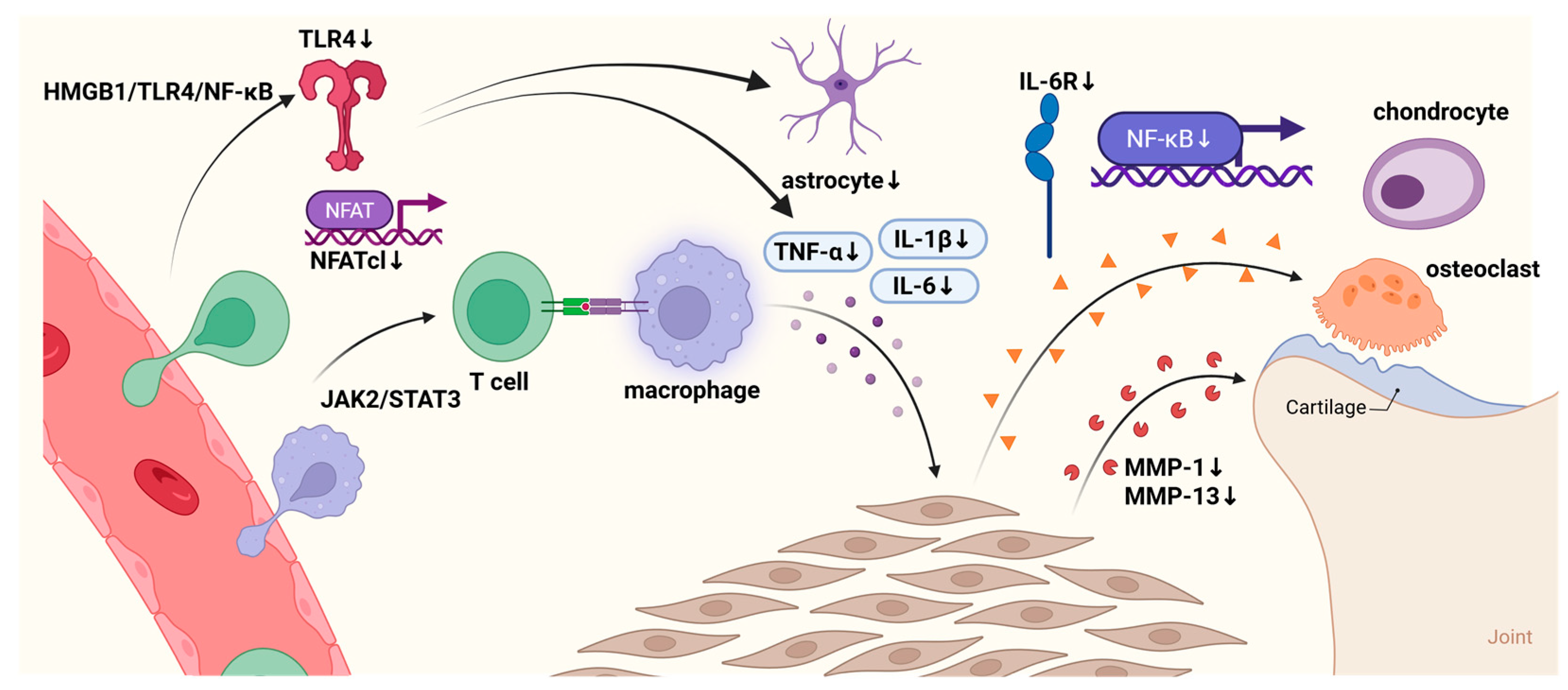
Rheumatoid arthritis (RA) is a chronic autoimmune disorder characterized by joint inflammation, in which the suppression of key inflammatory mediators represents a cornerstone of therapeutic intervention. Interleukin-6 receptor (IL-6R) signaling is a key pathogenic mechanism underlying RA [112]. And extracts of A. sinensis have been shown to suppress receptor activator for nuclear factor-κB ligand (RANKL)-induced osteoclast differentiation in bone marrow-derived macrophages (BMMs) in a dose-dependent manner. This effect was accompanied by marked inhibition of phosphorylation in MAPK signaling components such as p38, extracellular signal-regulated kinase (ERK), c-Jun N-terminal kinase (JNK) and the NF-κB pathway (p65 phosphorylation and IκB degradation), suggesting its efficacy in preventing inflammatory bone resorption [113]. In rat models of arthritis, ASP can inhibit the expression of IL-6, IL-1β, iNOS, MMP-1 and MMP-3, as well as reduce the proliferation, migration and invasion of TNF-α-induced fibroblast-like synoviocyte (FLS) cells. ASP also promotes FLS apoptosis, leading to reduced paw swelling, lower arthritis scores and suppressed synovial hyperplasia. Further mechanistic studies have revealed that ASP can modulate the gut microbiota and the JAK2/STAT3 signaling pathway to ameliorate RA symptoms [114]. Another study indicated that the ethyl acetate fraction of A. sinensis, including Z-ligustilide (3, Figure 1) and ferulic acid (38, Figure 3), can effectively inhibit the IL-1β-induced phosphorylation of ERK1/2, p38 and JNK in the MAPK signaling pathway, as well as the activation of the NF-κB pathway. These regulatory effects further suppress the abnormal proliferation of rheumatoid arthritis synovial fibroblasts and the overproduction of pro-inflammatory mediators and tissue-destructive enzymes including COX-2, PGE2, MMP-1, and MMP-3, thereby highlighting the potential of this fraction as a novel therapeutic agent for RA [115]. The regulatory effects of the active components of A. sinensis on the bone and joint through cytokines are shown in Table 9.
Studies have demonstrated that macrophages, lymphocytes and their associated cytokines are involved in the pathogenesis and progression of osteoarthritis and synovitis [119]. Additionally, ligustilide, ferulic acid and ASP exert anti-inflammatory and analgesic effects, as well as protect chondrocytes and modulate osteoclast activity [120]. Qian et al. [116] demonstrated that ligustilide alleviates inflammatory pain by downregulating TLR4 expression in astrocytes and suppressing the production of NF-κB-mediated chemokines [121]. Wang et al. [117] found that ligustilide can mitigate osteoclast dysfunction by inhibiting the expression of key osteoclastogenic factors, including tumor necrosis factor, IL-6R protein and receptor activator of NF-κB (RANK) mRNA. This effect extended to the downregulation of osteoclast-specific genes dendritic cell-specific transmembrane protein (DC-STAMP) and nuclear factor of activated T cells cytoplasmic 1 (NFATc1), alongside suppression of the NF-κB/ERK/p38/immunoreceptor tyrosine-based activation motif (ITAM) signaling pathway. In addition, LIGc (8, Figure 1)—a derivative of (Z)-ligustilide in A. sinensis—was found to inhibit the expression of COX-2, PGE2 and TNF-α, as well as the protein levels of caspase-3, TLR4, Bcl-2-associated X protein (Bax) and NF-κB p65, while upregulating the anti-apoptotic protein Bcl-2, potentially via the high mobility group box 1 (HMGB1)/TLR4/NF-κB signaling axis [118]. Chen et al. [86] found that ferulic acid (38, Figure 3) can reduce hydrogen peroxide-induced expression of IL-1β, TNF-α, MMP-1 and MMP-13, while upregulating SOX9 gene expression, suggesting its therapeutic potential in osteoarthritis and warranting further research. A schematic diagram illustrating the analgesic effects of active components of A. sinensis via the modulation of immune cells and cytokines is presented in Figure 11.
The pathological essence of osteoarthritis is the imbalance of “immune–bone” coupling: aberrant activation of synovial immune cells releases inflammatory factors, which drives osteoclast differentiation and chondrocyte apoptosis, with targets such as STAT3, NF-κB and TLR4 involved in the pathogenesis of osteoarthritis. The active components of A. sinensis exert anti-osteoarthritis effects by regulating the immune cell and inflammatory factor network at multiple levels, and their biological effects are centered on core molecular targets including the JAK2/STAT3, MAPK, and HMGB1/TLR4/NF-κB signaling pathways. At the cellular level, ASP inhibits the proliferation, migration, and invasion of FLS and promotes their apoptosis; ligustilide and its derivative LIGc target and inhibit osteoclast differentiation and synovial macrophage activation; ferulic acid suppresses the inflammatory response of chondrocytes and the expression of matrix metalloproteinases. At the molecular level, the above effects are mediated by multiple signaling pathways including JAK2/STAT3, MAPK, NF-κB and HMGB1/TLR4/NF-κB. These components downregulate inflammatory and matrix-degrading mediators such as IL-1β, IL-6, TNF-α, COX-2, PGE2, MMP-1/3/13, and upregulate the anti-apoptotic protein Bcl-2 and SOX9, a (a key transcription factor for chondrogenic differentiation), thus forming a coordinated multi-target intervention network that ultimately restores the balance of the “immune–bone” coupling system.
However, current research still has notable limitations. First, the mechanistic depth is insufficient: most studies only stay at the detection of pathway phosphorylation, lacking the identification of direct molecular targets. Second, there is a lack of a holistic and dynamic perspective: most existing studies are static observations that cannot reflect the dynamic evolution of osteoarthritis pathology, and the synergistic effects between various active components have not been systematically evaluated. Third, translational research lags behind: most existing animal models are based on acute intervention, the therapeutic efficacy on advanced osteoarthritis is unknown, and there is a large gap between the administration regimens and clinical practice.
Future research should focus on the following priorities: identifying the direct molecular targets of active components using lineage-specific gene knockout models and osteoclast–immune cell co-culture systems; establishing animal models of different pathological stages to evaluate the stage-specific applicability of the components; dissecting the dynamic changes of the “immune–bone” regulatory network via single-cell transcriptomic analysis; exploring the optimal compatibility of multi-component synergistic intervention; and conducting clinical-aligned pharmacodynamic and pharmacokinetic studies. Collectively, these efforts will not only deepen our understanding of the anti-osteoarthritis mechanisms of A. sinensis active components but also lay a robust scientific foundation for the development of targeted, mechanism-based interventions for inflammatory bone disorders.

6.4. Anti-Aging by Regulating Cytokines

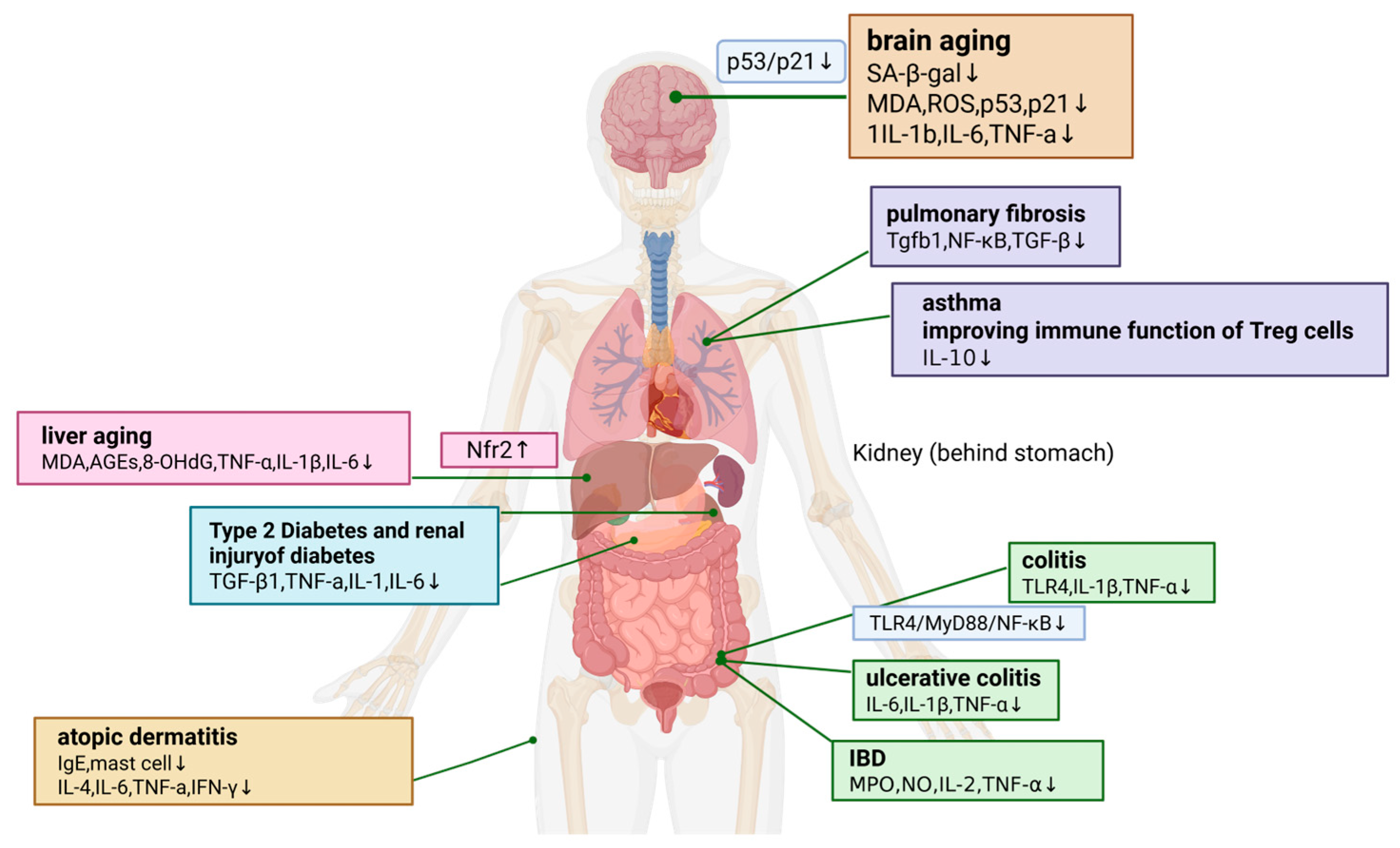
Accumulating evidence has demonstrated that immune dysregulation is a critical driver of pathological aging. Chronic inflammatory activation and immunosenescence collectively accelerate the aging process and promote the development of age-related diseases [122,123]. Relevant studies have shown that the active components of A. sinensis can delay the aging of multiple organs by regulating inflammatory factors. Lu et al. [124] demonstrated that fermented A. sinensis can significantly suppress hepatic levels of pro-inflammatory cytokines, including IL-6, TNF-α, IL-1β, concurrently ameliorating aged related liver tissue damage in mice in the liver, with this effect mediated via the Nrf2 pathway/target. Additionally, ASP can regulate endocrine function; it promotes the phosphorylation level of AKT and activates the AKT/FOXO3 signaling pathway, thereby ameliorating immune-mediated premature ovarian failure in mouse models [125]. Mo et al. [126] found that ligustilide can not only enhance the weight of immune organs such as thymus, but also attenuate aging-induced liver and kidney damage by downregulating the expression of inflammatory cytokines including iNOS, COX-2, IκB, etc. Additionally, Zhu et al. [127] found that ligustilide isolated from A. sinensis can ameliorates aging-related cognitive impairment by modulating the IL-1β/NF-κB/Bcl-2 signaling axis. In the context of brain aging, ASP was found to downregulate IL-1b, IL-6, TNF-a, and ROS levels, and suppress the expression of senescence-associated genes p53 and p21 in neural stem cells, thereby attenuating cellular senescence to delay the aging process [128]. As for the aging of hematopoietic function, ASP can effectively inhibit TNF-α, IL-1, IL-6, promote Runx2 expression, and simultaneously reduce the expression of peroxisome proliferator-activated receptor γ (PPARγ) in bone marrow-derived mesenchymal stem cells (BMSCs) to improve hematopoietic function [129]. The effects of active components from A. sinensis on aging through immune system are shown in Table 10.
In summary, the active components of A. sinensis exert multi-organ anti-aging effects via regulating the immune–inflammatory network. ASP and ligustilide are the core active components, which regulate the progression of brain aging and premature ovarian insufficiency, intervene in stem cell senescence and multi-organ inflammation. Ligustilide ameliorates aging-related liver and kidney injury, while components from fermented A. sinensis exert antioxidant and anti-inflammatory effects via activating the Nrf2 pathway. These effects are mediated by downregulating core inflammatory mediators including IL-1β, IL-6 and TNF-α, and regulating key pathways such as AKT/FOXO3, p53/p21, NF-κB and Nrf2.
However, the underlying mechanism connections behind these phenomena are not yet complete. Currently, it is not clear whether the anti-aging effect of the effective components of A. sinensis is achieved by directly reducing the oxidative stress of immune cells. Particularly crucially, the triangular relationship between the effective components of A. sinensis, oxidative stress, and specific immune responses has not been systematically studied. For instance, whether T lymphocytes, macrophages, etc. are sensitive to the oxidative–reductive regulation mediated by A. sinensis, and whether these effects can be transformed into improved immune surveillance function or delayed immune aging, there are still no clear answers.
Therefore, future research should prioritize focusing on systematically characterizing the effects of A. sinensis effective components on the structural and functional integrity of spleen cells and thymus cells in aging models; secondly, using genetic and pharmacological methods, to analyze whether the protective effect on immune cells is achieved by inhibiting the oxidative stress pathway; finally, to clarify the interaction between the oxidative–reductive signals regulated by A. sinensis effective components and specific immune responses. Filling these gaps will not only provide a mechanism basis for the immune protective effect of A. sinensis in the aging process but also contribute new insights to the in-depth understanding of the oxidative–reductive–immune interaction during aging.

6.5. Reducing Intestinal Inflammation by Regulating Inflammatory Factors

As shown in Table 11, the active components of A. sinensis can alleviate inflammatory bowel disease (IBD) by regulating inflammatory factors. Studies have confirmed that polysaccharides extracted from the aerial parts of A. sinensis can ameliorate inflammatory manifestations in colitis by inhibiting the TLR4/myeloid differentiation primary response gene 88 (MyD88)/NF-κB signaling pathway [130]. In a rat model of immune-mediated colitis, ASP was found to significantly reduce NO production, MPO activity, and the levels of TNF-α and IL-2 [131]. Cho et al. [132] demonstrated that the anti-inflammatory effects of ASP may be mediated by inhibiting neutrophil infiltration into the gastrointestinal mucosa, thereby suppressing gastric mucosal damage. Mechanistically, ASP has been shown to significantly inhibit the release of IL-6, IL-1β, and TNF-α from immune cells, which contributes to the amelioration of ulcerative colitis [133].
The core pathogenesis of IBD lies in the imbalance of the “gut microbiota–immunity–barrier” axis, where dysbiosis triggers a vicious cycle of TLR4 activation, inflammation, and intestinal barrier disruption. ASP, the core anti-IBD bioactive component of A. sinensis, exert therapeutic effects via regulating the intestinal immune–inflammatory network. ASP alleviates colonic injury, reduces MPO activity and neutrophil infiltration, and suppresses the TLR4/MyD88/NF-κB pathway to downregulate pro-inflammatory cytokines (IL-1β, IL-6, TNF-α) and inflammatory mediators (NO, PGE2), thereby mitigating colitis-related inflammatory damage. It exerts dual therapeutic effects via direct TLR4 signaling inhibition and gut microbiota/metabolite modulation, reflecting its holistic intestinal microecology regulatory advantage.
However, current research has four core limitations. First, the research on the material basis is severely unbalanced: almost all relevant studies focus on ASP, while the anti-IBD efficacy and mechanisms of other active components such as ligustilide and ferulic acid are nearly unexplored. Second, the mechanistic depth is insufficient: the direct interaction between ASP and TLR4 lacks verification, and the direct target of ASP in regulating the pathway remains unclear. Third, there are critical research gaps: microbiota studies mostly stay at phenotypic description at the phylum and genus levels, failing to clarify the causal relationship between microbiota changes and anti-inflammatory effects.
Therefore, future research should focus on the following core priorities: verifying the direct binding between ASP and TLR4; dissecting the key microbiota and metabolites regulated by ASP via integrated multi-omics, and clarifying the causal role of gut microbiota in mediating the therapeutic effects through fecal microbiota transplantation; conducting research on the anti-IBD effects of non-polysaccharide components and exploring the synergistic effects of multiple components, to provide a scientific basis for the clinical application of A. sinensis in IBD treatment.

6.6. Other Pharmacological Effects

In addition, as shown in Table 12, animal studies have demonstrated that A. sinensis exerts anti-fibrotic effects across multiple disease models (epidural, pulmonary, and interstitial lung fibrosis) by downregulating inflammatory and pro-fibrotic mediators including IL-6, TGF-β1, and NF-κB. In addition, the active components of A. sinensis can exert metabolic regulatory activities by modulating immune cells and immune-active substances. In fibrosis research, Zhang et al. [134] found that A. sinensis alleviated post-laminectomy epidural fibrosis by downregulating factors such as IL-6. Han et al. [135] demonstrated that A. sinensis inhibited radiation-induced pulmonary fibrosis by suppressing Tgfb1 expression. Furthermore, A. sinensis also ameliorated interstitial lung disease by reducing NF-κB activity and decreasing TGF-β mRNA expression in alveolar macrophages [136].
In a rat model of asthma, researchers demonstrated that A. sinensis volatile oil can upregulate forkhead box protein P3 (Foxp3) expression and suppress IL-10 expression, thereby exerting anti-asthmatic effects by enhancing Treg cell-mediated immune function [137]. Song et al. [138] found that ASP can inhibit myocardial fibrosis and cardiomyocyte apoptosis in a rat model of hypertensive heart disease. The proposed mechanism involves the downregulation of profibrotic and pro-apoptotic factors—including TGF-β1, Bax, cleaved caspase-9 and cleaved caspase-3—and the upregulation of the anti-apoptotic protein Bcl-2, thereby attenuating the progression of cardiac pathology. In type 2 diabetes, immune cell dysregulation contributes to the aberrant secretion of pro-inflammatory cytokines such as TNF-α, which promotes insulin resistance (IR). Treatment with A. sinensis polysaccharides has been shown to reduce the expression of these pro-inflammatory mediators [139].
In diabetic renal injury, innate immunity plays a critical role in disease pathogenesis and progression. Arabinoglucan, isolated from A. sinensis, was found to not only suppress the excessive proliferation of glomerular mesangial cells (GMCs) but also downregulate pro-inflammatory mediators including TNF-α, IL-1, IL-6 and TGF-β1 [140]. At the same time, Wang et al. found that the aqueous extract of A. sinensis could attenuate endotoxin-induced HMGB1 release in rat models of endotoxemia and sepsis, which may be associated with the interference of HMGB1 cytoplasmic translocation in macrophages [141]. The mechanistic roles of active components of A. sinensis in cytokine modulation across various systemic diseases are presented in Figure 12.
In summary, beyond the classical immune-mediated diseases described above, the core bioactive constituents of A. sinensis (polysaccharides, volatile oils and their derivatives) exert a wide spectrum of pharmacological effects via targeting the immune regulatory network, including anti-fibrotic, anti-diabetic, renoprotective, hair-regenerative and anti-dermatitic activities. Their common mechanism lies in regulating the function of macrophages, Tregs and other immune cells, and modulating core inflammatory mediators (TNF-α, IL-6, TGF-β1, etc.) through key pathways, including NF-κB, MAPK, and TGF-β1/Smad, to achieve multi-target intervention.
However, the current evidence base in this area exhibits significant heterogeneity that warrants critical consideration. Notable inconsistencies in the studied A. sinensis components across disease models hinder cross-disease comparisons: crude extracts (with undefined active ingredients) dominate fibrosis research, while asthma, cardiac/metabolic disease, renal injury and endotoxemia studies focus on volatile oils, ASP, arabinoglucan and aqueous extracts, respectively. Furthermore, the depth of mechanistic validation varies considerably across studies, with many findings remaining at a descriptive level. It remains unclear whether this pattern arises from disease-specific component suitability or researchers’ selection bias—a question that future studies should address through systematic, head-to-head comparisons of different A. sinensis constituents in standardized disease models. Such efforts will help distinguish true pharmacological specificity from artifactual research fragmentation, ultimately providing a more coherent foundation for understanding the full therapeutic scope of A. sinensis immunomodulation.

7. Safety of Active Components in Angelica sinensis

Researchers conducted research on the safety of Dang Gui compound and Dang Gui preparations. Zhao et al. [142] found that the combination of Dang Gui Bu Xue Decoction with conventional Western medicine may be more effective than Western medicine alone in the treatment of renal anemia. Notably, when the ratio of Huang Qi to Dang Gui is 5:1, significant improvements in red blood cell (RBC) count, hematocrit (HCT), and overall clinical efficacy are observed, with no adverse reactions reported in the experimental group. Yang et al. [143] found that A. sinensis injection has no toxic effect on the survival of chicken embryos.
Multiple pharmacological studies have shown that polysaccharides extracted from A. sinensis have hepatoprotective effects and can effectively alleviate liver damage and toxicity. The cell assay of ASR-CD in RAW264.7 cells showed no cytotoxicity, indicating good biocompatibility [144]. Yue et al. [145] proved that A. sinensis is not a stimulator of breast cancer through in vivo and in vitro experiments, but A. sinensis should still be used cautiously in patients with estrogen receptor positive breast cancer.
In the safety study of A. sinensis essential oil, Ma et al. [146] topically applied the essential oil at concentrations of 5%, 3%, and 1% to a dehydrotestosterone-induced androgenetic alopecia mouse model. Safety was evaluated via acute oral, dermal, and ocular irritation toxicity tests, with results showing no evidence of acute toxicity. In addition, in the safety assessment of LIGc (8, Figure 1), no significant changes in organ weights were observed in treated mice, and histopathological examination revealed no tissue or organ abnormalities, indicating good overall health [147]. In a study on the material basis and molecular mechanisms of the blood-activating effects of eight constituents from A. sinensis, (Z)-ligustilide (3, Figure 1), senkyunolide A (7, Figure 1), levistolide A (32, Figure 2), ferulic acid (38, Figure 3), isoquercitrin (104, Figure 6), imperatorin (116, Figure 7), osthole (118, Figure 7) and scopolamine (122, Figure 7), were found to exhibit low central neurotoxicity. These safety-related predictions were performed using QikProp (Schrödinger, LLC), a computational chemistry tool specialized in evaluating ADMET (Absorption, Distribution, Metabolism, Excretion, Toxicity) properties of small molecules. All compounds except imperatorin showed QikProp log (QPlg) human ether-a-go-go-related gene (hERG) values within the acceptable range, indicating low cardiotoxicity risk. Predicted hepatotoxicity via the software’s built-in toxicological prediction module suggested no hepatic toxicity for all eight anticoagulant constituents. Additionally, the median lethal dose (LD50) of levistolide A (32, Figure 2) was predicted as 100 mg·kg−1 (class III) using admetSAR (a free online ADMET prediction platform), implying potential safety risks, whereas the other seven components were classified as class IV or V with favorable safety profiles [53].

8. Regulatory and Pharmacopeial Perspective on Angelica sinensis: Quality Control and Immunological Implications

8.1. The Current Status of Quality Control

The 2020 edition of Pharmacopoeia of the People’s Republic of China (Volume I) (Chp) [148] has established a comprehensive quality control system for A. sinensis (encompassing raw and processed products) that includes origin identification, content determination and safety evaluation. With ferulic acid and volatile oil as core quantitative indicators, this system provides a chemical reference for ensuring the reproducibility of immunomodulatory effect studies on A. sinensis. Notably, these pharmacopeial standards offer a robust scientific benchmark for the quality control of Chinese medicinal materials and are critical to the reproducibility of pharmacological studies—particularly those involving complex immunomodulatory effects. For international researchers, understanding and adopting such standards (e.g., a ferulic acid content of no less than 0.050%) is fundamental to generating comparable and translatable research data. The characteristic identification, content determination, safety control, and relevant standards for wine-processed A. sinensis are summarized in Table 13.

8.2. The Impact of Quality Control on Immunology Research

The immunomodulatory effects of A. sinensis are mediated by its core active components, including ferulic acid (38, Figure 3), ASP, and (Z)-ligustilide (3, Figure 1). The quality control system for A. sinensis established in the Chinese Pharmacopoeia (2020 Edition) provides a fundamental quality guarantee for its clinical application.
To date, in studies on the spectrum–effect relationship of A. sinensis, researchers have identified multiple effective components with antioxidant activity, such as (Z)-ligustilide (3, Figure 1), (E)-ligustilide (4, Figure 1), and butylphthalide [149]. In a rat model of blood deficiency, ferulic acid (38, Figure 3) has been recognized as the key marker component for tonifying blood and qi, and it can restore hematopoiesis by restoring thymus weight [150]. Meanwhile, in a mouse model of qi deficiency, Yang et al. found that ligustilide, and butylphthalide can also restore immune organ weights and enhance the phagocytic function of mononuclear macrophages. These findings provide a scientific basis for exploring the immunomodulatory mechanisms of A. sinensis active components via immune-mediated pathways.
However, quality control research of A. sinensis related to immunomodulation still has considerable room for improvement. First, there is no exclusive quality control standard for ASP—the most immunologically active component—with current standards relying on indirect control via extract content. Despite recent clarification of ASP’s monosaccharide composition and partial glycosidic linkages using HPGPC and NMR, structural differences (branching degree, modifications) across producing areas and medicinal parts lead to poor reproducibility of its immunopharmacological effects. Second, the Chinese Pharmacopoeia only uses total volatile oil as an indicator, failing to reflect the (Z)/(E)-ligustilide isomer ratio and thus unable to accurately evaluate stereoisomeric differences in immunomodulatory and anti-inflammatory activities. Third, existing standards do not differentiate quality control among A. sinensis head, body, and tail; the tail, a key immunomodulatory part with higher ferulic acid (38, Figure 3) and polysaccharide contents, when mixed with other parts, causes active ingredient imbalance and weakened immunomodulatory stability.
Future research should integrate “component–structure–efficacy” correlations and advances in structural analysis/rapid detection technologies to incorporate ASP-specific indicators, (Z)/(E)-ligustilide ratio, and tail-specific quality control standards into the pharmacopeia. Establishing a quantitative relationship between processing technology and immunologically active ingredients will upgrade the quality control system from “qualified quality” to “stable efficacy”, providing a solid legal basis for the precise clinical application of A. sinensis in immunomodulation.

8.3. International Perspectives

Although A. sinensis has well-established pharmacopeial standards and a long clinical history in China, it has not yet been granted an EU herbal monograph by the EMA/HMPC. In a 2013 public statement, the EMA/HMPC cited its failure to meet EU “well-established/traditional use” criteria, owing to insufficient efficacy and safety evidence, the lack of a required 30-year medicinal use history (15 years within the EU), and preliminary toxicological concerns over its phytochemical constituents.
Nevertheless, this assessment is over a decade old, and the extensive new scientific evidence summarized in this review provides a robust basis for re-evaluating these conclusions. Mechanistic and preclinical studies have clarified the immunomodulatory effects of key active components, such as, ASP, (Z)-ligustilide (3, Figure 1) via specific signaling pathways (e.g., NF-κB, JAK/STAT)—extending beyond traditional uses and providing a biological rationale for indications such as anemia and inflammatory disorders. Furthermore, updated safety data, such as low cytotoxicity and hepatoprotective effects of its polysaccharides, address earlier toxicological uncertainties. Its long, well-documented use in the Chinese Pharmacopoeia, combined with modern scientific validation, further supports the feasibility and safety of A. sinensis under defined conditions. While the lack of long-term European use evidence remains a regulatory challenge, its consistent TCM application is strongly backed by advanced pharmacological and toxicological research.
This robust modern pharmacological and toxicological data thus provides a compelling rationale for re-evaluating the EU’s regulatory position on A. sinensis. To advance this, future research should prioritize high-quality randomized controlled trials in EU populations and targeted toxicological risk assessments of specific constituents. Aligning the reliability of traditional use, modern scientific validation, and regional regulatory requirements is key to facilitating the responsible global application of A. sinensis in complementary and alternative medicine.

9. Conclusions and Future Prospective

Based on the preceding discussion, this review systematically elaborates the immunomodulatory effects and underlying mechanisms of A. sinensis and its core bioactive constituents, including ASP, phthalides (represented by (Z)-ligustilide), and phenolic acids (represented by ferulic acid). The immunomodulatory effects of A. sinensis show clear constituent specificity: ASP acts primarily through TLR4, STAT, and PI3K pathways, establishing it as the core component with stable activity across all disease models; phthalides, represented by (Z)-ligustilide (3, Figure 1), mainly exert anti-inflammatory organ-protective effects via NF-κB, MAPK signaling pathways; and phenolic acids, represented by ferulic acid (38, Figure 3), focus on antioxidant and metabolic regulation through Th2 and Caspase 3 pathways. Accumulating evidence confirms that A. sinensis and its active components exert effects via a tripartite mode of “anti-inflammation–antioxidation–immune homeostasis regulation”: they restore immune organ structure and function, regulate immune cell activation and polarization, modulate inflammatory mediator secretion through core pathways including NF-κB, PI3K/Akt, and JAK/STAT, and exhibit therapeutic potential in multiple immune-mediated diseases, such as malignant tumors, anemia, osteoarthritis, inflammatory bowel disease, fibrotic diseases, and aging-related disorders. Compared with single-target chemical immunomodulators, the multi-component, multi-target holistic regulatory feature of A. sinensis enables bidirectional immune homeostasis regulation rather than simple immune suppression or activation, highlighting its unique advantages in treating chronic immune-mediated diseases.
These findings lay a solid theoretical foundation for clarifying the immunomodulatory properties of A. sinensis, but three core bottlenecks remain to be addressed. First, research on the material basis is unbalanced and fragmented. Current studies are dominated by ASP, while non-polysaccharide components are seriously understudied, lacking clarity on the synergistic effects of multiple components; the disease-specific research pattern hinders cross-disease comparisons, and it remains unclear whether efficacy differences stem from component specificity or research bias. Second, the mechanistic depth is insufficient: most studies stay at the phenotypic description of “component–effect–pathway”, mostly providing correlative rather than causal evidence, and the direct molecular targets of most active components have not been systematically verified. Third, the translational value is limited: most studies adopt acute models and preventive administration, which are disconnected from the chronic pathological process in clinical settings; non-standardized preparation quality control leads to poor result reproducibility, and there is a lack of high-quality pharmacokinetic studies and randomized controlled trials to support clinical application.
Therefore, future research should focus on clarifying core active monomers via bioactivity-guided isolation, systematically exploring the synergistic effects of multiple components, taking direct target identification and causal mechanism verification as the core to clarify the underlying mechanism of active components, integrating multi-omics and in vivo models to dissect the regulatory effect of A. sinensis on the “microbiota–immune–metabolism” axis, exploring the common cross-disease regulatory network, establishing a standardized quality control system for A. sinensis preparations, conducting standardized preclinical and clinical trials, and promoting its transformation from traditional empirical medicine to evidence-based immunotherapy.

Author Contributions

Data curation, writing—original draft preparation, T.L.; conceptualization, supervision, methodology, writing—review and editing, X.Z. All authors have read and agreed to the published version of the manuscript.

Funding

This research received no external funding.

Institutional Review Board Statement

Not applicable.

Informed Consent Statement

Not applicable.

Data Availability Statement

No new data were created or analyzed in this study. Data sharing is not applicable to this article.

Conflicts of Interest

The authors declare no conflicts of interest.

Abbreviations

The following abbreviations are used in this manuscript:
AAPacidic Angelica polysaccharide
AASPalkaline soluble polysaccharide
ACDanemia of chronic disease
ADMadriamycin
ALIacute lung injury
Aktprotein kinase B
AP-1activator protein-1
ASP/APSAngelica sinensis Polysaccharides
A-SFEAngelica sinensis supercritical extract
BALFbronchoalveolar lavage fluid
BaxBcl-2 associated X protein
Bcl-2B cell lymphoma/leukemia-2
BMMsbone marrow macrophage(s)
BMSCsbone marrow-derived mesenchymal stem cells
Bregregulatory B cell
c-Junc-Jun N-terminal kinase
CD3+cluster of differentiation 3
CD4+ T cellhelper T cell
CD4SPCD4+ single positive T lymphocytes
CD8+cytotoxic T lymphocyte
CFAcomplete Freund’s adjuvant
Con Aconcanavalin A
COX-2cyclooxygenase-2
CRCcolorectal cancer
DC-STAMPdendritic cells-specific transmembrane protein
DC2.4murine dendritic cell line DC2.4
DMT1 divalent metal ion transporter-1
EPOerythropoietin
ERKextracellular signal-regulated kinase
FLSfibroblast-like synoviocytes
FoxO1forkhead box protein O1
Foxp3forkhead box protein p3
GC-MSGas Chromatography–Mass Spectrometry
G-CSFgranulocyte colony-stimulating factor
G-Mgranulocyte macrophage
Gab2GRB2-associated binding protein 2
GMCsglomerular mesangial cells
HCThematocrit
HIF2αHypoxia-Inducible Factor 2α
HMGB1high mobility group box 1
HSChepatic stellate cell
HPGPCHigh-Performance Gel Permeation Chromatography
HPLCHigh-Performance Liquid Chromatography
IBDinflammatory bowel disease
IFN-γinterferon-γ
Igimmunoglobulin
IgEimmunoglobulin E
IPEC-J2intestinal porcine epithelial cell-J2
IKKsiκB kinases
ILinterleukin
IL-6Rinterleukin-6 receptor
iNOSinducible nitric oxide synthase
IRinsulin resistance
IRF-3interferon regulatory factor 3
iROSintracellular reactive oxygen species
IκBInhibitor of NF-κB
JAK2janus kinase 2
LIGcligusticum cycloprolactam
LPSLipopolysaccharide
LSZlysozyme
M-CSFmacrophage colony-stimulating factor
MAPmitogen-activated protein
MAPKmitogen-activated protein kinase
MDSCmyeloid-derived suppressor cell
MHCmajor histocompatibility complex
MIP-2macrophage inflammatory protein-2
MMPmatrix metalloproteinase
MNmembranous nephropathy
MPOmyeloperoxidase
MSMass Spectrometry
MyD88myeloid differentiation primary response gene 88
NEneutrophilic granulocyte
NF-κBnuclear factor kappa-B
NFATc1nuclear factor of activated T cells c-1
NK cellnatural killer cell
NLRP3NOD-like receptor family pyrin domain containing 3
NMRNuclear Magnetic Resonance
NOnitric oxide
Nfr2nuclear factor erythroid 2-related factor 2
OAosteoarthritis
OCosteoclast
p-SMADphosphorylated SMAD
p-STAT3phosphorylated signal transducer and activator of transcription 3
PGE2prostaglandin E 2
PI3Kphosphoinositide 3 kinase
PLGApolylactic acid glycolic acid copolymer
PPARγperoxisome proliferator-activated receptor γ
RArheumatoid arthritis
RANKLreceptor activator for nuclear factor-κB ligand
RCCrenal cell carcinoma
ROSreactive oxygen species
RUNX2recombinant runt related transcription factor 2
RXFP1relaxin receptor 1
SCIspinal cord injury
Sirt1sirtuin 1
SMADsma- and mad-related proteins
SOX-9sex-determining region Y-box 9
STAT3signal transducer and activator of transcription 3
STAT5signal transducer and activator of transcription 5
T cellT lymphocyte
TAMstumor-associated macrophages
TECsthymic epithelial cells
TfR1transferrin receptor 1
TGF-βtransforming growth factor-β
Th1T helper 1 cell
Th17T helper 17 cell
Th2T helper 2 cell
TLR4toll-like receptor 4
TNF-αtumor necrosis factor-alpha
Treg cellregulatory T cell
TRIFtoll/IL-1 receptor homologous region
VEGFvascular endothelial growth factor
Z-LIG(Z)-ligustilide

References

  1. Ma, C.; Liang, N.; Gao, L.; Jia, C. Danggui Sini Decoction (herbal medicine) for the treatment of primary dysmenorrhoea: A systematic review and meta-analysis. J. Obstet. Gynaecol. 2021, 41, 1001–1009. [Google Scholar] [CrossRef] [PubMed]
  2. Zhang, X.; Wang, H.; Zhang, Y.; Liu, Y.; Wang, Z.; Du, Q.; Xie, C. Danggui Sini decoction for treating diabetic peripheral neuropathy: A protocol of systematic review and meta-analysis of randomized controlled trials. Medicine 2020, 99, e20482. [Google Scholar] [CrossRef]
  3. Jun, J.H.; Lee, H.W.; Zhang, J.; Yang, F.; Lee, M.S. Herbal medicine (Danggui Liuhuang decoction) for managing menopausal symptoms: A protocol of systematic review of randomized clinical trials. Medicine 2018, 97, e9735. [Google Scholar] [CrossRef] [PubMed]
  4. Wei, M.; Jia, W.; Jiang, Y.; Dong, C.; Wang, C.; Tang, Y.; Zhang, W.; Yin, D.; Guo, J.; Li, A.; et al. Efficacy and safety of Danggui Liuhuang Decoction combined with antithyroid drugs for hyperthyroidism: A systematic review and meta-analysis. J. Ethnopharmacol. 2025, 341, 119253. [Google Scholar] [CrossRef] [PubMed]
  5. Gong, G.; Zhou, X.; Huang, D.; Xiong, Q.; Zhang, Z.; Liu, Y.; Wang, J.; Yang, F.; Zheng, Y. Danggui Buxue Tang: A Review of its Major Components. Altern. Ther. Health Med. 2023, 29, 54–64. [Google Scholar]
  6. Ma, C.C.; Jiang, Y.H.; Wang, Y.; Xu, R.R. The Latest Research Advances of Danggui Buxue Tang as an Effective Prescription for Various Diseases: A Comprehensive Review. Curr. Med. Sci. 2022, 42, 913–924. [Google Scholar] [CrossRef]
  7. Li, Y.; Ren, T.T.; Liu, S.S.; Zhang, L.; Yi, H.; Li, C.; Chen, L.M.; Gao, H.M.; Yan, L.H.; Liu, X.Q.; et al. Fingerprint analysis of dang-gui-Si-Ni decoction and its anticoagulant activity in vivo-in vitro. J. Ethnopharmacol. 2024, 325, 117890. [Google Scholar] [CrossRef]
  8. Mu, X.; Zhang, Y.; Li, J.; Xia, J.; Chen, X.; Jing, P.; Song, X.; Wang, L.; Wang, Y. Angelica Sinensis Polysaccharide Prevents Hematopoietic Stem Cells Senescence in D-Galactose-Induced Aging Mouse Model. Stem Cells Int. 2017, 2017, 3508907. [Google Scholar] [CrossRef]
  9. Zhang, Y.; Cheng, Y.; Wang, N.; Zhang, Q.; Wang, K. The action of JAK, SMAD and ERK signal pathways on hepcidin suppression by polysaccharides from Angelica sinensis in rats with iron deficiency anemia. Food Funct. 2014, 5, 1381–1388. [Google Scholar] [CrossRef]
  10. Lang, F.; Qu, J.; Yin, H.; Li, L.; Zhi, Y.; Liu, Y.; Fang, Z.; Hao, E. Apoptotic cell death induced by Z-Ligustilidein human ovarian cancer cells and role of NRF2. Food Chem. Toxicol. 2018, 121, 631–638. [Google Scholar] [CrossRef]
  11. Wu, P.; Sun, X.Y.; Sun, F.J. Shennong’s Classic of Materia Medica; Science and Technology Literature Press: Beijing, China, 1996; Volume 2. [Google Scholar]
  12. Du, W.X. Appraisal of Medicinals; Shanghai People’s Publishing House: Shanghai, China, 1975; Volume 5. [Google Scholar]
  13. Wang, H.J.; Dong, J.W.; Jia, H.S.; Li, J.J. Clinical efficacy of Danggui Shaoyao powder combined with paclitaxel and cisplatin concurrent chemotherapy in the treatment of advanced cervical cancer and its impact on immune function and quality of life of patients. J. Clin. Exp. Med. 2025, 24, 1277–1281. [Google Scholar]
  14. Zheng, J.M.; Wu, F.P.; Cai, M.M.; Fu, Y.S.; Liu, W.J.; Zheng, Z.C.; Chen, W.J. Clinical Application of Danggui Shao Yao San in Lymphedema of the affected upper limb in Breast Cancer. Asia-Pac. Tradit. Med. 2021, 17, 81–84. [Google Scholar]
  15. Wang, W. Effect of Yiqi Fuzheng Jiedu Decoction Combined with Zusanli(ST36) Injection of Compound Danggui Injection on Advanced Gastric Cancer and Its Influence on Tumor Markers and Immune Function. Liaoning J. Tradit. Chin. Med. 2021, 48, 129–132. [Google Scholar] [CrossRef]
  16. Feng, X.Q.; Dong, Y. Danggui Buxue Decoction in the Treatment of Chronic Anemia. Guangming J. Chin. Med. 2024, 39, 2011–2014. [Google Scholar]
  17. Guo, X.Q.; Jiang, L.W.; Xue, X.L. Evaluation of the Effect of Danggui Buxue Tang on the Prevention and Treatment of Anemia in Premature Infants. J. Pract. Tradit. Chin. Inter. Med. 2025, 39, 131–133. [Google Scholar] [CrossRef]
  18. Liu, L.S.; Wang, S.Q. Clinical Study and Safety Evaluation of Danggui Buxue Decoction Treating Tumor-Associated Anemia (Spleen-Kidney Deficiency Type). Chin. Arch. Tradit. Chin. Med. 2024, 42, 96–99. [Google Scholar] [CrossRef]
  19. Zhang, J.; Cui, Z.D.; Liu, L.L.; Li, Y. The therapeutic effect of Danggui Niantong Decoction combined with moxibustion on patients with knee osteoarthritis and its influence on serum TNF-α and IL-1β. Chin. J. Health Care Med. 2025, 27, 537–540. [Google Scholar]
  20. Chen, S.H.; Chen, Z.Y.; Liu, S.C.; Meng, W.W.; Wang, H.J.; Zhao, X. Clinical observation on Danggui Niantong Decoction in treating acute gouty arthritis with damp-heat accumulation pattern. Shanghai J. Tradit. Chin. Med. 2025, 59, 70–74. [Google Scholar] [CrossRef]
  21. Zhou, H.D.; Lu, Y.H.; Wang, L.; Hu, L.S.; Zhou, M.; Gong, L.; Yu, J.T.; Tao, Z.Q.; Fan, S.Y. Observation on the Clinical Efficacy of Danggui Shaoyao Powder on the Treatment of Knee Osteoarthritis with Dampness-Stasis Obstruction. Chin. J. Tradit. Med. Traumatol. Orthop. 2024, 32, 36–40. [Google Scholar] [CrossRef]
  22. Kim, Y.; Cho, S.H. Danggui-Shaoyao-San for dementia: A PRISMA-compliant systematic review and meta-analysis. Medicine 2020, 99, e18507. [Google Scholar] [CrossRef]
  23. Wang, C.Y.; Pei, L.J.; Zhu, H.F. Effects of Danggui Shaoyao San Combined with Rivastigmine on the Expression of Vascular Endothelial Growth Factor and IL-1β, NF-κB, miR-146a and miR-132 in Peripheral Blood of Patients with Alzheimer’s Disease. Drug Eval. 2025, 22, 89–92. [Google Scholar] [CrossRef]
  24. Zhang, Y.Q.; Jiao, J.; Mu, J.; Huang, W.; Li, J.; Geng, J. Clinical Observation on the Treatment of Qi Deficiency and Blood Stasis Syndrome of Mild Cognitive Impairment with Buyang Huanwu Decoction. Chin. J. Tradit. Med. Sci. Technol. 2019, 26, 614–615. [Google Scholar]
  25. Shi, H.W.; Li, L. Therapeutic Observation of Acupoint Injection with Compound Dang Gui (Radix Angelicae) Injection for Dysmenorrhea. Shanghai J. Acupunct. Moxibust. 2016, 35, 178–179. [Google Scholar] [CrossRef]
  26. Dong, W.G.; Liu, S.P.; Zhu, H.H.; Luo, H.S.; Yu, J.P. Abnormal function of platelets and role of angelica sinensis in patients with ulcerative colitis. World J. Gastroenterol. 2004, 10, 606–609. [Google Scholar] [CrossRef] [PubMed]
  27. Wang, X.Y.; Liu, M.Z.; Zhao, J. Effects of Danggui Sini Decoction Combined with Simiao Pill on Scores of TCM Syndromes and Wnt/β-catenin Signaling Pathways in Diabetic Nephropathy. Liaoning J. Tradit. Chin. Med. 2024, 51, 114–118. [Google Scholar]
  28. Li, G.J.; Zhang, W.H.; Jiang, M. Clinical evaluation of the treatment of diabetic peripheral neuropathy (Yang Deficiency and Cold Coagulation) with Modified Danggui Sini decoction combined with acupuncture and external washing. Lishizhen Med. Mater. Med. Res. 2022, 33, 2954–2956. [Google Scholar]
  29. Cao, W.; Li, X.Q.; Liu, L.; Wang, M.; Fan, H.T.; Li, C.; Lv, Z.; Wang, X.; Mei, Q. Structural analysis of water-soluble glucans from the root of Angelica sinensis (Oliv.) Diels. Carbohydr. Res. 2006, 341, 1870–1877. [Google Scholar] [CrossRef]
  30. Zhou, S.; Zhang, B.; Liu, X.; Teng, Z.; Huan, M.; Yang, T.; Yang, Z.; Jia, M.; Mei, Q. A new natural angelica polysaccharide based colon-specific drug delivery system. J. Pharm. Sci. 2009, 98, 4756–4768. [Google Scholar] [CrossRef]
  31. Zhao, L.; Wang, Y.; Shen, H.L.; Shen, X.D.; Nie, Y.; Wang, Y.; Han, T.; Yin, M.; Zhang, Q.Y. Structural characterization and radioprotection of bone marrow hematopoiesis of two novel polysaccharides from the root of Angelica sinensis (Oliv.) Diels. Fitoterapia 2012, 83, 1712–1720. [Google Scholar] [CrossRef]
  32. Wang, J.; Ge, B.; Li, Z.; Guan, F.; Li, F. Structural analysis and immunoregulation activity comparison of five polysaccharides from Angelica sinensis. Carbohydr. Polym. 2016, 140, 6–12. [Google Scholar] [CrossRef]
  33. Chen, Q.C.; Lee, J.; Jin, W.; Youn, U.; Kim, H.; Lee, I.S.; Zhang, X.; Song, K.; Seong, Y.; Bae, K. Cytotoxic constituents from Angelicae sinensis radix. Arch. Pharm. Res. 2007, 30, 565–569. [Google Scholar] [CrossRef]
  34. Nai, J.; Zhang, C.; Shao, H.; Li, B.; Li, H.; Gao, L.; Dai, M.; Zhu, L.; Sheng, H. Extraction, structure, pharmacological activities and drug carrier applications of Angelica sinensis polysaccharide. Int. J. Biol. Macromol. 2021, 183, 2337–2353. [Google Scholar] [CrossRef]
  35. Lu, X.H.; Zhang, J.J.; Zhang, X.X.; Liang, H.; Zhao, Y.Y. Study on biligustilides from Angelica sinensis. China J. Chin. Mater. Med. 2008, 33, 2196–2201. [Google Scholar]
  36. Li, X.N.; Chen, Y.Y.; Cheng, D.P.; Tong, S.Q.; Qu, H.B.; Yan, J.Z. Two phthalide dimers from the radix of Angelica sinensis. Nat. Prod. Res. 2012, 26, 1782–1786. [Google Scholar] [CrossRef] [PubMed]
  37. Deng, S.; Chen, S.N.; Yao, P.; Nikolic, D.; van Breemen, R.B.; Bolton, J.L.; Fong, H.H.; Farnsworth, N.R.; Pauli, G.F. Serotonergic activity-guided phytochemical investigation of the roots of Angelica sinensis. J. Nat. Prod. 2006, 69, 536–541. [Google Scholar] [CrossRef] [PubMed]
  38. Deng, S.; Chen, S.N.; Lu, J.; Wang, Z.J.; Nikolic, D.; van Breemen, R.B.; Santarsiero, B.D.; Mesecar, A.; Fong, H.H.; Farnsworth, N.R.; et al. GABAergic phthalide dimers from Angelica sinensis (Oliv.) Diels. Phytochem. Anal. 2006, 17, 398–405. [Google Scholar] [CrossRef]
  39. Jiang, W.; Wang, C.H.; Wang, Z.T. Water-Soluble Chemical Constituents of Angelica sinensis (Oliv.) Diels. Chin. Pharm. J. 2010, 45, 101–103. [Google Scholar]
  40. Hsieh, M.T.; Tsai, F.H.; Lin, Y.C.; Wang, W.H.; Wu, C.R. Effects of ferulic acid on the impairment of inhibitory avoidance performance in rats. Planta Med. 2002, 68, 754–756. [Google Scholar] [CrossRef] [PubMed]
  41. Ma, J.P.; Guo, Z.B.; Jin, L.; Li, Y.D. Phytochemical progress made in investigations of Angelica sinensis (Oliv.) Diels. Chin. J. Nat. Med. 2015, 13, 241–249. [Google Scholar] [CrossRef]
  42. Wei, J.X.; Li, Y.F.; Yang, X.J.; Li, S.; Yang, Z.J.; Duan, G.J.; Guo, J.J. Research on Herbal Research, Chemical Composition and Pharmacological Action of Different Medicinal Parts of Angelica sinensis. Chin. Arch. Tradit. Chin. Med. 2024, 42, 127–134. [Google Scholar] [CrossRef]
  43. Xu, R.; Xu, J.; Li, Y.C.; Dai, Y.T.; Zhang, S.P.; Wang, G.; Liu, Z.G.; Dong, L.L.; Chen, S.L. Integrated chemical and transcriptomic analyses unveils synthetic characteristics of different medicinal root parts of Angelica sinensis. Chin. Herb. Med. 2020, 12, 19–28. [Google Scholar] [CrossRef]
  44. Xu, X.Q.; Wang, T.Q.; Li, L.Y.; Zhang, X.B.; Jin, L. Correlation between main organic acid and ecological factors of Angelica sinensis. Lishizhen Med. Mater. Med. Res. 2023, 34, 1960–1964. [Google Scholar]
  45. Wang, D.M.; Ma, Z.G.; Jia, Z.P. Analysis of volatile oil components from Angelica sinensis in Minxian County, Gansu Province by gas chromatography-mass spectrometry. J. Lanzhou Univ. Med. Sci. 2002, 3, 44–45. [Google Scholar] [CrossRef]
  46. Chen, Y.Z.; Li, H.Q.; Chen, N.Y.; Ma, X.Y. Capillary gas chromatography-mass spectrometry analysis of volatile oil from Angelica sinensis leaves in Minxian County, Gansu Province. J. Lanzhou Univ. Nat. Sci. 1985, 3, 130–132. [Google Scholar] [CrossRef]
  47. Yi, L.; Liang, Y.; Wu, H.; Yuan, D. The analysis of Radix angelicae sinensis (Danggui). J. Chromatogr. A 2009, 1216, 1991–2001. [Google Scholar] [CrossRef] [PubMed]
  48. Zhao, X.J.; Wang, H.F.; Zhao, D.Q.; Ji, H.X.; Pei, Y.H.; Bai, J. Isolation and identification of the chemical constituents from roots of Angelica sinensis (Oliv.) Diels. J. Shenyang Pharm. Univ. 2013, 30, 182–185+221. [Google Scholar] [CrossRef]
  49. Zhang, X.; Fu, L.; Zhang, R.; Liu, L.; Ma, Y.; Zhang, N. In-depth exploration of bioactive constituents, biosynthetic pathways, and pharmacological mechanisms of Angelica sinensis: Implications for therapeutic development. Food Sci. Hum. Wellness 2025, 14, 9250498. [Google Scholar] [CrossRef]
  50. Yang, X.J.; Wei, J.X.; Yang, Z.J.; Tian, Y.H.; Duan, G.J.; Chen, H.; Li, S. Different medicinal parts of Angelica sinensis based on UHPLC-QE-MS non-targeted metabolomics differential metabolite analysis. Acta Pharm. Sin. 2025, 60, 1093–1102. [Google Scholar] [CrossRef]
  51. Filipiak-Szok, A.; Kurzawa, M.; Szłyk, E. Evaluation of antioxidants in Dong quai (Angelica sinensis) and its dietary supplements. Chem. Pap. 2013, 68, 493–503. [Google Scholar] [CrossRef]
  52. Yang, Y.L.; Yang, T.; Yang, Y.H.; Guo, L.; Liu, X.H.; Li, Y.D.; Feng, S.L. Determination of Phototoxic Coumarins in Concentrated Danggui Pills and Angelica sinensis radix by Ultra-High Performance Liquid Chromatography. Chin. J. Anal. Chem. 2013, 41, 1744–1748. [Google Scholar]
  53. Lin, J.; Yao, J.; Zhang, M.; Li, C.-X.; Li, Y.-L.; Qiu, L.; Hou, Y.-H.; Liu, Y.-Q.; Jin, X.-J. Material basis and molecular mechanism of Angelicae sinensis radix in activating blood:based on computer-aided drug design. China J. Chin. Mater. Med. 2022, 47, 1942–1954. [Google Scholar] [CrossRef]
  54. Du, K.; Wang, L.; Wang, Z.; Xiao, H.; Hou, J.; Hu, L.; Fan, N.; Wang, Y. Angelica Sinensis polysaccharide antagonizes 5-Fluorouracil-induced spleen injury and dysfunction by suppressing oxidative stress and apoptosis. Biomed. Pharmacother. 2023, 162, 114602. [Google Scholar] [CrossRef]
  55. Yang, T.; Jia, M.; Zhou, S.; Pan, F.; Mei, Q. Antivirus and immune enhancement activities of sulfated polysaccharide from Angelica sinensis. Int. J. Biol. Macromol. 2012, 50, 768–772. [Google Scholar] [CrossRef]
  56. Watanabe, S.; Alexander, M.; Misharin, A.V.; Budinger, G.R.S. The role of macrophages in the resolution of inflammation. J. Clin. Invest. 2019, 129, 2619–2628. [Google Scholar] [CrossRef]
  57. Funes, S.C.; Rios, M.; Escobar-Vera, J.; Kalergis, A.M. Implications of macrophage polarization in autoimmunity. Immunology 2018, 154, 186–195. [Google Scholar] [CrossRef]
  58. Kang, S.; Kumanogoh, A. The spectrum of macrophage activation by immunometabolism. Int. Immunol. 2020, 32, 467–473. [Google Scholar] [CrossRef]
  59. Sun, N.; Wang, Z.; Jiang, H.; Wang, B.; Du, K.; Huang, C.; Wang, C.; Yang, T.; Wang, Y.; Liu, Y.; et al. Angelica sinensis polysaccharides promote extramedullary stress erythropoiesis via ameliorating splenic glycolysis and EPO/STAT5 signaling-regulated macrophages. J. Mol. Histol. 2024, 55, 661–673. [Google Scholar] [CrossRef]
  60. Lin, C.C.; Chen, S.Y.; Lien, H.Y.; Lin, S.Z.; Lee, T.M. Targeting the PI3K/STAT3 axis modulates age-related differences in macrophage phenotype in rats with myocardial infarction. J. Cell Mol. Med. 2019, 23, 6378–6392. [Google Scholar] [CrossRef]
  61. Shen, J.; Zhang, M.; Zhang, K.; Qin, Y.; Liu, M.; Liang, S.; Chen, D.; Peng, M. Effect of Angelica polysaccharide on mouse myeloid-derived suppressor cells. Front. Immunol. 2022, 13, 989230. [Google Scholar] [CrossRef]
  62. Yang, X.; Zhao, Y.; Wang, H.; Mei, Q. Macrophage activation by an acidic polysaccharide isolated from Angelica sinensis (Oliv.) Diels. J. Biochem. Mol. Biol. 2007, 40, 636–643. [Google Scholar] [CrossRef] [PubMed]
  63. Chen, Y.; Duan, J.A.; Qian, D.; Guo, J.; Song, B.; Yang, M. Assessment and comparison of immunoregulatory activity of four hydrosoluble fractions of Angelica sinensis in vitro on the peritoneal macrophages in ICR mice. Int. Immunopharmacol. 2010, 10, 422–430. [Google Scholar] [CrossRef]
  64. Deng, R.X.; Ye, J.Y.; Liu, C.C.; Chan, G.C.; Chen, J.L.; Shen, J.G.; Yang, M. Effects of Danggui and Its Component Ferulic Acid On Hematopoiesis and Platelet Production. Blood 2009, 114, 3509. [Google Scholar] [CrossRef]
  65. Shan, J.J.; Wang, Y.; Wang, S.C.; Liu, D.; Hu, Z.B. Effect of Angelica sinensis polysaccharides on lymphocyte proliferation and induction of IFN-gamma. Acta Pharm. Sin. 2002, 37, 497–500. [Google Scholar] [CrossRef]
  66. Xu, X.; Tao, N.; Sun, C.; Hoffman, R.D.; Shi, D.; Ying, Y.; Dong, S.; Gao, J. Ligustilide prevents thymic immune senescence by regulating Thymosin β15-dependent spatial distribution of thymic epithelial cells. Phytomedicine 2024, 123, 155216. [Google Scholar] [CrossRef] [PubMed]
  67. Gu, P.; Xu, S.; Zhou, S.; Liu, Z.; Sun, Y.; Ou, N.; Hu, Y.; Liu, J.; Wu, Y.; Wang, X.; et al. Optimization of angelica sinensis polysaccharide-loaded Poly (lactic-co-glycolicacid) nanoparticles by RSM and its immunological activity in vitro. Int. J. Biol. Macromol. 2018, 107, 222–229. [Google Scholar] [CrossRef]
  68. Lv, J.L.; Chen, H.L.; Duan, J.A.; Yan, H.; Tang, Y.P.; Song, B.S. Influence of different processing methods on Angelica sinensis polysaccharides from same origin. China J. Chin. Mater. Med. 2011, 36, 846–849. [Google Scholar]
  69. Qin, T.; Chen, J.; Wang, D.; Hu, Y.; Wang, M.; Zhang, J.; Nguyen, T.L.; Liu, C.; Liu, X. Optimization of selenylation conditions for Chinese angelica polysaccharide based on immune-enhancing activity. Carbohydr. Polym. 2013, 92, 645–650. [Google Scholar] [CrossRef] [PubMed]
  70. Yang, T.H.; Jia, M.; Mei, Q.B. Effect of Angelica sinensis polysaccharide on lymphocyte proliferation and cytokine induction. J. Chin. Med. Mater. 2005, 28, 405–407. [Google Scholar] [CrossRef]
  71. Cheng, C.W.; Chang, W.L.; Chang, L.C.; Wu, C.C.; Lin, Y.F.; Chen, J.S. Ferulic Acid, an Angelica sinensis-Derived Polyphenol, Slows the Progression of Membranous Nephropathy in a Mouse Model. Evid. Based Complement. Alternat Med. 2012, 2012, 161235. [Google Scholar] [CrossRef]
  72. Mao, W.A.; Sun, Y.Y.; Mao, J.Y.; Wang, L.; Zhang, J.; Zhou, J.; Rahman, K.; Ye, Y. Inhibitory Effects of Angelica Polysaccharide on Activation of Mast Cells. Evid. Based Complement. Alternat Med. 2016, 2016, 6063475. [Google Scholar] [CrossRef]
  73. Fu, R.H.; Hran, H.J.; Chu, C.L.; Huang, C.M.; Liu, S.P.; Wang, Y.C.; Lin, Y.H.; Shyu, W.C.; Lin, S.Z. Lipopolysaccharide-stimulated activation of murine DC2.4 cells is attenuated by n-butylidenephthalide through suppression of the NF-κB pathway. Biotechnol. Lett. 2011, 33, 903–910. [Google Scholar] [CrossRef] [PubMed]
  74. Wang, K.; Song, Z.; Wang, H.; Li, Q.; Cui, Z.; Zhang, Y. Angelica sinensis polysaccharide attenuates concanavalin A-induced liver injury in mice. Int. Immunopharmacol. 2016, 31, 140–148. [Google Scholar] [CrossRef]
  75. Sun, W.; Snyder, M.; Levy, D.E.; Zhang, J.J. Regulation of Stat3 transcriptional activity by the conserved LPMSP motif for OSM and IL-6 signaling. FEBS Lett. 2006, 580, 5880–5884. [Google Scholar] [CrossRef]
  76. Li, M.M.; Zhang, Y.; Wu, J.; Wang, K.P. Polysaccharide from Angelica Sinensis Suppresses Inflammation and Reverses Anemia in Complete Freund’s Adjuvant-induced Rats. Curr. Med. Sci. 2020, 40, 265–274. [Google Scholar] [CrossRef]
  77. Zhu, Y.; Meng, T.; Sun, A.; Li, J.; Li, J. Angelica Polysaccharide Ameliorates Sepsis-Induced Acute Lung Injury through Inhibiting NLRP3 and NF-κB Signaling Pathways in Mice. Mediat. Inflamm. 2021, 2021, 8866143. [Google Scholar] [CrossRef]
  78. Li, J.; Hua, Y.; Ji, P.; Yao, W.; Zhao, H.; Zhong, L.; Wei, Y. Effects of volatile oils of Angelica sinensis on an acute inflammation rat model. Pharm. Biol. 2016, 54, 1881–1890. [Google Scholar] [CrossRef]
  79. Zhong, L.J.; Hua, Y.L.; Ji, P.; Yao, W.L.; Zhang, W.Q.; Li, J.; Wei, Y.M. Evaluation of the anti-inflammatory effects of volatile oils from processed products of Angelica sinensis radix by GC-MS-based metabolomics. J. Ethnopharmacol. 2016, 191, 195–205. [Google Scholar] [CrossRef]
  80. Hua, Y.L.; Ma, Q.; Zhang, X.S.; Yao, W.L.; Ji, P.; Hu, J.J.; Wei, Y.M. Urinary metabolomics analysis reveals the effect of volatile oil from Angelica sinensis on LPS-induced inflammation rats. Biomed. Chromatogr. 2019, 33, e4402. [Google Scholar] [CrossRef]
  81. Li, C.; Cai, Q.; Wu, X.; Tan, Z.; Yao, L.; Huang, S.; Zhang, W.; Hong, Z.; Chen, Z.; Zhang, L. Anti-inflammatory Study on the Constituents of Angelica sinensis (Oliv.) Diels, Angelica dahurica (Hoffm.) Benth. & Hook.f. ex Franch. & Sav., Angelica pubescence Maxim and Foeniculum vulgare Mill. Essential Oils. J. Oleo Sci. 2022, 71, 1207–1219. [Google Scholar] [CrossRef] [PubMed]
  82. Wang, K.; Wang, J.; Song, M.; Wang, H.; Xia, N.; Zhang, Y. Angelica sinensis polysaccharide attenuates CCl(4)-induced liver fibrosis via the IL-22/STAT3 pathway. Int. J. Biol. Macromol. 2020, 162, 273–283. [Google Scholar] [CrossRef] [PubMed]
  83. Chao, W.W.; Hong, Y.H.; Chen, M.L.; Lin, B.F. Inhibitory effects of Angelica sinensis ethyl acetate extract and major compounds on NF-kappaB trans-activation activity and LPS-induced inflammation. J. Ethnopharmacol. 2010, 129, 244–249. [Google Scholar] [CrossRef]
  84. Choi, T.J.; Song, J.; Park, H.J.; Kang, S.S.; Lee, S.K. Anti-Inflammatory Activity of Glabralactone, a Coumarin Compound from Angelica sinensis, via Suppression of TRIF-Dependent IRF-3 Signaling and NF-κB Pathways. Mediators Inflamm. 2022, 2022, 5985255. [Google Scholar] [CrossRef]
  85. Su, Y.W.; Chiou, W.F.; Chao, S.H.; Lee, M.H.; Chen, C.C.; Tsai, Y.C. Ligustilide prevents LPS-induced iNOS expression in RAW 264.7 macrophages by preventing ROS production and down-regulating the MAPK, NF-κB and AP-1 signaling pathways. Int. Immunopharmacol. 2011, 11, 1166–1172. [Google Scholar] [CrossRef]
  86. Chen, M.P.; Yang, S.H.; Chou, C.H.; Yang, K.C.; Wu, C.C.; Cheng, Y.H.; Lin, F.H. The chondroprotective effects of ferulic acid on hydrogen peroxide-stimulated chondrocytes: Inhibition of hydrogen peroxide-induced pro-inflammatory cytokines and metalloproteinase gene expression at the mRNA level. Inflamm. Res. 2010, 59, 587–595. [Google Scholar] [CrossRef]
  87. Peng, Y.; Zhao, B.C.; Kang, Q.; Liu, J.; Cheng, C.; Li, B.S.; Xie, Y.P.; Wu, Q. Colorectal cancer preventive effect of combined administration of phenolic acids and supercritical extracts from Angelica sinensis. China J. Chin. Mater. Med. 2018, 43, 1235–1240. [Google Scholar] [CrossRef]
  88. Gao, M.; Zhang, J.H.; Zhou, F.X.; Xie, C.H.; Han, G.; Fang, S.Q.; Zhou, Y.F. Angelica sinensis suppresses human lung adenocarcinoma A549 cell metastasis by regulating MMPs/TIMPs and TGF-β1. Oncol. Rep. 2012, 27, 585–593. [Google Scholar] [CrossRef] [PubMed]
  89. Ren, F.; Li, J.; Wang, Y.; Wang, Y.; Feng, S.; Yuan, Z.; Qian, X. The Effects of Angelica Sinensis Polysaccharide on Tumor Growth and Iron Metabolism by Regulating Hepcidin in Tumor-Bearing Mice. Cell Physiol. Biochem. 2018, 47, 1084–1094. [Google Scholar] [CrossRef] [PubMed]
  90. Yang, X.B.; Mei, Q.B.; Zhou, S.Y.; Teng, Z.H.; Wang, H.F. The role of Angelica polysaccharides in inducing effector molecule release by peritoneal macrophages. Chin. J. Cell. Mol. Immunol. 2004, 20, 747–749. [Google Scholar] [CrossRef]
  91. Yang, Y.; Guo, J.; Huang, L. Tackling TAMs for Cancer Immunotherapy: It’s Nano Time. Trends Pharmacol. Sci. 2020, 41, 701–714. [Google Scholar] [CrossRef]
  92. Munn, D.H.; Bronte, V. Immune suppressive mechanisms in the tumor microenvironment. Curr. Opin. Immunol. 2016, 39, 1–6. [Google Scholar] [CrossRef]
  93. Zhao, Y.; Feng, Y.; Jing, X.; Liu, Y.; Liu, A. Structural Characterization of an Alkali-Soluble Polysaccharide from Angelica sinensis and Its Antitumor Activity in Vivo. Chem. Biodivers. 2021, 18, e2100089. [Google Scholar] [CrossRef]
  94. Shang, P.; Qian, A.R.; Yang, T.H.; Jia, M.; Mei, Q.B.; Cho, C.H.; Zhao, W.M.; Chen, Z.N. Experimental study of anti-tumor effects of polysaccharides from Angelica sinensis. World J. Gastroenterol. 2003, 9, 1963–1967. [Google Scholar] [CrossRef]
  95. Hao, D.; Liu, J.; Guo, Z.; Chen, J.; Li, T.; Li, X.; Mei, K.; Wang, L.; Wang, X.; Wu, Q. Supercritical fluid extract of Angelica sinensis promotes the anti-colorectal cancer effect of oxaliplatin. Front. Pharmacol. 2022, 13, 1007623. [Google Scholar] [CrossRef]
  96. Wang, M.Z.; He, X.; Yu, Z.; Wu, H.; Yang, T.H. A Nano Drug Delivery System Based on Angelica sinensis Polysaccharide for Combination of Chemotherapy and Immunotherapy. Molecules 2020, 25, 3096. [Google Scholar] [CrossRef]
  97. Hui, M.K.; Wu, W.K.; Shin, V.Y.; So, W.H.; Cho, C.H. Polysaccharides from the root of Angelica sinensis protect bone marrow and gastrointestinal tissues against the cytotoxicity of cyclophosphamide in mice. Int. J. Med. Sci. 2006, 3, 1–6. [Google Scholar] [CrossRef]
  98. Seyfried, A.N.; McCabe, A.; Smith, J.N.P.; Calvi, L.M.; MacNamara, K.C. CCR5 maintains macrophages in the bone marrow and drives hematopoietic failure in a mouse model of severe aplastic anemia. Leukemia 2021, 35, 3139–3151. [Google Scholar] [CrossRef]
  99. Li, Z.S.; Shao, Z.H.; Fu, R.; Wang, J.; Li, L.J.; Zhang, T.; Wang, H.Q.; Wu, Y.H.; Ruan, E.B.; Song, J.; et al. Percentages and functions of natural killer cell subsets in peripheral blood of patients with severe aplastic anemia. Zhonghua Yi Xue Za Zhi 2011, 91, 1084–1087. [Google Scholar]
  100. Liu, B.; Zeng, L.; Shao, Y.; Fu, R. Expression and function of SLAMF6 in CD8+ T lymphocytes of patients with severe aplastic anemia. Cell Immunol. 2021, 364, 104343. [Google Scholar] [CrossRef]
  101. Wang, B.; Jiang, H.; Sun, N.; Wang, Z.; Wang, C.; Yang, T.; Wang, Y.; Wang, L. Angelica sinensis polysaccharides ameliorate 5-FU-induced stress anemia via promoting extramedullary erythroblastic island central macrophage-mediated erythroid differentiation. Int. Immunopharmacol. 2024, 142, 113061. [Google Scholar] [CrossRef] [PubMed]
  102. Liu, P.J.; Hsieh, W.T.; Huang, S.H.; Liao, H.F.; Chiang, B.H. Hematopoietic effect of water-soluble polysaccharides from Angelica sinensis on mice with acute blood loss. Exp. Hematol. 2010, 38, 437–445. [Google Scholar] [CrossRef] [PubMed]
  103. Chen, Z.; Cheng, L.; Zhang, J.; Cui, X. Exploring the mechanism by which Angelica sinensis improves haematopoietic function in aplastic anaemia. Aging 2024, 16, 11535–11552. [Google Scholar] [CrossRef]
  104. Lee, J.G.; Hsieh, W.T.; Chen, S.U.; Chiang, B.H. Hematopoietic and myeloprotective activities of an acidic Angelica sinensis polysaccharide on human CD34+ stem cells. J. Ethnopharmacol. 2012, 139, 739–745. [Google Scholar] [CrossRef] [PubMed]
  105. Tian, Y.; Shen, X.; Hu, T.; Liang, Z.; Ding, Y.; Dai, H.; Liu, X.; Lu, T.; Yin, F.; Shu, Y.; et al. Structural analysis and blood-enriching effects comparison based on biological potency of Angelica sinensis polysaccharides. Front. Pharmacol. 2024, 15, 1405342. [Google Scholar] [CrossRef] [PubMed]
  106. Chang, C.W.; Chen, Y.M.; Hsu, Y.J.; Huang, C.C.; Wu, Y.T.; Hsu, M.C. Protective effects of the roots of Angelica sinensis on strenuous exercise-induced sports anemia in rats. J. Ethnopharmacol. 2016, 193, 169–178. [Google Scholar] [CrossRef]
  107. Pantopoulos, K.; Porwal, S.K.; Tartakoff, A.; Devireddy, L. Mechanisms of mammalian iron homeostasis. Biochemistry 2012, 51, 5705–5724. [Google Scholar] [CrossRef]
  108. Weiss, G.; Goodnough, L.T. Anemia of chronic disease. N. Engl. J. Med. 2005, 352, 1011–1023. [Google Scholar] [CrossRef]
  109. Wang, K.; Wu, J.; Xu, J.; Gu, S.; Li, Q.; Cao, P.; Li, M.; Zhang, Y.; Zeng, F. Correction of Anemia in Chronic Kidney Disease with Angelica sinensis Polysaccharide via Restoring EPO Production and Improving Iron Availability. Front. Pharmacol. 2018, 9, 803. [Google Scholar] [CrossRef]
  110. Wang, K.; Wu, J.; Cheng, F.; Huang, X.; Zeng, F.; Zhang, Y. Acidic Polysaccharide from Angelica sinensis Reverses Anemia of Chronic Disease Involving the Suppression of Inflammatory Hepcidin and NF-κB Activation. Oxid. Med. Cell Longev. 2017, 2017, 7601592. [Google Scholar] [CrossRef]
  111. Jia, H.; Zheng, Z.; Qu, J.; Feng, T.; Jiang, X.; Yu, H.; Zhu, Z.; Su, F.; Yang, Y.; Lu, Q.; et al. Study on the synthesis of iron-based nanomedicine assisted by Angelica sinensis polysaccharide with enhanced retention performance and its application in anemia treatment. Int. J. Biol. Macromol. 2024, 280, 135969. [Google Scholar] [CrossRef]
  112. Lee, W.Y.; Chen, H.Y.; Chen, K.C.; Chen, C.Y. Treatment of rheumatoid arthritis with traditional chinese medicine. Biomed. Res. Int. 2014, 2014, 528018. [Google Scholar] [CrossRef] [PubMed]
  113. Kong, L.; Zhao, Q.; Wang, X.; Zhu, J.; Hao, D.; Yang, C. Angelica sinensis extract inhibits RANKL-mediated osteoclastogenesis by down-regulated the expression of NFATc1 in mouse bone marrow cells. BMC Complement. Altern. Med. 2014, 14, 481. [Google Scholar] [CrossRef]
  114. Xue, Y.J.; Zhou, S.; Yang, Z.C.; Hao, P.Y.; Wang, L.Q.; Cui, W.D.; Liu, W.X.; Liu, R.P. Angelica sinensis polysaccharide inhibits inflammation of collagen-induced arthritis rat fibroblast-like synoviocytes by inhibiting JAK2/STAT3 and MAPK signaling. Arabian Journal of Chemistry 2023, 16, 105320. [Google Scholar] [CrossRef]
  115. Lee, W.S.; Lim, J.H.; Sung, M.S.; Lee, E.G.; Oh, Y.J.; Yoo, W.H. Ethyl acetate fraction from Angelica sinensis inhibits IL-1β-induced rheumatoid synovial fibroblast proliferation and COX-2, PGE2, and MMPs production. Biol. Res. 2014, 47, 41. [Google Scholar] [CrossRef]
  116. Qian, B.; Li, F.; Zhao, L.X.; Dong, Y.L.; Gao, Y.J.; Zhang, Z.J. Ligustilide Ameliorates Inflammatory Pain and Inhibits TLR4 Upregulation in Spinal Astrocytes Following Complete Freund’s Adjuvant Peripheral Injection. Cell Mol. Neurobiol. 2016, 36, 143–149. [Google Scholar] [CrossRef]
  117. Wang, D.; Li, J.; Feng, W.; Yao, J.; Ou, L.; Liao, S.; Liu, Y.; Li, B.; Lin, C.; Zhao, J.; et al. Ligustilide suppresses RANKL-induced osteoclastogenesis and bone resorption via inhibition of RANK expression. J. Cell Biochem. 2019, 120, 18667–18677. [Google Scholar] [CrossRef] [PubMed]
  118. Qi, X.; Chen, X.; An, W.B.; Xu, Z.M.; Wang, D.X.; Luo, P.F.; Chen, Y.X.; Ma, J.J.; Hu, X.Y.; Qi, W.; et al. Ligusticum cycloprolactam inhibits IL-1β-induced apoptosis and inflammation of rat chondrocytes via HMGB1/TLR4/NF-κB signaling pathway. China J. Chin. Mater. Med. 2024, 49, 1007–1016. [Google Scholar] [CrossRef]
  119. Scanzello, C.R.; Goldring, S.R. The role of synovitis in osteoarthritis pathogenesis. Bone 2012, 51, 249–257. [Google Scholar] [CrossRef] [PubMed]
  120. Zhuang, C.; Xu, N.W.; Gao, G.M.; Ni, S.; Miao, K.S.; Li, C.K.; Wang, L.M.; Xie, H.G. Polysaccharide from Angelica sinensis protects chondrocytes from H2O2-induced apoptosis through its antioxidant effects in vitro. Int. J. Biol. Macromol. 2016, 87, 322–328. [Google Scholar] [CrossRef]
  121. Zhao, L.X.; Jiang, B.C.; Wu, X.B.; Cao, D.L.; Gao, Y.J. Ligustilide attenuates inflammatory pain via inhibition of NFκB-mediated chemokines production in spinal astrocytes. Eur. J. Neurosci. 2014, 39, 1391–1402. [Google Scholar] [CrossRef]
  122. Franceschi, C.; Bonafè, M.; Valensin, S.; Olivieri, F.; De Luca, M.; Ottaviani, E.; De Benedictis, G. Inflamm-aging. An evolutionary perspective on immunosenescence. Ann. N. Y. Acad. Sci. 2000, 908, 244–254. [Google Scholar] [CrossRef]
  123. Soma, T.; Nagata, M. Immunosenescence, Inflammaging, and Lung Senescence in Asthma in the Elderly. Biomolecules 2022, 12, 1456. [Google Scholar] [CrossRef]
  124. Lu, X.; Li, J.; Ma, Y.; Khan, I.; Yang, Y.; Li, Y.; Wang, Y.; Liu, G.; Zhang, Z.; Yang, P.; et al. Fermented Angelica sinensis activates Nrf2 signaling and modulates the gut microbiota composition and metabolism to attenuate D-gal induced liver aging. Food Funct. 2023, 14, 215–230. [Google Scholar] [CrossRef]
  125. Li, L.; Lu, P.; Gao, X. Angelica Polysaccharide Regulates Endocrine Function in Mice with Immune Premature Ovarian Failure Via AKT/FOXO3 Pathway. Genomics Appl. Biol. 2019, 38, 3268–3272. [Google Scholar] [CrossRef]
  126. Mo, Z.Z.; Lin, Z.X.; Su, Z.R.; Zheng, L.; Li, H.L.; Xie, J.H.; Xian, Y.F.; Yi, T.G.; Huang, S.Q.; Chen, J.P. Angelica sinensis Supercritical Fluid CO2 Extract Attenuates D-Galactose-Induced Liver and Kidney Impairment in Mice by Suppressing Oxidative Stress and Inflammation. J. Med. Food 2018, 21, 887–898. [Google Scholar] [CrossRef] [PubMed]
  127. Zhu, W.L.; Zheng, J.Y.; Cai, W.W.; Dai, Z.; Li, B.Y.; Xu, T.T.; Liu, H.F.; Liu, X.Q.; Wei, S.F.; Luo, Y.; et al. Ligustilide improves aging-induced memory deficit by regulating mitochondrial related inflammation in SAMP8 mice. Aging 2020, 12, 3175–3189. [Google Scholar] [CrossRef]
  128. Cheng, X.; Yao, H.; Xiang, Y.; Chen, L.; Xiao, M.; Wang, Z.; Xiao, H.; Wang, L.; Wang, S.; Wang, Y. Effect of Angelica polysaccharide on brain senescence of Nestin-GFP mice induced by D-galactose. Neurochem. Int. 2019, 122, 149–156. [Google Scholar] [CrossRef]
  129. Jing, P.; Song, X.; Xiong, L.; Wang, B.; Wang, Y.; Wang, L. Angelica sinensis polysaccharides prevents hematopoietic regression in D-Galactose-Induced aging model via attenuation of oxidative stress in hematopoietic microenvironment. Mol. Biol. Rep. 2023, 50, 121–132. [Google Scholar] [CrossRef] [PubMed]
  130. Zou, Y.-F.; Li, C.-Y.; Fu, Y.-P.; JiZe, X.-P.; Zhao, Y.-Z.; Peng, X.; Wang, J.-Y.; Yin, Z.-Q.; Li, Y.-P.; Song, X.; et al. Angelica sinensis aboveground part polysaccharide and its metabolite 5-MT ameliorate colitis via modulating gut microbiota and TLR4/MyD88/NF-κB pathway. Int. J. Biol. Macromol. 2023, 242, 124689. [Google Scholar] [CrossRef]
  131. Liu, S.P.; Dong, W.G.; Wu, D.F.; Luo, H.S.; Yu, J.P. Protective effect of angelica sinensis polysaccharide on experimental immunological colon injury in rats. World J. Gastroenterol. 2003, 9, 2786–2790. [Google Scholar] [CrossRef]
  132. Cho, C.H.; Mei, Q.B.; Shang, P.; Lee, S.S.; So, H.L.; Guo, X.; Li, Y. Study of the gastrointestinal protective effects of polysaccharides from Angelica sinensis in rats. Planta Med. 2000, 66, 348–351. [Google Scholar] [CrossRef]
  133. Cheng, F.; Zhang, Y.; Li, Q.; Zeng, F.; Wang, K. Inhibition of Dextran Sodium Sulfate-Induced Experimental Colitis in Mice by Angelica sinensis Polysaccharide. J. Med. Food 2020, 23, 584–592. [Google Scholar] [CrossRef]
  134. Zhang, C.; Kong, X.; Zhou, H.; Liu, C.; Zhao, X.; Zhou, X.; Su, Y.; Sharma, H.S.; Feng, S. An Experimental Novel Study: Angelica sinensis Prevents Epidural Fibrosis in Laminectomy Rats via Downregulation of Hydroxyproline, IL-6, and TGF- β 1. Evid. Based Complement. Alternat Med. 2013, 2013, 291814. [Google Scholar] [CrossRef]
  135. Han, G.; Zhou, Y.F.; Zhang, M.S.; Cao, Z.; Xie, C.H.; Zhou, F.X.; Peng, M.; Zhang, W.J. Angelica sinensis down-regulates hydroxyproline and Tgfb1 and provides protection in mice with radiation-induced pulmonary fibrosis. Radiat. Res. 2006, 165, 546–552. [Google Scholar] [CrossRef]
  136. Wang, L.; Sun, Y.; Ruan, C.; Liu, B.; Zhao, L.; Gu, X. Angelica sinensis is effective in treating diffuse interstitial pulmonary fibrosis in rats. Biotechnol. Biotechnol. Equip. 2014, 28, 923–928. [Google Scholar] [CrossRef] [PubMed]
  137. Wang, Z.W.; Li, R.K.; Lin, X.Y.; Ren, Y.; Liu, X.F.; Cheng, X.L.; Wang, R.Q. Effect of Volatile Oil of Radix Angelicae Sinensis on experimental asthma in rats. Chin. J. Appl. Physiol. 2015, 31, 107–110. [Google Scholar] [CrossRef]
  138. Song, X.; Kong, J.; Song, J.; Pan, R.; Wang, L. Angelica sinensis Polysaccharide Alleviates Myocardial Fibrosis and Oxidative Stress in the Heart of Hypertensive Rats. Comput. Math. Methods Med. 2021, 2021, 6710006. [Google Scholar] [CrossRef]
  139. Wang, K.; Cao, P.; Shui, W.; Yang, Q.; Tang, Z.; Zhang, Y. Angelica sinensis polysaccharide regulates glucose and lipid metabolism disorder in prediabetic and streptozotocin-induced diabetic mice through the elevation of glycogen levels and reduction of inflammatory factors. Food Funct. 2015, 6, 902–909. [Google Scholar] [CrossRef] [PubMed]
  140. Sui, Y.; Liu, W.; Tian, W.; Li, X.Q.; Cao, W. A branched arabinoglucan from Angelica sinensis ameliorates diabetic renal damage in rats. Phytother. Res. 2019, 33, 818–831. [Google Scholar] [CrossRef]
  141. Wang, H.; Li, W.; Li, J.; Rendon-Mitchell, B.; Ochani, M.; Ashok, M.; Yang, L.; Yang, H.; Tracey, K.J.; Wang, P.; et al. The aqueous extract of a popular herbal nutrient supplement, Angelica sinensis, protects mice against lethal endotoxemia and sepsis. J. Nutr. 2006, 136, 360–365. [Google Scholar] [CrossRef]
  142. Zhao, M.M.; Zhang, Y.; Li, L.S.; Yu, Z.K.; Li, B. Efficacy and safety of Danggui Buxue Decoction in combination with western medicine treatment of anemia for renal anemia: A systematic review and meta-analysis. Ann. Transl. Med. 2017, 5, 136. [Google Scholar] [CrossRef]
  143. Yang, L.X.; Dou, W.Y.; Yan, C.L.; Liu, T.H.; Wei, D.W. Study on Toxicity of Angelica sinensis Injection and Astragalus Membranaceus Injection in Chorioallantoic Membrane Model. Chin. J. Exp. Tradit. Med. Formulae 2009, 15, 46–48. [Google Scholar] [CrossRef]
  144. Kong, R.; Yuan, Y.; Liu, J.; Cheng, K.; Zhang, Y.; Zhang, X.; Zou, P.; Huang, Y.; Ma, J.; He, C.; et al. Therapeutic potential of Angelica sinensis derivatized carbon dots in ameliorating chemotherapy-induced anemia. J. Mol. Histol. 2025, 56, 287. [Google Scholar] [CrossRef] [PubMed]
  145. Yue, G.G.; Wong, L.S.; Leung, H.W.; Gao, S.; Tsang, J.Y.; Lin, Z.X.; Law, B.K.; Tse, G.M.; Lau, C.B. Is Danggui Safe to be Taken by Breast Cancer Patients?—A Skepticism Finally Answered by Comprehensive Preclinical Evidence. Front. Pharmacol. 2019, 10, 706. [Google Scholar] [CrossRef]
  146. Ma, L.; Pi, M.; Dai, Z.; Zhu, Y.; Wang, W.; Yang, H.; Yao, L. Angelica sinensis and Ligusticum sinense ‘chuanxiong’ Leaf Essential Oils Promote Hair Growth without Acute Toxicity. Nat. Prod. Commun. 2025, 20, 1934578X251333902. [Google Scholar] [CrossRef]
  147. Zhang, Y.; Zhang, Y.; Han, Y.; Tian, Y.; Wu, P.; Xin, A.; Wei, X.; Shi, Y.; Zhang, Z.; Su, G.; et al. Pharmacokinetics, tissue distribution, and safety evaluation of a ligustilide derivative (LIGc). J. Pharm. Biomed. Anal. 2020, 182, 113140. [Google Scholar] [CrossRef]
  148. Committee, N.P. Pharmacopoeia of the People’s Republic of China, 2020 Edition; China Medical Science Press: Beijing, China, 2020; Volume 1. [Google Scholar]
  149. Xing, D.M.; Liu, J.L.; Deng, S.F.; Sun, Y.J.; Wang, Y.L. Spectrum-Effect Relationships on Antioxidant Activities of Essential Oil from Angelica sinensis. Chem. World 2020, 61, 280–286. [Google Scholar] [CrossRef]
  150. Yang, Y.L.; Cui, F.; Hu, F.; Guo, L.; Yang, T.; Li, Y.D.; Feng, S.L. Investigation on chromatogram-pharmacodynamics relationship of Angelica sinensis on effect of replenishing blood. China J. Chin. Mater. Med. 2013, 38, 3923–3927. [Google Scholar]
Figure 1. Phthalide monomers 120 isolated from Dang Gui.
Molecules 31 01153 g001
Figure 2. Phthalein dimers 2137 isolated from Dang Gui.
Molecules 31 01153 g002
Figure 3. Phenylpropanoids 3850 isolated from Dang Gui.
Molecules 31 01153 g003
Figure 4. Terpenoids 5173 isolated from Dang Gui.
Molecules 31 01153 g004
Figure 5. Other aromatic compounds 7499 isolated from Dang Gui.
Molecules 31 01153 g005
Figure 6. Flavonoid components 100114 isolated from Dang Gui.
Molecules 31 01153 g006
Figure 7. Other chemical components 115122 isolated from Dang Gui.
Molecules 31 01153 g007
Figure 8. The immunomodulatory effect of the active components of A. sinensis. Created in BioRender. Li, T. (2026) https://BioRender.com/6z0osak (accessed on 24 March 2026). (↑ means increase; ↓ means decrease).
Molecules 31 01153 g008
Figure 9. Regulatory effect of active components chemical components on tumor cells through the immune pathway. Created in BioRender. Li, T. (2026) https://BioRender.com/a92nuq2 (accessed on 24 March 2026). (↑ means increase; ↓ means decrease).
Molecules 31 01153 g009
Figure 10. Regulatory effect of active components from A. sinensis on hemopoietic system through the immune pathway. Created in BioRender. Li, T. (2026) https://BioRender.com/r8xwjsb (accessed on 24 March 2026). (↑ means increase; ↓ means decrease).
Molecules 31 01153 g010
Figure 11. Regulatory effect on bone cells through the immune pathway. Created in BioRender. Li, T. (2026) https://BioRender.com/n26j6lp (accessed on 24 March 2026). (↓ means decrease).
Molecules 31 01153 g011
Figure 12. Regulatory effect on diseases throughout the body through the immune path way. Created in BioRender. Li, T. (2026) https://BioRender.com/jtga80b (accessed on 24 March 2026). (↑ means increase; ↓ means decrease).
Molecules 31 01153 g012
Table 1. Traditional and Modern Clinical Applications of A. sinensis.
Traditional Uses
Source of the literatureFunctions and IndicationsRef.
Shennong’s Herbal Classic of Materia Medicacough with dyspnea, alternate chills and fever, postpartum hemorrhage, infertility, traumatic injuries by metal, ulcerative sores[11]
The Appraisal of Medicinalsheadaches (+Chuan Xiong Ligusticum chuanxiong),
tonifying blood (+Huang Qi Astragalus membranaceus, Ren Shen Panax ginseng),
activating blood, resolving stasis (+Qian Niu Ipomoea nil, Da Huang Rheum rhabarbarum)
[12]
Modern TCM Clinical Uses
DiseaseFormulations/PreparationsClinical EffectsRef.
advanced cervical cancerModified Dang Gui Shao Yao San + paclitaxel+cisplatin↑ CD3+, CD4+, CD4+/CD8+ ratio, immunoglobulins
↓ IL-6, IL-1β, TNF-α
[13]
breast cancer (surgery or postoperative chemotherapy)Dang Gui Shao Yao San↓ upper limb lymphedema, myelosuppression[14]
advanced
gastric cancer
Yi Qi Fu Zheng Jie Du Decoction + Compound A. sinensis injection↓ CEA, CA125, TPS
↑ CD3+, CD4+, CD4+/CD8+ ratio
[15]
chronic anemiaDang Gui Bu Xue Decoction↑ CD4+, CD4+/CD8+ ratio
↑ hemoglobin, RBC
[16]
preterm infants with anemia↑ Hb concentration, RBC, HCT[17]
tumor-related anemia↑ Hb, RBC, HCT, CD4+/CD8+ ratio[18]
knee osteoarthritisDang Gui Nian Tong Decoction + moxibustion↓ joint swelling and pain, IL-1β, TNF-α[19]
acute gouty arthritisDang Gui Shao Yao San↓ serum uric acid, C-reactive protein[20]
knee osteoarthritisModified Dang Gui Shao Yao San↓ osteoarthritis index, lysholm scores[21]
Alzheimer’s diseaseDang Gui Shao Yao San + acupuncture↓ restlessness, agitation, hyperactivity, insomnia, delusions, depression[22]
Dang Gui Shao Yao San + carbamazepine↑ VEGF, miR-132, cognitive function
↓ IL-1β, NF-κB, miR-146a
[23]
mild cognitive impairmentBu Yang Huan Wu Decoction↓ progression
↑ cognitive performance
[24]
primary dysmenorrheaCompound A. sinensis injection (acupoint injection)↓ VAS[25]
ulcerative colitisA. sinensis injection↑ GMP-140, TXB(2)[26]
diabetic nephropathyDang Gui Si Ni San + Si Miao Pills↓ IL-6, TNF-α, MDA
↑ kidney function
[27]
diabetic peripheral neuropathyModified Dang Gui Si Ni San + acupuncture + topical herbal washes↓ whole blood viscosity
↑ nerve conduction velocity
[28]
Abbreviations: TCM, traditional Chinese medicine; CEA, carcinoembryonic antigen; CA125, carbohydrate antigen 125; TPS, tissue polypeptide specific antigen; CD3+, cluster of differentiation 3-positive T lymphocytes; CD4+, cluster of differentiation 4-positive T lymphocytes; CD8+, cluster of differentiation 8-positive T lymphocytes; IL-6, interleukin-6; IL-1β, interleukin-1β; TNF-α, tumor necrosis factor-α; RBC, red blood cell; Hb, hemoglobin; HCT, hematocrit; VEGF, vascular endothelial growth factor; VAS, visual analog scale; GMP-140, granule membrane protein 140; TXB(2), thromboxane B2; MDA, malondialdehyde; miR-132, microRNA-132; miR-146a, microRNA-146a; NF-κB, nuclear factor kappa-B. ↑ means increase; ↓ means decrease.
Table 2. Methods for the Identification of Chemical Compounds from A. sinensis.
Chemical CompoundIdentification MethodsRef.
APS-1cI and APS-1cIIGC–MS (Agilent 6890N/5973N, Santa Clara, CA, USA), NMR (Bruker Avance 500 MHz, Billerica, MA, USA)[29]
Unspecified polysaccharidesHPLC, (Waters 2695/2996, Milford, MA, USA), HPSEC (Waters 2695/2414, Milford, MA, USA)[30]
APS-1a, APS-3aNMR (Bruker AM-400, Bruker Corporation, Billerica, MA, USA)[31]
CAPS30, CAPS50, CAPS70, CAPS80HPGPC (Wyatt HPGPC system, Wyatt Technology Corp., Santa Barbara, CA, USA), GC-MS (Shimadzu GCMS-QP2010 Ultra, Shimadzu Corporation, Kyoto, Japan), FT-IR (Nicolet 6700 FT-IR Spectrophotometer, Thermo Fisher Scientific, Waltham, MA, USA)[32]
phthalide monomers (120)NMR (Varian/Bruker, Palo Alto, CA, USA), MS (Waters/Finnigan/Micromass, USA/UK)[33,35,36,37,38]
phthalein dimers (2137)
phenolic acids and their derivatives (3843)NMR (Bruker AM-400, Billerica, MA, USA), HPLC (Waters 515, Milford, MA, USA), MS (Finnigan MAT 95, San Jose, CA, USA; Esquire 3000plus, Bremen, Germany)[35,37,39,40]
phenylpropanoid esters (4445)
phenylpropanoid glycosides (46)
coumarins (4748)
other related compounds (4950)
monoterpenoids (5163) GC–MS (Finnigan Trace Mass, Thermo Fisher Scientific Inc., Waltham, MA, USA)[45,46]
sesquiterpenoids (6473)
aromatic ketone (74)NMR (Bruker ARX 300/AV 600, Billerica, MA, USA), MS[37,46,47,48]
phenolic compounds (7584)
phenolic glycosides (8586)
benzoic acid (8791)
aromatic aldehydes (9295)
phthalate esters (9699)
flavonols (100105)NMR (Bruker ARX 300/AV 600, Billerica, MA, USA),
HPLC-PDA (Shimadzu SIL-20AC HT/SPD-M20A, Kyoto, Japan), UV–Vis (Unicam HELIOS-α, Cambridge, UK)
UHPLC-QE–MS (Thermo Fisher Orbitrap Exploris 120/Vanquish UHPLC, Waltham, MA, USA)
[48,49,50,51]
flavones (106109)
flavanones (110112)
chalcones (113114)
coumarin derivatives (115118)NMR (Bruker ARX 300/AV 600, Billerica, MA, USA), MS[48,52,53]
alkaloids (119122)
Abbreviations: GC–MS, gas chromatography–mass spectrometry; NMR, nuclear magnetic resonance; HPLC, high-performance liquid chromatography; LC–MS, liquid chromatography–mass spectrometry; UHPLC-QE–MS, ultra-high performance liquid chromatography–Q exactive mass spectrometry; HPGPC, high-performance gel permeation chromatography; HPLC-PDA, high-performance liquid chromatography–photodiode array detector; UV–Vis, ultraviolet–visible spectroscopy; MS, mass spectrometry, FT-IR, Fourier transform infrared spectroscopy.
Table 3. Effects of ASP from A. sinensis on the immune organs.
No.Chemical
Component
ModelPathwaysEffectsRef.
1ASP-1a
ASP-3a
In vivo: immune injury mouse model/↑ thymus, spleen indices
↑ bone marrow cells
[31]
2ASPIn vivo: splenic injury mouse model
In vitro: splenic cell injury mouse model
PI3K/AKT
keap1/Nrf2
↑ spleen weight, peripheral blood leukocytes, lymphocytes,
↑ IL-2, IL-6, IFN-γ
[54]
3APS-1In vitro: murine leukemia virus infected mouse model/↑ thymus/body mass index
↑ CD4+ cells, CD4+/CD8+
↓ virus replication
[55]
Abbreviations: ASP, Angelica sinensis polysaccharides; APS-1a, Angelica polysaccharide-1a; APS-3a, Angelica polysaccharide-3a; PI3K/AKT, phosphoinositide 3-kinase/protein kinase B; keap1, Kelch-like ECH-associated protein 1; Nrf2, nuclear factor erythroid 2-related factor 2; IL-2, interleukin-2; IFN-γ, interferon-γ. ↑ means increase; ↓ means decrease.
Table 5. Inhibitory effect of active components from A. sinensis on immune cells.
No.Chemical ComponentModelPathwaysEffectsRef.
1ferulic acid (38, Figure 3)In vivo: MN mouse model/↓ Th2, IgG1, IgG2a
↓ AOPP, SOD, CAT, GPx
[71]
2ASPIn vitro: RBL-2H3 mast cell modelGab2/PI3K/Akt
Fyn/Syk
↓ mast cells, TNF-α, IL-1, IL-4, IL-6[72]
3n-butyl phenolphthaleinIn vitro: DC2.4 dendritic cell model
BALB/c mouse spleen cell model
NF-κB↓ DC2.4 dendritic cell activation, IL-6, TNF-α[73]
4ASPIn vitro: mouse splenic cell model/↓ splenic cell, CD4+T cell
↑ CD19+B cell
[74]
Abbreviations: Th2, T helper 2 cells; IgG1, immunoglobulin G1; IgG2a, immunoglobulin G2a; AOPP, advanced oxidation protein products; SOD, superoxide dismutase; CAT, catalase; GPx, glutathione peroxidase; IL-1, interleukin-1; IL-4, interleukin-4; Gab2, GRB2-associated binding protein 2; Fyn/Syk, proto-oncogene tyrosine–protein kinase/spleen tyrosine kinase; DC2.4, murine dendritic cell line DC2.4; CD19+B cells, cluster of differentiation 19-positive B lymphocytes. ↑ means increase; ↓ means decrease.
Table 6. Effects of main chemical components from A. sinensis on the immune active substances.
No.Chemical ComponentModelPathwaysEffectsRef.
1ASPIn vivo: liver injury mouse modelCaspase-8, JNK, IL-6/STAT3, NF-κB↓ IL-2, IL-6, TNF-α, IFN-γ
↓ ROS, MDA
[74]
2ASPIn vivo: RA rat modelJanus kinase/signal transducers,
IL-6/JAK2/STAT3
↓ TNF-α, IL-6[76]
3ASPIn vivo: acute lung injury mouse modelNLRP3,
NF-κB
↓ neutrophils, macrophages
↓ IL-6, IL-1β, IL-18, MPO, TNF-α
[77]
4volatile oil of A. sinensisIn vivo: acute inflammation rat model /↓ WBC, NE%, IL-1β, IL-6, NO, TNF-α
↑ IL-10
[78]
5volatile oil of A. sinensisIn vivo: acute inflammation rat model/↓ PGE2, TNF-α[79]
6volatile oil of A. sinensisIn vivo: acute inflammation rat modelhistidine, tryptophan metabolism, steroid hormone biosynthesis, fatty acid metabolism, energy metabolism↓ TNF-α, IL-6, IL-1β, NO[80]
7volatile oil of A. sinensisIn vivo: ear edema mouse model/↓ TNF-α, COX-2, IL-6[81]
8ASPIn vivo: chronic liver fibrosis mouse model
In vitro: mouse hepatic stellate cell model
IL-22/STAT3↑ IL-22
↓ TNF-α, IL-6
[82]
9ferulic acid (38, Figure 3),
ligustilide
In vivo: endotoxin shock mouse model
In vitro: mouse RAW 264.7 macrophages model
NF-κB↓ NF-κB, TNF-α, IL-6, MIP-2, NO [83]
10glabralactoneIn vivo: paw edema rat model
In vitro: rat RAW 264.7 macrophages model
IRF-3, NF-κB ↓ NO, iNOS, TNF-α, IL-1β, miR-155 mRNA[84]
11ligustilideIn vitro: RAW264.7 mouse macrophages modelMAPKs/IKK↓ NO, PGE2, TNF-α, iNOS, AP-1, NF-κB[85]
12ferulic acid (38, Figure 3)In vitro: porcine knee chondrocyte model/↓ IL-1β, TNF-α, MMP-1
SOX9
[86]
Abbreviations: NLRP3, NOD-like receptor family pyrin domain containing 3; JAK2/STAT3, janus kinase 2/signal transducer and activator of transcription 3; MPO, myeloperoxidase; WBC, white blood cell; NE%, neutrophil percentage; PGE2, prostaglandin E2; IRF-3, interferon regulatory factor 3; TRIF, TIR-domain-containing adaptor protein inducing IFN-β; MAPK, mitogen-activated protein kinase; AP-1, activator protein-1; IKK, inhibitor of nuclear factor kappa-B kinase; IL-22, interleukin-22; MIP-2, macrophage inflammatory protein-2; SOX9, SRY-box transcription factor 9; MMP-1/13, matrix metalloproteinase-1/13. ↑ means increase; ↓ means decrease.
Table 7. Inhibitory effect of A. sinensis on tumor cells through the immune system.
No.Chemical
Component
ModelPathwaysFunctionRef.
1A. sinensis phenolic acid and phthalein componentsIn vivo: colorectal cancer mouse model/↓ i NOS, COX-2
↓ cell proliferation activity, DNA damage
[87]
2AASPIn vivo: H22 liver cancer cell, tumor-bearing mouse model/↑ splenocytes, peritoneal macrophages, NK cells
↑ TNF-α, IL-2, IFN-γ
[93]
3ASPIn vivo: nude mouse lung metastasis A549 cells model
In vitro: lung adenocarcinoma A549 cells
/↓ MMP-2, MMP-9, TGF-β1[88]
4ASPIn vivo: tumor implants mouse model
In vitro: human normal liver cell line (L-02) model, human hepatocellular carcinoma cell line (HepG2) model
JAK/STAT, BMP-SD↓ IL-6, JAK2, p-STAT3, p-SMAD1/5/8[89]
5AP-0In vivo: sarcoma S180, ehrlich ascites carcinoma EAC, leukemia L1210
In vitro: human liver cancer cell line HHCC, human embryonic skin fibroblast cell line Fb
/↓ thymus weight[94]
6(Z)-ligustilide
(3, Figure 1)
In vivo: Balb/C mouse CT26 homologous transplantation tumor
In vitro: human colorectal cancer cell line HCT116, human mononuclear cell THP-1 (Type M2), HCT116 + THP-1-M2
/↓ Ki67, MMP9, CD206[95]
7ASPIn vitro: mouse peritoneal macrophages model/↑ NO, TNF-α, ROS, iNOS, LSZ
↓ L929 cells
[90]
8ASPIn vitro: human non-small cell lung cancer A549 cell model, human breast cancer MCF-7 cell model, mouse splenocyte model/↑IL-2, Th1/Th2
↓IL-10
[96]
Abbreviations: MMP-2/9, matrix metalloproteinase-2/9; TGF-β1, transforming growth factor-β1; JAK/STAT, janus kinase/signal transducer and activator of transcription; BMP-SMAD, bone morphogenetic proteins/Sma- and Mad-related proteins; AASP, alkaline-soluble polysaccharide; HHCC, human hepatocellular carcinoma cell line; Fb, human embryonic skin fibroblast cell line; S180, sarcoma S180; EAC, ehrlich ascites carcinoma; L1210, leukemia L1210; CD206, cluster of differentiation 206; Ki67, proliferation marker protein Ki67; L929 cells, murine fibrosarcoma cell line L929; MCF-7, human breast cancer cell line MCF-7; ROS, reactive oxygen species; Th1/Th2, T helper 1 cells/T helper 2 cells. ↑ means increase; ↓ means decrease.
Table 8. Improving hematopoietic function of chemical components from A. sinensis.
No.Chemical ComponentModelPathwaysFunctionRef.
1ASPIn vivo: stress anemia mouse model/↑ RBC, hemoglobin, hematocrit, F4/80+ VCAM-1+ central macrophages[101]
2ASPIn vivo: blood deficiency mouse model/↑ EPO, G-CSF, IL-3, hematopoiesis
↓ TNF-α
[105]
3ferulic acid (38, Figure 3), (Z)-ligustilide (3, Figure 1)In vivo: strenuous exercise anemia rat model/↑ red blood cell, hemoglobin
↓ IL-6
[106]
4ASPIn vivo: acute hemorrhagic anemia mouse model
In vitro: mouse GM colony model
/↑ CFU-GM, GM-CSF, IL-6, IL-3, hemoglobin[102]
5ASPIn vivo: aplastic anemia mouse model
In vitro: AA model mice’ nucleated cells in bone marrow model
p38/MAPK↑ peripheral blood cells, hemoglobin
↑ Treg/Th17, Bcl-2, BMNCs
↓ IL-17
[103]
6ASPIn vivo: chronic kidney disease anemia
In vitro: Hep3B cells under hypoxia/inflammation
/↓ p-STAT3, p-SMAD1/5/8, DMT1, TfR1
↓ WBC, TNF-α, IL-1 β, IL-6
↑ EPO
[109]
7AAPIn vivo: ACD rat model
In vitro: HepG2 cell inflammation model
IL-6/STAT3, BMP/SMAD, IKKs-IκBα↑ EPO, red blood cells
↓ TNF-α, IL-6, hepcidin protein
[110]
8ASPIn vitro: human CD34+ hematopoietic stem cell model, CD34+ cells in bone marrow/↑ GM-CSF, IL-3, CD34+ cells[104]
Abbreviations: VCAM-1, vascular cell adhesion molecule-1; EPO, erythropoietin; G-CSF, granulocyte colony-stimulating factor; GM-CSF, granulocyte–macrophage colony-stimulating factor; CFU-GM, colony-forming unit-granulocyte macrophage; AA, aplastic anemia; Treg/Th17, regulatory T cells/T helper 17 cells; Bcl-2, B cell lymphoma/leukemia-2; BMNCs, bone marrow nucleated cells; CKD, chronic kidney disease; DMT1, divalent metal ion transporter 1; TfR1, transferrin receptor 1; ACD, anemia of chronic disease; HepG2, human hepatocellular carcinoma cell line HepG2; BMP/SMAD, bone morphogenetic proteins/Sma- and Mad-related proteins; IKKs-IκBα, IκB kinases-inhibitor of NF-κB α; CD34+, cluster of differentiation 34-positive cells. ↑ means increase; ↓ means decrease.
Table 9. Anti-osteoarthritis of active components from A. sinensis by regulating cytokines.
No.Chemical
Component
ModelPathwaysFunctionRef.
1ASPIn vivo: arthritis rat model
In vitro: fibroblast-like synovial cells model
JAK2/STAT3
MAPK
↓ IL-6, IL-1β, iNOS, FLS cells [114]
2ligustilideIn vivo: chronic inflammatory pain
In vitro: primary astrocyte inflammation
/↓ TLR4, TLR4 mRNA[116]
3ferulic acid (38, Figure 3)In vitro: osteoarthritis/↓ IL-1β, TNF-α, MMP-1, MMP-13
↑ SOX9
[86]
4A. sinensis ethyl acetateIn vitro: FLS of rheumatoid arthritisMAPK/NF-κB↓ NF-κB, COX-2, PGE2, MMP-1 MMP-3[115]
5ligustilideIn vitro: model of differentiation of bone marrow-derived macrophages into osteoclastsNF-κB/ERK/p38/ITAM↓ thermal hyperalgesia, NFATc1, KC, p-NF-κB[117]
6LIGc (8, Figure 1)In vitro: inflammation of OA chondrocytesHMGB1/TLR4/NF-κB↓ COX-2, PGE2, TNF-α, Bax, caspase-3, TLR4, NF-κB p65[118]
Abbreviations: FLS cells, fibroblast-like synovial cells; LIGc, ligustilide derivative (8, Figure 1); OA, osteoarthritis; HMGB1, high mobility group box 1; ERK, extracellular signal-regulated kinase; p38, p38 mitogen-activated protein kinase; ITAM, immunoreceptor tyrosine-based activation motif; NFATc1, nuclear factor of activated T cells c1; KC, keratinocyte chemoattractant; Bax, Bcl-2-associated X protein; caspase-3, cysteine-aspartic acid protease 3; NF-κB p65, nuclear factor kappa-B p65 subunit. ↑ means increase; ↓ means decrease.
Table 10. Effects of active components from A. sinensis on aging through immune system.
No.Chemical
Component
ModelPathwaysFunctionRef.
13-phenyllactic acid, L-5-hydroxytryptophan, paclitaxel, methyl gallateIn vivo: aging mouse modelNrf2↓ MDA, TNF-α, IL-1β, IL-6
↑ Nrf2
[124]
2ASPIn vivo: premature ovarian failure mouse modelAKT/FOXO3↑ IL-1β, IL-6, SOD
↓ MDA
[125]
3ligustilideIn vivo: liver, kidney damage mouse model/↑ thymus weight
↓ iNOS, COX-2, IκB
[126]
4ligustilideIn vivo: aging mouse model/↓ IL-1β, NLRP3, NF-κB, Bcl-2[127]
5ASPIn vivo: brain tissue aging mouse model
In vitro: mouse neural stem cell aging model
p53/p21↓ MDA, IL-1b, IL-6, TNF-α, ROS
↑ SOD, T-AOC
[128]
6ASPIn vivo: aging rat model
In vitro: BMSCs/HSPCs aging model
/↓ IL-1β, IL-6, TNF-α[129]
Abbreviations: FOXO3, forkhead box O3; IκB, inhibitor of nuclear factor kappa-B; p53, tumor protein p53; p21, cyclin-dependent kinase inhibitor 1; T-AOC, total antioxidant capacity; BMSCs, bone marrow mesenchymal stem cells; HSPCs, hematopoietic stem and progenitor cells. ↑ means increase; ↓ means decrease.
Table 11. Immunomodulatory effect of ASP on intestinal inflammation.
No.Chemical ComponentModelPathwaysFunctionRef.
1ASP-Ag-APIn vivo: ulcerative colitis mouse model
In vitro: IPEC-J2 cell inflammation model
TLR4/MyD88/NF-κB↓ TLR4, IL-1β, TNF-α[130]
2ASPIn vivo: immune colitis rat model/↓ NO, MPO, TNF-α, IL-2[131]
3ASPIn vivo: gastric damage rat model/↓ MPO, PGE2[132]
4ASPIn vivo: ulcerative colitis mouse model
In vitro: Caco-2 cell intestinal barrier damage model
/↓ IL-6, IL-1β, TNF-α, MPO[133]
Abbreviations: ASP-Ag-AP, ASP-silver complex with aptamer; IPEC-J2 cells, porcine intestinal epithelial cell line J2; MyD88, myeloid differentiation primary response 88; Caco-2 cells, human colorectal adenocarcinoma cell line Caco-2. ↓ means decrease.
Table 12. Immunomodulatory effect of active components from A. sinensis on other diseases.
No.Chemical ComponentModelPathwaysFunctionRef.
1A. sinensis volatile oilIn vivo: asthma rat model/↑ Foxp3
↓ IL-10
[137]
2ASPIn vivo: hypertensive heart disease rat model/↑ TGF-β1, Bax, cleaved caspase-3, cleaved caspase-9, Bcl-2[138]
3ASPIn vivo: type 2 diabetes mouse model/↓ TNF-α, IL-6[139]
4arabinoglucanIn vivo: type 1 diabetes rat model
In vitro: renal glomerular mesangial cell injury model
/↓ GMCs, TGF-β1, TNF-α, IL-1, IL-6 [140]
Abbreviations: Foxp3, forkhead box P3; cleaved caspase-3, cleaved cysteine-aspartic acid protease 3; cleaved caspase-9, cleaved cysteine-aspartic acid protease 9; GMCs, glomerular mesangial cells.↑ means increase; ↓ means decrease.
Table 13. The requirements of the Chinese Pharmacopoeia for the quality control of A. sinensis.
CategoryPharmacopeial Standards (ChP 2020)
Characteristic IdentificationCharacteristic chromatogram with seven common peaks, similarity ≥ 0.90
Assayferulic acid: ≥0.050%
volatile oil: ≥0.4% mL/g
Safety TestsMoisture ≤ 15.0%, Total ash ≤ 7.0%, Acid-insoluble ash ≤ 2.0%
Heavy metals: Pb ≤ 5, Cd ≤ 1, As ≤ 2, Hg ≤ 0.2, Cu ≤ 20 (mg/kg)
Processing
(Wine-processed)
Moisture ≤ 10.0%; extractives ≥ 50.0%
Note: These are standardized quality control parameters used to ensure herbal material consistency. Ferulic acid and Volatile oil are key active marker compounds. Total ash measures inorganic impurities, while Acid-insoluble ash indicates siliceous contaminants (e.g., soil). Extractive value reflects the amount of soluble components, serving as an indicator of overall quality. Heavy metal limits (Pb, Cd, As, Hg, Cu) ensure safety compliance with international standards.
Disclaimer/Publisher’s Note: The statements, opinions and data contained in all publications are solely those of the individual author(s) and contributor(s) and not of MDPI and/or the editor(s). MDPI and/or the editor(s) disclaim responsibility for any injury to people or property resulting from any ideas, methods, instructions or products referred to in the content.