Review

NMR-Based Fragment Screening for RNA-Targeted Drug Discovery

by
Riley J. Petersen
1 and
Yaqiang Wang
1,2,3,*
1
Department of Biophysics, Medical College of Wisconsin, Milwaukee, WI 53226, USA
2
Department of Obstetrics and Gynecology, Medical College of Wisconsin, Milwaukee, WI 53226, USA
3
Medical College of Wisconsin Cancer Center, Milwaukee, WI 53226, USA
*
Author to whom correspondence should be addressed.
Molecules 2026, 31(6), 916; https://doi.org/10.3390/molecules31060916

Submission received: 24 February 2026 / Revised: 5 March 2026 / Accepted: 5 March 2026 / Published: 10 March 2026
(This article belongs to the Special Issue Recent Advances in Fragment-Based Drug Discovery)

Abstract

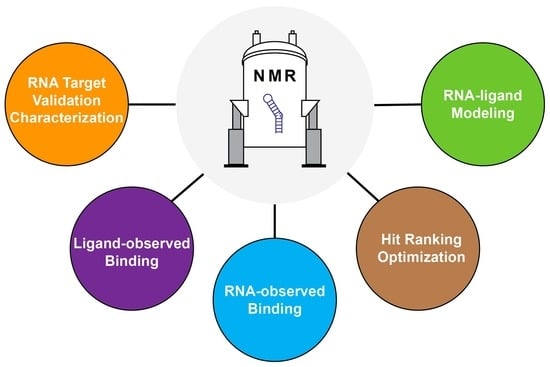
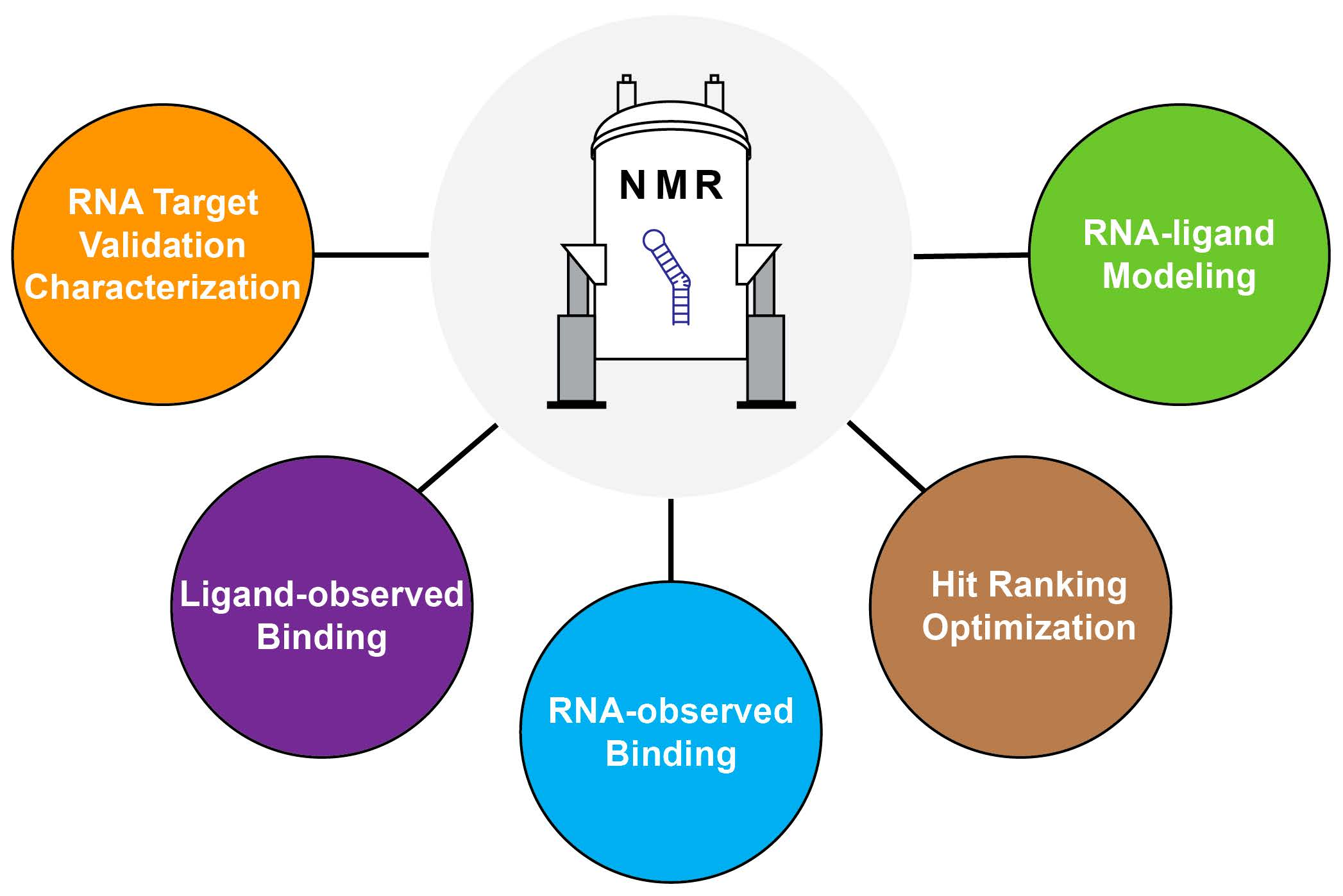
Fragment-based drug discovery (FBDD) has emerged as a primary approach for identifying low molecular weight leads that can be systematically optimized into high-affinity compounds. Because fragments bind inherently weakly, their detection relies on highly sensitive biophysical tools. Nuclear magnetic resonance (NMR) spectroscopy is uniquely qualified for fragment screening due to its capability in detecting weak interactions across a broad affinity range while providing site-specific binding information that supports structure-guided optimization. While FBDD is a mature field for protein targets, structured and disease-relevant RNAs have transitioned from ‘undruggable’ molecules to viable therapeutic targets for small-molecule intervention. Recent studies demonstrate that NMR-based screening can identify authentic RNA binders and guide their evolution into potent, selective ligands. This review summarizes the practical and methodological pipelines for RNA-targeted small molecule NMR screening, covering RNA construct design, sample preparation, and library pooling strategies. We evaluate both ligand- and RNA-observed NMR assays for primary hit screening and validation, integration of NMR restraints with structural modeling, and representative case studies. Finally, we discuss current bottlenecks in the field and highlight emerging strategies to accelerate the discovery of RNA-directed therapeutics.
Keywords: RNA; NMR; fragment screening; RNA-targeted small molecule; drug discovery; RNA therapeutics RNA; NMR; fragment screening; RNA-targeted small molecule; drug discovery; RNA therapeutics
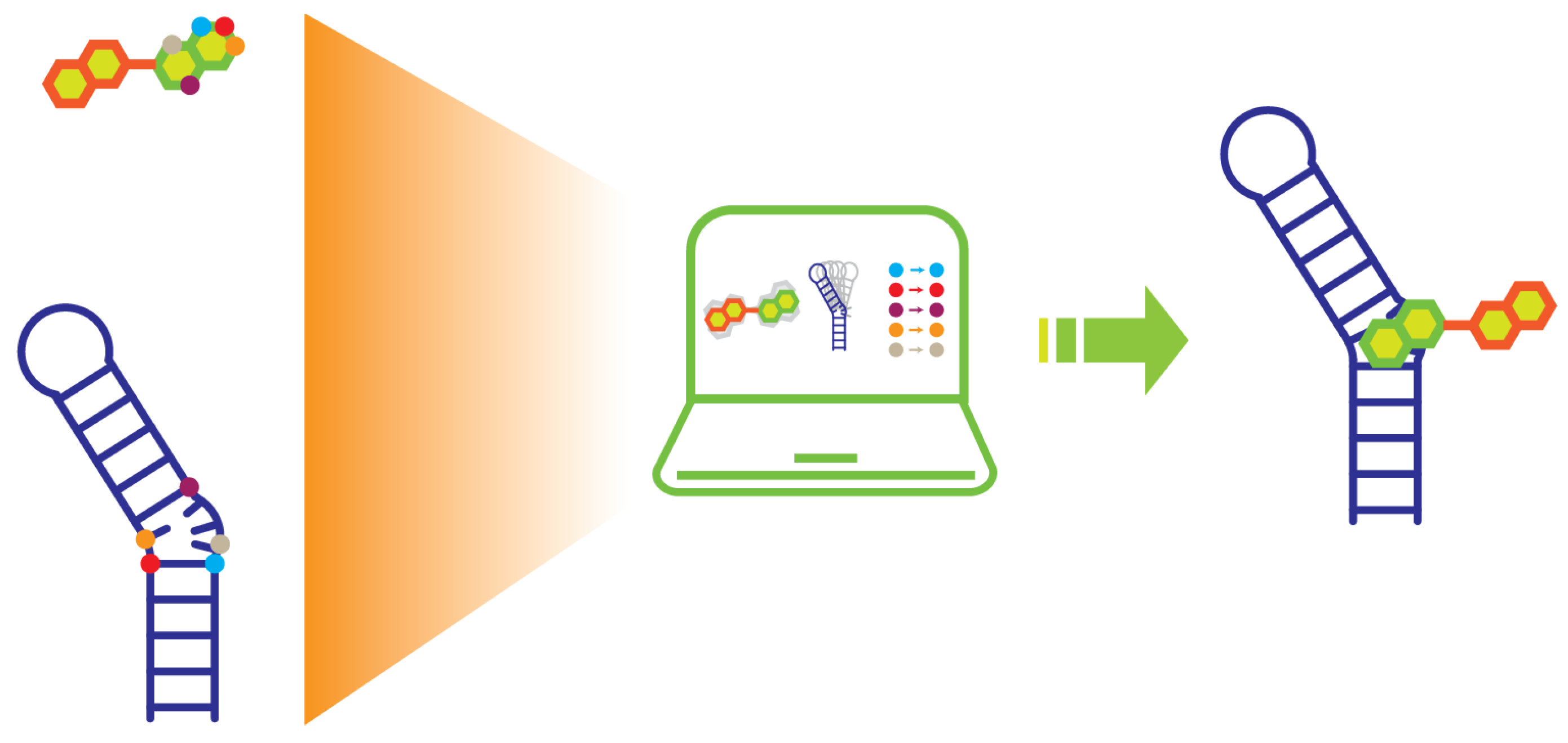
Graphical Abstract