


Abstract
We report an electron paramagnetic resonance (EPR) study of radiation-induced defects in Ba3(PO4)2, aiming to understand their role in radio-photoluminescence (RPL). Ba3(PO4)2 is a promising host for rare-earth dopants in optical and dosimetric applications. We compare the effects of ultraviolet (UV) and X-ray irradiation on the electron trapping by Eu3+, as well as the formation of intrinsic defects by radiation in Eu-doped and undoped samples. Both irradiation types generate Eu2+ centers with axial symmetry at one specific Ba lattice site, as confirmed by Q-band EPR. Additional EPR signals near reveal radiation-induced centers unrelated to Eu dopants. Detailed analysis of X- and Q-band spectra identifies an H0 center and two electron-trapping defects, one tentatively assigned to an oxygen vacancy (F-type center). These findings pave the way for understanding the complex defect landscape governing charge trapping and stability in Ba3(PO4)2.
1. Introduction
Ba3(PO4)2 is a wide-bandgap crystalline compound characterized by high chemical and thermal stability. In powder form it is traditionally synthesized via high-temperature solid-state diffusion [1,2,3,4], although wet-chemical routes have also been reported [5,6,7]. Recently, its low toxicity and the cost-effectiveness of wet-chemical synthesis have inspired a broad range of applications, including use as an additive in lubricants [5], as a photocatalyst [6], and as an adsorbent for water purification, in particular to eliminate methyl blue [7]. More conventionally, Ba3(PO4)2 serves as a host lattice for luminescent transition-metal and rare-earth (RE) ions in diverse optical applications, particularly as a down-conversion phosphor for lighting [2,3,4,8,9,10]. For most di- and trivalent dopants, substitution occurs on Ba2+ sites, whereas pentavalent transition-metal ions, like Mn5+, can be stabilized in the P5+ position [11]. Mn5+ has recently attracted considerable attention due to its near-infrared (NIR)-II luminescence (1000–1350 nm) under NIR-I excitation (650–950 nm), making it highly relevant for in vivo luminescence imaging. Furthermore, in vivo luminescence-based thermometry has been demonstrated for Sr3(PO4)2:Mn5+ and Ba3(PO4)2:Mn5+ [12].
Our primary interest in Ba3(PO4)2 lies in luminescence-based imaging and dosimetry of ionizing radiation. Tale et al. investigated the thermally stimulated luminescence (TSL) of Eu2+-activated and undoped Ba3(PO4)2 X-ray phosphor screens following X-ray excitation at liquid-nitrogen temperature [13]. Schipper et al. demonstrated that the X-ray storage capacity of Eu2+-activated Ba3(PO4)2 is significantly enhanced by co-doping with La3+, Y3+, and other trivalent lanthanides [2,14]. They examined both the TSL and the optically stimulated luminescence (OSL) of these phosphors. We recently showed that Ba3(PO4)2 doped with Sm3+, Eu3+, and Yb3+ exhibits radiation-induced changes in RE-related luminescence upon UV exposure, associated with valence state conversion of the dopant to 2+ [15]. This phenomenon, known as radio-photoluminescence (RPL), is particularly promising in Eu-doped Ba3(PO4)2 because its RPL charging spectrum aligns with the erythemal action spectrum [15]. Moreover, simultaneous excitation of Eu2+ and Eu3+ photoluminescence in the UV enables dose assessment via the intensity ratio of violet Eu2+ and red Eu3+ emission. The present work reports on the extension of these RPL studies to higher-energy photons, notably X-rays.
TSL, OSL, and RPL in inorganic phosphors all rely on stable trapping of charge carriers generated by irradiation [16,17]. TSL and OSL involve recombination luminescence, which erases stored dose information during readout. In contrast, RPL excitation does not induce carrier detrapping, thereby preserving dose information—a key advantage of this mechanism [17,18]. To date, only a few RPL phosphors have achieved practical use, notably LiF [19], Al2O3:C,Mg [20] and Ag-doped phosphate glasses [21]. Over the past decade, Sm3+- and Eu3+-doped crystalline and glassy materials have emerged as promising RPL phosphors [18]. Their readout relies on electron trapping by Sm3+ or Eu3+, although hole traps and alternative electron traps critically influence RPL stability and efficiency. These traps also govern the TSL and OSL behavior. The present work addresses radiation defects in Eu-doped Ba3(PO4)2 and their impact on RPL performance.
For effective RPL, Eu in Ba3(PO4)2 should be predominantly in the 3+ state prior to irradiation. In this way the change in luminescence intensity ratio or color upon exposure to X-rays is maximized, increasing the RPL sensitivity. This is achieved by a final sintering step in the solid-state synthesis, at high temperature in an oxidizing atmosphere [15]. Under ∼400 nm near-UV excitation, these samples exhibit line emission in the orange–red region, with the strongest peak at 615 nm, characteristic of the intra 4f6 configuration transitions of Eu3+. The occurrence of not one but two 5D0 → 7F0 transitions near 580 nm indicates that Eu3+ occupies at least two sites in Ba3(PO4)2. At shorter excitation wavelengths, down to 350 nm, no indications of broad band Eu2+ emission are observed. However, exposure to UV light with nm generates a broad, Eu2+-related emission band peaking around 420 nm [15], with an excitation spectrum spanning the range 300–380 nm. A valence state change in Eu thus occurs from photon energies of about 4 eV, way below the band gap energy of Ba3(PO4)2, which is estimated at 8.2 eV [4]. Electron paramagnetic resonance (EPR) spectroscopy showed that the Eu2+ center that is formed after electron trapping resides at a single site with axial symmetry [15]; although in samples sintered in a reducing atmosphere, Eu2+ occupies both Ba sites with trigonal axial symmetry in the rhombohedral Ba3(PO4)2 lattice [1]. Furthermore, for X-ray exposure of Ba3(PO4)2, Tale et al. [13] showed that the sintering atmosphere strongly affects glow curves and thus defect structures, while Schipper et al. [2,14] reported that RE3+ incorporation also modifies radiation-induced charge trapping behavior, sometimes dopant-specific, although Y3+ and La3+ mainly influence intrinsic defects.
In this paper we aim to clarify the role of radiation-induced defects in the RPL process in Ba3(PO4)2:Eu3+.
2. Results and Discussion
2.1. X-Ray Induced RPL and Eu2+-Related Centers in Eu-Doped Ba3(PO4)2
2.1.1. Results
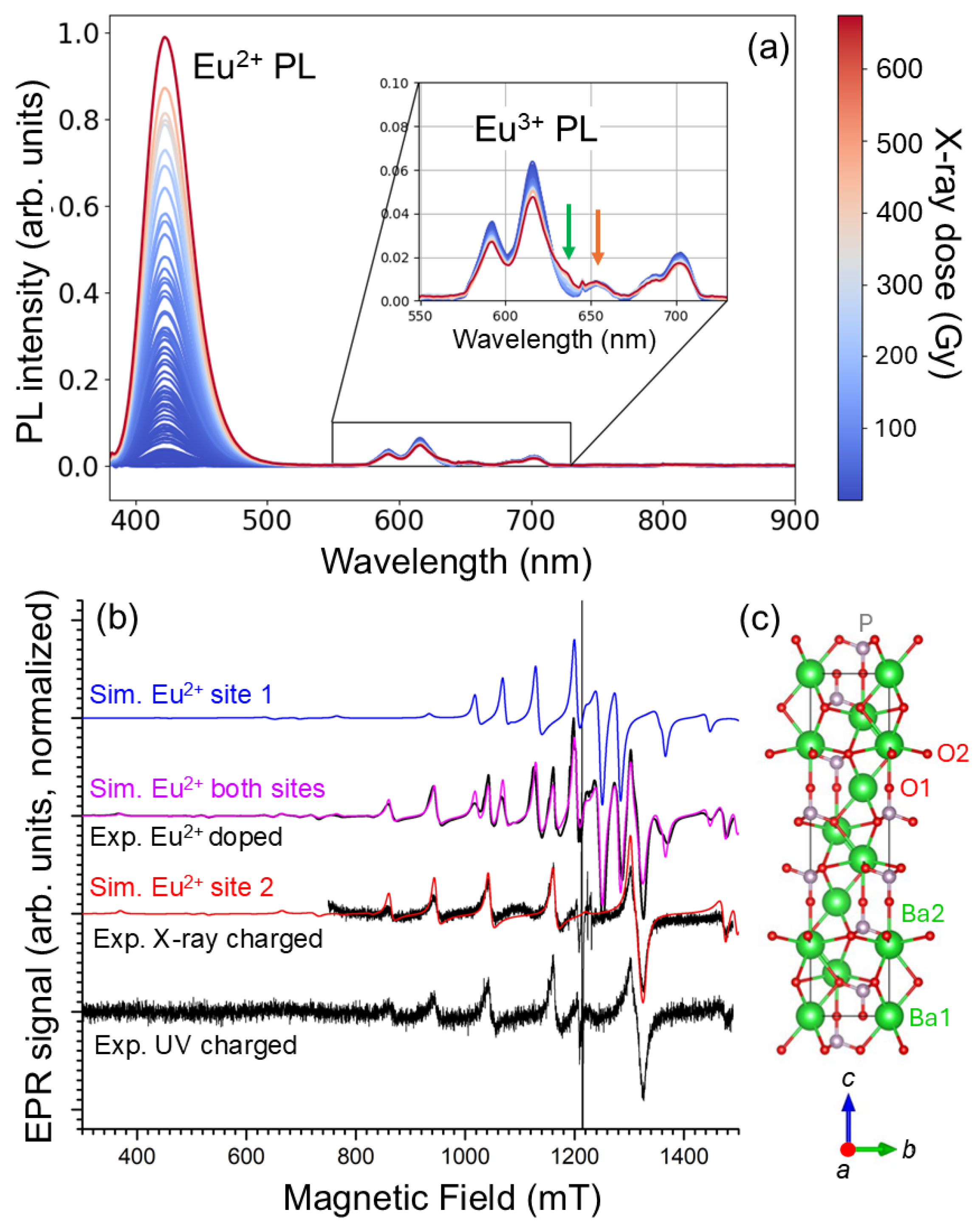
We previously established that 275 nm UV irradiation of Ba3(PO4)2:Eu3+ produces Eu2+ centers, resulting in violet photoluminescence and an EPR spectrum of a single center with spin S = 7/2 and axial symmetry [15]. Figure 1 demonstrates that X-ray irradiation also leads to partial photoreduction in the Eu3+ dopant. Figure 1a shows how the violet Eu2+ band grows with an increasing X-ray dose. Meanwhile, the intensity of the Eu3+ intra configuration emission decreases, as is clearly seen in the inset of the figure. Around 640 nm a shoulder on the main emission line in this region grows in, and a band at 660 nm seems only very slightly affected by irradiation. The origin of these luminescence features is not clear at this moment, but they may be related to the intrinsic defects.
Figure 1.
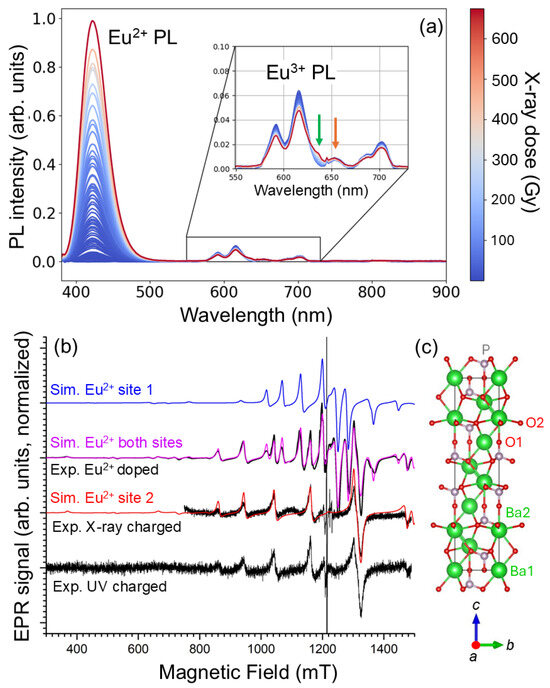
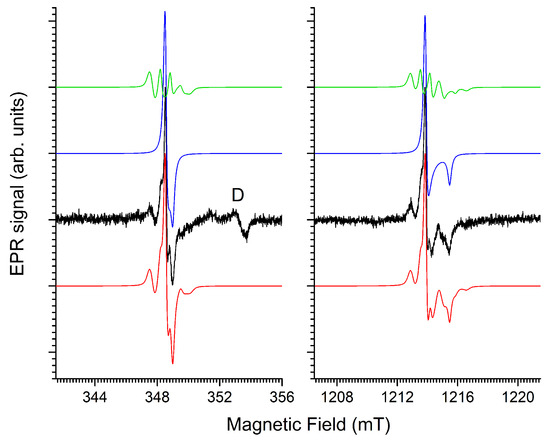
(a) PL spectrum under 375 nm LED excitation of Ba3(PO4)2 as a function of the X-ray radiation dose. The inset shows a zoom-in on the Eu3+-related intra configuration emission, where the luminescence intensity decreases with radiation dose. Around 640 nm (green arrow) a band grows in, while the intensity of a band at 655 nm (orange arrow) is hardly affected by irradiation. (b) Q-band EPR spectra ( GHz) of Ba3(PO4)2; bottom trace—black: Eu3+-doped after UV charging ( nm, ∼); 2nd trace—black: Eu3+-doped after X-ray charging, red: simulation for Eu2+ Site 2 (simulation parameters in Table 1); 3rd trace—black: Eu2+-doped, magenta: simulation for both Eu2+ sites; top trace—blue: simulation for Eu2+ Site 1. (c) Unit cell of Ba3(PO4)2 with labeling of the crystallographic positions.
Figure 1b compares the experimental EPR spectra after UV and X-ray charging of Ba3(PO4)2:Eu3+ with the EPR spectrum of Eu2+-doped Ba3(PO4)2, obtained by sintering the sample in reducing atmosphere. Except for narrow transitions in the magnetic field range near , which are discussed further on, the spectra of the UV and X-ray charged Eu3+-doped samples are identical. All broad EPR transitions in the spectra are attributed to a single Eu2+ center with axial symmetry, as shown in the simulation, using the g and zero-field splitting parameters earlier reported [15] and listed in Table 1 (Eu2+ Site 2). The simulations are performed by diagonalizing the spin Hamiltonian ( represents the Bohr magneton).
Table 1.
Spin Hamiltonian and linewidth parameters used in the simulation of the Eu2+ EPR spectra in Figure 1. g and values are reproduced from [15]. No error is given for the linewidth parameter. Its value should only be regarded as indicative: it is chosen in such a way to account for the hyperfine interaction with the Eu nucleus, which is only partly resolved in some transitions.
The first term on the right-hand side represents the electronic Zeeman interaction between the magnetic field and the electron spin. The second and third terms represent the second and fourth-rank zero-field splitting (ZFS), respectively.
In order to avoid overfitting of the broad powder spectra that extend over a wide field range, we assume (for both Eu2+ centers) the g tensor to be isotropic and ignore the sixth-rank ZFS contribution. Furthermore, we assume that the fourth-rank ZFS Hamiltonian preserves cubic symmetry, and thus introduces only one parameter, . The second-rank ZFS parameter reflects the deviation of the center from cubic symmetry.
The broad transitions for Eu2+ Site 2, observed in the Eu3+-doped Ba3(PO4)2 after irradiation with X-rays or UV, also appear in the spectrum of Eu2+-doped Ba3(PO4)2 (synthesized under reducing atmosphere), but additional broad lines occur in this spectrum. In Ref. [15] we established that these are due to a second Eu2+ center with axial symmetry with a smaller parameter (Eu2+ Site 1). The EPR spectrum simulation for the reduced sample is a linear combination of the simulations for both Eu2+ sites in a (Site 1:Site 2) occupancy ratio (3:4). Even though experimental spectra are fairly well reproduced, the simulations indicate that for perfect reproduction, a distribution in the zero field splitting parameters needs to be taken into account. Therefore, the 3:4 ratio should only be regarded as indicative: the concentration of Eu2+ in the two sites is comparable.
2.1.2. Discussion
The occurrence of two Eu2+ centers in the sample sintered in reducing atmosphere is readily understood when inspecting the crystal structure of Ba3(PO4)2 [1]. There are indeed two crystallographic sites for Ba2+ in this structure (see Figure 1c). Both have axial site symmetry, so at first sight, ambiguity remains in the site assignation of the two Eu2+ sites. However, one of the two sites, Ba1, is coordinated by 12 O2− neighbors. This coordination is derived from a close-packed cubic coordination by a fairly large axial distortion along a <111> axis of the cube (c-axis of the crystal), preserving inversion symmetry. The tenfold O2− coordination of the Ba2 site strongly differs from a cubic environment, and lacks inversion symmetry. Considering the geometry of the undistorted Ba lattice sites, it is thus very plausible that the paramagnetic Eu2+ Site 1 center, with the smaller parameter, corresponds to Eu2+ substitution on the Ba1 lattice position, and Eu2+ Site 2 occupies the Ba2 position. The Ba2 site is twice as abundant as Ba1 in the Ba3(PO4)2 lattice. Considering the uncertainty in the relative EPR spectral intensities for the two Eu2+ centers (3:4) mentioned earlier, EPR provides no clear indication that Eu2+ exhibits a preference for occupying a particular Ba site.
In UV or X-ray irradiated Eu3+ doped Ba3(PO4)2 we did not observe the Eu2+ Site 1 center. Simulations indicate that the intensity for this center in the spectrum after UV or X-ray irradiation is at least eight times lower than that for Eu2+ Site 2 (see Supplementary Information, Figure S1). Eu2+ production by irradiation thus exhibits a clear preference for Site 2.
One possible explanation for this selectivity is that Eu3+ incorporation in the lattice is site selective; this means that the small Eu3+ ion exhibits a clear preference for substitution on the Ba2 position. However, both in Ref. [4] and in Ref. [15], two distinct Eu3+ sites have been observed in the PL spectra. Lazoryak et al. [4] even explicitly link this to incorporation of Eu3+ on the Ba1 and Ba2 sites. If there is no clear site preference for Eu3+ incorporation, then the EPR results imply that stable electron trapping at Eu3+ is site-selective.
It should be noted that, besides Eu3+ substitution on the two Ba sites in the lattice, other explanations exist for the occurrence of two distinct Eu3+ luminescence centers in Ba3(PO4)2. Indeed, Eu3+ substitution for Ba2+ requires charge compensation, and the observed two Eu3+ centers might differ in this respect, rather than in their Ba2+ lattice position. Moreover, it has been shown that Ce3+ and Tb3+ doping in Ba3(PO4)2 at concentrations higher than 0.3 mol% leads to the formation of a RE3+-concentrated crystal phase (Ba3RE(PO4)3) [22]. The PL of Eu3+ in this concentrated phase (earlier reported in [23]), or in regions of high local concentration in the Ba3(PO4)2 lattice, might also be distinguishable from that of isolated Eu3+ in a regular Ba2+ site of Ba3(PO4)2. We found no evidence for a Eu-concentrated crystal phase in the XRD patterns of our samples, only weak traces of Ba5(PO4)3(OH) [24] in some of the in-house synthesized samples and a somewhat higher concentration of this Ba-hydroxyapatite phase in commercial undoped Ba3(PO4)2 (see Supplementary Information, Figure S2).
We are currently further investigating the origin of the observed site selectivity for Eu2+ production by irradiation, preferential incorporation of Eu3+ or preferential electron trapping, by studying the EPR spectra of paramagnetic RE3+ ions in Ba3(PO4)2, in particular Gd3+.
2.2. Other Radiation-Induced Centers in Eu-Doped Ba3(PO4)2
2.2.1. Results
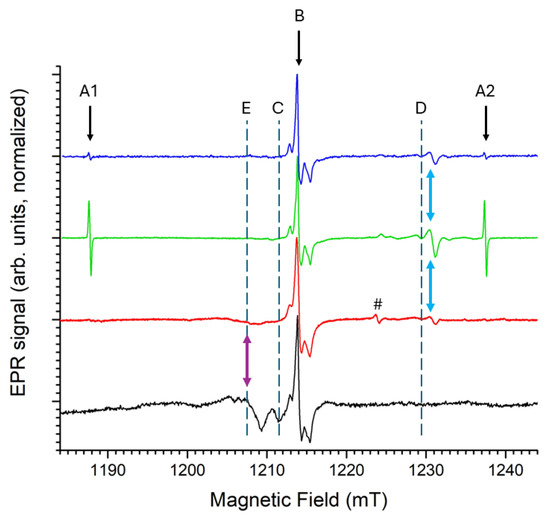
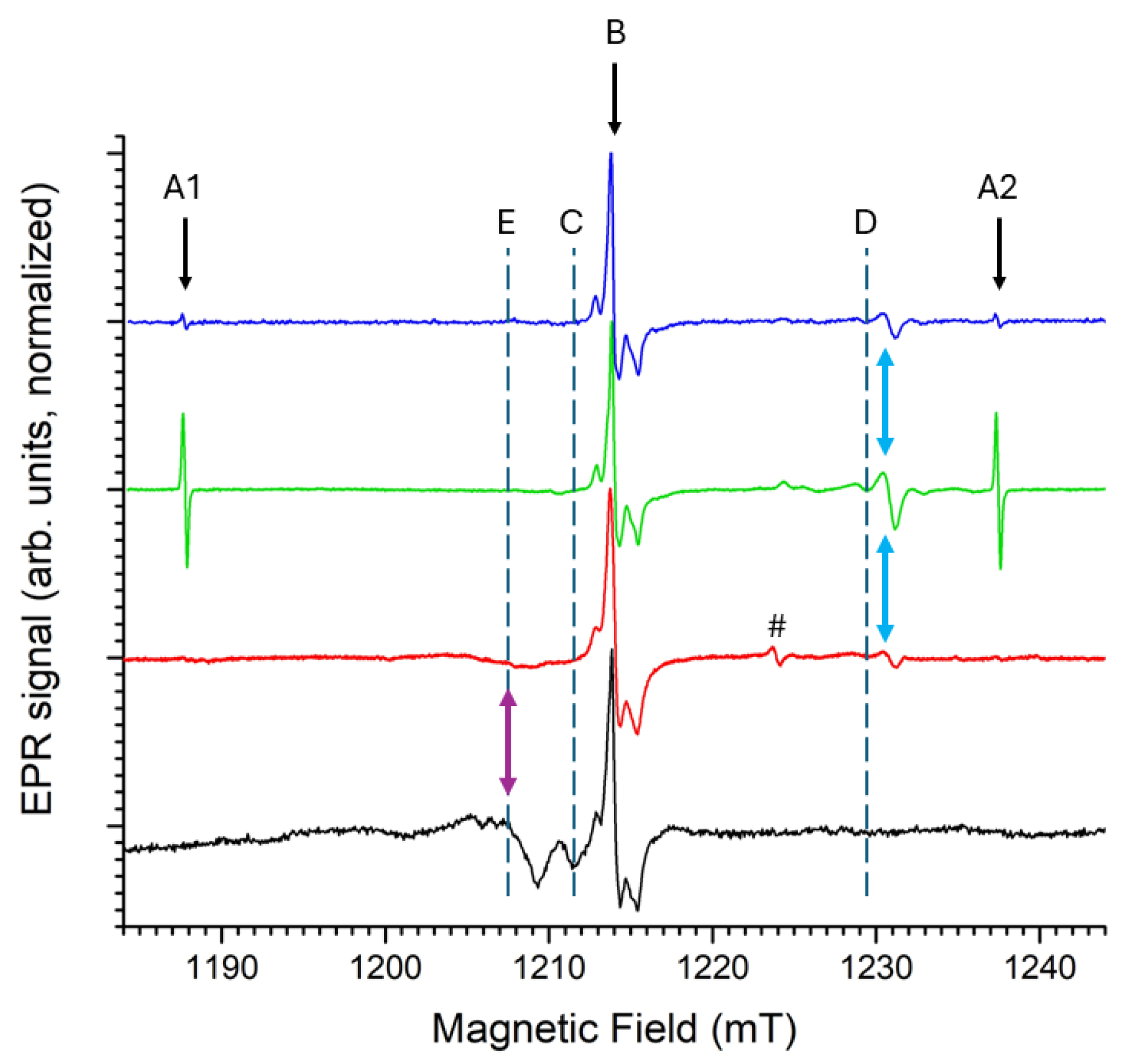
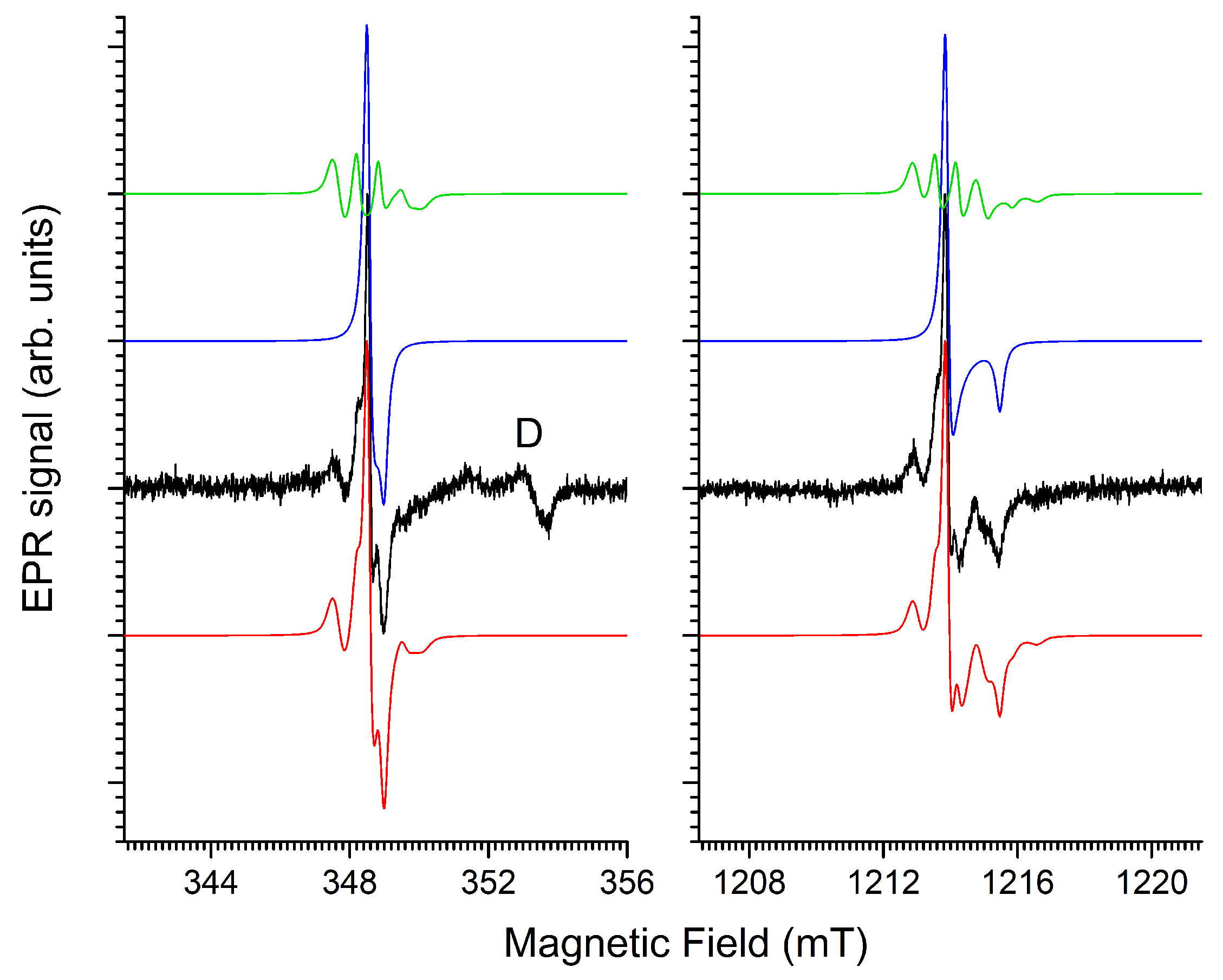
In the magnetic field region near g = 2 (≈1214 mT at 34 GHz) the EPR spectra of UV and X-ray charged Ba3(PO4)2:Eu3+ exhibit narrow EPR lines that are not directly related to Eu2+. Figure 2 shows a zoom of the spectra shown in Figure 1 on this region. The EPR spectrum of X-ray irradiated commercial, undoped Ba3(PO4)2 is added for comparison. The latter spectrum is shown, recorded directly after irradiation, and about 72 h after irradiation, keeping the sample under ambient conditions.
Figure 2.
Zoom of the EPR spectra in Figure 1b. Black: UV charged ( nm, ) Eu-doped; red: X-ray irradiated Eu-doped (450 Gy); green: commercial undoped Ba3(PO4)2 ∼90 min after 225 Gy X-ray irradiation; blue: same sample as green, ∼70 h later. Spectra are normalized to the maximum of the signal labeled as “B”. Signal labels and markings are explained in the text.
Schipper et al. [2,14] studied paramagnetic radiation defects in Ba3(PO4)2 doped with various RE3+ ions. They found that the radiation-induced EPR spectrum strongly depends on the dopant and on the sintering atmosphere and duration. In Ref. [2] they labeled five EPR components (A–E) in the spectra of irradiated La3+-doped Ba3(PO4)2. Component A is a doublet split by about 50 mT. We observe this or a similar doublet in the undoped commercial sample (A1 and A2 in Figure 2), but not, or only very weakly, in the Eu3+-doped samples. We also did not observe it in other in-house synthesized samples. Moreover, this signal has decayed by a factor of ∼10 after 3 days under ambient conditions. The analysis and discussion of this paramagnetic center are given in Section 2.3.
For the other four components, Schipper et al. provide g-factors: the field positions corresponding to these g-factors are marked in Figure 2. It is clear that we observe the same, or at least very similar, radiation-induced paramagnetic centers in the in-house synthesized Eu-doped and the commercial undoped sample we studied. These paramagnetic radiation centers should thus be intrinsic or related to very common impurities in Ba3(PO4)2.
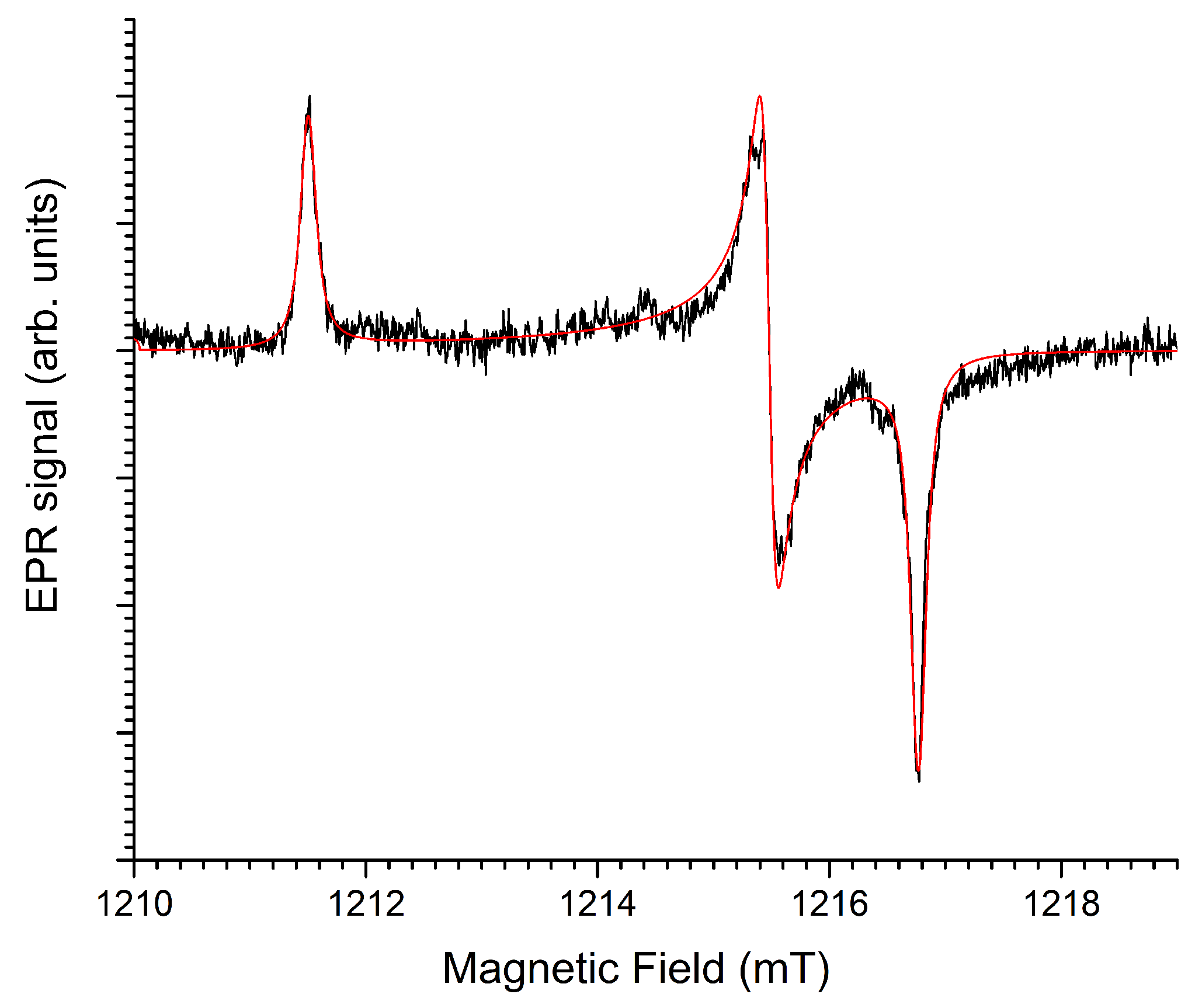
All spectra exhibit a B-signal at . In both samples it is the most stable non-Eu2+-related center produced by irradiation. Relative to the Eu2+ EPR signal, it is much weaker after UV than after X-ray irradiation. We discuss this spectral component in Section 2.5. At (D signal observed by Schipper et al.) no or only a very weak EPR line is seen in the spectra, but at a slightly higher magnetic field, in the spectra produced by X-ray irradiation, an asymmetric EPR line is clearly seen (blue arrows). There is little doubt that this is the component observed by Schipper et al., and we will therefore label it here as D. Its EPR characteristics in undoped Ba3(PO4)2 and identification are further discussed in Section 2.4. At room temperature, signal D decays faster than B, but it is more stable than A. It should be noted that in spite of their considerable amplitude, in UV or X-ray irradiated Eu-doped Ba3(PO4)2, signals B and D represent a small total integrated intensity in comparison to the very broad signal of Eu2+. Via spectral simulations we estimate that a short time after X-ray irradiation, the total integrated intensity of the Eu2+-related EPR component is two to three orders of magnitude larger than that of the B and D signals, which have comparable intensities.
At the g-position of component C (, according to Schipper et al. [2]), we only observe a small EPR line in the UV irradiated Eu-doped sample. Around , the g-factor for signal E of Schipper et al., we do observe an EPR signal in the Eu-doped sample. Its intensity is much weaker in the undoped commercial sample. Schipper et al. observe a four-line hyperfine structure for this component, which is absent in our spectra. On the contrary, the EPR signal we detect in this field region has a poorly resolved structure, which seems to be different for UV and X-ray irradiation. The stability of these signals at room temperature is comparable to that of signal B. Since we observe them most clearly in the presence of large concentrations of trapped electron centers (Eu2+), it is tempting to assign these signals to trapped hole centers. Hole trapping in Ba3(PO4)2 is expected to occur at or near the (PO4)3− anion units. Tale et al. [13] observed that the intrinsic trapped hole centers at (PO4)3− decay around 130 K, giving rise to an intense TSL signal. If they are indeed trapped hole centers, the room temperature stable C and E centers should thus be defect or impurity-related. The lack of structure at room temperature makes a further analysis of the C and E EPR signals difficult at this point. Therefore, we do not discuss these signals further in this paper.
2.2.2. Discussion
It is not a priori evident that UV and X-ray irradiation would produce the same type of defects. Indeed, photoreduction in Eu in Ba3(PO4)2: Eu3+ under UV exposure was observed between 3.9 eV 6.2 eV [15]. Lazaryak et al. [4] identified the exciton band and onset for valence to conduction band transitions in Eu-doped Ba3(PO4)2 at 7.5 eV and about 8.2 eV, respectively. The UV light used for charging has considerably lower photon energy, so it is safe to assume that electron–hole pair production in the host is excluded. As we explained earlier [15], a local charge transfer, e.g., from ligand to RE metal, is responsible for the reduction in Eu3+ in the UV charging experiments. X-rays with photon energies in the keV range do produce free electron–hole pairs, so that valence state changes can be expected for all stable electron and hole traps in the material. Indeed, we observe clear differences between EPR spectra after UV and X-ray charging. Relative to the Eu2+ signal we observe a much smaller intensity of the B signal, and no D signal (above the detection threshold) for charging with UV (see Supporting Information, Figure S3). The signal marked with # in the spectrum of X-ray irradiated Ba3(PO4)2:Eu3+, occurring at and not mentioned by Schipper et al. [2,14], is also not detected after UV charging.
In the remainder of the results section, the analysis of the three most prominent radiation-induced EPR signals in undoped Ba3(PO4)2 (A, B and D) are presented. X and Q-band EPR are combined for a consistent interpretation. All these centers have electron spin S = 1/2. The spin Hamiltonian to diagonalize for their analysis consists of an electron Zeeman term and terms for hyperfine (and nuclear Zeeman) interactions with the central or neighboring nuclei.
Schipper et al. [2,14] only identified signal A as due to atomic hydrogen H0 centers, but did not propose models or suggest an origin for the other centers.
2.3. Signal A: H0 Centers
2.3.1. Results
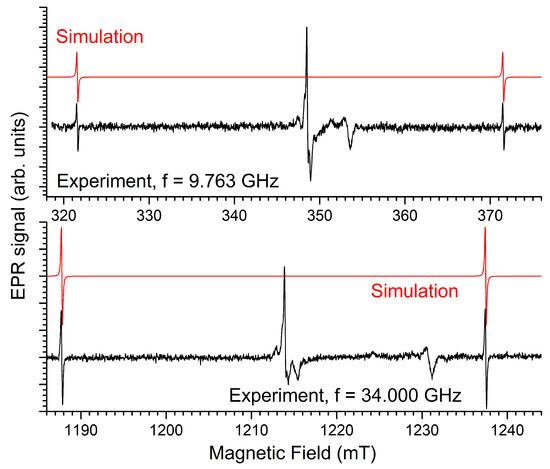
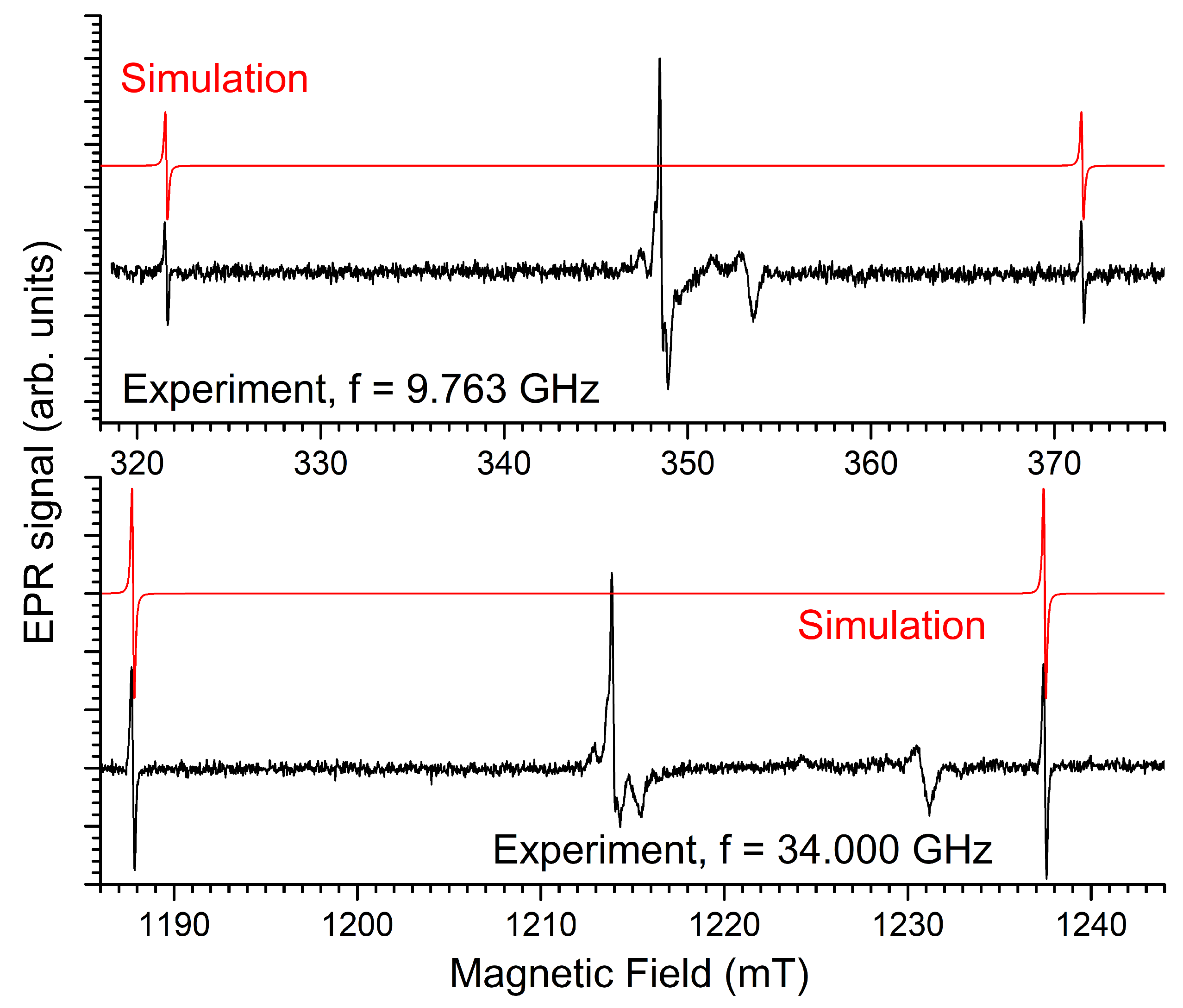
Figure 3 shows the X- and Q-band EPR spectra of undoped Ba3(PO4)2, recorded within the first hour after irradiation, with small modulation amplitude (0.1 mT) in order to avoid overmodulation of the narrow lines of this doublet EPR signal. Simulations are also shown, using the same g, hyperfine and linewidth parameters (Table 2) for the two bands. For comparison, the g and A parameters published in Ref. [2] are also presented.
Figure 3.
X- and Q-band EPR spectra of commercial, undoped Ba3(PO4)2, after X-ray irradiation at room temperature (40 kV, 40 mA, 900 s, ∼225 Gy), recorded at room temperature. Microwave power: 1 mW. Field modulation: 0.1 mT amplitude at 100 kHz. Black traces are experimental spectra; simulations using the parameters in Table 2 are shown in red.
Table 2.
Spin Hamiltonian parameters for the H0 center in Ba3(PO4)2.
2.3.2. Discussion
At first glance, the H0 signal we observe in the undoped Ba3(PO4)2 differs significantly from that reported in Ref. [2]. The discrepancy is largest for the g-factor, but the difference can easily be explained. Schipper et al. state that the “(mean) g value of the signal is 2.013” [2], which may imply that it was determined from the mean field value of the two hyperfine lines. Since the hyperfine interaction is large, there is a considerable second-order hyperfine correction to the resonance field positions (for 1H, I = 1/2 and ):
This second-order downshift of the resonance magnetic fields, the third term on the right-hand side of Equation (3), is proportional to the square of the hyperfine strength A, and inversely proportional to the microwave frequency f. It amounts to ≈1.8 mT for the X-band spectrum, and for Q-band ≈0.5 mT. Ignoring this second-order correction would shift the g-factor determined from the X-band spectrum to 2.0127, in close agreement with the result in Ref. [2].
The observed hyperfine splitting is somewhat smaller than earlier reported [2], which has no evident explanation. No error was stated for the literature hyperfine splitting. Still, a difference of 0.6 mT, about 1% of the measured hyperfine splitting value, is well measurable in EPR spectroscopy. It can therefore not be excluded that the H0 centers produced by X-rays in commercial Ba3(PO4)2 differ slightly from those reported for RE3+-doped Ba3(PO4)2, which were synthesized and sintered in reducing atmosphere [2].
The H0 centers are generated by the trapping of radiation-produced electrons by H+ [2]. It was proposed in Ref. [25] that H+ can be weakly bound to the (PO4)3− anions, and that this would lead to electron trapping that is stable at room temperature. Schipper et al. [2] suggested that H+ bound to (PO4)3− next to a Ba2+ vacancy would function as a charge compensator for the RE3+ ion substitution for Ba2+. However, they did not systematically observe radiation-induced production of H0 in all RE3+-doped Ba3(PO4)2 phosphors studied [14]. We observed no or only weak traces of H0 in the in-house synthesized RE3+-doped samples sintered under air or reducing atmosphere. The final sintering in our synthesis procedure occurred at slightly higher temperatures than in the earlier study (1300 °C vs. 1200 °C), which may explain this observation. In line with this reasoning, Schipper et al. [14] observed that in most RE3+-doped samples (La3+-doping being an exception), prolonged sintering (15 h instead of 8 h) strongly suppressed H0 produced upon irradiation.
2.4. Signal D at
2.4.1. Results
The asymmetric signal occurring in Figure 3 at about 1230 mT in the Q-band, i.e., at fields just above , has a considerably larger linewidth than the H0 doublet. This spectral component is therefore better observed at higher modulation amplitude, as shown in Figure 4.
Figure 4.
(a) X-band (9.763 GHz) and (b) Q-band (34.000 GHz) EPR spectra of Ba3(PO4)2 short time (∼1.5 h) after X-ray irradiation (∼225 Gy). Black traces are experimental spectra, recorded with 0.3 mT modulation amplitude. Colored traces are simulations for signal D with spin Hamiltonian parameters in Table 3: Blue: without hyperfine interactions; green: hyperfine interaction with a shell of 3 equivalent Ba nuclei; orange: larger hyperfine interaction with one Ba nucleus; red: sum of the three contributions. The simulations assume a residual isotropic Gaussian peak-to-peak linewidth of 0.6 mT. Contributions of signals A (line A2) and B are marked in the spectra as well.
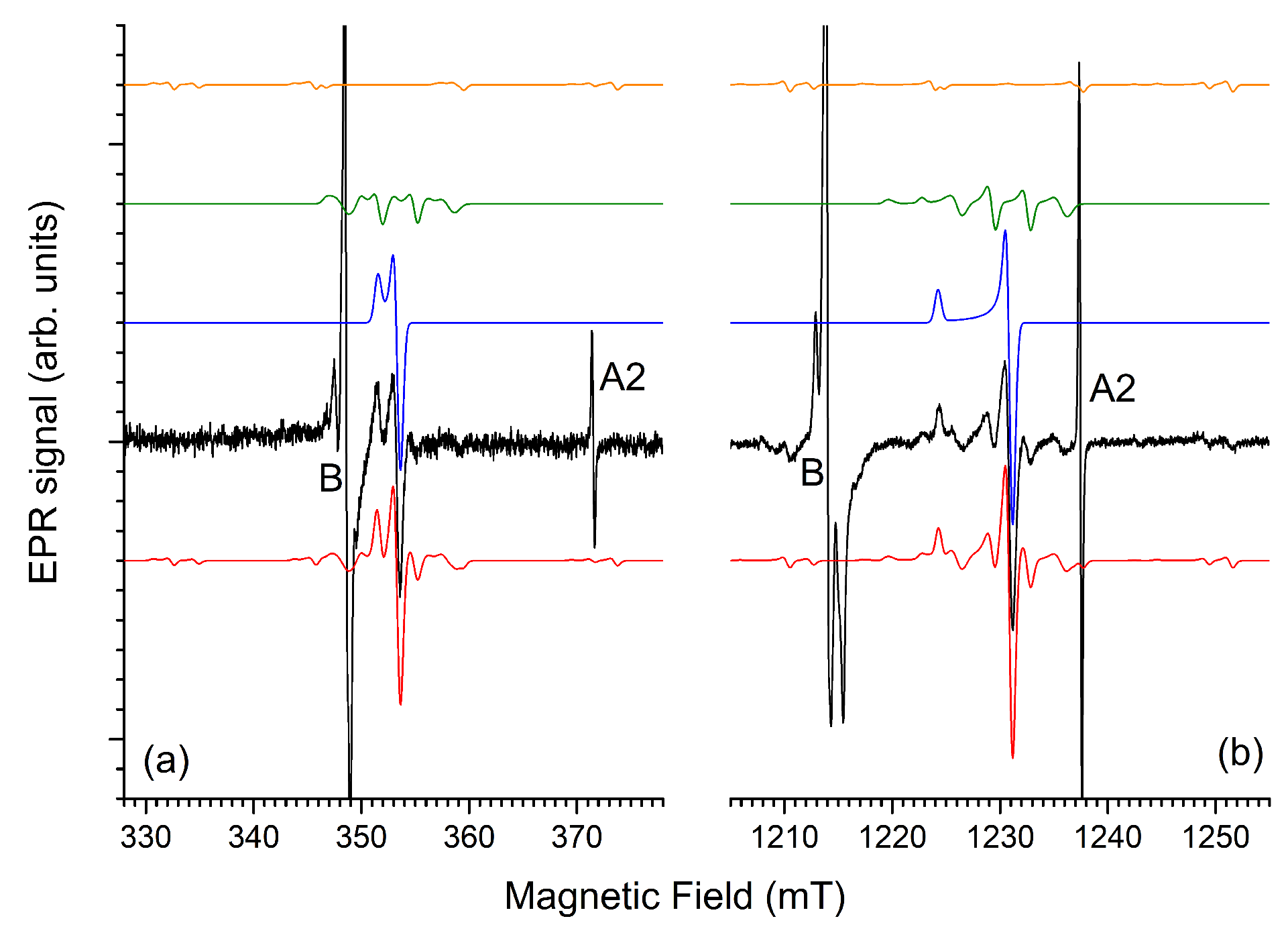
Table 3.
Spin Hamiltonian parameters for center D () in Ba3(PO4)2. The literature parameters for F centers in BaFCl [26,27] and for F+ in BaO [28] are included for comparison. Hyperfine parameters refer to 137Ba; values for 135Ba are obtained by scaling with the nuclear ratio. Numbers in braces indicate the number of equivalent nuclei.
The asymmetric shape of the line suggests axial g-anisotropy. Simulations in Figure 4 confirm this (blue traces). The higher modulation amplitude also reveals the side-structure from hyperfine interactions with nuclei with limited natural abundance. The Ba host nuclei, which have two natural magnetic isotopes, both with I = 3/2 (135Ba, , 6.592%; 137Ba, , 11.232%) [29], are most likely responsible for this interaction. The experimental X- and Q-band spectra are properly reproduced when assuming a very strong interaction with a single Ba nucleus (BaA) and a weaker interaction with a shell of three equivalent Ba nuclei (BaB). The simulations (spin Hamiltonian parameters in Table 3) show the contributions of these interactions separately, as well as an isotope abundance-weighted sum of these contributions, matching the experimental spectra. In this simulation approach we neglect the contribution of centers with more than one magnetic Ba nucleus within this set of four Ba neighbors (BaA and BaB).
For BaA, we assumed the interaction to be isotropic: only the splitting of the spectral component was observed in the spectra, while that of the parallel feature remained below the noise level. The hyperfine structure from the three BaB nuclei is resolved on the and on the features of the spectrum and exhibits a small anisotropy. Moreover, in order to obtain good agreement with the experimental spectrum, a strain in the parameter is taken into account, very probably related to a rhombicity of the A tensor and non-coincidence of its principal axes with those of the defect’s g tensor. Indeed, the only restriction imposed by symmetry on this A tensor is that one principal direction lies in the plane.
The observed hyperfine interactions are dominated by the isotropic contribution and seem large considering the small factors of the natural Ba magnetic isotopes. The unpaired electron density on the neighboring nuclei can be estimated by comparing the observed isotropic hyperfine interactions with the hyperfine field expected for 100% spin localization in the Ba 6s orbital. Using the data from Ref. [30], the latter hyperfine field for the 137Ba isotope is calculated to be 218 mT. The spin delocalization onto BaA would thus be estimated as 6% and 1.5% on each of the three nuclei in the shell BaB.
2.4.2. Discussion
The F center in halides, i.e., an electron trapped at a halide vacancy, and its analogon in oxides, the F+ center, a single electron trapped at an oxide vacancy, are characterized by strong delocalization of the unpaired electron density onto the first cation coordination shell. In Table 3 the g and hyperfine parameters of the D center are compared with those for the two F centers (electron trapped in a F− or in a Cl− vacancy) in BaFCl [26,27]. The magnitude and anisotropy of the shifts of the principal g values from the free-electron value, as well as the total delocalization onto the first cation coordination shell for these F centers agree very well with our observations for this radiation center in Ba3(PO4)2. Furthermore, a large negative g shift from the free electron value and large Ba hyperfine splitting have also been observed for the cubic F+ center in BaO ([28], see Table 3). Therefore, we propose an F+ center as the model for center D.
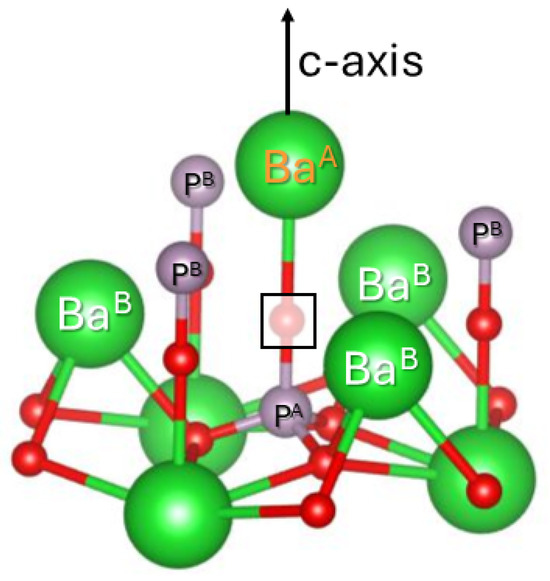
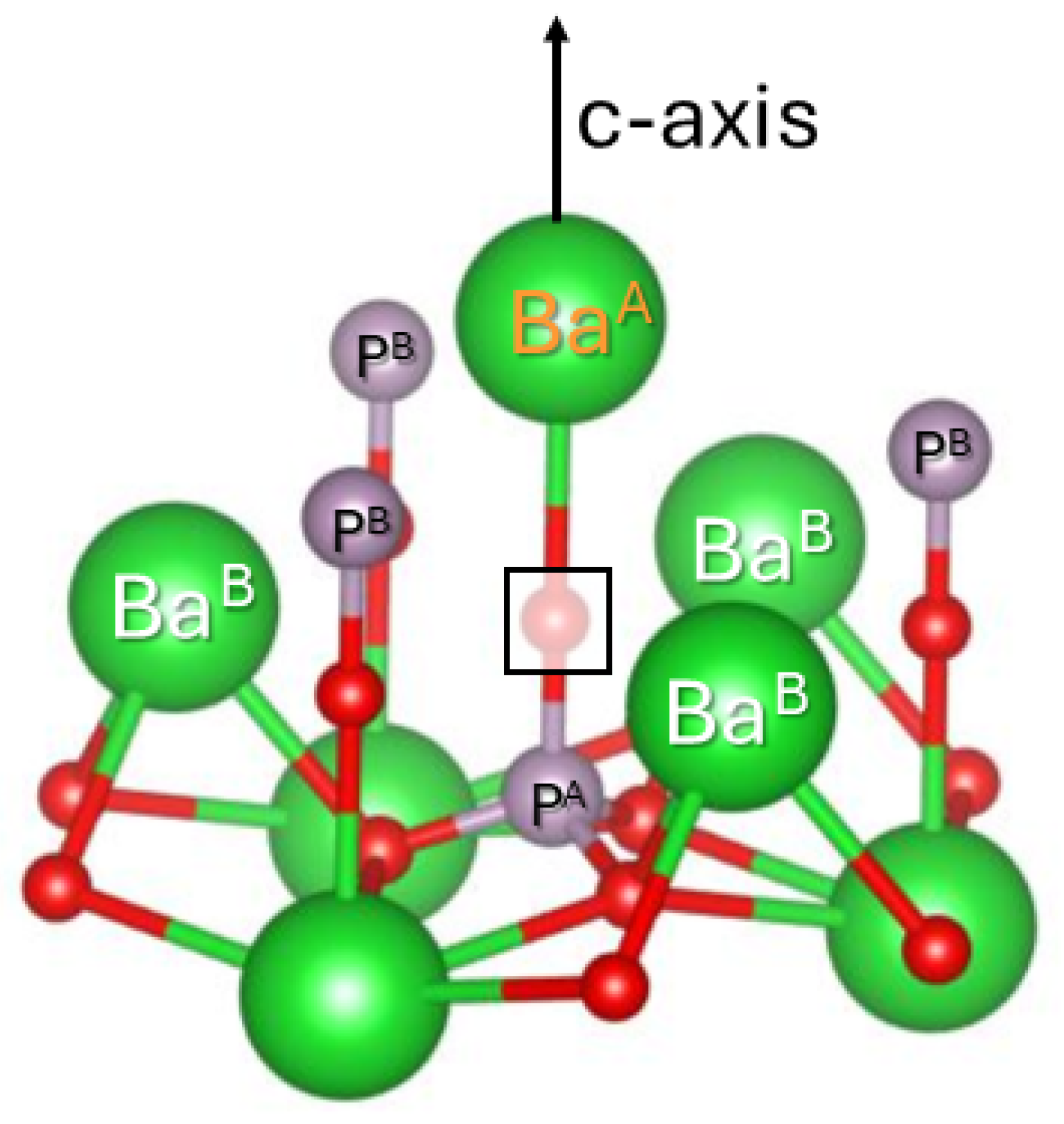
The axial g tensor symmetry of the center is preserved when lowering the sample temperature down to 85 K (see Supporting Information, Figure S4). This allows us to identify the crystallographic position of the oxygen vacancy as O1. Figure 5 shows the nearest environment of an oxygen vacancy at this position. The nearest Ba2+ ions belong to two shells: one ion (BaA) along the c-axis connecting this oxygen position to this ion at a distance of R = 0.264 nm, and a shell of three ions (BaB) at R = 0.324 nm in a plane perpendicular to the c-axis. This explains the observed hyperfine structure.
Figure 5.
Nearest environment of a vacancy at the O1 position in the Ba3(PO4)2 lattice. Oxygen: red; phosphorus: grey; barium: green.
For the Ba nuclei at R = 0.324 nm, the point-dipole contribution to the anisotropy of the hyperfine splitting
is 0.028 mT. The large residual linewidth of this spectrum and the large strain in obscure the true anisotropy of this hyperfine tensor. Still, the anisotropy resolved in the experiment is already larger than the point-dipole contribution. Hence, the unpaired electron density appears to be delocalized onto neighboring Ba p orbitals as well.
In the pristine lattice O1 also has four 31P nuclei in its nearest environment, one at R = 0.154 nm (PA in Figure 5) and three equivalent at R = 0.360 nm (PB). It is therefore surprising that no hyperfine interactions with 31P nuclei (I = 1/2, 100% abundance, gN = 2.2632 [29]) are resolved in the spectra, in particular the one with the nearest nucleus: PA. Its point-dipole contribution = 0.31 mT may remain unresolved in the residual linewidth of the spectrum. However, a delocalization of the unpaired electron density of only 1% onto this nucleus would lead to a hyperfine interaction of 5.7 mT. A splitting of this magnitude is clearly not observed in the experimental spectrum. As an explanation for this absence of 31P hyperfine splitting, we may hypothesize that the nearest P to the O vacancy site is replaced by an impurity with low natural abundance in magnetic isotopes, like C, Si or S. Higher resolution hyperfine techniques, like electron nuclear double resonance (ENDOR) or pulsed EPR techniques, are required to test the validity of such a hypothesis experimentally. First principle modeling may also help in explaining this puzzling absence of resolved 31P hyperfine interaction.
2.5. Signal B at g ≈ 2.001
2.5.1. Results
Figure 6 shows a zoom-in on the EPR spectra recorded at room temperature for undoped Ba3(PO4)2, approximately 72 h after irradiation, to minimize the interference with the D signal. The spectra are recorded with a modulation amplitude of 0.1 mT to avoid overmodulation of the sharp central line. The X- and Q-band spectra are very well reproduced by simulations using the same set of spin Hamiltonian and linewidth parameters, as shown in Table 4. The g tensor is axial, with slightly smaller than , both values being slightly smaller than the free-electron value ge. At this modulation amplitude, the small g-anisotropy is already resolved in the X-band spectrum, and it becomes very clear at the Q-band microwave frequency. Like signal D, the spectra exhibit a hyperfine side structure from 135/137Ba nuclei. An interaction with one shell of three equivalent nuclei with an axial hyperfine tensor reproduces the spectra very well. The hyperfine interaction strength is much smaller, though, than that observed in signal D, and the residual EPR linewidth is also much smaller. The linewidth for the hyperfine structure is larger than in the center of the pattern. This broadening effect is modeled in the spectra by introducing a Gaussian distribution in the hyperfine interaction strength (A-strain).
Figure 6.
EPR signal of X-ray irradiated undoped Ba3(PO4)2 at 9.763 GHz (X-band, left) and at 34.000 GHz (Q-band, right), with 0.1 mT modulation amplitude. Black: experiment; color traces are simulations using spin Hamiltonian and linewidth parameters in Table 4. Blue: without HF structure; green: hyperfine structure of 3 equivalent 135/137Ba nuclei in their relative natural abundance; red: linear combination of the blue and green simulated spectra, in accordance with the natural abundance of Ba isotopes. The contribution of signal D is also marked in the X-band spectrum.
Table 4.
Spin Hamiltonian and linewidth parameters for signal B.
Spectra recorded with higher modulation amplitude were also simulated to make sure that no hyperfine interactions remain hidden in the noise in Figure 6. These simulations include contributions of all three signals (H0, signal B and signal D) and are shown in the Supporting Information, Figure S5. The reproduction of the Q-band spectra remains very good, but the agreement in the X-band is slightly worse. Our attempts to account for this additional structure failed. Probably, low-amplitude, broad additional EPR signals from other centers occur in this magnetic field region. Hence, the hyperfine interaction listed in Table 4 is the largest, and most likely the only one resolved in the room temperature B signal.
2.5.2. Discussion
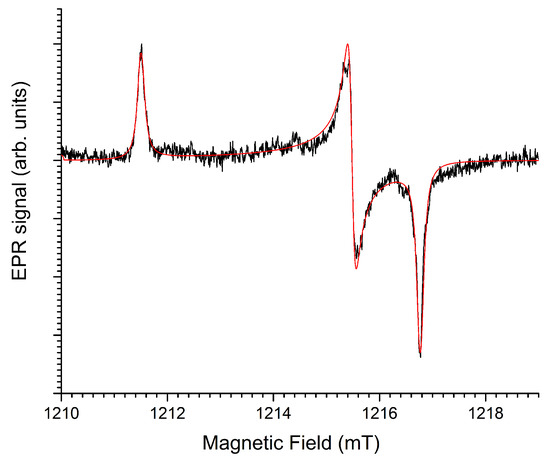
Despite the similarity in symmetry and in the interaction with a shell of three Ba nuclei, the paramagnetic centers corresponding to the B and D signals show strongly different characteristics. Center B exhibits a much smaller interaction with Ba nuclei. The delocalization of the unpaired electron density onto Ba 6s orbitals of the interacting shell amounts to about 1%. The EPR linewidth only allows for very small unresolved hyperfine interactions. Contrary to center D, in center B, the unpaired electron is highly localized. In addition, the two signals strongly differ in their temperature dependence. While the D signal hardly shows any temperature dependence (Figure S4), the EPR spectrum of signal B at 85 K, shown in Figure 7, is strongly different from that at room temperature. The g tensor symmetry is reduced to rhombic, and the anisotropy (–) has strongly increased, while the average g value has hardly changed. Thus, the axial symmetry observed at room temperature does not reflect the true symmetry of the paramagnetic center, but is the result of motional averaging, similar to that observed for certain CO2− radicals in hydroxyapatite, e.g., as in [31]. The low temperature principal g-factors for this center show similarity with those expected for CO2− (2.0030, 2.0015, 1.997 [31]). The principal g-factors of other paramagnetic molecular anion defects, like SO3− in K2S2O6 [32], are also in the range of those we observe for center B, though. Thus, based on the g tensor characteristics alone, we cannot conclusively identify this center, although it seems anion impurity-related. It is, however, not clear why such impurities would reproducibly be grown into Ba3(PO4)2 synthesized under diverse conditions, including in-house synthesis, commercial production and synthesis in another lab several decades ago. Based on evidence available at this moment, we tentatively assign signal B to a molecular anion defect, possibly impurity-related, located at a site in the lattice where it can reorient at room temperature so that its average symmetry is axial.
Figure 7.
Q-band (34.000 GHz) EPR spectrum of X-irradiated undoped Ba3(PO4)2 at 85 K; microwave power: 32 µW; modulation amplitude: 0.1 mT. Black: experiment; red: simulation. Parameters are shown in Table 4.
3. Materials and Methods
3.1. Sample Preparation and Characterization
Ba2.99Eu0.01(PO4)2 samples were synthesized via solid-state reaction, as detailed in Ref. [15]. BaCO3 (Alfa Aesar, Haverhill, MA, USA, 99.8%), (NH4)2HPO4 (Sigma Aldrich, St. Louis, MO, USA, 98%) and Eu2O3 (Alfa Aesar, 99.99%) were weighed in stoichiometric amounts and thoroughly mixed. Eu3+-doped Ba3(PO4)2 was obtained by calcining the mixed products for 5 h at 950 °C in air, followed by 5 h sintering at 1300 °C in air. For Eu2+-doping the sample was calcined for 5 h at 300 °C in air and then sintered for 5 h at 1300 °C in a 90% N2+10% H2 atmosphere. Undoped Ba3(PO4)2 was purchased (99.9% Sigma Aldrich). The phase purity of the materials was checked with X-ray diffraction (Bruker-Siemens D5000 and Bruker D8 Advance, Karlsruhe, Germany) using Cu-K radiation. The main peaks in the diffraction patterns (Supporting Information, Figure S2) match those for the desired Rm trigonal phase of Ba3(PO4)2 (Crystallography Open Database, entry 1544726 (1544726.cif) [1]). The remaining weak diffraction peaks in the pattern of commercial Ba3(PO4)2 could all be attributed to Ba5(PO4)3(OH) [24]. No indications of other phases were found. Visualization of the unit cell of Ba3(PO4)2 (Figure 1) and of the defect model for center D (Figure 5) are made with the aid of VESTA [33].
3.2. Irradiation
X-ray irradiation was performed with unfiltered radiation of a Cu-anode X-ray tube (Siemens KFL Cu 2KDC) operated at 40 kV and 40 mA in a Siemens D5000 X-ray diffractometer (Munich, Germany). The air kerma dose rate on the sample position was estimated at 0.25 Gy/s, using the manufacturer’s specifications of the X-ray source together with the geometric configuration of the setup, including the distance and angle between the copper target and the sample. Because no additional filtering or collimation of the X-ray beam was applied, the estimate is considered reliable, but the uncertainty cannot be quantified. Samples for EPR investigation were typically irradiated for 15–20 min (225–300 Gy). Varying irradiation conditions yielded comparable relative contributions of signals A, B and D in the EPR spectra.
3.3. RPL Measurements
The RPL measurements were performed by exposing a previously unirradiated Eu3+-doped Ba3(PO4)2 sample for short intervals to X-rays, and subsequently measuring the PL while blocking the X-rays with Pb shutters. A 375 nm high power LED was used for simultaneous excitation of the Eu2+ and Eu3+ PL emitted by the sample, which was captured by a 1 mm diameter optical fiber guided to an AvaSpec-Hero spectrometer (Avantes, Apeldoorn, The Netherlands). The PL measurements were executed with a short integration time (2 s) to minimize possible effects of the excitation light on the defect charge states.
3.4. EPR Measurements
Q-band EPR experiments were conducted using a Bruker ElexSys E500 spectrometer (Bruker BioSpin GmbH, Rheinstetten, Germany) operating at the Q-band (34 GHz), with an ER 5106 QT-W resonator and equipped with a Pendulum CNT-90XL frequency counter (Pendulum Instruments AB, Stockholm, Sweden). Magnetic fields were calibrated, using the spectrum of an isotropic CO2− signal in hydroxyapatite () as a reference [31,34]. Most of the experiments presented in this paper were recorded at room temperature. For the measurements performed at 85 K, the sample was cooled using liquid N2 in an Oxford CF935 gas flow cryostat (Oxford Instruments, Abingdon, UK). X-band EPR measurements were all performed at room temperature using a Bruker ESP300E spectrometer with a standard (ER 4102ST) or a high-quality EPR cavity (4122SHQE/0401), equipped with a HP 5350B microwave frequency counter (Hewlett-Packard, Palo Alto, CA, USA). Magnetic fields were calibrated against the spectrum of diphenyl picrylhydrazyl (DPPH, ). Both in X- and in Q-band spectra, 100 kHz field modulation was applied with an amplitude of 0.1–0.5 mT.
3.5. EPR Spectrum Simulations
EPR spectra were simulated by diagonalization of the appropriate spin Hamiltonian using the EasySpin libraries [29] in MATLAB R2021b (The MathWorks Inc., Natick, MA, USA). Linewidths presented in Table 1, Table 2, Table 3 and Table 4 are peak-to-peak values (lwpp). Ba has two stable magnetic isotopes: 135Ba (I = 3/2, = 0.55863, natural abundance 6.592%) and 137Ba (I = 3/2, = 0.62491, natural abundance 11.232%). The other natural stable isotopes of Ba have I = 0. For the simulation of the hyperfine structure with Ba nuclei, only centers without and with one magnetic nucleus in the immediate environment were taken into account. The contribution of centers interacting with more than one magnetic nucleus was neglected. The most important reason for this approximation is that EasySpin simulations only allow strain in one hyperfine interaction. Figure S6 in the Supporting Information shows a comparison between simulations using this approach and simulations including all isotopic combinations for centers B and D (for labeling, see further in the text), without broadening by strain in the hyperfine values. This comparison reveals only very subtle effects of centers interacting with more than one magnetic Ba nucleus, justifying our approach.
4. Conclusions
Our EPR results demonstrate that stable trapping of radiation-induced electrons by Eu3+ in Ba3(PO4)2 occurs preferentially at one specific Ba2+ site in the lattice. In Eu3+-doped Ba3(PO4)2 this is by far the most abundant stable electron trap, detectable with EPR at room temperature. Electrons or holes trapped at other intrinsic or accidental impurity-related defects also contribute to the room temperature EPR spectrum. These include H0 species characterized by a hyperfine splitting of ∼50 mT (labeled A in Ref. [2]), an oxygen-vacancy-related center (labeled D in [2], with ), and B centers with an average g-factor very close to 2.0000, which probably are related to an accidental anion impurity. Several broad EPR components with remain unidentified, which are produced in much larger concentrations in Eu3+-doped Ba3(PO4)2, and are therefore most likely trapped hole centers.
Understanding the site selectivity for electron trapping by Eu3+ ions and the hole trap defect chemistry is essential for tailoring Ba3(PO4)2:Eu3+ as an efficient RPL phosphor. Our future work will therefore focus on determining the incorporation sites of RE3+-doped Ba3(PO4)2, combining optical and magnetic resonance spectroscopy, identifying the trapped hole centers, and engineering trapping in this RPL phosphor by co-doping.
Supplementary Materials
The following supporting information can be downloaded at: https://www.mdpi.com/article/10.3390/molecules31061045/s1. Additional structural and EPR characterization data are provided in the Supporting Information, including X-ray diffraction patterns of undoped and Eu-doped Ba3(PO4)2 (Figure S2), Q-band EPR spectra after UV and X-ray irradiation (Figures S1 and S3–S5), and simulations comparing different hyperfine interaction models involving magnetic Ba nuclei (Figure S6).
Author Contributions
Conceptualization, H.V. and D.V.d.H.; methodology, H.V. and D.V.d.H.; software, E.J.; validation, H.V., D.V.d.H. and E.J.; formal analysis, H.V. and E.J.; investigation, H.V., W.H., D.A. and E.J.; resources, H.V. and D.P.; data curation, H.V., W.H., D.A., E.J. and D.V.d.H.; writing—original draft preparation, H.V.; writing—review and editing, D.P., D.V.d.H. and H.V.; visualization, H.V., W.H. and E.J.; supervision, H.V., D.V.d.H. and D.P.; project administration, H.V., D.V.d.H. and D.P.; funding acquisition, H.V., D.V.d.H. and D.P. All authors have read and agreed to the published version of the manuscript.
Funding
This research was funded by Ghent University, grant number bof/baf/4y/2024/01/799. D.V.d.H. acknowledges FWO-Vlaanderen (Fund for Scientific Research-Flanders, grant no. 1237825N).
Institutional Review Board Statement
Not applicable.
Informed Consent Statement
Not applicable.
Data Availability Statement
The raw data supporting the conclusions of this article will be made available by the authors upon request.
Acknowledgments
The authors owe thanks to Zetian Yang for initiating this research on the UV response of the material, and for carefully working out the material synthesis procedure. The authors also thank Einar Sagstuen (University of Oslo) for offering EPR spectrometer components that have been used in part of this research. Philippe Smet (UGent) is acknowledged for fruitful discussions. During the preparation of this manuscript, the authors used Microsoft 365 Copilot (2025 version) for the purposes of rephrasing the abstract, introduction and conclusions. The authors have reviewed and edited the output and take full responsibility for the content of this publication.
Conflicts of Interest
The authors declare no conflicts of interest.
References
- Sugiyama, K.; Tokonami, M. The crystal structure refinements of the strontium and barium orthophosphates. Miner. J. 1990, 15, 141–146. [Google Scholar] [CrossRef] [Scilit]
- Schipper, W.J.; Hamelink, J.J.; Langeveld, E.M.; Blasse, G. Trapping of electrons by H+ in the X-ray storage phosphor Ba3(PO4)2:Eu2+, La3+. J. Phys. D Appl. Phys. 1993, 26, 1487–1492. [Google Scholar] [CrossRef] [Scilit]
- Liang, H.; Tao, Y.; Zeng, Q.; He, H.; Wang, S.; Hu, X.; Wang, W.; Su, Q. The optical spectroscopic properties of rare earth-activated barium orthophosphate in VUV-Vis range. Mater. Res. Bull. 2003, 17, 797–805. [Google Scholar] [CrossRef] [Scilit]
- Lazoryak, B.I.; Dikhtyar, Y.Y.; Spassky, D.A.; Fedyunin, F.D.; Baryshnikova, O.V.; Pavlova, E.T.; Morozov, V.A.; Dyneko, D.V. Synthesis and photoluminescence properties of Ba3(PO4)2:Eu3+/2+ phosphors. Mater. Res. Bull. 2024, 176, 112799. [Google Scholar] [CrossRef] [Scilit]
- Duan, L.; Li, G.; Jia, D.; Liu, J.; Cheng, B.; Duan, H. Self-assembled hybrid phosphate nanoflowers as oil-based lubricant additive: Interfacial adsorption and lubrication mechanism. Appl. Surf. Sci. 2024, 645, 158825. [Google Scholar] [CrossRef] [Scilit]
- Naciri, Y.; Ahdour, A.; Benhsina, E.; Hamza, M.A.; Bouziani, A.; Hsini, A.; Bakiz, B.; Navío, J.A.; Ghazzal, M.N. Ba3(PO4)2 photocatalyst for efficient photcatalytic application. Glob. Challenges 2024, 8, 2300257. [Google Scholar] [CrossRef] [Scilit]
- Zhang, F.; Yin, X.; Lan, J.; Zhang, W. Application of Ba3(PO4)2/Fe3O4 as a novel magnetic adsorbent to remove methyl blue from aqueous solution. J. Mater. Sci. 2016, 51, 3525–3535. [Google Scholar] [CrossRef] [Scilit]
- Nandawar, C.M.; Kokode, N.S.; Yerpudu, A.N.; Dhoble, S.J. Effect of dopant concentration on luminescence properties of Ba3(PO4)2:RE (RE = Sm3+, Eu3+, Dy3+) phosphor for solid-state lighting. Chem. Data Collect. 2023, 43, 100979. [Google Scholar] [CrossRef] [Scilit]
- Bharat, L.K.; Yu, J.S. Ba3(PO4)2 hierarchical structures: Synthesis, growth mechanism and luminescence properties. CrystEngComm 2015, 17, 4647–4653. [Google Scholar] [CrossRef] [Scilit]
- Lagos, C.C. Luminescence of Divalent Europium in Ba-Ca, Ba-Sr, and Ca-Sr orthophosphate and Pyrophosphate Compositions. J. Electrochem. Soc. 1970, 117, 1189–1193. [Google Scholar] [CrossRef] [Scilit]
- Cao, R.P.; Yu, X.; Sun, X.; Cao, C.; Qiu, J.R. Near-infrared emission Ba3(PO4)2:Mn5+ phosphor and potential application in vivo fluorescence imaging. Spectrochim. Acta A 2014, 128, 671–673. [Google Scholar] [CrossRef] [Scilit]
- Ristic, Z.; Piotrowski, W.; Medic, M.; Perisa, J.; Antic, Z.M.; Marciniak, L.; Dramicanin, M.D. Near-infrared luminescent-based thermometry with Mn5+-activated Sr3(PO4)2 and Ba3(PO4)2 phosphors. ACS Appl. Electron. Mater. 2022, 4, 1057–1062. [Google Scholar] [CrossRef] [Scilit]
- Tale, I.; Kulis, P.; Kronghauz, V. Recombination luminescence mechanisms in Ba3(PO4)2. J. Lumin. 1979, 20, 343–347. [Google Scholar] [CrossRef] [Scilit]
- Schipper, W.J.; Hamelink, J.J.; Blasse, G. The X-ray storage properties of barium phosphate doped with trivalent rare earth ions. Phys. Status Solidi 1994, 141, 231. [Google Scholar] [CrossRef] [Scilit]
- Yang, Z.T.; Joos, J.J.; Hu, J.Q.; der Heggen, D.V.; Pier, T.; Delaey, M.; Vrielinck, H.; Jüstel, T.; Smet, P.F.; Poelman, D. Personal solar UV monitoring based on photoinduced electron transfers in luminescent materials. Adv. Opt. Mater. 2023, 11, 202300733. [Google Scholar] [CrossRef] [Scilit]
- Yukihara, E.G.; McKeever, S.W.S.; Andersen, C.E.; Bos, A.J.J.; Bailiff, I.K.; Yoshimura, E.M.; Sawakuchi, G.O.; Bossin, L.; Christensen, J.B. Luminescence Dosimetry. Nat. Rev. Meth. Prim. 2022, 2, 26. [Google Scholar] [CrossRef] [Scilit]
- Yang, Z.T.; Vrielinck, H.; Jacobsohn, L.; Smet, P.F.; Poelman, D. Passive dosimeters for radiation dosimetry: Materials, mechanisms, and applications. Adv. Funct. Mater. 2024, 34, 2406186. [Google Scholar] [CrossRef] [Scilit]
- Okada, G.; Koguchi, Y.; Yanagida, T.; Kasap, S.; Nanto, H. Recent advances in radiophotoluminescence materials for luminescence dosimetry. Jpn. J. Appl. Phys. 2023, 62, 010609. [Google Scholar] [CrossRef] [Scilit]
- Levita, M.; Schesinger, T.; Friedland, S.S. LiF Dosimetry Based on Radiophotoluminescence. IEEE Trans. Nucl. Sci. 1976, 23, 667–674. [Google Scholar] [CrossRef] [Scilit]
- Akselrod, M.S.; Akselrod, A.E.; Orlov, S.S.; Sanyal, S.; Underwood, T.H. New aluminum oxide single crystals for volumetric optical data storage. In Proceedings of the Optical Data Storage; Optica Publishing Group: Washington, DC, USA, 2003; p. TuC3. [Google Scholar] [CrossRef] [Scilit]
- Piesch, E.; Burgkhardt, B. Photoluminescence Dosimetry: The Alternative in Personnel Monitoring. Radioprotection 1994, 29, 39–67. [Google Scholar] [CrossRef] [Scilit]
- Lammers, M.J.J.; Verhaar, H.C.G.; Blasse, G. Luminescence of Ce3+ and Tb3+ in M3(PO4)2 (M = Sr, Ba). Mater. Chem. Phys. 1987, 16, 63–66. [Google Scholar] [CrossRef] [Scilit]
- Ji, H.; Huang, Z.; Xia, Z.; Molokeev, M.S.; Jiang, X.; Line, Z.; Atuching, V.V. Comparative investigations of the crystal structure and photoluminescence property of eulytite-type Ba3Eu(PO4)3 and Sr3Eu(PO4)3. Dalton Trans. 2015, 44, 7679–7686. [Google Scholar] [CrossRef] [Scilit]
- Duan, C.J.; Wu, X.Y.; Liu, W.; Chen, H.H.; Yang, X.X.; Zhao, J.T. X-ray excited luminescent properties of apatitic compounds Ba5(PO4)3X (X: OH−, Cl−, Br−); structure and hydroxyl ion conductivity of barium hydroxylapatite. J. Alloys Compd. 2005, 396, 86–91. [Google Scholar] [CrossRef] [Scilit]
- Atkins, P.W.; Keen, N.; Symons, M.C.R.; Wardale, H.W. Unstable intermediates. Part XX.* Hydrogen atoms trapped in phosphates. J. Chem. Soc. 1963, 5594–5598. [Google Scholar] [CrossRef] [Scilit]
- Yuste, M.; Taurel, L.; Rahmani, M.; Lemoyne, D. Optical absorption and ESR study of F centres in BaClF and SrClF crystals. J. Phys. Chem. Solids 1976, 37, 961–968. [Google Scholar] [CrossRef] [Scilit]
- Bauer, R.U.; Niklas, J.R.; Spaeth, J.M. Two types of F centres in alkaline earth fluoro-halides. I. Superhyperfine Interactions and Electronic Structure. Phys. Status Solidi 1983, 118, 557–566. [Google Scholar] [CrossRef] [Scilit]
- Carson, J.W.; Holcomb, D.; Rüchardt, H. Microwave studies of color centers in barium oxide. J. Phys. Chem. Solids 1959, 12, 66–73. [Google Scholar] [CrossRef] [Scilit]
- Stoll, S.; Schweiger, A. EasySpin, a comprehensive software package for spectral simulation and analysis in EPR. J. Magn. Reson. 2006, 178, 42–55. [Google Scholar] [CrossRef] [Scilit] [PubMed]
- Koh, A.K.; Miller, D.J. Hyperfine coupling constants and atomic parameters for electron paramagnetic resonance data. At. Data Nucl. Data Tables 1985, 33, 235–253. [Google Scholar] [CrossRef] [Scilit]
- Fattibene, P.; Callens, F. EPR dosimetry with tooth enamel: A review. Appl. Radiat. Isotop. 2010, 68, 2033–2116. [Google Scholar] [CrossRef] [Scilit] [PubMed]
- Gustafsson, H.; Lund, A.; Hole, E.O.; Sagstuen, E. SO3− radicals for EPR dosimetry: X- and Q band EPR study and LET dependency of crystalline potassium dithionate. Radiat. Meas. 2013, 59, 123–128. [Google Scholar] [CrossRef] [Scilit]
- Momma, K.; Izumi, F. VESTA 3 for three-dimensional visualization of crystal, volumetric and morphology data. Appl. Crystallogr. 2011, 44, 1272–1276. [Google Scholar] [CrossRef] [Scilit]
- Callens, F.J.; Verbeeck, R.M.H.; Naessens, D.E.; Matthys, P.F.A.; Boesman, E.R. Effect of carbonate content on the ESR spectrum near g ≈ 2 of carbonated calcium apatites synthesized from aqueous media. Calcif. Tissue Int. 1989, 44, 114–124. [Google Scholar] [CrossRef] [Scilit] [PubMed]

Disclaimer/Publisher’s Note: The statements, opinions and data contained in all publications are solely those of the individual author(s) and contributor(s) and not of MDPI and/or the editor(s). MDPI and/or the editor(s) disclaim responsibility for any injury to people or property resulting from any ideas, methods, instructions or products referred to in the content. |
© 2026 by the authors. Licensee MDPI, Basel, Switzerland. This article is an open access article distributed under the terms and conditions of the Creative Commons Attribution (CC BY) license.